Ecosystems part 1
 Studied by 0 people
 Call Kai
 Learn
Learn Practice Test
 Spaced Repetition
 Match
Match Flashcards
 Knowt Play
1/99

There's no tags or description
Looks like no tags are added yet.
Name | Mastery | Learn | Test | Matching | Spaced | Call with Kai |
|---|
No analytics yet
Send a link to your students to track their progress
100 Terms
what are ecosystems
the system formed by interactions between living organisms and the physical environment
what are biotic factors
living components of ecosystems
what are some examples of biotic factors
plants, animals, microbes, fungi
what are abiotic factors
non-living components of ecosystems
what are examples of abiotic factors
temperature, sunlights, water, soil, rocks, chemical elements…
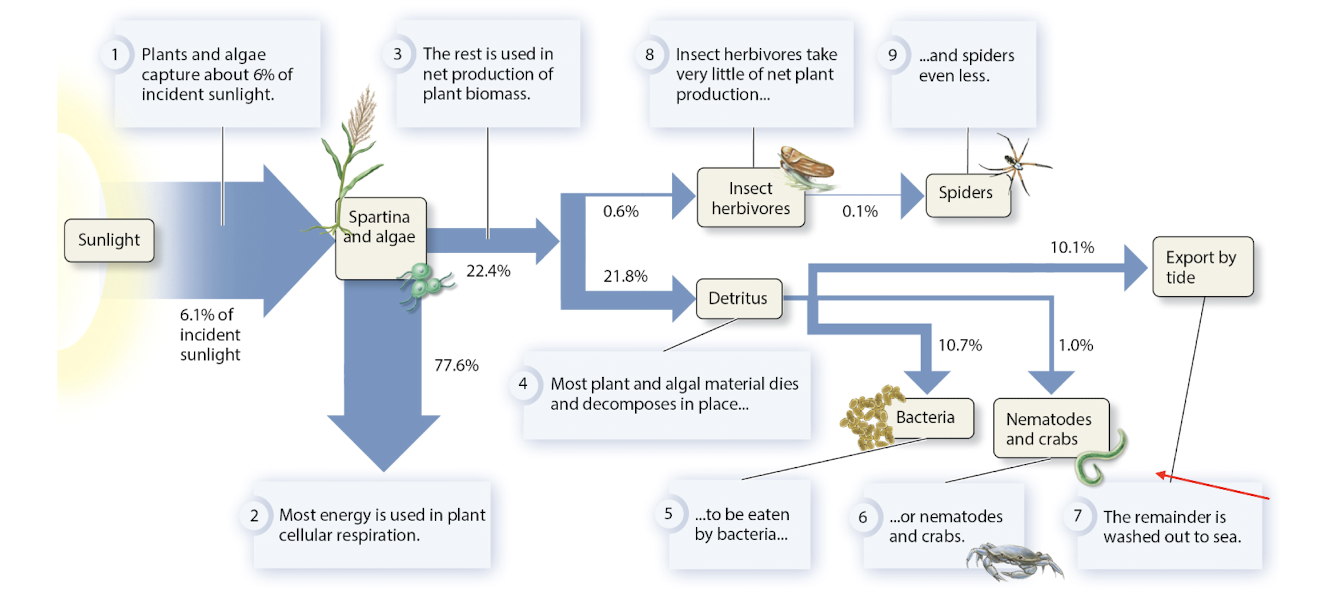
what is ecosystem ecology
the study of nutrient and energy flow within an ecosystem and the production of biomass
how does every flow in ecosystem ecology
unidirectionally
how is energy used
captured by primal producers and transferred to consumers, with heat loss occurring between transfer stages
what does biomass production require
30-50 nutrients
what are macronutrients
carbon, hydrogen, nitrogen, and potassium
what does carbon form
the backbone of the macromolecules of life
what are examples of macromolecules
carbohydrates, lipids, and proteins
what does carbon cycles do on land
there are carbon cycles between organisms and the atmosphere
what does photosynthesis do
uptake CO2
what does respiration do
release CO2
what must CO2 do
diffuse into the surface water before uptake can occur
what happens to carbon that is removed from the cycle
the carbon is stored
what does this stored carbon do
form fossil fuels within the ground
in what organisms does mass die-offs occur
anaerobic sediments
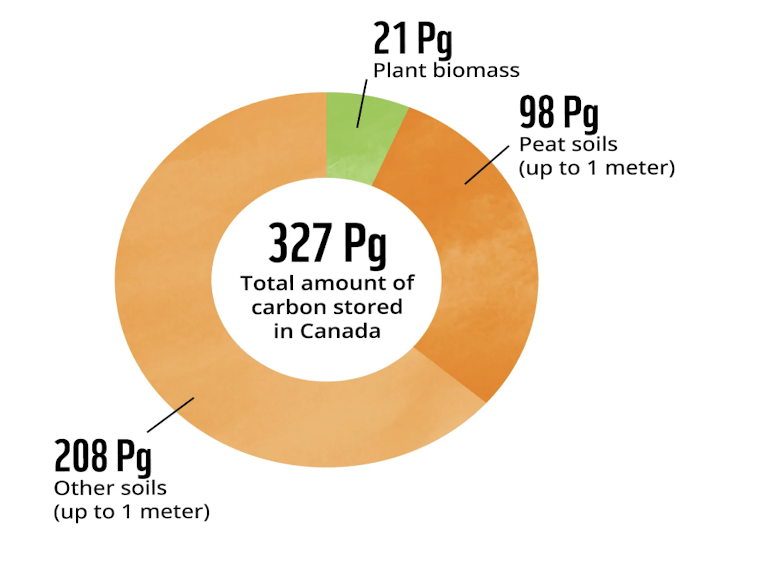
what is this picture showing
a carbon map of Canada
what is a carbon map of Canada
the total terrestrial carbon storage in Canada
what does a darker color on the carbon map mean
more stored carbon
what area of terrestrial ecosystems do the carbon map of Canada show
above ground and to a depth of 2 meters
why is it important to locate high-carbon region
it allows for more targeted conservation measures
what are nature-based climate solutions (NbCS)
actions like protected and conserved areas, and active management of landscapes that help maintain or enhance carbon storage
how do NbCS help high-carbon regions
they help ensure that globally significant carbon remains stores in nature
besides keeping carbon stored, what I another benefit of NbCS
they increase the possibility of additional carbon absorption in the future
why is nitrogen needed by living organisms
needed for proteins, nucleic acid, and chlorophyll
where is most nitrogen found
most in atmospheric and some in rocks
what is most atmospheric nitrogen
gaseous N2
what can gaseous N2 cannot be used by
most plants/animals
what is nitrogen fixation N2 → NH3/NH4+ dependant on
bacteria like Rhizobium living within plants an cyanobacteria elsewhere
what is nitrification: NH3/NH4+ to NO2- and NO3- dependent on
separate bacterial species
what is assimilation
transformation of inorganic nitrogen to organic nitrogen by organisms
what do these assimilation plants and animals rely on
plants rely on there roots, animals rely on plants
what is Ammonification
transformation of organic nitrogen back into inorganic nitrogen
what is decomposition driven by (ammonification)
bacteria and fungi
what’s the most common route for nitrogen to enter soil
ammonification
what is denitrification
NO3- is transformed to NH3
what is denitrification driven by
anaerobic bacteria, returned to the atmosphere
what is phos phosphorus needed for
growth, DNA, and energetic action (ATP)
what does phosphorous cycling originate from
eroding rocks/crusts, cannot rely on gaseous movement
what does plant roots absorb
Ionic phosphates
what do herbivores it
the plants
what do carnivores eat
the herbivores
where does decomposition return to
soil what doe
what does aquatic systems receive
run-off, excess forms sedimentary rocks and return as crust
what is water
an essential element and transports nutrients between compartments
what happened in the 1960’s, and the Aral Sea
the society started a massive irrigation plan for farming in nearby desserts
what is the 4th largest lake in the world is now partially viewed as
aralkum dessert
what is the salinity rate in the Aral Sea
10ppt to >92ppt
what was water from the Aral Sea fed by
precipitation and snowmelt
what are some characteristics of water
solvent for chemical reaction, elimination of wastes, gas exchange, reproduction, support (hydrostatic skeletons, plants/inverts), locomotion, greenhouse gas (water vapour), and continuous compartment within the body
what does availability affect
the distribution of life
what is an example of how availability affects the distribution of life
timberline- alpine trees stop growing at the point where they can’t get enough water to offset water loss from transpiration
what does water cohesion allow it to do
stick to itself and support transport processes
how does high surface tension benefit ecosystems
it allows small organisms (e.g., insects)to move across the surface of water
how does water move upward in soil and plants
though cohesion and adhesion (capillary action)
what is water considered a universal solvent
it dissolves many substances, allowing nutrients and pollutants to move through ecosystems
what does waters low viscosity help with
it allows water to flow and be pumped easily
how does water help transport nutrients and pollutants
by dissolving them and carrying them through ecosystems, organisms, and waterways
Why is water’s high heat capacity important?
It absorbs and carries heat, helping regulate temperature in organisms and environments.
What does water’s high heat of vaporization allow?
Efficient cooling (e.g., sweating, evaporation from surfaces).
What happens to water when it freezes?
it expands
Why does ice float?
Because frozen water is less dense than liquid water.
Why do bodies of water freeze from the top down?
Ice forms on the surface first, insulating the water below and protecting aquatic life.
what does water availability affect
distributions of organisms
what is grass availablity influenced by
rainfall in the previous months
what does water baffalo denisty depend on
grass availability
what does the spade foot Toad in Arizona Desert do in the dry season
burrow underground in drip-line of plants for moisture
what does the spade foot Toad in Arizona Desert do in the rainy season
escape burrows and mate
how do tadpoles develop
fast and slow (developmental plasticity)
what is the water cycle
primarily physical (not chemical) cycle driven by solar energy
what are some things that occur in the water cycle
evaporation and evapotranspiration, and precipitation
where does evaporation occur primarily
over oceans
what does evapotranspiration encompass
encompasses all water encompassing all water entering the atmosphere
who does evapotranspiration encompass all water entrain the atmosphere
evaporation from soil/lakes
transpiration from plant leaves
~ 90% of all water entering the atmosphere over landmass has transpired from plant leaves
where does precipitation occur
what atmospheric water condenses, distributed by winds
how much water is held in the bodies of organisms or is frozen in soil
around 2%
where does the rest of the cycle come from
bodies pf water to the atmosphere and back
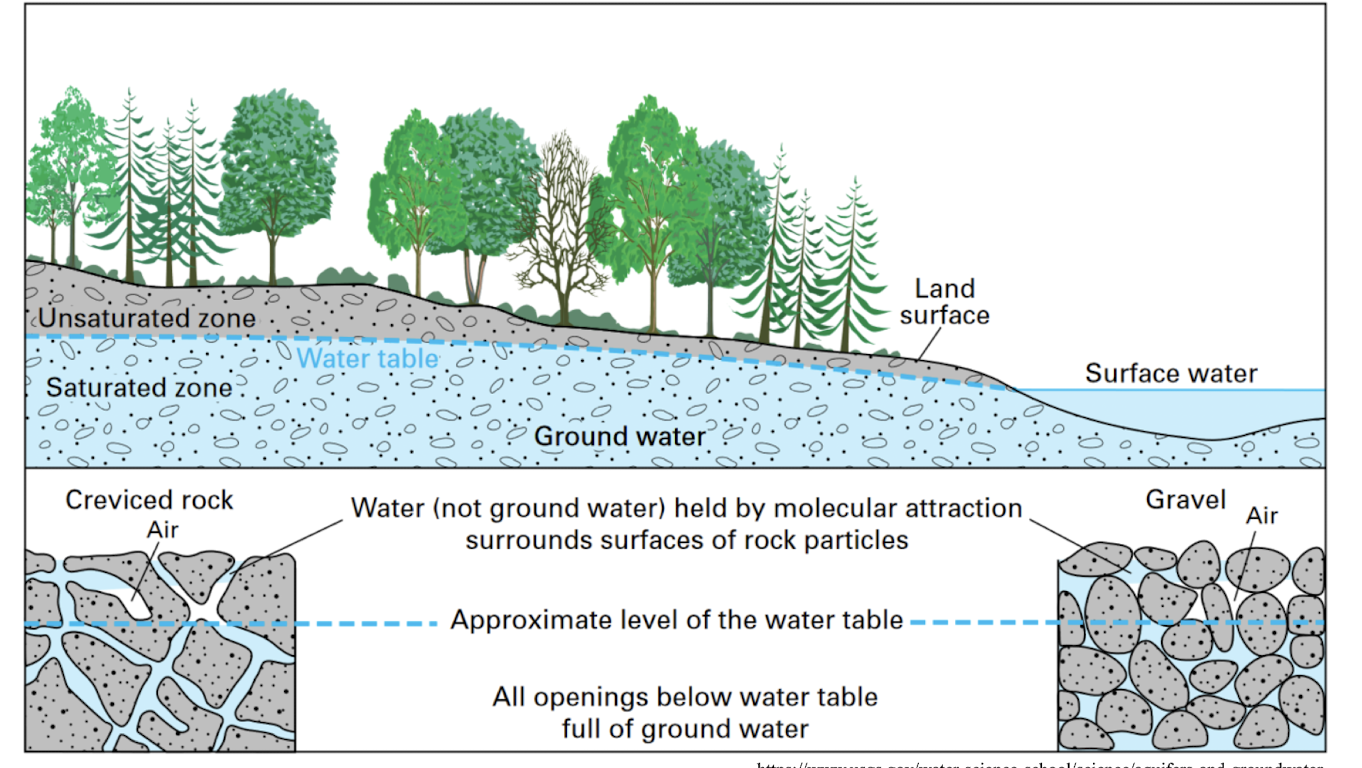
what is this photo showing
the water cycle
what are aquifers
porous underground deposit that holds groundwater below (and sometimes above) surface by boundary layer
what are some characteristics of confined aquifers
impermeable, bound by bedrock
what are some characteristics of unconfined aquifers
permeable, bound by clay
what is the water layer
saturated upper layer of aquifer
how long can water remain on aquifers
days to 10 000 years
what happens if a aquifer is overused
the aquifer will be depleted
what happens if an aquifer is depleted
it must be recharged by precipitation
how many Canadians use aquifers for their sole freshwater use
30% of Canadiens
what is contamination
chemical contamination, agricultural runoff (heavy rain), drilling, landfills, accidental spills…
what are forest ecosystems
characterized by trees (sugar maple, eastern hemlock), classified by climate (tropical, temperate, or boreal)
what is an example of a forest ecosystem
acadian forest
what is an ecotone
boundary between two ecosystems, here between boreal and temperate forests
what is grasslands
characterized grasses (prairie, savannahs, and steppes), trees sparse, semi-arid, may be in warm or cold climates
what is an example of grasslands
prairies and savannahs.
what is a dessert ecosystem
low precipitation (<25cm per year), from tropics to arctics, generally windy, vegetation sparse
what is a tundra ecosystem
arctic and alpine, snow-covered, windswept, treeless, dry (less rain than most desserts), the soil may be frozen year-round (permafrost)
what is freshwater ecosystems
stationary water (ponds) or flowing (streams and rivers) also bogs and lakes and swamps
what is a marine ecosystem
saltwater, the most abundant types of ecosystems in the word (ocean floor to surface, intertidal estuaries, salt marsh, swamps, mangroves and coral reefs)
what is an example of a marine ecosystem
the great Barrier Reef, estuaries, or coral reefs.
 Note
Note  Flashcards (47)