HSPA Glossary S-Z
 Call Kai
 Learn
Learn Practice Test
 Spaced Repetition
 Match
Match Flashcards
 Knowt Play
1/89

There's no tags or description
Looks like no tags are added yet.
Name | Mastery | Learn | Test | Matching | Spaced | Call with Kai |
|---|
No analytics yet
Send a link to your students to track their progress
90 Terms
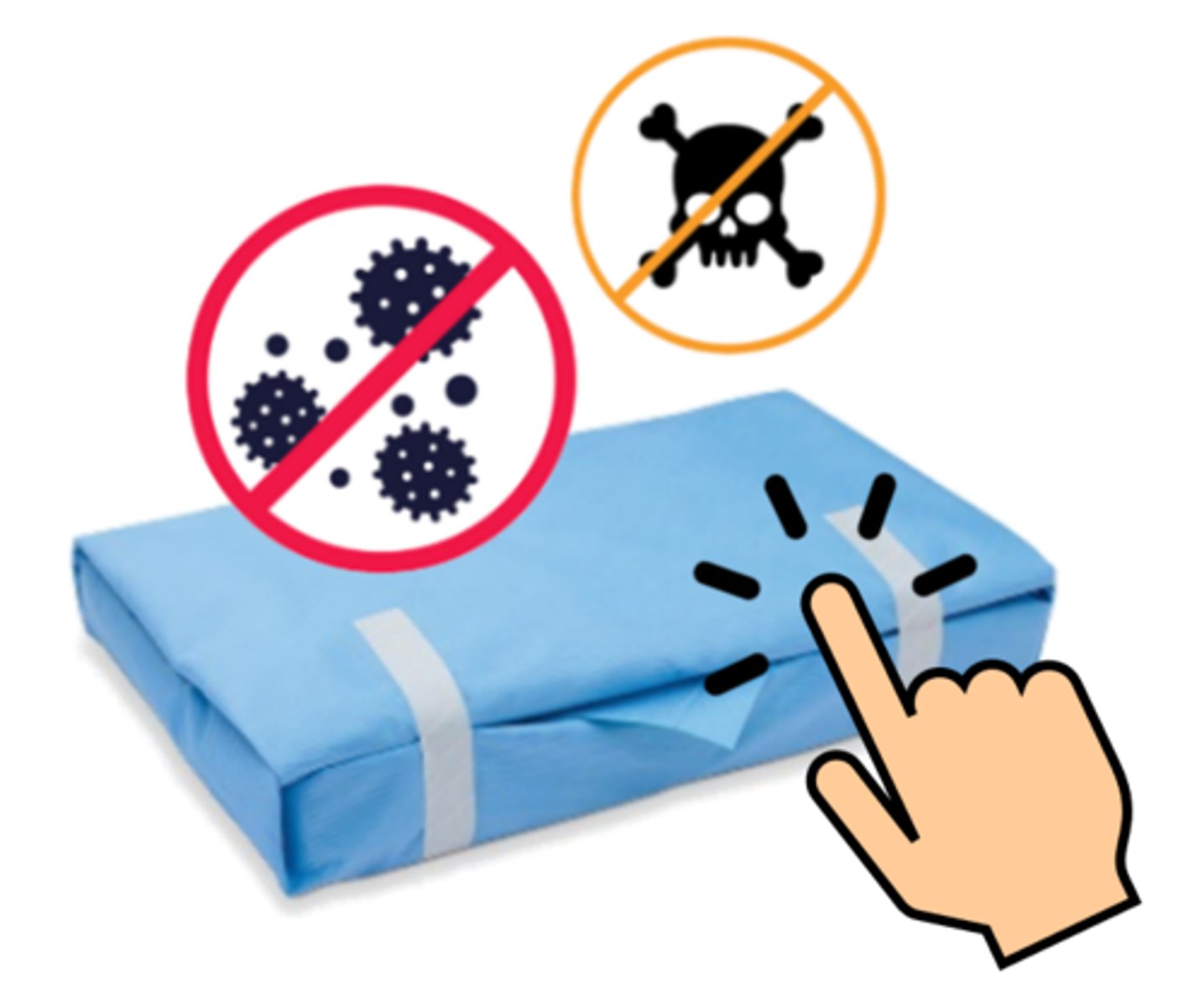
safety (n)
no toxic residues remain on packaging or devices once sterilization is complete (basic requirement for low-temperature sterilization)
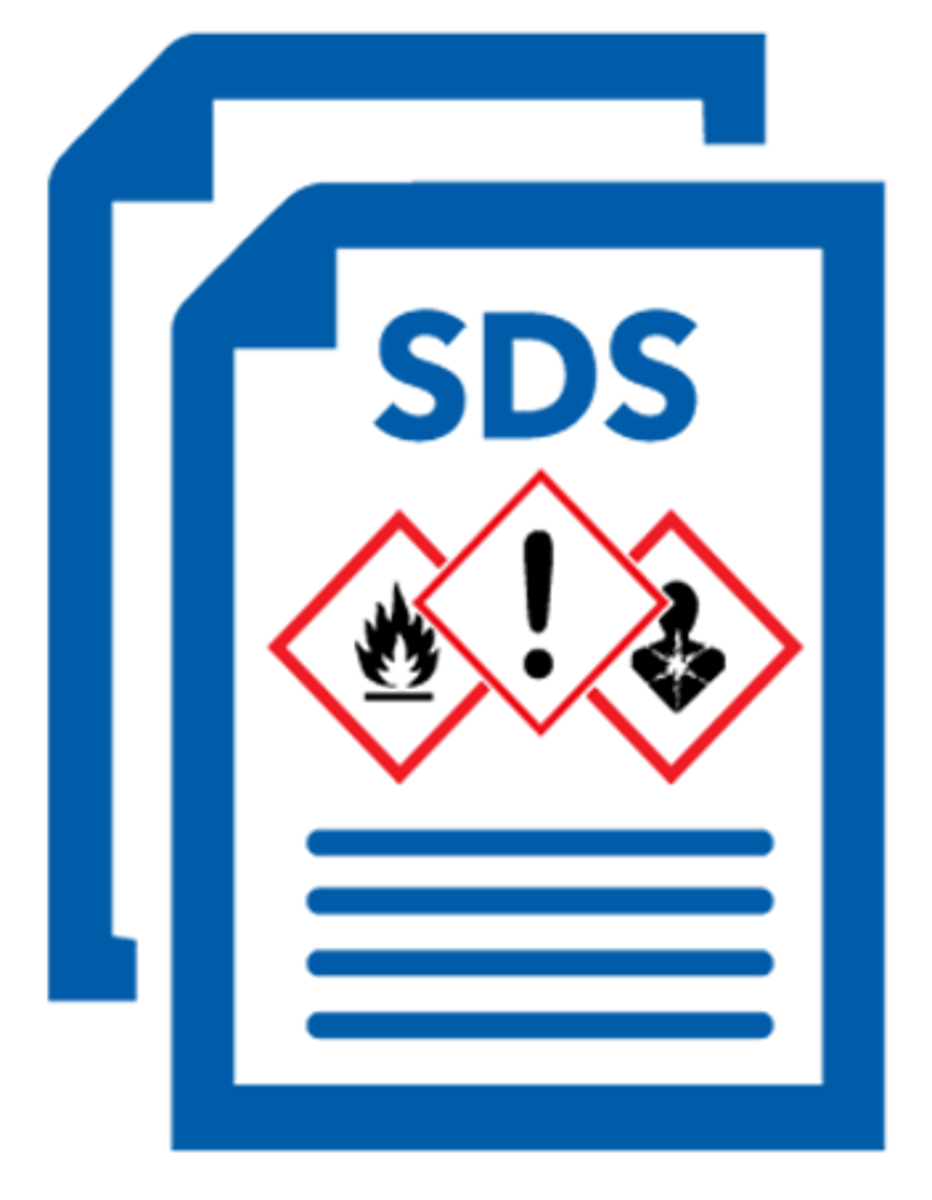
safety data sheet (SDS) (n)
a written statement with detailed information about a chemical or toxic substance, including potential hazards & appropriate handling methods, provided by the product manufacturer
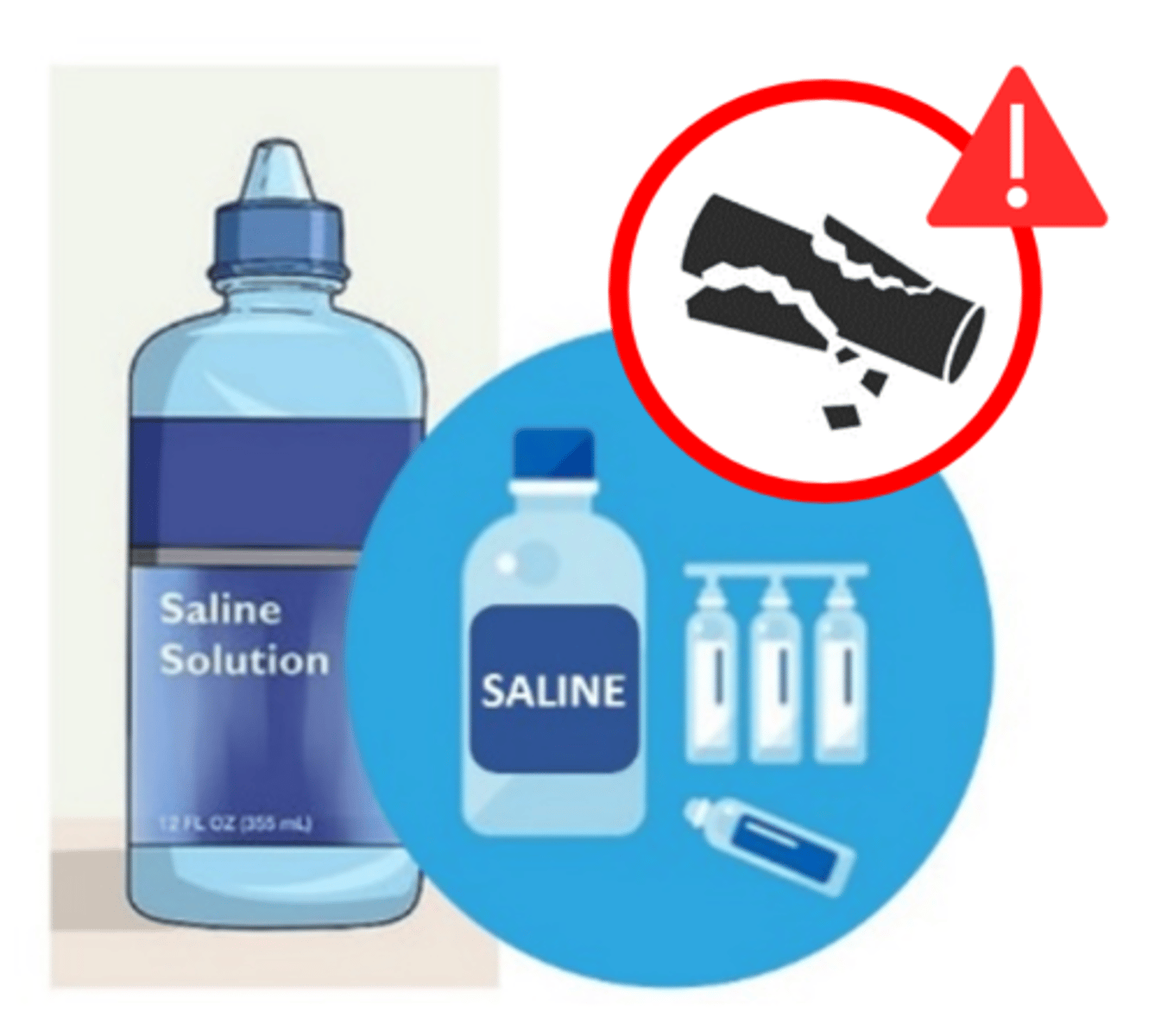
saline (n)
a sodium chloride solution (salt water) that should not be used in instrument cleaning because it's corrosive to metal surfaces
satellite sterile storage (n)
sterile storage areas located outside the SPD (such as in the OR), that must follow the same guidelines & procedures as SPD sterile storage
saturated steam (n)
steam that contains the maximum amount of water vapor (moisture)

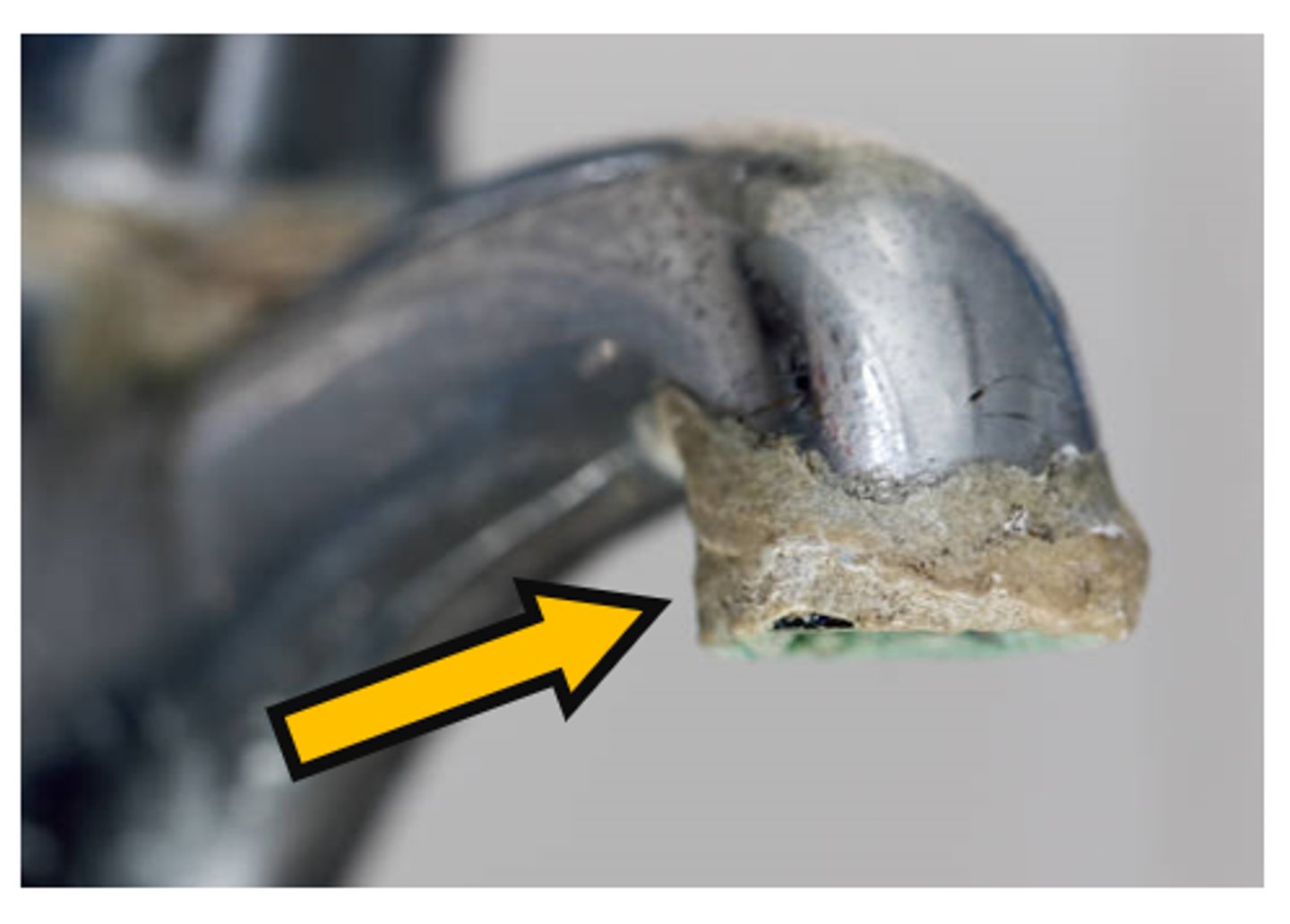
scale (limescale) (n)
a hard, white, chalky deposit that forms after water evaporates due to high levels of calcium & magnesium in the water
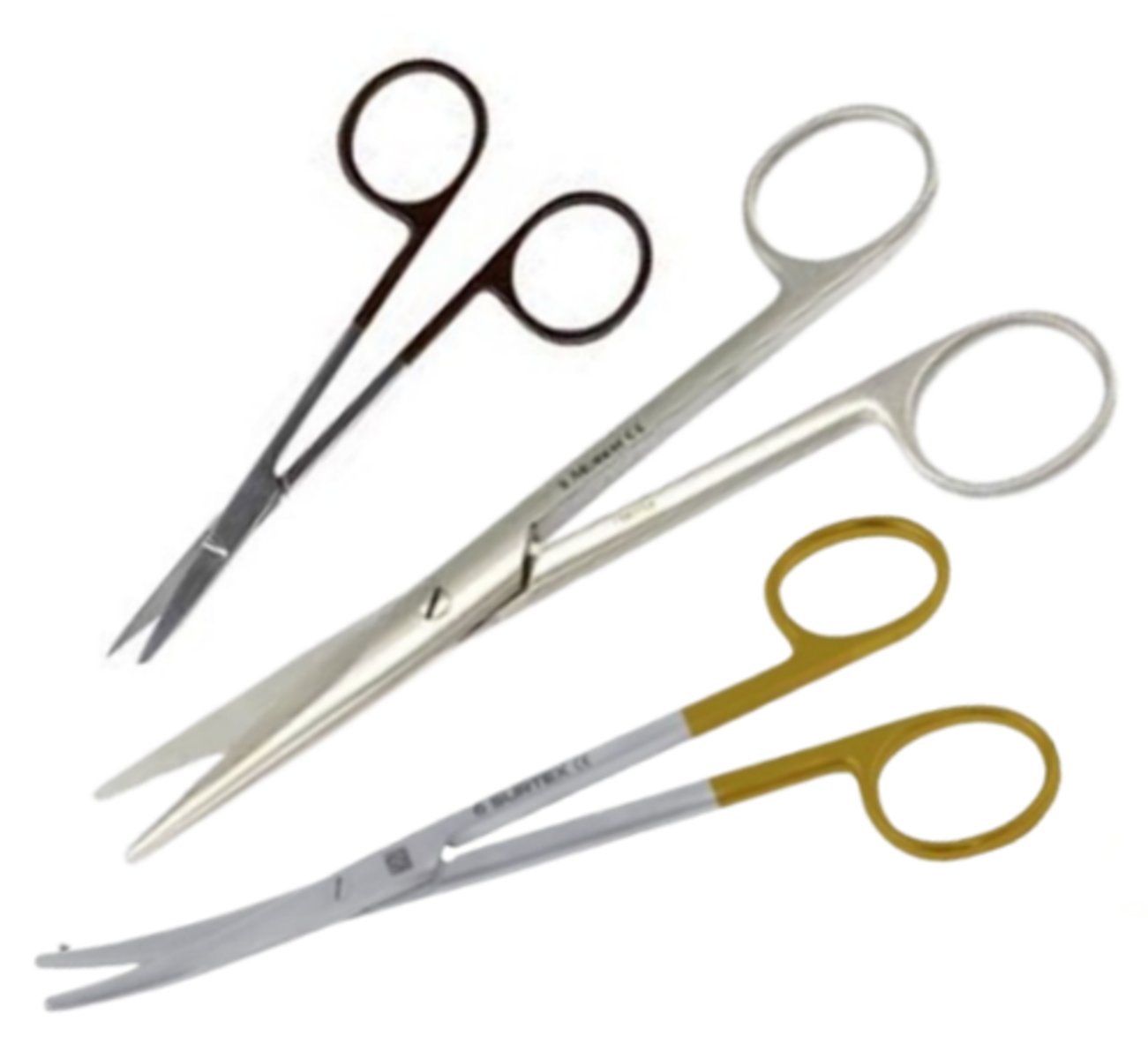
scissors (n)
surgical instruments used to cut tissue, sutures, & other material; curved scissors are primarily used for dissection (400 series or tungsten carbide)
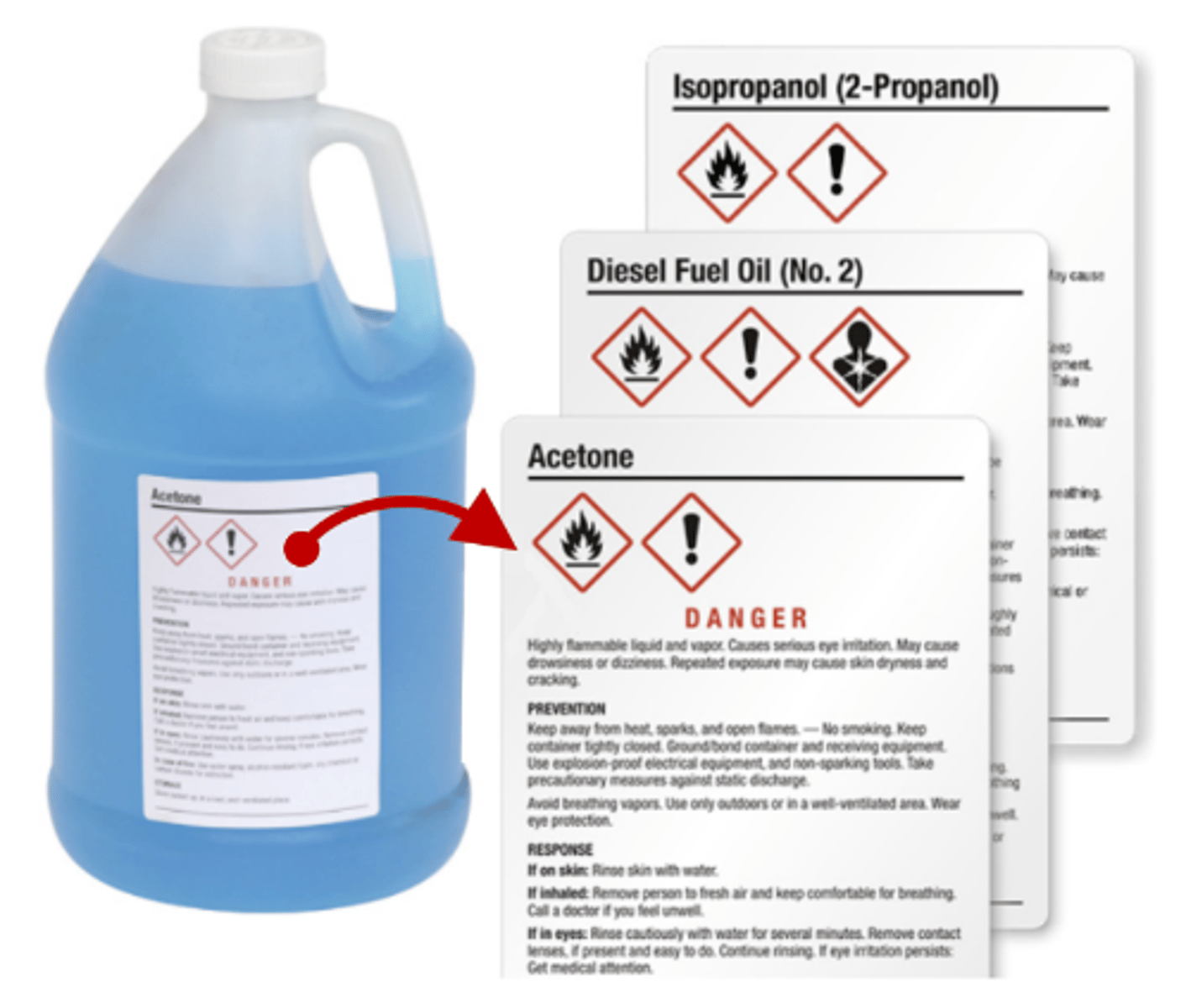
secondary container (n)
a generic container that is filled from a primary container or filled with a diluted solution, whose contents must be clearly labeled
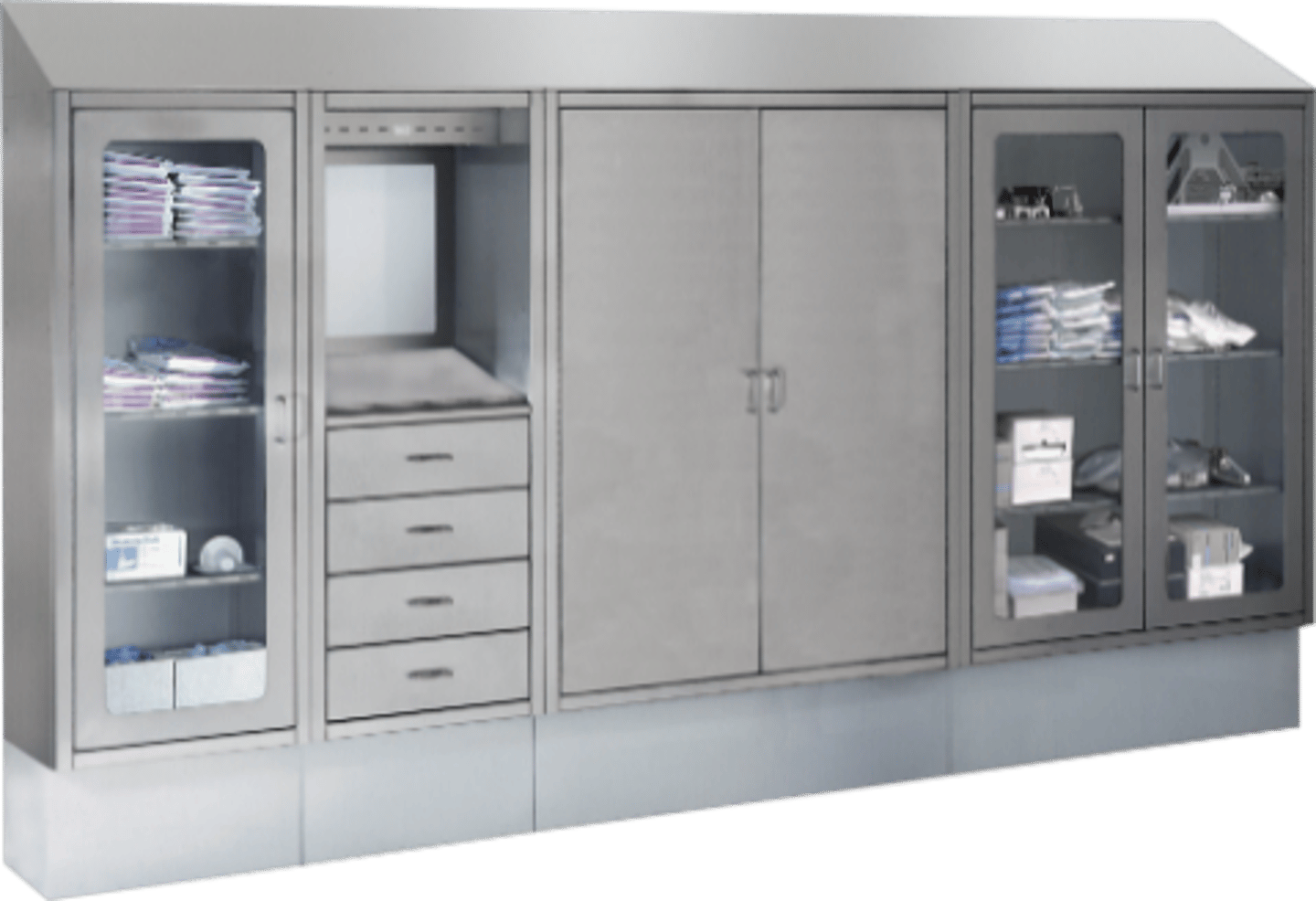
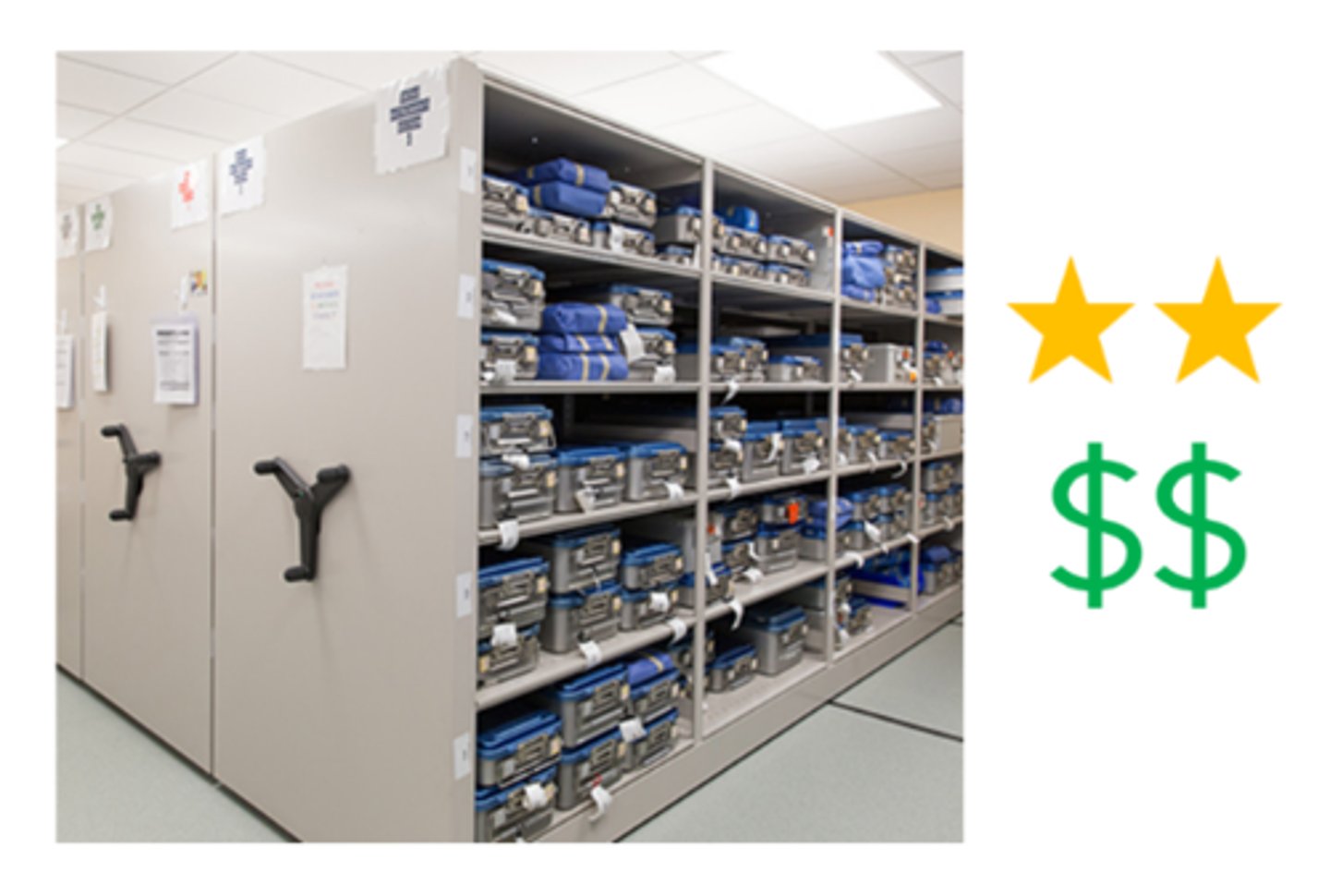
semi-closed shelving (n)
storage shelving with at least three solid sides (top + 2 sides) that forms a closed unit when shelves are moved together, offering good protection of shelved items
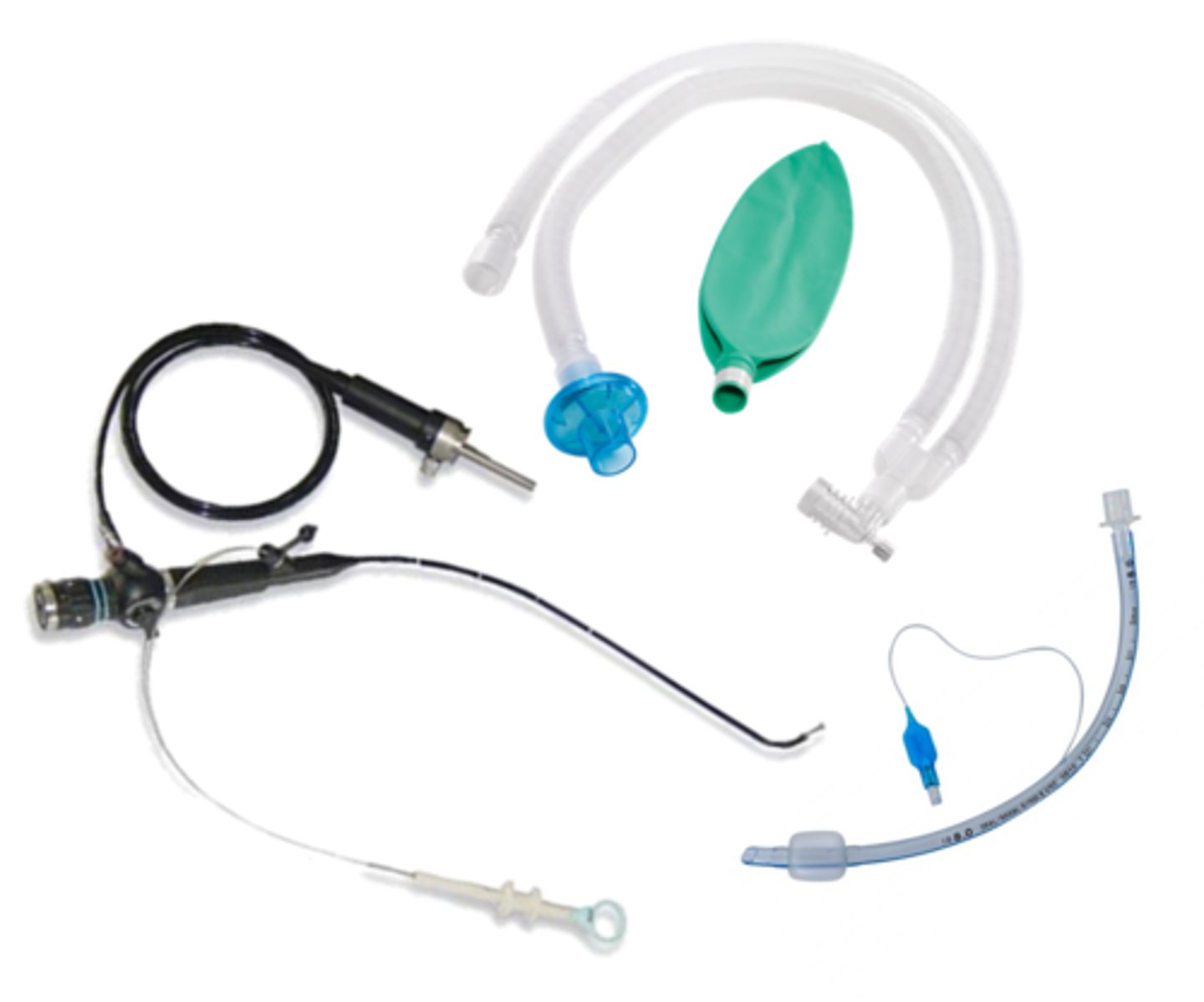
semi-critical items (n)
items that come into contact with intact mucous membranes but don't usually penetrate body surfaces; at a minimum must undergo HLD (should be sterilized if possible)
semi-restricted areas (n)
areas that require surgical scrub attire & hair coverings (ex: OR peripheral support areas, SP clean assembly, & sterile storage areas)

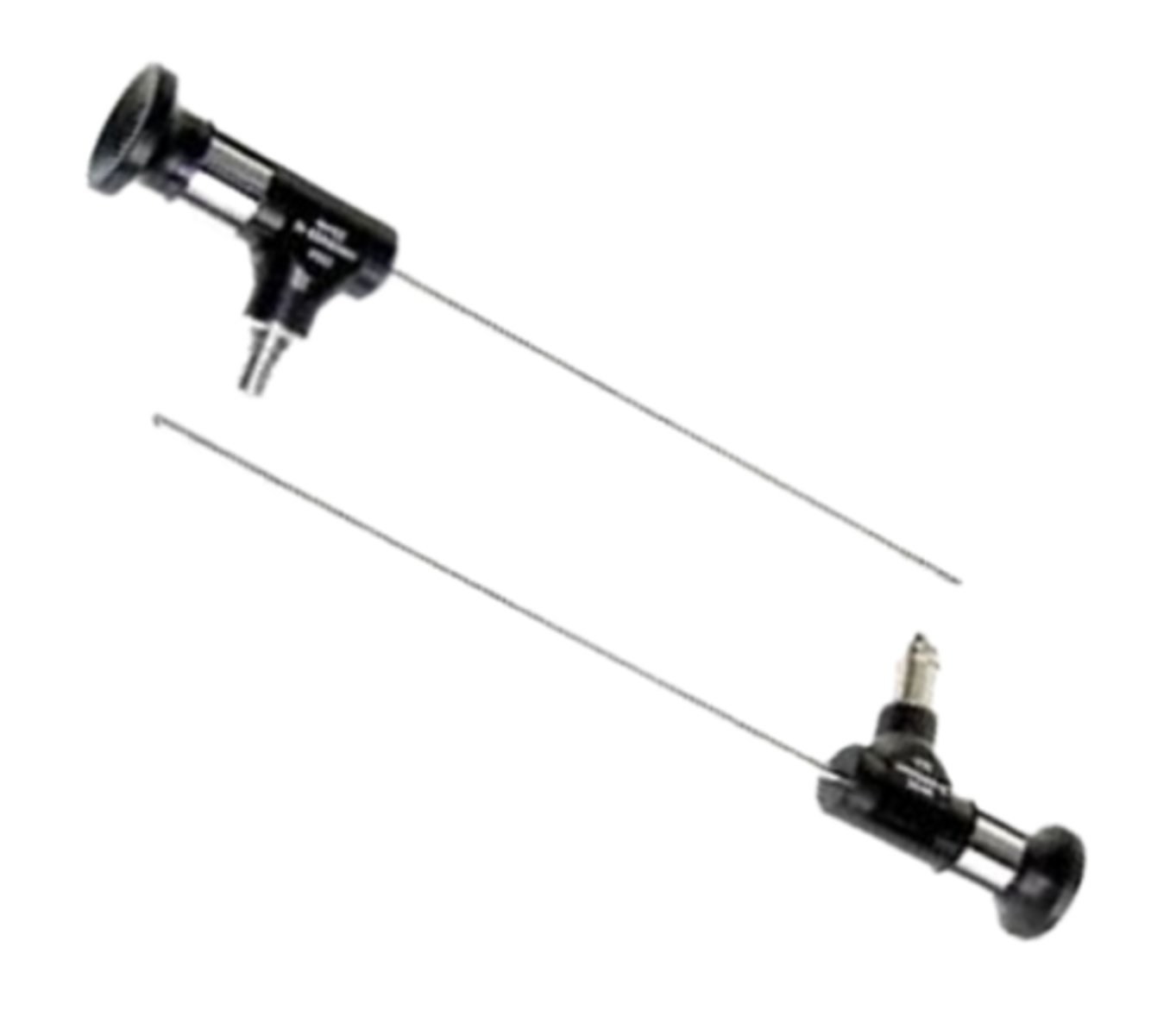
semi-rigid endoscopes (n)
endoscopes with a very thin stainless-steel shaft that can bend slightly more than rigid endoscopes
sentinel event (n)
an unexpected occurrence involving death, serious physical or psychological injury, or the risk thereof
serious injury (n)
an injury or illness that is life-threatening, resulting in permanent impairment of bodily function, permanent damage to body structure, or needing medical/surgical intervention to preclude permanent impairment
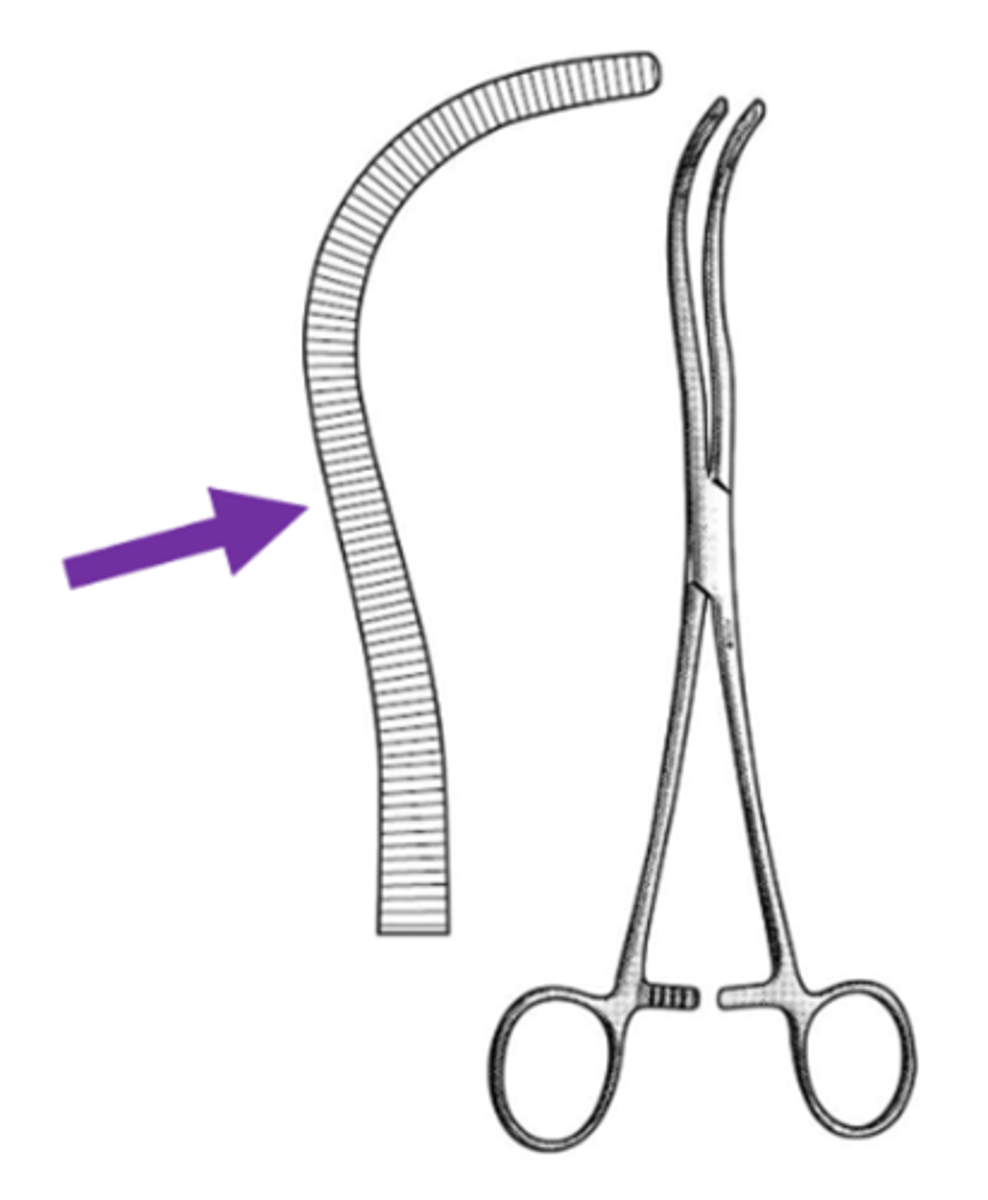
serrations (n)
parallel grooves in the jaws or blades of surgical instruments (to prevent tissue slippage or escape during cutting)
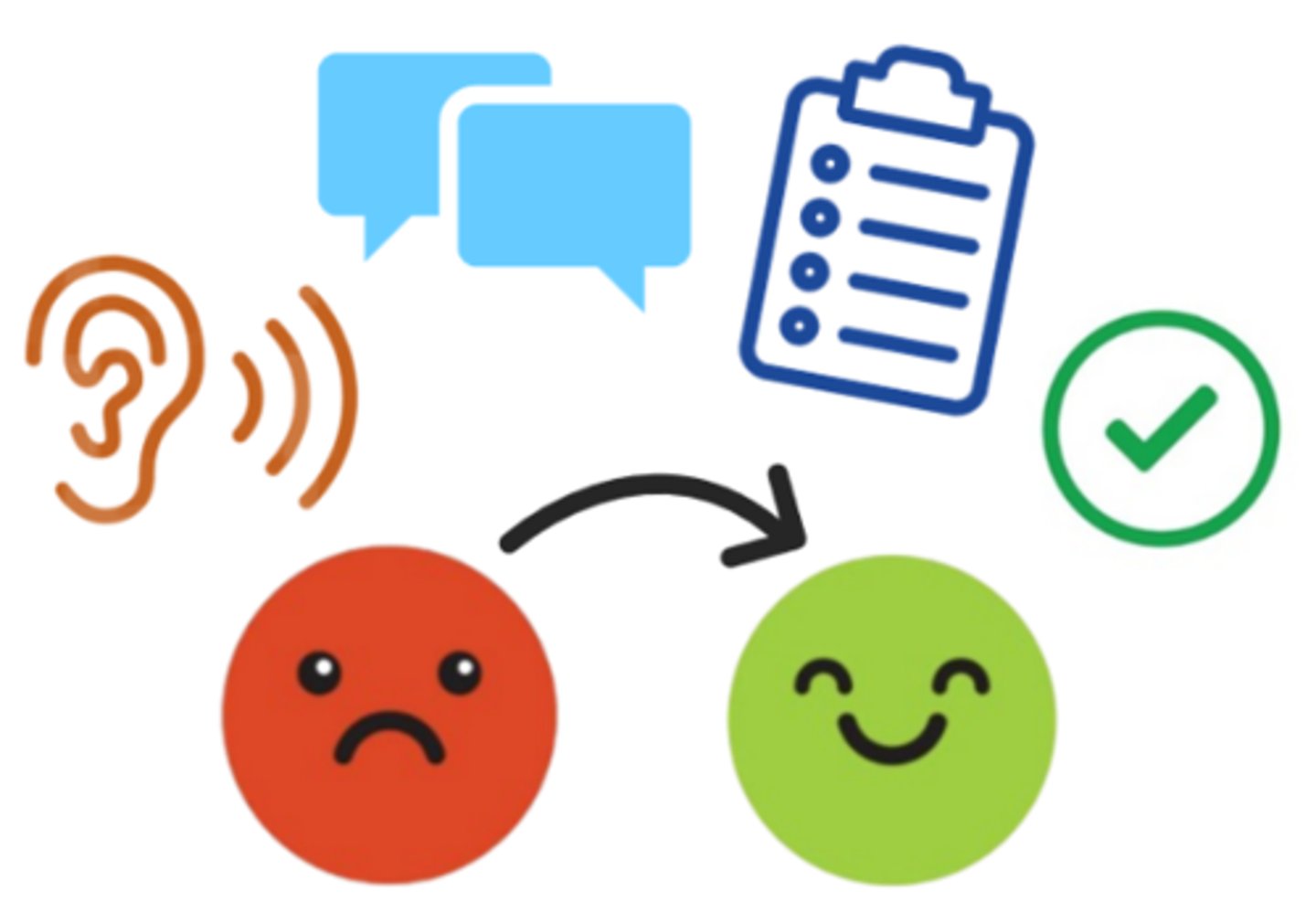
service recovery (n)
the sequence of steps used to address customer complaints & problems in a manner that yields a win-win situation for the customer & the department
sharps (n)
cutting instruments, including knives, scalpels, blades, needles, & scissors of all types (also chisels, osteotomes, some curettes, dissectors & elevators, rongeurs & cutting forceps, punches, saws, & trocars)

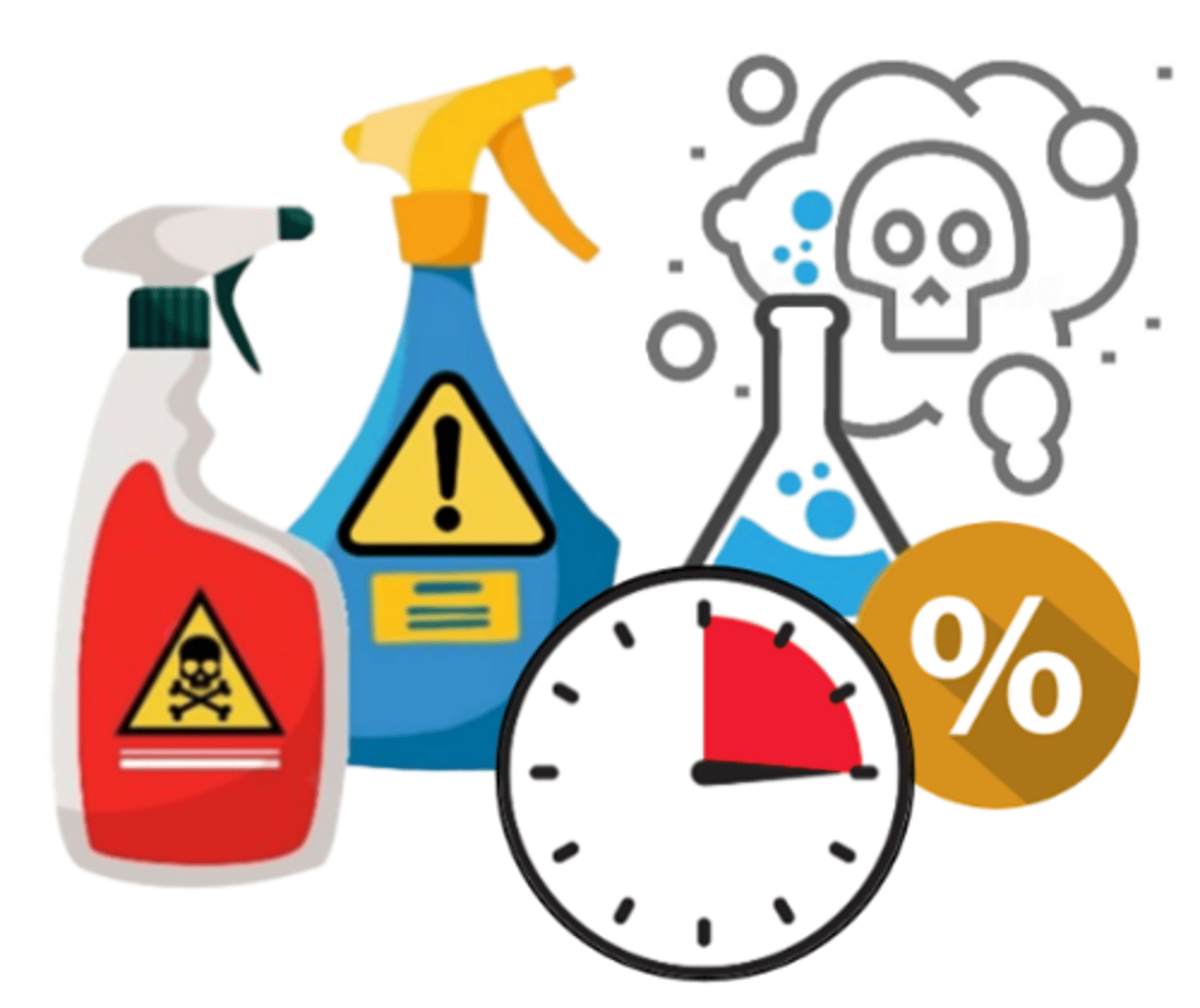
short-term exposure limit (STEL) (n)
the maximum concentration of a chemical that workers may be continuously exposed to for up to 15 minutes without danger to health, work efficiency, or work safety
single instruments (n)
instruments packaged alone, or like instruments packaged together (ex: a single Mayo scissors or a package of 2 Kelly clamps)

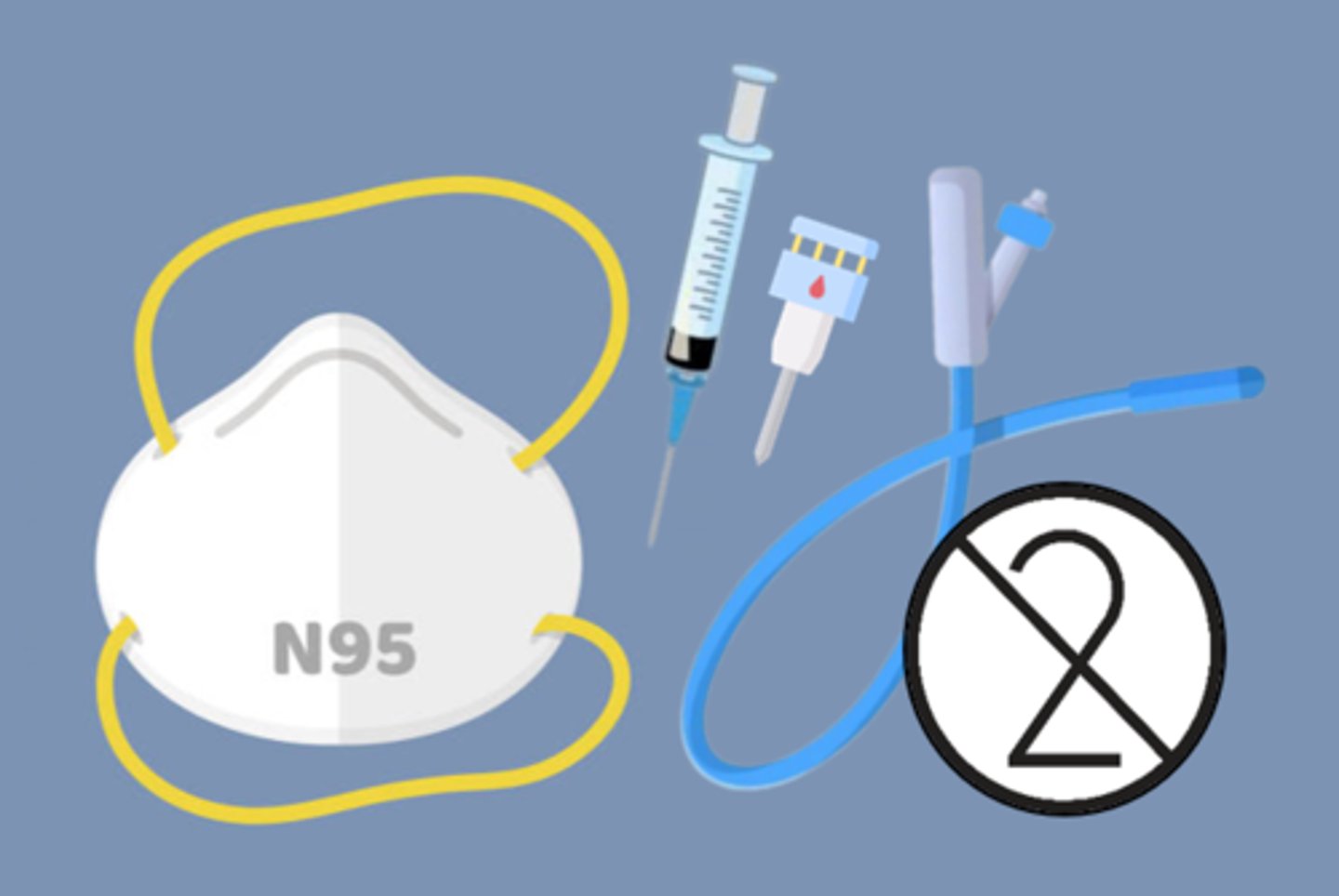
single-use device (SUD) (n)
a device intended for one use only (on a single patient during a single procedure) before it is discarded; it should not be reprocessed & reused
Six Sigma (n)
a quality assurance program that focuses on developing & delivering near-perfect products & services
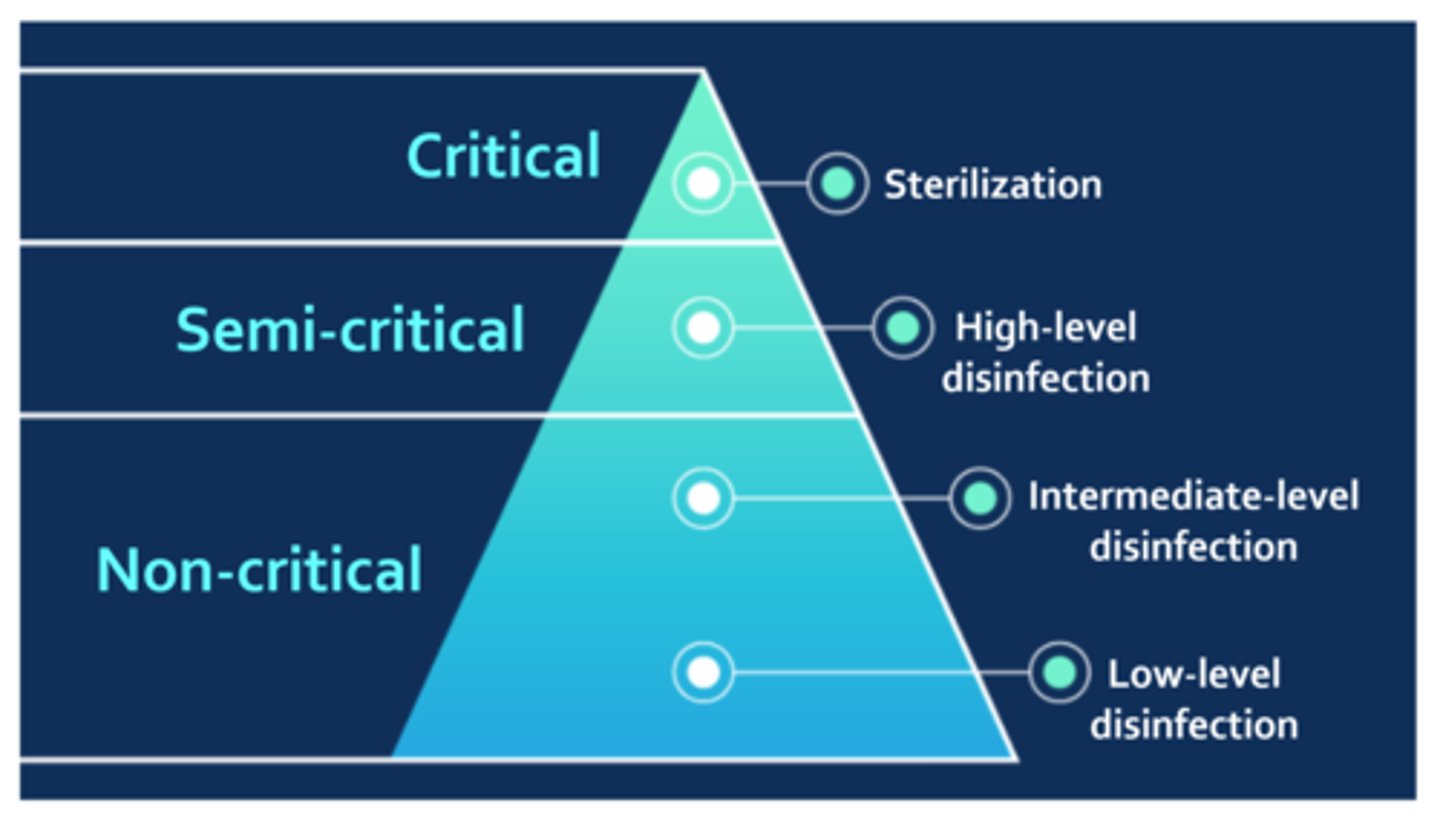
Spaulding Classification System (n)
a system developed by Dr. E. H. Spaulding that divides medical devices into categories based on the risk of infection involved with their use
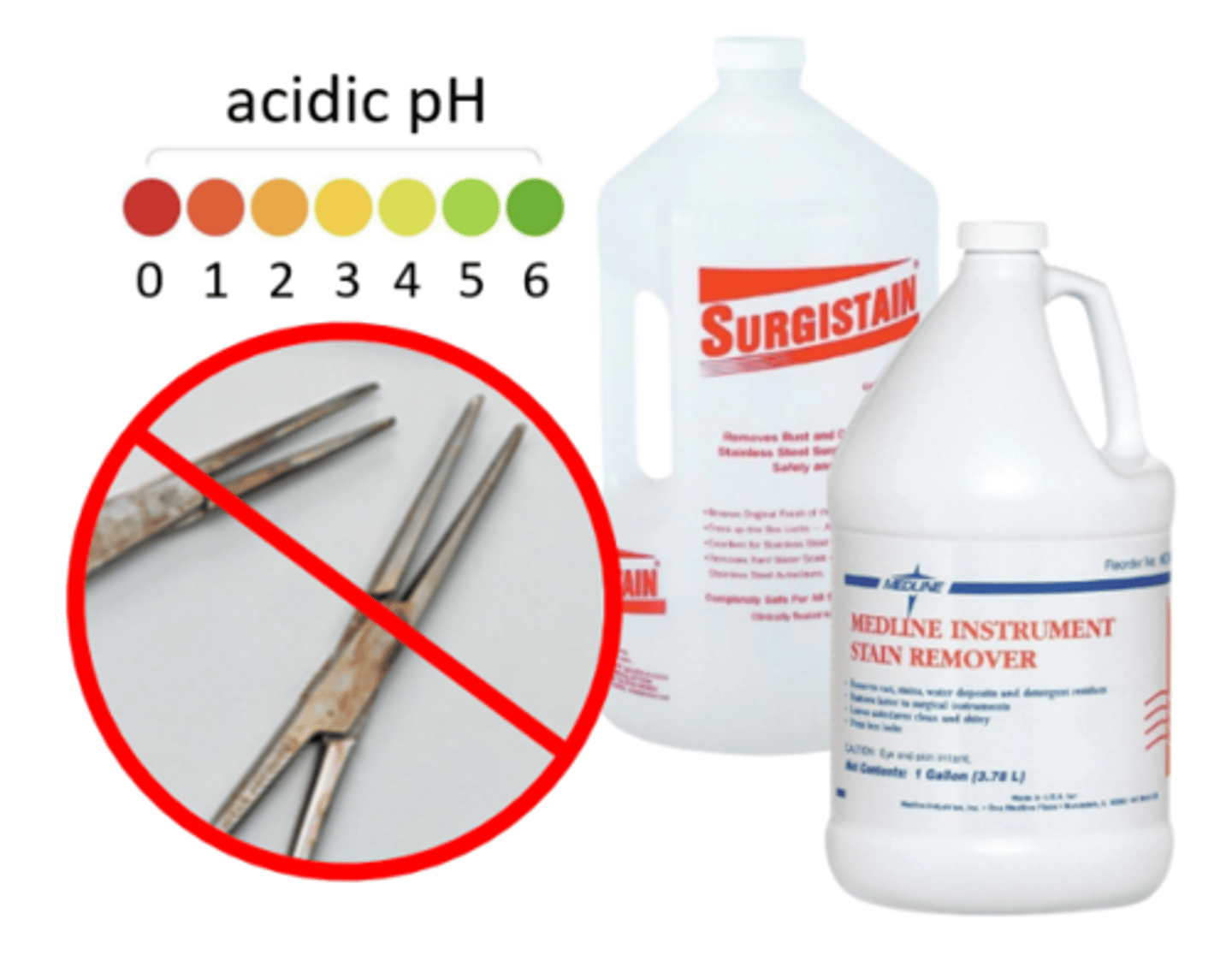
stain & rust removers (n)
cleaners that remove mineral & detergent buildup, leaving instruments shiny & moving freely; used only when normal cleaning doesn't remove stains, usually acid-based
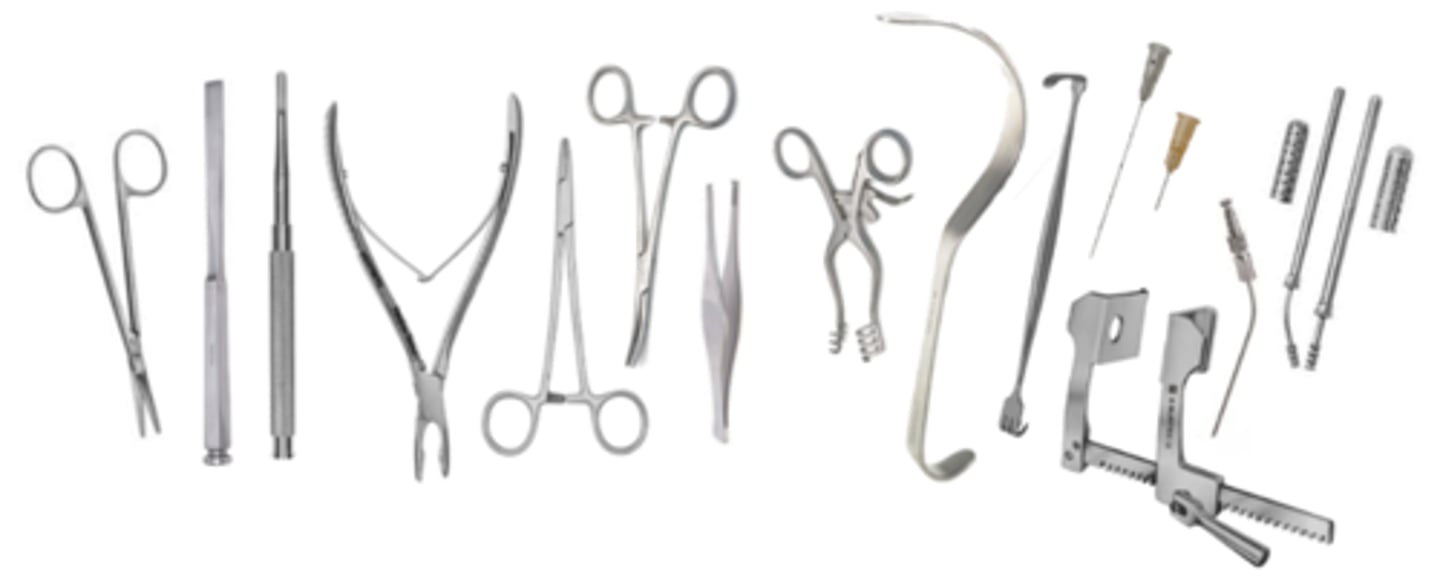
stainless steel (n)
an alloy of steel with chromium & sometimes another element, such as nickel or molybdenum, that is highly resistant to rusting & ordinary corrosion
standard (n)
a uniform method of defining basic parameters for processes, products, services, & measurements

standards (AAMI) (n)
voluntary guidelines representing a consensus of AAMI members that are intended for use by healthcare facilities & manufacturers to help ensure that medical instrumentation is safe for patient use
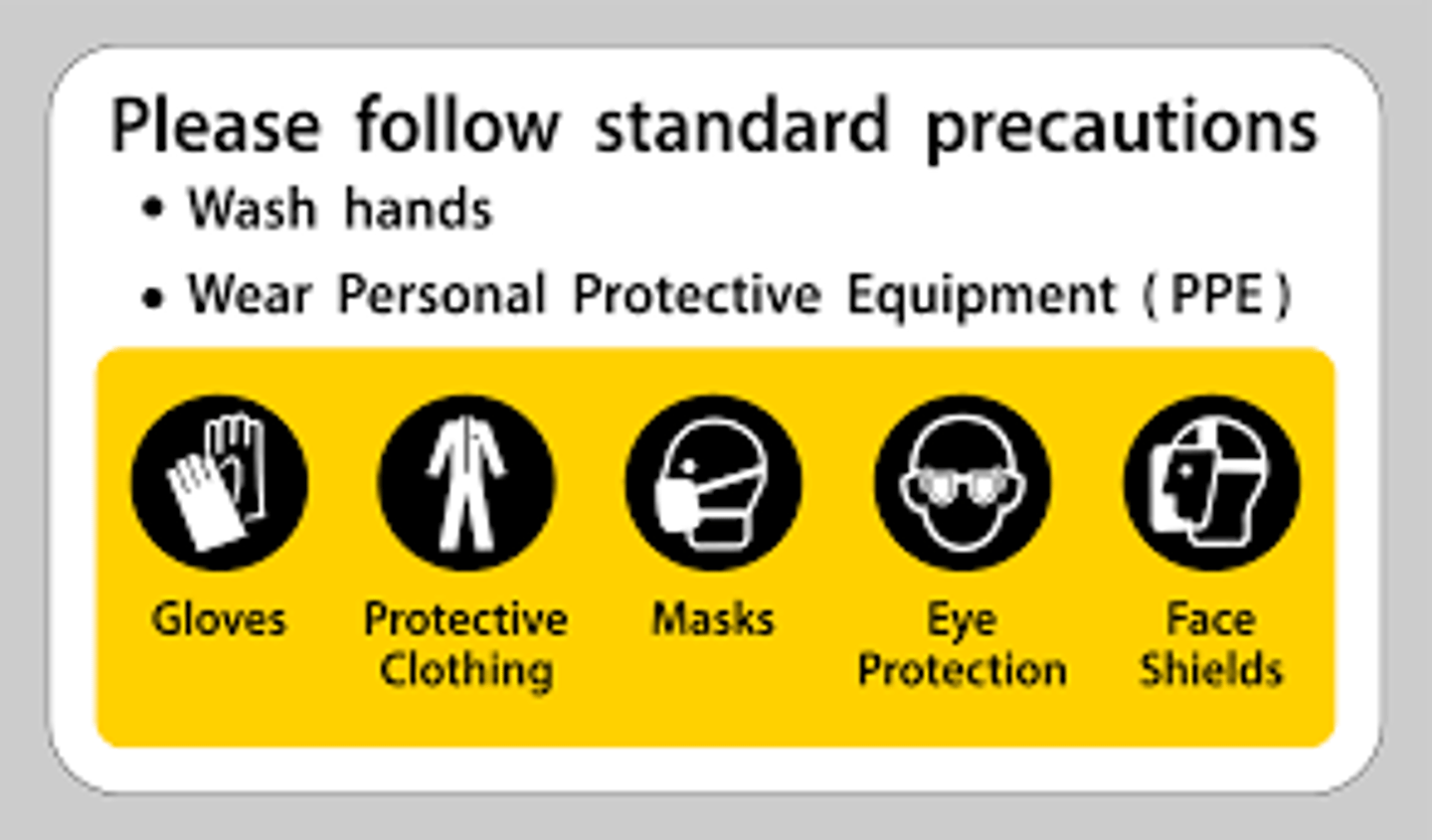
standard precautions (n)
a method of using appropriate barriers to reduce the risk of transmission of bloodborne & other pathogens; it applies to all patients, regardless of diagnosis or presumed infectious status
STAT (n)
an abbreviation for the Latin term statim, meaning immediately or at once

STAT orders (n)
emergency supply orders requiring immediate action

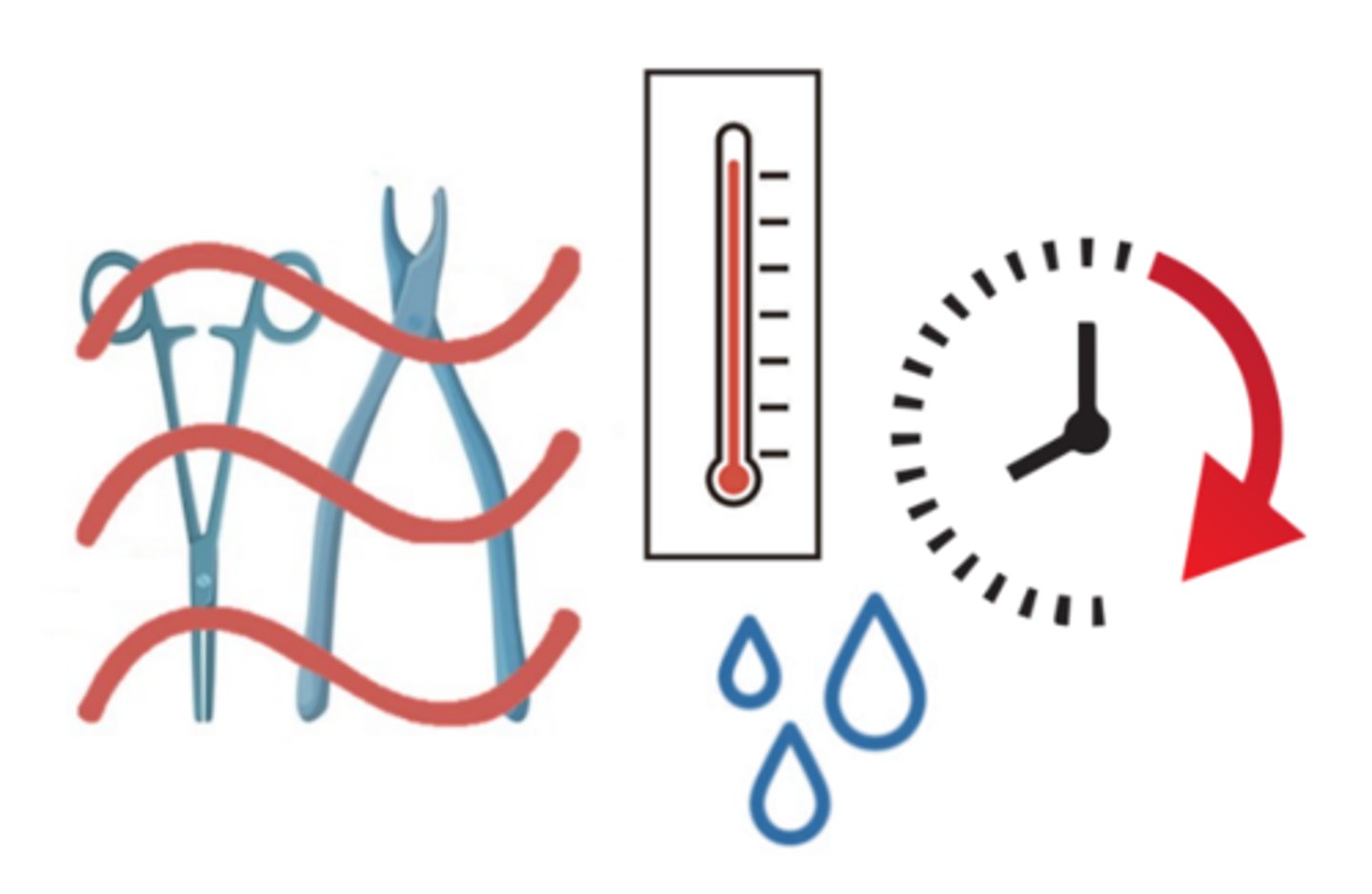
steam sterilization (high-temperature sterilization) (n)
the process of using thermal energy from moist heat (steam) to sterilize medical devices; the most commonly used sterilization method
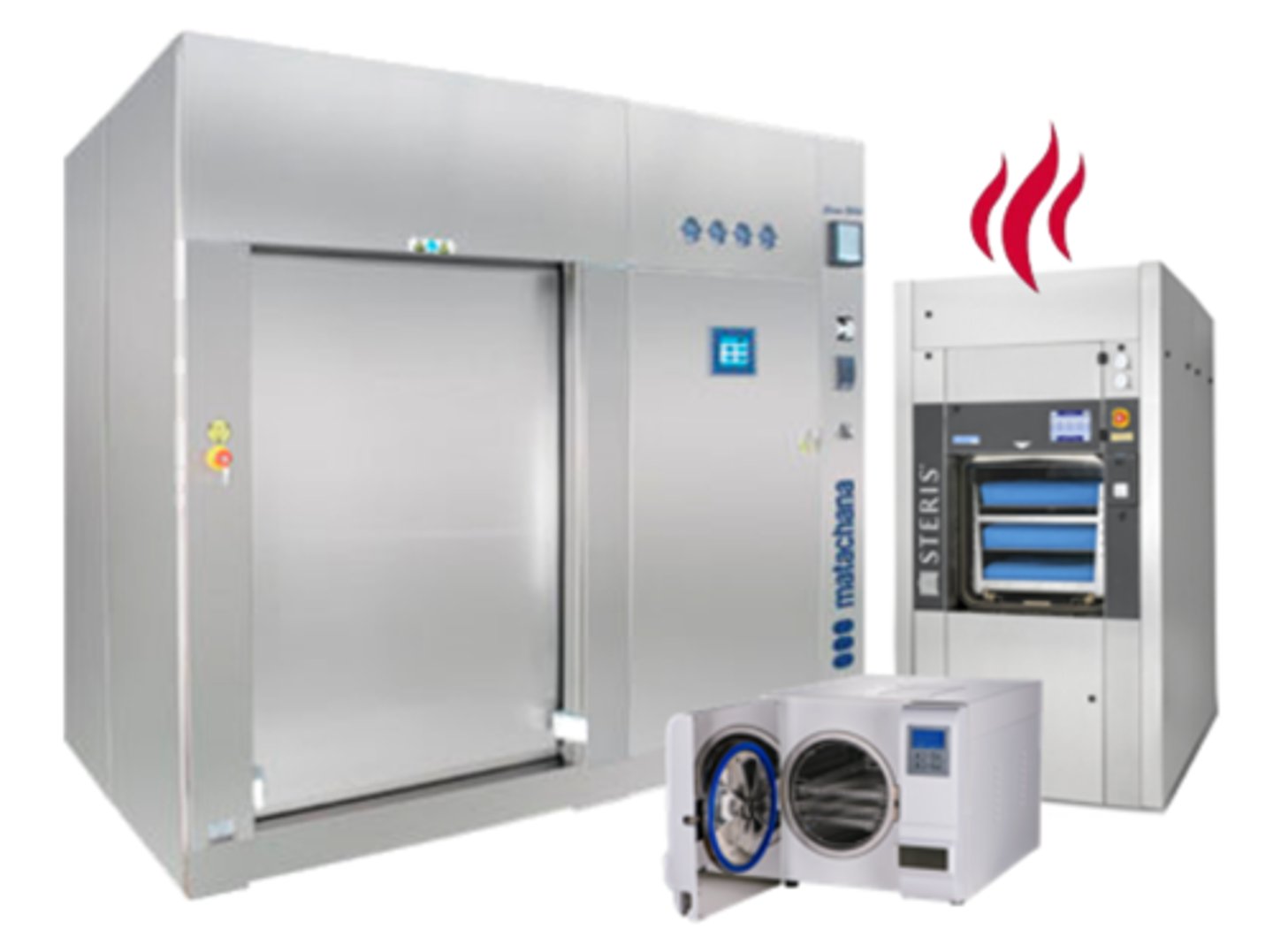
steam sterilizer (autoclave) (n)
a machine that sterilizes items using high temperatures & pressurized steam (moist heat), available in many sizes & cycle choices
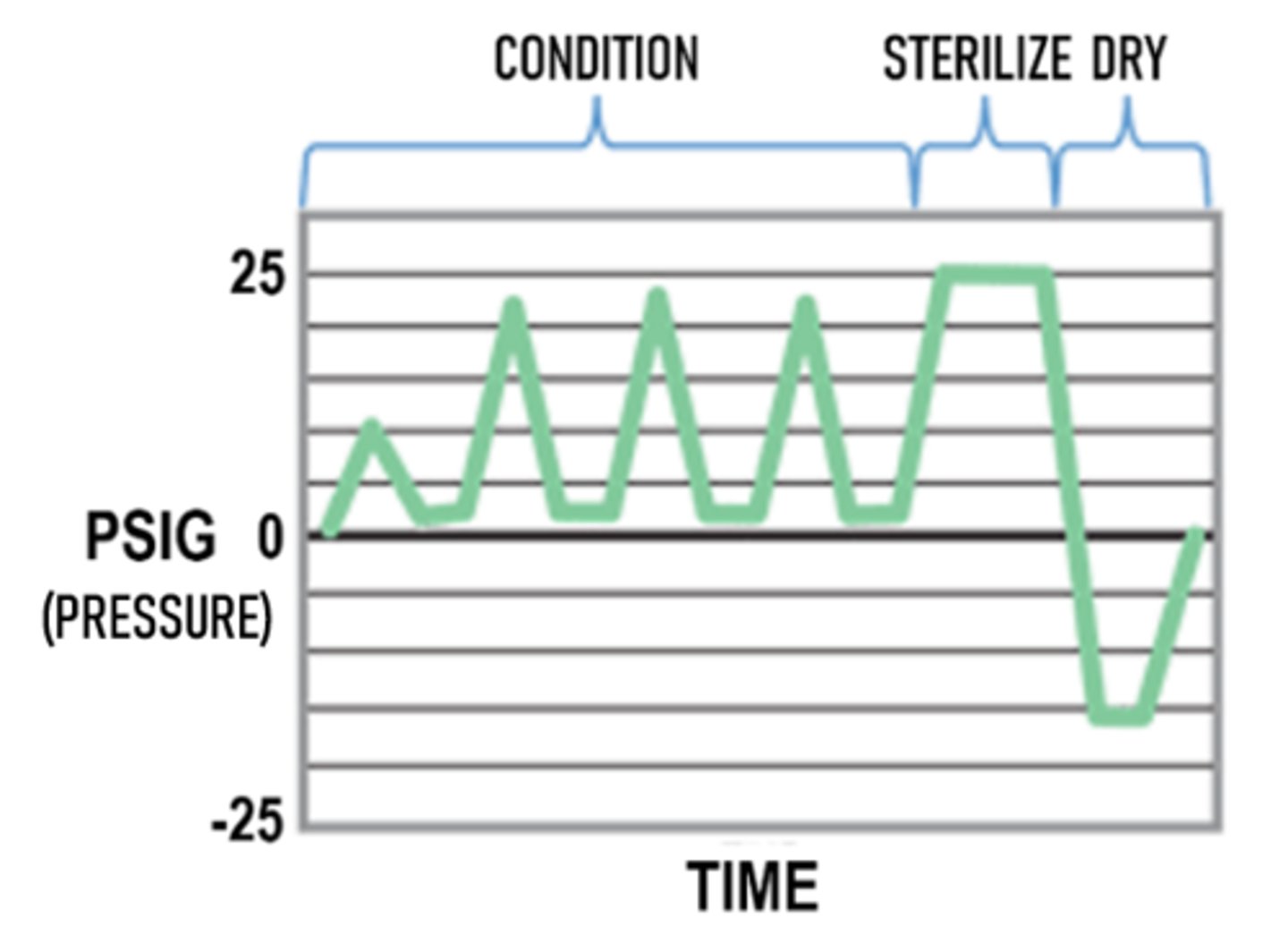
steam-flush pressure-pulse (SFPP) sterilizers (n)
steam sterilizers that use a repeated sequence of steam flushes & pressure pulses to remove air from the chamber; air removal occurs above atmospheric pressure, so no vacuum is required
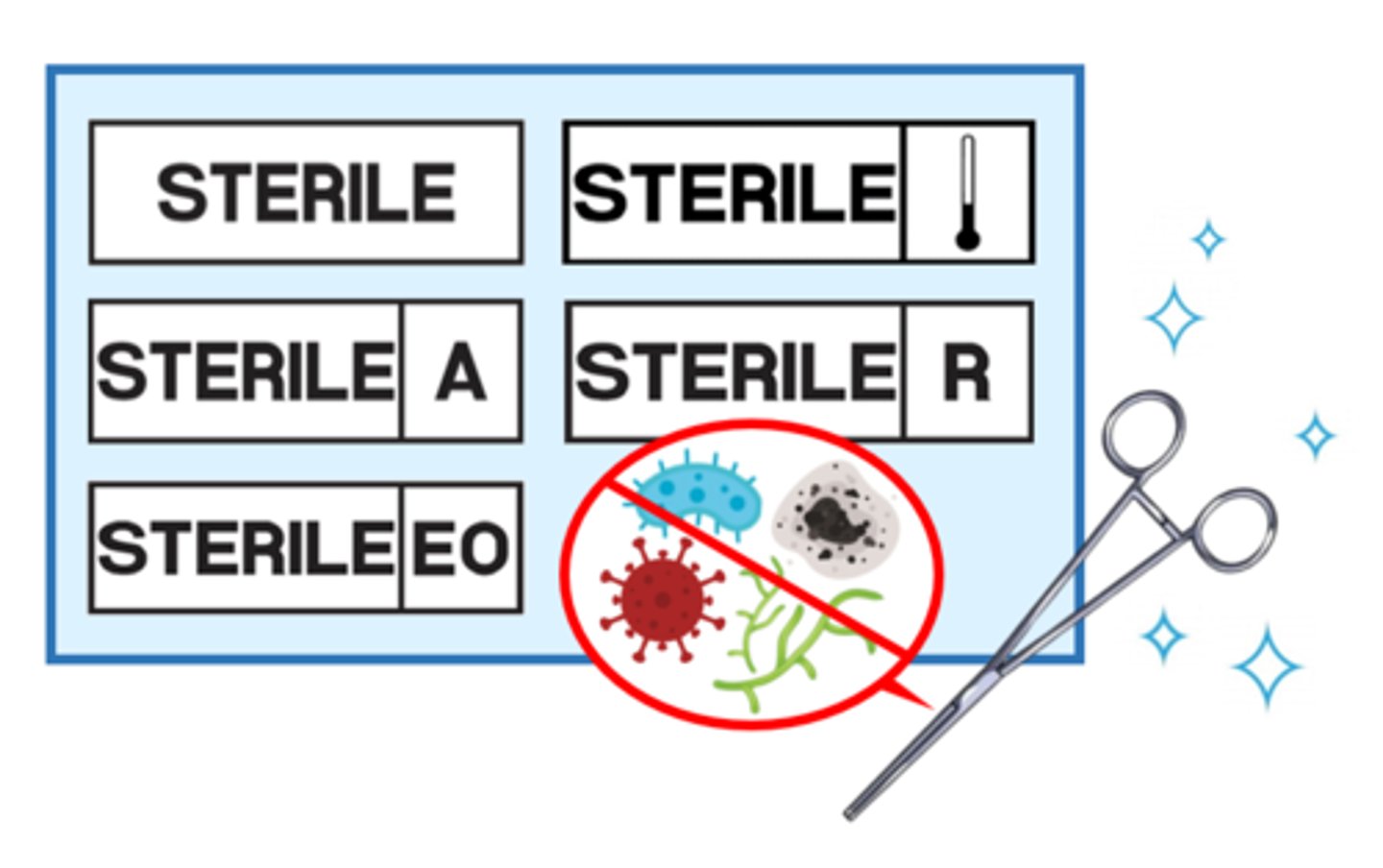
sterile (adj)
completely devoid of all living microorganisms
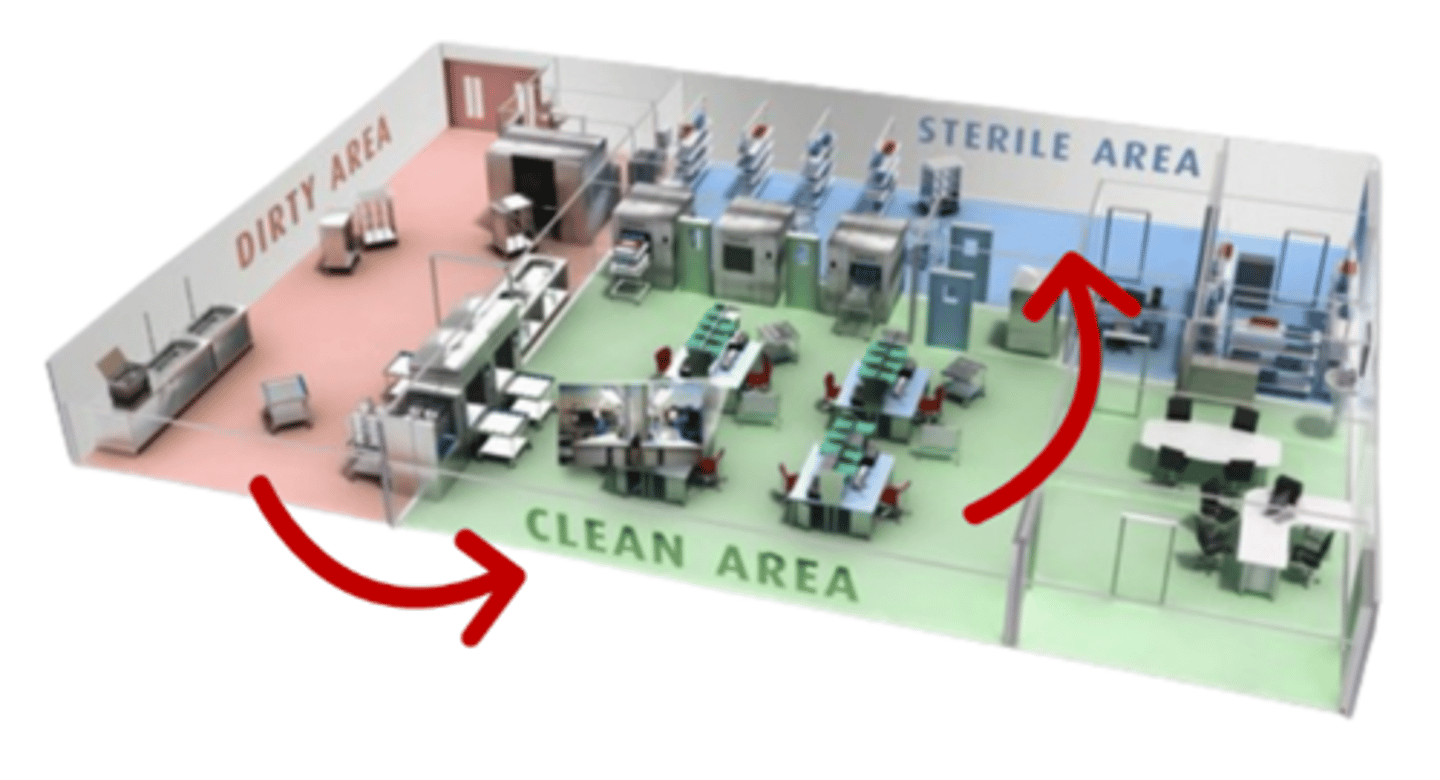
sterile processing workflow (n)
a one-way flow of materials from the soiled area to clean processing & then to sterile storage; soiled & clean items must be separated to ensure acceptable processing conditions
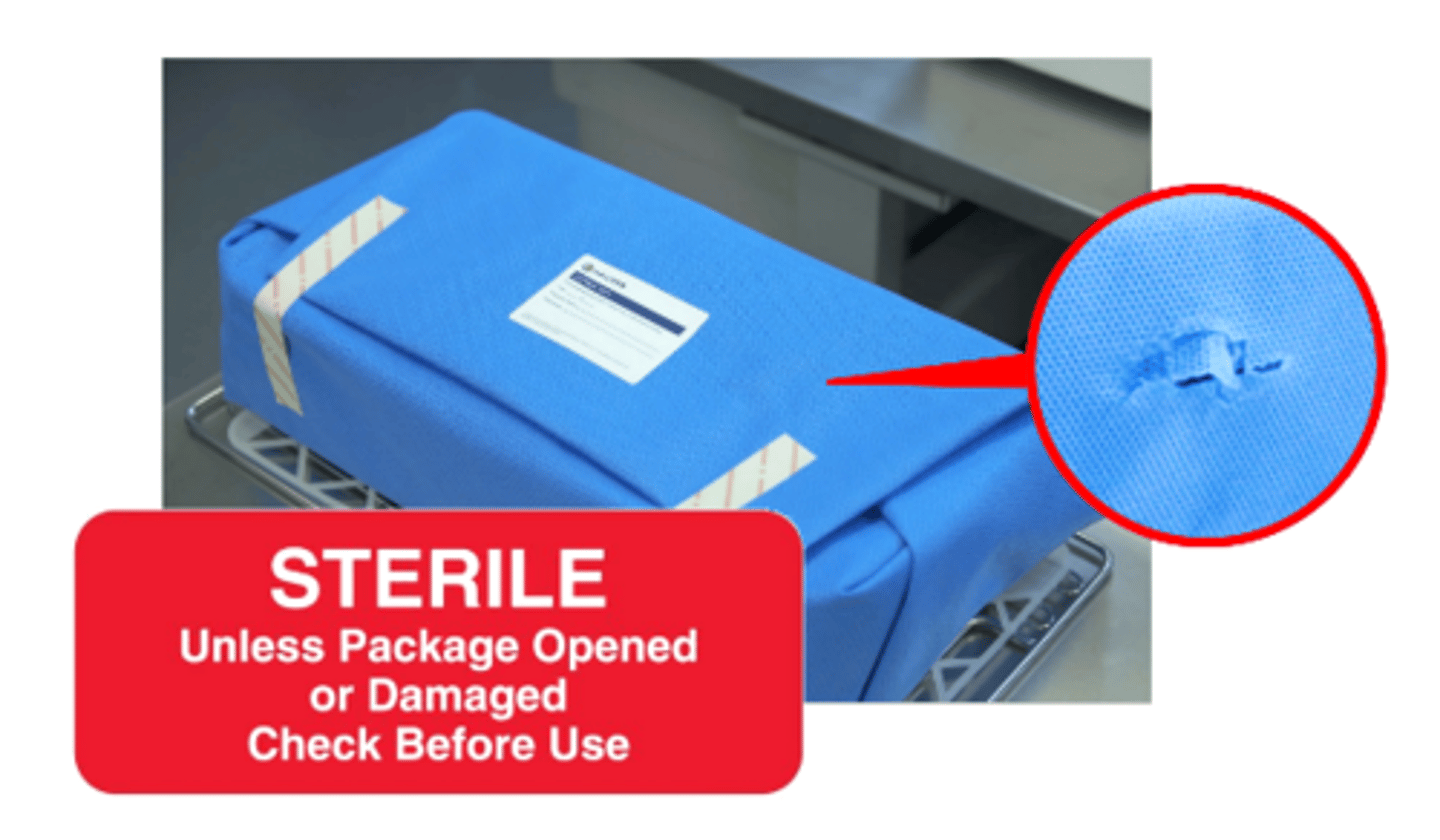
sterility (event-related) (ERS) (n)
the principle that items are considered sterile unless the integrity of the packaging is compromised (damaged) or suspected of being compromised
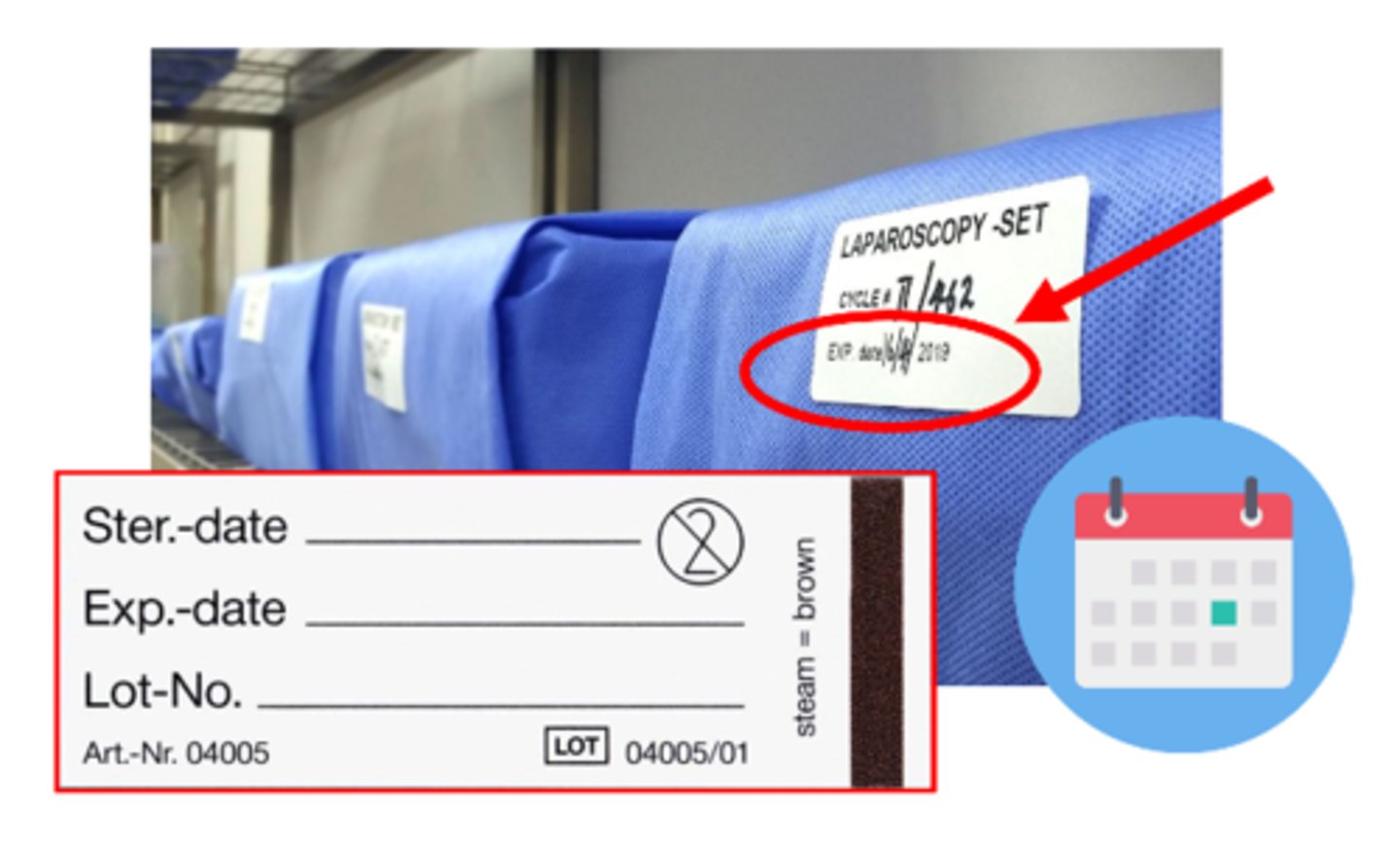
sterility (time-related) (n)
the principle that a package is considered sterile until a specific expiration date is reached
sterility assurance level (SAL) (n)
the probability of a viable (live) microorganism being present on a device after sterilization
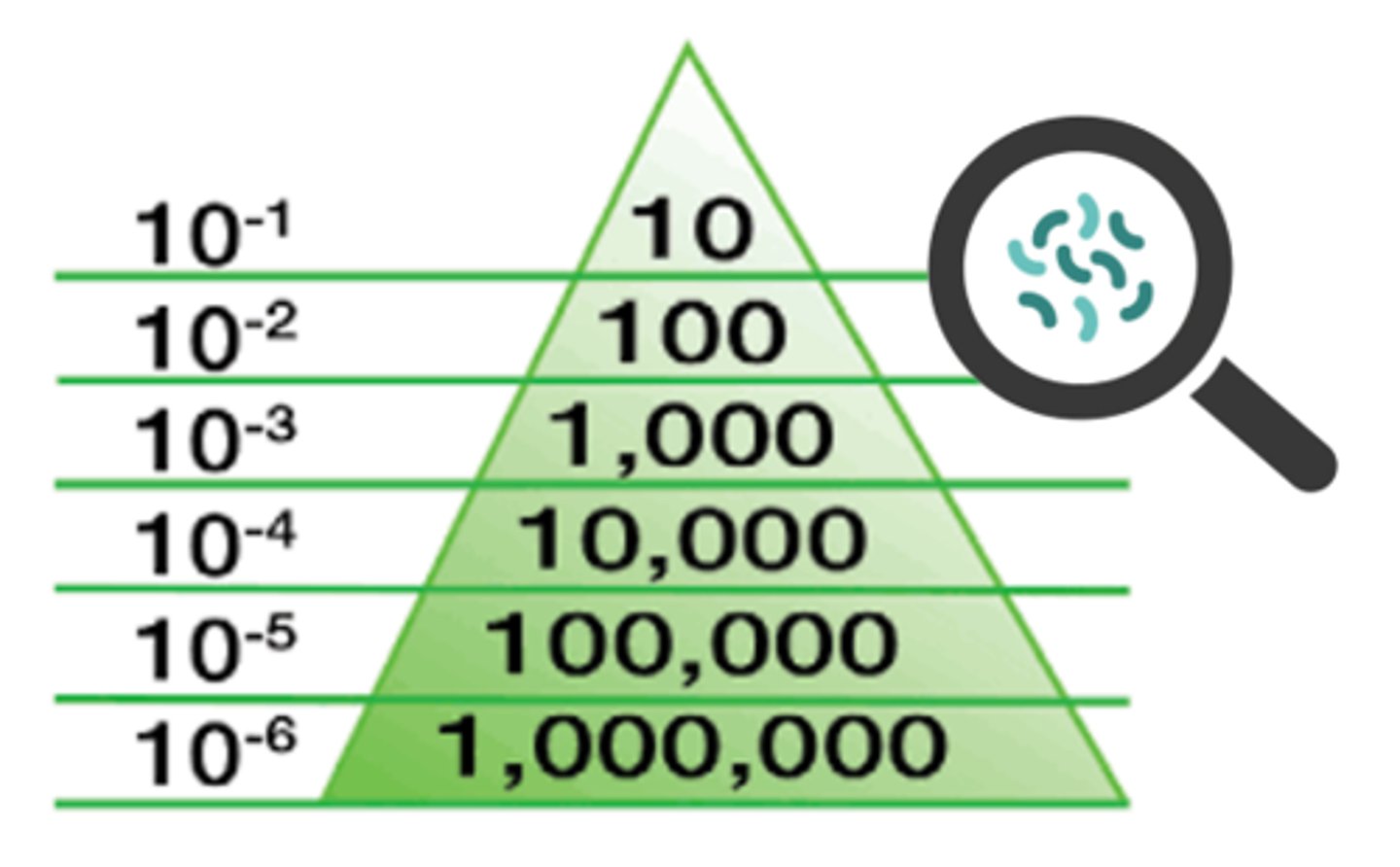
sterilization (n)
the process by which all forms of microbial life (bacteria, viruses, spores, fungi) are completely destroyed

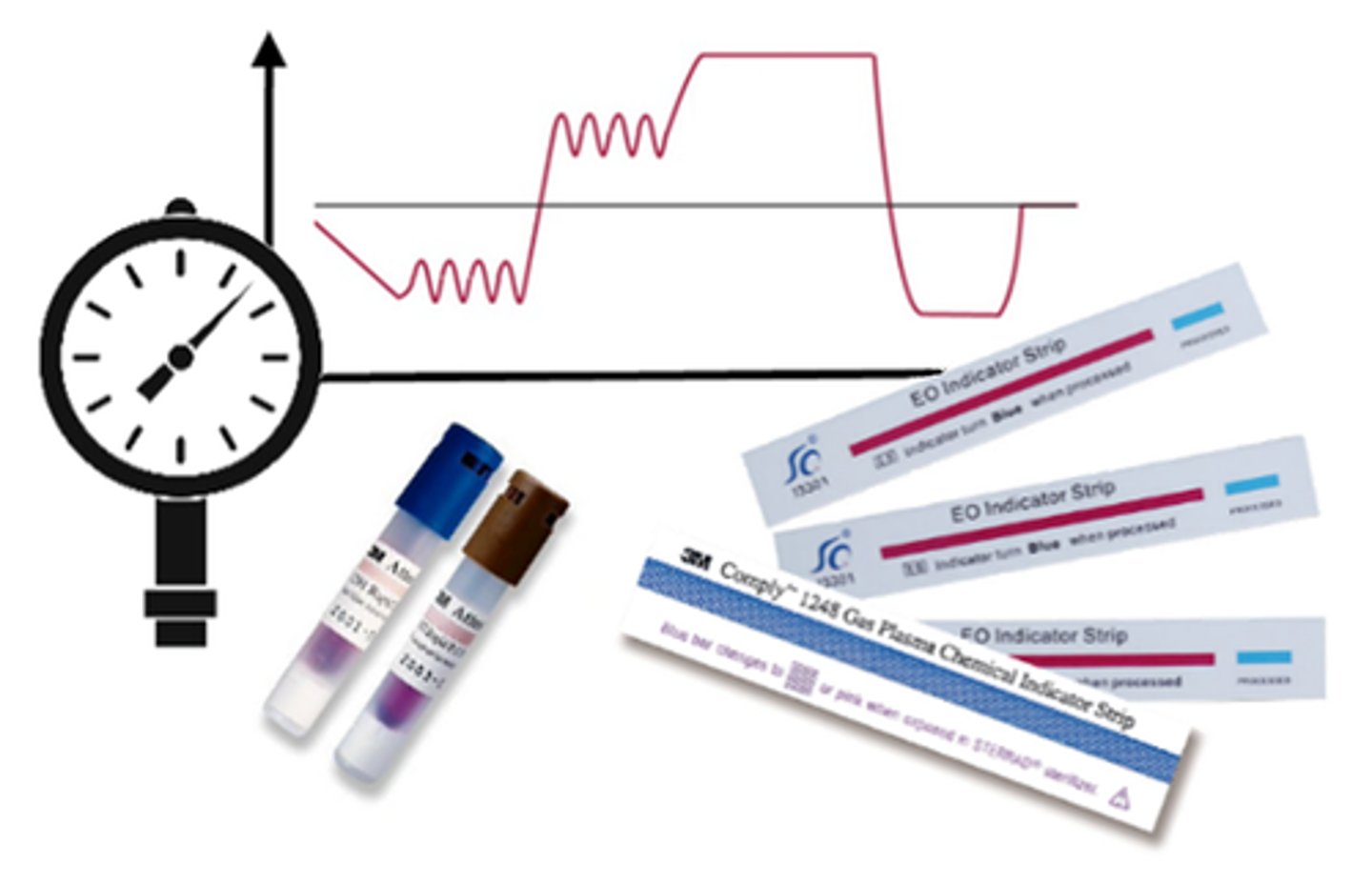
sterilization performance monitoring (n)
the system’s efficacy can be reliably monitored with physical, chemical, & biological indicators (basic requirement for low-temperature sterilization)
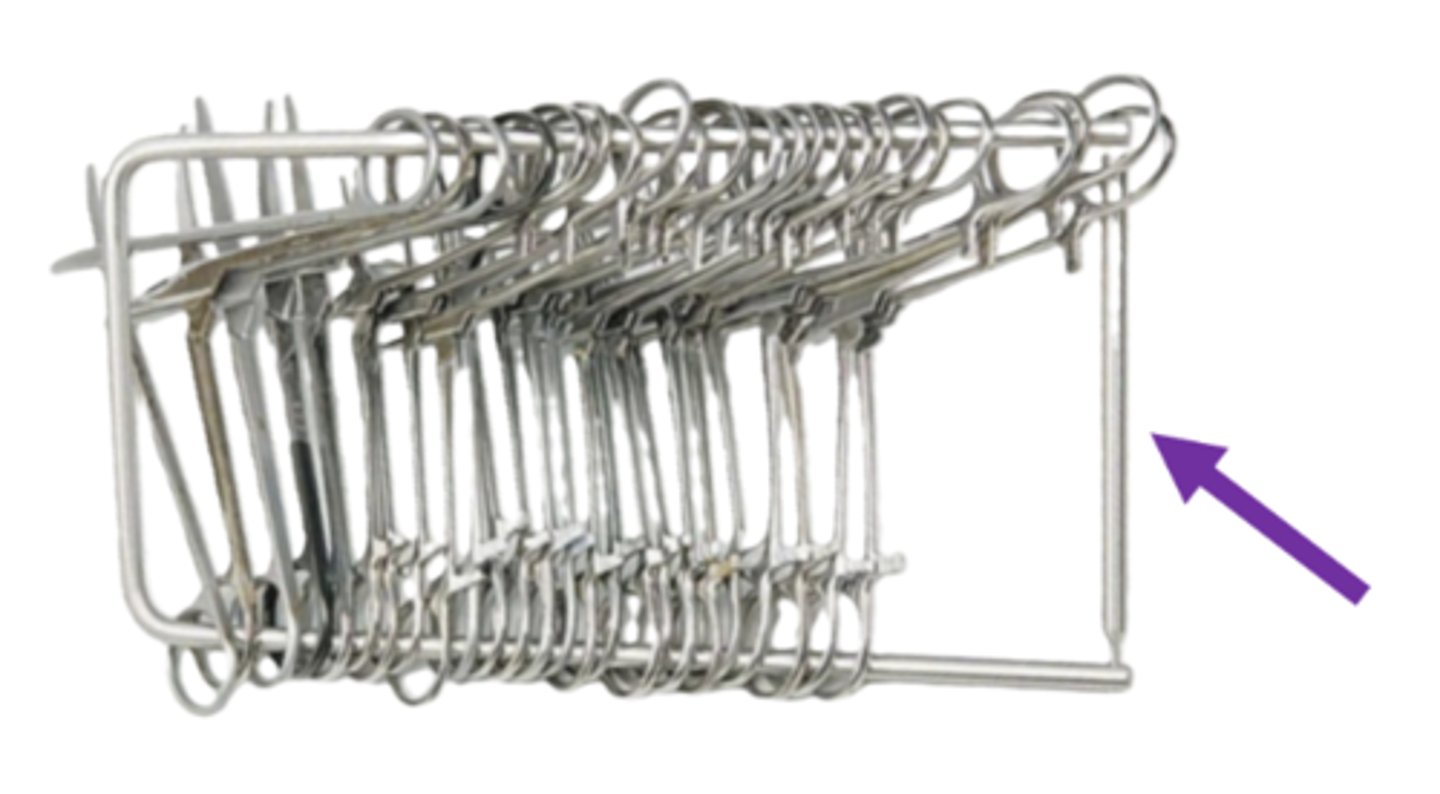
stringers (n)
metal instrument holders that keep instruments organized, assist in faster assembly & safer handling, & hold hinged instruments in the open position during sterilization
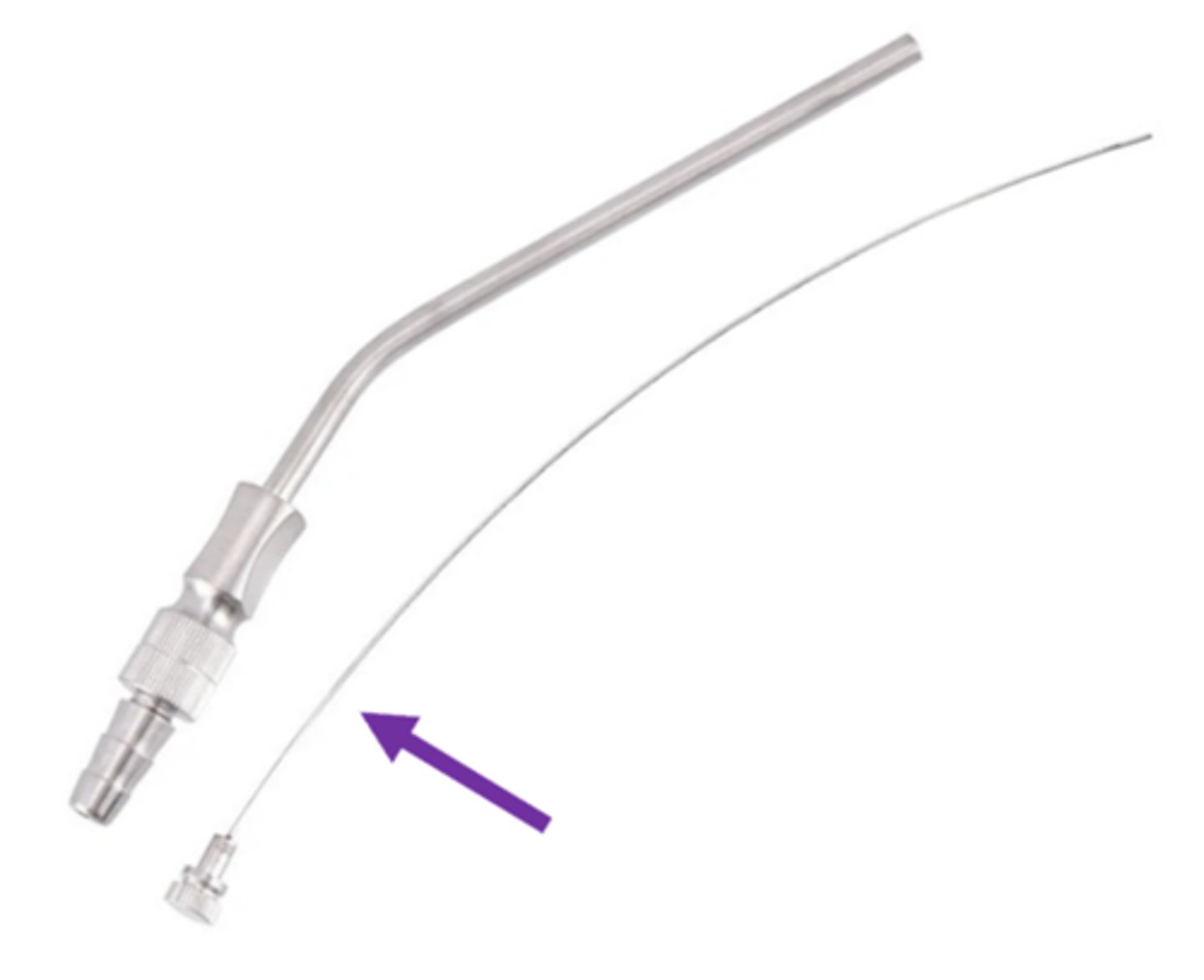
stylet (suction stylet) (n)
a metal wire used during surgical procedures to unclog the channel (lumen) of a suction device
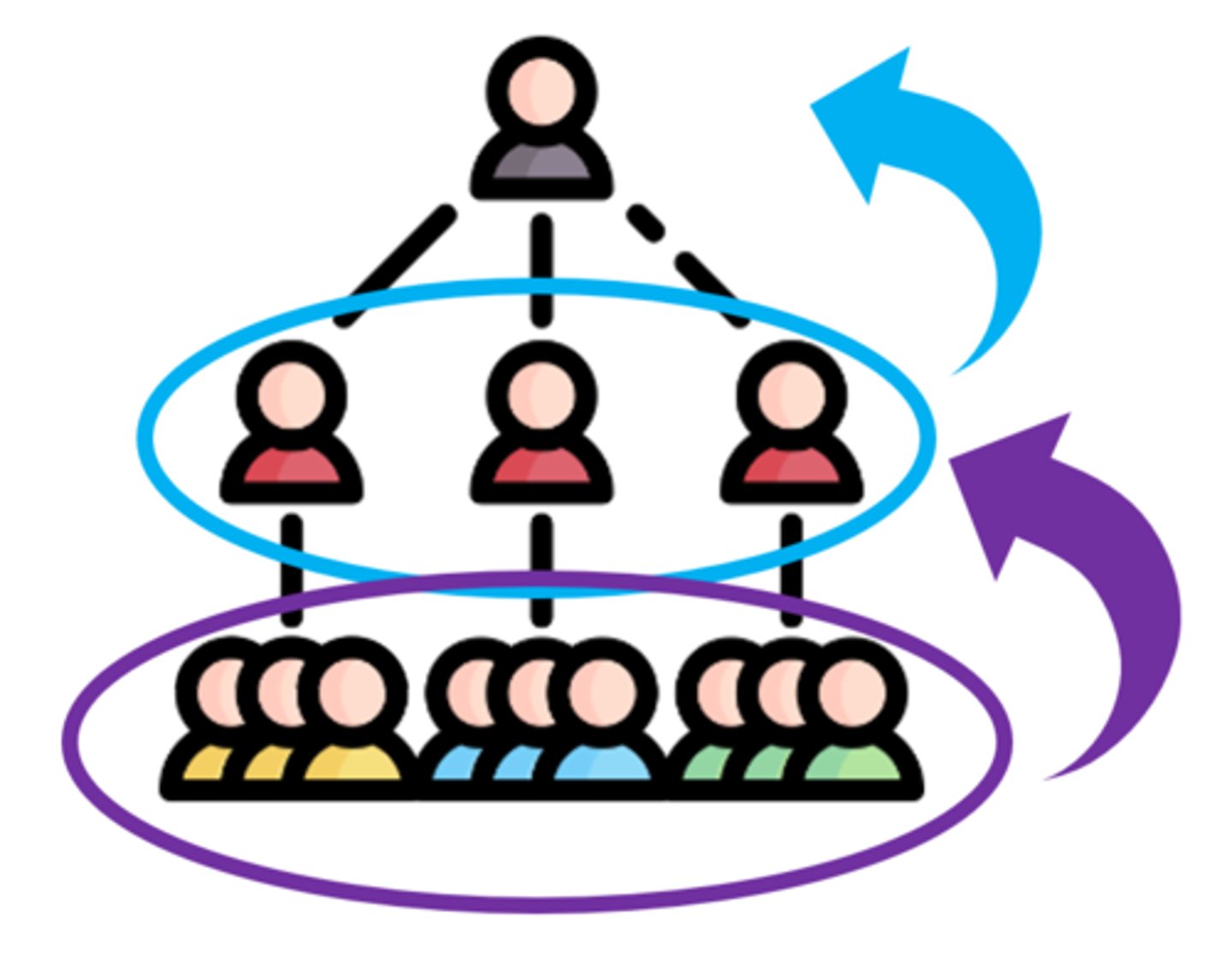
subordinate (n)
an employee who is supervised by someone in a higher organizational position
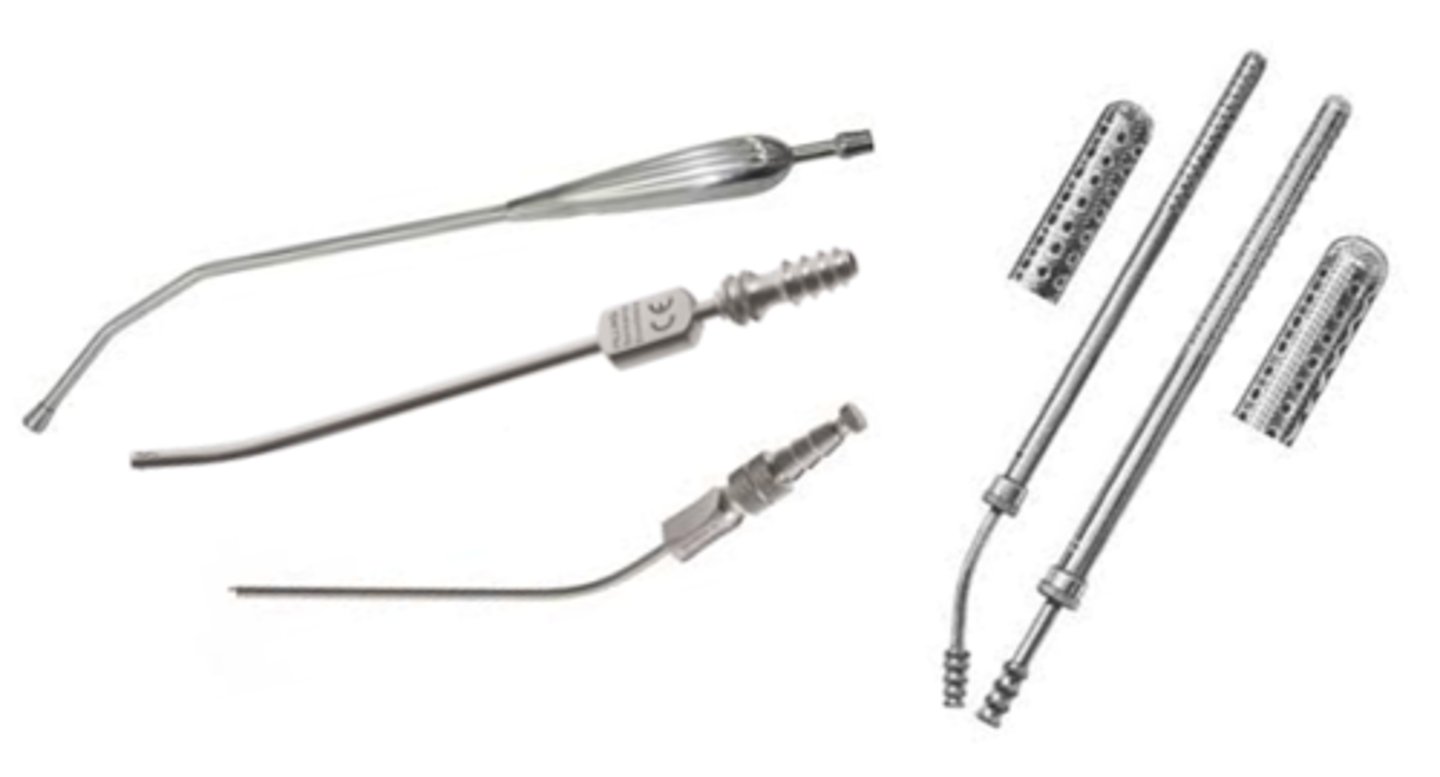
suction devices (n)
surgical instruments used to extract (suction) blood & other fluids from a surgical site (300 series)
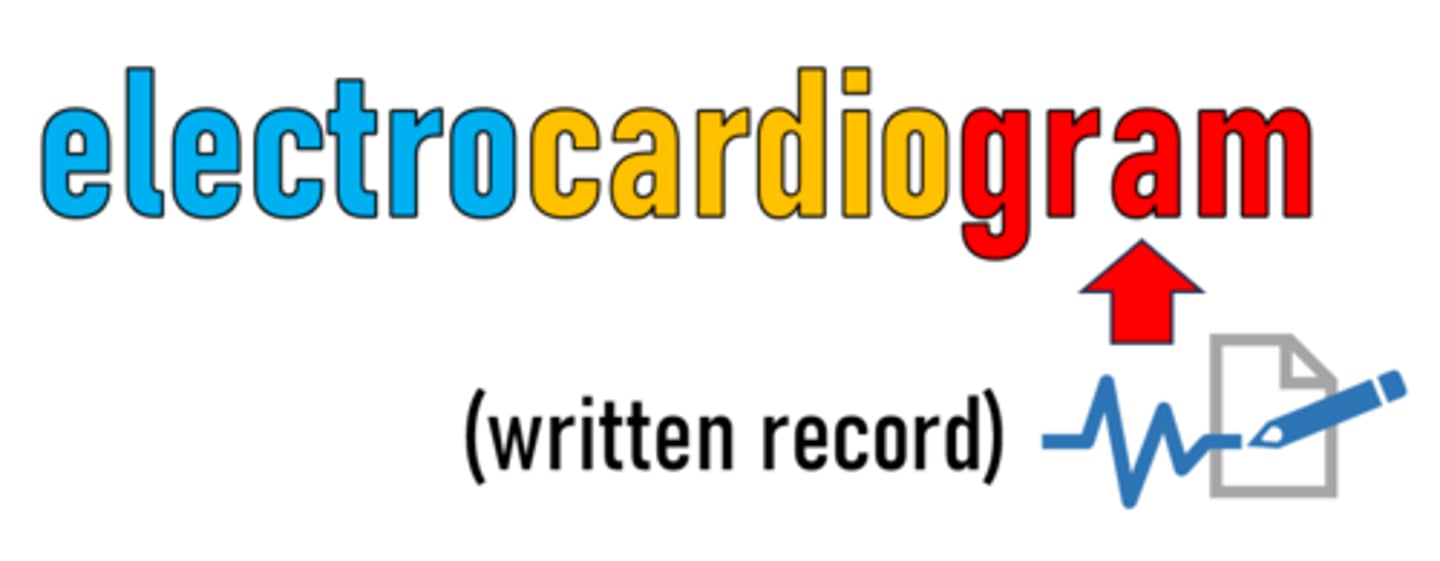
suffix word element (n)
the part of a word that comes after the root and alters the word's meaning
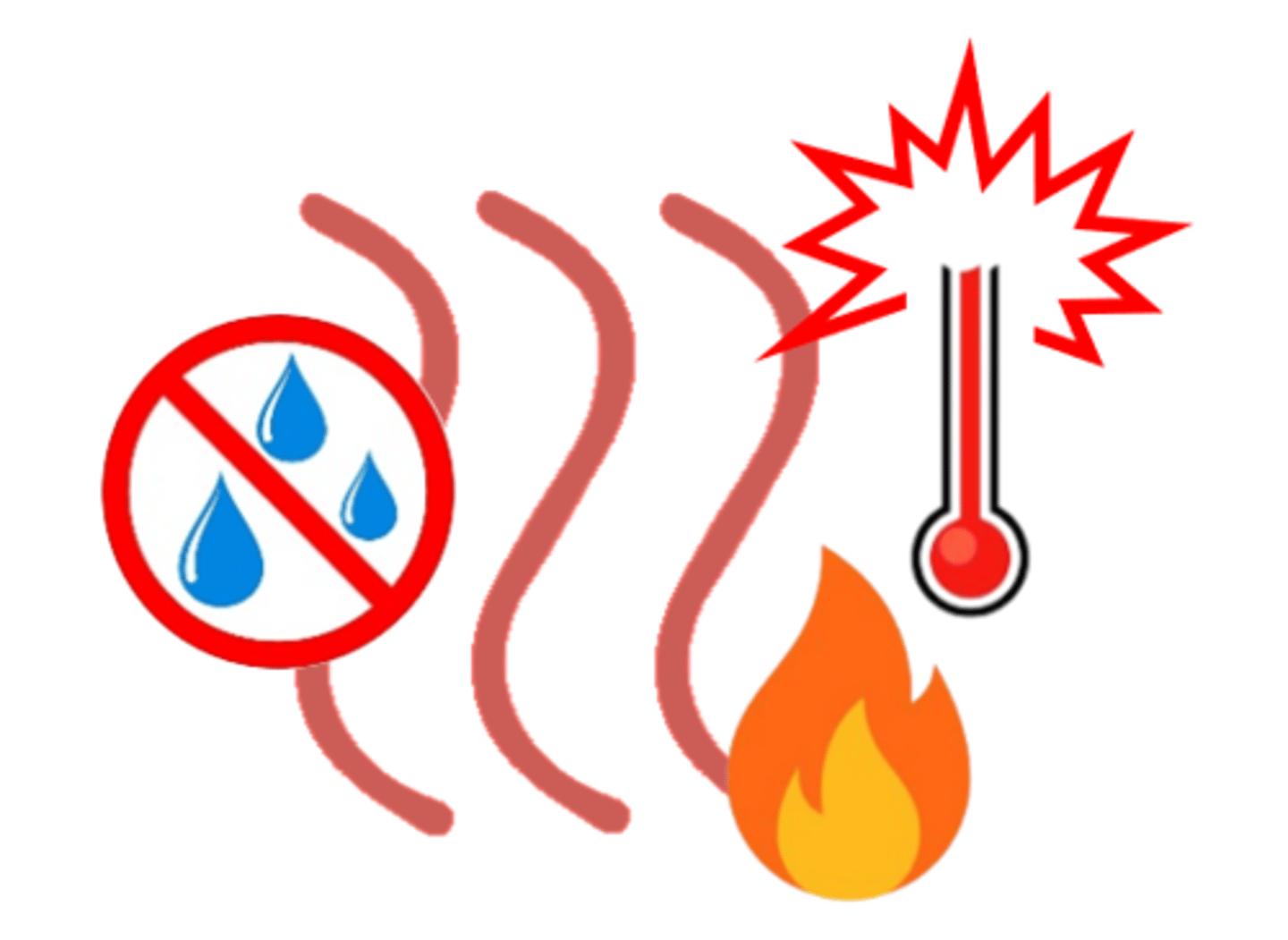
superheated steam (n)
dry steam that occurs when saturated (wet) steam becomes too hot, ineffective for sterilization because it can char or burn items
Supply Chain Management (SCM) (n)
the department that procures & distributes resources & manages supplies, goods, & services to providers & patients

surfactant (n)
a substance that lowers the surface tension of water & increases the solubility of organic compounds

surgical site infection (SSI) (n)
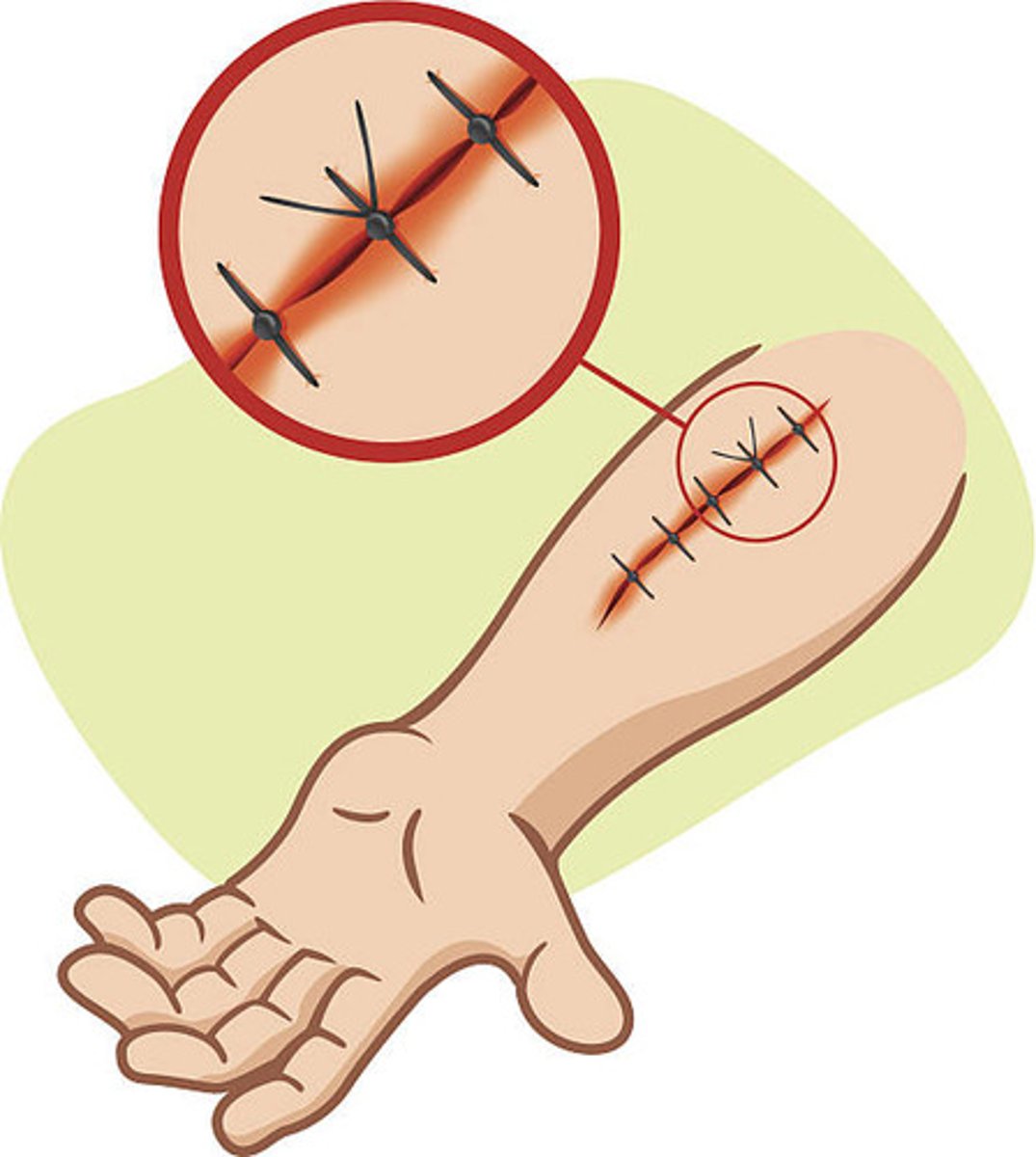
an infection that occurs after surgery in the part of the body where the surgery took place
surgical supplies (n)
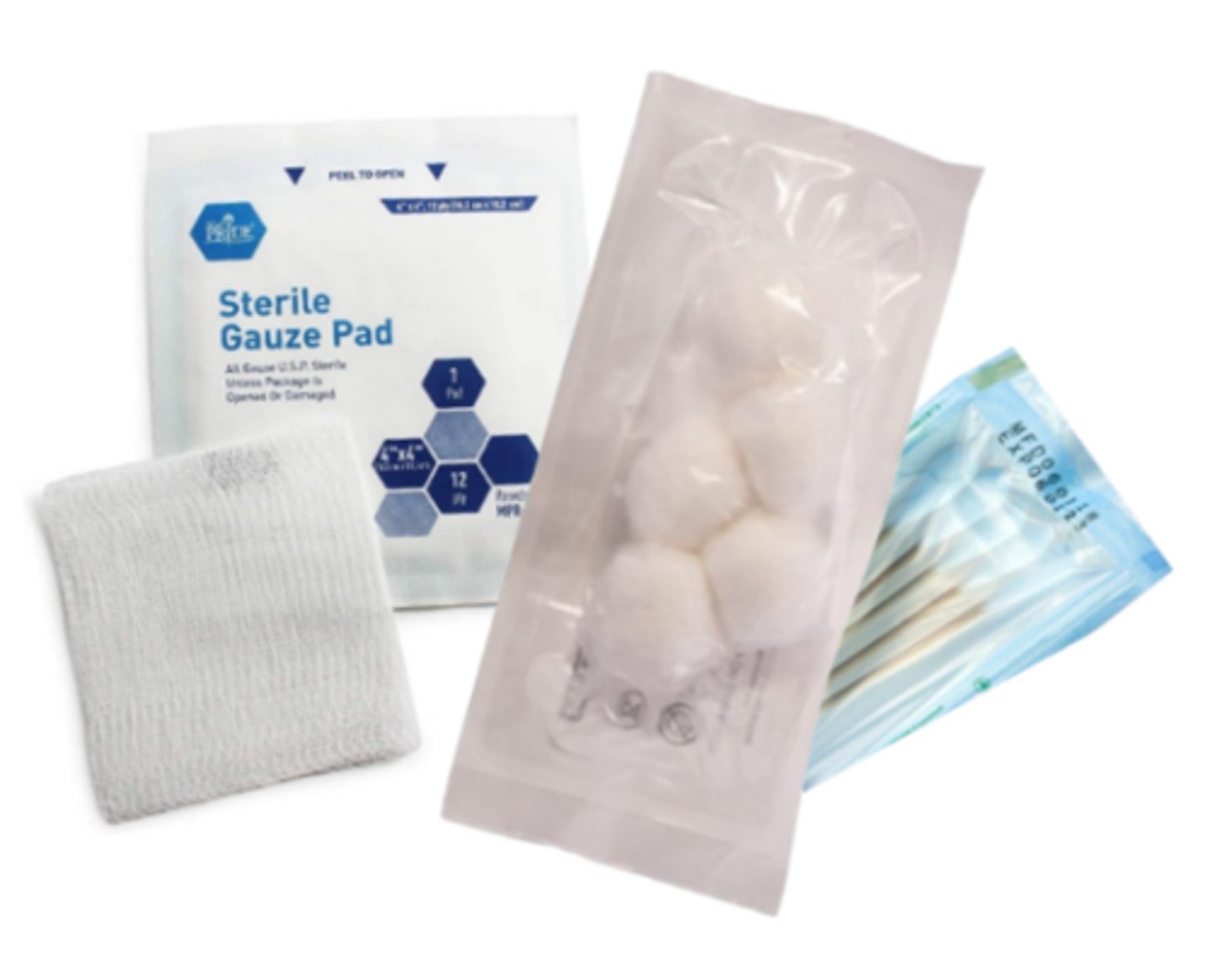
non-instrument supplies such as cotton balls & dressings, most of which are available presterilized
susceptible host (n)
a person or animal that lacks the ability to resist infection by an infectious agent (chain of infection element #6)

sustainability (n)
processes designed to reduce harm to the environment or the depletion of natural resources, thereby supporting long-term ecological balance
tabletop steam sterilizers (n)
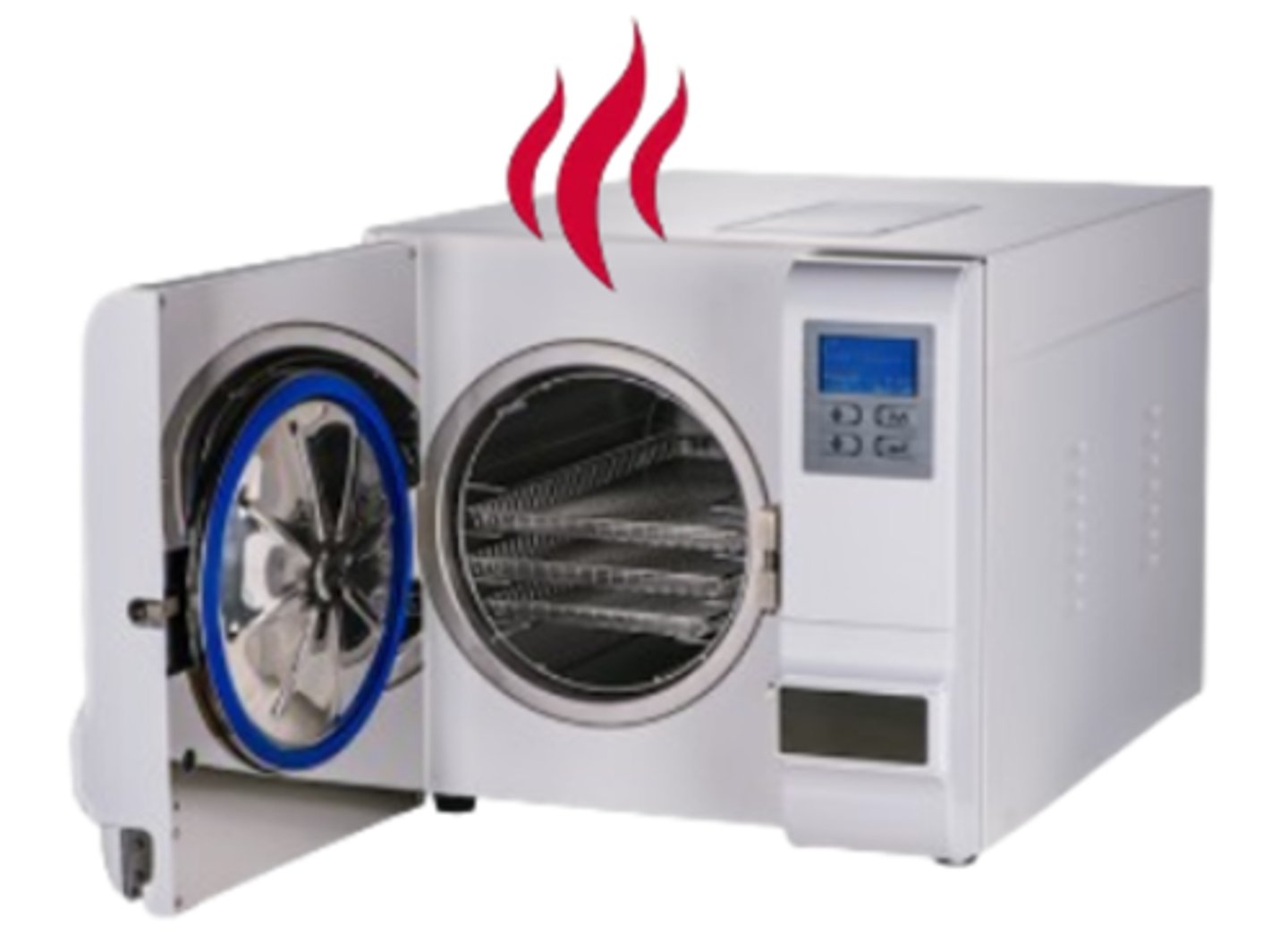
small sterilizers frequently used in clinics & dental offices; water is poured into them & heated electrically to make steam
tamper-evident seals (n)
sealing methods that allow users to determine if sterile packages have been opened (contaminated), helping identify packages that are unsafe for patient use

task group (n)
a group of employees that works together to perform a specific job, something essential & non-routine (formal employee group)

technical information reports (TIRs) (n)
reports developed by experts in the field that contain valuable information needed by the healthcare industry

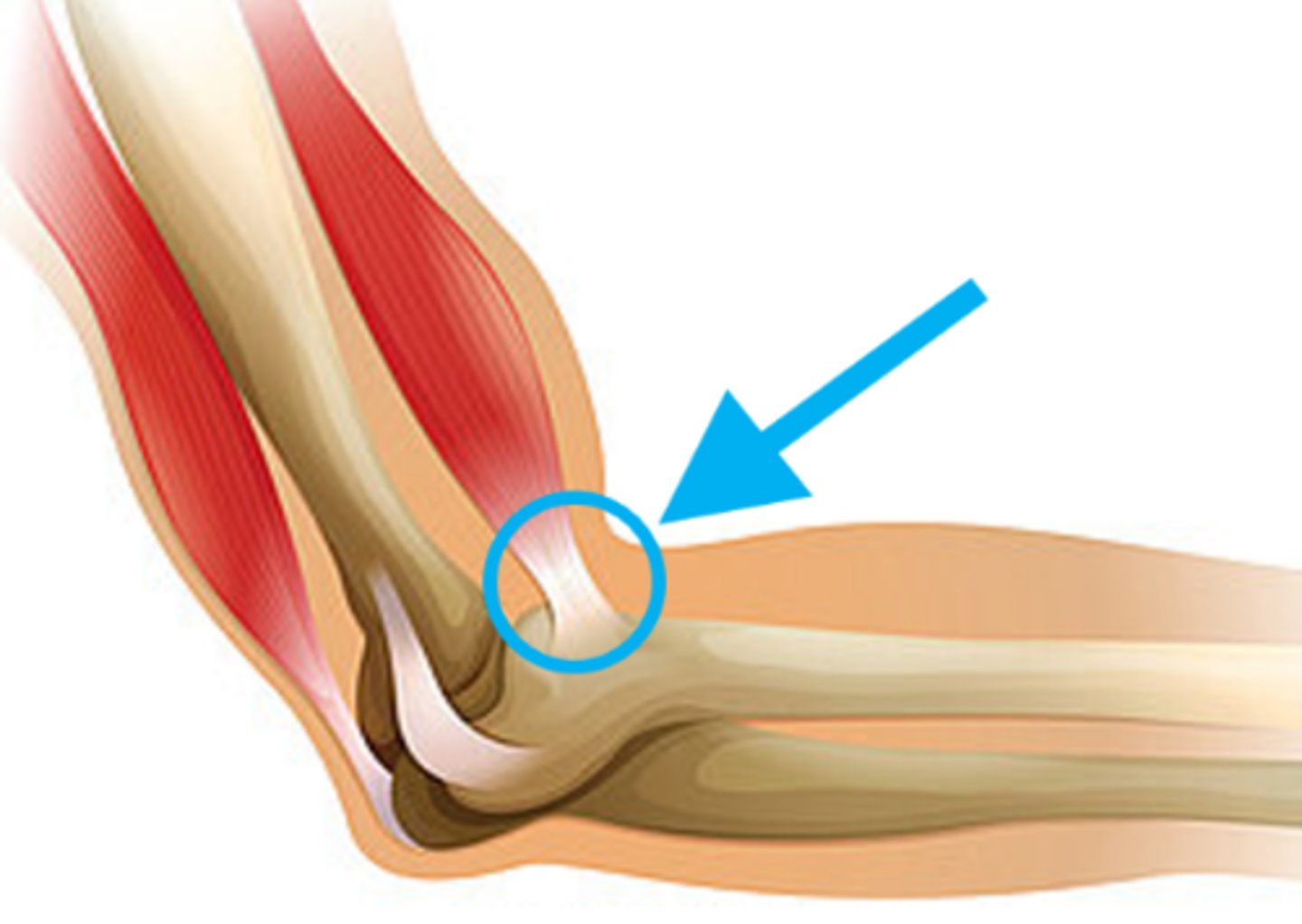
tendon (n)
a cord of fibrous tissue that attaches a muscle to a bone
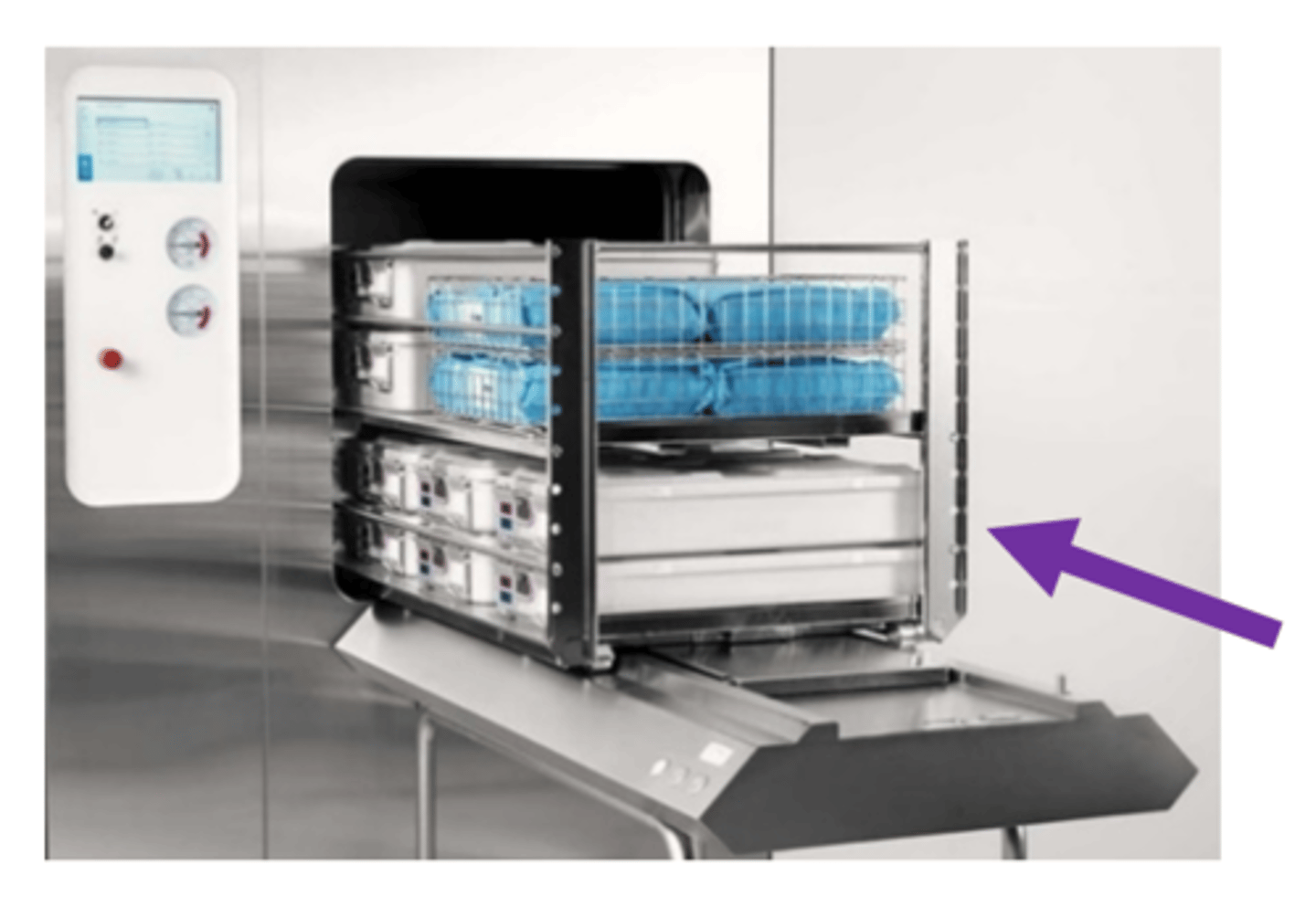
terminal sterilization (n)
the process by which surgical instruments & medical devices are sterilized in their final containers, allowing them to be stored until needed
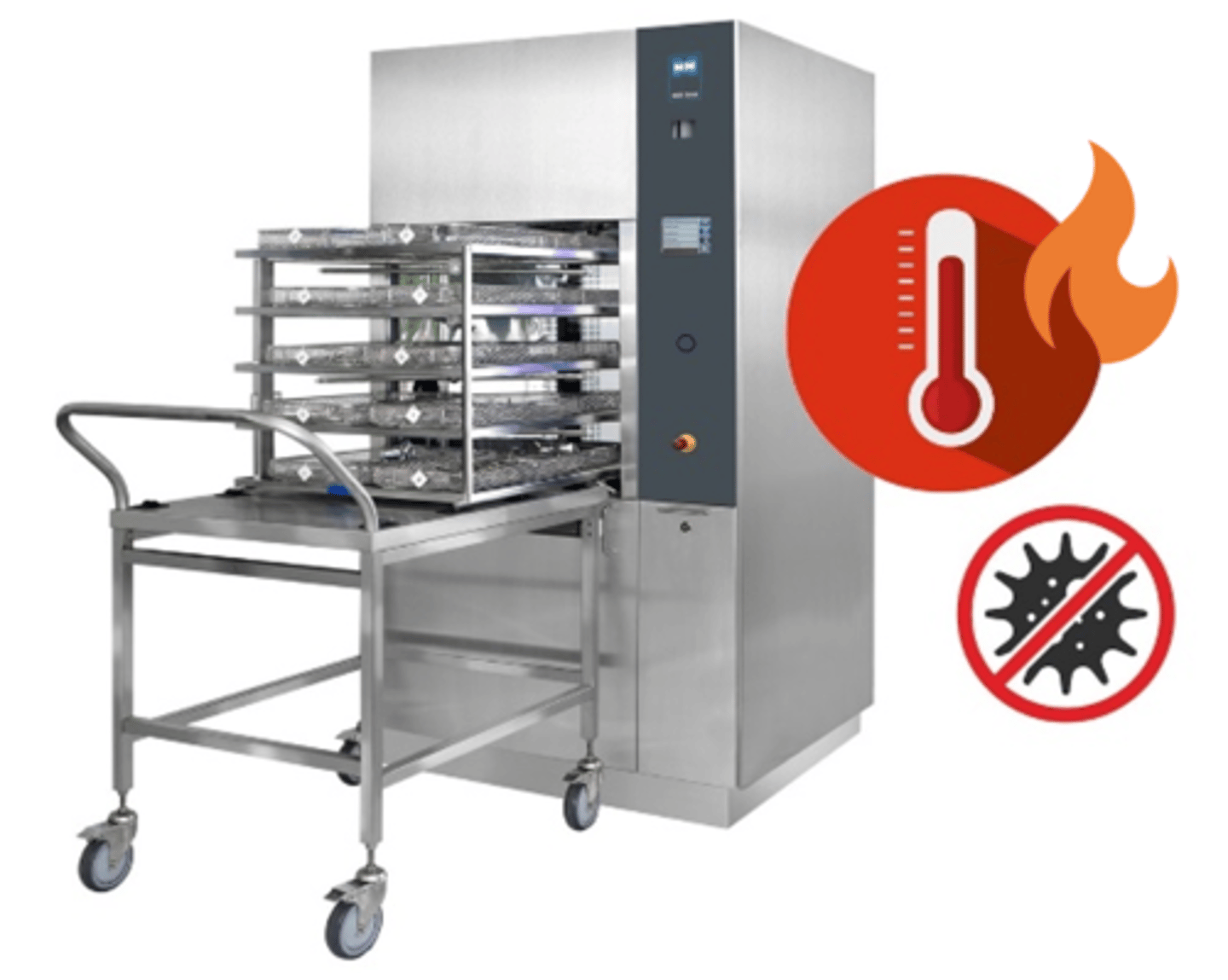
thermal disinfection (n)
the use of heat to reduce the amount of microorganisms (excluding spores) on a medical device
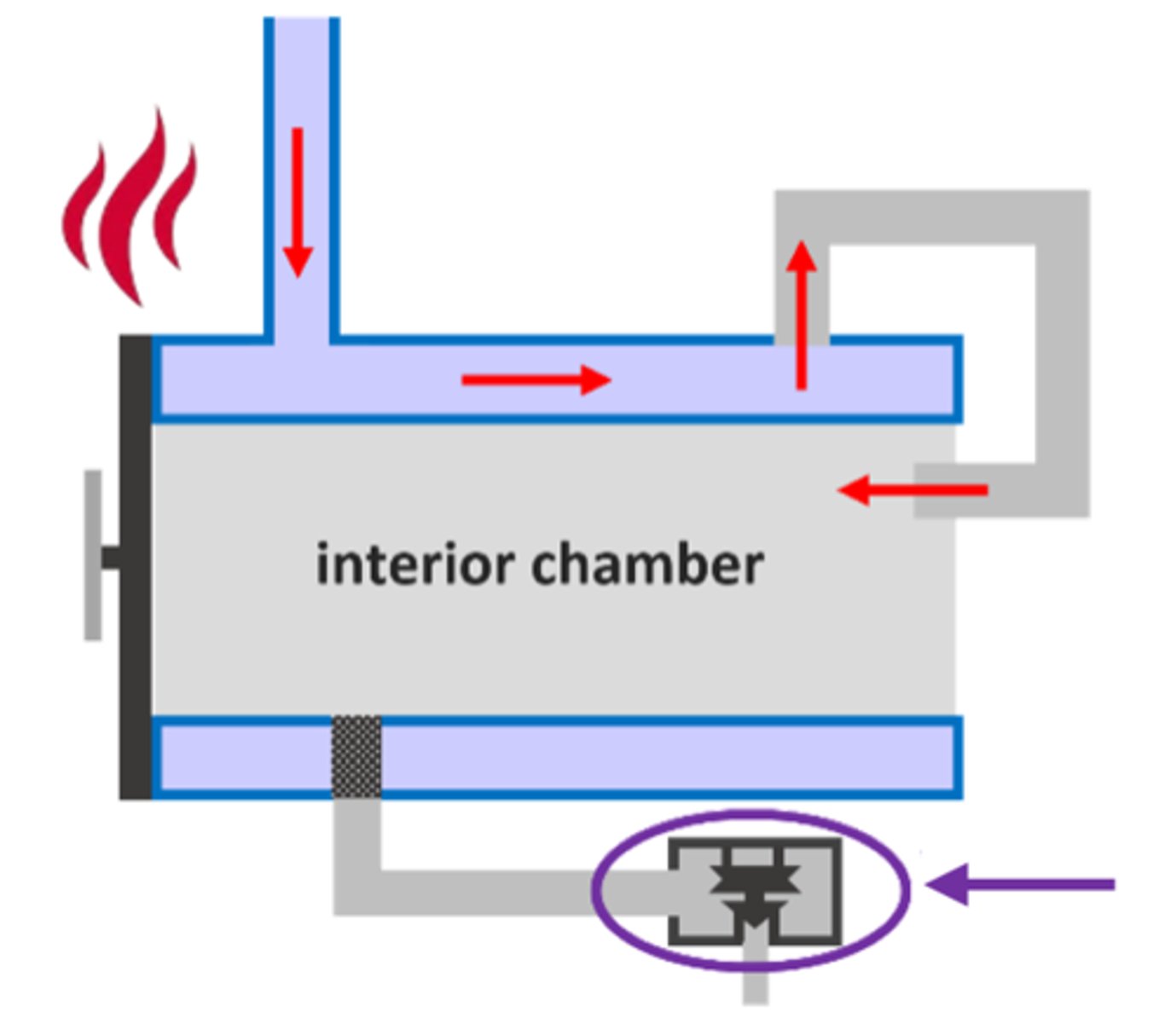
thermostatic trap (n)
a device located in the drain line of a steam sterilizer with valves that open or close in response to steam temperature, controlling the flow of air & condensate from the chamber
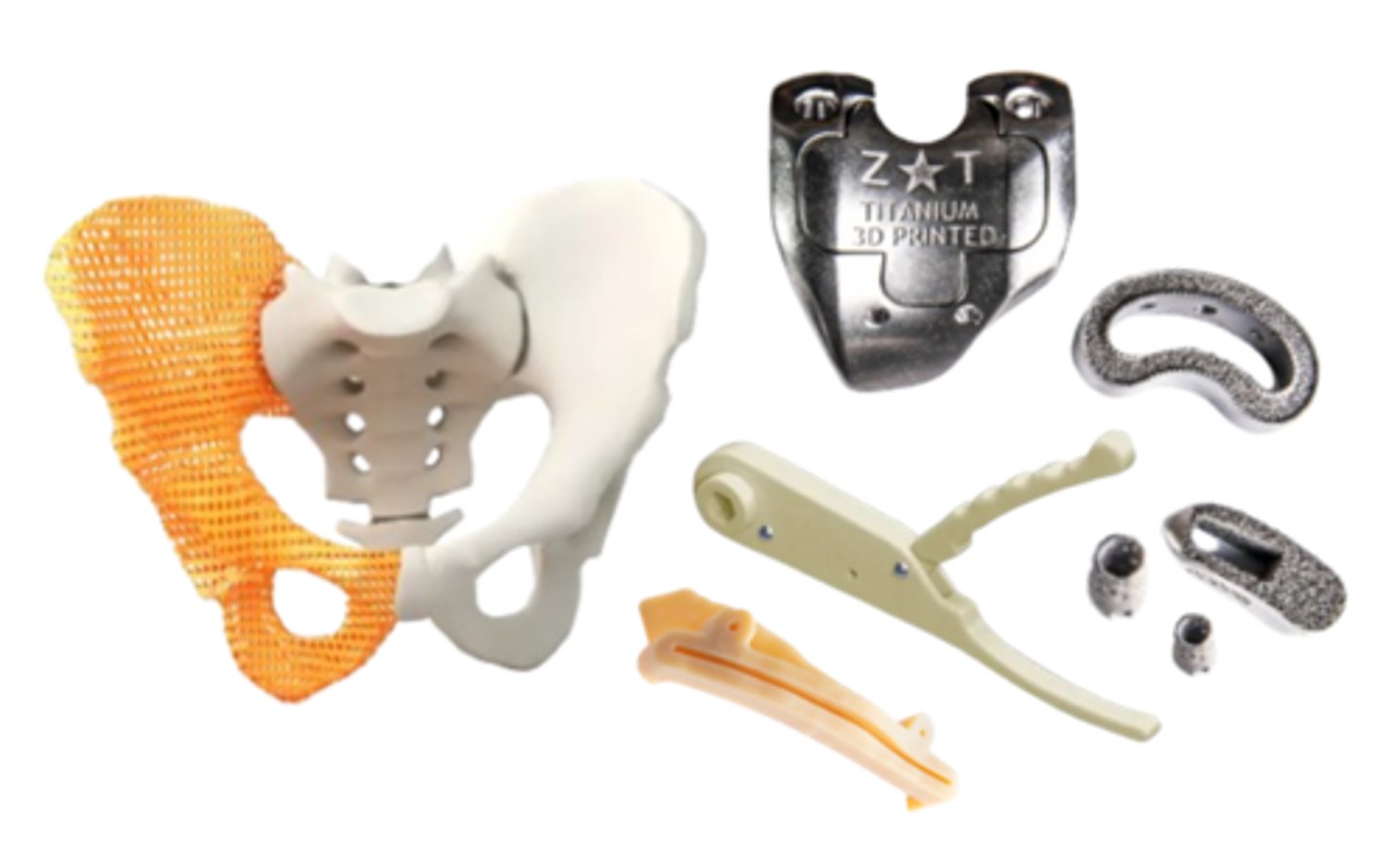
three-dimensional (3D) devices (n)
devices that are custom-made with different materials, created for specific sets or specific patients (one of the newest types of devices being used today)
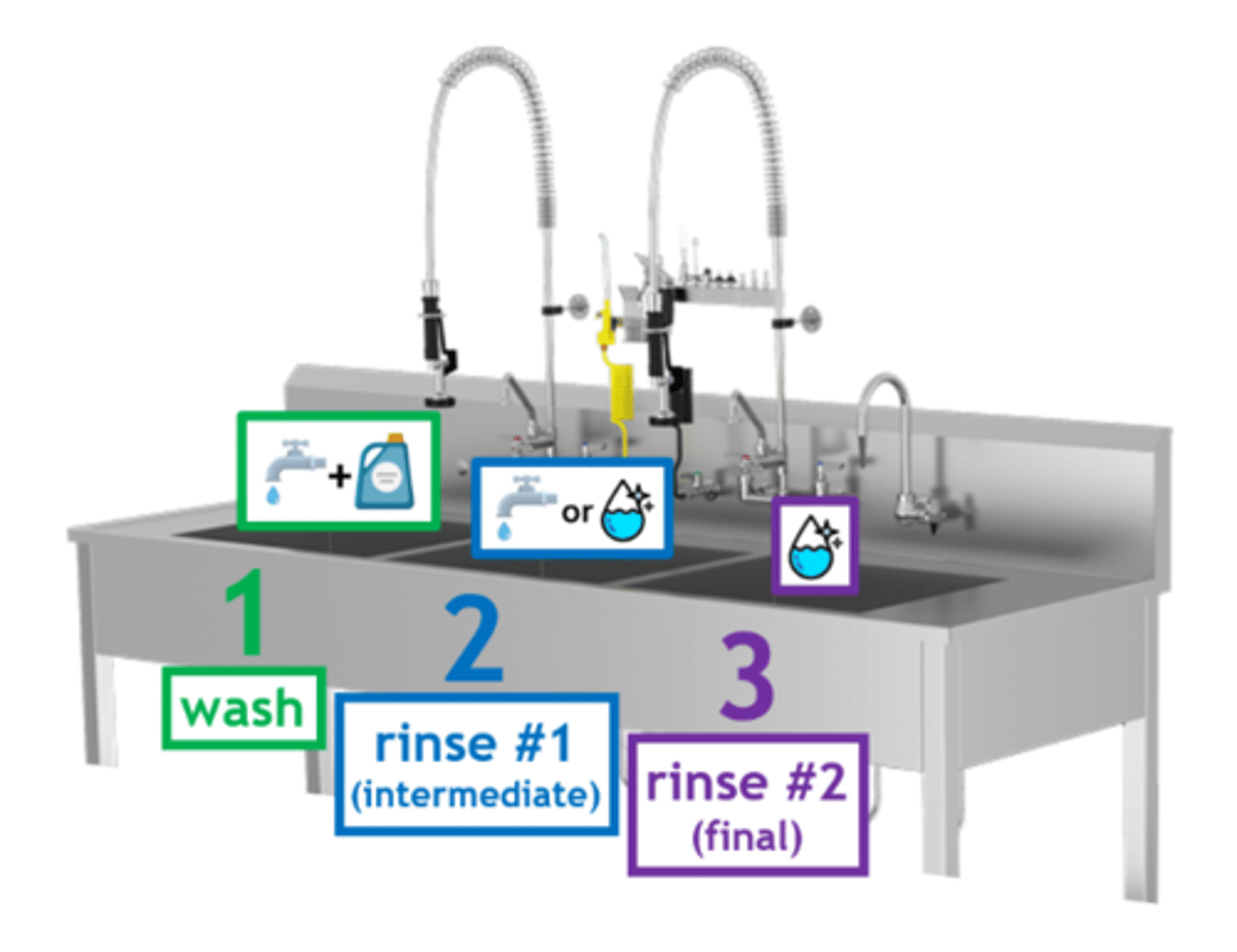
three-sink arrangement (n)
a manual cleaning setup with three sink bays for washing, intermediate rinsing, & final rinsing, with the workflow moving from dirty to clean
time-weighted average (TWA) (n)
the amount of a substance employees can be exposed to over an eight-hour day

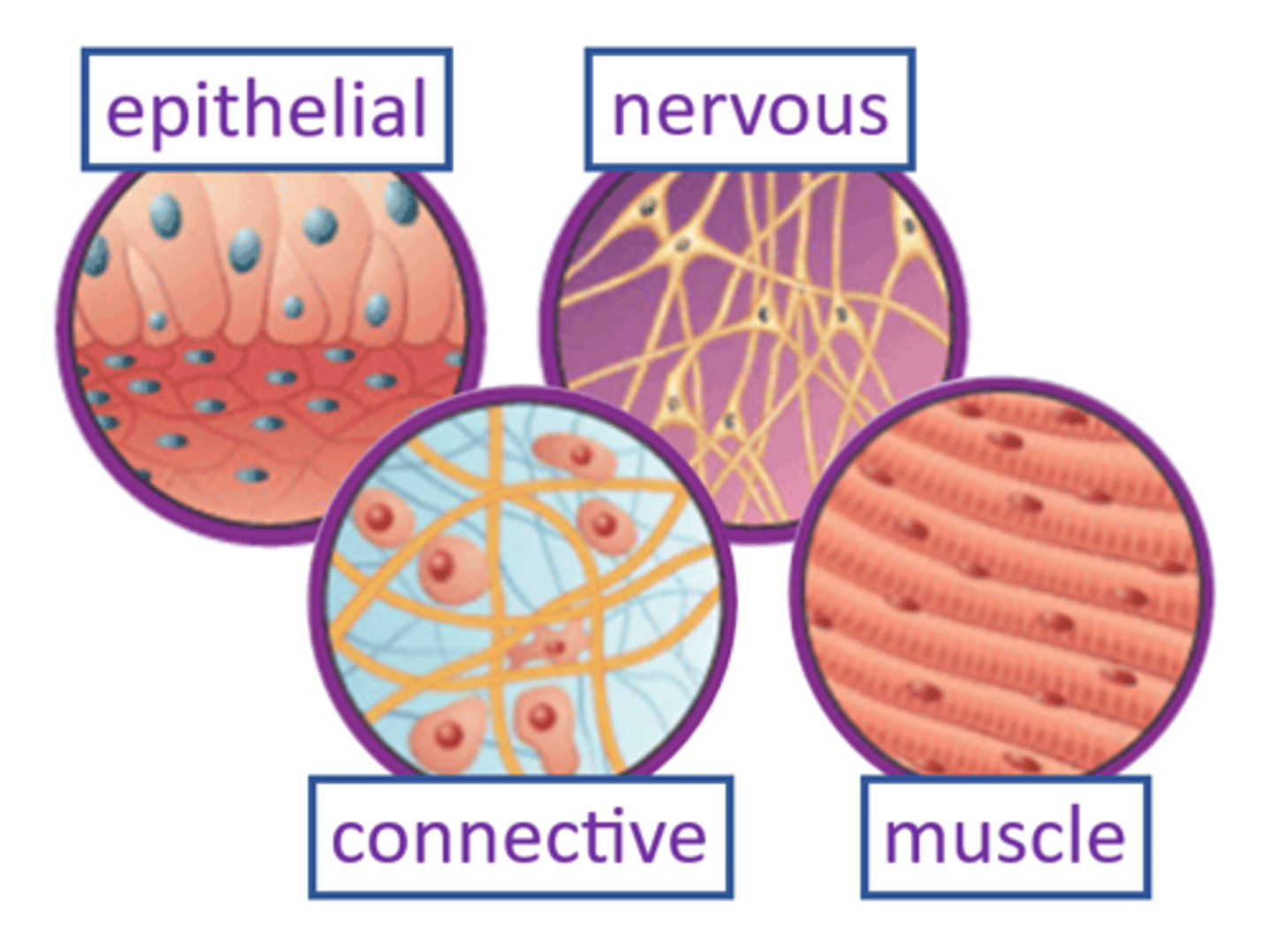
tissue (n)
a group of similar cells that perform a specialized function
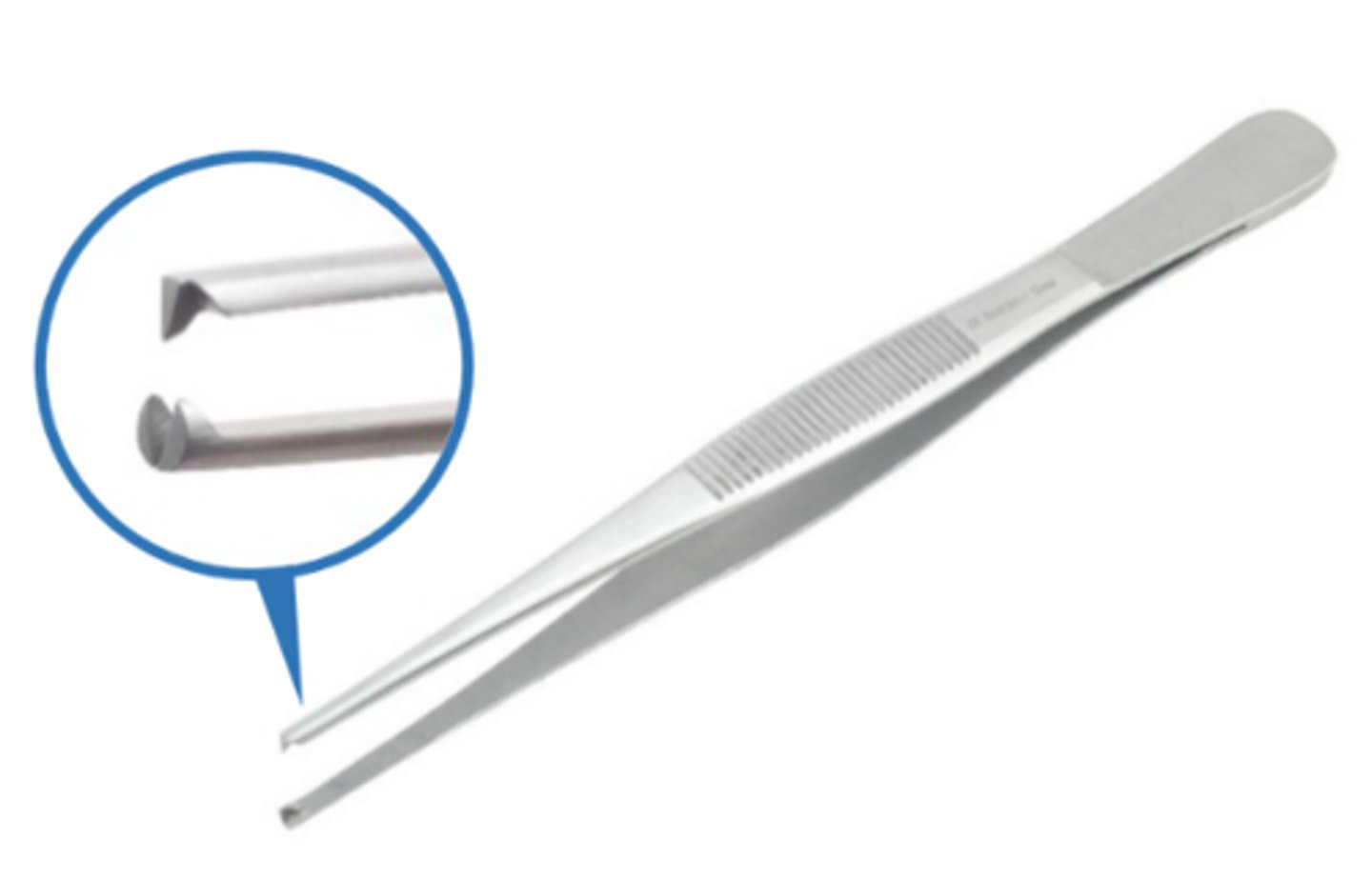
tissue forceps (n)
tweezer-like forceps whose primary function is to manipulate tissue; the tips have multiple teeth that provide a secure grip
Total Quality Improvement (TQI) (n)
a quality assurance program that measures the current output of a process or procedure & then modifies it to increase output, efficiency, and/or effectiveness
Total Quality Management (TQM) (n)
a quality assurance program based on participation of all members, aimed at long-term success through customer satisfaction, benefits to society, & benefits to organization members
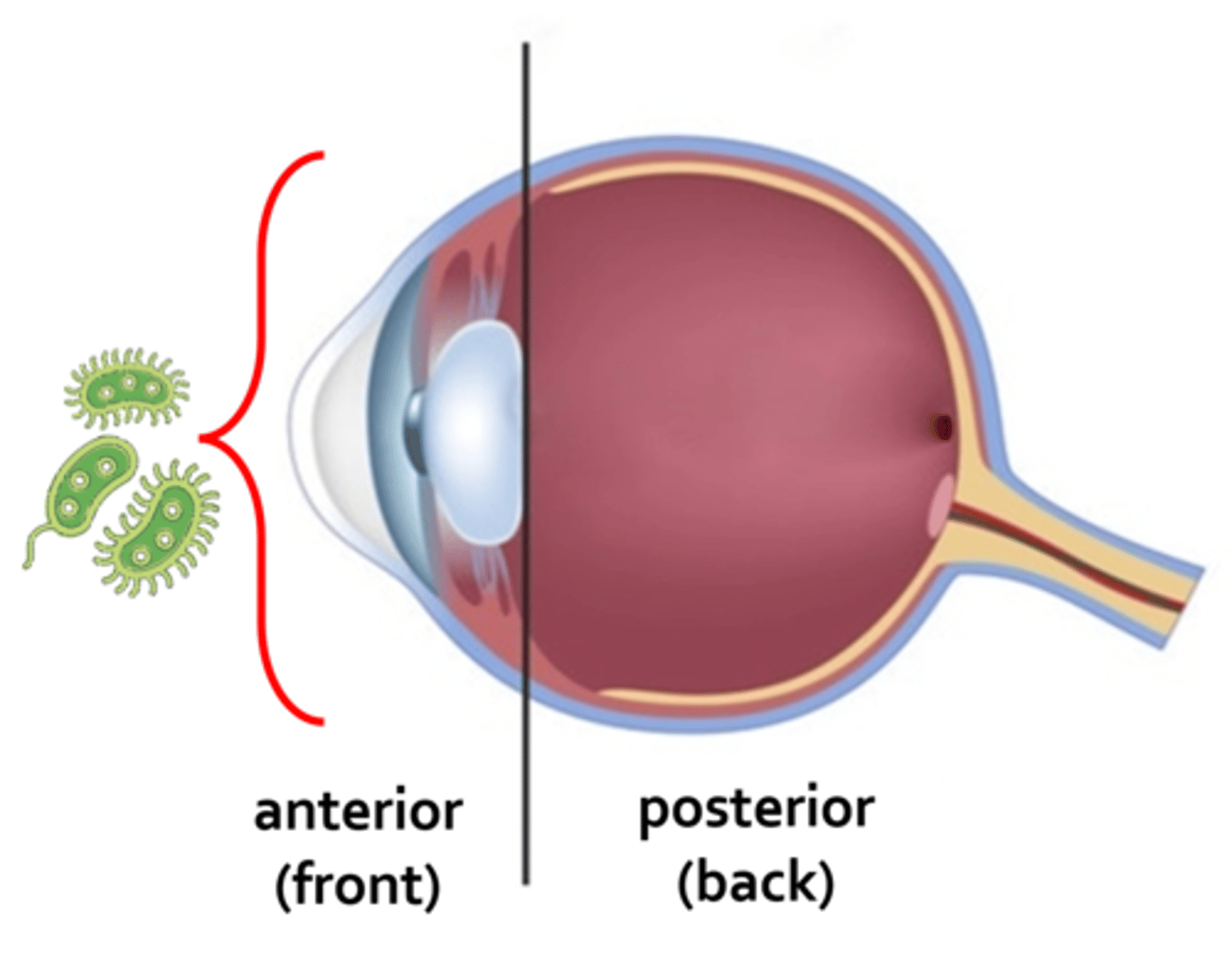
toxic anterior segment syndrome (TASS) (n)
a toxic inflammatory reaction that results from contaminants entering the anterior segment (front part) of the eye during eye surgery
tungsten carbide (n)
a metal that is much stronger, harder, & lasts longer than stainless steel, used on the blades of some scissors & needle holders (identified by gold handles/rings)

turnover/turnaround (n)
a term used to describe instruments or equipment that must receive priority processing in order to be made available for another procedure

ultrasonic cleaners (n)
mechanical cleaners used mostly for fine cleaning, removing soil from hard-to-reach areas (joints, crevices, lumens) through cavitation
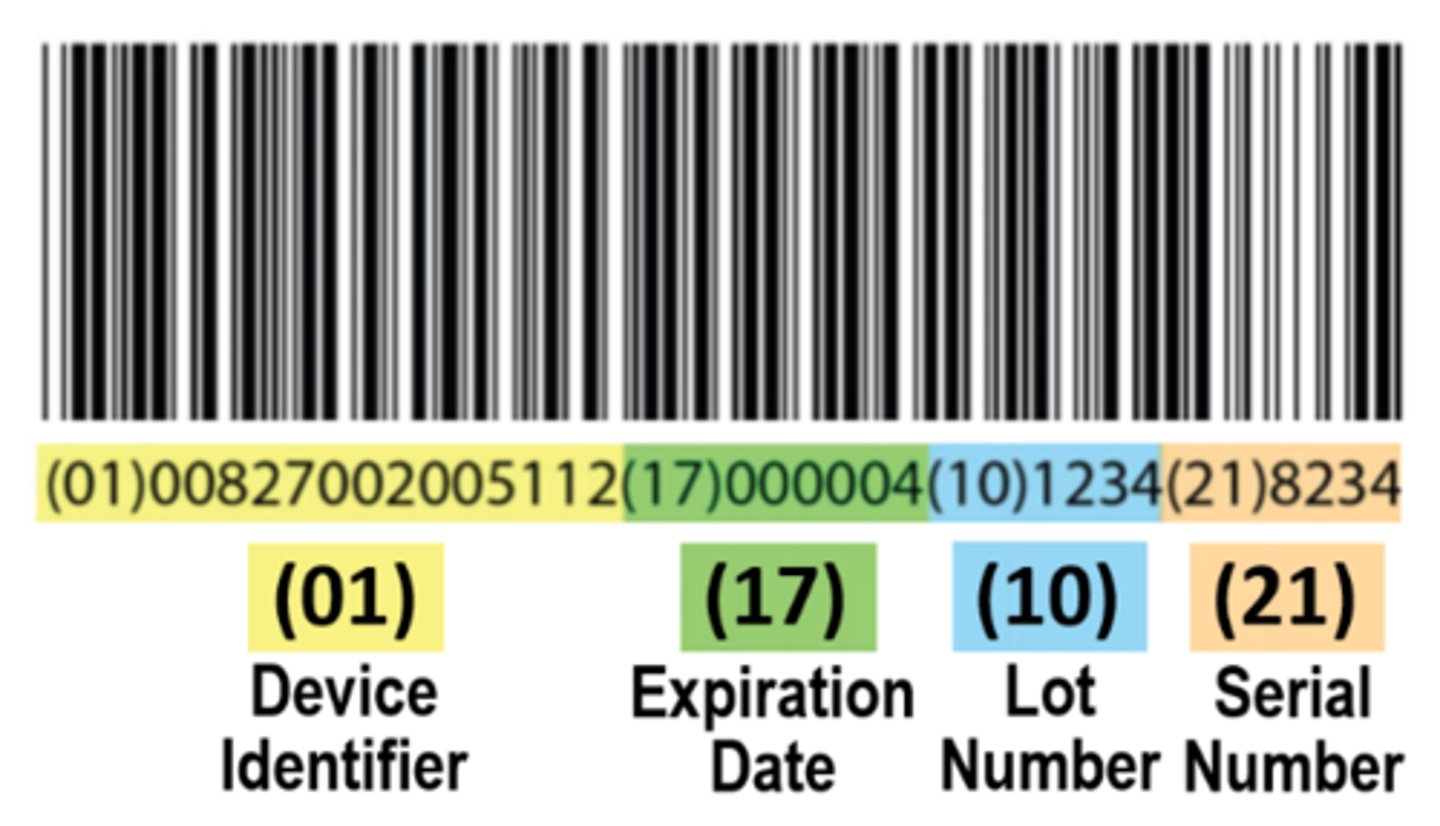
unique device identifier (UDI) system (n)
a system devised by the FDA to mark & track medical devices within the healthcare supply chain; each device has a distinct number that identifies the manufacturer & important product information
unrestricted areas (n)
areas where regular street attire is permitted, such as normal traffic areas (corridors, offices, locker rooms) & general public areas (cafeterias, waiting rooms)

utility water (n)
water as it comes from the tap, that may need further treatment to achieve the required specifications (mainly used for flushing, washing, & rinsing)

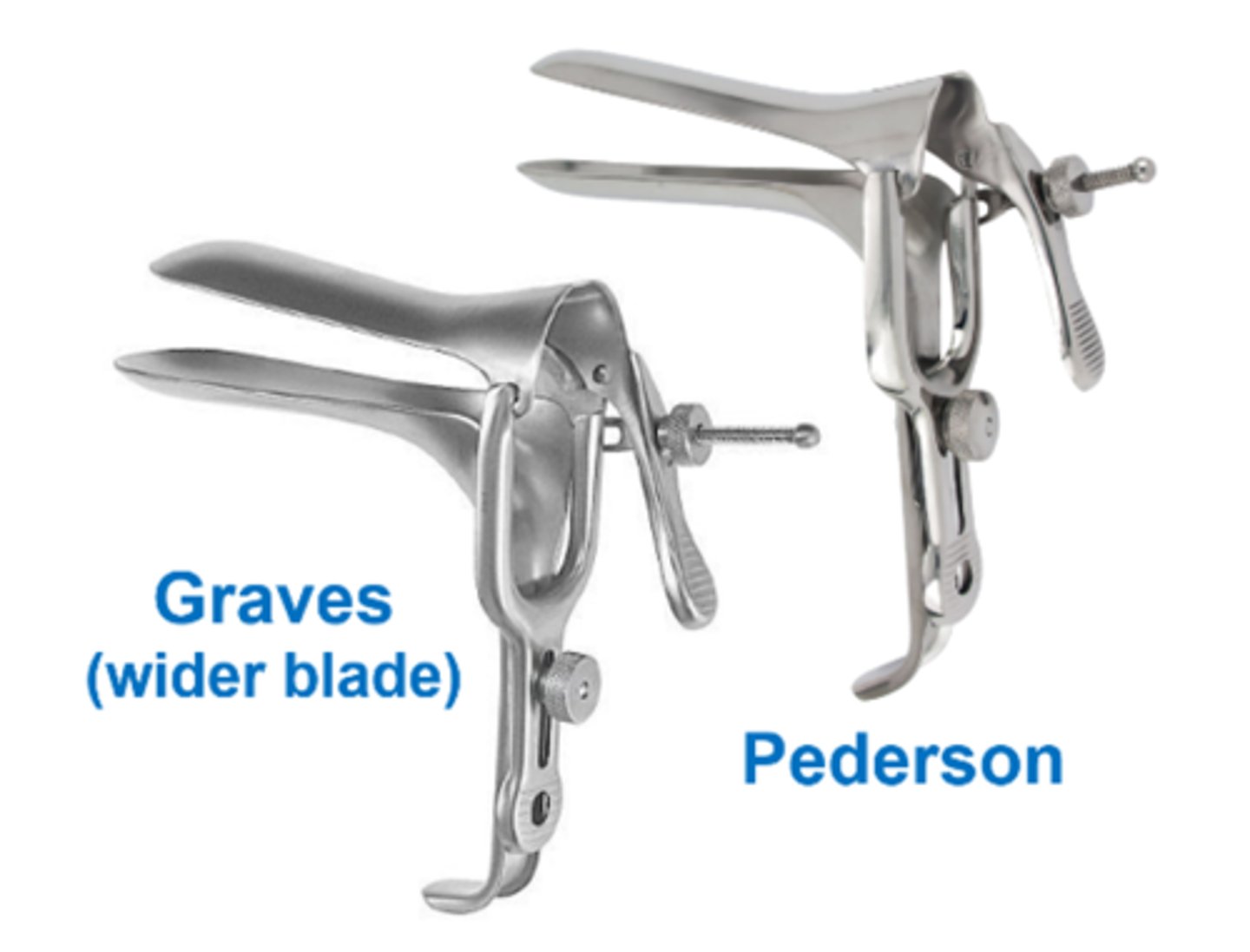
vaginal speculum (n)
a medical instrument used to expose the vaginal cavity
validation (n)
extensive laboratory testing done by equipment manufacturers (obtaining, recording, & interpreting data) to prove that their equipment consistently produces reliable results (the intended level of disinfection or sterilization)

value-based purchasing (VBP) (n)
a comparison of a hospital's HCAHPS scores in a baseline period to those in a later performance period
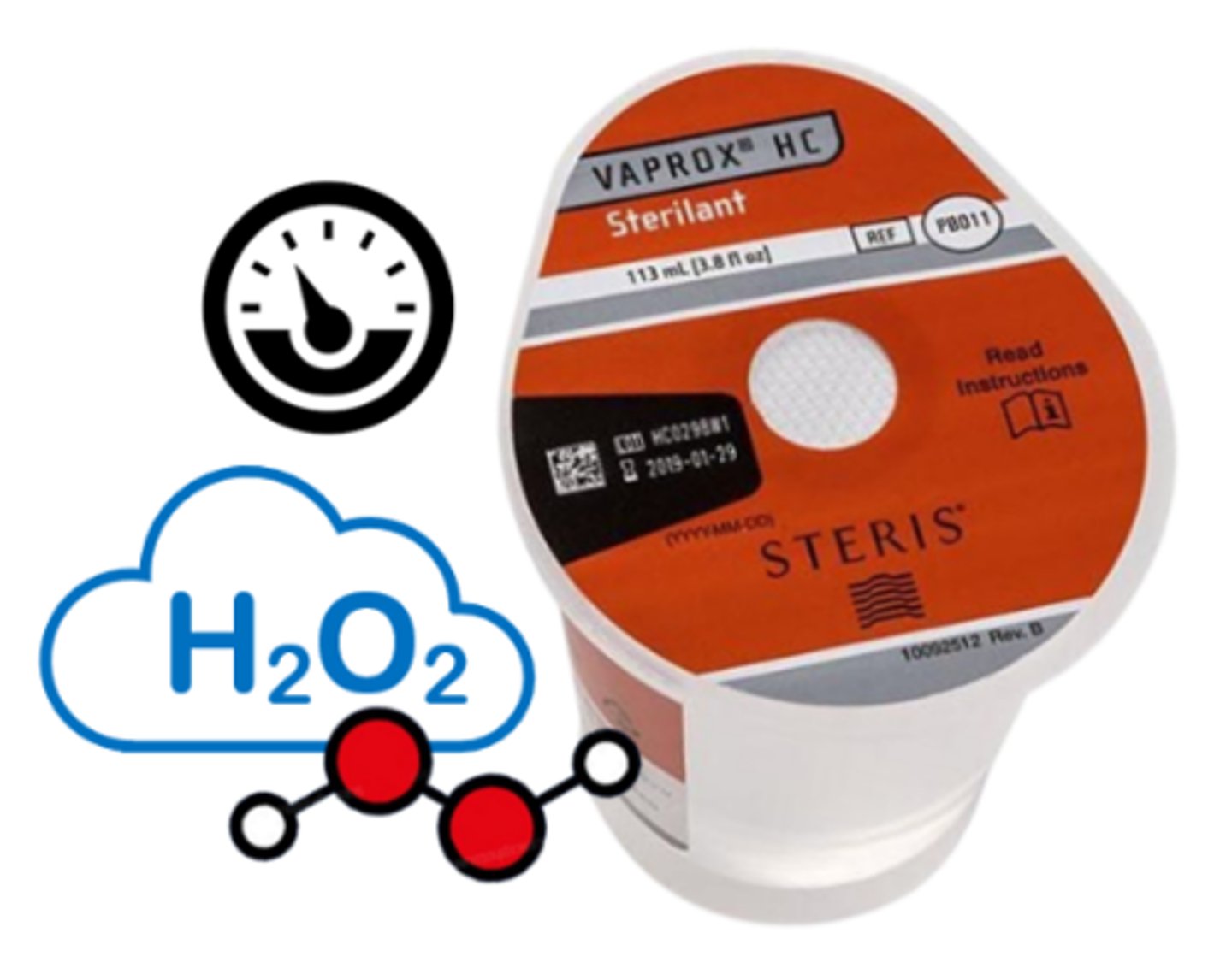
vaporized hydrogen peroxide (VHP) (n)
a 59% hydrogen peroxide solution used in low-temperature, low-pressure sterilization, highly effective & compatible with a variety of materials; it requires aeration but not special venting
vector (n)
a living organism that can carry pathogenic microorganisms from one host to another (ex: ticks, mosquitos, rodents, birds, etc.)

vegetative stage (n)
the stage of active growth of microorganisms (as opposed to the resting or spore stages)

verification (n)
procedures performed by healthcare facilities to confirm that equipment parameters validated by the product manufacturer are applicable to the specific equipment & settings in their facility

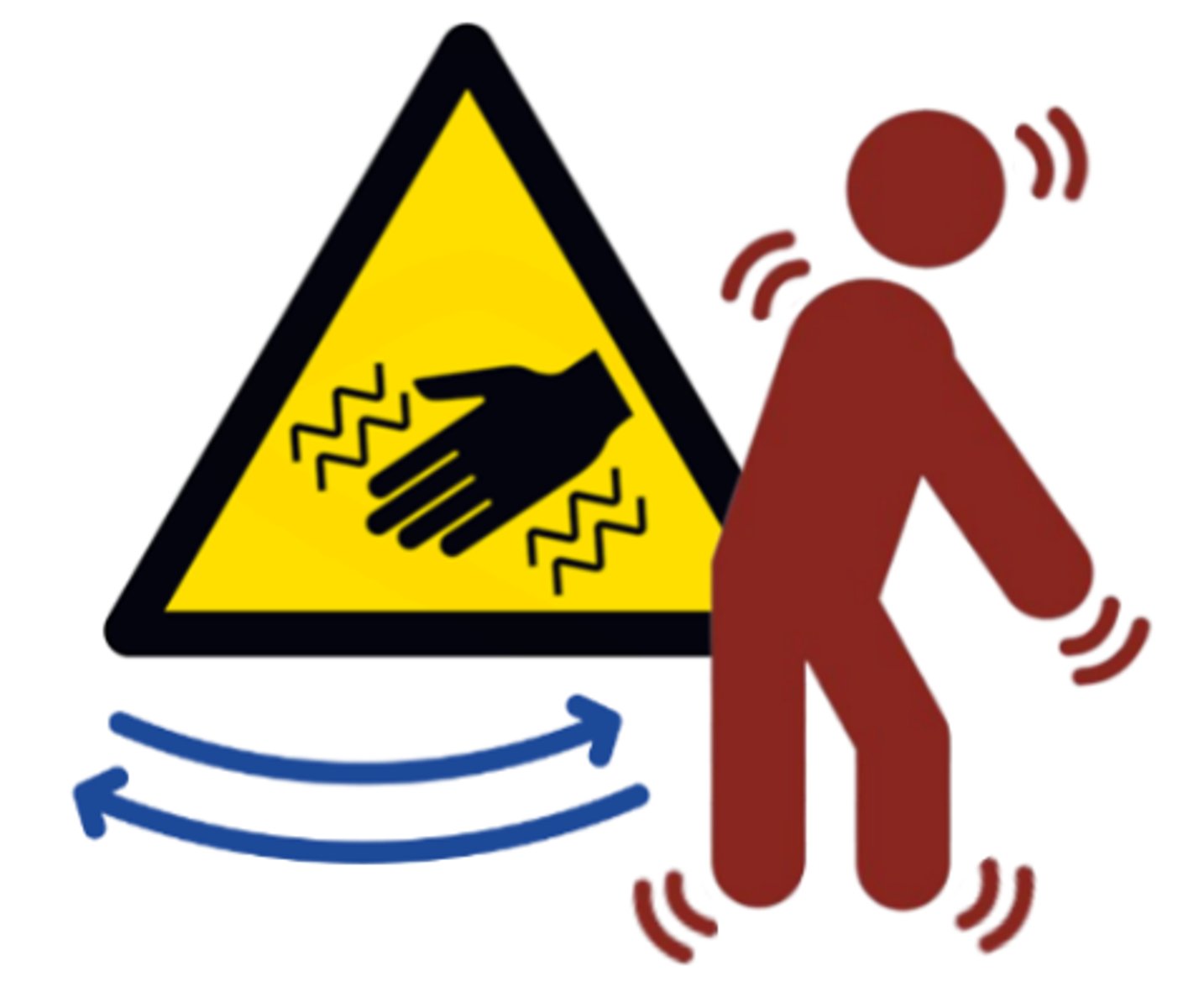
vibration (n)
rapid oscillation (back-and-forth movement) of all or part of the body (ergonomic stressor)
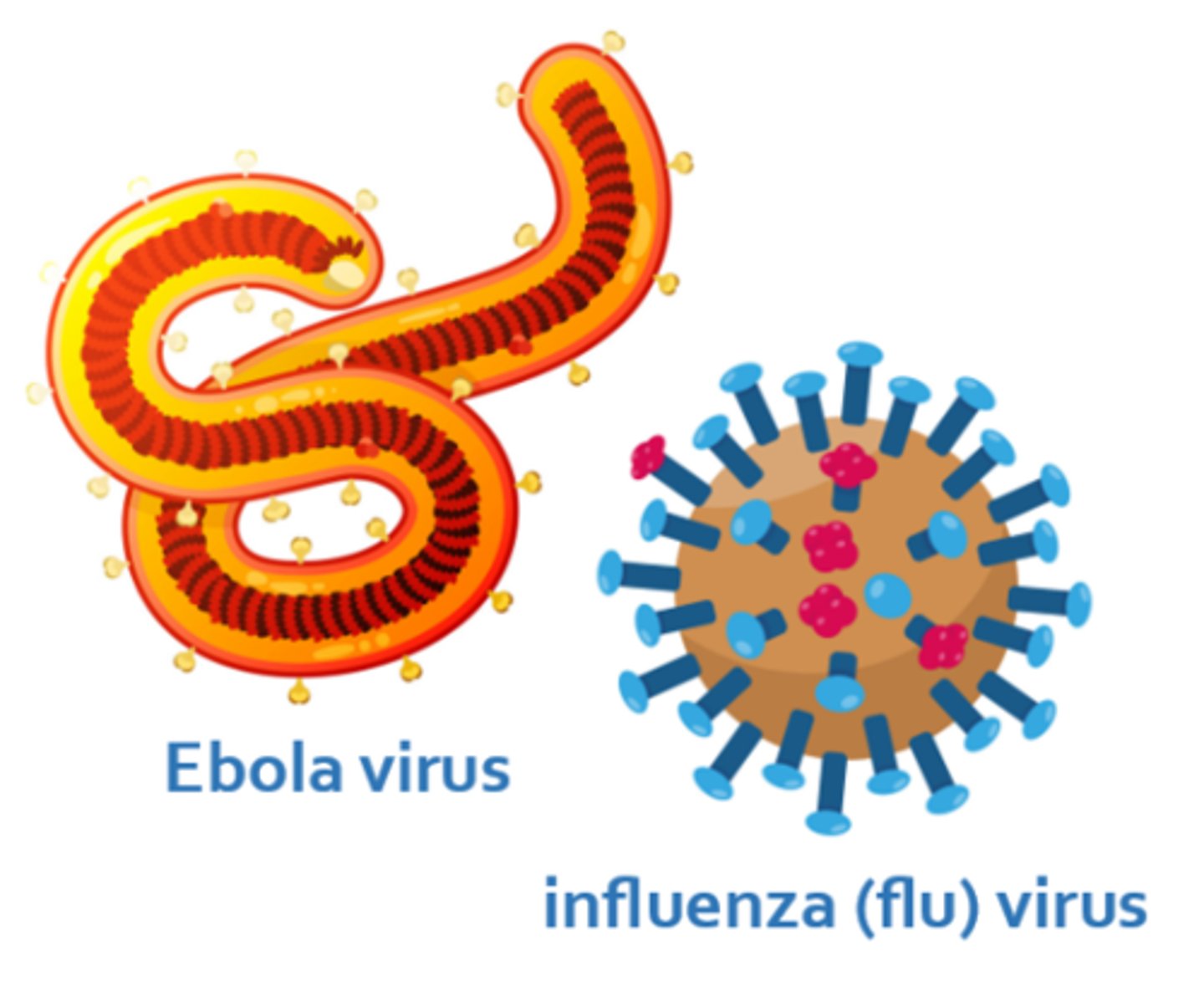
virus (n)
a minute infectious microbe (1,000 times smaller than bacteria) that can only reproduce inside living cells, depending on a host for survival & transmission
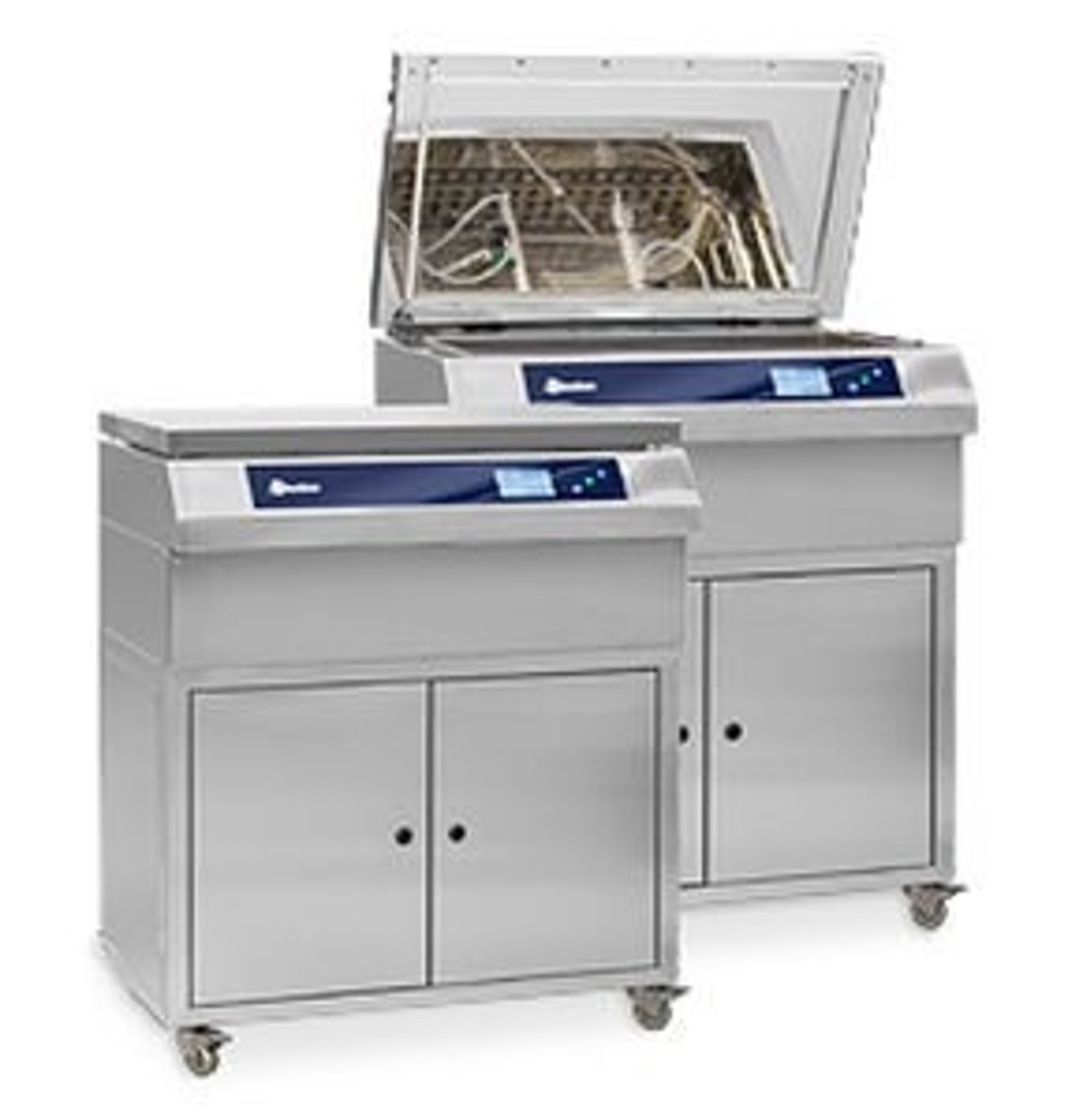
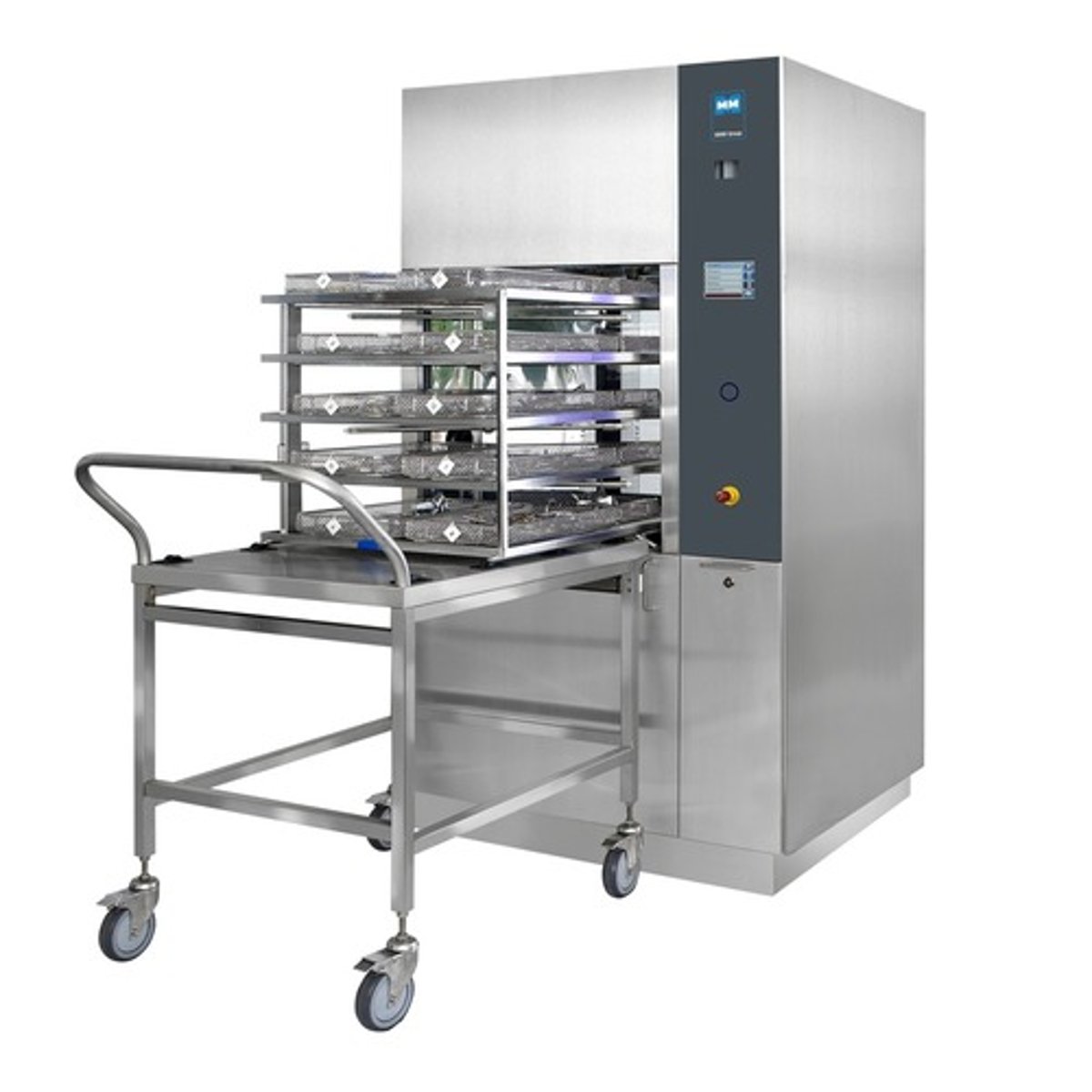
washer-disinfectors (n)
mechanical cleaners with 3 cycles that use impingement & thermal disinfection to clean instruments, instrument containers, & utensils
water quality (n)
the degree to which water is clean & suitable for use in decontamination processes; must be monitored to ensure chemical compatibility, effective cleaning & rinsing, etc.

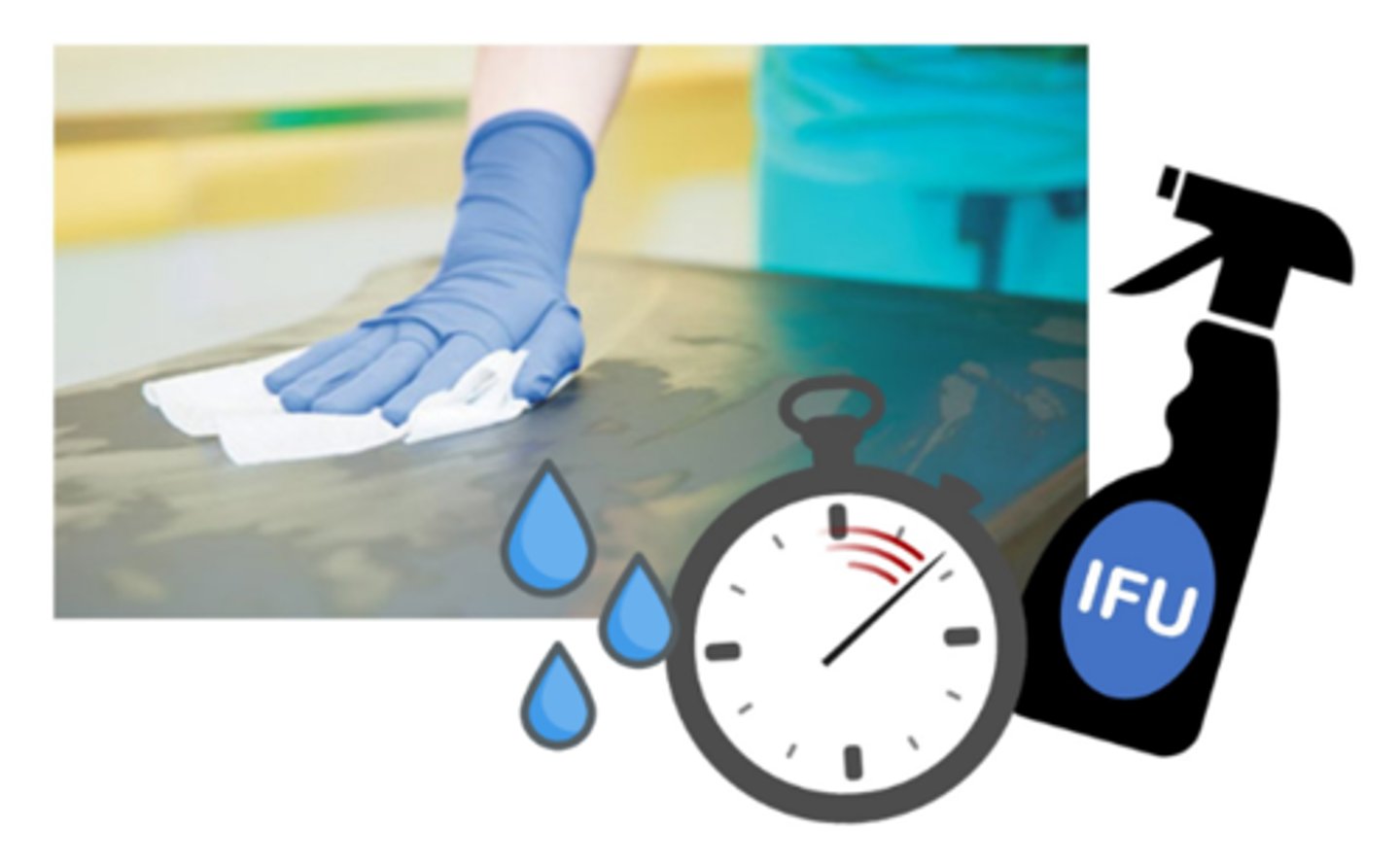
wet contact time (n)
the amount of time a device must remain wet with a disinfectant for it to work properly; exposure times vary by disinfectant type & concentration (always read IFU)
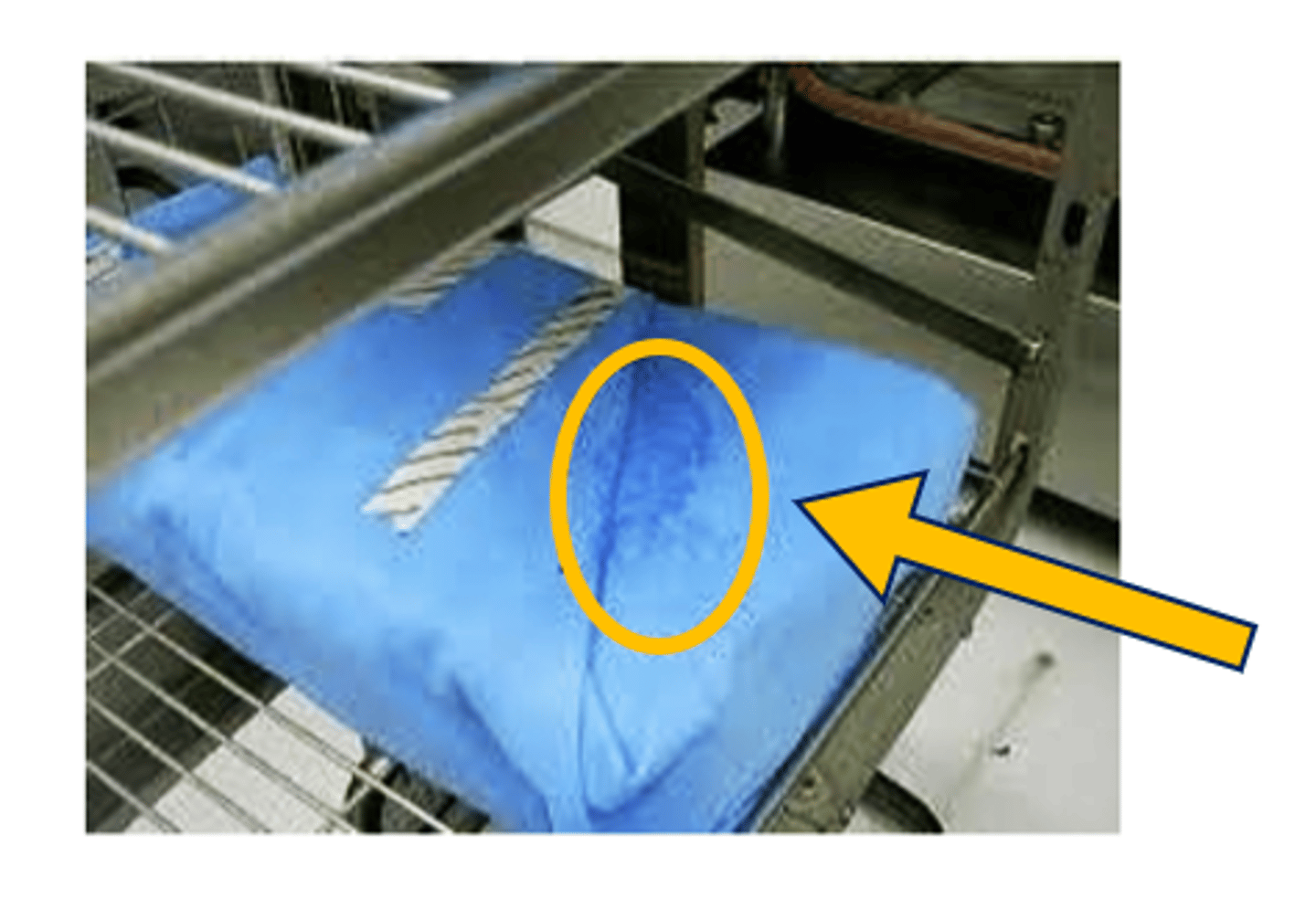
wet pack (n)
a package or container that contains moisture after the sterilization process is completed (considered contaminated & must be reprocessed)
word elements (n)
the different parts that make up a word

workplace violence (n)
any act or threat of physical violence, harassment, intimidation, or other threatening, disruptive behavior that occurs at the work site

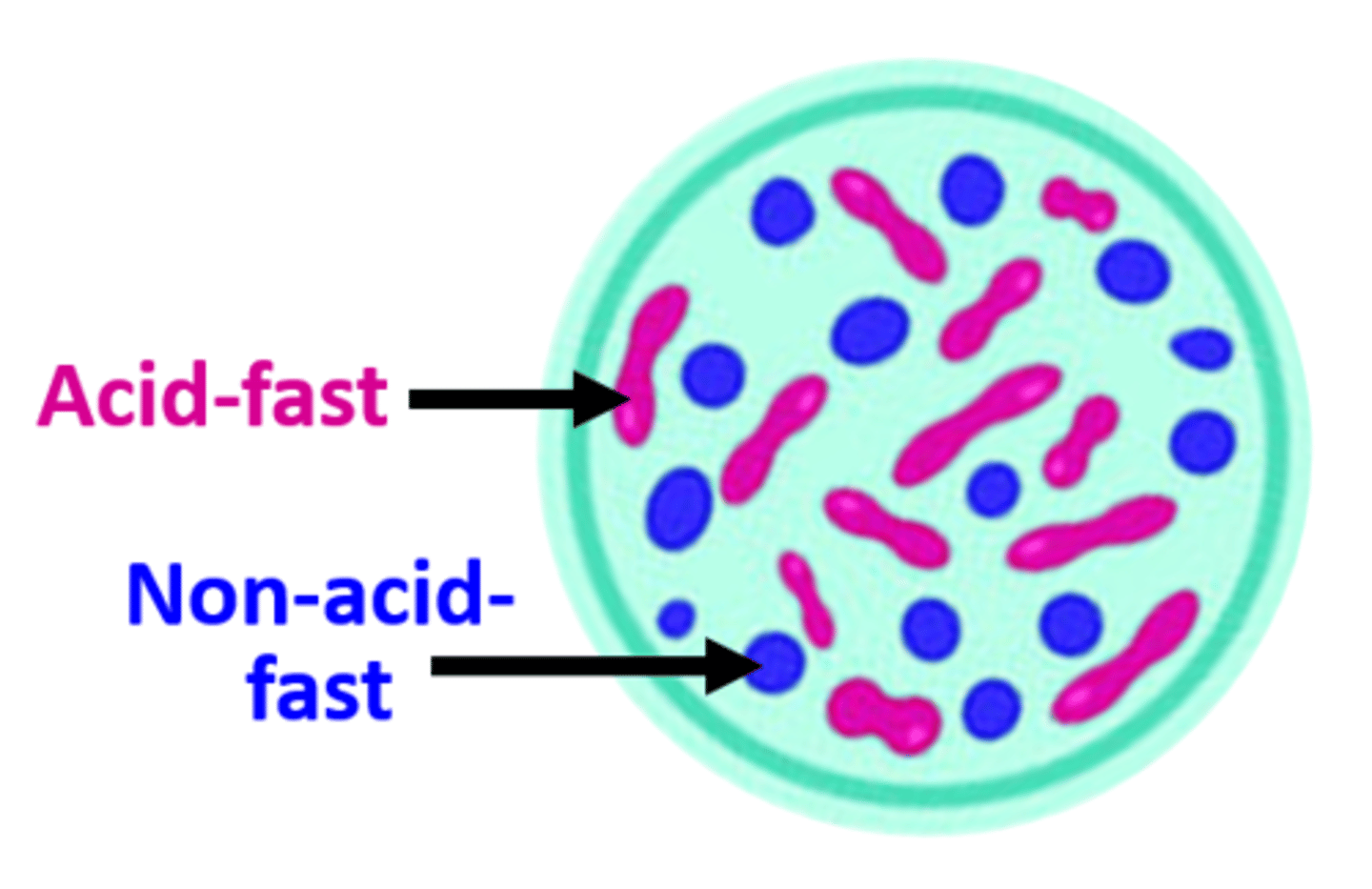
Ziehl-Neelsen stain (acid-fast stain) (n)
a method used to identify acid-fast bacteria that are very difficult to stain
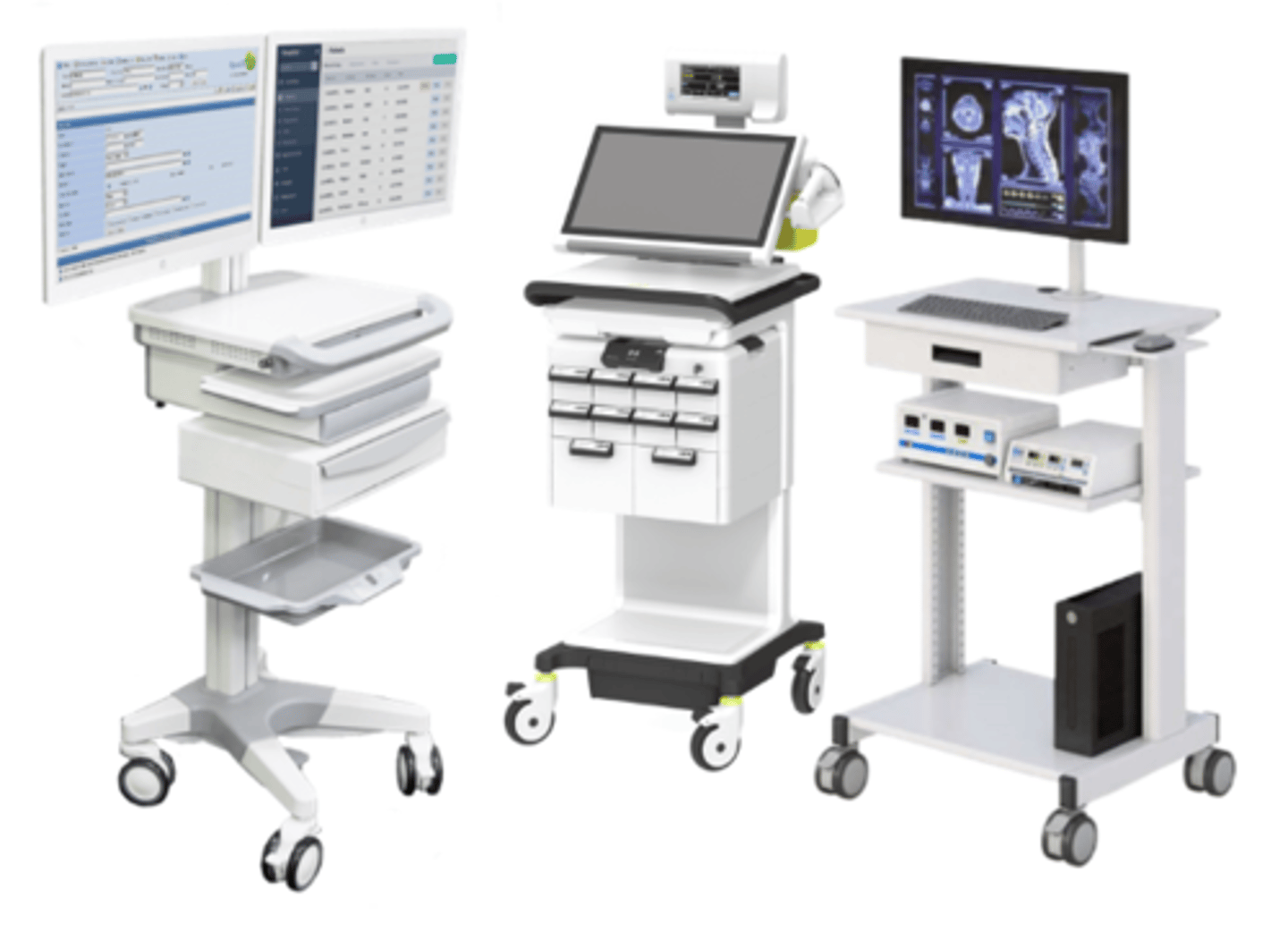
workstation on wheels (WOW cart) (n)
a small, mobile computer cart that allows healthcare staff to deliver patient care wherever it is needed