13. Cats
 Call Kai
 Learn
Learn Practice Test
 Spaced Repetition
 Match
Match Flashcards
 Knowt Play
1/64

There's no tags or description
Looks like no tags are added yet.
Name | Mastery | Learn | Test | Matching | Spaced | Call with Kai |
|---|
No analytics yet
Send a link to your students to track their progress
65 Terms
How long is the estrus in cats?
4-7 days
3 multiple choice options
Cats are sensitive to photoperiod, how many hours of light is required for reproductive cycling?
10+ hours of light for reproductive cycling
What kind of ovulators are cats (marmota monex, rabbit and ferret)?
Induced ovulators
How long is the gestation period of cats?
65 -70 days.
Which hormone can be used to detect pregnancy?
Relaxin is the only pregnancy specific hormone, produced by placenta
How long does it take for queen to return to estrus postpartum?
Queen returns to estrus 2-8 weeks postpartum
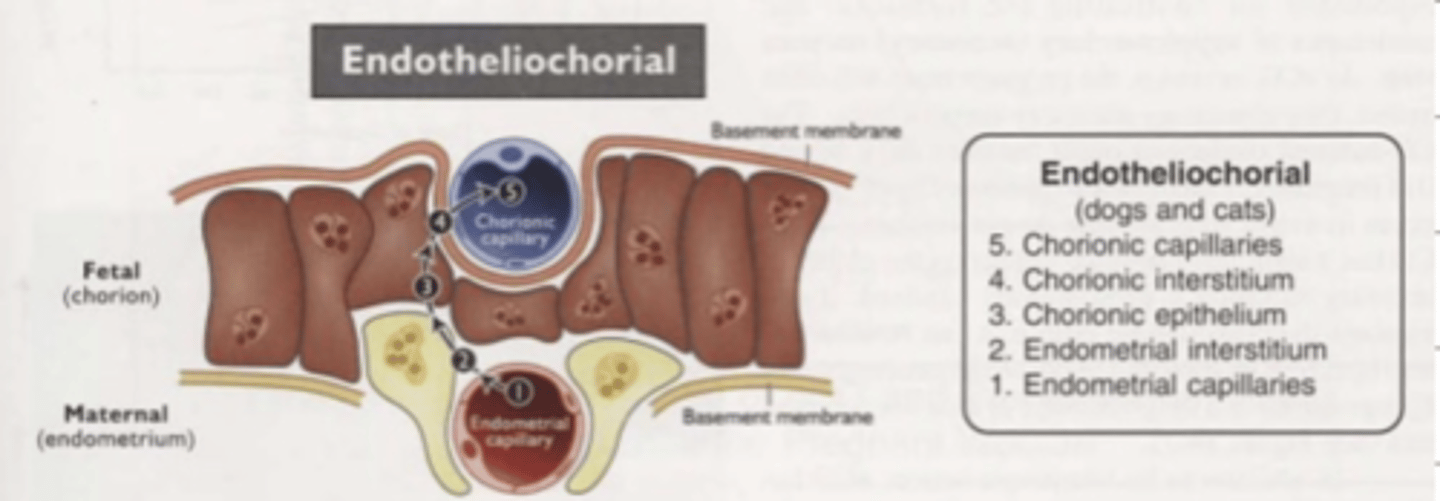
What is the placentation of cat (dogs and ferret)?
zonary, endotheliochorial
Blood type___ toms should not be bred with type ___ queens to prevent neonatal isoerythrocytosis. Blood type B is rare in domestic shorthairs, but common in certain purebreds
Blood type A toms should not be bred with type B queens to prevent neonatal isoerythrocytosis.
No more than ____ adult non-conditioned cats may be housed in the same primary enclosure
12
3 multiple choice options
What is the floor space requirement for cats ≤ 4kg, height requirement?
≤ 4kg: 3sq ft/cat ; 24 in. height
What is the floor space requirement for cats > 4kg
> 4kg: 4sq ft/cat ; 24 in. height
How much more additional space does Dam with litter get?
the additional amount of floor space for each nursing kitten is equivalent to 5 percent of the minimum requirement for the queen
The minimum floor space required by AWA is (excluding/ including) any food or water pans. The litter pan (may/ may not) be considered part of the floor space if properly cleaned and sanitized.
excluding; may
What is the minimal cat to litter box ratio?
Minimum 1 litter box/2 cats
2 multiple choice options
Queens with litters ______ be housed in the same primary enclosure with other adult cats
may not
Kittens under _____ months of age may not be housed in the same primary enclosure with adult cats, other than the dam or foster dam
4
Why type of resting surface can be counted as floor space?
Each primary enclosure housing cats must contain a resting surface or surfaces that, in the aggregate, are large enough to hold all the occupants of the primary enclosure at the same time comfortably. The resting surfaces must be elevated, impervious to moisture, and be able to be easily cleaned and sanitized, or easily replaced when soiled or worn. Low resting surfaces that do not allow the space under them to be comfortably occupied by the animal will be counted as part of the floor space.
According to part 3 of the Animal Welfare Act, not more than adult nonconditioned cats may be housed in the same primary enclosure. (Select the single best answer)
a. 3
b. 6
c. 9
d. 12
e. 15
d.12
According to the Guide for the Care and Use of Laboratory Animals and the Animal Welfare Act and its Recommendations, all of the following are regulatory requirements for cats EXCEPT?
a. Cats up to and including 4 kg must be provided with at least 3.0 ft²
b. Cats over 4 kg must be provided with at least 4.0 ft²
c. Vertical space with perches is required and may require additional cage height
d. Primary enclosures housing cats must be at least 24 inches high
"resting surfaces" are required, large enough to hold all occupants comfortably
Guide: perches are preferred and may require additional cage height
What are Dietary requirements for cat?
high protein diet
Taurine, Arginine, Arachidonic acid, Vits A, D, and B (eg thiamine, niacin)
What does gamma irradiation used to treat the cat diet have impact on vitamin content?
reduce the vitamin A content of the diet to 31% of the untreated value
What clinical signs are associated with vitamin A deficiency in cats?
progressive hind-limb ataxia and proprioceptive defects diagnosed at necropsy as leukoencephalomyelopathy
What clinical signs are associated with taurine deficiency in cats?
retinal degeneration within three months and diets marginally deficient in taurine produced dilated cardiomyopathy
Which is not a dietary requirement for cats?
a. Taurine
b. Arginine
c. Arachidonic acid
d. Tryptophan
d. Tryptophan
Cats are more sensitive to NSAID toxicosis, because they are deficient in ___________ and therefore have prolonged duration of effect and possible drug accumulation.
glucuronyl transferase
Which two viruses are the most common cause to feline upper respiratory disease?
Feline Rhinotracheitis (Herpesvirus-1)
Feline Calicivirus
How is Feline Rhinotracheitis (Herpesvirus-1) transmitted?
Transmission: Direct/Inhalation
Virus shed in ocular, nasal, and oral secretions
Over 80% of cats that recover from FHV1 become carriers and intermittently shed virus in oronasal and conjunctival secretions for life
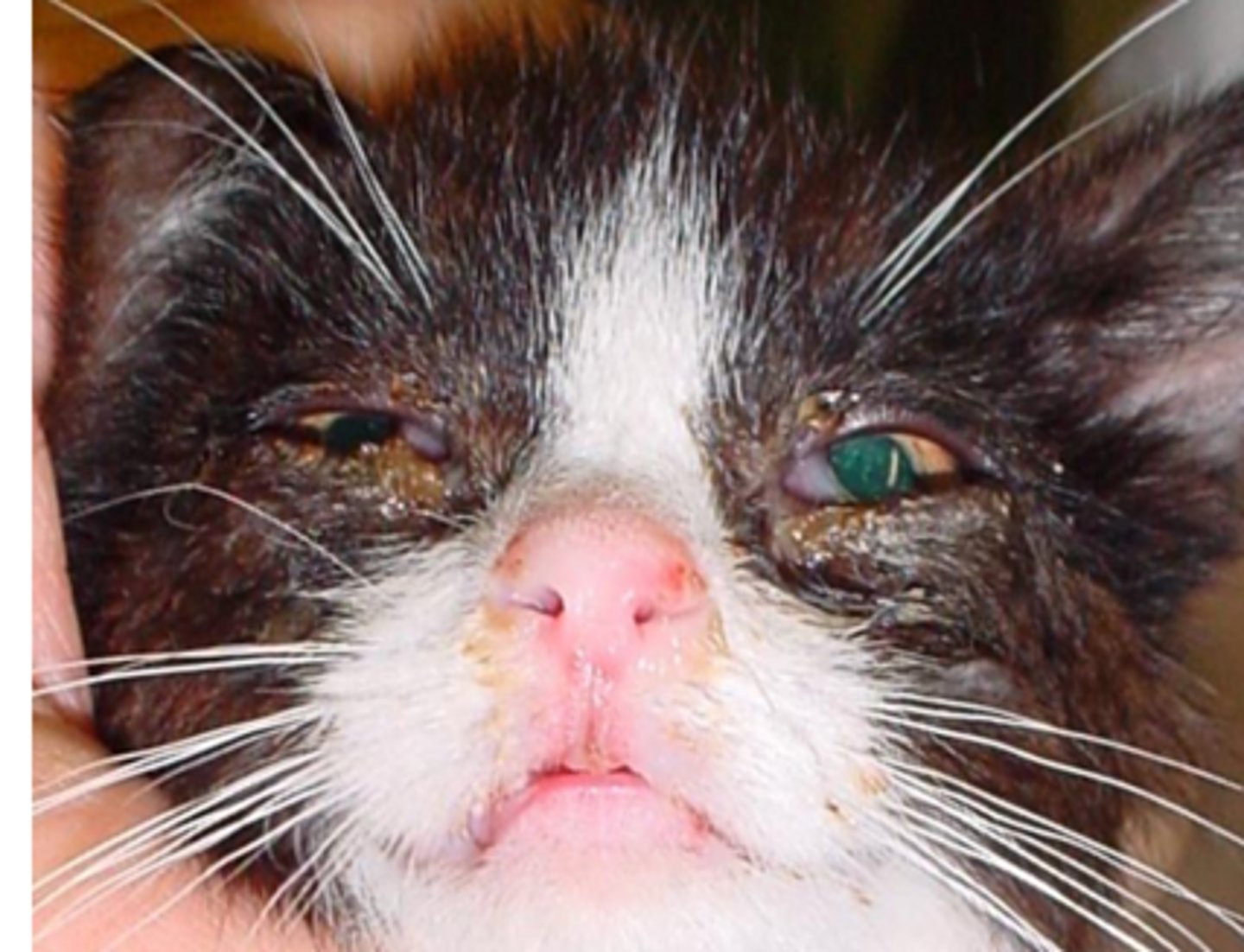
What clinical signs are associated with Feline Rhinotracheitis (Herpesvirus-1)?
Sneezing, coughing, oral ulcers (tongue, palate, external nares), conjunctival hyperemia, fever, rhinitis, nasal discharge, conjunctivitis, ulcerative keratitis
dendritic ulcers
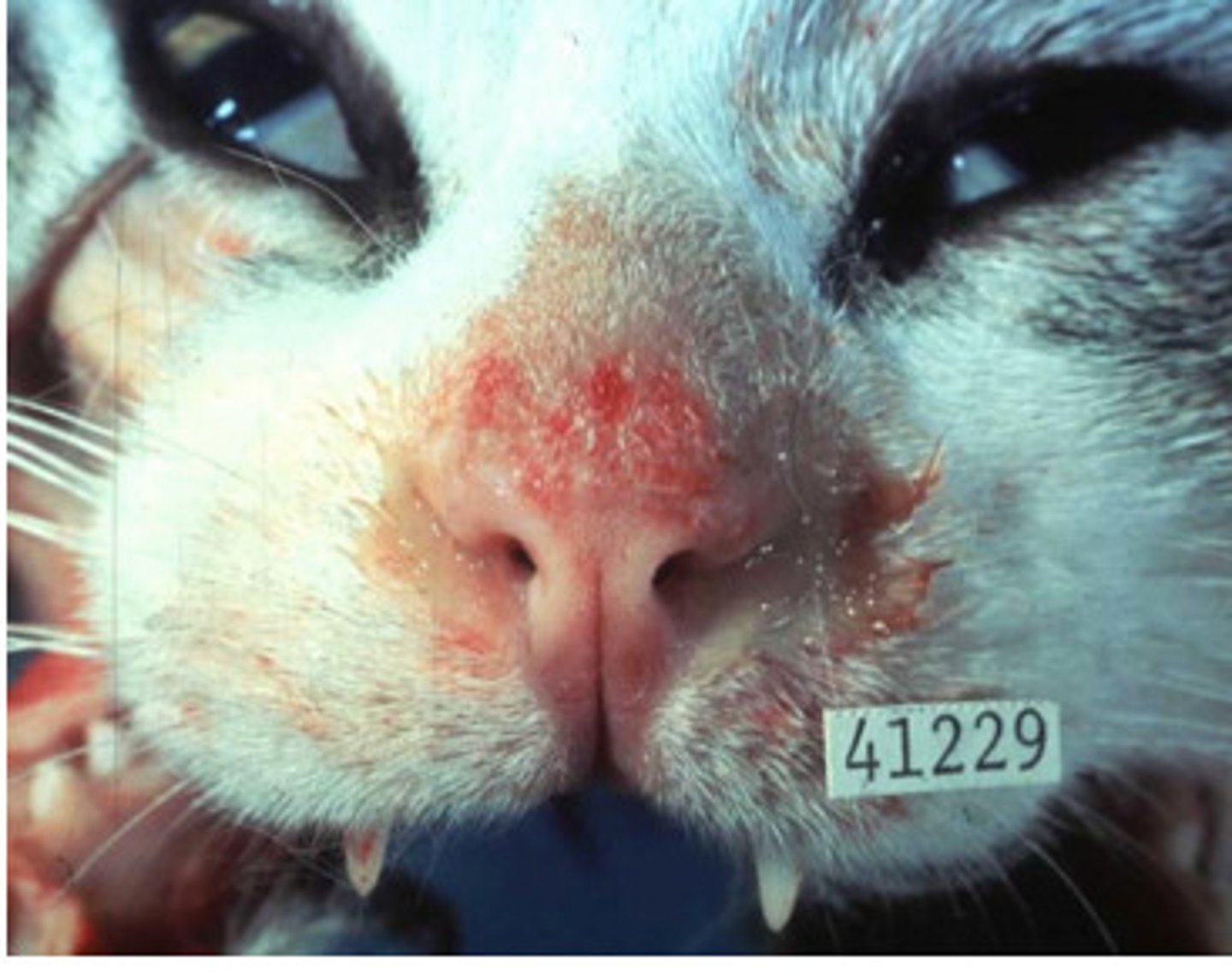
How is feline calicivirus transmitted?
Transmission: Direct/Oronasal secretions
What clinical signs are associated with Feline Calicivirus?
Acute Upper respiratory infection, fever, anorexia, acute stomatitis (mucosal ulceration or vesiculation), chronic stomatitis and a limping syndrome
Asymptomatic infection and viral shedding is common
Limping syndrome due to an idiopathic acute synovitis also described
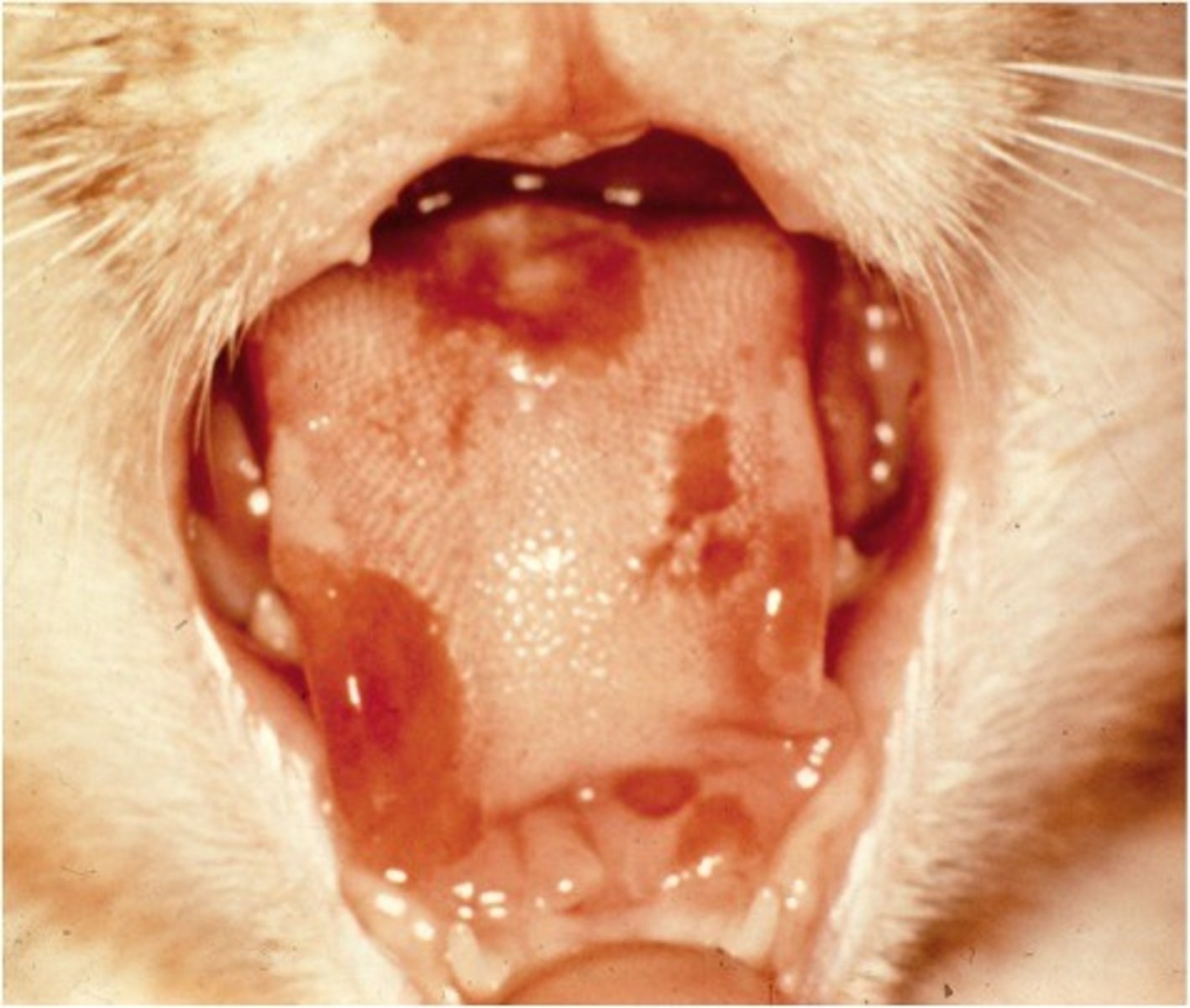
How is Feline Panleukopenia (Feline Parvovirus) transmitted?
Horizontal: Indirect - virus shed in feces/urine
Vertical: In utero infection → cerebellar hypoplasia
cats <1yr
What clinical signs are associated with Feline Panleukopenia (Feline Parvovirus)?
Lethargy, anorexia, vomiting, fever, dehydration, diarrhea, icterus, panleukopenia, ataxia, cerebellar hypoplasia, and abortion
Peracute course with sudden death w/o intestinal signs is rare
profound neutropenia
What clinical signs are associated with Feline enteric coronavirus (FECV)?
Subclinical or self-limiting GI signs (e.g. diarrhea)
How is Feline enteric coronavirus (FECV) transmitted?
Fecal-oral transmission
What clinical signs are associated with Feline infectious peritonitis (FIP)?
Mutation in Feline enteric coronavirus (FECV) ⇨ Virulent
2 clinical presentations: Effusive vs. Non-Effusive
Strong non-productive humoral response → effusive (wet) FIP
-Fever, anorexia, lethargy, weight loss, anemia, icterus, diarrhea
-Accumulation of fluid in thorax + abdomen
Partial cell-mediated immune response → non-effusive (dry) FIP
-Chronic granulomatous disease in various organs
-Ocular manifestations (36% of affected): uveitis, corneal edema, hyphema, hypophon, retinal vasculitis, aqueous flare, ocular pain, keratitis precipitates
-CNS: Ataxia, posterior paresis, hyperesthesia, head tilt, convulsions, behavior changes, urinary incontinence
How is Feline infectious peritonitis (FIP) transmitted?
Virus shed in feces, urine, and oronasal secretions
What is the etiology of Hypertrophic Cardiomyopathy (HCM)?
Idiopathic concentric or asymmetric left ventricular hypertrophy
mutation in sarcomeric proteins (Maine Coon cats, ragdolls) 🡪 inappropriate hypertrophy
Secondary to hyperthyroidism or subaortic stenosis
What clinical signs are associated with Arterial Thromboembolism?
Thrombus develops in LV or LA (most common) and often becomes seated at terminal aorta (saddle thrombus)
Acute onset posterier paresis/ paralysis
Vocalization
What treatment can be used to treat Arterial Thromboembolism?
Heparin prevents further thrombus growth
Aspirin reduces occurrence of thrombus formation
Thrombolytics (e.g., streptokinase) - complications common
What is the Vectors for tapeworms (Dipylidium caninum) in cat?
Fleas
causes Marked dermatitis in adults
What clinical signs are associated with Ear mites (Otodectes cynotis)?
Most common cause of otitis externa in cats
How is roundworm (Toxocara cati, Toxocaris leonina) transmitted in cats? Zoonotic – visceral larval migrans
Transmammary transmission most common (also contaminated soil)
Larva ingested by an adult cat migrate to body tissues and persist for years. During pregnancy these larvae are reactivated and migrate to the mammary glands were they are shed into the milk and ingested by nursing neonates.
How is Hookworms (Ancylostoma, Uncinaria) transmitted in cats? Zoonotic – cutaneous larval migrans
When people walk or sit on beach sand or soil where infected dogs or cats have defecated, the dog or cat hookworm larva can penetrate the skin of the foot or body and migrate in the top layers of the skin.
What clinical signs are associated with Hookworms (Ancylostoma, Uncinaria)?
May cause blood loss and anemia
What clinical signs are associated with Coccidia (Isospora felis, Isopora rivolta)? treatment?
Young kittens, immunocompromised
Watery diarrhea +/- blood, vomiting, abdominal discomfort, anorexia
Tx - Sulfadimethoxine 50-60 mg/Kg 5-20 days and supportive care
What clinical signs are associated with Giardia - less common; zoonotic?
Occur in conditions of poor sanitation
May cause diarrhea due to colonization of small intestine
What does Feline Leukemia Virus (FeLV) infection in cats model for?
Model of oncogenic tumors
-Hematopoietic tumors (ALL, lymphoma)
-Immunodeficiency
-Myelosuppression
1st virus conclusively shown to cause malignancy in an out-bred mammalian species
What does Feline Immunodeficiency Virus (FIV) infection in cats model for?
"Feline AIDS".
human AIDS
What clinical signs are associated with Immunodeficiency Virus (FIV) infection in cats?
Transient period of pyrexia and malaise within 3 months of infection
Long asymptomatic phase (years)
Progressive targeting of immune cells during this time
Secondary infections due to immunosuppression
May develop malignancies, ie lymphoma, leukemia (may also be FeLV +)
Hematologic abnormalities: anemia, leukopenia, neutropenia, lymphopenia
Neurologic signs (cytopathic effects on brain, similar to other lentiviruses)
How is Immunodeficiency Virus (FIV) transmitted in cats?
Shed intermittently in saliva, most often bite wounds
Cats living peacefully with FIV-positive cats rarely become infected
Which Helicobacter spp. infect cat and can serve as a model for Helicobacter pylori in human?
Cats also appear to be naturally infected with H.pylori, and may serve as a reservoir
H. felis induces many of the lesions found in human disease, particularly those associated with the chronic infection
Cats can be used as models in sleep research, which two sleeping disorders in particular?
Model of Obstructive Sleep Apnea (OSA)
Model of Sleep Disorders in Parkinson's (induced using 1-methyl-4-phenul-1,2,3,6-tetrahydropyridine (MPTP)
Blue Persians are a spontaneous model for which disorder?
Chediak-Higashi syndrome
Autosomal recessive disorder characterized by easy bruising, oculocutaneous albinism and recurrent pyogenic infections
-All cats in the line with the combination of yellow eye color and "blue smoke" hair color exhibited the disorder. It presents with large lysosomal granules in neutrophils.
What is the inherited disease of Scheibe deformity (Cochleosaccular Dysplasia)?
Deaf white cats (DWCs) show an inherited degeneration in the cochlea which results in the loss of inner and outer hair cells; the auditory nerve generates with age
Model of sensory deprivation
Typically have blue eyes, also amber
What is the Klinefelter's Syndrome in cats?
Muscular Dystrophy
Deletion of Dystrophin gene and Purkinje neuronal promotors
The classic animal model for Klinefelter's syndrome in humans is the:
A)Blue-eyed white cat
B)Tortoiseshell male cat
C)Smoke-blue Persian cat
D)Siamese cat
E)Norwegian forest cat
b. Tortoiseshell male cat
Blue Persian = Chediak-Higashi (recessive)
Siamese = Niemann-Pick disease
What is Globoid Cell Leukodystrophy- GLD (Krabbe's Disease)?
Neurometabolic disease characterized by symmetrical demyelination, loss of oligodendrocytes, and accumulation, especially perivascularly, of large phagocytic cells (globoid cells) containing non-sudanophilic, non-metachromatic, PAS-positive material
(GLD) results from a deficiency in the lysosomal enzyme galactosylceramidase (GALC).
What compounds from cat are allergen?
Fel d1 in sebaceous glands (primarily) and saliva
Male cats > females
Which of the following is considered a major allergen produced by the sebaceous glands (in skin and hair shafts) and is found in the saliva of cats?
a. Fel d 1
b. Felis d 1
c. Fel d 2
d. Fel d 2β
a. Fel d 1
How is Cat Scratch Fever (Bartonella henselae) transmitted?
Transmission primarily via cat saliva, fleas
Afipia felis has also been isolated from CSD lesions but not considered the common etiologic agent.
What clinical signs are associated with Cat Scratch Fever (Bartonella henselae) transmitted?
Cats are not clinically affected
Humans: papule at site of inoculation 1 week after exposure, lymphadenopathy within 2 weeks, fever, malaise, weight loss, myalgia, headache, conjunctivitis, skin lesions
Usually self-limiting (months), susceptible to multiple antibiotics (erythromycin, doxycycline, aminoglycosides)
What clinical signs are associated with Toxoplasma gondii? ZOONOTIC
fever, icterus, dyspnea, neuromuscular signs, uveitis, retinitis
Severe in kittens and immunocompromised
How is Toxoplasma gondii transmitted?
Transmission:
Congenital (vertical)
Carnivorism (undercooked meat)
Fecal-oral
Cats fed an irradiated diet developed a progressive hind-limb ataxia that was likely due to high levels of ingested peroxides and destruction of dietary vitamin __
A
2 multiple choice options
Continuous Infusion of Midazolam in cats can lead to _____
prolong recovery

