Endocrine and Heart Practical
 Call Kai
 Learn
Learn Practice Test
 Spaced Repetition
 Match
Match Flashcards
 Knowt Play
1/83

There's no tags or description
Looks like no tags are added yet.
Name | Mastery | Learn | Test | Matching | Spaced | Call with Kai |
|---|
No analytics yet
Send a link to your students to track their progress
84 Terms
The general names for organs that produce hormones
glands
target areas
regions that are receptive to hormones
what the pineal gland secretes
melatonin
pineal gland location
epithalamus
hormones the posterior pituitary gland stores
ADH (antidiuretic hormone)
oxytocin
what secretes ADH and oxytocin
the hypothalamus
hormones produced by the anterior pituitary gland
TSH (thyroid stimulating hormone)
GH (growth hormone)
Gonadotropins
LH (luteinizing hormone)
FSH (follicle-stimulating hormone)
hormones secreted by the thyroid gland
T3 (triiodothyronine)
T4 (tetraiodothyronine, aka thyroxine)
Calcitonin
hormones secreted by the parathyroid gland
PTH (parathyroid hormone, aka parathormone)
hormones secreted by the thymus
thymosin
hormones produced in the pancreas
insulin
glucagon
somatostatin
what hormone is produced by alpha cells in pancreatic islets
glucagon
what hormone is produced by beta cells in pancreatic islets
insulin
what hormone is produced by delta cells in pancreatic islets
somatostatin
hormones secreted by the adrenal cortex
corticosteroid hormones
hormones produced by the adrenal medulla
epinephrine and norepinephrine
hormones produced by the gonads
sex hormones
testosterone (testes)
estrogen and progesterone (ovaries)
effects of melatonin
regulates sleep cycles
inhibits release of reproductive hormones
effects of ADH (antidiuretic hormone)
stimulates reabsorption & retention of water by kidneys
increases blood pressure by causing constriction of arterioles
effects of oxytocin
causes uterine contractions
stimulates contraction of the cells of the mammary glands (causes release of milk)
effects of LH (luteinizing hormone) and FSH (follicle-stimulating hormone)
stimulate production of sex cells (gametes) in ovaries and testes
regulates production of:
estrogen and progesterone in ovaries
testosterone in testes
effects of TSH (thyroid stimulating hormone)
stimulates the thyroid gland to produce thyroid hormones
effects of GH (growth hormone)
promotes growth of most of the cells and tissues of the body
effects of T3 (triiodothyronine) and T4 (thyroxine)
increase basal metabolic rate
increase protein synthesis
effects of calcitonin
lowers blood calcium levels
effects of PTH (parathyroid hormone)
increases blood calcium levels
effects of thymosin
causes maturation of T-cells
effects of glucagon
raises blood sugar levels
effects of insulin
lowers blood sugar levels
effects of somatostatin
inhibits glucagon and insulin production
effects of corticosteroids
regulates water and electrolyte balance
important in:
carb, protein, & fat metabolism
stress management
effects of epinephrine and norepinephrine
preps body for:
physical activity
immediate stress/fear
effects of testosterone
development of male genitalia (during embryonic and fetal development)
development of secondary sex characteristics
effects of estrogen and progesterone
regulates ovarian cycle
development of secondary sex characteristics
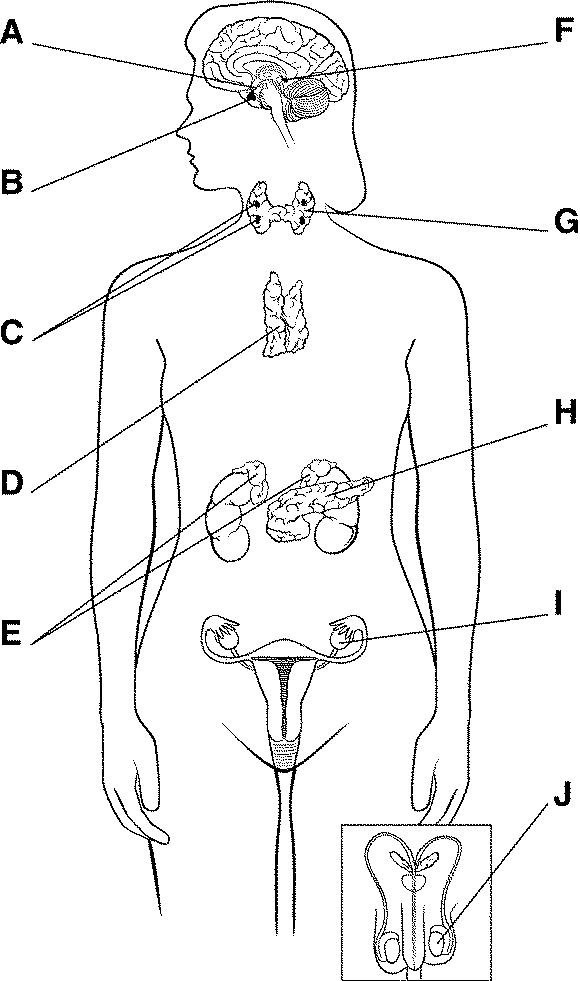
A
the hypothalamus
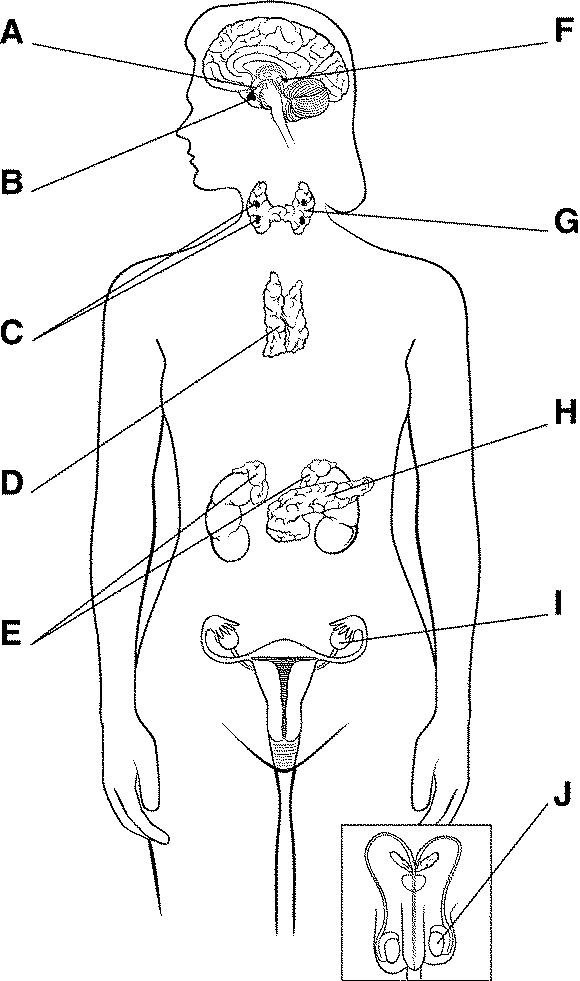
B
the pituitary gland
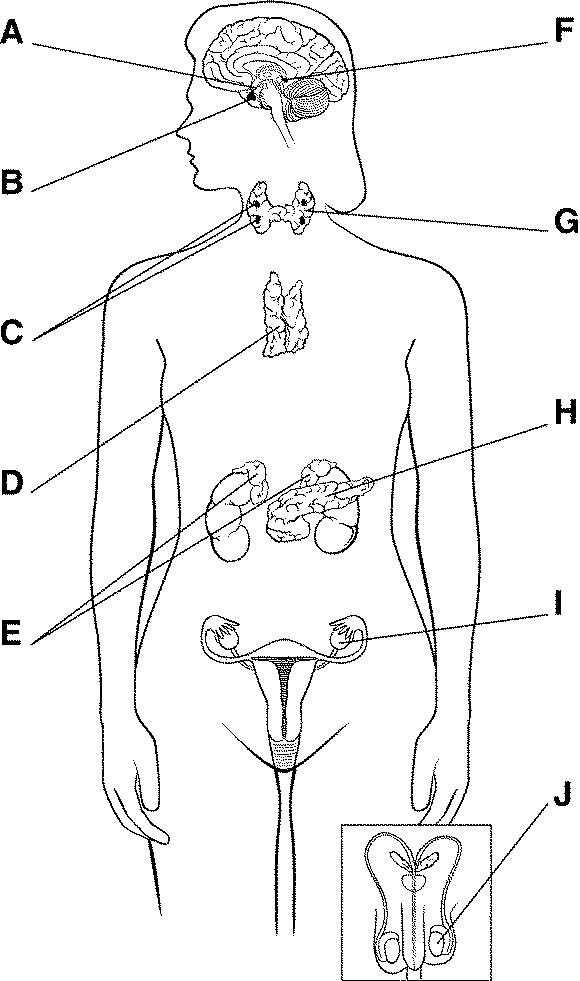
C
parathyroid glands
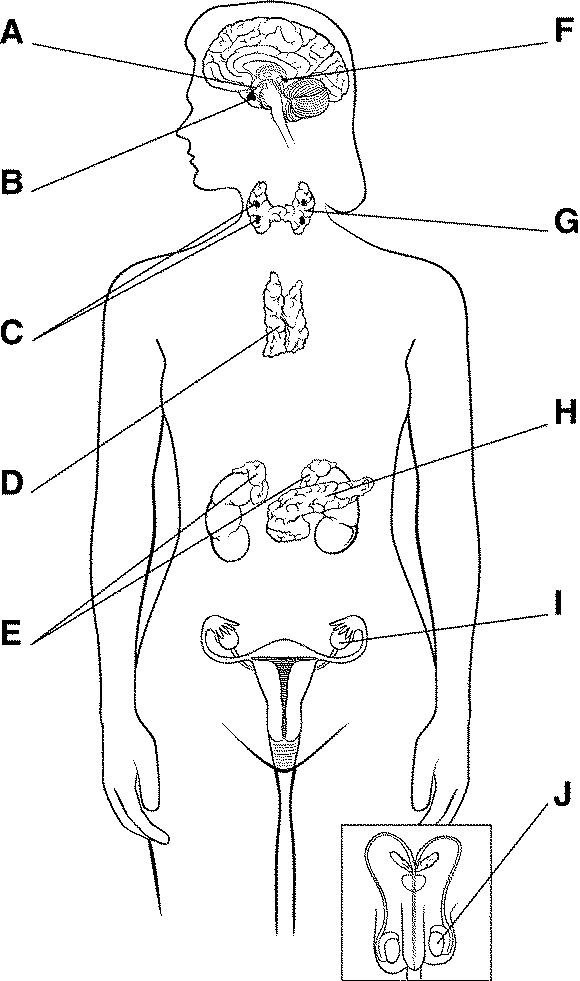
D
the thymus
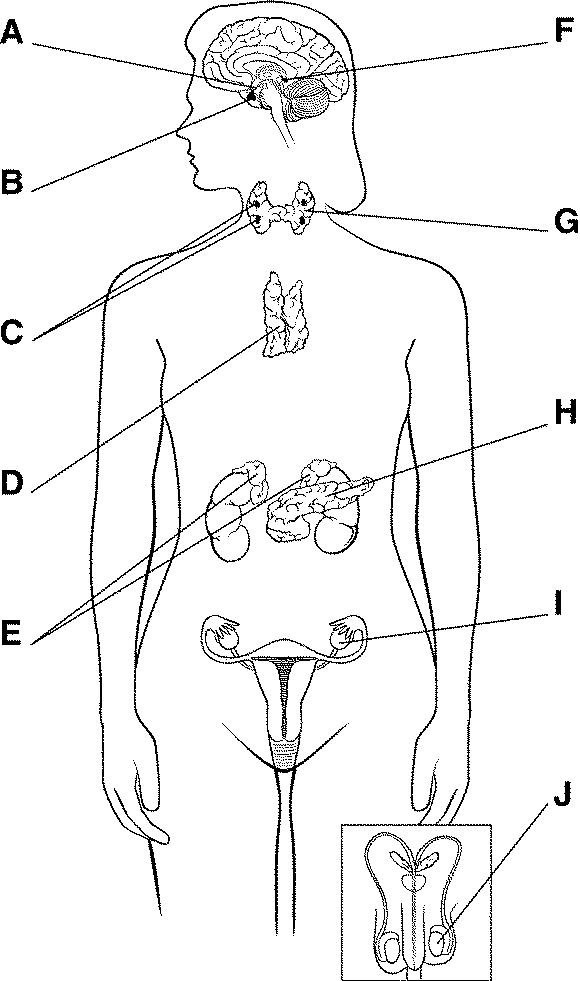
E
the adrenal glands
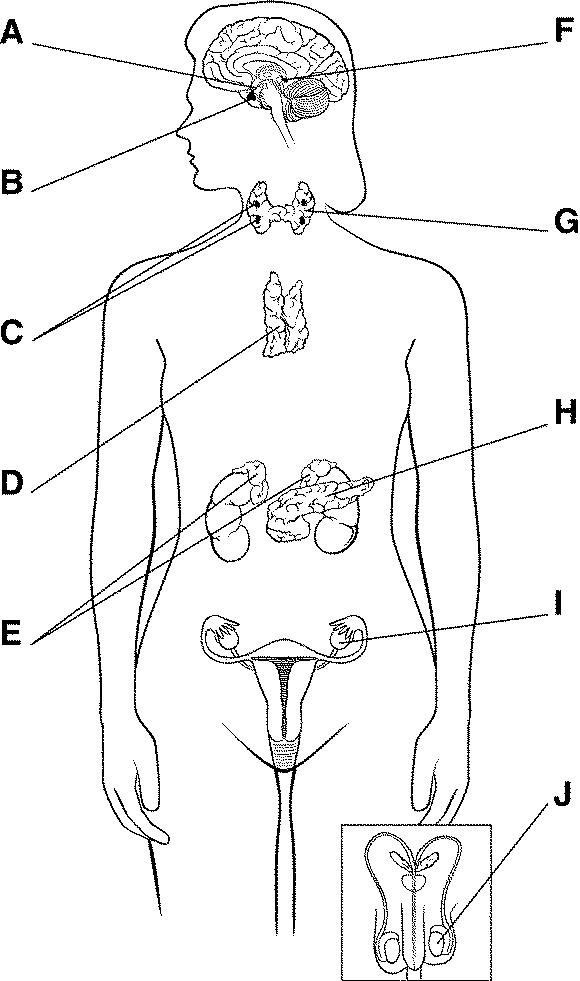
F
the pineal gland
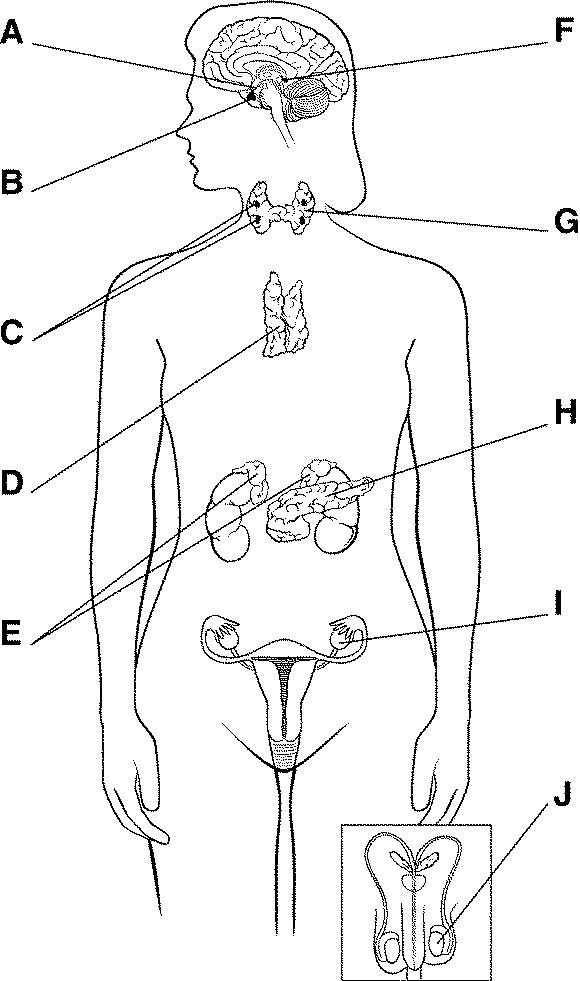
G
the thyroid
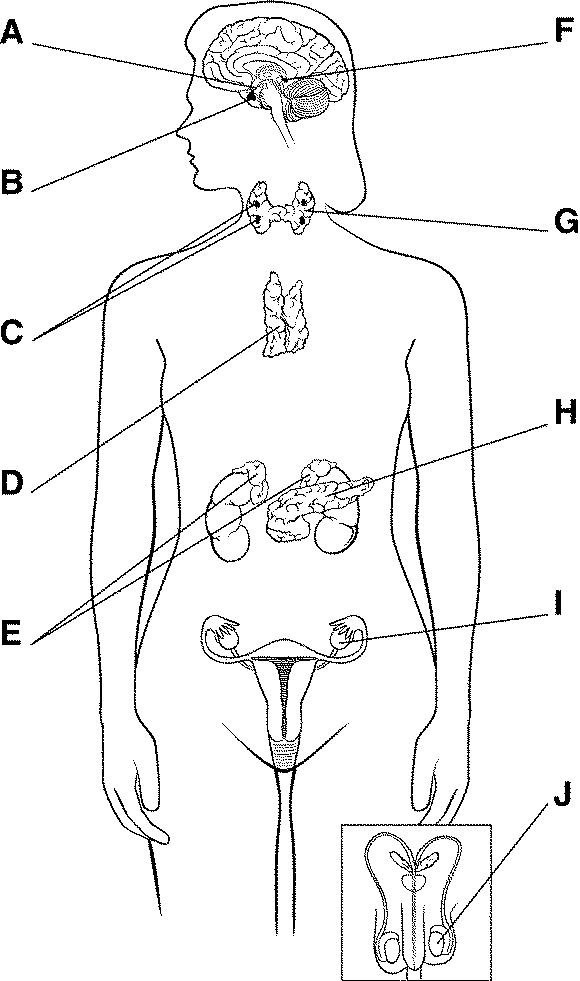
H
the pancreas
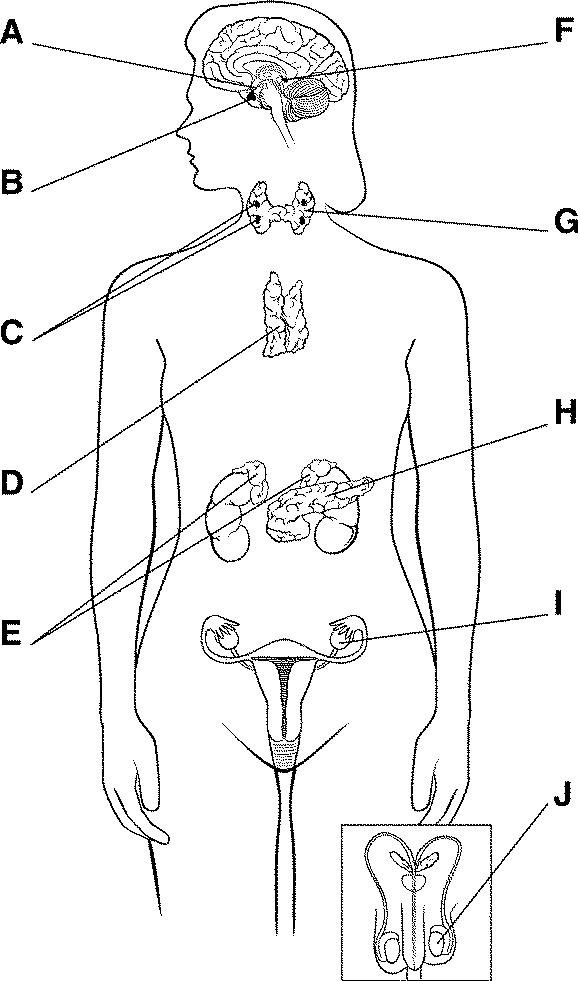
I
the ovaries
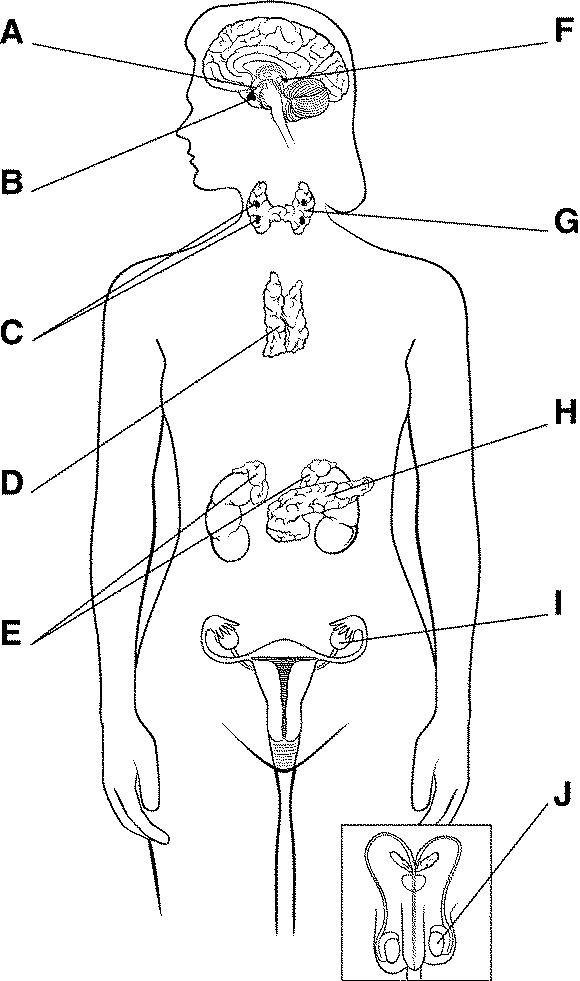
J
the testes
structure that connects the two lobes of the thyroid gland
the isthmus
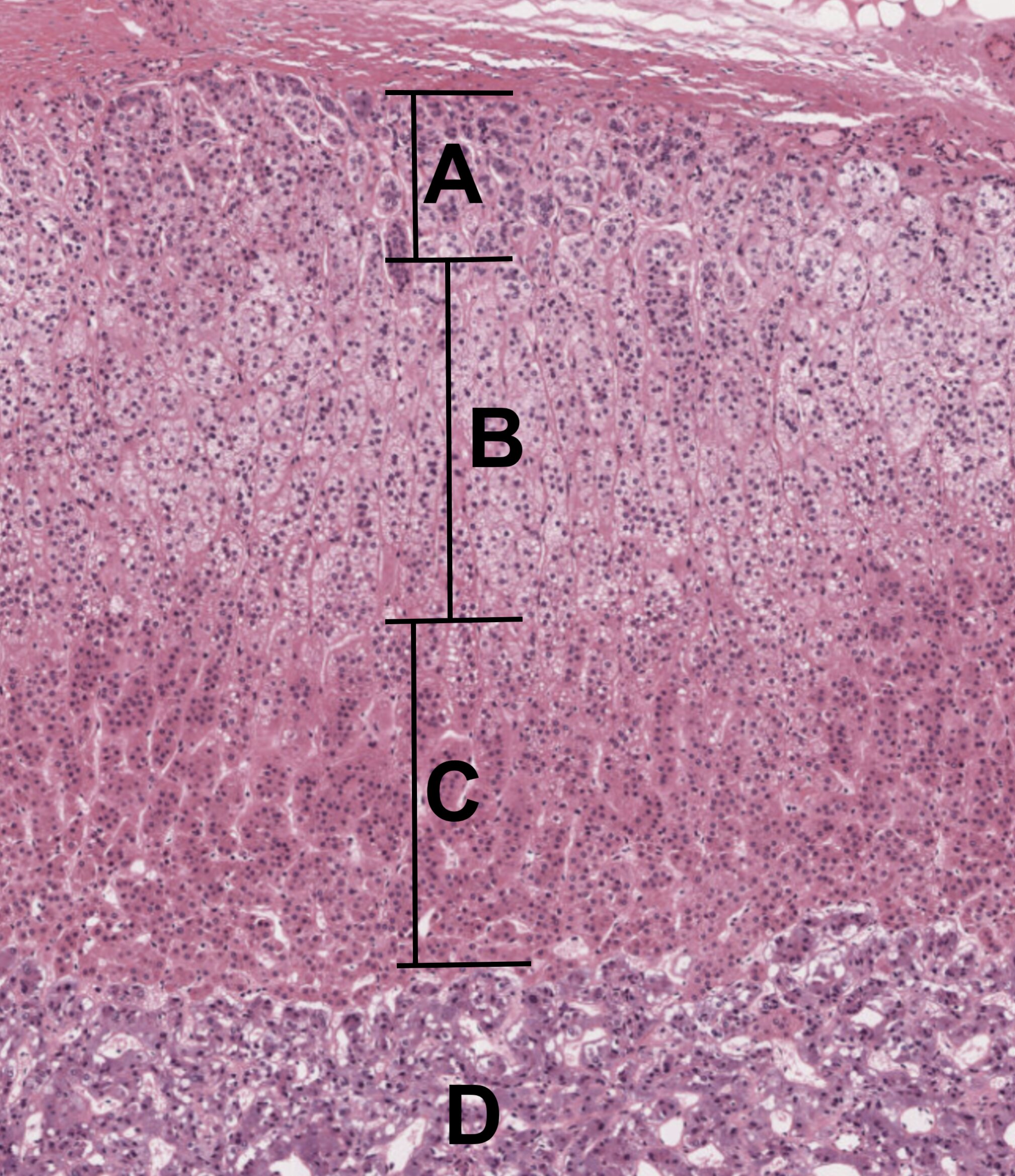
A
Zona glomerulosa
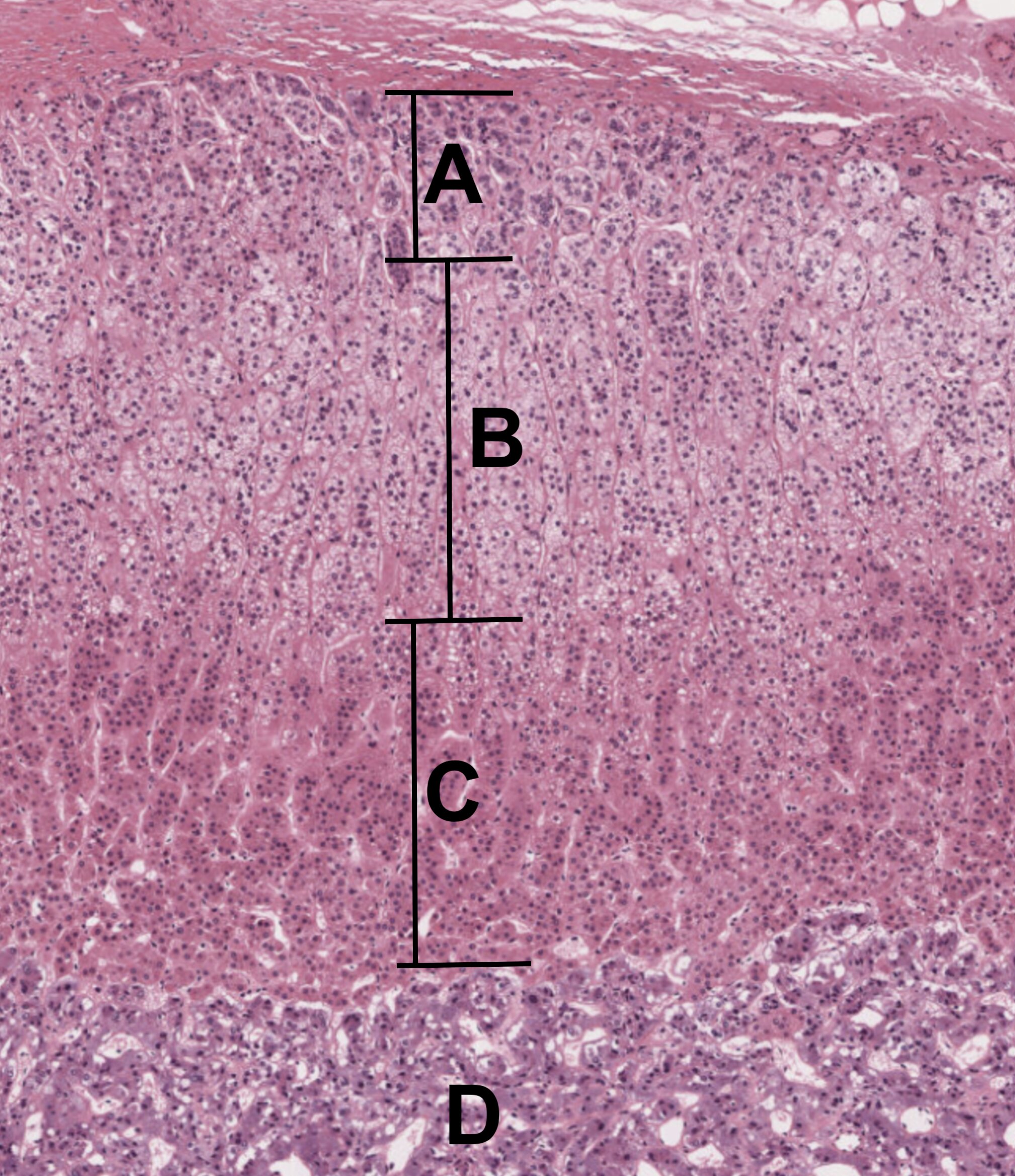
B
Zona fasciculata
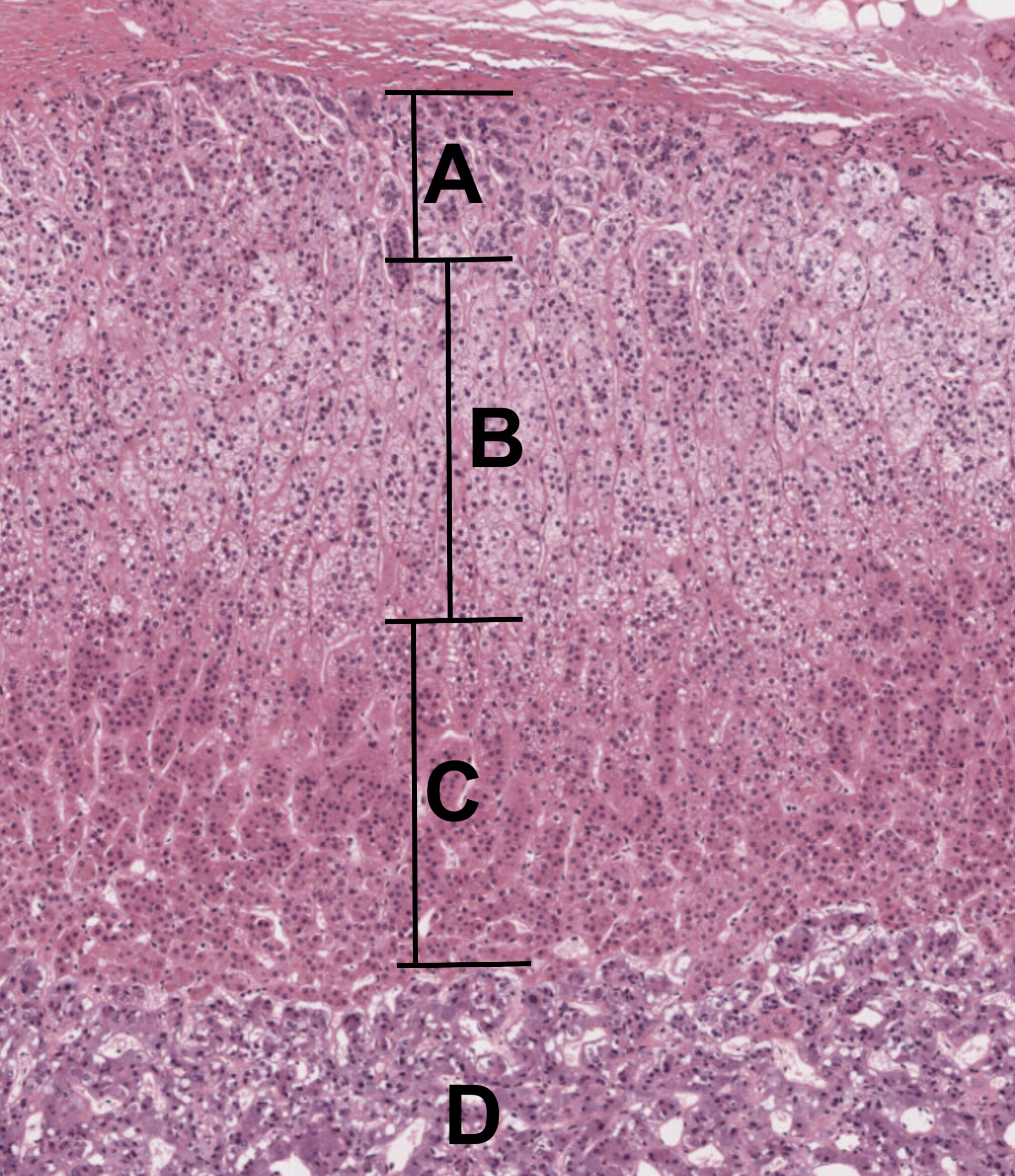
C
zona reticularis
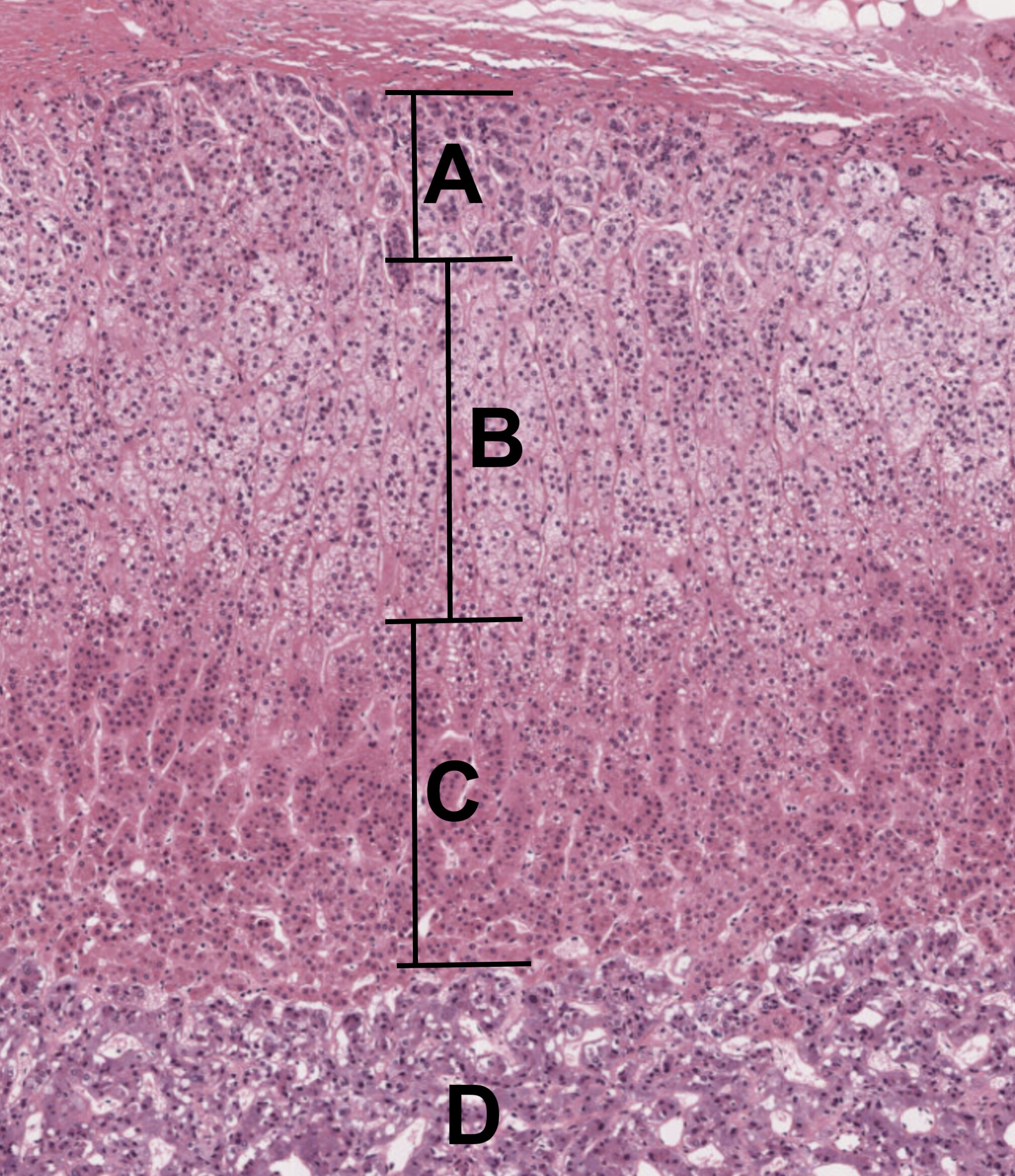
D
adrenal medulla
area the heart is located in
mediastinum
layers of the heart wall (superficial to deep)
epicardium
myocardium
endocardium
layer superficial to pericardial cavity
parietal pericardium
inter-ventricular groove
depression between the 2 ventricles on anterior surface of heart
vessels that take blood to the right atrium
superior & inferior vena cava, coronary sinus
blood flow through the heart
superior & inferior vena cava → R. atrium → tricuspid valve → R. ventricle → pulmonary valve → pulmonary arteries → lungs → pulmonary veins → L. atrium → mitral valve → L. ventricle → aortic valve → aorta
what blood vessels nourish the heart tissue
the coronary arteries
2 blood vessels that carry blood to the coronary sinus
great cardiac vein and small cardiac vein
what separates the left and right atrium
interatrial septum
what the P wave represents
atrial depolarization
what the PR interval represents
AV conduction
what the QRS complex represents
ventricular depolarization
what the T wave represents
ventricular repolarization
why atrial repolarization isn’t shown on an ECG
because ventricular depolarization happens at the same time, so the big QRS complex covers it
normal resting heart rate range
60-100 bpm
tachycardia
100+ bpm
badycardia
below 60 bpm
normal resting blood pressure
120/80 mmHG
hypertension
140/90 mmHG
systolic pressure
pressure in the arteries when the heart contracts
diastolic pressure
pressure in the arteries when the heart relaxes
mean arterial pressure (MAP)
the actual pressure the arteries would sustain if blood flow was not pulsating
(the average pressure in the cardiovascular system)
cardiovascular output (CO)
the amount of blood leaving the heart per minute (L/min)
effects of exercise on HR
increase heart rate in the moment
overtime lowers resting heart rate
Korotkoff sounds
the “lub-dub” sounds heard when listening to bp
causes the “lub” sound
the closure of AV valves (tricuspid and mitral valve)
ventricular pressure rises above atrial pressure
causes the “dub” sound
the closure of aortic and pulmonary semilunar valves
ventricular pressure falls below atrial pressure
electrical conductivity of the heart
sinoatrial node (SA) → atrioventricular node (AV) → bundle of His → Left and Right branches → purkinje fibers
supplies blood to the kidneys
renal arteries
supplies blood to the brain
internal carotid arteries and basilar artery
supplies blood to the stomach, spleen, and liver
celiac trunk
supplies blood to the testes/ovaries
gonadal arteries
supplies blood to the small intestine and proximal portion of the large intestine
superior mesenteric artery
supplies blood to the distal portion of large intestine
inferior mesenteric artery
blood vessel obstructed due to plaque
atherosclerosis

