Lesson 69 functions of female reproductive system
 Call Kai
 Learn
Learn Practice Test
 Spaced Repetition
 Match
Match Flashcards
 Knowt Play
1/80

There's no tags or description
Looks like no tags are added yet.
Name | Mastery | Learn | Test | Matching | Spaced | Call with Kai |
|---|
No analytics yet
Send a link to your students to track their progress
81 Terms
the surge center is activated by high estradiol levels and trigger a GnRH surge for ovulation
How does hypothalmic center regulate GnRH secretion during estrus cycle
hypothalamus-pituitary-ovarian axis
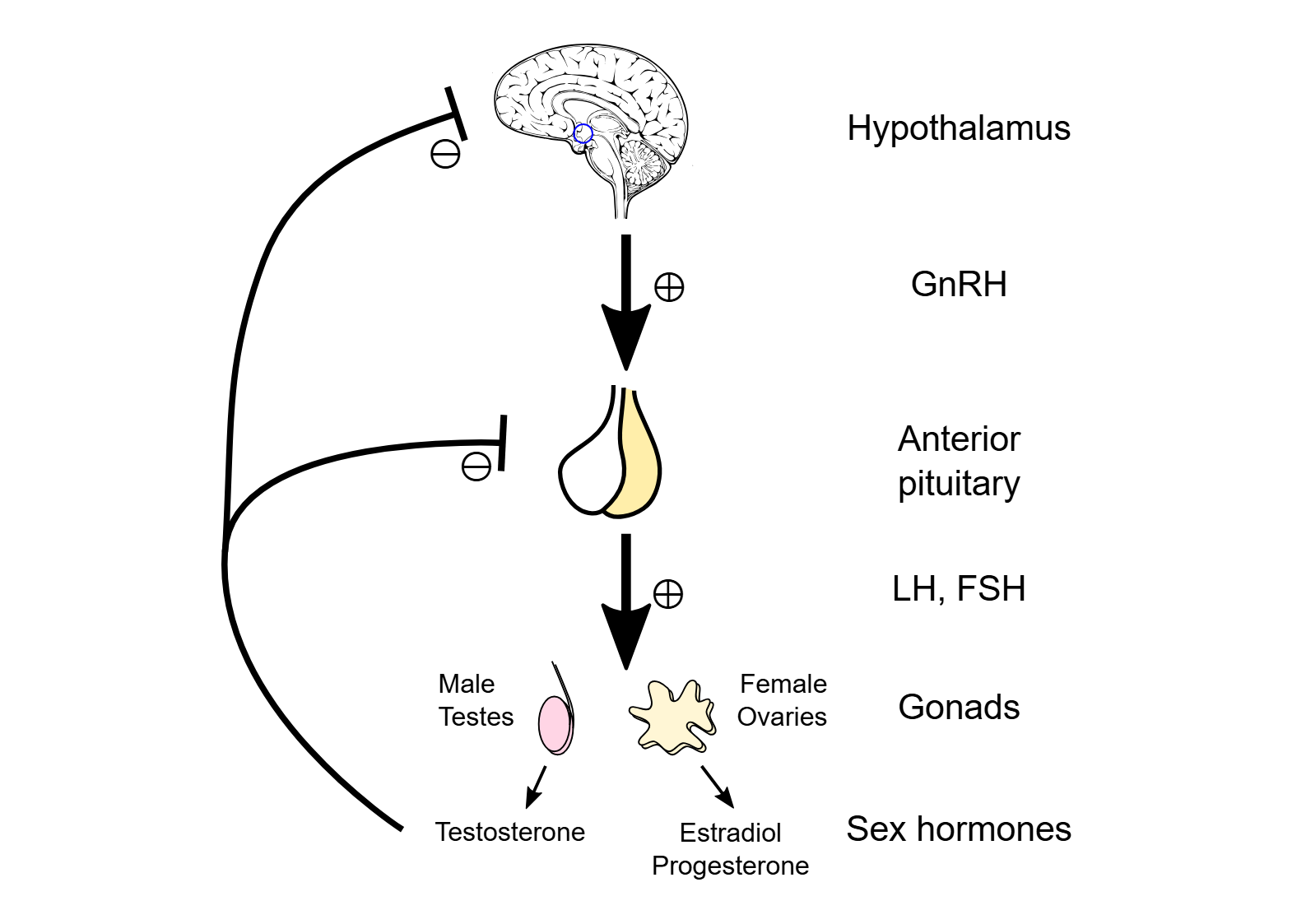
ovulation and luteolysis
events of estrus cycle
corpus luteum
what the ovulatory follicle becomes after ovulation and starts producing progesterone
proestrus and estrus
what stages are in the follicular phase
metestrus and diestrus
what phases are in the luteal
Proestrus
very short phase characterized by active follicular growth and estrogen production. Nonexistent in queens since they are induces ovulators
etsrus
“heat” female shows sexual receptivity to males. Estrogen is very high and induces estrus. Ovulation occurs at the end of this stage whereas cows it occurs after
metestrus
transitional phase b/w diestrus and estrus where corpus luteum is developing. Only present in mares, ruminants, and sow-they ovulate in this stage
Diestrus
longest stage in the cycle characterized by mature CL and high levels of progesterone. Luteolysis occurs at the end of this stage if female does not get pregnant
Anestrus
stage where female does not exhibit estrus cycle. ovaries are inactive. Results from insufficient GnRH pulses(low FSH and LH)=low level estrogen and progesterone.
cow estrus cycle
about 21 days. has metestrus stage. Polyestrus
estrus stage last 18 hours
Cow
Dog vs cow which one ovulates a mature oocyte
Dog
Dog vs cow. which one ovulate an immature oocyte
dog-end of proestrus. cow- estrus
When does estrogen peak in both dog and cow
dog-beggining of estrus. cow- end of estrus
when does LH peak in both dog and cow
dog- increasing at the begining of estrus. cow- low during estrus
What does the progesterone lv look like in estrus in dogs and cows
Bitch’s estrus cycle
6-7 month avg. Monestrus. estrus lasts 9 days. signs of bloody discharge
ovulation occurs in estrus stage
follicular phase
begins after luteolysis and ends with ovulation. peak estrogen secretion, sexual receptivity. high estrogen causes positive feedback on surge center for release of GnRH.
Luteal phase
begins after ovulation and formation of CL, ends with luteolysis. has high progesterone lvs. no sexual receptivity. high progesterone cause negative feedback on GnRH= prevents LH surge
oxytocin and prostaglandine (PG2Fa)
2 hormones produced in the luteal phase
oxytocin
hormone release by aged CL at the end of diestrus that induces production of pgf2a
prostaglandin (PGF2a)
hormone that induces luteolysis in the CL
follicular waves
ovarian antral follicules grows in waves called ______
follicular dynamic
sequence of follicular waves during estrus cycle is called ______
FSH
Adding what hormone can stimulate more follicles growing during the follicular waves
4 stages of follicular dynamic
recruitment, selection, dominance, atresia
recruitment
stage in follicular dynamic where group of follicles grow and secrete estradiol
high FSH, low LH, low inhibin
levels of FSH, LH, and inhibin during recruitment phase
Selection
stage in follicular dynamic where the follicles that have not undergone atresia keep growing and become selected
Low FSH, moderate LH, low inhibin
levels of FSH, LH, and inhibin during selection phase
Dominance
stage in follicular dynamic where one or more preovulatory follicles are exerting an inhibitory affect on the other follicles trying to grow
low FSH, high LH, high inhibin
levels of FSH, LH, and inhibin during dominance phase
function of inhibin
suppresses FSH release from anterior pituitary gland which prevents more follicles from growing
function of LH
stimulates estrogen production in follicular phase
triggers ovulation via surge
supports LH and progesterone secretion during Luteal phase
LH surge
high estrogen reaches its peak in proestrus and causes ____
atresia
follicular degenerationn during any of the stages of follicular dynamics
luteolysis
occurs at the end of diestrus and beginning of proestrus
Progesterone
what hormone is decreasing from CL during luteolysis
hormone flow during ovulation
decrease P4 from CL→ increased GnRH from negative feedback loop with P4 removed→ increased FSH and LH in response to GnRH→ follicle develops
follicle releases E2 and then dominanting ones secrete inhibin as well to suppress FSH→e2 causes massive release from positive feedback GnRH→ LH surge
tonic center
what controls basal level GnRH during longer periods of estrous cycle
surge center
what causes high amplitude, massive releases of GnRH that occur at threshold level E2
folliculogenesis
process where follicles grow and develop
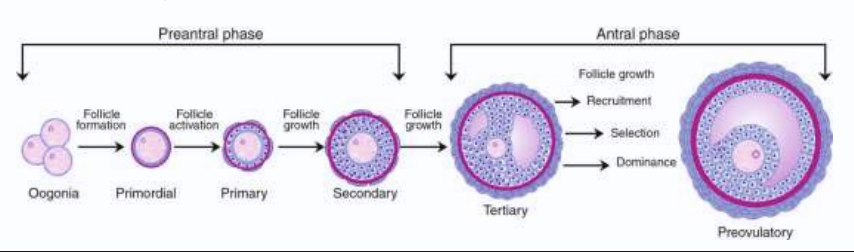
granulosa cell
projects cytoplasmic extension through zone pellucida and into oocyte allowing nutrient delivery
primordial follicles
inactive and smallest follicle with layer of flat granulosa cell
primary follicles
single layer of cuboidal granulosa cells
secondary follicles
multiple layers cuboidal granulosa cells
tertiary (antral) follicle
develops antral cavity
Mature (dominant) follicle
ready for ovulation
FSH and LH
GnRH causes the release of what hormone form anterior pituitary gland
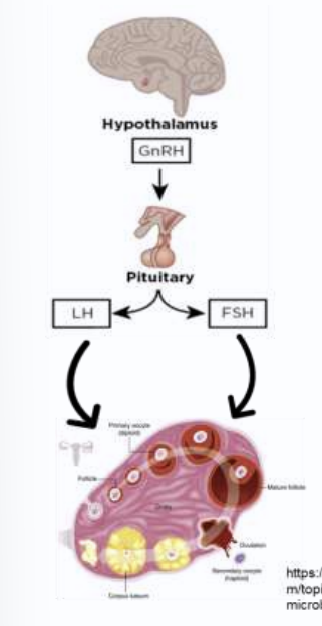
antral follicles
what forms in response to basal levels FSH and LH
independent
primary to secondary follicle are gonadotropin ____________
Dependent
tertiary → mature follicles are gonadotropin ______
oogenesis
process of development and maturation oocyte within follicles
ooginia
stem of female cells. diploid that multiple via mitosis during fetal life
primary oocyte
starts meiosis 1 and is arrested in prophase I until puberty
basically primordial, primary and secondary follicles
secondary oocyte
after meiosis is resumed oocyte arrested again in metaphase II until fertilization (tertiary/antral follicle)
zona pellucida
glycoproteins that are synthesized and surrounds the oocyte
granulosa cells and gap junction
what cell mediates oocyte growth and what type of junction connects them
How oocytes division/ meiosis is resumed
normally cAMP inhibits meiosis but LH surge removes it thus resuming meiosis I
what occurs in meiosis I
a secondary oocyte(haploid) and first polar body is formed. polar body is a cell with genetic material.
what occurs in meiosis II
oocyte is fertilized then undergoes another division. second polar body forms and resulting cell is a zygote
difference bwtween immature and mature oocyte
cumulus(granulosa cell surrounding oocyte) expands and first polar body is present

