Anthro Term 1
 Studied by 5 people
 Call Kai
 Learn
Learn Practice Test
 Spaced Repetition
 Match
Match Flashcards
 Knowt Play
1/185

There's no tags or description
Looks like no tags are added yet.
Name | Mastery | Learn | Test | Matching | Spaced | Call with Kai |
|---|
No analytics yet
Send a link to your students to track their progress
186 Terms
What makes us human as primates
We don’t have tails which change locomotion
Monkeys walk among branches
Apes(hominids) swing below branches
Why don’t we have body hair
Unusual among primates
Thought to be associated with moving into the open/dry savannah environments
Thermoregulation(evolution of sweating)
Associated with evolution of dark skin pigmentation
Pediculus Humanus
Human head and body lice
3 main types; head, body, pubic(separate species)
Human lice split from chimpanzee lice around 6 mil years ago
Leaves the idea that body lice emerged after we invented clothing
Tools humans use: Fire
How far back in the fossil record do we see evidence for fire?
Fire for cooking(increases nutrients), warmth, deterring predators, managing landscapes, hunting, etc
Burned animal bone
heat treated stone tools
hearths
Why do humans live everywhere?
Humans occupy an incredible range of environments
rainforests, tundra, islands, deserts, savannah, high-altitude, woodlands
Most do not involve biological adaptions but cultural ones
culture can evolve more rapidly than genetic adaptations
Facilitates rapid expansion into novel environments
clothing, habitation, tools for plant use and processing, tools for hunting, knowledge of environment
Evolution
Change through time
morphological change in the human body(ex: skull size)
Change in frequency of a trait over time
Traits
genotype or phenotype
Genotype
An organism’s unique set of genes, representing a specific genetic makeup (genetic code/DNA)
Phenotype
Set of observable traits (eye color, height, behavior) that is a result of genetic code (genotype) interacting with the environment
Evolution doesn’t only refer to genetic evolution
Morphological change of ipod to iphones
Even when looking at our species we can talk about genetic evolution, cultural evolution, technological evolution, etc
Traits are;
An expression of an allele(alternate form of a gene)
What is evolution??
Evolution is the change in frequency of the alleles through time
Types of evolution
Microevolution
Macroevolution
Microevolution
The change in allele frequencies within a population over short time scales
(dogs/dog breeds)
Macroevolution
Large-scale/long-term evolutionary changes above the species level resulting in the formation of new species, genera, families, or higher taxonomic groups
adding up microevolution events
Stasis Evolution Pace
Stays the same, little to no morphological change
living fossils (EX; Coelacanths)
linked to punctuated equilibrium theory
Gradual Change Evolution Pace
Evolving slowly and steadily throughout time
EX: human brain slowly changing in the last 500,000 years
Punctuated Change Evolution Pace
An explosion of evolutionary change after a stasis
EX: human body changing about 1.8 mil years ago
Lots of Evolution adaptations
Evolution is not (linear) complexity does not necessarily increase
Divergent evolution
When related species from a common ancestor evolve different traits 9homogous structure) to adopt to different niches
wolfs evolving also into foxes, coyotes, and different dog breeds
Convergent evolution
Unrelated species develop similar traits (analogous structures) due to similar environments
Birds and bats
Mechanisms of evolution
Mutation
Gene flow
Genetic drift
Natural selection
Neutral evolution
Evolutionary forces that act with random chance on a population
Mutation
Genetic flow
Genetic drift
Charles Darwin Works
Published his work when he was older but did his fieldwork in his 20s
Aristotle (Ideas before Darwin)
Notes an animal’s structure suited to its function
linked the idea of structure and function of the body
Al-Jahiz (Ideas before Darwin)
Wrote a book about animals
Was close to proposing natural selection idea before Darwin
Jean-Baptiste Lamarck (Ideas before Darwin)
Idea of organisms passing on physical traits to their offspring
Lamarckian inheritance of Acquired Traits (Giraffe’s necks evolving to reach leaves on trees)
Base idea of Darwin’s thinking with natural selection
Charles Lyell
Geologist, Darwin’s bestie
Believed in uniformitarianism
slow changes we can observe that accumulate over deep time, given that the Earth is old
Alfred Russel Wallace
Independently though of the theory of natural selection from his fieldwork in the Amazon
Worked with Darwin about natural selection later and published together since they both worked the idea independently
Darwin’s Theory of Adaption
Voyaged on the HMA Beagle in his 20s for 5 years
Was hired as a geologist then promoted to naturalist
Produced a simple mechanistic explanation for how species change through time (Was drawing phenotypic trees in his notes)
Darwin’s Postulates
Struggle for existence
Variation in features
Variation is passed from generation to generation
Make evolution by means of natural selection inevitable(ok Thanos)
Struggle for existence
1st Darwin’s postulate
Hungry/fighting to survive
Limiting resources/ predation/ finding mates
Variation in features
2nd Darwin’s postulate
Coat color/ teeth/ patterns
Adaptations
Variation is passed from generation to generation
3rd Darwin’s postulate
Adding up to evolution
Did Darwin’s postulates work?
Biologists Peter and Rosemary Grant collected finches to study to make sure Darwin’s postulates worked
-was in Galapagos Islands, Ecuador
Darwin’s Finches
Drought hit and population went from 1200 to 180 (1st postulate)
These finches had variation in beaks, short vs. longer/deeper beak. Deeper beaks can break the seeds easier, more access to food, Beak depth varied; affected survival (2nd postulate)
Beck depth passed from parent to offspring (3rd postulate)
Selection does NOT have an end goal
Types of Selection
Disruptive selection
Stabilizing selection
Directional Selection
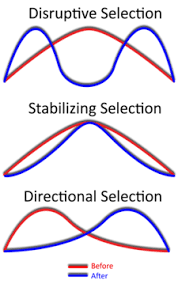
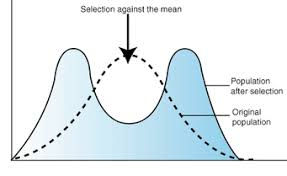
Disruptive selection
Variation spread out, environ is targeting (selected against) a certain phenotype variations
Climate change can disrupt the selection pressures on populations
Causing the population to split into distinct groups, increasing genetic diversity, and potentially leading to new species
EX: a tri-colored population can show selection pressure that favor only 2 phenotypes (rabbit example)
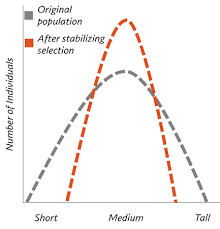
Stabilizing Selection
Will maintain status quo as long as the environment is constant
The average trait is favored, while extreme variations (both high and low) are selected against, leading to reduced genetic diversity and a population that stabilizes around the average trait
EX: Darwin’s Finches
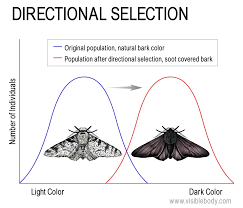
Directional selection
Where one phenotype(trait) is favored, causing the population’s average trait to shift in that trait over generations
Driven by environmental changes or pressures favoring certain adaptations for better survival or reproduction
EX: Peppered moths
Artificial selection (Domestication)
Humans have domesticated and selectively bred plants and animals
Rapid changes have been achieved in few generations
EX: Dog breeds
Se*ual Selection (Have to misspell it due to restrictions)
Not really mentioned with traditional mechanisms but plays a BIG part in evolution
Stronger and faster than natural selection
Se*ual dimorphism
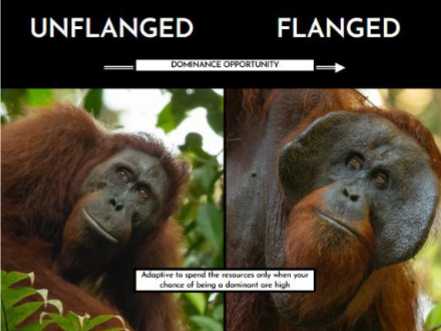
Trait changes in one se* of an animal
Size + dichromatism(changes in skin/fur/scale color)
How id Se*ual Selection different than NS?
Selects for traits that increase the relative fitness of an individual by allowing them to secure greater mating success
Se*ual selection can work in opposition to Natural selection by selecting for traits that compromise survival
Intrase*ual Selection
Intra= within(se*es)
Male to male competition
Dominant males gain access to females
Males are bigger than females
Interse*ual Selection
Inter= between(se*es)
Females choice
Females selects most attractive male(boys are prettier lol)
Females are bigger than males
Mating systems
Monogamy
Polygamy
Polygyny
Polyandry
Promiscuity
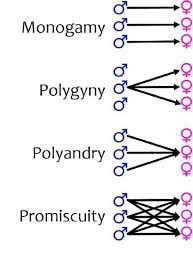
Monogamy
Individuals mate exclusively with each other
keep in mind that extra-pair copulations, EPCs do occur frequently
Sequential monogamy is the type of monogamy seen in primates
Polygamy
Individuals mate with more than one partner
Polygyny
Males mating with more than one female
Polyandry
Females mate with more than one male
Promiscuity
Individuals mate indiscriminately with multiple partners
Pair bonds w/se*ual dimorphism
Have little male-male competition: little dimorphism
One-male, multi-female w/se*ual dimorphism
polygyny
Huge body and canine dimorphism
Multi-male, multi-female w/se*ual dimorphism
polygamy of promiscuity
Large dimorphism
Intrase*ual: Multi-male/multi-female
Sperm Competition
Males with larger sperm volume have greater chance of fathering offspring
Evolution selects for t*stes size
There is evolutionary trade-off between t*stes size and hyoid bones in howler monkeys (louder they yell=more likely of finding mates)
Interse*ual: Female preference
Colorful traits
Mandrills (EX: Rhesus Macaque (Rafiki) gets more red in the face during mating season)
Grooming
Access to Resources
Protection (for them and their babies)
Se*ual Selection in Humans
Low se*ual dimorphism
Possible se*ually selected traits:
lack of baculum(pen*s bone)
Permanent br*asts in females
Mate culture can be affected by culture
Constraints on Natural Selection
Natural selection can only act on variation in the population
new variation comes from mutation which is random chance
May be a slow process and takes lots of steps to get to a phenotype that is adaptive
EX: whales from land animals (convujent evolution)
Can see slow changes add up to modern phenotype traits through fossil records
Global optimum
Natural selection is “blind” so a population doesn’t always reach the best solution
Local optimum
Sometimes a population gets stuck at just a good solution and does not reach the best solution
The dynamics of the developmental mechanisms serve to constrain which phenotypes are biologically realizable
Developmental constraints
Mechanical constraints
Developmental constraints
The heart
different sizes for different species (EX: Humans vs. fish)
Mechanical constraints
All mammals have 7 vertebrae
(Giraffe’s vertebrae are much bigger(like a foot) compared to humans)
If the number of vertebrae changes it would change the developmental forces to help support neck/life
Some traits are correlated to others;
this can occur phenotypically (length and width) or genetically (location on the allele)
EX: beak depth and width are correlated in Darwin’s finches
Some natural populations may now be imperfectly adapted because accidents of history pointed their ancestors in what would later become the wrong direction
EX: Giant pandas- vegetarians with false thumbs
Due to moving to a vegetarian lifestyle from meat, their gut had to evolve and evolved a false thumb to help hold and eat the bamboo better
Genetic constraints on adaption occur when the heterozygote at a locus has a higher fitness than either homozygote
EX: Sickle cell
No protection from malaria for normal (AA) where they don’t have it
But Aa and aa gets protection/less sick from malaria due to proteins not forming/destroying blood cells in malaria
Neutral forces of evolution can influence an evolutionary path, constraining natural selection
Bottleneck and Founder’s effect
Genetic drift constrains adaptations
How have humans affected the evolution of ourselves/other species?
Over exploitation of resources
Habitat destruction
Invasive species
Pollution and rapid environmental change
Artificial selection
Cultural and technological buffering
DNA
Discrete unit of inheritance which contains the recipe for creating cells and differentiating those cells into a whole organism
4 nucleotide bases; Adenine, Guanine, Cytosine, Thymine
Nucleotides are paired in a double stranded matter (double helix)
very stable formation, degrades less quickly
Chromosomes
Humans have 22 autosomal chromosomes plus the sex chromosome (23 pairs of chromosome in total)
Amount of chromosomes are different for every species
Mitochondrial DNA
Available in every cell
a short chromosome
maternally inherited
multiple copies
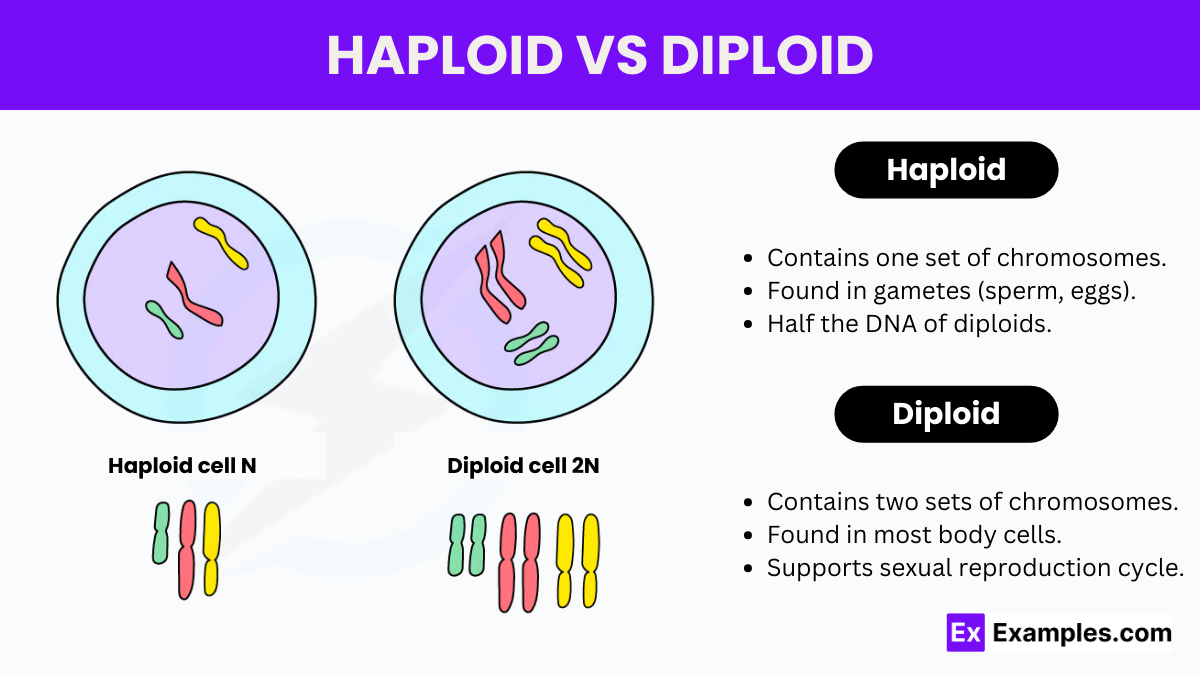
Diploid
Humans have diploid autosomes (2 copies)
Females are diploid for XX
Males are haploid for XY
They receive 1 copy of each chromosome from each parent (called a gamete) and are 50% identical to either parent (except for mutation)
Somatic cells (clones)
are diploid
S*x cells/Gametes
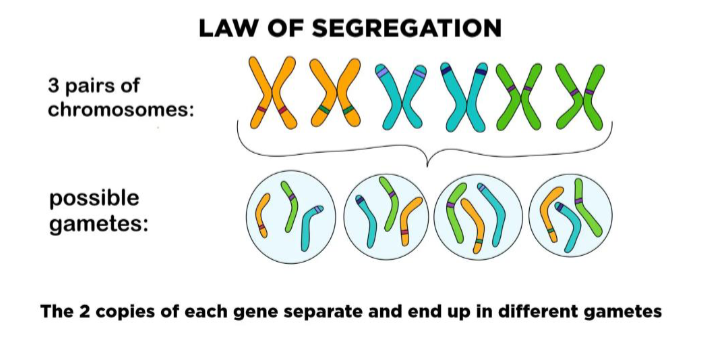
All 4 cells are different
Haploid
2 ways Meiosis creates new genetic variation
50% chance that a parent will pass on either chromosome of a given homologous pair
Genetic recombination ensures that even offspring with the same parental chromosomes will have different genetic makeups
Mutations and DNA replication
Replication is when most mutations are introduced
DNA must unravel to allow cellular mechanisms to attach
SNPs
Single nucleotide polymorphisms
most are neutral
few are deleterious or beneficial
Synonymous mutations
Code for the same protein
Nonsynonymous mutations
Code for different protein
Natural selection can act on this
Gregor Mendel
Discovered laws of inheritance
Bred garden pea plants (1856-1863)
Worked with traits of two variants
Color: yellow or green
Texture: wrinkled or smooth
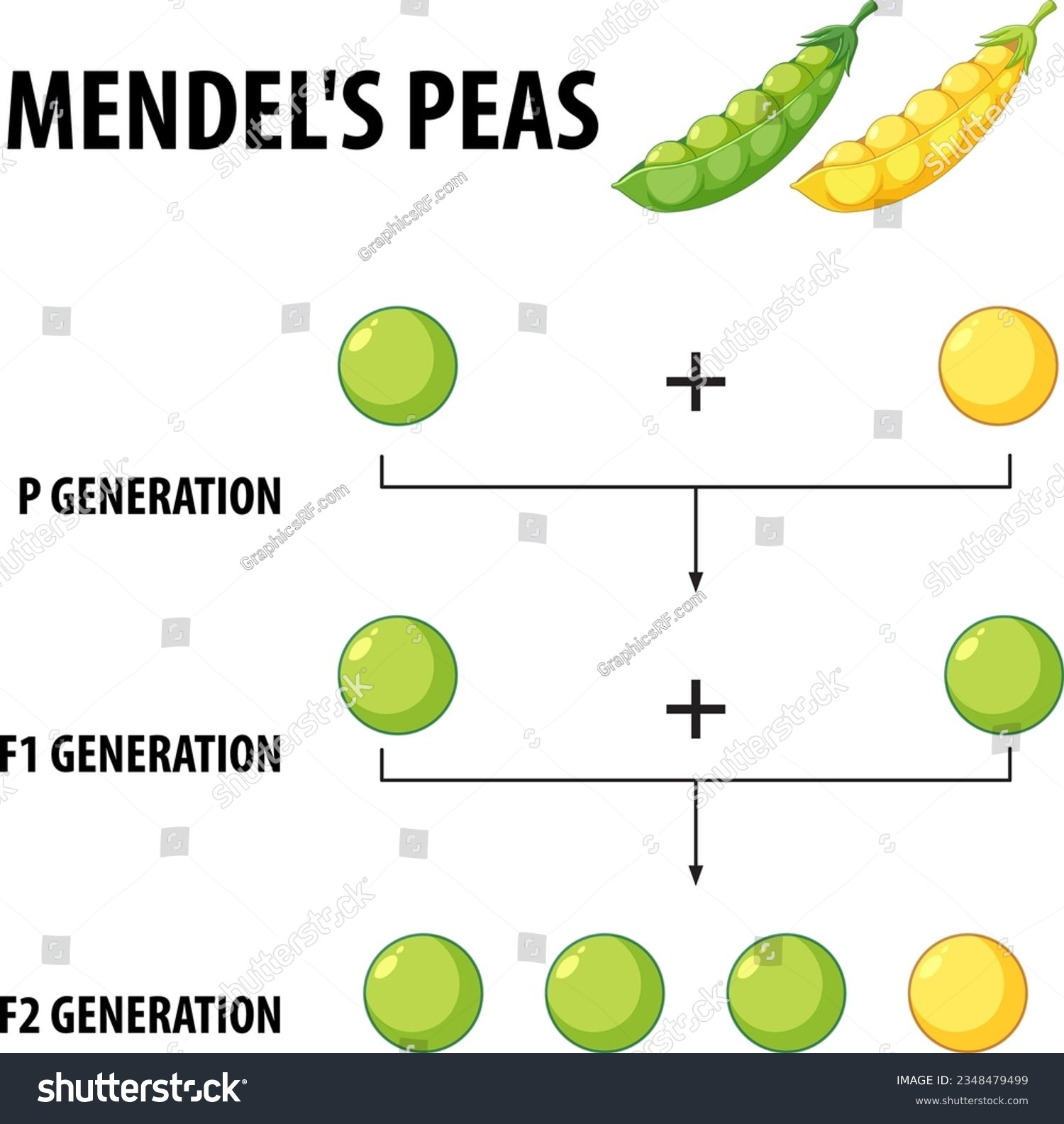
Mendel’s Crossbreeding Experiment
F generations
Genes inherited; 1 from the mother, 1 from the father
Independent assortment
These are discrete traits, not continuous
Law of Segregation
Characteristics of organisms are determined jointly by two “particles”(alleles), one inherited from each parent
-offspring get one allele from each parent
Law of Independent Assortment
Alleles for different traits are inherited independently of one another
Genes do not influence each other with regard to the sorting of the alleles into gametes
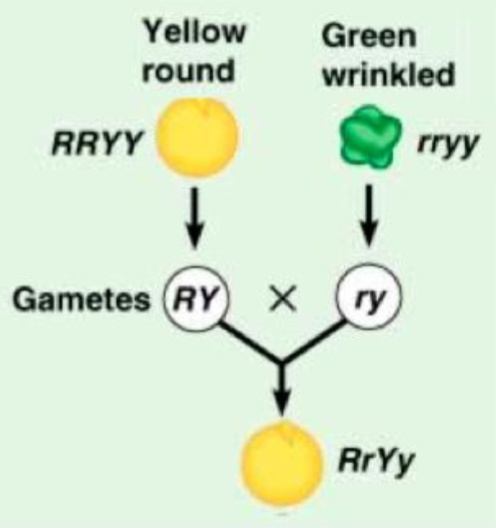
Law of Dominance and Uniformity
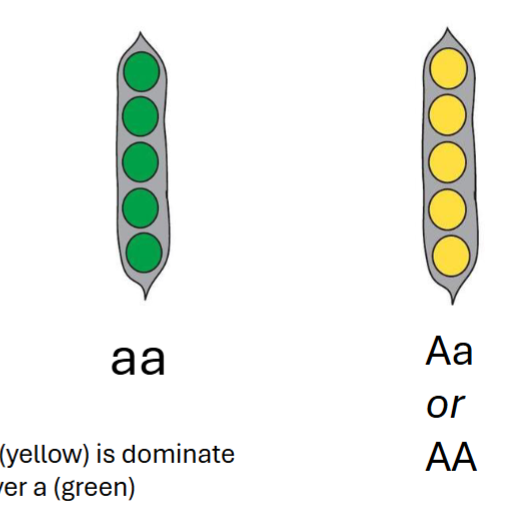
Some alleles are dominant over other particles (for example yellow is dominant over green in Mendel’s pea experiment)
Hardy-Weinberg Principle
States that allele and genotype frequencies in a population remain constant from generation to generation in the absence of evolutionary influences
-Genotype frequencies in the Hardy-Weinberg principle are inherited by maintaining constant frequencies across generations due to random mating, no selection, and no mutation or migration.
Hardy Weinberg Equilibrium
Population is infinitely large
No mutation
No genetic drift
No gene flow
Natural selection is not operating
Mating is random
All members produce same number of offspring
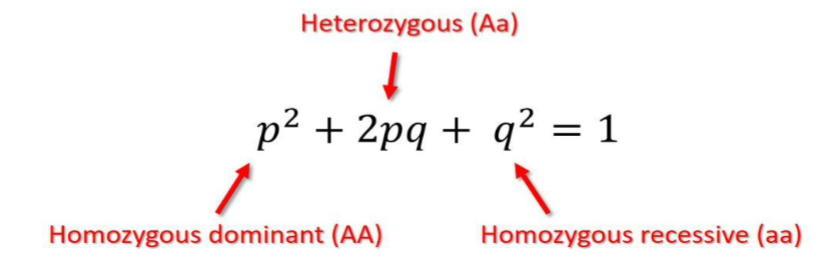
Hardy Weinberg Equation
Predicts genotype frequencies for the next generation after one mating
Determines if evolutionary change is taking place or if the population is in equilibrium
If it is not in equilibrium, the population is still evolving
Non-Mendelian Inheritance
Polygenic traits
Pleiotropic traits
Incomplete dominance
Codominance
Polygenic traits
Involves multiple genes influencing one trait (height/skin color) leading to continuous variation
Pleiotropic traits
Occurs when a single gene affects multiple, seemingly unrelated traits
Incomplete dominance
Where traits blend (pink flowers from red & white)
Codominance
Where both traits appear (AB blood type)
Environment Inheritance (Non-Mendel)
Phenotypic plasticity
Heritability
Phenotypic plasticity
The ability of a single genotype (organism) to produce different, observable, or measurable trait (morphology, physiology, or behavior) in response to varying environmental conditions
The property of organisms to produce distinct phenotypes in response to environmental variation
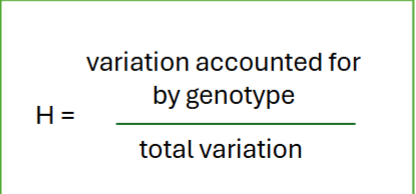
Heritability
Trait is how much is genetic and how much is something else (environment)
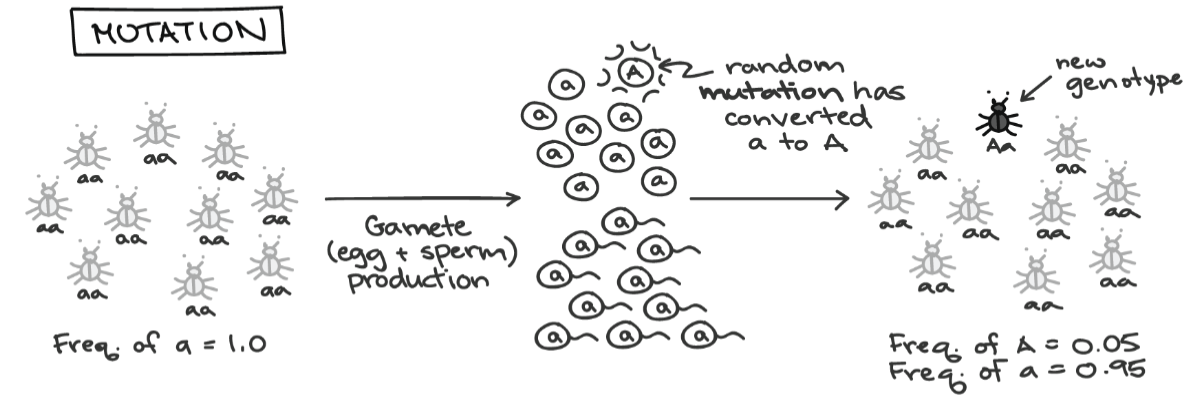
Mutation
Change in an organism's DNA sequence, caused by replication errors or environmental factors, which can be harmful, beneficial, or neutral, and can be passed to offspring if it occurs in reproductive cells (gametes)
A spontaneous change in the chemical structure of DNA
Beneficial Mutation
Lactase persistence
Stop production of lactase enzyme between ages 2 -12
A genetic trait allowing adults to digest lactose, the sugar in milk, due to the continued production of the enzyme lactase
Harmful Mutation
Cystic Fibrosis
F508 mutation
Deletes 3 DNA bases
Seen in populations all over the world
Smaller populations are more affected (genetic drift)
Recessive gene = parents are heterozygous carriers
 Note
Note  Flashcards (20)