Tissues— epithelium
 Studied by 0 people
 Call Kai
 Learn
Learn Practice Test
 Spaced Repetition
 Match
Match Flashcards
 Knowt Play
1/39

There's no tags or description
Looks like no tags are added yet.
Name | Mastery | Learn | Test | Matching | Spaced | Call with Kai |
|---|
No analytics yet
Send a link to your students to track their progress
40 Terms
4 levels of organization
cells → tissues → organs → organ system
define tissues
tissues are groups of similar cells with a common function
most cell types are tightly packed with structures (____) that connect their cell membranes
intercellular junctions
what are 3 types of intercellular junctions?
tight junction, desmosome, and gap junctions
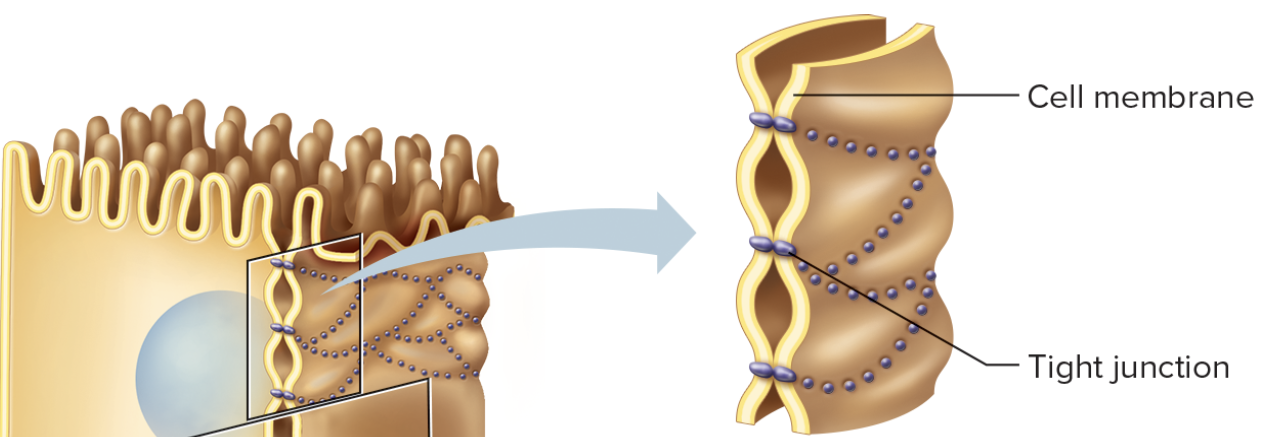
define tight junction and what cells it may join
tight junction is a close space between cells by fusing cell membranes. tight junctions usually join cells that form sheetlike layers (e.g. cells that line the inside of the digestive tract or the linings of tiny blood vessels in the brain)
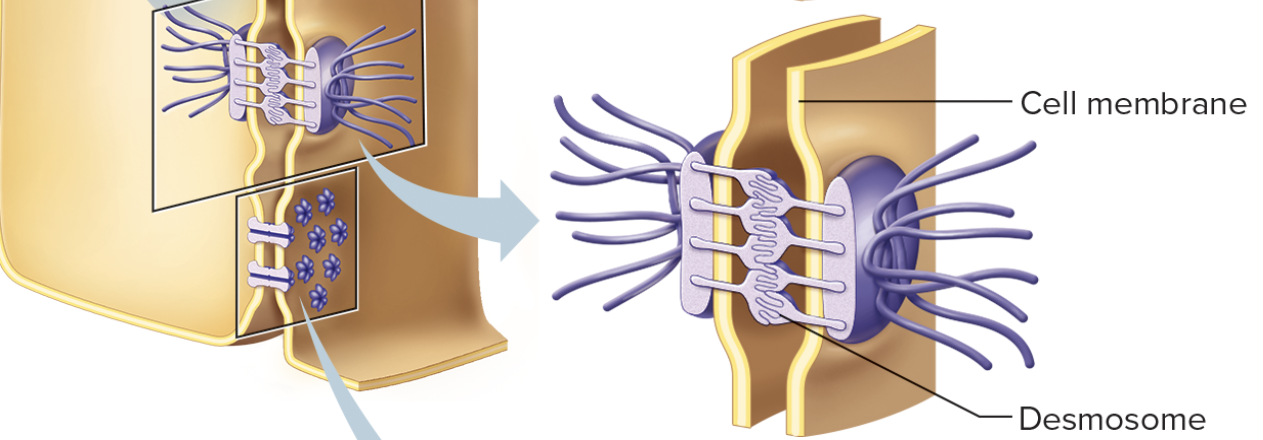
define desmosome and what cells it may join
a desmosome binds cells by forming rivets between cell membranes (e.g. cells of the outer skin layer)
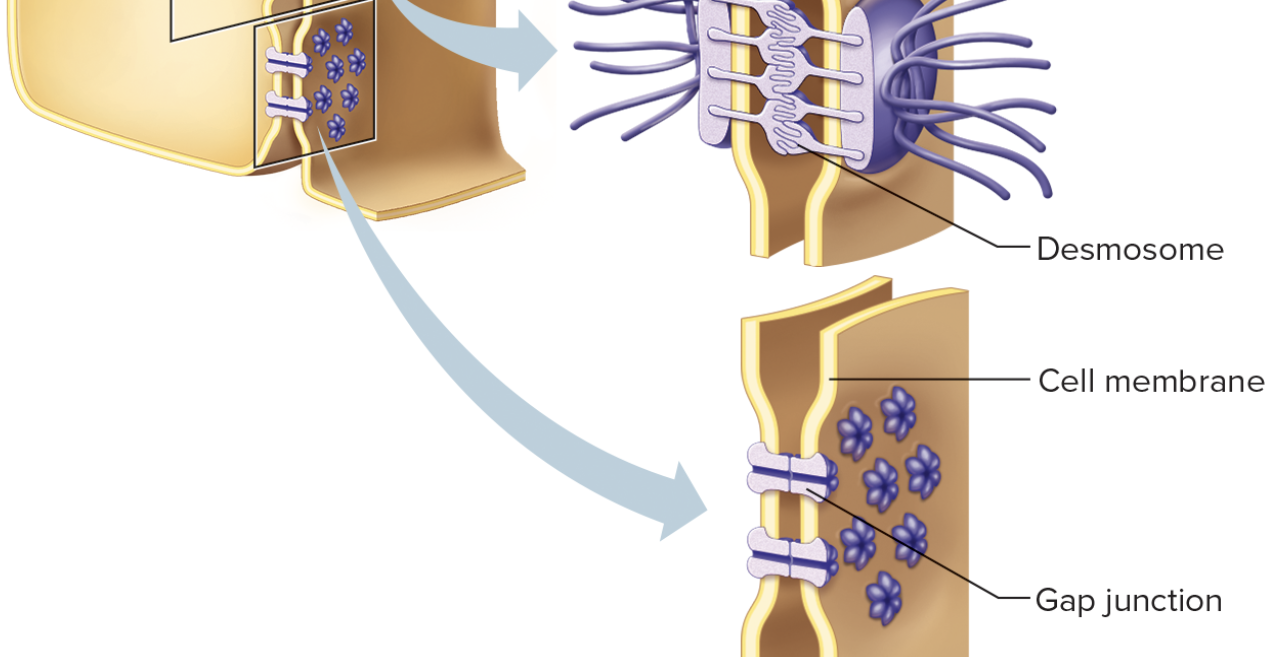
define gap junction and what cells it may join
a gap junction forms tubular channels between cells that allow exchange of substances (ions, nutrients, etc) by linking the cytoplasm of adjacent cells. (e.g. muscle cells of heart and digestive tract)
what are 4 main tissue types?
epithelial, connective, muscle, and nervous tissue
what are the characteristics and functions of epithelial tissue?
epithelial tissue covers the surface of the body, covers and lines internal organs, and compose glands. They lack blood vessels, its cells readily divide and are tightly packed. Its function is to protect, secrete, absorb, and excrete.
what are the characteristics and functions of connective tissue?
connective tissue is widely distributed and mostly have good blood supply. Its cells are less tightly packed, with extracellular matrix between. Its function is to bind, support, protect, fill spaces, store fat, and produce blood cells.
what are the characteristics and functions of muscle tissue?
muscle tissue is attached to bones, in the walls of hollow internal organs and heart. It is able to contract in response to specific stimuli. Its function is to aid in movement.
what are the characteristics and functions of nervous tissue?
nervous tissue are made up of cells that communicate with each other and other body parts. They are mainly found in the brain, spinal cord, and nerves. Its function is to conduct impulses for coordination, regulation, integration, and sensory reception.
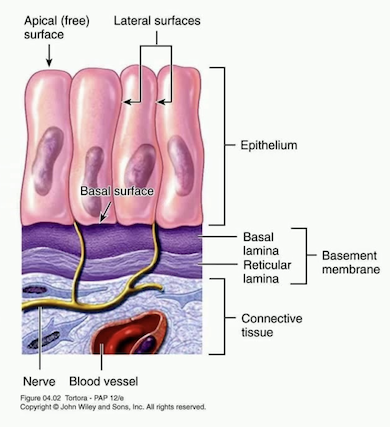
epithelial tissues always have a __ ___ exposed to the outside or exposed ____ (internally/externally) to an open space.
free/apical surface, internally
what is a basement membrane?
a basement membrane is a thin, extracellular layer that anchors the epithelium to underlying connective tisue
If epithelial tissues are avascular, how do they get nutrients?
nutrients are transferred to epithelium by diffusing through the underlying connective tissue
define simple epithelium
composed of a single layer of cells
define stratified epithelium
composed of at least 2 layers of cells
define pseudostratified epithelium
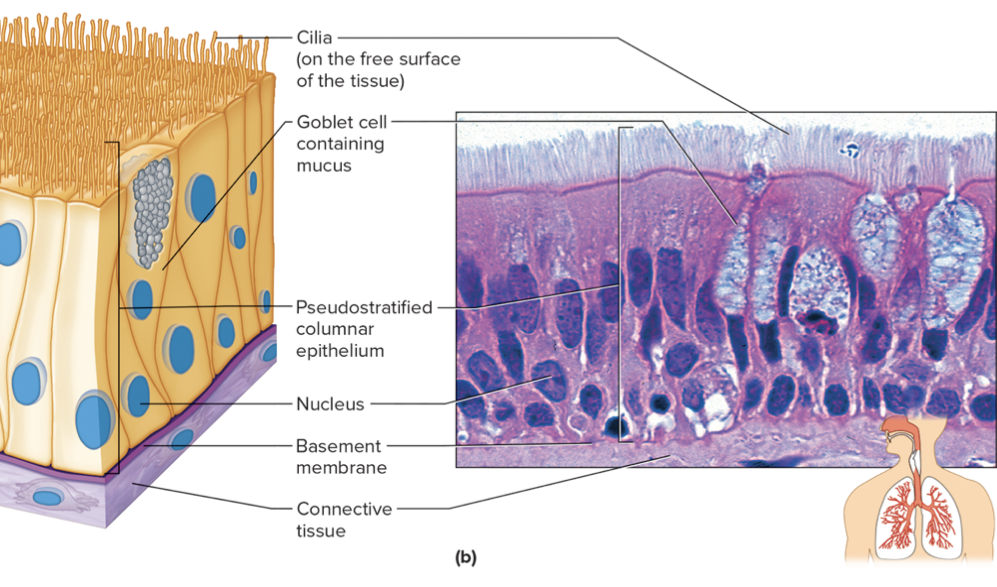
appears stratified, but are not. (occurs b/c the nuclei lie at two or more levels in the row of aligned cells, and the cells may vary in shape)
what are the characteristics of simple squamous epithelium and where are they found?
simple squamous epithelium are flat, tightly packed, and have broad and thin nuclei— large surface area. substances diffuse/filter easily, but they are easily damaged. Simple squamous epithelium lines the alveoli and insides of blood and lymph vessels, forms the walls of capillaries, and is part of the membranes that line body cavities and cover viscera
what are the characteristics of stratified squamous epithelium and where are they found?
stratified squamous epithelium is formed as cells grow older and are pushed outward, where they flatten and keratinize. This forms the epidermis, or the outer layer of the skin, which prevents substances from escaping and entering. Stratified squamous epithelium also lines the oral cavity, esophagus, vagina, and anal canal (areas prone to damage)
what are the three types of epithelium (by shape)?
squamous (think squashed), cuboidal (think cube), and columnar (think column)
what are the 3 main types of epithelium (by structure)?
simple, stratified, pseudostratified
naming epithelium
“structure” “shape” epithelium
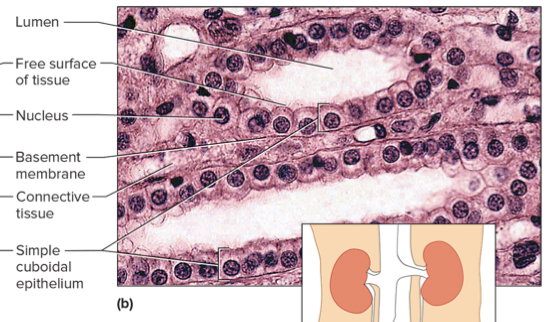
what are the characteristics of simple cuboidal epithelium and where are they found?
simple cuboidal epithelium consists of a single layer of cube-shaped cells with a spherical nuclei. They line the follicles of the thyroid gland, covers the ovaries, lines most the kidney tubules and ducts. In kidneys, they function int he formation of urine, and in glands, they secrete glandular products.
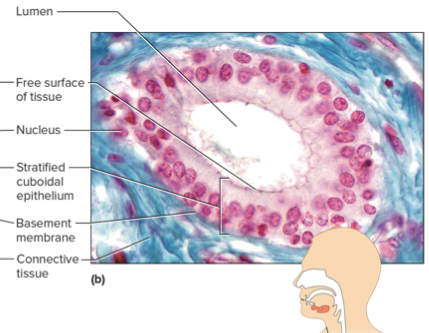
what are the characteristics of stratified cuboidal epithelium and where are they found?
stratified cuboidal epithelium consists of two or three layers of cuboidal cells that form the lining of a lumen (the hollow channel the free surface of tubules and ducts face) for more protection. stratified cuboidal epithelium lines the ducts of the mammary glands, sweat glands, salivary glands, and pancreas, and forms the lining of developing ovarian follicles and seminiferous tubules (part of reproductive sys.)
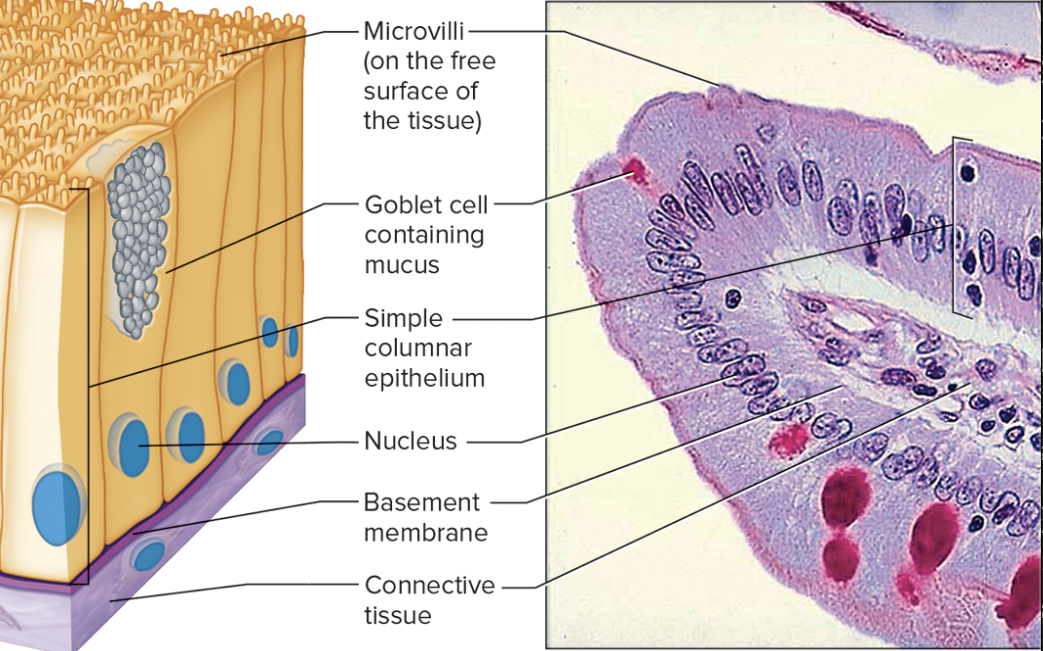
what are the characteristics of simple columnar epithelium and where are they found?
simple columnar epithelium consists of a single layer of cells of column-shaped cells whose nuclei are typically at the same level, near the basement membrane. simple columnar epithelium can be ciliated or nonciliated. simple columnar epithelium lines the uterus and portions of the digestive tract (stomach, intestines)— these elongated cells form thick tissues which protect underlying tissues. It also secretes digestive fluids and absorbs nutrients from digested food (via microvilli that extend from the epithelial cells), and goblet cells secrete mucus onto the free surface of the tissue
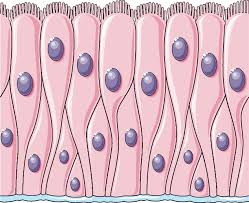
what are the characteristics of pseudostratified columnar epithelium and where are they found?
pseudostratified columnar epithelium generally have cilia, which extend their free surfaces and sweep away the mucus goblet cells secrete. They line the passages of the respiratory system
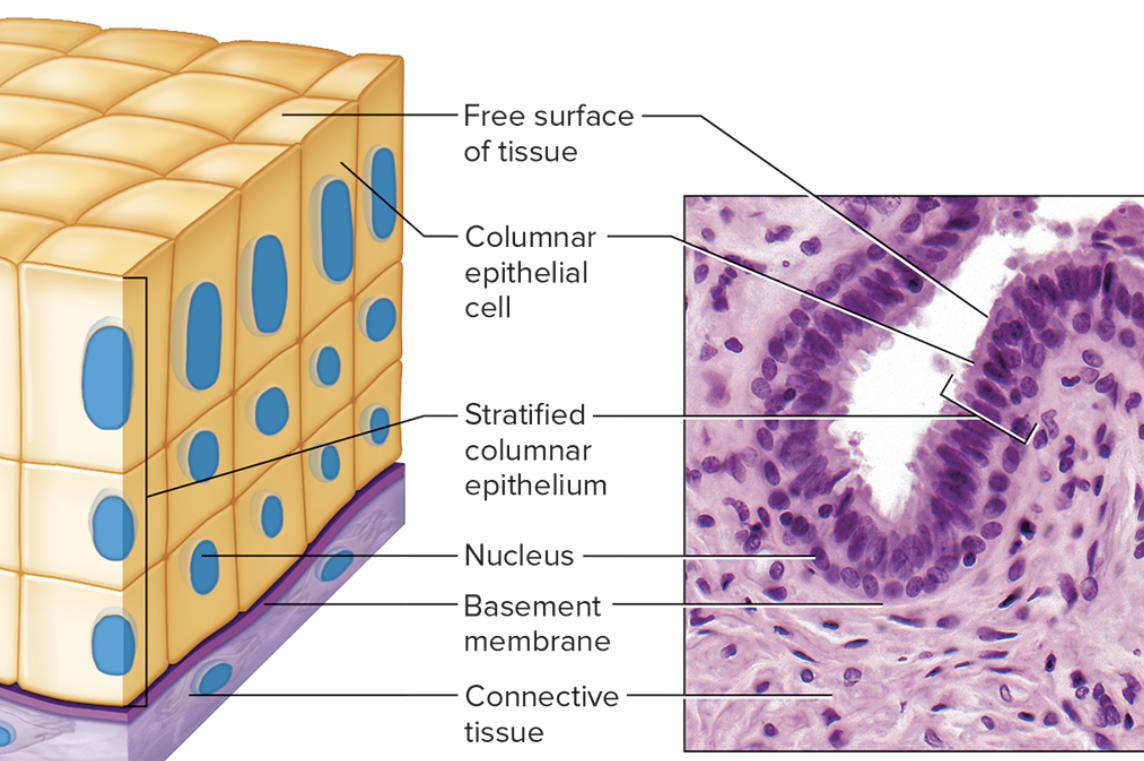
what are the characteristics of stratified columnar epithelium and where are they found?
superficial epithelial cells are elongated, while basal layers consist of cube-shaped cells. Stratified columnar epithelium are found in part of the male urethra and line the larger ducts of exocrine glands
what are two special types of epithelium?
transitional and glandular epithelium
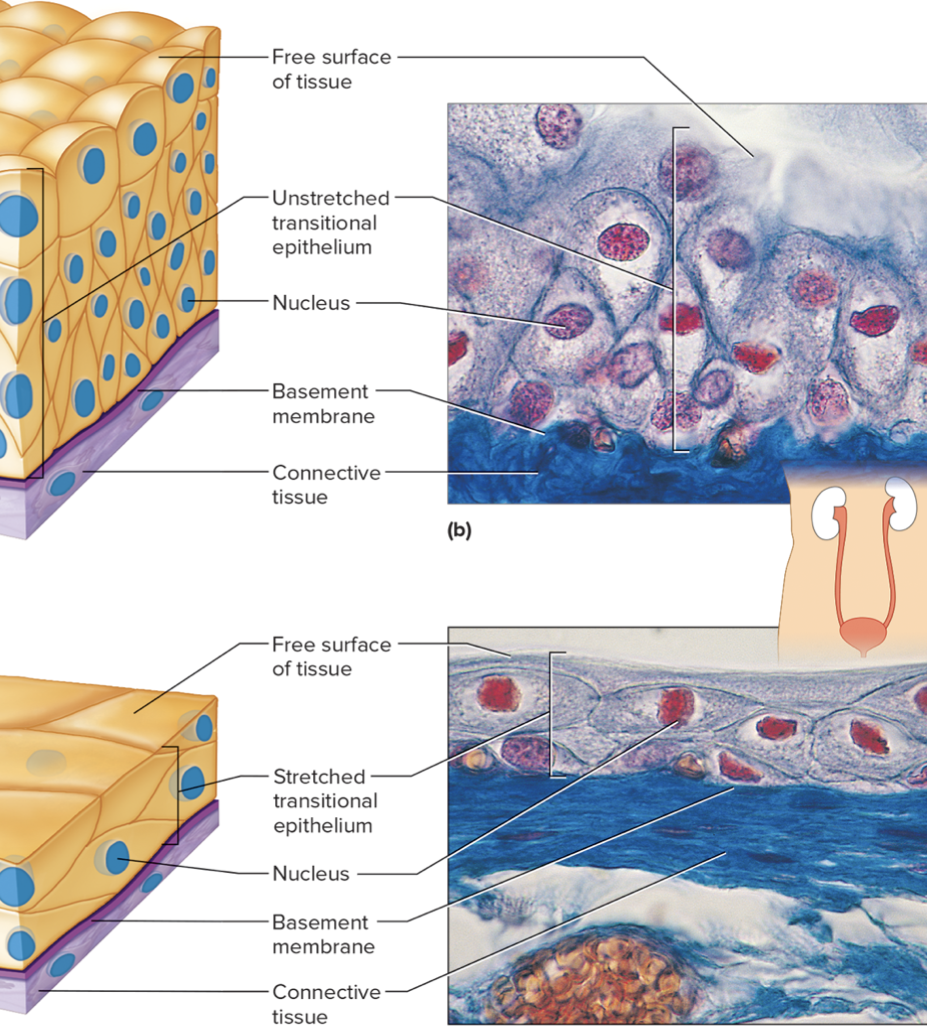
what are the characteristics of transitional/uro epithelium and where are they found?
transitional epithelium are specialized to change in response to increased tension (wall can contract/distend). transitional epithelium provides an expandable lining and barrier that helps prevent the content of the urinary tract from diffusing back into the internal environment, and forms the inner lining of the urinary bladder, ureters, and superior urethra.
what are the characteristics of simple glandular epithelium and where are they found?
glandular epithelium is composed of cells specialized to produce and secrete substances into ducts or body fluids. Glandular epithelium is found within columnar or cuboidal epithelium, and one or more of these cells constitute a gland: endocrine or exocrine gland
endocrine vs exocrine gland
endocrine glands secrete their products into tissue fluid or blood. exocrine glands secrete their products into ducts that open onto surfaces, and may be unicellular (e.g. goblet cell) or multicellular)
name the two kinds of exocrine glands and define them.
simple gland: a duct that doesn’t branch before reaching the glandular cells/secretory portions
compound gland: a duct that branches repeatedly before reaching the secretory portion
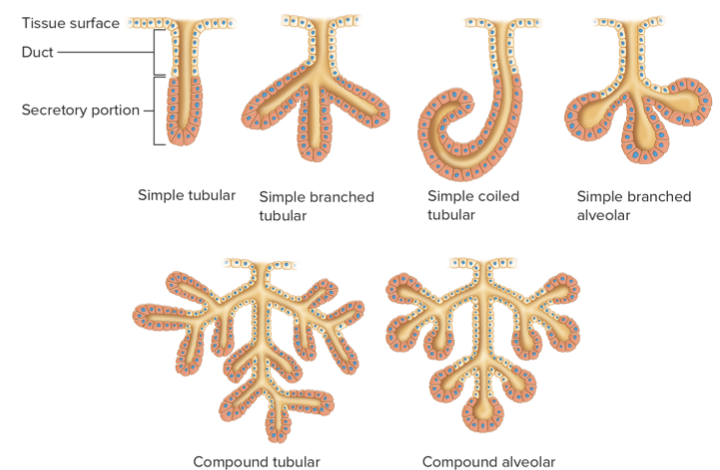
name the two specific categories of simple/compound glands and define them.
tubular gland: consist of epithelial-lined tubes
alveolar gland: terminal portions that may branch or coil (form sac-like filations)
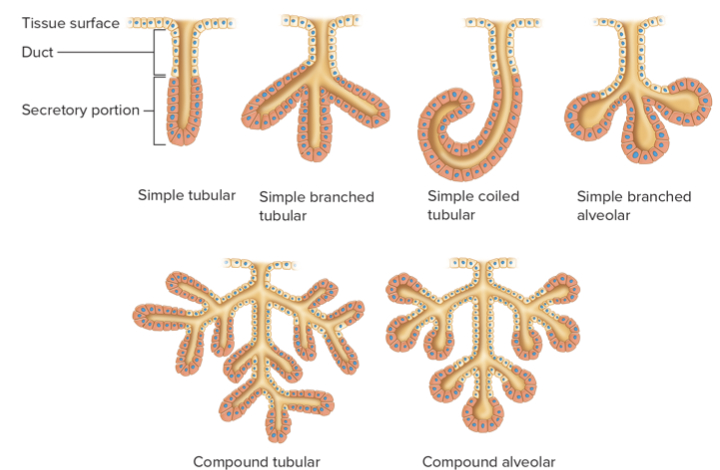
name the 3 types of glandular secretion
merocrine, apocrine, and holocrine glands
what is the function of merocrine glands? give examples
merocrine glands secrete fluid products by exocytosis. includes salivary and sweat glands, and pancreas
what is the function of apocrine glands? give examples
apocrine glands lose a small part of the cell during secretion. includes mammary & ceremonious glands
what is the function of holocrine glands? give examples
holocrine glands release the entire cells filled with product. includes sebaceous glands
most exocrine secretory cells are ___ (merocrine/apocrine/holocrine), and can be subclassified based on their secretion of ___ or ___
merocrine; serous fluid, mucus
exocrine secretory cells that secrete serous fluid are associated with what?
They are associated with the visceral and parietal membranes of the thoracic and abdominopelvic cavities
 Note
Note  Flashcards (45)