dutch art midterms
 Studied by 0 people
 Call Kai
 Learn
Learn Practice Test
 Spaced Repetition
 Match
Match Flashcards
 Knowt Play
1/86

There's no tags or description
Looks like no tags are added yet.
Name | Mastery | Learn | Test | Matching | Spaced | Call with Kai |
|---|
No analytics yet
Send a link to your students to track their progress
87 Terms
dutch revolt (year, cause)
riots and iconoclasms in 1566
Developed into full scale rebellion against authority of catholic monarch, philip II of Spain
In 1648 the republic achieved official and international recognition as a sovereign state
It split the Low Countries into the free North (Netherlands) and the Spanish-controlled South (Belgium)
Lacked a monarch, led by the princes of orange
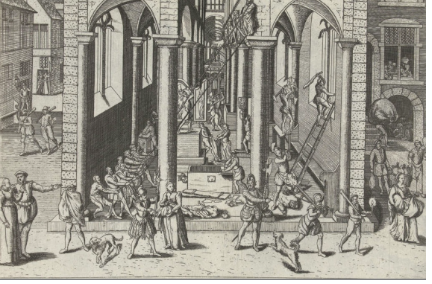
motivation for the iconoclasts
Frans hogenberg, the calvinist iconoclastic riots of august 1566, 1588 (print)
Philip II of Spain tried to eradicate protestanism in the low countries (severe religious repression)
imposed heavy taxes to fund wars
Iconoclasm is not about the art itself, the real target is the political and religious structure of the city
Iconoclasm in 1566 is the opening volley of the Dutch revolt, against the roman catholic spanish king, philip II
what is calvinism
roots in the reformation(s) that swept through the Low Countries during the sixteenth century
God is immaterial, transcendent, abstract, beyond human understanding
You cannot attempt to capture or represent god in human form
If you do that you are demeaning the majesty of god
For John Calvin, the problem isn’t necessarily art but rather people
The improper interaction or viewing of god, where people are mistaking images for something divine
Does not condone iconoclasm
Writings of calvin become the new doctrine for protestants
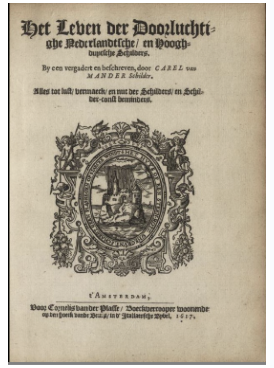
Karel van Mander, The Lives of the Illustrious Netherlandish and German painters, 1604
Biographies of northern european artists
Writes about how iconoclasm impacts the artist
brought little good
Artists saw their own works destroyed and the famous historical works of their predecessors, artistic traditions being ruptured
Have to redefine art and its place in their society
how did artists adapt after iconoclasm
had to make art that survives within protestant distrust for iconography
Ambiguous works allow artists to make a living while not offending anyone
Iconoclasm makes artists aware of risks of making art, forcing artists to adapt and specialize
Landscape, still life, etc
Beginning of dutch realism (“the visible world” by samuel van hoogstraten)
But not for the church, rather for people’s homes
what did hoogstraten write in “the visible world”
Repeats that idolatry is not the fault of the artist, and not the work of art that should be blamed
Works of art are just paint
It is just foolish viewers, when the viewer doesn’t understand any better, that is where idolatry starts
Iconoclasm is not the answer, rather, the beholder has to learn to reconduct themselves
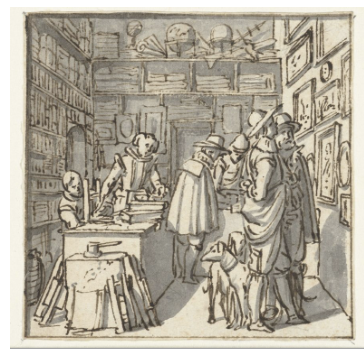
Dirck de Bray, People in a Book and Art Shop, ca. 1620–1640
After iconoclasm:
growth of open market paintings, specialized types of realistic paintings (things of the visible world) appeal to a broad group of people
private art collecting is on the rise, the plunder of iconoclasm poured into private galleries
Art is now valued primarily for its aesthetic values, rather than religious purpose
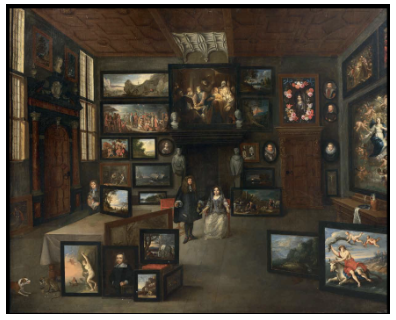
Peeter Neeffs, Collector’s Cabinet, 1652
Paintings are no longer just religious or used in religious contexts
Hung there to be appreciated as works of art - big shift
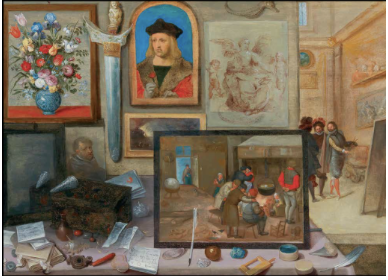
Frans Francken, An Artist in his Workshop, c.1604
In the back, the artist and two potential clients
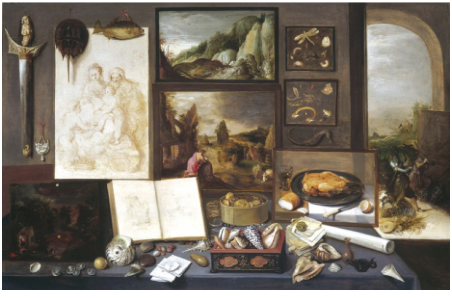
Frans Francken, The Cabinet of a Collector with iconoclastic donkeys, 1617
Contrasting a client’s private collection with scene of the iconoclasts (bottom right)
New vision of iconoclasm in early 17th c. - being represented as a mistake (figures with donkey heads), overly governed by their passions
People beginning to desire peace and stability after war and trauma of iconoclasts
what were the two contrasting responses to art after the iconoclasts
Left- Frans Francken, The Cabinet of a Collector with iconoclastic donkeys, 1617
overly passionate, destructive response
Right- Frans Francken, An Artist in his Workshop, c.1604
preferred response to art
potential clients discussing intellectually, from an elite group of society (now the target audience)
distanced
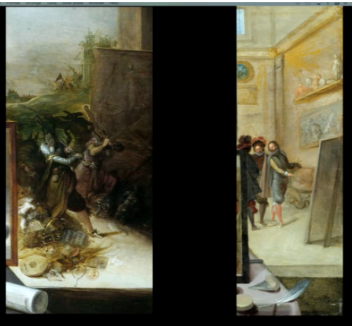
what could the javanese kris or pamor mean
exotic, curiosity
Not a christian deity, europeans see it as an idol and heresy
Loses its power of its cultural context when it gets looted
When we see the kris, we should remember the real reason why europeans are interested in other cultures
Idolatry becomes a way for Europeans to demonize the cultures of the people whose natural resources they want
third response to art: Idolatry- pagan, sinful (shift from accusing protestants to non-european)
how did the studio and market interact after the iconoclasms
Collapse of church patronage and rise of an open art market
making art = inseparable from selling art
but growing separation between the place where art is made (the studio) and where it is exchanged and valued (the market).
Making and marketing are distinct activities but directly influence one another
Expansion of open art markets reduced reliance on single patrons
self-portraits = branding tools to assert status and authorship
Art is valued more for aesthetic pleasure, skill, and collectability than for religious instruction
Prints functioned as a mass-distribution tool, spreading an artist’s name beyond local markets
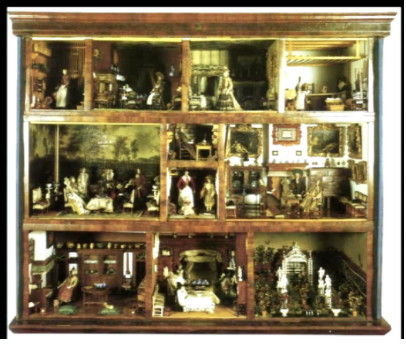
Cabinet house of petronella de la court, late 17th c.
The opening of the home as a space for art
Petronella de la court would be the curator
Dollhouse curiosity, not for children but for elite crowds
Ideal, elite dutch home
Represents a very high end collection
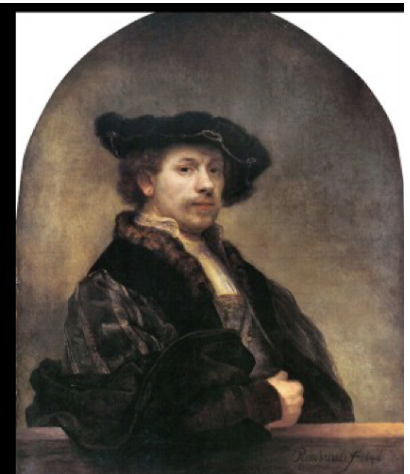
identify. what is rembrandt doing?
Rembrandt, Self Portrait with Arm on a Ledge, 1640
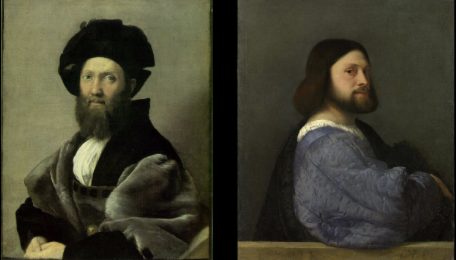
Put together raphael (left) and titian (right) to get rembrandt
What is Rembrandt doing
Appealing to what the city is fascinated with (italian art)
Emulating these artists (signing)
Imitating elite male portrait role, enhancing his own social status
Turning italian art dutch at the same time
Marketing himself to be in the same league as Raphael and titian
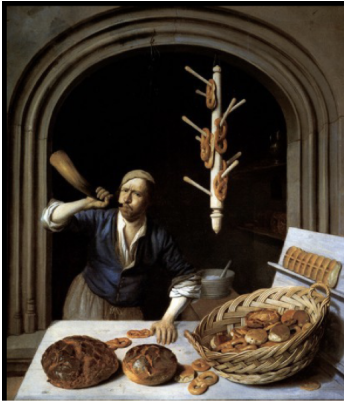
Job Berckheyde, Baker Blowing His Horn, 1681
Local culture (horn), comic culture, relatable
baker= artisanal labor, attention and devotion to craft
Everyone can imagine the taste, smell, texture of bread, hearing the horn, watching the scene- all five senses are engaged
Artists came from the artisan working sector, middle class
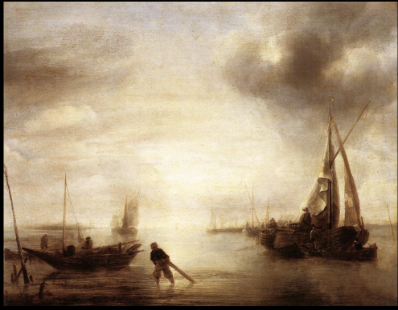
Jan van de Capelle, Calm, 1650-55
Collector, patron, lover of art, amateur painter
Didn’t have to paint for money
Romantic vision
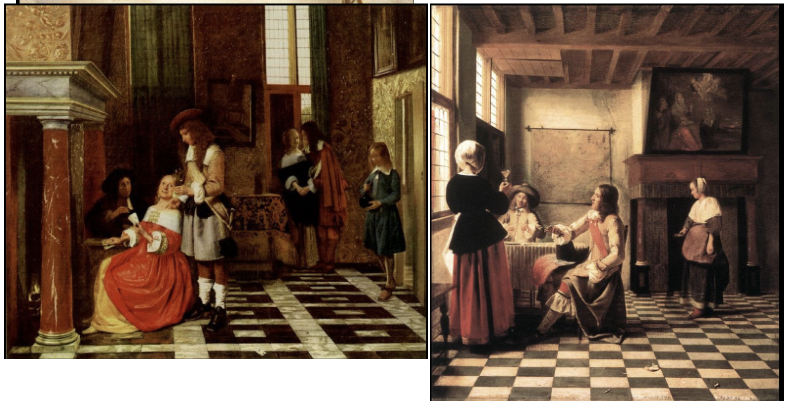
compare pieter de hooch’s delft and amsterdam works
left - Pieter de Hooch, Card Players, 1660s (Amsterdam)
right - Pieter de Hooch, A Woman Drinking with Two Men, c. 1658 (Delft)
De Hooch from city of Delft, moves to amsterdam
More luxurious than the humble delft piece
Due to change of consumer tastes, preference for italian art
Each city has a local school of artists but they all make that move to amsterdam at some point
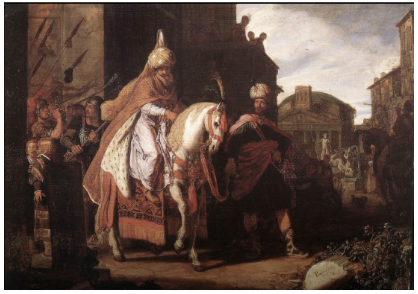
what is lastman and rembrandt’s connection?
Pieter Lastman, The Triumph of Mordecai, 1624
Rembrandt came from a wealthy miller’s family in Leiden, was able to go to latin school
Opened the doors to university (Leiden was the only city with university)
Most artists did not have a wealthy background or university training
Apprentices as an artist in Leiden, then moves to Amsterdam specifically to work with pieter lastman
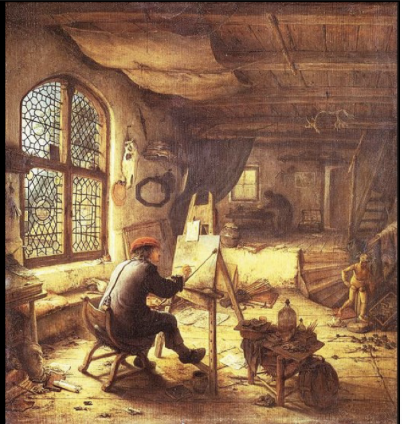
Ostade, Painter in his Studio, 1663
Artist process:
If a boy showed potential, parents would pay a fee for a master artist to take him on as an apprentice
At first, help organize and clean studio, prepare/stretch canvases
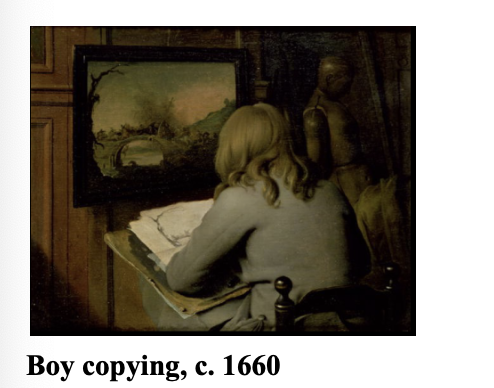
Draw by copying from master’s work, then inanimate objects, then live animals and people
Graduate to paint, same subject ladder
Help the master paint
After two or three years, apply to guild by presenting them with a masterpiece
the guild will judge it and allow you in or not
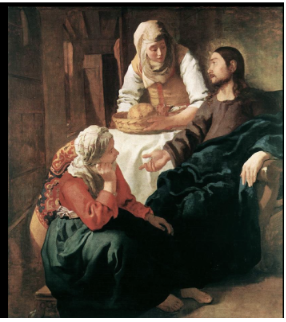
Vermeer, Christ in the House of Mary and Martha, 1654
Bible stories wouldn’t be in the church but in the private home
History painting was considered the most prestigious, intellectual, because it was based on classical text which you had to read and interpret
Time consuming
If you master history painting you master all
Vermeer, lastmann
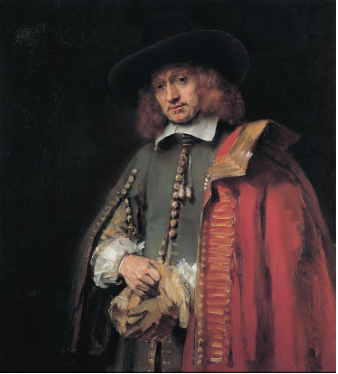
Rembrandt, Jan Six, 1654
Rembrandt made his name as a portrait painter
Rough style taken from italian roughness
Portraiture highly in demand - sign of status
Socially elevating, appealing to people with a lot of art knowledge
Nouveau riche climbing upwards
Surer steadier income for rembrandt
networking - he is climbing in society
patricians at the top of Dutch society, whose attentions Rembrandt eventually does attract
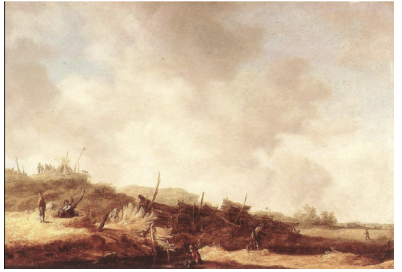
Jan van Goyen, Dunes, c. 1630
Specialization: focused on dunes
Not terribly expensive - limited use of pigment, less details in skyscape, paints wet on wet
treating rough subjects with a rough style
the opposite of Jan Brueghel, Garden of Eden, 1612
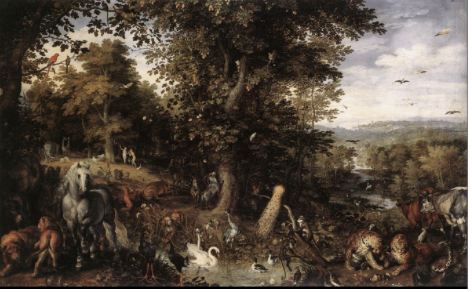
Jan Brueghel, Garden of Eden, 1612
Much more expensive - tiny brushes
not rough style
the opposite of Jan van Goyen, Dunes, c. 1630
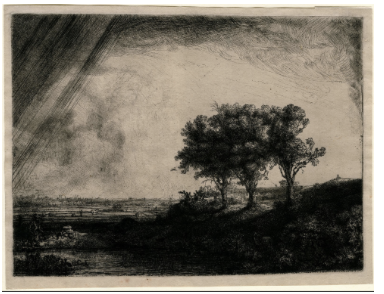
Rembrandt, The Three Trees, 1643
Labor intensive when you first carve the plate for engraving
Once the plate is engraved you can do hundreds of impressions which can become widely circulated
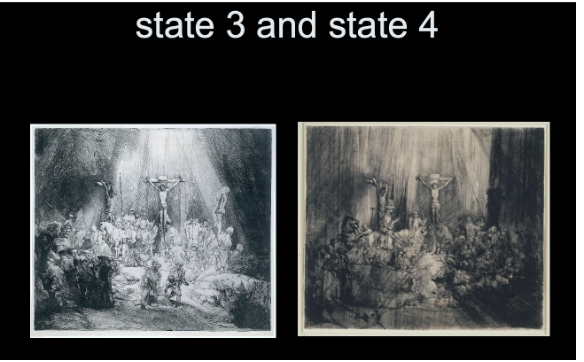
You can have different states of the same etching
Small differences- foreground figures gone, figure on right shadowed, etc.
Collectors would try to collect all the different states of an engraving - another way for artists to make money
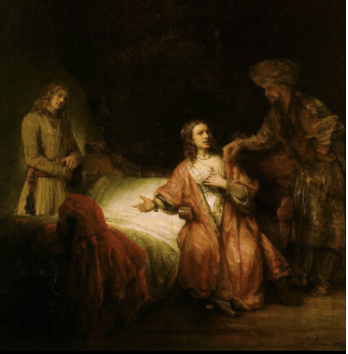
Rembrandt, Joseph and Potiphar’s wife, 1655
Rembrandt doesn’t specialize in one type of subject like van goyen or one medium, but he has a signature style
Dark, tonal, dramatic- seen with the etchings as well as the paintings
Spotlit sections, gesture, emotions, costumes like theatre- a narrative is present
Chiaroscuro - shadows and light, similar to caravaggio
Lines are soft, contours are blended
Earthy tones with bright colors
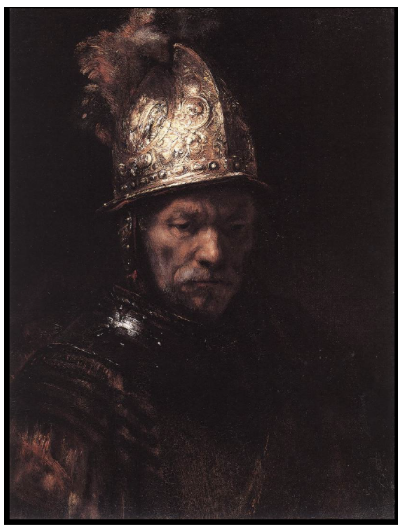
Man with the Golden Helmet, c. 1650 (Berlin)
Possibly rembrandt
Carries his style
“The rough style” - another way to attribute
Textured, getting in there with his hands, possibly a fingerprint
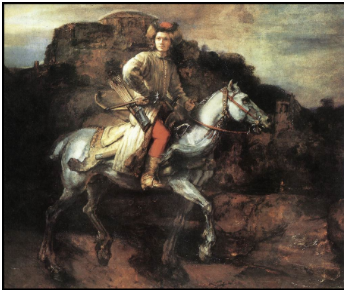
Not-Rembrandt (?) The Polish Rider, 1655 (Frick, NYC)
No longer certain
The popularity of Rembrandt's style creates a market, which fosters imitation
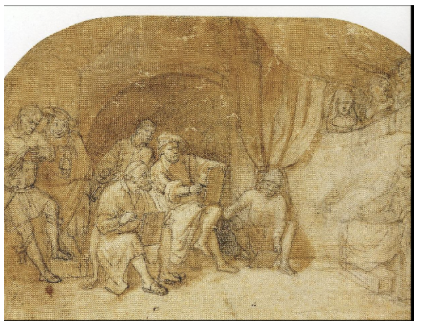
Pupil of Rembrandt, Drawing from the Nude in Rembrandt’s studio, c.1645-50
the training of apprentices includes copying the master’s work and therefore his style
Rembrandt would have been running less of a studio and more of an academy
More theoretical approach, more systemized, more of an intellectual component
A little more prestigious than a regular apprenticeship
different than most dutch artists at the time
Every 17th c work is collaborative, as the master and pupil would both have their hand in the piece, but masters would get the credit
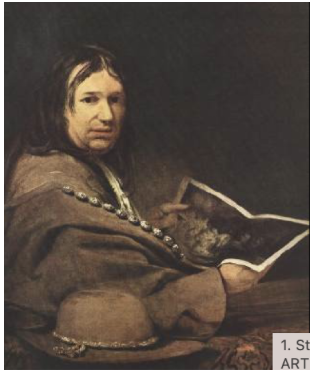
Aert de Gelder, Self Portrait
One of Rembrandt's students
Most went on to continue to emulate his style, few developed their own
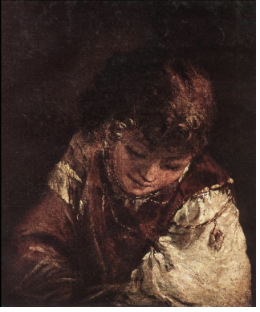
Aert de Gelder, Portrait of a Boy, 1700
One of Rembrandt's students
Saturating the market with your style = falling out of style
Late time for Rembrandt's style
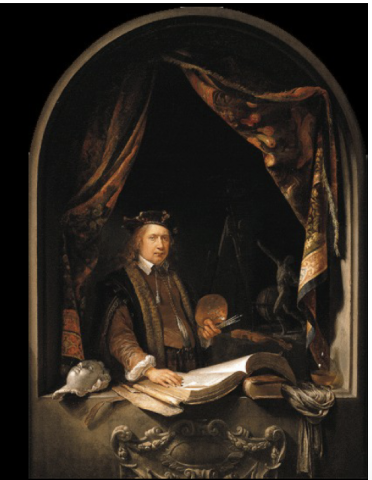
Gerrit Dou, Self Portrait, 1665
Contrast to the “rough style” of rembrandt
This is considered the “smooth style,” fijnschilder
Dou trained with rembrandt in leiden
May have painted with the aid of a magnifying glass
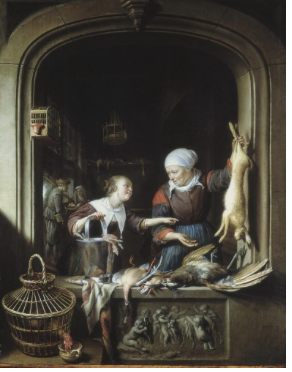
Another dou work
Greek/classical focus of virtuosity on mundane things- revived in dutch republic
Turn to secular subjects, everyday life
Dou’s work could fetch a higher price than Rembrandt because it took him much longer to make his
Patrons were preferable to the open market
First right of refusal- first dibs on finished paintings
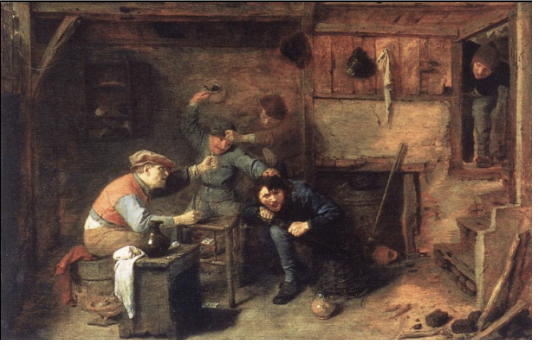
Adriaen Brouwer, Peasants Fighting, 1631
“Rough style” because peasants are the subject
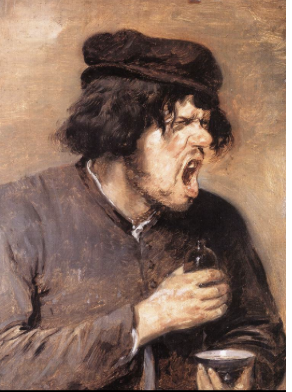
Adriaen Brouwer, Bitter Drink, c. 1635
Rough style
Brushstrokes are evident
Local pride, local identity of being the rough people, underdogs who won a war against spain
Appealed to middle class locals
Tronie
Titian (rape of europa) was also famously a rough painter
Incompleteness allows audience to fill in the rest
More “intellectual” style- meanings are open ended, open to interpretation
Appeals to international art collectors
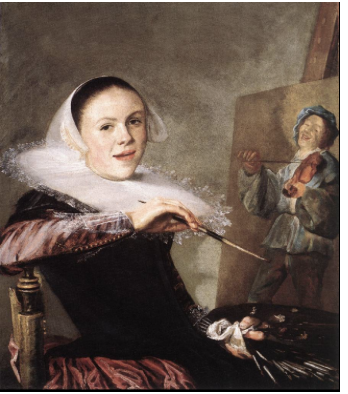
Judith Leyster, Self Portrait, 1635
Her father was an artist so she could train with her family
Women could be trained as part of the family business
Women born into nobility could be tutored in various skills including artmaking
Possibly she needed to work to help support the family
She does become part of the guild and trains male apprentices
we see how a woman portrays a woman
Lively, animated, more like isaac massa
Speaking portrait
fairly radical
Saying something specific about her social role as an artist and a woman
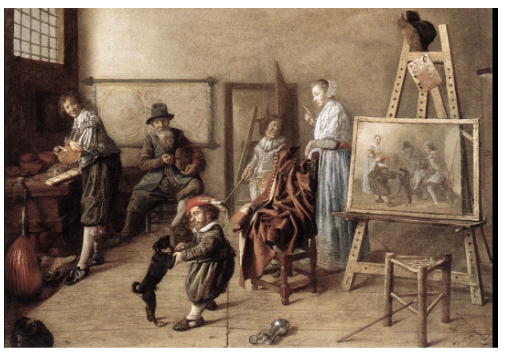
Jan Molenaer, Painter in His Studio, 1631
Husband of judith leyster
Two painters in the scene, one painting the main painting, the other on the left side
A scene of production, where in the studio the artist has models that are dressed up and posed
But the actual painting doesn’t match reality
Behind the door, a third easel- a third painting?
You can enter the space through three different angles
Another meta painting- a painting about how paintings are made
The case with most dutch art- gives the viewer multiple possible solutions
The artist has created a puzzle that viewers can interpret in different ways
Paintings turn into conversations
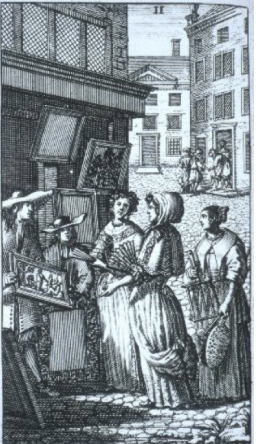
"Woman Buying Paintings at a Shop" from The Ten Delights of Marriage, last quarter 17th c.
Making fun of women spending all their husbands money on art
But the joke alone proves that women did in fact buy art and collect it
A lot of female participation in the art and dealer world
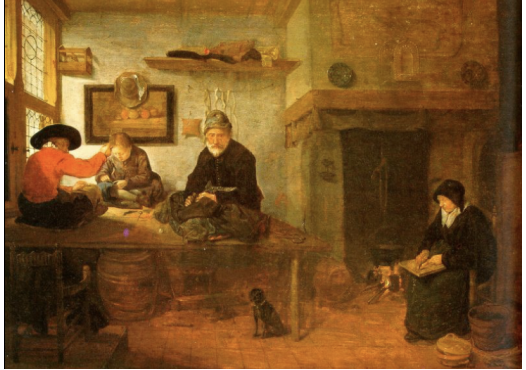
Quirijn Brekelenkam, The Tailor’s Workshop, 1660s
Artisan class group
Most dutch homes did contain some paintings
A typical middle class home might have about 10 paintings in it
Lower middle class homes might have a few simple paintings
Works on paper in lower class homes because it’s less expensive
Travelers to the Dutch republic would comment on the fact that all people could have paintings - unusual
Creates a place of art appreciation, discussion, exhibition within the home
Becomes part of everyday life and experience in dutch cities
In england it’s the theatre, in holland it’s the visual culture
what were the pictorial forms before portraits
pictorial form that was created usually on commission to represent a specific individual (tronie, conterfeytsel)
Tronie - head, character head, a study of a face, an artist doing an exercise in a type, a caricature
Conterfeytsel - image created from life, sometimes accompanying the name of a person
Afbeeldingh - representation, occasionally associated with name of specific individual
how were portraits an expression of aristocratic values
more than expression of bourgeois realism and individualism after the Dutch Revolt- strong link with earlier aristocratic values
Traditional theory linked portraiture to nobility, defined by illustriousness, virtue, fame, service to the state, and ars (learning and skill), not merely by birth
Nobility = claim to sovereignty, transcendence, and immortality
Noble title and portrait = signs of self sovereignty and justified immortality (through portrayal)
Portrait realism = naturalize desired status positions as accomplished facts
Amsterdam’s elite saw themselves as comparable to Venice or ancient city-states, justifying noble-style self-representation.
Amsterdam regents adapting aristocratic imagery to civic power, without noble blood
Interior virtues (intelligence, constancy, genius) became foundations of bourgeoisie
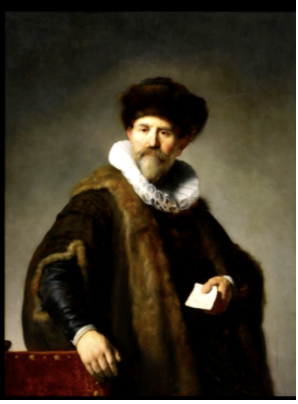
Rembrandt, Nicolaes Ruts, 1631
Rembrandt starts making a name for himself by working for the mennonites/anabaptists
Entering a business deal with this man through his portrait
Showing social relationships through trade and commerce
Introducing social mobility- you can climb the ladder without being born into the aristocracy model
Middle class is in between aristocracy and peasants, able to move through commerce and industry
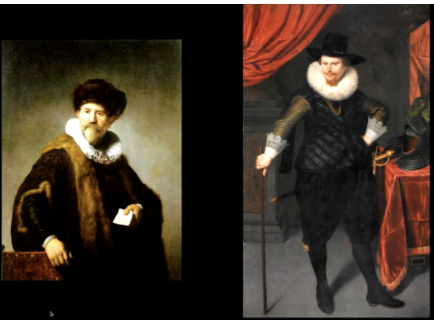
compare and contrast rembrandt’s nicolaes ruts (left) and cornelis van der voort’s laurens reael (right)
Both are merchants, not aristocratic men
Ruff- expensive fabric, showing wealth
What they’re holding conveys what they do
Rembrandt has a blank background, pushing him into our space because we have no sense of his
More informal, trustworthy merchant
Van der Voot has red drapery, calling up association with aristocratic portraiture (sword, helmet, pose), stiffness
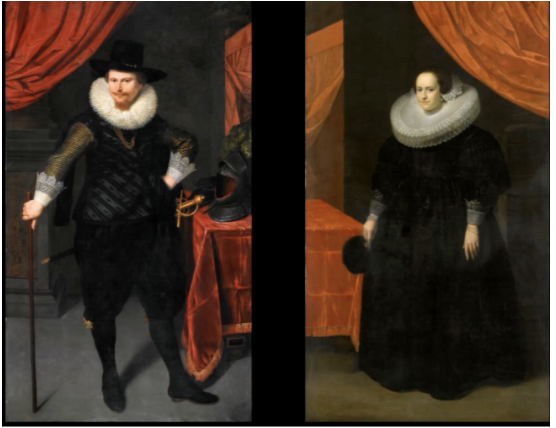
Cornelis van der Voort, Laurens Reael, c. 1620 (left)
Governor general of the dtch east india trading company
Unknown, Suzanna Moor, c. 1629 (right)
his second wife
Enormous wealth and power
East India company was considered a sovereign power when overseas
Using marriage portraiture to show their sovereignty - hierarchy of domination and subordination
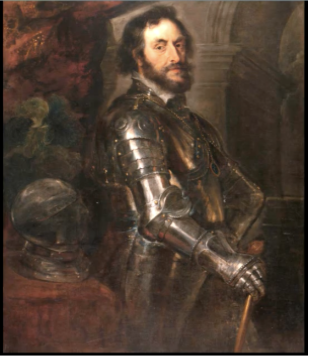
Rubens, Earl of Arundel, c. 1630
Rubens and Rembrandt are contemporaries
Earl is one of the highly ranked aristocrats in england
Military representative of the king
Similarities with laurens reael- full armor, red drapery, sword and the stick
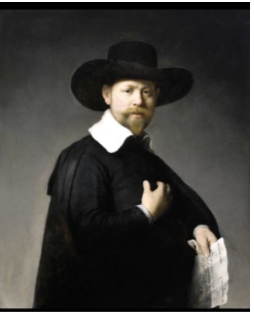
Rembrandt, Marten Looten, 1632
Marten was probably an associate of Nicholaes Ruts, both were part of the mennonites
Similar style to rembrandt’s ruts portrait
Rembrandt starts to create a network that way, by painting portraits and word of mouth through wealthy groups of traders
Portraits don’t have a high resale value
Least liquid form of art
Tend to stay in the family
People valued portraits for its actual content, showcasing illustrious family rather than its actual monetary value
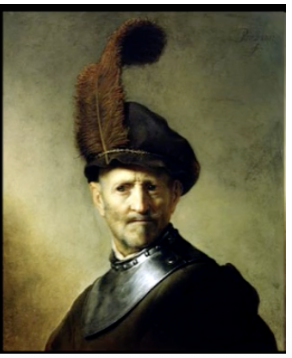
Rembrandt, Old Man in Military Costume, 1630
Tronie
Paintings that look like portraits but aren’t
Not every picture of a face is a portrait
Overly costumed, less masculinity, a bit of mockery
This face shows up in other Rembrandt paintings, man was more likely a model
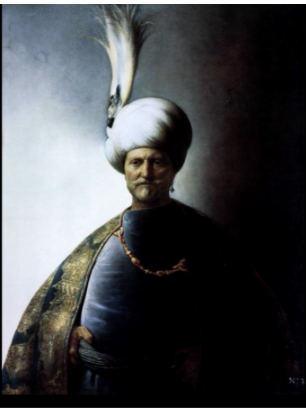
Jan Lievens, Man in “Eastern” Costume, 1628
tronie
Lievens and rembrandt were frenemies
Dutch man posing as a turkish (ottoman) man
Costume, accessories, setting that tell us more about the identity rather than the face
More of a theatrical performance
what are tronies
often representing a group or quality (old age, poverty), ethnicity, racialized
Trying to make social differences noticeable
Categorizing people
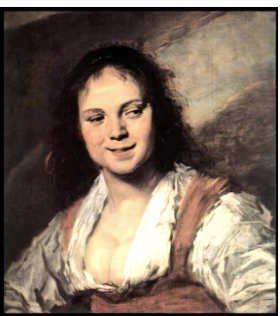
Frans Hals, Gypsy Girl 1628
tronie
Rough style for rough subject matter
Who is valued in this society and who is not
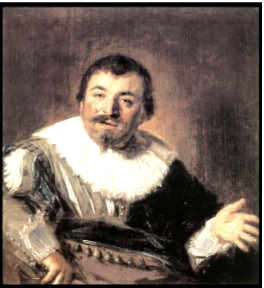
Frans Hals, Isaac Massa, 1626
Different type of rough painting than rembrandt
More brushy impressionist style
Massa is a successful silk merchant, special envoy to Moscow, high ranking person
Not the same type of portrait as aristocracy
Intellectual, innovative
Quickness, spontaneity, communicating with us
“Speaking portrait”
Pushing boundaries of convention
Appealing to the type of the art collector where the viewer completes the painting, engaging with the subject and artist
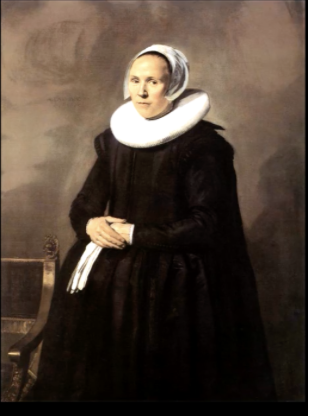
Frans Hals, Feyntje van Steenkiste, 1635
Pendant pairs, often husband and wife
For a woman, the collaboration wouldn’t be the sitter (woman) and artist, it would be her husband and the artist
So the husband dictates her identity
Compared to massa, his body is open and free, meanwhile she is controlled and a non speaking portrait
Men have a role in their portrait- business, trade, etc. but she has no autonomous role besides being a wife
Portraits don’t show that real person, just who she should be
One of two ideals of femininity - wife
Ideal woman: closed mouth, closed body, enclosed in the home
Modest, sober, protestant
Often gloves in marriage portraits - modesty and a hint of sexuality but only in regards to her husband
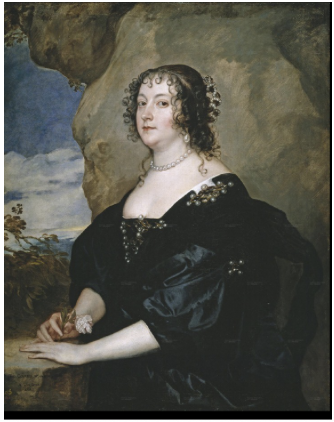
Van Dyck, Diana Cecil, Countess of Oxford 1638
A bit more desirable but still modest
Not explicitly inside the home - in proximity to the land, so she has family land = status
Aristocratic marriage is often about the consolidation of land and property, not so much about domestic duties
Pale skin (leisure), jewelry
one of two ideals of femininity- aristocratic
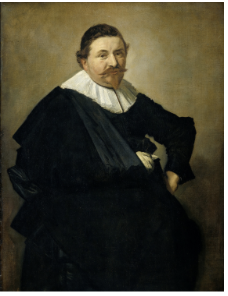
Frans Hals, Lucas de Clercq, 1635
Merchant portrait pair rather than aristocratic or upper class
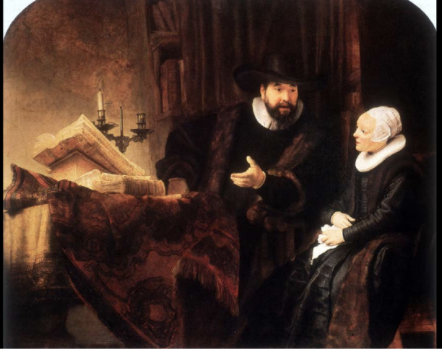
Rembrandt, Cornelis Claesz Anslo and his wife Aeltje Gerritsdr. Schouten, 1641
Anslo is mennonite preacher (religious leader) and wealthy merchant
Mennonite persecution ended by 17th c. and now quite a wealthy group with their own church
Power dynamic- head of the household instructing the wife, sermoning, obedience
The man is the medium for the bible or the book, transferring the illumination (candle) to her
Companionate marriage - as long as she was obedient, then the partnership would work
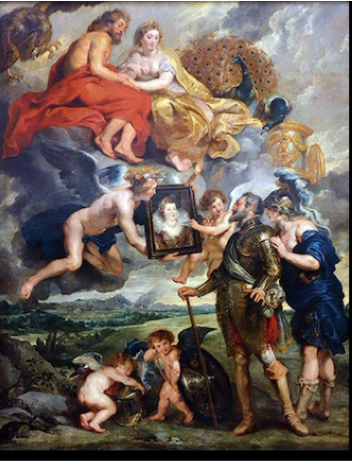
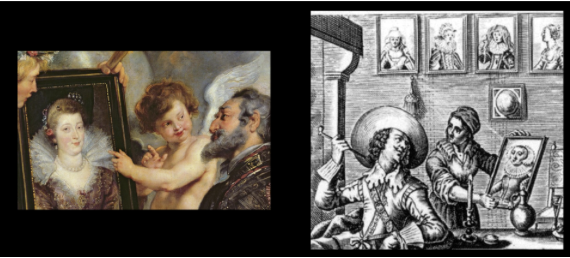
Rubens, Henry IV Receiving the Portrait of His Wife, Marie de’ Medici, 1621-1625
How an aristocratic marriage as portrayed
Jupiter and Juno - divinely sanctioned
Classical, mythological
Henry IV did not want to marry her, was in love with someone else
Diplomatic negotiation and/or alliance- and that is more aristocratic issue in comparison to peasant marriages
Not too different from the brothel scene, choosing a woman based on her exterior
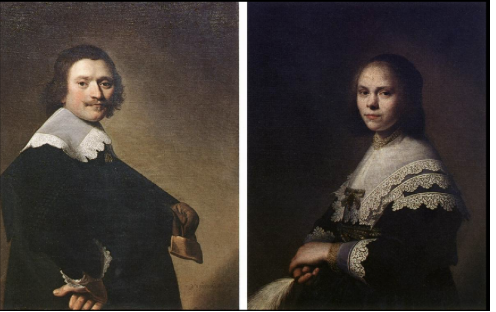
Johannes Verspronck, Portraits of a Man and a Woman, 1640
Typical, conventional marriage pendant pair
Open vs closed body language
Man is on the left and woman is on the right:
partly going back to family coats of arms where man’s family is on the left and woman’s is on the right,
reading from left to right, man has more of a diagonal line that leads our eyes to her (and her womb)
meet him first and he introduces us to his wife
Man’s face is in shadow = more interiority and intellect being alluded to
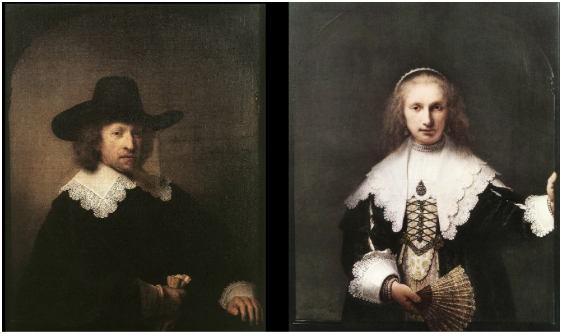
Rembrandt, Agatha Bas and Nicolas van Bambeeck 1641
experimental portrait of agatha
She’s open, facing us, almost coming out of her inner frame to meet us
Husband is a little more set back and in the shadows
Trompe d’oeil
She looks more complex, shadowed, not quite the stereotype of the protestant wife
Claim to the more aristocratic sovereign status, her father is dutch east india so she is almost higher ranked than her husband
Somewhere between the aristocratic woman and the upper class woman
Possibly her father painted the portrait
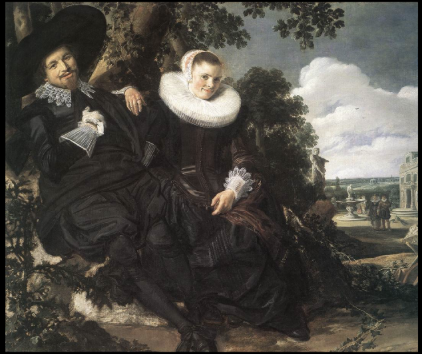
Frans Hals, Isaac Massa and Beatrix van der Laen, 1622
Playful, companionship, affectionate, appealing or romantic
Massas are more international, cosmopolitan
Marriage portrait possibly
She was a daughter of a regent, upper echelons of the middle class
She is closest to the land, not in the enclosed spaces = she is probably bringing family land and wealth to their portrait
Ivy vine, more conventional element = he is the tree and she hangs on him, the tree is supporting the ivy
ivy = visual metaphor for love and marriage
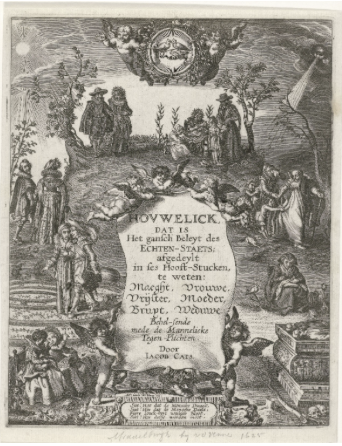
what did jacob cats write in houwelick (marriage), 1625?
The best selling book in the dutch republic by 15th c.
Lays out the ideals of marriage
Targeting both female and male readership (increased literacy among higher class women)
Cats was the grand pensionary of the dutch republic
most important political office, like prime minister (rep. gov., the states general)
Sinister- someone at the top of the country is writing about the domestic roles and ideals
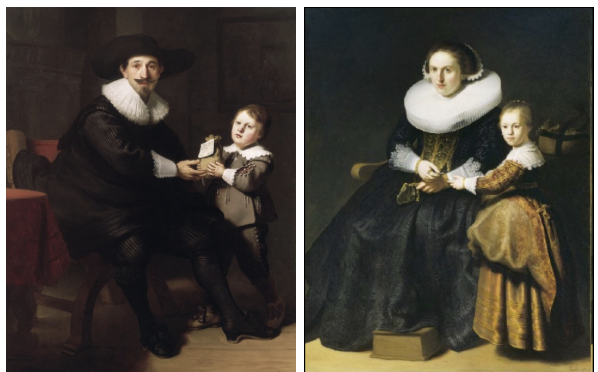
Studio of Rembrandt, Jan Pellicorne and his son Gaspar, 1634 (left)
Susanna van Collen and her daughter Anna, 1634 (right)
Family portrait
“A rich man's wish” one son and one daughter
one son to hand the entire fortune to, one daughter to take care of them when they’re old/make a marriage connection
Pellicorne was a director of east india company
Dutch republic was less of a republic or democracy than it was an oligarchy
small “in” group of ruling families who basically lock down the power in the state and its government
Not aristocracy
Roman verisitc (truthful) patrician portraiture
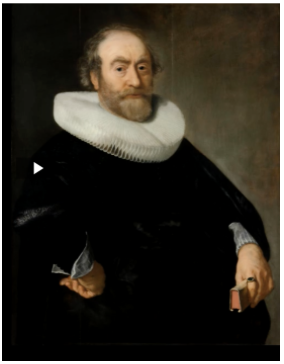
Bartholomeus van der Helst, Portrait of Andries Bicker, 1642
bicker- most powerful man in Amsterdam for the first half of 17th c., head of the oligarchy, director of the east india company
Drawing from the roman patrician portraiture
Wise, sober, protestant ideal of power
Stoicism - constancy amongst chaos, control over oneself, reason over passion
Aspiring towards aristocratic identity- doesn’t have aristocratic birth but it’s his wisdom and traits that make him legit
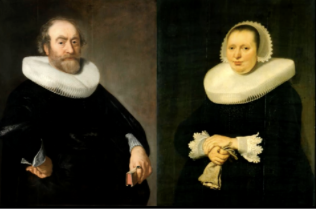
Marriage portrait- he governs the state, she governs the home, the ruler and citizen- ideal microcosm
Bicker is constructed as a “city-father,” and Tengnagel’s virtue confirms his sovereignty.
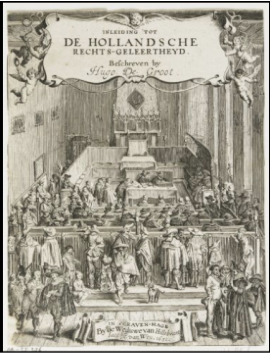
what did hugo grotius write in introduction to dutch jurisprudence, 1621?
From the regent group
Treatise that provides a legal status that men have over women, children, property
Dutch law is crafted to protect interests of ruling class group
Imbeds in the law that men are inherently more fit to rule
Marriage does not grant legal status to women, they are not sovereigns and they have no autonomy
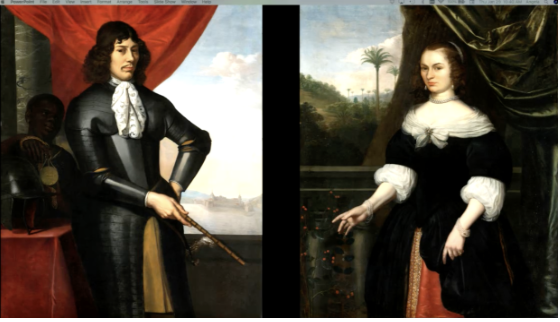
Daniel Vertangen, Portrait of Jan Valckenburgh and an Enslaved Servant, c. 1660 (left)
Vertangen, Portrait of Dina Lems, Wife of Jan Valckenburgh, c. 1660 (right)
Back to aristocratic style of portrait - cane (judicial power), hand on hip, curtain, pedestal, helmet (military prowess), sword
Valckenburgh is not actually his name- enobling himself with a new name as he marries up
He also has a second life in Africa, Elmina fortress
Double standard about wisdom, virtue, etc.
Enslaved person is more of a tronie, an “africanized” generic type
Showing the enslaved person = still showing sovereignty, but global and racial sovereignty
After the dutch capture elmina they become a driving force for the transatlantic slave trade, overtaking the portuguese
Dutch sovereignty was built on atrocity (elmina dungeons)
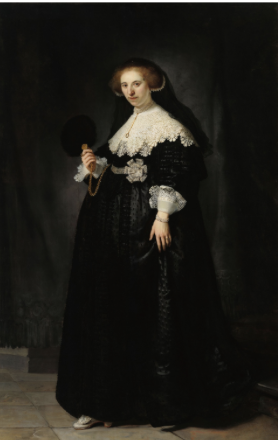
Rembrandt, Oopjen Coppit, 1634
Another pendant pairing
High status woman
Her family made their fortune from sugar refining
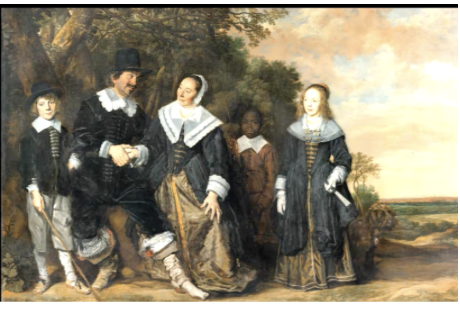
Hals, Family in a Landscape, c. 1645
Unknown family
possibly director general of west india company based on appearance of enslaved figure
Complicity
Normalization of the enslaved person’s presence
Evidence of a free black community in amsterdam- reason why some portraits of black people do seem more like individuals than tronie portraits
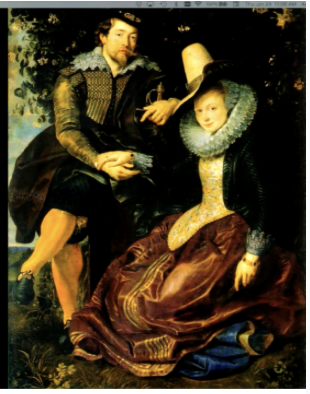
Peter Paul Rubens, Rubens and Isabella Brandt in a Honeysuckle Bower, c. 1609
Self portrait
Rubens has an aristocratic background and always portrays himself in that way
Typical aristocratic portrait
Contrast to Rembrandt's marriage portrait
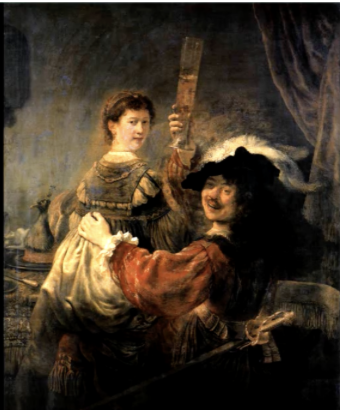
Rembrandt and Saskia, c. 1635
Rembrandt’s self marriage portrait
She’s on the left and higher up- possibly because she’s higher status
Very informal, kind of like a tavern scene
Similar to a soldier? Soldiers often paired with prostitutes
Lower class type of representation
Shock value
Using the face to show specific emotional states, experimenting with his own face
To build up his repertoire of emotions
what is the myth of the artist
Don’t accept the myth of the artist as the truth of the artist
“Rebel” is not always true, even if the rough style advertises this (rembrandt)
Roleplay because it has an appeal in the dutch republic
A kind of theatre in it- middle class has more social mobility as he tries on different faces and different roles
Creating an artistic persona, self fashioning himself
There’s no bad publicity- everything is marketable
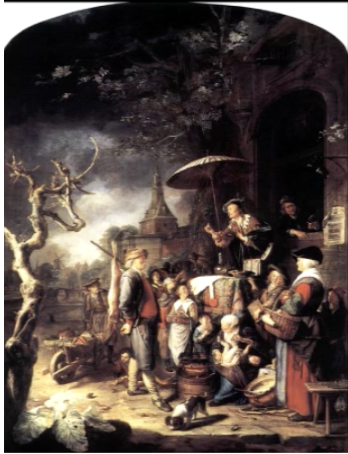
Dou, The Quack, c. 1652
Self portrait, student of rembrandt
Quack doctor- someone selling others phony medicine (oftentimes merchants)
How is the artist like the quack doctor?
Another take on artistic identity
The artist is on the market, selling something that is quite deceptive, and they are self aware of the fact that it’s not real- so if you are tricked, it’s your fault
People want to be deceived, enjoy it
Motif of trapping a bird- trying to trap the viewer into believing an illusion
Meta paintings
Comic culture
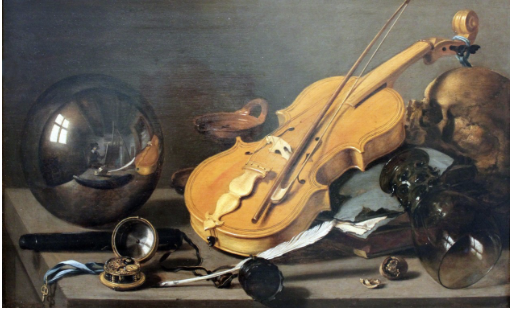
Pieter Claesz, Vanitas Still Life, c. 1630
both a still life and self portrait
Fleeting, ephemeral vanity of material things, don’t put too much value in earthly things
painting is a performative act
Like molanaer, the artist sets a scene in the studio then paints it (production of art) which takes place in time (ephemeral) but then once the painting is done we don’t see that process anymore
Claesz is showing both the product and (in a more meta painting way) the moment of labor and creation
Still life - the idea that art freezes life itself
Skull = mortality, every life only lasts so long
Pocketwatch = clockmaking is sort of new and experimental in the dutch republic, passing of earthly time is measured out
Violin = music only lasts as long as you hear it, the temporality of music vs the enduring life of a painting
Oil lamp = flame has gone out
Books = preserved ideas
Glass reflecting orb, bubble = showing himself in the act of painting the still life in a distorted, mirrored surface
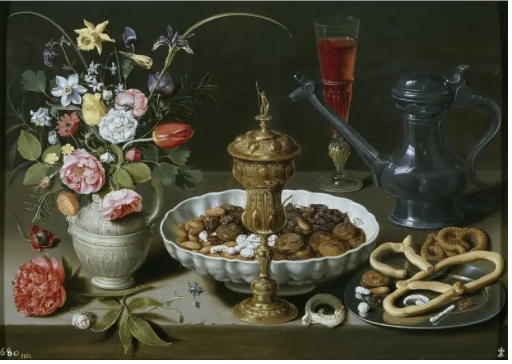
Clara Peeters, Still Life, 1611
Marketing the work to art lovers and collectors
Some items are enduring (metal and glass), some are ephemeral (flowers)
Flowers in all stages of blooming
Her self portrait is in the metal
Sidestepping problem of images of women- we don’t see her body
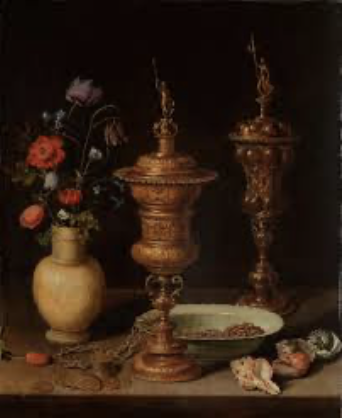
Clara Peeters, Still Life, 1612
Transience
But her artistry, on the other hand, is enduring
She reflects herself as the artist
The artist stands in the place where the viewer will stand eventually
She also makes herself the subject, by adding her reflection
She is the subject, viewer, and artist all at once
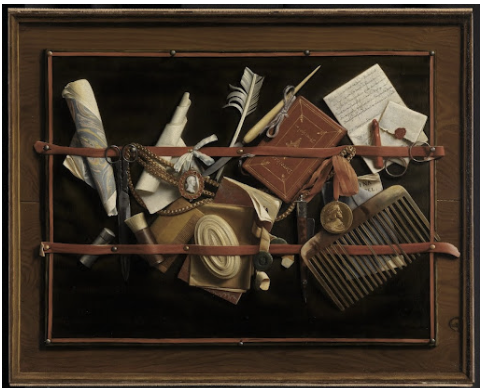
Samuel Van Hoogstraten, Trompe l’oeil, 1664
Gold chain = sign of status
Pointing to his fame, status, success as an artist
Highly educated
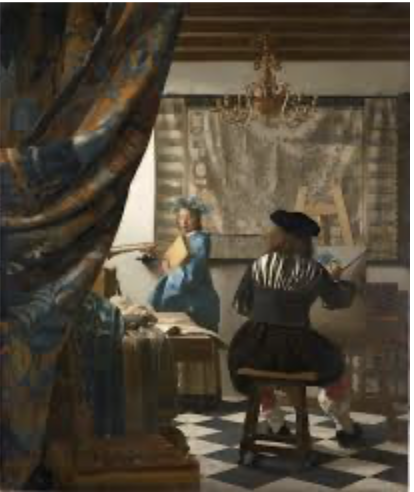
Vermeer, The Art of Painting, c. 1665
Is the artist vermeer?
Not exactly a self portrait
Most likely a historical painter, 16th c. painter
His clothing is more 16th c. clothing
Map shows the low countries, the Netherlands, before the war divides into north and south, shows all 17 provinces united
Hapsburg empire is on the top of the chandelier
Painting about the history of art, specifically in the low countries
self reflective painting
In spite of the image wars and iconoclams, this has always been an artistic region and the practice of painting continues in spite of everything
Parrhasios and zeuxis - illusion
The woman is holding a book and trumpet, with a laurel wreath on her head
personifying clio, the muse of history
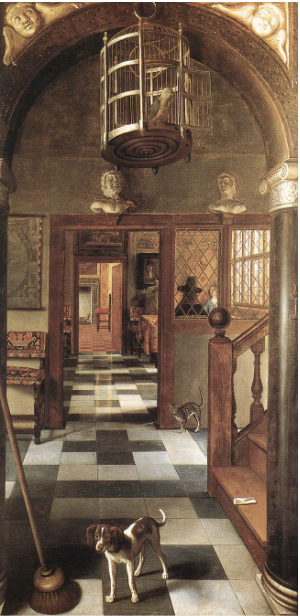
Samuel van Hoogstraten, View down a corridor, 1662
Illusion of continuing corridor
Viewer = seated in front of us
We are somewhat of a voyeur, spying on people in their own homes
Theme of interruption- animals are startled, they see the viewer first
Perspective that projects forward, depth
Dog on threshold = ancient roman mosaics, “cave canem,” beware of the dog
Cleaned, moral and virtuous space
No claims of aristocracy for middle class, so it becomes the notions of virtue that are so important to the structure of society = keeping a proper home
Why is the woman entertaining the man in the home, is that the husband, raises ambiguity
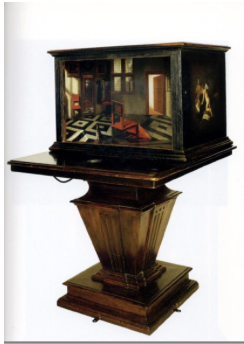
Samuel van Hoogstraten, Peep Box, 1655-60
Another microcosm
Inside is painted
Sophisticated play with light and optics
Anamorphosis - connected to linear perspective to make that illusion of depth, takes into account the viewing angle
Only 6 of those boxes survived, only 5 are domestic interiors
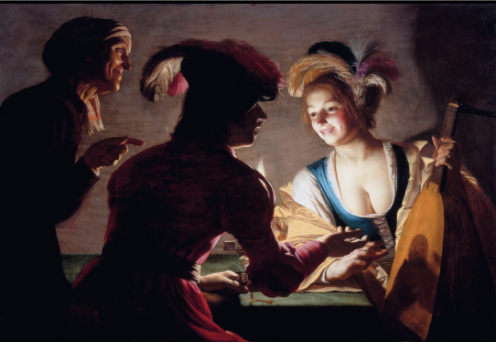
Gerrit van Honthorst, Procuress, 1622
Theme we see quite a lot- prostitution
Desirable young woman, often with a musical instrument
Sex work was organized by women who ran the brothel, the procuress
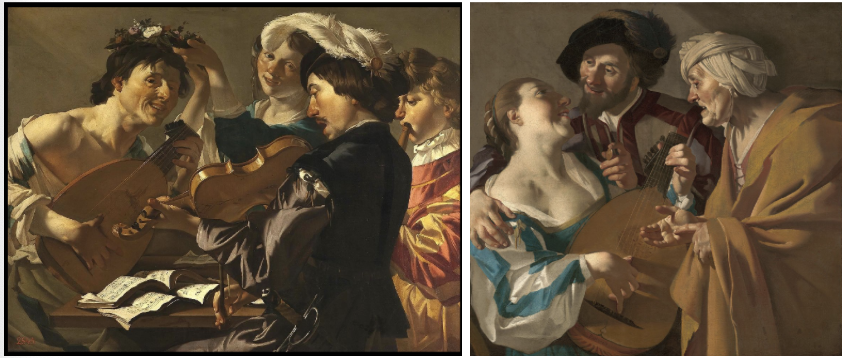
Dirck Van Baburen, The Concert, 1620s (left)
Van Baburen, The Procuress, 1622 (right)
Merrymaking, etc.
Stock comic characters
Theatricality
Sometimes scenes of prostitution are given the title the prodigal son
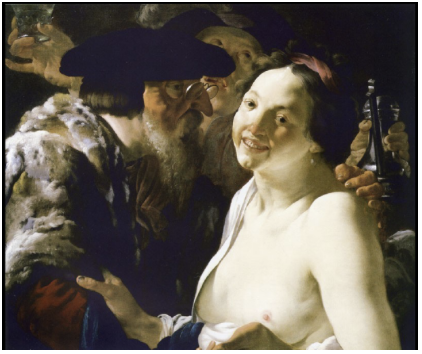
Ter Brugghen, Unequal Couple, 1623
An old man and young woman
People smiling with their teeth are only lower class people in comic scenes
We’re in on the joke with her
desire is never sated as long as the mind desires art
We assume the viewer is a male looking to spend his money on a painting
We assume the man in impotent, so his desire is stirred up but will never be satisfied
Making fun of human sinfulness and immorality
There is a market for this kind of risque art, that the calvinists wouldn’t have liked
But the church doesn’t control the private collections
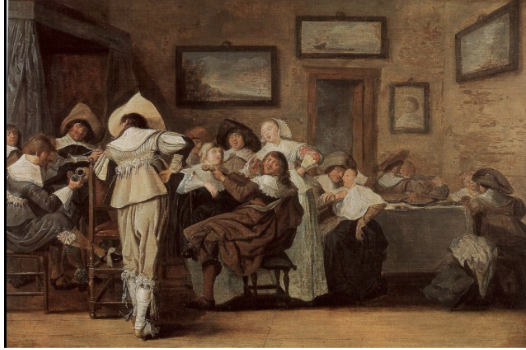
Dirck Hals, Merry Company, 1630s
Similar to prodigal son scene
Less theatrical, less comic
Sober dress and fashion of the middle classes
Ambiguity- is it a proper middle class home or a brothel?
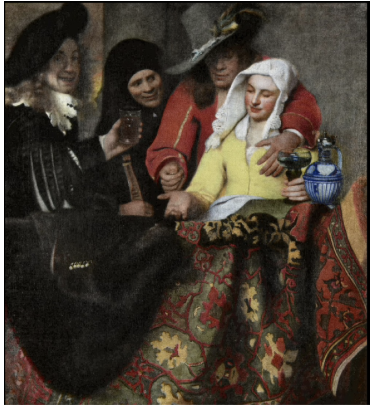
Vermeer, The Procuress, 1656
Same kind of cast of characters as the other procuress paintings
The procuress, client, prostitute, and possibly Vermeer himself looking at the viewer
The joke about money for pleasure
The man is paying his client for pleasure
But if you’re the viewer you’re paying vermeer for your own pleasure
His teeth are showing while laughing
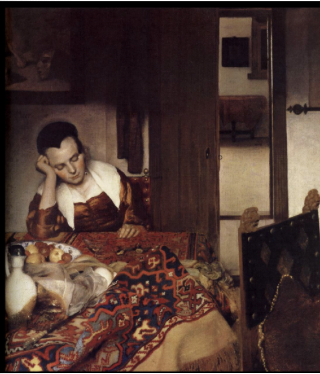
Vermeer, Girl asleep at a table, 1657
As if someone just left
Possibly drunk because they were drinking
Hard to discern what type of woman this is and what type of home this is
brothel?
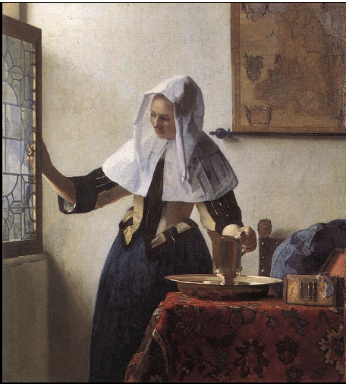
Jan Vermeer, Woman with a Water Jug, 1658-60
Wealthy middle class home
Crispness of the linen
Expensive because of the amount of blue being used
Pure, clean, virtuous home and woman
Small painting= physical drawing in of the audience
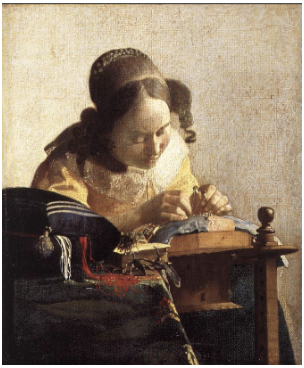
Jan Vermeer, Lace Maker, 1665
Household task
Pushing us in with the details
A lot of foreground, blocking us, pushing us back, prevents us from fully entering her space
No man- when a man enters the space it throws it off and makes us wonder why he’s there
Women confined in the boundaries in the home = boundaries of the female body
The work secures her- virtuous, doing her work, she is not inviting us to look
When women are idle, it becomes more open to morality questions
Content and confined to her domestic space and tasks- the ideal housewife
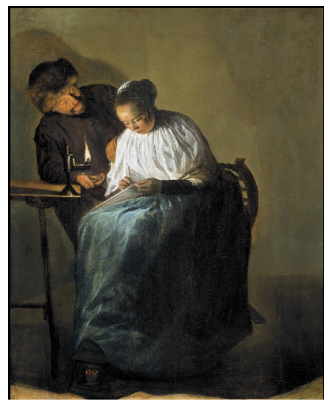
Judith Leyster, Proposition, 1631
Man like in the brothel scenes, holding a handful of coins
She is remaining intent on her task, not allowing him to intrude on her
Viewer too (assuming male) is blocked by her labor, protecting her from unwanted attention
Female painter makes us identify with her uncomfortable position
what is domestic realism
Described by paintings in the 1650s and 1660s
New kind of genre painting pioneered by ter Borsch
Activities of morally ambiguous significance
Domestic or domestic like interiors
Shared with youg man of soldier like appearance
Domestic scenes of sexual negotiation?
ter Borch's Paternal Admonition
Private space and the home is a separate female domain
Themes of anxiety of women’s behavior, sexuality, etc.
Interrpution, voyeurism
Dutch taste for painting the ordinary and its violation
Even the most virtuous woman always seems on the verge of becoming a soldier’s whore
Meaning the nation itself is imagined as fragile, seducible, threatened
explain lack of male householders in domestic realism
If they do appear, painting is likely to shift categories from genre to portrait
With householder there, morally ambiguous scene becomes static and respectable
Women, servants, soldiers “act”; householders merely “are”
Shift- soldiers can no longer be kept separate from respectable dutch society
Coming into domestic spaces
Differences between brothel vs burgher home, whore vs wife becomes increasingly difficult to find
Worldliness vs domestic order
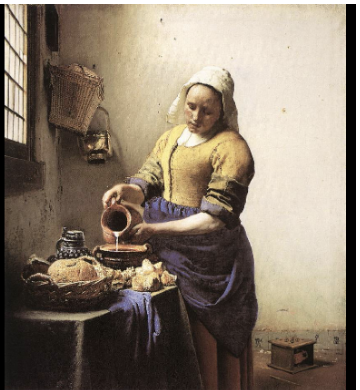
Vermeer, Servant pouring Milk, 1660s
Unusual painting of female servant
Dutch nationalistic tendencies - local woman with local product
Not so much a global trading hub but a dutch dairy hub
Rougher fabric, skin
Vermeer has a rough style or fine style depending on his subject
 Note
Note  Flashcards (130)