SAT 25 MATH Q types
 SAT Practice
 Call Kai
1/24

Name | Mastery | Learn | Test | Matching | Spaced | Call with Kai | Chat |
|---|
No analytics yet
Send a link to your students to track their progress
25 Terms
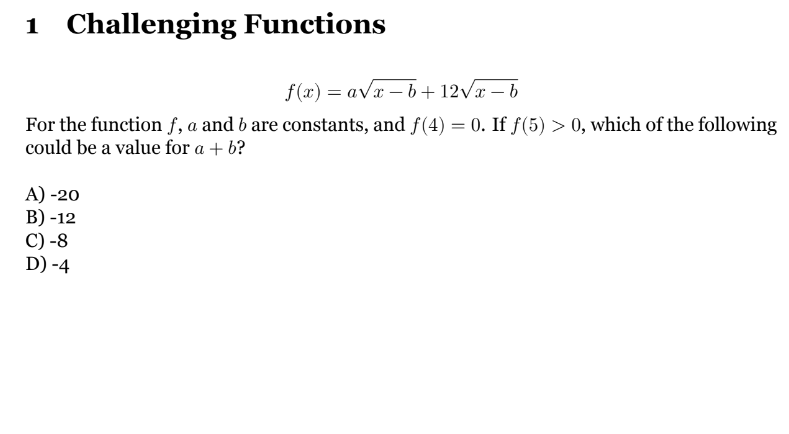
The answer is D) -4
You get this answer through logical reasoning of using the two conditions given to craft minimums and maximums where the function would be correct
Exact method: b has to be 4 to 0 out both sides(b=4)
Then with b=4, we can solve for a which is a>-12
Since b=4, a+b>-8
Only option >-8 is b
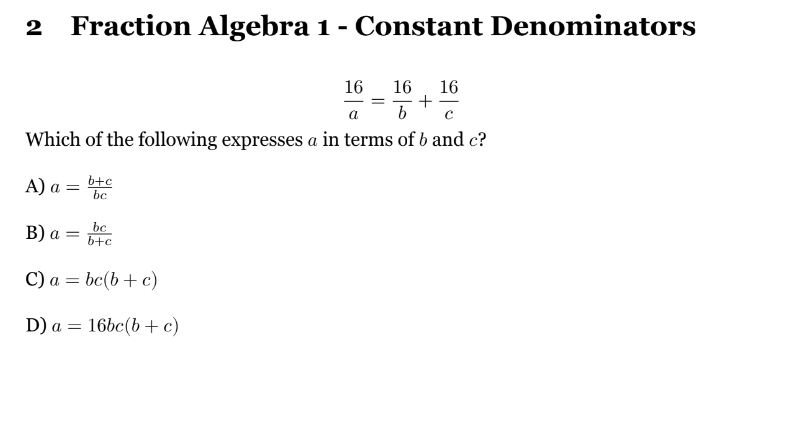
The answer is B) a=bc/(b+c)
While simple algebra does work, the more elegant method is taking out common factors(16) then combining one both sides to equal one fraction
Then use the reciprocal rule(reciprocates both sides) so the variable lands on top. This rule only works if there are 2 things
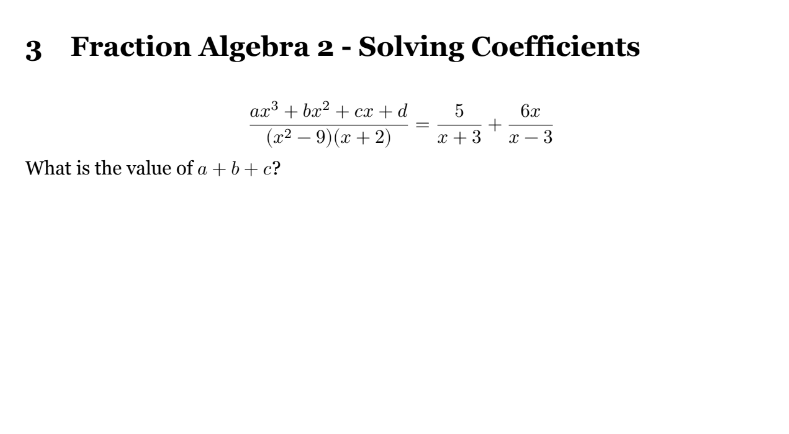
The solution to this problem is pretty easy. I think all problems on the SAT can be done by hand, it’s just that the Desmos aspect can be an aid.
Essentially, once you notice that the denominator is (x²-9) it’s just the difference of squares which matches the denominators on the opposite side
From then it’s simple algebra: combine fractions and then match denominators :)
The answer should be 72
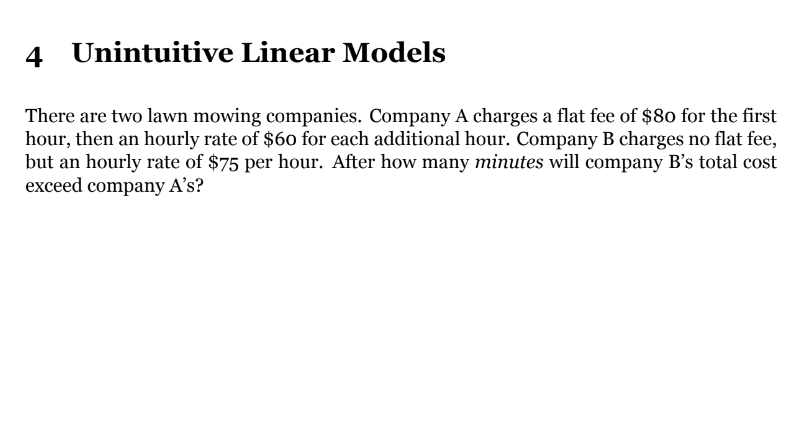
Just set up an equation that models the two to each other(set them equal) and solve for x
Convert x to mins and voila, 80 mins is the answer
More specifically, the equations are:
A: y=60(x-1)+80 it’s x-1 because its only after the first hour that it occurs
B: y=75x
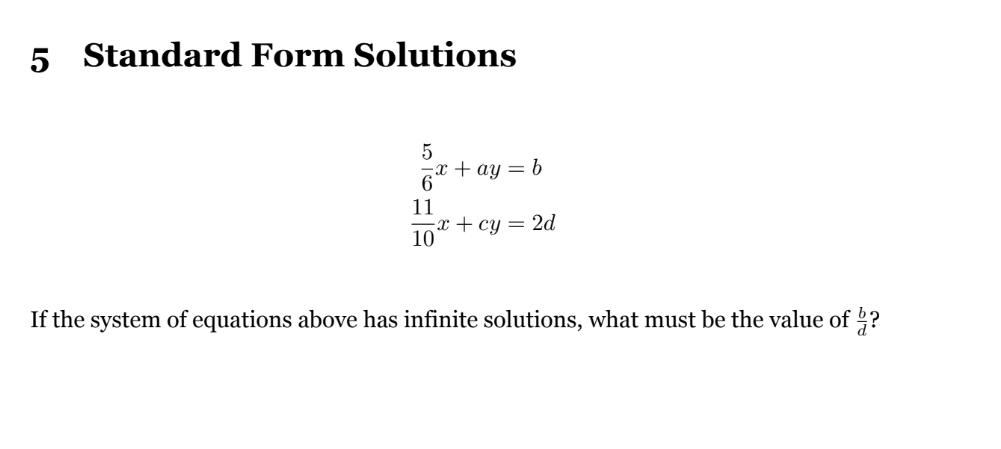
(got wrong)
Key point that I was unsure about: A system of equations have infinite # of solutions if and only if they are equal to each other(7x=7x)
So set them equal to each other and solve for the ratio relating them
Im pretty sure the ratio was 1.32, but my mistake was I plugged that 1.32 into the wrong side(bottom instead of the top)
Solve for b/d to get 50/33 or like 1.51515
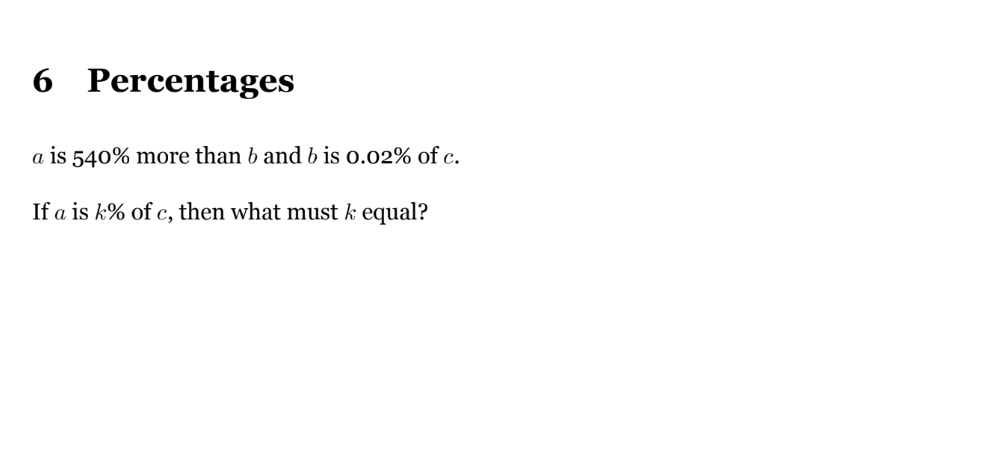
(got wrong)
I KNEW something was wrong… I just didn’t know what. This is what: when there are %’s involved, always beware of the more than or less than because 540% more of something is that times 6.4 because 100% makes it exactly that
So my error was that I set up my equation to equal a=5.4b when it should’ve been a=6.4b
Once you get that out of the way, also beware that k is given with % symbol… so the answer is 0.128 🙂
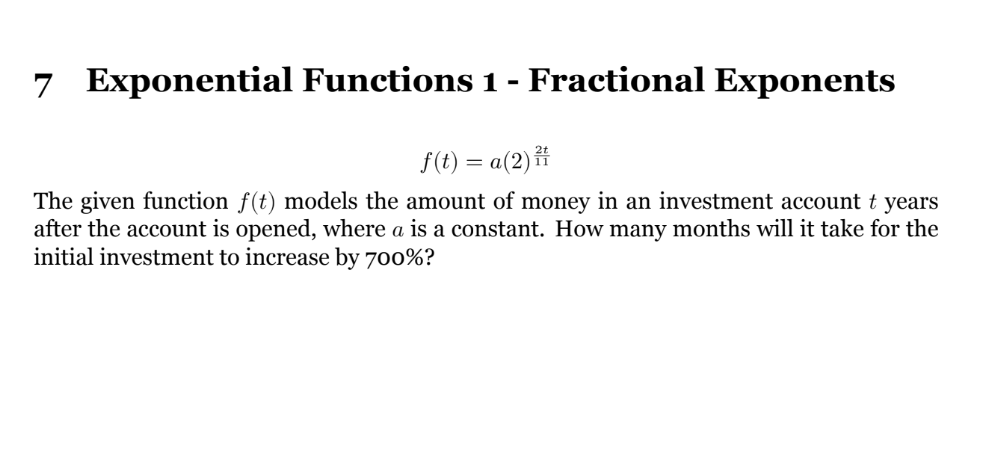
(got wrong)
For the same reason as the problem above. I set up the equation as (2)t/11 =7 instead of =8 because 700% more than means 800% of the value
However, the way you solve this is by using the property of logarithms to move the exponent into a coefficient which is exactly what I did to solve with algebra
t=16.5 which *12(months) becomes 198
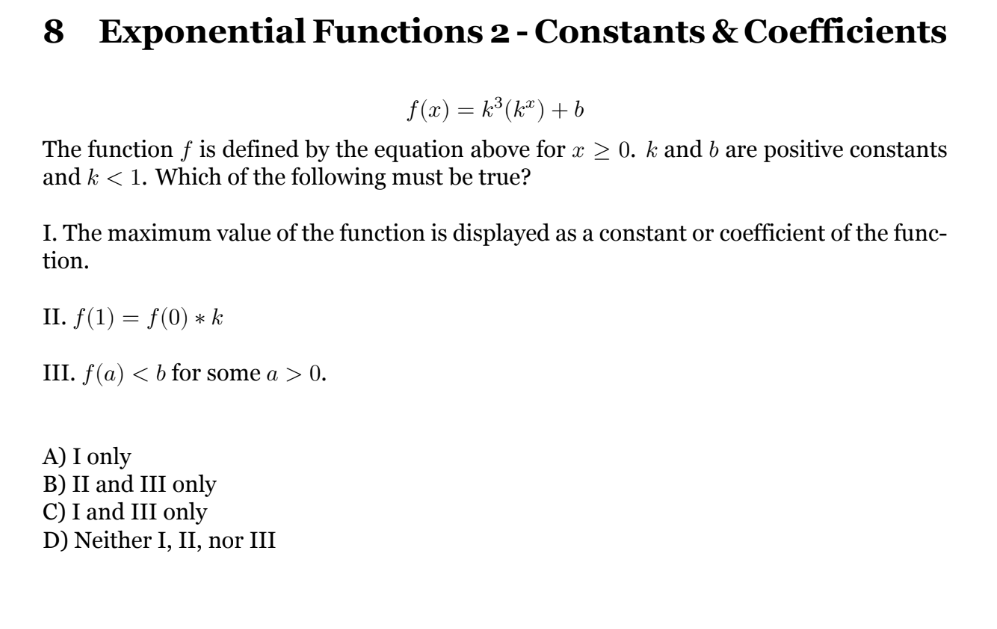
I did this right 🙂
I don’t have any other explanation other than just use your logical reasoning and knowledge of functions
The answer is D)
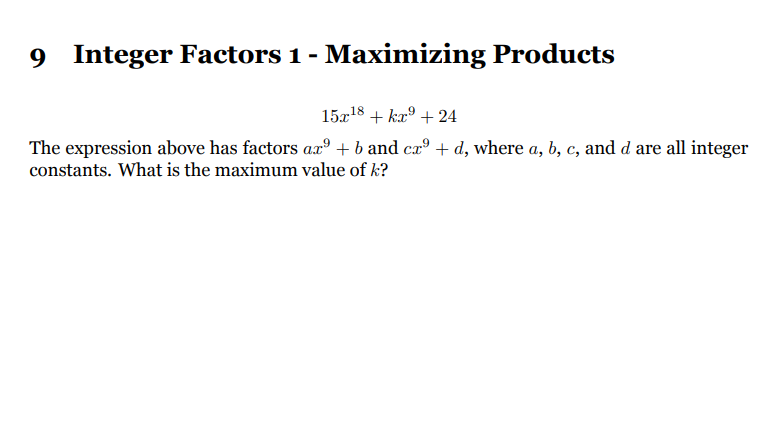
Laughably easy once you realize that you can set x^9=y then substituting that in to get the equatio: 15x²+kx+24
Box method optional to visualize, but to get the largest k-value, you always have to multiply the largest factors together so 15×24=360
There is a 1×1=1 so ans: 361
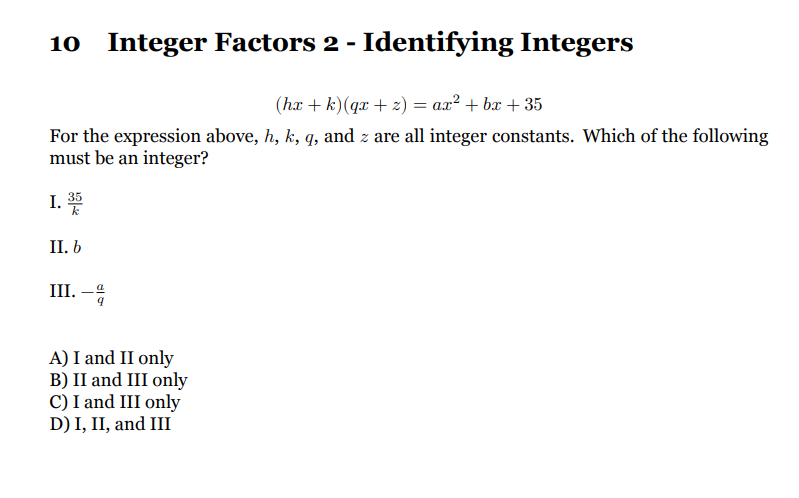
Fairly simple
Don’t have to distribute, just use common sense of factors and the definition of an integer
Use algebra to solve to check for each conditions legibility
The correct answer should be D)
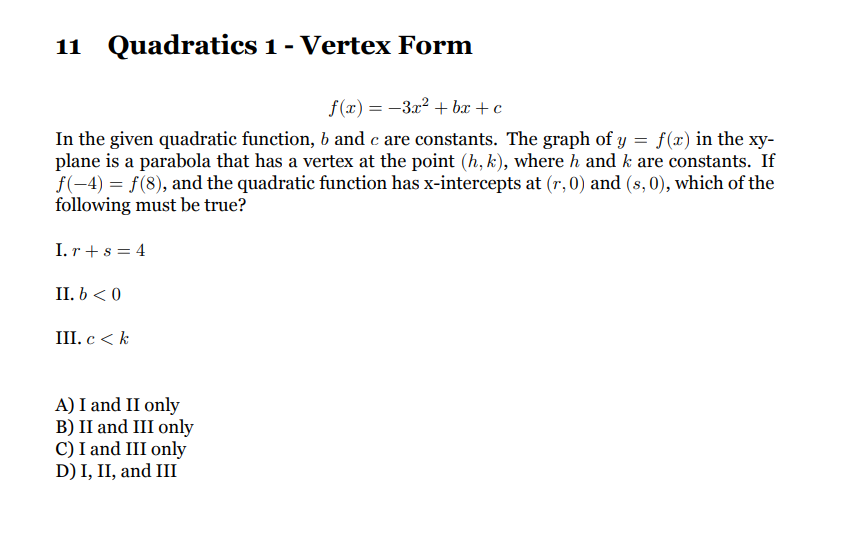
(got wrong)
This one uses a bunch of memorized formulas:
Find the x-cord(h) of the vertex using the equation the middle of the two symmetrical points f(-4) and f(8) has x=2
Find the b value using the equation h= -b/2a which should get you b=12 which is definitely NOT <0 so ❌
Use your b-value to multiply use the equation: x1+x2=-b/a which would equal to 4 ✅
Substitute your b-value into the vertex form equation and expand. Then match each value to its a b c value(it should match)
The final match is c=k-12 so c is definitely <k so ✅
The final answer is C)
You could also just brute force it with desmos
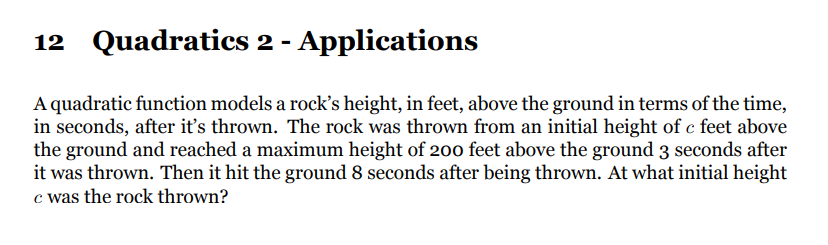
You can use desmos for this problem
Just identify that k=200(height of vertex) and it happens at h=3(x-cord of vertex)
Write out the vertex form in desmos and substitute your known values
Adjust a so that one of the x-cords is @x=8
Since you know that the parabola is symmetrical, and 200 was done in 3 seconds and in 5 seconds, the rock was thrown at a height of 2 seconds post the other x-int.
And that point is 128
(confused, so do again)
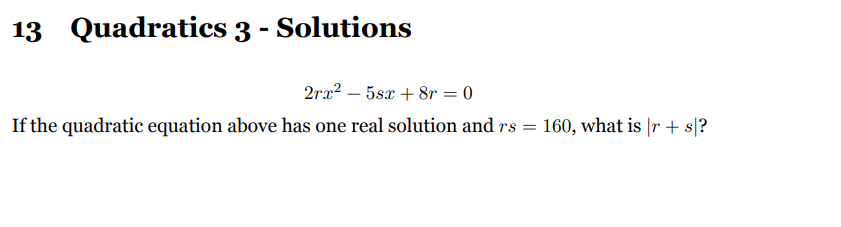
The core concept here is using the discriminant formula: b²-4ac
It is given that there is 1 real solution so the discriminant has to equal 0
Plug in values and use general algebra
The answer should be 26
I solved this in a very weird way:
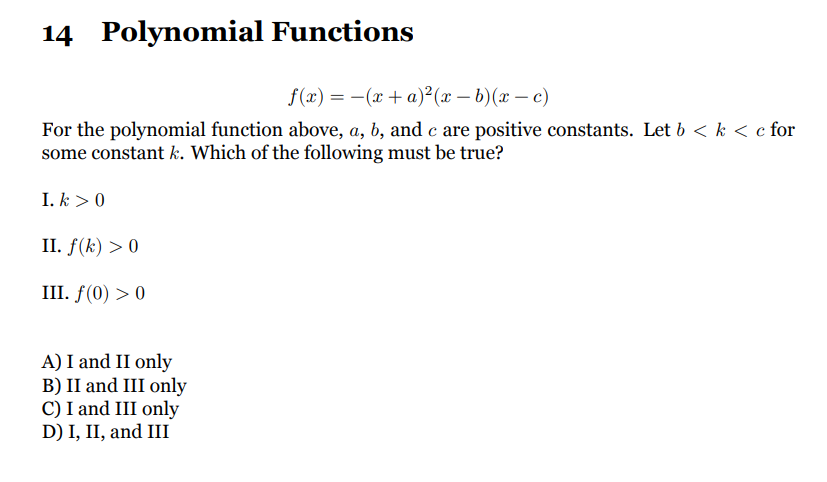
I just scanned the answer choices, and all but one of them had III in their choices
I plugged in 0 to the equation to get -a²bc which is definitely not >0 since a b and c are positive constants
That only left one answer: A
However, the other conditions are pretty simple too. If K is sandwiched between 2 positive numbers. It too must be positive.
And then using + and -, you can easily check condition II
(got wrong 😆 for some Englick reason…)
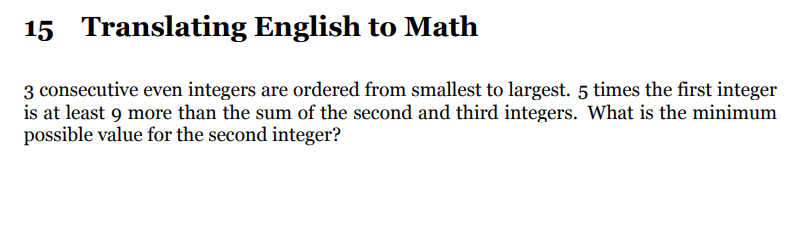
Erm I ordered from largest to greatest first.
Pretty straightforward though. Just create a function: 5a>b+c+9 then substitute values(b=2+a and c=4+a) solve for a which should be a>=5.
Since its given that the #’s are even, b=8
Very easy. Set up the equation:
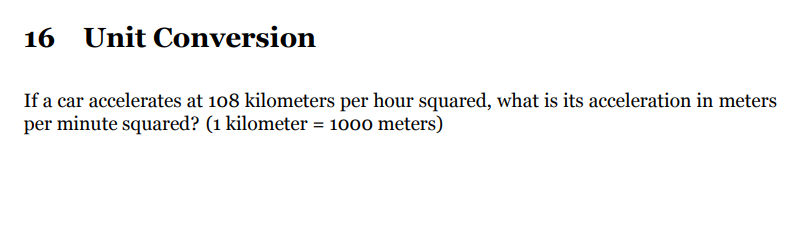
108 km/h²
=108000m/h²
=108000m/(1/60)²
=30
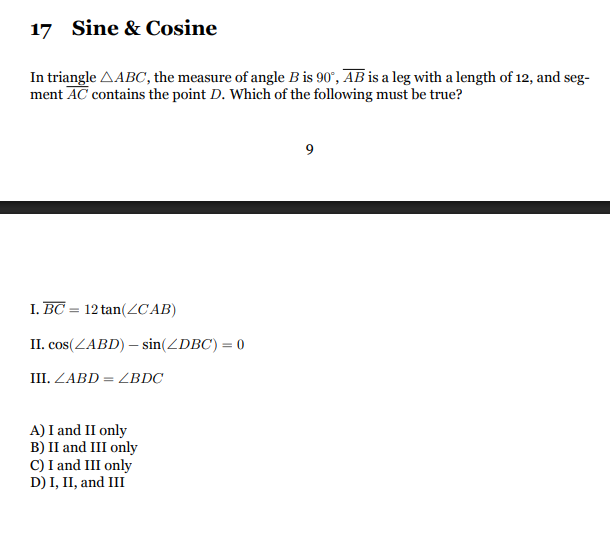
First draw out a triangle, then test each of the conditions on that
I- Tan is Opp/Adj and Adj is 12, so the equation is just Opp which is BC so TRUE
II- TRUE(complementary angles)
III- When drawn on the model its easy to see how false this is WRONG
Therefore the answer is A)
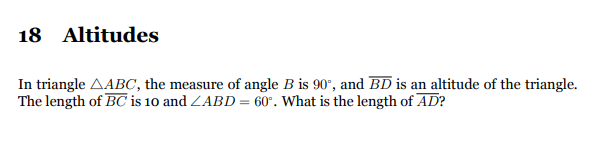
(missed)
Draw out a model
Using one of the triangles, find the length of the shared side BD = 8.666
Using that side and filled in angles(they should all be known), deduce the length of AD specifically
It should be 15.
note: its important to not assume any side lengths and always use whats given
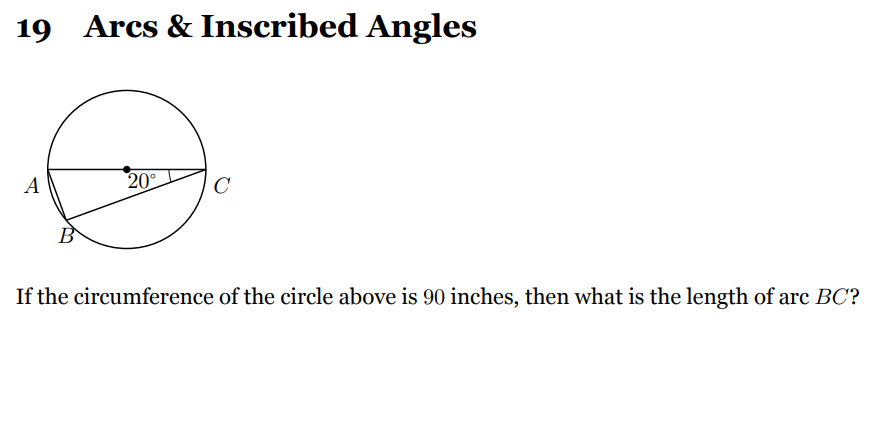
supes easy
Super easy: Reflected angles are always twice the angle given(so the 20 is a 40 on the outside)
Arc BC makes up about 180-40(from above) which is 140/360 or 0.3889% of the circles circumference
The circumference is given to be 90, 0.39% of that is 35
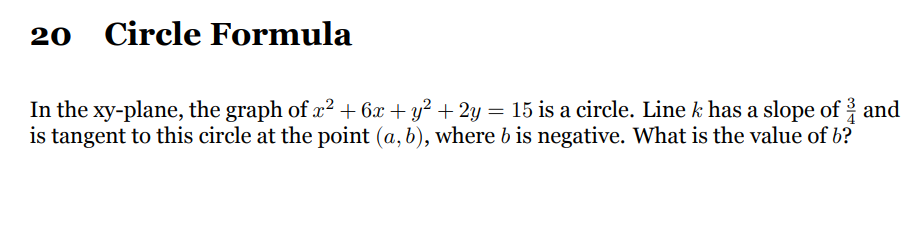
super easy
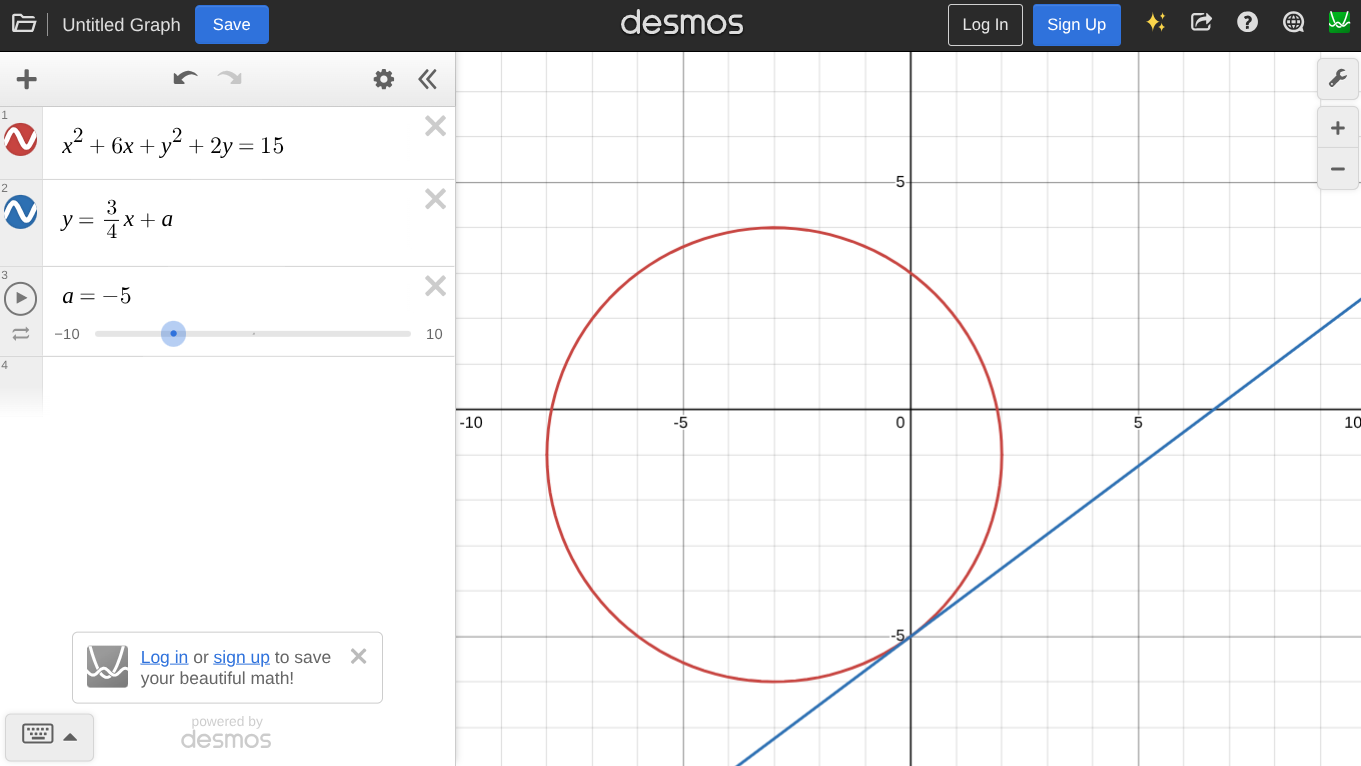
Since you can use desmos, just write the damn equations out and just match it(tangent means its the slope of one of the points) and boom the answer is -5
literally requires negative brain cells to solve
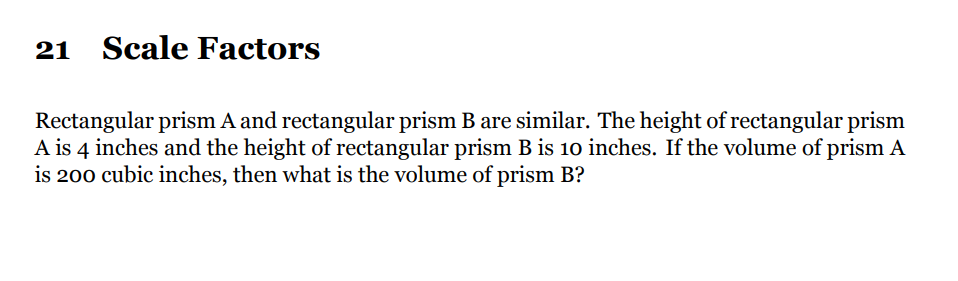
Fairly Simple: since the length and width of Rectangle B will be 2.5 times Rectangle A
Also, the L and W of A is given by L*W=50 then:
Rectangle B: (2.5L)*(2.5W)=50(2.5²) it’s squared because we’re multiplying it twice through
The 312.5 ×10(final height) is 3125 in³
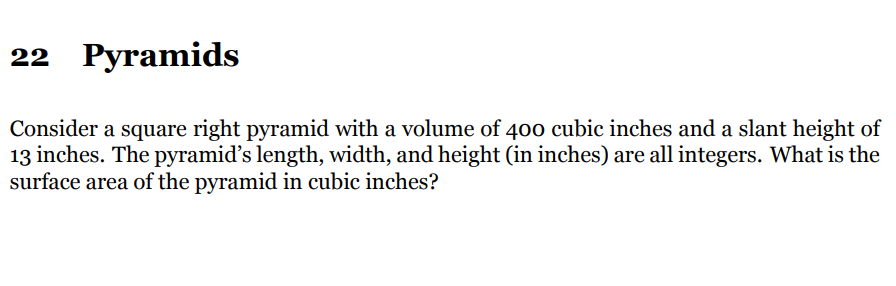
The KEY to this problem is using the right triangle as well
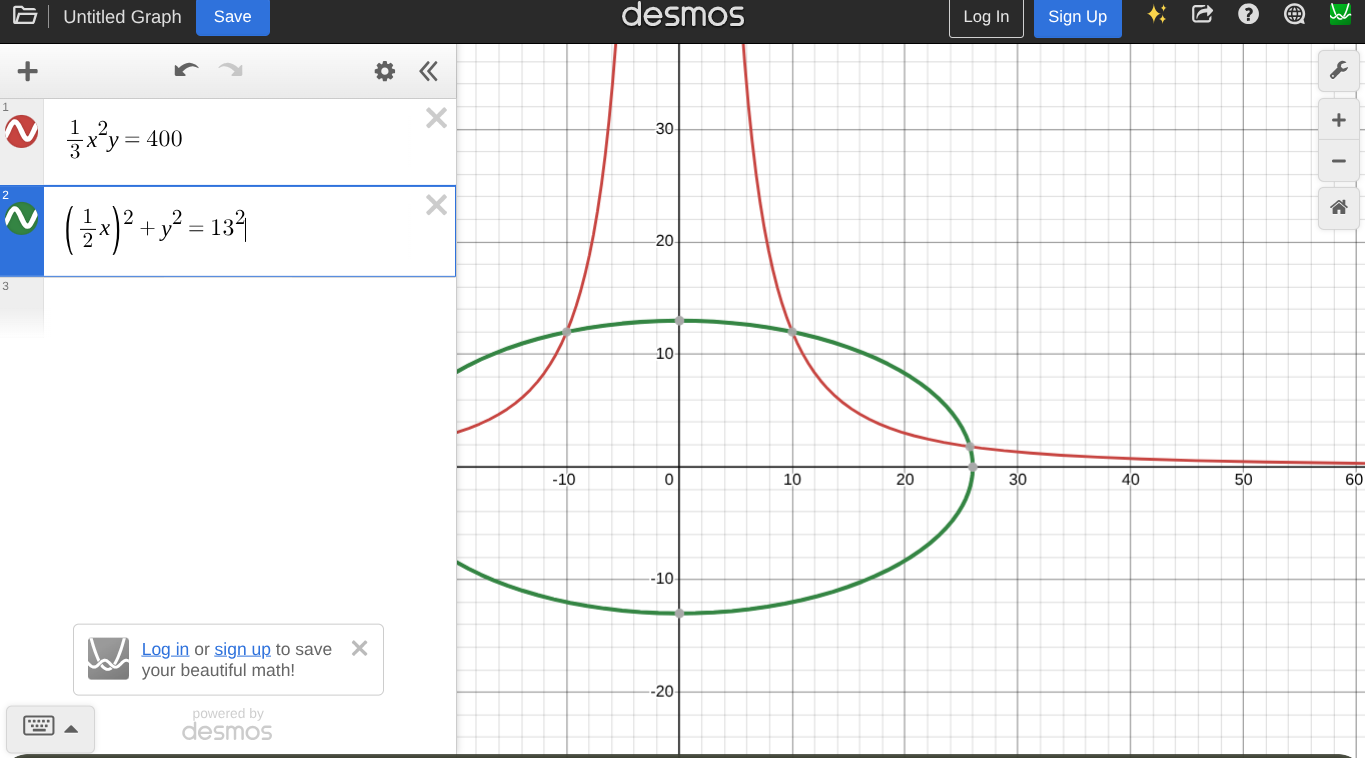
That and using desmos(shown above)
X is 10 and y is 12
Plug that in for b and h, you will get(b²+26b)=100+260=360
eh the rest are easy statistics, it’s okay