Biology IB - Integration of body systems
 Call Kai
 Learn
Learn Practice Test
 Spaced Repetition
 Match
Match Flashcards
 Knowt Play
1/149

There's no tags or description
Looks like no tags are added yet.
Name | Mastery | Learn | Test | Matching | Spaced | Call with Kai |
|---|
No analytics yet
Send a link to your students to track their progress
150 Terms
What is system integration?
The process by which different physiological systems in the body coordinate and work together to maintain homeostasis and/or perform a function
What does system integration depend on?
On communication between the component parts
What does the integration of systems in animal bodies occur by?
Hormonal and nervous signalling and by the transport of materials and energy in the blood
What are the four types of tissues in humans?
Connective tissue (supports other tissues and binds them together, e.g. blood, bone and lymph tissues), epithelial tissue (provides a covering, e.g. skin), muscle tissue (skeletal striated muscle, smooth muscle and cardiac muscle) and nerve tissue (neurons)
What are the three basic types of organs in seeded plants?
Roots, stems and leaves
What are examples of organ systems in humans?
Nervous system, skeletal, reproductive, digestive, respiratory, circulatory, muscular, immune, reproductive and endocrine
What is an organism?
A living individual made up of interconnected parts
What does interaction and coordination between body systems allow?
Organisms to engage in the processes necessary to sustain life
What are emerging properties?
Properties that become apparent and result from various interacting components within a system but are properties that don't belong to the individual components themselves (e.g. consciousness)
Which is an example of a property that emerges at the level of organisation of a cell?
Life
Which is an example of a property that emerges at the level of organisation of a tissue?
Synchronised contractions in heart tissue (due to interactions amongst cardiac cells)
Which is an example of a property that emerges at the level of organisation of an organ?
All tissues of the heart work collectively to pump blood
Which is an example of a property that emerges at the level of organisation of an organ system?
The components of the cardiovascular system are able to transport blood throughout the body
Which is an example of a property that emerges at the level of organisation of an organism?
The organism is able to use the blood to perform all of the interconnected functions needed to survive and reproduce (e.g. ability of being a predator)
What is the structure of the endocrine system?
Glands such as thyroid, adrenal, pineal, pituitary, ovaries and testes
What is the structure of the nervous system?
Brain, spinal cord and peripheral nerves
What is the signalling method of the endocrine system?
Hormone molecules in the blood
What is the signalling method of the nervous system?
Electrical within neurons and neurotransmitter molecules between neurons
What is the distribution of the signal of the endocrine system?
Widespread in the body to any target cells with a hormone receptor
What is the distribution of the signal of the nervous system?
Narrowly focused between individual cells
Is the speed of signals in the endocrine system fast or slow?
Slow
Is the speed of signals in the nervous system fast or slow?
Fast
What is the duration of the signal in the endocrine system?
Longer (until hormone is broken down)
What is the duration of the signal in the nervous system?
Shorter
Is the release of signals from the endocrine system voluntary or involuntary?
Involuntary
Is the release of signals from the nervous system voluntary or involuntary?
Can be both
What is the role of the blood for the transport of materials?
Supplies nutrients, oxygen, hormones and water and removes waste products (including CO2 produced in respiration)
What is the central information integration organ?
The brain
What are the two main type of cells found in the brain?
Neurons (which transmit electrical impulses) and glial cells (supports both the structure and function of neurons)
What are the different regions of the brain?
- Cerebral cortex (outer layer of the brain which is divided into two hemispheres, it's highly folded and is responsible for higher-order processes such as intelligence, memory, consciousness and personality)
- Cerebellum (underneath the cerebral cortex and is responsible for balance, muscle coordination and movement)
- Brainstem (relays messages between the cerebral cortex, the cerebellum and the spinal cord (a key part is the medulla which controls unconscious activities such as heart rate and breathing))
What is the brain able to?
To centralise control of the body, allowing for a rapid and coordinated response to multiple inputs about the changing conditions of the body
Do basic types of responsiveness such as reflexes need the brain?
No (it can be mediated by the spinal cord but the control of complex behaviour, learning and memory requires the information integrating capabilities of a centralised brain)
What are the two areas of the brain?
- Grey matter: contains most of the brain's neuronal cell bodies (serves to process information)
- White matter: contains bundles and axons, which connect various grey matter areas (allows for communication to and from grey matter)
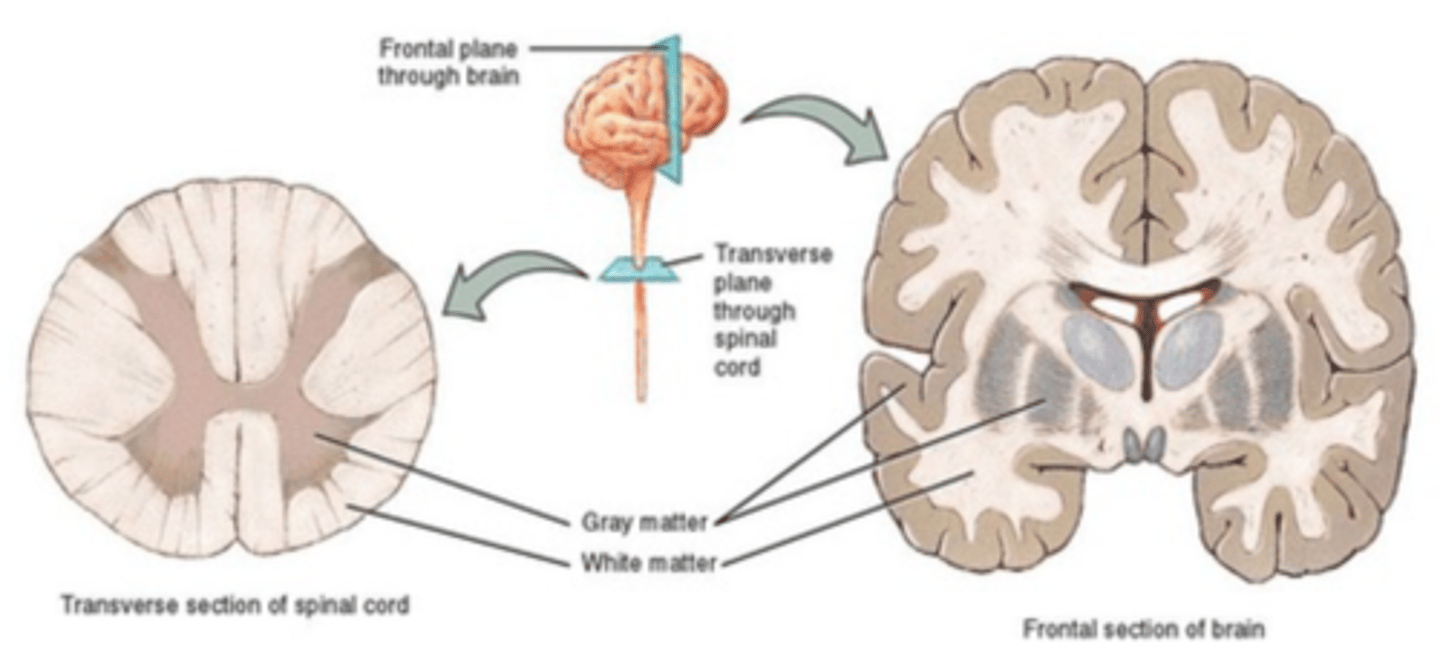
What is conscious level information detected by?
- Photoreceptors located within the retina of the eye for visual information
- Chemoreceptors found in the tongue for tasting
- Thermoreceptors located in the skin for detection of temperature changes
- Mechanoreceptors located in the inner ear which are sensitive to sound vibrations
What is unconscious level information detected by?
- Osmoreceptors located in the carotid arteries and hypothalamus which detect the water content of the blood
- Baroreceptors, also located in the carotid arteries and the aorta, these sense pressure changes of the blood
- Proprioceptors which are located in muscles and joints and provide information on balance and movement
What is the spinal cord responsible for?
It acts as the integration centre for unconscious processes (it's responsible for bringing sensory information to the CNS from the body and enables motor (muscular) information to be sent out)
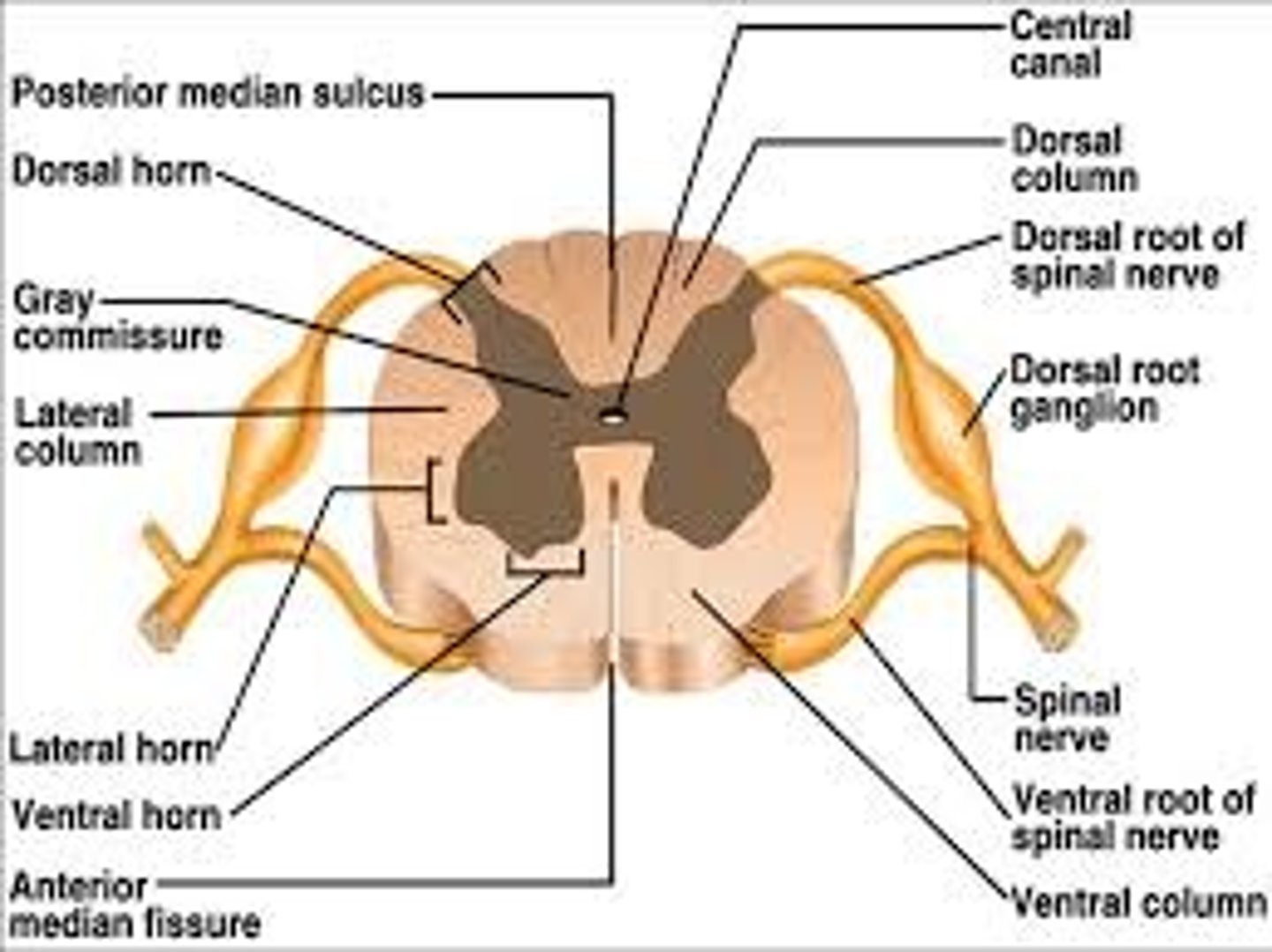
What is the name for the front and back part of the spinal cord?
Front is ventral and back is dorsal
Is the dorsal root afferent or efferent?
Afferent (has sensory neurons which move towards the body)
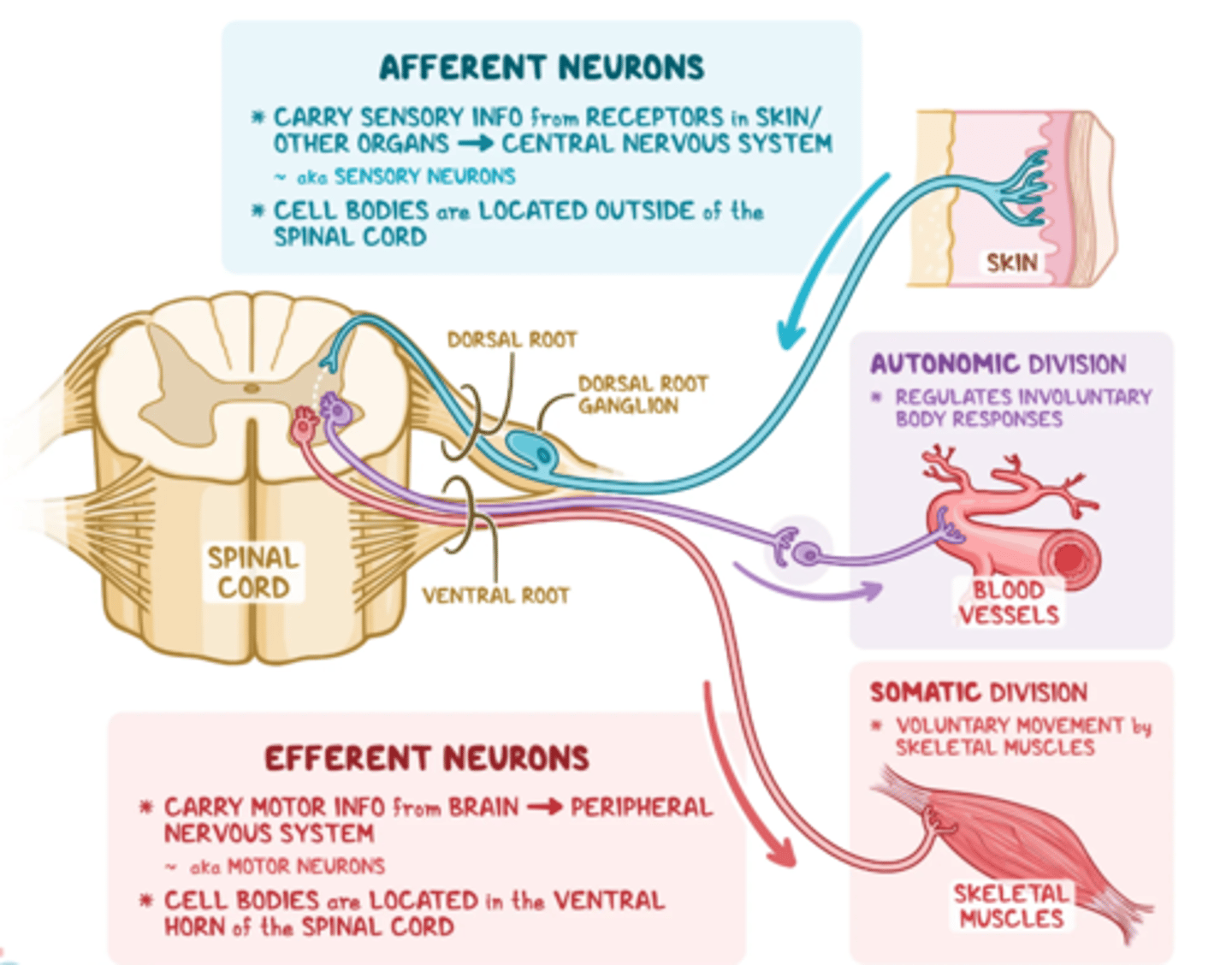
Is the ventral root afferent or efferent?
Efferent (has motor neurons which move away from the body)
What is the role of the brain in involuntary control?
It does not require conscious thought and can respond to emergency situations and actively return the body to normal (they are controlled by the medulla in the brain, e.g. heart rate)
What are examples of sensory receptors?
- Light (photoreceptors)
- Chemical (chemoreceptors)
- Physical force (mechanoreceptors)
- Temperature (thermoreceptors)
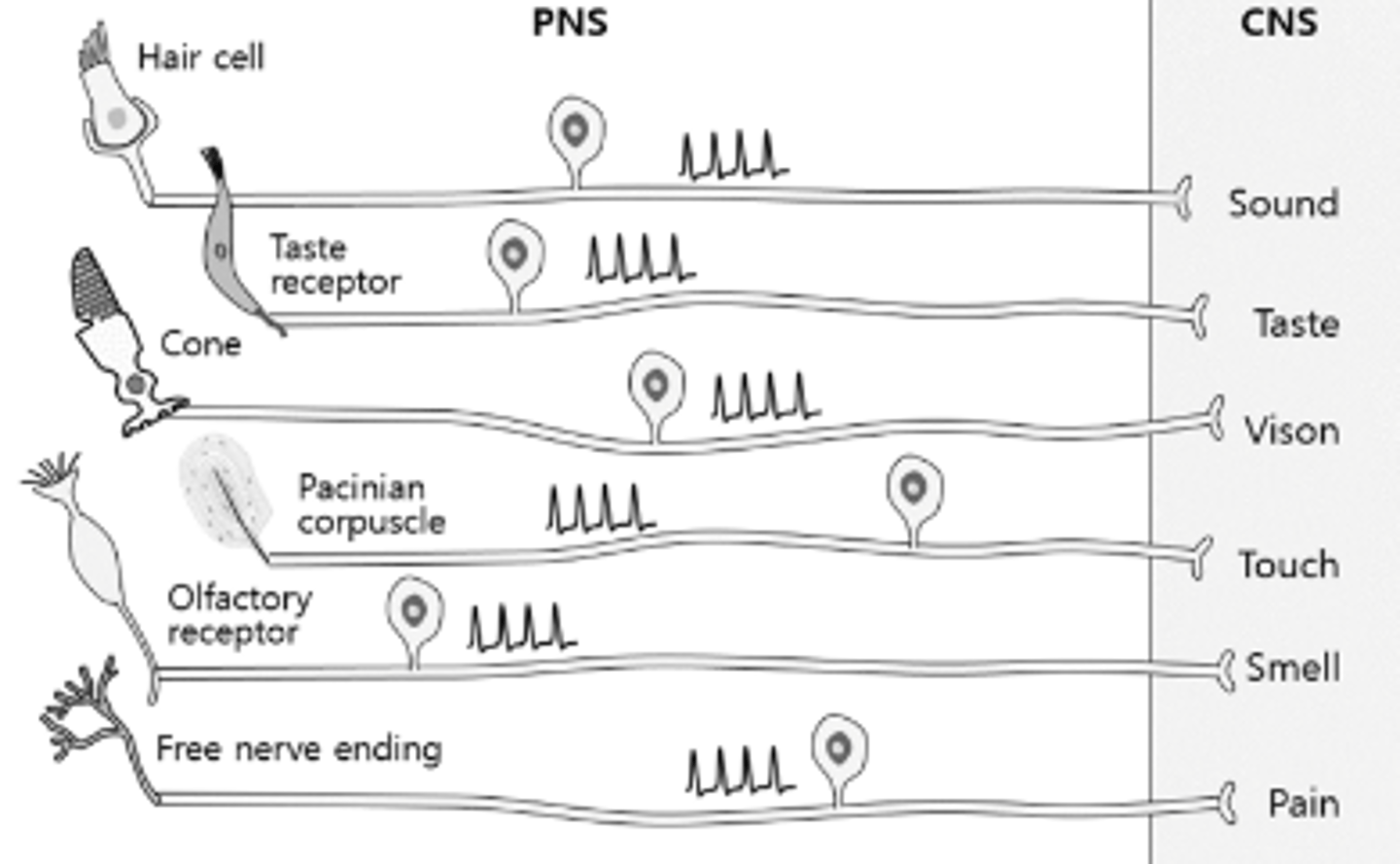
What is the function of sensory neurons?
To respond to stimuli about environmental conditions and transmit that information as electrical impulses to the CNS for processing and interpretation
Which type of input does the brain receive for processing?
Sensory input (from eyes, ears, tongue and nose)
Which type of input does the spinal cord receive for processing?
Pain, temperature, touch and body position
What is the cerebrum?
The part of the brain that controls muscle functions and also controls speech, thought, emotions, reading, writing and learning
What does the right cerebral hemisphere control?
The muscles on the left side of the body
What does the left cerebral hemisphere control?
The muscles on the right side of the body
What is the primary motor cortex?
A region of the cerebrum that controls voluntary movement via motor neurons to skeletal muscles in the body (skeletal muscles are responsible for creating movement by pulling bones in different directions)
What is the function of motor neurons?
To carry information away from the CNS towards an effector (muscle or gland)
Where do motor neurons end?
Within a muscle within a neuromuscular junction (also known as motor end plates)
What is a nerve?
A bundle of myelinated or unmyelinated neurons and supportive tissues surrounded by a protective sheath (they can contain either or both sensory and motor neurons)
What is a reflex?
An automatic, involuntary response to a stimulus that occurs through neural pathways in the nervous system (e.g. coughing, blinking, sneezing)
What is a reflex arc?
A pathway along which impulses are transmitted from a receptor to an effector without involving conscious regions of the brain (e.g. pain reflex arc)
What is the process of a pain reflex arc?
1. Stimulation: pain receptors (nocireceptors) in the skin detect a painful stimulus.
2. Sensory neuron: an electrical impulse is transmitted along the sensory neuron.
3. Spinal cord: the sensory neuron enters the spinal cord and synapses with a relay neuron.
4. Motor neuron: the relay neuron synapses with a motor neuron, which leaves the spinal cord.
5. Muscle: the motor neuron synapses with a muscle, causing it to contract and remove the limb from the pain stimulus
What are the functions of the cerebellum?
1. Maintenance of balance and posture.
2. Coordination of voluntary movements.
3. Facilitates motor memory (e.g. walking, riding a bike, playing musical instrument)
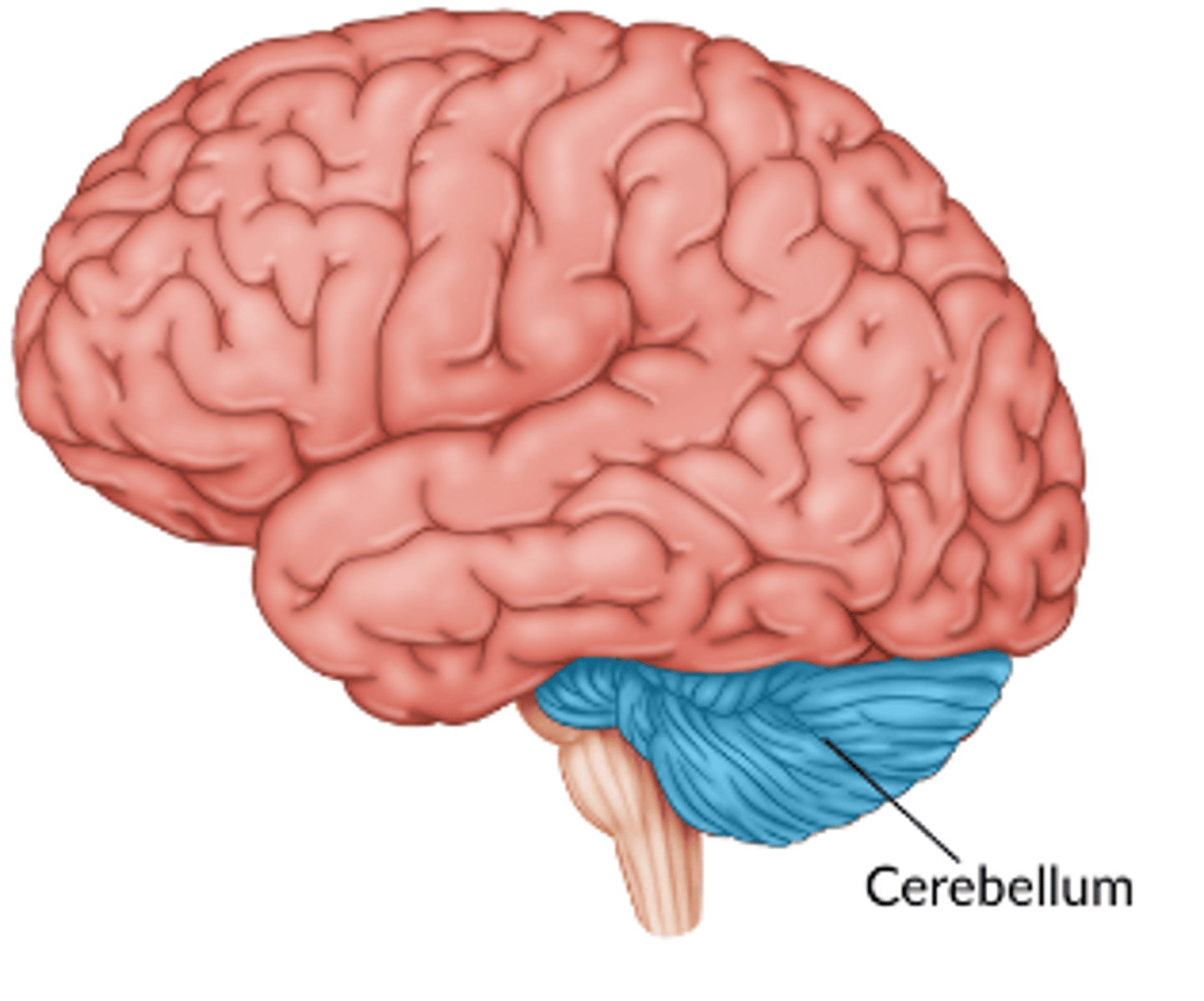
How does the cerebellum work?
The motor cortex of the cerebrum initiates muscle contractions and the cerebellum receives feedback signals from the area of the body that is moving and different sense organs, so it sends signals to coordinate and control the movement
What is the circadian rhythm?
The physiological and behavioural changes of an organism over a roughly 24-hour cycles (it dictates multiple processes such as alertness, sleepiness, appetite and body temperature)
What can circadian rhythms be synchronised by?
Light and darkness (although they will continue even if an organism is placed experimentally in continuous light or continuous darkness)
What is the pacemaker of the circadian rhythm in mammals?
The suprachiasmatic nucleus (SCN) (neurons here produce a circadian rhythm of neuron firing frequency which allows them to synchronise other cells throughout the body)
How do suprachiasmatic nuclei cells sense and respond to changes in light?
Cells in the eye sense wavelengths of light and send a neural impulse to the suprachiasmatic nucleus
What happens when the suprachiasmatic nucleus sense darkness?
It stimulates the release of melatonin from the pineal gland (located in the centre of the brain)
What is melatonin?
An amine hormone which controls circadian rhythms and affects seasonal reproduction and jet lag in mammals
Does the amount of melatonin in the blood change during the day?
Yes (it's low during the day and high during the night)
What are the main target cells of melatonin in the body?
Areas of the brain including the hypothalamus and pituitary glands, and also in the cells of the immune system, gonads, kidney, and the cardiovascular system, blood vessels, and intestinal tract
What are some effects of melatonin?
- Reduced blood pressure
- Reduce kidney production of urine
- Drop core body temperature when asleep
- Enhance the helper-T immune responses and reduces the inflammation response
- Effect sexual maturation through regulation of GnRH gene expression
- Alter blood flow to different tissues in the body
When does melatonin receptor activation occur?
1. Melatonin binds to GPCR (making it change shape).
2. Shape change causes GDP to detach from alpha subunit pf G-protein and GTP takes its place.
3. Binding of GTP causes dissociation of G protein into GTP-bound alpha subunit and beta-gamma dimer.
4. Both parts remain anchored to the membrane but can diffuse laterally and interact with other membrane proteins
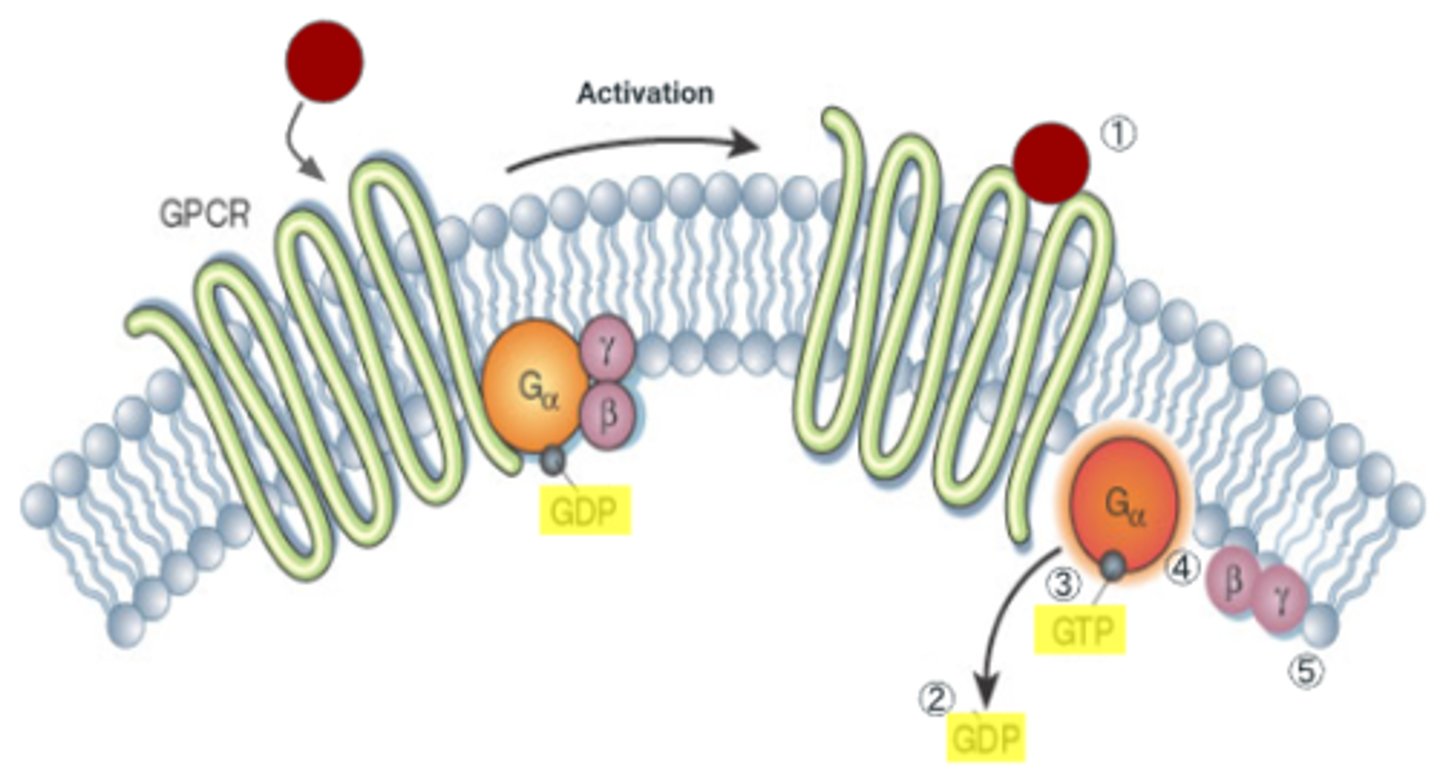
When does melatonin signal transduction occur?
1. Activated alpha subunit of G-protein inhibits adenylate cyclase in the cell membrane.
2. The inhibited adenylate cyclase can't catalyse the conversion of ATP in the cytoplasm to cyclic AMP (cAMP).
3. The intracellular levels of the second messenger cAMP decrease.
4. cAMP increases cell activity (as activation of melatonin receptor inhibits formation of cAMP, cell activity is reduced)
What is adrenaline secreted by?
By the adrenal glands to prepare the body for vigorous activity (for the fight-or-flight response)
What is the mechanism of action of adrenaline as a signalling molecule?
It binds to an androgenic receptor (a GPCR) and triggers a cascade of signalling pathways leading to changes in the cell
What is the effect of adrenaline on liver and muscle cells?
It causes the breakdown of glycogen into glucose (which can be used for aerobic or anaerobic respiration)
What is the effect of adrenaline on the bronchi and bronchioles?
They dilate due to relaxation of smooth muscles (widening the airway for increased airflow during ventilation)
What is the effect of adrenaline on ventilation rate?
It is increased (so a larger total volume of air is moved per minute)
What is the effect of adrenaline on heart rate?
It is increased as it speeds up the firing of the sinoatrial node and increases the strength of contractions to move more volume of blood in each heartbeatWhat is
What is the effect of adrenaline on arterioles?
Arterioles in skeletal muscles vasodilate and arterioles in gut, kidney and skin vasoconstrict
Does adrenaline decrease or increase sensibility to pain?
Decrease
What are the primary muscles used in the fight-or-flight response?
- Psoas: contracts and pulls leg (preparing to run or kick)
- Hamstrings: for bending the knee and extending the hip (essential for walking, running, jumping and kicking)
- Adductors: for bringing the legs together (balance and stabilisation)
- Abductors: for moving the legs away from each other (helps change direction and perform lateral movements for maneuvering and evading danger)
What is the role of the hypothalamus?
To act as as a link between nervous and endocrine systems
When does an endocrine gland know when to release a hormone?
- Electrical stimulus (e.g. adrenal glands stimulated by sympathetic nervous system)
- Chemical stimulus (e.g. pancreas stimulated by blood sugar which leads to release of insulin)
What is the shape of the pituitary glands?
Two small balls (posterior and anterior lobe)
Do both the hypothalamus and the pituitary gland secrete hormones?
Yes
What do cells in the hypothalamus receive signals about?
Blood glucose, body temperature and blood osmolality
What are the only two hormones secreted by the posterior lobe of the pituitary glands?
Oxytocin and ADH
What is the mnemonic for the hormones released by the anterior pituitary gland?
FLAT PEG
FSH, LH, adrenocorticotropic hormone (ACTH), thyroid stimulating hormone (TSH), prolactin, endorphins and growth hormone
What is the autonomic nervous system controlled mainly by?
By the hypothalamus and the brain stem (medulla oblongata)
What does the medulla oblongata has?
A respiratory centre which controls breathing and a cardiovascular centre which controls blood pressure and heart rate
What can the myogenic heart rate be adjusted by?
Neural and endocrine feedback mechanisms
What factors increase heart rate?
Exercise, anxiety, lack of sleep, alcohol, threat, increase in body temperature, nicotine, caffeine, altitude and infections
What factors decrease heart rate?
Being fit, relaxation, decrease in body temperature and sleep
What sends the input to the medulla oblongata?
Sensory neurons located in the walls of the aorta and carotid arteries (these neurons have baroreceptors for blood pressure and chemoreceptors for blood pH and oxygen levels)
What is the innervation of the heart?
The network of nerves that connect to the heart and are responsible for modulating the heart rate and stroke volume
What are the two major nerves that innervate the heart?
The sympathetic cardiac nerve (causes heart to increase frequency and force of contraction) and vagus nerve (causes heart to decrease frequency and force of heart contraction)
What is the hormone that increases heart rate?
Adrenaline and norepinephrine
What is the neurotransmitter that decreases heart rate?
Acetylcholine
Does exercise increase or decrease CO2 production?
Increase (decreasing blood pH)
What happens when low blood pH is detected by chemoreceptors?
Action potentials are sent at a higher rate to the diaphragm and intercostal muscles of the lungs to increase ventilation rates and the volume of air being moved into and out of the lungs
Why does hyperventilation occur in response to exercise?
To compensate for the excess lactic acid and CO2 in the body
What are the walls of the intestines composed of?
Circular and longitudinal muscles
What do circular muscles in the intestines do?
Decrease the diameter of the intestine when they contract
What do longitudinal muscles in the intestines do?
Decrease the length of the intestine when they contract
What is peristalsis?
Coordinated contractions of circular and longitudinal muscles to move down a bolus of food

