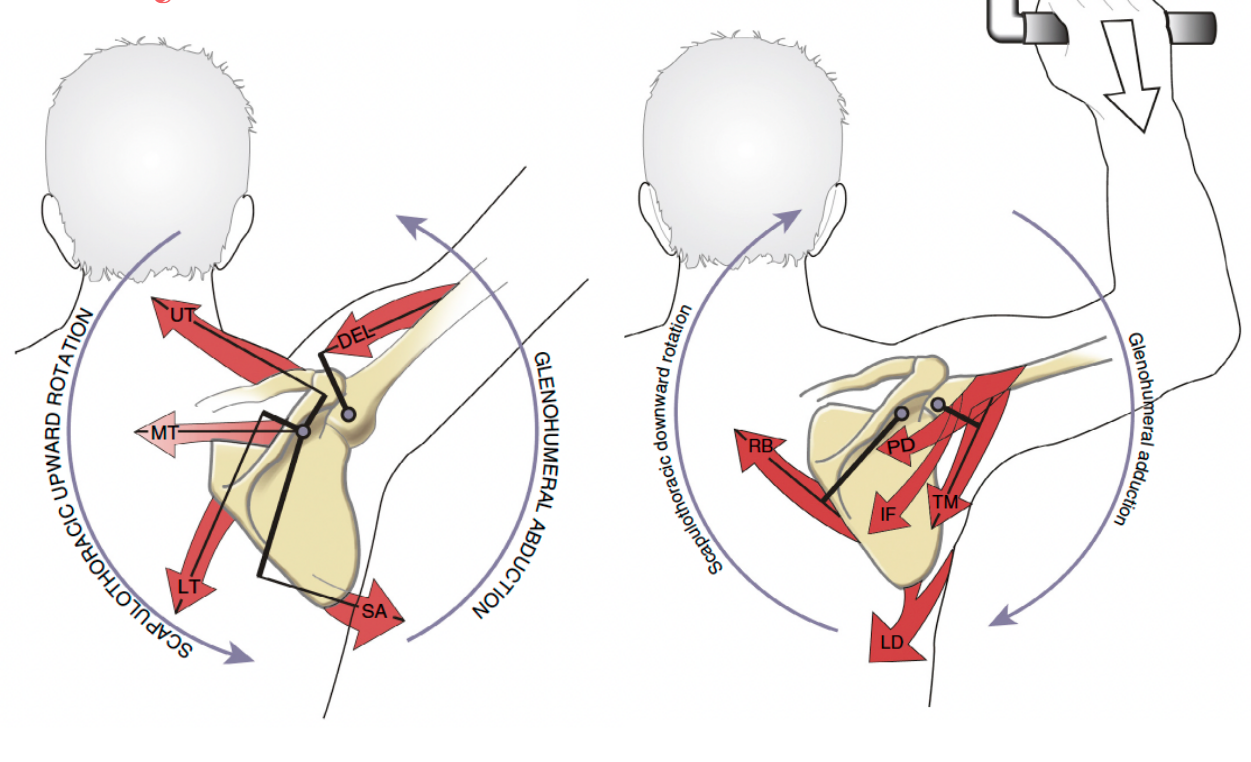
pectoral girdle + glenohumeral
 Call Kai
 Learn
Learn Practice Test
 Spaced Repetition
 Match
Match Flashcards
 Knowt Play
1/55

Earn XP
Description and Tags
lecture flashcards
Name | Mastery | Learn | Test | Matching | Spaced | Call with Kai |
|---|
No analytics yet
Send a link to your students to track their progress
56 Terms
which bones/articulations make up the shoulder?
sternum - clavicle
clavicle - scapula
scapula - humerus
scapula - thorax (not a bony articulation)
what is referred to as the pectoral girdle?
thorax (sternum), clavicle, and scapula + muscles involved
what is the only bony connection between the entire upper extremity and the axial skeleton?
clavicle articulation with sternum
(really highlights how important the muscles stabilizing the scapula on thorax are since these support all of the upper extremities)
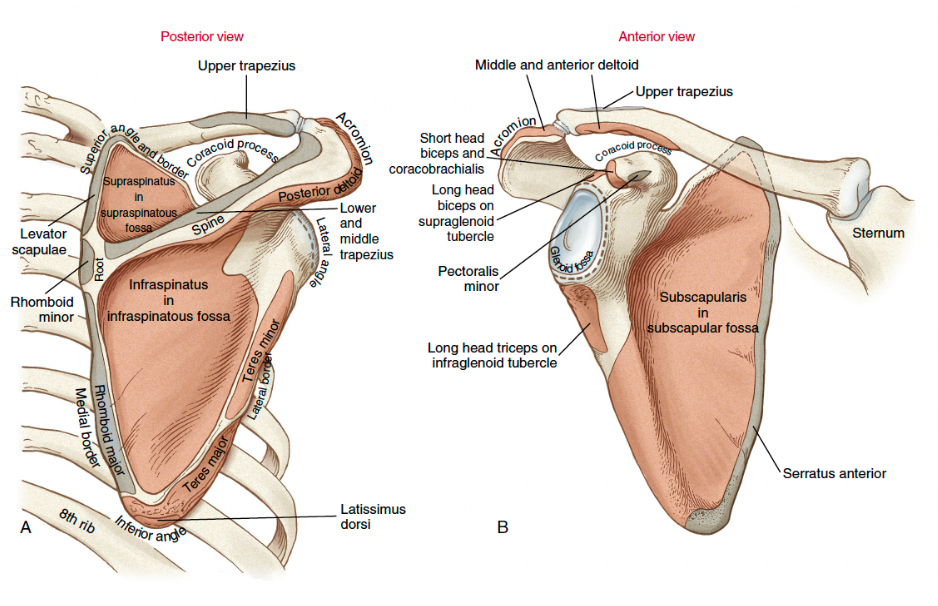
what is the scapulothoracic (ST) joint? is it a true joint? why?
scapula moving along the thorax (ribcage)
not a true joint because it is describing the scapula position relative to thorax
not a bony articulation
which bony articulations make up the pectoral girdle?
sternoclavicular (SC) and acromioclavicular (AC)
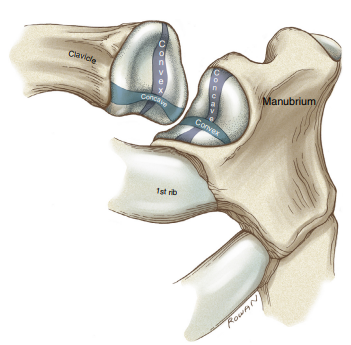
what is the sternoclavicular (SC) joint and what type of joint is it?
articulation between manubrium of sternum and sternal end of clavicle
saddle synovial joint
what is the acromioclavicular (AC) joint and what type of joint is it?
articulation between acromial end of clavicle and acromion process of scapula
planar synovial joint
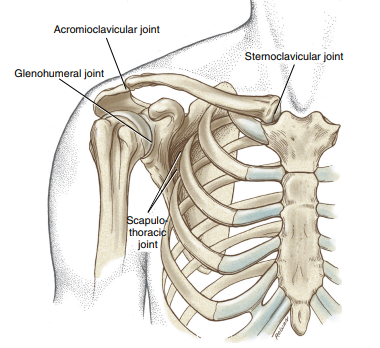
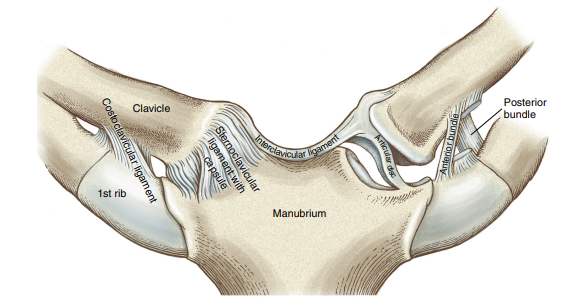
what are the ligaments that stabilize the sternoclavicular (SC) joint?
anterior SC ligament (anterior support)
posterior SC ligament (posterior support)
costoclavicular ligament (superior support)
interclavicular ligament (superior support)
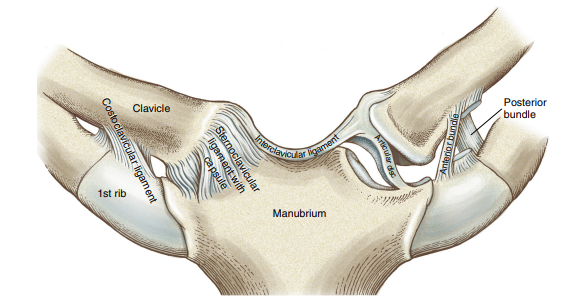
what is the articular disc?
it is fibrocartilage that supports the SC joint
kind of like the meniscus of the knee
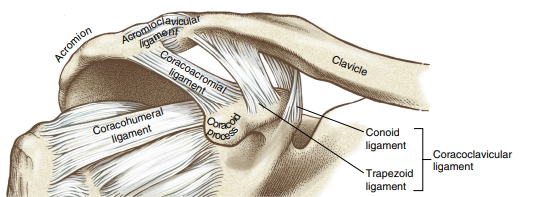
which ligaments support the acromioclavicular (AC) joint?
coracoclavicular ligaments - conoid ligament and trapezoid ligament
superior AC ligament
inferior AC ligament
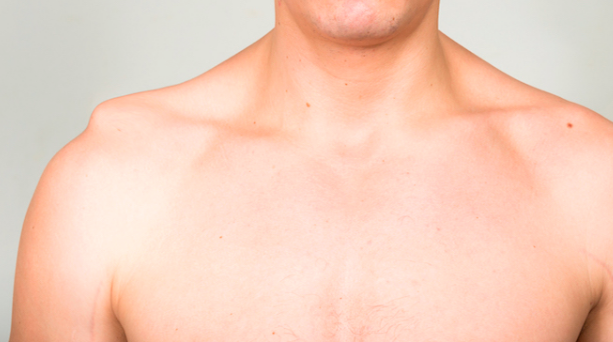
what does it look like when there is an injury of the AC ligaments?
looks like a “piano key sign”
what motions does the sternoclavicular (SC) joint have? what plane?
frontal plane: elevation, depression
transverse plane: protraction, retraction
sagittal plane: anterior and posterior rotation
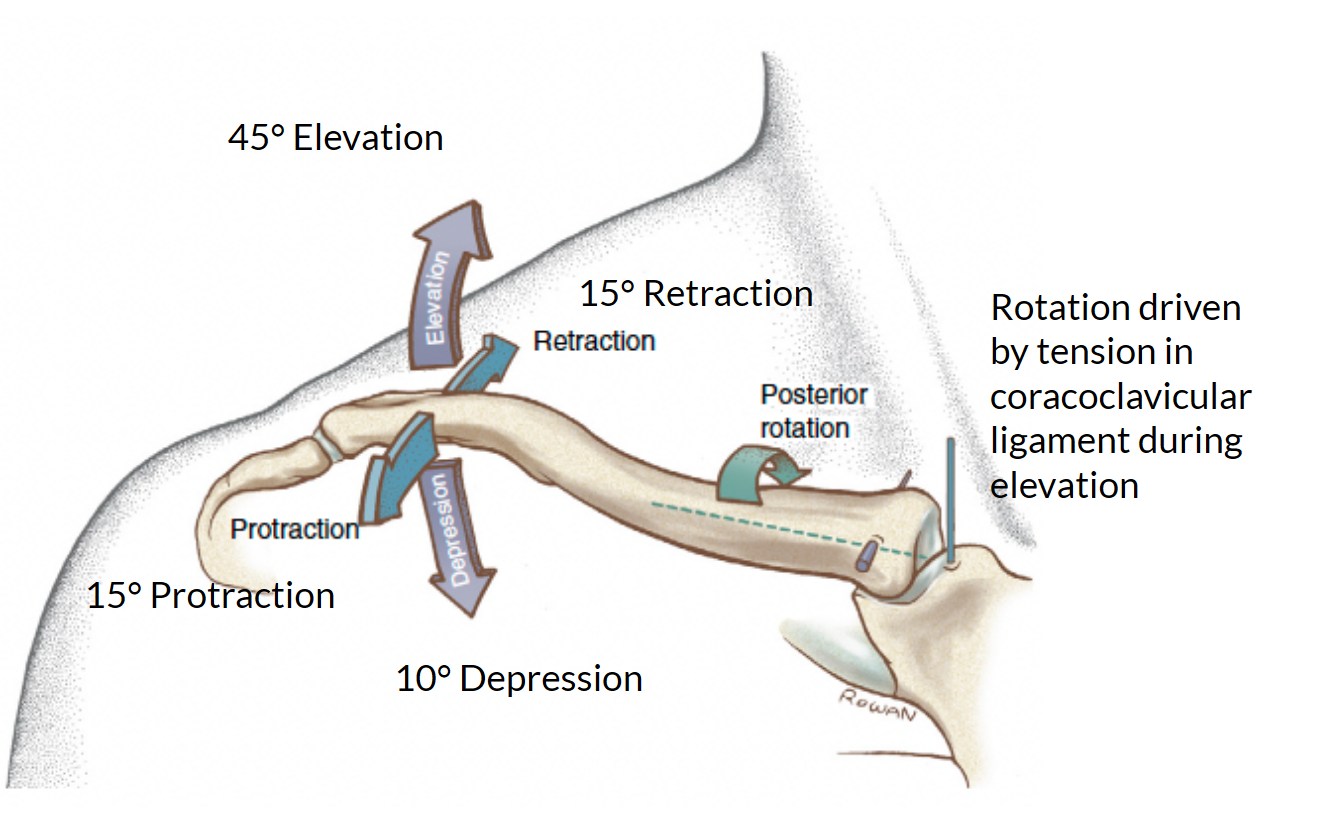
how many degrees is SC joint elevation and depression?
elevation - 45°
depression - 10°
how many degrees is SC joint protraction and retraction?
protraction - 15°
retraction - 15°
what motions does the acromioclavicular (AC) joint have? what plane?
frontal plane: upward/downward rotation
transverse plane: internal/external rotation
sagittal plane: anterior/posterior tilt
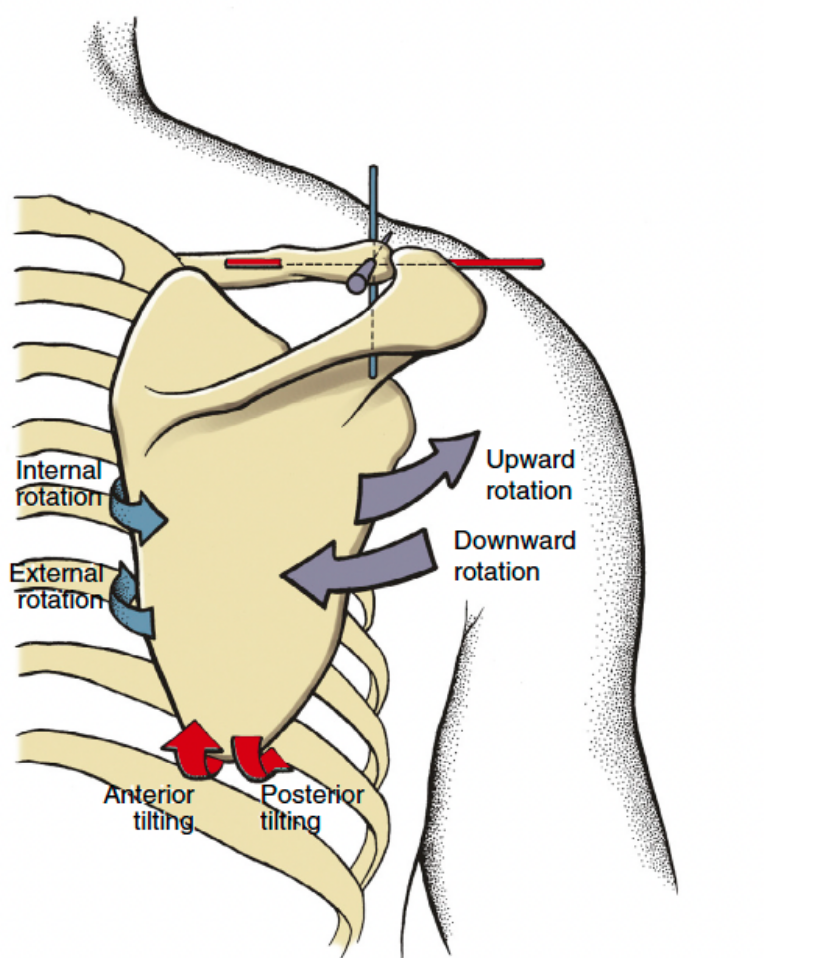
how many degrees of total gliding and rotational motion does the AC joint have?
20-30°
which joint has coordinated motion with acromioclavicular joint? what is the ratio of coordinated motion?
sternoclavicular joint
1:1
what motions does the scapulothoracic “joint” have? which plane?
frontal plane: upward/downward rotation
frontal plane: translation (elevation and depression)
transverse plane: protraction and retraction (abduction = protraction; adduction = retraction)
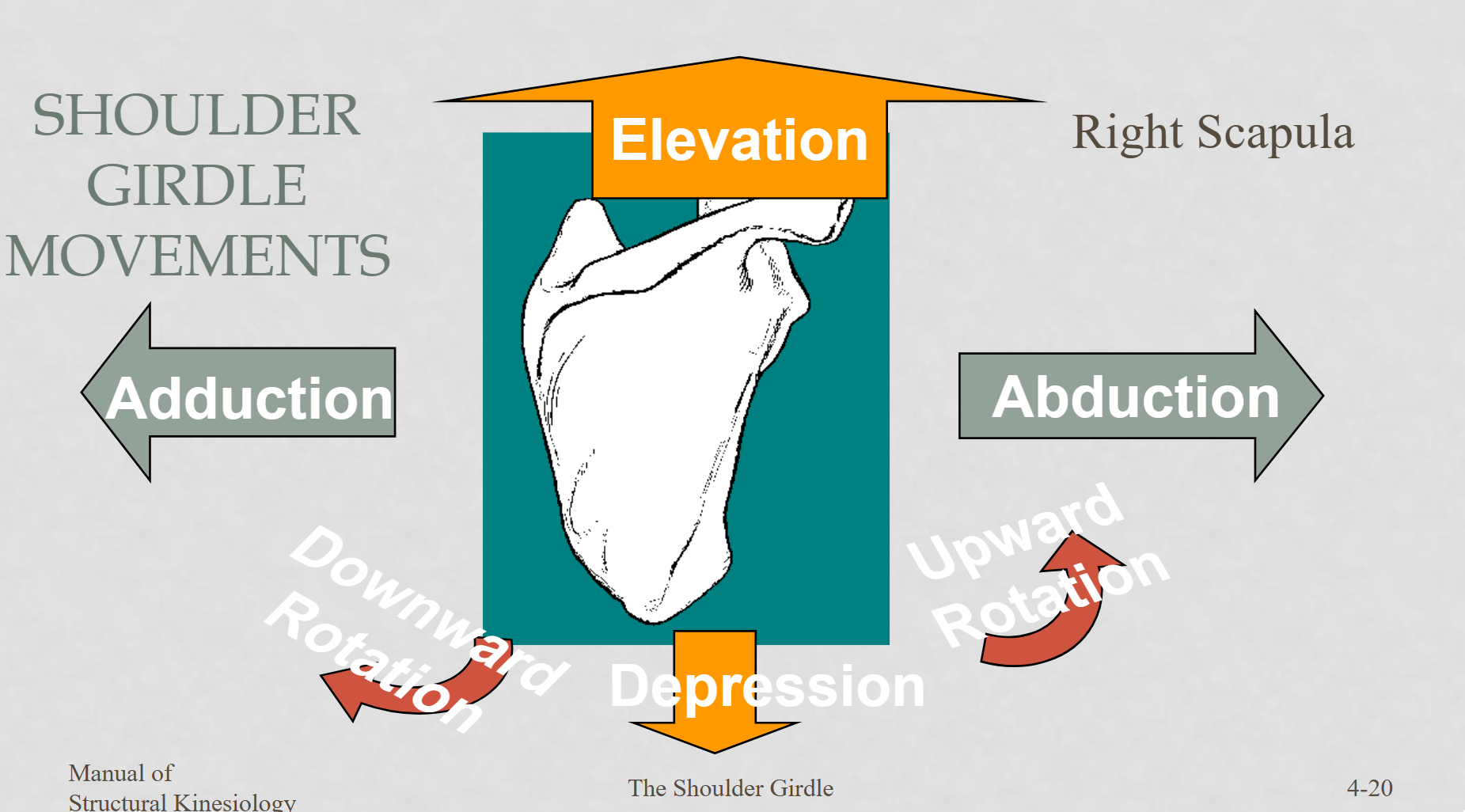
what is the point of reference for rotation of the scapulothoracic (ST) “joint”?
glenoid fossa
if it points up, the scapula upwardly rotated. if it points down, the scapula downwardly rotated.
what moves and what is fixed during pectoral girdle open chain movements?
axial skeleton is fixed, clavicle and scapula moves
ex) raising your hand or lateral barbell raises
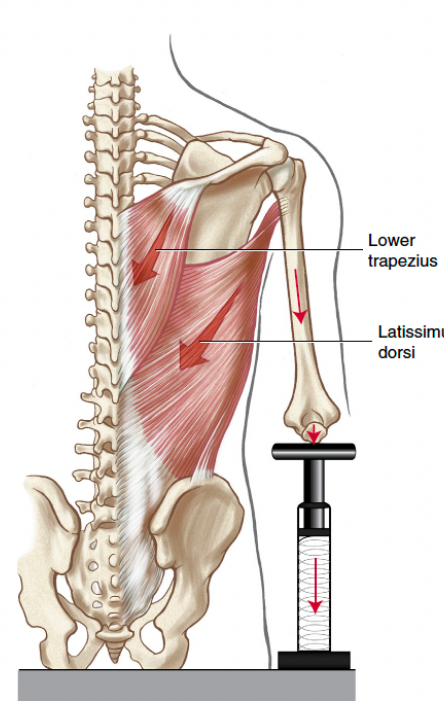
what moves and what is fixed during pectoral girdle closed chain movements?
arm is fixed in place (usually hand), axial skeleton (trunk) moves
ex) push ups or pull ups
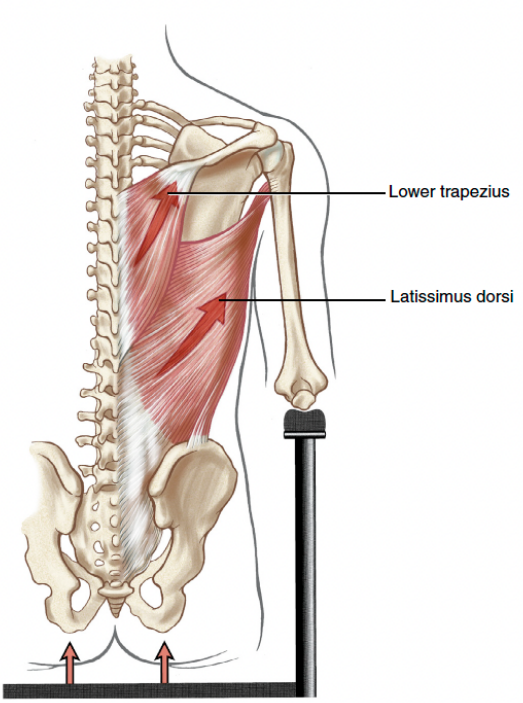
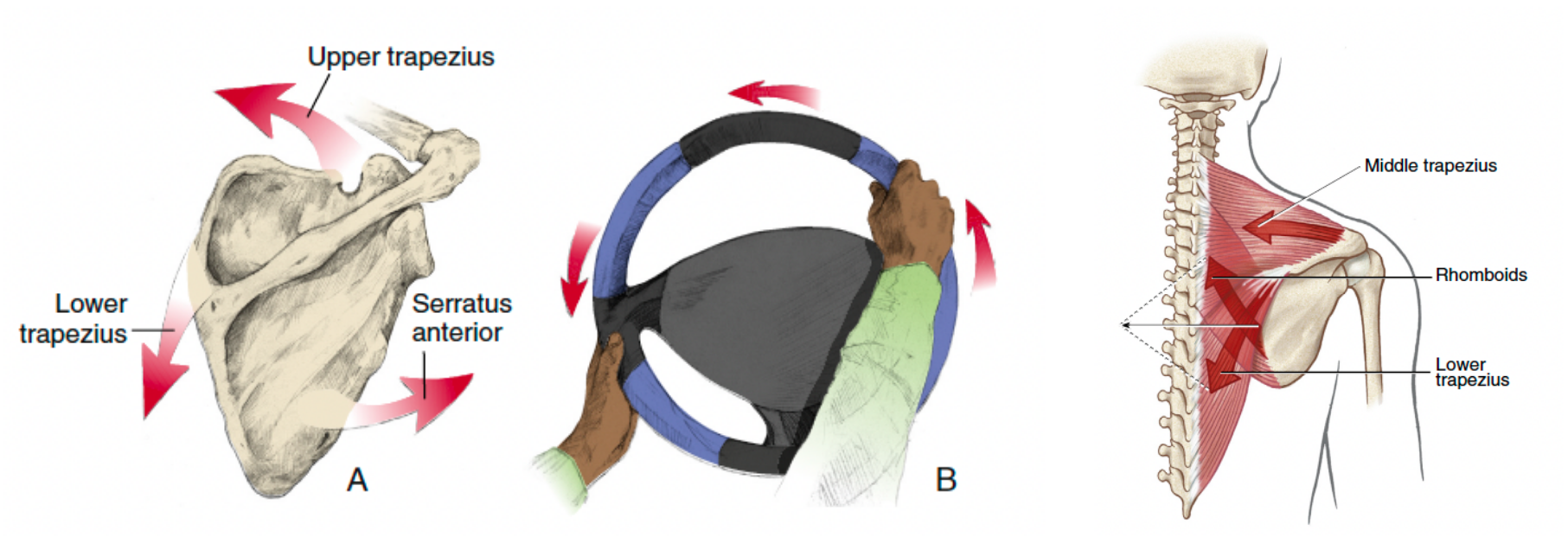
why are force couples in the pectoral girdle?
the scapula has so much rotation and translation mobility, so multiple muscles are often needed to produce a PURE scapular rotation
how many pairs of spinal nerves does the peripheral nervous system (PNS) contain?
31 pairs
what is a plexus? what are they? (give the name)
bundle of nerves
cervical plexus (head and neck)
brachial plexus (upper extremity)
thoracic nerves (no plexus, direct to axial muscles)
lumbosacral plexus (lower extremity)
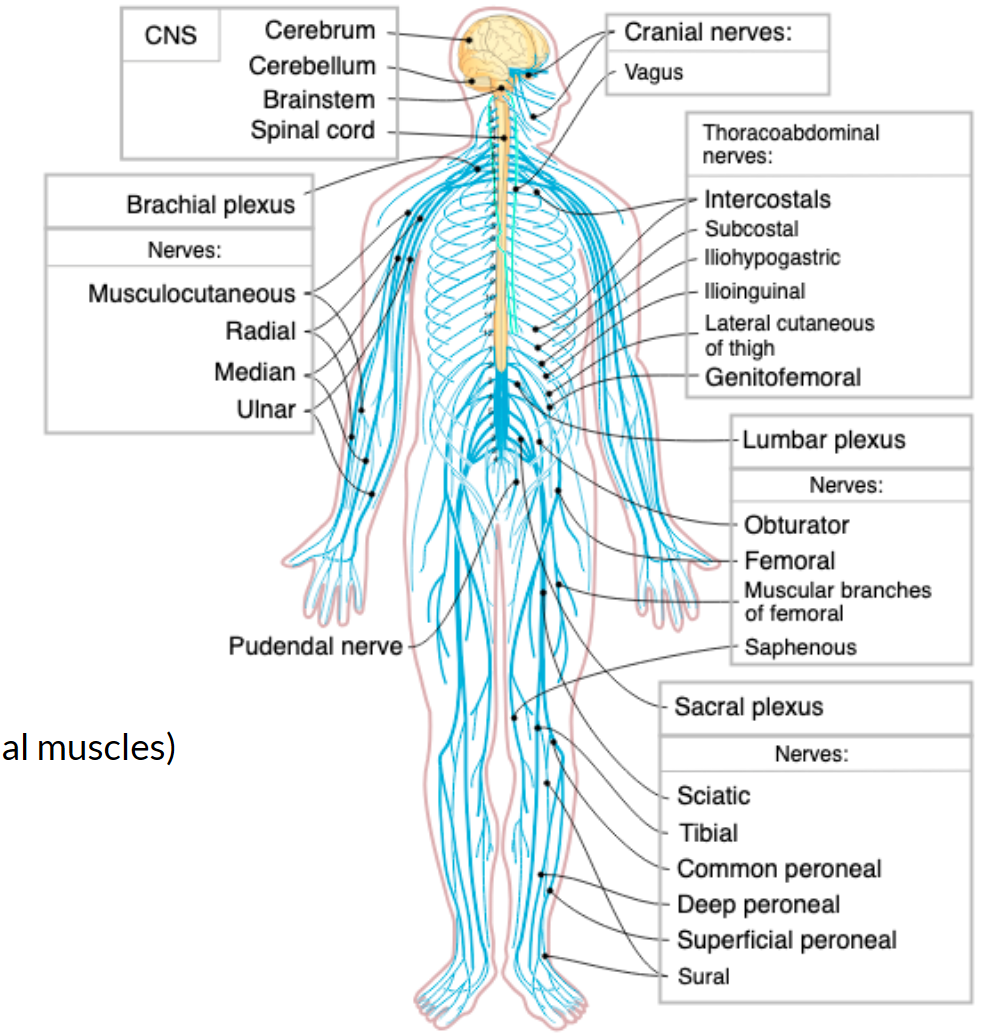
why are plexus important?
creates redundancy to reduce injury complications
what makes up the brachial plexus?
ventral rami of spinal nerves C5-T1
what does the brachial plexus innervate?
innervates muscles of the pectoral girdle and upper limb (except trapezius which is innervated by a cranial nerve)
what are the different levels of organization for nerves?
roots → trunks → subdivisions → cords → nerves
which nerves do we need to know?
musculocutaneous nerve, axillary nerve, radial nerve, median nerve, ulnar nerve
*ulnar? i hardly know ‘er BAHAHA (sorry i randomly thought of that)
what is scapular winging?
describes when the scapula is not held down against the thorax
visible when the medial border lifts up off the trunk
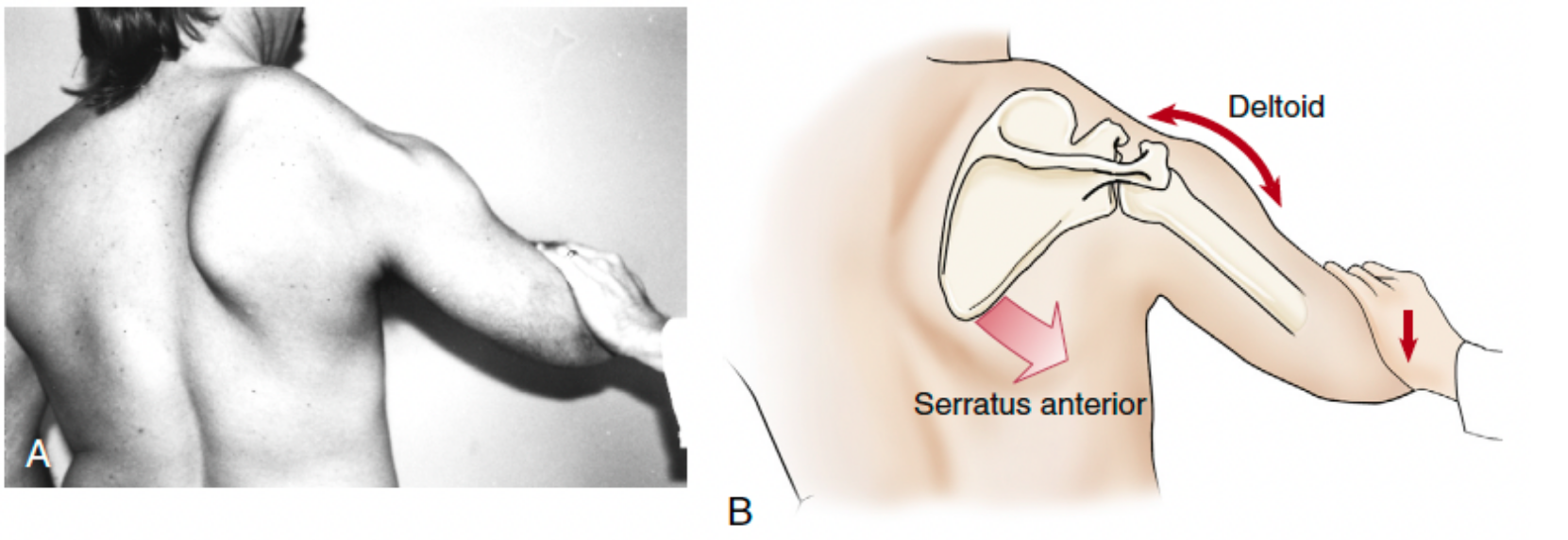
what causes scapular winging?
usually associated with failure to activate serratus anterior muscle
could be associated with damage to long thoracic nerve which innervates the serratus anterior muscle
what bones articulate for glenohumeral joint?
scapula (glenoid fossa) and humerus
does the glenohumeral joint have a wide range of motion? what is the tradeoff?
has a very wide range of motion but the tradeoff is stability
what are some problems that the glenohumeral joint has because of the instability?
rotator cuff impingement, subluxations and dislocations
what type of joint is the glenohumeral joint?
ball and socket synovial joint
(most mobile joint in the body)
how does the humeral head fit into the glenoid fossa? (does it get covered by the glenoid fossa well?)
the glenoid fossa is smaller and shallower than the humeral head
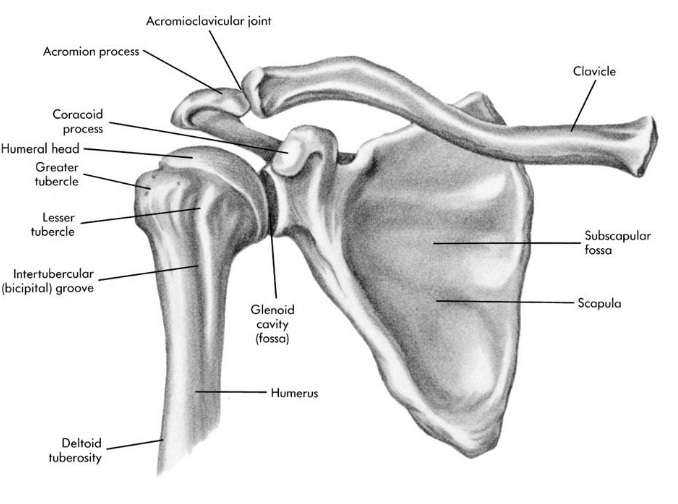
what is the glenoid labrum?
fibrocartilage disc that slightly enhances fit and stability of the glenohumeral joint
what are the ligaments associated with the glenohumeral joint?
glenohumeral ligaments - superior, middle, and inferior
coracoacromial ligaments (doesn’t cross a joint and provides a “roof” for the subacromial space)
ligaments are ____ until extreme ranges of motion
lax
(remember that stability is sacrificed to gain mobility)
what does the glenohumeral joint rely on for stability?
muscles for active, dynamic stability
ex: rotator cuff
what kinds of movements can the glenohumeral joint do? which plane?
sagittal plane: (forward) flexion and (backward) extension
frontal plane: adduction and abduction
transverse plane: horizontal adduction and horizontal abduction
transverse plane: outward rotation (external) and inward rotation (internal)
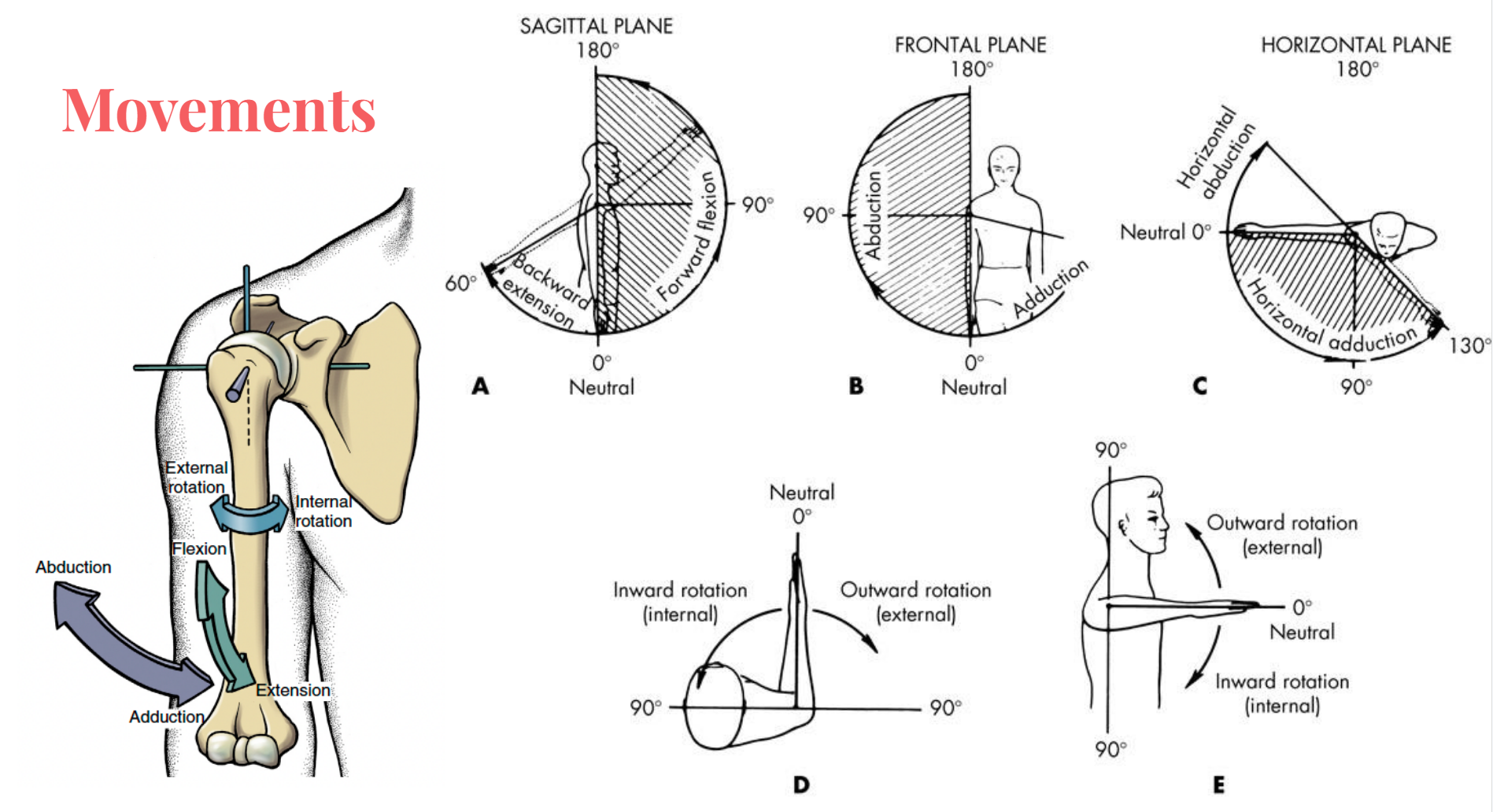
how many degrees is glenohumeral flexion and extension?
flexion - 120°
extension - 45°
how many degrees is glenohumeral abduction and adduction?
abduction - 120°
adduction - 75°
how many degrees is glenohumeral internal rotation and external rotation?
internal rotation - 70-90°
external rotation - 70-90°
how many degrees is glenohumeral horizontal adduction and horizontal abduction?
horizontal adduction - 135°
horizontal abduction - 45°
how does the shoulder achieve full range of motion?
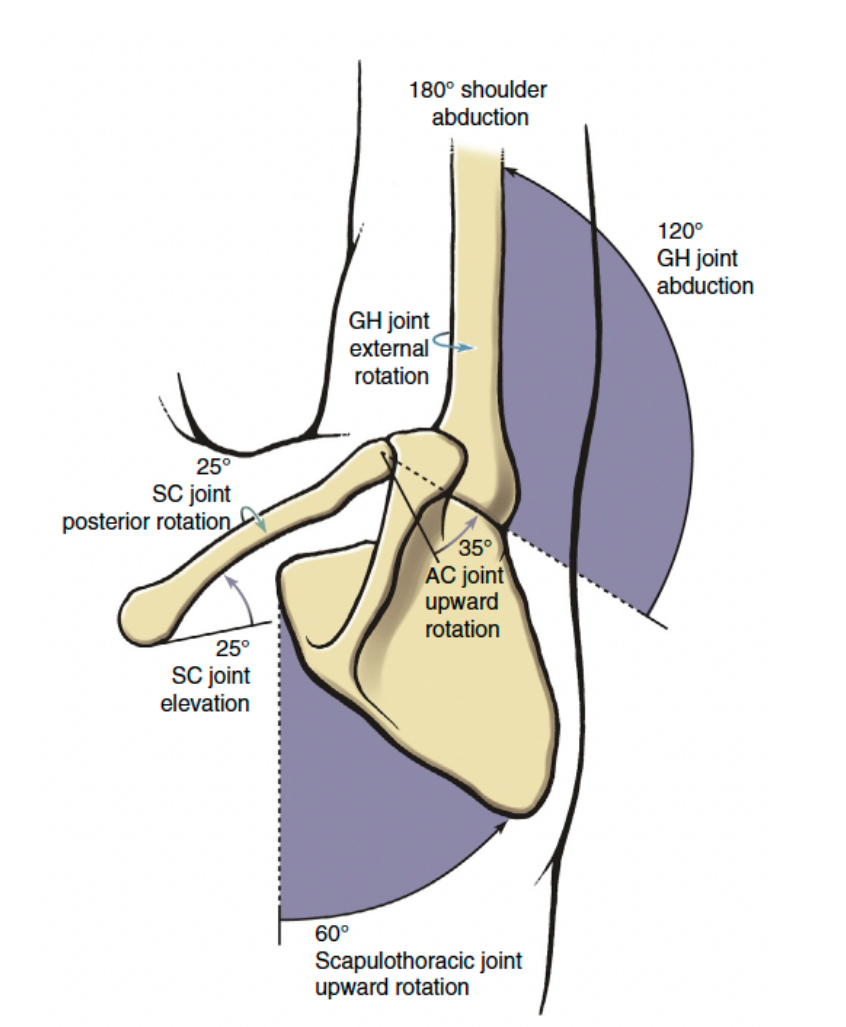
all the shoulder joints have to move to contribute to the large range of motion
ex: full shoulder abduction (180°) is achieved through at least two sternoclavicular motions, one acromioclavicular motion, and two glenohumeral motions
what are the arthrokinematics of the glenohumeral joint?
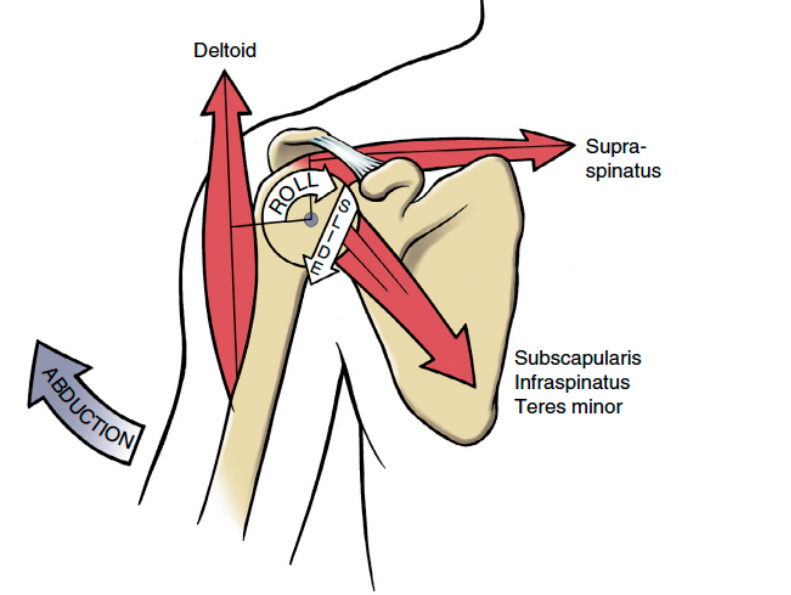
rolling and sliding
ex) during abduction: humeral head rolls up and slides down
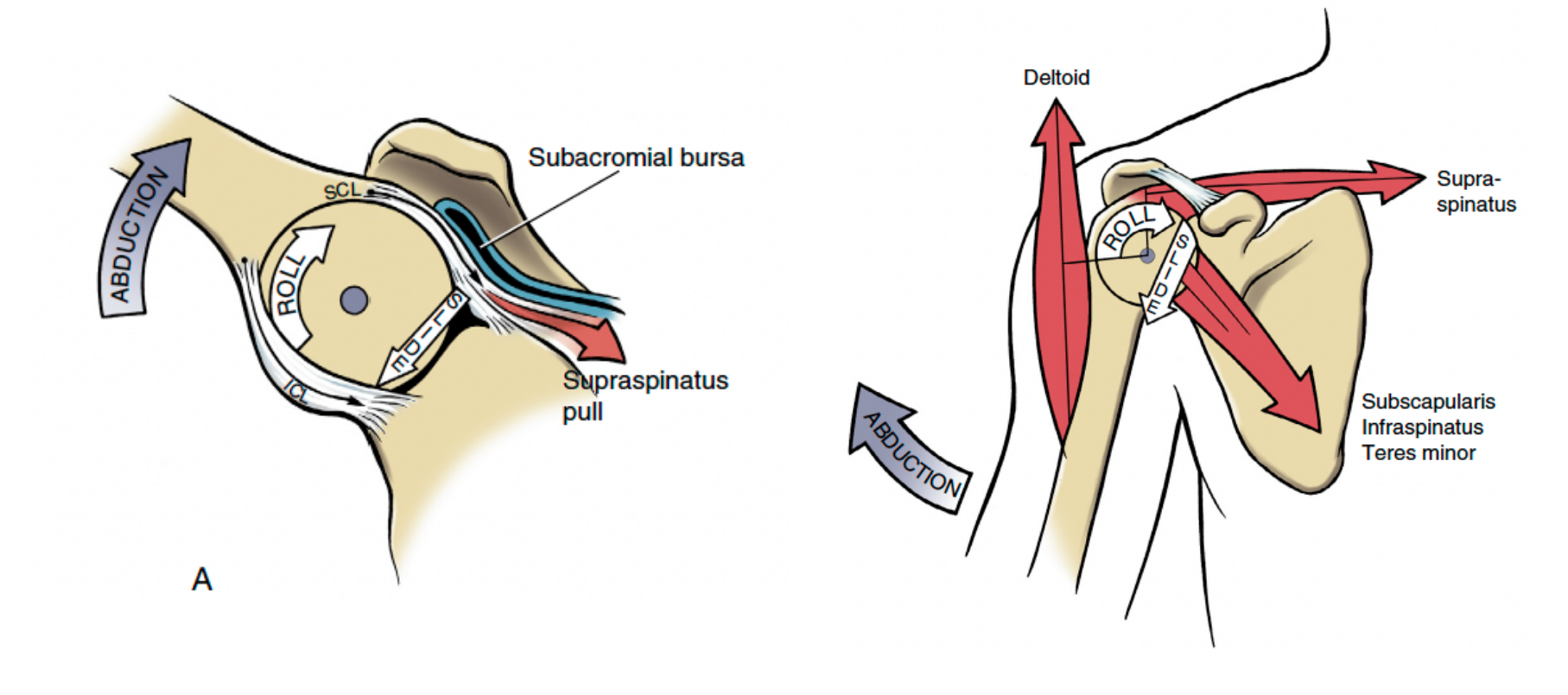
what does glenohumeral stability rely on? (what type of muscle)
active, dynamic stabilizers
ex: rotator cuff muscles
how do the rotator cuffs stabilize the glenohumeral joint? why is it important?
provide compression forces holding the humeral head against the glenoid fossa and they can do this because of their attachment points
vital in maintaining humeral head in corect approximation within glenoid fossa while more larger, more powerful muscles move humerus through its wide range of motion
is the rotator cuff frequently injured? how is it injured? which muscles are usually injured?
frequently injured (60-70% of people above age 75 have a rotator cuff tear)
injured through overuse in overhead reaching motions
supraspinatus most common injured, infraspinatus second most common
what happens in a rotator cuff tear?
humeral head can translate upward and close subacromial space when doing overhead reaching with poor mechanics
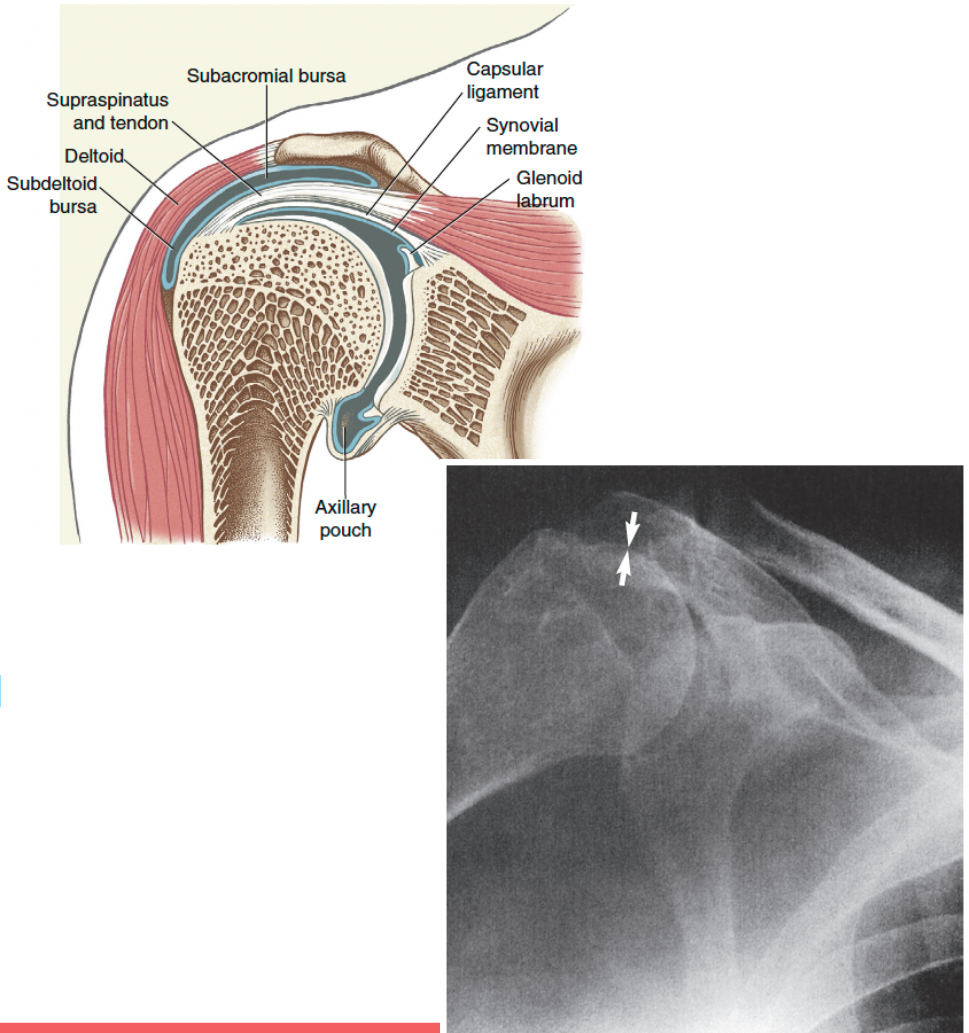
what happens when there are poor mechanics (referring to rotator cuff tears)?
no muscle is creating inferior slide → causes closure of subacromial space
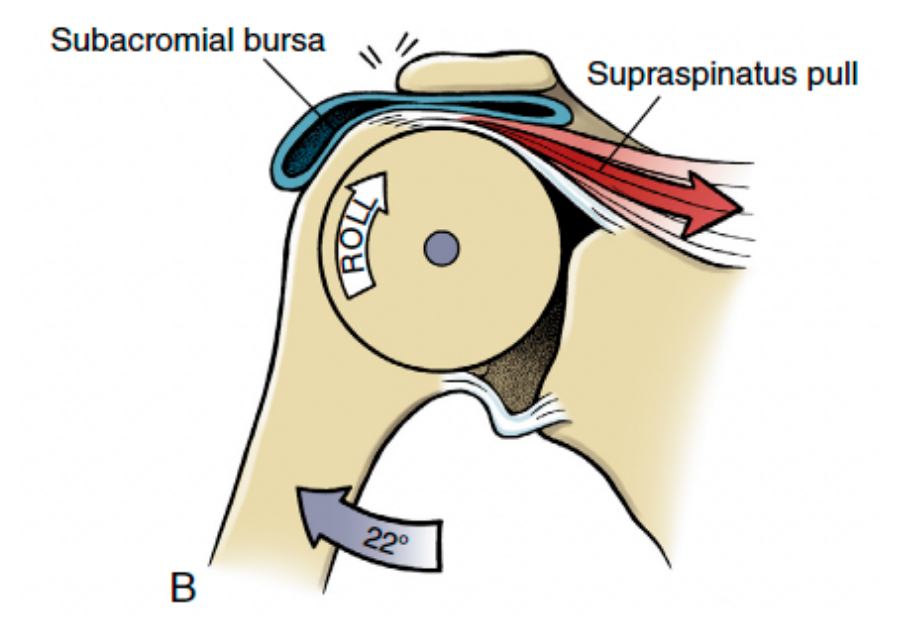
what happens when there are better mechanics (referring to rotator cuff tears)?
subscapularis co-activates to hold humeral head down → proper arthrokinematics
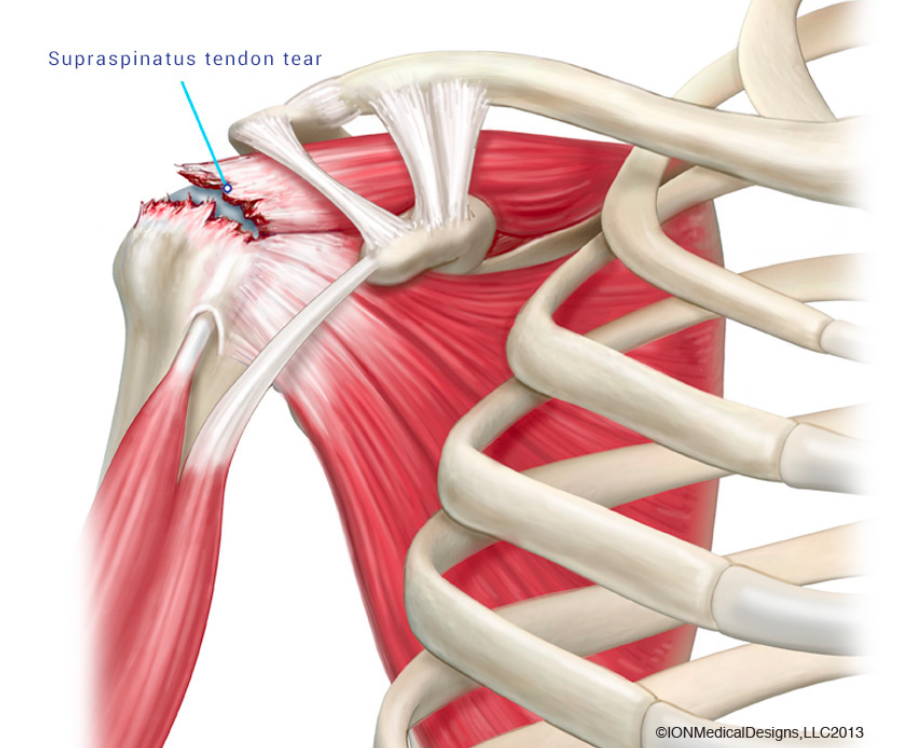
what kind of tear is this?
full thickness rotator cuff tear
what is the scapulohumeral rhythm?
pectoral girdle and glenohumeral joint move in a coordinated fashion to achieve a large range of motion at the shoulder
multiple joints working together to create a wider range of motion
does the scapulohumeral rhythm refer to muscles too?
yes, it also requires coordinated muscle action
usually to stabilize scapula while glenohumeral muscles work to move arm
*yes force couples are back :(