Unit 7.2A Volcano Unit Test
 Call Kai
 Learn
Learn Practice Test
 Spaced Repetition
 Match
Match Flashcards
1/24

There's no tags or description
Looks like no tags are added yet.
Name | Mastery | Learn | Test | Matching | Spaced | Call with Kai |
|---|

25 Terms
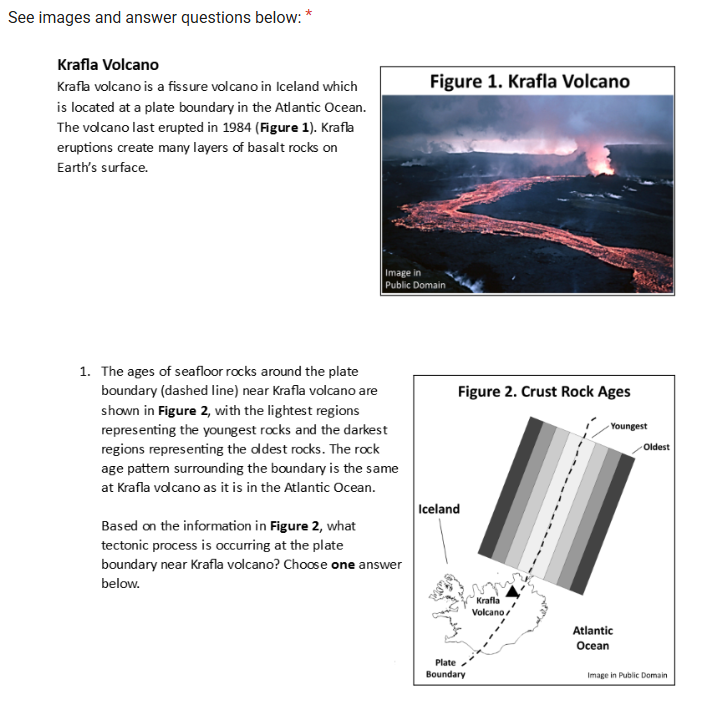
See images and answer questions below: How are the plates moving?
The plates are moving apart.
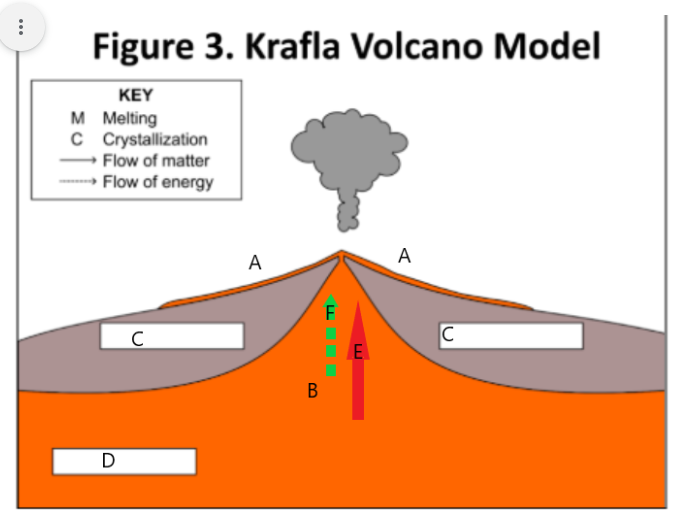
Figure 1 is a partial cross-section model of volcanic activity at a spreading ridge. Which letter represents the Mantle?
D
Figure 1 is a partial cross-section model of volcanic activity at a spreading ridge. Which letter represents the Crust?
C
Figure 1 is a partial cross-section model of volcanic activity at a spreading ridge. Which letter represents the flow of ENERGY?
F
Figure 1 is a partial cross-section model of volcanic activity at a spreading ridge. Which letter represents the flow of MATTER?
E
Figure 1 is a partial cross-section model of volcanic activity at a spreading ridge. Where does MELTING occur?
B
Figure 1 is a partial cross-section model of volcanic activity at a spreading ridge. Where does CRYSTALLIZATION occur?
A
______________________ rises towards Earth's surface.
molten material
______________________ occurs ON Earth's surface.
crystallization
Melted crust from Earth's mantle is called ________________.
magma
When melted crust moves upward, it carries _________ and matter to the surface
energy
Under a microscope we could see that volcanic rocks are made of: ________________
crystals
A layer of lava hardens into:
rock
When lava cools:
it crystallizes into solid rock
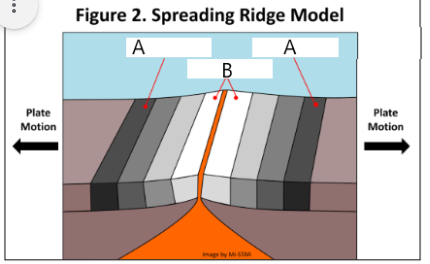
Which label is the NEWEST rock?
B
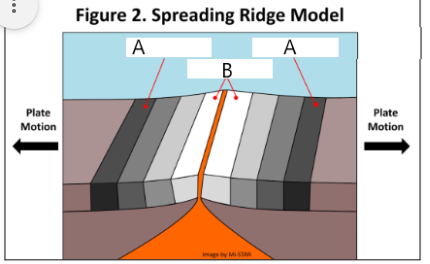
Which label is the OLDEST rock?
A
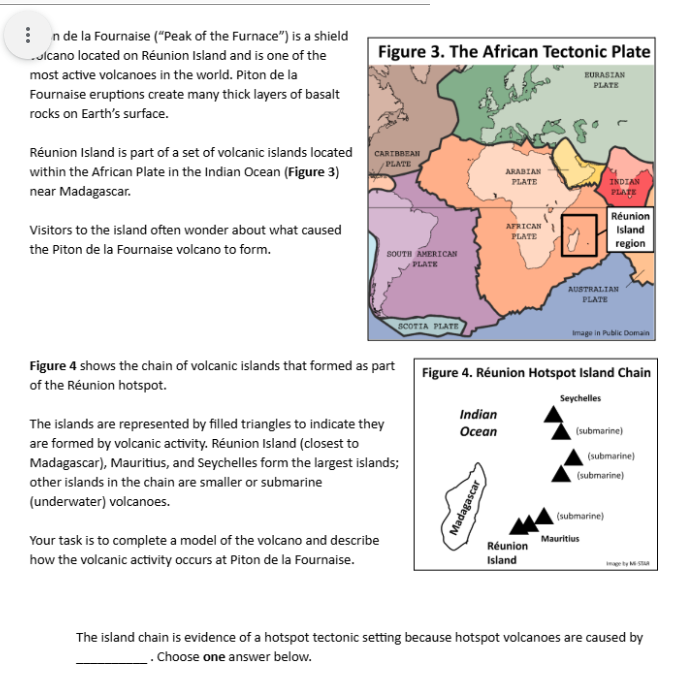
Use the images to answer the question.
the motion of a plate over a fixed hotspot in the mantle
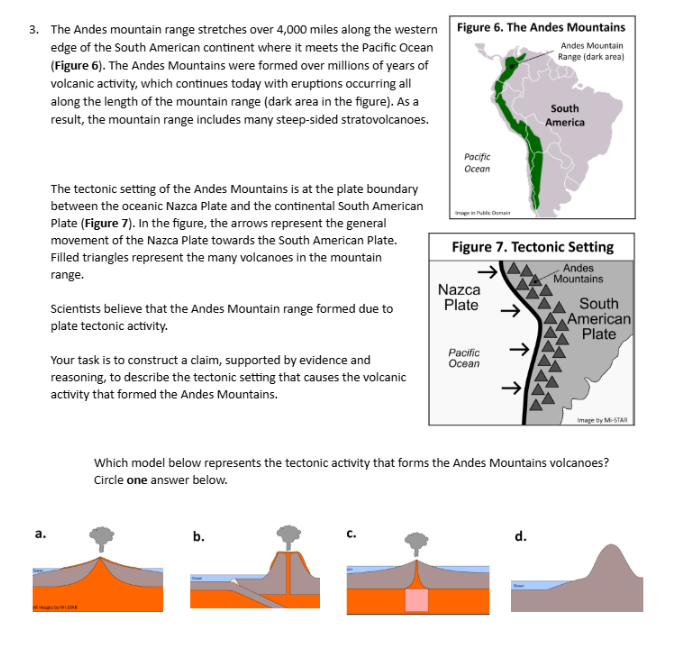
Use the images to answer the question.
B
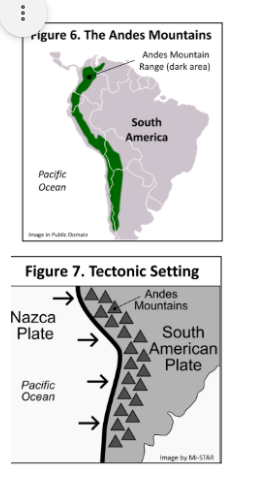
Complete the Claim below, to describe why volcanic activity occurs in the Andes Mountains. "The Andes stratovolcanoes are caused by __________ tectonic activity."
subduction
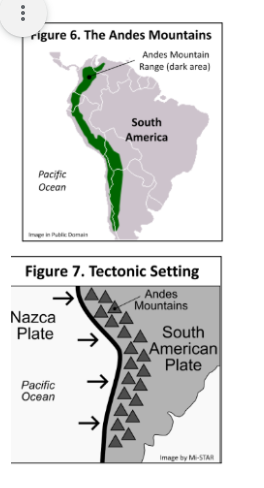
Identify the Scientific Principle that is related to the Claim about the volcanic activity that formed the Andes Mountains.
Oceanic crust sinks into the hot mantle and is melted into magma which rises up through continental crust and forms volcanoes.
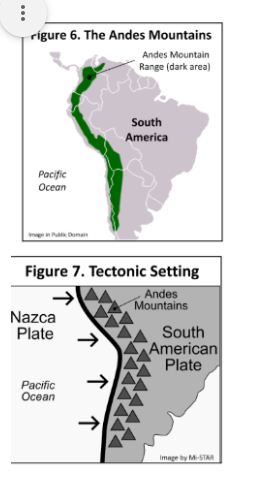
The tectonic plates at the boundary near the Andes Mountains are moving:
towards each other
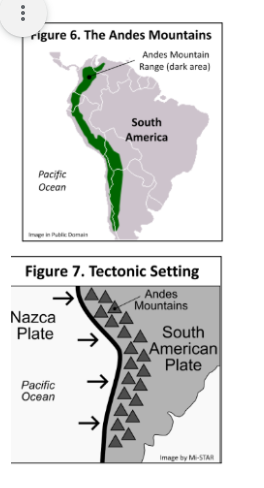
The volcanic activity that forms the Andes Mountains is caused by:
subduction
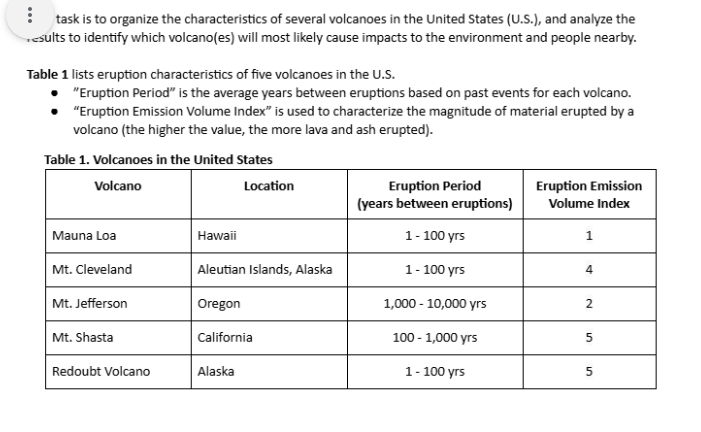
In Table 1, which volcano(es) will most likely erupt in the next 100 years? Choose all answers that apply. There are multiple.
Mauna Loa Mt. Cleveland Mt. Shasta Redoubt Volcano
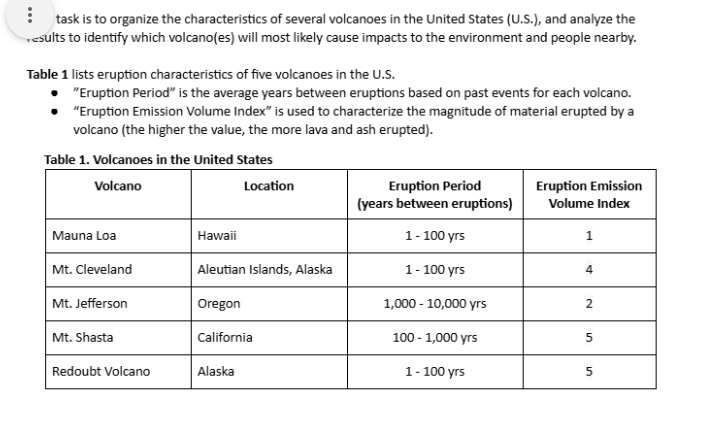
In Table 1, the greatest volume of material per eruption is emitted by which volcano(es)? Choose all answers that apply. There is more than one.
Mt. Shasta Redoubt Volcano
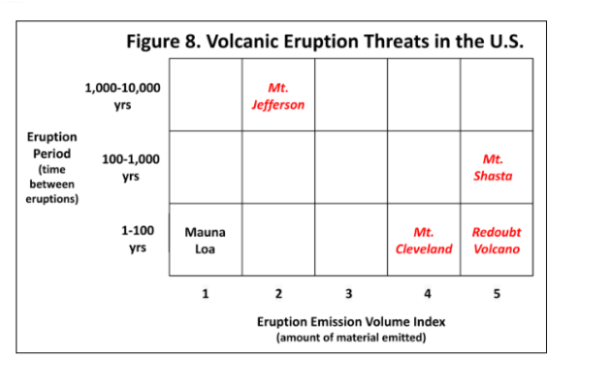
Using evidence from Figure 8, which volcano(es) poses the largest threat to the environment and people living nearby?
Redoubt Volcano

