BIOL1309 Evolutionary Diversity - (6.2) Gymnosperms
 Call Kai
 Learn
Learn Practice Test
 Spaced Repetition
 Match
Match Flashcards
 Knowt Play
1/159

Earn XP
Description and Tags
4 phyla of gymnosperms: Gnetophyta, Coniferophyta, Ginkgophyta, Cycadophyta
Name | Mastery | Learn | Test | Matching | Spaced | Call with Kai |
|---|
No analytics yet
Send a link to your students to track their progress
160 Terms
T or F: Gymnosperms have endosporic gametophytes because its ovules and seeds are exposed.
F. Gymnosperms have endosporic gametophytes because their gametophytes develop within the spore wall, not because their ovules and seeds are exposed (i.e. naked seeds).
All gymnosperms have naked seeds, meaning the seeds are not enclosed within a fruit or ovary.
(*all seed plants (i.e. gymnosperms and angiosperms) have endosporic gametophytes)
Fill in the blanks: (a), which is the megaspore mother cell, develops into megaspores by (b). (c: number) of the megaspores is / are functional, which develop(s) into a multicellular (d).
a: Megasporocyte
b: meiosis
c: One
d: megagametophyte
Choose whether these structures are present in gymnosperms and angiosperms respectively.
Archegonium (female-reproductive organ):
Antheridium (male-reproductive organ):
Archegonium (female-reproductive organ): present in gymnosperms (except genera Gnetum and Welwitschia), absent in angiosperms
Antheridium (male-reproductive organ): absent in both gymnosperms and angiosperms
What is the ploidy level of archegonium?
Haploid (n).
T or F: All seed plants go through the double fertilization process.
F. Gymnosperms do not go through the double fertilization process (except for genus Ephedra), while angiosperms do.
Central cell (a central cell (2n) with two nuclei that fertilizes to form triploid endosperm) is a unique hallmark of angiosperms. Gymnosperms do not undergo this "double fertilization" process.
T or F: In seed plants, embryo sac is a structure unique to angiosperms.
T.
Gymnosperm megaspore does not develop into an embryo sac (angiosperm megagametophyte), which is a 7-celled structure. Instead, gymnosperm megaspore develops into a multicellular megagametophyte, which consists of hundreds / thousands of cells).
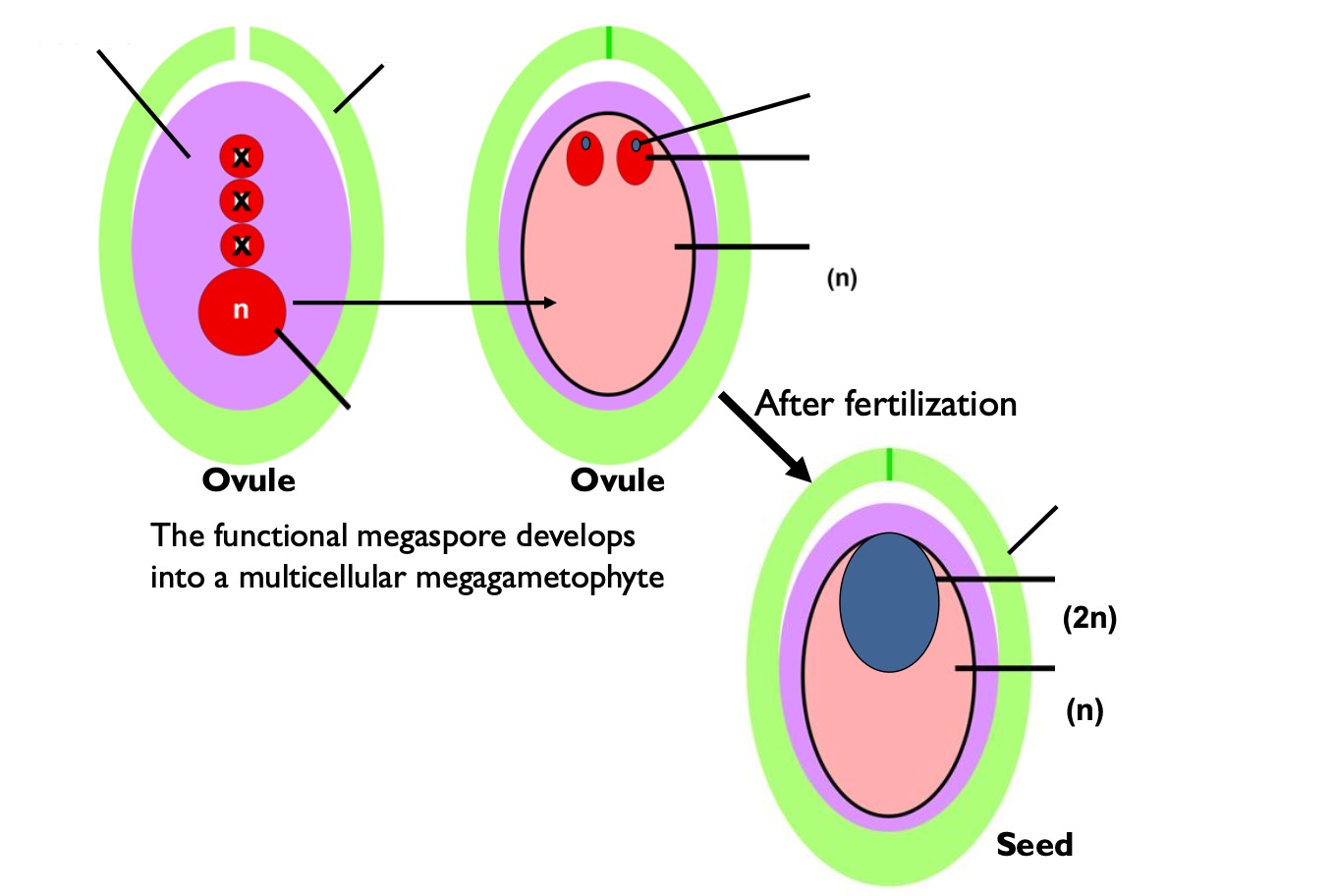
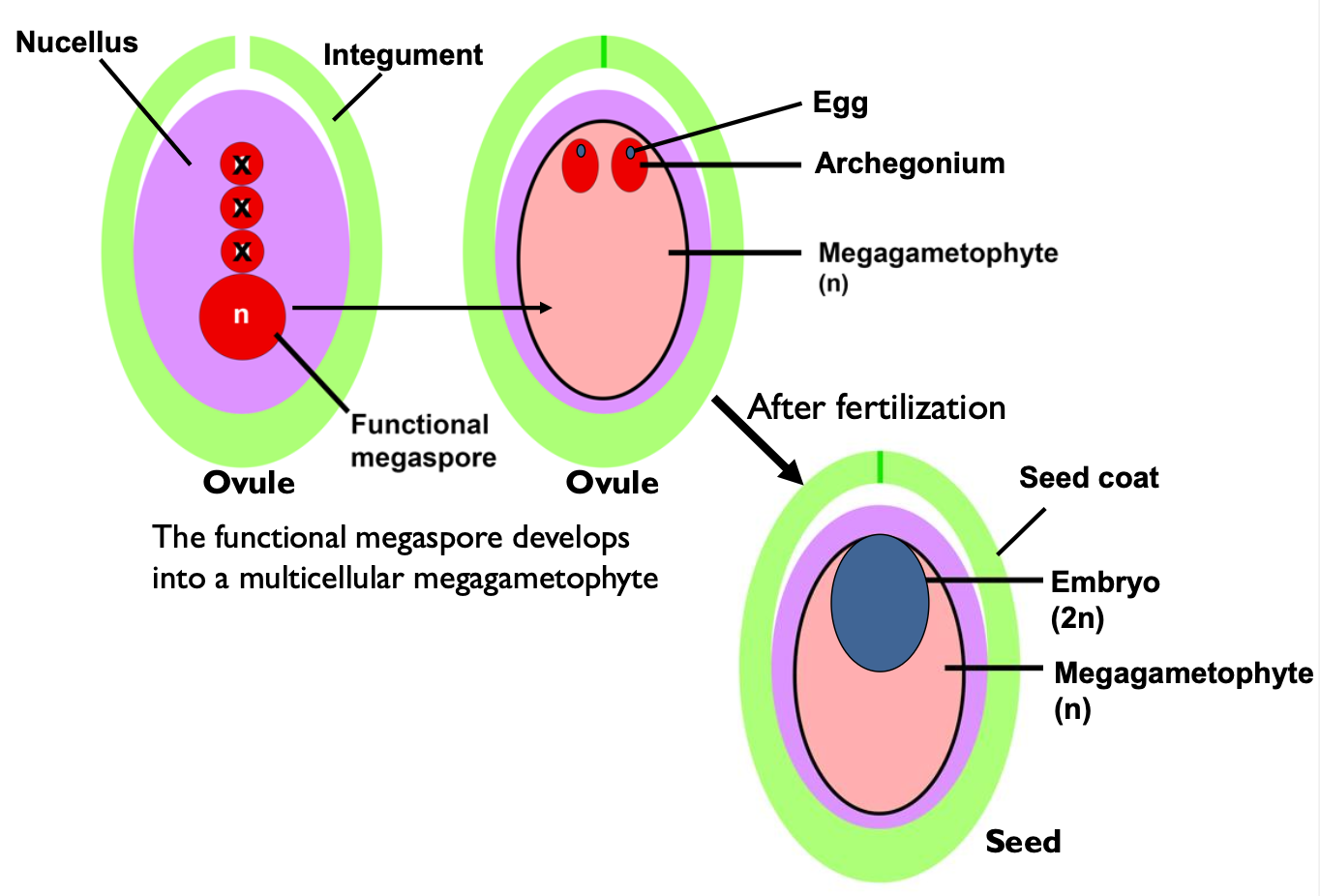
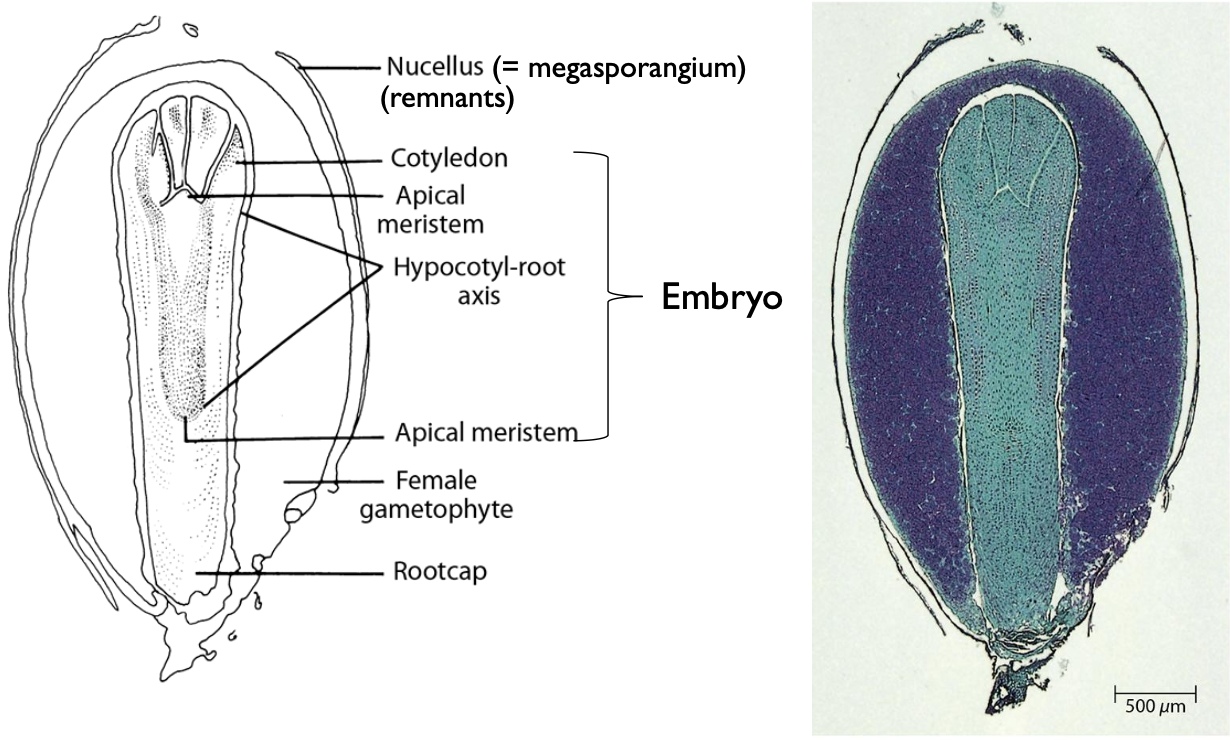
Label the structures of a gymnosperm seed.
Development of a gymnosperm seed.
State the phylum name of conifers.
Coniferophyta.
What is the genus name of pine?
Pinus.
Fill in the blank: Pine species are (a), as they remain green and functional throughout the year.
a: evergreen trees
Fill in the blank: Pine stem undergoes (a) growth, so it widens and thickens.
a: secondary
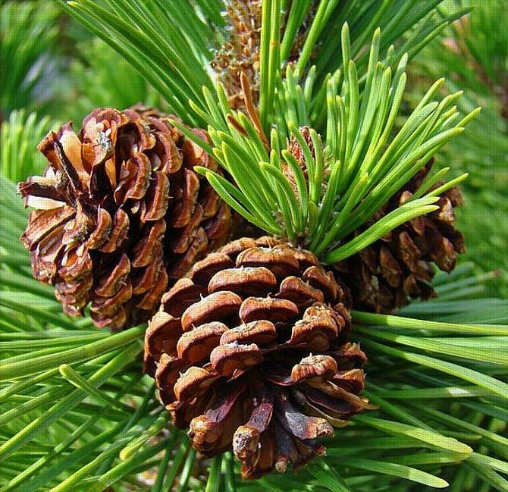
Describe the appearance and arrangement of pine leaves.
Needle-like. In bundles.
What is the sexuality of pine? Why?
Pine is bisexual. Pine has male and female cones in the same tree.
What types of shoots does a pine have?
Long shoot. Dwarf shoot.
What types of leaves does pine have?
Needle leaves. Scale leaves.
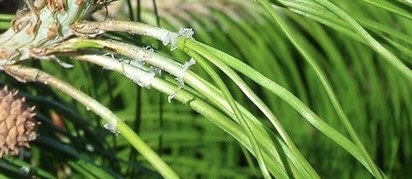
Identify the scale leaf in pine.
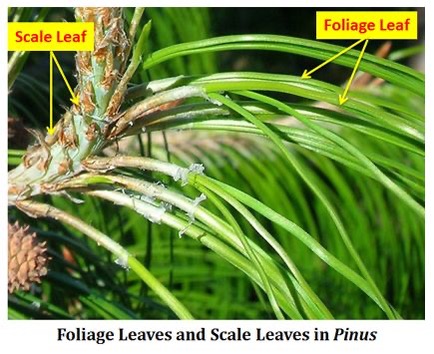
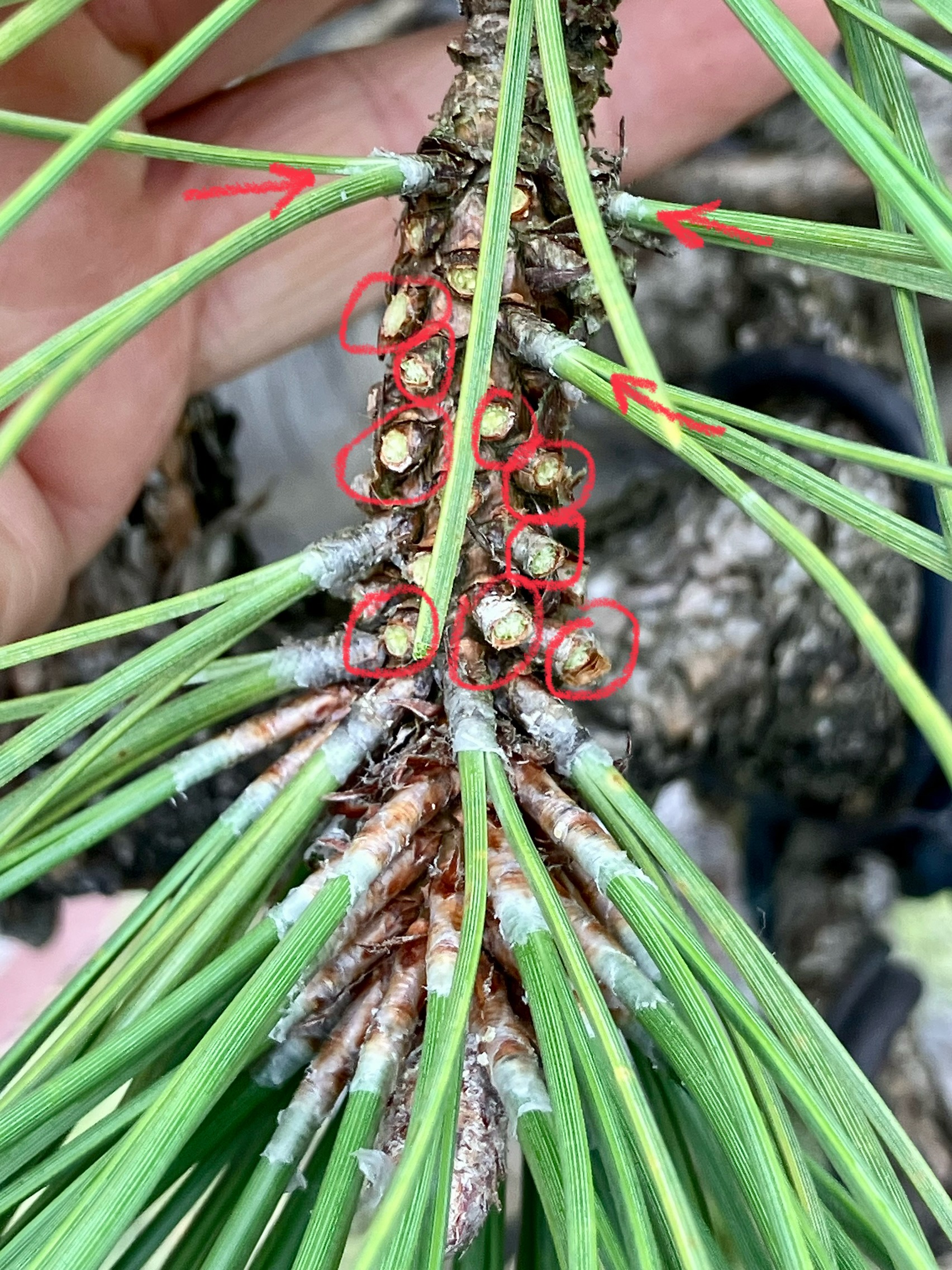
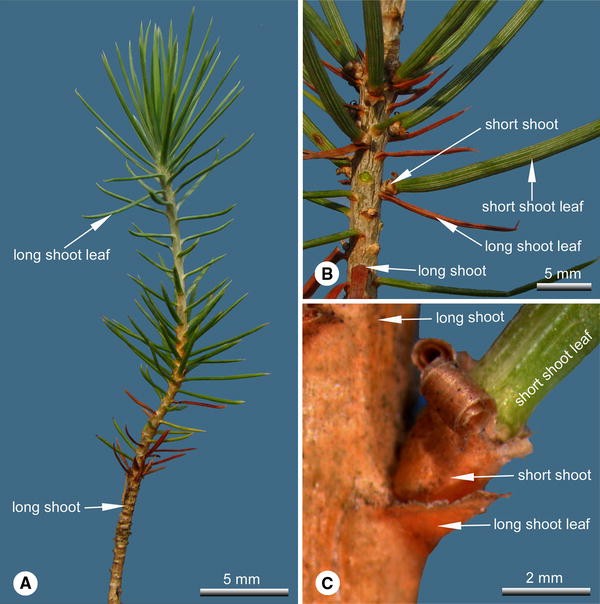
Identify the dwarf shoot in pine.
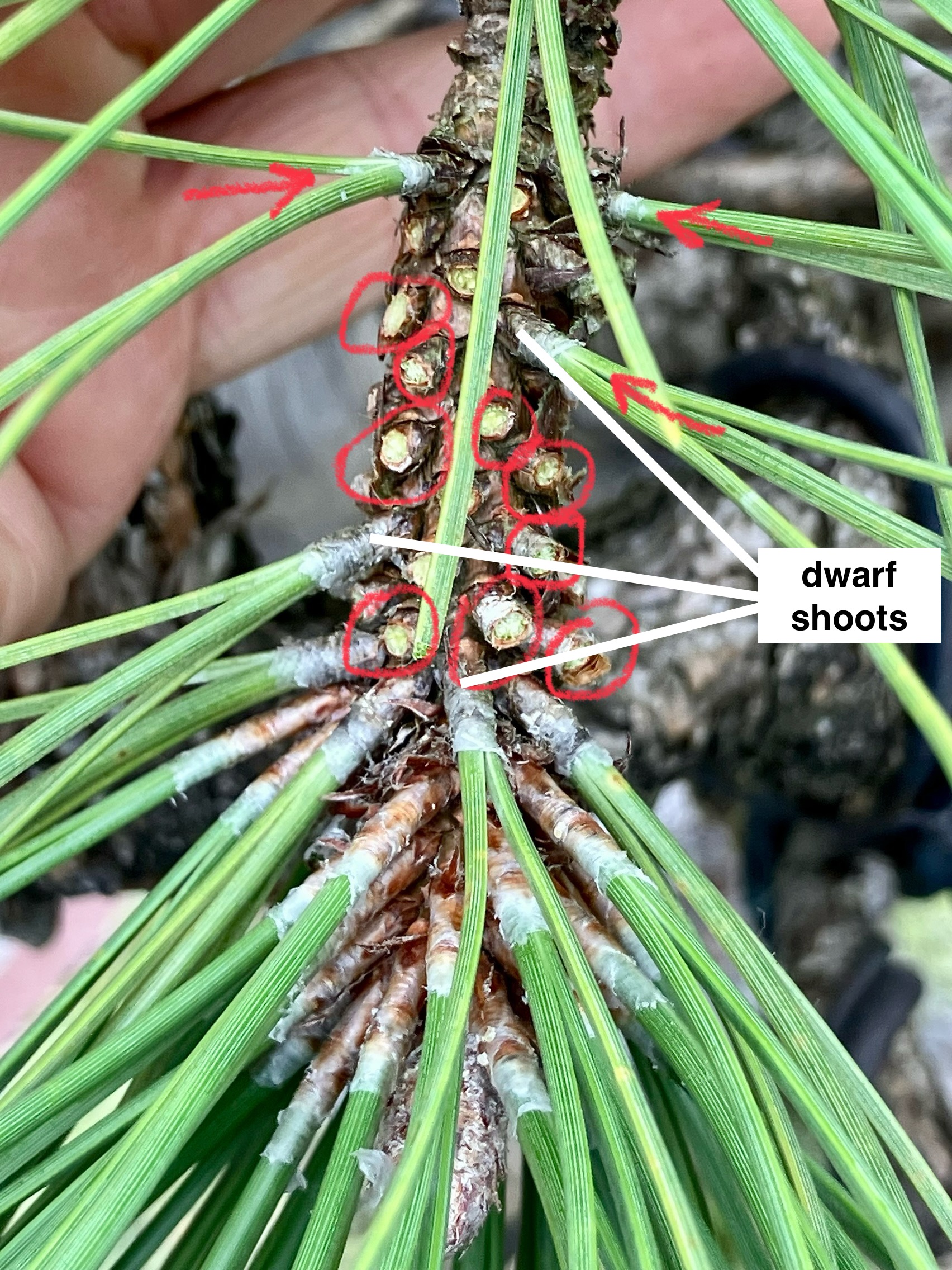
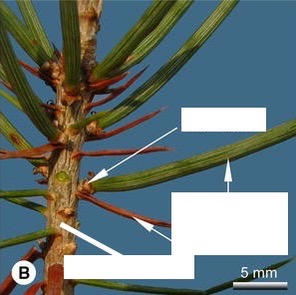
Identify the long shoot and dwarf shoot of pine.
*short shoot = dwarf shoot
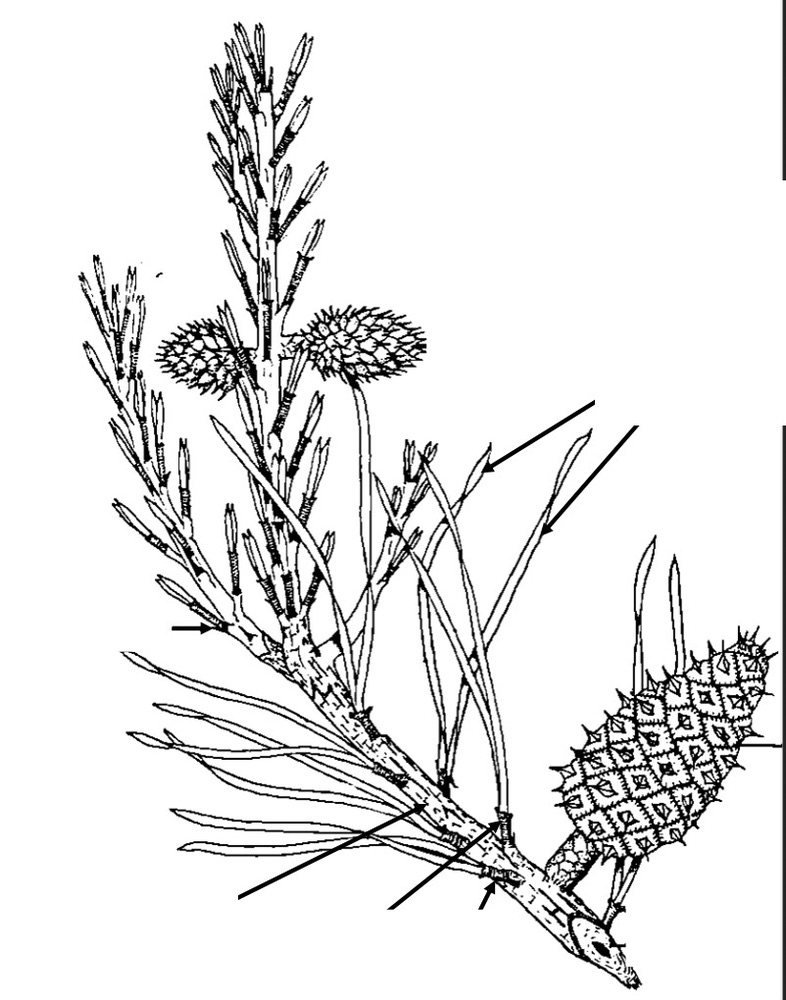
Identify the types of leaves and shoots of pine.
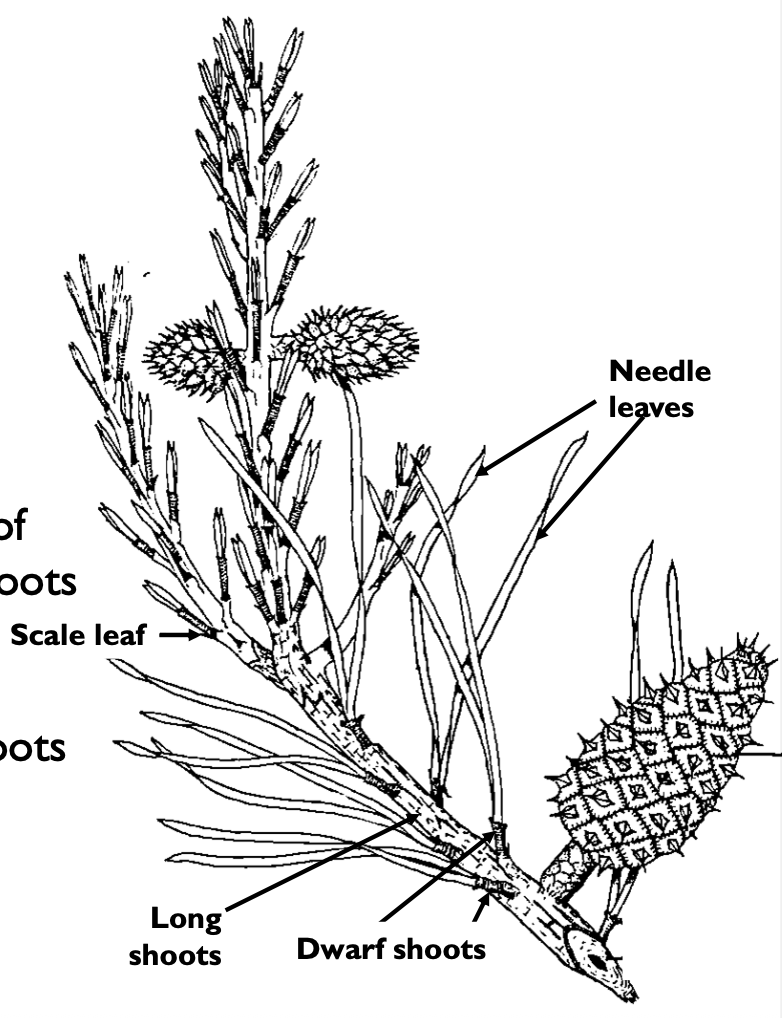
Fill in the blanks: Scale leaves are located on (a) shoot or at (b) of (c) shoots bearing (d).
a: long
b: bases
c: dwarf
d: needles
Fill in the blanks: Needle leaves are in groups of (a) to (b) on (c) shoots.
a: 1
b: 8
c: dwarf
Fill in the blanks: Dwarf shoots are (a: direction) branches of (b) growth.
a: lateral
b: determinate
Describe the size, arrangement, and location of male cones.
Male cones are small, clustered together around lower branches.
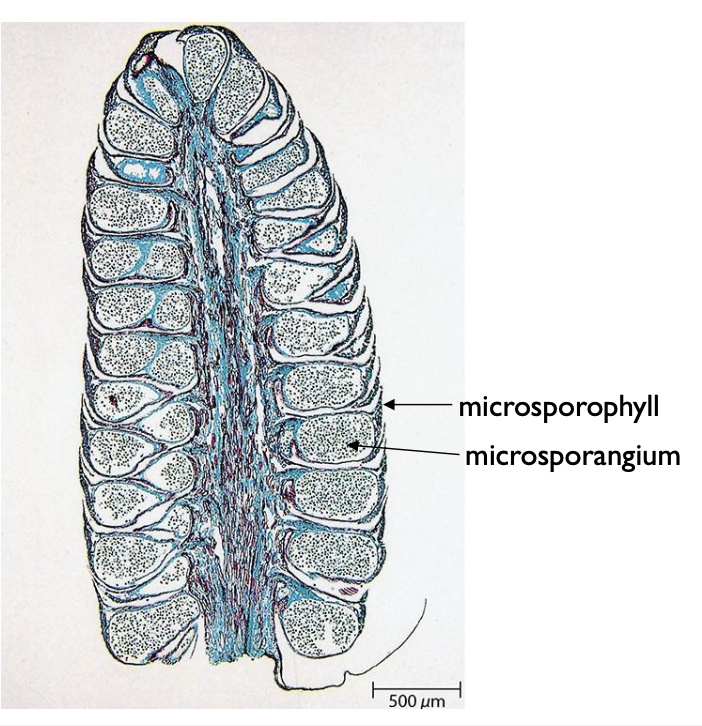
What are microsporophylls?
Microsporophylls are reduced leaves that bear microsporangia on their surfaces.
Describe the arrangement of microsporophylls.
Microsporophylls are spirally arranged on the cone.
How many microsporangia does each microsporophyll bear on lower surface?
2.
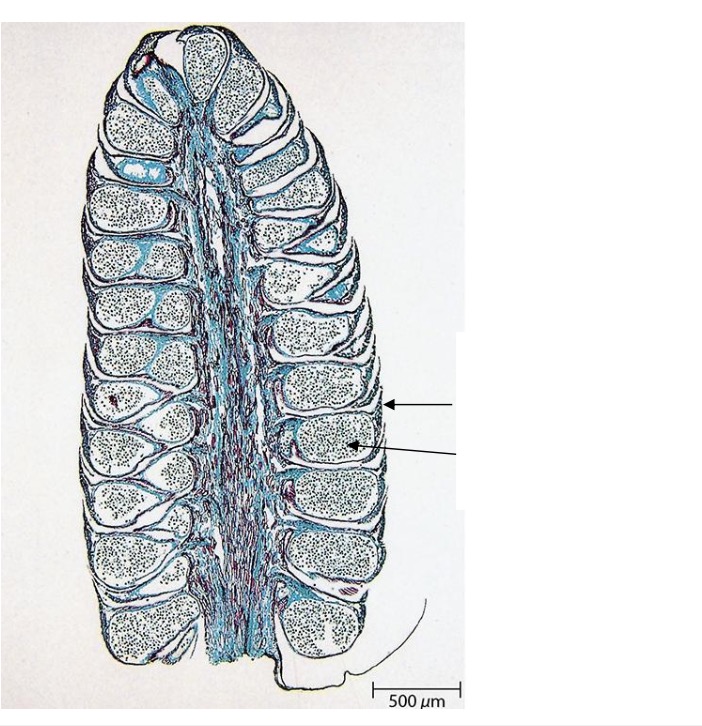
Label the structures of a male cone.
What are the other terms for…
a) microsporangia?
b) microspore?
c) microgametophyte?
a) pollen sac
b) pollen
c) pollen grain
Fill in the blanks to describe the pollen development in pine: (a) develops into a (b: number-related) of (c) through meiosis. One of the (c), which is functional, develops into (d) by mitosis.
a: Microsporocyte / Pollen
b: tetrad
c: microspores
d: microgametophyte / pollen grain
What’s the difference between the pollen grains of angiosperm and pine?
Pollen grains of angiosperm do not go through the 4-celled stage, while pollen grains of pine do.
What are the ploidy levels of the following structures?
a) microsporocyte
b) pollen
c) pollen grain
a) diploid (2n)
b) haploid (n)
c) haploid (n)
What is the structural name of the 2 wings of the pollen grain?
Air sacs.
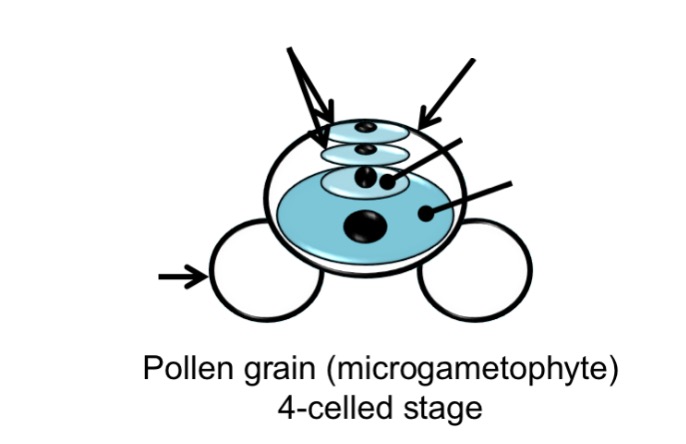
Label the structures of a pollen grain / microgametophyte at the 4-celled stage.
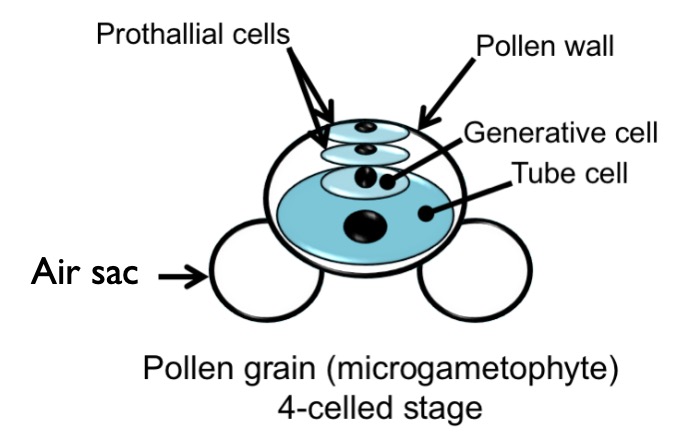
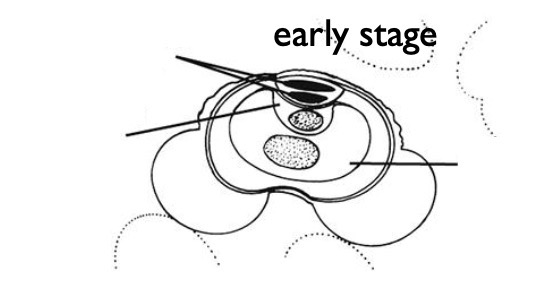
Label the structures of a pollen grain at its 4-celled stage.
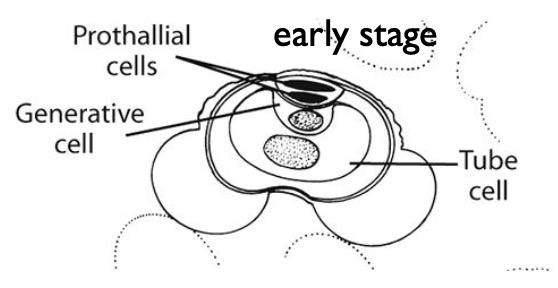
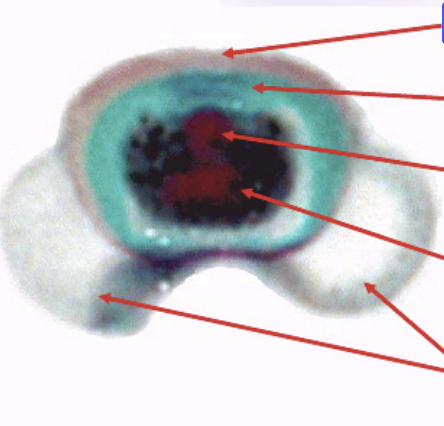
Label the structures of a pollen grain / microgametophyte at its 4-celled stage.
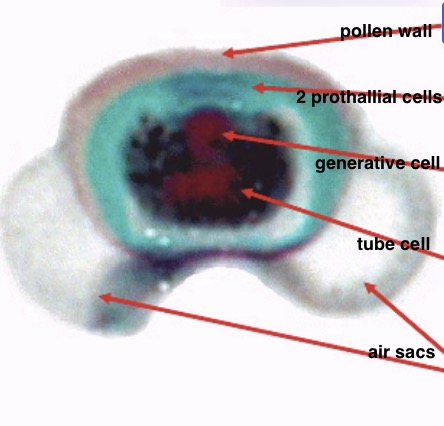
What is the function of the air sacs of pollen grain?
To enhance dispersal of pollen grain by wind.
Microgametophyte is highly (a), as it does not have an (b).
a: reduced
b: antheridium
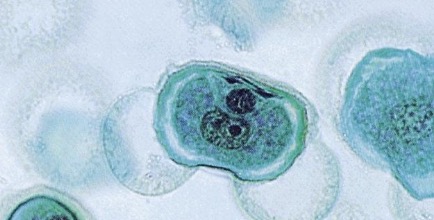
Identify the stage of the pollen grain.
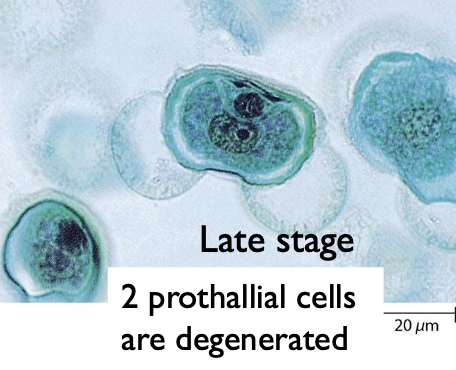
Identify the stage of the pollen grain.
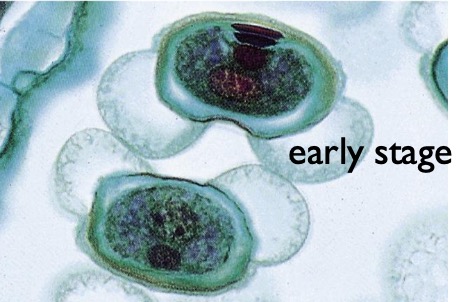
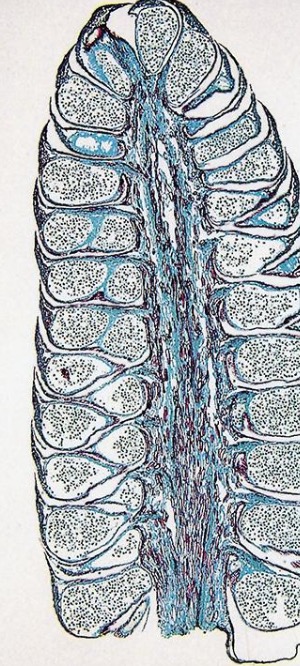
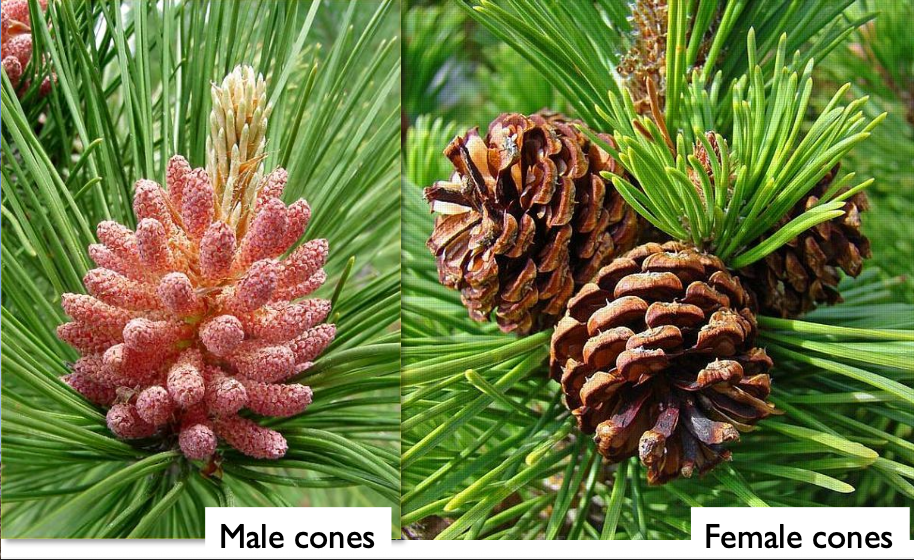
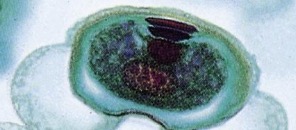
Identify whether the cone is male or female.
Male cone.
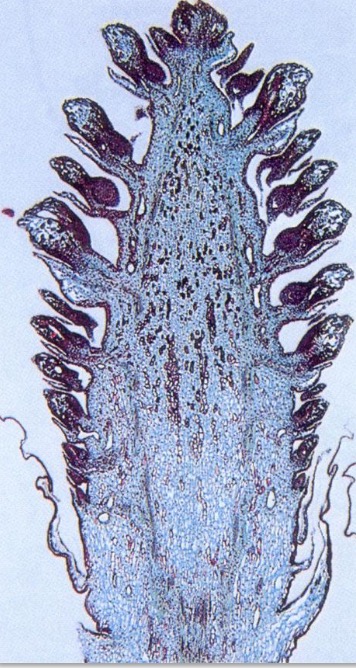
Identify whether the cone is male or female.
Female cone.
Where are female cones located?
At upper branches.
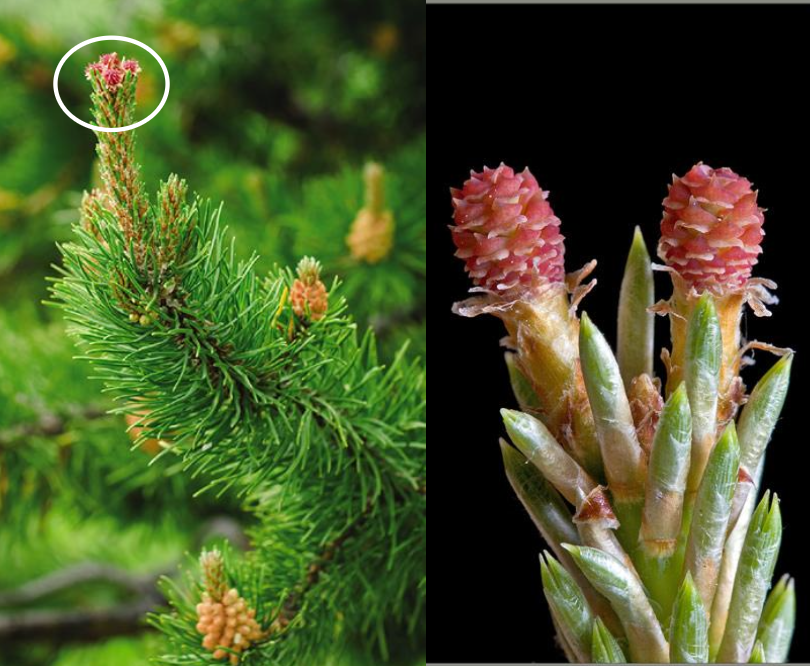
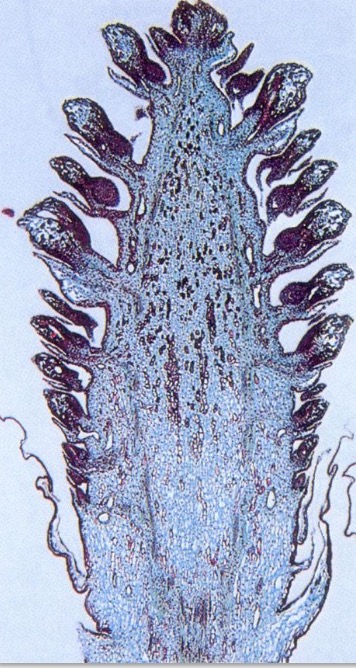
Circle an ovule of the immature female cone.
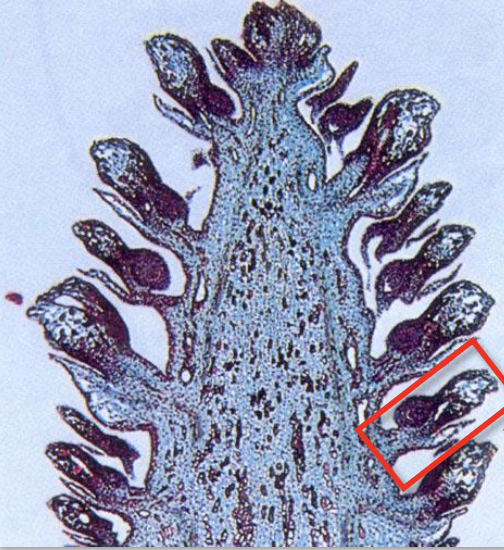
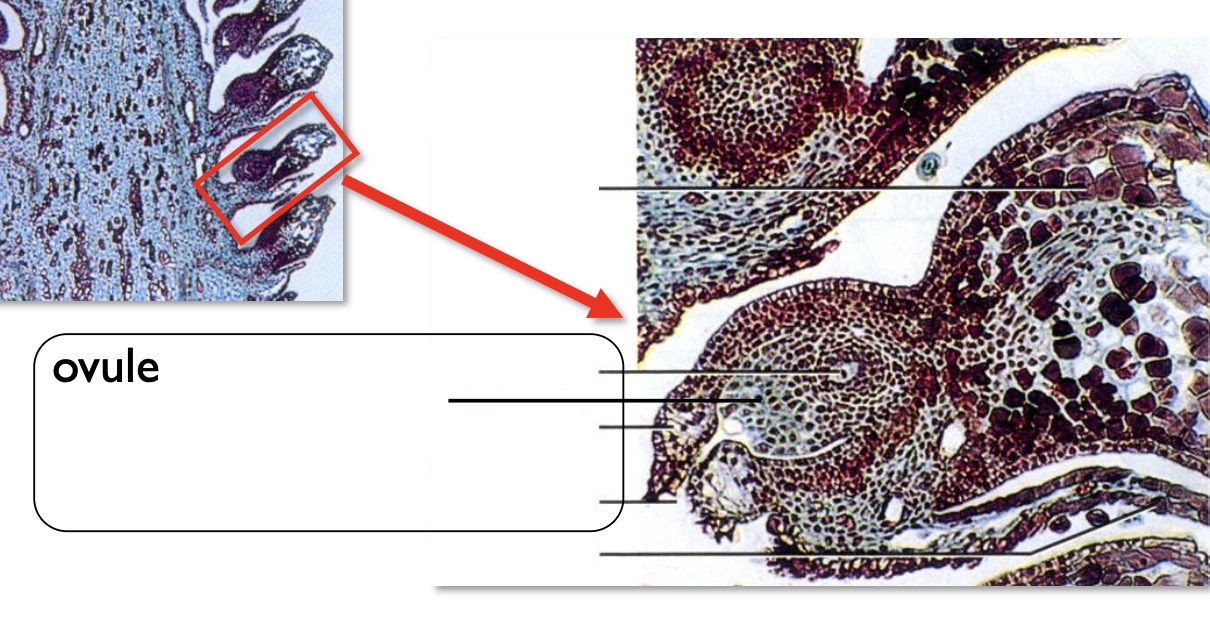
Label the structures of an immature female cone.
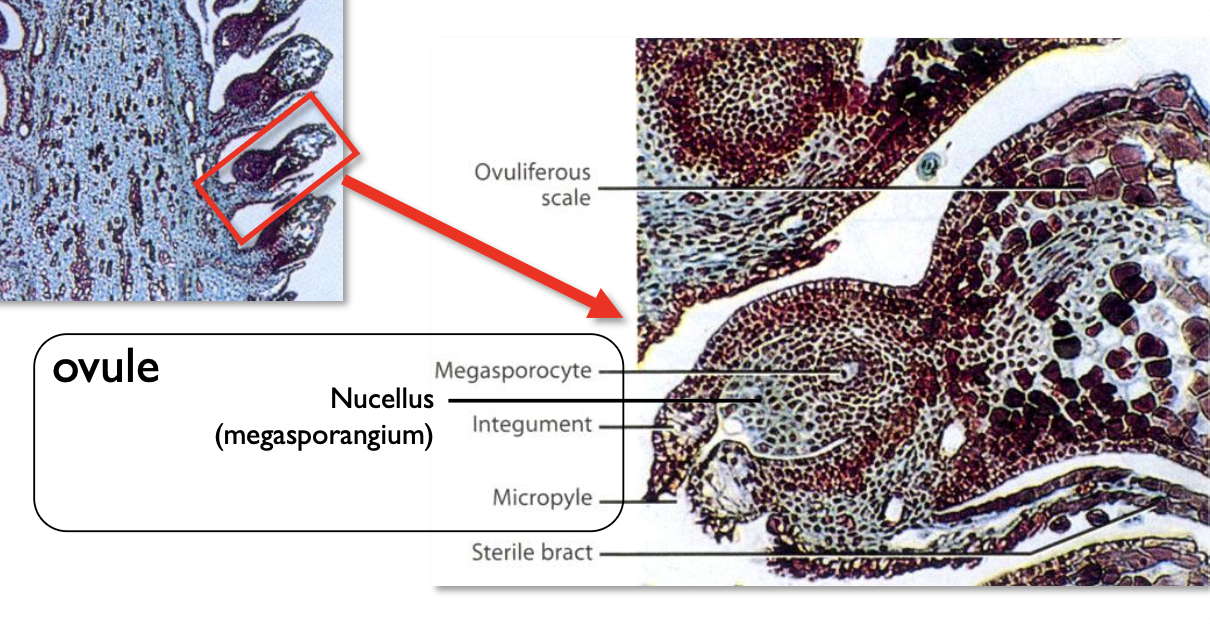
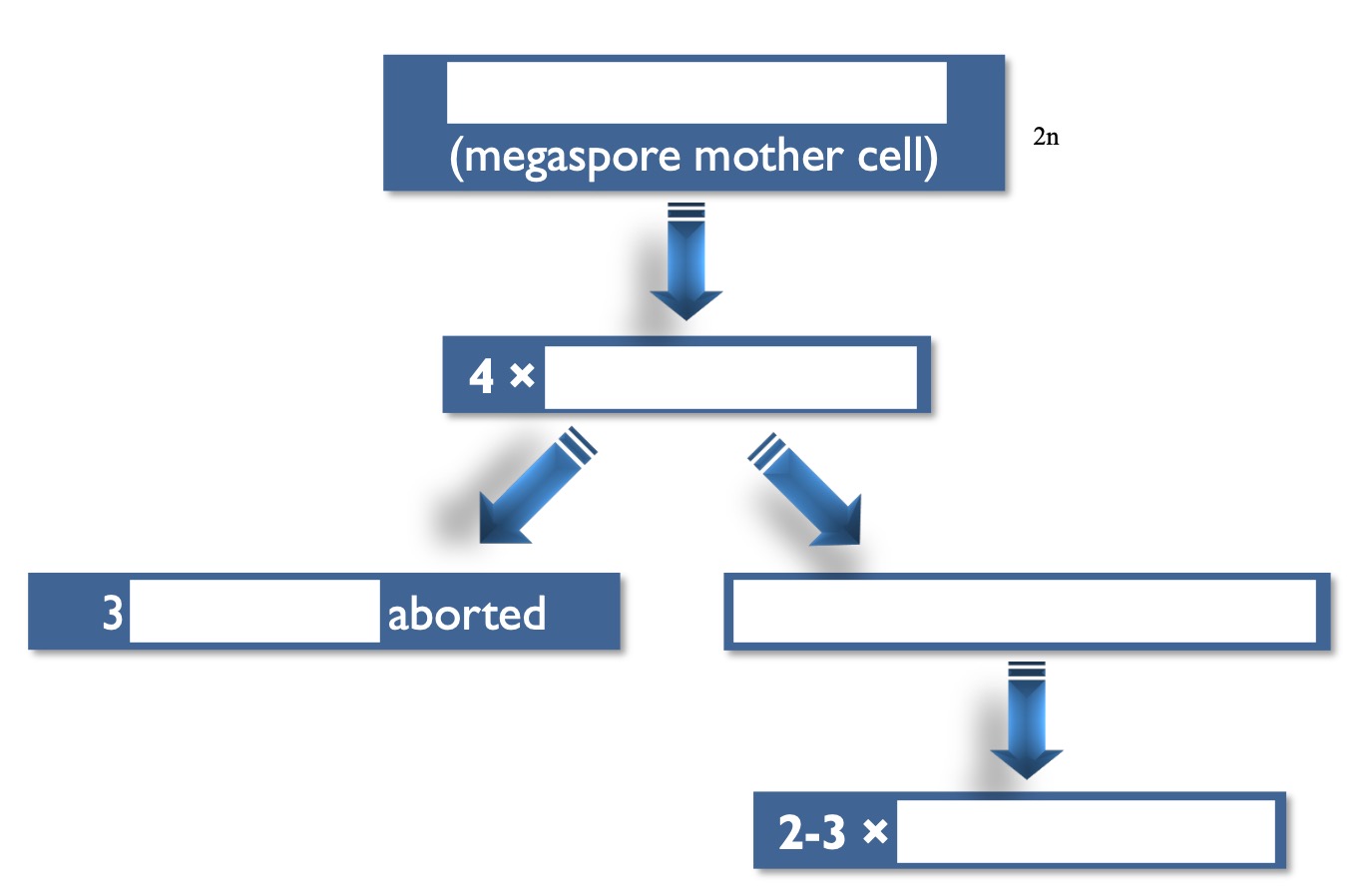
Fill in the blanks of the ovule development.
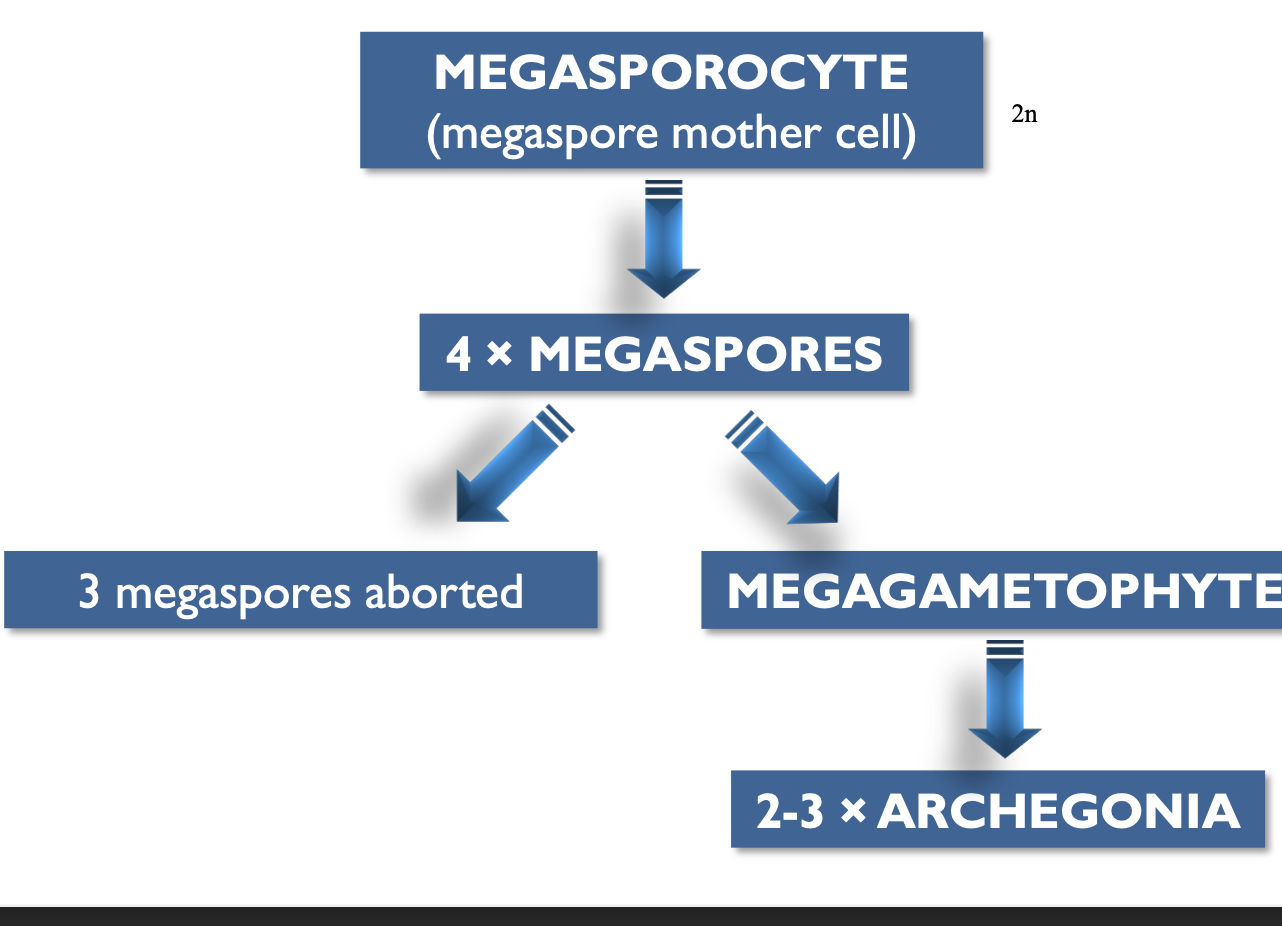
What is the ploidy level of archegonium?
Haploid (n).
What is the archegonium derived from?
Megagametophyte.
T or F: Water is required for the fertilization of pine.
F.
Pollen tube delivers sperm to an egg, so water is not required for fertilization in pine.
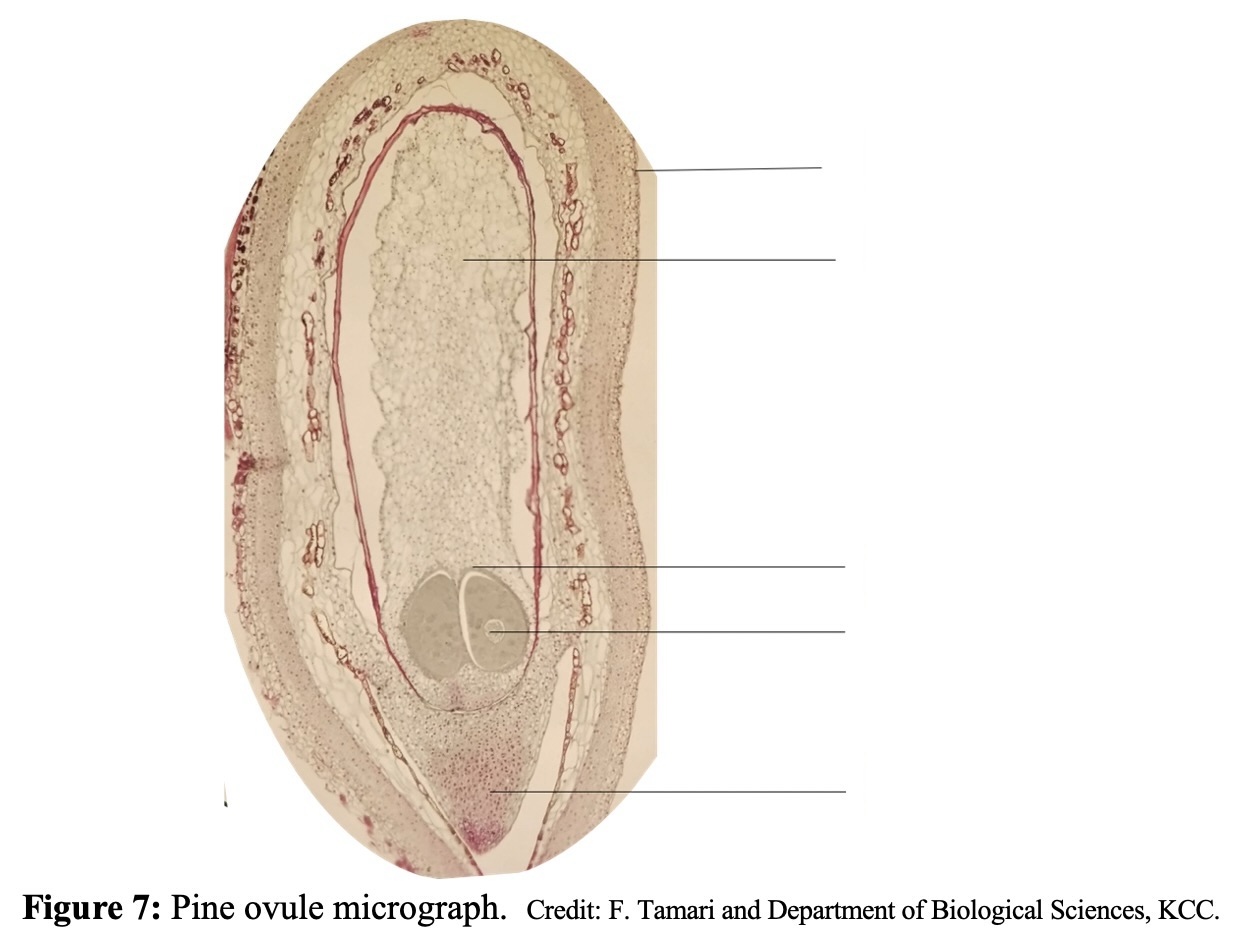
Label the structures of a pine ovule.
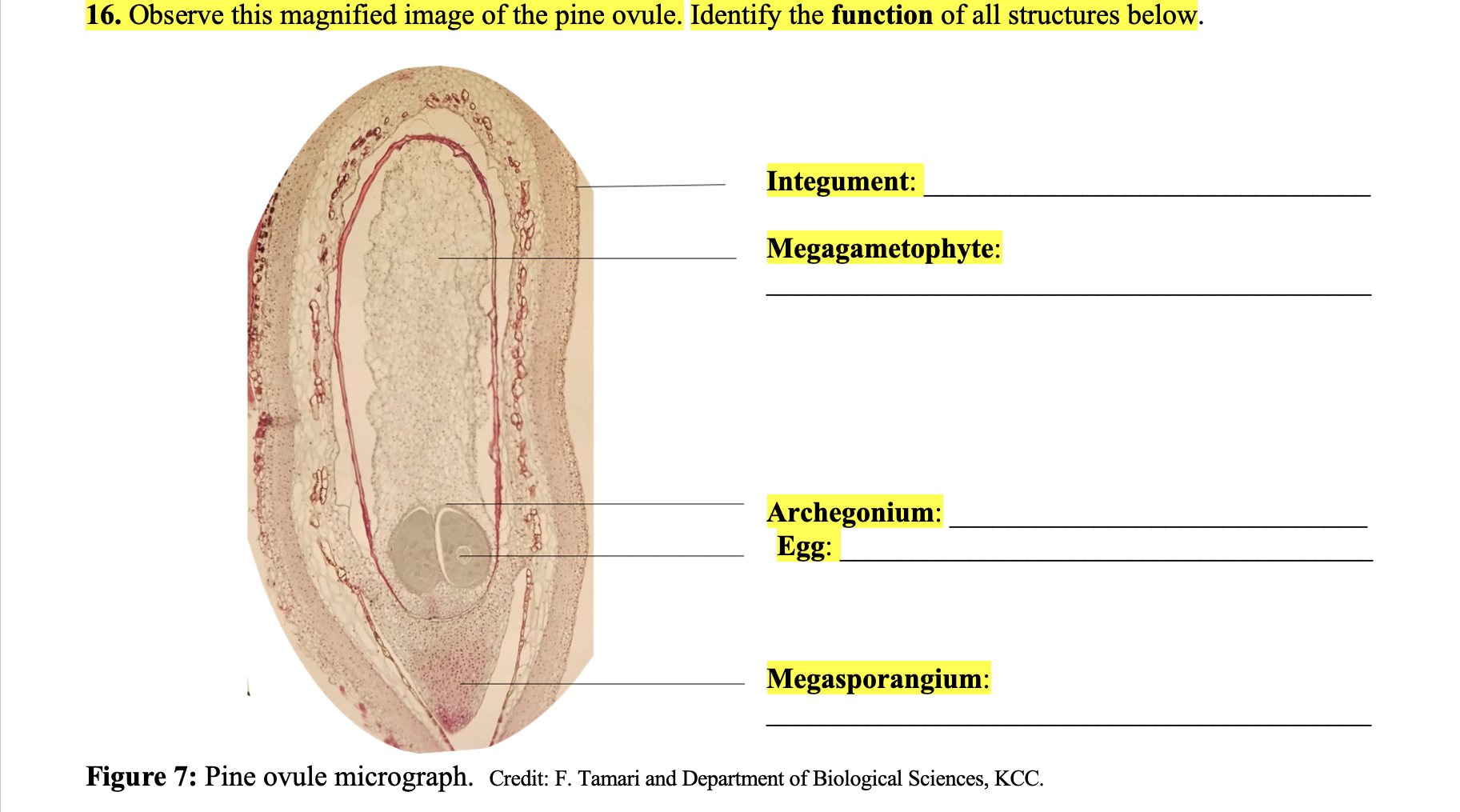
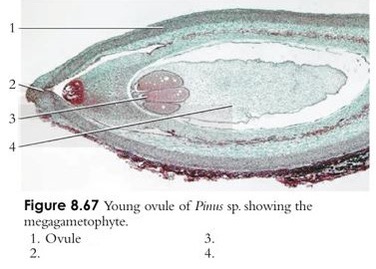
Label the structures of a pine ovule.
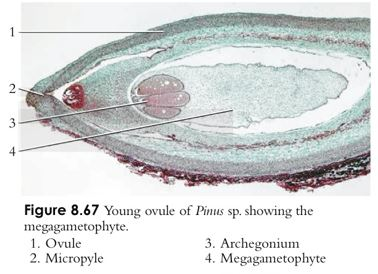
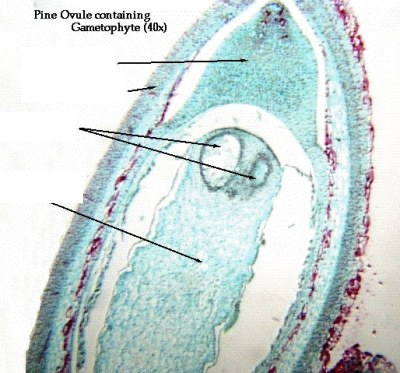
Label the structures of a pine ovule.
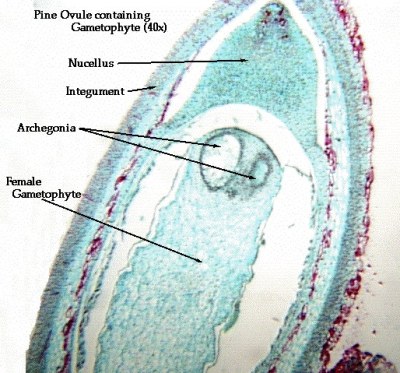
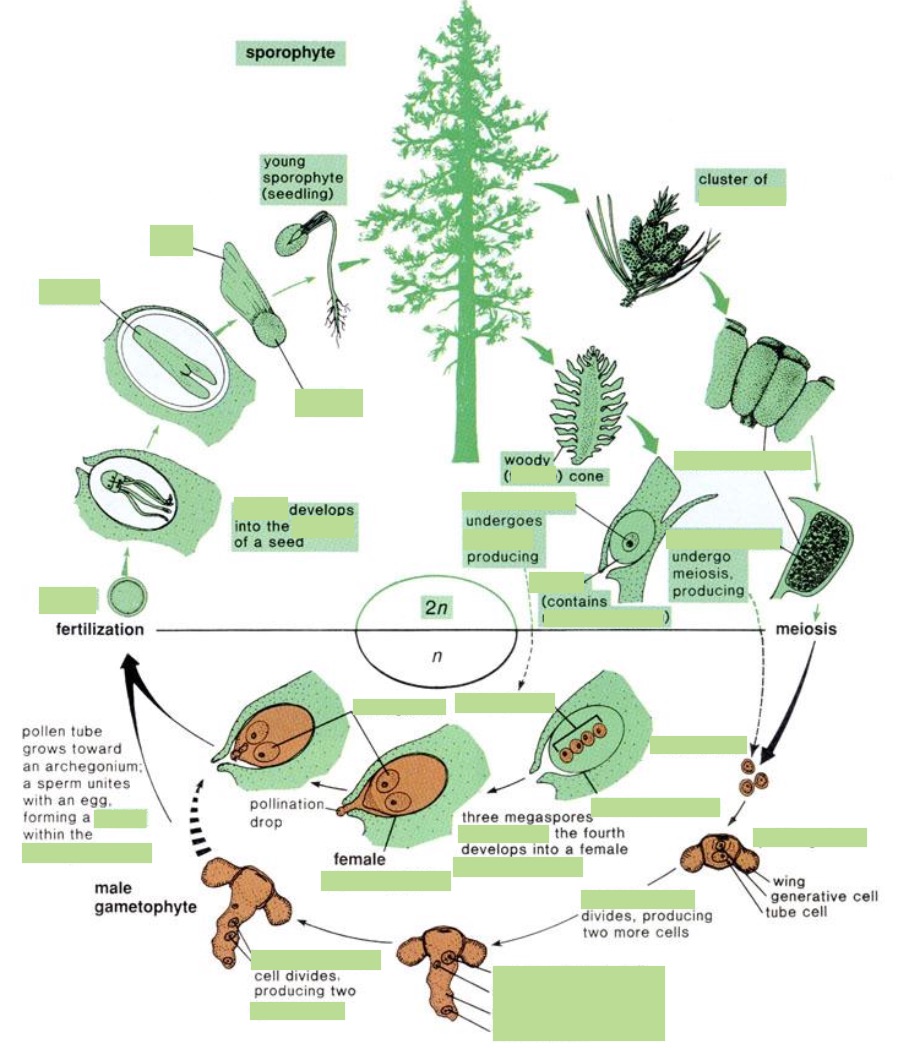
Fill in the blanks of the life cycle of pine.
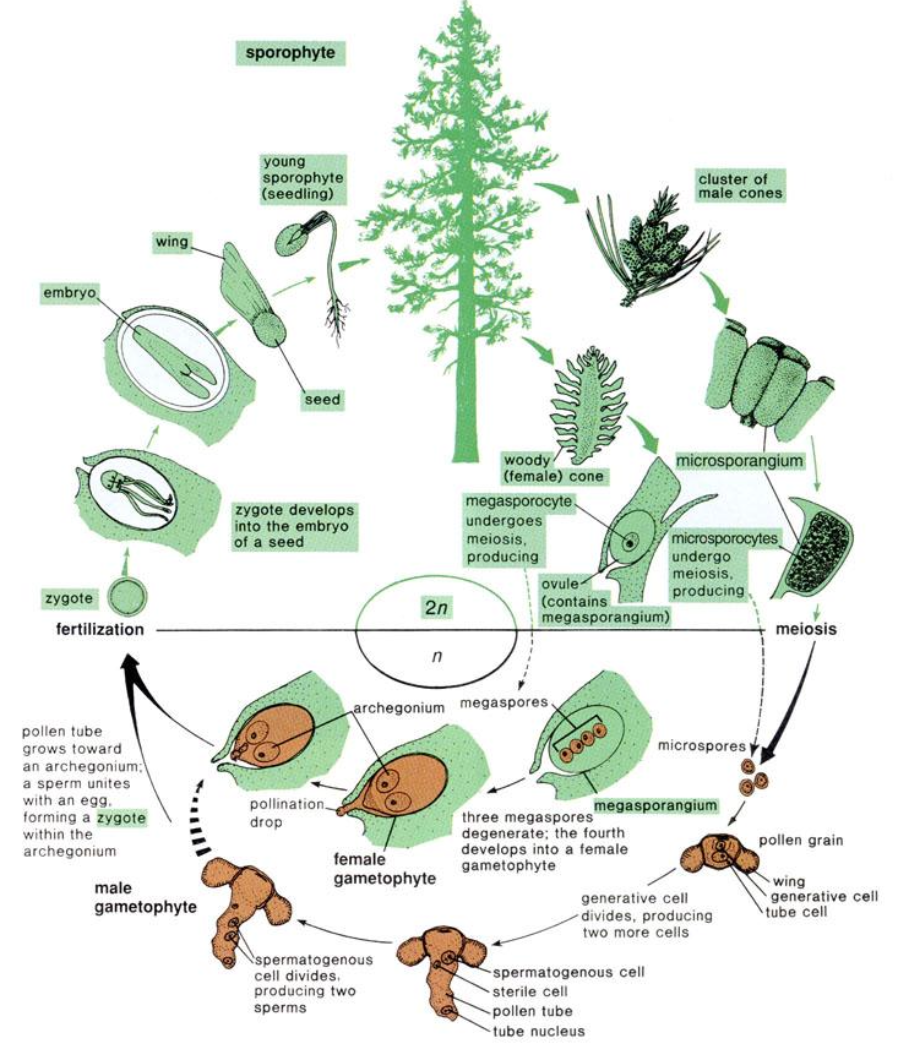
What are pine seed cones derived from? State the process as well.
Derived from female cones through fertilization.
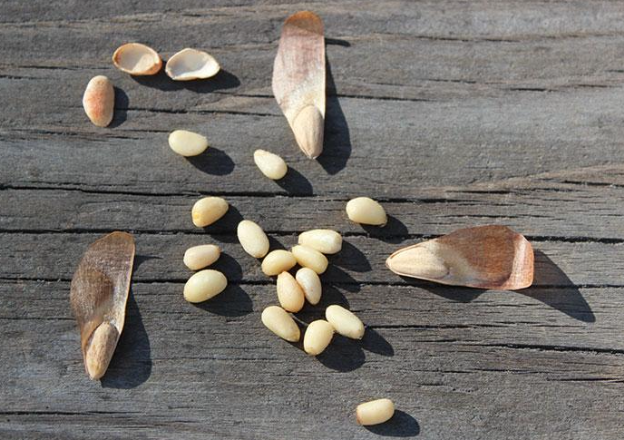
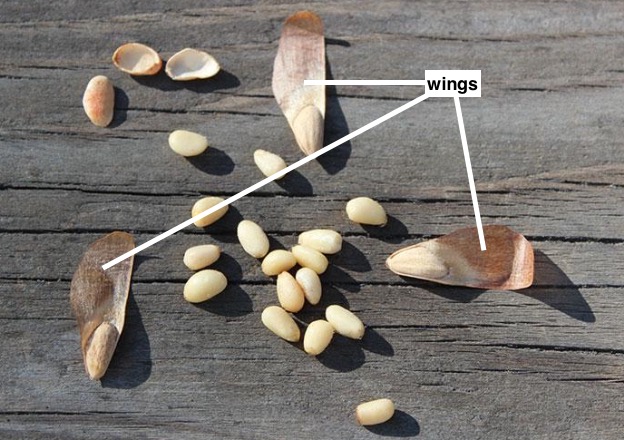
Identify the wings of seeds and state the function of seed wings.
Function: To facilitate seed dispersal by wind.
Where are winged seeds located?
On upper surface of woody scales.
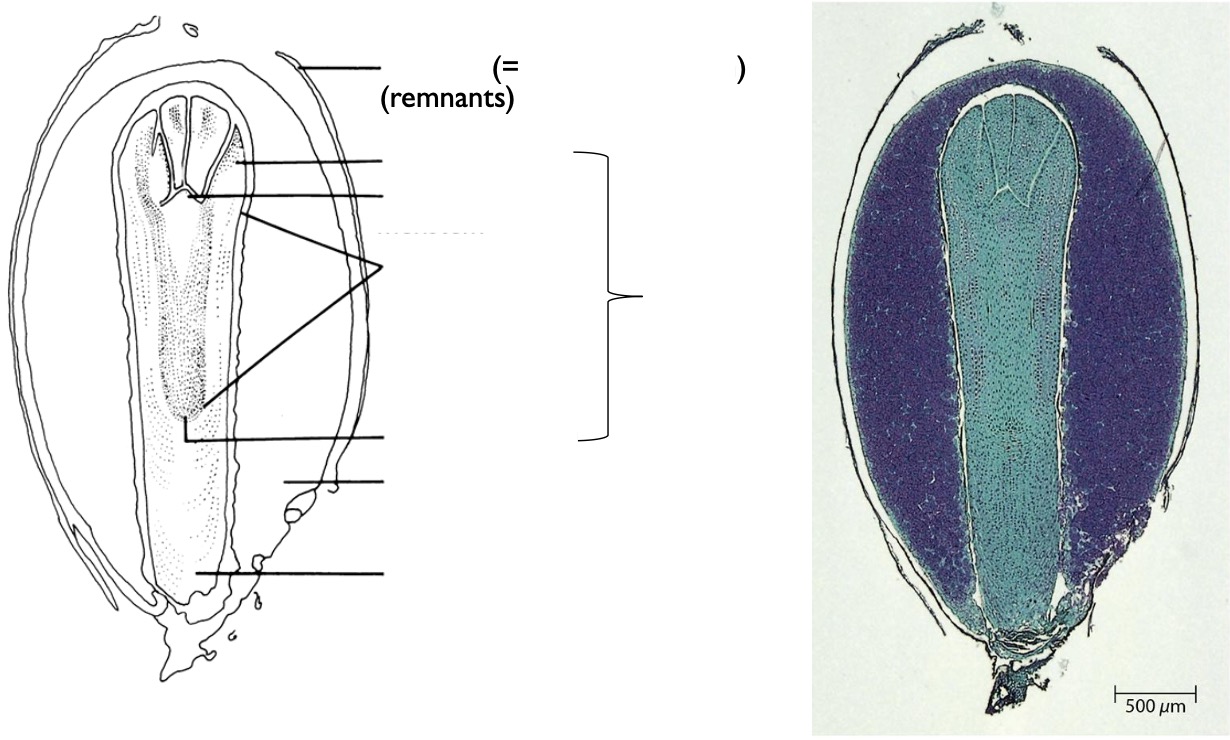
Identify the structures of a pine seed.
T or F: The Phylum Coniferophyta is the most diverse gymnosperm group, with 50 genera and ~550 species.
T. Other common conifers, besides pines, include:
firs
larches
spruces
cypresses
juniper
yew
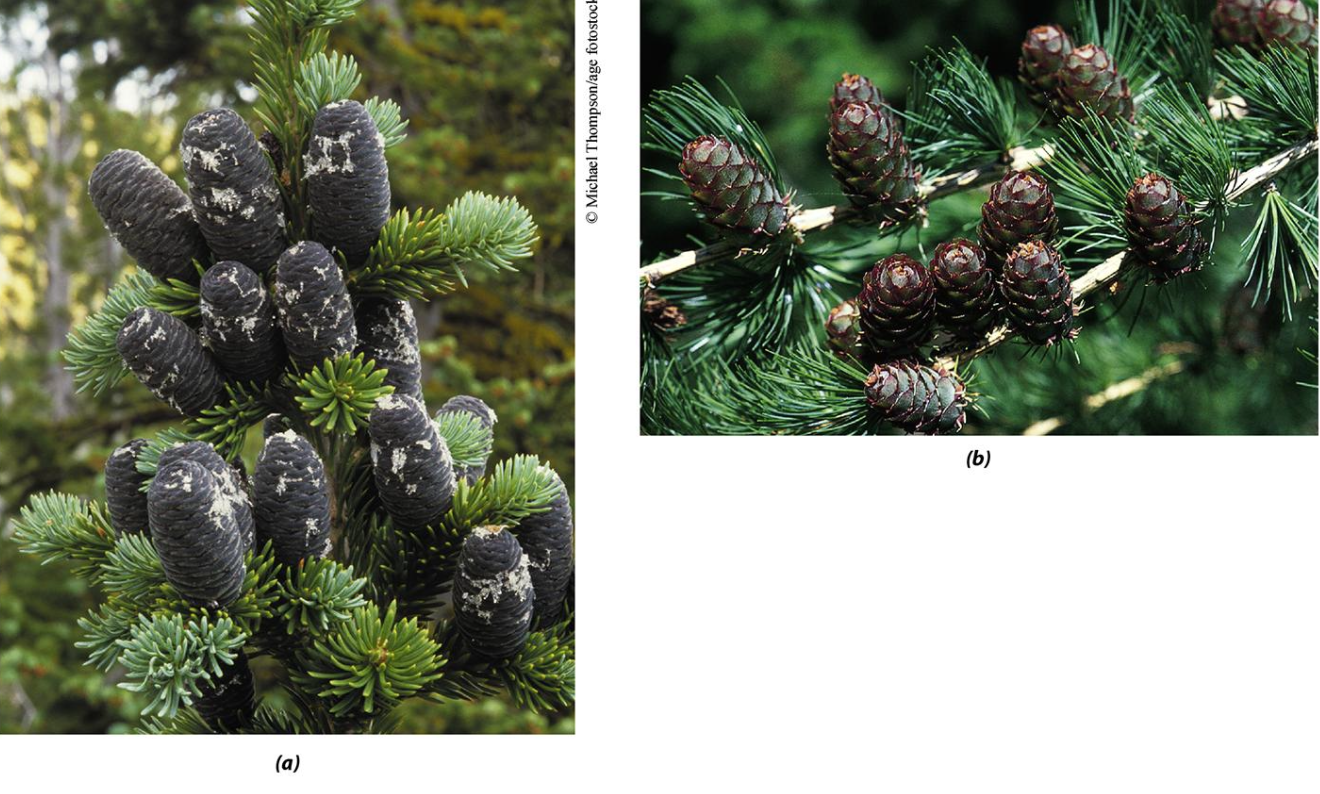
Identify these conifers.
a: fir
b: larch
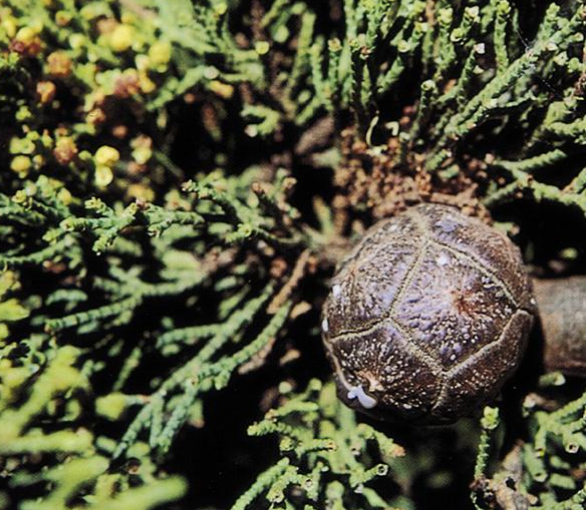
Identify this conifer.
Cypress.
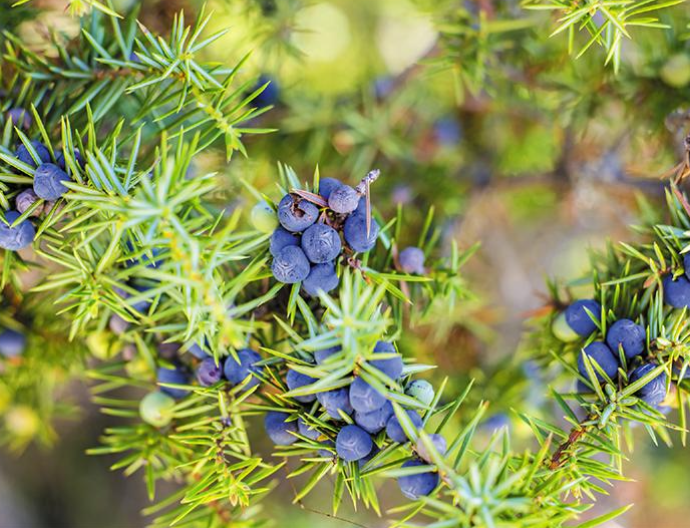
Identify this conifer.
Juniper.
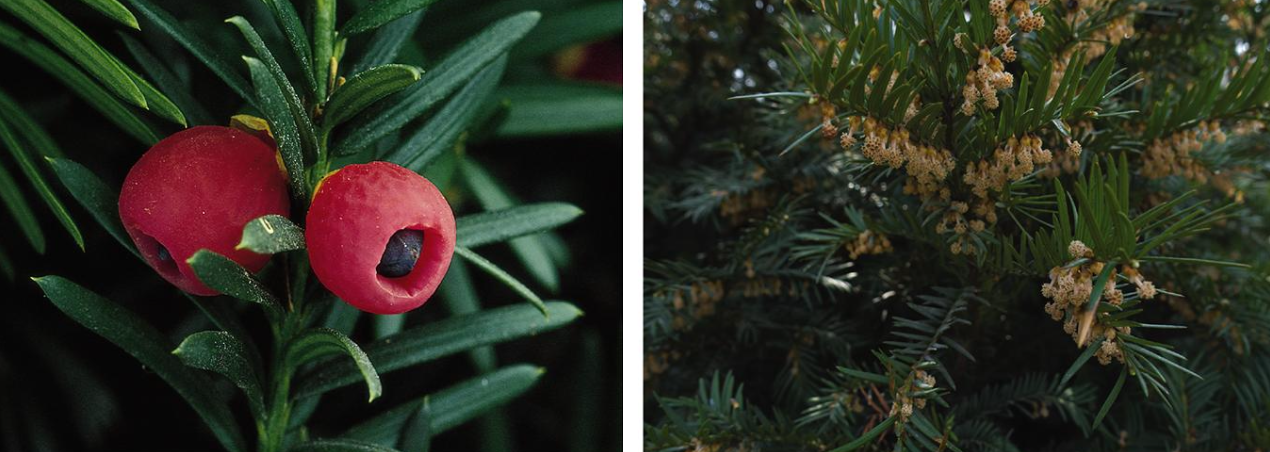
Identify this conifer.
Yew.
T or F: In the phylum Ginkgophyta, there is only one surviving species.
T.
What is the name of the only surviving species in Ginkgophyta?
Ginkgo biloba (also known as “maidenhair tree”).
Are the seeds of Ginkgo biloba fruits?
No. The “fruits” are naked seeds with a fleshy, foul-smelling sarcotesta (outer covering).
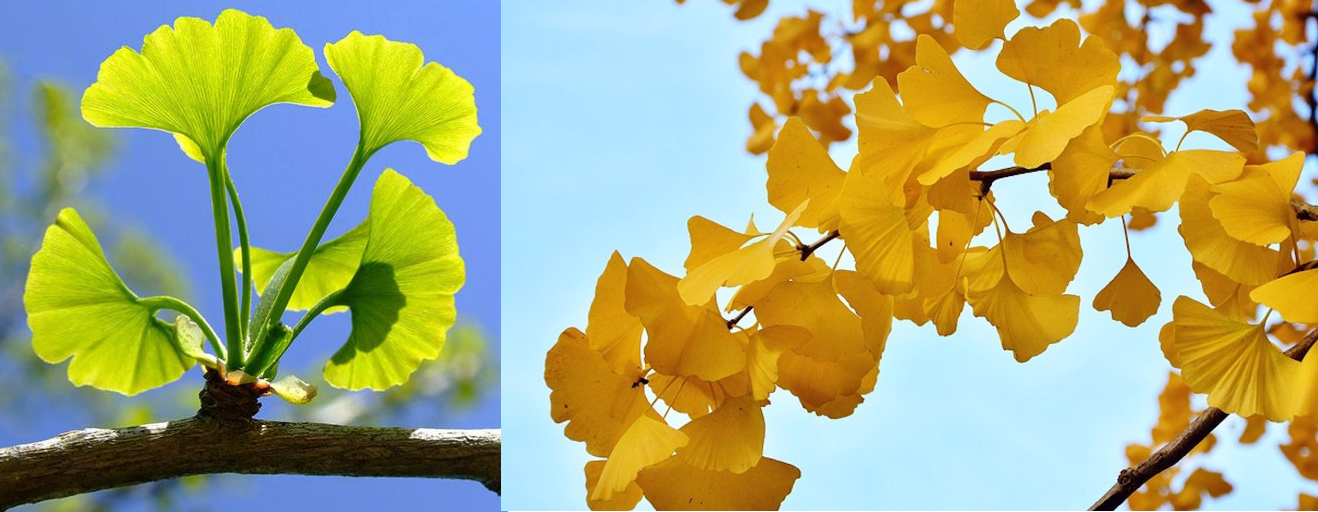
Describe the shape of Gnikgo biloba leaves.
Fan-shaped.
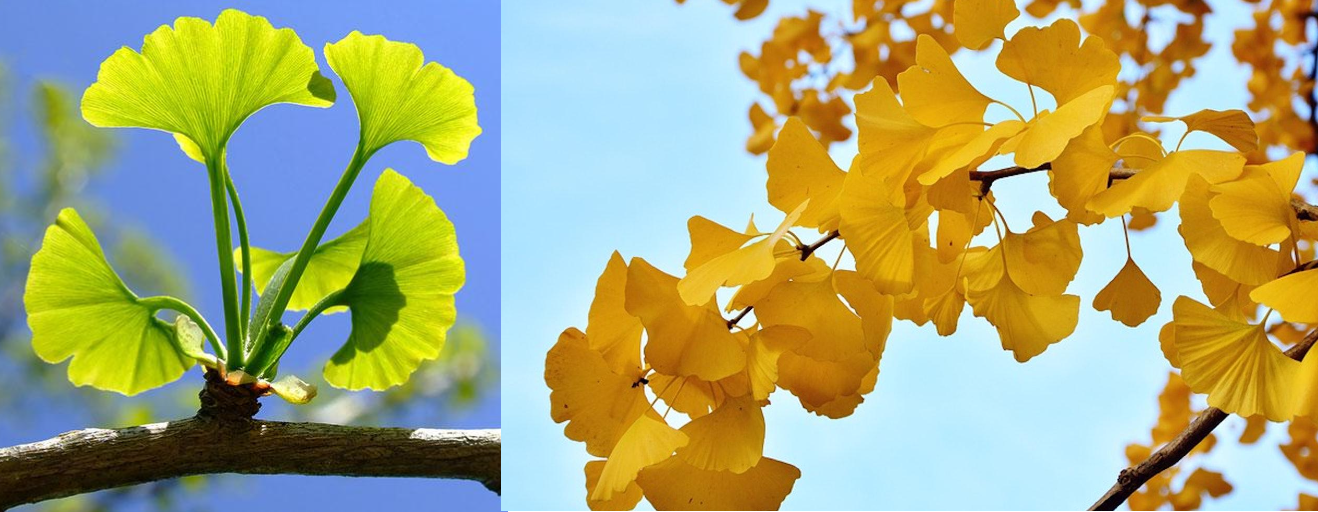
Where are Ginkgo biloba leaves borne on?
Dwarf shoots.
What is the definition of deciduous?
Losing leaves in autumn and growing new ones in spring.
What is the difference between pines and Ginkgo biloba in terms of shedding?
Pines are evergreen trees, while Ginkgo biloba is deciduous.
Evergreen trees do not lose their leaves all at once like deciduous trees.
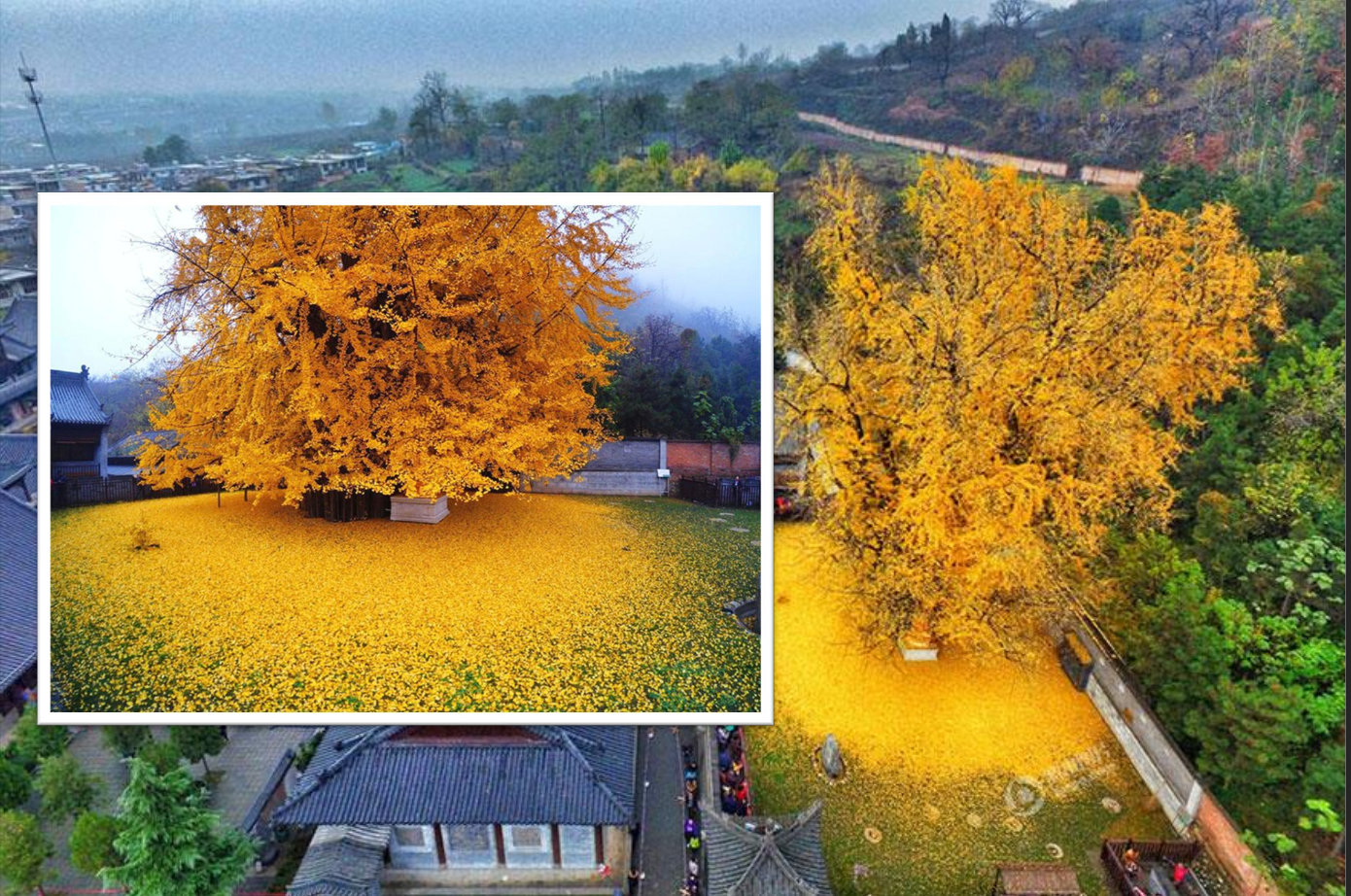
T or F: Ginkgo biloba are known as “living fossil”, as its fossils date from Permian period (280 millions years ago).
T.
Do natural populations of Ginkgo biloba exist?
No.
What ensures the survival of Ginkgo biloba?
Cultivation in China, Japan, etc.
T or F: Like pines, Gingko biloba is bisexual.
F. Ginkgo biloba is unisexual while pines are bisexual.
What is the definition of a unisexual?
Each plant produces only 1 type of reproductive organ, either male or female.
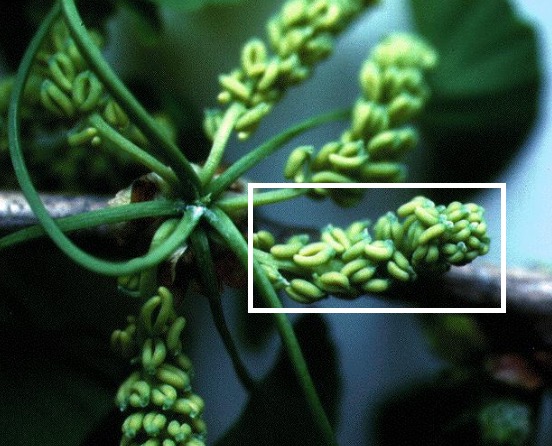
Identify this structure of a Ginkgo biloba.
Microstrobilus.
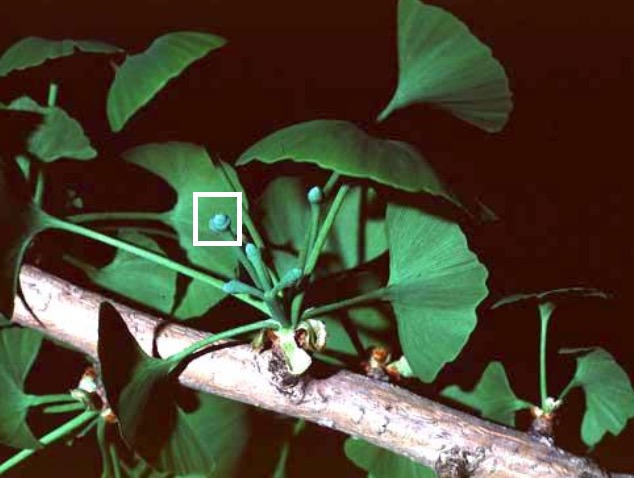
Identify this structure of a Ginkgo biloba.
Megastrobilus.
Fill in the blank: Microstrobilus is composed of stalked (a).
a: microsporangia
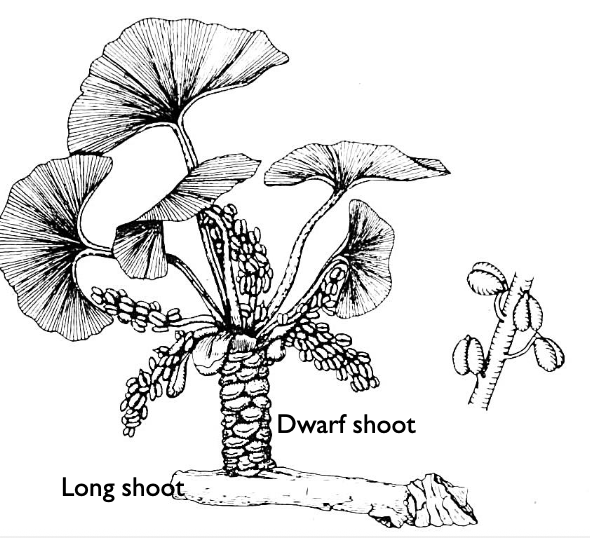
Fill in the blanks: Megastrobilus is composed of paired (a) on (b).
a: ovules
b: short stalk
What is the medium of the pollination of Ginkgo biloba?
Wind.
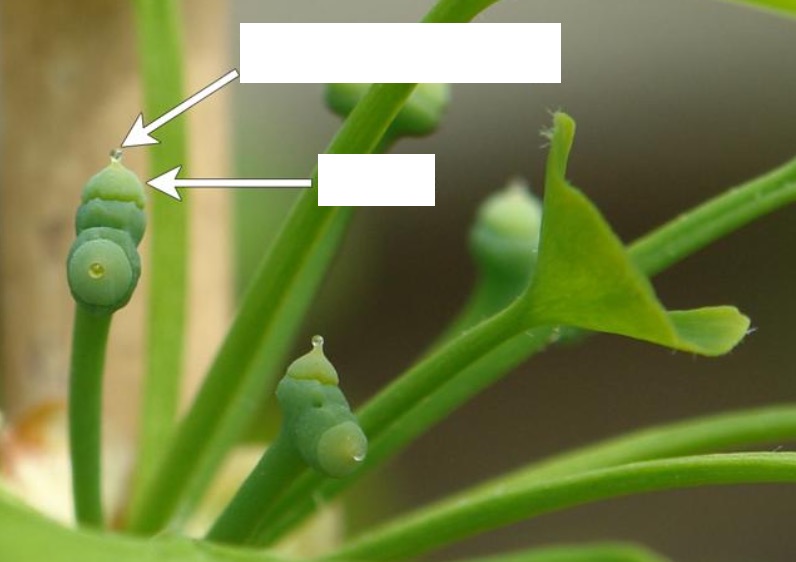
Identify the structures of a megastrobilus.
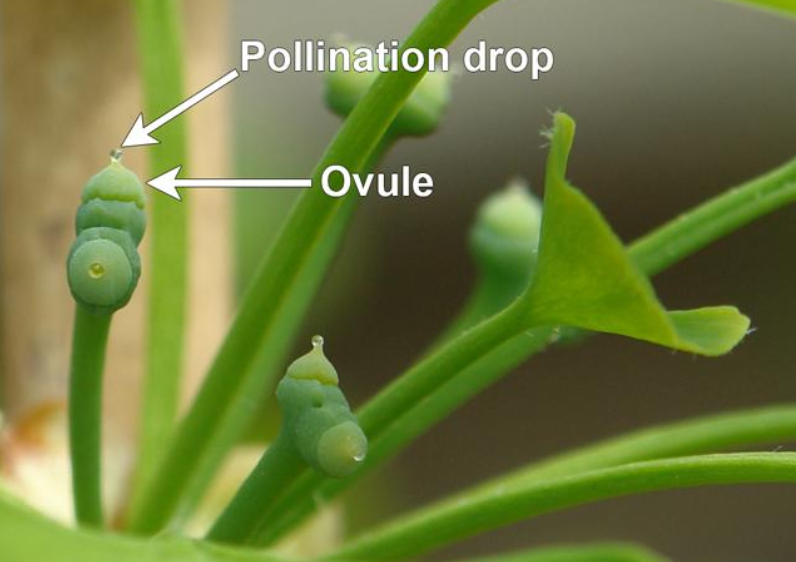
What is the function of the pollination drop in the process of pollination?
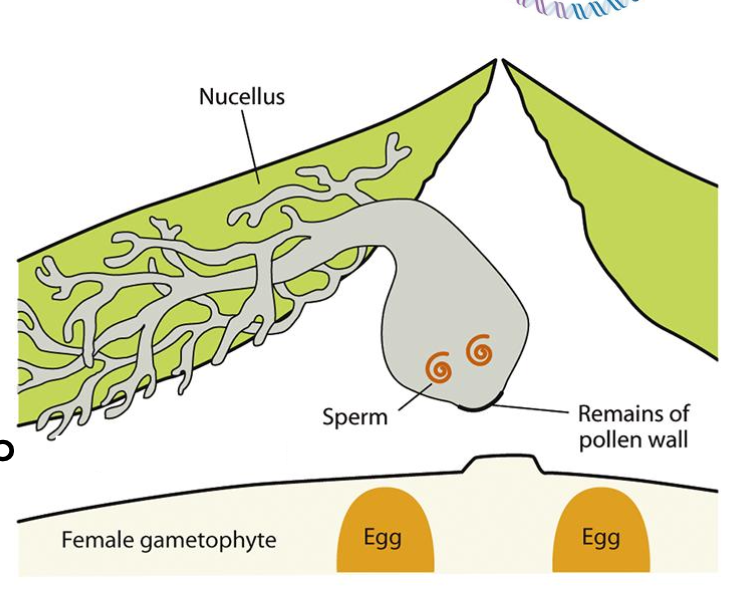
Pollen lands on pollination drop exuded by ovule.
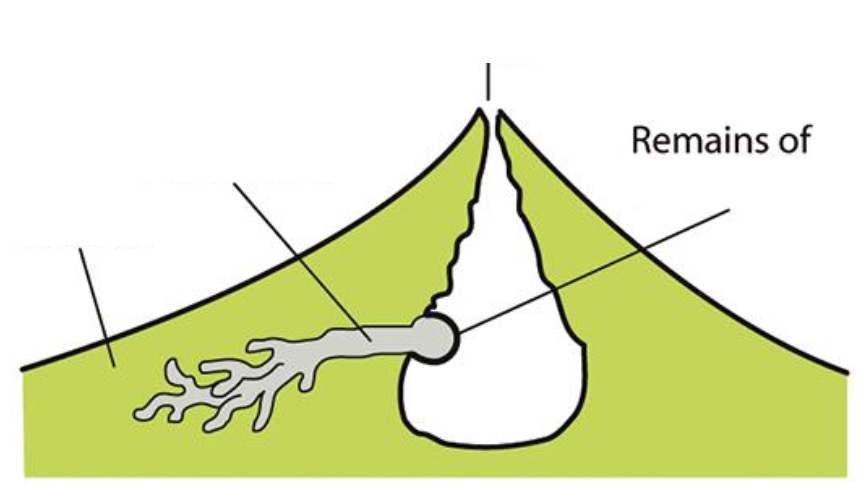
Label the structures (hint: process of pollination).
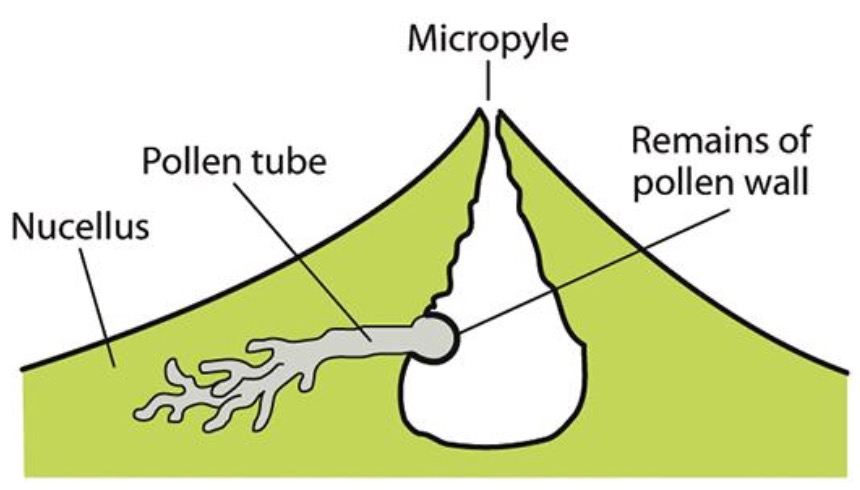
Fill in the blanks: Upon landing on the pollination drop, (a) germinates, producing a (b). (b) absorbs food from (c).
a: pollen
b: pollen tube
c: nucellus / megasporangium
T or F: Both pine and Ginkgo biloba do not require water in fertilization due to the presence of pollen tube.
F.
Although both pine and Ginkgo biloba has pollen tube, water is required in the fertilization of Ginkgo biloba as the pollen tube only conveys the sperm part of the way towards the egg.
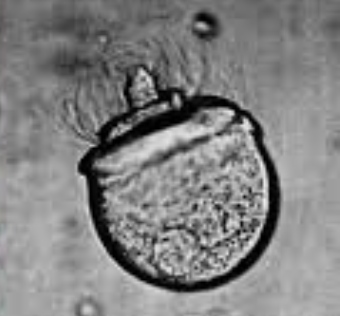
The picture shows a Ginkgo biloba sperm cell. Describe one feature and explain why this feature is required for fertilization.
The sperm cell has flagella (i.e. is flagellated).
Flagella allows the sperm to be motile and swim to the egg via water when the pollen base ruptures.
Describe the process of fertilization after the pollen has landed on the pollination drop until the number of embryo(s) that survive(s).
Pollen germinates, producing a pollen tube.
Pollen tube conveys the sperm part of the way towards the egg.
Base of pollen tube enlarges and ruptures, releasing 2 motile sperm cells which swim to fertilize the egg. Water is required.
More than 1 egg may be fertilized and develop into embryos, but only 1 embryo survives.
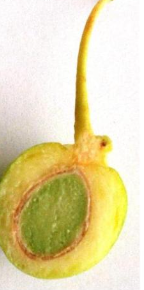
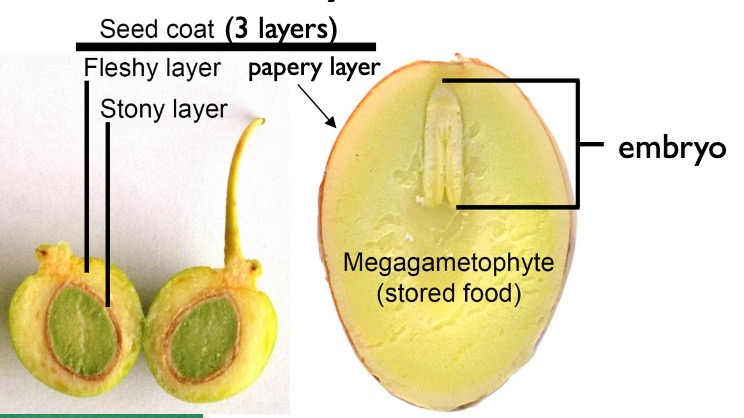
Describe the 3 layers of the Ginkgo biloba seed coat.
Outer layer: fleshy
Middle layer: stony
Inner layer: papery
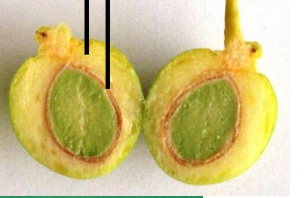
Describe the coat of Ginkgo biloba seeds.
Fleshy.
What structure serves as the stored food of Ginkgo biloba seeds? What is its ploidy level?
Megagametophyte. Haploid (n).
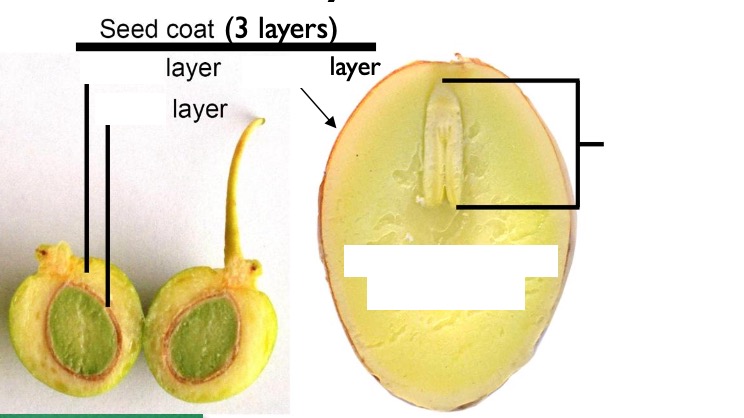
Label the structures of a Ginkgo biloba seed.
What is the phylum and species of cycad?
Phylum: Cycadophyta
Species: Cycas
Which parts of the world are Cycadophyta plants found in?
Tropical and subtropical parts.
T or F: Cycadophyta first appeared in Carboniferous period and is the dominant land plant during the Jurassic period (time of dinosaurs).
T.
State a function of cycad.
Ornamental plant.
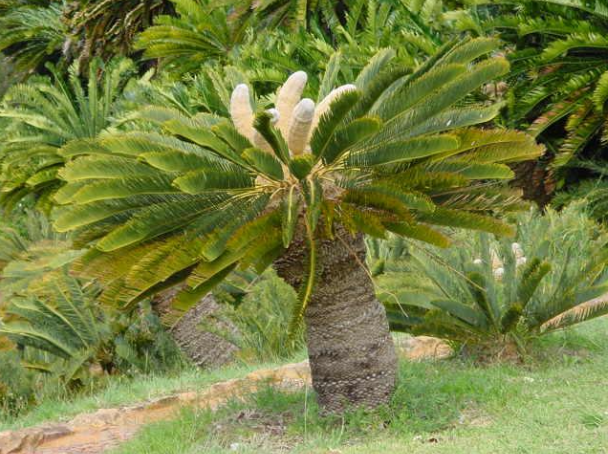
Describe the branch, trunk, and location of leaves of cycads. (picture shows a sago palm, a plant of the species Cycas)
Branch: unbranched
Trunk: large, cylindrical trunk
Location of leaves: a crown of leaves at trunk top
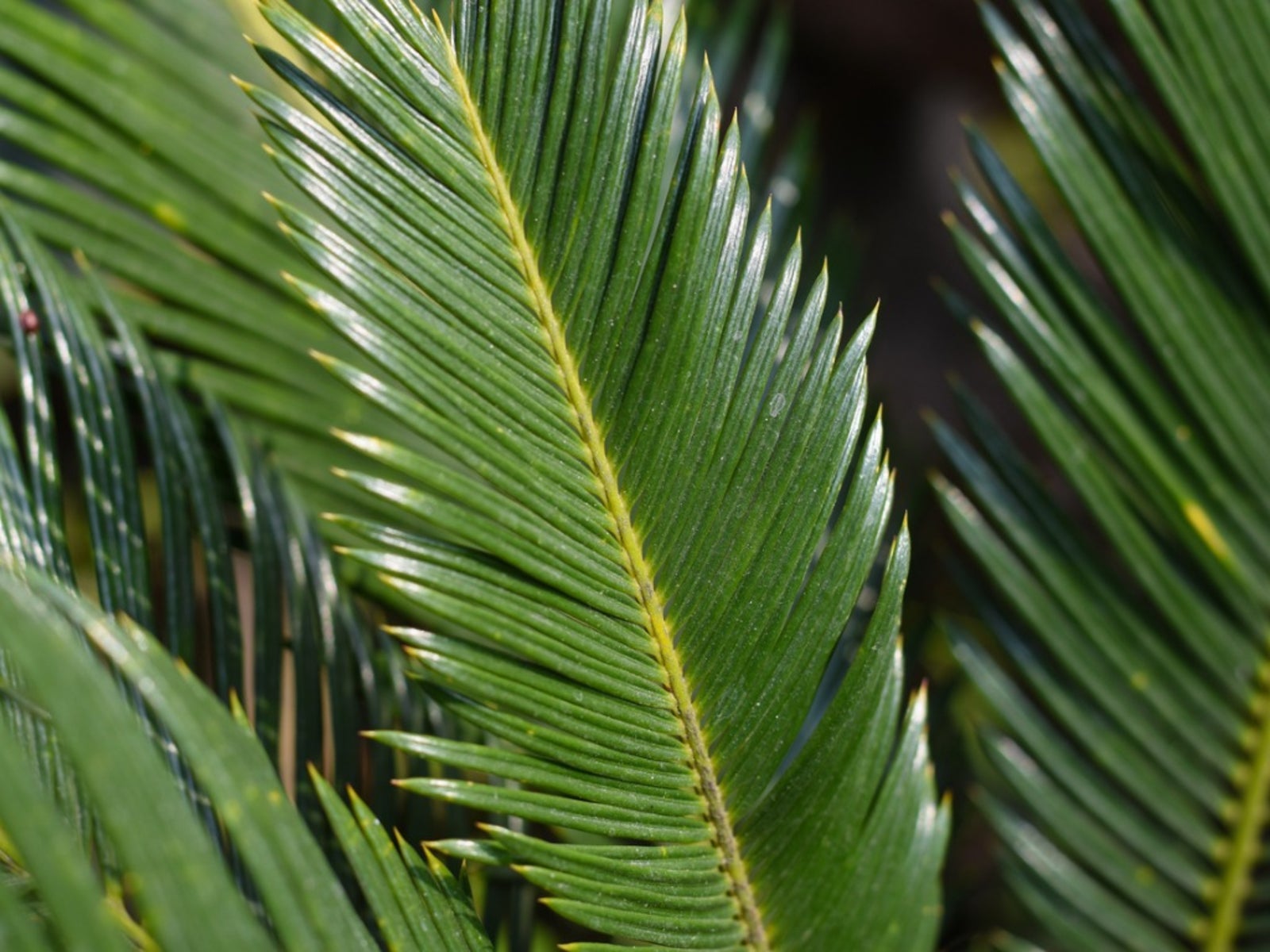
Describe the texture and appearance of cycad leaves.
Hard, leathery. Palm-like.
Identify whether each phylum has unisexual or bisexual plants.
Coniferophyta:
Ginkgophyta:
Cycadophyta:
Coniferophyta: mostly bisexual, some unisexual (e.g. yew, juniper)
Ginkgophyta: unisexual
Cycadophyta: unisexual
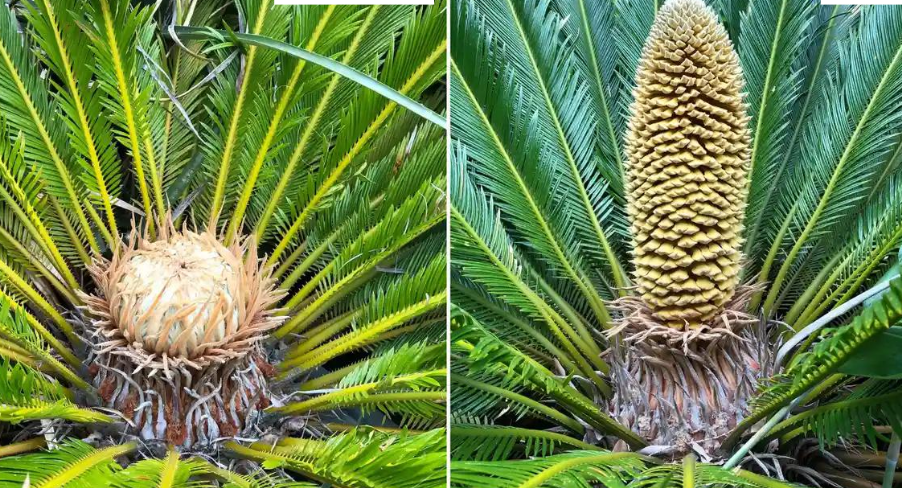
Identify whether the cycad cones are male or female.
Left: female
Right: male
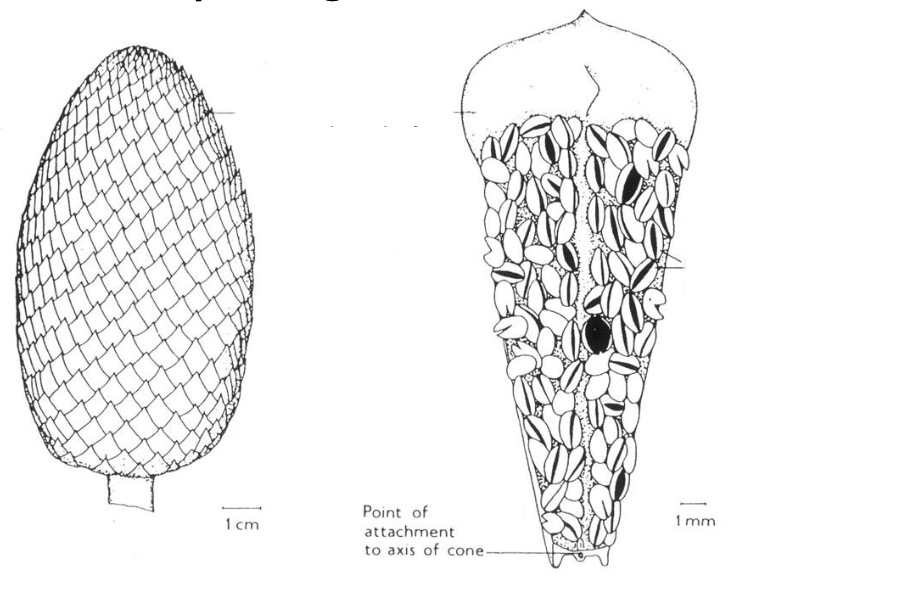
Label the structures of a male cone of cycad.
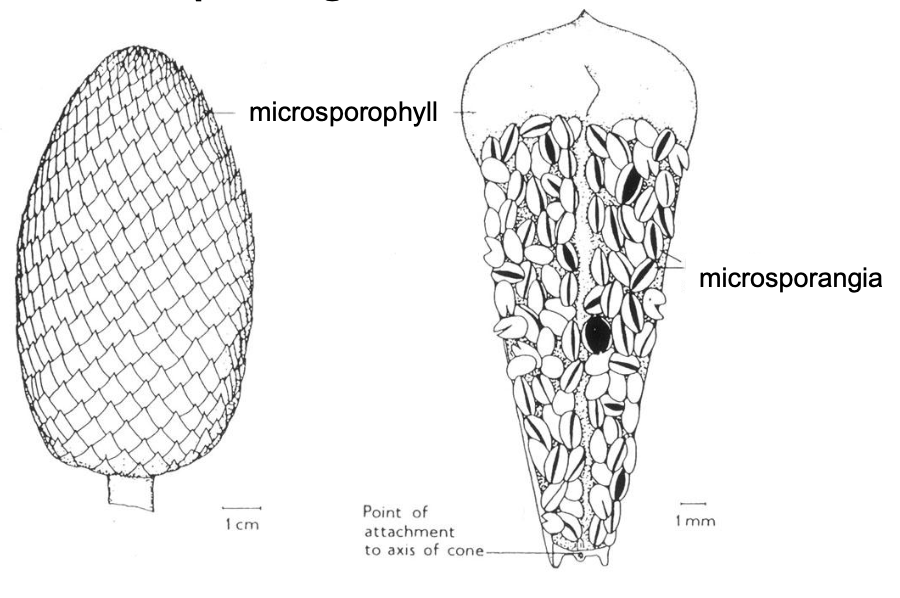
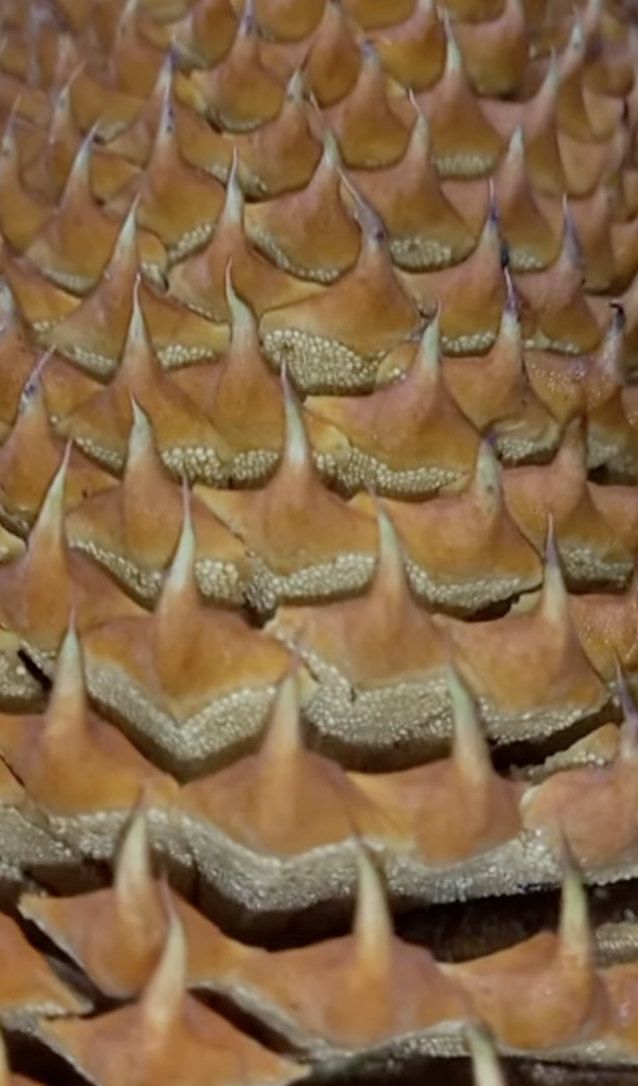
Identify the microsporophyll and microsporangia.
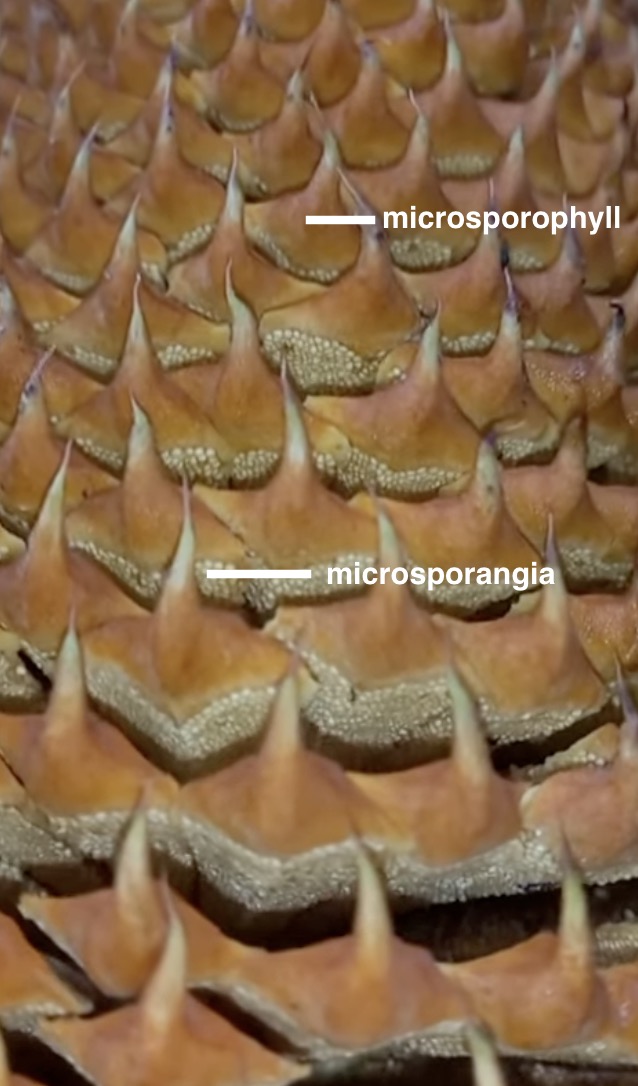
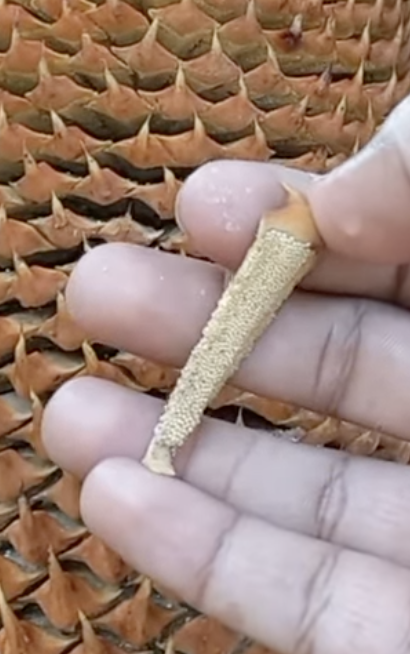
Describe the number of microsporangia on each microsporophyll.
Numerous.

