AP Psychology - Unit 0 Assessment: Psychology as a Science
 Studied by 4 people
 Call with Kai
 Learn
Learn Practice Test
 Spaced Repetition
 Match
Match Flashcards
 Knowt Play
1/108

There's no tags or description
Looks like no tags are added yet.
Name | Mastery | Learn | Test | Matching | Spaced | Call with Kai |
|---|
No analytics yet
Send a link to your students to track their progress
109 Terms
Defining Psychology: What is PSYCHOLOGY?
Psychology is the scientific study of behavior (actions) and mental processes (thoughts).
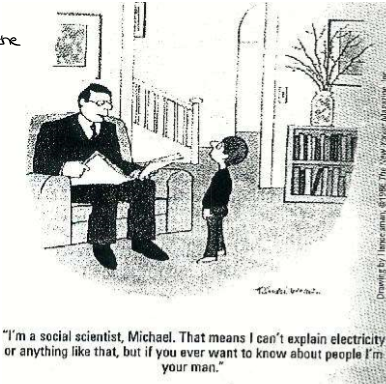
social science that involves the study of people
Enduring Issues in Psychology: Nature vs. Nurture
Nature: we are the way we are because of genetics
Ex> born shy
Nurture: we are the way we are because of our experiences
Ex> we become shy; your mom tells you to stop asking questions after a long day of work, so you begin to believe asking questions is wrong
Enduring Issues in Psychology: Person vs. Situation
Person: to what extent are you the same regardless of situation
Ex> the way you act in school is the same way you act with your parents
Situation: we change who we are based on the situation
Ex> the way you act in period 2 is different from the way you act in period 3 because the peers in the class
Enduring Issues in Psychology: Mind vs. Body
Mind: to what extent do our thoughts affect our physical being
Ex> stress compromises immune system
Body: your body affects your thoughts
Ex> sleep deprivation causes hallucination; how much you eat affects your mood
Enduring Issues in Psychology: Status Quo vs. Change
Status Quo: to what extent are you the same over our life span
Ex> never becoming more willing to voice opinions over time
Change: to what extent do you change over our life span
Ex> becoming more willing to voice opinions over time
Enduring Issues in Psychology: Diversity
Diversity: to what extent are we more similar or different from each other
Ex> IQ
Enduring Issues in Psychology: Are these debates RESOLVED or UNRESOLVED?
These debates are unresolved
→ because some people can believe a combination of 2 factors
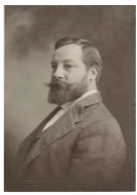
Schools of Thought in Psychology: Structuralism (oldest school of thought in psychology)
Founder(s): Titchener
Beliefs/Contributions: Old School
Introspection: encouraged people to introspect or to reflect on the thoughts that are passing through your mind
Psychologists categorized those thoughts by breaking them down into basic elements of consciousness, immediate sensations, past memories, feelings → each element/thought has a structure in the brain
Example Demonstrating School’s Beliefs:
Describing an Apple: Instead of saying “it’s an apple,” psychologists ask subjects to break down eating an apple into sensory components (like how sweet it is, its shape, how juicy it is, its texture, how crisp it is, its color, etc.).
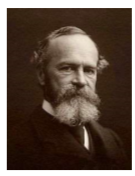
Schools of Thought in Psychology: Functionalism
Founder(s): James
Darwin’s influence → applies his ideas of biology to the mind
Beliefs/Contributions: Old School
Conscious experience is adaptive
Stream of consciousness: people say whatever comes to mind
What purpose do those thoughts have?
Why did humans evolve to have different structures of the brain responsible for different thoughts (from structuralism)?
Example Demonstrating School’s Beliefs:
Hot Stove: If you touch a hot stove, functionalism would ask Why do you feel pain? → Pain helps you quickly pull your hand away, protecting you from injury.
Structuralism would say What sensations do you feel when you touch the stove? → sharp pain, heat, etc.
Women in Early Psychology: What were the EARLY CONTRIBUTIONS of Women?
Limited access to education and advanced degrees
once banned from getting doctorates
Exclusion from psychological societies
Calkins - 1st female President of APA (1905)
Washburn - 1st woman to receive PhD in psychology (1894)
Now, more female psychologists than male
Times have changed (kind of…): What is the role of women in psychology TODAY?
More women than men graduate with degrees in psychology. But, there is still inequity in terms of money, status, and power (CWP 2017).

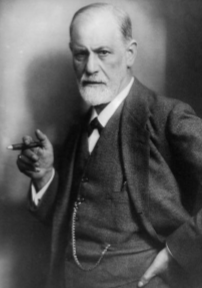
Schools of Thought in Psychology: Psychodynamic (Psychoanalytic)
Founder(s): Freud
Beliefs/Contributions: Classics
Role of the unconscious: there are thoughts that you are aware of, but others that happen subconsciously
Sex and aggression
Importance of early childhood events
What happens to you as a kid is going to shape you forever → nurture
Eventually becomes the psychodynamic school
Example Demonstrating School’s Beliefs:
Test Anxiety: A psychodynamic psychologist would say that a student’s test anxiety is coming from childhood experiences of failure in school. They may be having unconscious fears after their parents were upset with them over a previous poor test grade.
Schools of Thought in Psychology: Behavioral
Founder(s): Watson, Pavlov, Skinner
Beliefs/Contributions: Classics
Observable, measurable behavior: the way I know what you’re thinking is through your behaviors
Reaction to…
Rejects Freud that we have unconscious thoughts

Example Demonstrating School’s Beliefs:
Relationships: You get your significant others flowers x # of times during the week. Yelling at your spouse can be measured with decibels of volume, so if it exceeds a certain number, it can be concluded that the relationship is unhealthy.
Parenting: You compliment your child x # of times per week.
Schools of Thought in Psychology: Gestalt
Founder(s): Perls, Wertheimer
Beliefs/Contributions: Classics
Primarily concerned with perception: 2 people can perceive the same situation differently
Whole is greater than the sum of its parts
Example Demonstrating School’s Beliefs:
Grades: An 80% may seem like a good grade to one person, but the worst grade possible to another person.
Relationships: A couple goes in for marriage counseling (Bob & Susan) and they’re having some difficulties. The psychologist asks them what brings them in, and the couple recounts this story where Bob says that Susan had a work trip in LA. He says he’s always wanted to go to California. He thought this would be a great opportunity to enjoy CA together, but his wife didn’t invite him. Bob’s perception of his wife doing this is that she might be having an affair with someone in CA or might not be in love with him anymore. Susan didn’t invite her husband on the work trip because she was going to be in meetings all day. Her perspective is that she knew she wouldn’t be able to spend much time with him, so she believed it would be a waste of his time.

Schools of Thought in Psychology: Humanistic
Founder(s): Rogers, Maslow
Beliefs/Contributions: Classics
Human potential for growth
Doesn’t matter what happened to you as a child (not a victim of a negative childhood), everyone has the power to be successful and live a more purposeful life
Importance of free will and acceptance
Reaction to…
Freud, thinking he is too pessimistic
Example Demonstrating School’s Beliefs:
School: If a student did poorly in elementary school, they are still able to study hard in middle and high school as a way to improve themselves and reach their full potential.
Schools of Thought in Psychology: Cognitive
Founder(s): Piaget, Ellis, Beck
Beliefs/Contributions: Classics
Focuses on thoughts and thought processes
Do you have an optimistic slant?
Do you tend to see things in a negative light?
Thinking, memory, language, perception
Example Demonstrating School’s Beliefs:
Interview: You can go into an interview thinking you won’t get the job because there are so many other applicants or you can go into an interview thinking you have a good chance to get the job since you prepared well for the conversation.
Language: Why do babies learn languages easily but adults have a harder time?
Schools of Thought in Psychology: Evolutionary
Founder(s): N/A
Beliefs/Contributions: New Schools
Evolutionary psychologists try to explain human behavior and thoughts through looking back at how we have evolved as a species to explain why we are the way we are today
At one point, a typical relationship had a big age gape (between 89 and 23)
→ Nature
Example Demonstrating School’s Beliefs:
Mating Habits (Why does one choose to form a relationship and reproduce with someone else?): Over 1000s of years, men and women have evolved certain traits that they like in the other gender.
Men have sought to reproduce with women of child-bearing age.
Women have always sought a man of protection, especially during pregnancy, because in the past, women needed protection from cavemen.
Today, a relationship between an 89 year old male and 23 year old female would be justified as love for money.
Schools of Thought in Psychology: Biological/Physiological/Neurological (Neuroscience)/Behavioral Genetics
Founder(s): N/A
Beliefs/Contributions: New Schools
You can understand the mind and behavior by looking at biology and the biological processes happening within someone
Focuses on hormones
Serotonin (more serotonin → better mood)
Dopamine (more dopamine → more alert, energy, focus)
Nature
Example Demonstrating School’s Beliefs:
Violence: Why is Bob engaging in violent crimes? Maybe he is having higher levels than average of testosterone, which might be why the majority of violent criminals happen to be men.
Brain Injury: If you suffer a brain injury and part of your brain is lost, your mood (mood swings) and personality changes because the part of the brain you lost was responsible for those functions.
Schools of Thought in Psychology: Social-Cultural
Founder(s): N/A
Beliefs/Contributions: New Schools
These psychologists focus on to what extent does the society and culture you grow up in affect your thoughts and behavior
Nurture
Example Demonstrating School’s Beliefs:
NJ v. China: If you were born in NJ, to what extent would you act and think the same way if you were born in China? Would you be a totally different person because the circumstances are different in Shanghai?
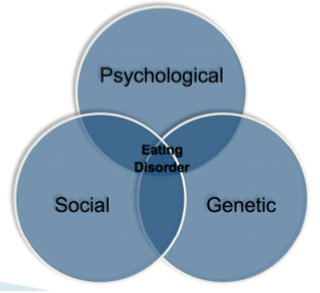
Schools of Thought in Psychology: Biopsychosocial Approach (most psychologists fall within this school of thought today)
Founder(s): N/A
Beliefs/Contributions: Current Trend
Borrows from multiple perspectives
Behaviors and thoughts influenced by:
Biological Factors
Psychological Factors (thought processes, habits of mind)
Socio-Cultural Factors (society we live in, culture we live in, friend groups)
Example Demonstrating School’s Beliefs:
Eating Disorder:
Biological Factors
Diseases (autoimmune deficiency, thyroid issues) that you are genetically prone to and could affect your weight
Weight
Hormones (can change appearance, and one’s perception of this could make them more prone to developing an eating disorder)
Neurotransmitters: Biological predisposition towards lower levels of serotonin (--> more stress)
Appetite
Food allergies might affect your relationship with food (ex> Celiac Disease)
History of anxiety (inhibits appetite, struggling with body image) or depression in the family
Socio-Cultural Factors
Friends making fun of someone
Seeing other people on social media (unreasonable body standard online)
Family and their eating habits
Cultural customs and food norms
Psychological Factors
Being unhappy with one's appearance / lack of self-confidence
In comparison to yourself with others (“I am _____ compared to my siblings”)
Being self-conscious of what you eat
Lack of sense of control
Anxiety, depression, & OCD
Trauma
Societal expectations
Psychology Research: Intro - Goals of Psychology
Describe → what is happening
Explain → why it is happening
Predict → use trends, patterns for when it might happen again
Control → make sure that there isn’t a third factor affecting the 2 factors you are studying before making conclusions (positive outcome)
The Scientific Attitude: What are SCIENTISTS like?
Be empirical
Curiosity
Skepticism
Humility
Ultimately, psychologists (and everyone else) must be critical thinkers
Do not accept “truths” without first testing them
Look at evidence, question assumptions, filter out bias
Scientific Method: What are the STEPS?
Generate a question
↓
Formulate a theory (general, not specific)
↓
Develop a hypothesis (specific, testable)
↓
Test hypothesis
Operational definitions
Clear and concise
↓
Replicate (repeat study for validity) → Test hypothesis
OR
Revise → Develop a hypothesis
Ex>
Question: Why do some people not use their turn signal when making a turn in their car?
Theory: The usage of turn signals is related to gender.
Hypothesis: Male drivers are less likely to use the car's turn signal when making a right-handed turn at an intersection than women.
Test: Sit on a park bench
Descriptive Research Methods: Case Study
a non-experimental technique in which one individual or group is studied in depth in the hope of revealing universal principles
ADVANTAGES: in-depth information
DISADVANTAGES: time-consuming, small group of people/one person, change behavior because you know you’re being studied (hawthorne effect)
Ex> a therapist follows one patient with a rare disease for 10 years to track progress and coping mechanisms; locked in syndrome patient is interviewed
Descriptive Research Methods: Survey
a non-experimental technique for obtaining the self-reported attitudes or behaviors of a particular group, usually by questioning a representative, random sample of the group
ADVANTAGES: large sample size, quick and easy to get out
DISADVANTAGES: not accurate, lead-in questions where wording causes favorable answers, social desirability bias, not everyone will answer, sampling bias
Ex> sending out an email to the student body to see who eats breakfast before school; see what % of students favor each food in the international cafeteria
Descriptive Research Methods: Naturalistic Observation
a non-experimental technique of observing and recording behavior in naturally occurring situations without trying to manipulate and control the situation
ADVANTAGES: captures authentic behavior because the subjects are unaware that they’re being observed (minimizes Hawthorne effect)
DISADVANTAGES: time-consuming, lack of control
Ex> a researcher watches customers in a coffee shop to see how often they use their phones while alone vs. with friends; studying mating habits or social hierarchy amongst gorillas
Incorporate the following psychological terminology in your responses…: Hawthorne Effect
acting differently when you know you’re being observed
Incorporate the following psychological terminology in your responses…: Social Desirability Bias
giving answers that make you seem like a better person
Incorporate the following psychological terminology in your responses…: Sampling Bias
only certain people are likely to respond to surveys, creating an unrepresentative sample of population
Correlational Research: What is the GOAL?
Goal: To identify a relationship between 2 factors (want to see if 2 things are associated/related)
Ex> absent days + grade level
CORRELATION DOES NOT PROVE CAUSATION!!!!
just because 2 things are related, doesn’t mean one thing causes another (better attendance ≠ higher GPA)
need an EXPERIMENT for cause and effect
Ex> Instances of polio and ice cream sales had a strong positive correlation in the early part of the 1900s
Therefore ice cream causes polio??!!

Correlational Coefficient (r): What does the CORRELATIONAL COEFFICIENT indicate?
Indicates the strength of a relationship (something about the results of your study)
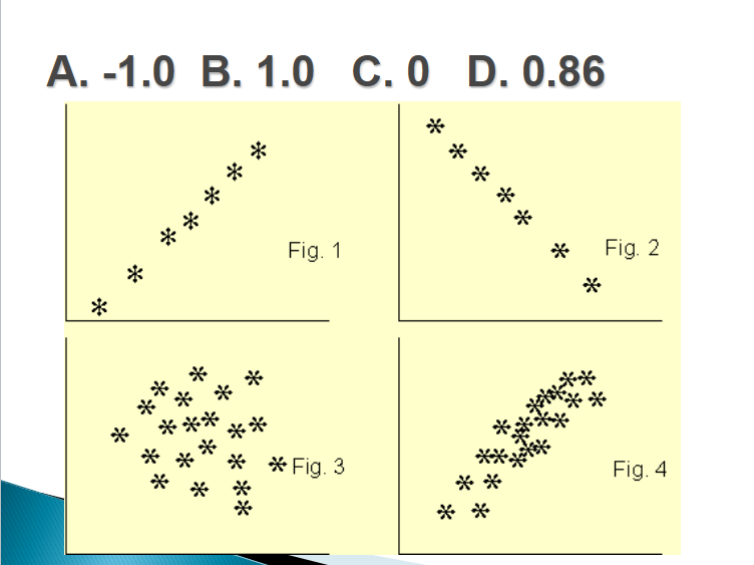
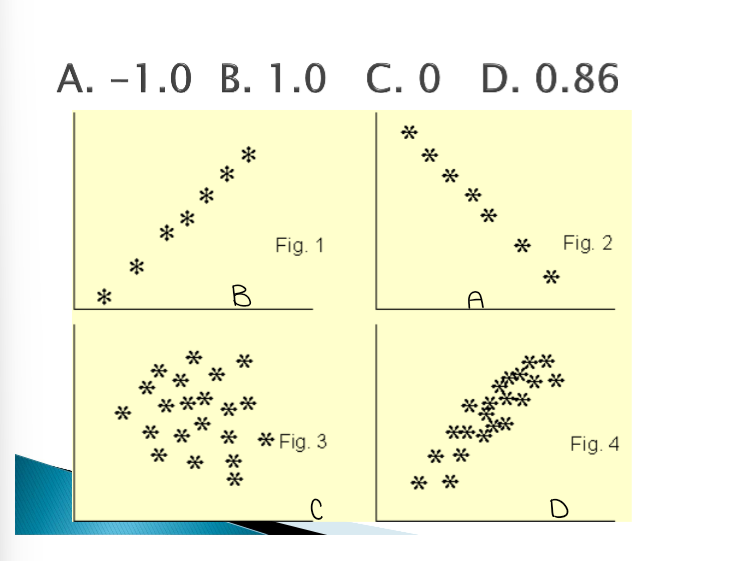
Must be between -1 and 1
Closer to -1 or 1 = strong relationship
1: 2 factors move in same direction (low values on x-axis → low values on y-axis, high values on x-axis → high values on y-axis)
Ex> high GPA = high attendance
-1: factors move in opposite directions (low values on x-axis → high values on y-axis)
Closer to 0 = weak or no relationship
Ex> Bob = 3.7 GPA → no way of predicting attendance
Graphed with a scatterplot
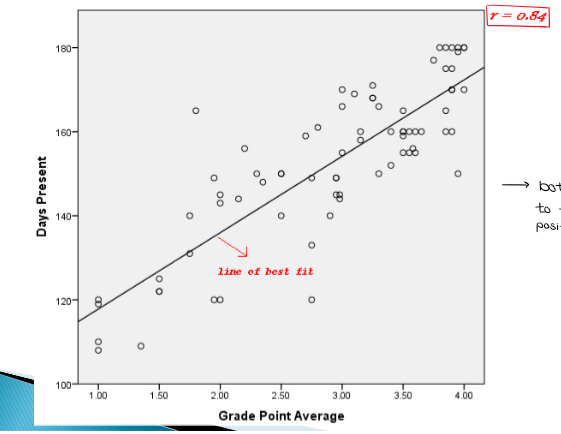
Positive or Negative Correlation?
positive
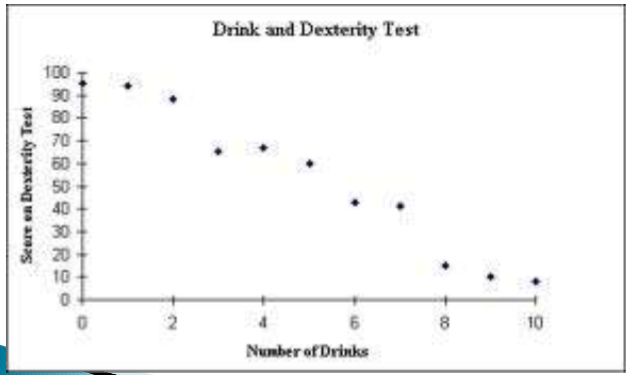
Positive or Negative Correlation?
negative
Match the LETTER to the SCATTERPLOT.
Correlational Research - Pitfalls: What causes PITFALLS in CORRELATIONAL RESEARCH?
Illusory Correlation: Perception of a relationship when one does not exist (or finding a correlation just because you’re looking for one)
Brought on by confirmation bias (only looking for data that confirms your hypothesis = cherry picking data)
Ex> if you believe “Crime increases under a full moon”, you will only look at deaths on full moon nights
Third factor (THIRD VARIABLE/FACTOR PROBLEM) could be the causal factor, causing both factors you’re studying
Coincidence
Experimental Method: What are its COMPONENTS?
Manipulate variable and then measure the effect of the manipulation.
Only research method in psychology that can establish causation!!!!!!!!!!!!!!!!!
Results generalizable to outside the lab?
Ethics
Who is involved?: Experimenter
Experimenter - person who manipulates a variable and then measures the effect of that manipulation on subsequent behavior
Who is involved?: Subjects (participants)
Subjects (participants) - individuals whose reactions or responses are observed in an experiment
Who is involved?: Subjects (participants)
Sample
Sample: All participants in an experiment (sample size = n)
Who is involved?: Subjects (participants)
Random Sample
Random Sample: All potential participants have an equal chance of being selected to be a part of the experiment
participants will be recruited through random sampling (use a Random Number Generator)
Who is involved?: Subjects (participants)
Convenience Sample
Convenience Sample: Sample drawn from the part of the population that is easy to access for the researcher
Ex> psych prof. recruits kids in their psych class as participants
Who is involved?: Confederates
Confederates: actors in an experiment who pretend to be participants but are actually working for the experimenter
Variables: Independent Variable (IV)
in an experiment, the factor that is manipulated; the variable whose effect is being studied
Variables: Dependent Variable (DV)
in an experiment, the outcome that is measured; the variable that may change when the independent variable is manipulated
Variables: Confounding Variable
any variable other than IV that could affect DV (bad, don’t want any)
Goal is to minimize these via experimental controls
Ex> NuYu drug testing focus → confounding variable = time of day in which test is administered (8 PM for placebo vs. 8 AM for experimental)
control by testing both groups at same time
Operational Definitions: What are they?
What are we measuring and how?
How is IV administered
How is DV measured
Allows experiment to be replicated by others
Who goes where?: Experimental Group
Experimental Group: the group exposed to the independent variables
Ex> given NuYu
Who goes where?: Control Group
Control Group: Group not exposed to the change in the independent variable; used for comparison with the experimental group
Ex> given placebo
Who goes where?: How do random assignment and placebo fit in?
Random Assignment: each participant has an equal chance of being in experimental/control group
random sampling → random assignment
Experimenter Bias: when you pick and choose who is in each group
Placebo (Effect): expecting an outcome out of something fake, enhancing performance
received by control group, which is used for comparison
Types of Procedures & Placebos: Double vs. Single Blind
Single - subject doesn’t know who is in control group and who is in experimental group
for ANIMAL research
Double - subject & experimenter don’t know who is in which group
ALWAYS use for experiments
to avoid bias
Types of Procedures & Placebos: Placebo benefits
Reduces demand characteristics
Demand Characteristics: subject guesses hypothesis of study so they act differently
Ex> Mr. D’Elia gets debrief form to guess hypothesis of psych study → he guesses it correctly so his data is thrown out
Reduces chance of confounding variable
Analyzing Results: Statistical Analysis - Statistics Defined
Branch of mathematics used to organize & analyze data
Necessary to use stats to understand what results actually MEAN - if they mean anything at all…
need to be specific so statistics are used
Be skeptical of sweeping generalizations
Ex> “Males are better at math and science than females”
How was this measured?
Descriptive Stats: Scales of Measurement - Nominal Scale
Set of categories for classifying
No ranking, just categorizing
Ex> 12 BMWs, 32 Mercedes, 18 Hondas, 10 Toyotas in student parking lot; conducting a study on what color shoes students tend to wear
Descriptive Stats: Scales of Measurement - Ordinal Scale
Scale that indicates relative position; ranks data
Put into an order where items are not equidistant
who’s higher and who’s lower
Ex> GPA; How satisfied are you with the food in the café? (Very Unsatisfied, Unsatisfied, Neutral, Satisfied, Very Satisfied)
Descriptive Stats: Scales of Measurement - Interval Scale
Scale with equal distance between values, but without a true zero (0 doesn’t mean absence of measurement)
Ex> degrees (0 degrees doesn’t mean there isn’t a temperature); SAT Scores (Scores range from 400-1600)
Descriptive Stats: Scales of Measurement - Ratio Scale
Scale with equal distance between values, but WITH a true zero (0 actually means absence of what’s being measured)
Ex> 0 in of rainfall in August; A correlational study looking at years of job experience and life satisfaction
Descriptive Stats: Scales of Measurement - Likert Scale
odd # of possible responses (5,7 = common)
Ex> rate 1-5; strongly disagree, disagree, neutral, agree, strongly agree
Descriptive Statistics: Frequency Distribution
A count of the number of scores that fall within each series of intervals
AKA Frequency histogram and frequency polygon (curve)
y-axis = ALWAYS frequency
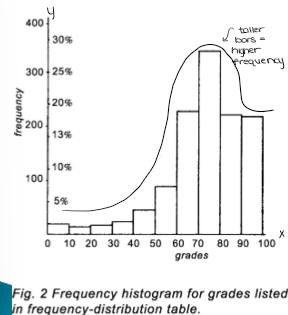
Descriptive Stats: Measures of Central Tendency
This is a single score that represents a set of scores
Mode: most common #, highest frequency
Ex> most students got 86 on test
Mean: average
Ex> class average is an 86 on Unit 0 test
Median: middle value (when values are in order)
Ex: 92 for data set with 64, 88, 92, 94, 100
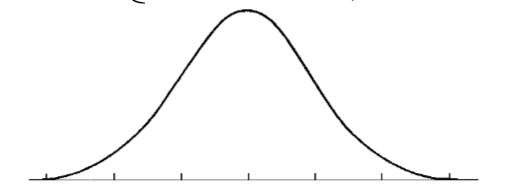
Descriptive Stats: Measures of Central Tendency - NORMAL CURVE / NORMAL DISTRIBUTION
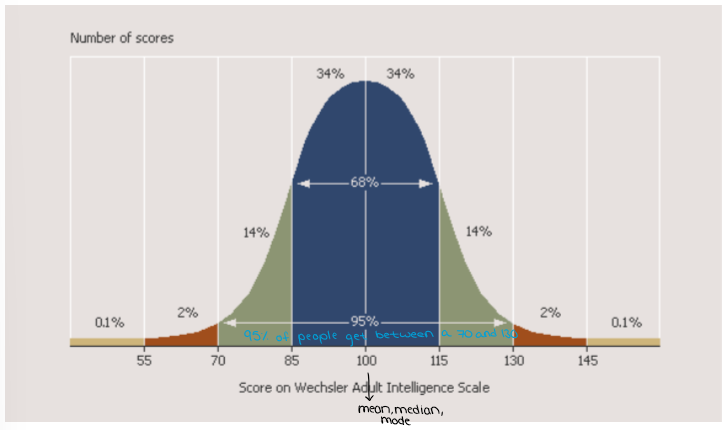
This is a NORMAL CURVE, where all measures of central tendency are equal (mean = median = mode)!
Regression Towards the Mean: What does it mean?
A variable that is far from the mean will tend closer towards the mean
Over time, data will move back towards mean (outliers won’t persist)
Regression towards mean is for long term
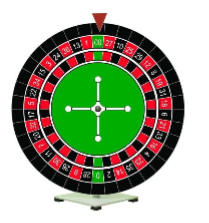
Ex> Bob’s average is a 94 for semester 1, but receives a 22 on the first test of semester 2 → on the next test, his grade should go back up towards a 94 (if not, the average will change); Roulette wheel spun 10 times (9 red, 1 black → 90% red) vs. Roulette wheel spun 1,000 times (522 red, 478 black → 52% red)
Descriptive Stats: Skewed Distributions
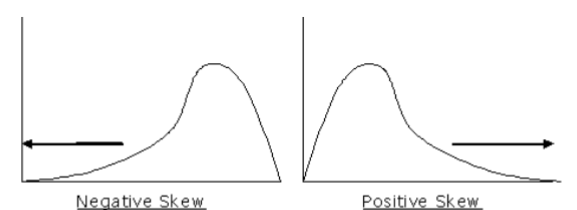
Frequency distribution is asymmetrical (curve isn’t centered in middle)
Mean, median and mode are different values
The mean is dragged in the direction of the outlier
Median won’t change because of outlier but mean will (mean is affected by the weight of all the values)
Skew Left / Negative Skew: Elongated tail at the left with more data in the left tail than would be expected in a normal distribution (mean < median → low outliers bring mean down)
Ex> Unit 0 Test Scores: 99, 99, 98, 97, 94, 3
Skew Right / Positive Skew: Elongated tail at the right with more data in the right tail than would be expected in a normal distribution (mean > median → high outliers bring mean up)
Ex> Unit 0 Test Scores: 0, 1, 2, 3, 99
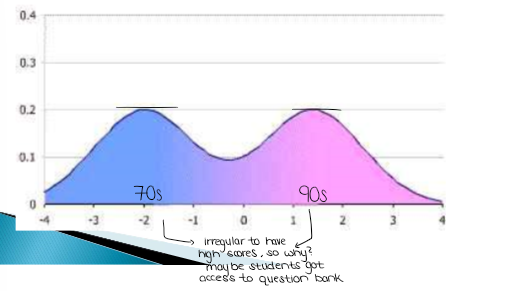
Descriptive Stats: Bimodal Distribution
As the name implies, a bimodal distribution has TWO modes
Descriptive Stats: Measures of Variation - Range
max - min
Not very useful because you are unable to know much about each individual value/average
Ex> 62-100 range on Unit 0 Test
Descriptive Stats: Measures of Variation - Standard Deviation
how much do scores vary from the mean in a distribution
average distance each value lies from mean
how spread out the data set is
Descriptive Statistics: Measures of Variation - Empirical Formula
In a normal curve, this number reveals the percentage of scores that fall within a particular range
68% fall within 1 standard deviation from the mean
95% fall within 2 standard deviations from the mean
99% fall within 3 standard deviations from the mean
Inferential Stats: Significant Difference
Statistically Significant Difference (= difference in means)
Ex> experimental group scored an average of an 85% and the control group scored an average of a 77%, so their difference is 8%
A component of internal validity - do the results measure
Inferential Stats: Significant Difference - p-value
p-value: the likelihood that the difference in the DV for the experimental and control groups is due to chance.
= probability the results are due to chance
p < .05 (5% chance results are by chance)
Inferential Stats: Significant Difference - What does it mean to be STATISTICALLY SIGNIFICANT?
“Statistically significant” is code for “not likely due to chance”
“statistically significant” vs. “important”
Inferential Stats: Significant Difference - Difference WITHIN v. BETWEEN Groups
WITHIN (standard deviation) vs. BETWEEN (statistically significant difference) group variation?
Practice! You’re reading the results of a study:
“Attention scores in the group that used the new drug were 55% higher than in the control group that received a placebo. The results were statistically significant (p = 0.02).”
In plain language, this means, “The new drug boosts attention. The results of this study were ___ ______ ___ __ ______.”
not likely due to chance
Inferential Statistics: Reliability - When can we generalize about a population based on the results from our sample?
Sample is a representative sample
The less variation in the data, the more reliable (if variability is high in a distribution, the mean becomes less meaningful)
The more examples the better! (ask 2 friends how they like the class vs. asking 25)
There are no cohort effects present
→ more representative, more generalizable
Inferential Statistics: Reliability - What are COHORT EFFECTS?
Something happens in time to skew the results
Ex> an annual survey about safety given the day after the intruder incident is going to have a lot of responses from students who feel unsafe, but the results would be different if the survey was given the day before
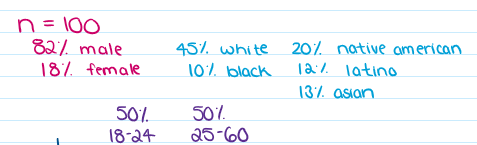
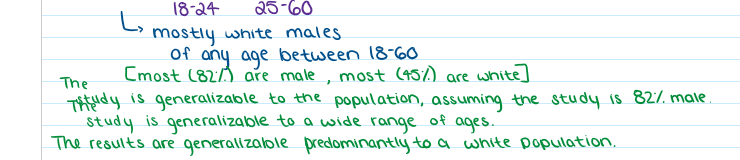
Inferential Statistics: Reliability - To what extent are the findings of the study generalizable?
Beware of Pitfalls!: Hindsight Bias
When an event has already happened and you know the outcome, easy to say as results are confirmed
Ex> I knew the Cowboys were going to win (after the game was over)!
Beware of Pitfalls!: Gambler’s Fallacy
Idea of regression to the mean (something hasn’t happened, so it’s bound to happen)
Ex> 10 blacks in a row, so the next one has to be red (FALSE, still 50% chance)

Beware of Pitfalls!: How is EXPERIMENTER BIAS minimized?
Minimized with double blind procedure, random assignment, use of a placebo
Research & Ethics: Consider the studies you read in the summer assignment. Were these studies ethical? Why or why not?
No, because…
MILGRAM (1963): participants led to believe they were administering shocks to a “learner,” but there wasn’t actually anyone on the other side; a tape recording of screaming played as the learner had to increase the voltage everytime they got something wrong; once the recording stopped and there was silence, the subjects assumed they had killed the learner; took place during WWII to determine why the Nazis were so evil → obedience, control
undue long-term psychological distress, no true informed consent
ZIMBARDO: participants were divided into guards and prisoners to simulate being in a prison where Zimbardo was the “Warden”; study was canceled
physical and psychological harm, no good informed consent
screaming, dehumanizing names/comments
Who is WILHELM WUNDT?
German physician, psychologist, and philosopher
One of the founders of modern psychology
Established the first laboratory for psychological research at Leipzig University in Germany
What is RESEARCH vs. APPLIED PSYCHOLOGY?
Research: study of behavior and mental processes, often driven by curiosity for knowledge
Applied Psychology: uses the findings from that research to solve real-world problems in areas like health, education, and the workplace
What are the differences between: Ph.D./Psy.D./M.D./M.A./B.A.?
Ph.D.: Doctor of Philosophy
Psy.D.: Doctor of Psychology
M.D.: Doctor of Medicine
M.A.: Master of Arts or Master of Science
B.A.: Bachelor of Arts or Bachelor of Science
Scientific Method: THEORY
an explanation using an integrated set of principles that organizes observations and predicts behaviors of events
Scientific Method: HYPOTHESIS
a testable prediction, often implied by a theory
Scientific Method: FALSIFIABLE
the possibility that an idea, hypothesis, or theory can be disproven by observation or experiment
Scientific Method: TESTING
evaluating something to gather information, determine its effectiveness, or make a judgment (conducting experiments/studies to investigate hypotheses)
Scientific Method: OBSERVATION
act of attentively watching someone else's behavior or a particular event without directly participating in it
Descriptive Methods: POPULATION
all those in a group being studied, from which random samples may be drawn (Note: Except for national studies, this does not refer to a country’s whole population.)
Descriptive Methods: META-ANALYSIS
a statistical procedure for analyzing the results of multiple studies to reach an overall conclusion
Correlational Methods: SCATTERPLOTS
a graphed cluster of dots, each of which represents the values of two variables
the amount of scatter suggests the strength of the correlation (little scatter indicates high correlation)
Experimental Method: EXPERIMENT
a research method in which an investigator manipulates one or more factors (independent variables) to observe the effect on some behavior or mental process (the dependent variable)
By random assignment of participants, the experimenter aims to control other relevant factors
Single/Double Blind: QUANTITATIVE vs. QUALITATIVE RESEARCH
Quantitative Research: a research method that relies on quantifiable, numerical data
Ex> likert scale, where questionnaire responses fall on a continuum (“strongly disagree” to “strongly agree”)
Qualitative Research: a research method that relies on in-depth, narrative data that are not translated into numbers
Ex> structured interviews to understand the causes and consequences of individuals’ aggression
What is a HISTOGRAM?
a bar graph depicting a frequency distribution
What is the difference between DESCRIPTIVE VS. INFERENTIAL STATISTICS?
Descriptive Statistics: numerical data used to measure and describe characteristics of groups; include measures of central tendency and measures of variation
Inferential Statistics: numerical data that allow one to generalize—to infer from sample data the probability of something being true of a population
What is GENERALIZABILITY?
extent to which research findings or conclusions drawn from a specific study can be applied to broader populations
determines how much we can trust the results of a study to reflect real-world scenarios
What is EFFECT SIZE?
the strength of the relationship between two variables; the larger the effect size, the more one variable can be explained by the other
What is a REPRESENTATIVE SAMPLE?
group of individuals that accurately represents the larger population from which it is drawn
What is OVERCONFIDENCE?
the tendency to be more confident than correct, meaning one overestimates the accuracy of their own beliefs and judgments
Ex> A student believes they aced a test, but then receives a grade lower than they expected.
What is SELF-REPORT BIAS?
bias when people report their behavior inaccurately
Research and Ethics: Setting Standards
APA
American Psychological Association
sets psychological standards
Research and Ethics: Setting Standards
PsyETA
Ethical Treatment of Animals
regulations for animal use in psych studies
must prove that this particular study is the only way to validate hypothesis
 Note
Note  Flashcards (25)