Lesson 10: Adrenal medulla and Pathogenesis and lab evaluation of adrenal glands
 Studied by 0 people
 Call Kai
 Learn
Learn Practice Test
 Spaced Repetition
 Match
Match Flashcards
 Knowt Play
1/48

There's no tags or description
Looks like no tags are added yet.
Name | Mastery | Learn | Test | Matching | Spaced | Call with Kai |
|---|
No analytics yet
Send a link to your students to track their progress
49 Terms
What hormone is primarily produced by the adrenal medulla?
Epinephrine
The adrenal medulla is made up of what type of cells?
Chromaffin cells
The chromaffin cells in the adrenal medulla are modified what?
Postganglionic sympathetic neurons
The main nerve innervation to the adrenal glands consists of what?
pre-ganglionic sympathetic nerves
The adrenal medulla is considered as specialized part of what nervous division?
Sympathetic
The cells are organized in cords that are richly vascularized to facilitate what?
Rapid hormone secretion
Chromaffin cells mainly secrete what hormones
Epinephrine and small amounts of norepinephrine
Chromaffin cells directly recieve cortisol form the cortex, cortisol stimulates what hormone production?
epinephrine
High local concentration are needed for the enzyme to convert what into epinephrine?
Norepinephrine
What is the main stimulus of catecholamine secretion?
stress or sympathetic nervous system activation
The adrenal medulla works witht he sympathetic nervous system to control the body’s response to what?
acute stress
A rising level of cytoplasmic norephrinephrine in the cell can suppress its own production via a negative feedback loop on what enzyme?
tyrosine hydroxylase
What is the metabolic effects of epinephrine in the body?
Increases glycogenolysis and glucose release into the bloodstream to provide immediate energy
How does the production of epinephrine effect the cardiovascular system?
Tachycardia
Increased chronotropism
Increased ionotropism
Vascodilation in skeletal muscles
vasoconstriction to skin, GI, and Kidneys
How does the production of epinephrine effect the respiratory system?
Bronchodilation to increase oxygen supply
How does the production of epinephrine effect the vision?
Pupils dilation (mydriasis)
What is the primary function of the adrenal medulla?
Helps to prepare the body for a “fight or flight” response
What are chatecholamine-secreting tumors of chromaffin cells. More frequent in dogs than cats.
Pheochromocytomas
What are the clinical signs are non-specific of Pheochromocytomas?
Tachycardia and hypertension
Weight loss and Muscle wasting
Increase energy expenditure
Appetite suppression
How does a Pheochromocytomas cause tachycardia?
Catecholamines bind to B-1 adrenoreceptors, which leads to chronotropism and increased inotropism. The combination of a faster heart rate and a stronger heart contraction increases cardiac output.
How does a Pheochromocytomas cause hypertension?
Acting on alpha 1 adrenoreceptors, catecholamines cause vasoconstriction in many organs and tissues. In combination with cardiac output causes hypertension.
How does a Pheochromocytomas cause weight loss and muscle wasting?
Excess catecholamines increase metabolic rate and excessive breakdown of fat and muscle causing weight loss.
How does a Pheochromocytomas cause increased energy expenditure?
Constant activation of the fight or flight response leads to continuous energy expenditure, eventually causing weakness.
How does a Pheochromocytomas cause appetite suppression?
Excess catecholamines may directly suppress the appetite center reducing food intake and contributing to weight loss.
A pheochromocytoma is a catecholamine-secreting tumor of chromafin cells. What is the most common clinical sign associated with this condition in dogs?
Tachycardia and hypertension
A 10 yr old dog presents with lethargy, vomiting, bradycardia, and episodes of collapse. Lab results show hyponatremia and hyperkalemia. Based on clinical signs and lab findings what is the most likely endocrine disorder?
Hypoadrenocroticism
A dog presents with PU/PD, polyphagia, muscle wasting, alopecia, and pot-bellied appearance. What ia the most likely diagnosis?
Hyperadrenocorticism
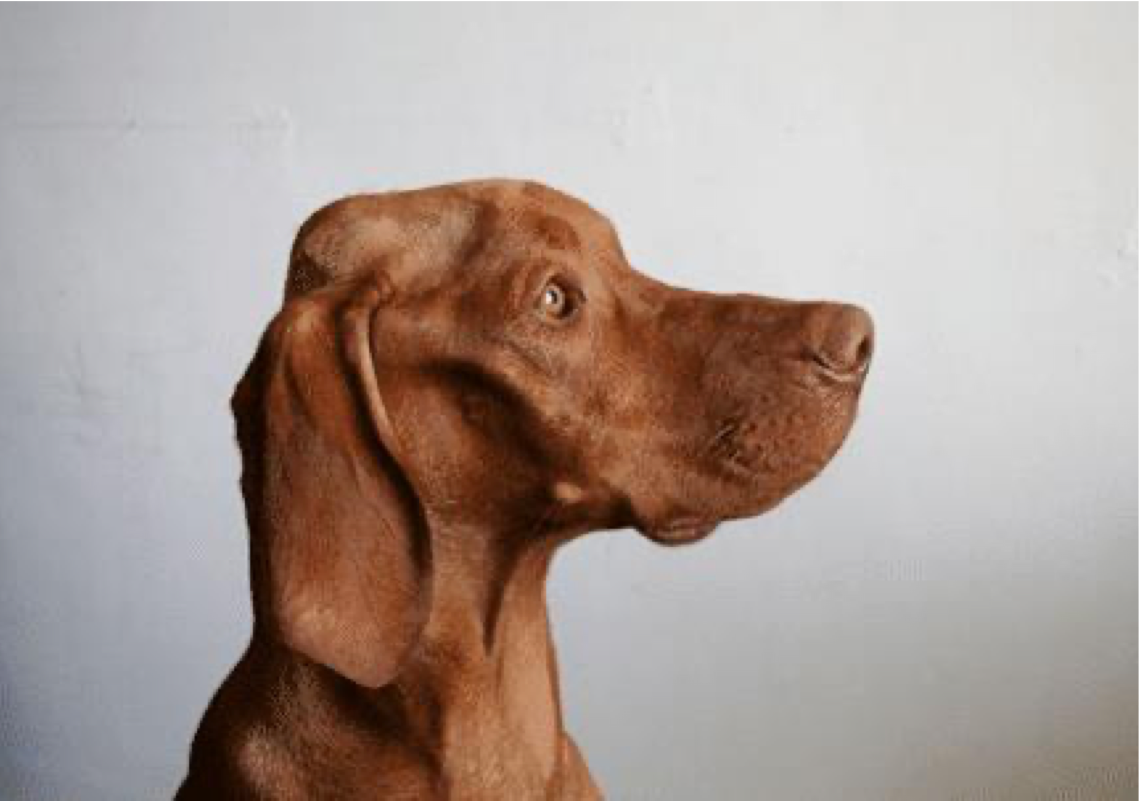
What best describes the change in muscling on this dogs head?
A decrease in size or amount of a cell, tissue, or organ after normal growth has been reached
What is the HPA axis?
Hypothamalus (CRF) → Anterior pituitary (ACTH) → Adrenal Gland (Cortisol)
What are the three causes of Cushing disease?
Steroid use
Pituitary tumor
adrenal tumor
What is the most common causes of Cushing (hyperadrenocortisim) 80% of cases?
Pituitary hyperplasia/Tumor
What is the second most common cause of Cushings about 20% of cases?
Adrenal hyperplasia/tumor
What are the four types of adrenal hyperplasia/tumors that occur during Cushings?
Adrenal Nodular Hyperplasia (Bilateral)→ best way to diagnose
Cortical adenomas/adrenocarcinomas → Pheochromocytoma
Contralateral Atrophy
Carcinomas
How Iatrogenic stress cause Cushings?
Excess administration of Glucocorticoids causing negative feedback on release of CRH and ACTH. This leads to adrenal gland atrophy causing less natural cortisol production.
What is the most common form of hyperadrenocorticism (HAC) in dogs and how does it differ from the less common form?
Pituitary-dependent hyperadrenocorticism, which accounts for 80-85% of HAC and is caused by excess ACTH from a pituitary tumor.
What may produce specific hematological, biological changes and to lesser degree urine changes that help in making a DDX list?
Endocrine disease
What should you do if you suspect a patient has Cushings?
Baseline chem/heme/urinalysis should be down prior to specialized endocrine testing
What are the effects of Cushings on the body?
Lowers T3 and T4 hormones= euthyroid sick syndrome
Diabetes due to inulin antagonism (insulin resistance and poor glycemic control)
Co-morbidities such as recurrent UTIs
Hypertension
What are the CBC findings when a patient has Cushings?
Increases RBCs
Stress leukogram (Mature neutrophilia, Lymphopenia, Eosinopenia, Monocytosis)
What are the chemistry findings when a patient has Cushings?
Elevated ALP
Hypercholesterolemia
Hyperglycemia
Mild ALT increase
Lipemia (due to altered lipid metabolism)
Lowered UN (PU/PD)
Low TH (ESS)
Hypokalemia
What are the urinalysis findings in a patient that has Cushings?
UTIs due to immunosuppression because the WBC cannot fight infections allowing bacteria to accumulate. If you suspect Cushings you must perform culture and sensitivity testing.
What set of CBC findings is most consistent with a stress leukogram in a dog with suspected hyperadrenocorticism?
Lymphopenia, eosinopenia, and mature neutrophilia
Mild polycythemia (
What is the problem with testing for hyperadrenocorticism?
many assays are affected by stress and steroid administration, no diagnostic test for HAC has 100% accuracy.
HAC diagnosis requires what type of testing?
Demonstration of increased cortisol production
Decreased HPAA sensitivity to glucocorticoid feedback
What are the indicators for performing diagnostic test for HAC are:
A pituitary/adrenal tumor
A diabetic dog persistently poor response to high dosages of insulin
Persistent hypertension
What steroid is least likely to interfere with Assay?
Dexamethasone
What is a Basal Cortisol?
The level of cortisol in the blood under resting or non-stimulated conditions without any external influences such as stress, medication, or stimulation tests. It represents the normal baseline production of cortisol by the adrenal gland.
If hyperadrenocorticism leads to excessive cortisol production, how would this be reflected in basal cortisol levels?
It would be unreliable because an elevated basal cortisol level is no value in the diagnosis of HAC.
Pulsatule ACTH secretion results in variable cortisol levels throughout the day and may be affected by non-adrenal issues.
What is the basal cortisol useful in ruling out/diagnosing?
Addisons
 Note
Note  Flashcards (28)