Pharmacology: Autonomic and Somatic Nervous System (Lecture 4)
 Studied by 0 people
 Call Kai
 Learn
Learn Practice Test
 Spaced Repetition
 Match
Match Flashcards
 Knowt Play
1/61

There's no tags or description
Looks like no tags are added yet.
Name | Mastery | Learn | Test | Matching | Spaced | Call with Kai |
|---|
No analytics yet
Send a link to your students to track their progress
62 Terms
Learning Objectives:
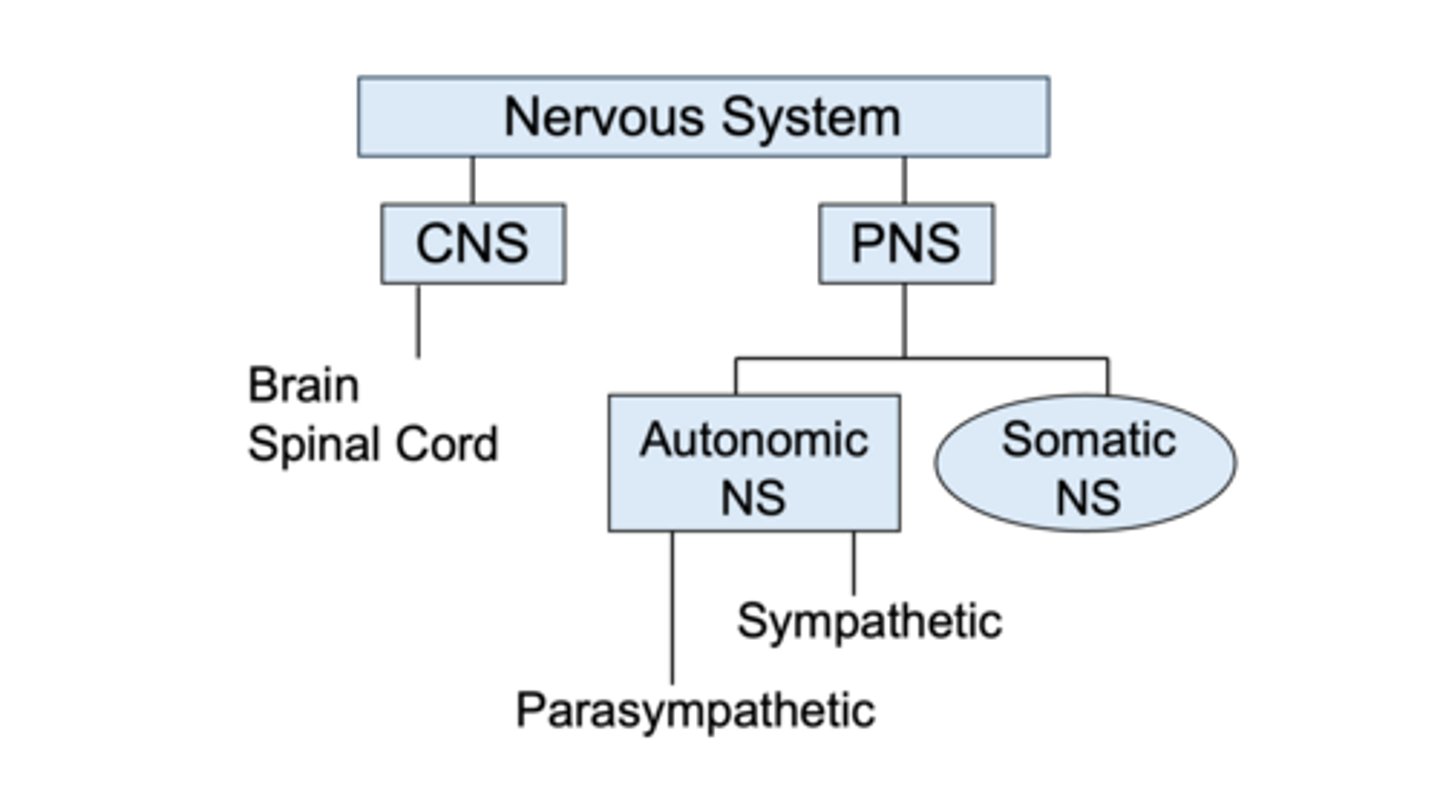
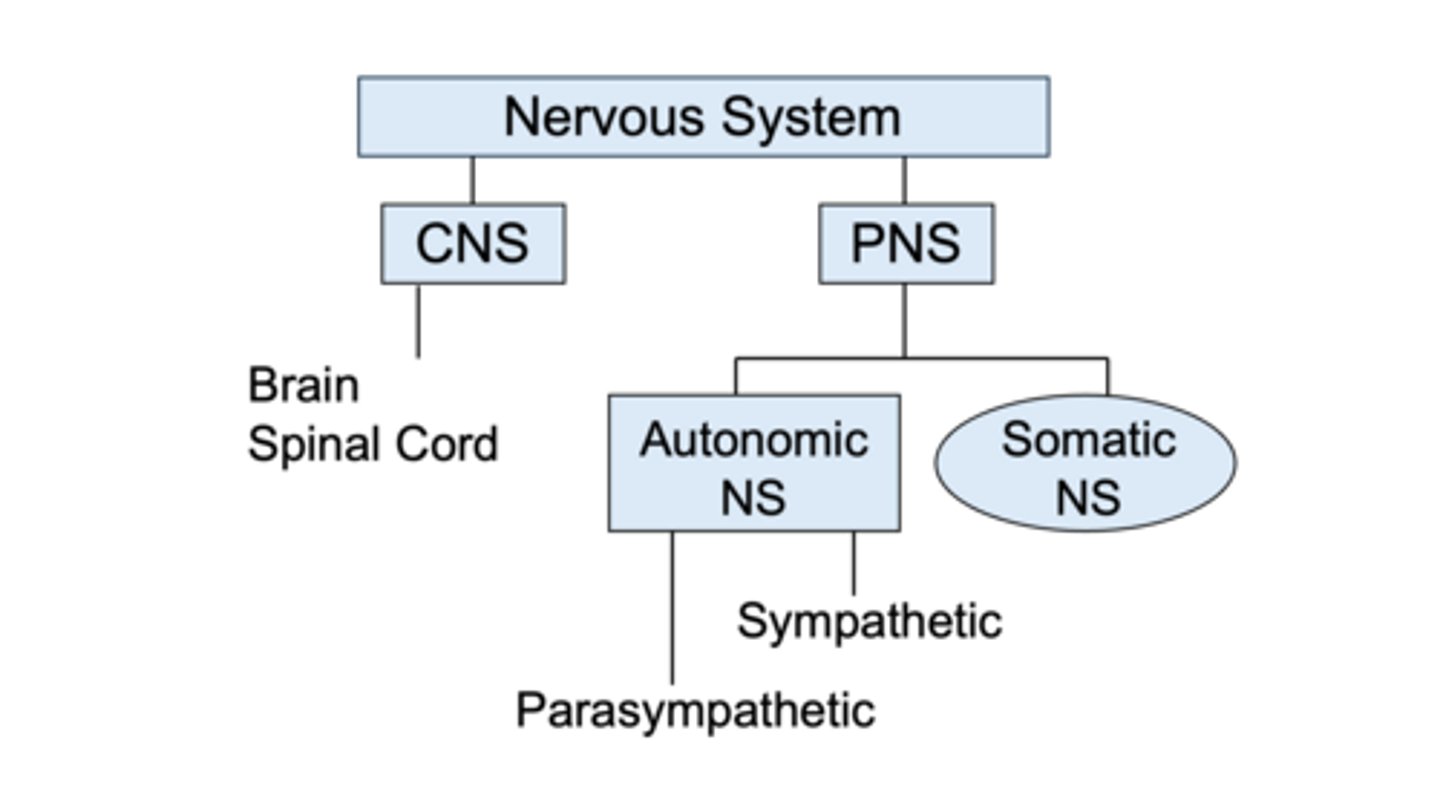
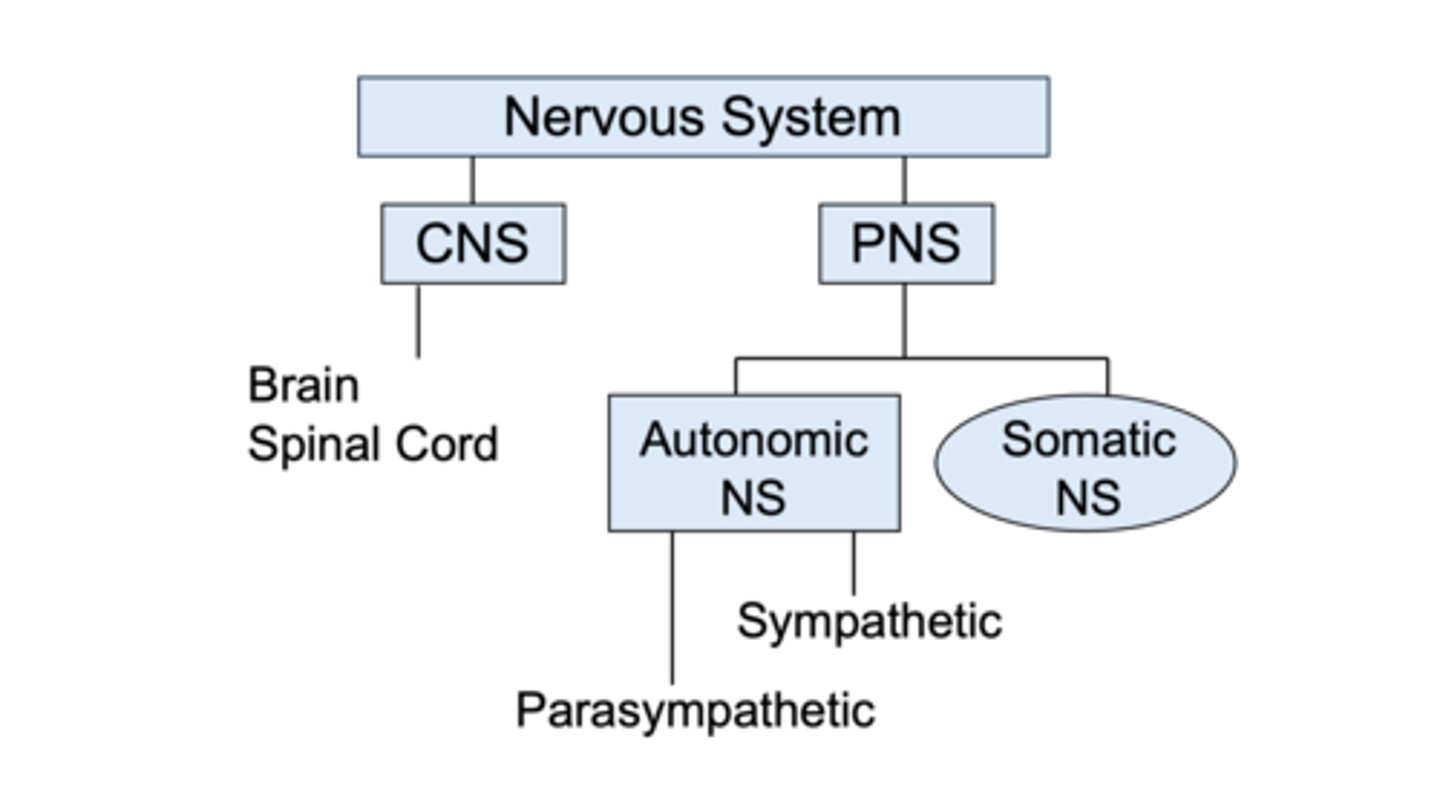
What are the two main divisions of the nervous system?
1. central nervous system
2. peripheral nervous system
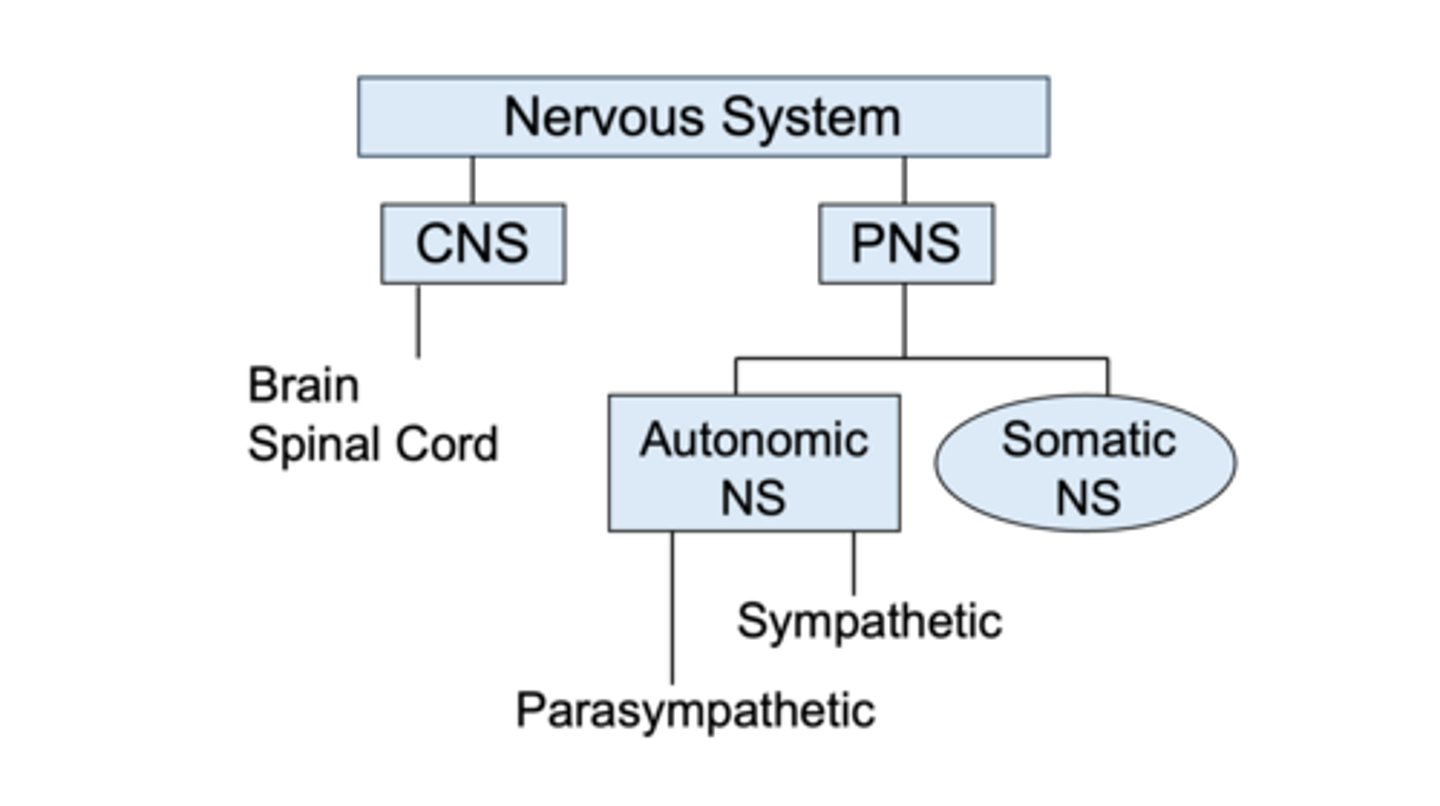
What is the central nervous system? What two things is it made of?
1. brain
2. spinal cord
What is the definition of the peripheral nervous system?
every axon that leaves the brain and spinal cord
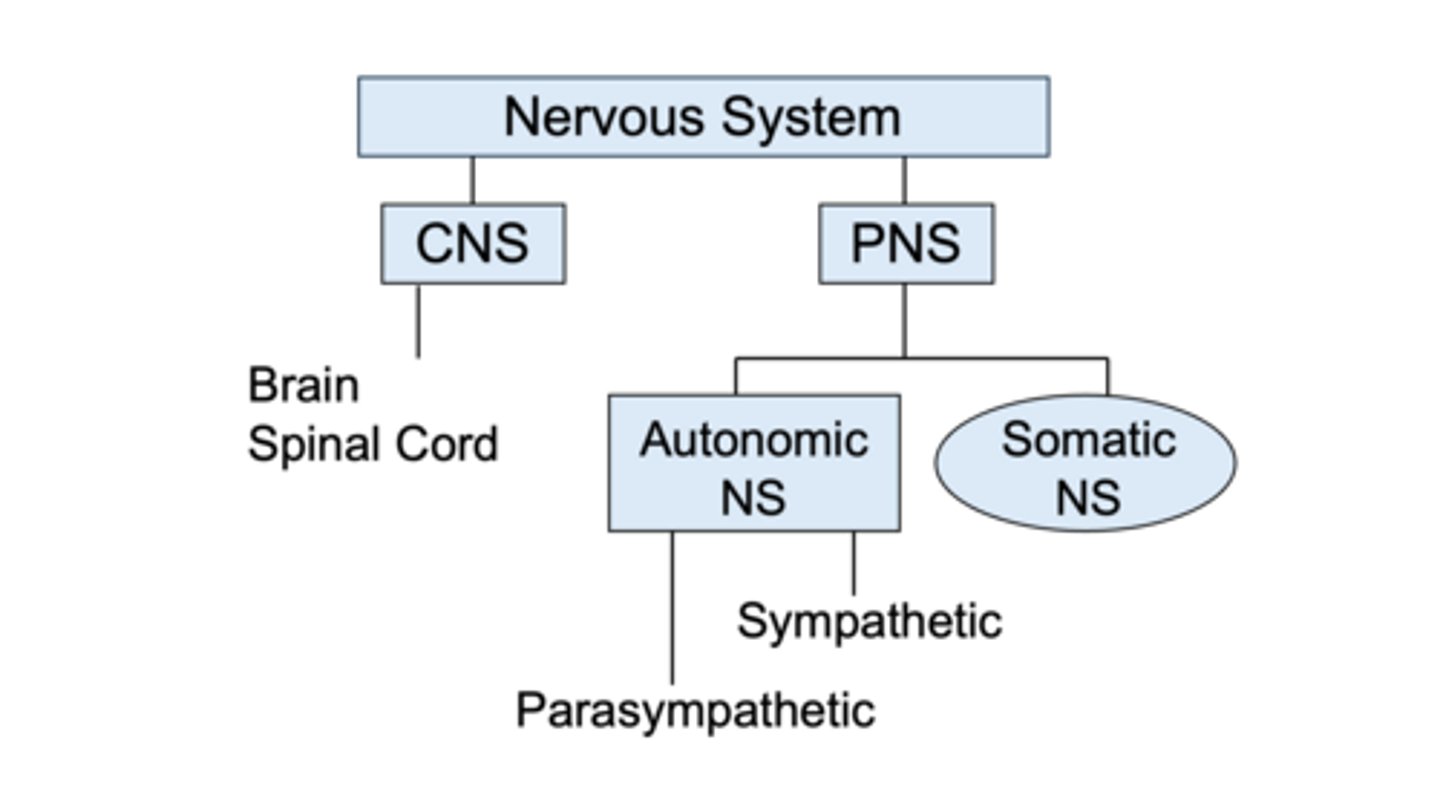
What are the two main divisions of the peripheral nervous system?
1. autonomic nervous system
2. somatic nervous system
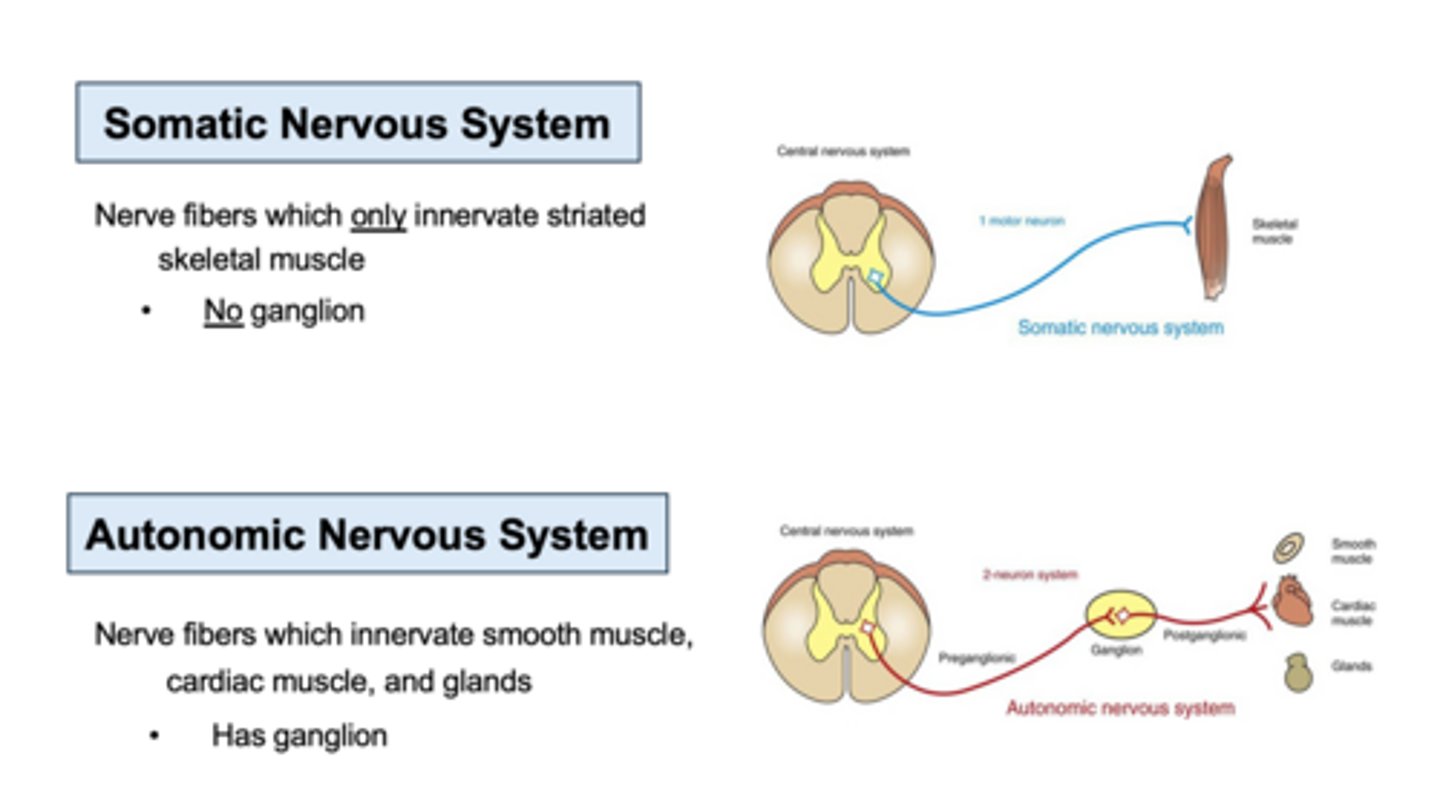
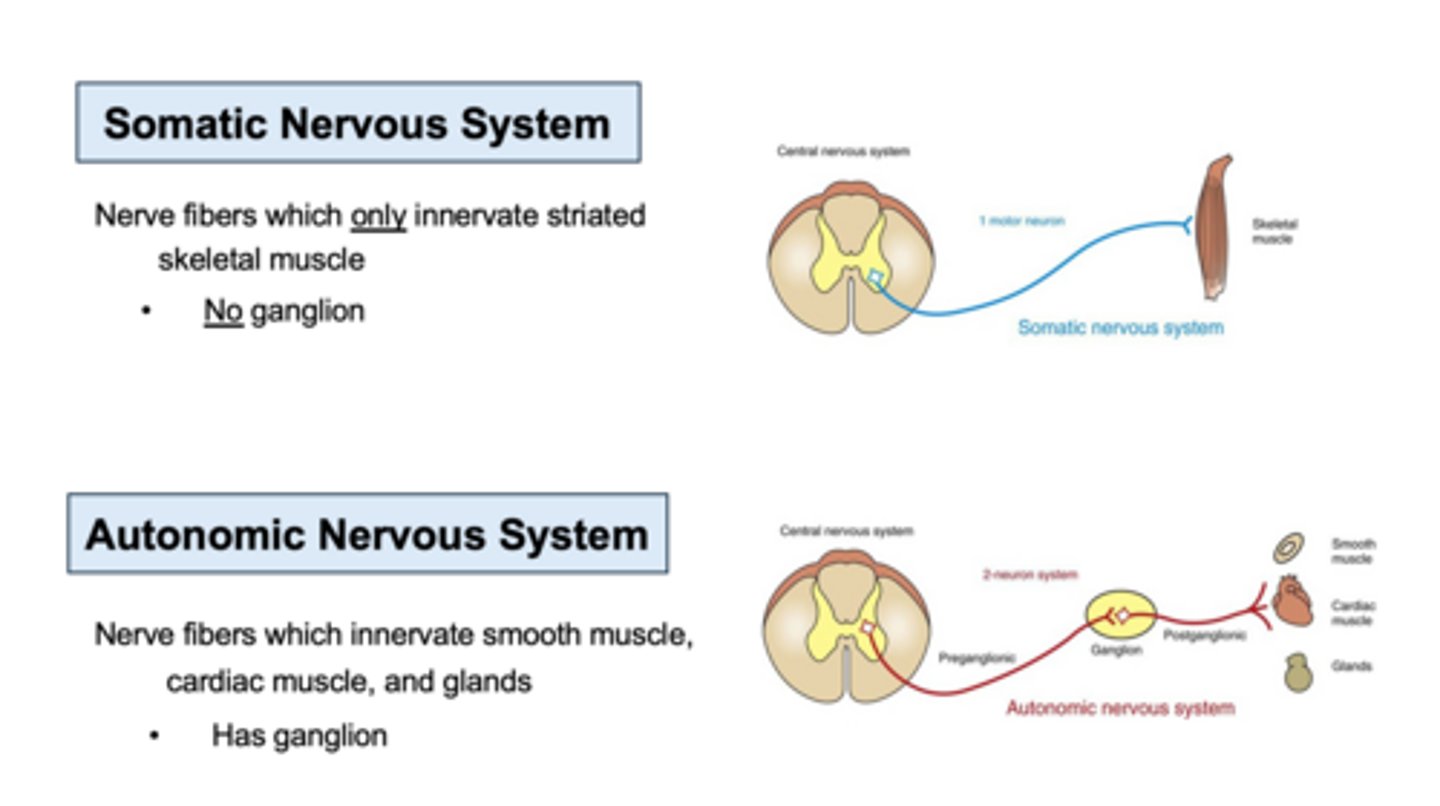
In the peripheral nervous system, what is the somatic nervous system?
- nerve fibers that only innervates striated skeletal muscle
- has one continuous neuron
- no ganglion!
- myelinated
- denervation results in paralysis → atrophy
- have more control of the somatic system
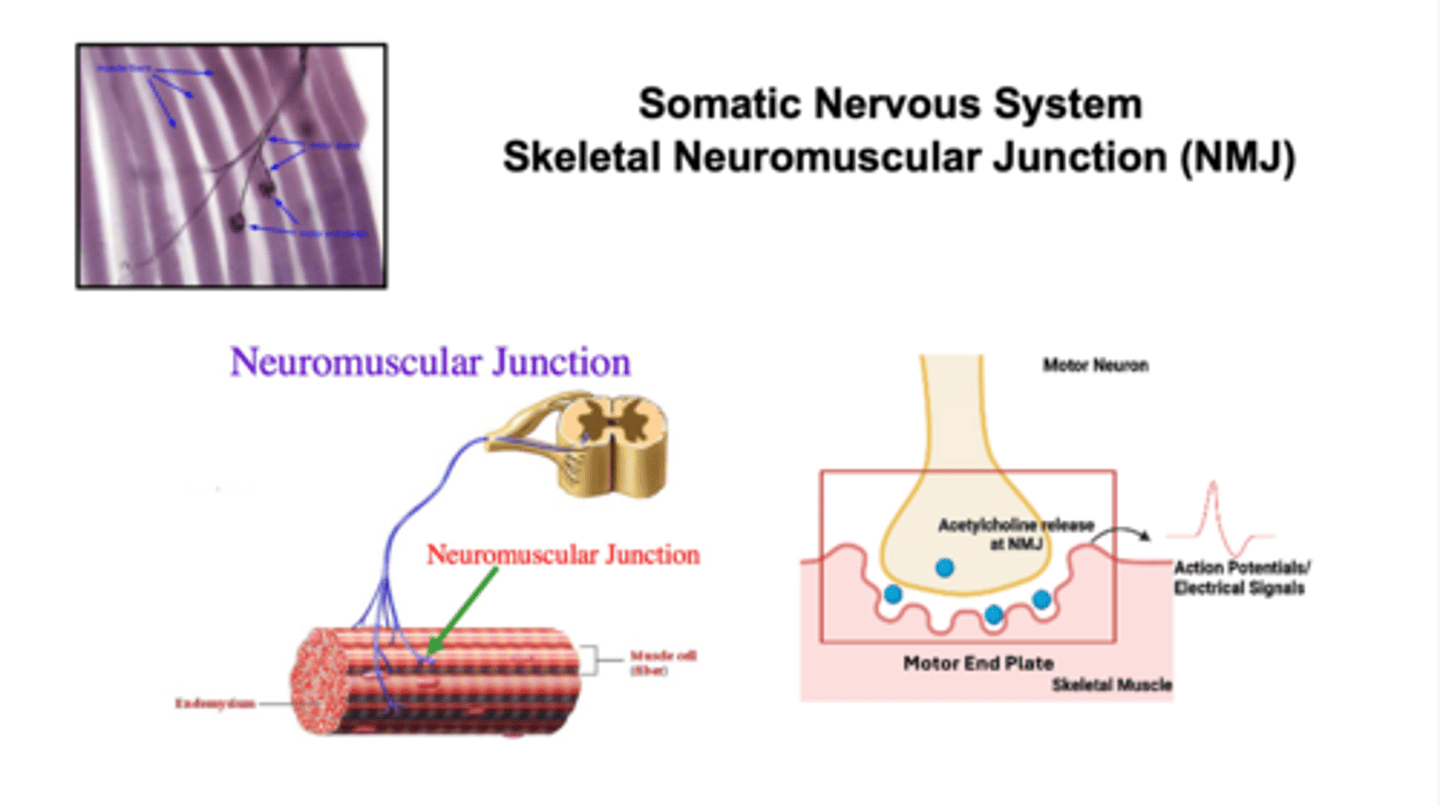
In the somatic nervous system, what is the neuromuscular junction (NMJ)?
the entire area where the nerve ending meets with striated skeletal muscle
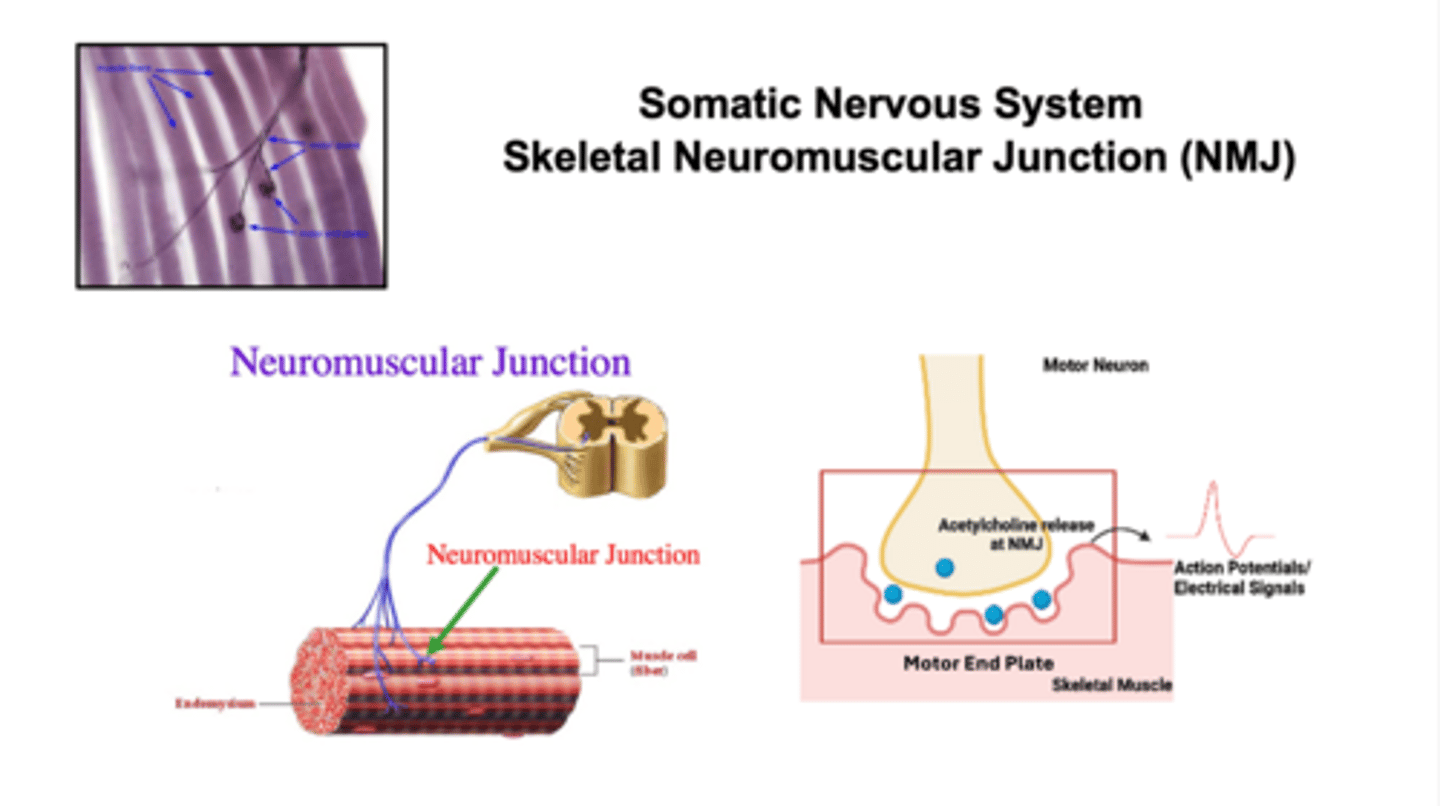
In the somatic nervous system, what is the motor end plate? What happens here?
- an invagination in the striated skeletal muscle where the somatic nerve ending meets the muscle
- neurotransmitters are released here, and they bind to receptors on the skeletal muscle cell
- these receptors can either be activated or blocked, leading to contraction or paralysis
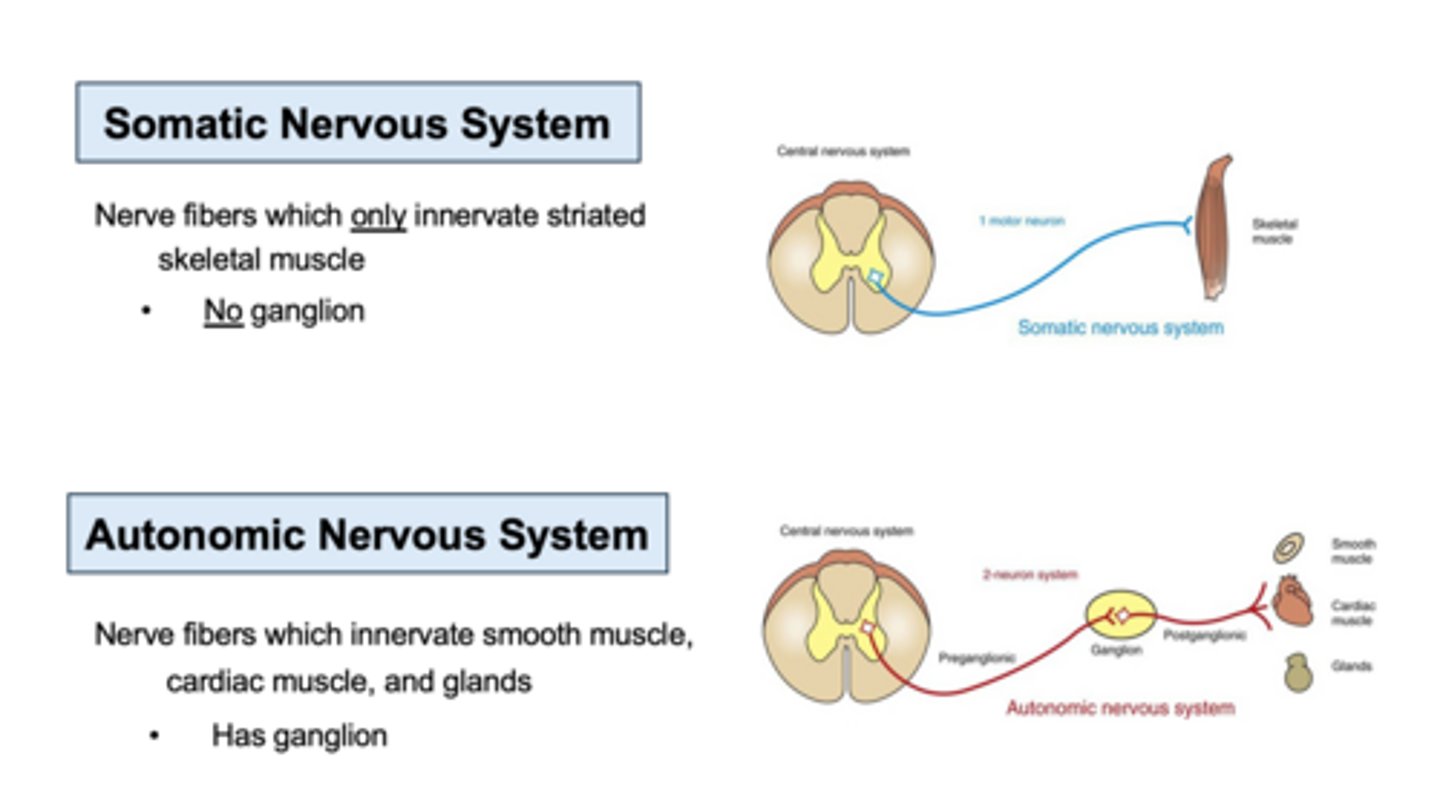
In the peripheral nervous system, what is the autonomic nervous system?
- nerve fibers that innervate smooth muscle, cardiac muscle, and glands
- split into a two-neuron chain; made of a pre-ganglionic fiber, and a post-ganglionic fiber
- has a ganglion
- post-ganglionic nerves are not myelinated
- mostly "automatic"
In the autonomic nervous system, what is a pre-ganglionic neuron?
where the first nerve fiber ending meets the cell body of the second nerve
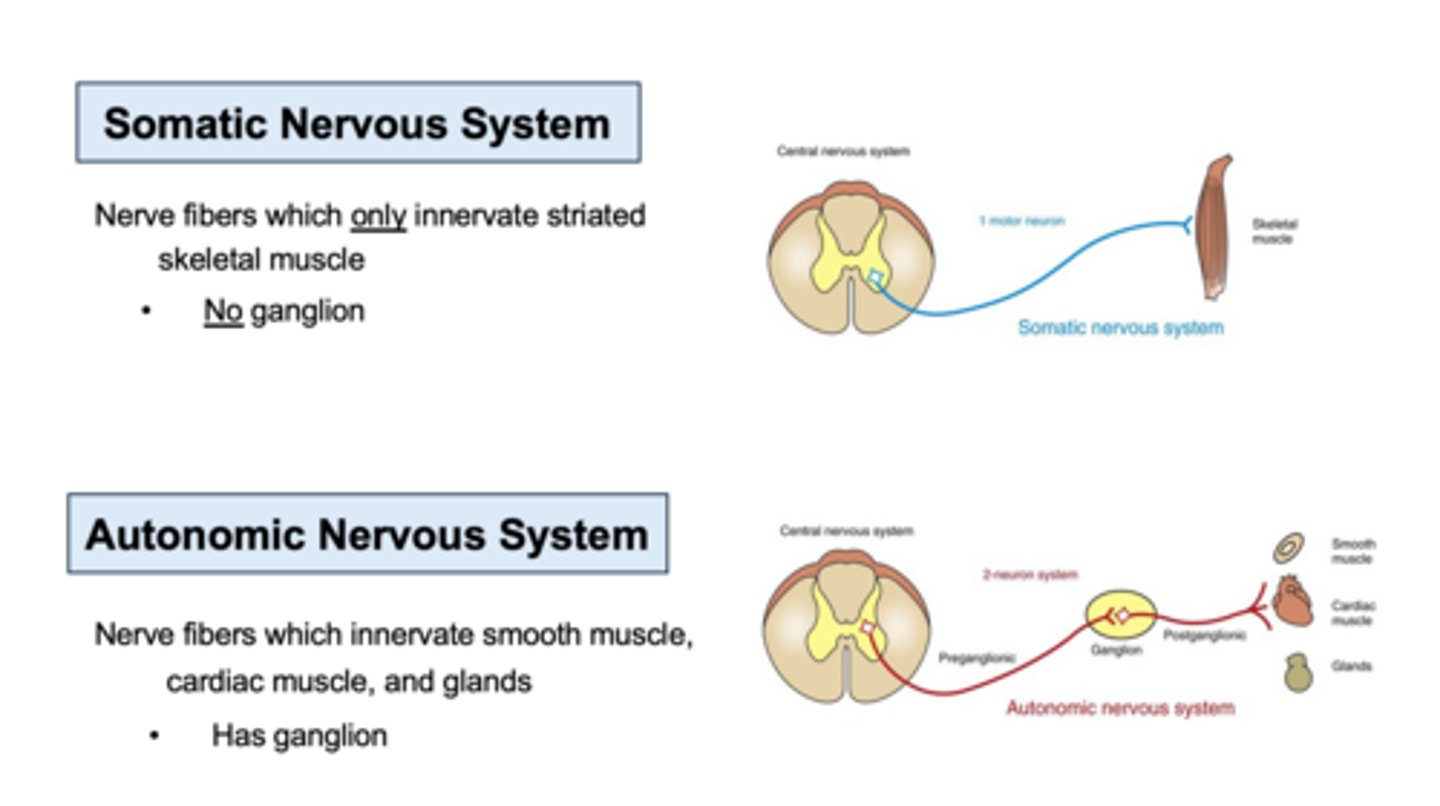
In the autonomic nervous system, what is a post-ganglionic neuron?
the second nerve fiber that runs from the ganglion to the target organ
What are the two divisions of the autonomic nervous system?
1. sympathetic nervous system
2. parasympathetic nervous system
In the autonomic nervous system, what is the sympathetic nervous system?
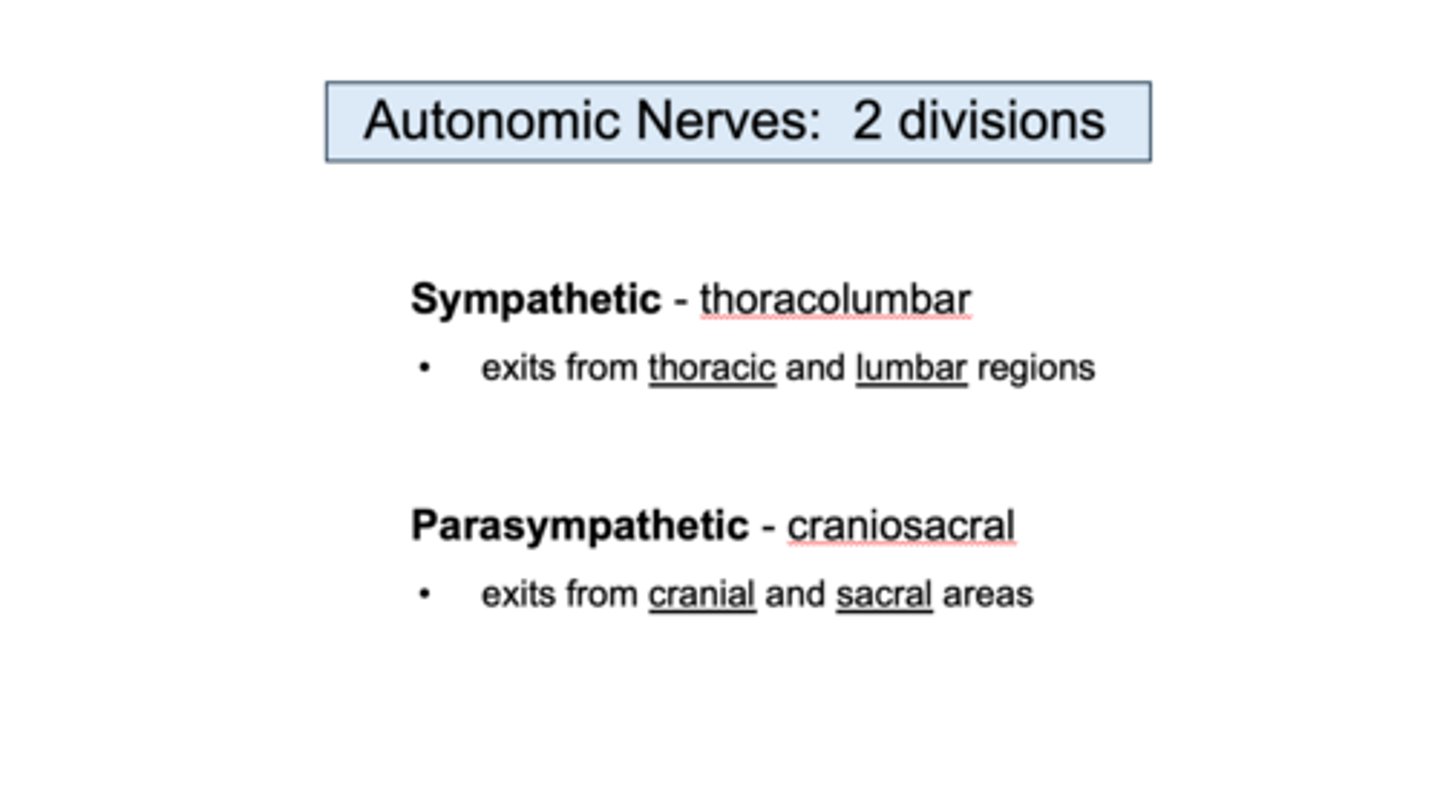
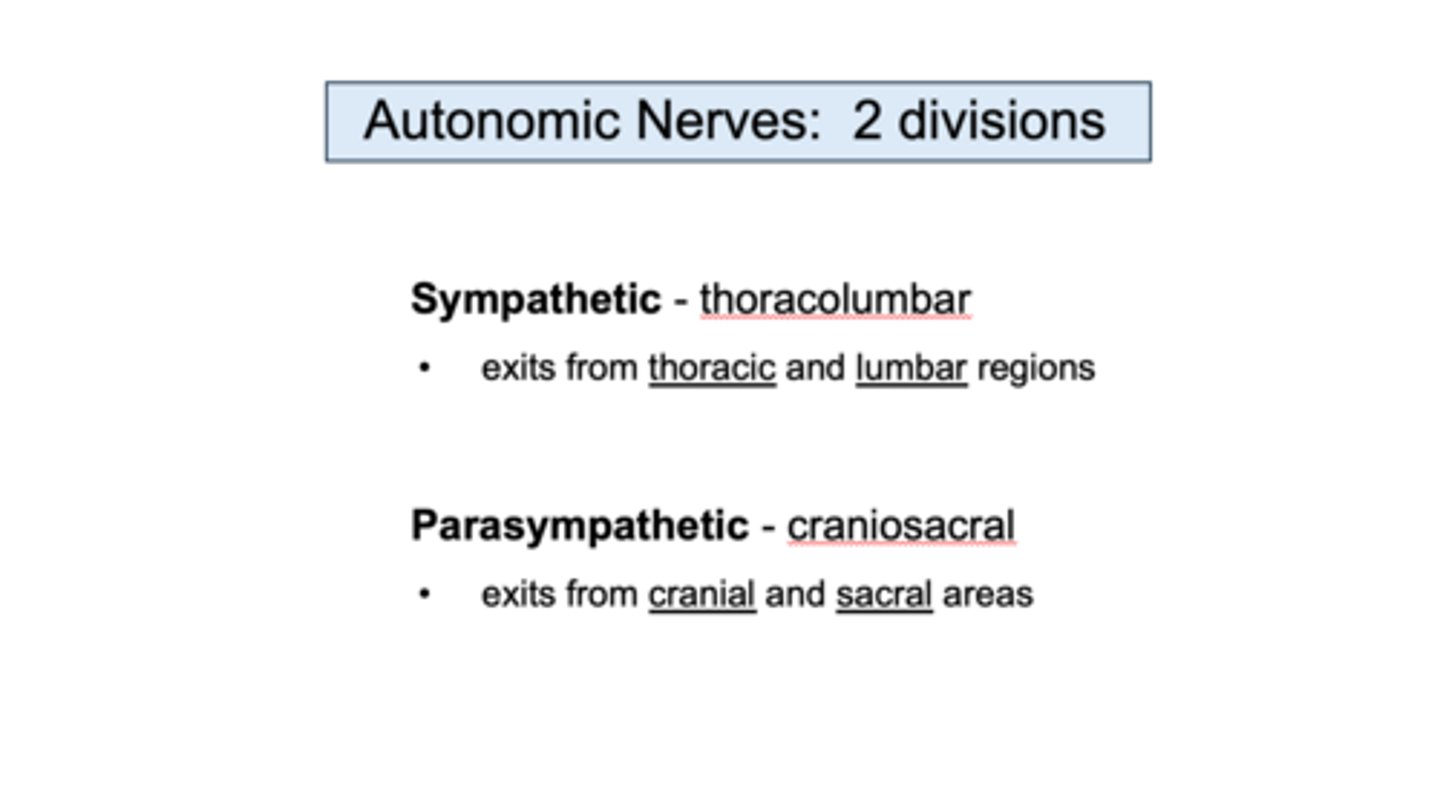
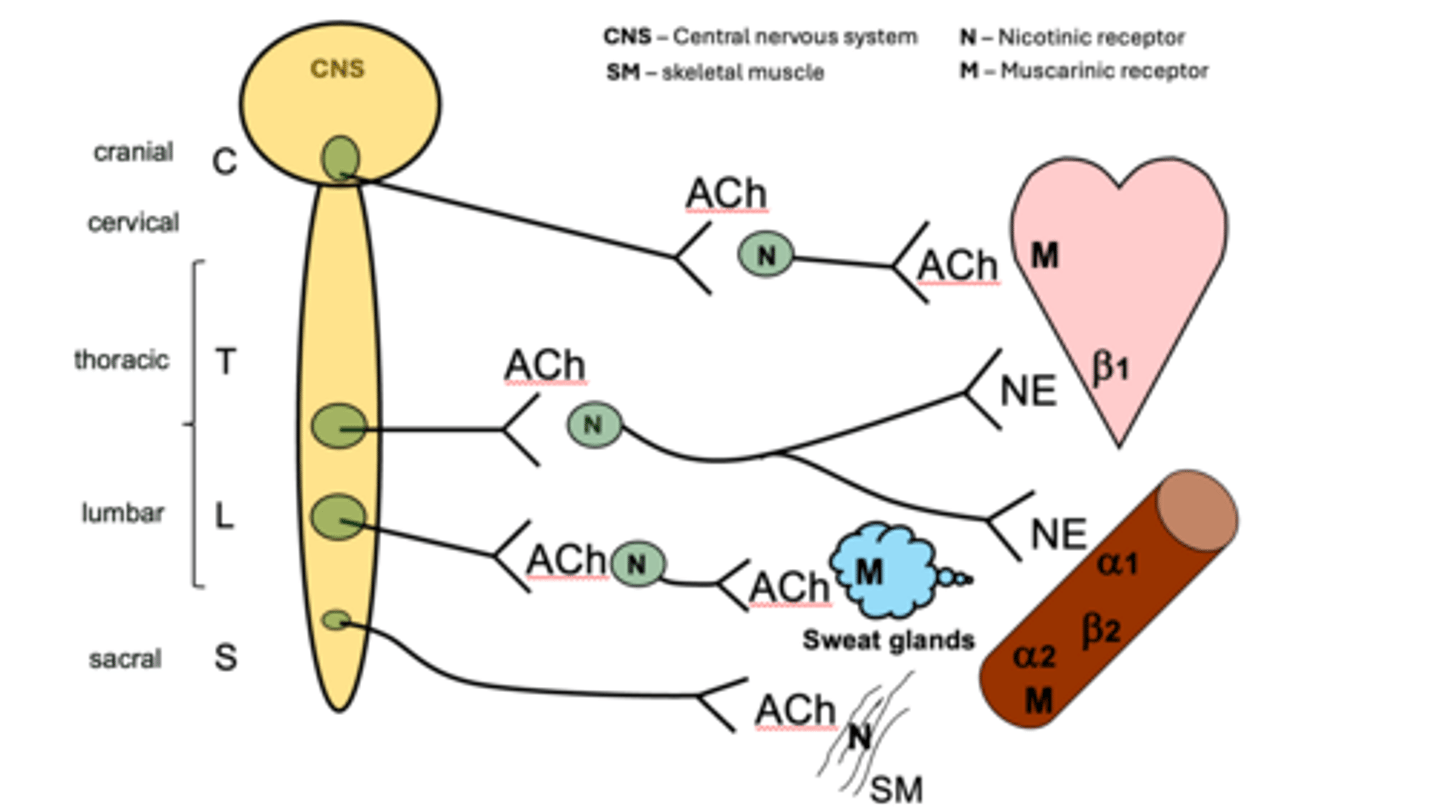
- thoracolumbar
- the sympathetic nervous system exits from the thoracic and lumbar region
- a cell body and an axon make up sympathetic neurons
In the autonomic nervous system, what is the parasympathetic nervous system?
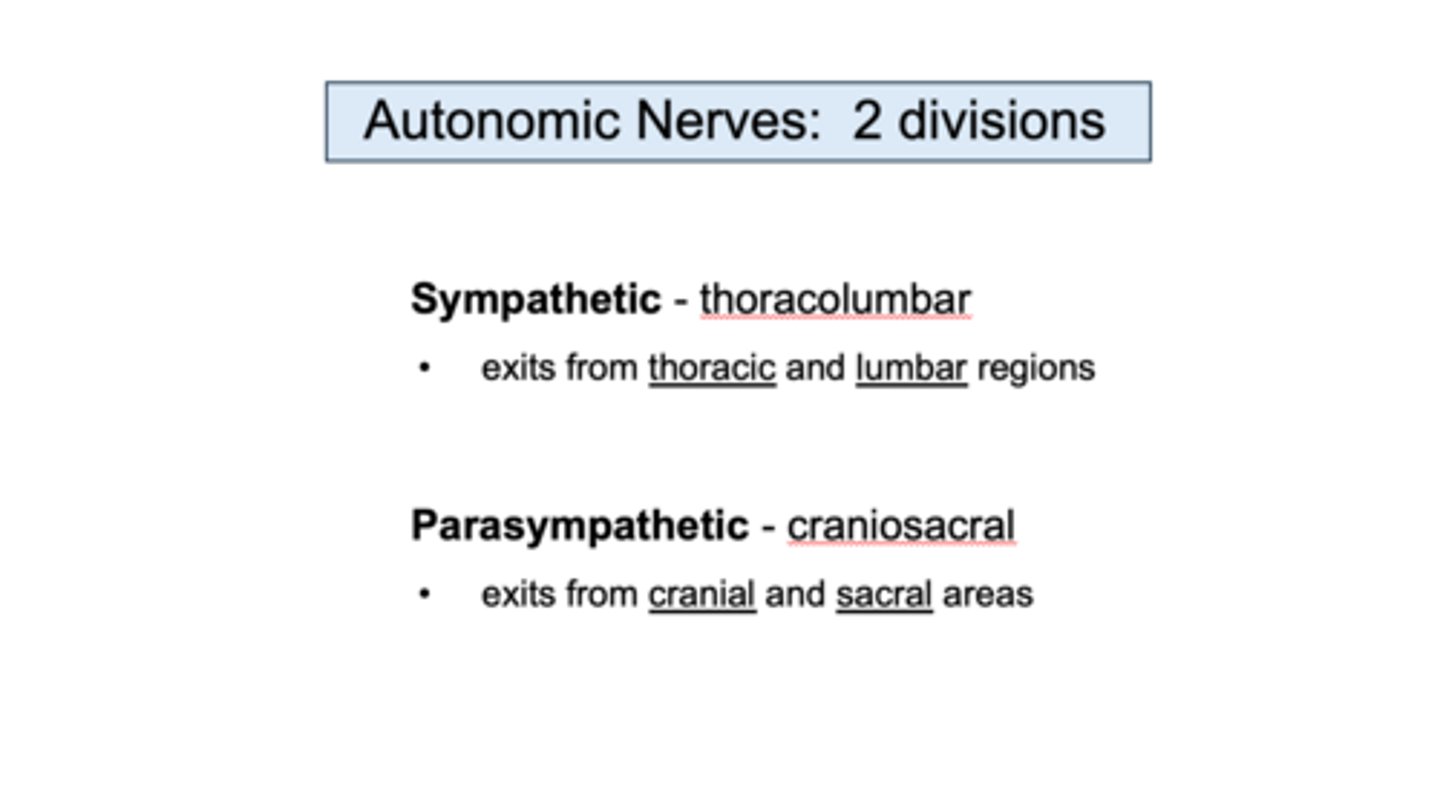
- craniosacral
- the parasympathetic nervous system exits from the cranial and sacral regions
What determines whether a nerve is sympathetic or parasympathetic?
- the location of the pre-ganglionic cell body
- look at where the nerve originates, not where it's going or what kind of neurotransmitter is being released!
What are the two neurotransmitters of the autonomic nervous system?
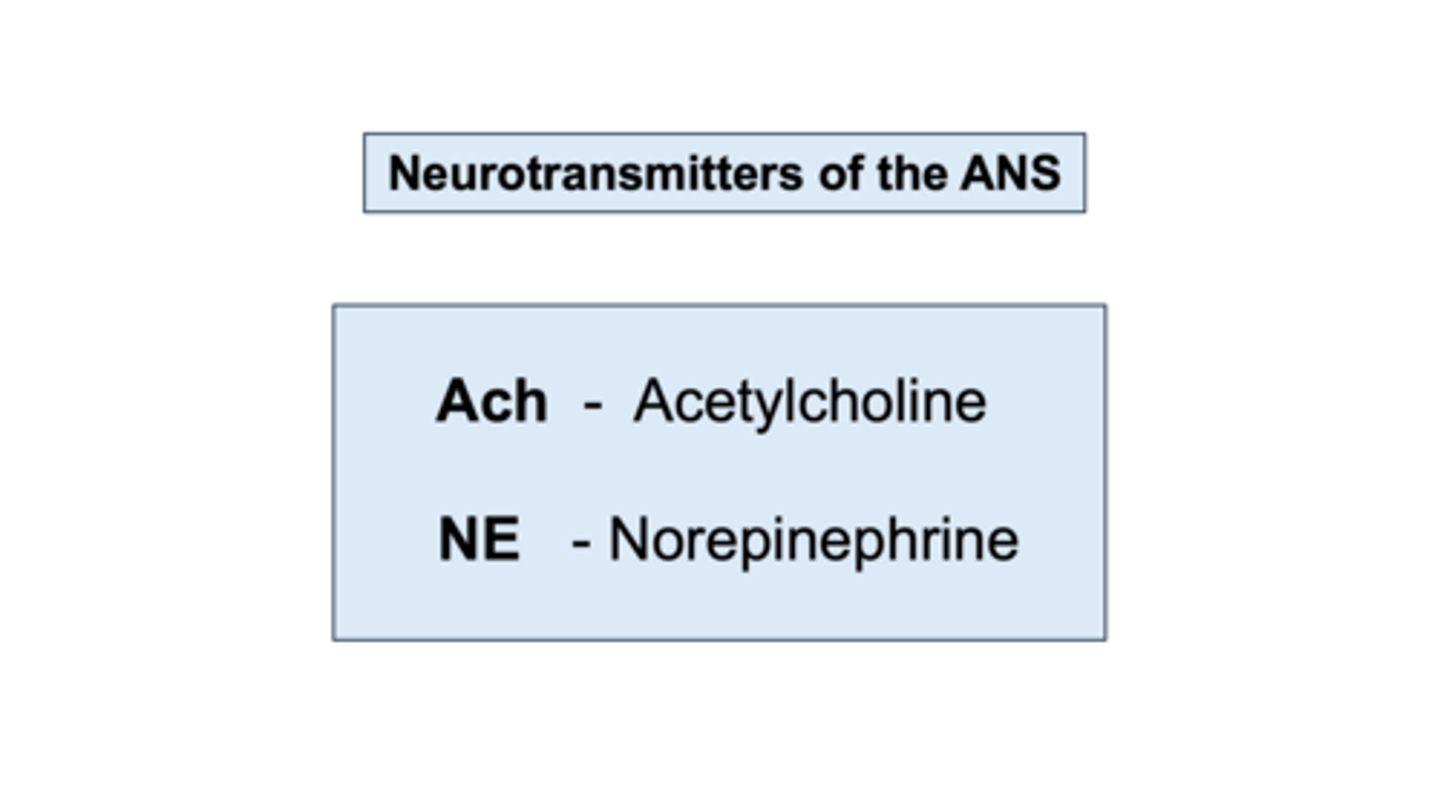
1. acetylcholine
2. norepinephrine
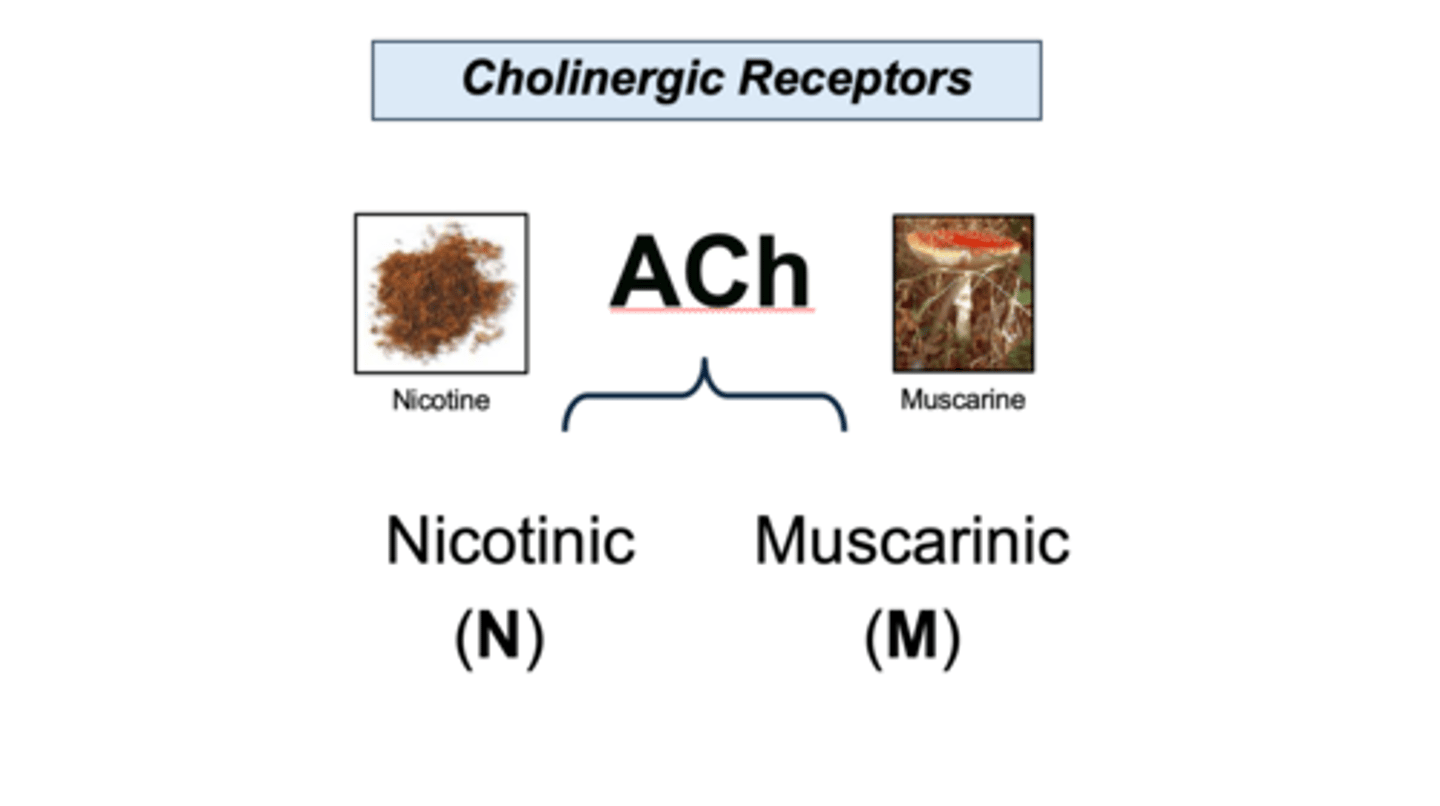
What are cholinergic receptors? What do they do? What neurotransmitter binds to these receptors?
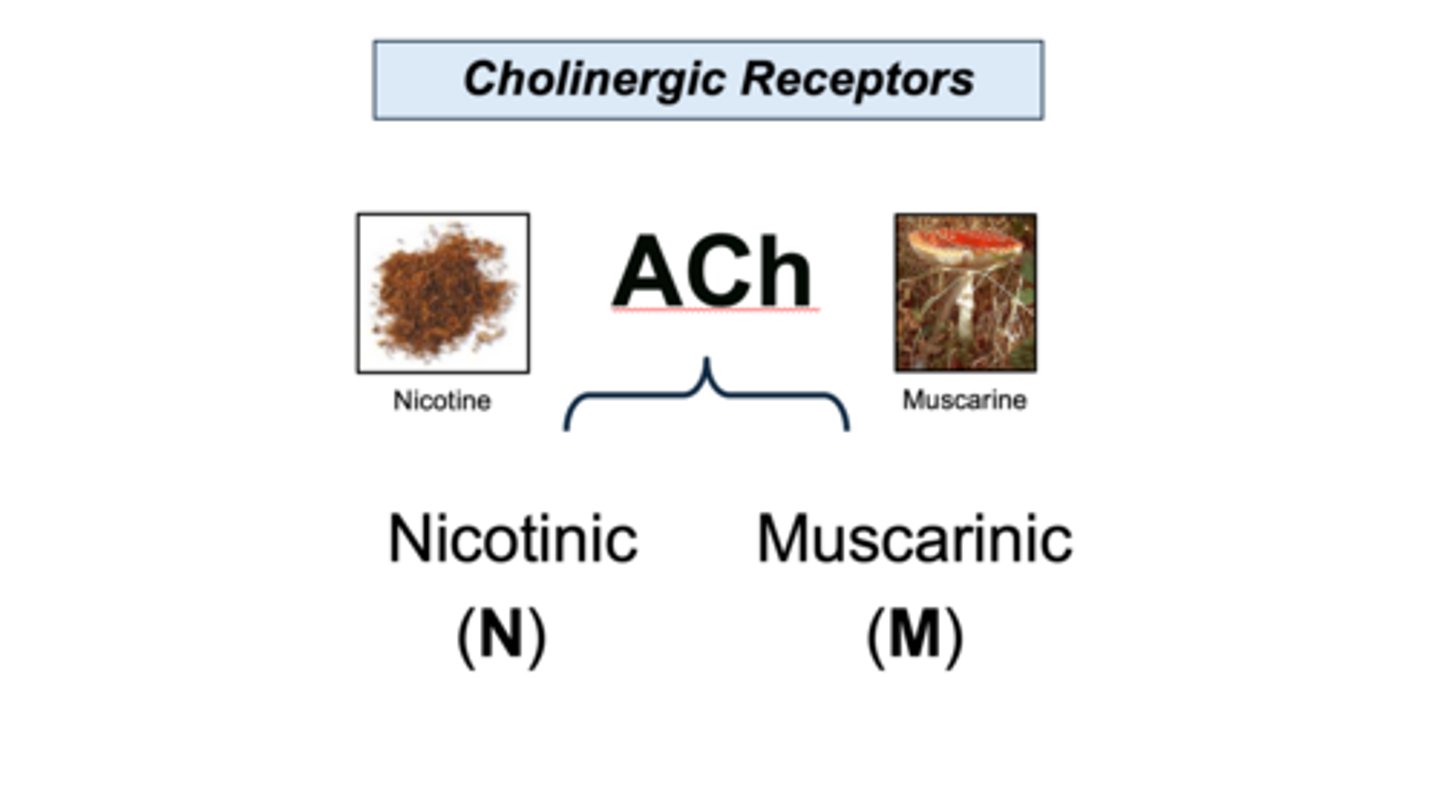
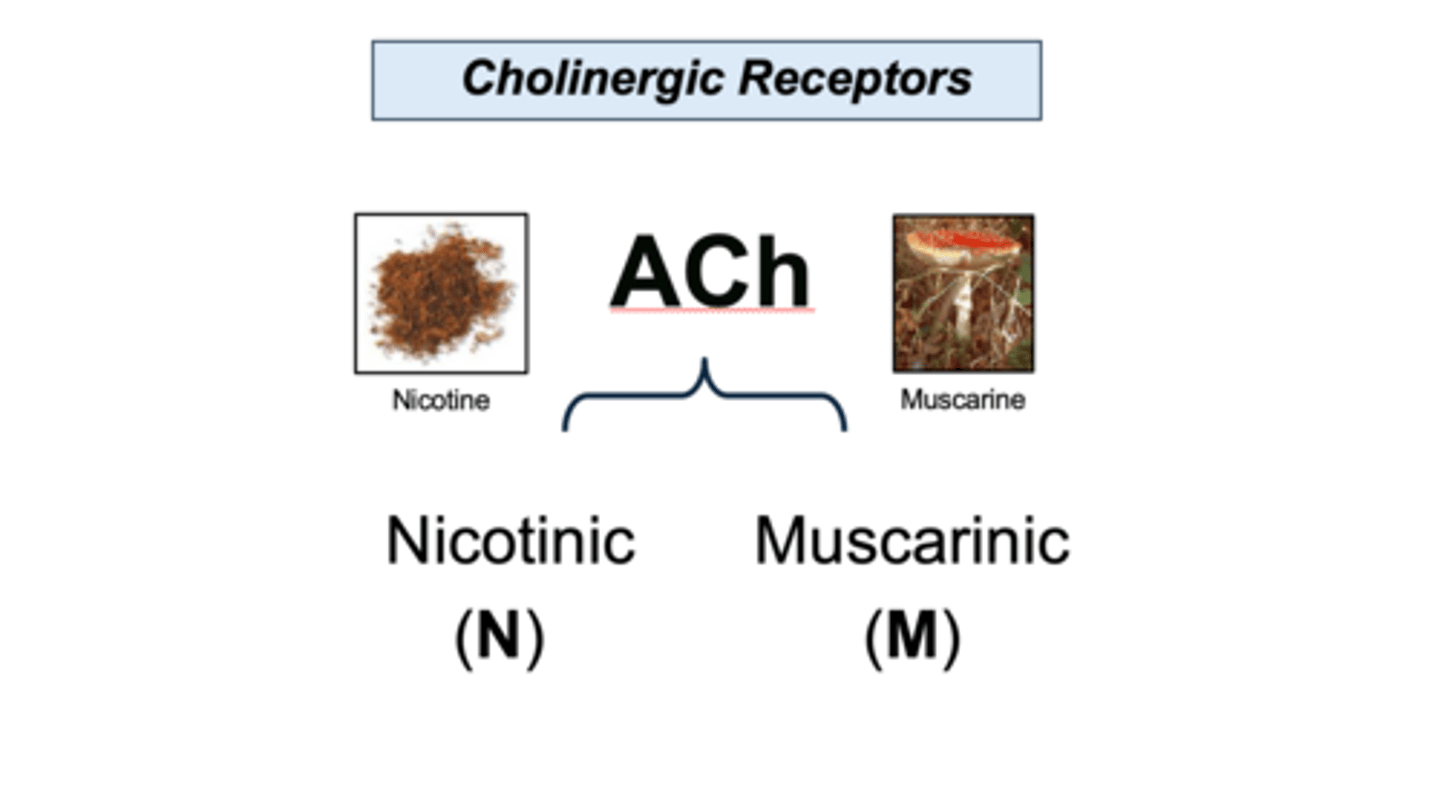
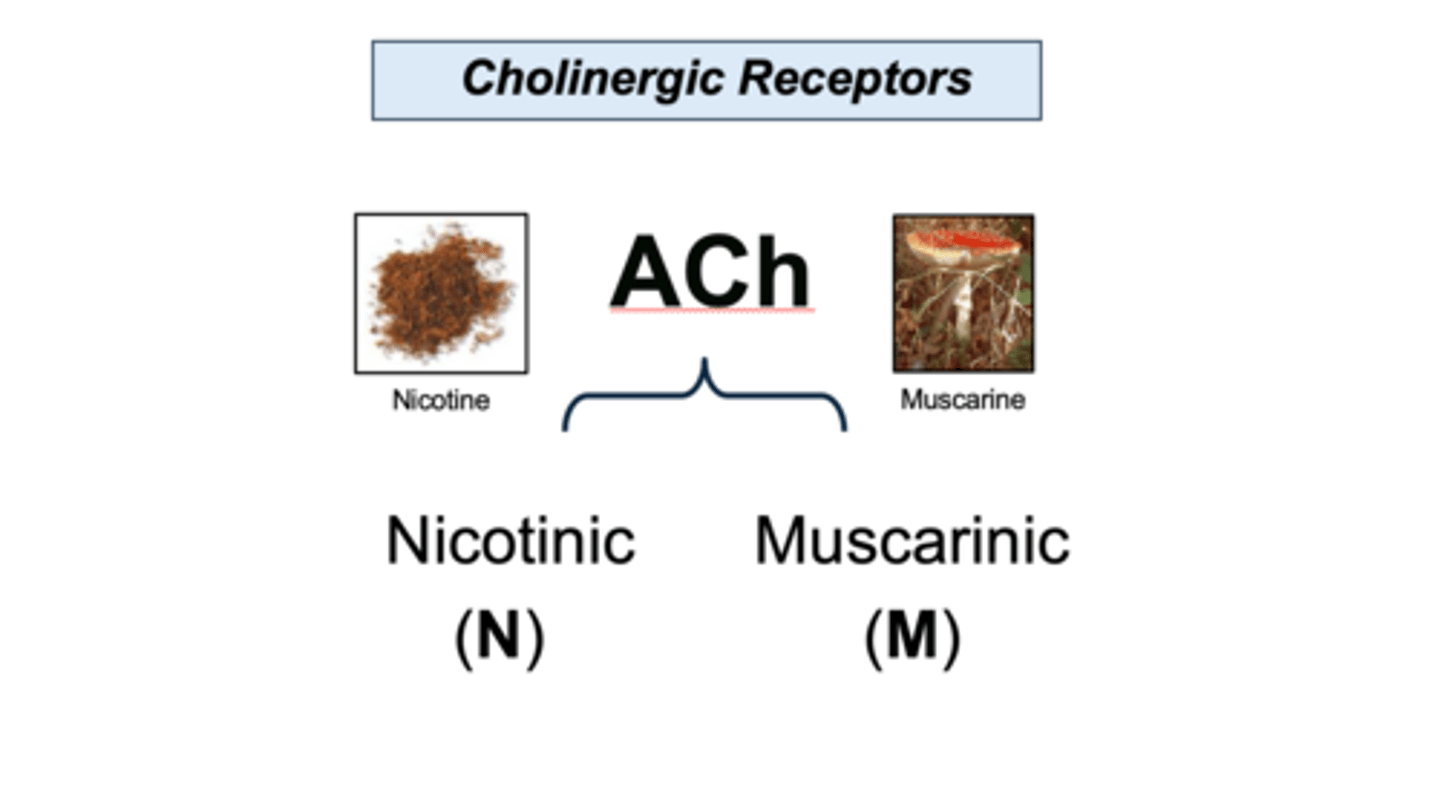
- nicotinic receptors and muscarinic receptors
- acetylcholine bind to both receptors
- acetylcholine has equal affinity for both nicotinic and muscarinic receptors
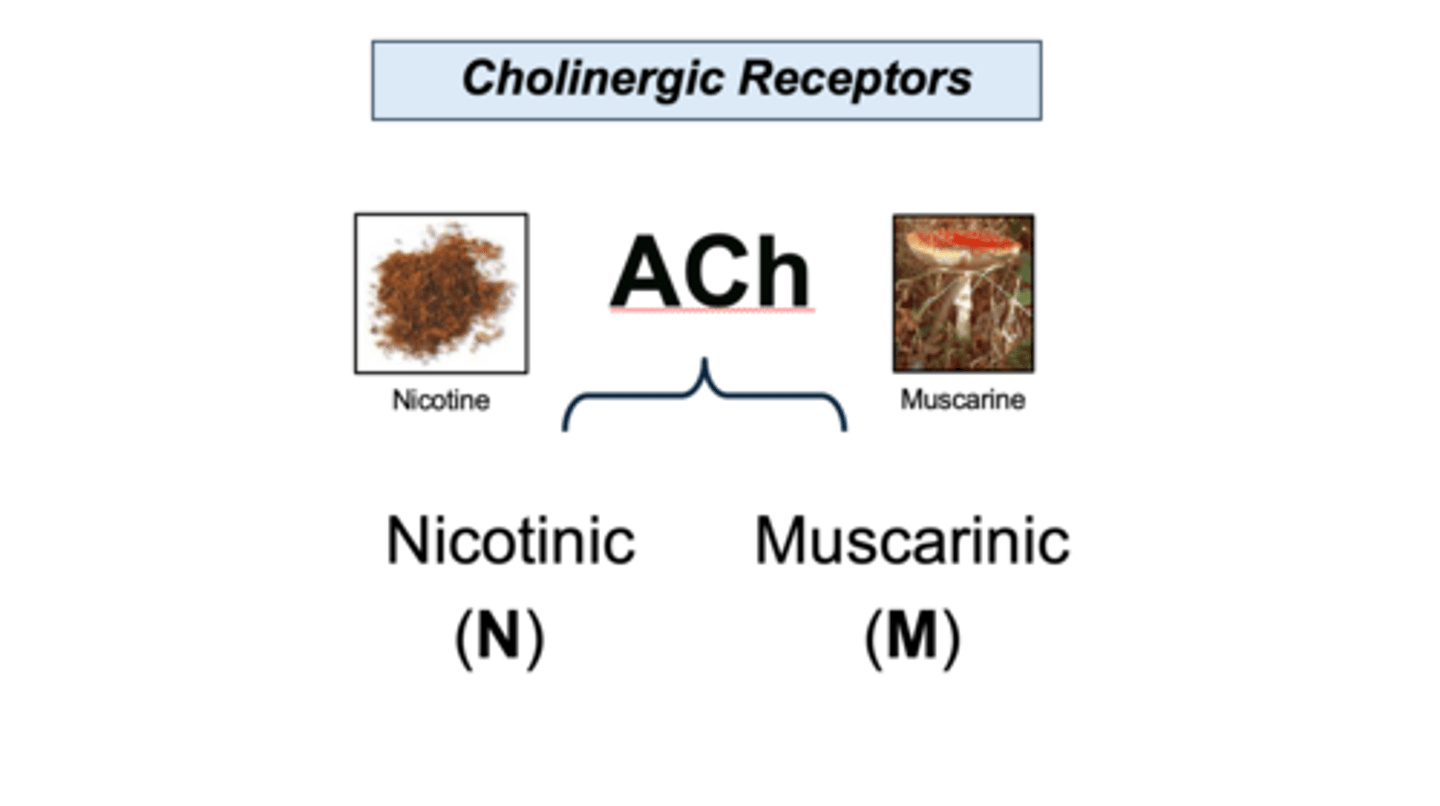
What are the two types of cholinergic receptors?
1. nicotinic receptors
2. muscarinic receptors
What is a cholinergic neuron?
a nerve that releases acetylcholine
What is affinity?
- the love for something;
- ex. acetylcholine has affinity for both nicotinic and muscarinic receptors
What determines whether acetylcholine binds to a nicotinic or muscarinic receptor?
drug delivery
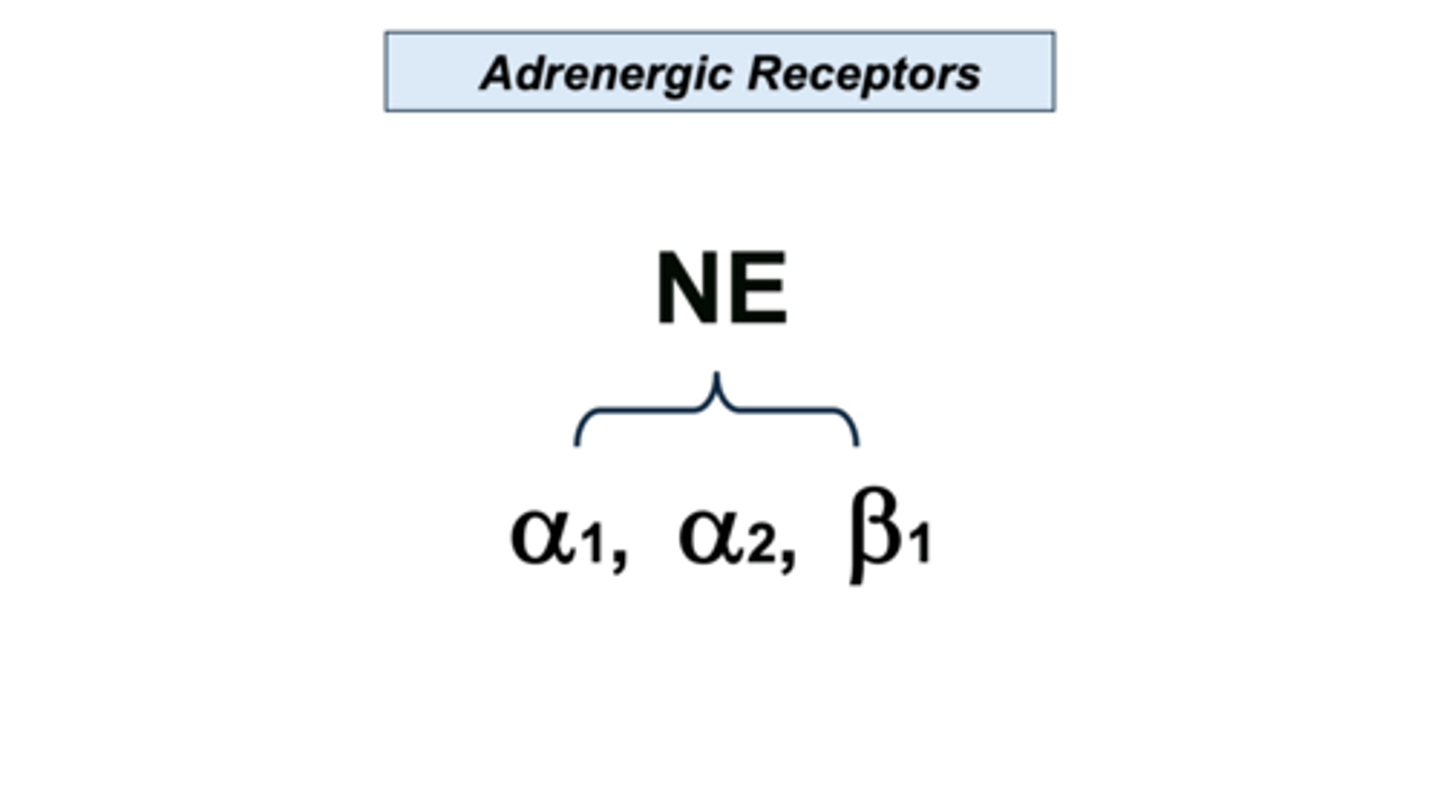
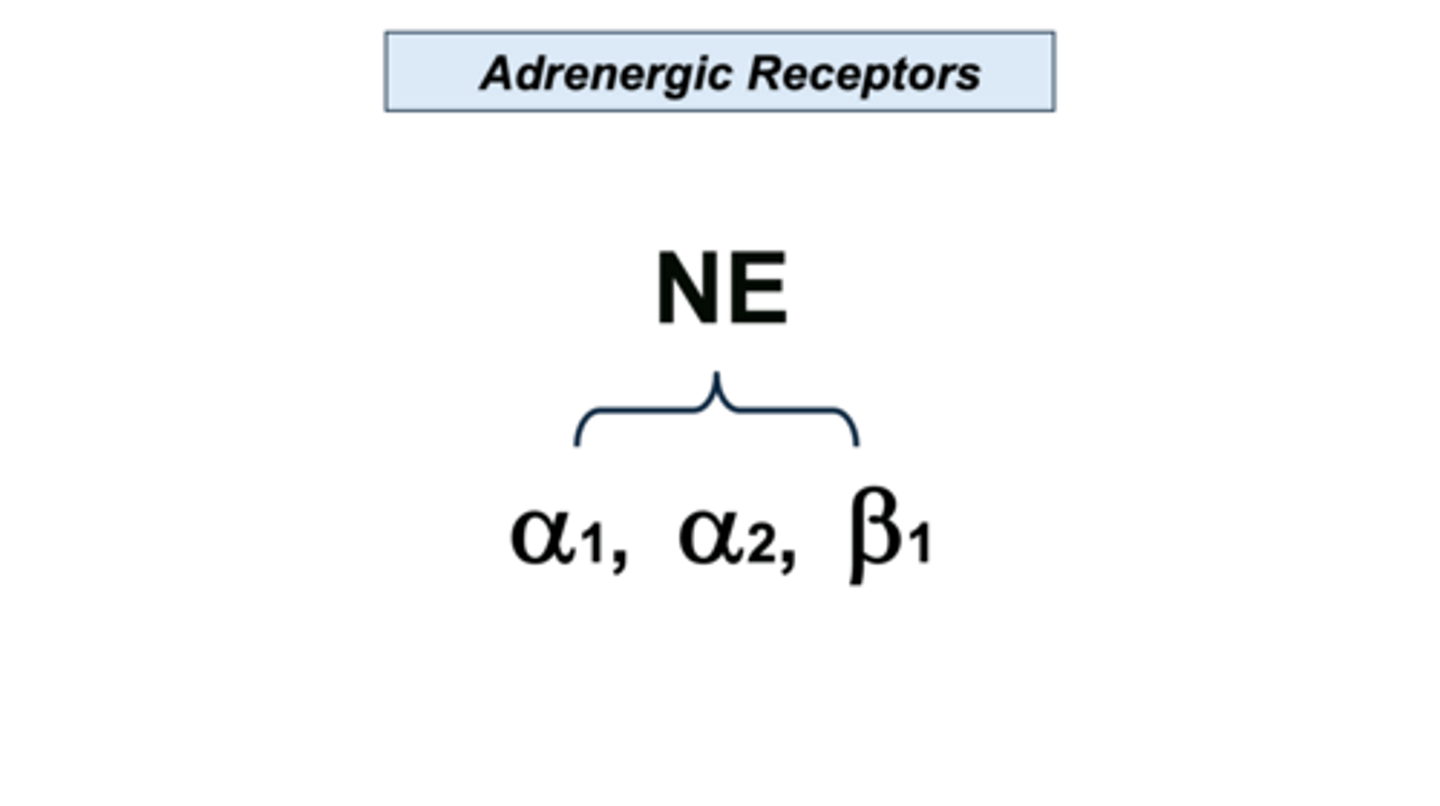
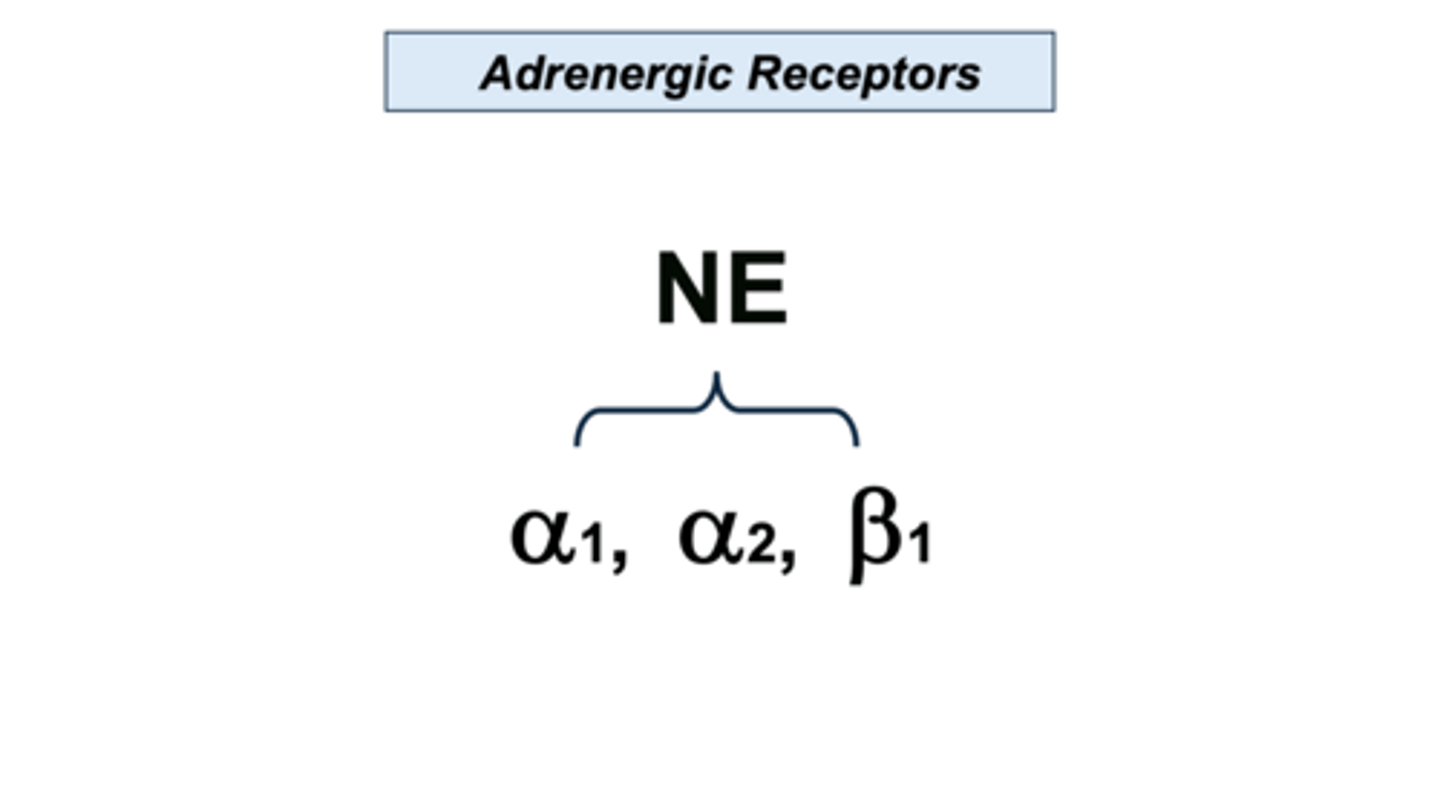
What are adrenergic receptors? What neurotransmitter binds to these receptors?
- alpha 1, alpha 2, beta 1, and beta 2 receptors
- norepinephrine NEVER binds to beta 2 receptors or cholinergic receptors
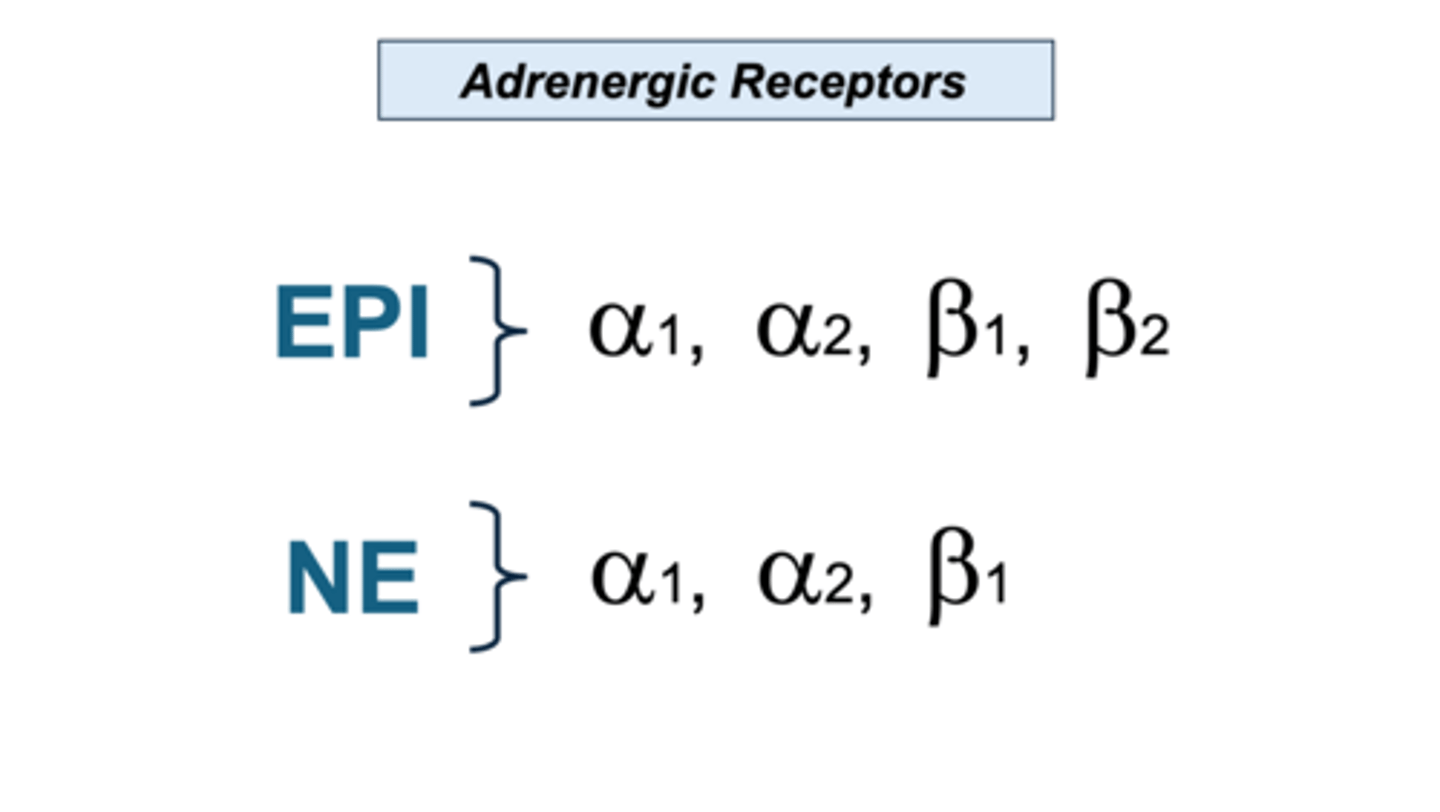
What four receptors does epinephrine binds to?
1. alpha 1 receptors
2. alpha 2 receptors
3. beta 1 receptors
4. beta 2 receptors
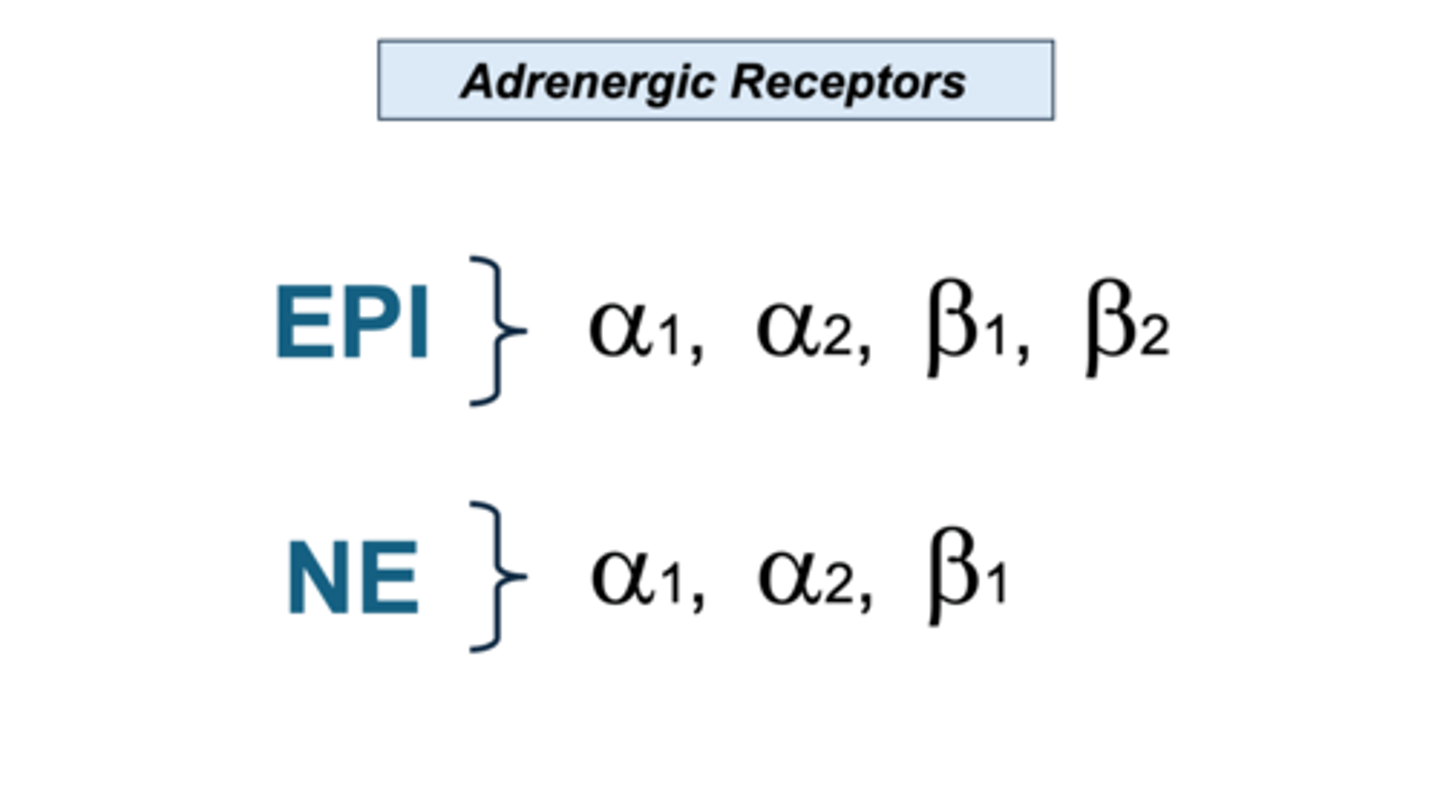
What three receptors does norepinephrine bind to?
1. alpha 1 receptors
2. alpha 2 receptors
3. beta 1 receptors
What are the four types of adrenergic recptors?
1. alpha 1 receptors
2. alpha 2 receptors
3. beta 1 receptors
4. beta 2 receptors
What is an adrenergic neuron?
a nerve that releases norepinephrine
What is a junctional receptor?
a receptor that's by the junction of the nerve
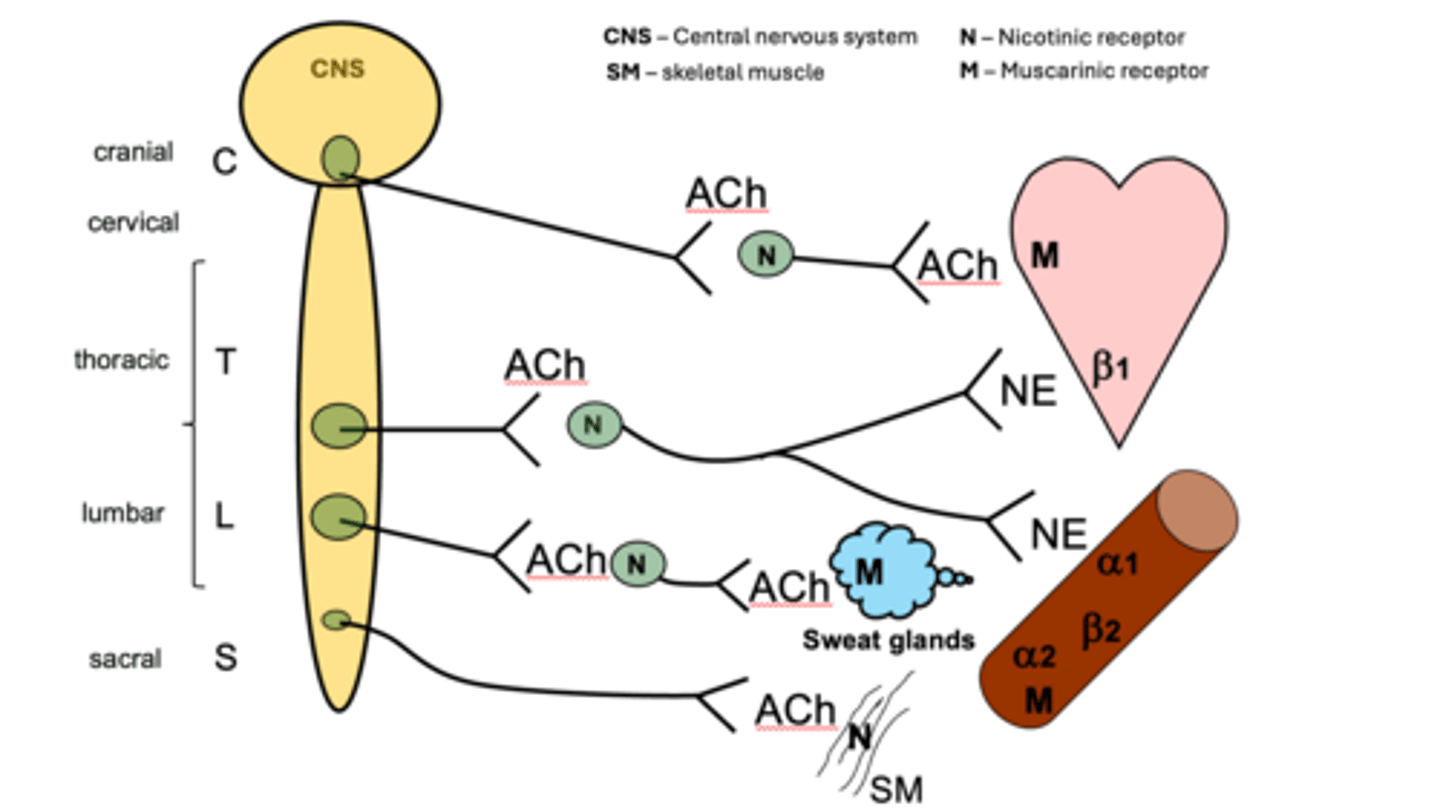
What is an extra-junctional nerve?
- a receptor that isn't near a nerve
- it is still responsive to drugs!
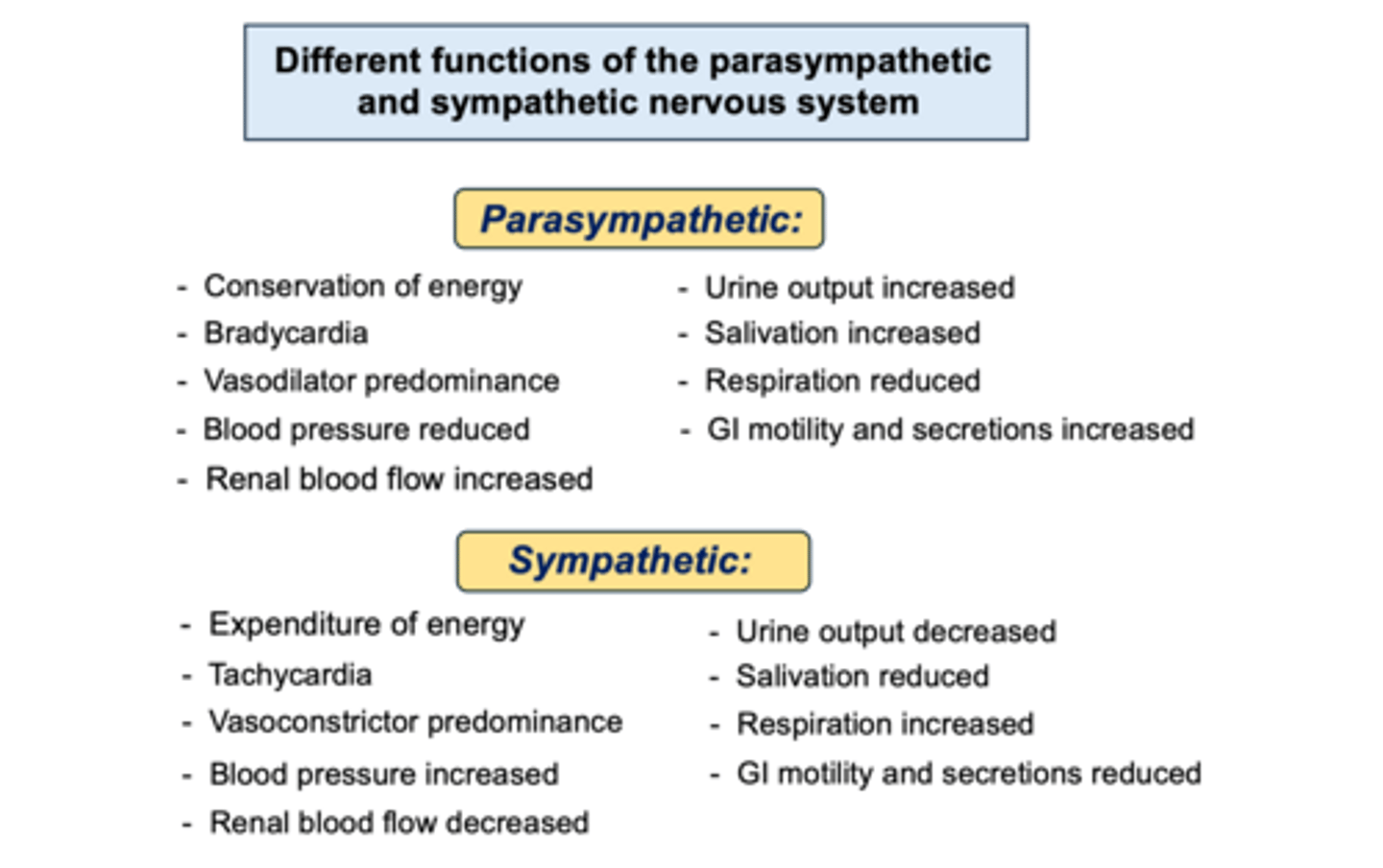
What are the functions of the parasympathetic nervous system?
- increased GI motility and secretions
- conservation of energy
- bradycardia (slow heart rate)
- vasodilator predominance
- decreased blood pressure
- increased renal blood flow
- increased urine output
- increased salivation
- decreased respiration
*rest and digest
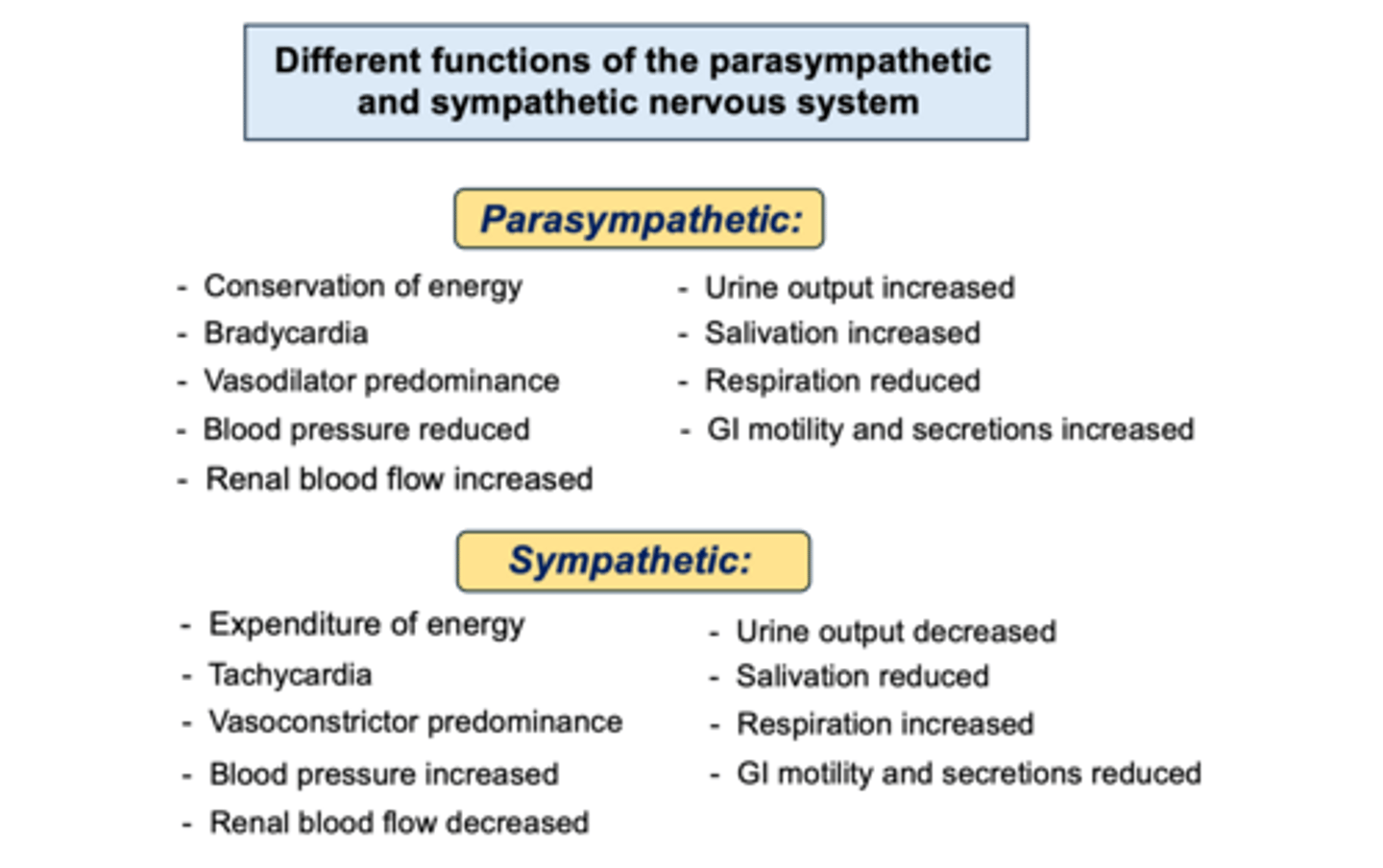
What are the functions of the sympathetic nervous system?
- increased energy usage
- tachycardia (fast heart rate)
- vasoconstrictor predominance
- increased blood pressure
- decreased renal blood flow
- decreased urine output
- decreased salivation
- increased respiration
- decreased GI motility and secretions
*fight or flight
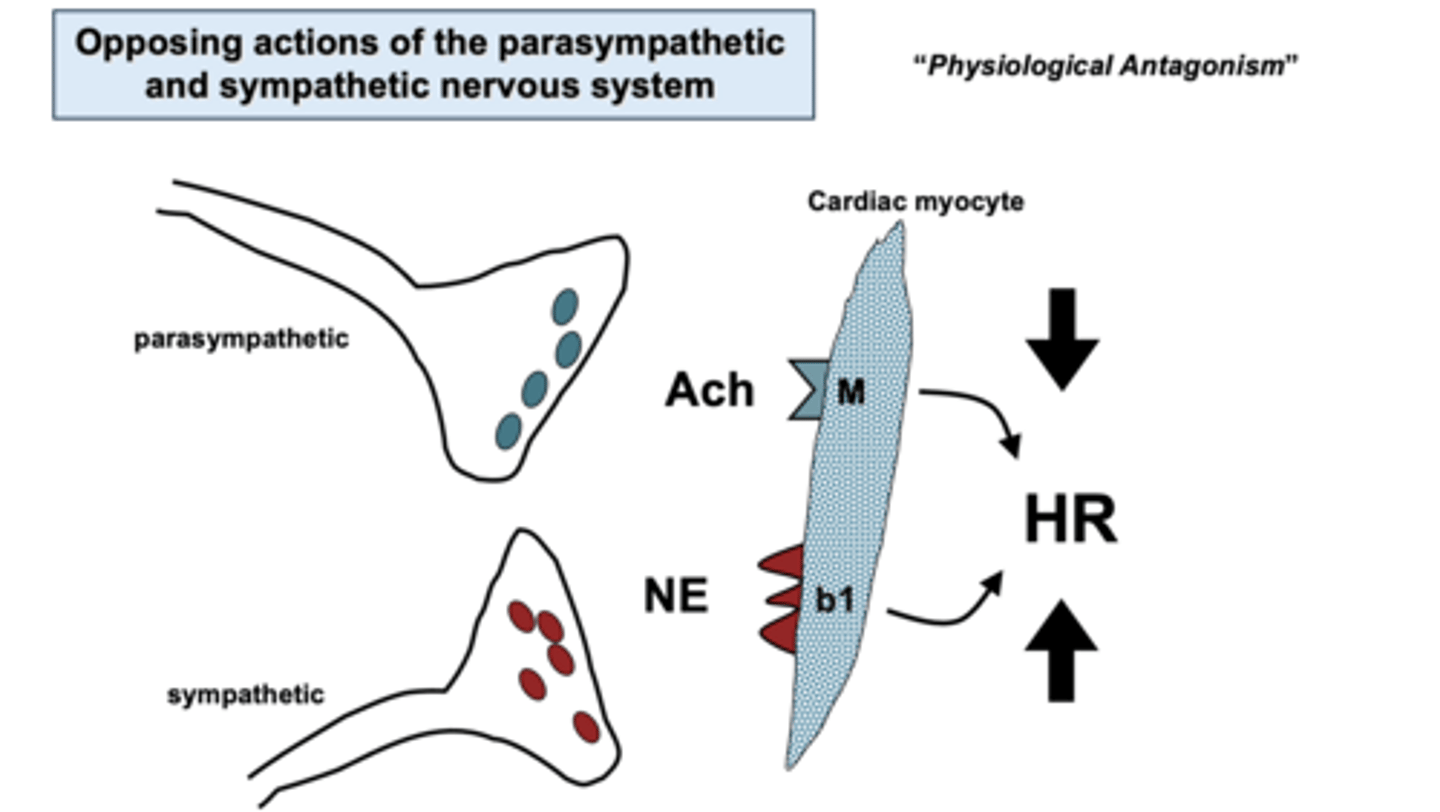
What is physiological antagonism?
when the sympathetic and parasympathetic nervous systems oppose each other
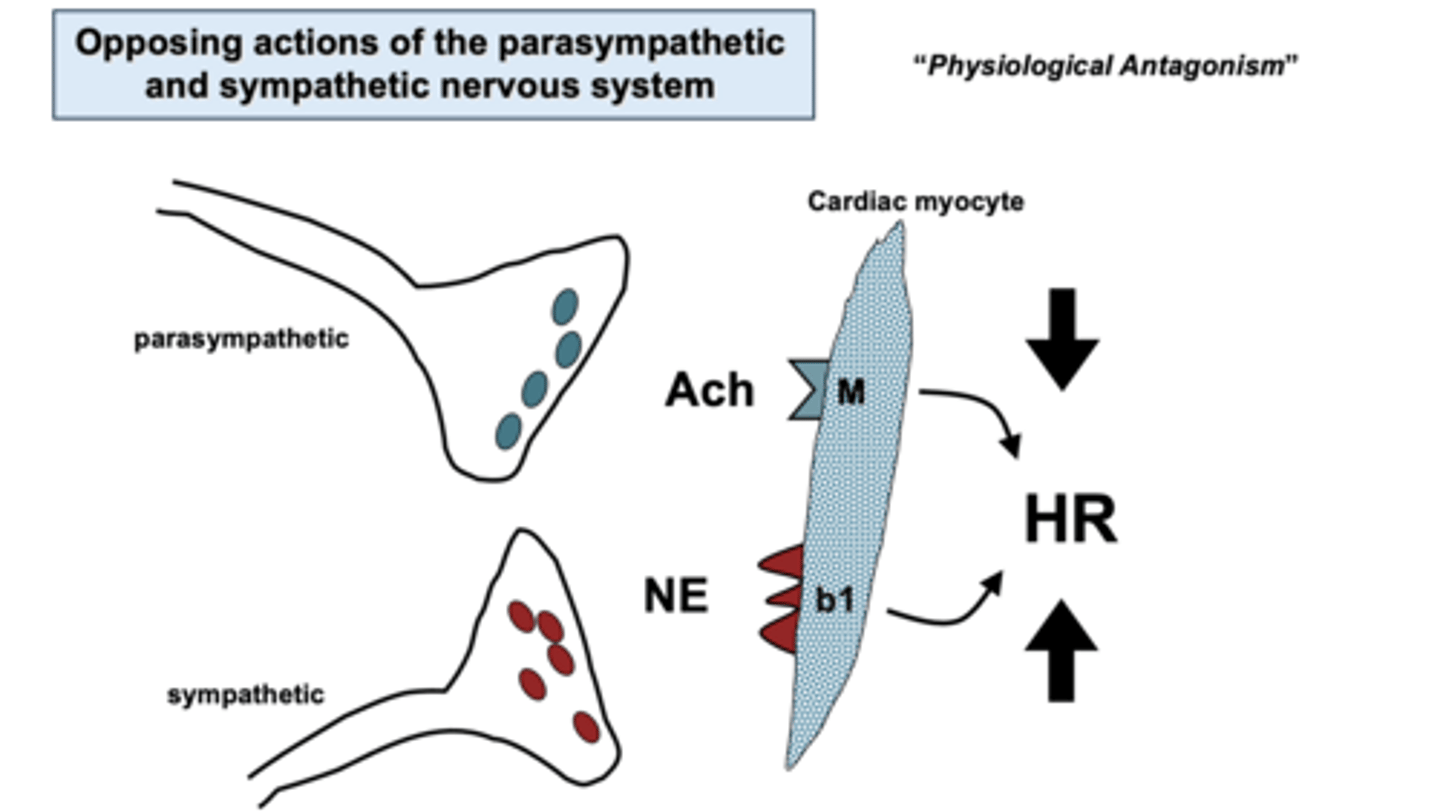
How does acetylcholine decrease heart rate?
acetylcholine binds to muscarinic receptors on a cardiac myocyte; this causes bradycardia (slowed heart rate)
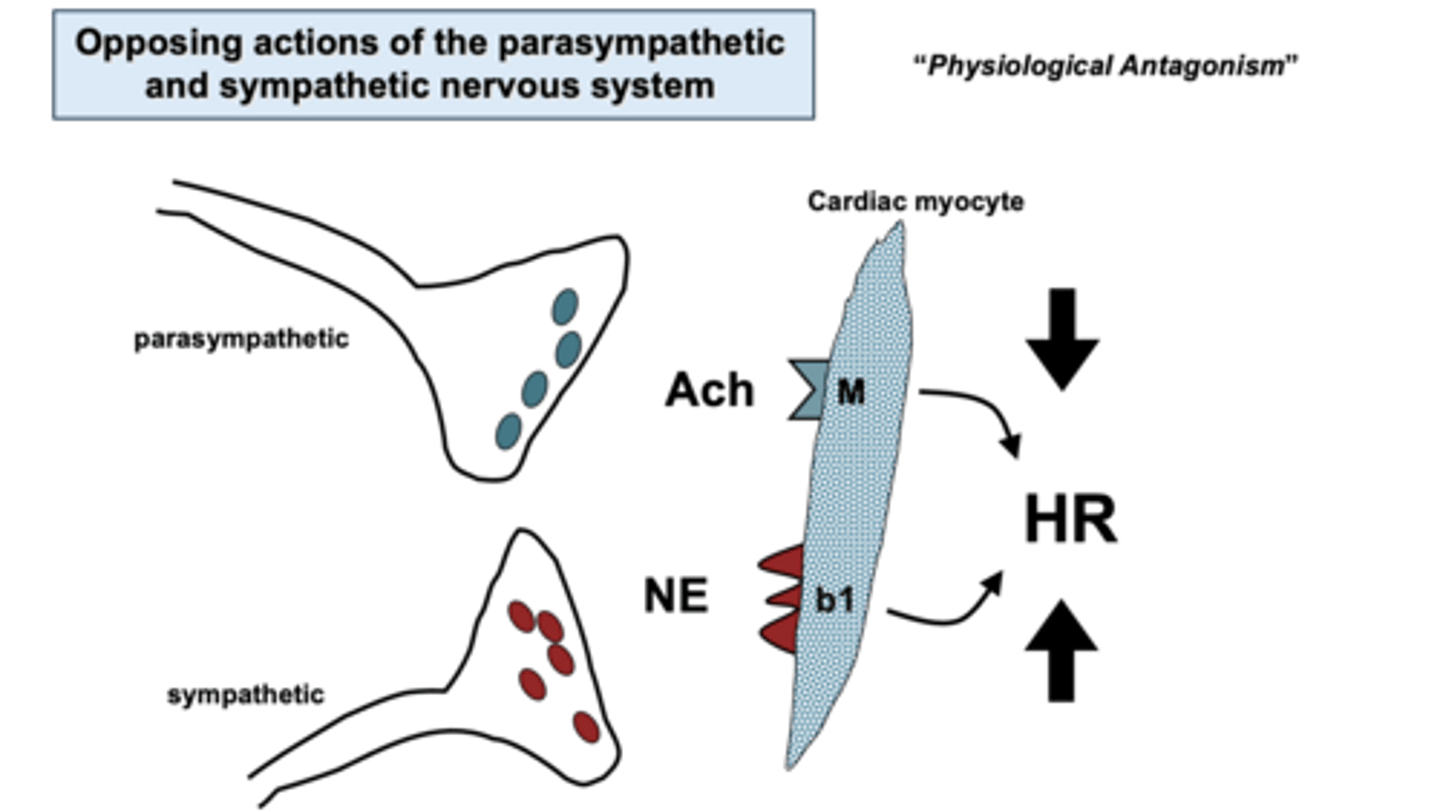
How does norepinephrine increase heart rate?
norepinephrine binds to beta 1 receptors on a cardiac myocyte; this causes tachycardia (increased heart rate)
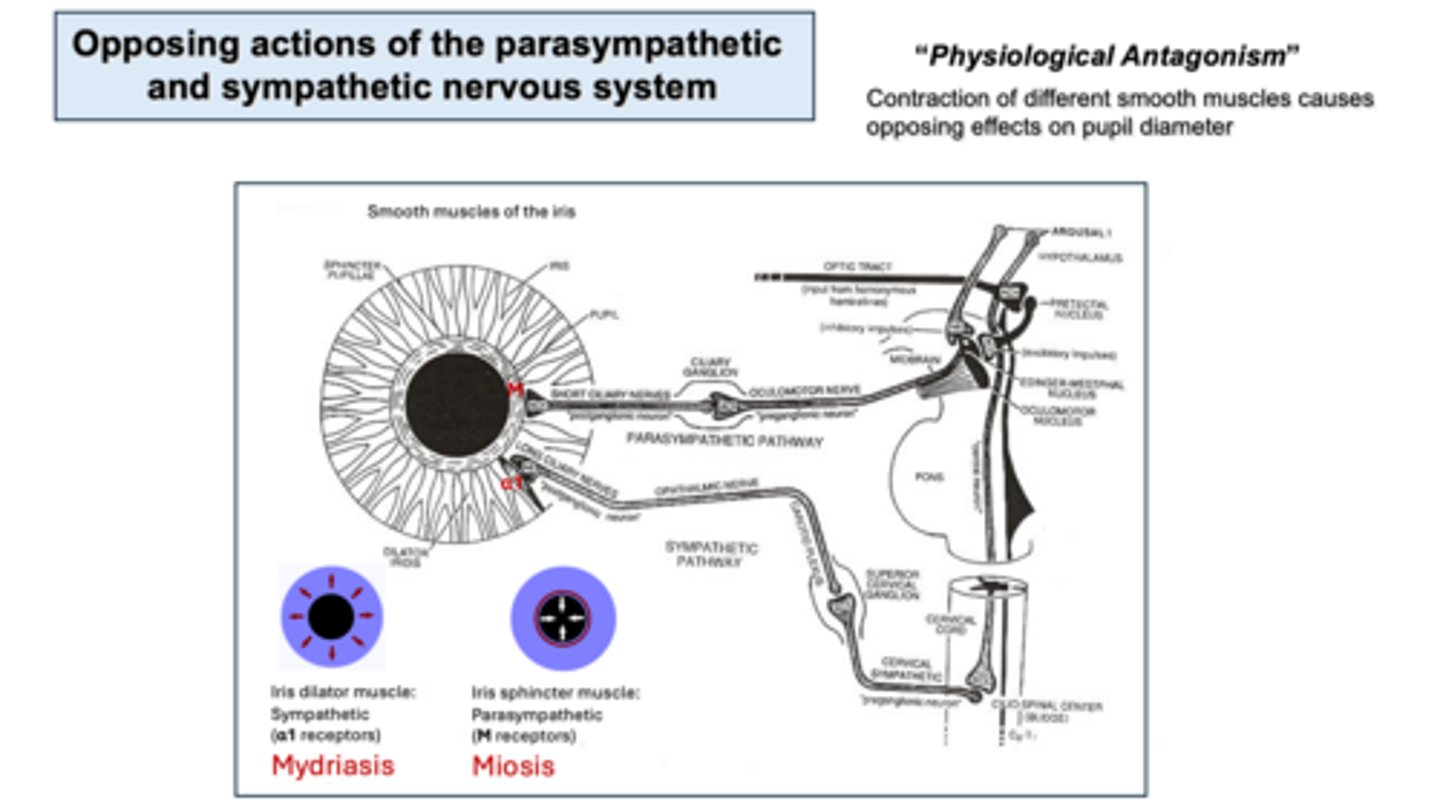
How can neurotransmitters cause pupil constriction or dilation?
- binding to alpha 1 receptor = mydriasis (pupil dilation)
- binding to muscarinic receptor = miosis (pupil constriction)
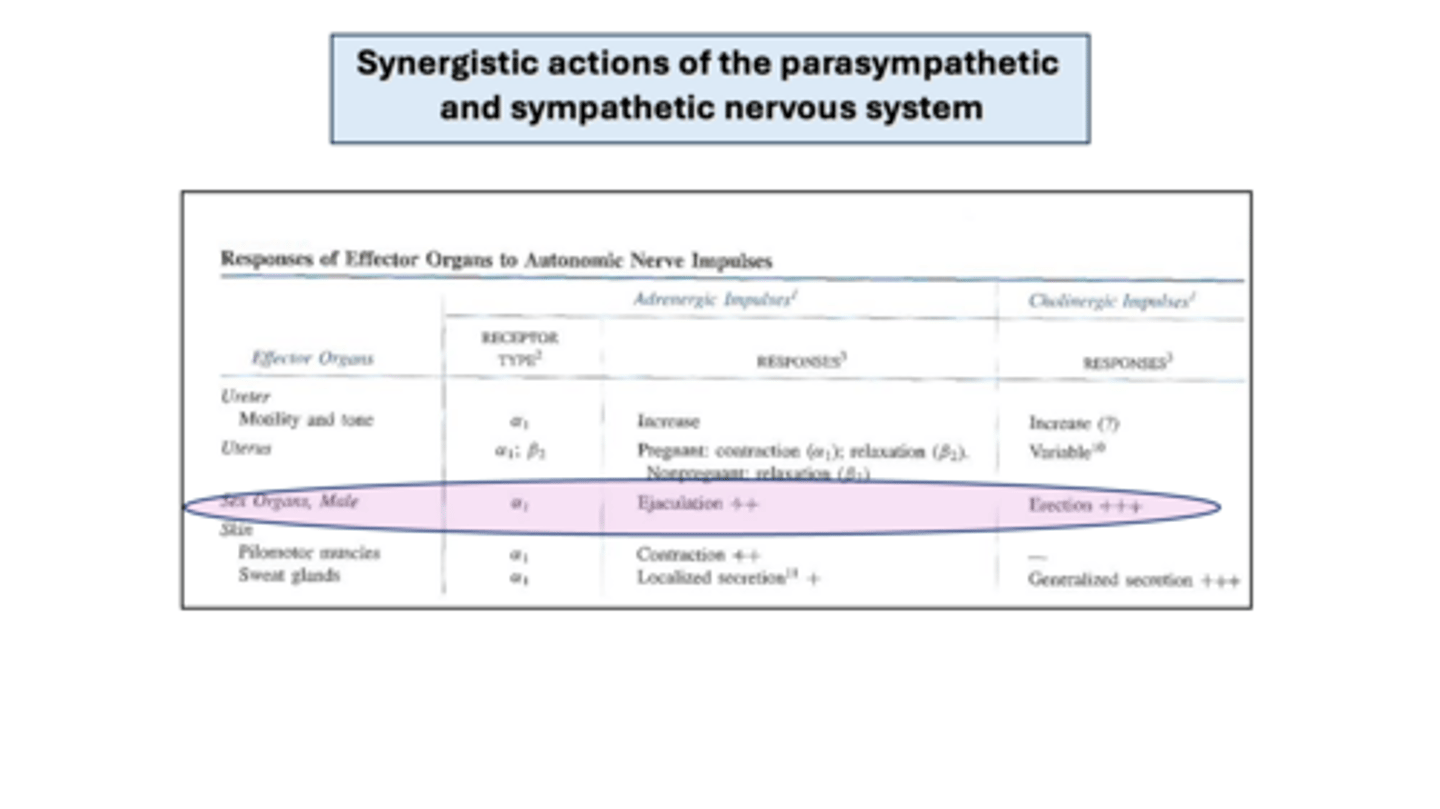
Where are synergistic actions of the parasympathetic and sympathetic nervous system seen?
- during sex for men
- erection = parasympathetic nervous system activation (cholinergics)
- ejaculation = sympathetic nervous system activation
- point & shoot
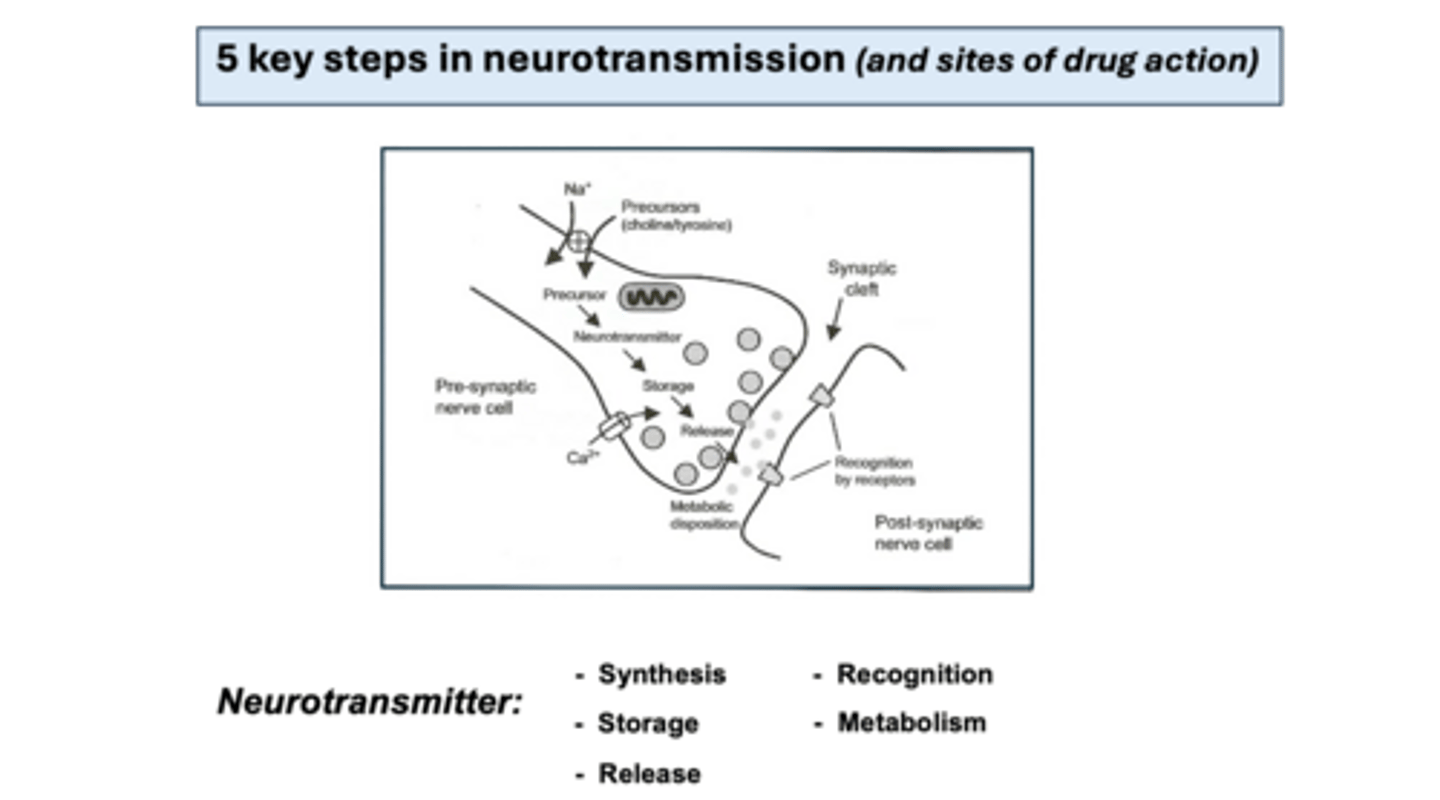
What are the five steps in neurotransmission?
1. synthesis
2. storage
3. release
4. recognition
5. metabolism
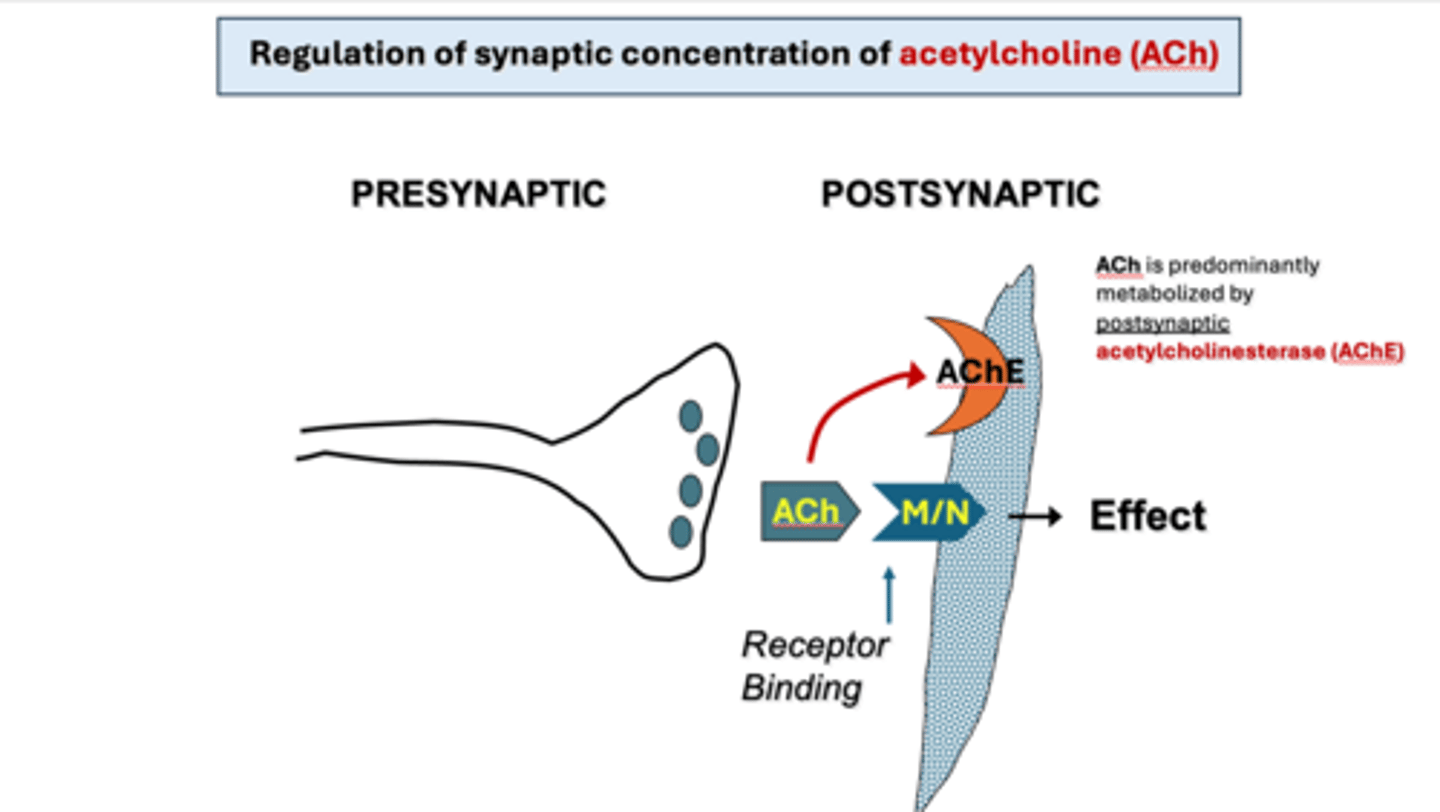
What is acetylcholinesterase? What does it do? Why is it important?
- membrane-bound next to nicotinic and muscarinic receptors
- metabolizes post-synaptic acetylcholine
- important because it controls/regulates the amount of acetylcholine in the synapse
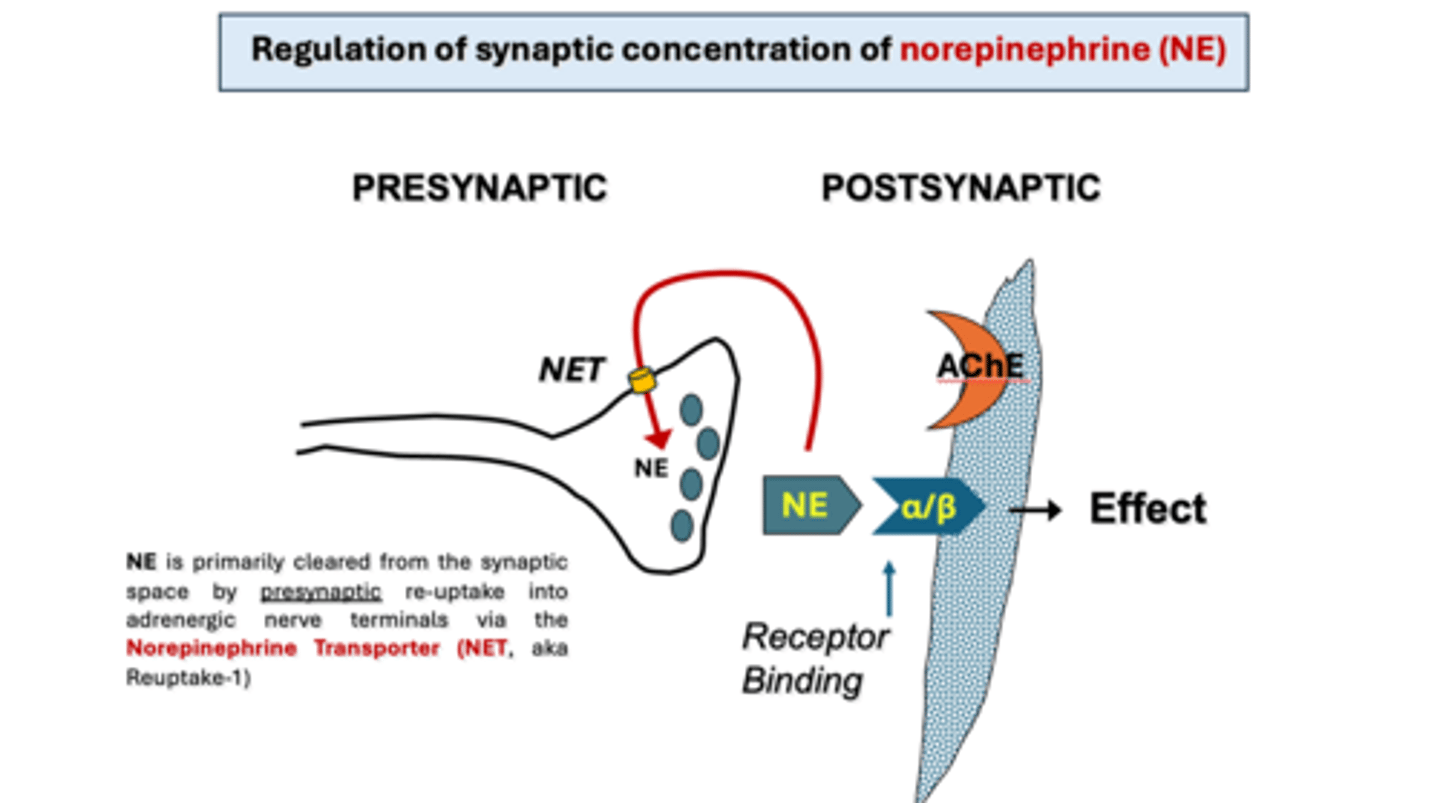
What is a net transporter? What does it do? Why is it important?
moves norepinephrine back into the adrenergic nerve; this regulates the amount of norepinephrine in the synapse
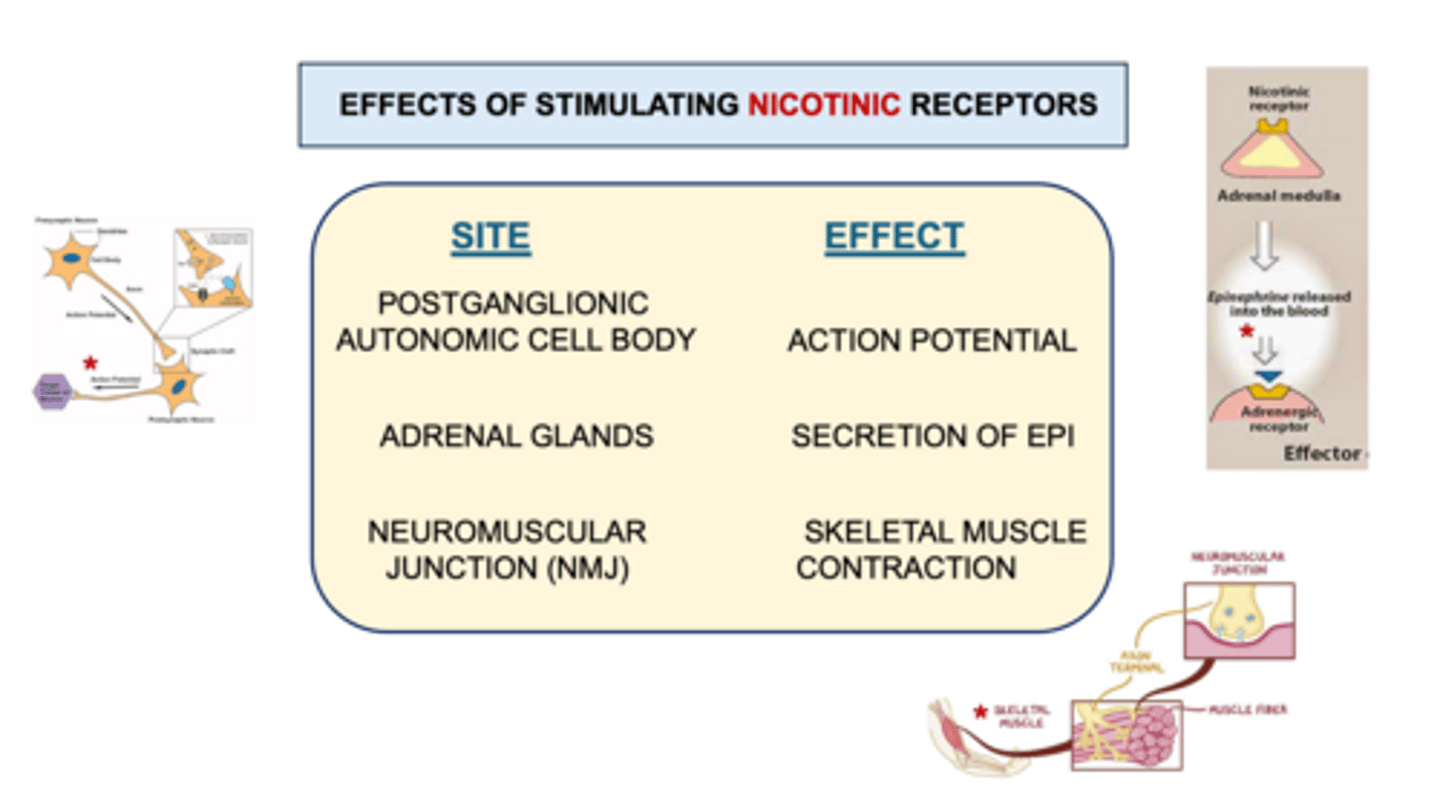
What are the three major sites where nicotinic receptors produce effects?
1. post-ganglionic autonomic cell bodies
2. adrenal glands
3. neuromuscular junction (NMJ)
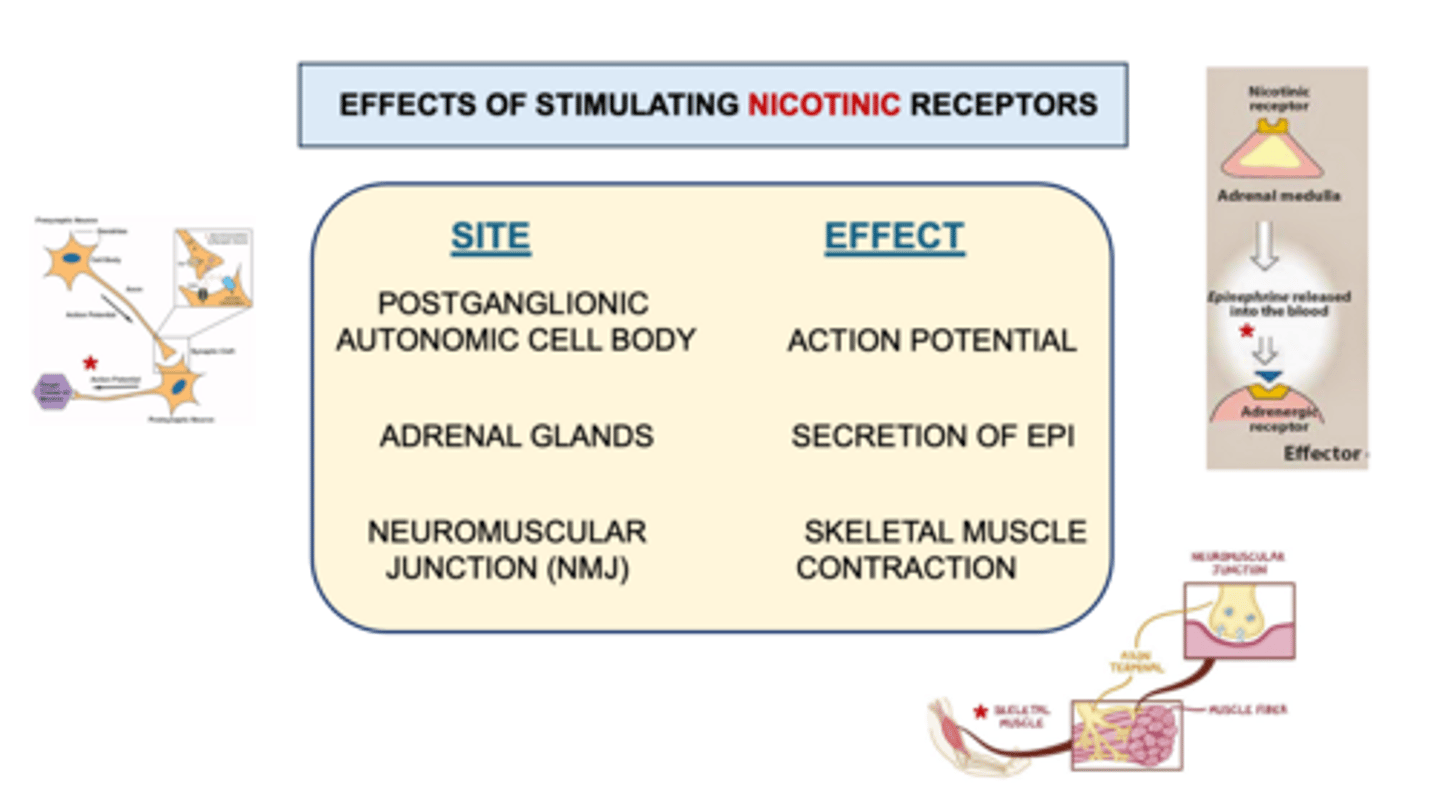
In nicotinic receptors, what happens when a post-ganglionic autonomic cell body is stimulated?
action potential
In nicotinic receptors, what happens when the adrenal gland is stimulated?
epinephrine secretion
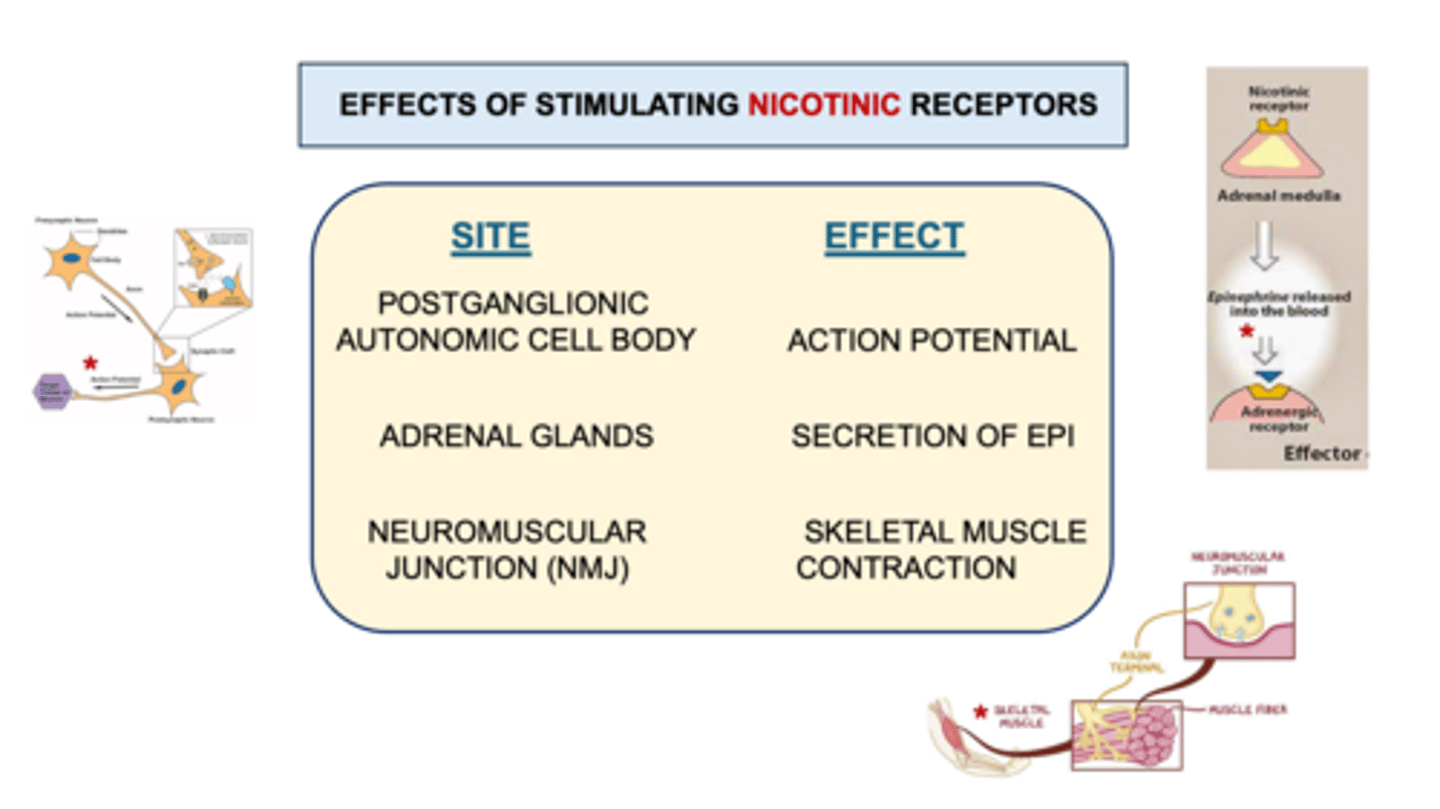
In nicotinic receptors, what happens when the neuromuscular junction is stimulated?
skeletal muscle contraction
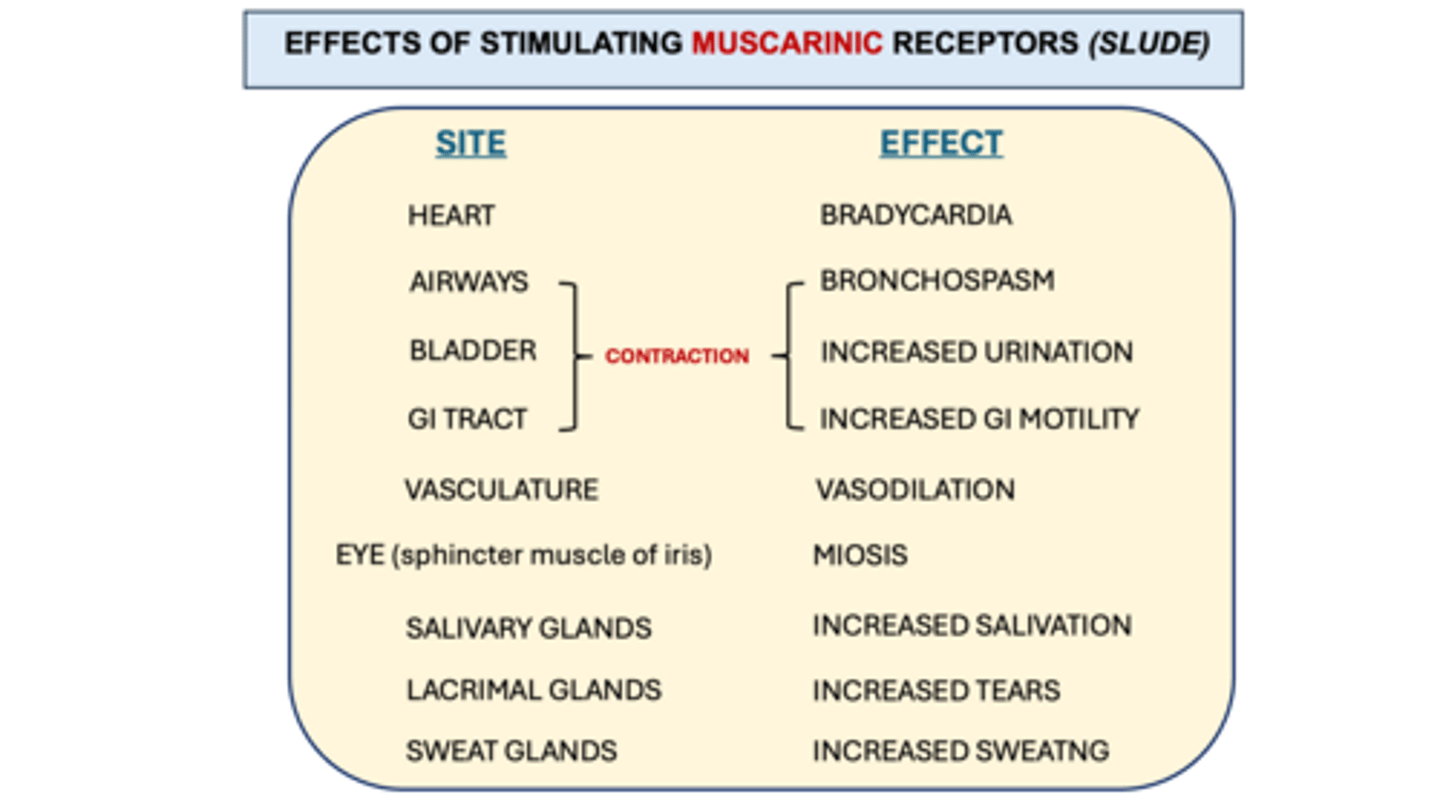
What are the nine sites that muscarinic receptors act on?
1. heart
2. airways
3. bladder
4. GI tract
5. vasculature
6. eyes
7. salivary glands
8. lacrimal glands
9. sweat glands
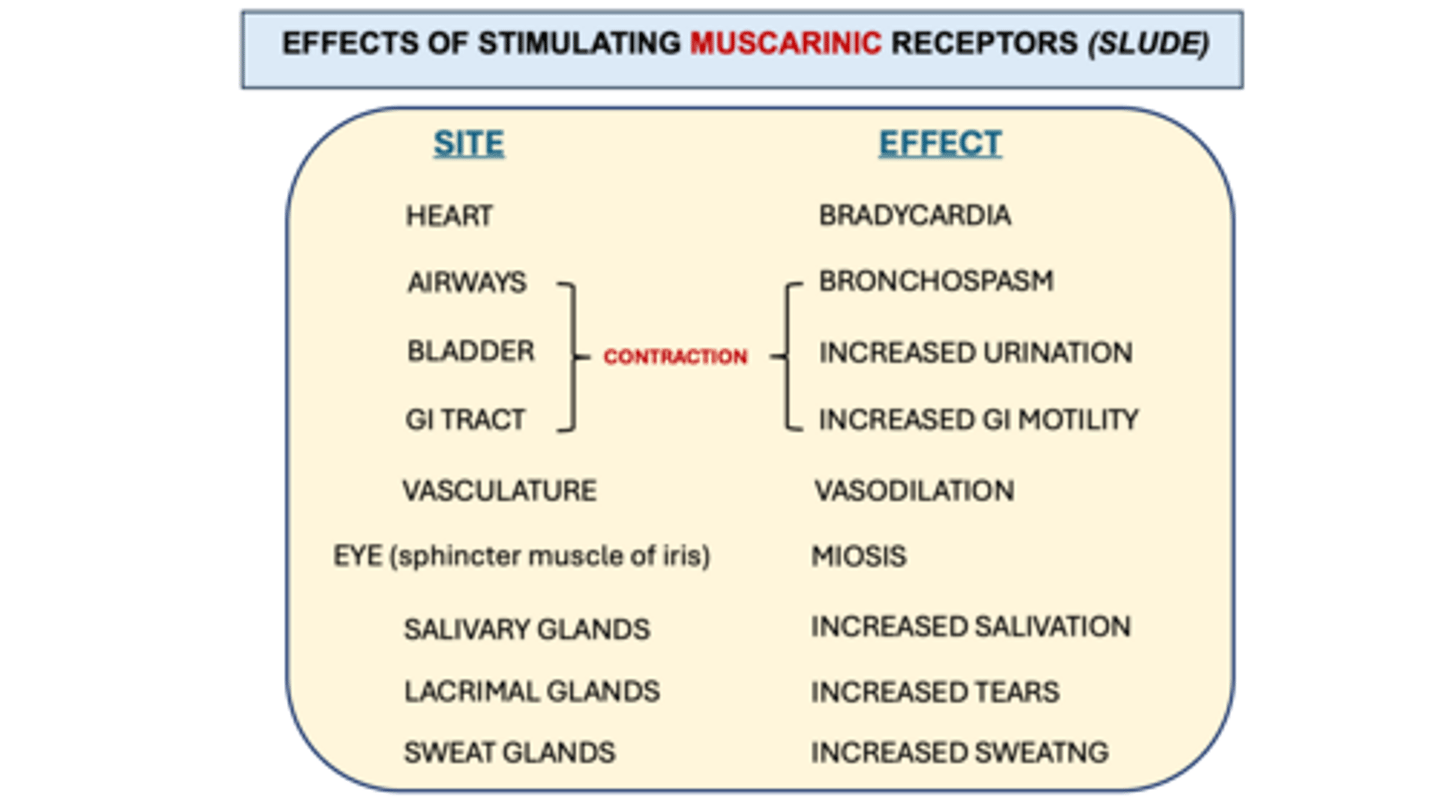
In muscarinic receptors, what happens when the heart is stimulated?
bradycardia (slow heart rate)
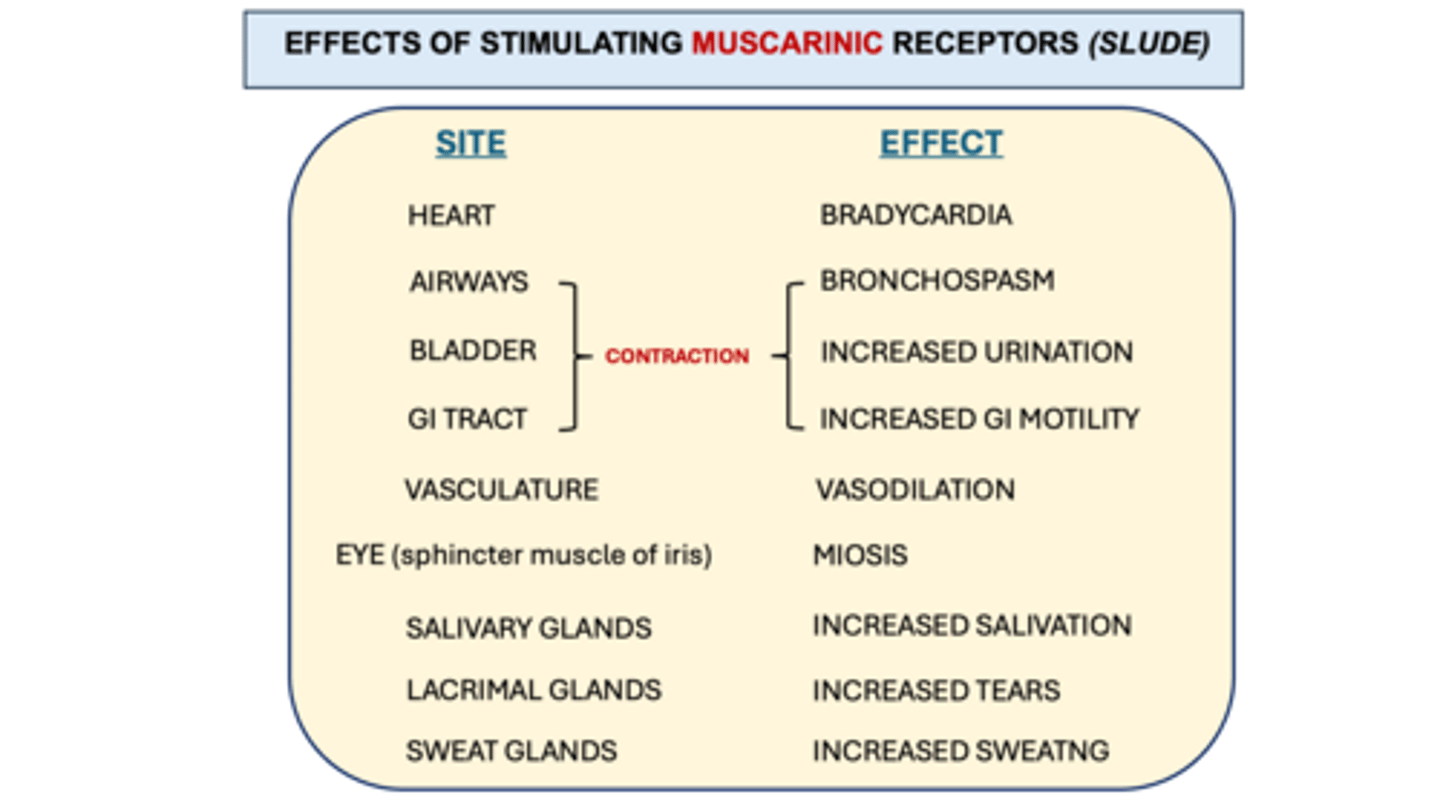
In muscarinic receptors, what happens when the airways, bladder, and GI tract are stimulated?
- increased contraction
- bronchospasm in airways
- increased urination in bladder
- increased GI motility in GI tract
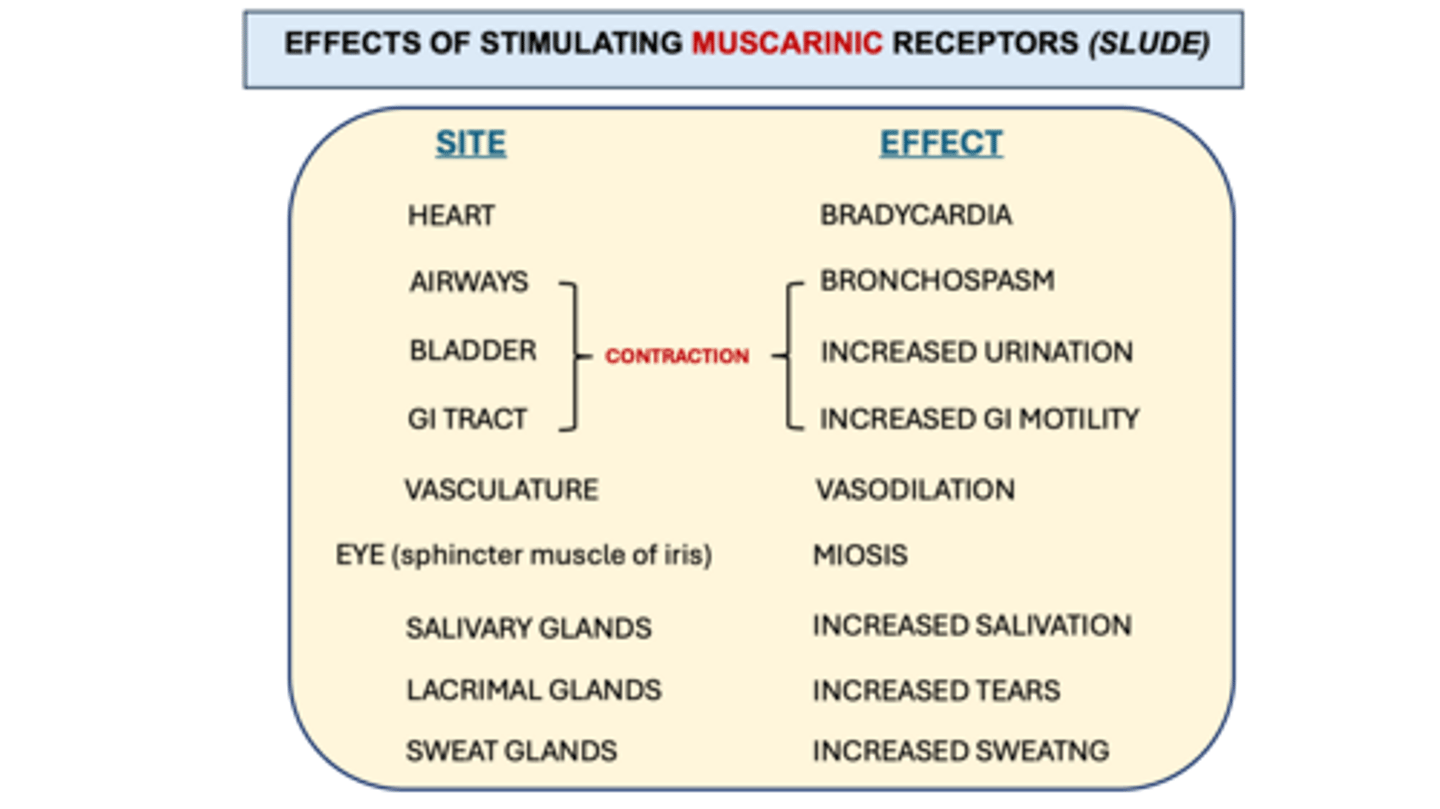
In muscarinic receptors, what happens when the vasculature is stimulated?
vasodilation*; it’s different than other smooth muscle
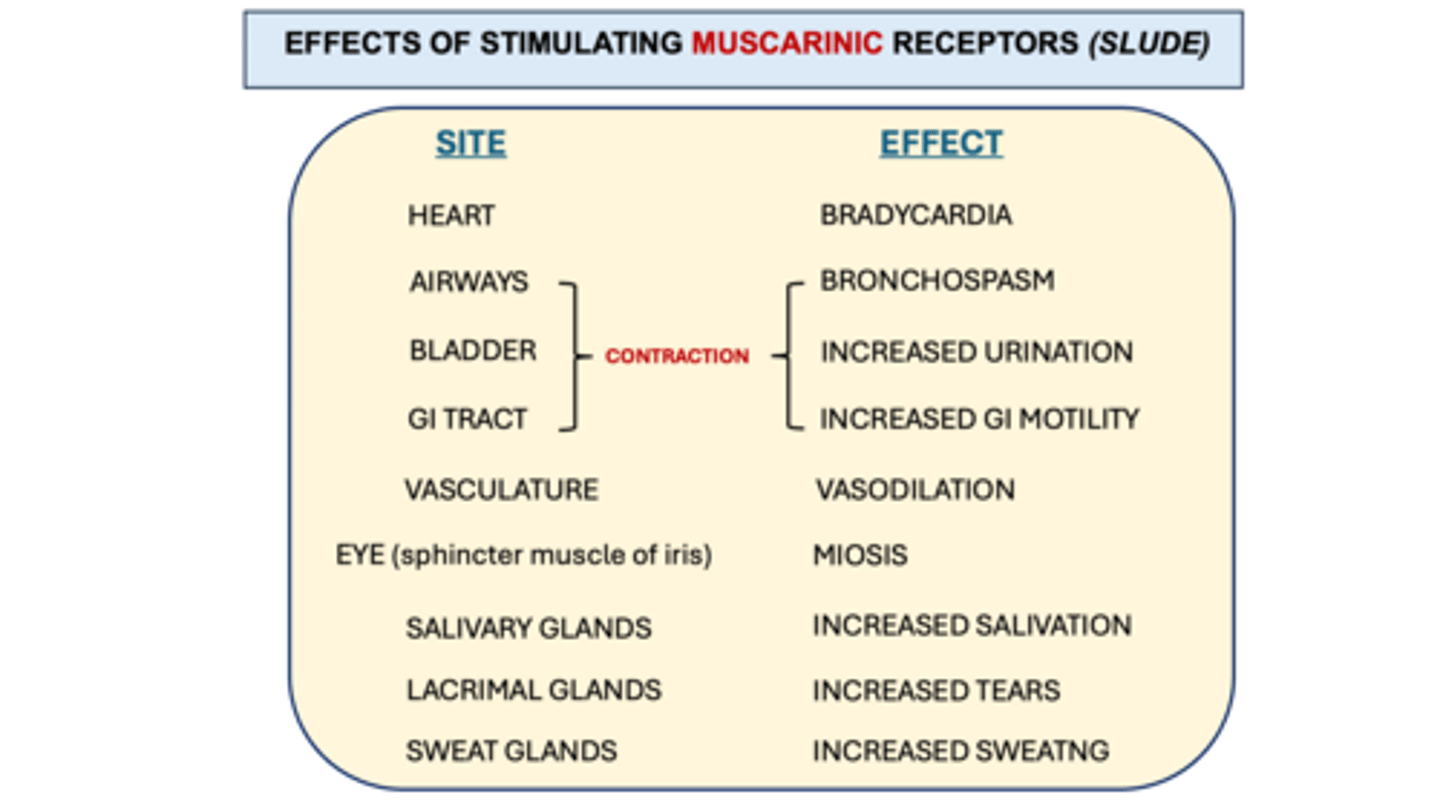
In muscarinic receptors, what happens when the eye is stimulated?
miosis; pupil constricts
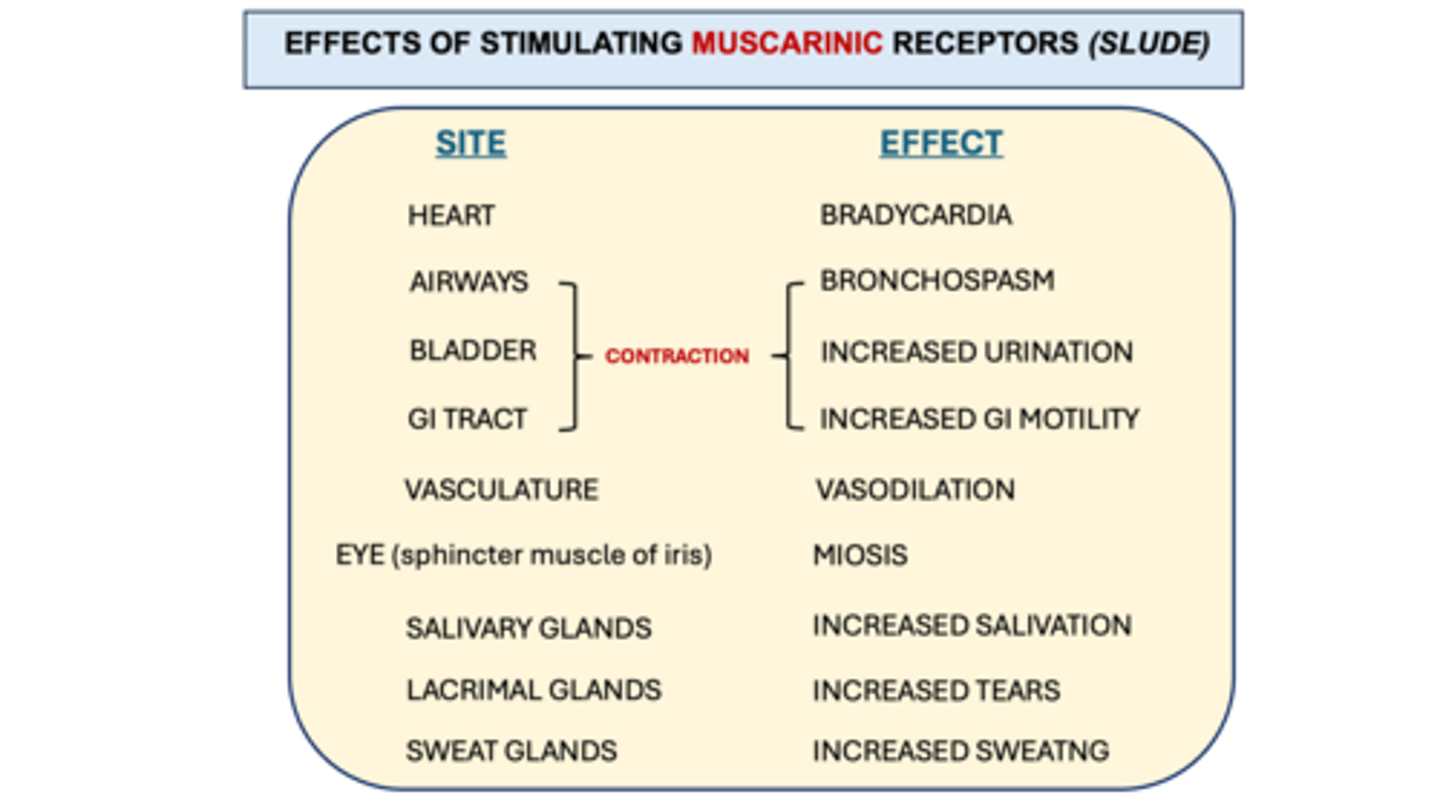
In muscarinic receptors, what happens when the salivary glands are stimulated?
increased salivation
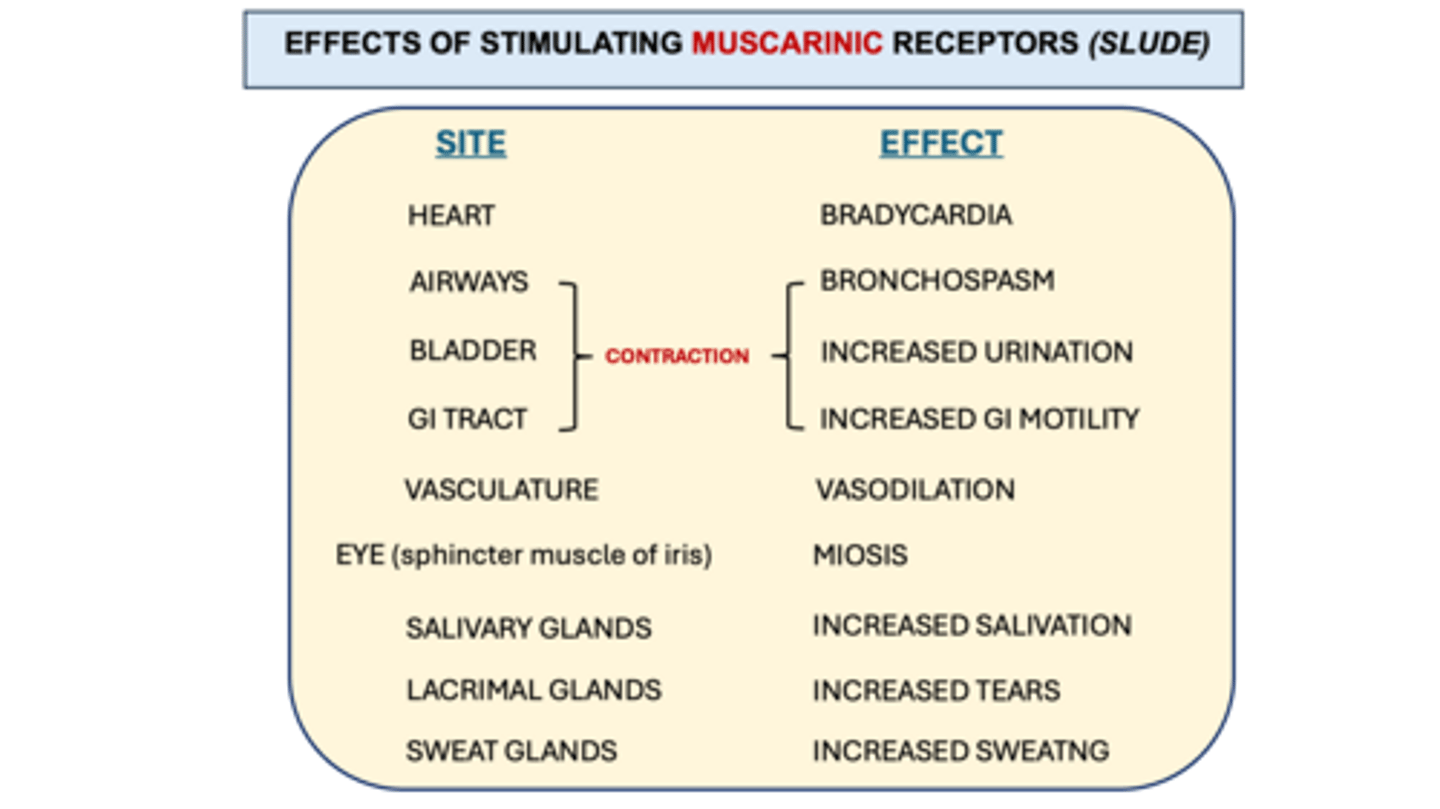
In muscarinic receptors, what happens when the lacrimal glands are stimulated?
increased tears
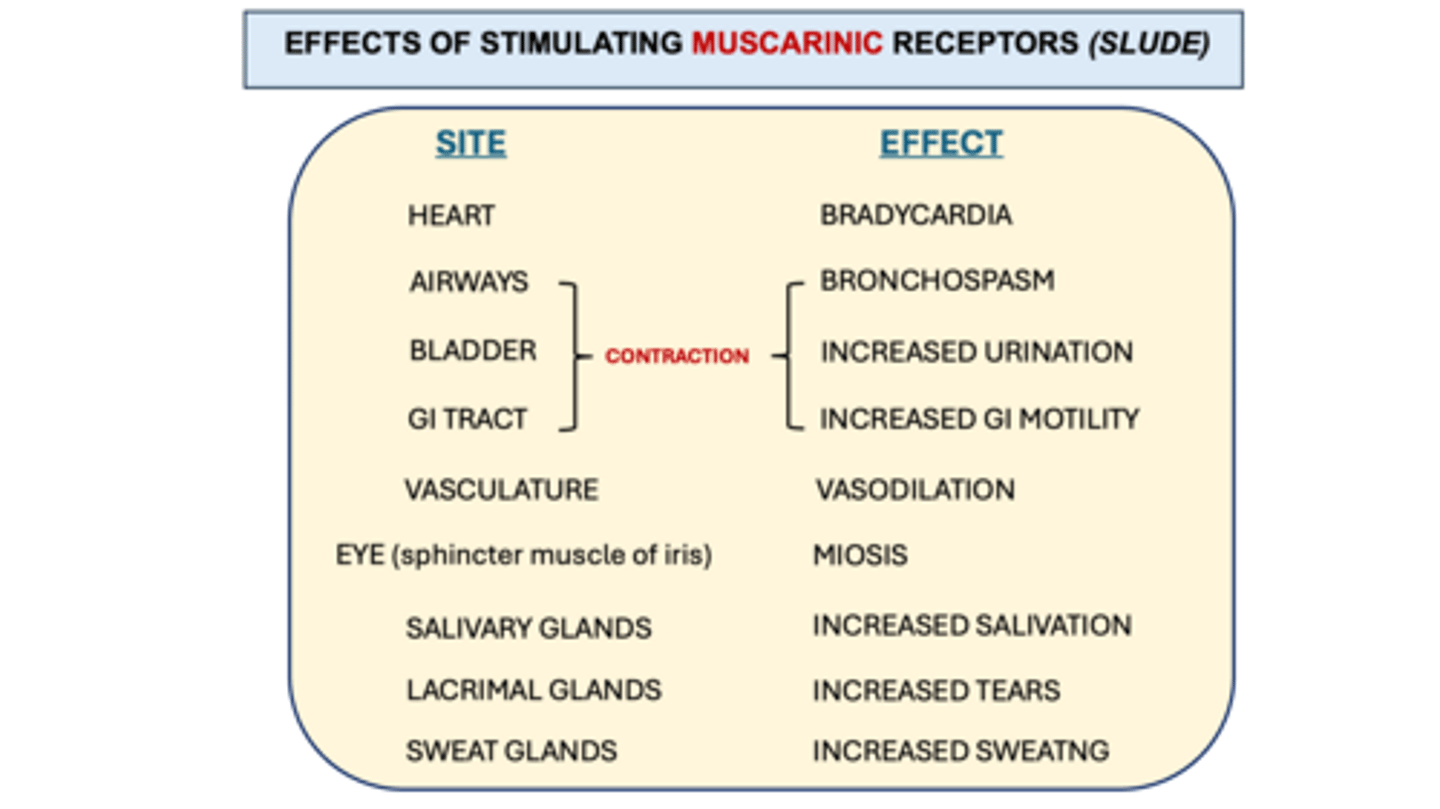
In muscarinic receptors, what happens when the sweat glands are stimulated?
increased sweating
What are the seven sites that adrenergic receptors act on?
1. heart
2. airways
3. bladder
4. GI tract
5. uterus
6. vasculature
7. eyes
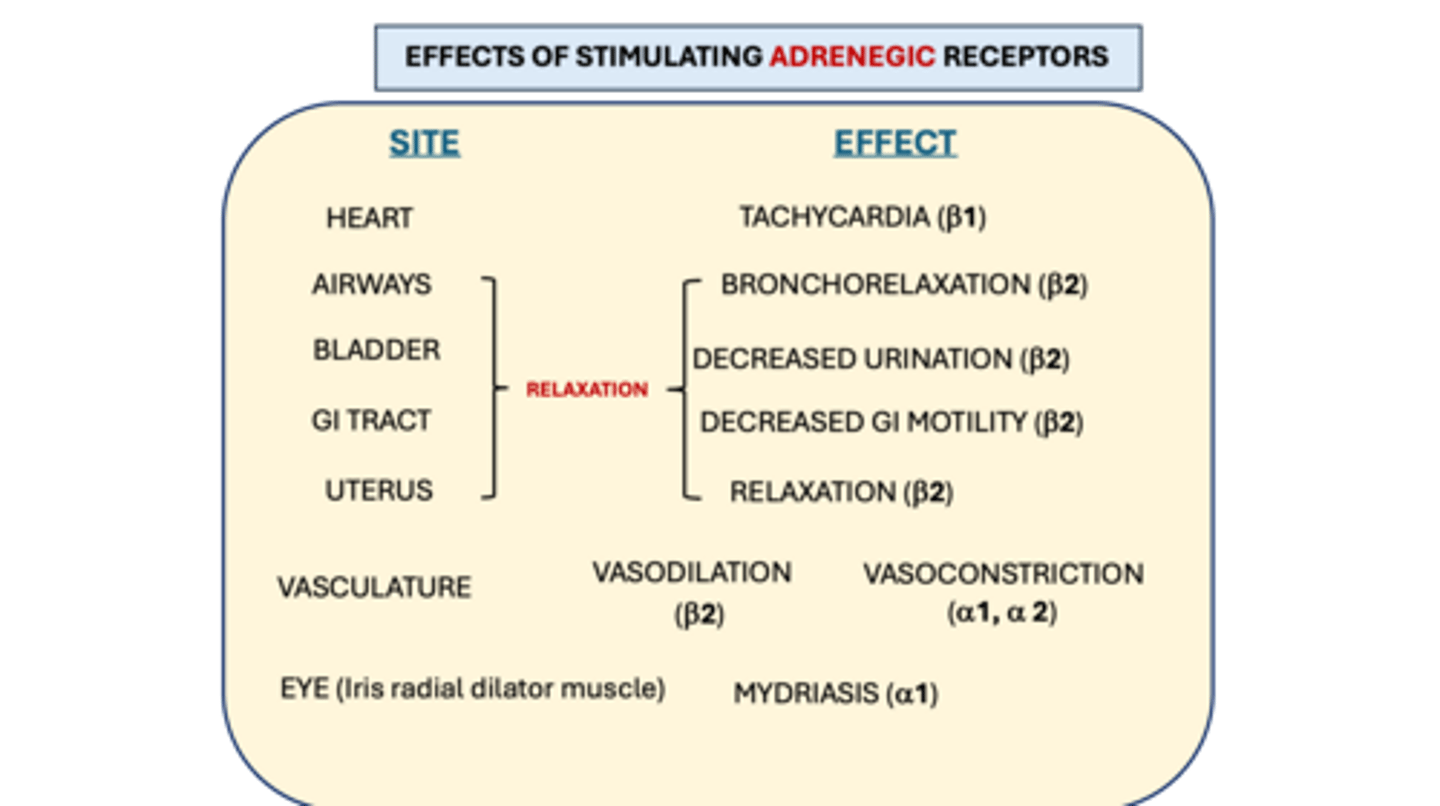
In adrenergic receptors, what happens when the heart is stimulated? What receptor does it act on?
- acts at beta 1 receptors
- tachycardia; increases heart rate
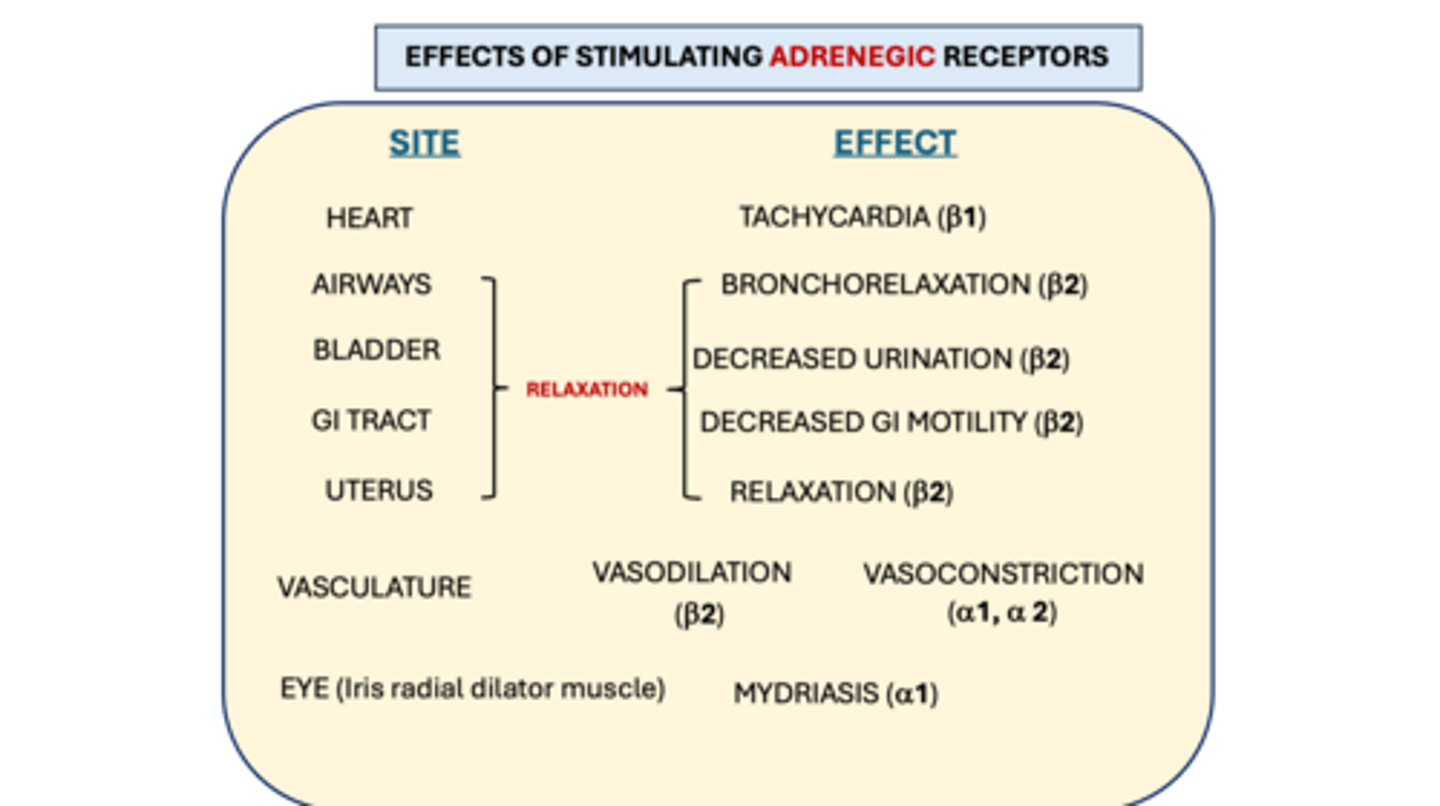
In adrenergic receptors, what happens when the airways, bladder, GI tract, and uterus are stimulated? What receptor does it act on?
- acts at beta 2 receptors
- broncho-relaxation of airways; increased airflow
- bladder relaxes; decreased urination
- GI tract relaxes; decreased GI motility
- uterus relaxes; decreased uterine contraction
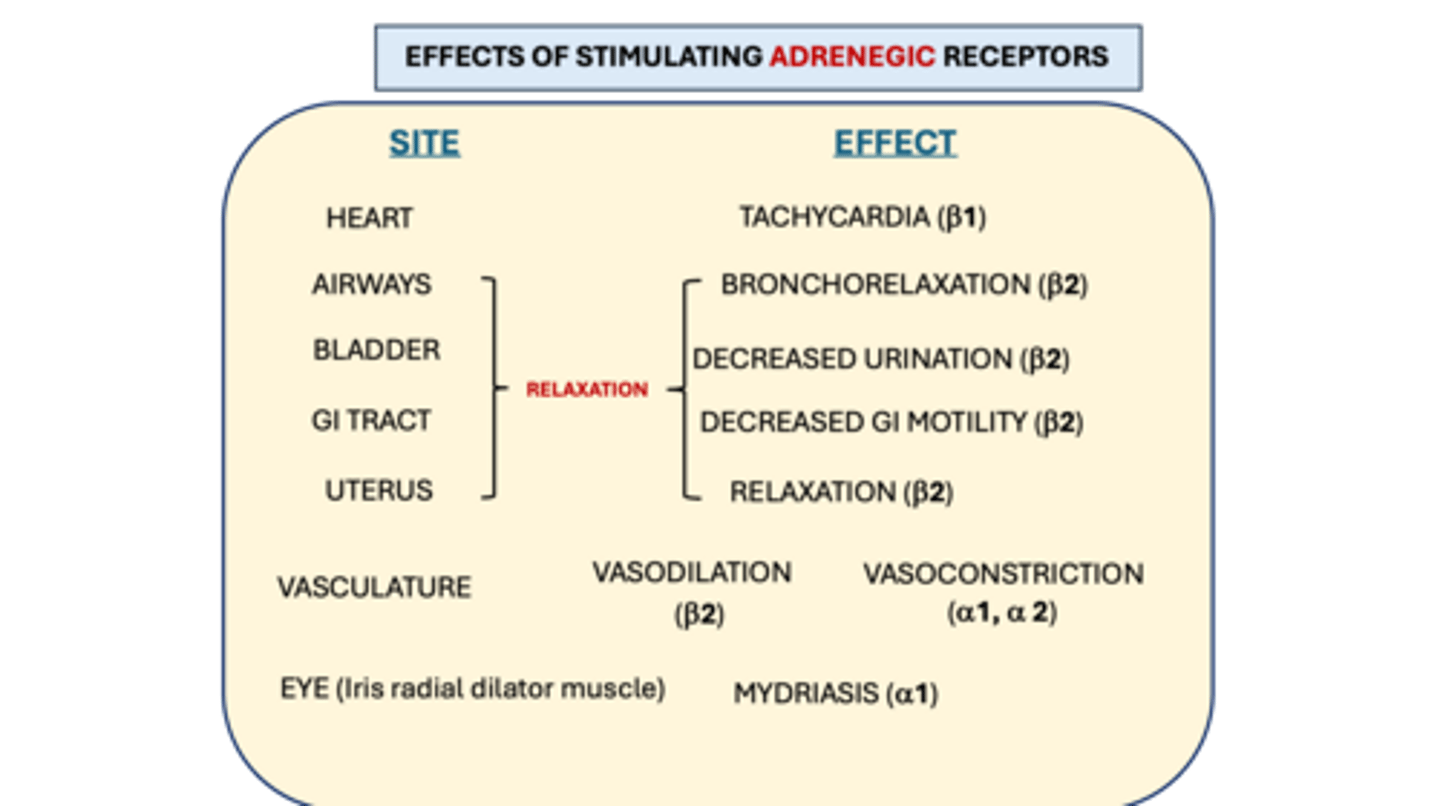

In adrenergic receptors, what receptor is acted on when the vasculature vasodilates?
acts on beta 2 receptors
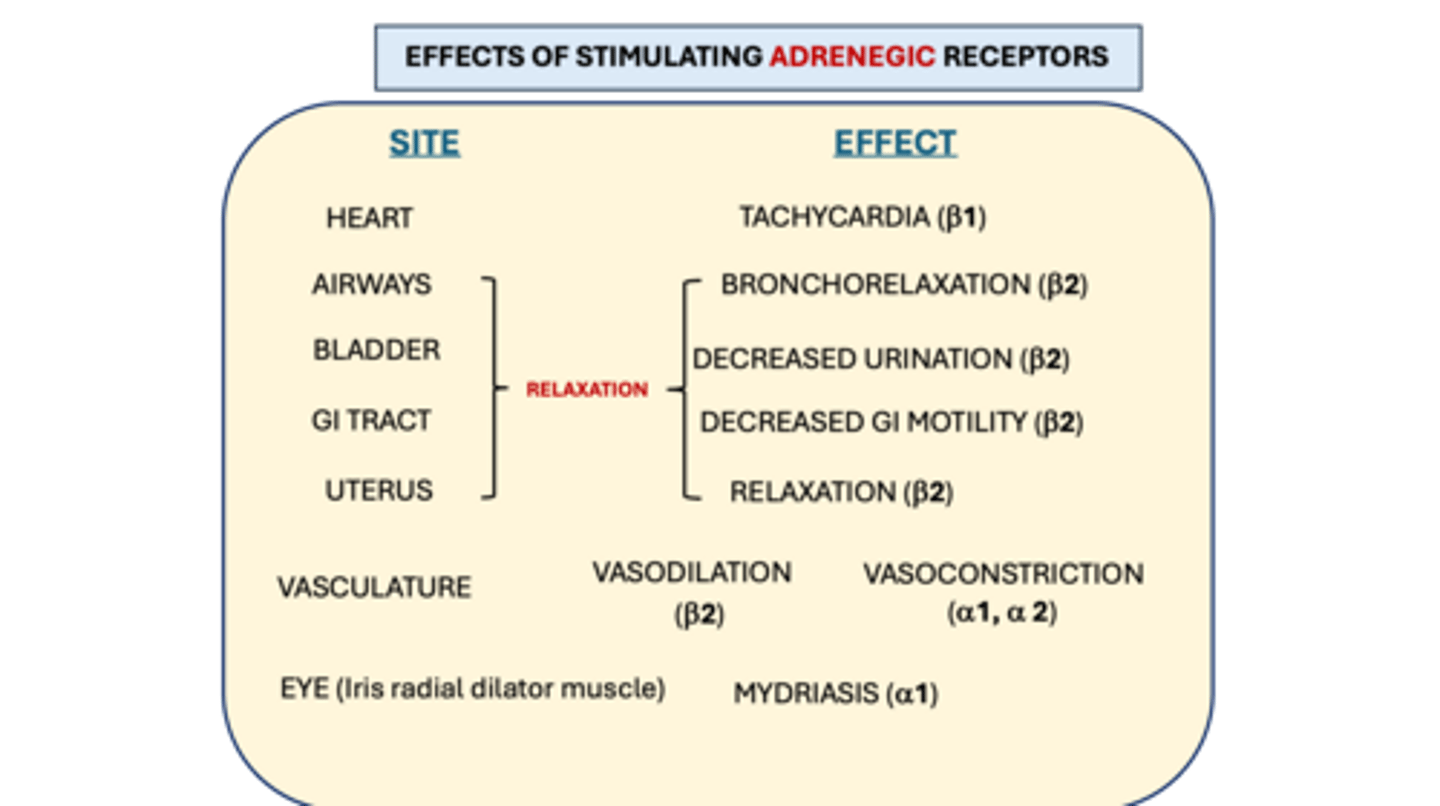
In adrenergic receptors, what two receptors are acted on when the vasculature vasoconstricts?
alpha 1 and alpha 2 receptors
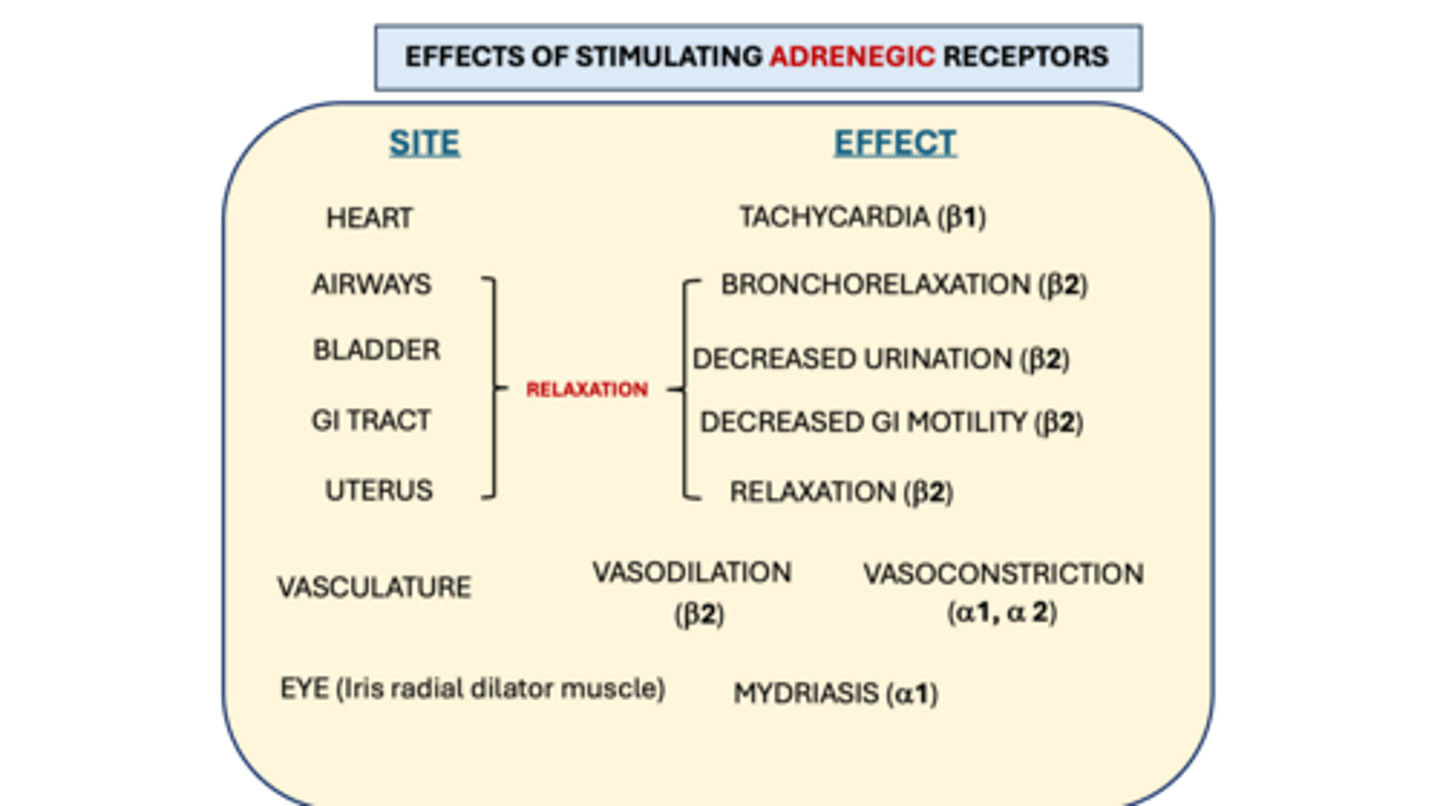
In adrenergic receptors, what happens when the eye is stimulated? What receptor does it act on?
- acts on alpha 1 receptors
- mydriasis; pupils dilate
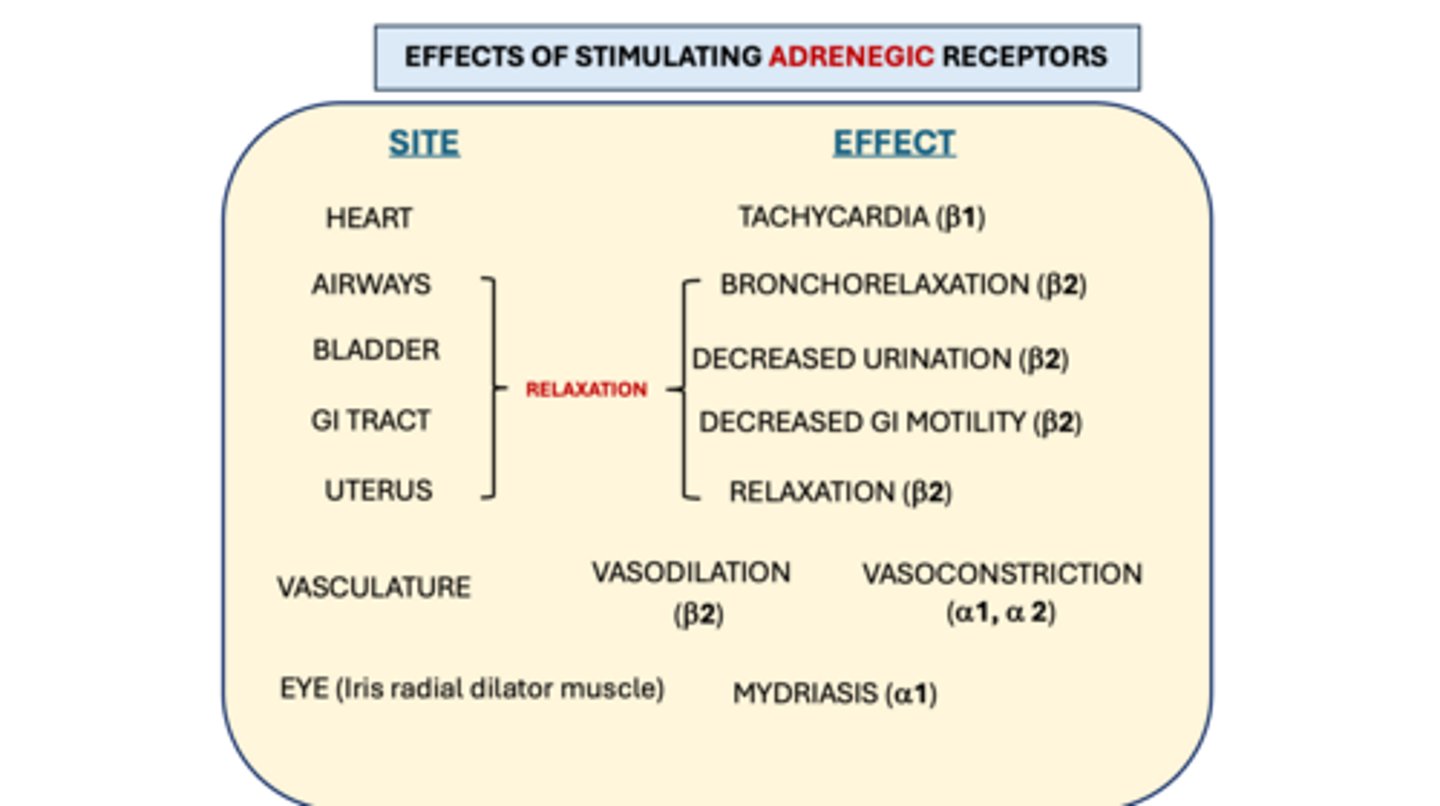
What two things happen when adrenergic beta 1 receptors are stimulated?
1. increased heart rate
2. increased contractile force
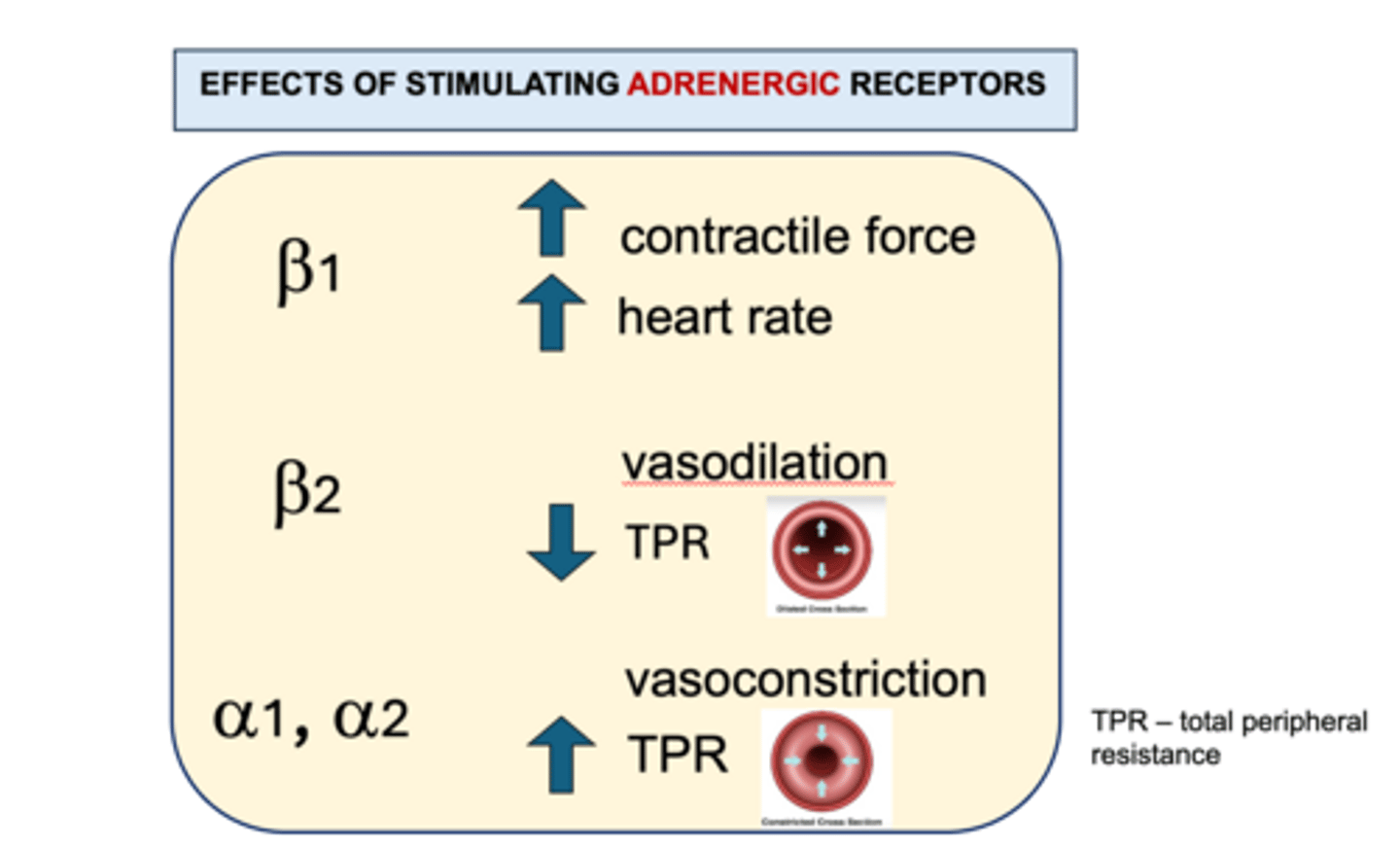
What two things happen when adrenergic beta 2 receptors are stimulated?
1. increased vasodilation; increased blood flow
2. decreased total peripheral resistance
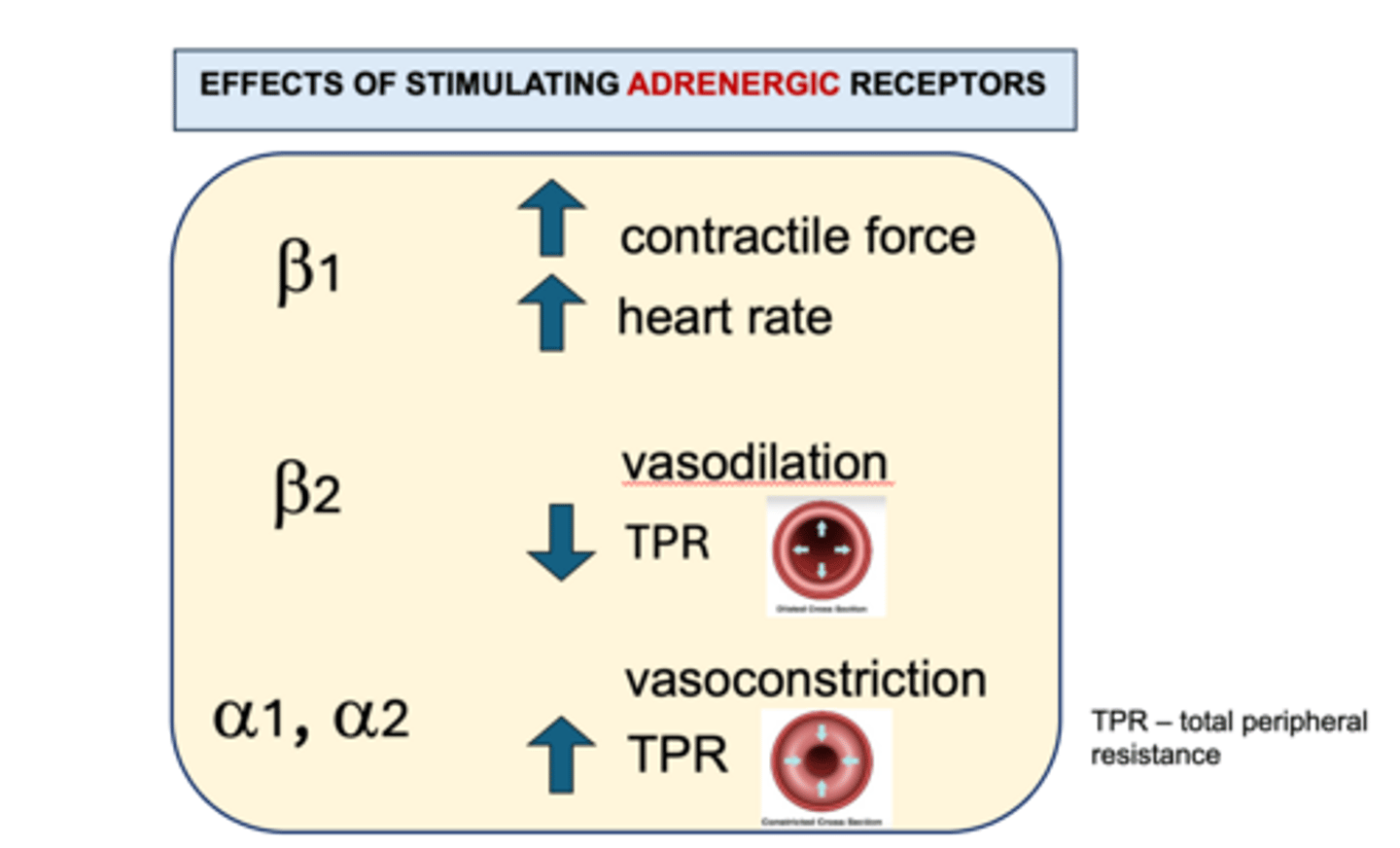
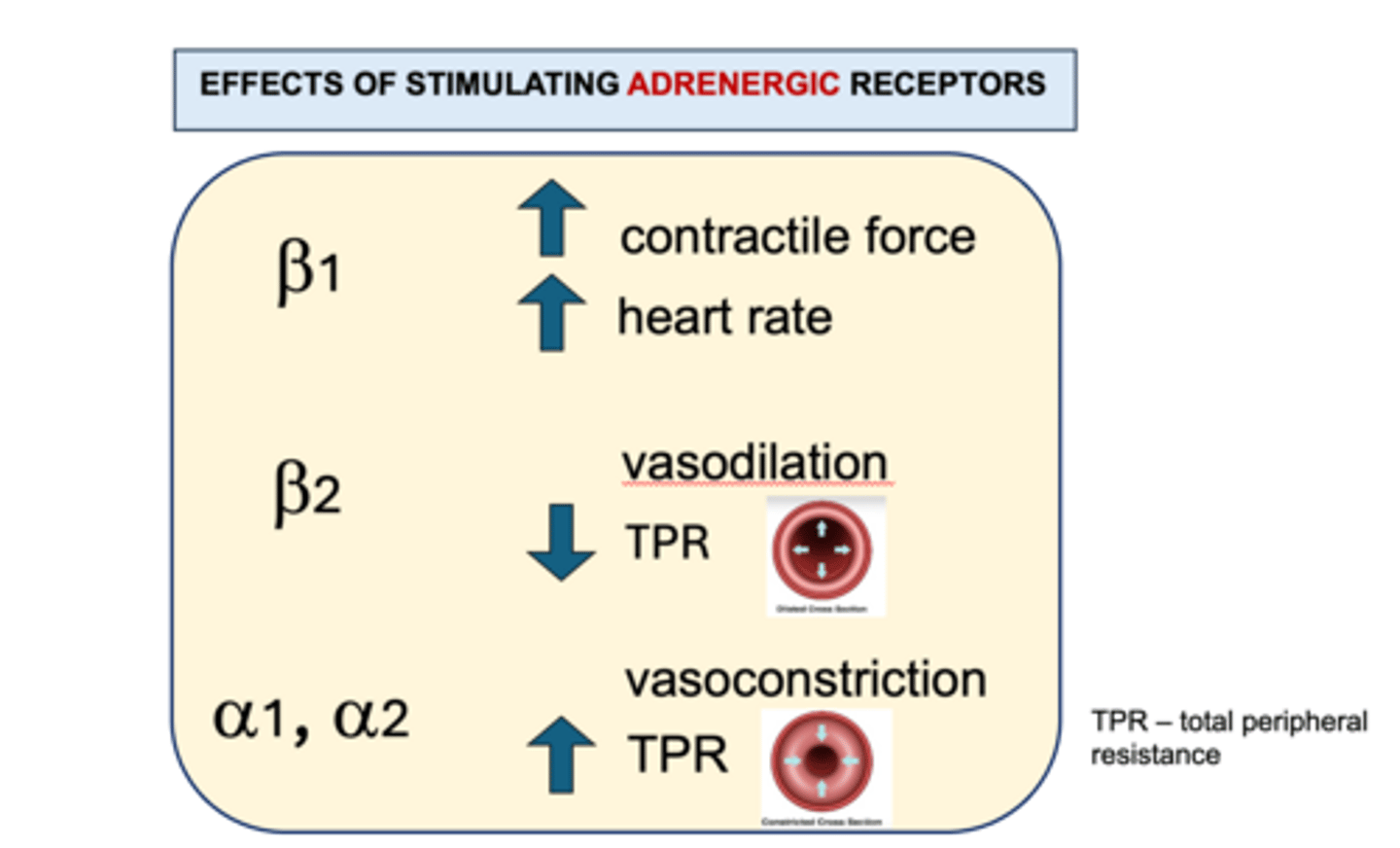
What two things happen when adrenergic alpha 1 and alpha 2 receptors are stimulated?
1. increased vasoconstriction
2. increased total peripheral resistance
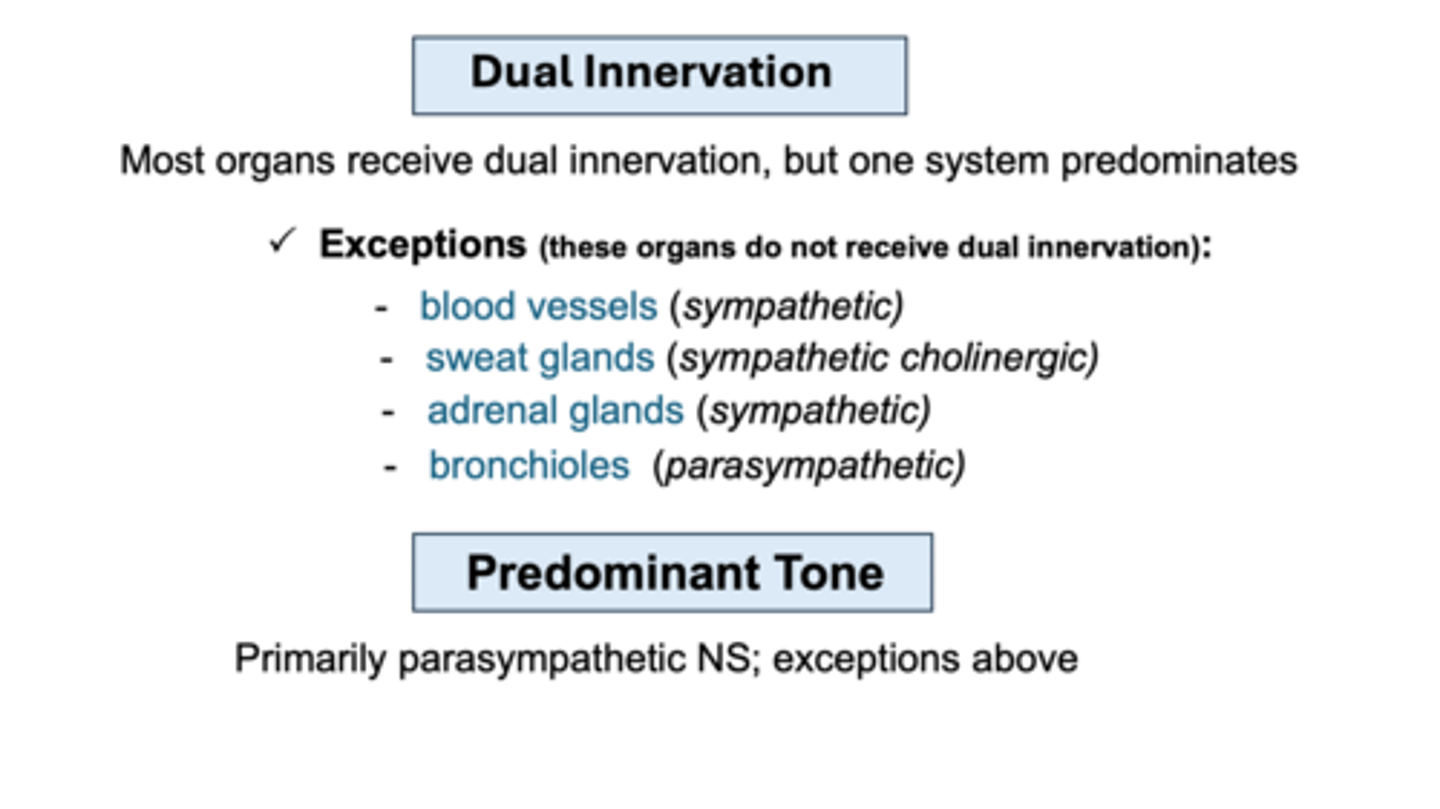
What is dual innervation?
sympathetic and parasympathetics go to the same target organ
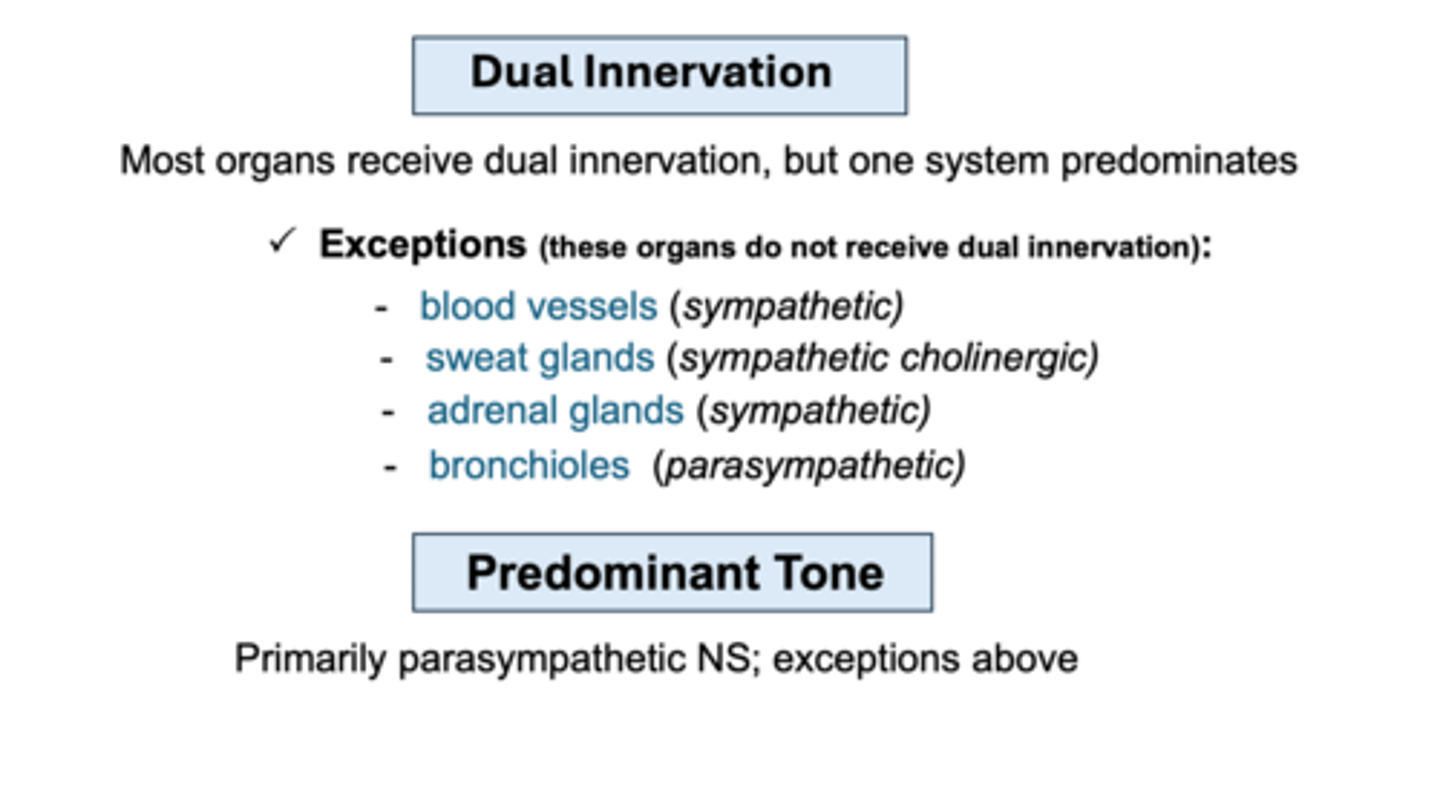
What are the four organs that do not have dual innervation?
1. blood vessels (sympathetic)
2. sweat glands (sympathetic cholinergic)
3. adrenal glands (sympathetic)
4. bronchioles (parasympathetic)
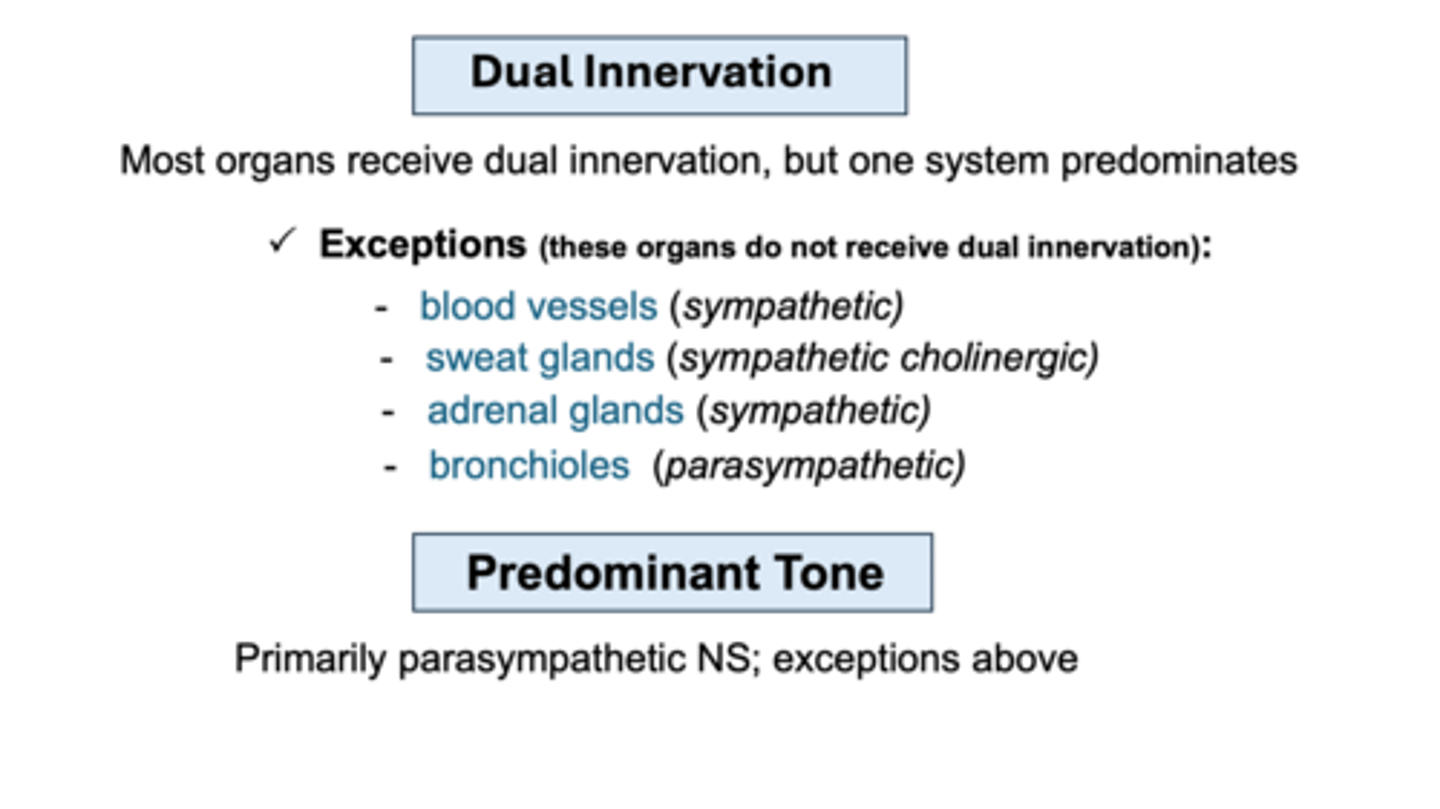
What is the predominant tone of most organs?
parasympathetic nervous system
 Note
Note  Flashcards (62)