APES Ch 11 Textbook Notes - not complete
 Call Kai
 Learn
Learn Practice Test
 Spaced Repetition
 Match
Match Flashcards
 Knowt Play
1/14

There's no tags or description
Looks like no tags are added yet.
Name | Mastery | Learn | Test | Matching | Spaced | Call with Kai |
|---|
No analytics yet
Send a link to your students to track their progress
15 Terms
research frontier
marine aquatic systems are considered…
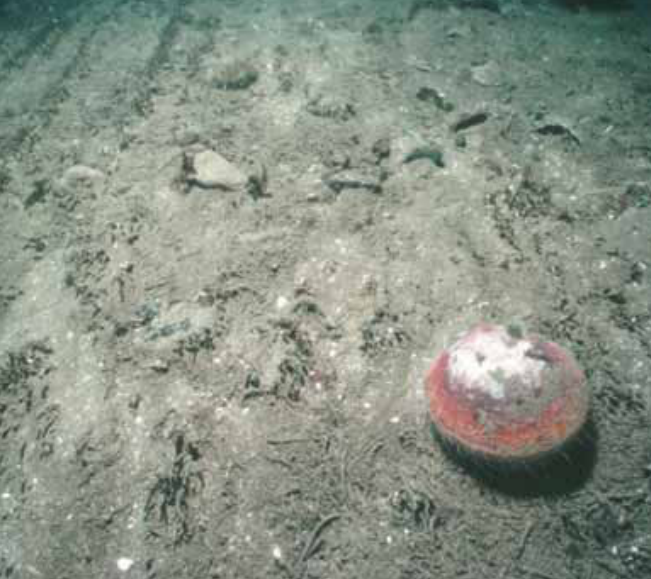
trawler
drag huge nets weighted down with heavy chains and steel plates like giant submerged bulldozers over ocean bottoms to harvest bottom fish and shellfish
These reduce coral reef habitats to rubble and kill a variety of creatures on the bottom by crushing them, burying them in sediment, and exposing them to predators.
Each year, thousands of trawlers scrape and disturb an area of ocean floor about 150 times larger than the area of forests that are clear-cut annually
freshwater fish species
51% of freshwater fish species—more than any other major type of species—are threatened with premature extinction
invasive species
species that are colonizing 84% of the world’s coastal waters
arrive in ballast water or by consumers
ex: asian swamp eel, purple loosestrife
overfishing
For thousands of years, humans in coastal areas have overharvested fishes, shellfish, seals, turtles, whales, and other rmarine mammals (Concept 11-1).
Today’s fleets can deplete marine life much faster
All nations are overfishing global oceans by 157%
fishprint
The area of ocean needed to sustain the consumption of an average person, a nation, or the world.
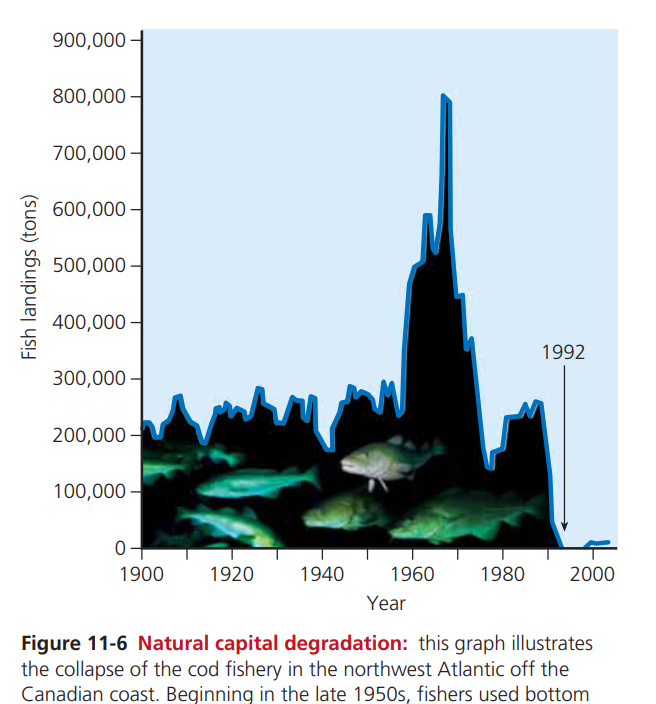
Commercial extinction
occurs when it is no longer profitable to continue fishing the affected species.
Overfishing usually results in only a temporary depletion of fish stocks, as long as depleted areas and fisheries are allowed to recover.
However, recovery times are increasing
ex: Canada’s 500-year-old Atlantic cod fishery off the coast of Newfoundland collapsed and was closed. This put at least 20,000 fishers and fish processors out of work and severely damaged Newfoundland’s economy.
Predatory open-ocean fish
90% of these fish such as tuna, swordfish, and marlin have disappeared
Bycatch
Nontarget species caught through gigantic nets from fishing boats and long lines of hooks.
Almost 1/3 of annual fish catch is nontarget species that are thrown overboard dead/dying
Depleted population of species that play important roles
Marine mammals such as seals, dolphins can be caught as well
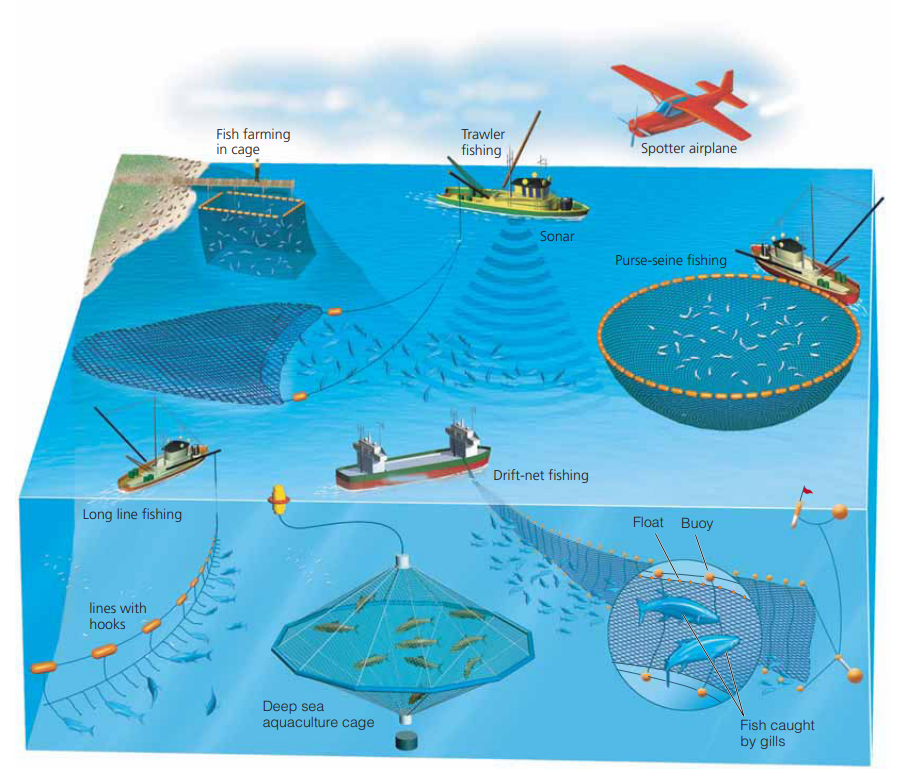
Trawler, purse seine, long line, drift net
Fish farming methods
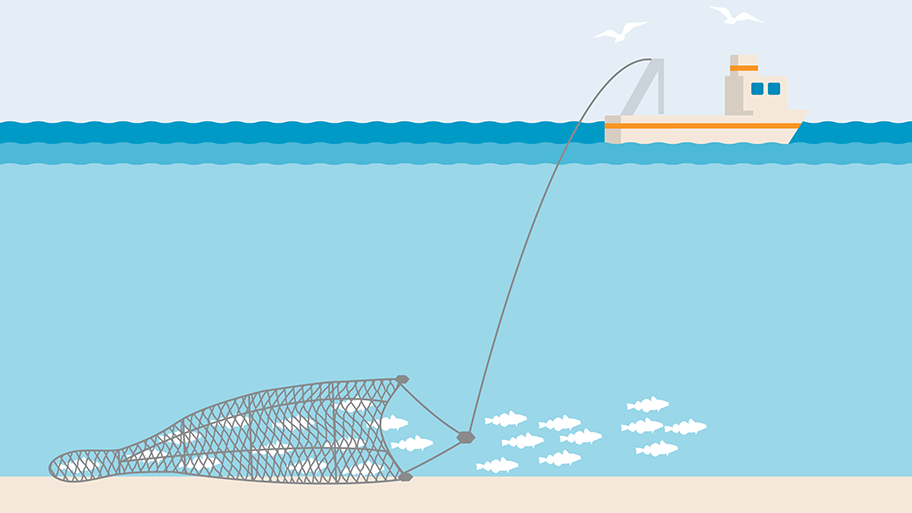
Trawler fishing
Dragging funnel-shaped net held open at the neck along the ocean bottom
Used to catch fishes and shellfish—especially shrimp, cod, flounder, and scallops—that live on or near the ocean floor.
Scrapes up everything on ocean floor, destroys bottom habitats
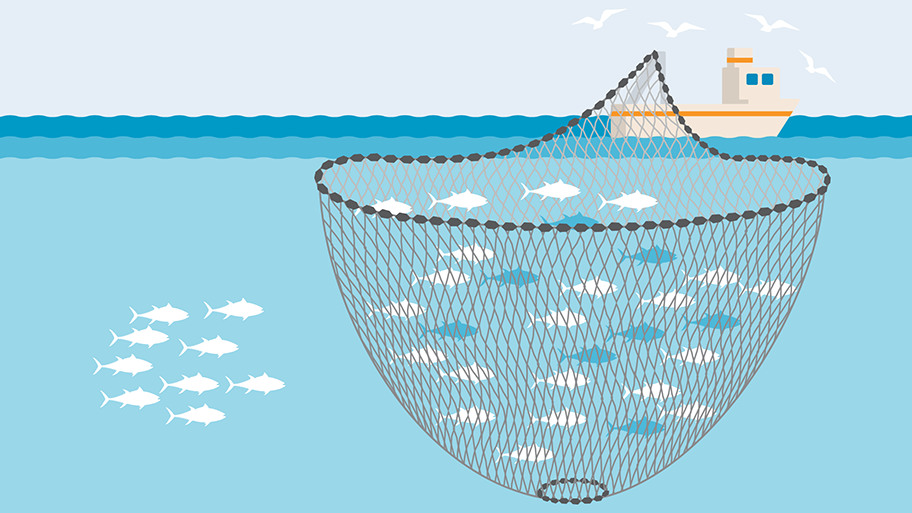
purse seine fishing
Used to catch surface-dwelling species such as tuna, mackerel, anchovies, and herring
Spotter plane locates a school, then fishing vessel encloses it with a large net called a purse seine.
Nets used to capture yellow fin tuna in the eastern tropical Pacific Ocean have killed large numbers of dolphins that swim on the surface above schools of tuna.
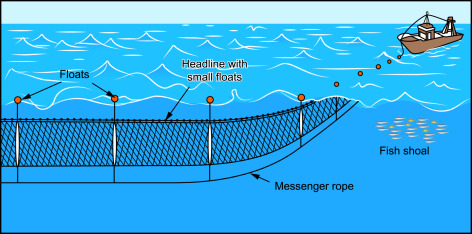
Longline fishing
Involves putting out lines up to 130 kilometers (80 miles) long, hung with thousands of baited hooks.
Depths of the lines can be adjusted for open-ocean fish species such as swordfish, tuna, and sharks or bottom fishes such as halibut and cod.
Also hook and kill large numbers endangered sea turtles, dolphins, and seabirds each year.
Simple modifications to fishing gear and practices can decrease seabird deaths
Drift net fishing
Fish are caught by huge drifting nets that can hang as deep as 15 meters (50 feet) below the surface and extend to 64 kilometers (40 miles) long.
This method can lead to overfishing of the desired species and may trap and kill large quantities of unwanted fish, marine mammals, sea turtles, and seabirds
Banned in 1992 by UN

