Mircobiology exam 1
 Studied by 0 people
 Call Kai
 Learn
Learn Practice Test
 Spaced Repetition
 Match
Match Flashcards
 Knowt Play
1/35

There's no tags or description
Looks like no tags are added yet.
Name | Mastery | Learn | Test | Matching | Spaced | Call with Kai |
|---|
No analytics yet
Send a link to your students to track their progress
36 Terms
Domain Bacteria
One of the three major domains of life(Located everywhere)
consisting of unicellular prokaryotic organisms
characterized by the absence of a nucleus and membrane-bound organelles.
They play crucial roles in various ecological processes.
The majority have a cell wall with peptidoglycan
Inhibits body
Can help aid in human digestoin but can also cause diseases.
Domain Archaea
Another major domain of life comprises unicellular prokaryotic organisms
characterized by unique membrane lipids and ribosomal RNA distinct from bacteria.
They are often found in extreme environments.
play important roles in various biochemical cycles.
Lack of peptidoglycan in cellwalls
Some have unusual metabolic characteristics, such as the ability to generate methane (natural) gas.
Does not directly causes diseases in humans
microbiology
study of living things too small to be seen without
magnification
microbes
Microscopic organisms or infectious agents that are generally invisible to the naked eye.
Essential for life due to their role in oxygen production. decomposition and human microbiome.
Prokaryotic cells
contents that are not divided into
compartments by membranes’Typically smaller and simpler than eukaryotic cells, with genetic material arranged in a nucleoid region.
Eukaryotic cells
nucleus and membrane-bound
organellesseparate some cellular materials and processes from others.
Had genetic material(DNA)
cellular microbes
Microorganisms composed of 11 or more cells.
Includes both prokaryotic and Eukaryotic microbes
Lack differentiated tissues.
Domain Eukarya
organisms whose cells contain a true, membrane‑bound nucleus and complex internal structures.
includes plants, animals, and microorganisms classified as protists or fungi.
Protists
Unicellular
Larger than Bacteria and Archaea
Includes Algae and Protozoa
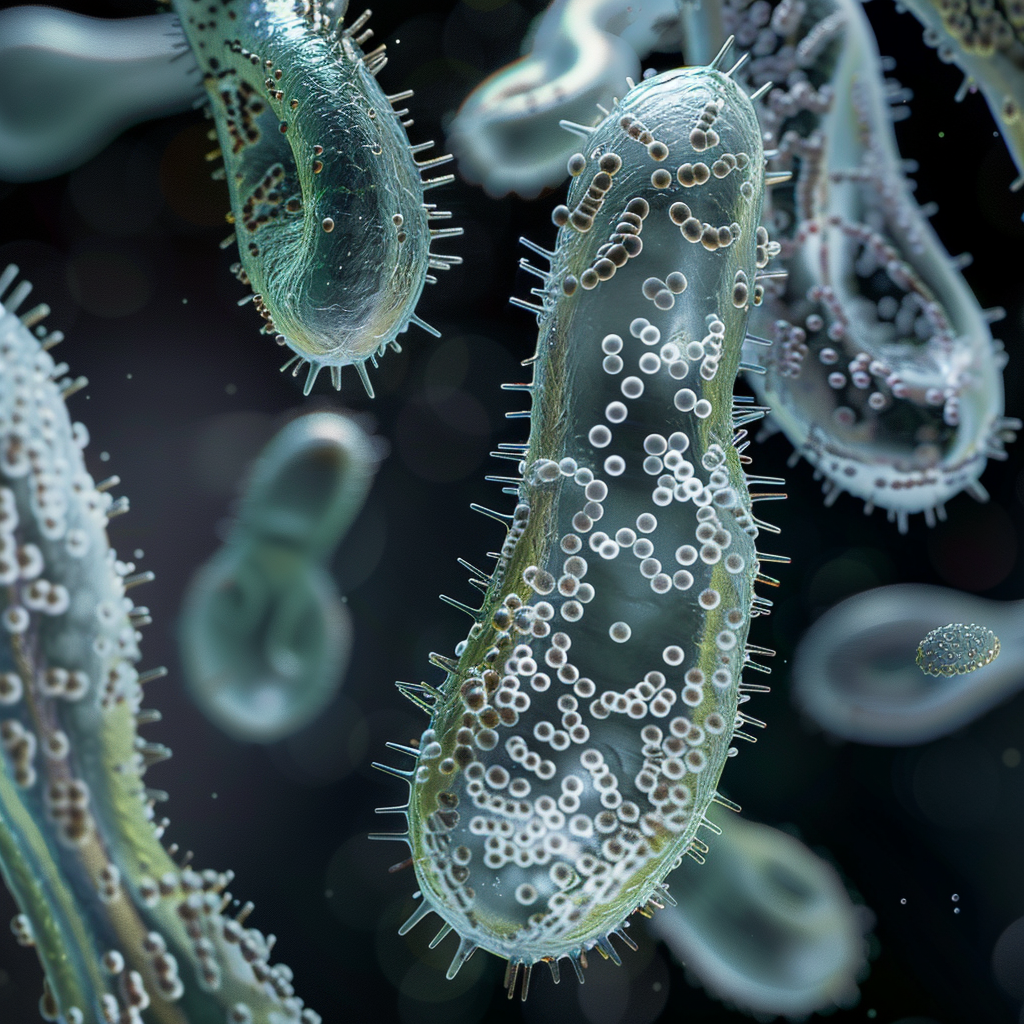
Algae
common term for several unrelated groups of photosynthetic eukaryotic microorganism
So more of plants
Protozoa
animal-like metabolism
Similar because of their similar nutritions
Fungi
A diverse group of microorganisms that range from unicellular forms (yeasts) to molds and mushrooms(multicellular)
Eukaryotic
Chitin cell walls
Absorbs nutrients from their environments
not photosynthetic
Produces antibiotics and decomposes dead organisms.
Hypae
long, thread‑like filaments that make up the body of multicellular fungi.
Produces spores for reproducton
grow at the tips
Viruses
Have no cells
Must have a host cell to invade to be able to reproduce
The smallest of all microbes
cause many animal and plant diseases, and have shaped human history.
important in aquatic environments, where they play a critical role in shaping microbial communities
Viroids
Infectious agents that are composed of RNA
Causes numerous plant diseases
virions
The physical particle that exists outside cells and transmits infection
Simplest virus particles
can have either DNA or RNA
No metabolism and replication
Satellites
Nucleic acid enclosed in a protein shell
Must coinfect a host cell with a virus to complete the life cycle
Can cause both animals and plants diseases
Prions
cause of mad cow
Infecious
Made up of just proteins
Ribozymes
RNA molecules act as enzymes
Without proteins, they can catalyze biochemical reactions.
Cyanobacteria
A type of bacteria that produces oxygen
Ancient role in shaping Earth atmosphere
SSU rRNA
forms the structural and functional core of the small ribosomal subunit
16(prokaryotes)
18(Eukaryotes)
Axenic culture
pure culture that contains only one single species or strain of microorganism, with no contaminants and no other living organisms present
1 Angstrom
1×10^-10 meters
What does light do when going from one medium to another ?
Light is refracted (bent) when passing
Refraction index
measure of how greatly a substance slows the velocity of light
Example of refraction index
when light passes from air into glass, which has a greater refractive index, it is slowed and bent toward the normal, a line perpendicular to the surface
focal length
measurement that tells you how strongly a lens bends (or “focuses”) light.
determines how strongly a lens bends light and directly affects magnification and field of view
focal point
parallel rays of light converge after passing through a convex lens
So basically where the light meets
Sterilization
Destruction or removal of all viable organisms
Disinfection
Killing, inhibition, or removal of diseases causing(pathogenic) organisms
Sanitation
Lowest level
Reduction of microbial population to levels deemed safe (based on public health standards)
Chemotherapy
use of chemical to kill or inhibit growth
Cidal agents
Kills the pathogens (bactreria, fungi and virus)
Static agents
Inhibits growth of bacteria and fungi
FActs of MIcobial death
It is not a death instantly
 Note
Note  Flashcards (78)