History of Design Exam 7 - English Renaissance
 Studied by 0 people
 Call Kai
 Learn
Learn Practice Test
 Spaced Repetition
 Match
Match Flashcards
 Knowt Play
1/109

There's no tags or description
Looks like no tags are added yet.
Name | Mastery | Learn | Test | Matching | Spaced | Call with Kai |
|---|
No analytics yet
Send a link to your students to track their progress
110 Terms
Early English Renaissance Periods
Tudor
Elizabethan
Jacobean
Cromwellian
Middle English Renaissance Periods
Restoration
William and Mary
Queen Anne
Early Georgian
Late English Renaissance Periods
Middle Georgian
Late Georgian
Regency
Victorian
Tudor Period Characteristics
Early Renaissance
age of oak
Gothic forms dominate
People spent more money on homes than the church
Tudor Interior Characteristics
rooms often long and narrow
long galleries run the length of the plan
small rooms were for private things
natural finished wood
Tudor Exterior Characteristics
timber framed construction - wattle and daub
Brick noggin - different size bricks
A, E, or H shaped plans
Tudor Furniture
Chest with chip carving
heavily constructed and massive
used for service, not comfort
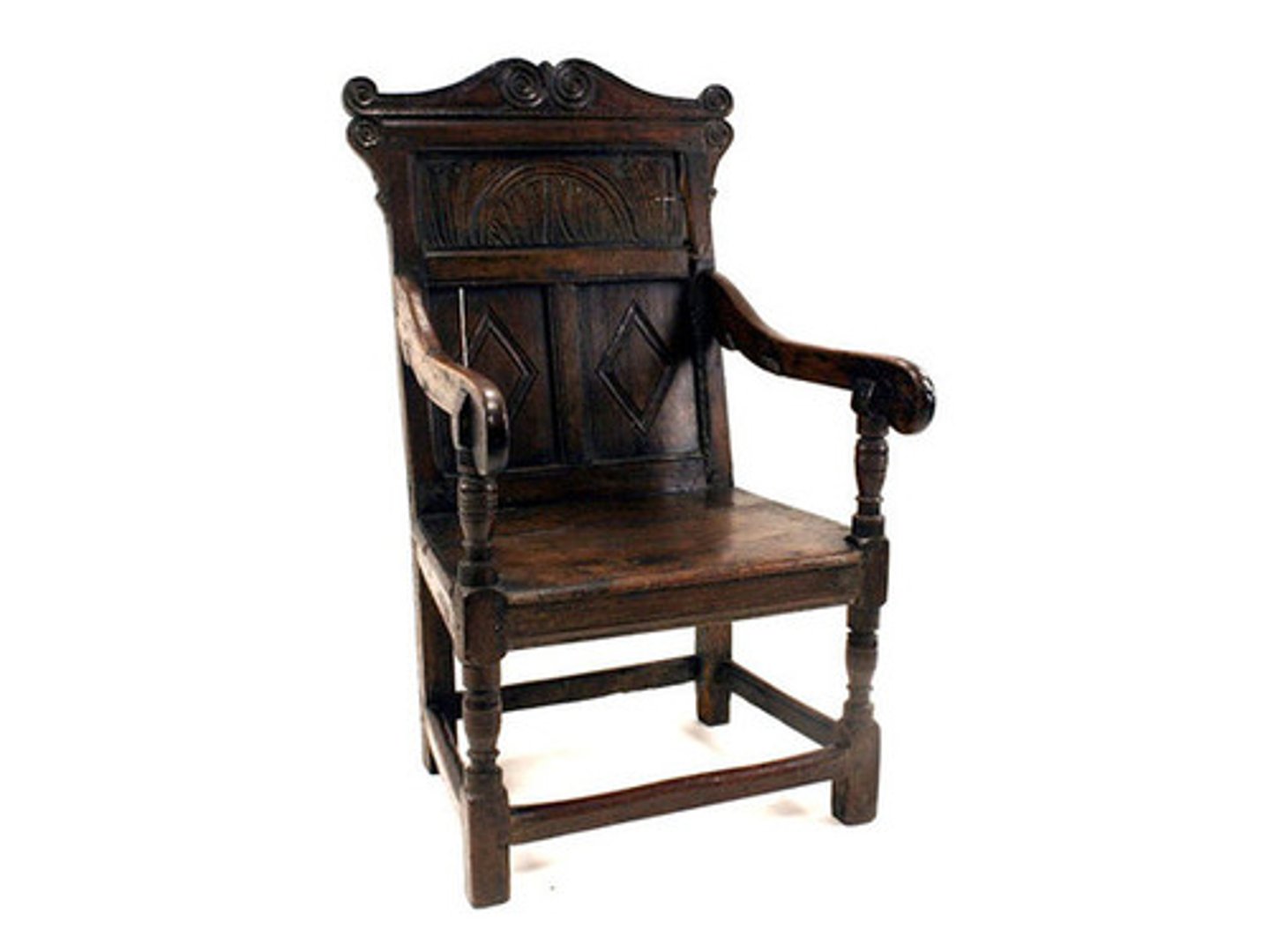
panel tudor chair
panels put together to form chair
Elizabethan Period Characteristics
Early Renaissance
More Italian Renaissance influence
combination of classical elements
Elizabethan Architectural Characteristics
E or H shaped plans
grand scale
very symmetrical
stringcourses
Elizabethan Interior Characteristics
increase in room specialization
arrangement of rooms based on adjacency to great chamber
facades - symmetrical, interiors - asymmetrical
hall became used as an entry
Great High Chamber
Long Gallery
Great High Chamber
ceremonial center of household
tapestries along wall
woven rush matting on floor, carpet on wall
dais at one end
fireplace is focal point
Long Gallery
end to end of the house
space for exercise and portrait gallery
covered passage or corridor
public space
furniture against wall
What is a prodigy house?
A house made for the Queen's visits -
she made 4 annual tours
Found in Elizabethan Period
Watton building guide Elements of Architecture
1. elimination of excessive ornamentation - cleaner lines
2. orientation of rooms set up according to the points of a compass
3. adjacency of rooms dependent on relationship of rooms
4. create way to get to rooms w/o going through others - hallway
Elizabethan furniture
bulbous support
gadrooning
volutes
acanthus leaf
different colored woods creating patterns
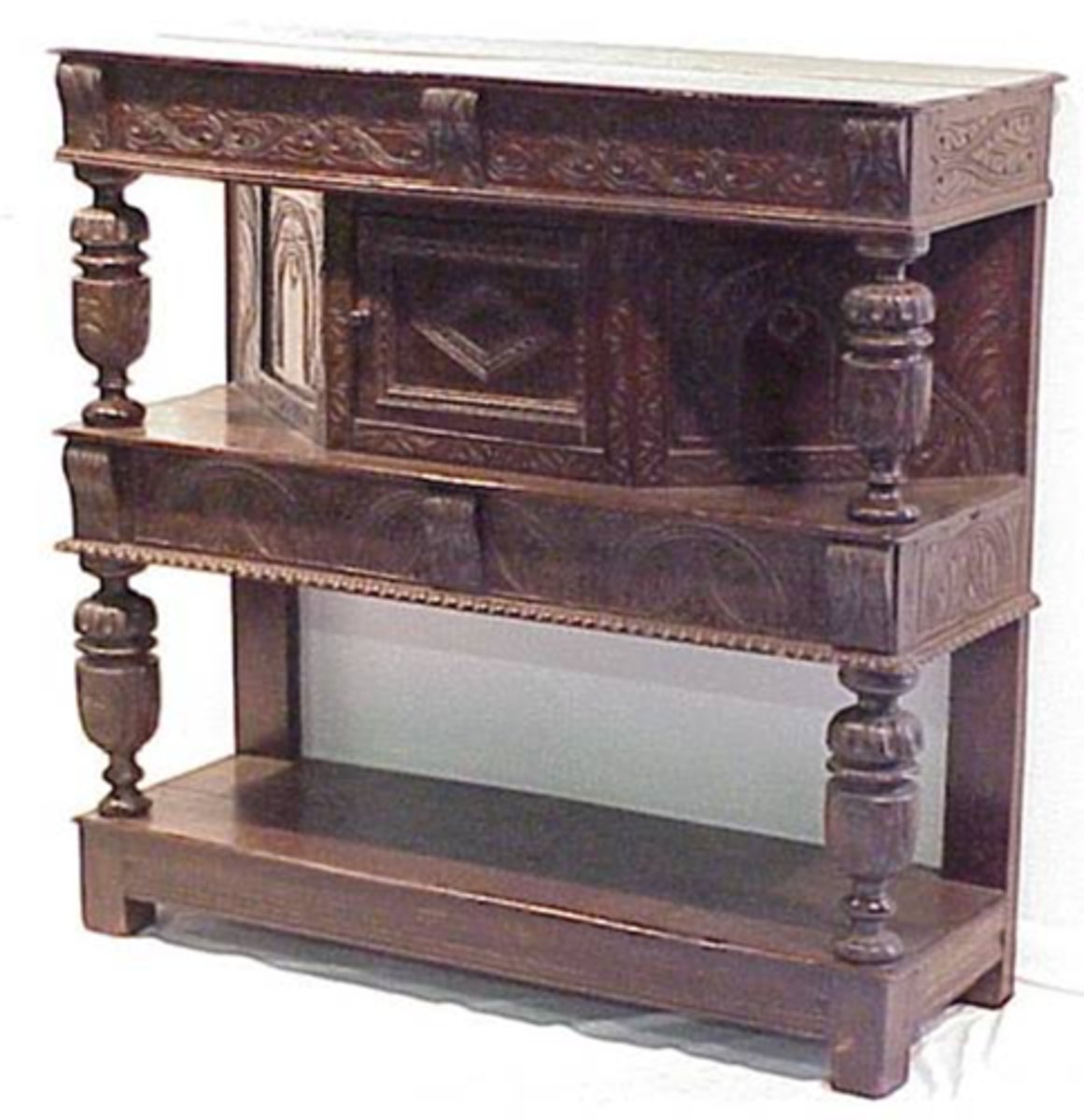
Elizabethan court cupboard
bulbus supports
lions face
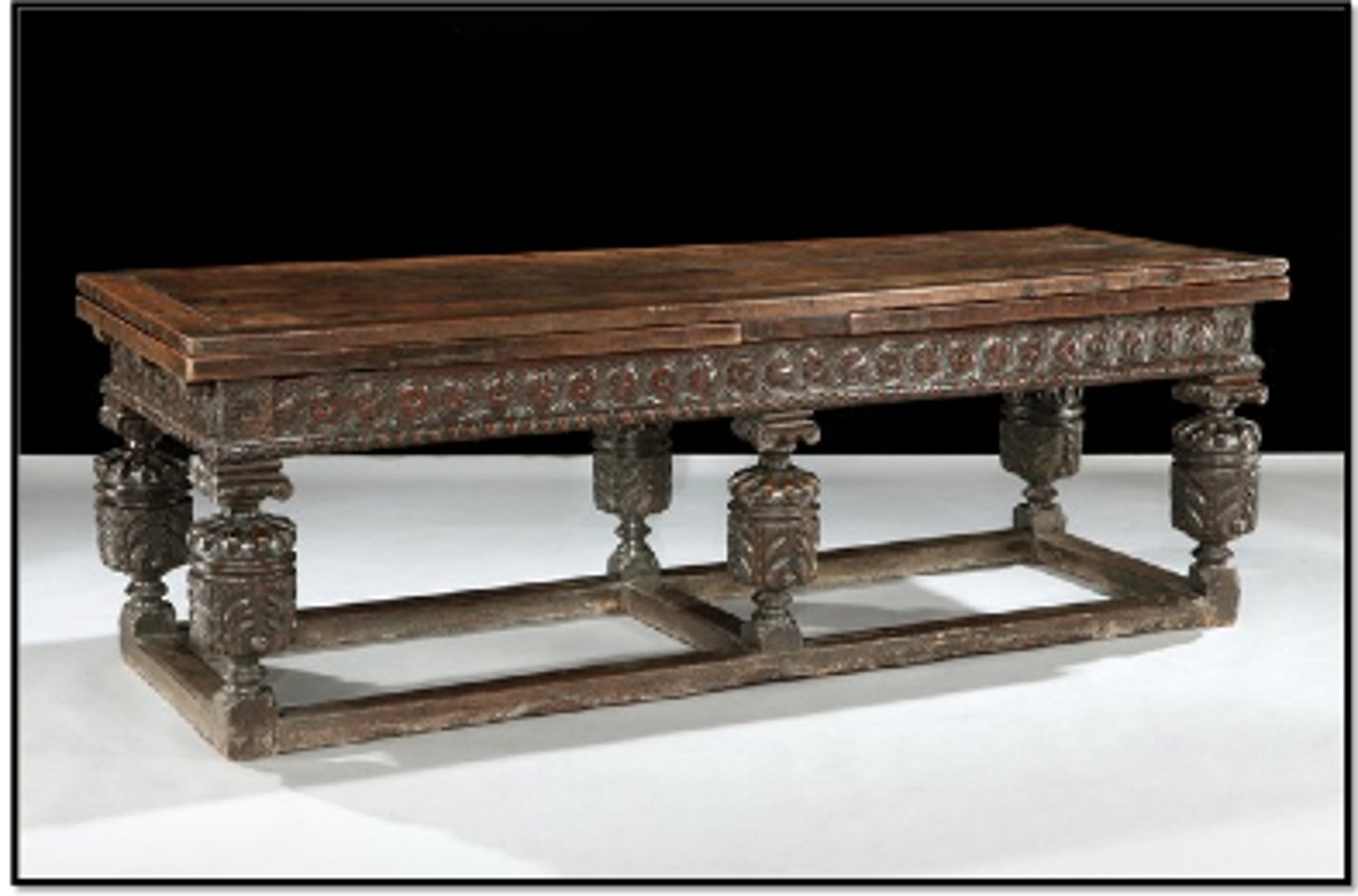
Elizabethan draw table
very long table
bulbus support
open stretcher around
gadrooning
massive and rectilinear
Jacobean/Elizabethan Mixed characteristics
rectangular shapes surrounded by four L shapes
hammer beam and truss ceiling
split spindle decorations on furniture
Farthingale chair
Elizabethan/Jacobean chair
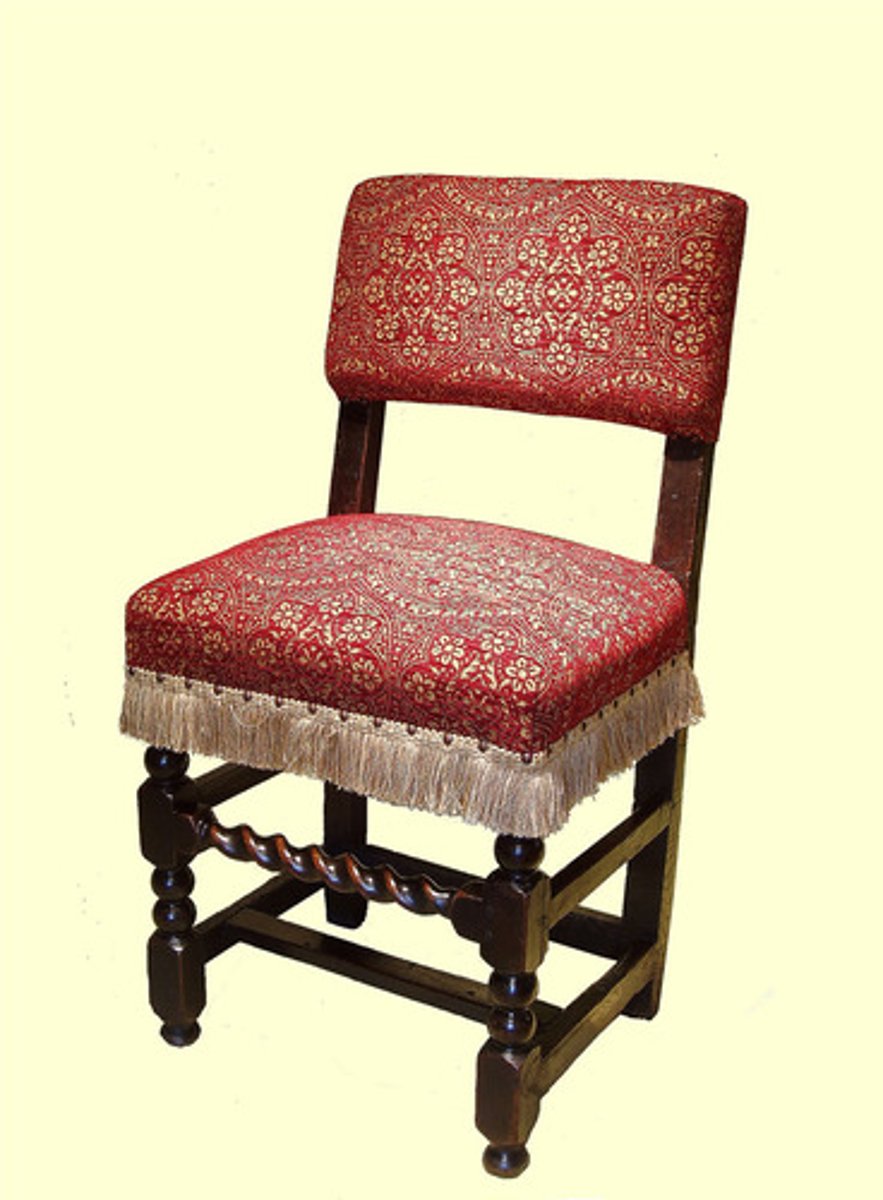
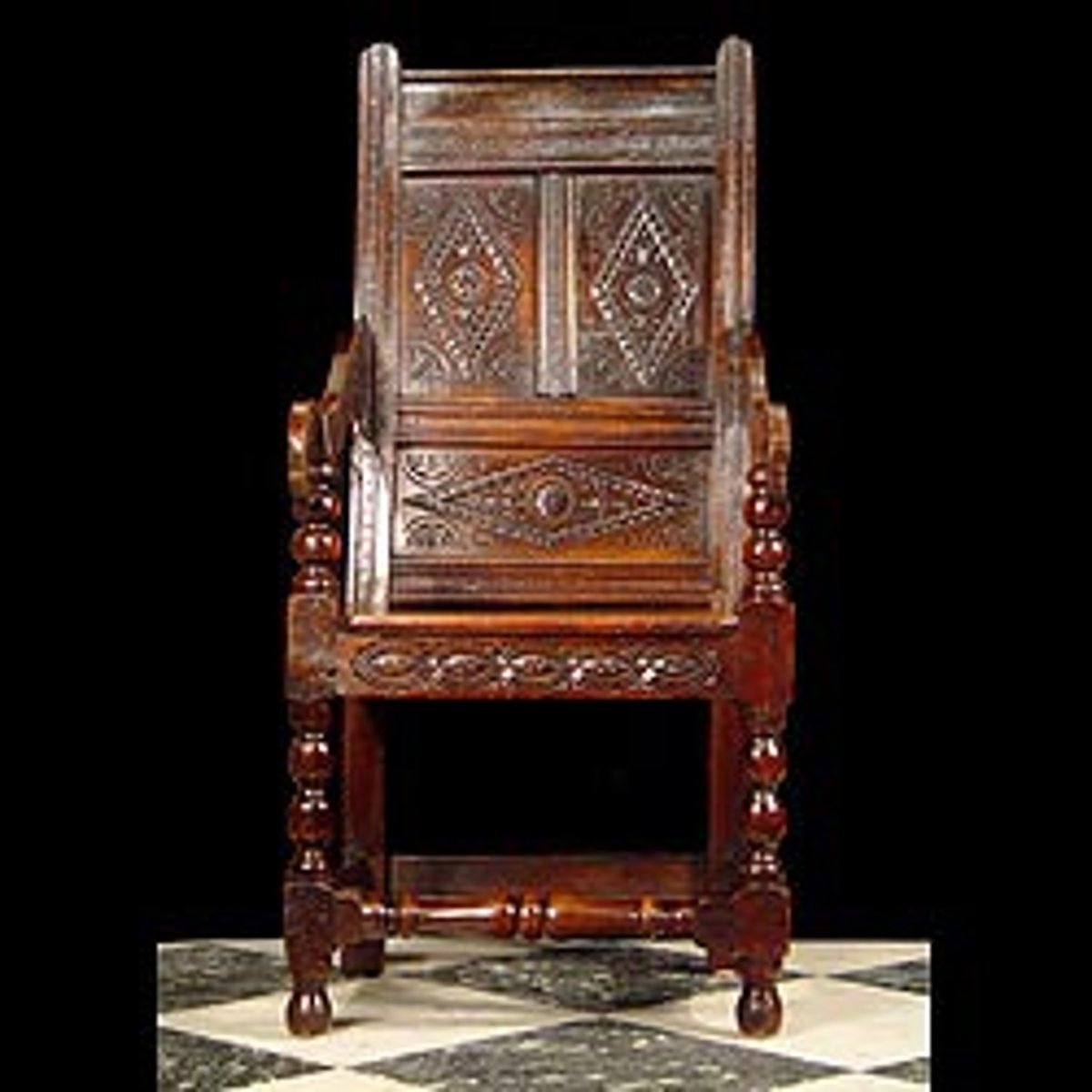
Wainscott Chair
Wainscott panels used to form chair
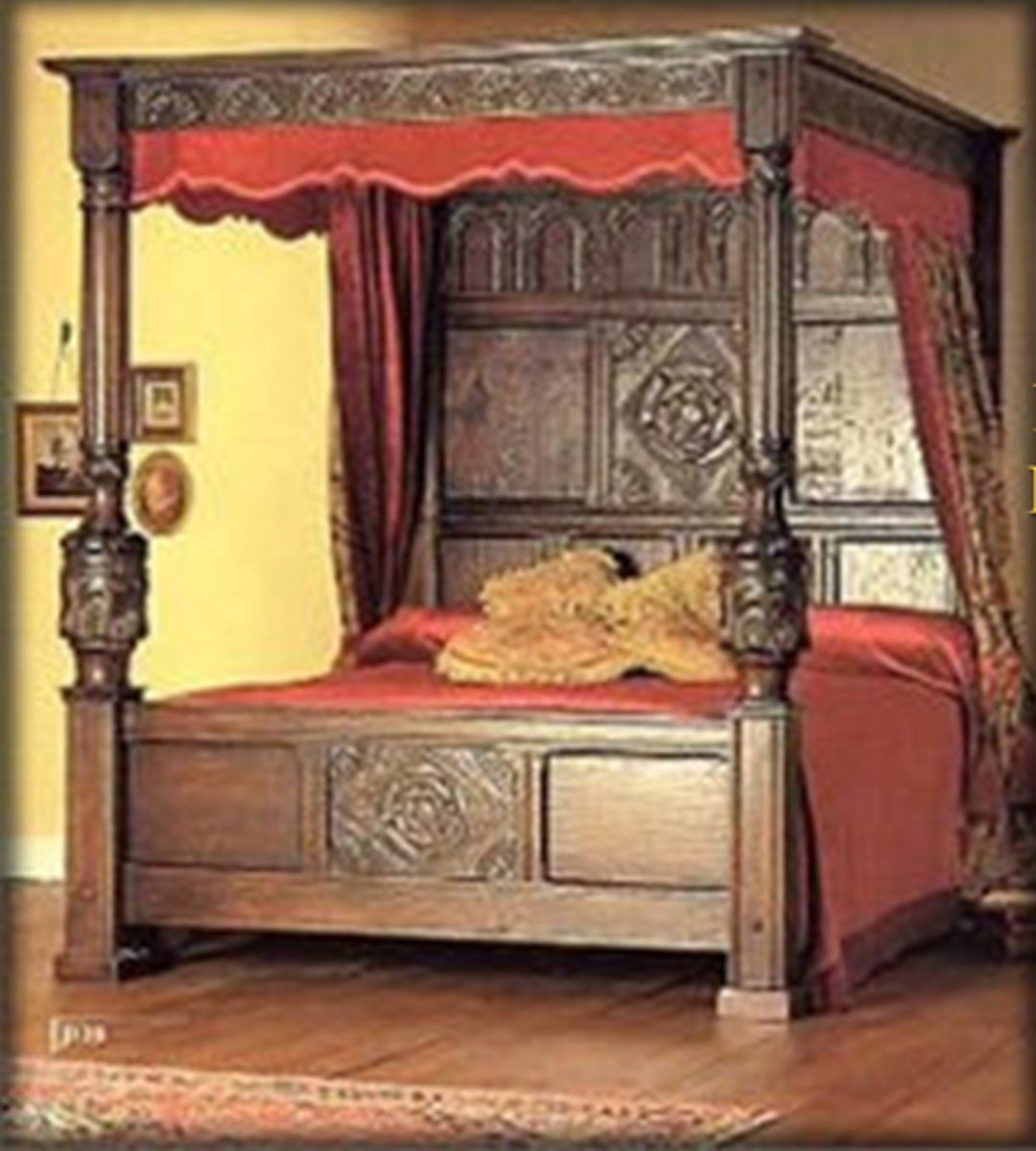
Elizabethan
Elizabethan Bed
bulbous supports
volutes
tester
elaborate patterns in textiles
dwarf arches
wood planking
Great Bed of Ware
most precious article in Tudor House
Green textiles hanging from tester
dwarf arches
renaissance carvings
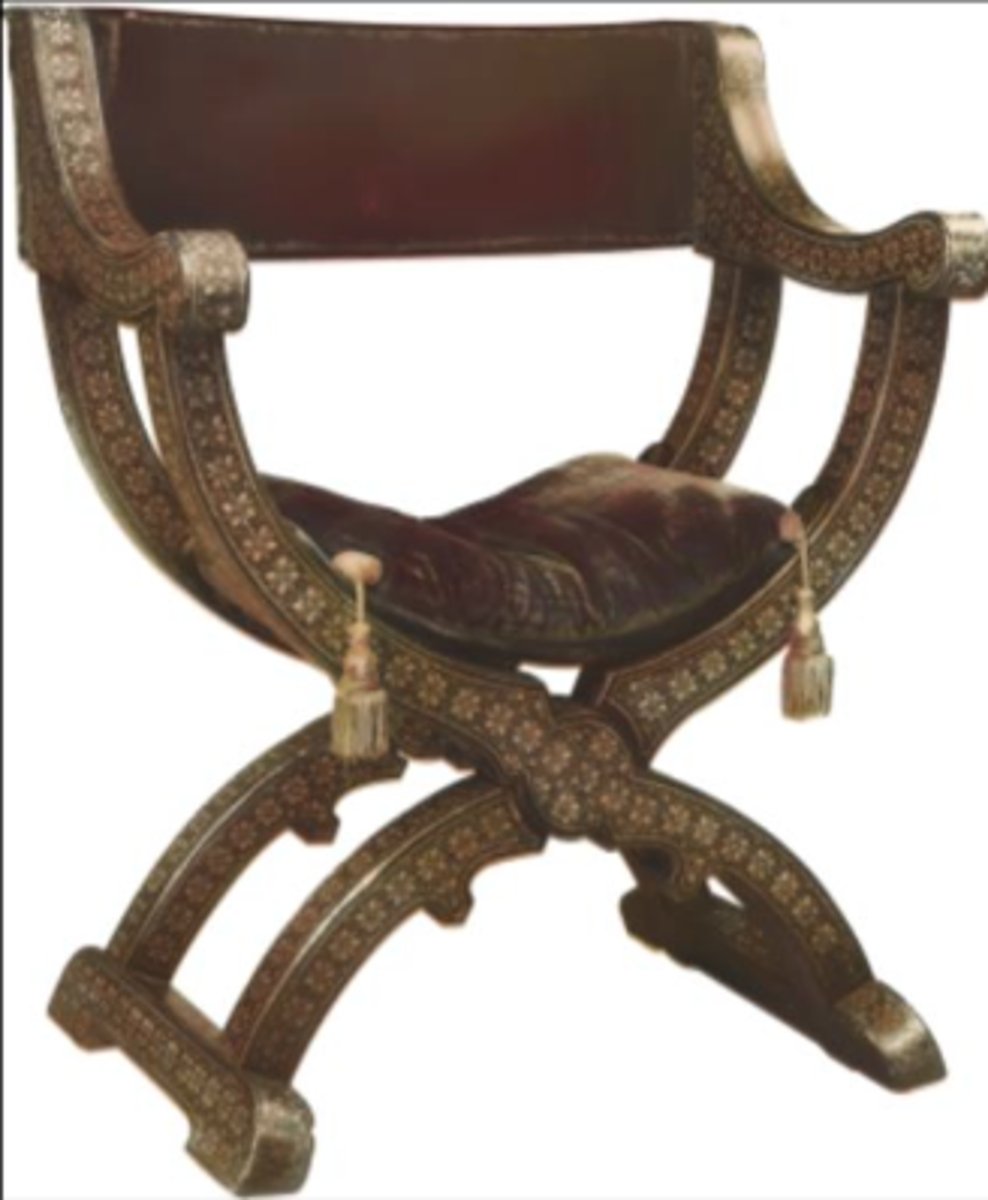
Dante'/Curule chair
Elizabethan / Jacobean camp chair
Jacobean Period Characteristics
Early Renaissance
James I and Charles I
Inigo Jones
Jacobean Interior Characteristics
decorative plaster used for ceilings
pargework or strapwork
fireplace overmantle becomes richly carved
arcading seen on panels
When did the stair hall become a special feature?
Jacobean period
Inigo Jones
Palladian influenced Architect
Banqueting House, Whitehall & Queens House in Grenwich
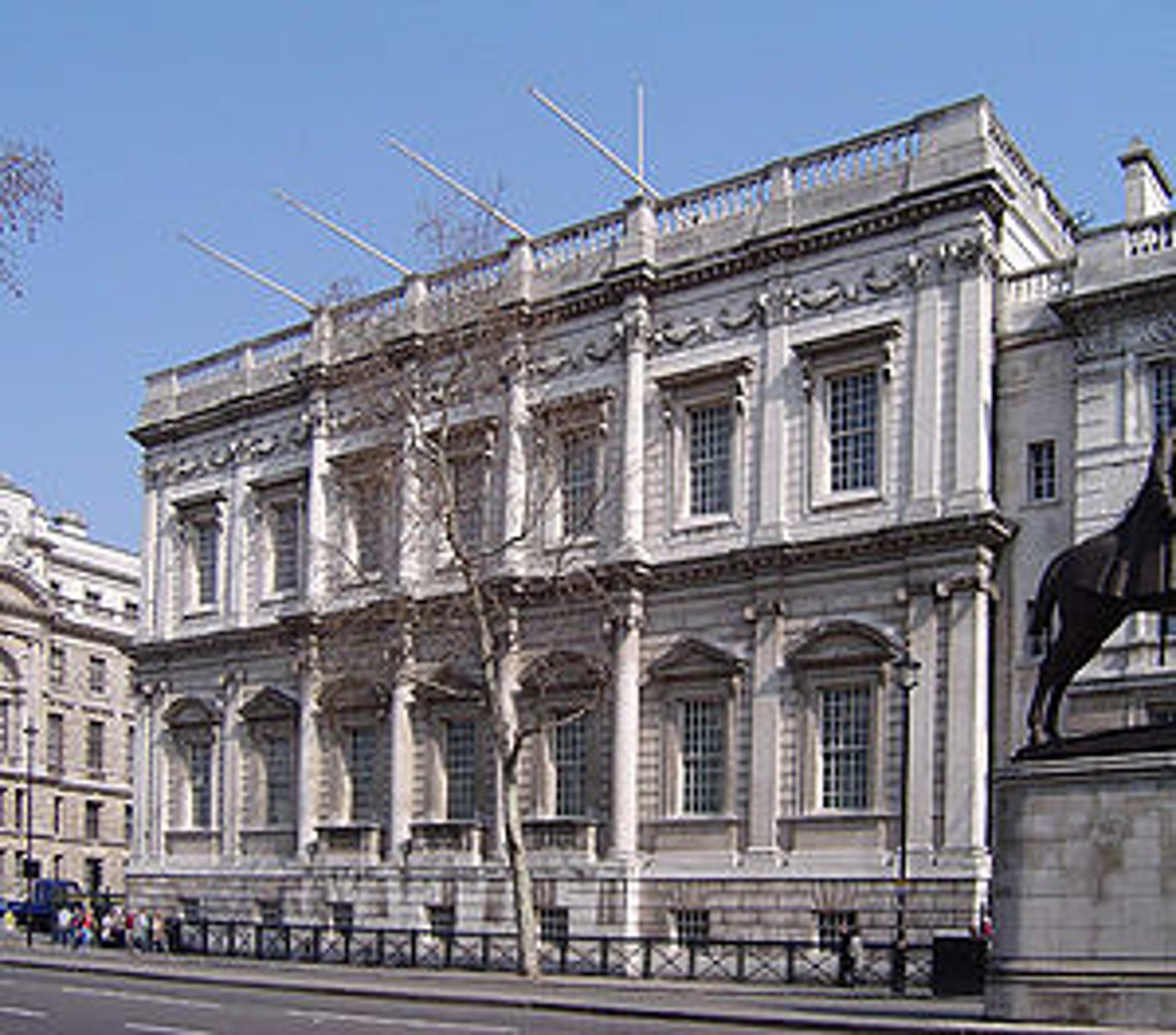
Banqueting House at Whitehall
designed by Inigo Jones
pilasters and engaged columns
ground story has most rustication
alternating triangular and segmental pediments over windows
swags and masks on frieze
Queens House in Grenwich
designed by Inigo Jones
rustication
portico/loggia
complete symmetry
balustrade across top
ionic order on portico
two blocks connected by an enclosed bridge
Restoration Period Characteristics
Middle Renaissance
Sir Christopher Wren - Architect
Restoration Architectural Characteristics
houses usually rectangular, two stories, two rooms deep w central hall
Restoration Interior Characteristics
stair halls become important circulation space
black and white marble flooring
silk damask fabric in field
Palladian style windows
human figures
elaborate ceilings
wall niche
Restoration Furniture Characteristics
heavy gilded furniture
big rectangular backs
influenced by France
greater consideration for comfort
S and C curved leg (Flemish Scroll)
flat stretchers
bun feet
use of marquetry and veneers
Restoration chairs
caining
scrolls on front
very extravagant
large rectangular back
H or X stretcher
tapered legs
tapestry pattern
curved arms
leather, fringe, velvet
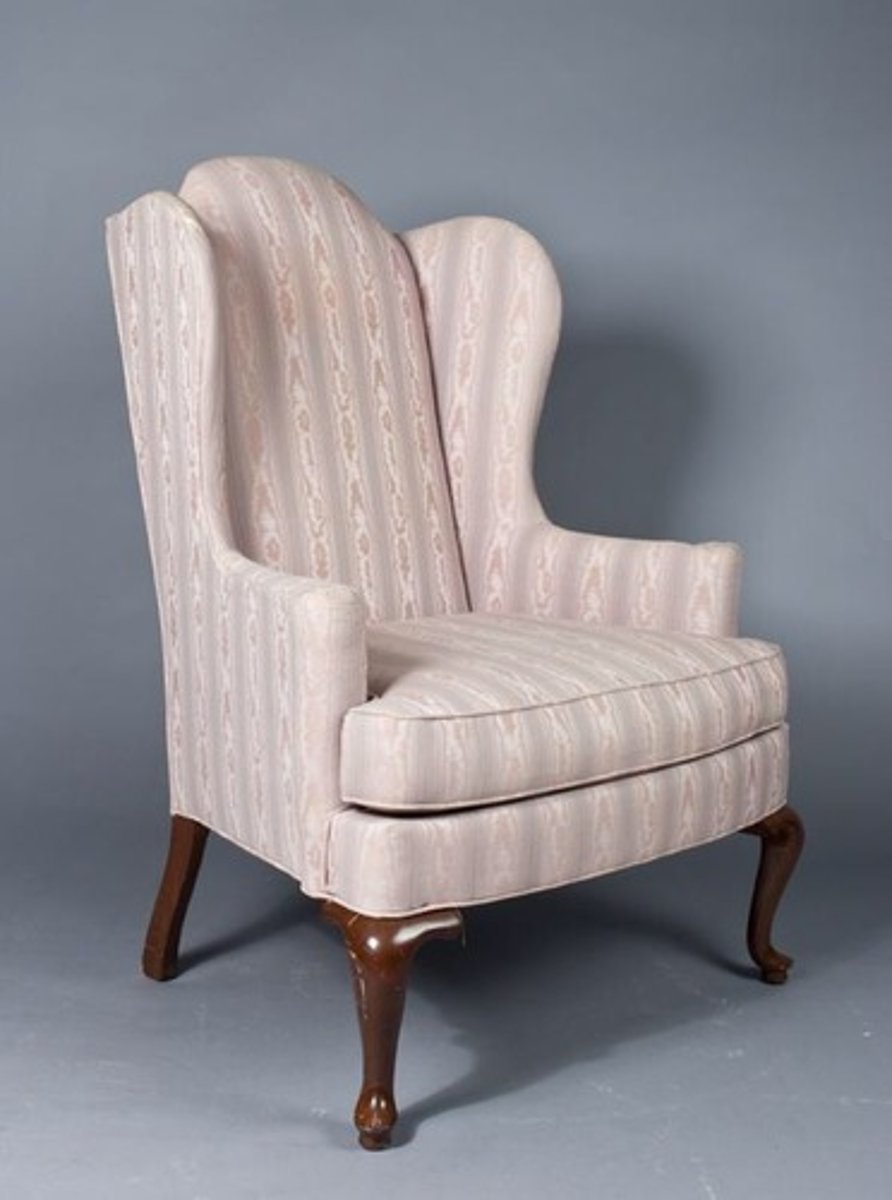
winged back chair
Restoration period
sleeping chair
carved front piece
fringe
sides
velvet
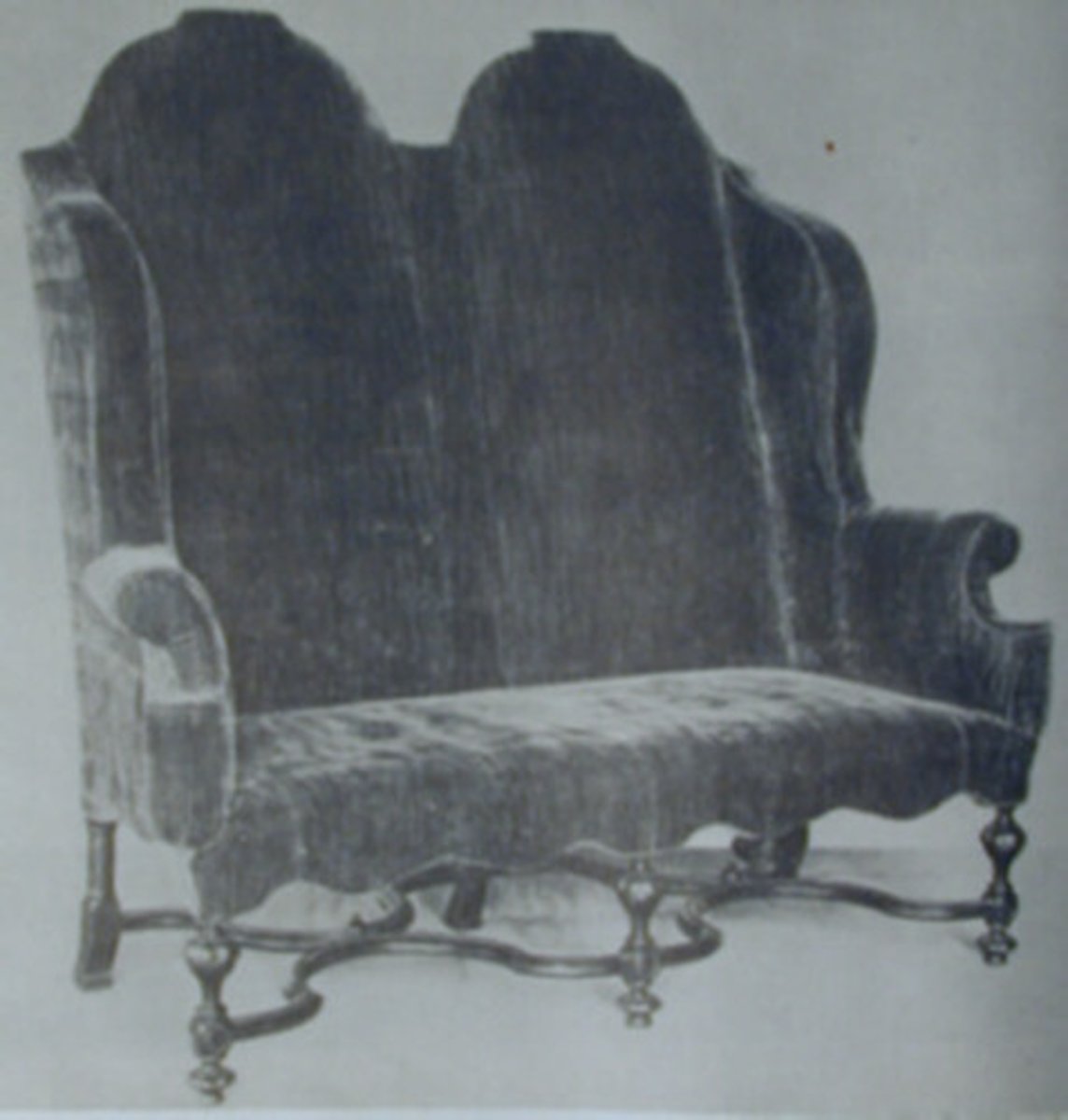
settees
couch
two chair backs put together to form winged back settee
6 turned legs
flat stretcher
carved facade
rich elaborate textiles
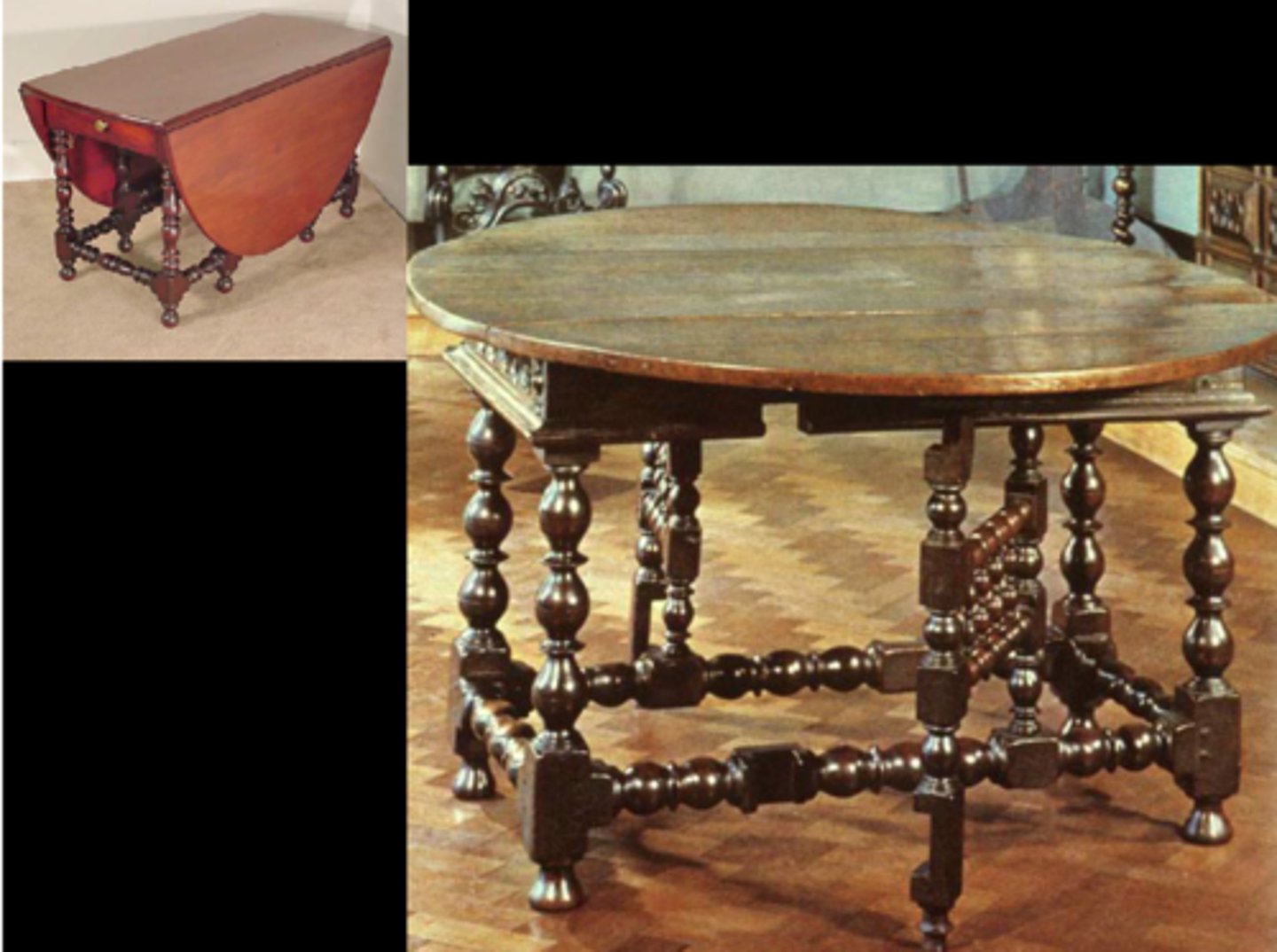
gate leg tables
gate swings/moves
circular table
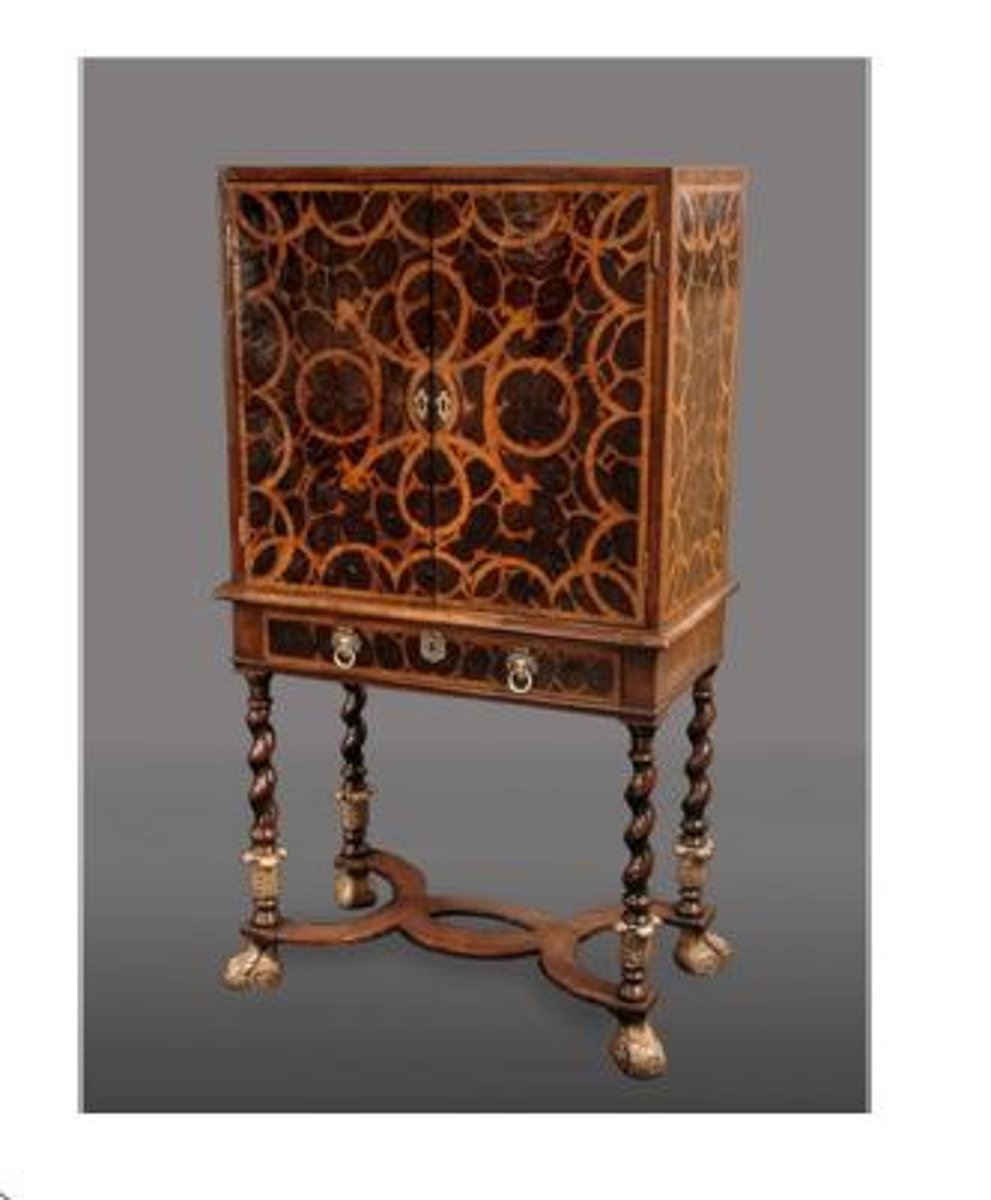
cabinet on stand
cabinet on top of stand
spiral turned legs
flat stretcher
bun foot
veneers and marquetry
Grinling Gibbons
high relief wood carvings, mainly of swags, garlands, and drop ornaments
carved lace cravat w bow
carved limewood monogram
carved trophy of musical instruments
Memento Mori
Mondena Panel, remembrance of mortality
by Grinling Gibbons
skull, dead birds, shells
Sir Christopher Wren
Architect in Restoration Period
reflects French Baroque style
designed 51 churches
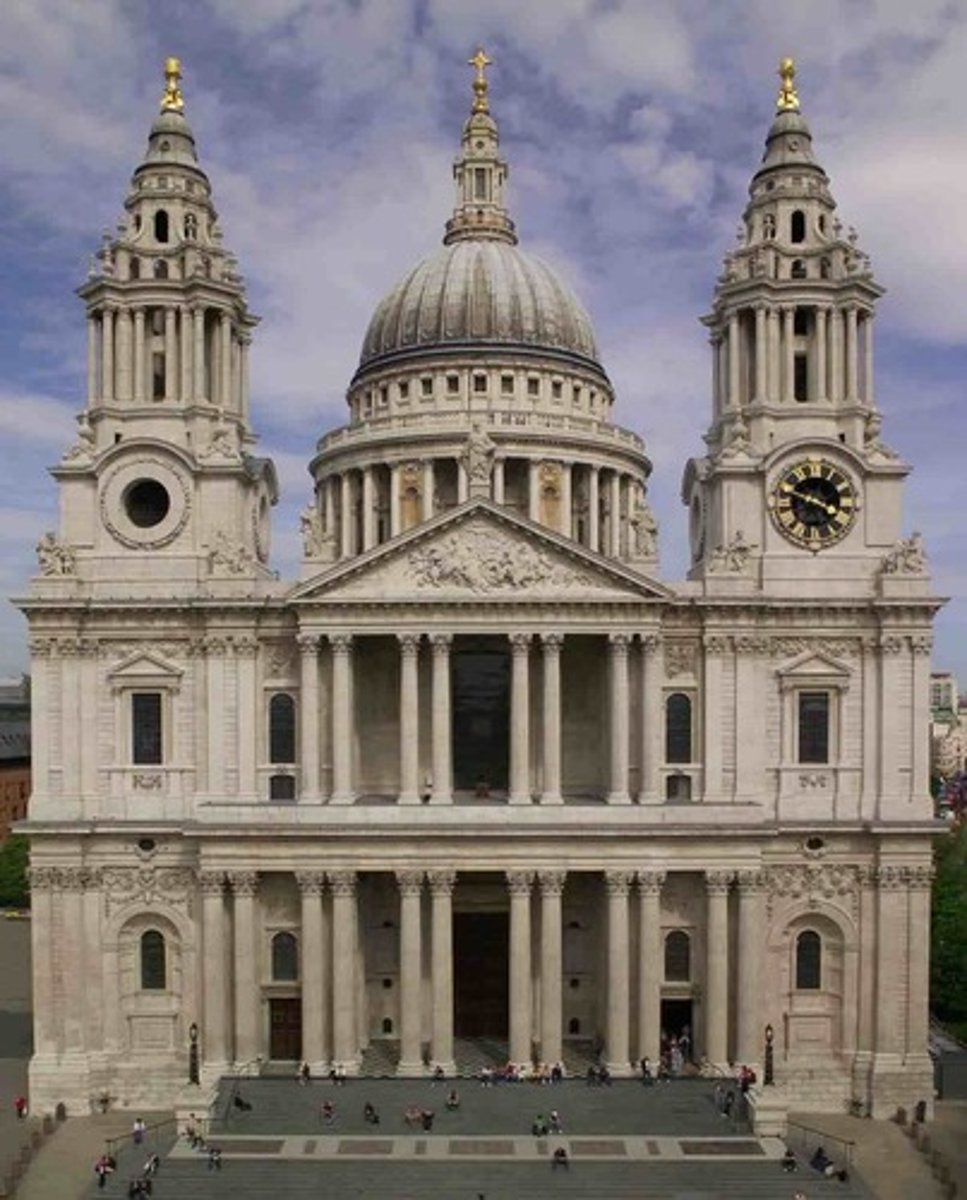
St. Paul's Cathedral exterior
Sir Christopher Wren
Latin cross
one of largest domes
twin towers on either side
pediment w carvings
huge entablature
pediments over windows
twin ionic columns
portico
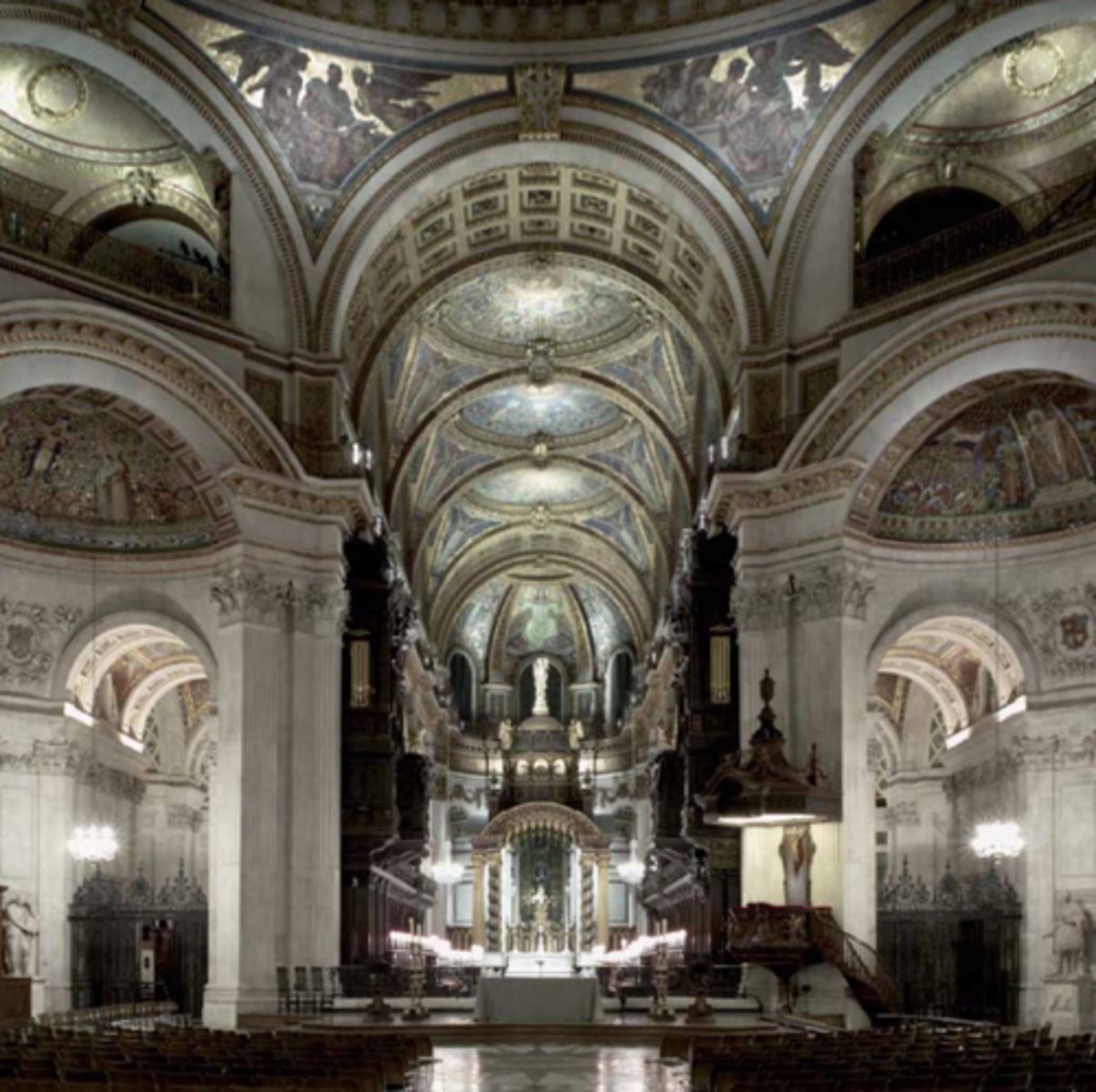
St. Paul's Cathedral interior
Sir Christopher Wren
coffers on underside of arches
architectural details contrast w wall colors
pattern marble flooring
Corinthian pilasters and columns
everything gilded
William and Mary Period Characteristics
Middle Renaissance
age of walnut
William & Mary furniture characteristics
age of walnut
crossbanding
drop pulls
straight legs and tables
bell/inverted cup turning on legs
trumpet leg underneath bell
Chest on stand
chest on small set of legs
laquer
marquetry
drop pulls
crossbanding
bun feet
spiral leg
flat stretcher
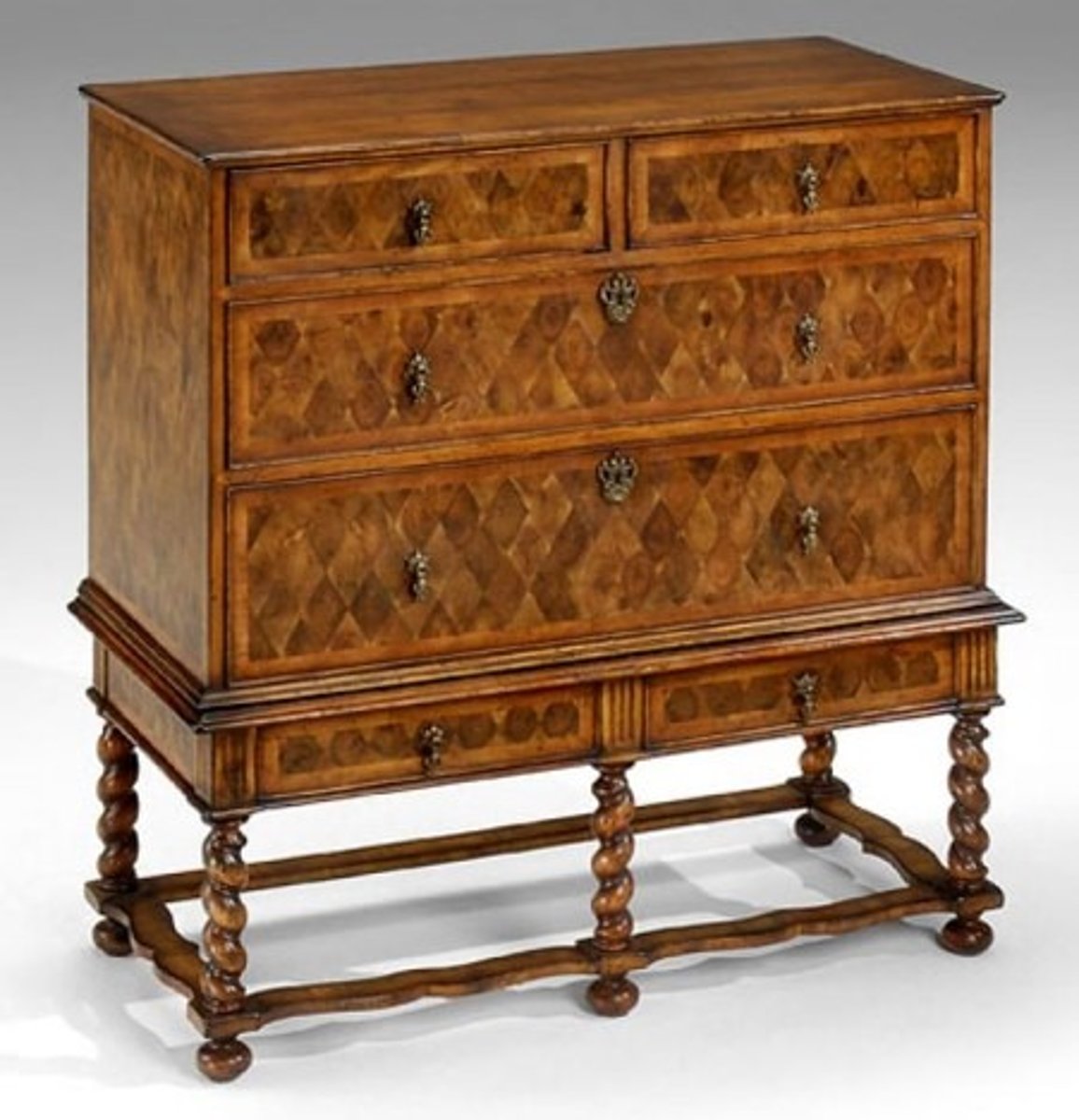
highboy
chest of 4-5 drawers supported by table
inverted bell
trumpet leg
drop pulls
flat stretcher
front stretcher reflects front apron
book-matched veneer
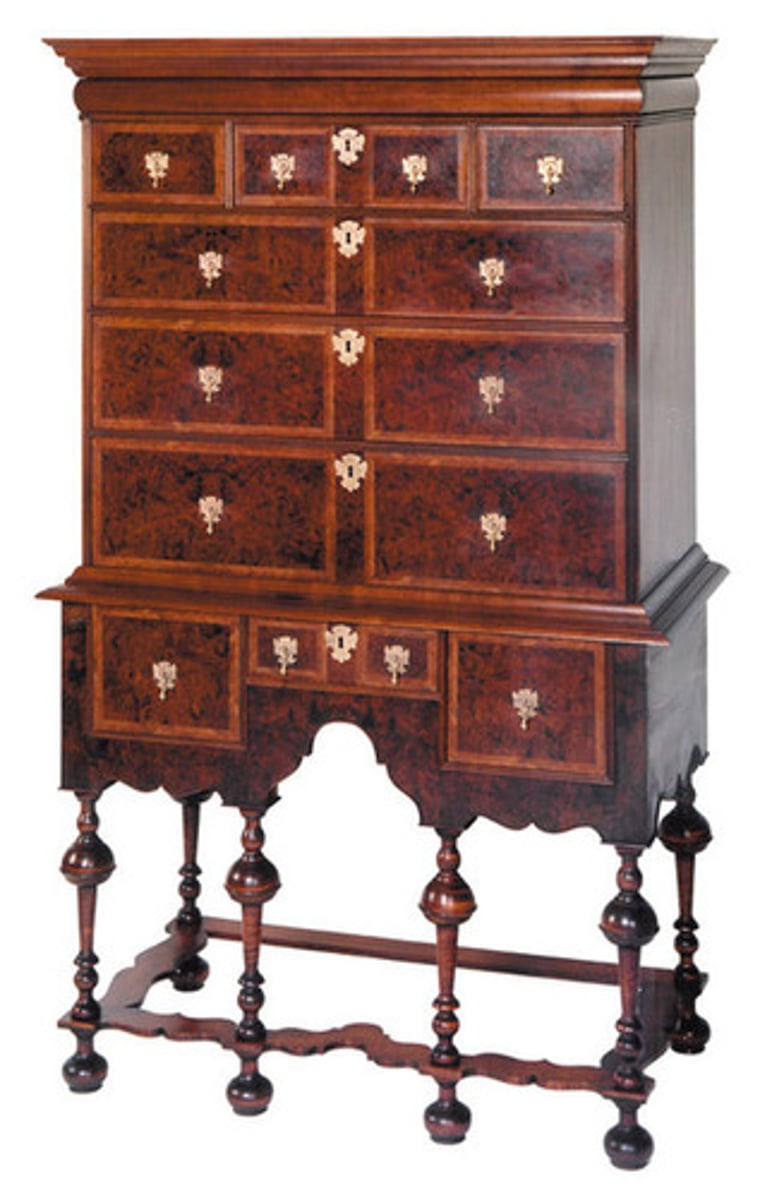
low boy
high boy without top
short end table with drawers
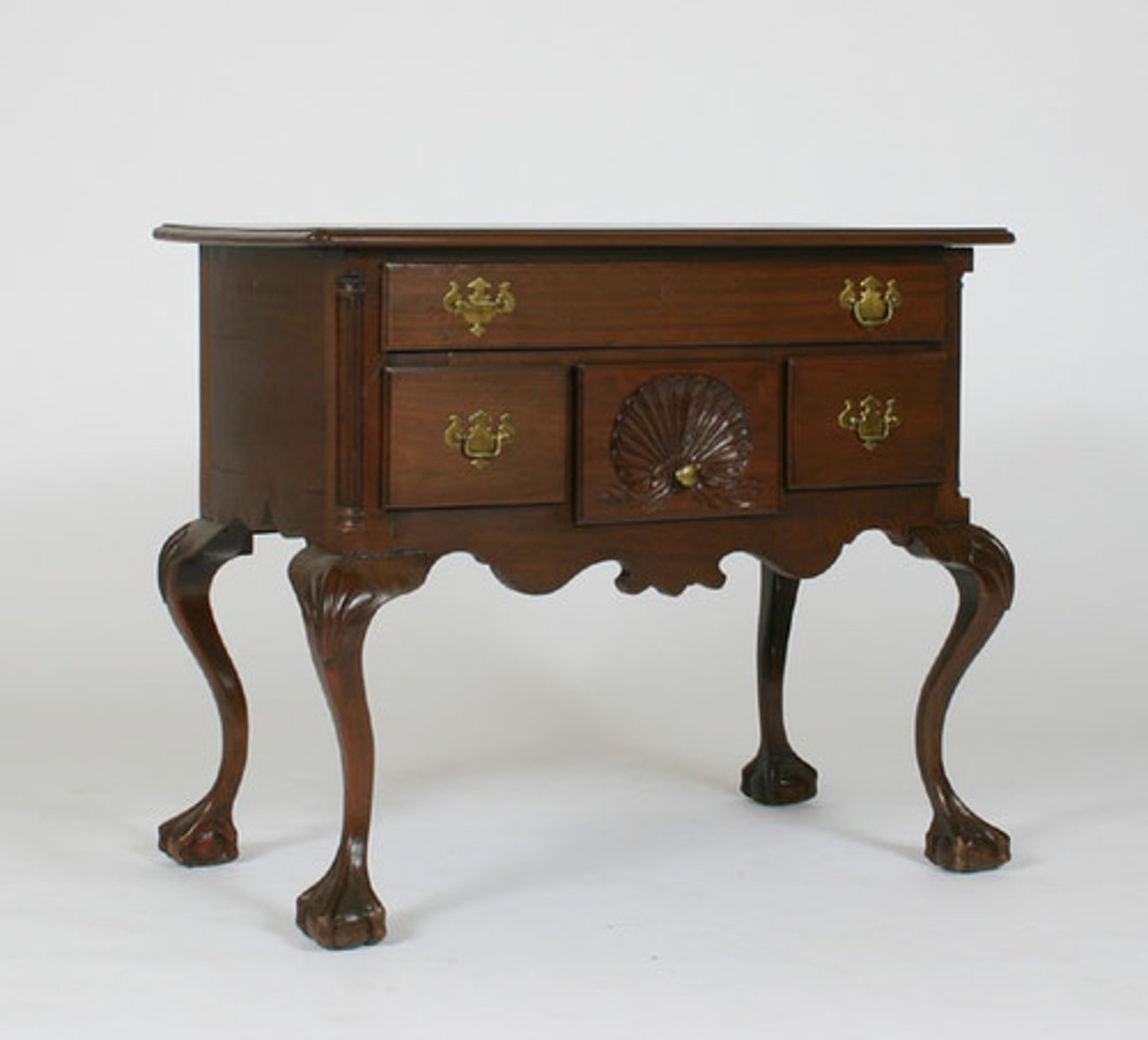
what is crossbanding?
a narrow band of wood veneer that frames the area
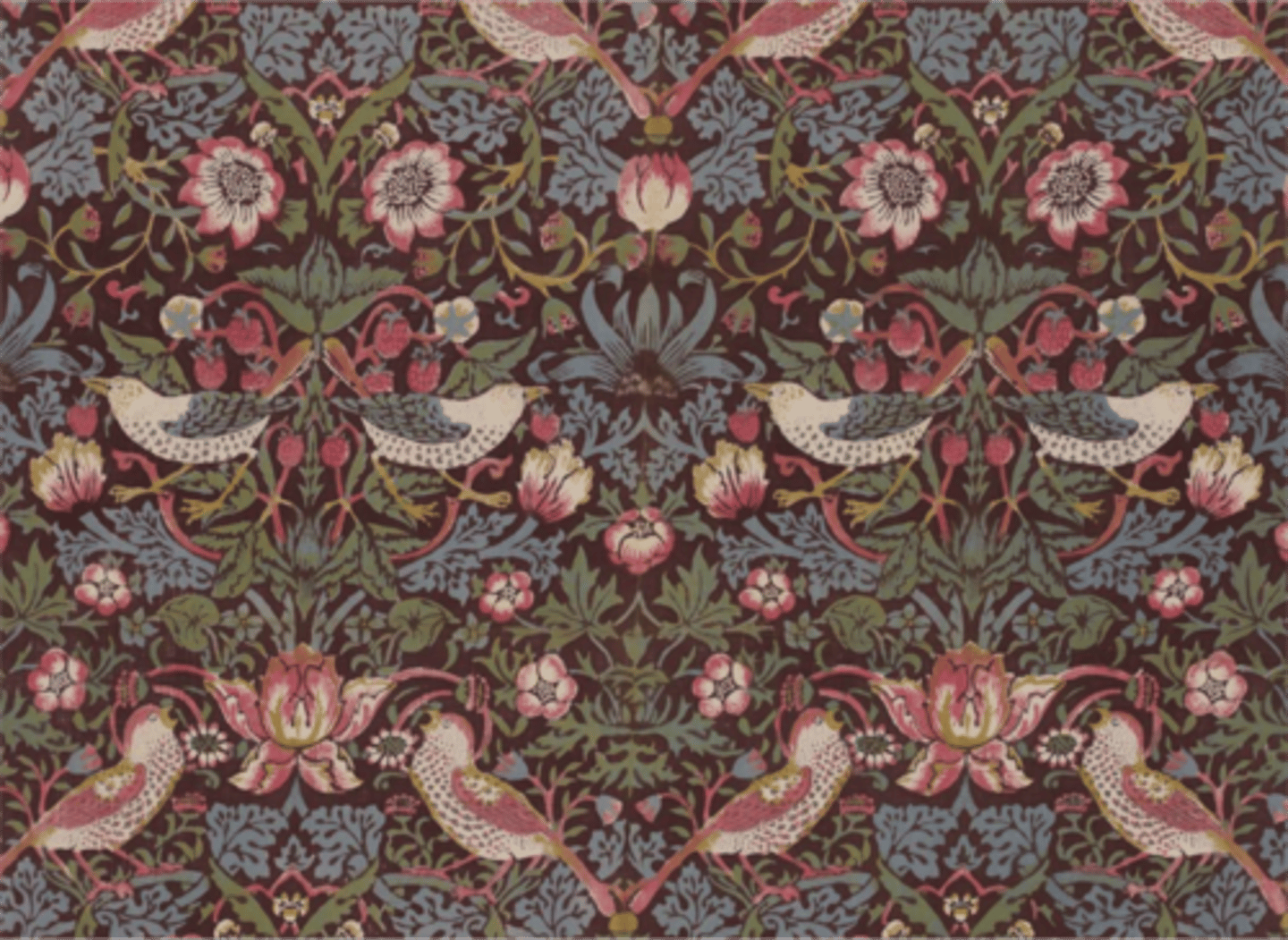
Printed chintz
polished cotton
drapery treatments
hung over canopy or bed draperies
introduced during William and Mary from East India Trading Company
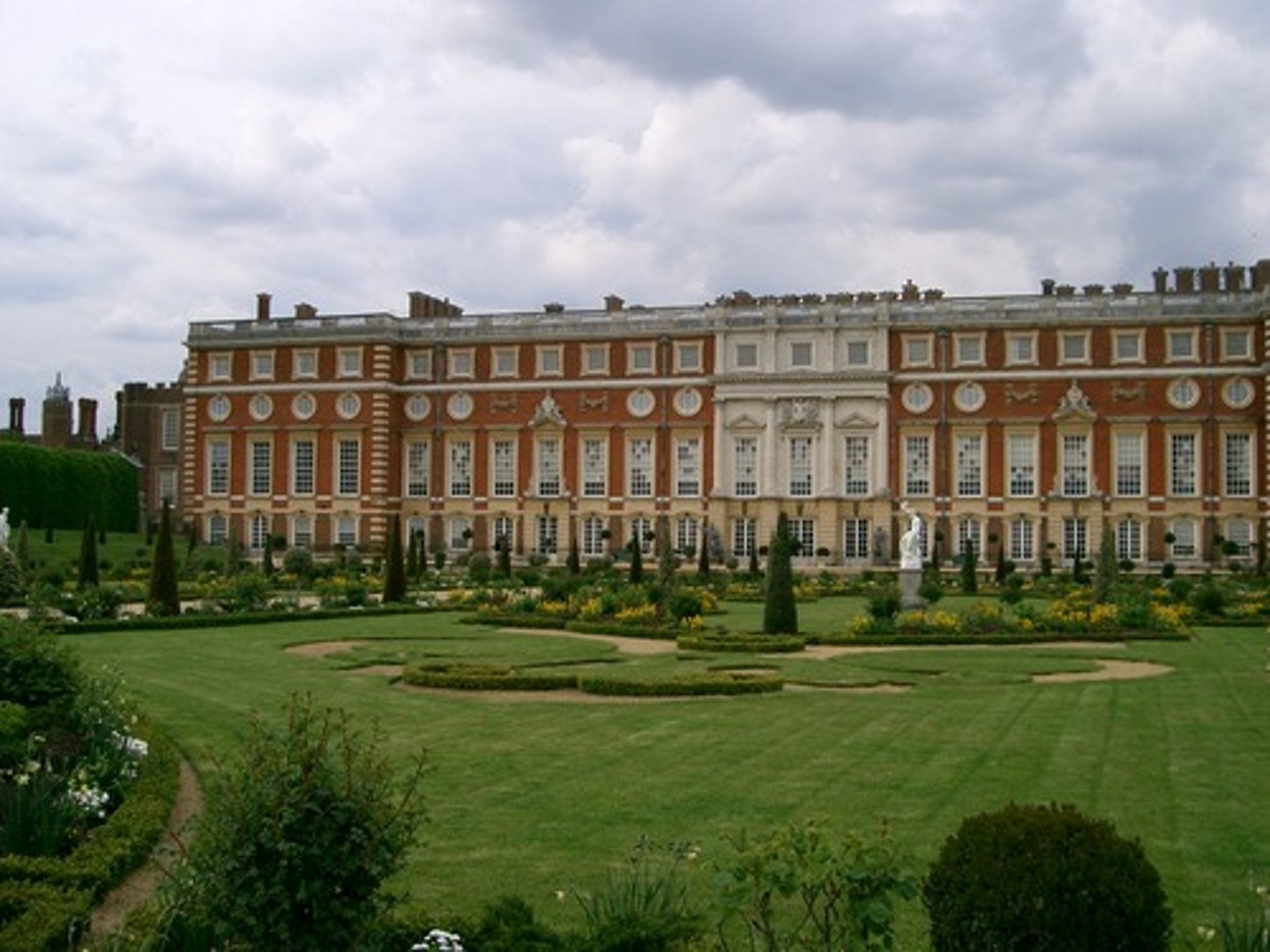
Hampton Court Palace
delicate lines and proportions
less carvings
stringcourses
rustication
pediments
portico
columns
entablature
moldings
quoins
medallion windows
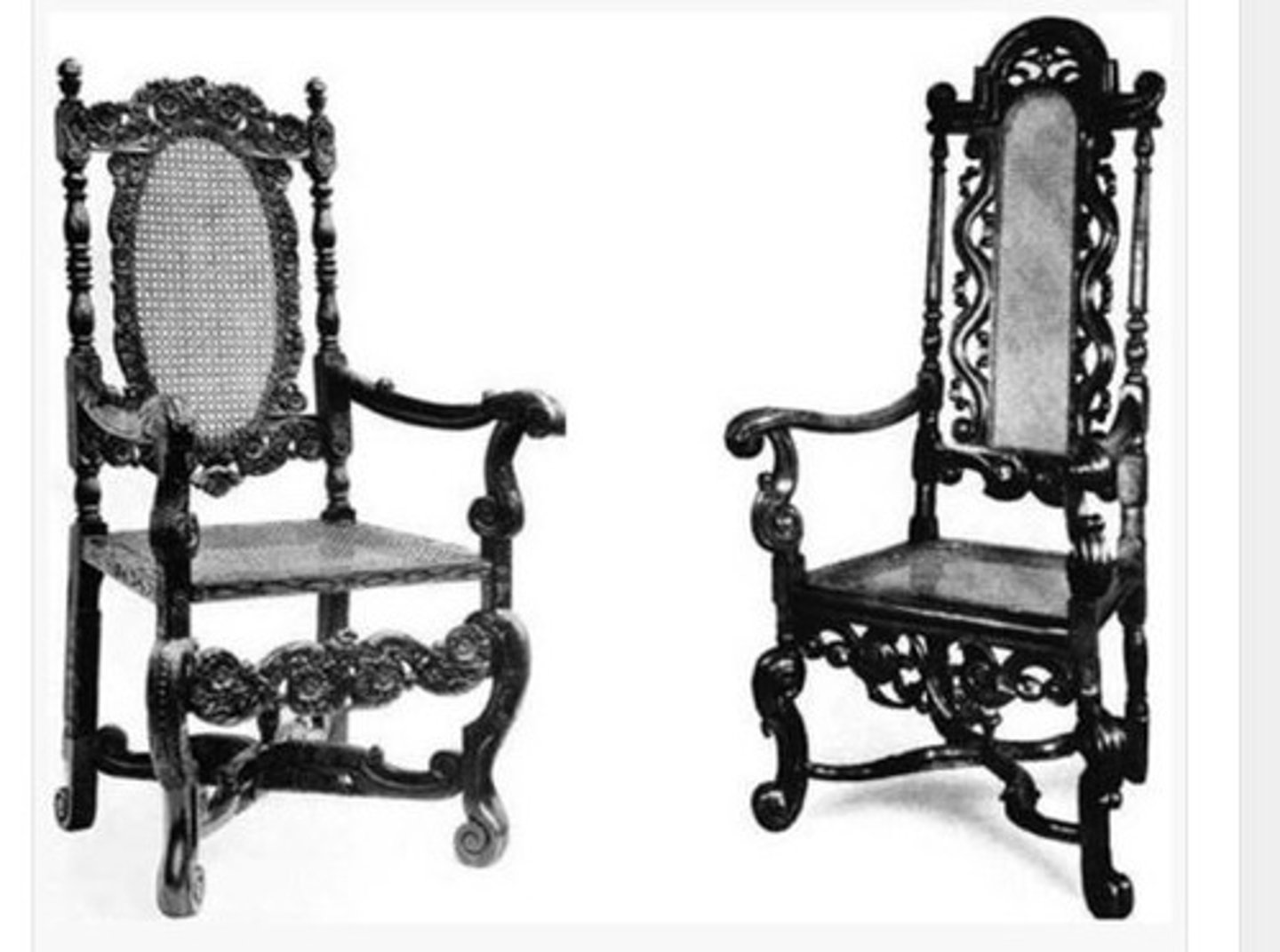
William and Mary Chairs
side chairs w cane backs and walnut frames
side chairs w cabriole leg and goats foot
Queen Anne Period Characteristics
Middle Renaissance
Romance, elegance, lightness
restrained, sophisticated
soft flowing lines
Queen Anne interior characteristics
luxurious interiors
got rid of excess decor
shelving in wall niches
floor-ceiling panels - often painted
chinaware covered shelves
Queen Anne Furniture
curved lines becomes dominating in design
first use of mahogany
intro to Chinese forms in structure of furniture
greater use of Laquer
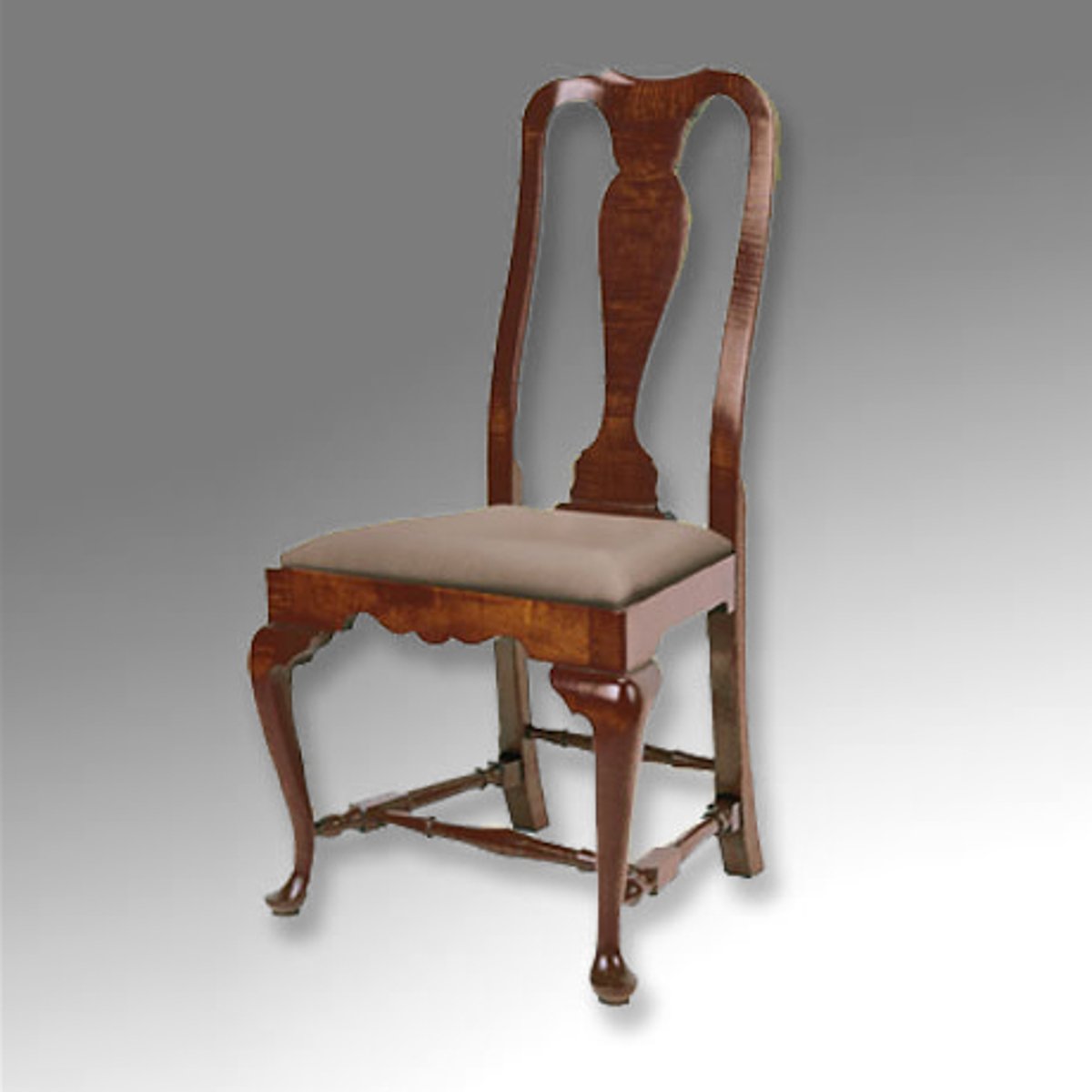
Queen Anne chair
elongated forms
backs usually have curved top
splat is introduced in center
legs designed as cabriole
shell motif on knee
pad or club foot - looks like disc
stretchers
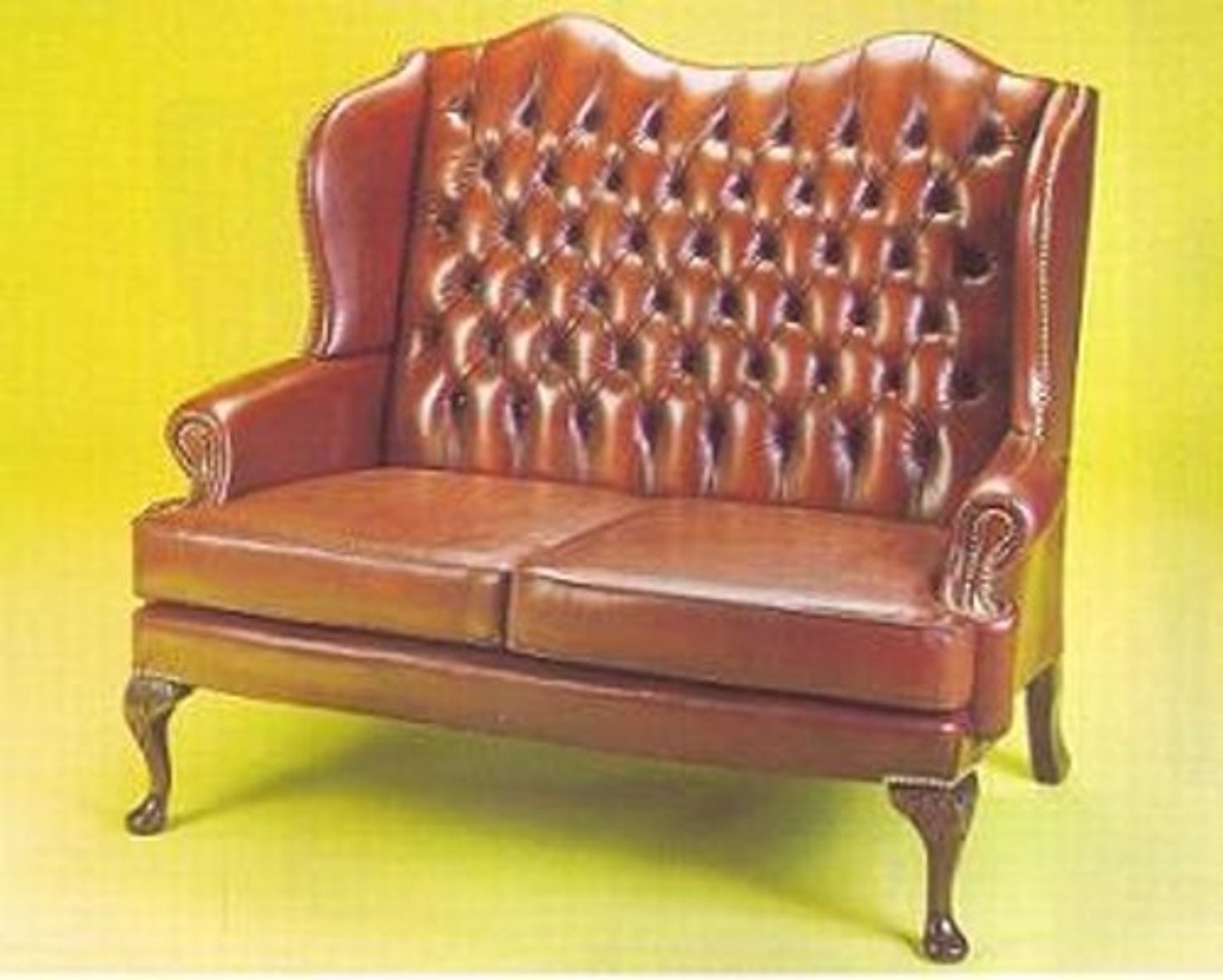
Queen Anne Settee
winged back settee
cabriole leg
shell motif on knee
club or pad foot
introduction to tufting (buttons in back)
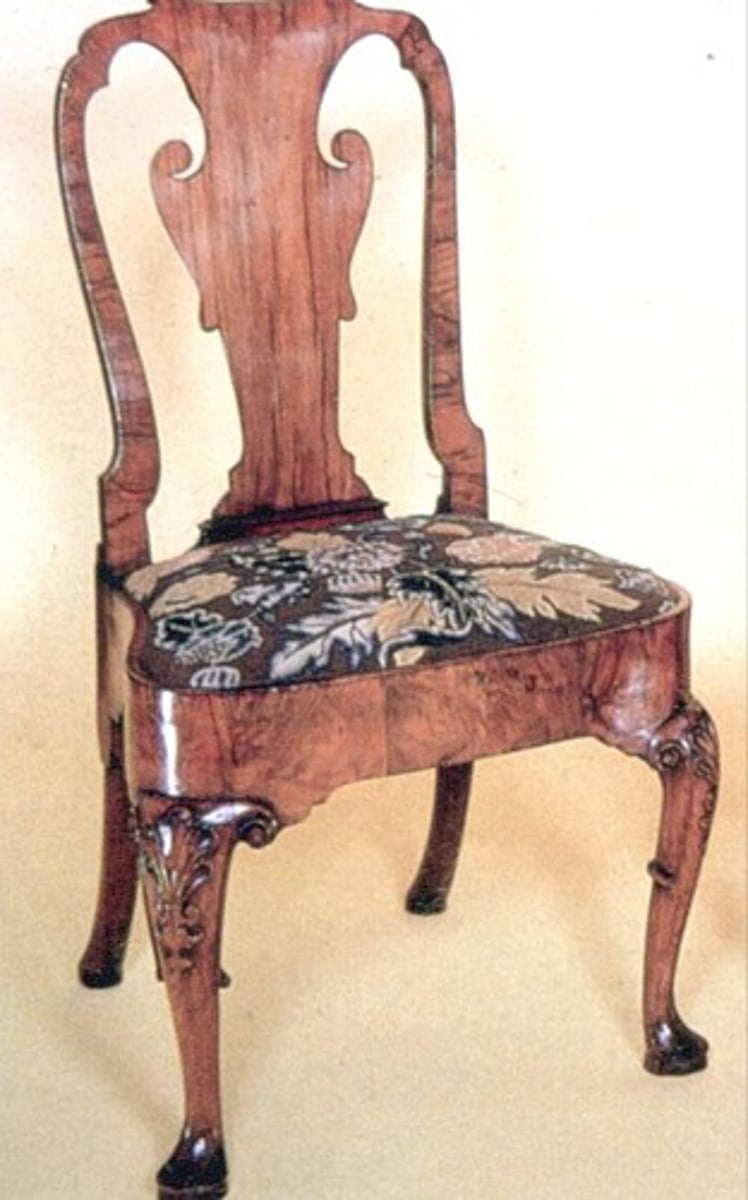
walnut side chairs
upholstery on cushion
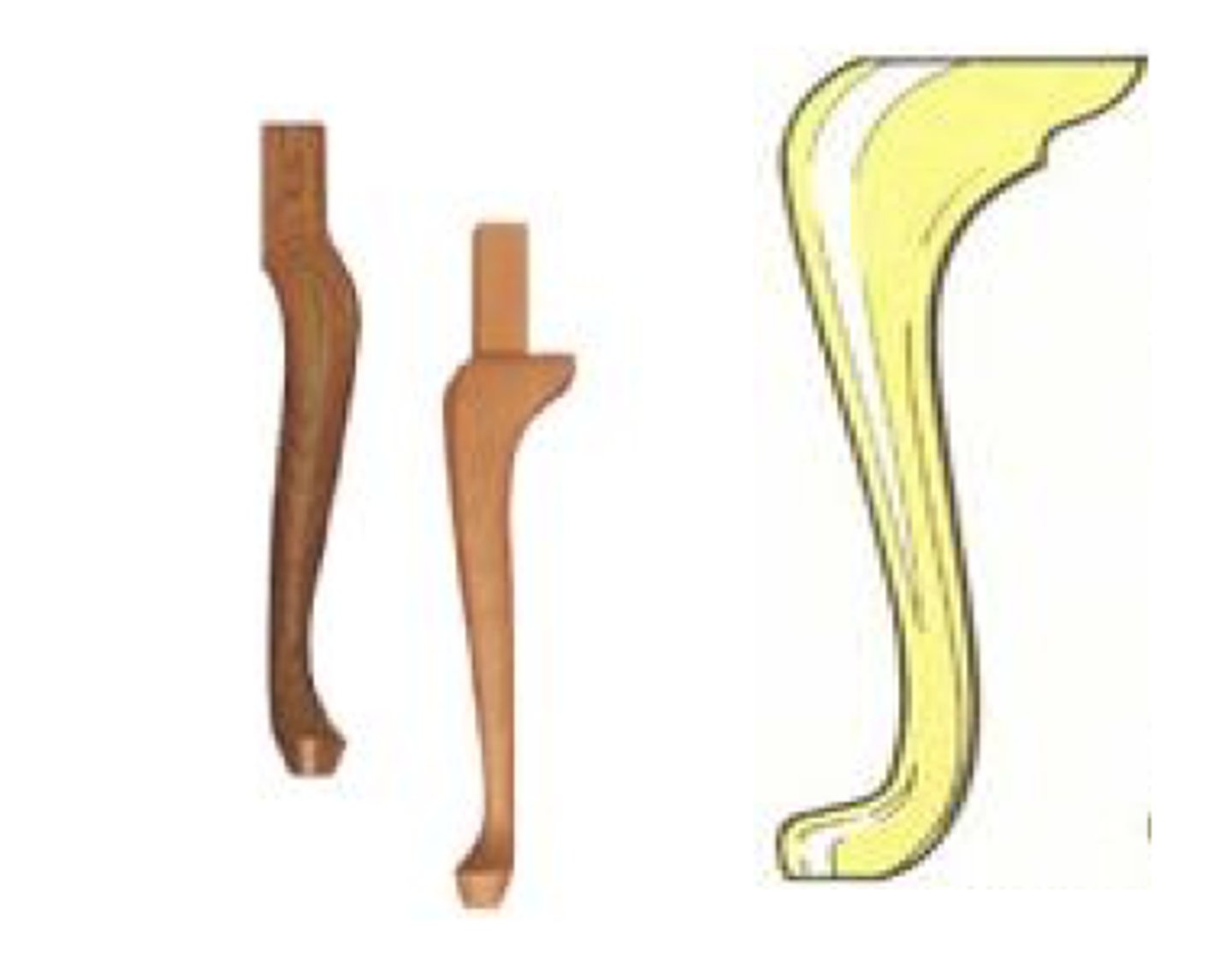
queen anne chair
different chair legs/feet
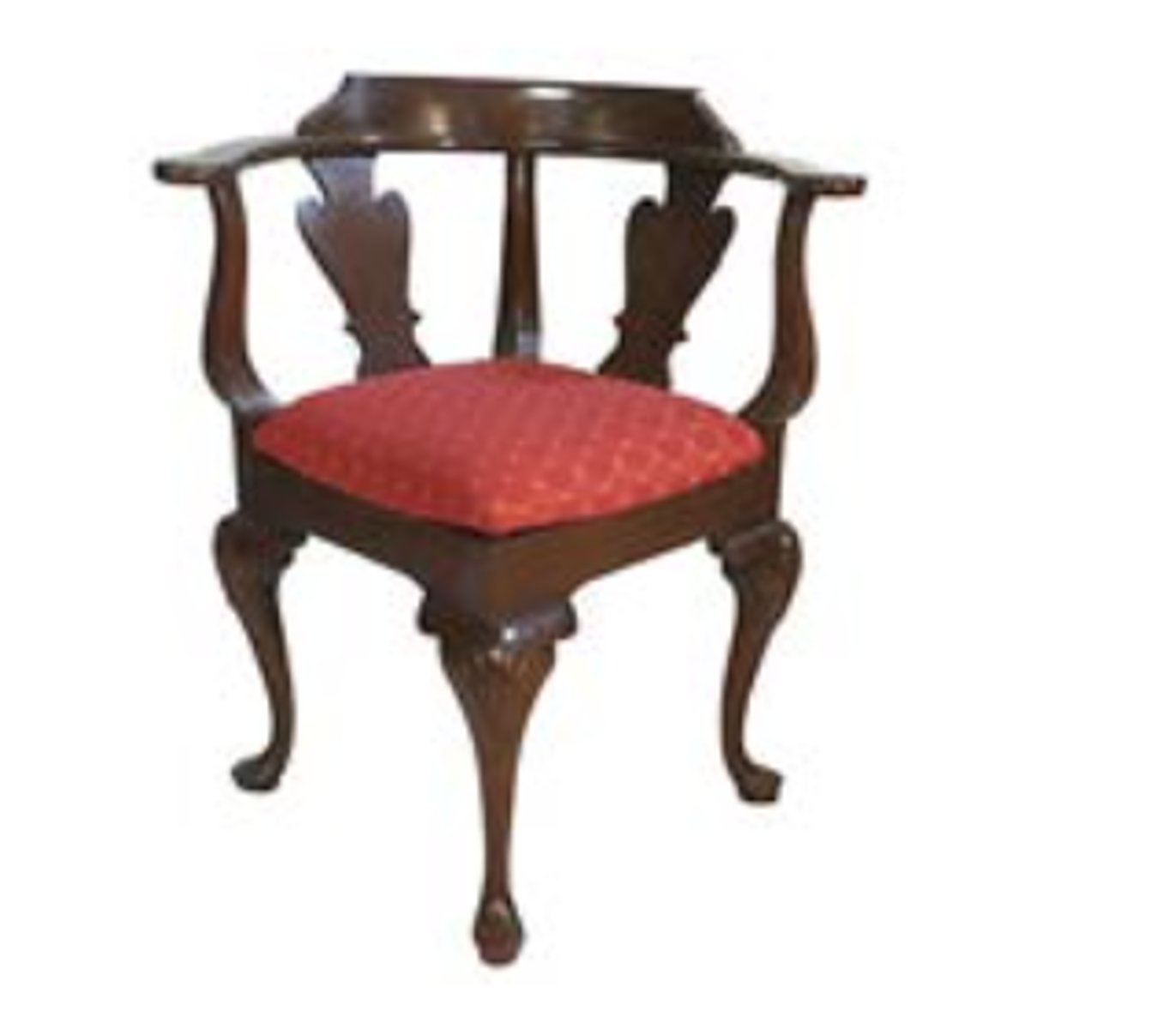
corner chair
Queen Anne
2-3 splats to form back
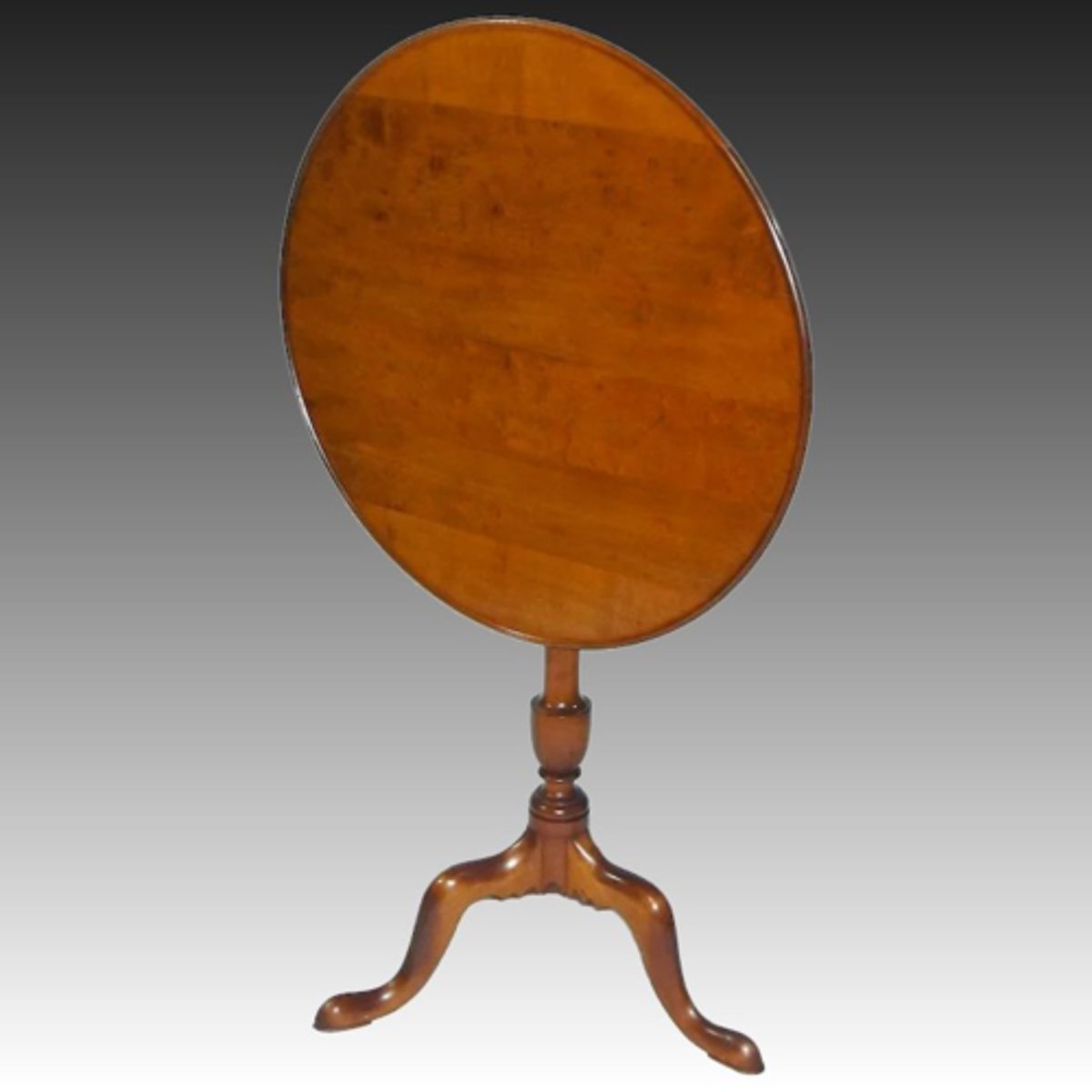
Queen Anne tea table
round table
no edge
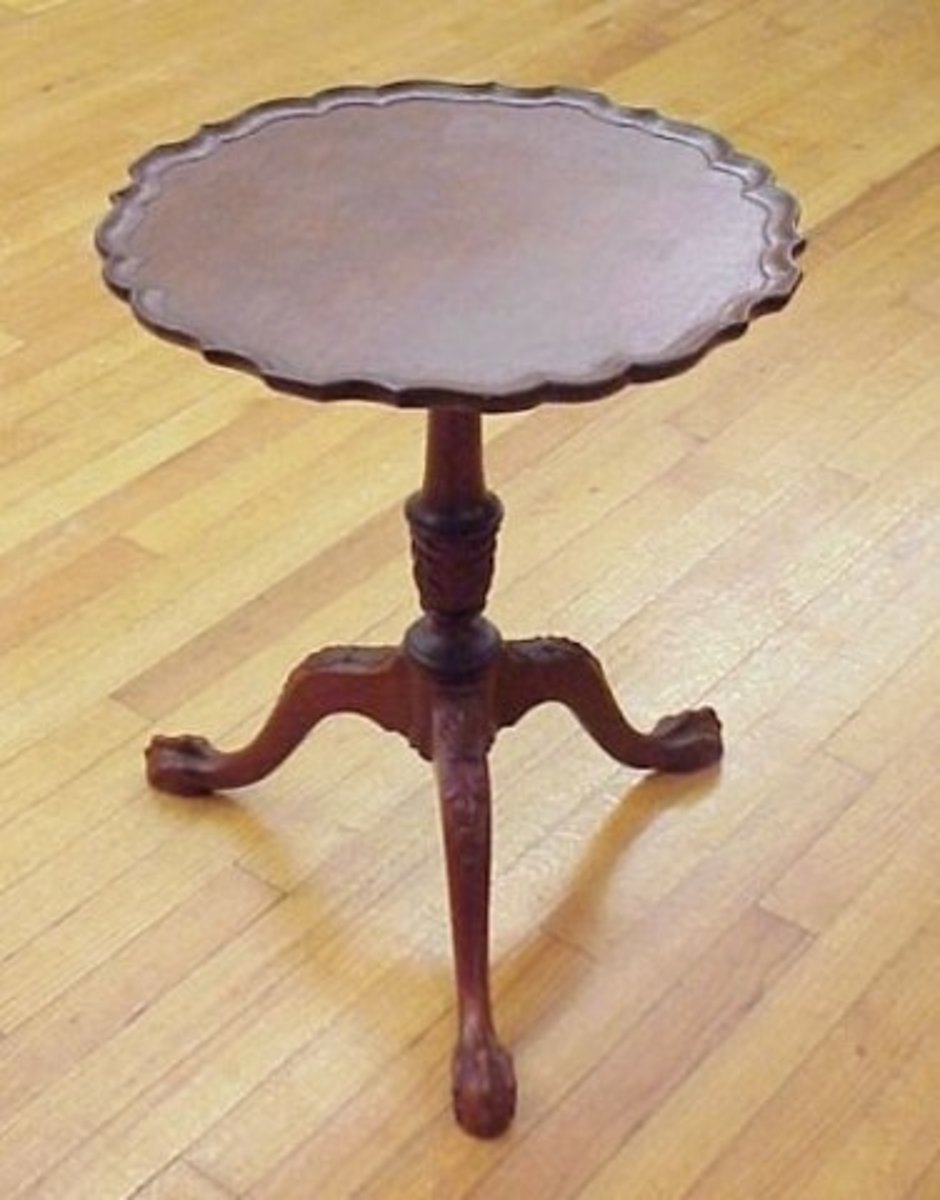
Queen Anne pie crust table
has raised edge
Queen Anne corner cabinet
mahogany
cabinet on bottom
cupboard w glass and chinaware on top
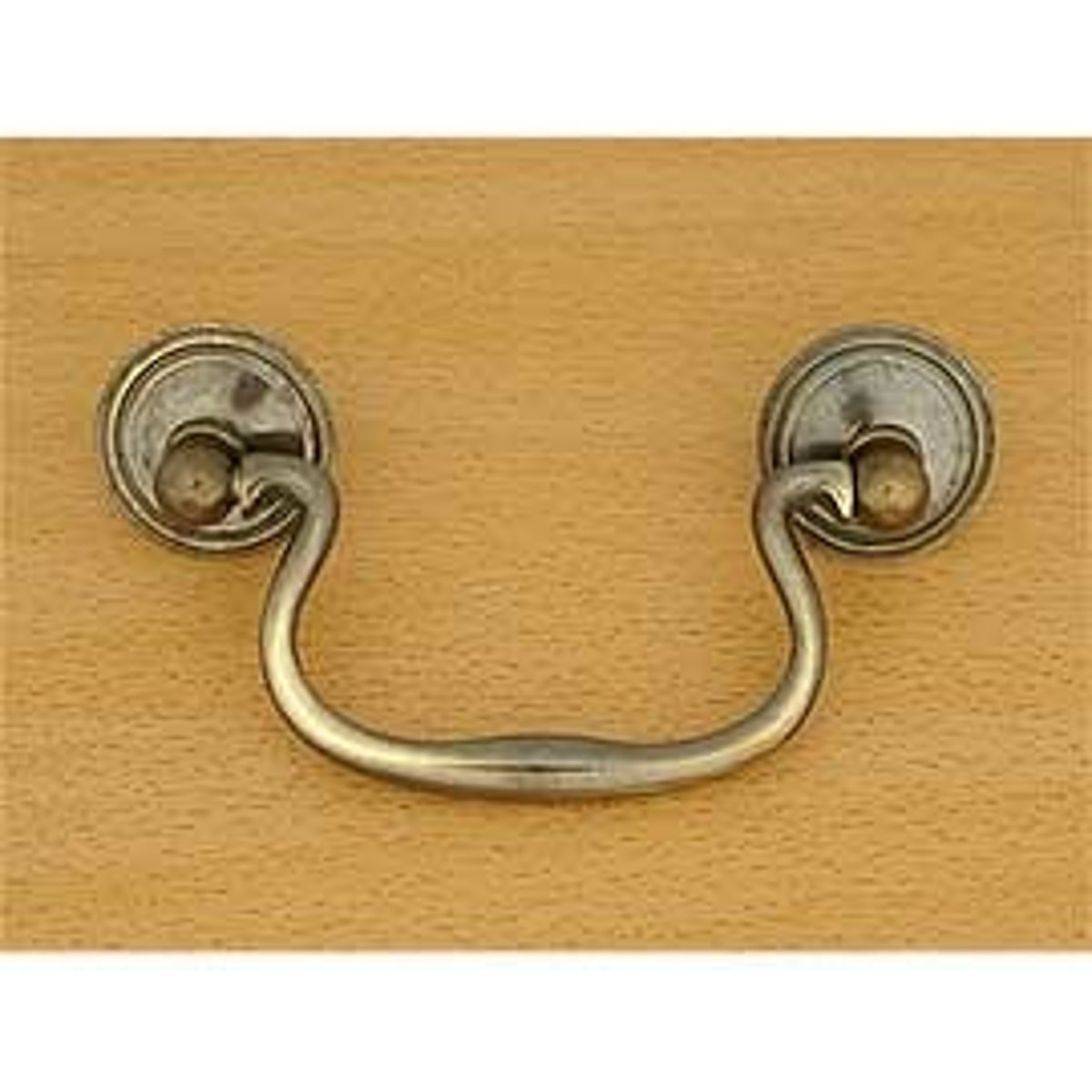
two post pull
type of handle
venetian style mirrors
mirrors made of two pieces
Early Georgian Period Characteristics
Middle Renaissance
Early Georgian Furniture Characteristics
furniture gets heavier
lionsmask placed on knee of cabriole leg
lions paw foot
Early Georgian Bookcase
broken pediment
gilding
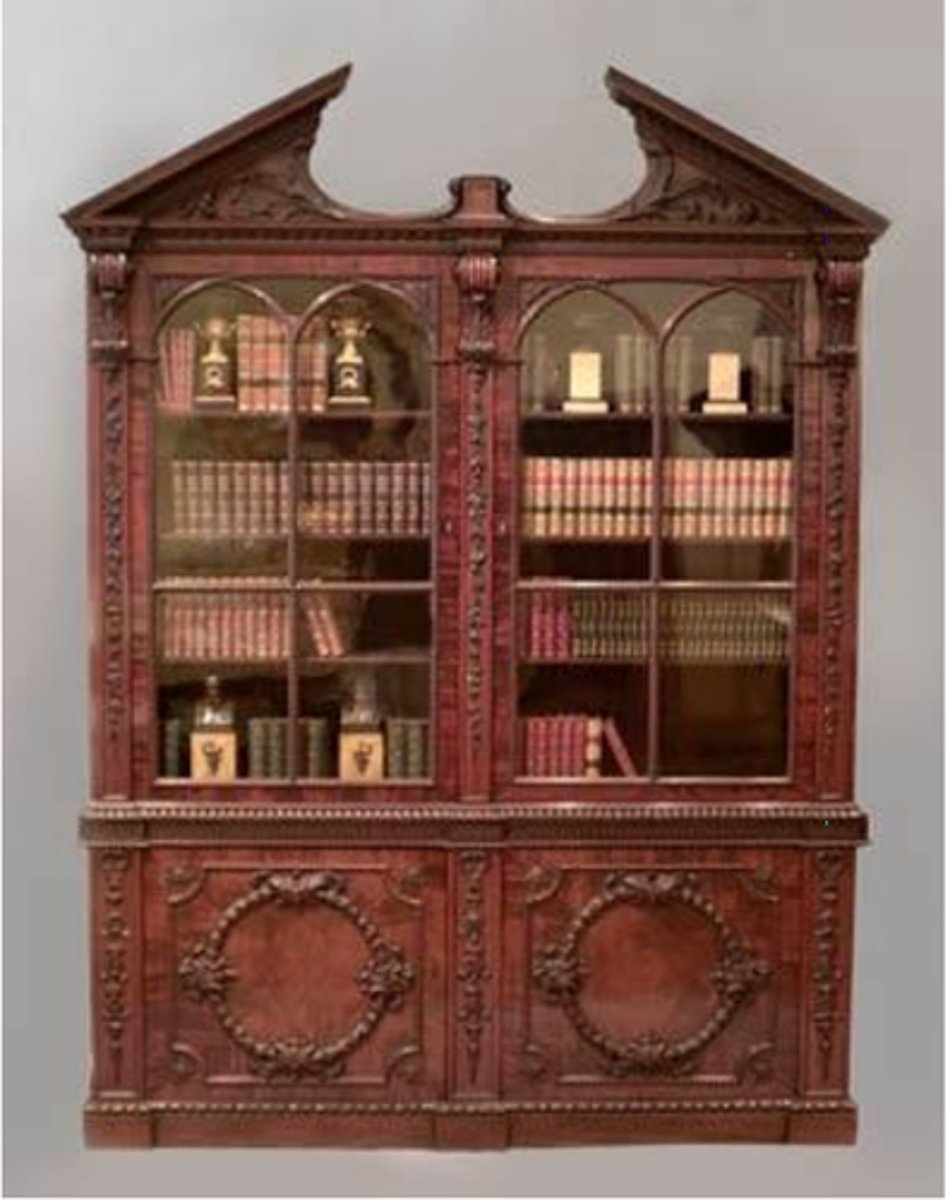
Early Georgian walnut bureau
drawers w cabinet or mirror overtop
veneered wood
bun feet
finials
Early Georgian low bureau
small dresser
Early Georgian bachelors chest
dresser w pull desk
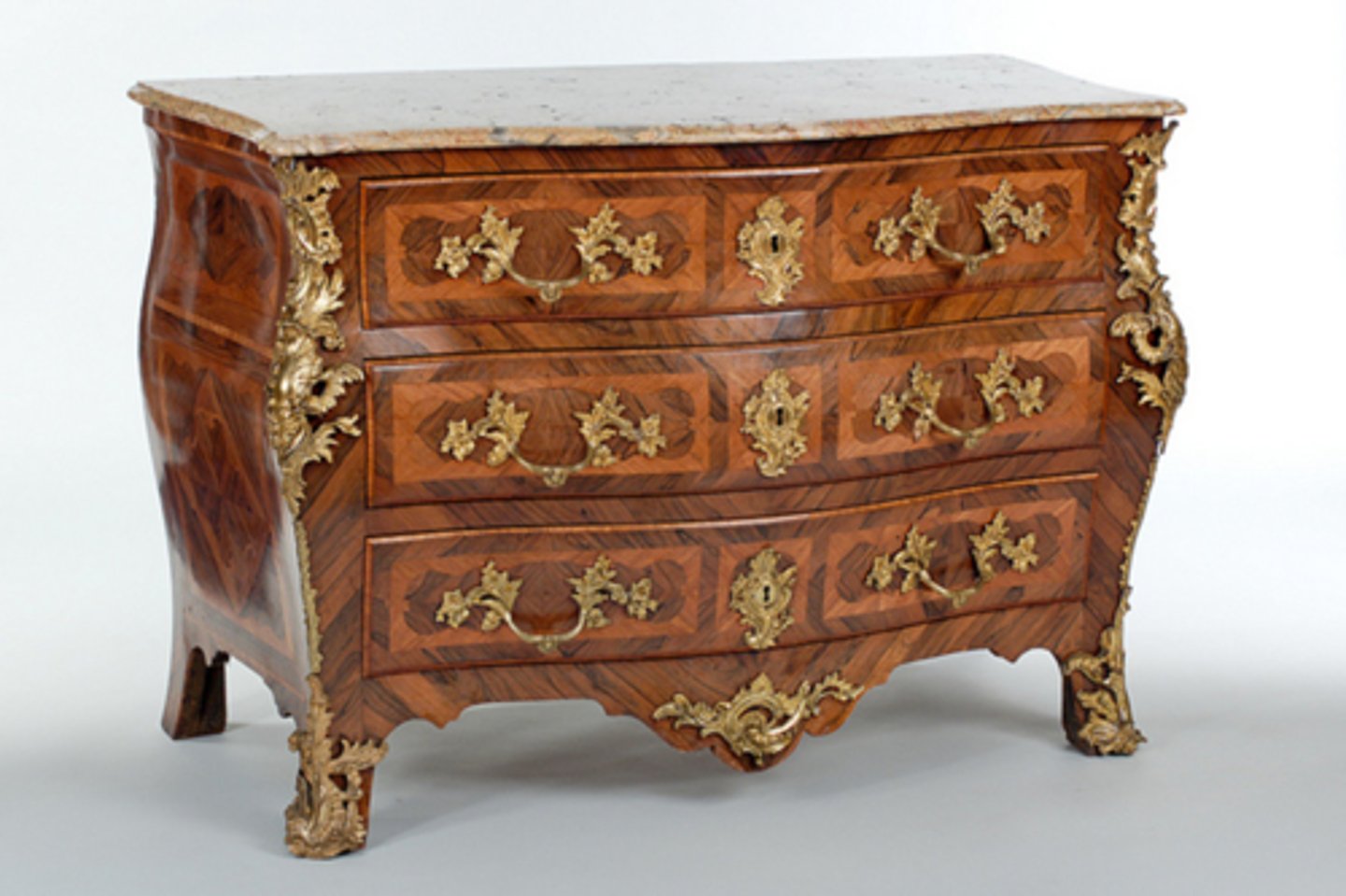
Early Georgian bombe commode
serpentine top
marquetry
trelles design
crossbanding around panel on outside
gilt brass mounts
sabot feet
heavier piece
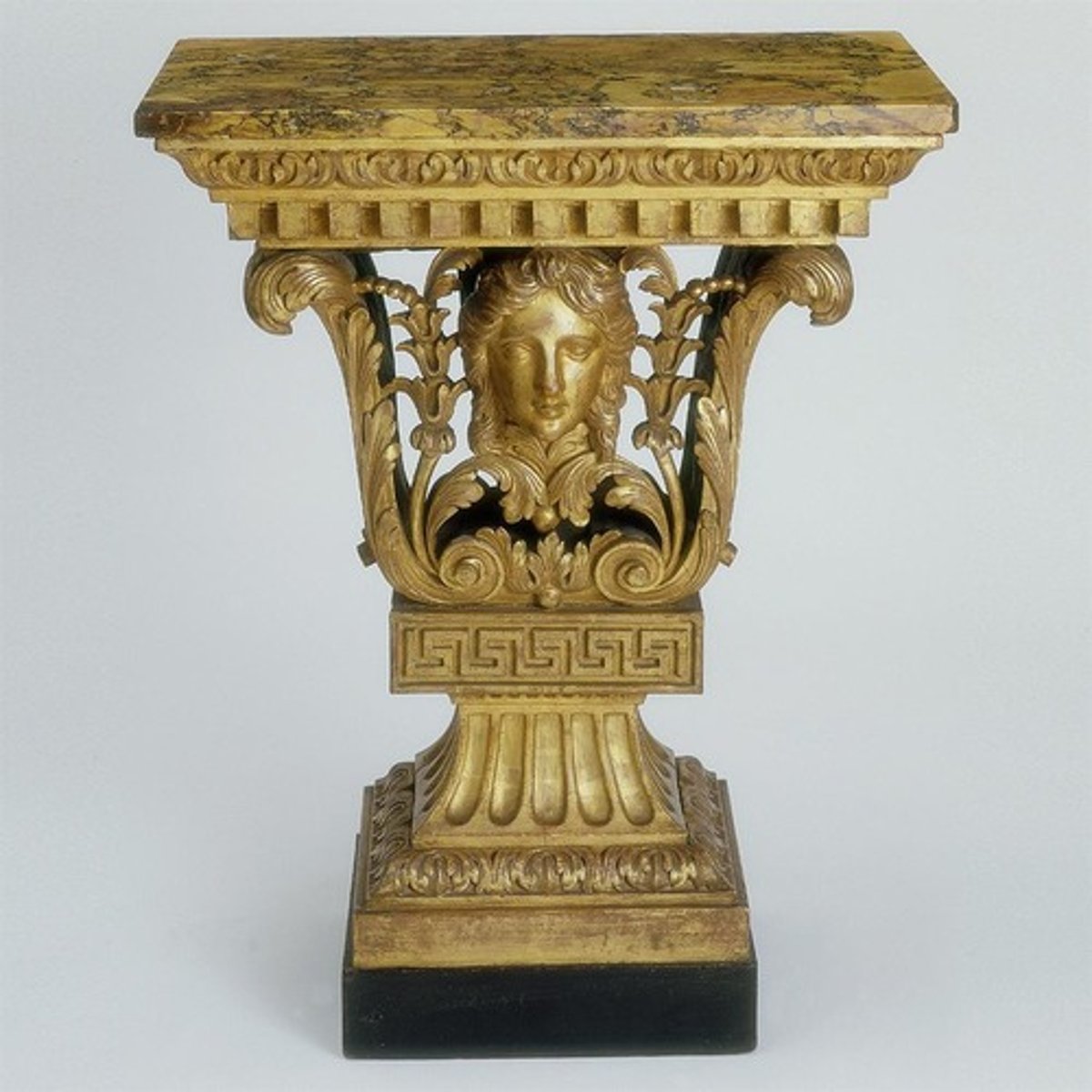
William Kent
Architect and furniture designer
inspired by Palladio
fav motifs - shells, masks, swags, lions
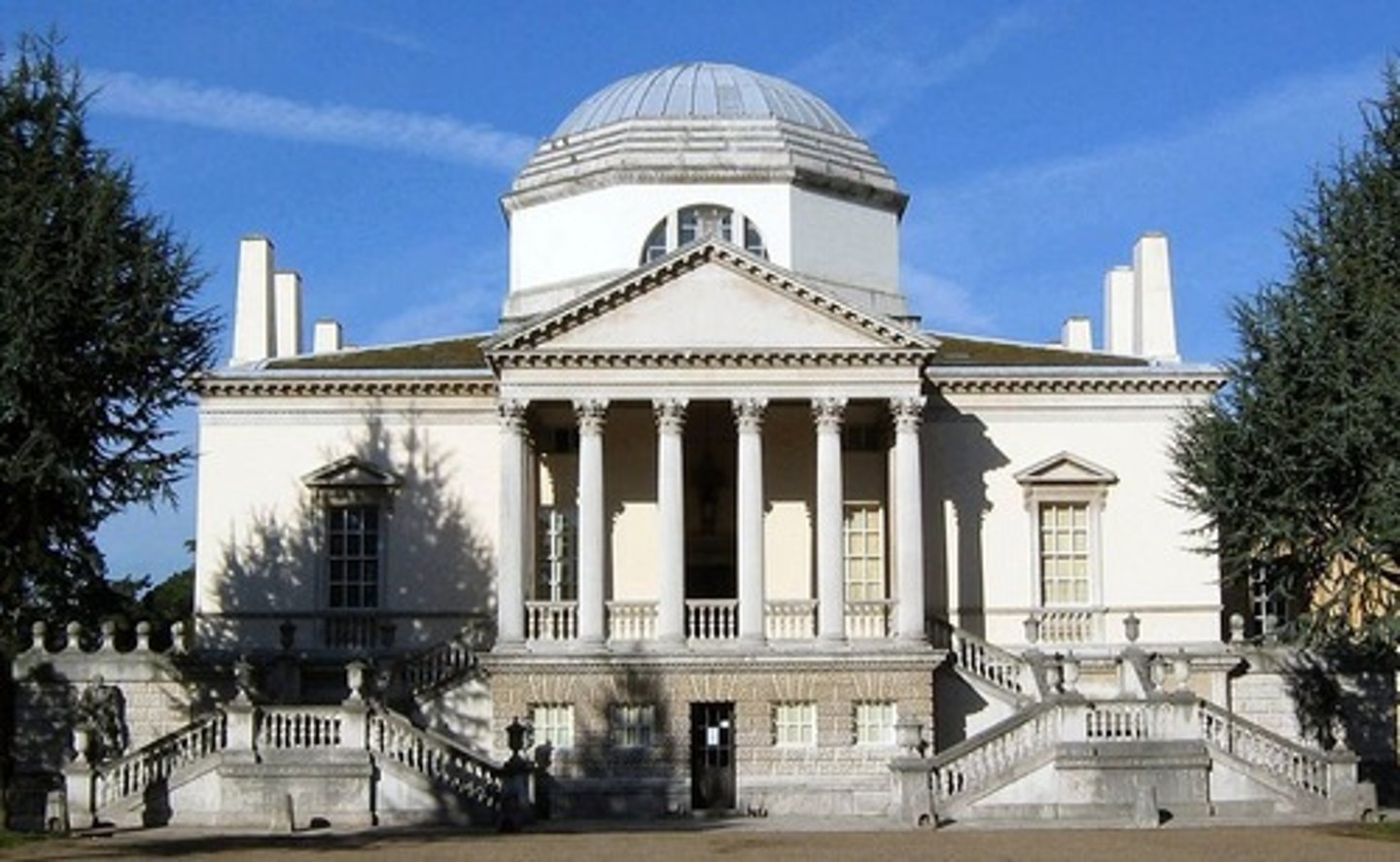
Chaswick house
Early Georgian
Palladian style architecture
dome
portico
rustication
entablature
pediment
total symmetry
pediments over windows
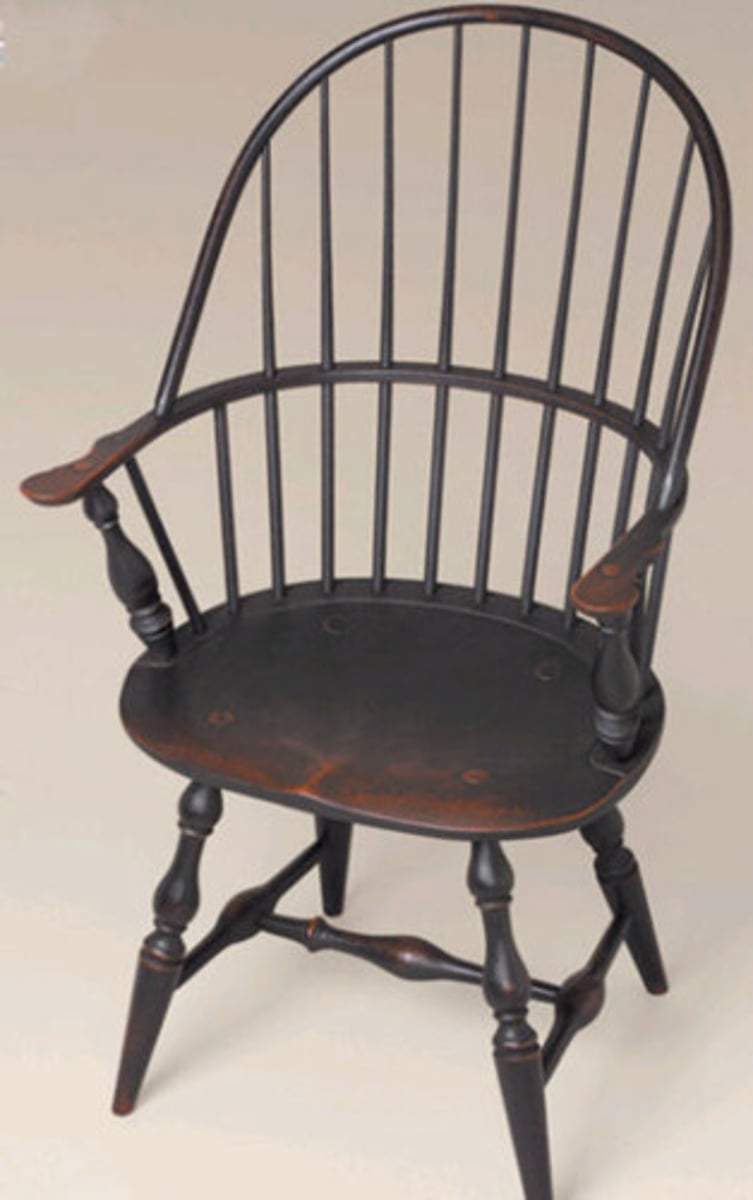
windsor chair
slatback or comb (no horizontal bar)
used by common people
Middle Georgian Period Characteristics
late Renaissance
reaction towards lighter proportions
Chippendale period
Age of Mahogony
Middle Georgian Furniture characteristics
Thomas Chippendale
Age of mahogany
marlborough leg
ball and claw foot
cabriole leg - has no stretcher
Chippendale Chinese influence
Chinese lattice work
fretwork
marlborough leg
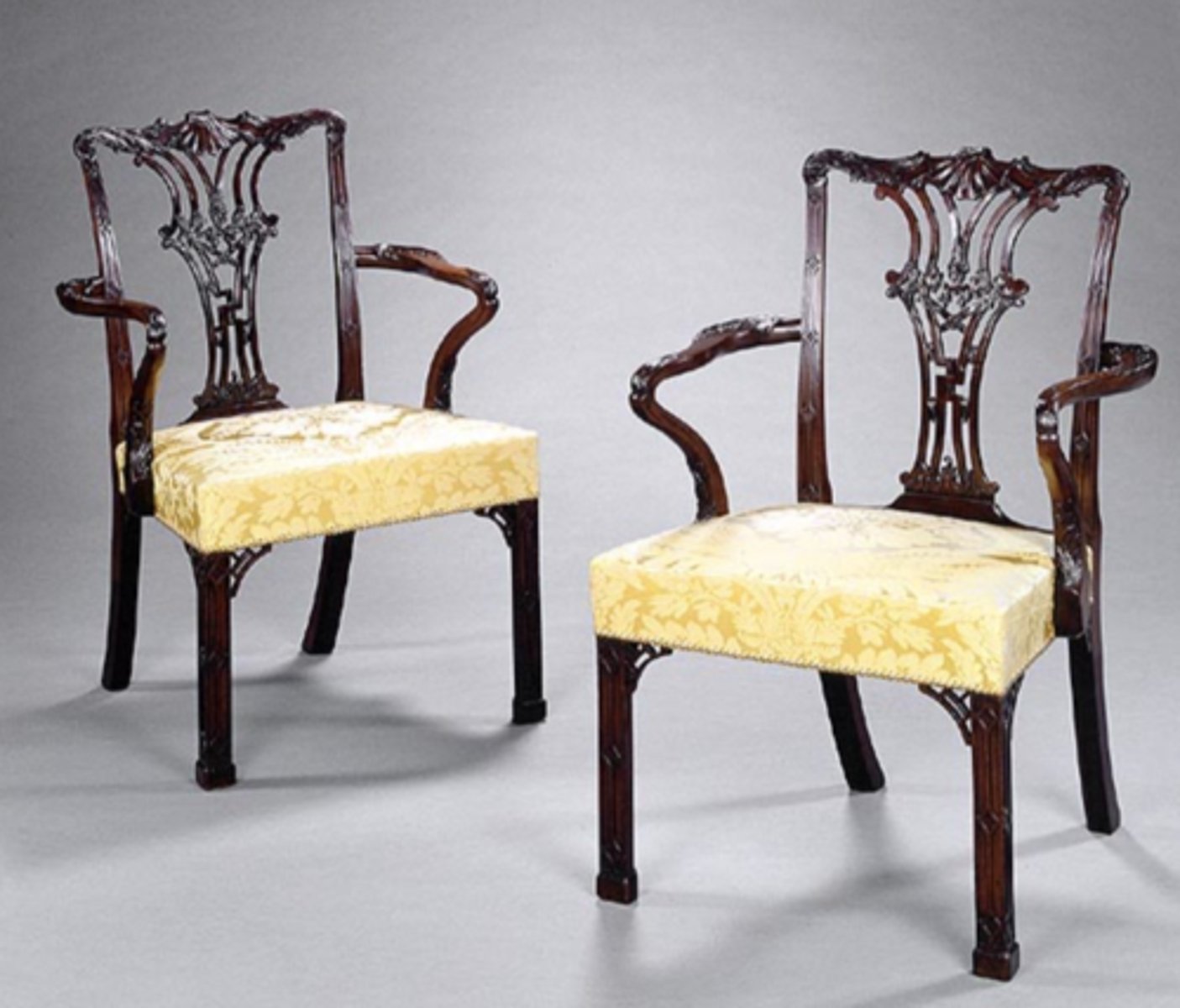
Chippendale Dressing table
vanity
Chinese influence
fretwork
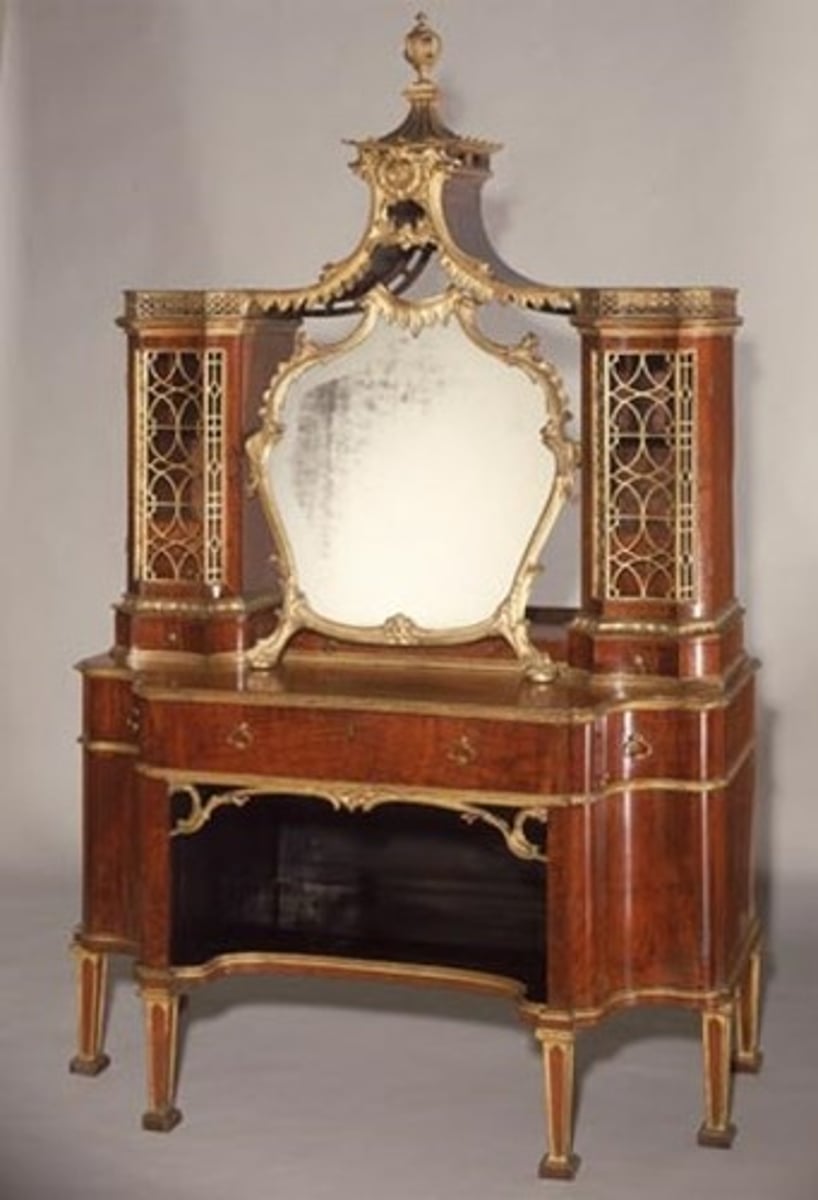
Chippendale China cabinet
pagoda
Fretwork
Chinese influence
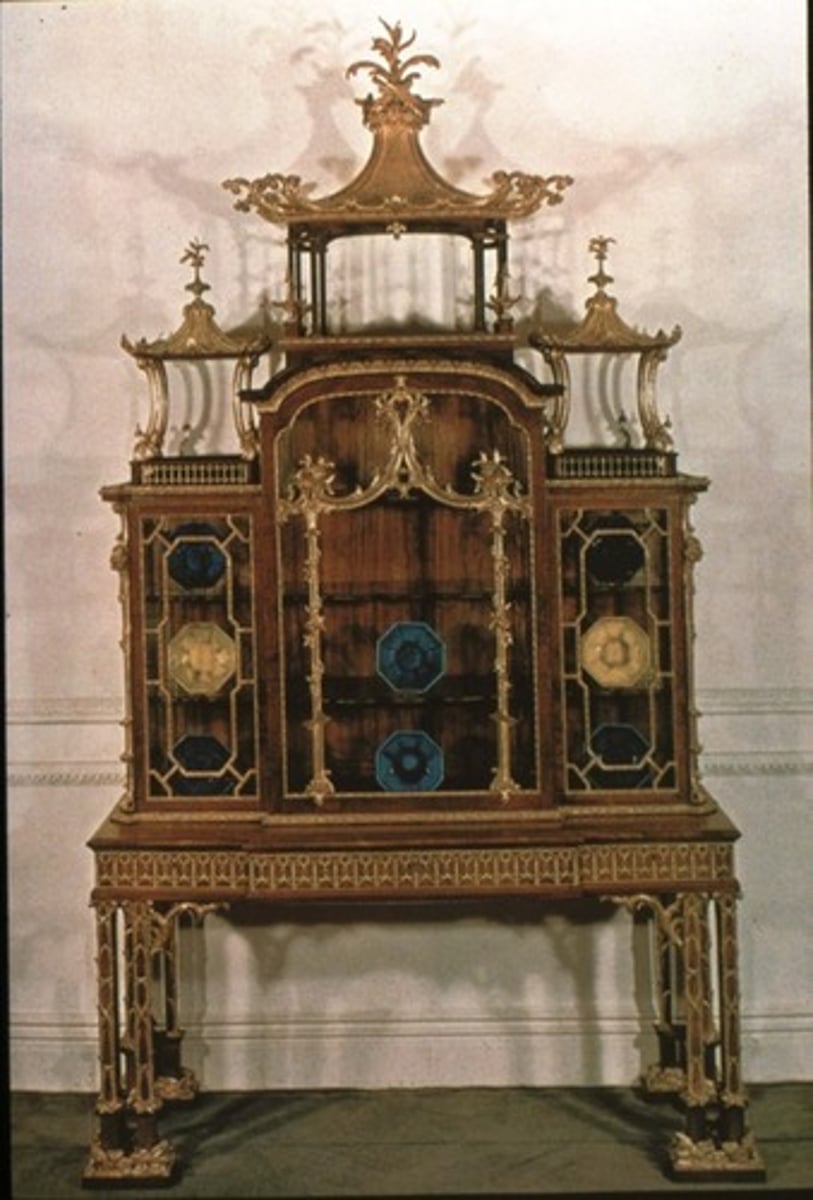
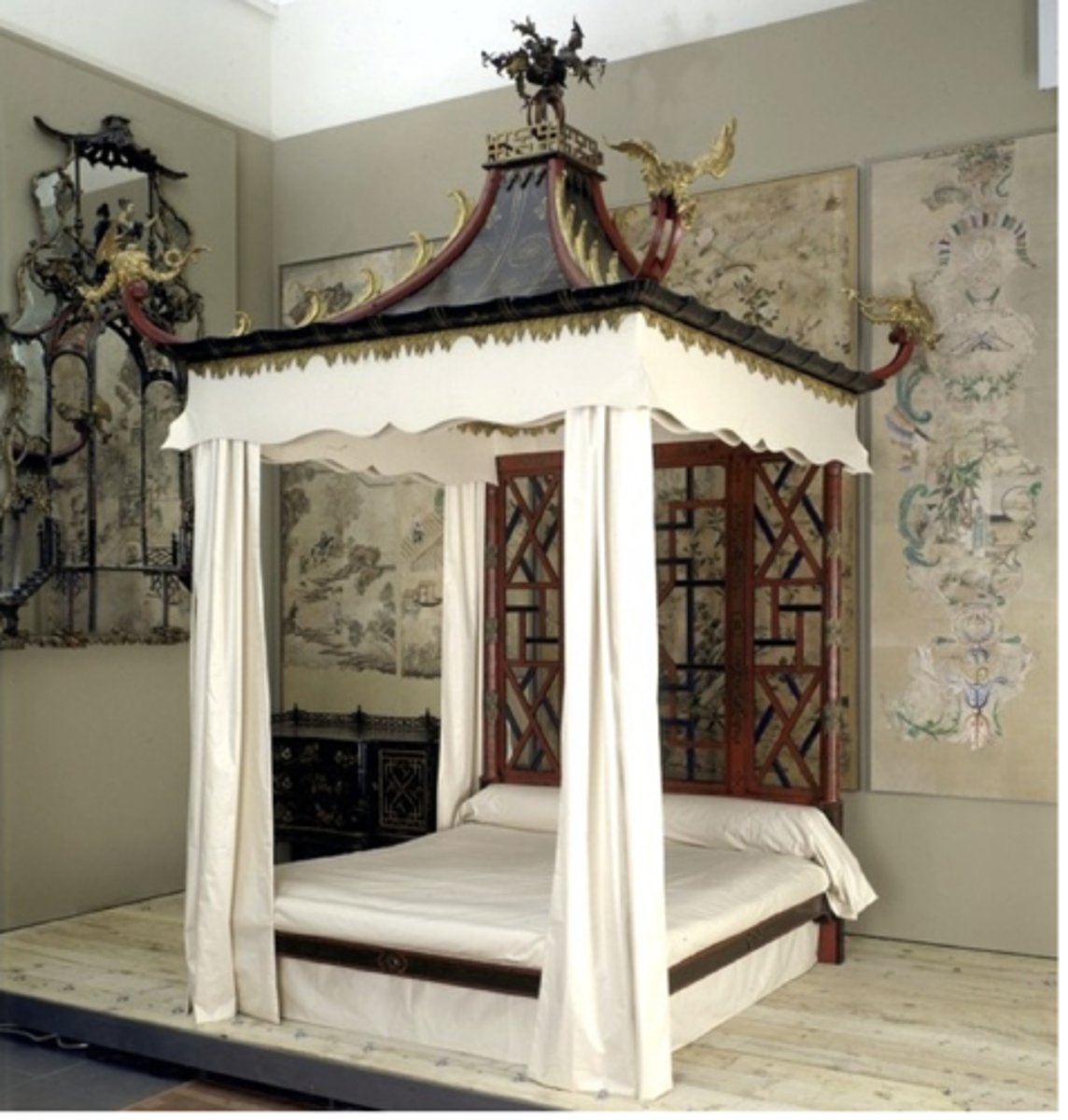
Chippendale bed
bed frame
pagoda
upswinging curve
fretwork in headboard
mirrors w pagoda top
Chinese in chair
Laquer work on cabinets
Chippendale girandole
asymmetrical mirrors
gilded candle sconces
heavily ornamented
Chippendale settee chinese
pagoda back settee
tops curve like section of pagoda
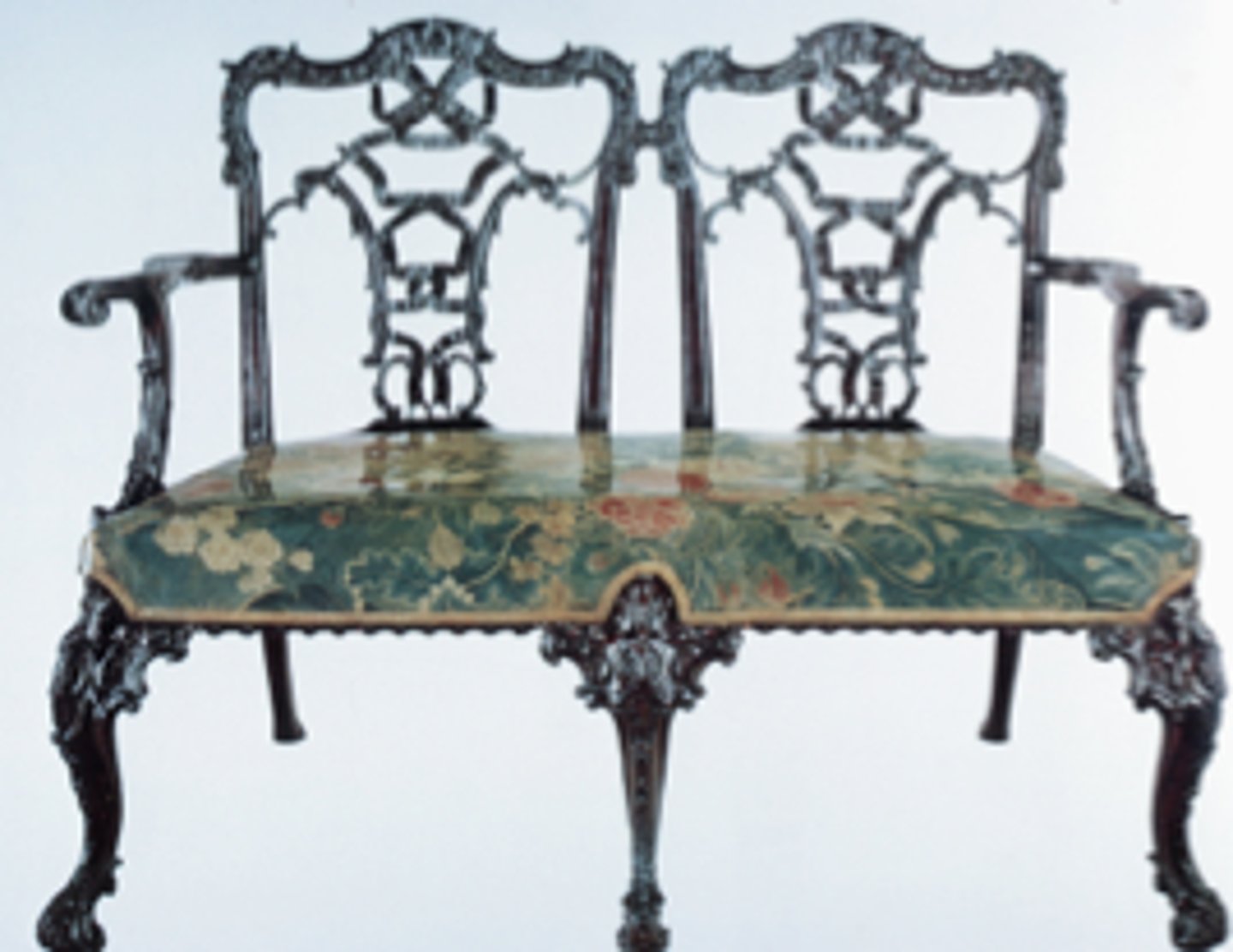
Chippendale ribband back settees
exagerated yolk back
ball and claw foot
cabriole leg
ribbon back
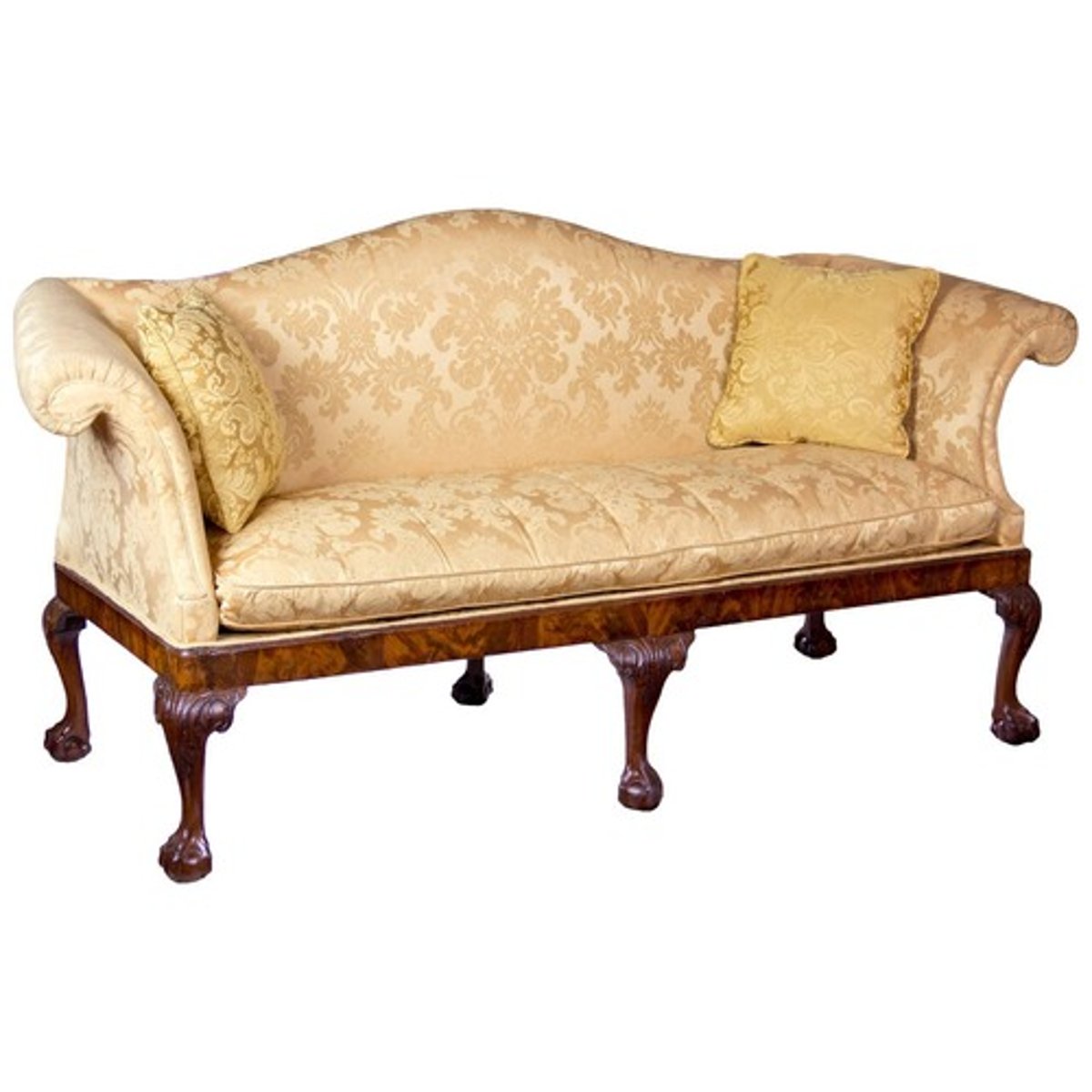
Chippendale camel back sofa
upholstered sofa
hump in middle
scrolled arms
marlborough leg or cabriole w ball and claw foot
Thomas Chippendale
Gentleman's Cabinet Maker's Director
cabinetmaker
classical, rococo, gothic, and Chinese influence
worked almost exclusively in mahogany
pierced back splats
yolk form overtop
Late Georgian Period Characteristics
late Renaissance
age of satinwood
Sherton and Hepplewhite
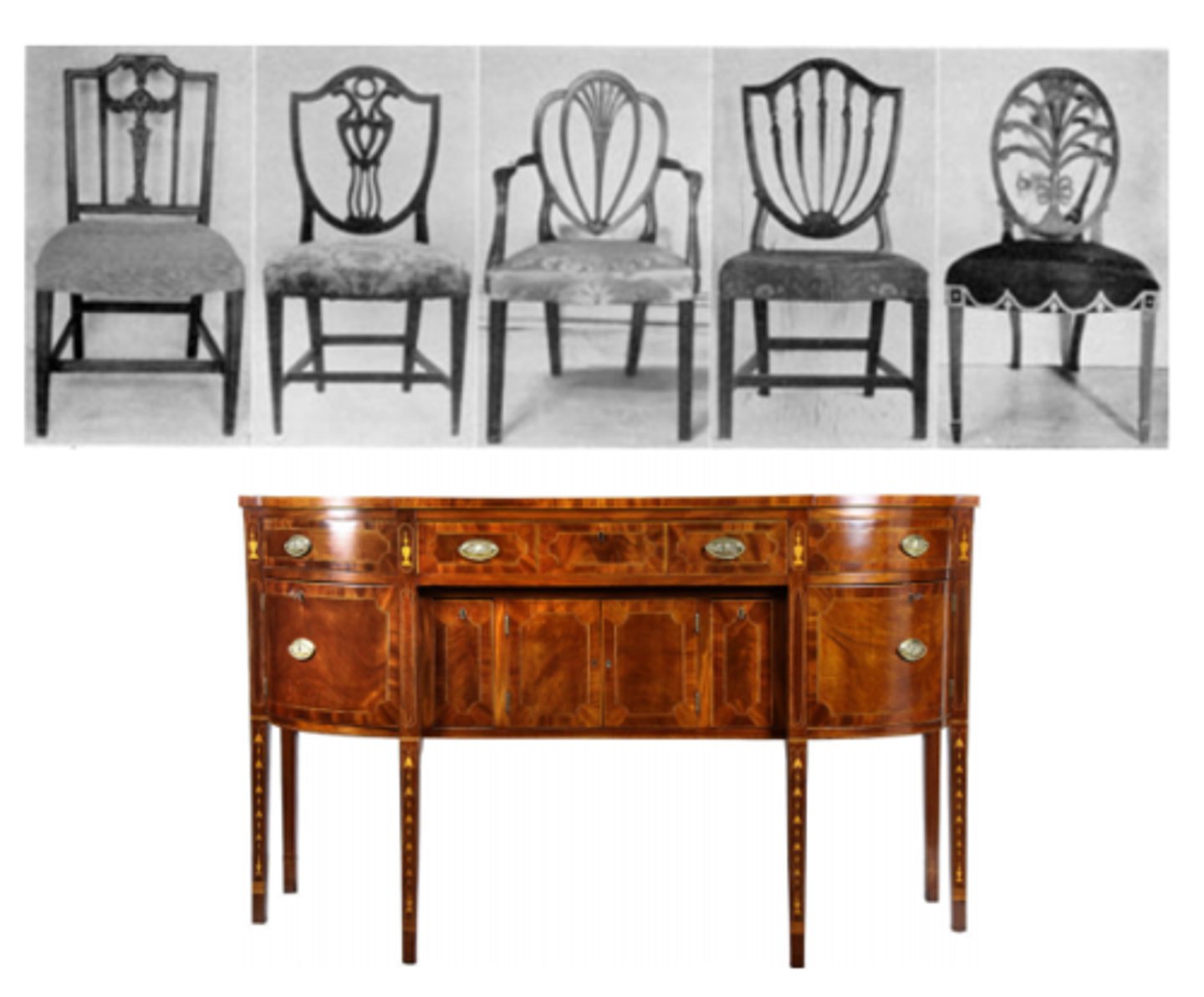
Hepplewhite
Heart, shield, oval, camel, or wheel back
satinwood or majogany
furniture weak in construction but it looked very elegant
straight legs - round or square, tapered towards foot
spade, thimble, or sabot foot
carved ornament on back
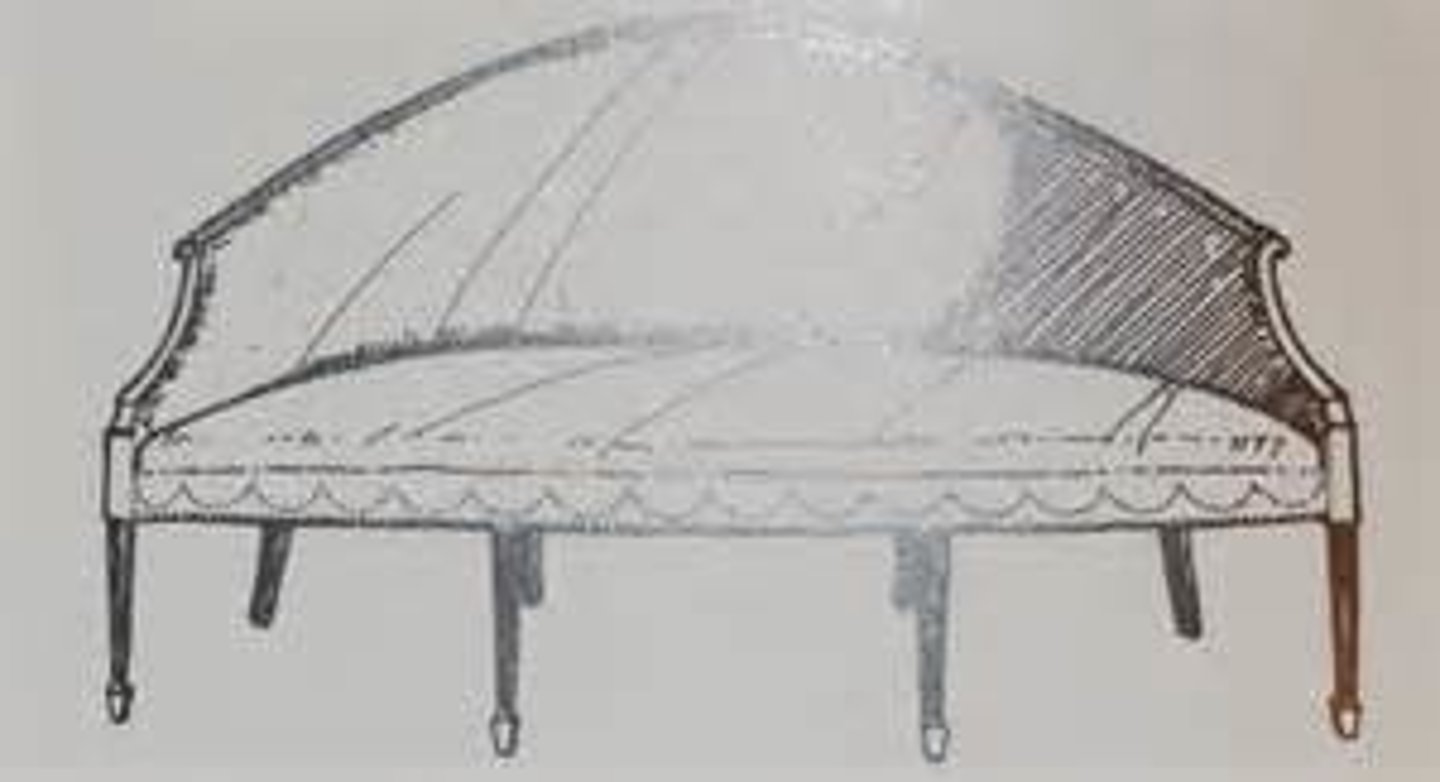
Hepplewhite sofa
camel back sofa
delicate lines
square tapered legs
castors on feet
smaller arms
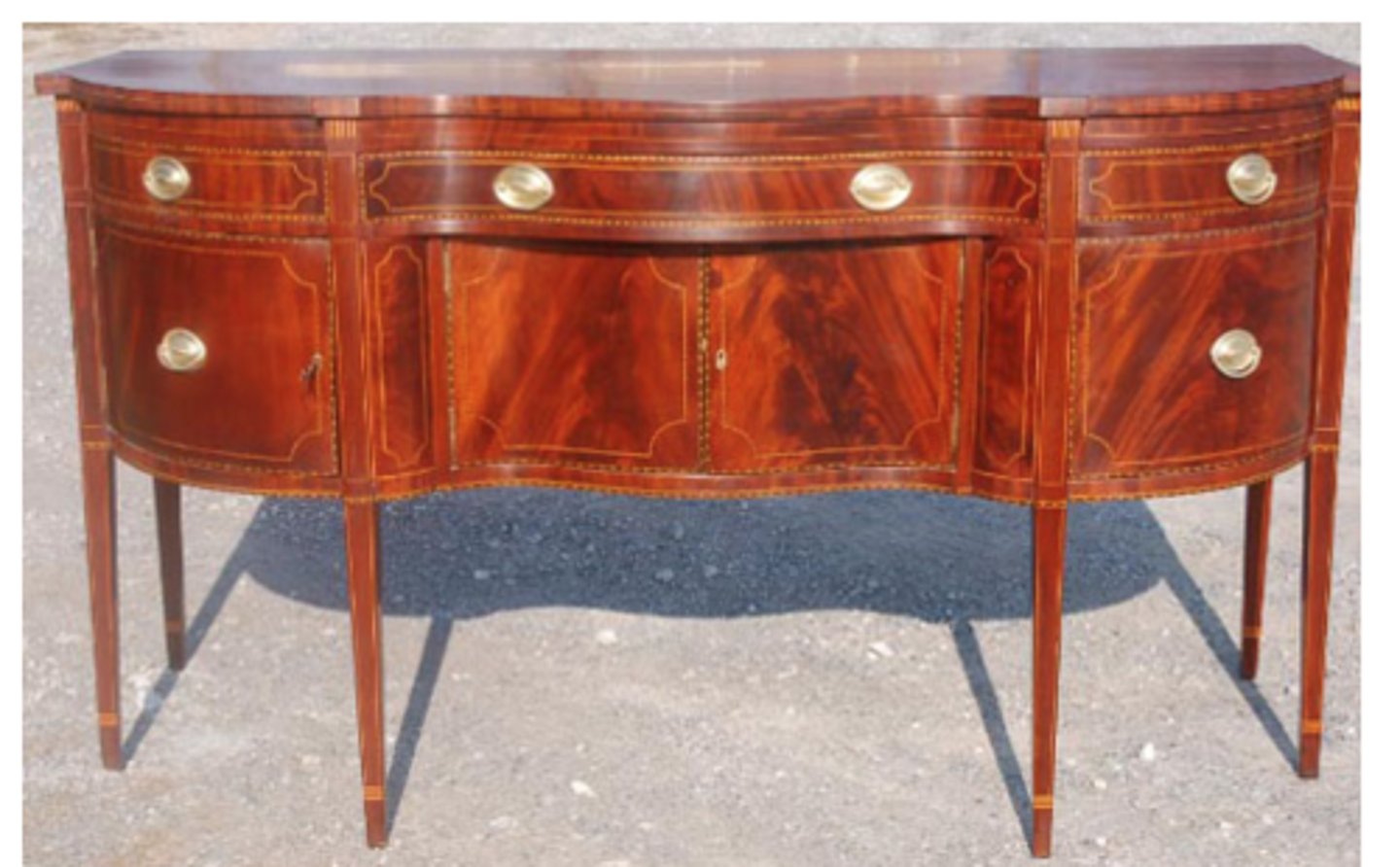
hepplewhite sideboard
straight lines
tapered legs
delicate oval brass pulls
pattered veneered wood
mahogany
very simple
satinwood cutlery boxes
boxes with vertical top lift to store silverware
Thomas Sheraton
borrowed designs from everyone
serpentine front side boards
eventually replaced w segmented curves
Sheraton furniture
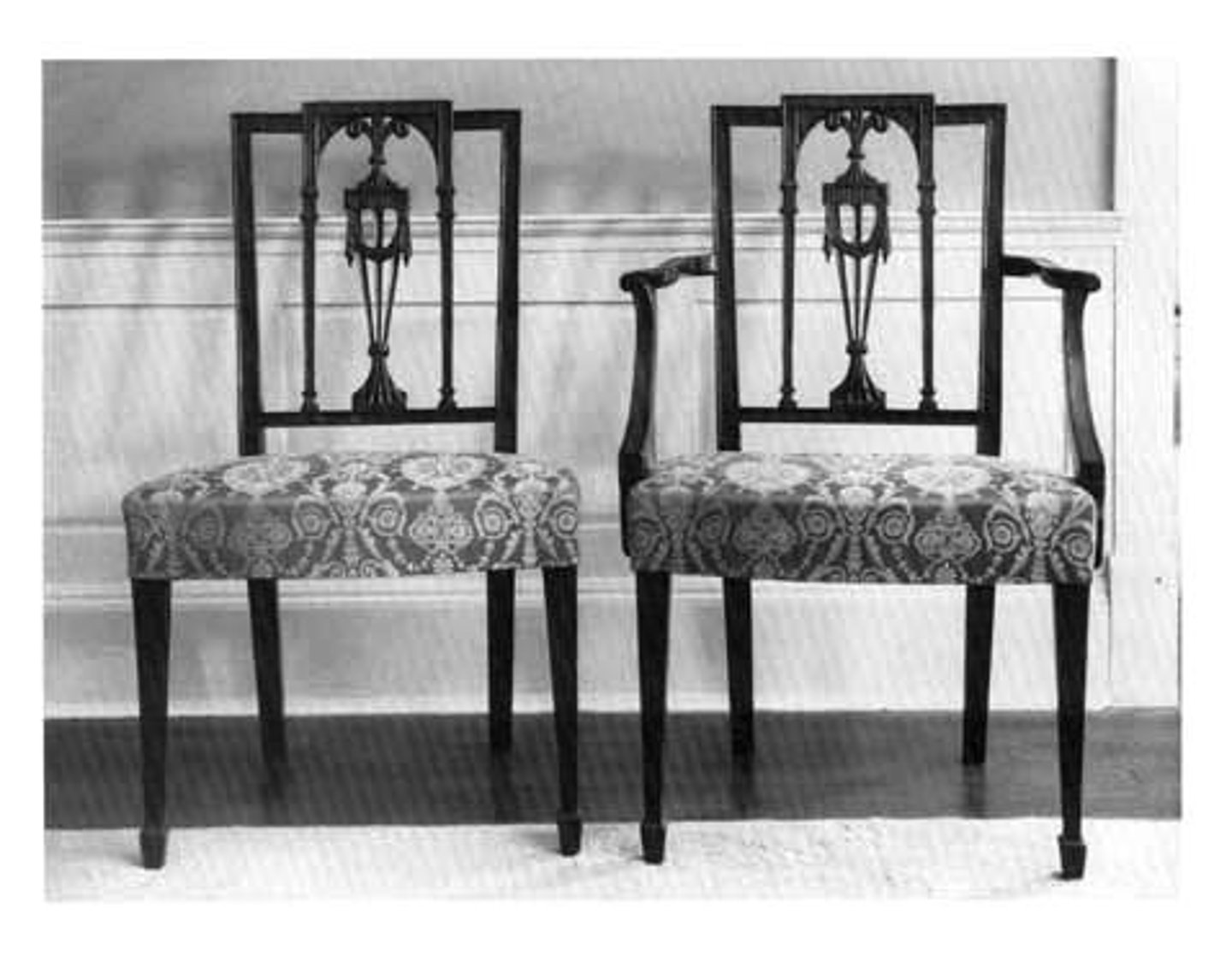
chairs split into 3 vertical sections
rear legs continues up and made back of chair
ornamental rail running across top
space between two rails has ornamental splat
center often has elongated vase
designs are most imitated today
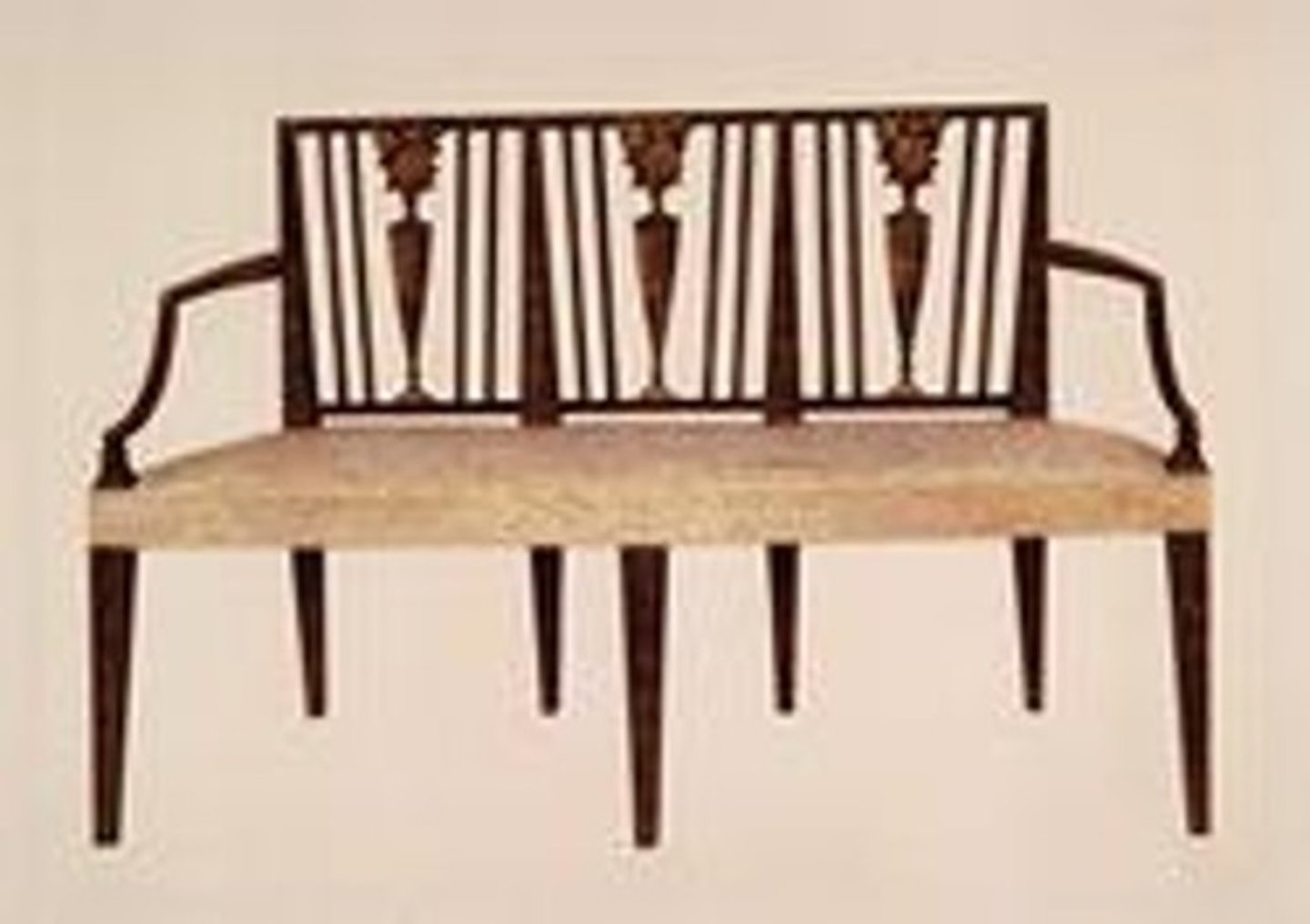
Sheraton Settees
swags
straight
spade foot
tapered leg
thimble foot
3 vertical sections
sheraton armchairs
chairs enclosed as shell
no space between arm rest and seat
Sheraton secretaire
mahogony
bookcase w desk
crowned w broken pediment
glass doors w fretwork
Sheraton dressing table
neoclassical legs
taperead legs
mahogany
veneer
dresser w oval mirror
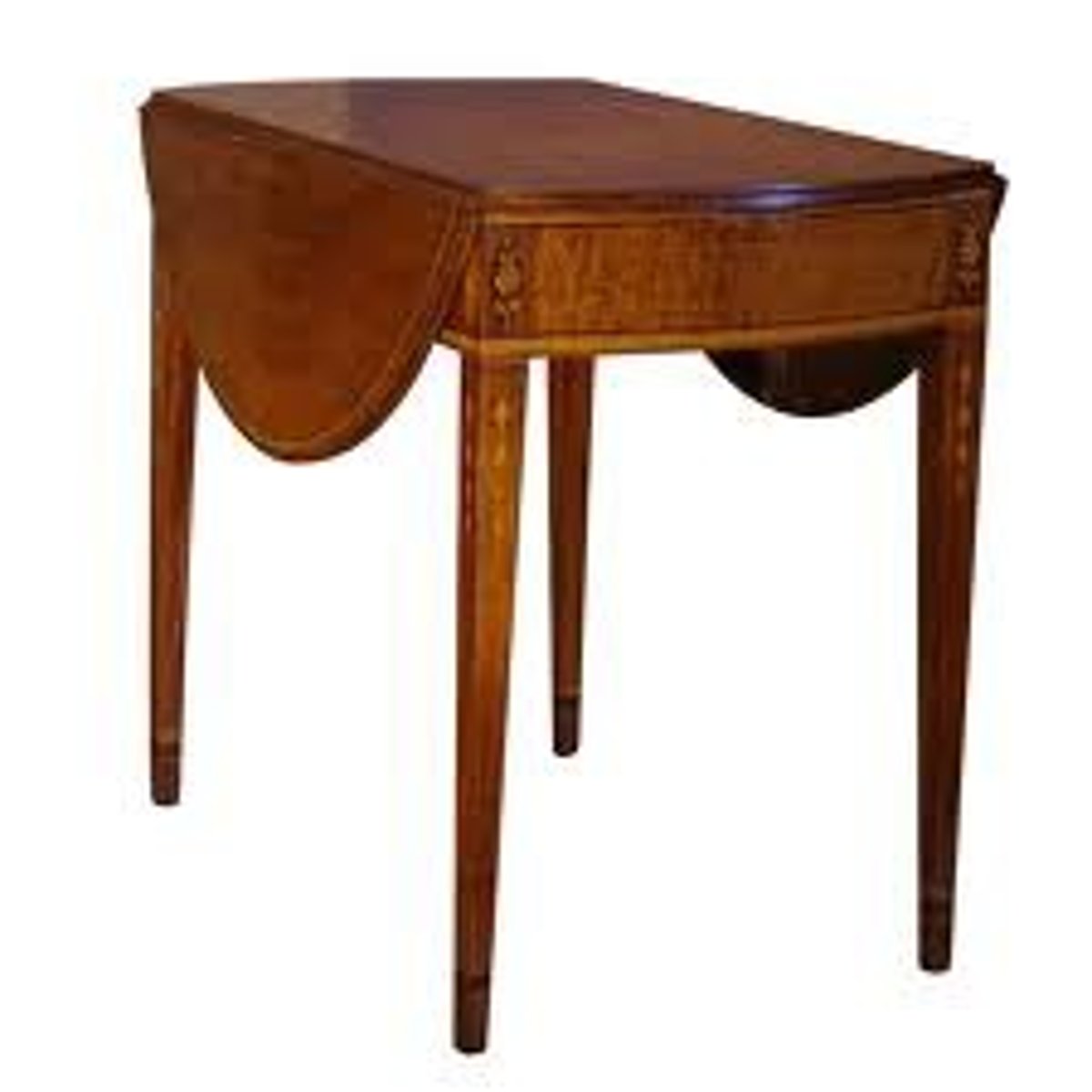
satinwood pembroke table
dropleaf table
castors
Adam/Neoclassic
James and Robert Adam brothers
architects
investigating of all classical antiquity
cameo figures on ceilings
swags
pale tints
classical figures
 Note
Note  Flashcards (45)