eco topic 2 - Micro and macro economic
 Call Kai
 Learn
Learn Practice Test
 Spaced Repetition
 Match
Match Flashcards
 Knowt Play
1/29

There's no tags or description
Looks like no tags are added yet.
Name | Mastery | Learn | Test | Matching | Spaced | Call with Kai |
|---|
No analytics yet
Send a link to your students to track their progress
30 Terms
Microeconomic
Microeconomics is the study of the behaviour and decisions of households and firms and the performance of individual markets
Changes in earnings in a particular occupation
Macroeconomics
Macroeconomics is the study of the whole economy, examining national and global economic performance.
National Economic Growth
Decision Makers: Microeconomics
In microeconomics, the main decision makers are consumers, workers, firms and governments.
Decision Makers: Macroeconomics
In macroeconomics, the decision makers are considered at an Large scale The focus is on the government, which makes decisions about taxation and government spending, and the central bank, which makes decisions about interest rates and the money supply.
Resources allocation in a market economy
Consumers and firms decide through the price mechanism
price mechanism
Market Equilibrium
Market equilibrium is the position in a market where demand is equal to supply.
At the equilibrium price, the quantity demanded equals the quantity supplied. There is no shortage and no surplus, and there is no tendency for the price to change.
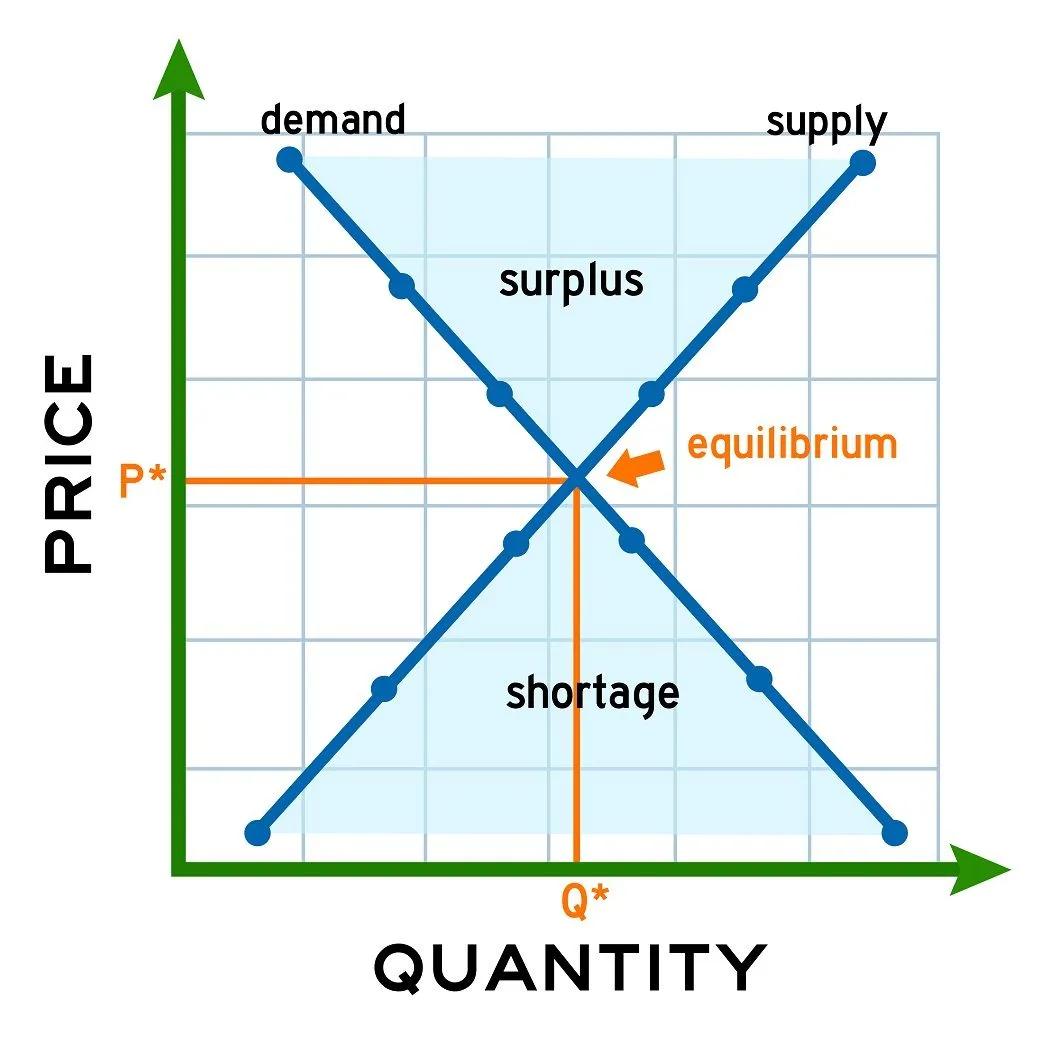
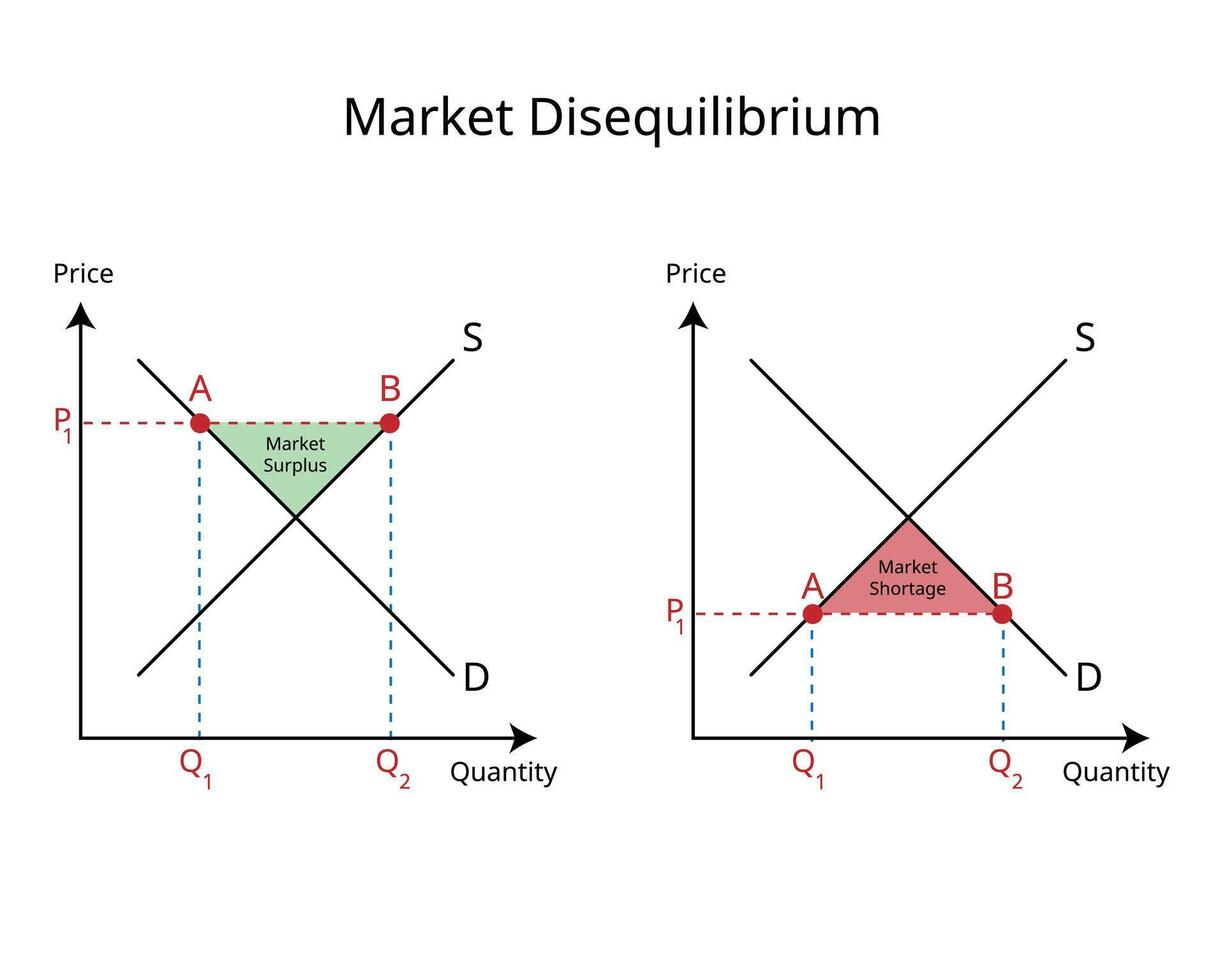
Market Disequilibrium
Market disequilibrium is a situation in which demand is not equal to supply in a market.
It occurs when there is either excess demand (a shortage) or excess supply (a surplus), causing a tendency for the price to change.
The 3 Economic Questions: Explained Market
What to produce: Goods and services demanded by consumers are produced
How to produce it: Firms choose the method of production that minimises costs and maximises profit.
For Whom to produce it: Firms choose the method of production that minimises costs and maximises profit.
A market system is an economic system where resources are allocated through the interaction of buyers and sellers. Buyers create demand for goods and services, while sellers supply them in exchange for money, with prices determined by supply and demand.
Scarce resources—such as land, labour, and capital—are directed by price signals. Rising prices from high demand encourage more production, while falling prices reduce supply, shifting resources elsewhere.
Thus, the market system coordinates choices and allocates resources efficiently according to consumers’ preferences.
Define: Demand
Demand is the quantity of a products that consumers are: willing to buy, able to buy over a period of time at a specific price
Demand Curve: not curve
A demand curves shows
-
Movement along the demand curve
Happens when there is a change in quantity demanded occurs when the price of the good changes ; causing a movement along the existing demand curve- Differernt from shift of the entire curve
Extension: A movement from point A to Point B whows an extension of demand When price falls quatinty demadn increases, beacuse conusmer a willingn and able to buy more of the good
Contraction: A movement fom point B to point A shows a contraction of demand. When prices rise Quantitiy demanded decreceases. Consumers are willing to and able to buy less of the goodn
only caused by changesa in prces of the good no TRIPA
Price chages cause movements along the curve. Non price factors cause tye shift of the entrie curve
Shifts in the demand curve: Increase
Increase in demand
There will be an increase in Demand because conusmers are willing to buy more at every price lelve resulting in the entrire demand curve shifting to the Right.
Shifts in the demand curve: Decrease
when TRIPA change(Not price). There will be a decrease in demand meaning consumers are willing to demand less at every price level. The Demand cruve will shift to the left
Shift in the demand curve: Causes- TRIPA
Taste changes in favour of the product
Related goods: Complementary, substitute
Income
Population change
Advertising
Define: Supply
Supply is the willingness and ability to sell a product.
Market Supply
Market supply is the total quantity of a good or service supplied by all producers in the market.
Individual Supply
Individual supply is the amount a single producer is willing and able to sell at a specific price.
Factors affect supply: TSTCO
Technology
Substitues
Taxes
C
O
weather
PED- Price elasticity of demand
PED/ price elasticity of demand measures the responsiveness of changes in quantity demanded of a product to a change in its price
Law of demand
As price increase, quantity demanded decreases
Price elastic Demand
When demand varies significantly with price changes, Consumers are highly responsive to price movements
Price inelastic Demand
When demand remain realtivelt constant regardless of price changes, consumers are less responsive to price movements
PED Formula
change in quantity demand / change in price
all results are negative: common pracitce to ignore negative
Elastic demand
PED > 1
Demand curve: flat
Inelastic Demand
PED < 1
demand curve: relatively steep
Unitary Demand
PED = 1
meaning the percentage change in quantity demanded exactly equals the percentage change
e.g. : price increase by 10% demand decrease by 10%.
means revenue stays whether pirces go up or not
Charaestics of price elasticity
Availability of substitutes
luxury

