AP World 1.6 Developments in Europe
 Studied by 3 people
 Call Kai
 Learn
Learn Practice Test
 Spaced Repetition
 Match
Match Flashcards
 Knowt Play
1/75

There's no tags or description
Looks like no tags are added yet.
Name | Mastery | Learn | Test | Matching | Spaced | Call with Kai |
|---|
No analytics yet
Send a link to your students to track their progress
76 Terms
Middle Ages
Also known as the medieval period, the time between the collapse of the Roman Empire and the High Middle Ages during which trade and intellectual life declined.
Feudalism (European)
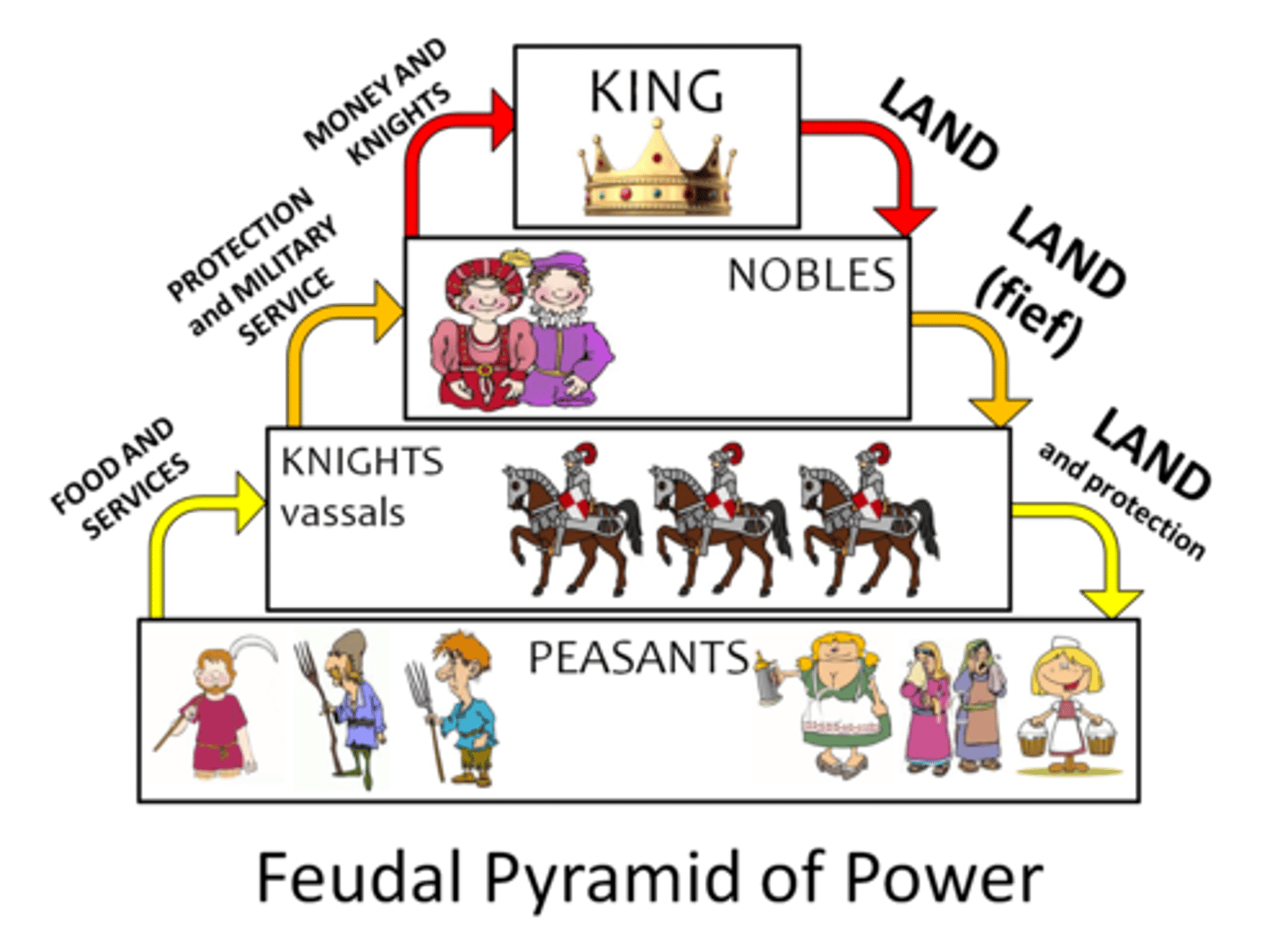
A system of exchanges of land for loyalty: A monarch granted fiefs to lords and the lords became the king's vassal. Lords gave the land to knights, who pledged to fight for the lords. The lords also gave land to peasants, who were then obligated to farm the lord's land, provide them with crops, and obey their orders.
Fiefs
Tracts of land given to lords by monarchs.
Vassal
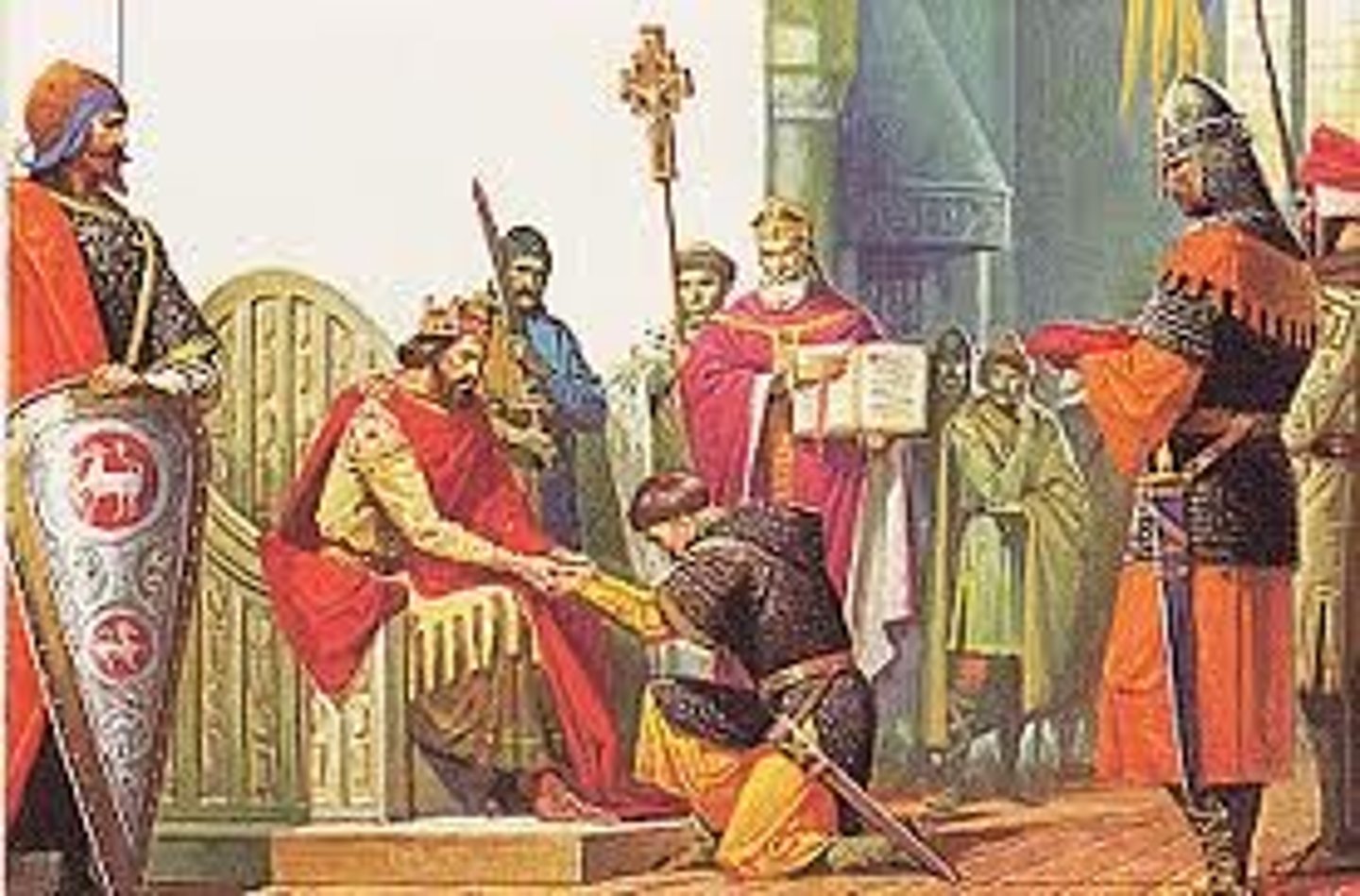
A person who owed service to another person of higher status.
What did European feudalism provide?
Security for peasants, equipment for warriors, and land to those who served a lord.
Code of Chivalry in European Feudalism
An unwritten set of rules for conduct focusing on honor, courtesy, and bravery.
Manors
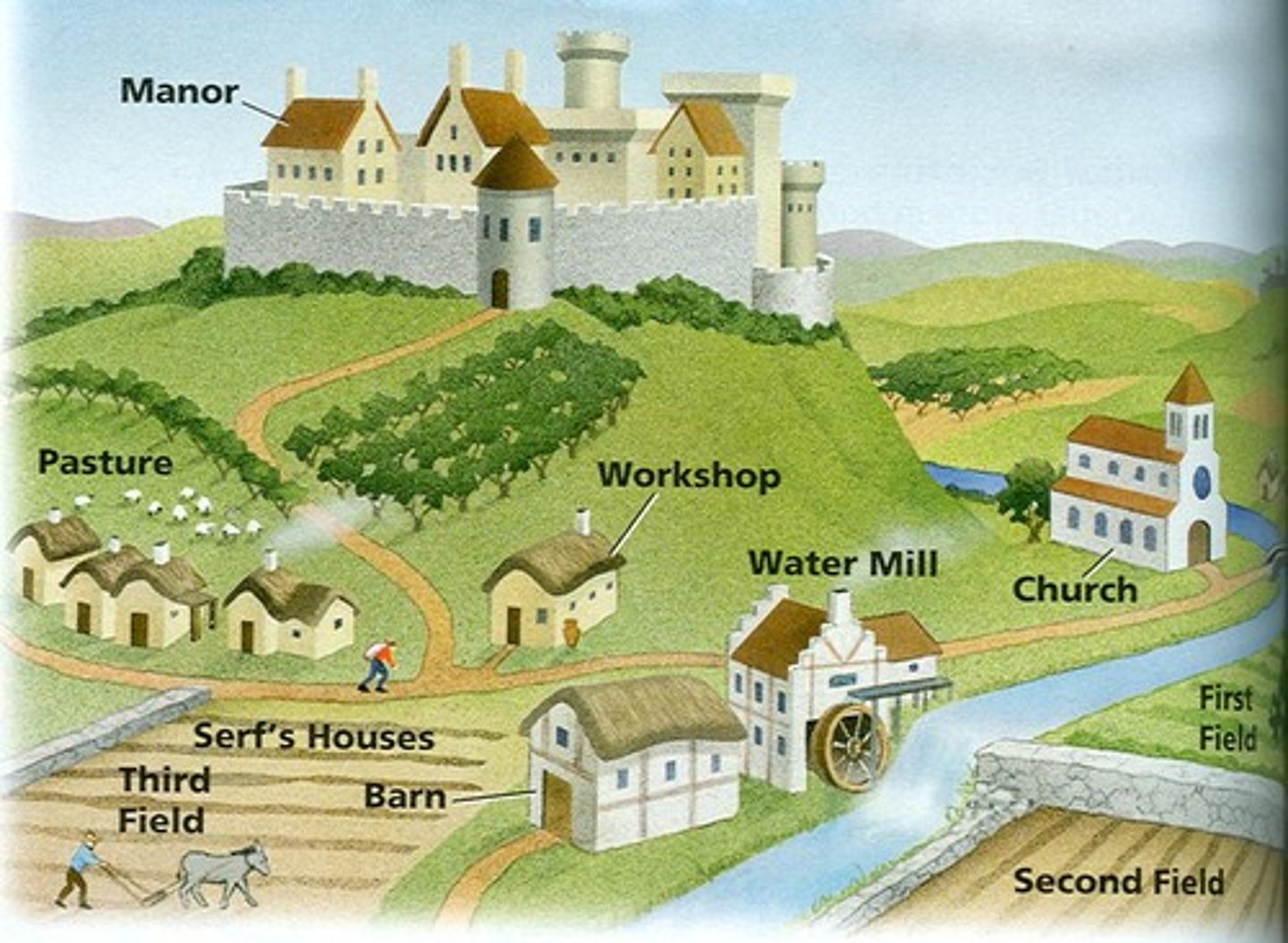
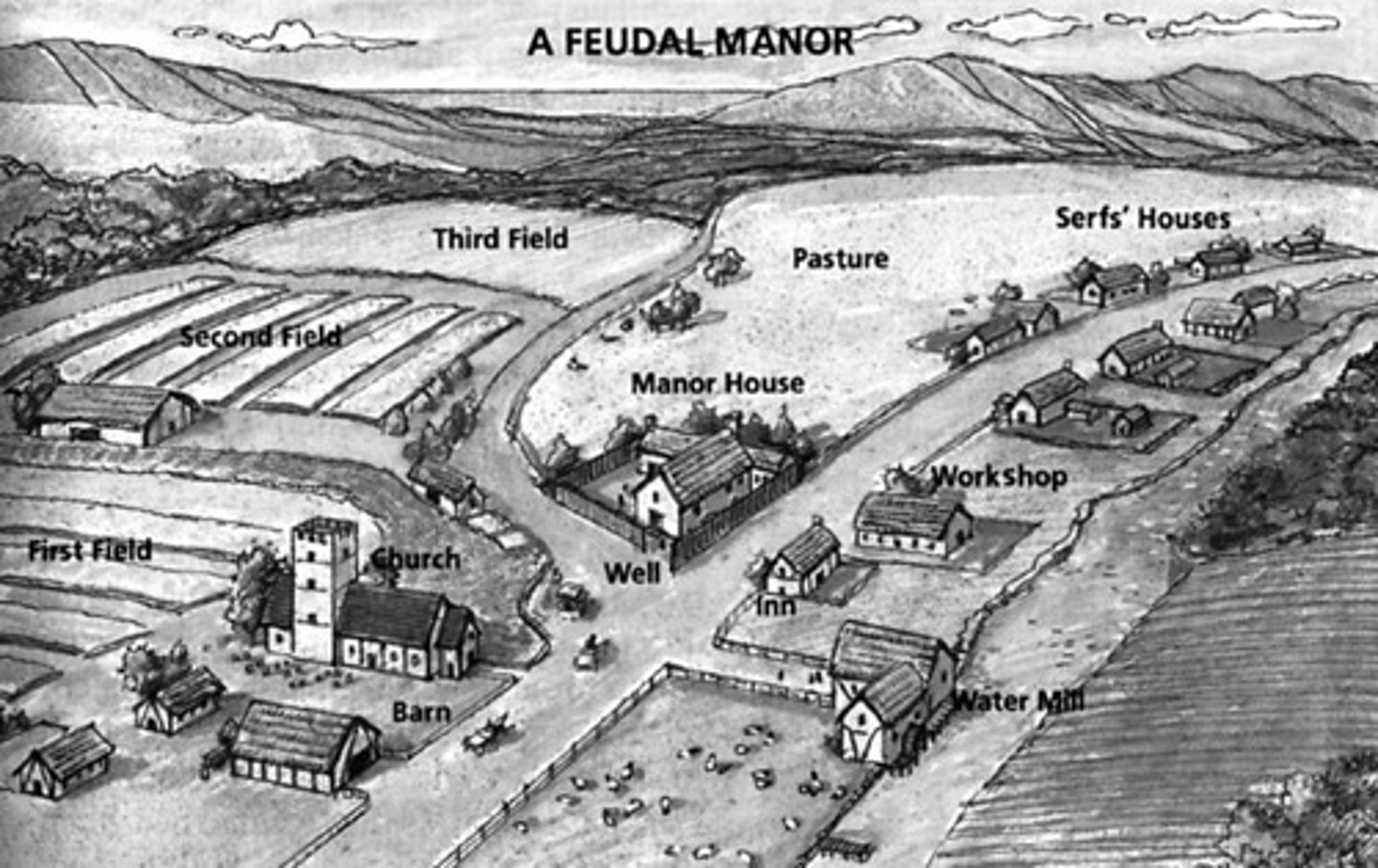
Large fiefs or estates. They were small villages that might have a church, a blacksmith shop, a mill, and a wine press.
Manorial System
A system that provided economic self-sufficiency and defense by producing everything that the people living on it required, limiting the need for trade.
Serfs
Peasants who were bound to their lord's land and paid tribute to their lord in the form of crops, labor, or coins.
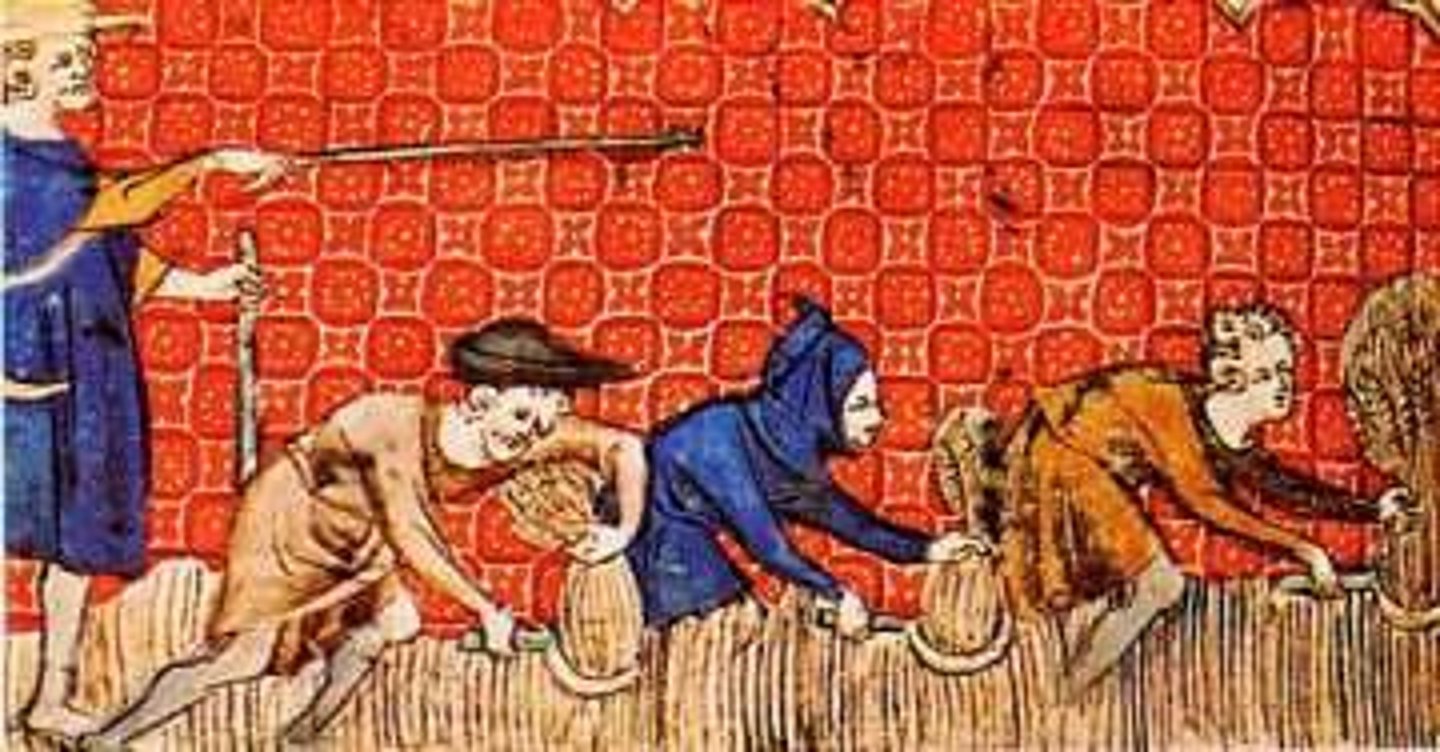
Three-Field System
A system of farming in which one field was used to grow crops that provided food, a second field was planted with peas, lentils, or beans that provided nitrogen to the soil, and the third field was unused each year.
How did agriculture become more efficient near the end of the Middle Ages?
The three-field system, windmills, and new types of plows (heavy/light depending on location) led to agricultural productivity and population growth.
Why did monarchies grow more powerful near the end of the Middle Ages?
Monarchies employed their own bureaucracy and military and the employees worked directly for the king or queen.
King Philip II
1180-1223; the first French monarch to develop a real bureaucracy.
Estates-General
A body to advise the king that included representatives from each of the three legal classes: the clergy, nobility, and commoners. It had little power because the kings did not exact regular taxes on the two upper classes, so they did not feel responsible to protect a government they were not funding.
Otto I
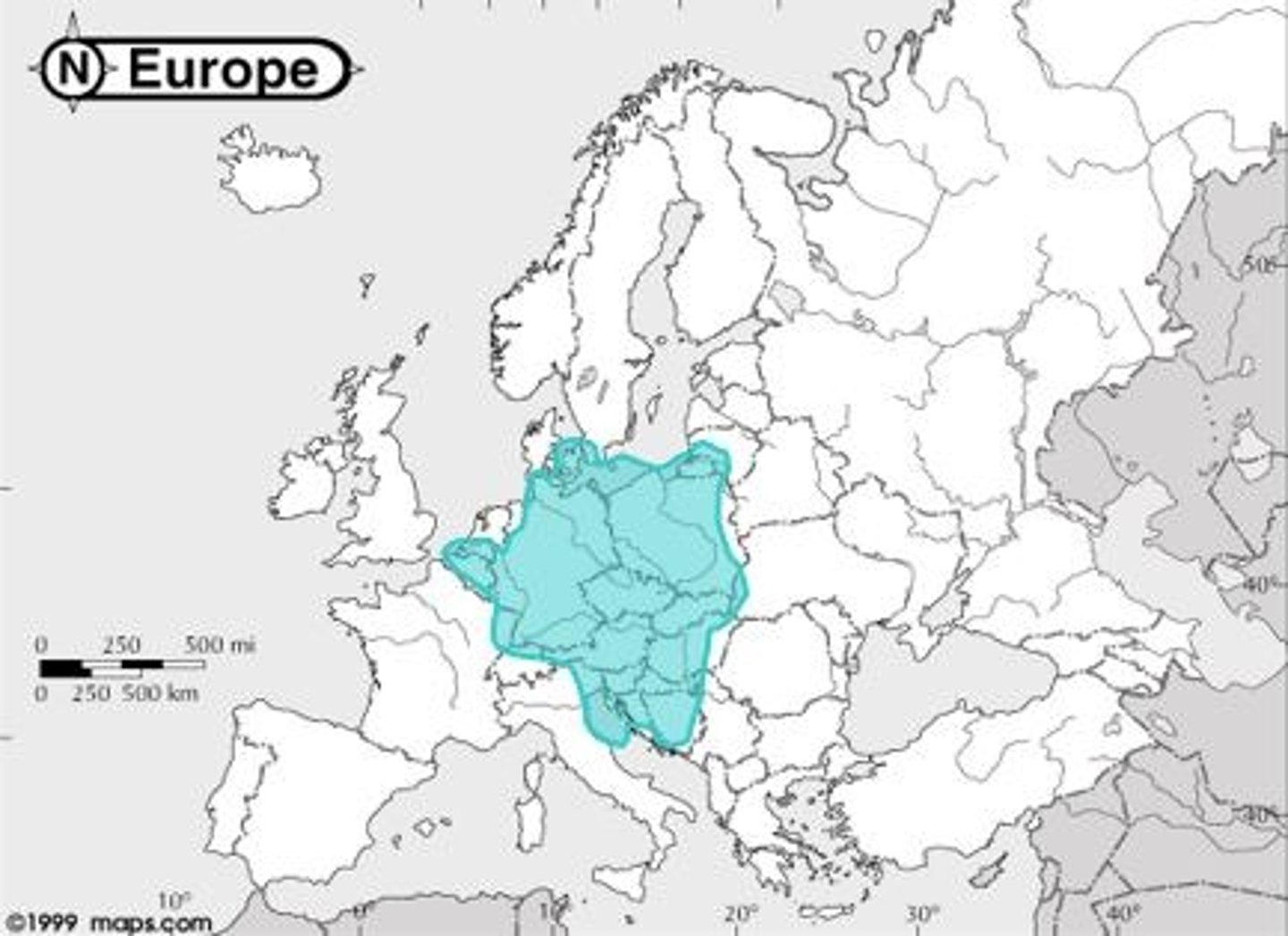
The first emperor of the Holy Roman Empire.
Lay Investiture Controversy
A dispute over whether a secular leader, rather than the Pope, could invest bishops with the symbols of office. It was resolved at the Concordat of Worms in 1122.
When and why did the Holy Roman Empire end?
It was destroyed during the Thirty Years' War (1618-1648) and came to a formal end when Bonaparte invaded Europe in 1806.
How and when did the Normans arrive in England?
In 1066, William the Conqueror invaded England and organized a feudal system.
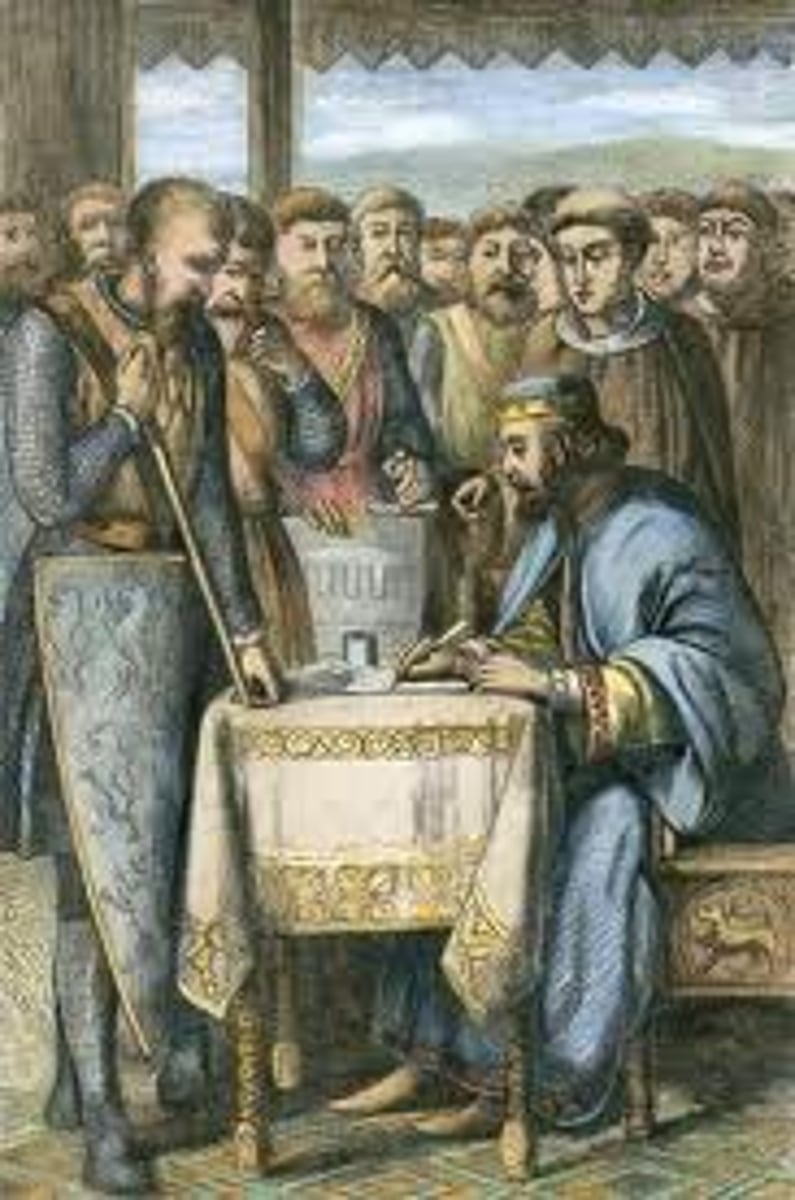
Magna Carta
A document that required the King of England to respect certain rights, like the right to a jury trial before a noble could be sentenced to prison.
English Parliament
The English legislature that consisted of the House of Lords (nobles and Church) and the House of Commons (wealthy townspeople). It first met in 1265.
Hundred Years' War
1337-1453; a series of battles between England and France. English archers with longbows won early victories, but later only had control over Calais in France.
What were the two important results of the Hundred Years' War?
Serving under one monarch made people identify as "English" or "French", and the war demonstrated the use of gunpowder weapons.
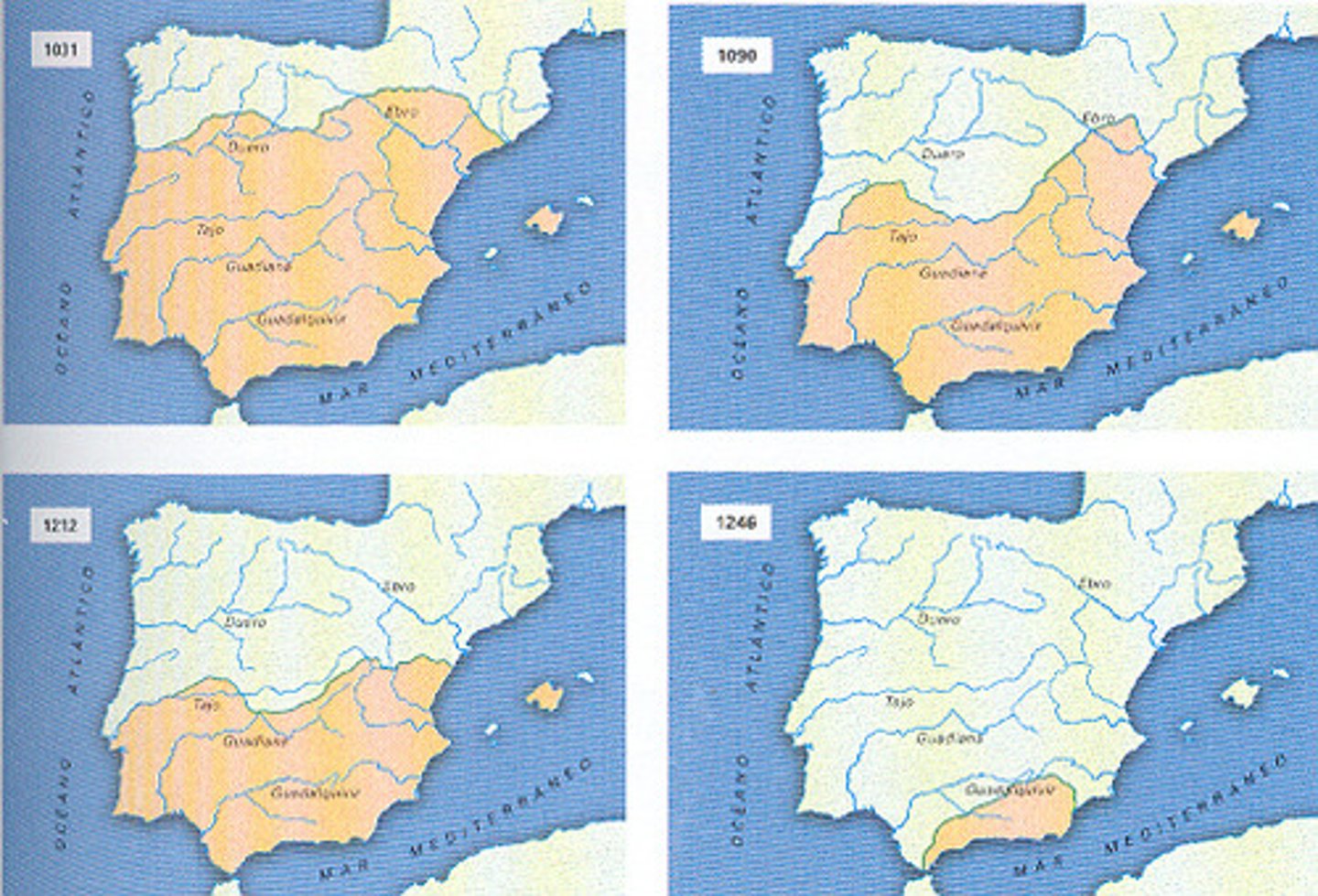
Reconquista
Christian campaigns to retake Spain from the Muslims, which they finally did in 1492.
Great Schism
1054; The division of the Christian Church in Europe into the Roman Catholic Church and the Orthodox Church.
What kind of education and art was present in the Roman Catholic Church during the Middle Ages?
The church established the first universities and all artists worked for the church and made religious artwork to help illiterate serfs understand the Bible.
How did the Roman Catholic Church influence the feudal system?
If a lord displeased the church, it could pressure the lord. Bishops selected and supervised local priests.
Bishops
Regional religious leaders in the Roman Catholic Church.
Monasteries
Communities of monks that had the same functions of agriculture and protection as the manors.
Why did reformers like Martin Luther feel the need to reform the Roman Catholic Church in the 16th century?
Wealth and political power in the clergy led to corruption, and theological disagreements.
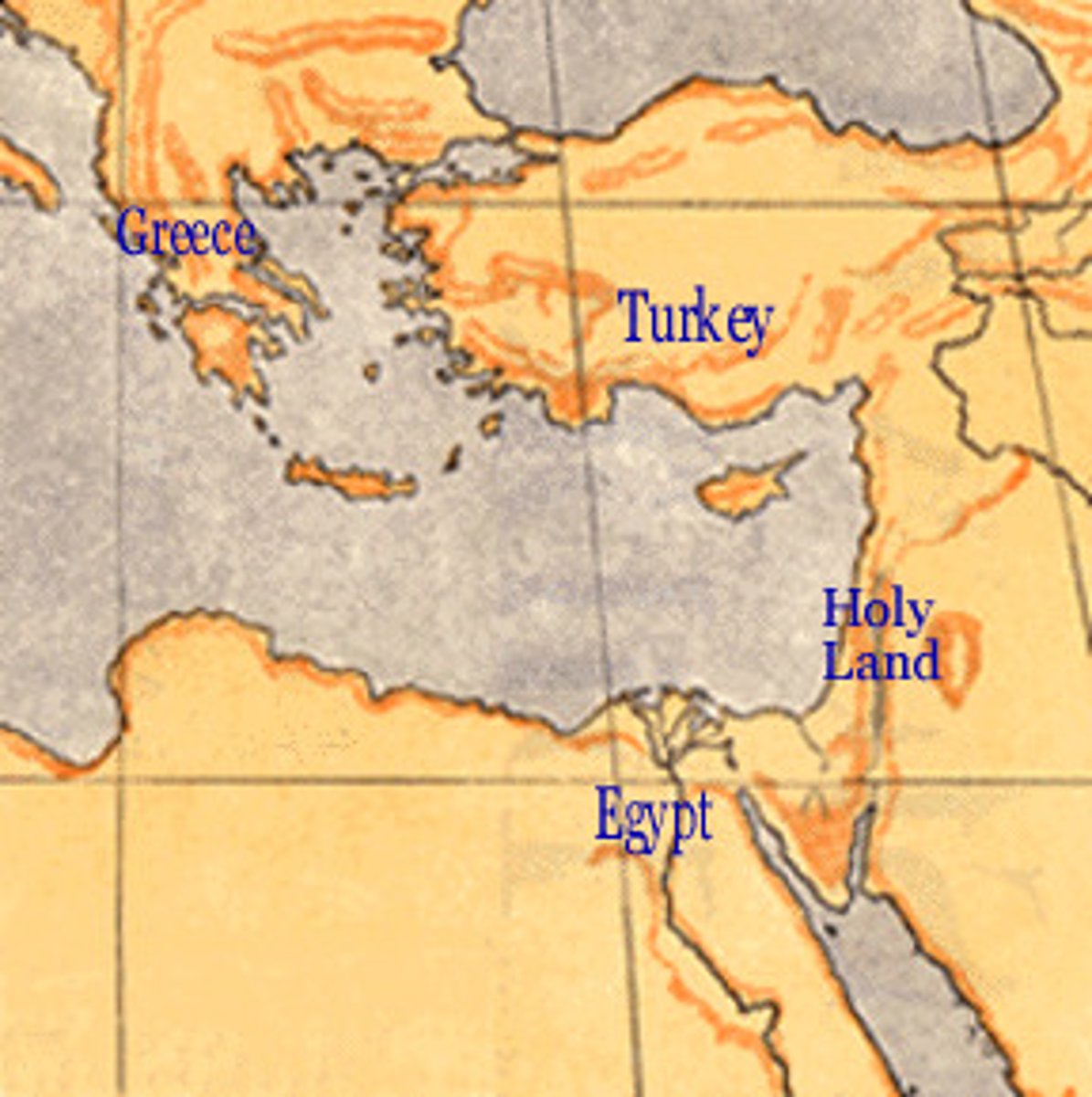
Holy Land
The region of Palestine in the Middle East that contains sites of spiritual significance to Jews, Christians, and Muslims.
Primogeniture
A system of inheritance in which the eldest son inherited the family estate and left a generation of younger sons with little access to wealth and land.
Why did the Europeans decide to start crusades?
Primogeniture, diverting the ambitions of restless nobles and unemployed peasants, and opening up trade routes in the Middle East.
Crusades
A series of military campaigns in the Middle East between 1095 and 1200.
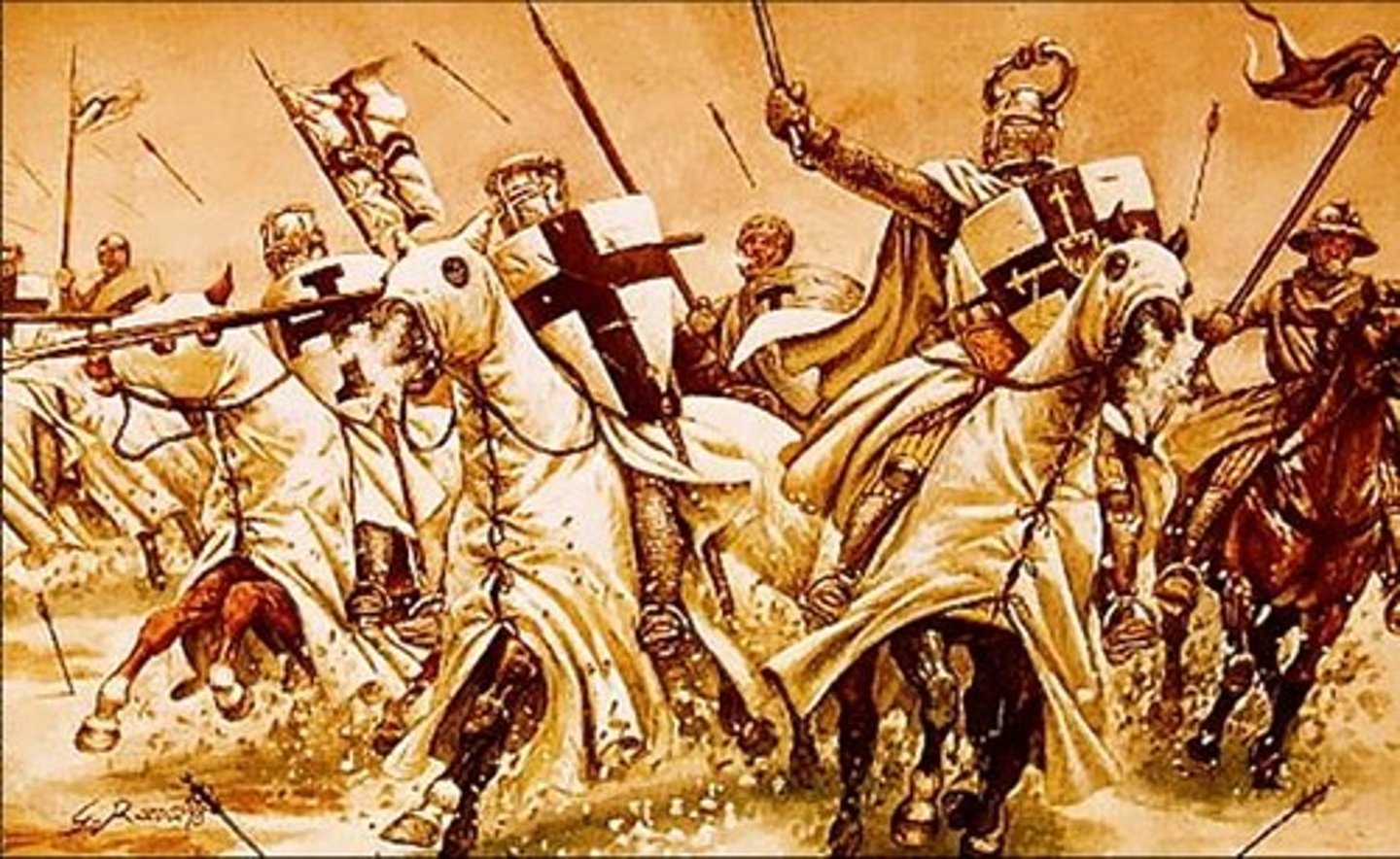
How did the Europeans recruit people for crusades?
The Roman Catholic Church granted people relief from acts of atonement and told people they would reach heaven sooner if they joined a crusade and the Orthodox patriarch was alarmed that the Seljuk Turks were persecuting Christians.
First Crusade
The crusade during which the Christians conquered Jerusalem in 1099.
Fourth Crusade
1202-1204; it was diverted into a battle for Constantinople and failed to recapture Jerusalem.
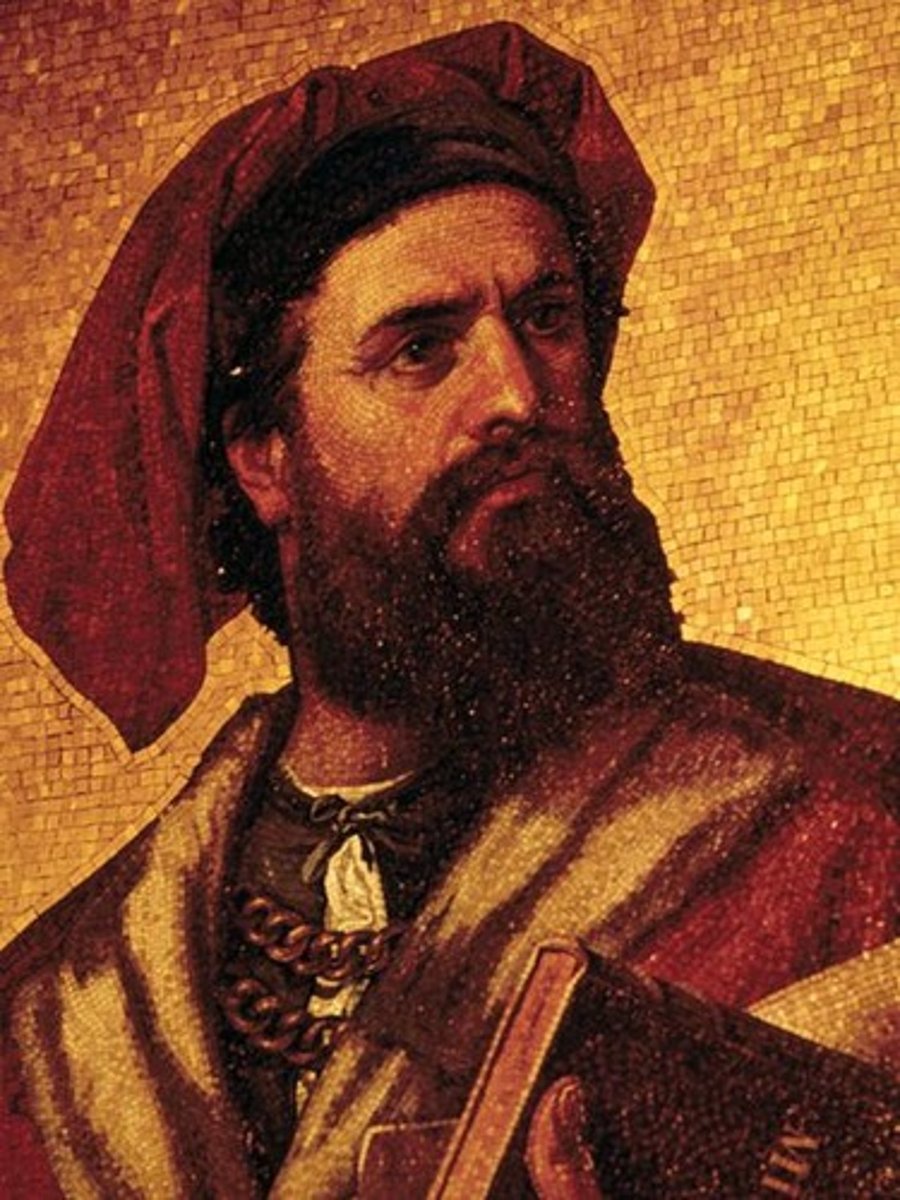
Marco Polo
An Italian explorer who visited Kublai Khan and reported his discoveries to Europeans, stimulating interest in Asia and mapmaking.
Bourgeoise (Burghers)
The middle class between the nobles and peasants that included shopkeepers, merchants, etc.
What were the results of the Black Death in Europe?
1/3 of the European population died, serfs gained more bargaining power with lords because of the lack of people.
Little Ice Age
A five-century cooling of the climate that reduced agricultural productivity , increasing disease and unemployment and creating social unrest.
How did the population of Jews in Europe change and influence Europe during the Middle Ages?
The Jewish population increased and Jews who could moved to North Europe where many became moneylenders, increasing economic growth. Some political leaders welcomed them but others were anti-Semitic because they believed Jews were untrustworthy. Jews were expelled from England, France, Spain, and Portugal.
How did the population of Muslims in Europe change and influence Europe during the Middle Ages?
Many Muslims moved to southeastern Europe due to persecution in Spain. Countries in the Muslim Ottoman Empire developed large Muslim populations. Contacts with traders in Muslim caliphates allowed more trade and ideas to flow.
What were the gender roles in Europe in the Middle Ages?
Women did not receive education but sometimes managed manor accounts. Women sometimes became artisans and members of guilds (associations of merchants and craftspeople).
How were Scandinavians connected to the Mediterranean and Central Asia?
They were connected through trade of furs, fish, and grain.
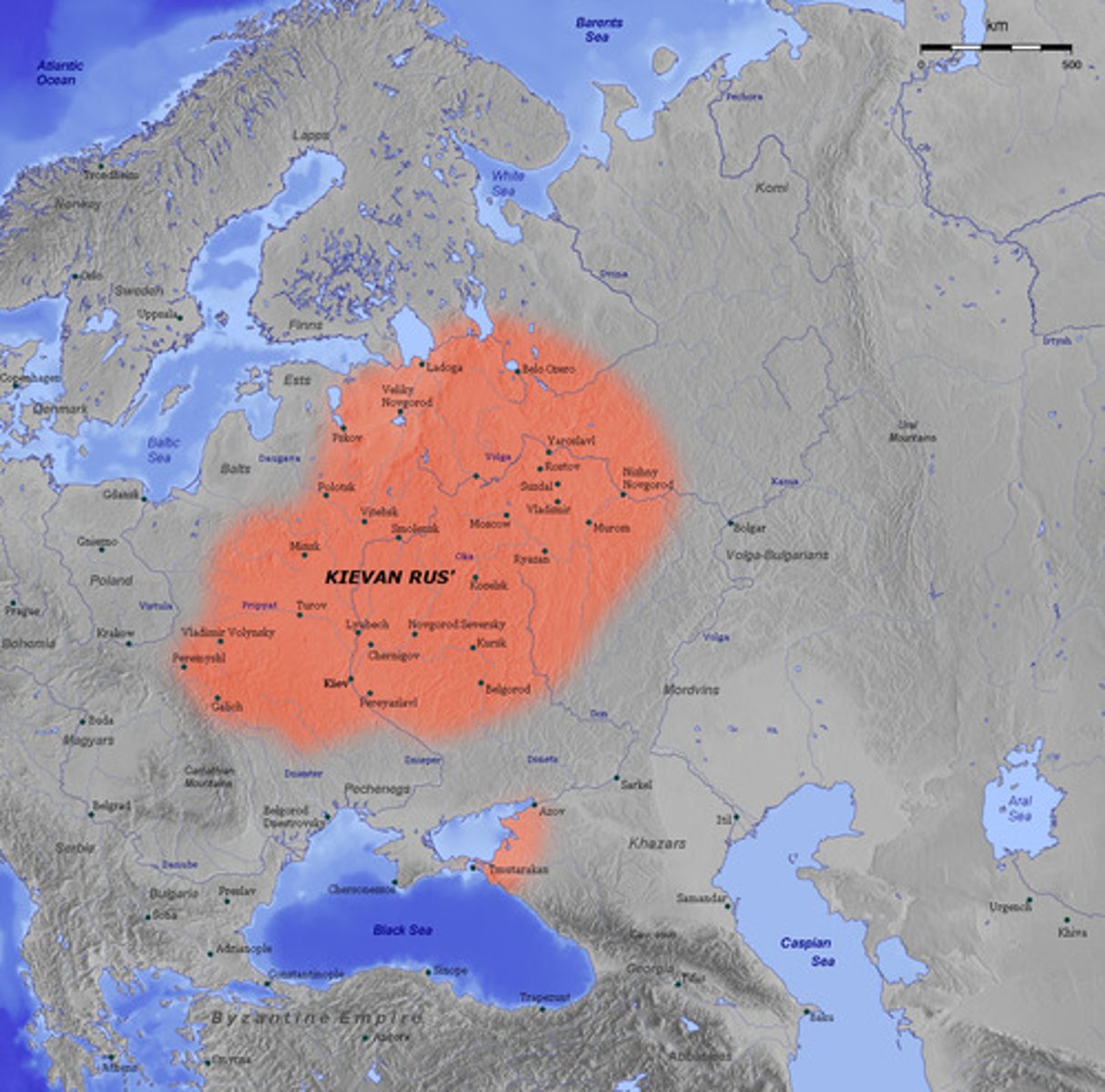
Kievan Rus
A city-state that was a trading center that maintained close cultural relationships with Byzantium.
Ivan the Great
A Moscow-based ruler who resisted Mongol rule in Kievan Rus, which helped the region become independent of the Mongols and become the state of Russia.
Renaissance
A period characterized by a revival of interest in classical Greek and Roman art, literature, culture, and civic virtue. It developed because the expansion of trade, an agricultural surplus, and a growing middle class sparked creativity in Europe.
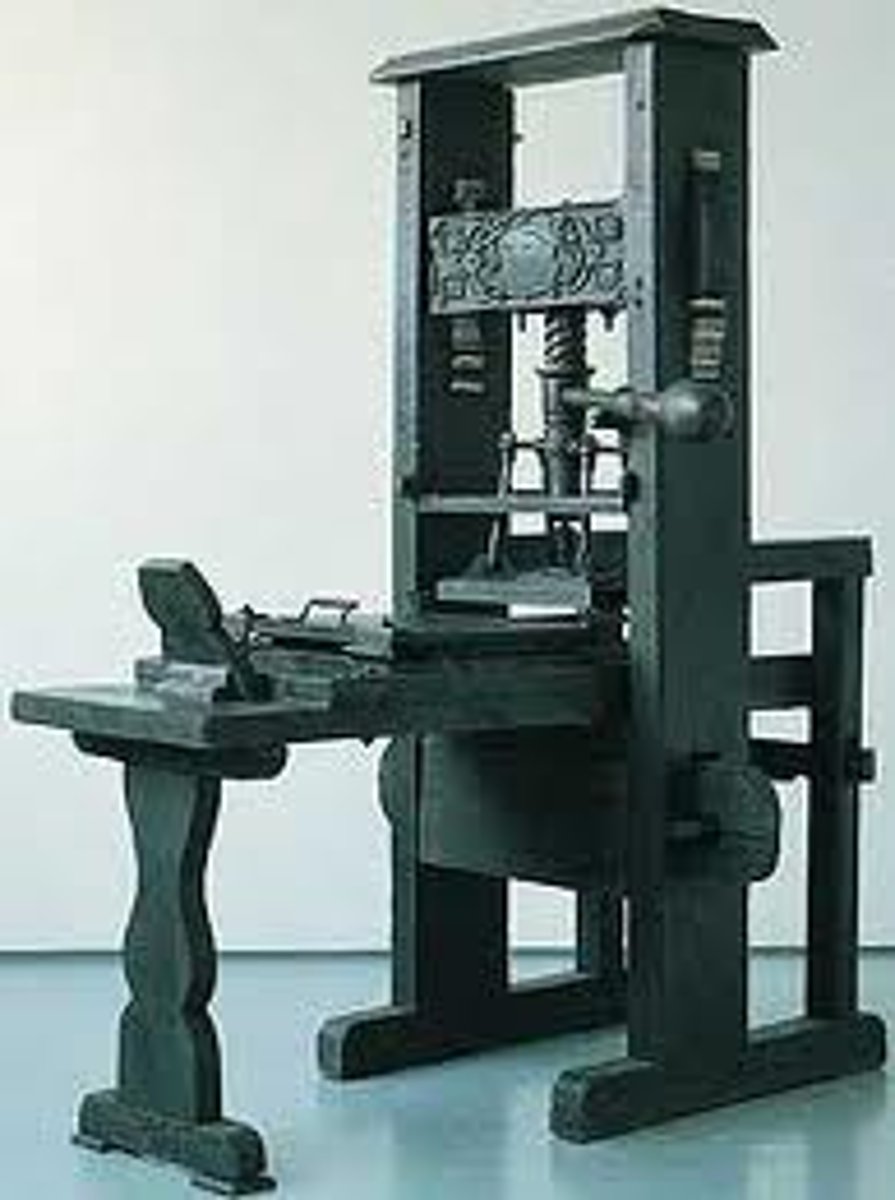
What was the significance of the printing press?
It allowed manuscripts to be mass-produced at affordable costs, fostering a growth in literacy and the rapid spread of ideas.
Humanism
The focus on individuals rather than God. Humanists sought education and reform, and wrote secular literature.
What were the results of cultural changes in the Renaissance?
Powerful monarchies, centralization of governments, and nationalism.
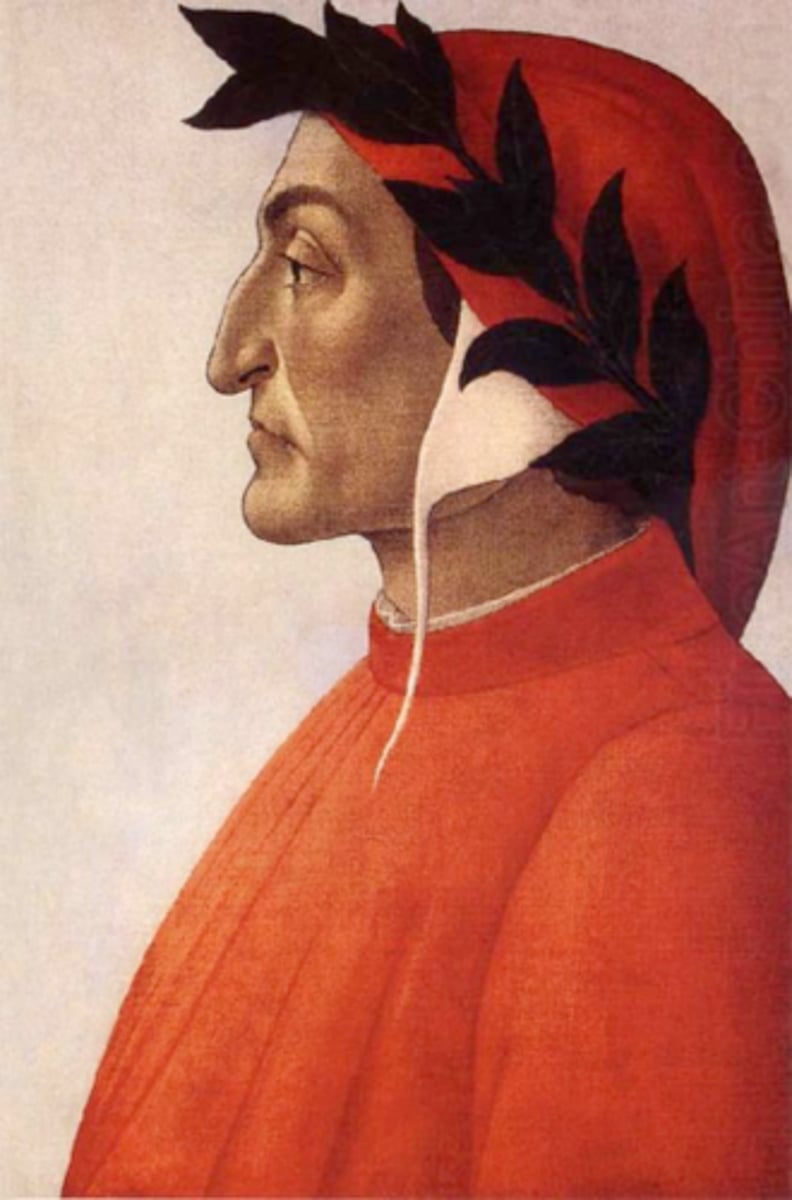
Dante Alighieri
The Italian poet who wrote The Divine Comedy, which criticized corrupt officials and used Italian vernacular instead of Latin.
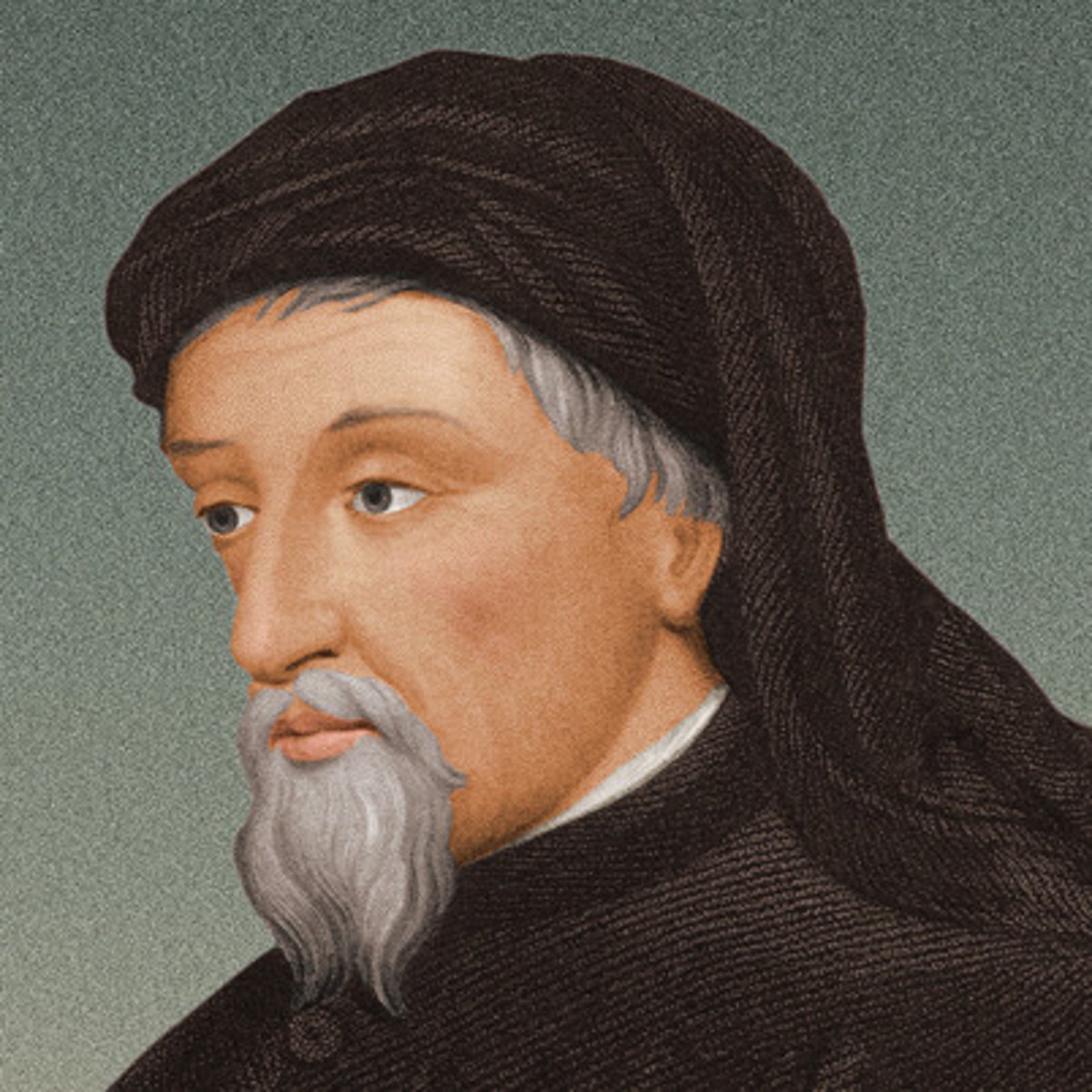
Geoffery Chaucer
The author of the Canterbury Tales, a satirical novel written in Middle English (a vernacular).
Vernacular
Everyday language of people in a certain place.
Roman Catholic Church
the branch of Christianity centered in Rome under the authority of the pope
code of chivalry
the medieval code of conduct for knights, emphasizing ideals like honor, bravery, loyalty to their lord and church, and courtesy toward others, especially women and the weak
The Thirty Years' War
a devastating conflict (1618–1648) in Central Europe that began as a religious struggle between Catholic and Protestant states in the Holy Roman Empire but evolved into a major political struggle for European power, significantly altering the political landscape and marking the end of the Catholic Church's political dominance
The Norman Invasion
the military invasion and occupation of England by Duke William of Normandy's army
William the Conqueror
Norman Conquest of England in 1066, a pivotal event where he, as the Duke of Normandy, invaded England, defeated the Anglo-Saxons at the Battle of Hastings, and was crowned King of England.
the House of Lords
text of AP World History, the House of Lords refers to the unelected upper house of the British Parliament, a powerful institution originating in the 13th century composed of spiritual and temporal peers (Lords Spiritual and Lords Temporal) that historically played a significant role in governance, law-making, and as the highest court of appeal.
House of commons
the popularly elected lower legislative body of the British Parliament
Eastern Orthodox Church
the branch of Christianity that originated in the Byzantine Empire and is characterized by its rejection of papal supremacy and its structure of autocephalous (self-governing) churches, rather than a single, centralized authority like the Roman Catholic Church
Martin Luther
a German monk and theologian who initiated the Protestant Reformation by publicly challenging the Catholic Church's practices in his 95 Theses (1517)
Protestant Reformation
the 16th-century religious movement that challenged the authority and doctrines of the Roman Catholic Church, initiated by figures like Martin Luther and John Calvin, and resulting in the creation of various Protestant churches
Venice
a powerful maritime city-state in Italy that flourished from the Middle Ages through the Renaissance, serving as a crucial commercial and financial hub for East-West trade, particularly in silk, grain, and spices
Levant
a region encompassing modern-day Syria, Lebanon, Israel, Palestine, and Jordan.
Saladin
a powerful Kurdish Muslim sultan who became a prominent symbol of resistance against the Crusaders, establishing the Ayyubid dynasty and reuniting various Muslim territories, most notably recapturing Jerusalem after the Battle of Hattin in 1187, which became a rallying point for Muslim unity and a turning point in the Crusades.
Pope Urban II
a key figure known for launching the First Crusade in 1095 by calling for armed pilgrims to reclaim the Holy Land from Muslim control at the Council of Clermont
Constantinople
a major city and the capital of the Byzantine Empire, founded by Emperor Constantine in 330 CE on the site of the Greek city of Byzantium.
Marco Polo
a Venetian merchant and explorer known for his extended travels to Asia in the late 13th century, where he visited the court of Kublai Khan.
Kublai Khan
Kublai Khan was the fifth-largest ruler of the Mongol Empire, known for establishing the Yuan Dynasty in China after his conquests. He is significant as the grandson of Genghis Khan, who conquered China and founded a dynasty that blended Mongol and Chinese traditions, moving the capital to Daidu (modern-day Beijing).
Cartography
the science and art of mapmaking.
Middle class
a socioeconomic group of skilled workers, professionals, and business owners who emerged significantly with industrialization and capitalism, situated between the wealthy upper class and the working class
European Jews
European Jews were involved in various trades, professions (like law, medicine, and teaching), arts, and crafts, contributing to the economic and cultural fabric of their societies.
Divine comedy
by Dante Alighieri is defined as a seminal epic poem from the late Middle Ages that describes the poet's symbolic journey through Hell (Inferno), Purgatory (Purgatorio), and Paradise (Paradiso), offering insights into medieval Christian cosmology and the burgeoning Renaissance humanism through its focus on human potential and achievement.
Caterbury tales
a literary work from the Late Middle Ages that reflects the social structures, class tensions, and religious corruption of 14th-century England, using the framework of a pilgrimage to tell stories in the vernacular English, which helped popularize the language.
Kiev
the medieval kingdom centered in the city of Kiev (modern-day Kyiv), which existed from the late 9th to the mid-13th century and was the predecessor to modern Russia, Ukraine, and Belarus.
 Note
Note  Flashcards (175)