Endocrine disorders - The Thyroid Gland: Hyperthyroidism
 Studied by 0 people
 Call Kai
 Learn
Learn Practice Test
 Spaced Repetition
 Match
Match Flashcards
 Knowt Play
1/12

There's no tags or description
Looks like no tags are added yet.
Name | Mastery | Learn | Test | Matching | Spaced | Call with Kai |
|---|
No analytics yet
Send a link to your students to track their progress
13 Terms
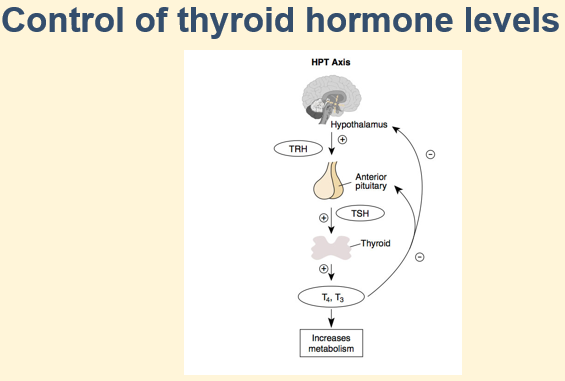
Hyperthyroidism (HyperT4)
Increased T3 and T4
Very common in cats - rare in dogs
Feline - thyroid adenoma 98-99% cases - benign
Canine - malignant thyroid carcinoma
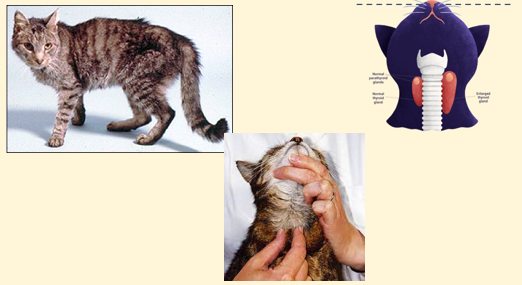
Clinical signs of HyperT4
Weight loss
PU/PD/PP
Tachycardia
Hyperactivity
Unkempt appearance
Palpable goitre
+/- cardiac arrhythmias, vomiting/diarrhoea, respiratory changes
Diagnosis of HyperT4
Clinical signs
Biochemistry - elevated liver enzymes
Total T4 levels
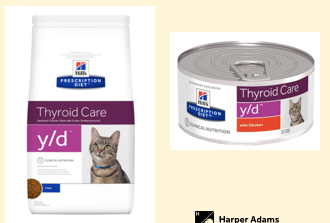
Dietary management of HyperT4
Low iodine diet → reduction in thyroid hormone production
Must not eat anything else - ever!
No medication, surgery etc ..
Difficult to achieve
Medical management of HyperT4 - Thiamazole/methimazole
Tablet (felimazole)
Liquid (thyronom/thiamcare)
Topical (transdermal gel - cascade)
Medical management of HyperT4 - Carbimazole - metabolised into thiamazole
Tablet (vidalta)
Medical management of HyperT4 - Human teratogen
Pregnant or possibly pregnant women wear gloves - could cause birth defects
Regular monitoring of T4 levels
Thiamazole
Carbimazole is metabolised into thiamazole
Thiamazole = methimazole
Inhibits multiple processes in the production of thyroid hormone
Does not affect existing thyroid hormone
Thiamazole - pharmacology
Oral administration
Formulation impacts half life and dosing interval recommendation
Administration with food? - different products differ - often advised not to administer with food as it can impact bioavailability
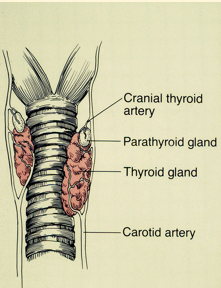
Surgical treatment of HyperT4
Thyroidectomy
Can be curative
Risk of post-op complications - damage to parathyroid gland, recurrence of hyperthyroidism
Radioactive Iodine
Inject radioactive iodine subcutaneously
Taken up by the thyroid tumour tissue - including elsewhere
Requires hospital stay (radioactive) - duration different on hospital, family situation
Approx. 92-99% success rate
Nursing care for HyperT4
Surgical considerations - Cardiac abnormalities / low weight / concurrent disease common
Geriatric patient care - In some cases, concurrent disease will make treatment inadvisable
Hyperactive behaviour
Grooming (care!)
Hygiene (diarrhoea/PUPD etc)
Owner support for HyperT4
Repeat blood tests may be needed
Nutritional advice
Advice on administration on medication
Regular weight checks
Advice on safe handling on drugs
 Note
Note  Flashcards (101)