Evolution and Development - Exam 1
0.0(0)
Studied by 10 people Call Kai
 Learn
Learn Practice Test
 Spaced Repetition
 Match
Match Flashcards
 Knowt Play
Card Sorting
1/46

Last updated 12:51 AM on 9/21/22
Name | Mastery | Learn | Test | Matching | Spaced | Call with Kai |
|---|
No analytics yet
Send a link to your students to track their progress
47 Terms
1
New cards
Basal
Used to describe those members of a taxon that have departed least from the form of the stem lineage of that taxon. Now used instead of ‘primitive’, as this latter word can be taken to imply that evolution is necessarily progressive, which it is not.
2
New cards
Derived
The opposite of basal. Refers to members of a clade that have departed the most from the stem lineage of that clade. For example, Drosophila is often said to be a very derived insect in that many of its features, including the simultaneous formation of all its segments, are atypical for the group, especially its most basal orders
3
New cards
Developmental trajectory
The route taken by a developing organism from a starting point of (usually) a fertilized egg, through a series of more-or-less well-defined stages, and culminating in the reproductively mature adult.
4
New cards
Genetic drift
The ‘random walk’ of gene frequency that can occur in a population simply due to chance events, as opposed to the systematic change in gene frequency that occurs as a result of selection.
5
New cards
Homeobox
A sequence of 180 base-pairs in a gene, which, when translated, will produce a 60-amino acid sequence in the corresponding protein (the homeodomain). More highly conserved in evolution than most other DNA sequences.
6
New cards
Homeodomain
A sequence of 60 amino acids in a protein that forms a DNA-binding region of the protein and thus shows that it is a transcription factor.
7
New cards
Hox genes
A subgroup of homeobox-containing genes characterized by expression in a graded antero-posterior pattern; and occurrence (usually) in discrete chromosomal clusters.
8
New cards
Polymorphism
The occurrence of two or more genetically-determined ‘morphs’ or phenotypes in a population at the same time. Examples include widespread polymorphism at the molecular level and diverse cases of polymorphism at the morphological level, such as those involving different pigmentation patterns on the shells of snails or the wings of butterflies.
9
New cards
Ectopic expression
Refers to the expression of a gene in the wrong place (in the same sense that pregnancies can be ectopic when the embryo implants outside of the uterus). Caused by a mutation in the short term. In the long term, it may be important in evolution – in which case ‘the wrong place’ becomes, eventually, the right place (or one of them)
10
New cards
Point mutations
involves just a single base. Possible types are substitution, insertion, deletion. It can occur by x-ray, spontaneous (inherent vulnerability of DNA replication to errors)
11
New cards
Mutations involving several consecutive bases
sequences repeated many times one immediately after the other. Variation between individuals within a population in that precise number of such repeats. Arise from DNA slippage which can lead to duplication or deletion of tandem repeats.
12
New cards
Hairpin
in leasing strand causes deletion, hairpin in lagging strand causes duplication
13
New cards
Polymorphism
The occurrence of 2+ genetically-determined phenotypes in a population at the same time. E.g. Different pigmentation patterns on the wings of butterflies.
Patterns of gel used to determine paternity and suspects (fingerprint)
Patterns of gel used to determine paternity and suspects (fingerprint)
14
New cards
Mutations involving several hundreds or thousands of bases
movement of transposable elements or transposons (gene encodes transposase enzyme which can move gene into another region of DNA) through the genome. Thought to be ‘selfish DNA’ that is effectively parasitic in the genome of its host. Two types:
Elements that are transcribed into RNA and then converted back to DNA by reverse transcriptase enzymes
o Those that can transpose directly from one site to another in the genome using the transposase DNA sequence of the element concerned.
o They can jump to a position within a developmental gene thus mutating it and rendering it functionless
o Retrotransposon: DNA→RNA→DNA
Elements that are transcribed into RNA and then converted back to DNA by reverse transcriptase enzymes
o Those that can transpose directly from one site to another in the genome using the transposase DNA sequence of the element concerned.
o They can jump to a position within a developmental gene thus mutating it and rendering it functionless
o Retrotransposon: DNA→RNA→DNA
15
New cards
Mutations involving whole, or large fractions of chromosomes
types are inversions, translocation, and deletion. Inversion can be acted upon by natural selection which can be indicative of genetic drift. Polymorphism involving chromosome number can be detrimental to fitness such as down syndrome.
16
New cards
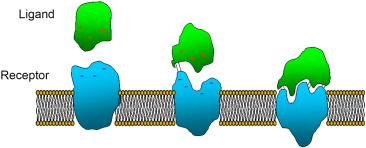
What does a ligands do and what is its function?
a molecule that binds to a receptor on the outside of a cell and causes a signal to pass into the cell.
17
New cards
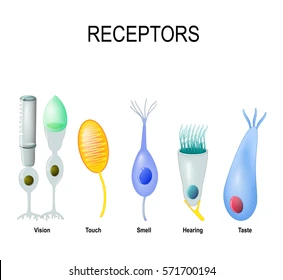
What is a receptor? What is its function?
a region of tissue, or a molecule in a cell membrane, which responds specifically to a particular neurotransmitter, hormone, antigen, or other substance.
18
New cards
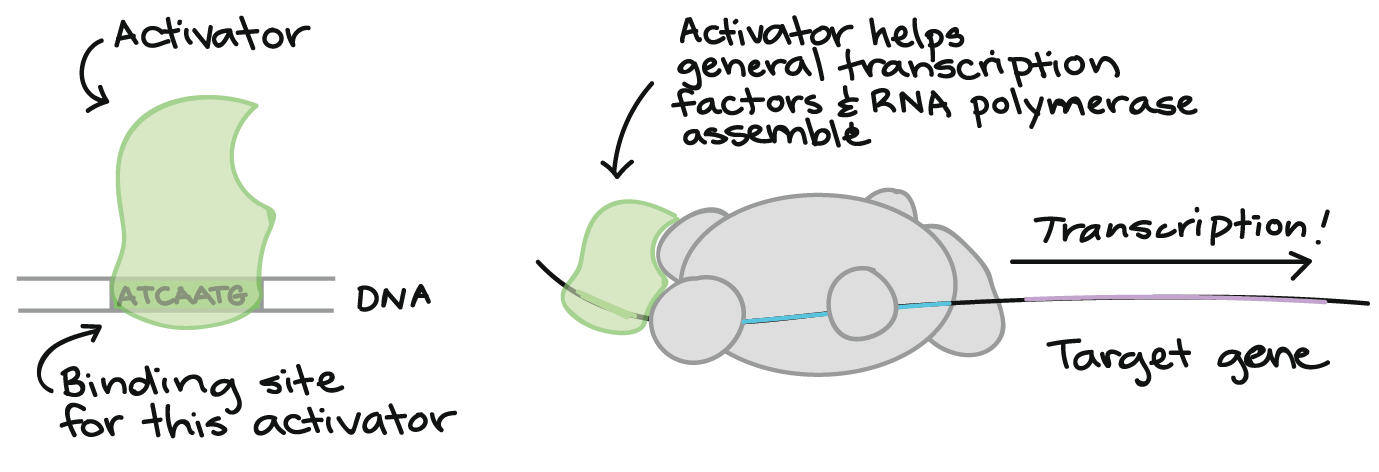
What is a activator? What is its function?
is a protein that increases transcription of a gene or set of genes. Activators are considered to have positive control over gene expression, as they function to promote gene transcription
19
New cards
Morphological analysis
Counting, recording presence or absence, and performing linear measurements of a phenotypic trait or statistical network (e.g. geometric morphometrics).
20
New cards
Functional analysis
Application of chemicals with antagonistic or agnostic properties, signaling peptides, chemokines, siRNAs (to induce gene-specific interference)
21
New cards
Correlation
Implies a relationship between the two variables. It’s desirable to test the possible causative relevance with a functional experiment.
22
New cards
Causation
Occurs when one variable affects another.
23
New cards
Heterochrony
Evolutionary change in developmental timing (does not happen in isolation).
May be observed at the
Organismic level
Molecular level
May be observed at the
Organismic level
Molecular level
24
New cards
What are some examples of Heterochrony?
Egg Hatching and Segment Formation
- Members of Lithobiomorpha
- Develop 7 leg-bearing segments before hatching
- Reach 15 segments with further development (posterior segment addition during a series of molts)
Members of Epimorpha
– Develop the full adult complement of leg-bearing segments (21-119, depending on species) before hatching
- Members of Lithobiomorpha
- Develop 7 leg-bearing segments before hatching
- Reach 15 segments with further development (posterior segment addition during a series of molts)
Members of Epimorpha
– Develop the full adult complement of leg-bearing segments (21-119, depending on species) before hatching
25
New cards
Heterotopy
Changes in the spatial arrangement of development.
Compares the ontogenesis (development of an organism from the earliest stage to maturity) and spatial relations between 2+ developmental structures/processes.
Compares the ontogenesis (development of an organism from the earliest stage to maturity) and spatial relations between 2+ developmental structures/processes.
26
New cards
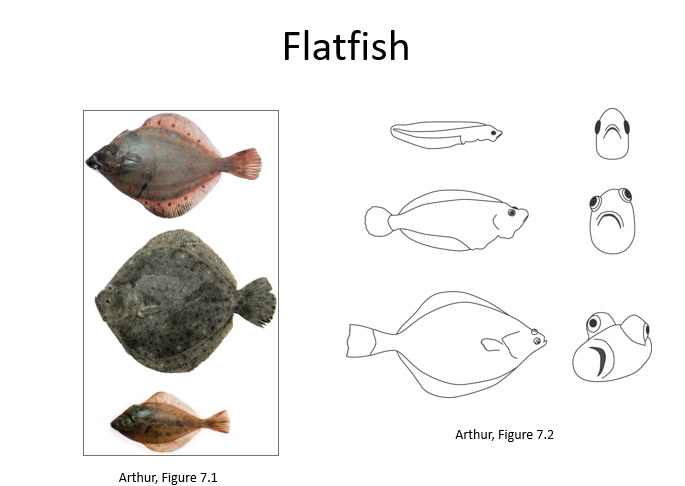
Recognize examples of heterotopy.
Involving Left-Right Asymmetry
Flatfish
– Head rotated in relation to the rest of the body
– Both eyes are on the same side of the head
Snail chirality
–Dextral
–Sinistral
Flatfish
– Head rotated in relation to the rest of the body
– Both eyes are on the same side of the head
Snail chirality
–Dextral
–Sinistral
27
New cards
Describe where/how somites form.
Somites are transient structures in vertebrate embryos that are the first morphological sign of segmentation; they ultimately give rise to skeletal muscle, cartilage, tendons, endothelial cells, and dermis. Somites “bud off” from the anterior presomitic mesoderm, forming in rostral to caudal sequence.
28
New cards
Explain the basis and support for the marsupial development energy trade-off hypothesis mentioned by Keyte and Smith.
Given the demands for elaborated anterior structures and a functional feeding apparatus during the short period from primitive streak to birth (approximately 4.5 days in M. domestica) it has been proposed that an energy trade-off exists to emphasize structures required at birth and de-emphasize nonnecessary structures, such as the hindlimbs and pelvis.
29
New cards
--Summarize the results and conclusions by Xiong, et al, for experiments analyzing fat accumulation in Pachón cavefish (as compared to surface fish controls).
The results indicated that earlier adipogenesis could provide Pachon with an advantage to acquire fat faster and thus could be an additional mechanism which facilitates increased fat accumulation. Cavefish acquire higher visceral fat depots when fed ad libitum or on a restricted diet in the lab mainly due to hypertrophy of the adipocytes.
30
New cards
Identify the two traits in which heterotopic expression of MPF2 is involved in Physalis
1. Calayx cell proliferation/cell expansion
2. Male fertility
2. Male fertility
31
New cards
Propose how the selective force for the maintenance of the ICS phenotype in Physalis could be altered over evolutionary time to yield a viable/fit species (in the genus) that does not exhibit ICS.
Heterotropic expression of MPF2 because it’s a prereq for two functions of MPF2 which is calyx cell proliferation/cell expansion and male fertility.
32
New cards
Identify the location/position of snake fangs.
Fangs can occupy various positions on the upper jaw, but are always located on the maxilla and never on any other tooth-bearing bone.
33
New cards
Describe the model proposed by Vonk, et al, for the evolution of snake fangs.
A posterior subregion of the ancestral tooth-forming epithelium became developmentally uncoupled from the remaining dentition resulting in posterior and anterior dental laminae that are developmentally independent. This condition is retained in the non-front fanged snakes like grass and rat snakes. This model would imply that the front fanged elapids and viperids have independently lost the anterior dental lamina which is supported by the lack of shh expression anterior in their upper jaws. Also, there are possible presence of two dental laminae in other non-front fanged advanced snake lineages and provide additional support
34
New cards
Heterometry
Change in amount, size, number, and concentration.
35
New cards
Recognize examples of heterometry.
Examples:
Human brain size vs. chimp brain
Crustacean abdomen larger in shrimp and lobster, but reduced in crabs and barnacles.
Human brain size vs. chimp brain
Crustacean abdomen larger in shrimp and lobster, but reduced in crabs and barnacles.
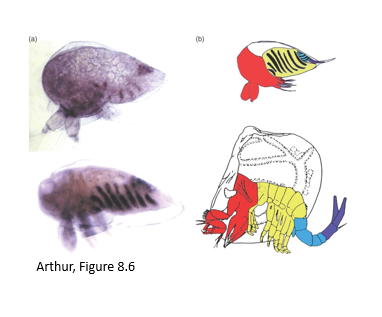
36
New cards
Heterotypy
The alteration of a protein, structure, or morphology potentially altering timing, placement, or amount
37
New cards
Recognize examples of heterotypy.
Examples: Sickle cell anemia and mammalian pigmentation pathway.
38
New cards
Cis-regulation
on the same chromosome. Cis-regulatory region works via some mechanism that requires chromosomal continuity. One mode of action for these long-distance cis-regulatory effects is through conformational changes in the chromatin within a section of a chromosome. These may include looping of the DNA so that stretches of it, which are normally not in contact, come together. A large molecule such as RNA polymerase II, which transcribes protein-coding genes, binding to the promoter region and then moving along the coding region, catalyzing the synthesis of heterogeneous nuclear RNA
39
New cards
Trans-regulation
regulatory effect where a gene’s expression is influenced by something that is not physically part of the same section of chromosome. An example is a transcription factor a protein that derives ultimately from another gene (say, on another chromosome entirely), that was made by translation of that gene’s mRNA in the cytoplasm, that migrates into the nucleus, and that attaches to the cis-regulatory site of the gene in focus.
40
New cards
Describe the proposed developmental basis for eye regression in Astyanax mexicanus cavefish. What experiments were important in determining this?
Retinal apoptosis ultimately leads to a loss of the eye. The increase in shh downregulates pax 6, and upregulates vax 1 and vax 2. This creates a gap between the two eyes and reduces the size of the optic cups, and as a result, reduces eyesight as well.
41
New cards
Define Dollo’s Law.
An organism is unable to return, even partially, to a previous stage already realized in the ranks of its ancestors without leaving obvious signs of this reversal’, meaning that evolution is reversible but not through the exact same mechanisms.
42
New cards
Explain the results of the handplate culture experiments conducted by Sears, et al.
Sears cultured the bat embryonic handplate in control media and media supplemented with either Bmp2 or Noggin protein.
Results:
- Bmp2 caused a significant increase in metacarpal length.
- Control caused regular growth, but Bmp 2 has a higher hypertrophic zone than the control.
- Noggin caused shorter metacarpals and a smaller hypertrophic zone.
Results:
- Bmp2 caused a significant increase in metacarpal length.
- Control caused regular growth, but Bmp 2 has a higher hypertrophic zone than the control.
- Noggin caused shorter metacarpals and a smaller hypertrophic zone.
43
New cards
Describe what type of cis-regulatory change in Bmp2 expression is proposed to be (at least partially) responsible for the elongation of bat forelimb digits.
Modifications to the cis-regulatory elements of developmental genes have central roles in the evolutionary diversification of morphology. Evidence that Bmp2 is differentially expressed in the bat wing digits is suggestive of a cis-regulatory change that affects the level but not the spatial or temporal regulation.
44
New cards
Aposematism
The use of warning coloration to inform potential predators that an animal is poisonous, venomous, or otherwise dangerous.
45
New cards
Crypsis
the ability of an organism to conceal itself, especially from a predator by having a color, pattern, and shape that allows it to blend into the surrounding environment.
46
New cards
-- Discuss the opposing selective pressures that led to the latitudinal gradient of human skin pigmentation and the relative fitness of the phenotypes.
Note - Relative Fitness = survivability and reproductive success
Folic acid is a circulating molecule that UV is able to break down. Circulating folate UV if their isnt succinct pigmentation can actually degrade circulating folate.
If you have low levels of folate and folate acid you tend to get devopmental issues with neural tube closure. Leading to infant mortality or misscarrgies. Due to degradation of folate. And so this would have a very large effect of relative fitness
Pigmentation in terms of evolutionary successes helps protect the folate and then you tie in the vitamen D which is important for calcium absorption in order to have strong bones and human pregancy is very hard on the bones of the pelvic region.
Folic acid is a circulating molecule that UV is able to break down. Circulating folate UV if their isnt succinct pigmentation can actually degrade circulating folate.
If you have low levels of folate and folate acid you tend to get devopmental issues with neural tube closure. Leading to infant mortality or misscarrgies. Due to degradation of folate. And so this would have a very large effect of relative fitness
Pigmentation in terms of evolutionary successes helps protect the folate and then you tie in the vitamen D which is important for calcium absorption in order to have strong bones and human pregancy is very hard on the bones of the pelvic region.
47
New cards
-Explain how/why Lamason, et al concluded that SLC24A5 affects pigmentation in both zebrafish and humans.
Because the primary ultrastructural differences between melanocytes of dark-skinned Africans and lighter-skinned Europeans include changes in melanosome number, size, and density they reasoned that animal models with similar differences may contribute to our understanding of human skin color. Here we present evidence that the human ortholog of a gene associated with a pigment mutation in zebrafish, SLC24A5, plays a role in human skin pigmentation.

