TCD Exam 2
 Call Kai
 Learn
Learn Practice Test
 Spaced Repetition
 Match
Match Flashcards
 Knowt Play
1/39

There's no tags or description
Looks like no tags are added yet.
Name | Mastery | Learn | Test | Matching | Spaced | Call with Kai |
|---|
No analytics yet
Send a link to your students to track their progress
40 Terms
what are the warnings signs of a stroke, there is a Sudden onset of ? (NAME 5)
Numbness/weakness of extremities or face (especially unilateral)
Trouble walking-dizziness, loss of balance or coordination
Confusion, trouble speaking or understanding
Trouble seeing in one or both eyes
Headache with no known cause
Carotid TIA, first where is the affects and what part of circulation?
Anterior, unilateral
name me all the symptoms of the Carotid TIA name 5
Symptoms:
1. Motor dysfunction
Weakness, Paralysis- monoparesis, Clumsiness of extremities and/or face
Amaurosis fugax- loss of vision in the ipsilateral eye
Aphasia- inability to speak
Dysphasia- difficulty saying words in their proper order
Dysarthria- difficulty articulating speech
Monoparesis = weakness in one limb.
Paralysis (-plegia): The complete loss of voluntary motor function, where the affected muscle group cannot move or contract at all.
Monoparesis: A form of paresis that refers to partial, mild, or moderate weakness in only one limb (an arm or a leg), where some motor control remains
whats the difference bewteen Dysphasia vs. Dysarthria
Dysphasia- difficulty saying words in their proper order
Dysarthria- difficulty articulating speech
Dysphasia (Aphasia)
Dysphasia = a language problem.
The brain has trouble with understanding or producing language.
This happens when the language centers of the brain (usually the left hemisphere) are affected.
A person may:
Have trouble finding words
Speak incorrect words
Have trouble understanding speech
Have trouble reading or writing
Example:
They want to say “water” but say “wa… uh… thing”.
So the problem is language processing.
Dysarthria
Dysarthria = a speech muscle problem.
The brain knows what it wants to say, but the muscles used for speech are weak or poorly controlled.
The words are correct, but the speech sounds:
Slurred
Slow
Hard to understand
Example:
They say “water”, but it sounds like “waaah-ter”.
So the problem is muscle control of speech.
Simple Comparison
Term | Problem | Cause |
|---|---|---|
Dysphasia | Language problem | Brain language centers |
Dysarthria | Speech muscle problem | Motor control of speech muscles |
Easy way to remember
Dysphasia → language problem
Dysarthria → articulation (muscle) problem
✅ One-sentence summary:
Dysphasia is difficulty understanding or producing language, while dysarthria is slurred or unclear speech caused by impaired control of the speech muscles.
Vertebrobasilar TIA Affects which part of circulation? and what side of the body
Affects the posterior circulation
Symptoms usually bilateral
what is the Vertebrobasilar TIA Symptoms referred to as?
Symptoms referred to as “drop attacks”
A drop attack is when a person suddenly falls to the ground because their legs lose strength, but they usually remain conscious.
So:
Sudden loss of postural control
No warning
Person collapses
Often no loss of consciousness
Symptoms referred to as “drop attacks”
A drop attack is a sudden fall caused by temporary loss of muscle control due to reduced blood flow to the brainstem from vertebrobasilar circulation problems, usually without losing consciousness.
Why It Happens in Vertebrobasilar Disease
The vertebrobasilar system supplies the:
Brainstem
Cerebellum
These areas control balance, posture, and muscle tone.
If blood flow to these areas is temporarily reduced (vertebrobasilar insufficiency), the brainstem can't maintain posture, so the person suddenly drops.
Vertebrobasilar TIA, name all the symptoms (4)
Vertigo- surroundings seem to whirl
Ataxia- defective motor coordination
Paresthesia/anesthesia bilaterally (paritial or complete loos of sensation with or without loss of concenessions, loss of balance, vertigo, unsteadiness and disequilibrium)
Visual disturbances- bilateral blurring or double vision
The combination of partial or complete loss of sensation (numbness/paralysis), loss of balance, vertigo, unsteadiness, and potential loss of consciousness indicates a severe disruption to the neurological system, particularly the brainstem, cerebellum, or the vestibular nerve.
Paresthesia is abnormal sensation such as tingling, while anesthesia is complete loss of sensation.
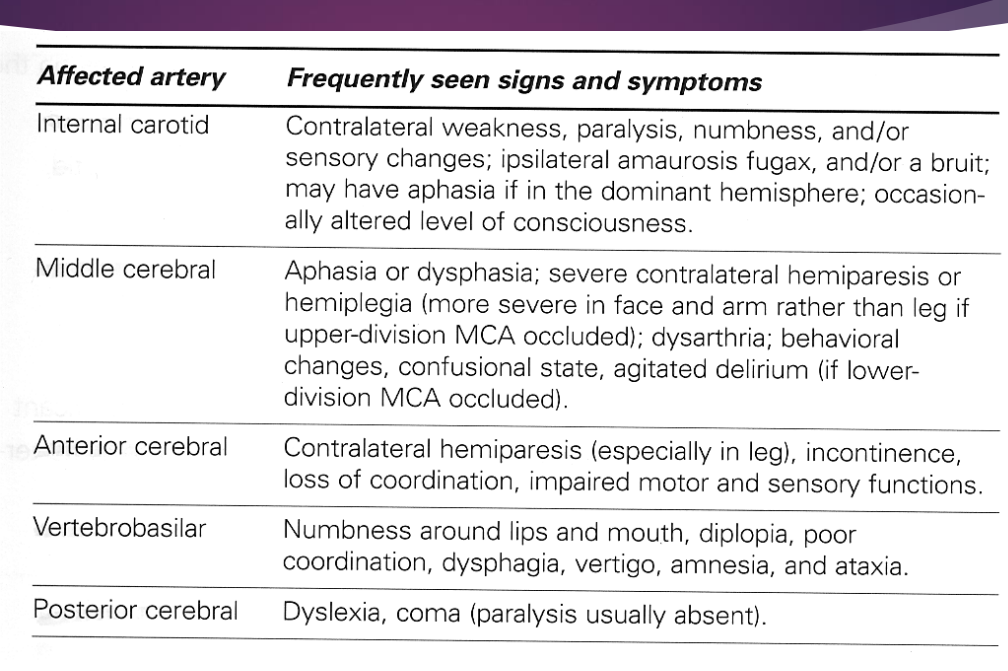
TIA signs and symptoms, the chart of the affected artery and what is frequently seen signs and symptoms
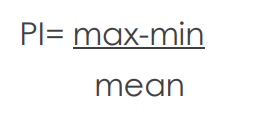
Pulsatility Index, what system automatically calculate pulsatility index (PI)? and what is the equation?
Imaging systems automatically calculate pulsatility index (PI)
what does Pulsatility Index provide data on?
PI provides data on the relative resistance to flow of the vascular bed
Pulsatility Index (PI) is a Quantitative assessment: what does this mean
Quantitative assessment: comparing velocities and angle not needed
High PI =
High resistive waveform
Low PI =
Low resistive waveform
Interpretation:
Vessel identification is based on several observations, name 5
Direction of flow with dependence on transducer
Probe orientation- sonographic window
Depth of vessel
Spatial relationship to other vessels
Bony landmarks
what are the TCD Limitations? name 10
Operator experience
Improper instrument control settings
Arterial misidentification
Patient movement
Absent or poor temporal window
Anatomic variations
Distal branch disease
Distal basilar artery
Misinterpretation of collateral channels or vasospasm as stenosis
Displacement of intracranial arteries by an intracranial mass
Pathology, go back and know what they are and what waveforms, name 5
Vasospasm
Stenosis
Sickle Cell Anemia
Brain Death
Subclavian Steal Syndrome
1. What is amaurosis fugax?
A. Sudden loss of hearing
B. Temporary loss of vision
C. Loss of Balance
D. Difficulty speaking
B. Temporary loss of vision
2. Why does Amaurosis fugax affect the ipsilateral eye?
A. The optic nerve crosses sides
B. The ophthalmic artery supplies the same side as the diseased carotid
C. The brain controls both eyes
D. The vertebral artery is affected.
B. The ophthalmic artery supplies the same side as the diseased carotid
3. What is a sudden onset symptom of stroke?
A. Gradual Headache
B. Numbness/ Weakness of extremities or face
C. Slow speech
D. Chronic fatigue
B. Numbness/ Weakness of extremities or face
4. What is Aphasia?
A. Difficulty walking
B. Loss of vision
C. Inability to speak
D. Loss of sensation
C. Inability to speak
5. What is Dysphasia?
A. Difficulty saying words in their proper order.
B. Difficulty walking
C. Loss of sensation
D. Inability to speak
A. Difficulty saying words in their proper order.
6. What is Dysarthria?
A. Difficulty articulating speech
B. Loss of vision
C. Loss of sensation
D. Difficulty walking
A. Difficulty articulating speech
7. What are “drop attacks” associated with?
A. Carotid TIA
B. Vertebrobasilar TIA
C. Sickle Cell anemia
D. Subclavian steal syndrome
B. Vertebrobasilar TIA
8. How is pulsatility index (PI) calculated?
A. Max + min / mean
B. Max - min / mean
C. Max / min
D. Mean / max
B. Max - min / mean
What does a high PI indicate?
A. Low resistive waveform
B. High resistive waveform
C. Normal flow
D. Absent flow
B. High resistive waveform
10. What is a limitation of a TCD exam?
A. Patient age
B. Operator experience
C. Weather conditions
D. Blood pressure
B. Operator experience
11. What can cause an absent or poor temporal window in TCD exams?
A. Instrument malfunction
B. Anatomic variations
C. Patient movement
D. Operator experience
B. Anatomic variations
12. What pathology can cause displacement of intracranial arteries?
A. Sickle cell anemia
B. Intracranial mass
C. Vasospasm
D. Stenosis
B. Intracranial mass
13. What syndrome involves blood flow reversal in the subclavian artery? A. Sickle cell anemia
B. Subclavian Steal Syndrome
C. Vasospasm
D. Brain death
B. Subclavian Steal Syndrome
14. What is the main purpose of vessel identification in sonography?
A. To measure blood pressure
B. To diagnose diabetes
C. To determine direction of flow and anatomical relationships
D. To assess heart rate
C. To determine direction of flow and anatomical relationships
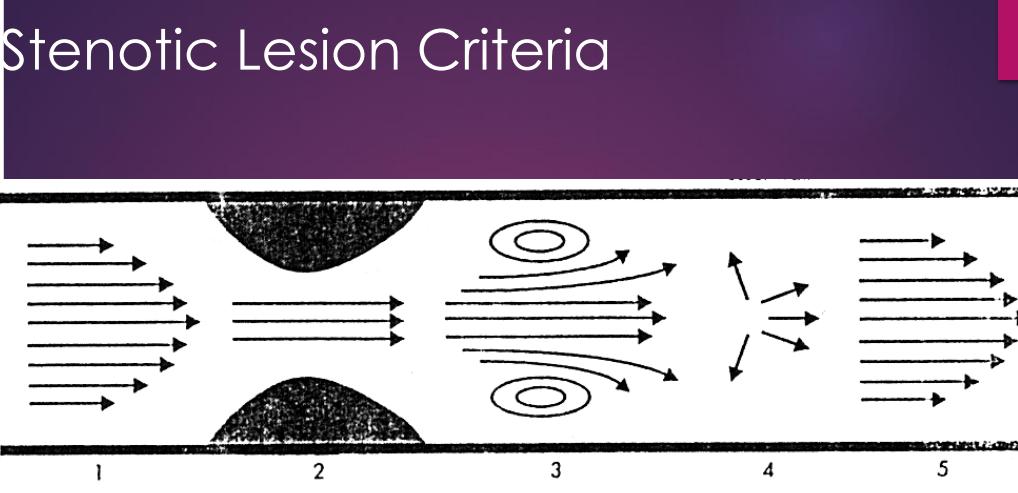
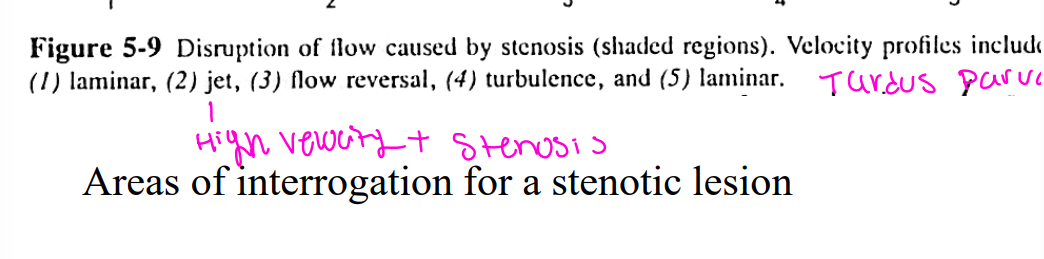
15. What are some areas of interrogation for a stenotic lesion?
A. Only distal to the lesion
B. Only at the lesion
C. Only proximal to the lesion
D. Proximal, at, and distal to the stenosis
D. Proximal, at, and distal to the stenosis
16. What is a possible misinterpretation in TCD exams?
A. Vasospasm as normal flow
B. Collateral channels or vasospasm as stenosis
C. Stenosis as normal flow
D. Sickle cell anemia as vasospasm
B. Collateral channels or vasospasm as stenosis
17. Name two pathologies that can be evaluated with TCD.
A. Heart failure and stroke
B. Asthma and pneumonia
C. Vasospasm and sickle cell anemia
D. Diabetes and hypertension
C. Vasospasm and sickle cell anemia
18. What is a key factor in vessel identification during sonographic exams? A. Patients age
B. Blood Pressure
C. Heart rate
D. Probe orientation and spatial relationship to other vessels
D. Probe orientation and spatial relationship to other vessels
19. What condition can be misinterpreted as stenosis during a TCD exam? A. sickle cell anemia
B. Vasospasm
C. Brain Death
D. Subclavian steal syndrome
B. Vasospasm
20. What is a common warning sign of stroke that should not be ignored? A. Sudden confusion or trouble understanding speech
B. Gradual loss of appetite
C. Chronic back pain
D. Slow heart rate
A. Sudden confusion or trouble understanding speech
Transtemporal where is notched pointed too
the nose
suboccipital where is the notched pointed too
to the pt right

