Forensic Anthropology - Exam #2
 Call Kai
 Learn
Learn Practice Test
 Spaced Repetition
 Match
Match Flashcards
 Knowt Play
1/61

There's no tags or description
Looks like no tags are added yet.
Name | Mastery | Learn | Test | Matching | Spaced | Call with Kai |
|---|
No analytics yet
Send a link to your students to track their progress
62 Terms
Anemia
Hemopoietic disorder that prevents oxygen uptake in red blood cells, most commonly through poor hemoglobin production due to a lack of iron intake or absorption
Indicators of Anemia
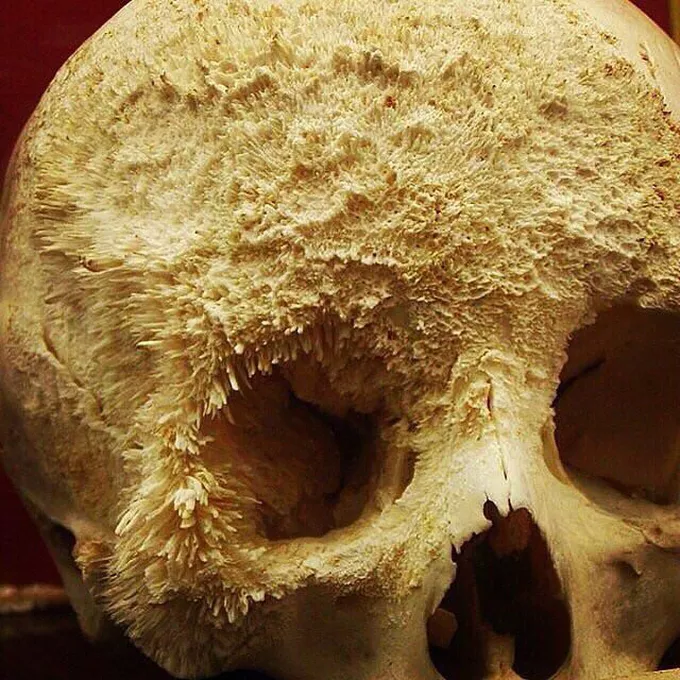
Common indicator of Iron deficiency anemia is porotic hyperostosis in the cranium; Another common sign of iron deficient anemia is cribra orbitalia which creates porotic lesions and ossification on the superior eye orbit
Harris Lines
thin, dense, lines in the growth plates created when biological growth is disturbed through malnutrition
Rickets
systemic disease created by insufficient vitamin D intake
Indicators of Rickets
Represented by malformation and bowing of bone in long bones and pelvis; Cranial malformations in periosteal deposition
Anisotropic
an object in which the direction of loading influences its strength properties
Kerf
wall and the floor of a cut mark
Light vs. Heavy (Kerfs)
Light blades leave a V-shaped incision if it contacts bone; Heavy blades will leave beveled marks with
irregular cut walls that can include radiating and concentric fractures
Scoliosis
congenital lateral curvature of the spine
Antemortem Trauma
trauma that occurred before death and contains partial or complete healing of the injury
Indicators of Antemortem Trauma
Resorption is characterized by porosity near the trauma; Remodeling is represented by blunt, rounded edges of the break or trauma; Final stage of bone remodeling is a callus, a raised, irregular shaped feature with a disorganized surface
Keyhole Effect
external beveling caused by the entry of a bullet at an angle to crania
Scurvy
disease created through prolonged insufficient Vitamin C absorption
Indicators of Scurvy
manifests as improper bone formation which can result in malformation in children; In adults it creates porous hypertrophic bone lesions
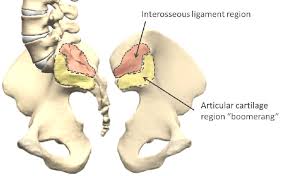
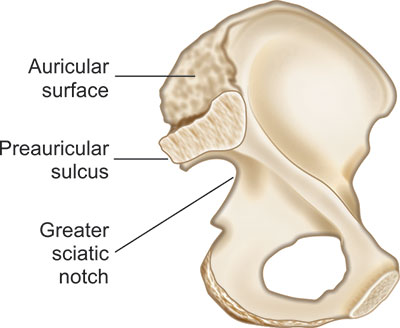
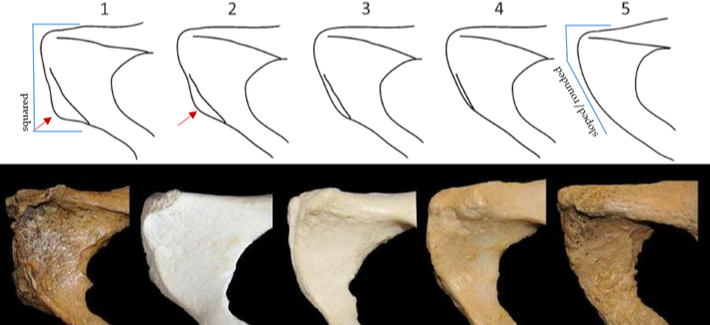
Auricular Surface
Located on the sacroiliac joint; “boomerang” shape
Kyphosis
congenital anterior concave bending of the thoracic vertebrae
Sex
The biological (physical and genetic) differences between male and female; not gender
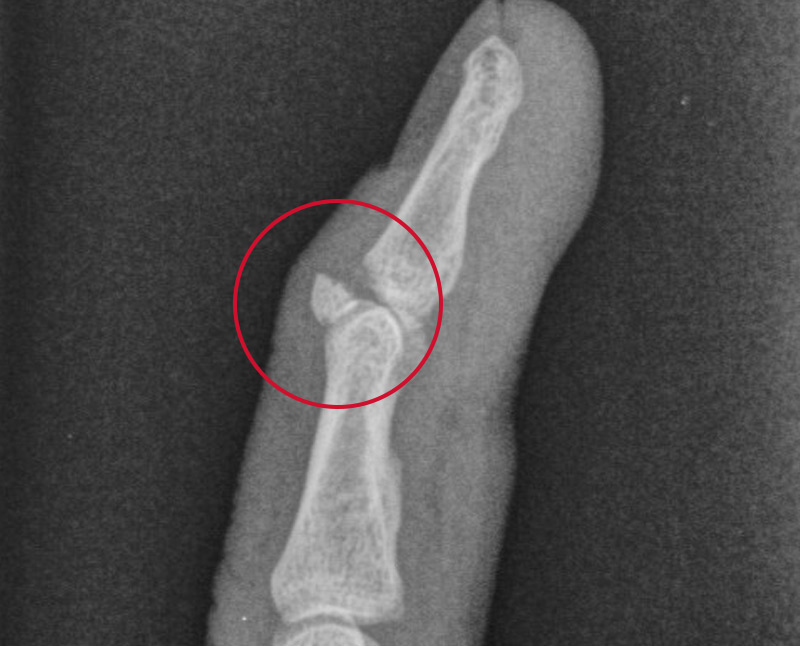
Avulsion Fracture
a bone failure caused when a ligament is forcibly ripped from its attachment point, removing a portion of the bone
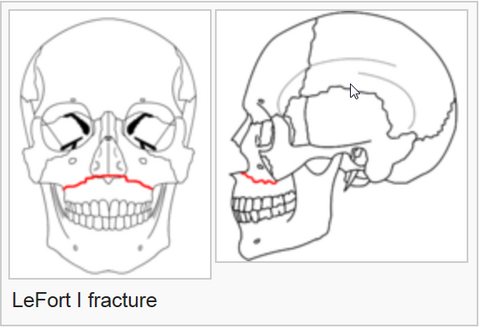
Lefort I Fractures
produced by a direct blow to the anterior of the alveolar process of the maxilla and separates the alveolar process from the maxillary body
Lefort II Fracture
created by direct blows and propagate triangularly across the maxilla, orbital floors, and nasal bones
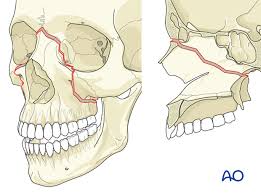
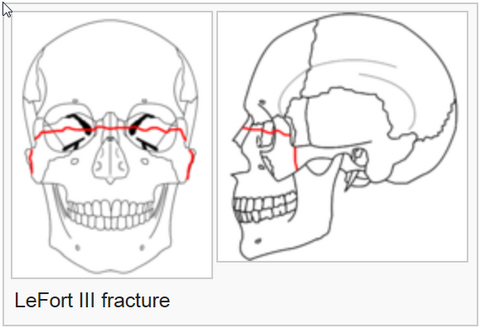
Lefort III Fracture
caused by side impacts and transverse the upper orbits and nasal bones, separating the maxilla, nasals and zygomatics from the cranial vault
Sharp Force Trauma
trauma caused by a sharp, penetrating object or surface
Blunt Force Trauma
trauma caused by a blunt, non-penetrating object or surface
Leprosy
chronic infection caused by Mycobacterium leprae
Indication of Leprosy
Skeletal involvement leads to progressive concentric atrophy of the tubular bones of the hands and feet as well as maxillary and nasal regions of the midface
Skeletal Pathology
the study of the effects of disease, chronic illness, genetic conditions or cancer on the skeletal system
Complete Fracture
a fracture in which the broken ends of bone separate
Perimortem Trauma
trauma that occurred around the time of death and lacks bone remodeling and may help identify the cause of death
Indicators of Perimortem Trauma
Sharp edges on the fracture lines of bone; Hinging in which the bone is bent away from the direction of force; Formation of radiating fracture lines from point of impact; Staining from the hematoma created by impact; Angled, jagged surfaces on broken ends of bone
Skeletal Trauma
the disruption, and ultimately the failure, of the bone at the macro and/or microscopic level, resulting
from an impact with an object or surface; High-Velocity and Low-Velocity
Contrecoup Fracture
A secondary cranial fracture created by blunt force trauma when the recoil pushes the skull against another object or surface
Periostitis
a bacterial infection of the periosteum
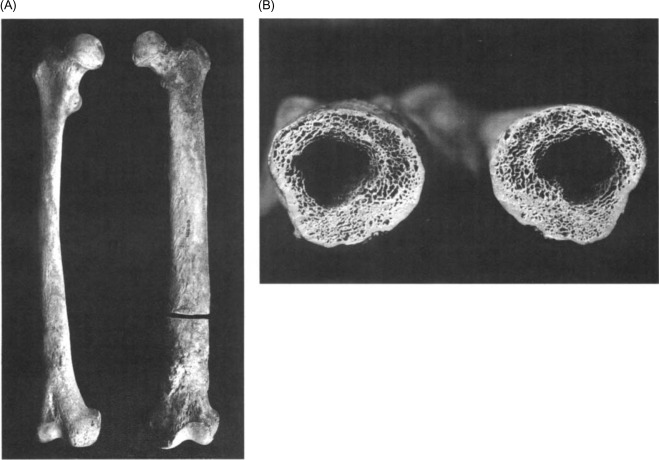
Spiral Fracture
torsion fracture of bone creating a rotating fracture line
Craniometric
measurements of features of the skull using statistical analysis to evaluate cranial variation
Porotic Hyperostosis
spongy, porous bone legions often linked with anemia or malnutrition
Stature
the living height of an individual
Cribra Orbitalia
porotic lesions and ossification on the superior eye orbit
Postmortem Trauma
trauma that occurred after death as a result of depositional or taphonomic processes
Indicators of Postmortem Trauma
produces clean breaks with multiple fragments; The broken surface will generally be lighter in color; Characterized by dry bone fracture patterns
Stress Fracture
tiny cracks in the bone caused by repetitive force
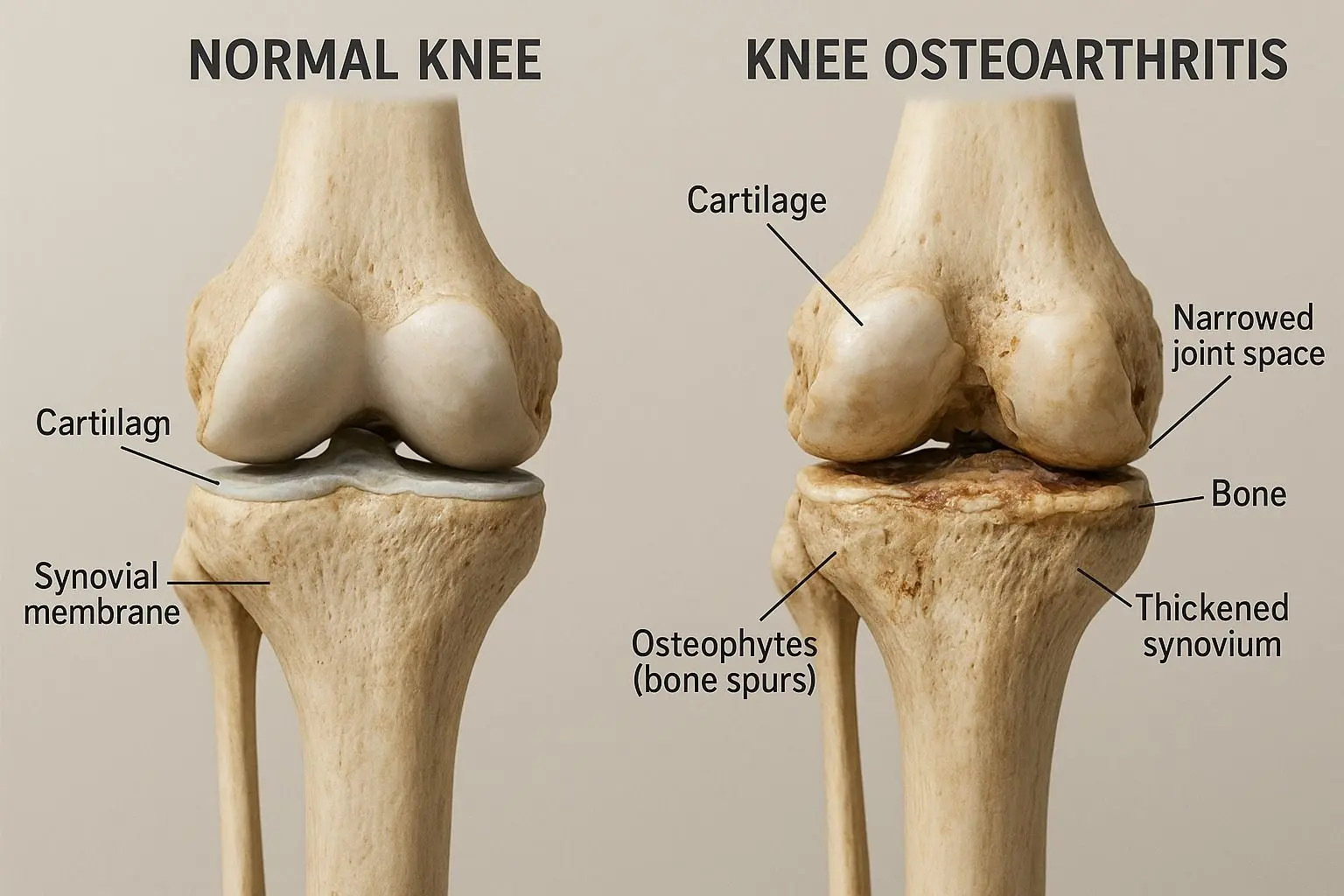
Degenerative Joint Disease
A.K.A. osteoarthritis; Breakdown of articular cartilage, reactive bone formation in the subchondral compact bone and trabecula, and new growth of cartilage and bone at the joint margins
Preauricular Sulcus
groove located on the margins of the superior auricular surface (near the greater sciatic notch); sex estimation
Subadult
any individual whose skeleton has not completed skeletal or dental development
Dental Morphometrics
measurements of the shape and size of features of the teeth using statistical analysis to evaluate dental variation
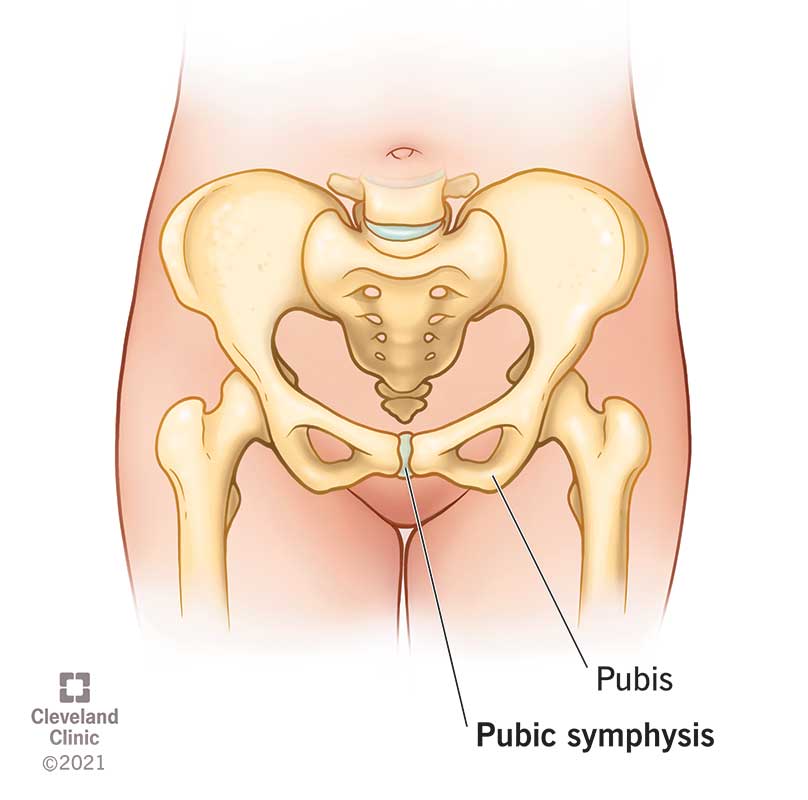
Pubic Symphysis
a cartilaginous joint connecting the left and right pubic bones at the front of the pelvis
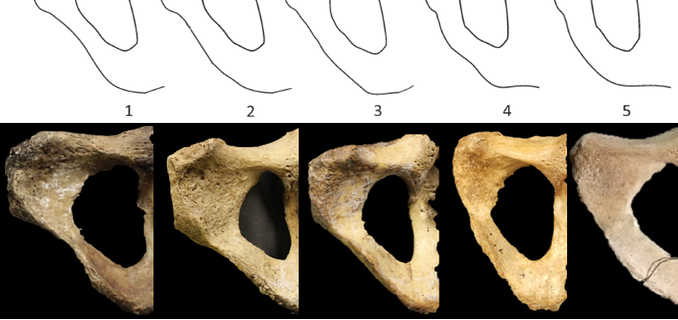
Subpubic Contour
the shape of ischiopubic ramus; In females it has a large concavity, while males have a have convex orientations
Enamel Hypoplasia
lines of arrested development due to food shortages or stress in childhood in teeth
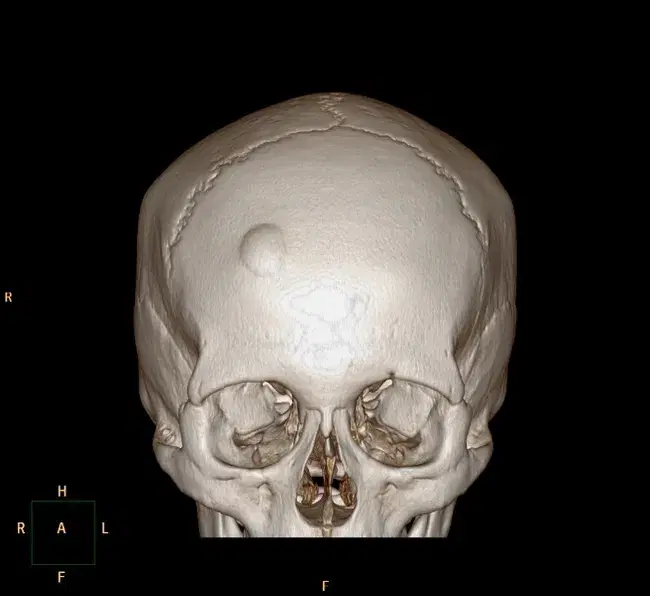
Osteoma
benign osteoblastic tumors in the lamellar bone
Syphilis
chronic bacterial diseasecaused Treponema pallidum
Indicators of Syphilis
Creates crater-like lesions with radiating lines; Skeletal involvement targets areas with minimal overlying soft tissue
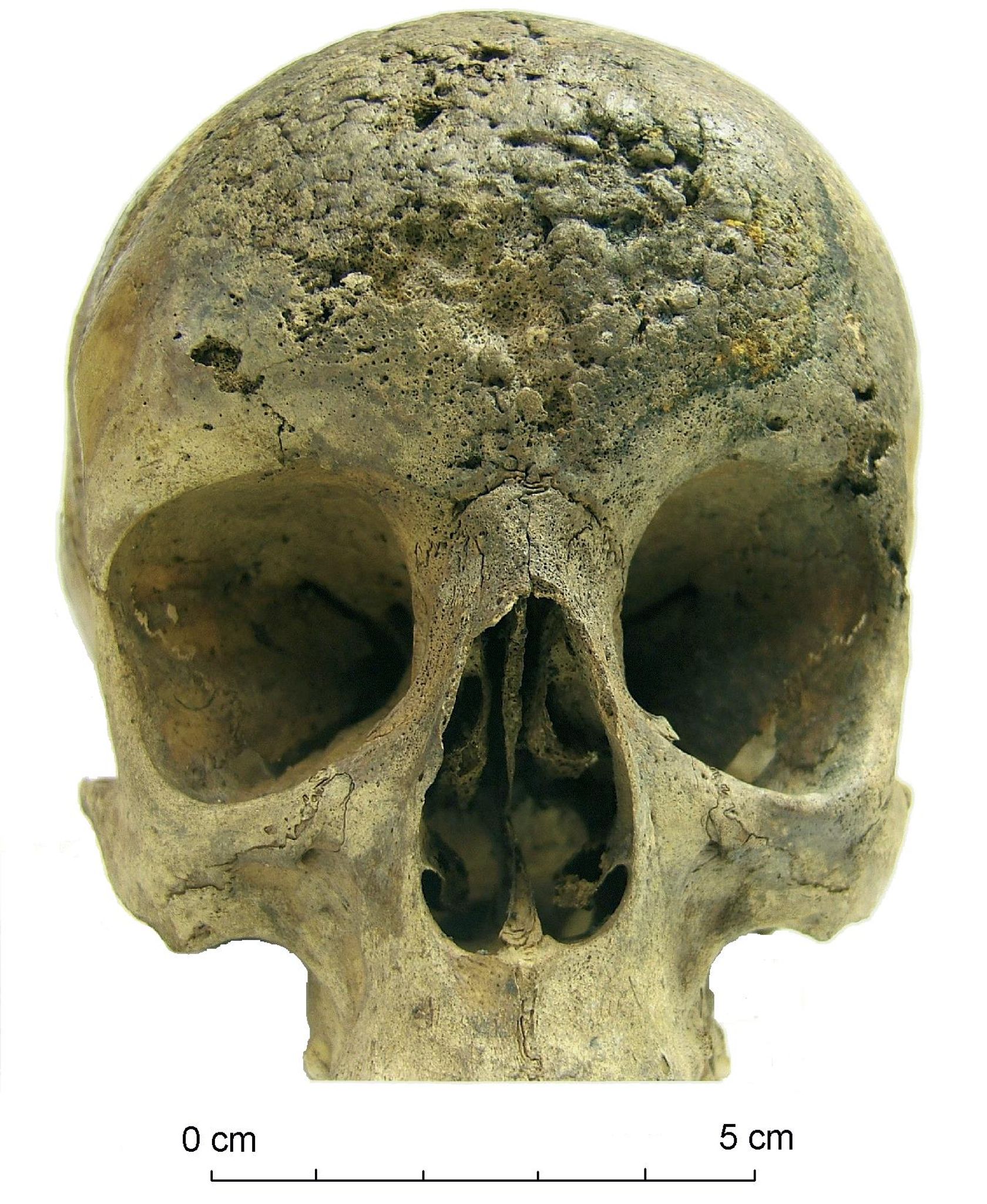
Epiphyseal Union
Epiphyses fuse to the diaphysis in a regular sequence and at known age intervals; Age of death is estimated in subadults by assessing which epiphyses are present and scoring the degree of fusion (none, partial, or complete)
Osteomyelitis
a bacterial infection of the bone tissue
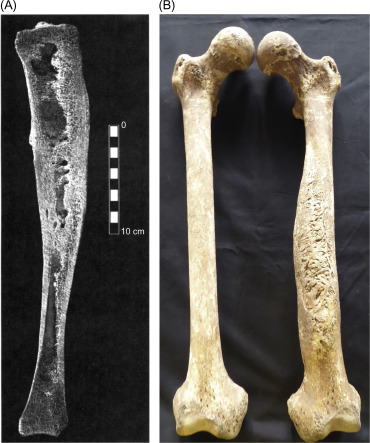
Tuberculosis
chronic infection created by Mycobacterium tuberculosis resulting in respiratory tract and lymph node infections
Indicators of Tuberculosis
creates bone caries and localized destruction of bone; Can lead to spinal collapse called tuberculous spondylitis
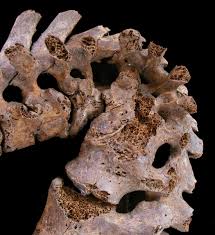
Fatigue Fracture
a failure caused by intermittent stress over a long period of time; Most common in vertebrae
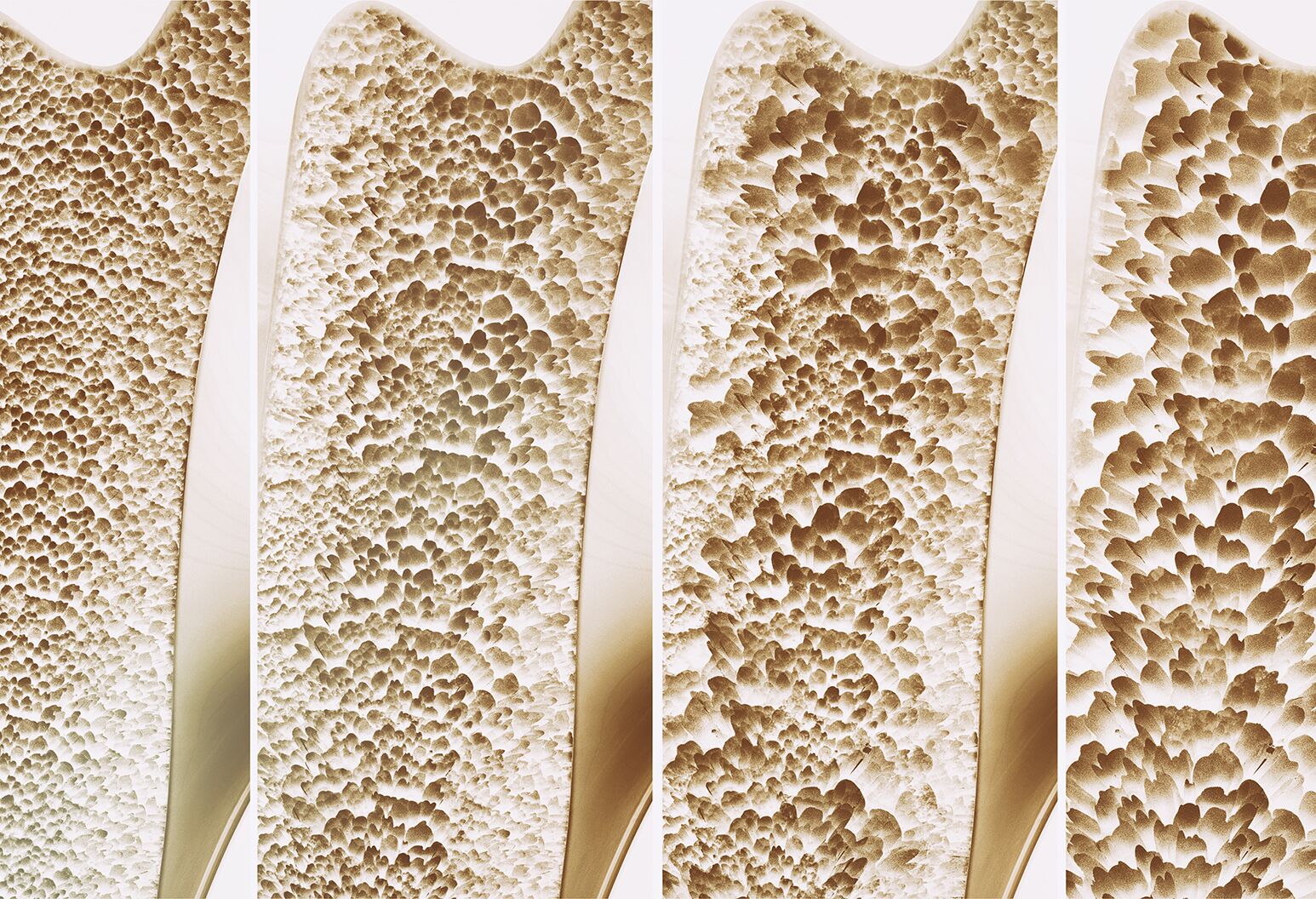
Osteoporosis
bone disease that results in thinner, less dense bone
Ventral Arc
the shape of the ventral surface of the pubis; Angular ventral arcs associated with females while
males have smooth articulations
Gender
The expectations of thought and behavior that each culture assigns to particular groups of people, usually based on perceived sex differences
Osteosarcoma
malignant tumor most commonly found in the diaphysis of appendages near the growth plate
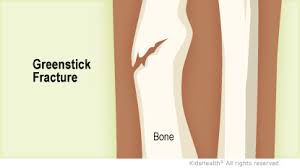
Greenstick Fracture
a break in bone in where separation between the broken ends does not occur
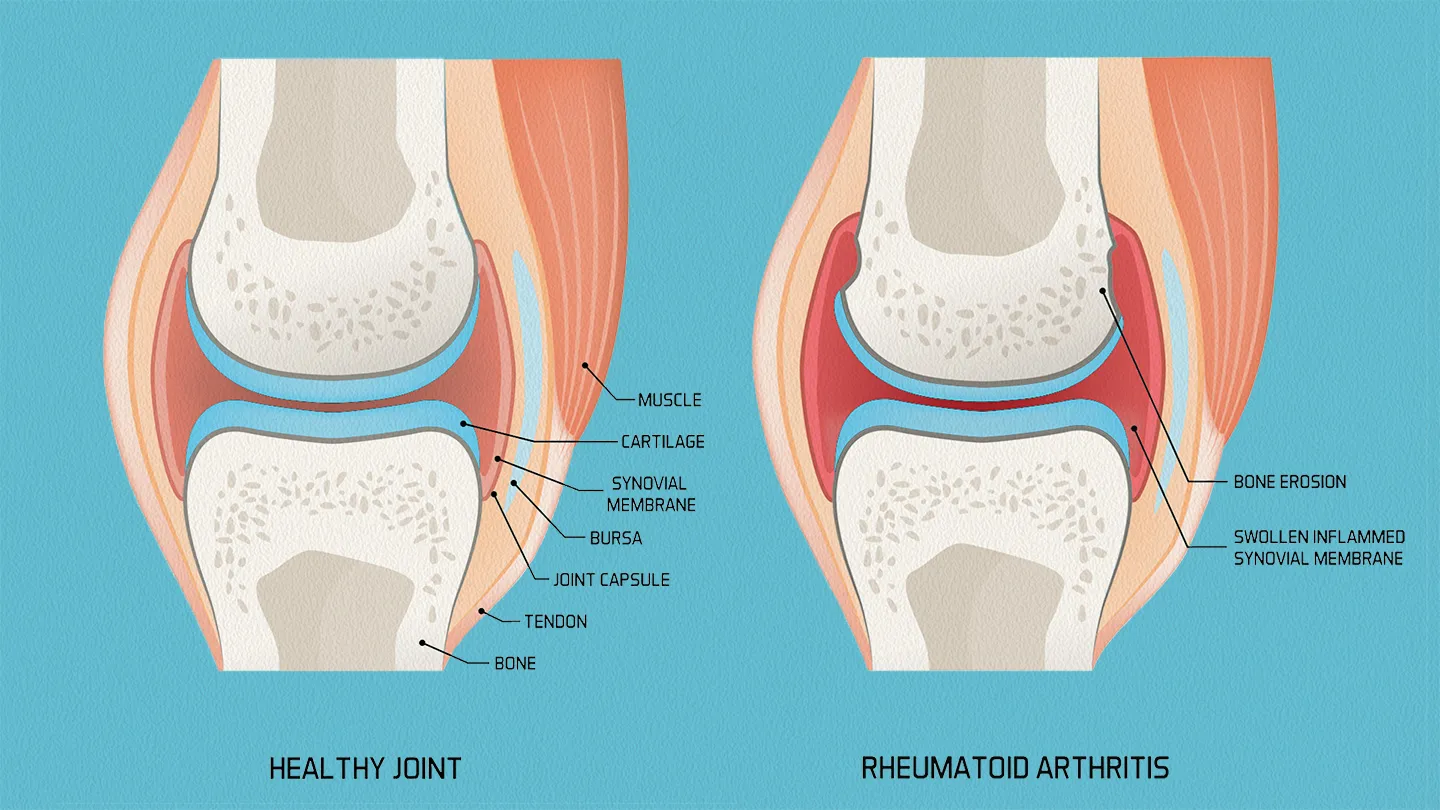
Rheumatoid Arthritis
a pathological autoimmune response that destroys joint tissue; More common in females than males
Indicators of Rheumatoid Arthritis
Key identifier is that it affects multiple joints and is typically symmetrical