Middle Ear
 Call Kai
 Learn
Learn Practice Test
 Spaced Repetition
 Match
Match Flashcards
 Knowt Play
1/32

There's no tags or description
Looks like no tags are added yet.
Name | Mastery | Learn | Test | Matching | Spaced | Call with Kai |
|---|
No analytics yet
Send a link to your students to track their progress
33 Terms
3 main parts of the middle ear
Ossicular chain, or middle ear ossicles
•Connect the tympanic membrane to the oval window of the cochlea
Middle ear muscles
•Tightens ossicular chain in response to loud sounds
Eustachian tube
•Equalizes air pressure in middle ear cavity
Middle ear functions
Impedance matching
Protect the inner ear from overload
The Ossicular Chain
3 bones (ossicles) of the middle ear
Malleus
Incus
Stapes
The stapes is the smallest bone in the body!
Malleus
HAMMER
Attaches to the tympanic membrane at manubrium
Incus
ANVIL
Middle bone in ossicular chain
Stapes
STIRRUP
Attaches to the cochlea at oval window
The Ossicular Chain Function
Connect the tympanic membrane to the oval window of the cochlea
Transfer energy efficiently from the air filled ear canal to the fluid filled cochlea
Need to transfer the sound pressure wave from air to fluid
3 ways to get sound energy to the inner ear
Bone conduction
Air pressure changes in the middle ear cavity
Vibration through the ossicular chain
Bone conduction
Sound that travels via vibration of the bones of the skull, bypassing the middle ear and going directly to the inner ear
Not significant for normal hearing
Air Pressure Changes in Middle Ear Cavity
Sound that travels through the middle ear without encountering the ossicles and stimulate the oval and round windows directly
Inefficient for normal hearing because of impedance mismatch
Vibration through the Ossicular Chain
Sound pressure waves are converted into mechanical vibration of the malleus, the incus, and the stapes, which transmits the energy directly to the oval window (and not the round window)
Main mode for normal hearing to overcome impedance mismatch
Acoustic Impedance (Z)
Opposition to the flow of acoustic energy
High impedance
Resistance to movement
•High impedance (“hard to move”) [e.g., fluid in a filled tube]
•Small movement in response to a given input (pressure)
•Large input (pressure) needed for a given movement
Low impedance
•Low impedance (“easy to move”) [e.g., air filled tube]
•Large movement in response to a given input (pressure)
•Small input (pressure) needed for a given movement
Impedance Matching in the Middle Ear
•The middle ear serves to match the impedance between the air-filled ear canal (low impedance)and the fluid filled cochlea (high impedance)
•The ossicles (bones of the middle ear; malleus, incus, stapes) transfer energy to one of the cochlear windows
How Does Impedance Matching in the Middle Ear work?
The middle ear uses three mechanisms to provide an impedance match between the ear canal and the cochlea:
Area Transformer (~x17)
Lever Transformer (~x1.3)
Buckling motion (~x2)
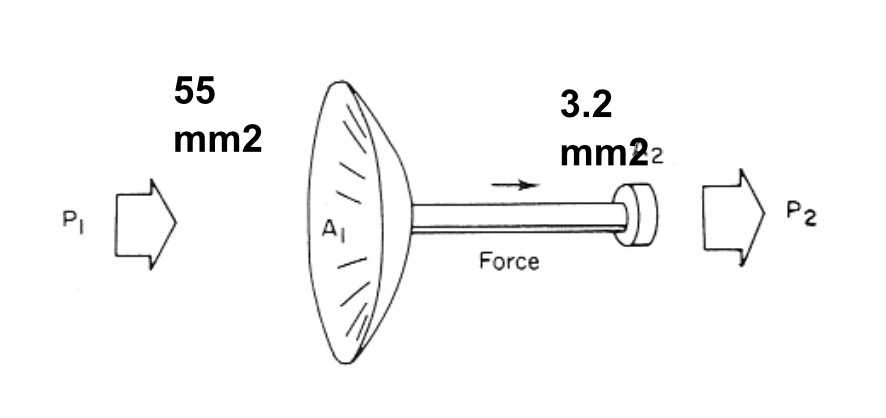
Area Transformer (~x17)
•Main contributor to middle ear impedance matching
•Remember: F = p*A
•Force remains constant, so p1A1 = p2A2
•Since A2 is much smaller, p2 will be much larger
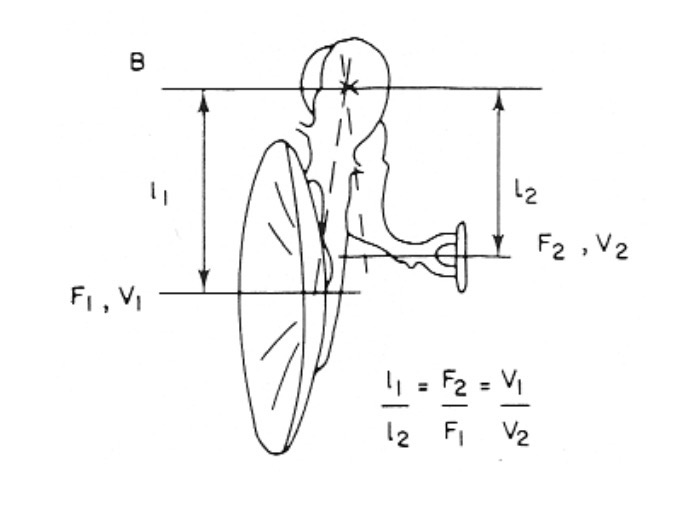
Lever Transformer (~x1.3)
The lever action of the middle ear bones also helps to amplify incoming vibrations
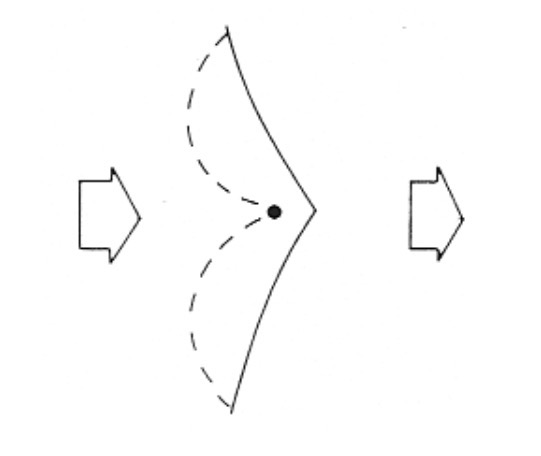
Buckling motion (~x2)
The buckling motion of the ear drum also helps to amplify incoming vibrations
Middle Ear Transfer Function (filter)
How much gain does the middle ear provide?
•The anatomy of the middle ear provides pressure gain through three distinct mechanisms
1. Area Transformer: 20*log(17) = 25 dB
2. Lever Transformer: 20*log(1.3) = 2 dB
3. Buckling Motion: 20*log(2) = 6 dB
•Overall, these mechanisms serve to increase the sound vibrations by a maximum factor of x44!
•20*log(44) ~= 33 dB gain
The frequency dependence of impedance is determined by three factors
Mass
Stiffness
Damping (friction)
Mass
•Air has mass (so do ossicles, etc.)
•Requires force (F) to move the air’s mass (Newton’s laws of motion)
•Most relevant at high frequencies
Stiffness
•Air has stiffness (i.e., springiness – it pushes back when compressed)
•Requires force to compress the air
•Most relevant at low frequencies
•Application: some middle-ear pathologies involve increased stiffness, which creates low-frequency hearing loss
Damping (friction)
•Movement of air through a tube must overcome several sources of friction (walls, other air molecules)
•Requires force to overcome friction
•Most relevant at medium frequencies
-Mass and stiffness cancel each other
-Occurs at resonance
Middle Ear Muscles
•The ossicular chain is connected to the middle ear cavity by ligaments and muscles
•When the middle ear muscles contract, they stiffen the ossicular chain and alter middle ear function
The stapedius muscle (attached to stapes) is part of an acoustic reflex
This middle ear muscle reflex provides (limited) protection from loud sounds
–Only for low frequency sounds and sounds >90 dB SPL
–Fairly slow response (10-150 ms), so gun shots and other transient sounds are too fast to be attenuated
–Can be activated prior to self vocalizations
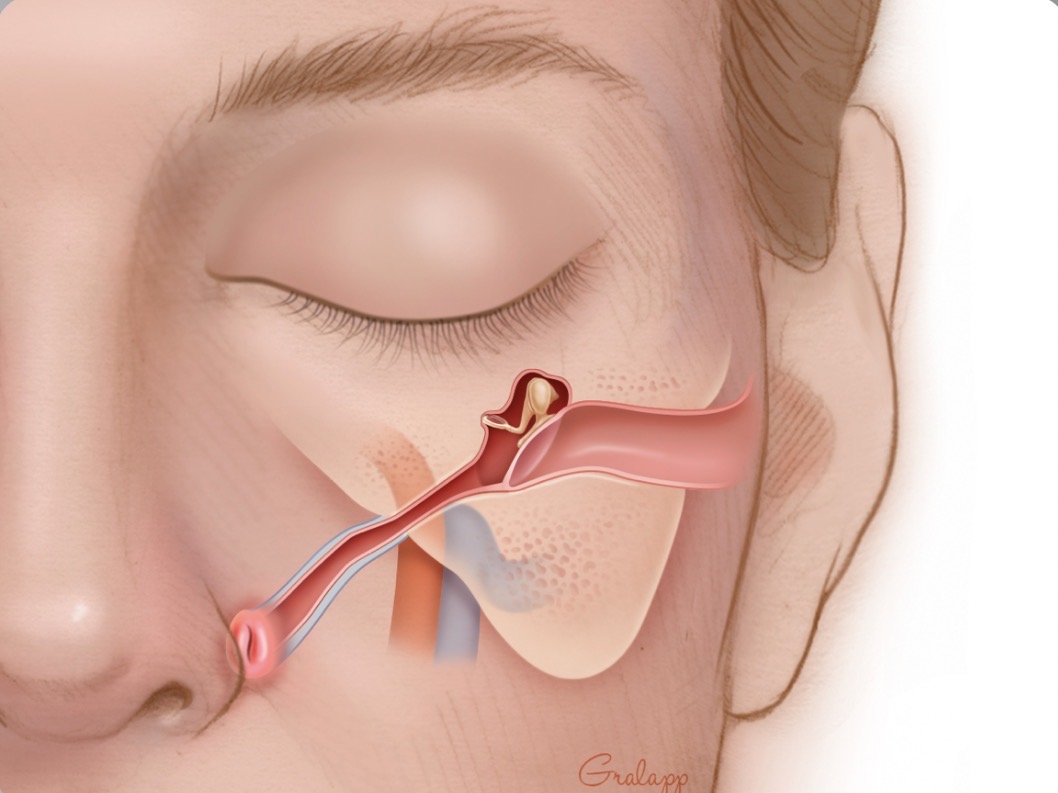
Eustachian Tube
The Eustachian tube connects the middle ear space with the nasopharynx (back of nose/mouth)
The Eustachian tube opens occasionally to equalize inside/outside pressurethrough the nasopharynx
•Example: flying in an airplane
•After take off (on ascent), air pressure decreases (outside P < inside P)
•Ear drum pushed outward
•Hearing is reduced (sometimes painful)
•Ear pops (swallow or yawn) = Eust. tube opening
•Now inside P = outside P
•Hearing returns to normal
Also provides air flow to middle ear cavity and exit route for mucus or fluid
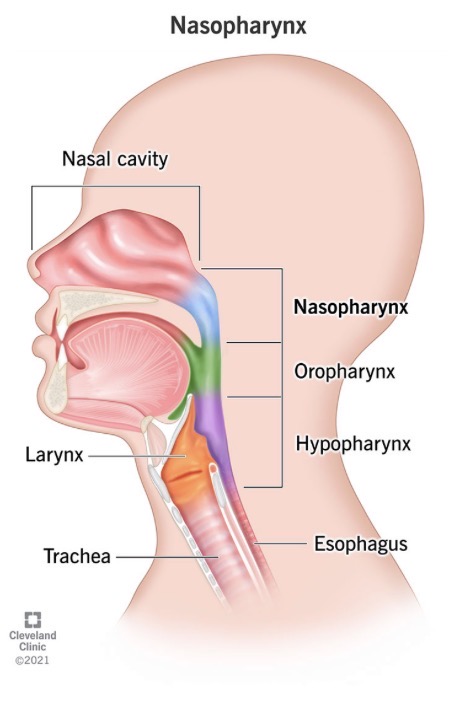
Several pathologies can affect middle ear function
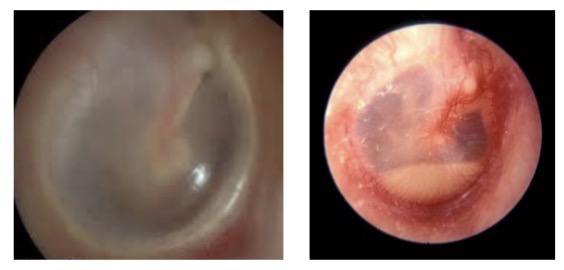
Otitis Media
Otosclerosis
Cholesteatoma
Otitis Media
•Fluid in middle ear space
•Increases stiffness (smaller air space, reduces compliance), so creates low-frequency hearing loss
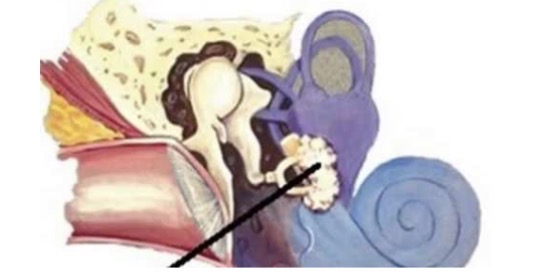
Otosclerosis
•Bone overgrowth around stapes footplate; “locks” the stapes in place
•Increases stiffness, so creates low-frequency hearing loss
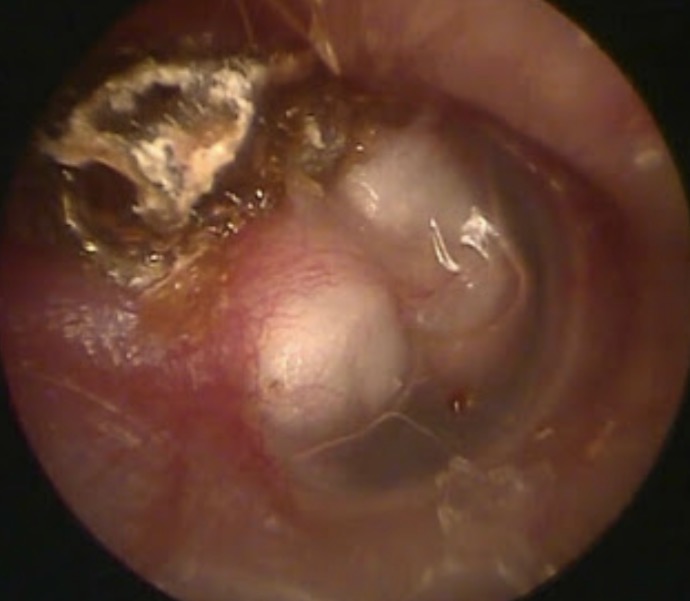
Cholesteatoma
•Benign skin growth in the middle ear cavity
•Bad cases can destroy ossicles (or require surgery that destroys ossicles)
•Loss of ossicles can create a ~60-dB hearing loss
•Loss of ~35-dB gain from ossicle transforms
•Loss of ~25-dB gain from lack of differential pressure input to the oval and round windows of the cochlea
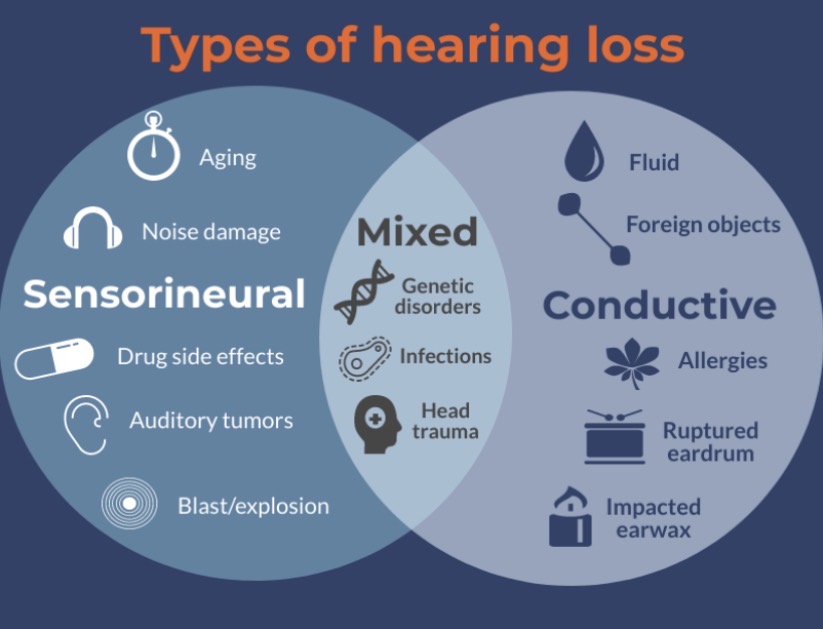
2 main classes of hearing loss
Conductive hearing loss
Sensorineural hearing loss
Conductive hearing loss
•Damage to or blockage of the external ear and/or middle ear
•Prevents sound conduction to inner ear
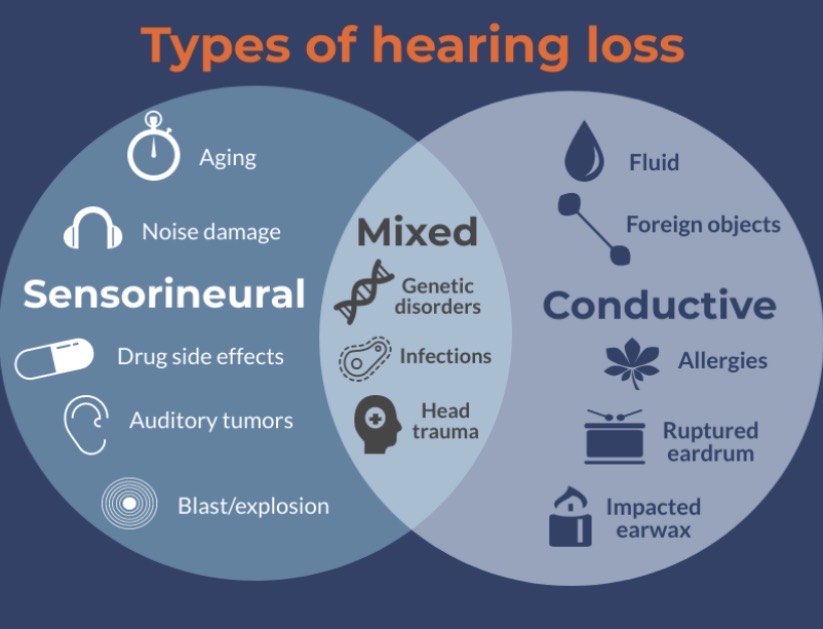
Sensorineural hearing loss
•Damage to the sensory or neuralcomponents of the inner ear (cochlea)