tools for management - regulations
 Studied by 0 people
 Call Kai
 Learn
Learn Practice Test
 Spaced Repetition
 Match
Match Flashcards
 Knowt Play
1/24

There's no tags or description
Looks like no tags are added yet.
Name | Mastery | Learn | Test | Matching | Spaced | Call with Kai |
|---|
No analytics yet
Send a link to your students to track their progress
25 Terms
5 tools for management
1) protection via regulations 2) wildlife control 3) incentives 4) establishing parks 5) enhancement like stocking
protection via regulation
1) regulate the season
2) regulate entry
3) regulate catch
4) regulate gear
regulate the season
regulations where restricting specific times to protect stocks when they are congregated and vulnerable to overharvest (ex reproduction or spawning, overwintering, etc)
also protect habitats from destruction by harvesting or other industry processes like instream activities (ex RAP)
ex include shortening the season, male only seasons, periodic harvests → increases incentives during the specific open seasons tho
factors to be weighted before closing a season
potential long term damage to the population
long term and short term declines in license sales
adverse political response from stakeholders and public
credibility gap between managers and the public if nothing was done
the relationship between season, length and effort is not linear
regulating entry
privatize, exclusion zones, restrict access, restrict entry by license sales, restrict entry by lottery
number of licenses allowed is related to population status and management goals → collapse, vulnerable (none), stable and trophy (probs restrictions), OR MSY, quality deer management, trophy deer management
privatizing - limited entry
ex is virginia oyster fishery where the beds are treated as private property
incentive for owners to invest in their property via seeding, and improving habitat
exclusion - limited entry
ex of economic exclusion zone under authority of UN convention of the law of the sea
terrestrial sea and exclusive economic zone are within national jurisdiction - within 200 mil from coast of a nation
areas beyond are subject to tragedy of the commons basically, high seas
access - limited entry
hard to implement and controversial with the public
launching ramps, piers, parking, artificial reefs can all be built but they lead to increased use - very strong relationship in AB (threshold of decline with harvest)
licenses and lotteries - limited entry
quotas can be achieved by limiting license sales or hunting opps per individuals
ex tags, licenses,
huge penalties for poaching, try to make quota match MSY
regulating catch
key to effective regulatory practices, determined by quota
hard to determine harvest level, how to close down season, and ensuring equal access - hard when unpredictable season closures
harvest models include fixed quota, fixed effort and fixed escapement
various policies can regulate - weight, number of or volume of
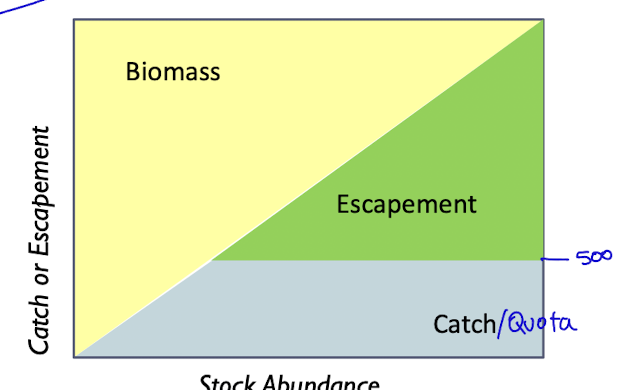
fixed quota harvest model
most common
specifies a fixed harvest level which does not change with population size, so for ex if pop size is large enough then the harvest will be a fraction, but if too small if could be entire population
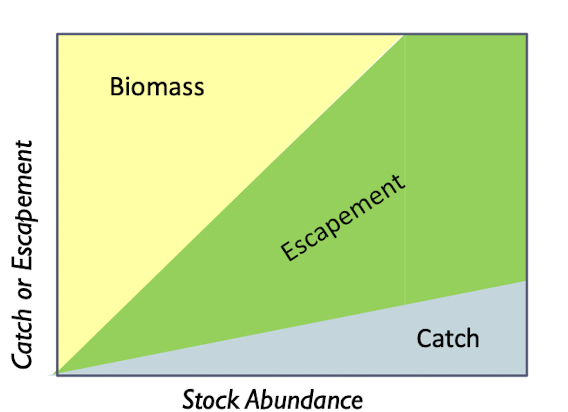
fixed effort harvest model
constant exploitation rate, number of animals harvested changes as their abundance changes
hard to implement
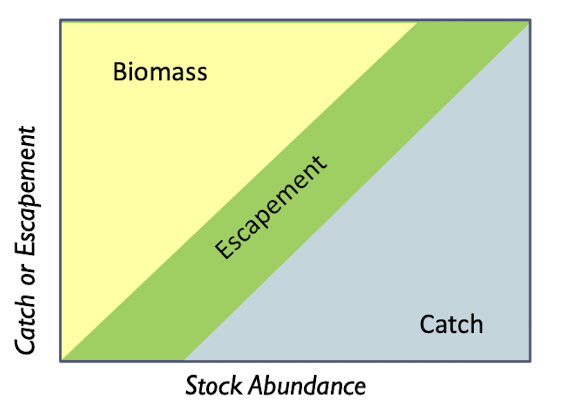
fixed escapement harvest model
harvest only after a threshold population size has been surpassed, however the level of harvest increases one to one as population size increases
alternative but rarely used
catch limit
the number of fish an angler is allowed to catch and keep in one day
or bags limit for wildlife
prevents hoarding of resources, promotes ethical use, attributes value and conveys a realistic expectation regarding the capacity of resource to support combined harvest
possession limit
the number of fish an angler is allowed to legally possess at one time, whether on hand, in cold storage or in transit
prevents hoarding of resources, promotes ethical use, attributes value and conveys a realistic expectation regarding the capacity of resource to support combined harvest
size limits
intended to reduce biological impacts of angling without restricting opportunity
maximizes yield and protects spawning stock while maintaining angling quality
required knowledge of life history of the species
three types: min, slot, and max
measured with either fork or total length
slot size limit
fish within a designated size range must either be released (protected) or retained (harvest)
objective is to protect spawning aged fish while still allowing the angler to harvest smaller or trophy fish
minimum size limits
all fish below a designated size must be released
objective is too allow females to spawn at least once before they are harvested
increase yields when there is limited natural reproduction, good growth, low natural mortality, and high exploitation
but results in selection for slow growing fish
maximum size limits
all fish above a designated size limit must be released
objective is to protect spawning sized fish or to control harvest of trophy sized fish
can increased density of mature fish where stock has good growth potential, or to maintain the population structure of unexploited stocks in lakes where large size can be attained
catch and release
based on the idea that a recreational angler does not have to harvest to produce utility from fishing
generally moral suasion and command and control
allow release, growth and reproduction
but controversial to some due to hooking mortality
regulating gear
controlling tools of the trade, reducing efficiency/mortality/limiting harvest
for example in fishing: number of hooks/lines, barbs, bait, net type, wildlife: archery, black powder, rifle or shot gun
usually implemented in heavily fished waters to prevent overexploitation
good for use without having to regulate entry
pros of regulations
immediacy of control
cons of regulations
region wide uniform regulations are not great because people are not distrubuted evenly over the land area
things like social media and technology can alter human behaviour - ex access to knowledge about good sites
when is management most effective?
when tied to biological data
age specific birth and death rates, breeding ages, number of individuals, sex and age class, carrying capacity - all known is best
 Note
Note  Flashcards (78)