12.0 Covid 19
 Studied by 0 people
 Call Kai
 Learn
Learn Practice Test
 Spaced Repetition
 Match
Match Flashcards
 Knowt Play
1/25

There's no tags or description
Looks like no tags are added yet.
Name | Mastery | Learn | Test | Matching | Spaced | Call with Kai |
|---|
No analytics yet
Send a link to your students to track their progress
26 Terms
COVID-19 is an acute disease in humans that is caused by the SARS-CoV-2 virus which primarily targets the respiratory system
but also has systemic implications due to its widespread binding to ACE2 receptors.
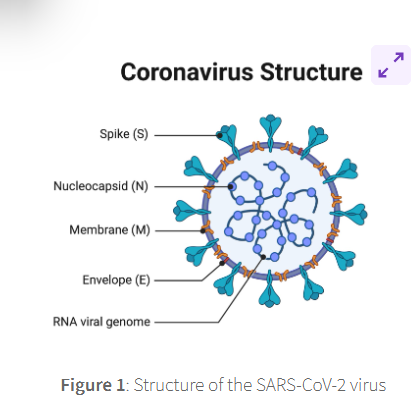
SARS-CoV-2 is an enveloped viruses with
a positive-sense
single-stranded
RNA genome
and a nucleocapsid of helical symmetry
Club-shaped glycoprotein spikes in the envelope give the viruses a crownlike, or coronal, appearance.
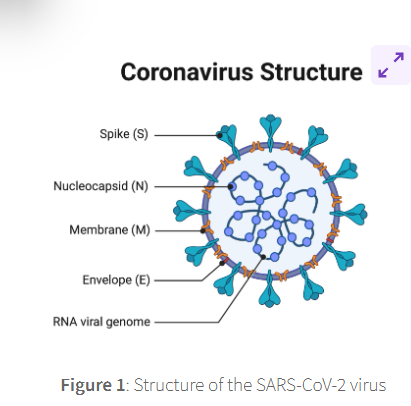
The nucleocapsid, made up of a protein shell known as a capsid and containing the viral nucleic acids,
is helical or tubular.
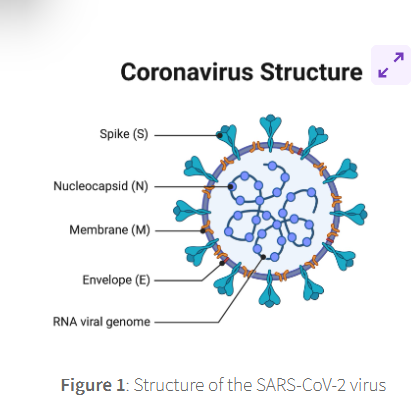
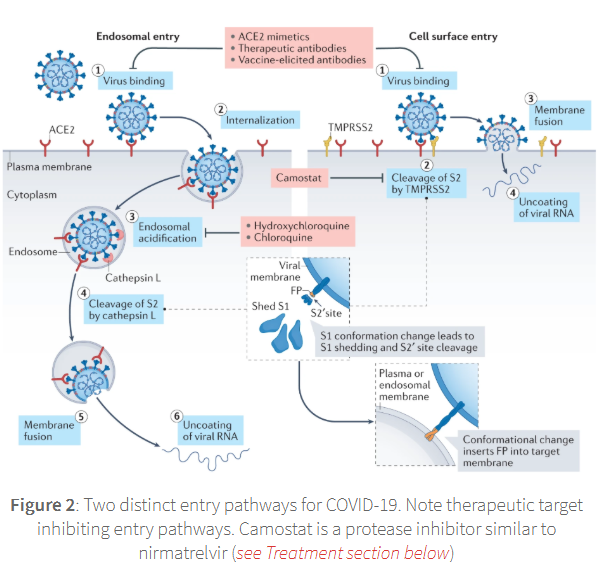
Two spike (S) protein cleavage events are typically necessary for the coronavirus entry process:
one at the junction of the S1 and S2 subunits
and the other at the S2 site, internal to the S2 subunit.
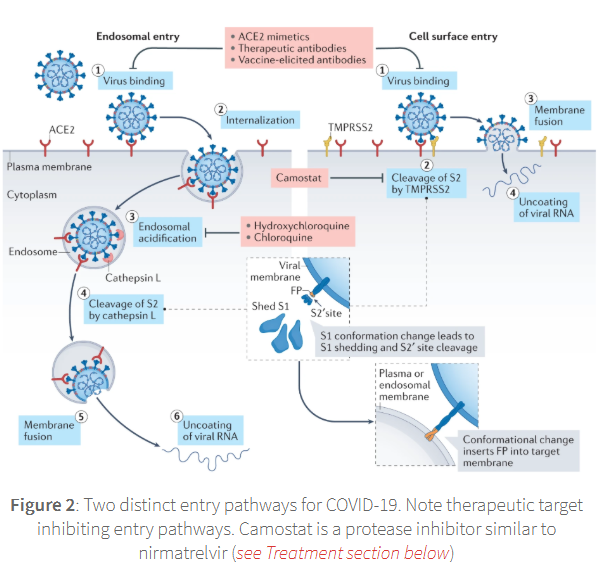
Coronaviruses primarily infect epithelial cells through the receptor for the Angiotensin Converting Enzyme 2 (ACE2).
ACE2 is targeted by ACE Inhibitors, widely used as anti-hypertensives.
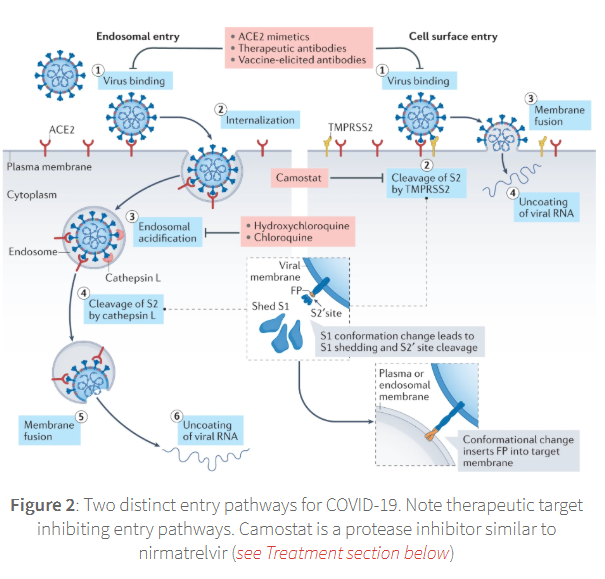
The first step in viral infection
requires the recognition of the ACE2 receptor by the virus spike protein.
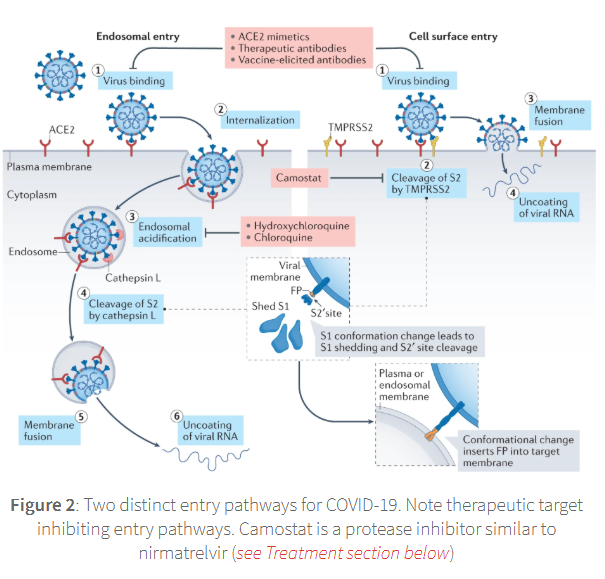
In the absence or limited expression of transmembrane protease, serine 2 (TMPRSS2),
the virus–ACE2 complex is internalized via endocytosis where S2′ cleavage is performed by cathepsins,
which requires an acidic environment for their activity.
cathepsins
proteases found in all animals + other organisms
approximately a dozen members of this family which are distinguished by their structure, catalytic mechanism and which proteins they cleave
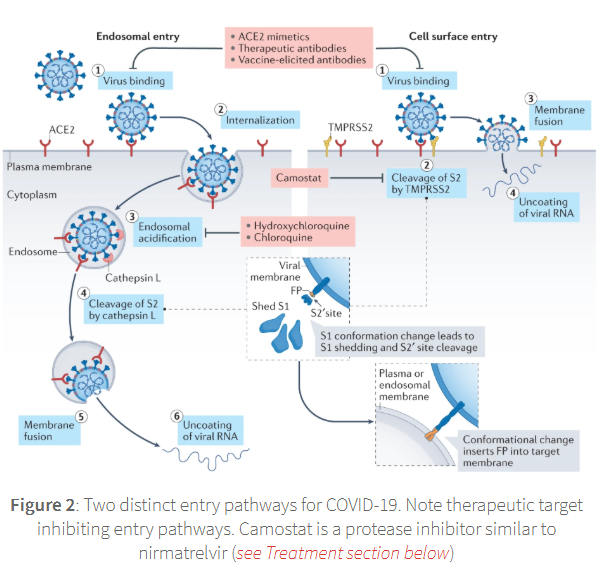
In the presence of TMPRSS2, S2′ cleavage occurs at the cell surface,
resulting in insertion of viral RNA by membrane fusion.
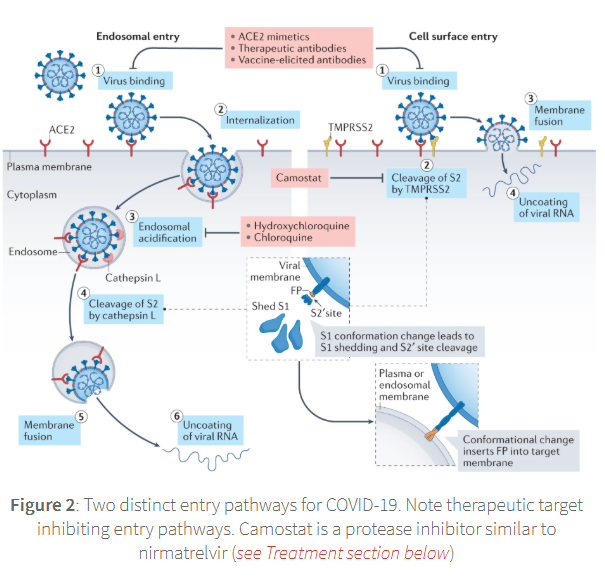
The viral RNA is then released into the cytoplasm.
The viral RNA molecules then recruit the cellular apparatus to make thousands of copies of the viral RNA
viral RNA molecules also instruct the cells to synthesise hundreds of thousands of:
nucleocapsid,
membrane,
envelope,
and spike proteins.
These assemble into new virus particles which bud out of the cell surface membrane.
The cells release the newly formed viral particles propagating the infection which leads leading to cell death and inflammatory responses.
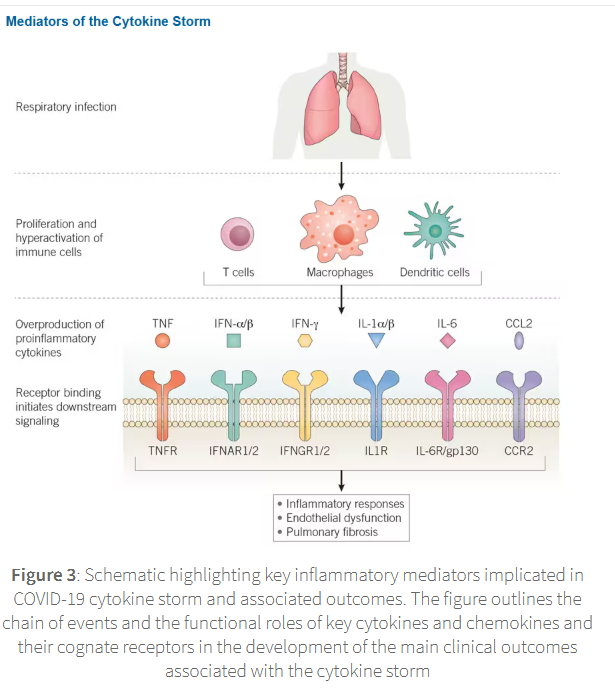
Viral relase from the respiratory epithelium and the concordant cellular apoptosis,
results in a response from the innate immune system.
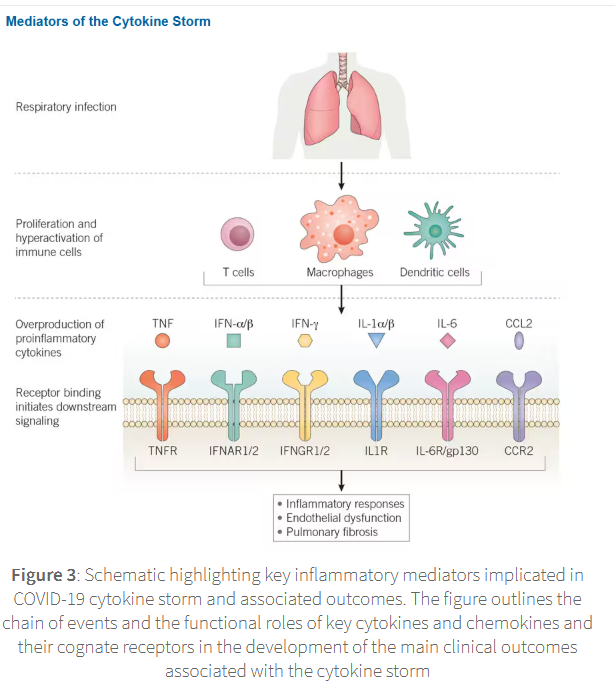
This results in a release of cytokines and recruitment of immune cells.
This increase in inflammatory cytokine release, termed a cytokine storm,
cytokine storm results in
widespread inflammation,
multi-organ damage,
and severe respiratory symptoms
and development of chronic disease such as pulmonary fibrosis
People may experience different symptoms from COVID-19,
with symptoms usually presenting around 5–6 days after exposure. and last 1–14 days.
common symptoms
fever
chills
sore throat
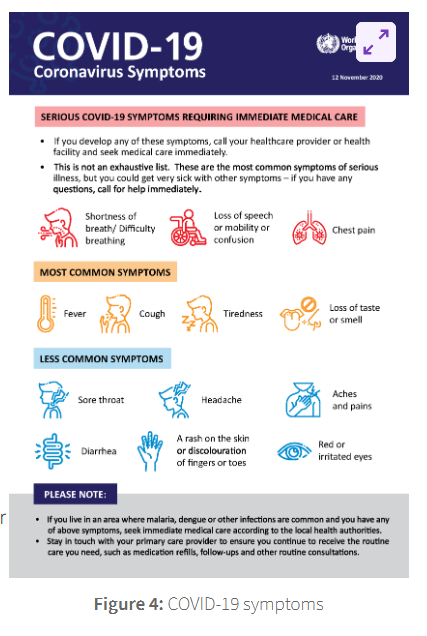
less common symptoms
Muscle aches and heavy arms or legs
Severe fatigue or tiredness
Runny or blocked nose, or sneezing
Headache
Sore eyes
Dizziness
New and persistent cough
Tight chest or chest pain
Shortness of breath
Hoarse voice
Numbness or tingling
Appetite loss, nausea, vomiting, abdominal pain or diarrhoea
Loss or change of sense of taste or smell
Difficulty sleeping.
critical symptoms
Difficulty breathing, especially at rest, or unable to speak in sentences
Confusion
Drowsiness or loss of consciousness
Persistent pain or pressure in the chest
Skin being cold or clammy, or turning pale or a bluish colour
Loss of speech or movement.
People who have pre-existing health problems are at higher risk when they have COVID-19;
they should seek medical help early if worried about their condition.
those with a higher risk for covid include
people taking immunosuppressive medication;
those with chronic heart, lung, liver or rheumatological problems;
those with HIV,
diabetes,
cancer.
obesity
or dementia.
People with severe disease and those needing hospital treatment should receive treatment as soon as possible.
The consequences of severe COVID-19 include:
death,
respiratory failure,
sepsis, t
hromboembolism (blood clots),
and multiorgan failure,
including injury of the heart, liver or kidneys.
In rare situations, children can develop a severe inflammatory syndrome a few weeks after infection.
Some people who have had COVID-19, whether they have needed hospitalisation or not, continue to experience symptoms.
These long-term effects are called long COVID.
The most common symptoms associated with long COVID include:
Fatigue,
Breathlessness and
Cognitive dysfunction.( forgetfulness lack or mental focus/clarity)
watch video
 Note
Note  Flashcards (36)