Geo Lab Quiz 1: Sedimentary Rocks
 Studied by 0 people
 Call with Kai
 Learn
Learn Practice Test
 Spaced Repetition
 Match
Match Flashcards
 Knowt Play
1/22

There's no tags or description
Looks like no tags are added yet.
Name | Mastery | Learn | Test | Matching | Spaced | Call with Kai |
|---|
No study sessions yet.
23 Terms
Outcrop
Where bedrock sticks out so we can access it (visually see the layers)
Weathering
How we break down rocks naturally
Physical Weathering
Break down actual rocks but don’t change the composition
Chemical Weathering
Changes the composition of the rock
Dark rocks
Iron rich. Chemically weather. Beaches near source rock have darker grains
Light rocks
Silicon rich. dont weather easily. beaches far from source rock will have light grains
Clastic sedimentary rocks
solid fragments of existing rock. Types: Conglomerates, Sandstone, Siltstone, Shale and Mudstone
Deposition
More energy the river/transporter has, the larger particles it can carry (plus everything smaller). Particles deposited when transporter looses energy. Farther from the source= smaller, rounder, better sorted.
Conglomerates
*clastic sedimentary rock
grain size: pebble or larger
Location: braided streams
Sandstone
*clastic sedimentary rock
grain size: sand
Location: beaches and deserts
Siltstone
*clastic sedimentary rock
grain size: silt
location: floodplains
Shale and Mudstone
*clastic sedimentary rock
Grain size: clay
location: lakes, marshes, deeper oceans
Organic Sedimentary rocks
minerals extracted by organisms or organic remains
Organic limestone
-made up of calcite, fossilifourous limestone
-in shallow, warm waters (coral reefs)
Types: coquina (high energy- beaches) and chalk (deep ocean)
Non-Limestone Organic Sedimentary rocks
low energy, warm/wet (marshes and swamps)
peat —> coal
Chemical Sedimentary Rocks
Minerals dissolved in water solution which can precipitate due to changes in water temp, pressure, pH
Evaporirtes: dry, hot basin (halite and gypsum)
Graded Bedding
largest particles go to bottom
ha flashfloods and underwater landslides
Ripple Marks
Asymmetric—> current (wind or water)
Meandering river, sand dune
Symmetric—> waves (one direction)
lake or beach
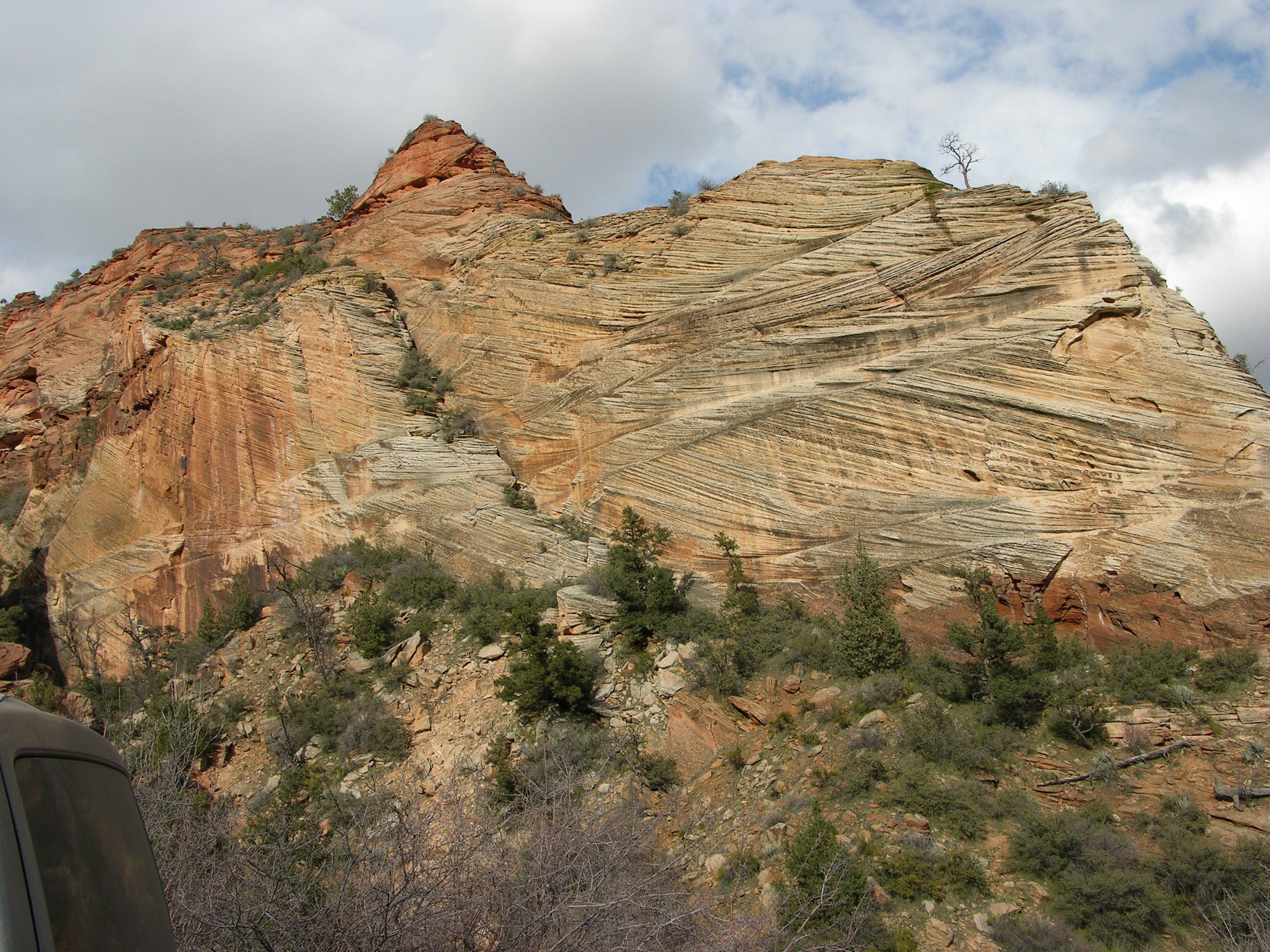
Cross Beds
Wind direction creates ripples. When there is no energy, sediments are dropped
Ex: sand dunes
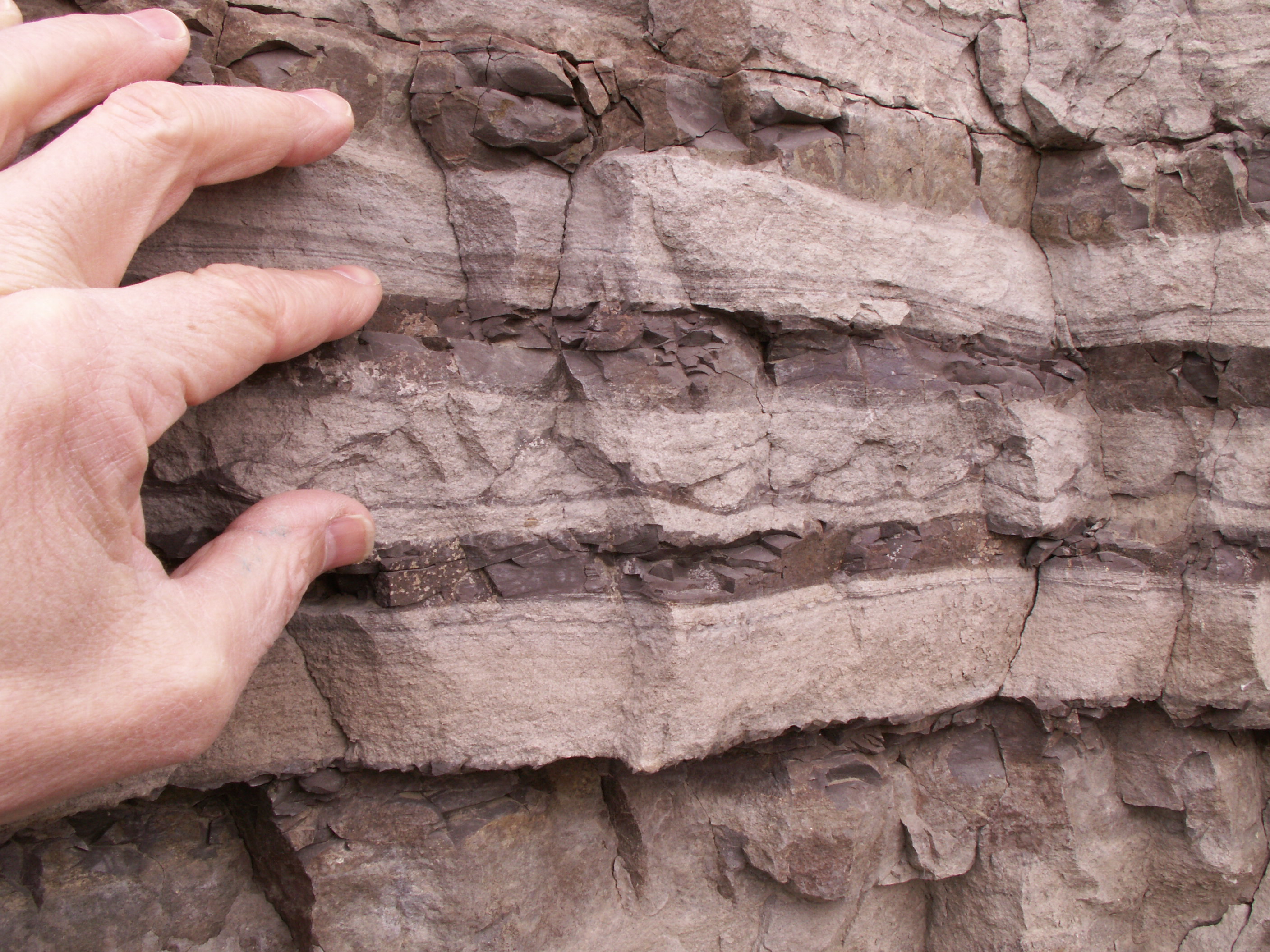
Varves
Layers of silt and sand
seasonal variation in energy with an alternating ice cover
cold/seasonal
Mudcracks
Silt and Clay
Caused by changes in climate from wet to dry
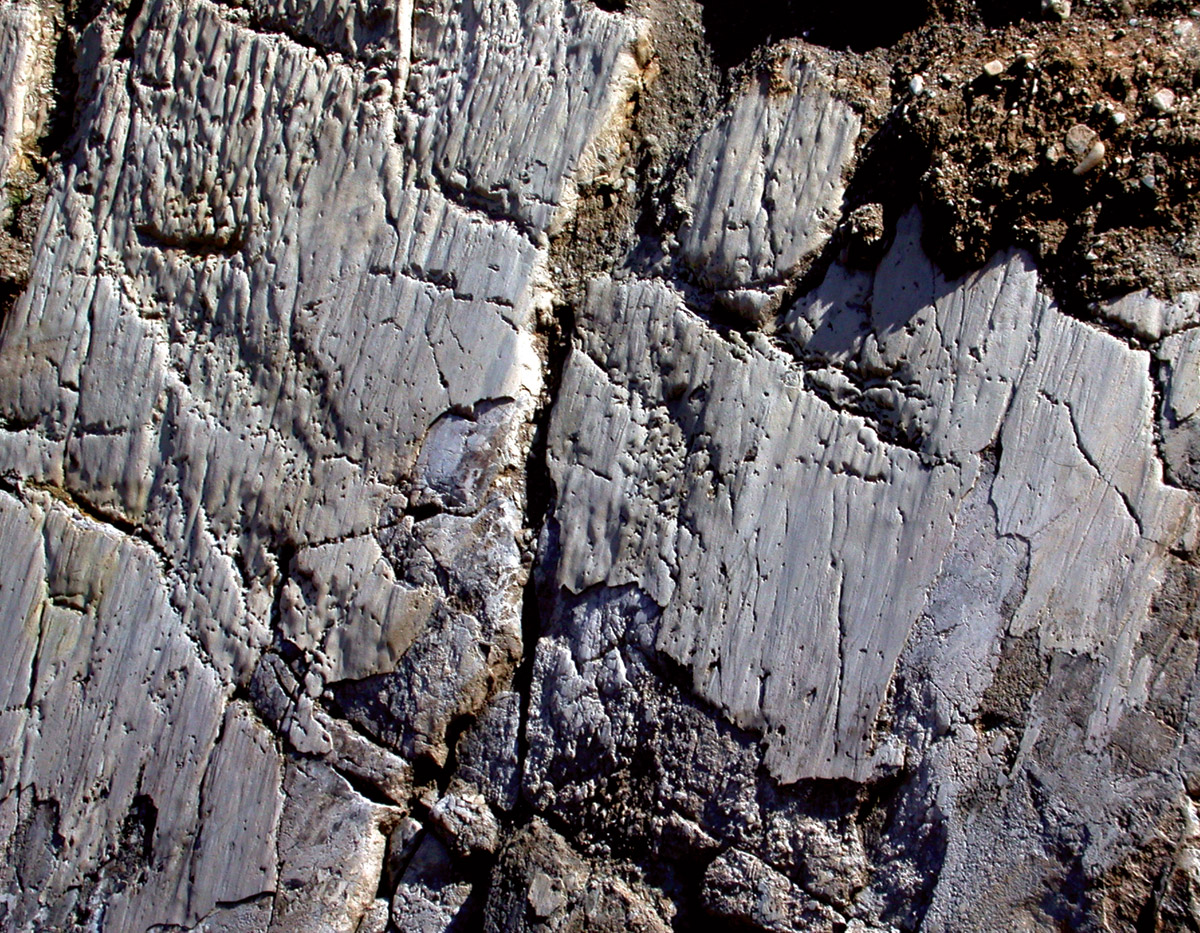
Glacial Striations
Carved out land by glaciers
Fossils
Terrestial vs. Marine
 Note
Note  Flashcards (77)