Chapter 4-6 study guide

0.0(0)
studied byStudied by 0 people
call kaiCall Kai
learnLearn
examPractice Test
spaced repetitionSpaced Repetition
heart puzzleMatch
flashcardsFlashcards
GameKnowt Play
Card Sorting

1/44

encourage image

There's no tags or description

Looks like no tags are added yet.

Last updated 7:55 PM on 3/12/25
Name
Mastery
Learn
Test
Matching
Spaced
Call with Kai

No analytics yet

Send a link to your students to track their progress

45 Terms

1
New cards
Cell Junctions
Contact points between adjacent plasma membranes of tissue cells.
2
New cards
Tight Junctions
Connect cells of tissues that line surfaces of organs; forms fluid-tight seals.
3
New cards
Adherens Junctions
Made of plaque and transmembrane glycoproteins (cadherins) that connect adjacent cells.
4
New cards
Desmosomes
Composed of plaque and cadherins linking cytoskeletons of adjacent cells; provides stability.
5
New cards
Hemidesmosomes
Anchor cells to the basement membrane using integrins; do not link adjacent cells.
6
New cards
Gap Junctions
Allow communication between cells by permitting ions and small molecules to pass.
7
New cards
Epithelial Tissue
Covers body surfaces, lines hollow organs and body cavities, and forms glands.
8
New cards
Simple Epithelium
Single layer of cells; may be squamous, cuboidal, or columnar.
9
New cards
Cuboidal Epithelium
Single layer of cube-shaped cells; functions in secretion and absorption.
10
New cards
Columnar Epithelium
Single layer of tall cells; can be ciliated or nonciliated.
11
New cards
Stratified Epithelium
Multiple layers of cells; can be squamous, cuboidal, or columnar.
12
New cards
Transitional Epithelium
Permits stretching, found in urinary bladder and ureters.
13
New cards
Endocrine Glands
Ductless glands that secrete hormones into the bloodstream.
14
New cards
Exocrine Glands
Glands that secrete substances into ducts.
15
New cards
Merocrine
Mode of secretion via exocytosis; most common method.
16
New cards
Apocrine
Mode of secretion where cells pinch off at the apical surface.
17
New cards
Holocrine
Mode of secretion where cells accumulate substances until rupture.
18
New cards
Connective Tissue
Supports, protects, binds organs, stores energy, and provides immunity.
19
New cards
Loose Connective Tissue
Includes areolar, adipose, and reticular tissues that support and bind other tissues.
20
New cards
Dense Connective Tissue
Includes regular, irregular, and elastic tissues that provide strength and elasticity.
21
New cards
Muscle Tissue
Tissue responsible for movement; includes skeletal, cardiac, and smooth muscle.
22
New cards
Nervous Tissue
Tissue that detects and responds to stimuli; includes neurons and neuroglia.
23
New cards
Epidermis
Outer layer of skin composed of stratified squamous epithelium.
24
New cards
Dermis
Connective tissue layer beneath the epidermis containing blood vessels and glands.
25
New cards
Hypodermis (Subcutaneous Layer)
Layer of fat that provides insulation and stores energy.
26
New cards
Sebaceous Glands
Oil glands that lubricate skin and hair.
27
New cards
Sudoriferous Glands
Sweat glands that regulate body temperature.
28
New cards
Osteoblasts
Bone-building cells.
29
New cards
Osteocytes
Mature bone cells that maintain bone tissue.
30
New cards
Osteoclasts
Bone cells that break down bone tissue.
31
New cards
Intramembranous Ossification
Bone formation that occurs from fibrous membranes.
32
New cards
Endochondral Ossification
Bone formation that occurs from cartilage.
33
New cards
Calcium Homeostasis
Regulates blood calcium levels through hormones like PTH and calcitonin.
34
New cards

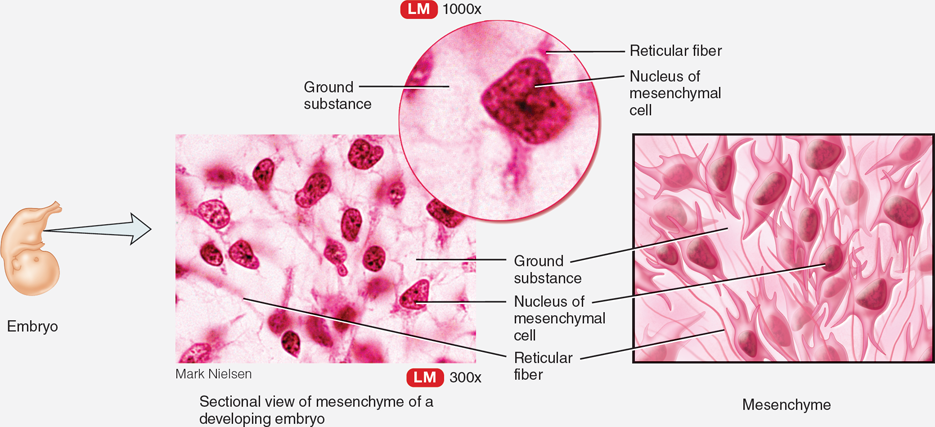
Mesenchyme

Found under the skin in embryos, forms almost all other types of connective tissue

35
New cards

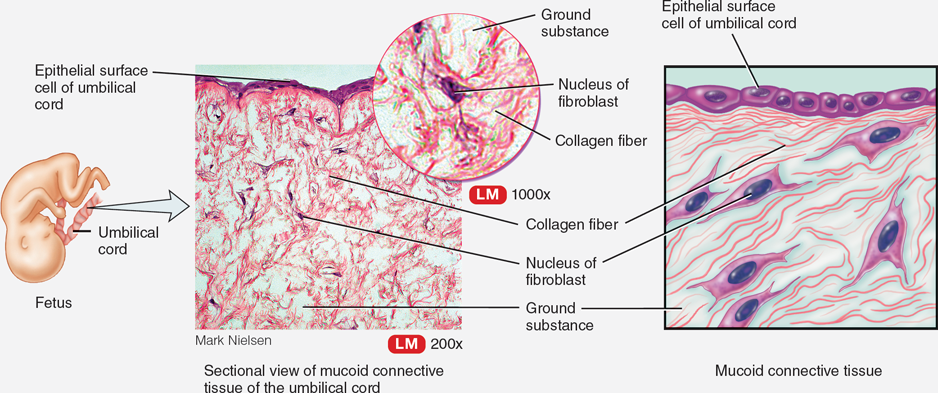
Mucoid (mucous) connective tissue

Found in the umbilical cord in a fetus, offers support.

36
New cards

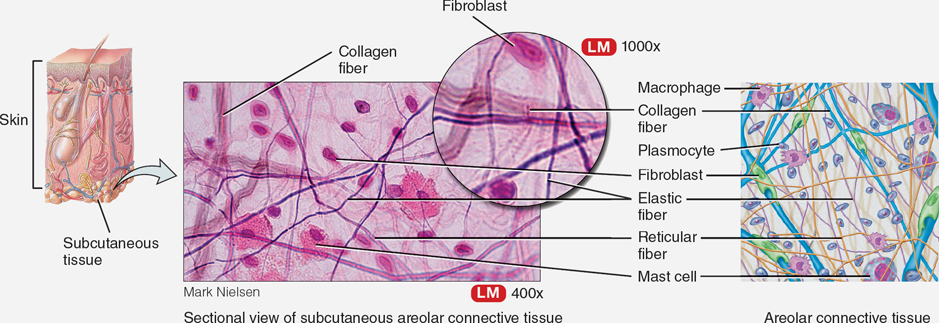
Areolar Tissue

Loose connective tissue located in the hypodermis that provides support and elasticity, containing collagen and elastin fibers.

37
New cards

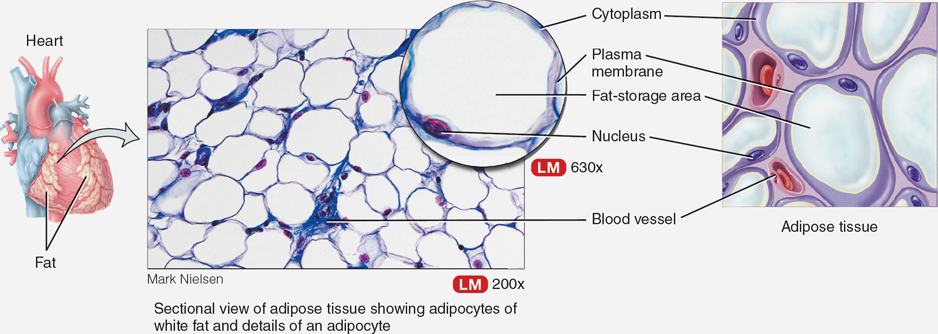
Adipose tissue

Loose connective tissue that stores fat, located in the hypodermis and around the heart.

38
New cards

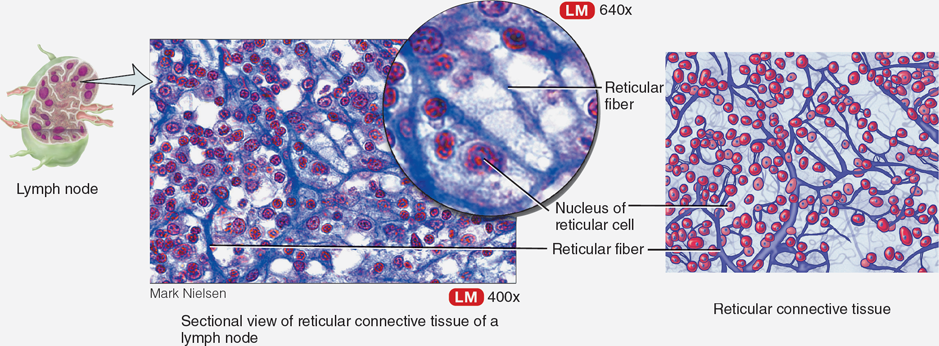
Reticular Tissue

Loose connective tissue that provides framework for organs, located in spleen and lymph nodes

39
New cards

Dense Regular Tissue

Connective tissue that attaches to muscles and bones and forms tendons and ligaments, providing strength and stability.

40
New cards

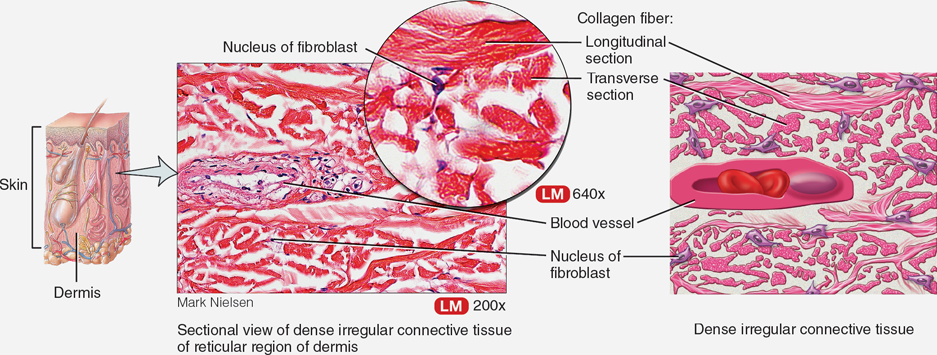
Dense Irregular Tissue

Connective tissue that is arranged irregularly, located in dermis of the skin.

41
New cards

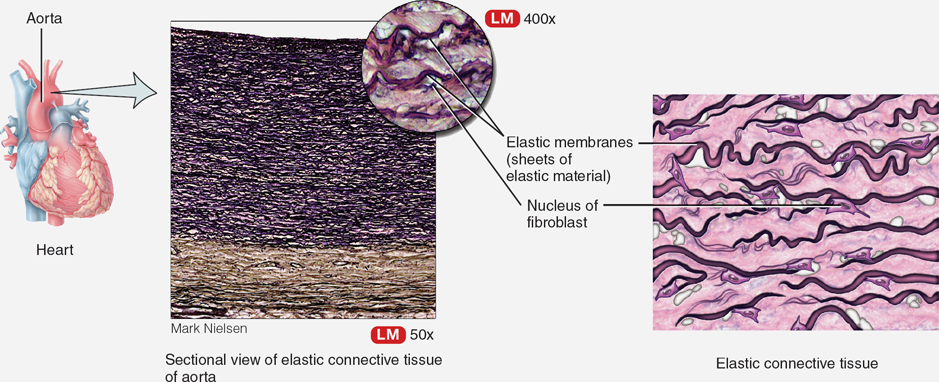
Elastic tissue

Connective tissue that allows stretching, found in arteries and lungs.

42
New cards

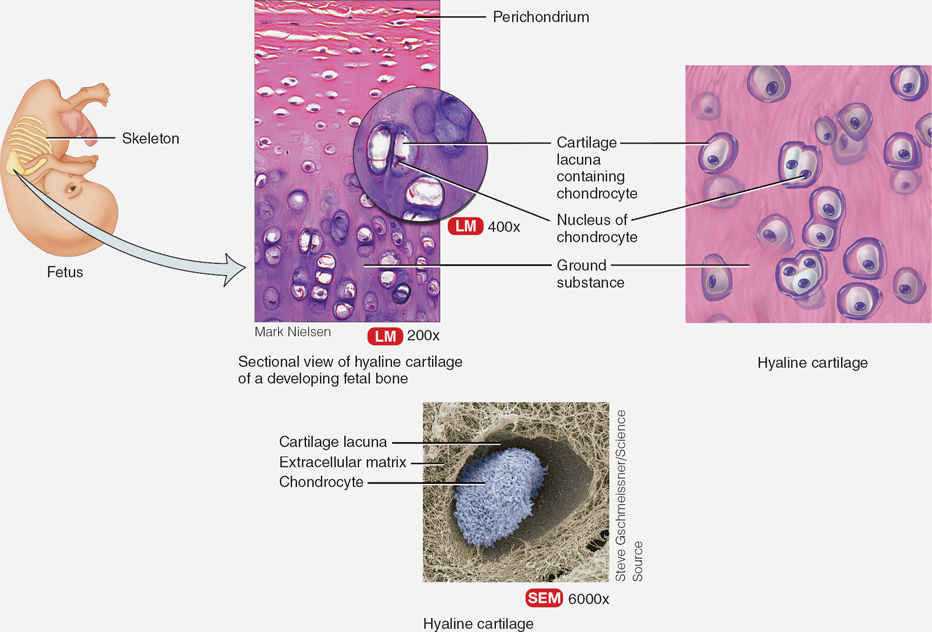
Hyaline Cartilage

Most common cartilage type, providing support. Found at ends of long bones and in the nose.

43
New cards

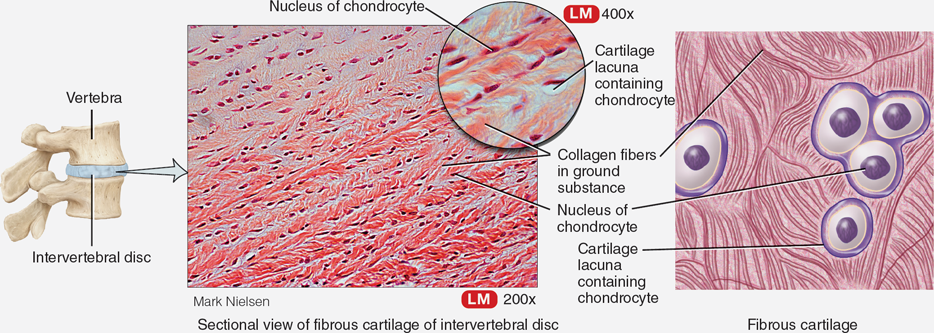
Fibrous Cartilage

Cartilage that supports and joins structures, found between vertebral discs

44
New cards

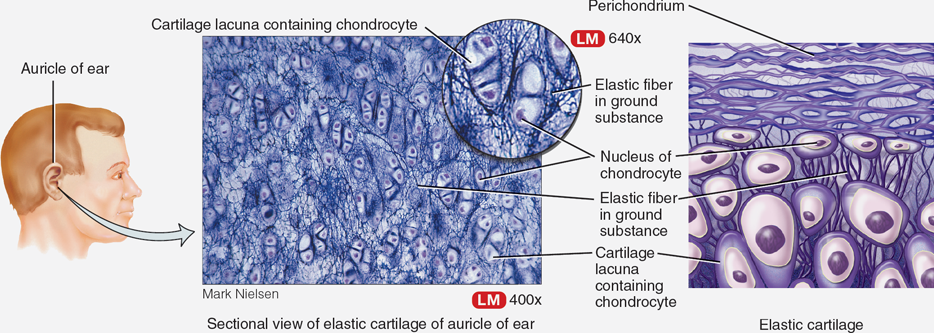
Elastic Cartilage

Cartilage that provides elasticity, found in the external ear.

45
New cards

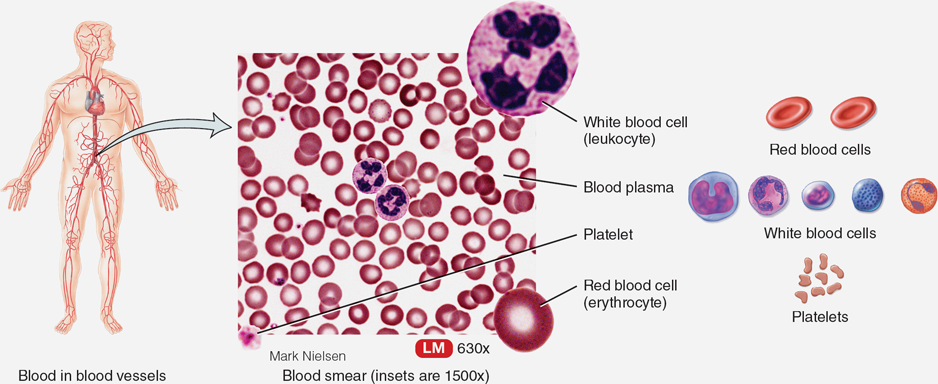
Blood

Connective tissue that transports oxygen and carbon dioxide, located in blood vessels.