organisation homeostasis
 Studied by 0 people
 Call Kai
 Learn
Learn Practice Test
 Spaced Repetition
 Match
Match Flashcards
 Knowt Play
1/13

There's no tags or description
Looks like no tags are added yet.
Name | Mastery | Learn | Test | Matching | Spaced | Call with Kai |
|---|
No analytics yet
Send a link to your students to track their progress
14 Terms
levels or organisation
atom
molecule
cell
tissue
organ
organ system
organism
circulatory
Heart, blood vessels and blood, blood transports oxygen, nutrients and removes waste materials.
Respiratory
upper and lower respiratory tract and lungs. movement or air into and out of the body
Nervous
Brain, spinal cord and nerves. voluntary and involuntary. receive, interpret and respond to stimuli.
Digestive
mouth, oesophagus, stomach, intestines and rectum. nutrients absorbed and waste products excreted.
integumentary
skin, sweat glands, and hair follicles. protects
Urinary
Kidneys, ureters, bladder, and urethra. filters blood and removes toxins and excess liquid
Lymphatic/immune
Bone marrow, thymus, spleen, adenoids, tonsils, lymph vessels and ducts that collect excess liquid (called lymph) from extracellular spaces in tissues and transport the fluid, immune response.
Reproductive
Different between males and females, penis, vagina etc
muscular
Muscles, ligaments and tendons. movement and control of the body
Endocrine
collection of glands that produce hormones
Skeletal
Bones offer protection and shape and movement
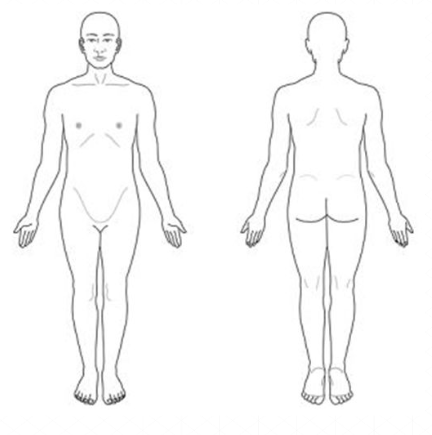
Anatomical position
the body is upright with feet parallel, and the arms hanging at the sides with palms facing forward.
 Note
Note  Flashcards (101)