Practical 3 (Digestive Written Questions)
 Call Kai
 Learn
Learn Practice Test
 Spaced Repetition
 Match
Match Flashcards
 Knowt Play
1/105

There's no tags or description
Looks like no tags are added yet.
Name | Mastery | Learn | Test | Matching | Spaced | Call with Kai |
|---|
No analytics yet
Send a link to your students to track their progress
106 Terms
Alimentary canal (Gastrointestinal Tract) (Functions)
Digest and absorbed food
Alimentary canal (Consist of)
Mouth, pharynx, esophagus, stomach, small intestine, large intestine, and anus
Accessory digestive organs (Consist of)
Teeth, tongue, gallbladder, salivary glands, liver, and pancrease
Mouth (F)
Physical breakdown of food (driven by the muscles of mastication)
What is the beginning of the digestive track?
Mouth
Mouth (Tissue)
Non/lightly keratinized stratified squamous epithelium
Non/lightly keratinized stratified squamous epithelium (Function)
Protects underlying tissues from abrasion
Esophagus (F)
Propels food and liquid from the pharynx through the diaphragm and into the stomach (peristalsis)
Is the Esophagus a closed or open tube?
Closed tube
Where does the Esophagus begin?
6th cervical vertebrae
What is the top layer of the Esophagus composed of?
Skeletal Muscle
What is the middle layer of the Esophagus composed of?
Skeletal muscle & Smooth muscle
What is the lower layer of the Esophagus composed of?
Smooth muscle
What is the inner layer of the Esophagus composed of? (Tissue)
Stratified squamous epithelium
What is the outer layer of the Esophagus called?
Adventitia
What tissue is the Adventita compsoed of? (Esophagus)
Connective tissue
What are the 4 layers of Esophagus composed of?
Mucosa. Submucosa, Muscularis externa, and Adventita
Stomach (Function)
Mechanically churns food into liquid chyme and uses pepsin and hydrochloric acid to chemically digest proteins
Stomach (Mucosa Tissue)
Simple columnar epithelium
Stomach (Muscularis Externa Tissue)
Smooth muscle
Stomach (Muscularis Externa Layers)
Inner oblique layer, middle circular layer and outer longitudinal layer
Stomach (Serosa Tissue)
Connective Tissue and Simple Squamous Epithelial
Stomach (Mucosa) has depressions called?
Gastric pits
Which side of the body is the Stomach on?
Left side
Where does the Stomach receives it’s contents from?
Esophagus
The inner surface of the Stomach haas a series of folds called?
Rugae
Rugae (F)
Allows expansion of the stomach
Small Intestine (F)
Primary site for chemical digestion of food and absorption of nutrients
Small Intestine (Inner lining tissue & cells)
Simple columnar epithelium with goblet cells
Small Intestine (3 parts)
Duodenum - Ileum - Jejunum
Duodenum (Histology)
Duodenal (Brunner’s) glands
Ileum (Histology)
Peyer’s patches
Jejunum (Histology)
Intestinal crypts
Pancrease (Functions)
Secretes pancreatic juices and neutralizes stomach acids
Absorptive Cells (Functions)
Absorb food into the blood and produce enzymes
What distinguishes the Small Intestine from the Stomach and Large intestine?
Villi
Villi (Small Intestine) (F)
Increase surface area of the mucosa
Lacteals (Small Intestine) (F)
Transport lipids as chylomicrons via lymphatic vessels to bloodstream
Large Intestine (F)
Absorbs water, some vitamins, solutes, and form feces
Large Intestine (6 parts)
Cecum - Ascending colon - Transverse colon - Descending colon - Sigmoid colon - Rectum
Large Intestine (Mucosa tissue)
Simple columnar epithelium
Large Intestine (Histology)
Large number of goblet cells and wall is concentrated with lymphocytes
Large Intestine & Stomach don’t have what Histology structure?
Villi
Anal Canal (Tissue)
Stratified squamous epithelium (resist abrasion during defecation)
Salivary Glands (F)
Secretes saliva in the mouth
Salivary Glands (Parotid)
Secretion is mainly serous (H2O and enzymes)
Salivary Glands (Submandibular)
Secretion is mixed with mucinous and serous
Salivary Glands (Sublingual)
Secretion is mainly mucinous (mucus and enzymes)
Appendix (F)
Houses lymphoid nodules that play a role in the immune system
Liver (Functions)
Produce bile and plasma proteins; detoxifies harmful material
Liver (Histology Structures)
Central vein, hepatic lobules, hepatocytes, and portal triad
Gallbladder (F)
Stores bile
True/False: Does the Pancrease have Endocrine and Exocrine functions?
True
Goblet Cell (Functions)
Secretes mucus to lubricate the digestive tract and protect the epithelial lining from acid and friction
Rectum (F)
Temporally stores formed feces until they can be eliminated from the body (defecation)
Spleen (Functions)
Filters old red blood cells from blood and initiate immune response
Epiglottis (F)
Protects the opening of the larynx during swallowing
Trachea (F)
Conducts air from larynx to the lungs
Propulsion (Swallowing)
Oropharynx
Propulsion (Peristalsis)
Esophagus, stomach, small intestine and large intestine
Chemical Digestion
Stomach, small intestine and large intestine
Absorption (Nutrient & H2O to blood vessels and lymphatic vessels)
Small Intestine
Absorption (H2O to blood vessels)
Large Intestine
Mechanical Digestion (Chewing)
Mouth
Mechanical Digestion (Churning)
Stomach
Mechanical Digestion (Segmentation)
Small Intestine
Absorptive Cells (Simple Digestive Function)
Absorption
Appendix (Simple Function)
Immune Role
Epiglottis (Simple Digestive Function)
Propulsion and Swallowing
Esophagus (Simple Digestive Function)
Propulsion (peristalsis moves bolus)
Gallbladder (Simple Digestive Function)
Secretion
Goblet Cells (Simple Digestive Function)
Secretion (mucus)
Lacteal (Simple Digestive Function)
Absorption (lipids and fats)
Large Intestine (Simple Digestive Function)
Propulsion, chemical digestion, absorption
Liver (Simple Digestive Function)
Secretion (produces bile)
Mouth (Simple Digestive Function)
Ingestion and mechanical digestion
Pancreas (Simple Digestive Function)
Chemical Digestion (enzymes)
Rectum (Simple Digestive Function)
Defecation (stores feces)
Rugae (Simple Digestive Function)
Mechanical Digestion
Salivary Glands (Simple Digestive Function)
Secretion
Small Intestine (Simple Digestive Function)
Propulsion, chemical digestion, mechanical digestion and absorption (primary site)
Spleen (Simple Function)
Blood filtration
Stomach
Propulsion, chemical digestion, mechanical digestion (churning)
Trachea (Simple Function)
Air passage
Villus (Simple Digestive Function)
Absorption (nutrients)
Pathway of Food (Alimentary Canal)
Mouth - Pharynx - Esophagus - Stomach - Small Intestine - Large Intestine - Rectum - Anus
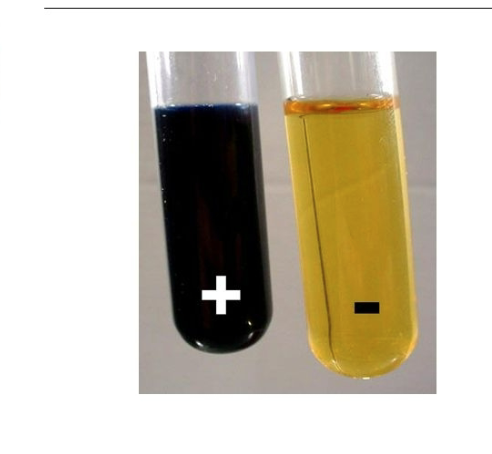
What is this test?
Iodine Test
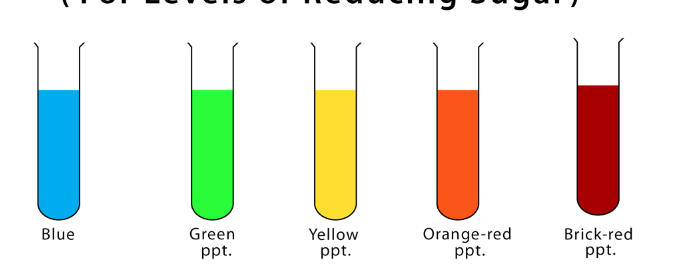
What is this test?
Benedict’s Test
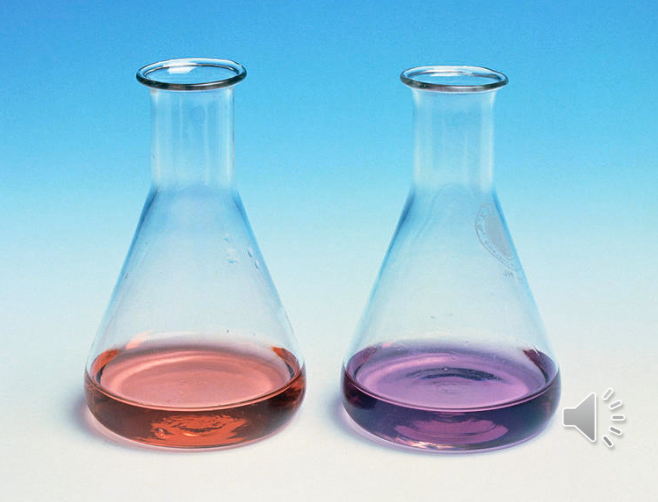
What is this test?
Litmus Test
Iodine test (What chemical/reagent is used?)
Iodine and potato starch solution
Iodine test (Procedure)
Add starch solution to test tube - add few drops of Iodine - observe color change
Iodine Test (+) Result
Blue/Black = starch present
Iodine Test (-) Result
Yellow/Brown = no starch
Iodine test (What are you testing for?)
Presence of starch
Benedicts Test (What chemical/reagent is used?)
Benedicts reagent and maltose (sugar) solution
Benedict’s test (Procedure)
Add sugar solution to test tube - add Benedict’s reagent = heat in boiling water bath - observe color change
Benedict’s test (Results - Blue color)
No reducing sugar present
Benedict’s test (Results - Green color)
Trace amount of reducing sugars
Benedict’s test (Results - Yellow color)
Low/moderate amount of reducing sugars
Benedict’s test (Results - Orange/Red color)
Large amounts of reducing sugar

