20th Century Latin American Art: Styles, Themes, and Key Artists
 Studied by 0 people
 Call Kai
 Learn
Learn Practice Test
 Spaced Repetition
 Match
Match Flashcards
 Knowt Play
1/8

There's no tags or description
Looks like no tags are added yet.
Name | Mastery | Learn | Test | Matching | Spaced | Call with Kai |
|---|
No analytics yet
Send a link to your students to track their progress
9 Terms
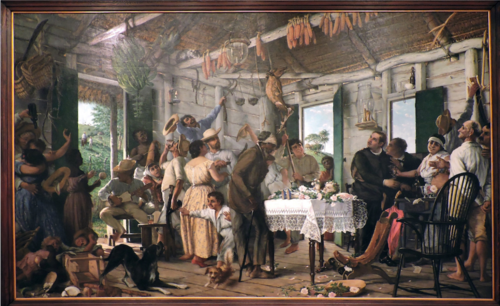
Realist style. - paints a "celebration" of a deceased like of a child. - Oller is actually trying to criticize this celebration in this painting. - Contrary to what many see it as today. - composite painting using still life, landscape, and portraits.
Oller, The wake, 1893, puerto rico
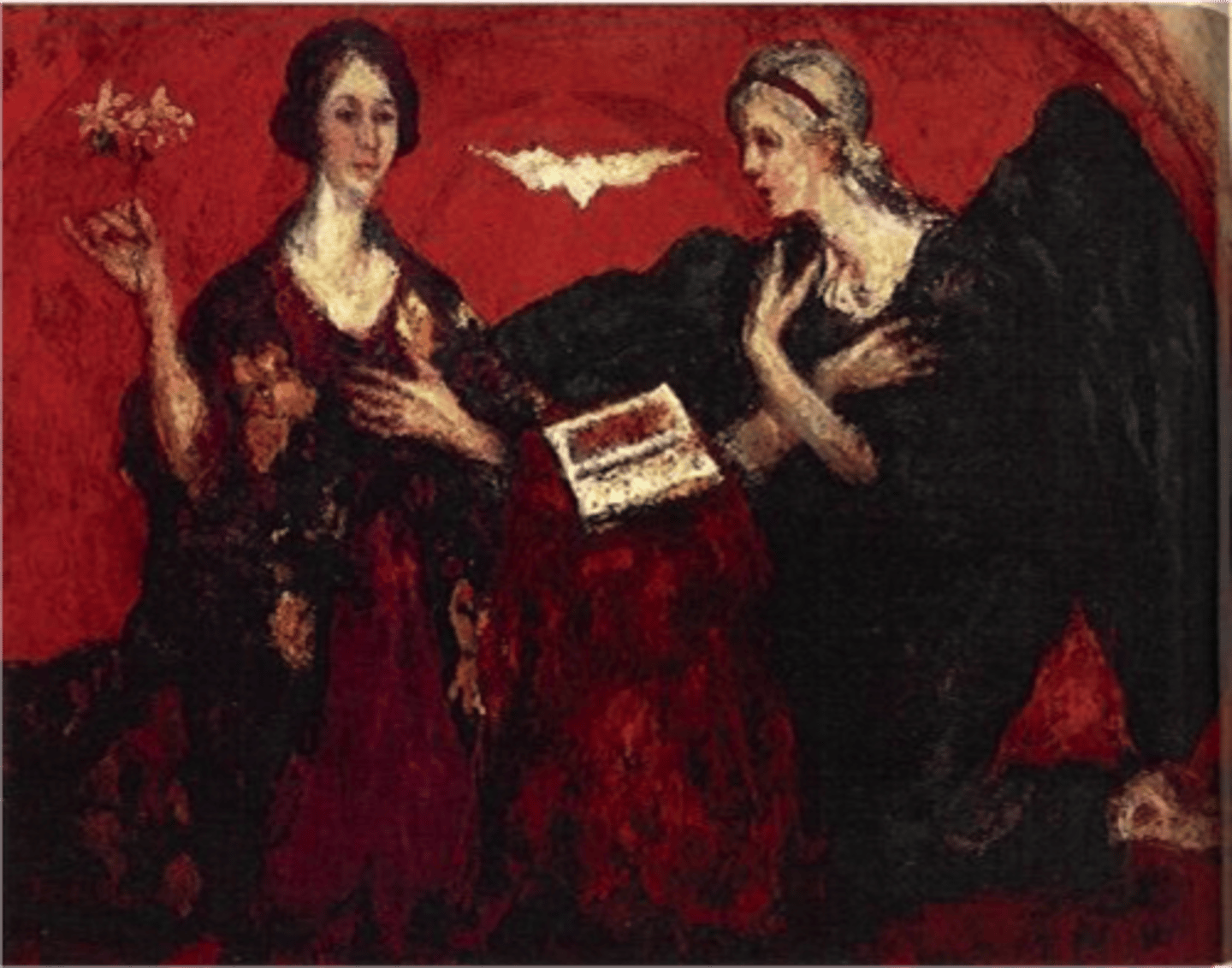
Depicts a contrast between an angel with black wings and a holy dove in the center. - the angel is actually a women. - the red in the background pushes the figures to the fore ground- neo impressionism - contrasts good and evil
De santa maria, the annunciation, 1920s, colombian
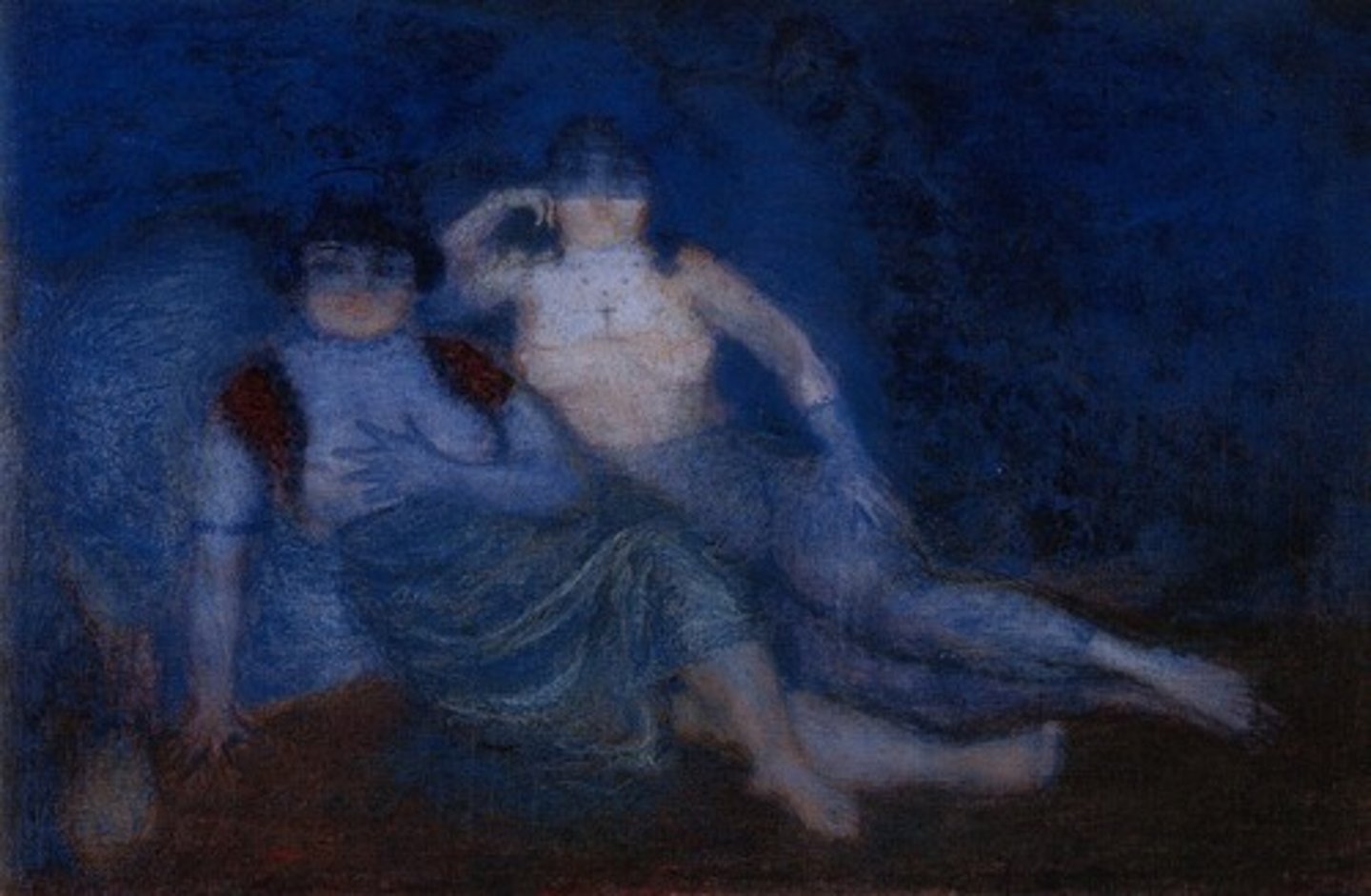
neo - Expressionistic painting - was made in the time of reverons blue period. - ironic in the sense that prostitutes are wearing crosses.
Reveron, the cave, 1919, venezuela
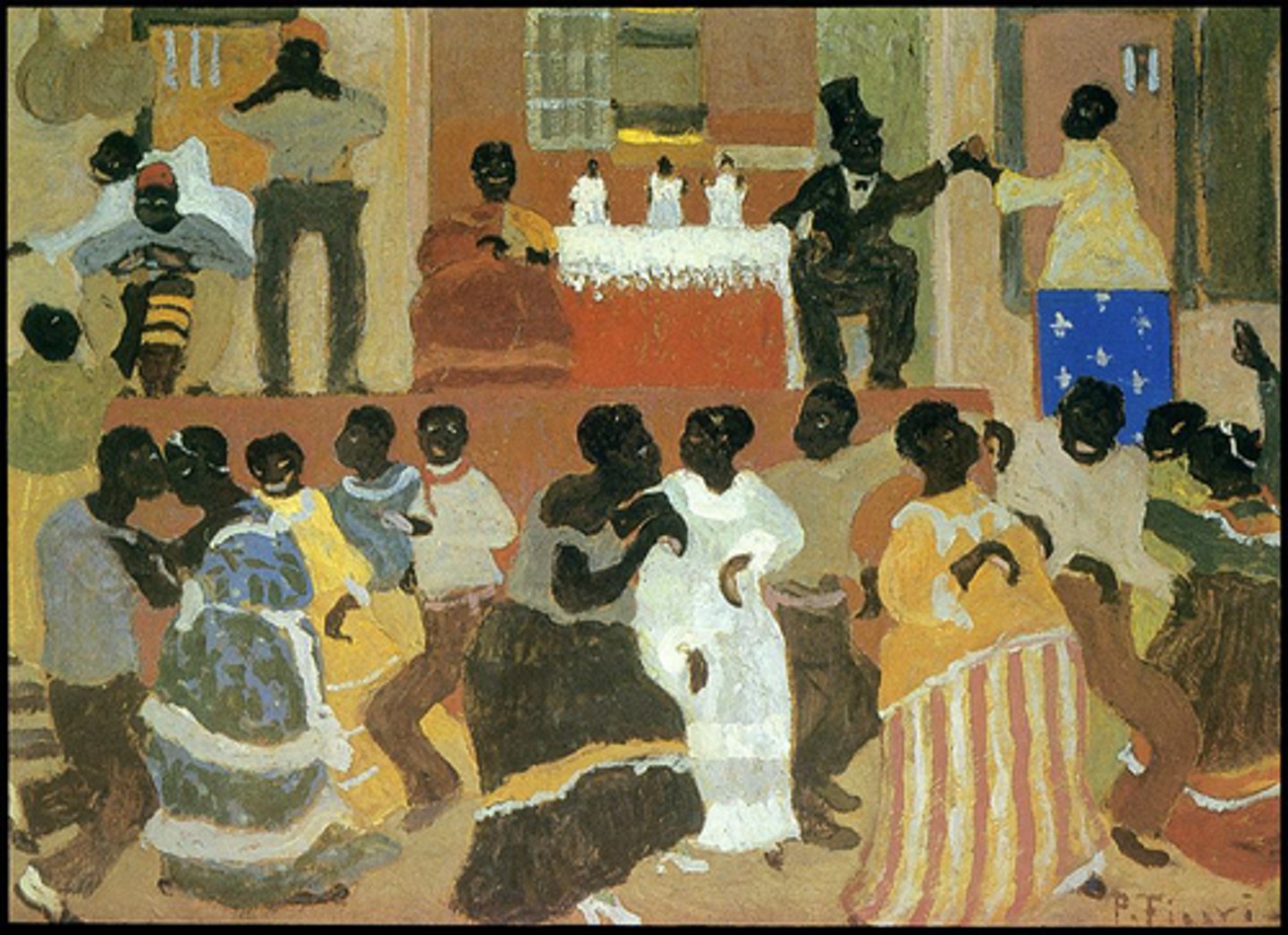
Shows a celebration of african americans after they were emancipated. - the white clothes are the clothes of their former master. - uses expressive colors and thick paint - neo impressionism
Figari, Candombe, 1920s, uruguay
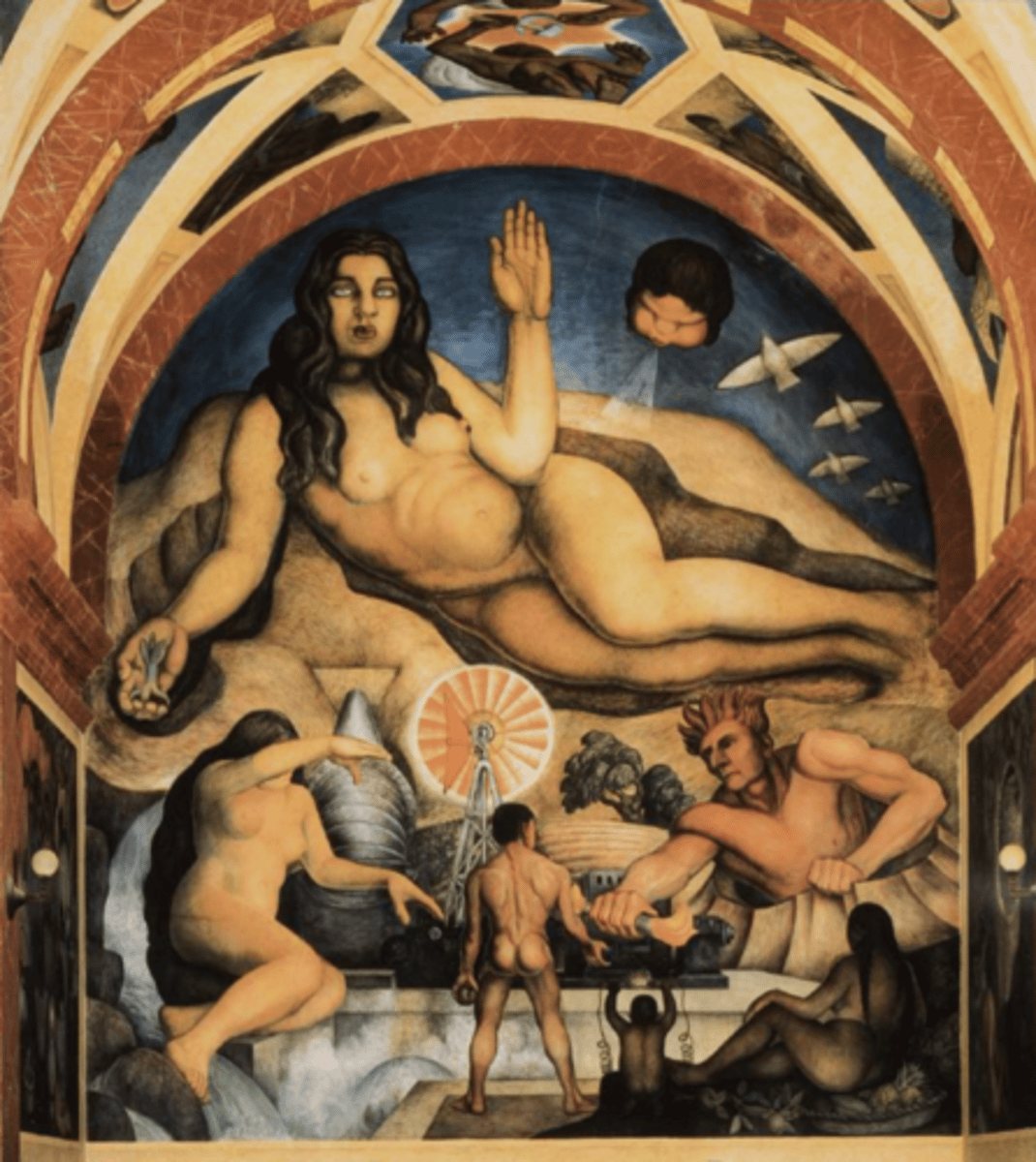
Mexican muralism - depicts adam and eve. - prometheus is depicts handing fire to eve. - the lady in the back is his second wife. Pregnant with his daughter.
Rivera, the liberated earth, 1926, mexico
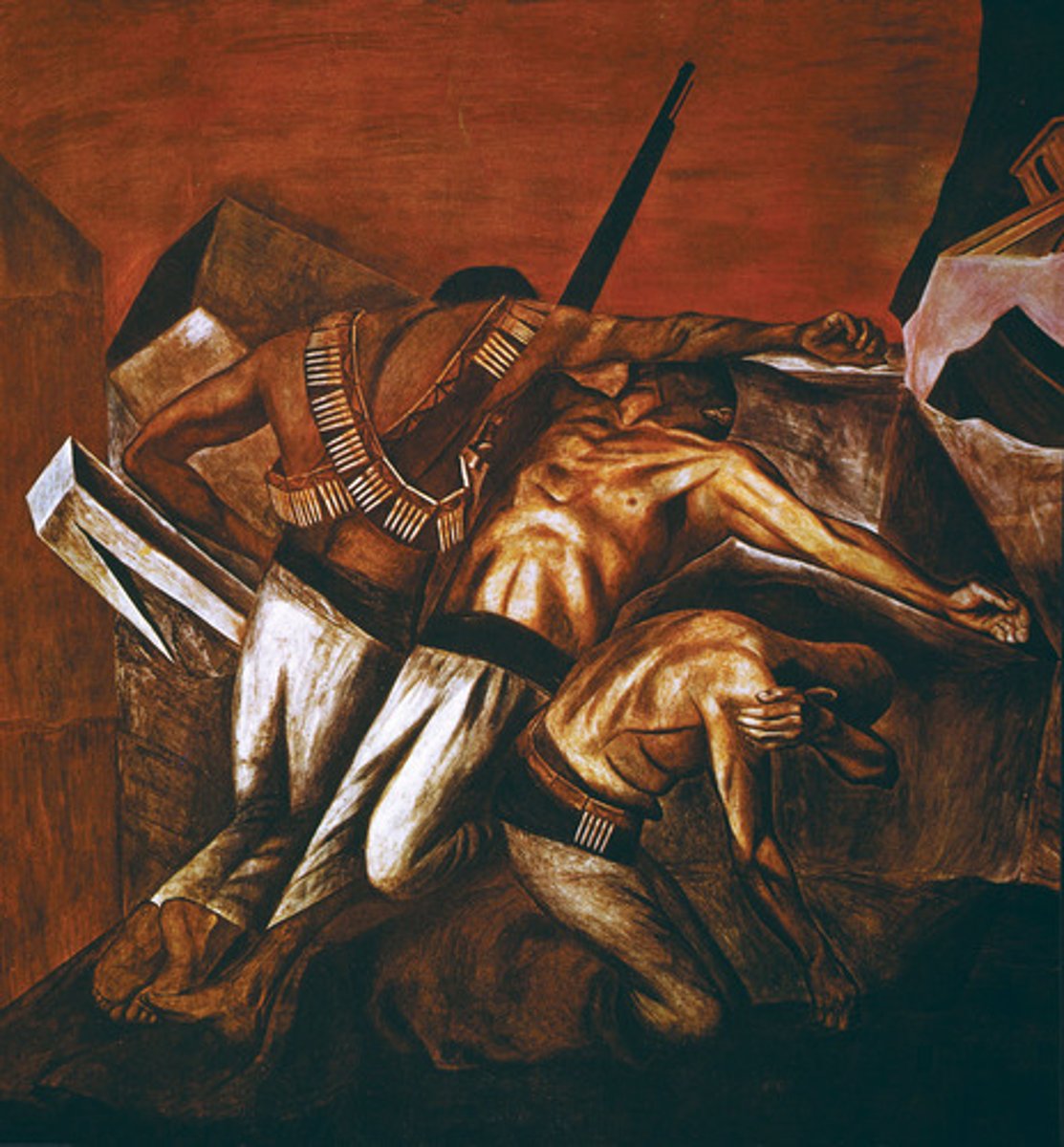
The bodies and rifle depict a cross. - shows the horrors of war. - a violent red in the back showing violence and revolution. - mexican muralism - orozco was able to show emotion without showing the faces of the figures
Orozco, the trench, 1920s, mexico
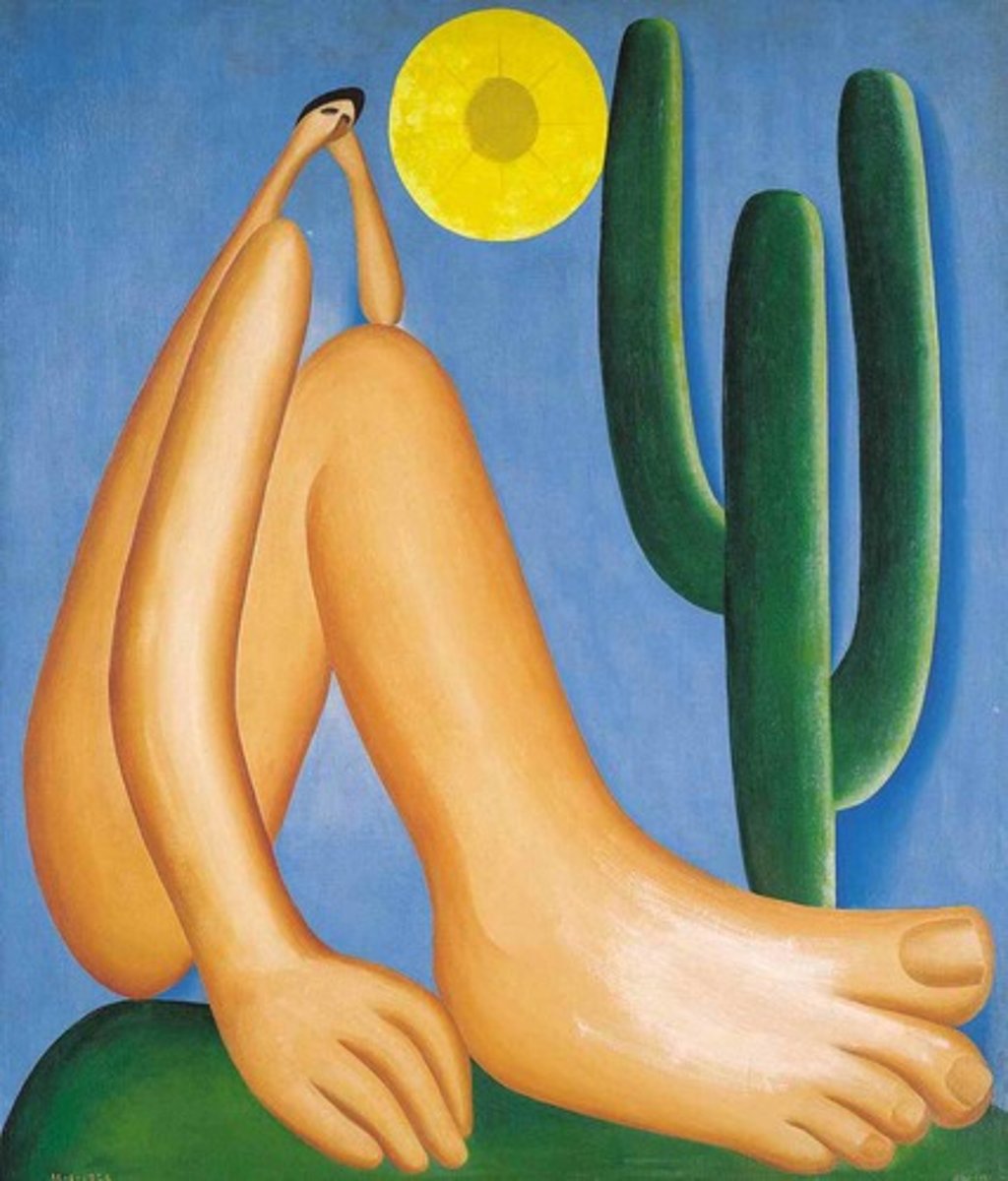
Vanguard style - illustrates anthropomorphism in brazil - larger limbs shows the physical work that brazilians do. - uses vibrant colors - simplified form
Do Amaral, Sabaporu, 1920s, Brazil
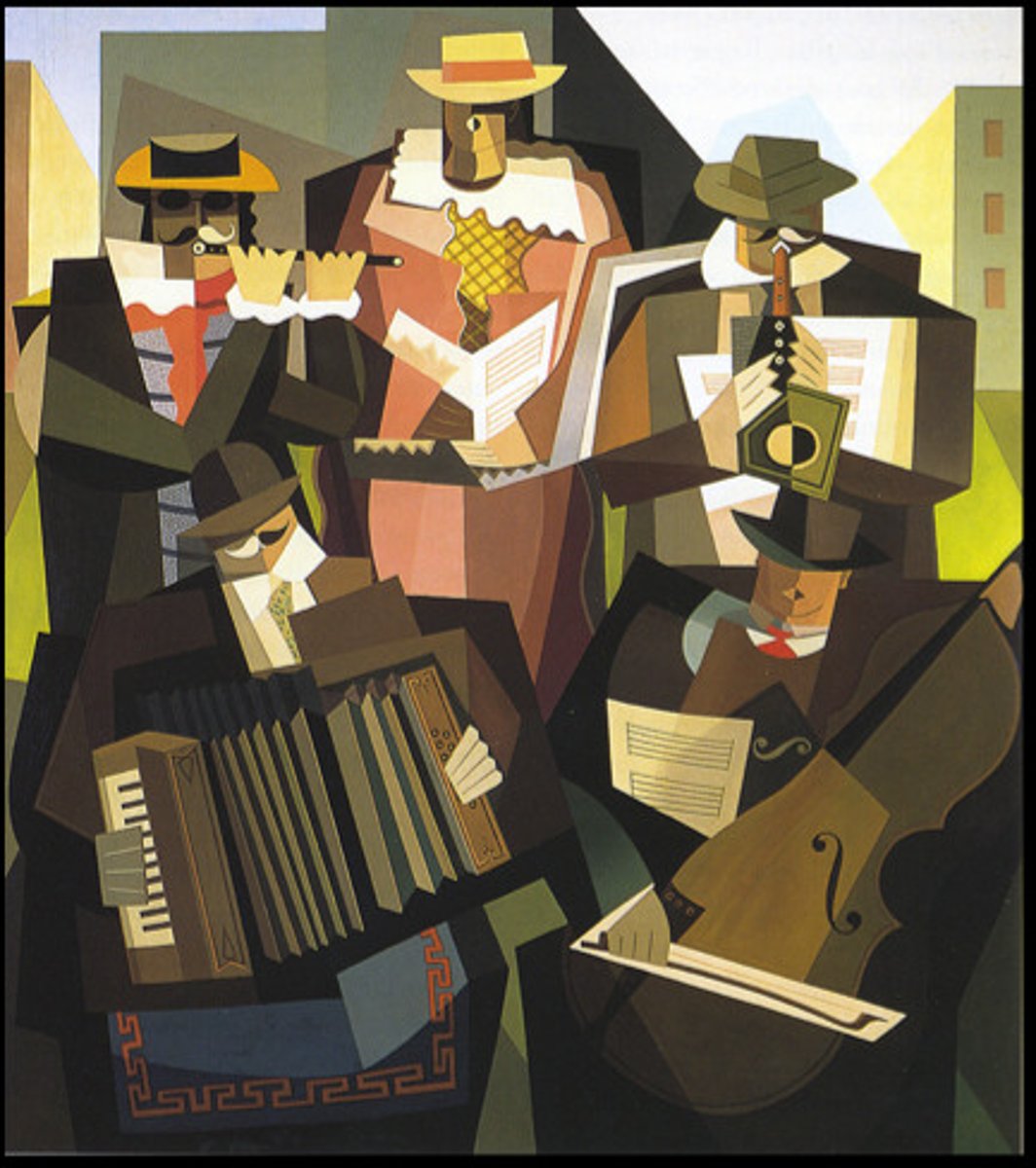
Cubism - contrasts two cultures by using a european style to depict a tango. - many instrument are seen such as a bandoneon - takes a lot of inspiration from europe, as petorutti studies there
Petorutti, the quintet, 1920s, argentina
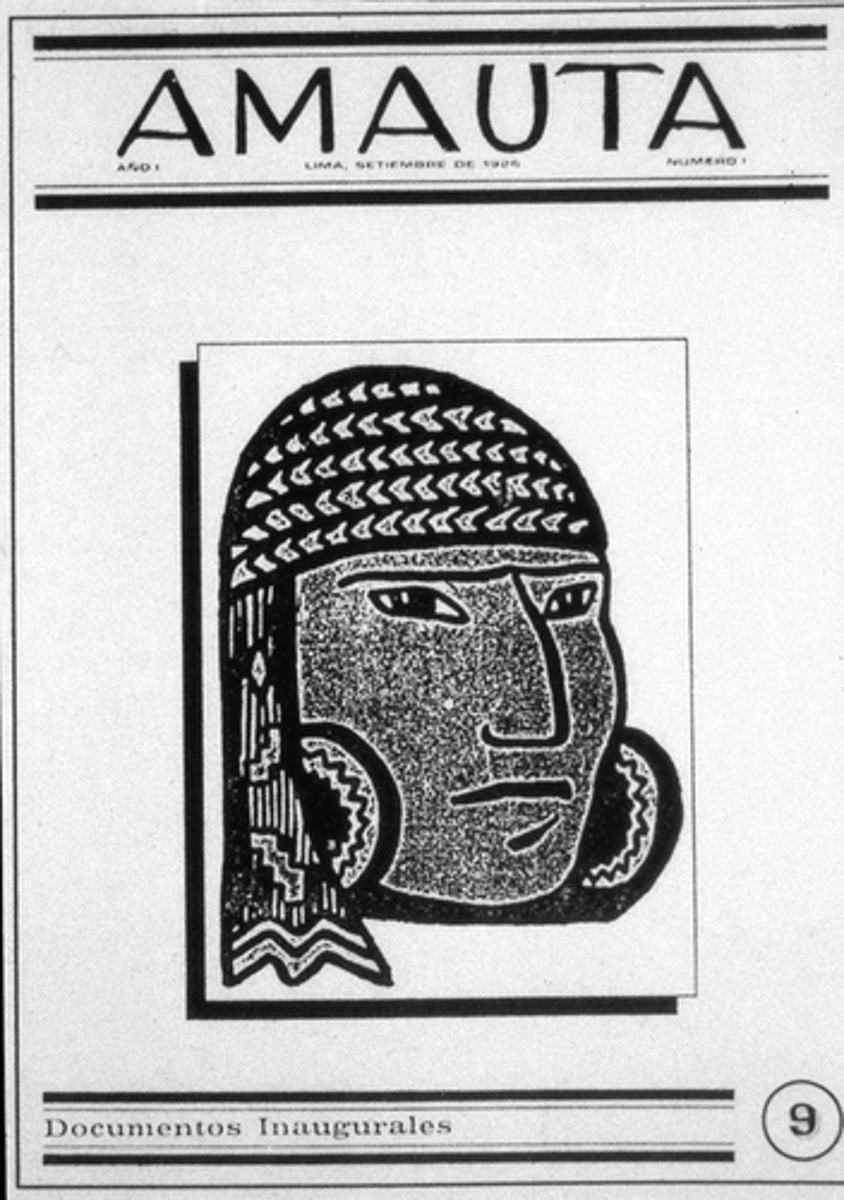
Indigenism, - depicts an indigenous man, - woodcut
Sabogal, cover of Amauta magazine, 1920s, peru