art of edo period exam 3
 Studied by 0 people
 Call Kai
 Learn
Learn Practice Test
 Spaced Repetition
 Match
Match Flashcards
 Knowt Play
1/37

There's no tags or description
Looks like no tags are added yet.
Name | Mastery | Learn | Test | Matching | Spaced | Call with Kai |
|---|
No analytics yet
Send a link to your students to track their progress
38 Terms
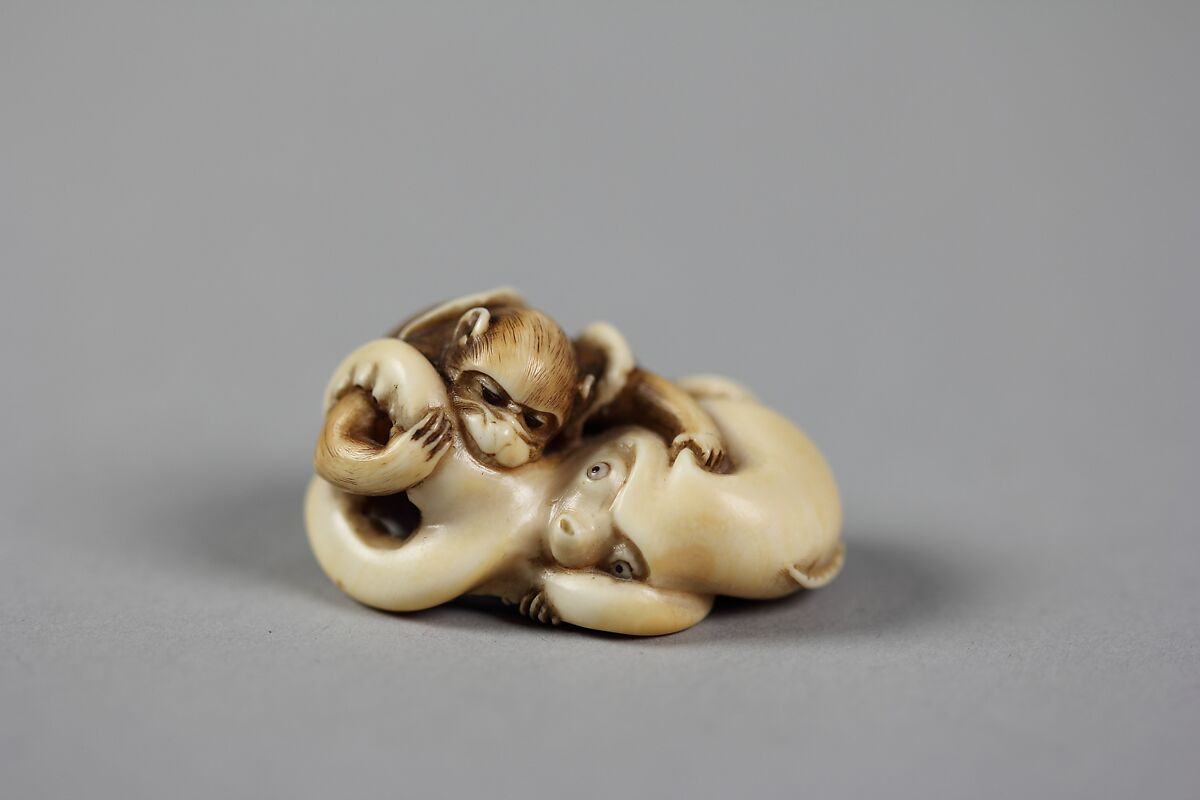
Monkey Fighting Octopus
Anon.
19th C.
Makers mark on the bottom of the netsuke, artist name and date when it was made.
Storytelling, FOLKTALE netsuke - dragon king's daughter is very ill, octopus is representative of the daughter that is ill. A monkey's liver to help save the daughter, an octopus fighting the monkey for it (?). (separate) Tortoise is sent on land to get monkeys to bring to the sea. Two figures in combat, becoming personal, alludes to the larger story telling of it. Enlightenment does not lie outside of yourself, it is within you.
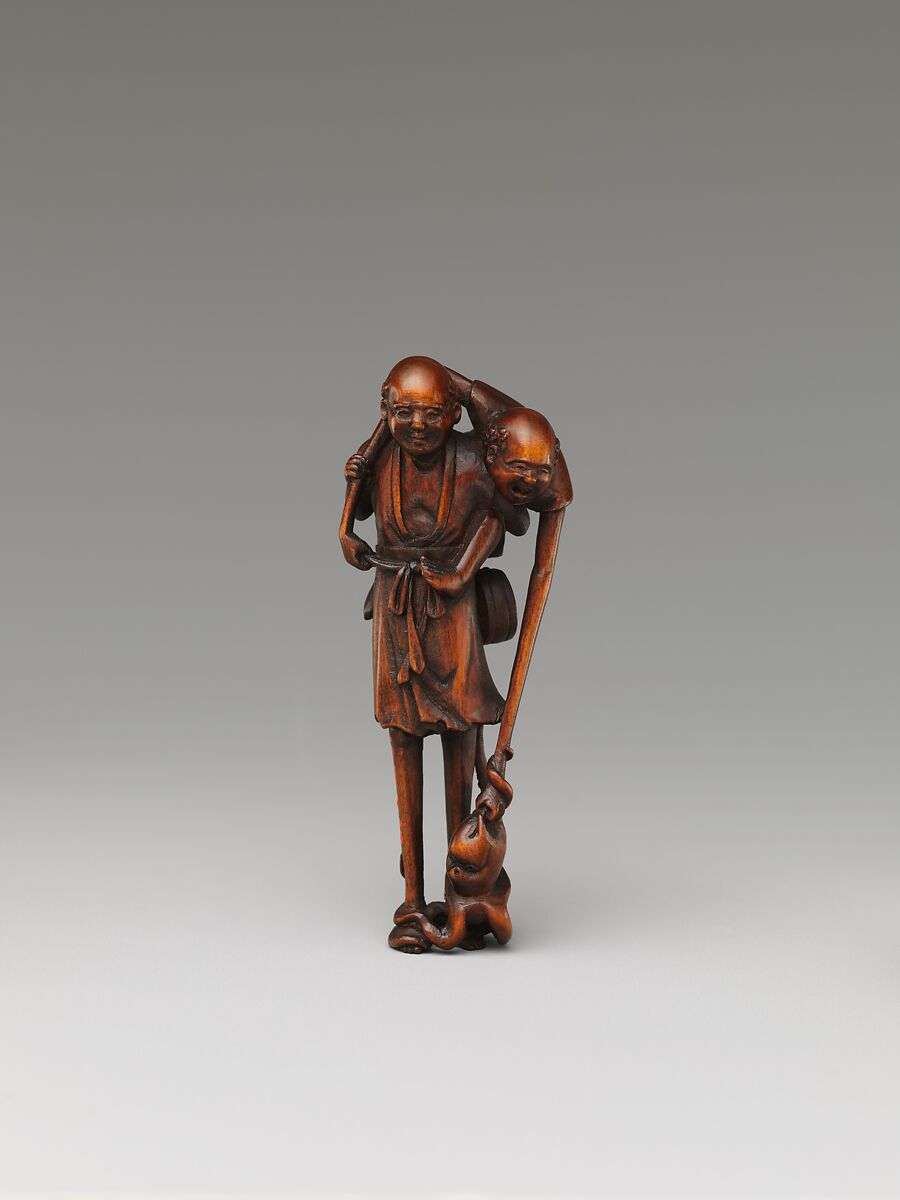
Ashinaga and Tenaga
Anon.
18th C.
Human figures/tall figures can be taller for netsuke. Ashinaga - long legs. Tenaga - long arms. They both have these components respectively and help each other out in tandem for their long limbs. Work together to fish the ocean. Long leg individuals go through the ocean and not drown, long arms grab things in the ocean/fish. Representative of needing one another in situations of being unable to do things alone.
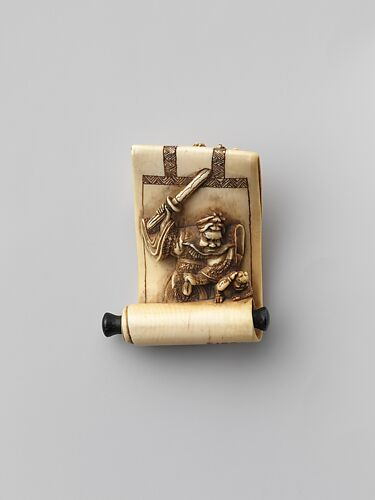
Shoki with Demons on a Hanging Scroll
Anon.
19th C.
Netsuke. Demon and shoki coming to life outside of the scroll. On the back is an untied hook, it is unrolled as the Shoki and demons are released from the scroll. Shoki is a protective spirit, usually seen in Chinese work and folklore to ward off demons.

Scene from the Noh play Dojoji
Anon.
19th C.
Netsuke. Dramatic scene where Yokai in Noh play is rattling and shattering dragon/bell Kabuki theater. when the bell is lowered, the female mask (and the rest of the costume) transforms into the demonic-masked snake entity (similar to the netsuke) .- hen, the woman transformed into a monstrous snake appears from inside. After a furious battle, the poisonous snake burns herself with her own flames, which is supposed to burn the bell, and disappears into the deep bed of the Hidaka-gawa River. (read more on google classroom)
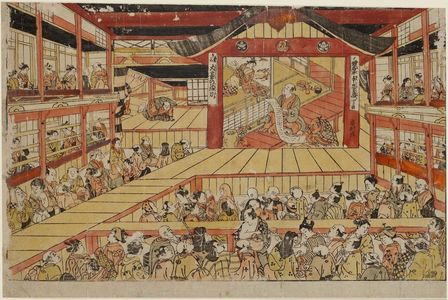
A Performance at Ichimura Theater
Okumura Masanobu
18th C.
One woodblock, hand colored after it’s printed.
Series of events that took place in the 18th century, masterless samurai that want their revenge. Someone murdered their master/overlord, overlord had to commit suicide. Basically a play about discovering the suspect and getting their justice. Piece represents the performance of this happening, a lot of plays based off of real life events. “Letter reading scene”, in act 7 of the play. Tan-e. Hand colored prints are recognizable most times by the pattern. Orange-red-yellowish pigments.
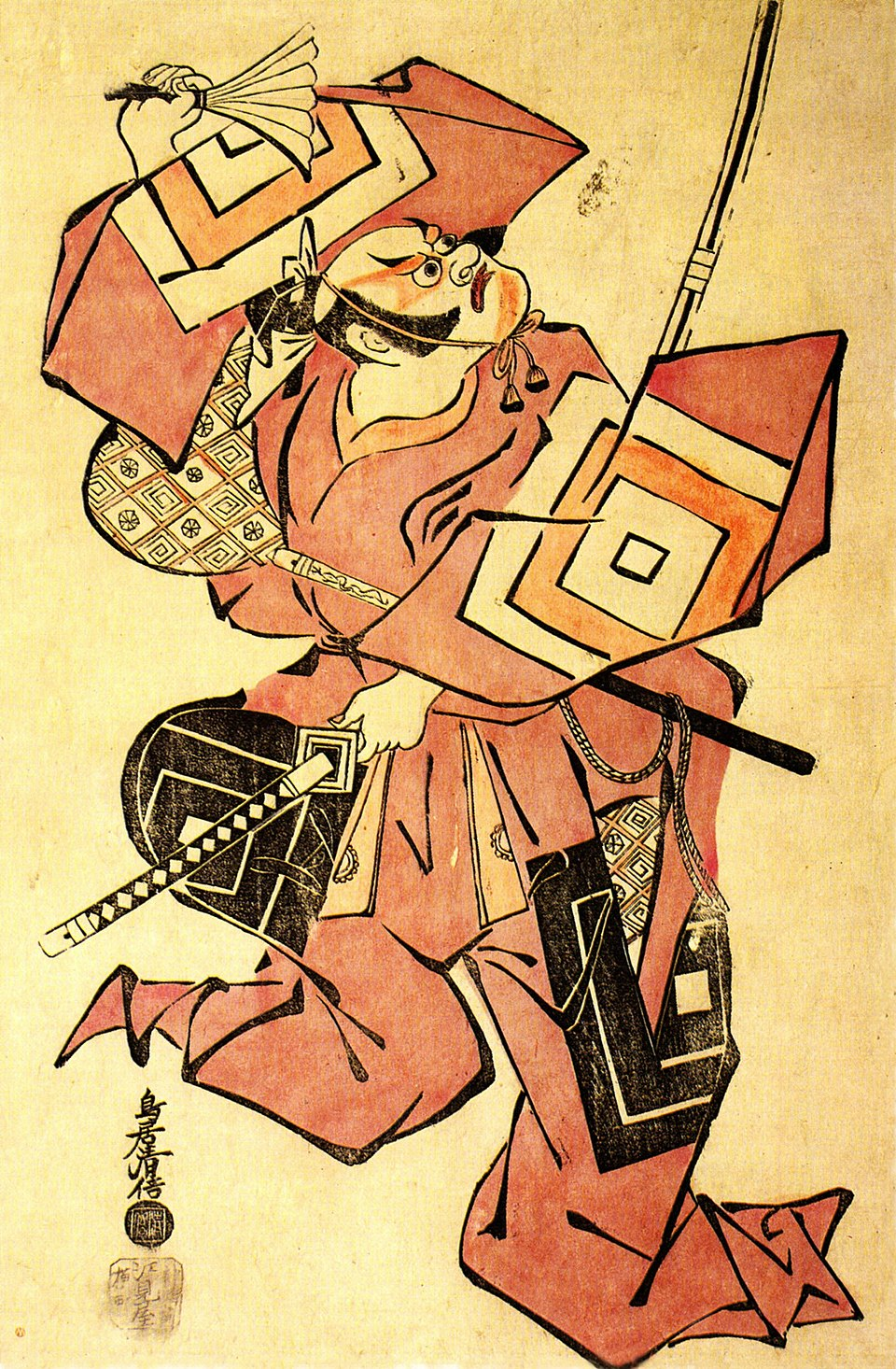
Danjuro in Shibaraku
Torii Kiyomasu
18th C.
Shibaraku - popular Kabuki play known for it’s dramatic makeup and costumes. Actor portraits, tan-e, mie (look up more)
Danjuro is part of a very famous acting family. Very poster-like piece, popular actor in a popular piece he was in. Very angular lines from top to bottom. Very different from two lovers. Torii school used the angular lines often, over exaggeration. Representing guardian deity at shrines.
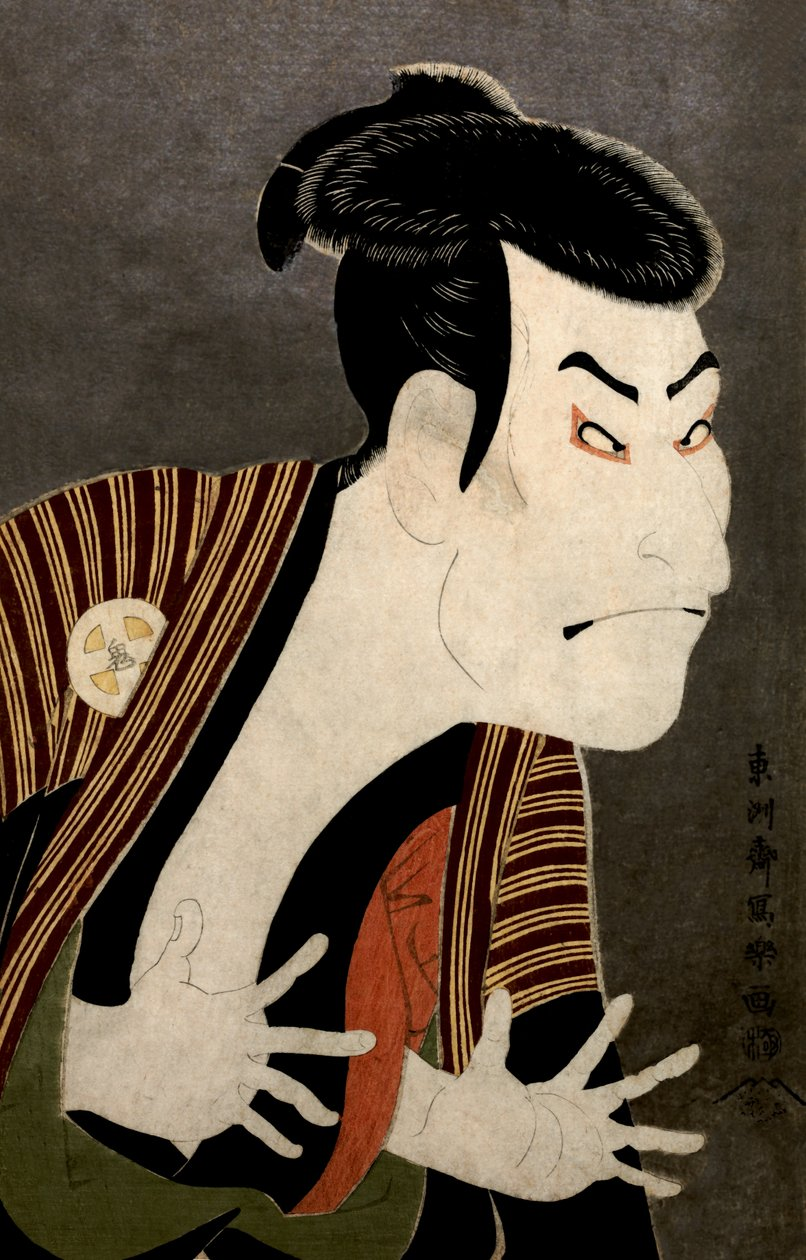
Actor Otani Oniji
Tosuhai Sharaku
18th C.
Kabuki actor Otani Oniji III as Yakko Edobei in the play Koi nyobo somewake tazuna – The Colored Reins of a Loving Wife. Multi-block color print.
Bringing hands into his prints to emphasize exaggerated looks.
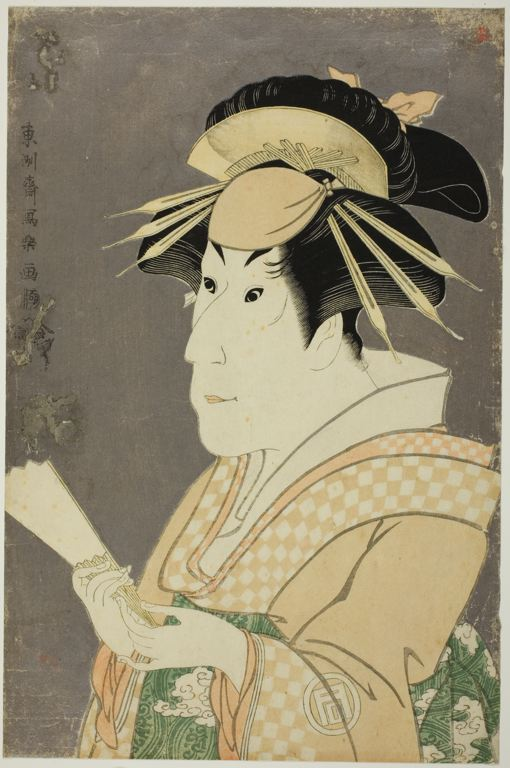
Actor as Courtesan
Tohusai Sharaku
18th C.
Actor in this image, Sanogawa Ichimatsu III was a well known Kabuki actor known for playing female roles as a male (onnagata)
Tradition of onnagata began after the shogunate banned woman from performing in Kabuki theater / on stage. (1629)

Girl on her way to the Sinto Shrine
Suzuki Harunobu
18th C.
Harunobu was notable for his nishiki-e (vibrant, multiblock woodcut prints)
Torii represents that of Sinto Shrine
Depiction of Osen, a server at the teahouse near Kasamori-inari shrine
It is supposed to be a mitate (type of artistic allusion) of a work by Hokusai where a Poet passes by Aridoshi Shrine.
Ukiyo-e
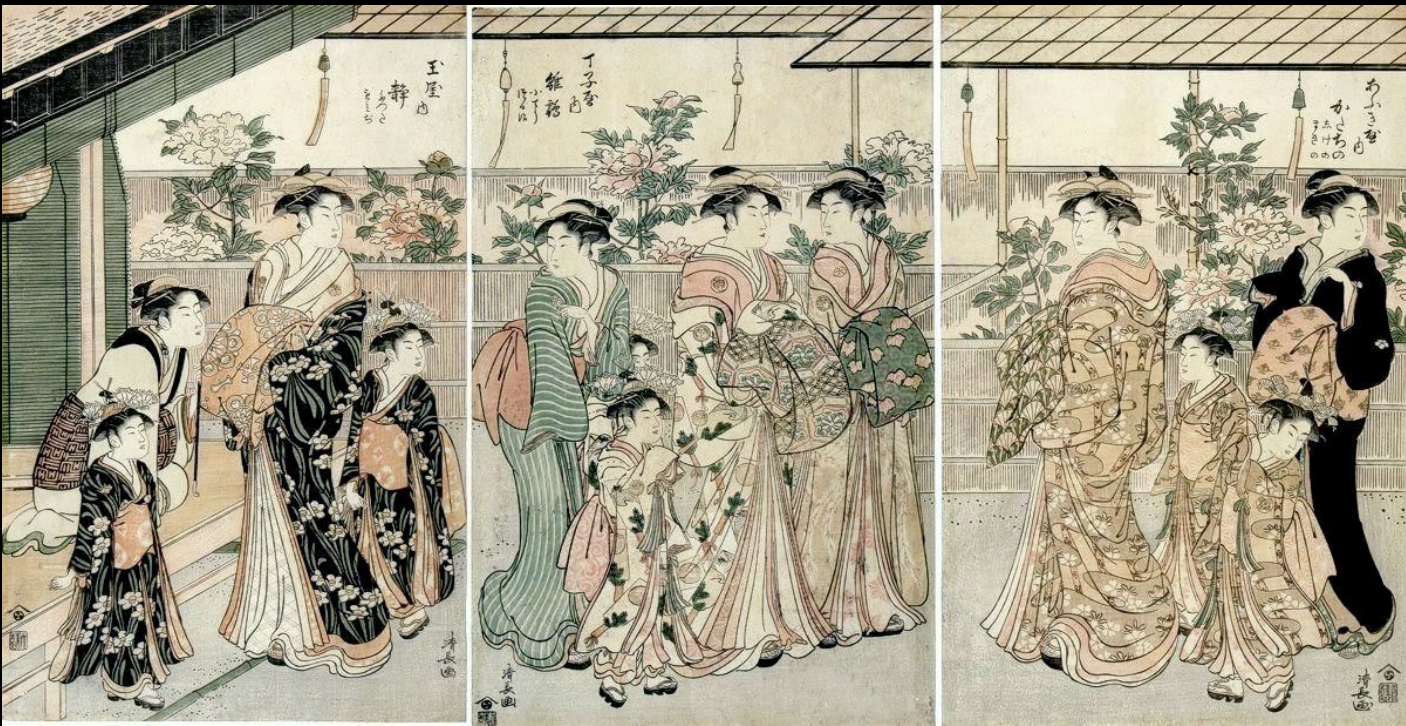
Yoshiwara Scene
Torii Kiyonaga
18th C.
Nishiki-e
Yoshiwara - red-light district in Edo known for it’s courtesans appreciated for their skills in companionship, conversations, taste in music and poetry. Many scenes of Yoshiwara were recorded in Ukiyo-e and this is an example of one. TLDR, entertainment industry district.
Underrobe - long life and congratulations
Piece is representative of social hierarchies in these circles -
Kamura - young girl courtesans
Shinzo - those in their teens
Kamuro - Experienced courtesans, took on a “manager” role. the highest role in the hierarchy
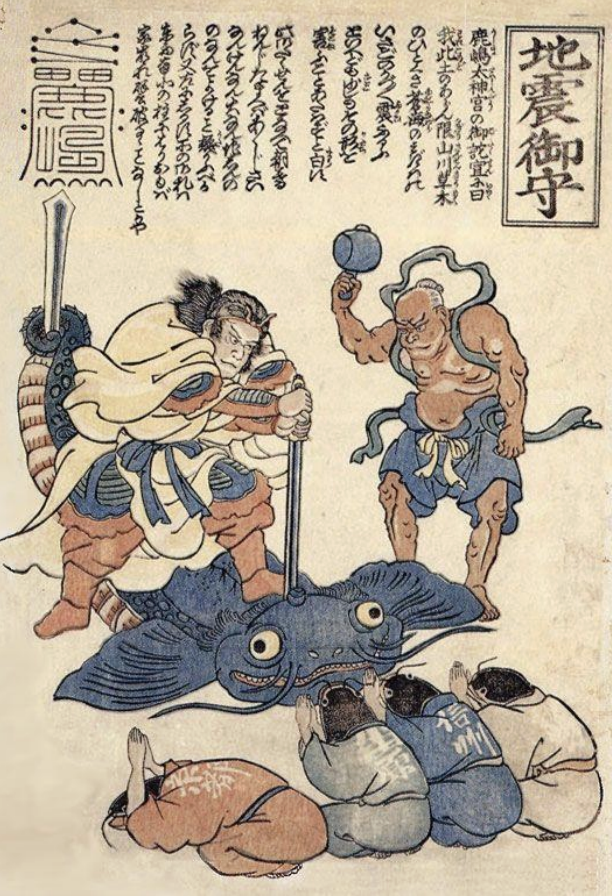
Protection against Earthquakes
Anon.
19th C.
Analogy for preventing/stopping earthquakes.
Kashima (god of thunder/sword god) deity frequently seen defeating catfish (representation for earthquakes/natural disasters, class disparity, inequality. prints were used as a protective omen or manifestation for safety)
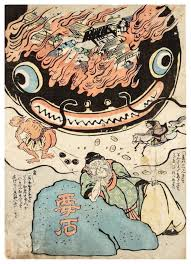
Namazu and the Foundation Stone
Anon.
19th C.
Catfish print.
Thunder deity Kashima shown.
Ebisu - god of luck, fishermen, and prosperity
Kanama ishi - foundation stone of the Kashima Shrine

Tipsiness following the Great Namazu
Anon.
19th C.
2 prints together.
Further on Namazu-e
Representative of certain classes or professions that would either benefit or have a disadvantage in relation to the earthquake.
Redistributiuon of wealth, when earthquakes happen people turn to quick solutions, fast food versus restaurant, in a way redistributes wealth through spending habits

Wrestlers (Manga)
Hokusai
19th C.
Work is representative of how repetitive study leads to better artistic practice and understanding. These sumo studies represent how Hokusai himself took this practice into his own work to help him become a better artist and incorporate these motifs in his own works. Sumo wrestlers could be a representation of hard work while keeping peace.
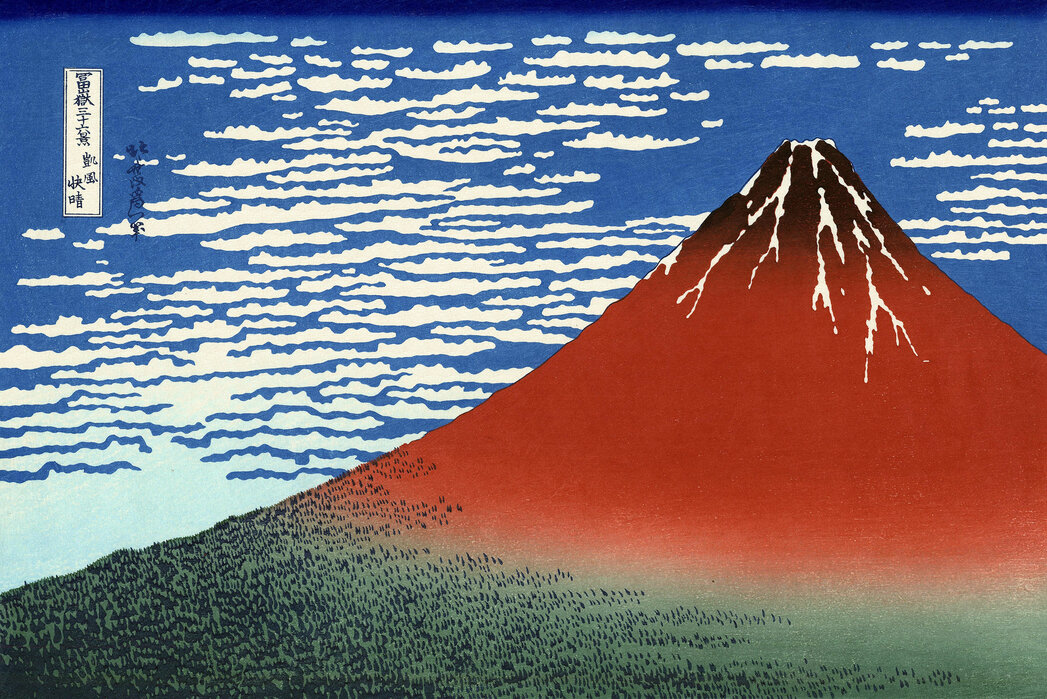
Red Fuji
Hokusai
19th C.
A piece included in Hokusai’s 36 views of Mt. Fuji series.
Fujisan - mt fuji

The Great Wave off Kanagawa
Hokusai
19th C.
Part of his 36 views of Mt. Fuji series.
Hokusai’s most well known work
36 prints of mt fuji, but the use of 26 immortalizes it (36 immortal poets
Nocturnal Snowfall at Kambara
Utagawa Hiroshige
19th C.
Apart of his 53 stations of the tokaido road series
This work is understood to be imaginary by Hiroshige, as he visited Kambara during the summertime and it is unusual for this area to have such heavy snowfall even during the wintertime. in between mountains
Although it is night time, the heavy snows create an equal light in the background.

Mannen Bridge in Fukagawa
Hiroshige
19th C.
Mannenbashi - mannen 1000 years, longevity
Festival observed at manne bridge, brought/bought birds, fish, turtles to release them.
Turtle representing longevity as well due to it’s ability to live for a long time.
Series representing 100 views of famous places in and around Edo
Releasing brought positive karma
Fuji from Koganei, Musashi
Hiroshige
19th C.
From 36 views of Fuji
Showing perspective of spring mountains and cherry blossoms, seen through a tree trunk in the Koganei area of the Musashi province, know modern day Tokyo. Example of ukiyo-e traditional style
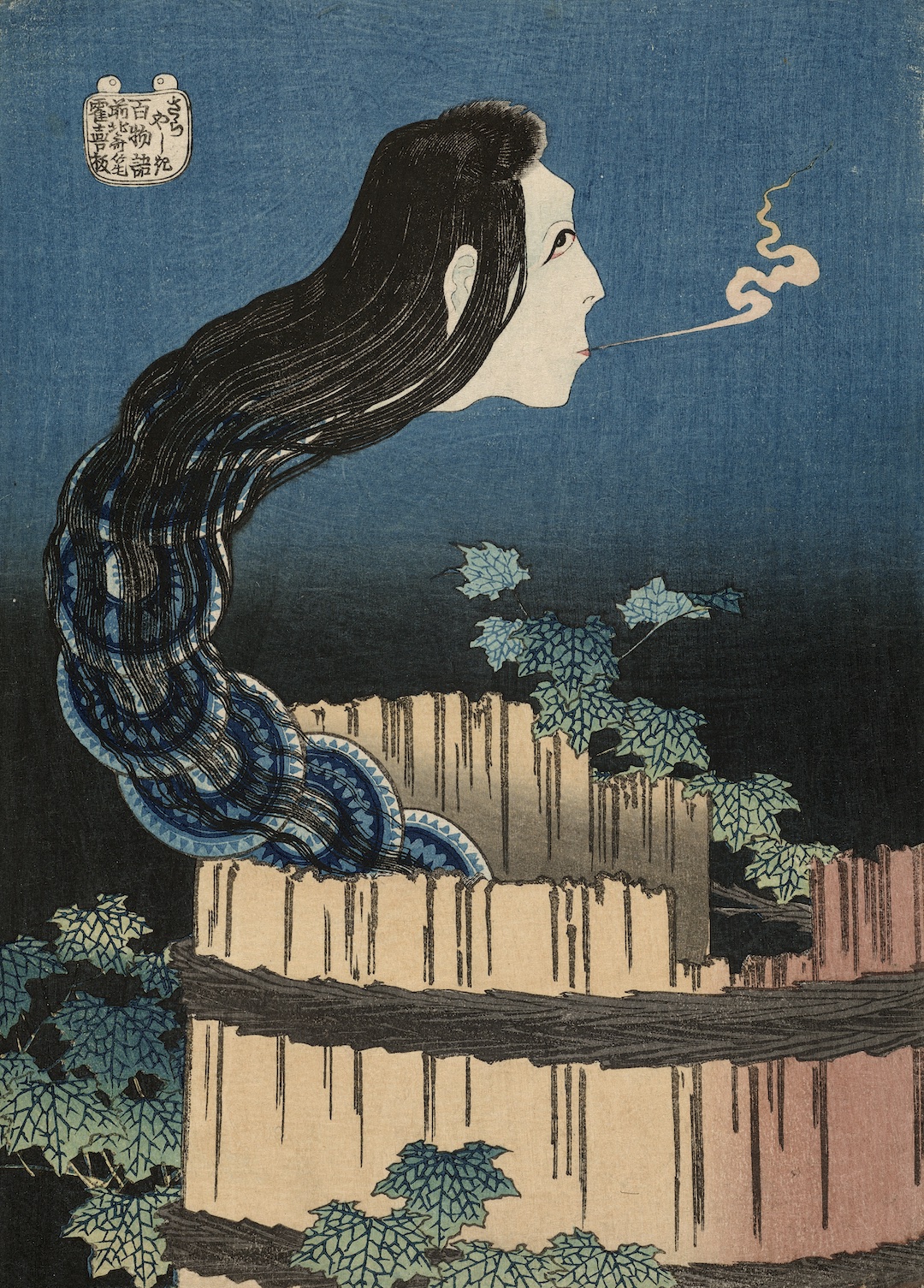
Okiku
Hokusai
19th C.
Apart of his 100 ghosts series.
Multi color block print.
Okiku was a former maid of a warrior, who accidentally broke a dish that waas treasured by her lord’s family. In a fit of anger, her lord slaughtered her and threw her corpse in the well of his yard. She became a ghost and haunted the well. This figure has inspired many modern day horror icons.
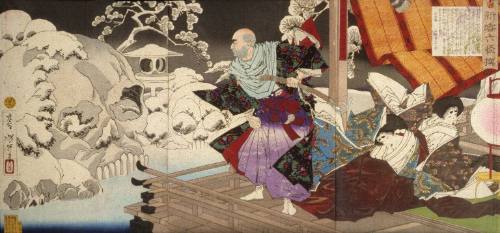
Taira no Kiyomori Seeing Skulls in the Snowy Garden
Yoshitoshi
19th C.
TNK - a military leader and kugyō of the late Heian period of Japan. He established the first samurai-dominated administrative government in the history of Japan - he was a cruel man who ruled with terror.
The rocks and skulls are representative of his victims who are there to haunt him. Karma in the form of mental illness - This hallucination continued, soon after Kiyomori fell to a terrible fever and died.
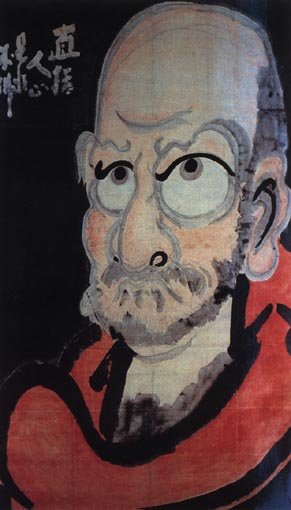
Daruma in Red
Hakuin
18th C.
Very large.
“See your own nature, and Become Buddha”
Zen art, focus on meditation. Daruma is major patriarch in Buddhism, but not a divine being just example of meditation practices.
Teaching us the enlightenment of Daruma’s practicies, promoting the same for the audience to do.
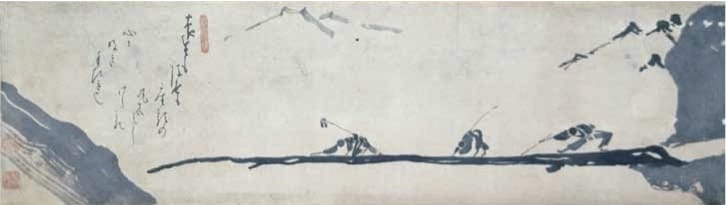
Blind Men Crossing a Bridge
Hakuin
18th C.
Hakuin was at a temple with a steep rivine and people could only cross using a log bridge.
Poem on lefthand side, profoundly serious but provoking image… Importance of meaning, rightmost one feels ahead to understand danger ahead. middle figure touches log path directly in front of him. leftmost figure with no shoes using hands and feet to distinguish what’s in front of him. Subtle brushstrokes for mountains to emphasize the vast unknown surrounding the figures. “A mind that can cross over is the best guide”
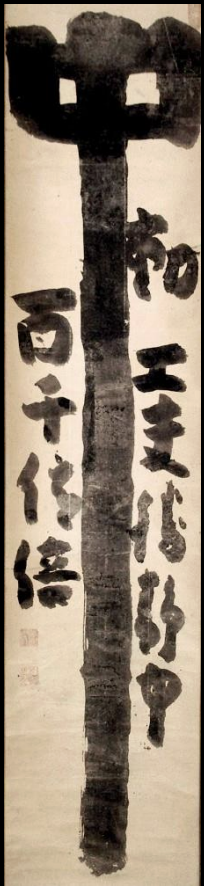
Within
Hakuin
18th C.
Calligraphy to promote better ways of practicing zen, he noticed innacurate practices. Middle character means “middle/within”. Whole poem reads “contemplation within activity is a million times better than contemplation with stillness”

Smiling Frog
Sengai Gibon
18-19th C.
Calligraphy hugs frog, form foundation for frog to sit on. Very simple work, challenging us to consider what is being said.
Text is unusually written from left to right, rather than vice versa. “If by sitting in meditation, one becomes Buddha.”
Idea that anything can become buddha is untrue, meditation should be activated and not passive.
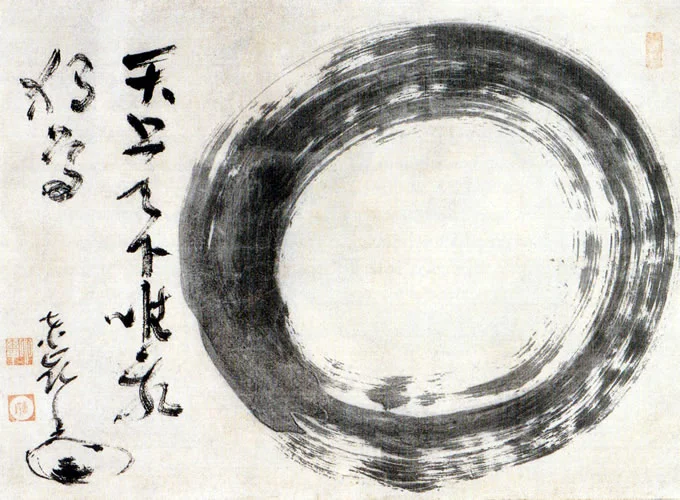
Enso
Torei Enji
18th C.
“In heaven above and earth below, I alone am the honored one.”
Zen circles of enlightenment
You can find enlightenment and buddha within you
Apparent speed of calligraphic technique, leading us to focus on how the enso was done … “If the brush runs out of ink then so be it”

Dragons and Clouds
Soga Shohaku
18th C.
Individualists - worked in their own mode. had their own styles and weren’t comfortably associated with the tradition schools of painting.
Possibly studies with Kano school, but not constrained. Tried to make a very expressive form of brushwork.
WORK - Perhaps former sliding doors.
Very lively eyes in the dragon, seen sometimes in zen paintings. Creature so benevolent and divine it can express any emotion. Dragon - power and authority shown with talons.
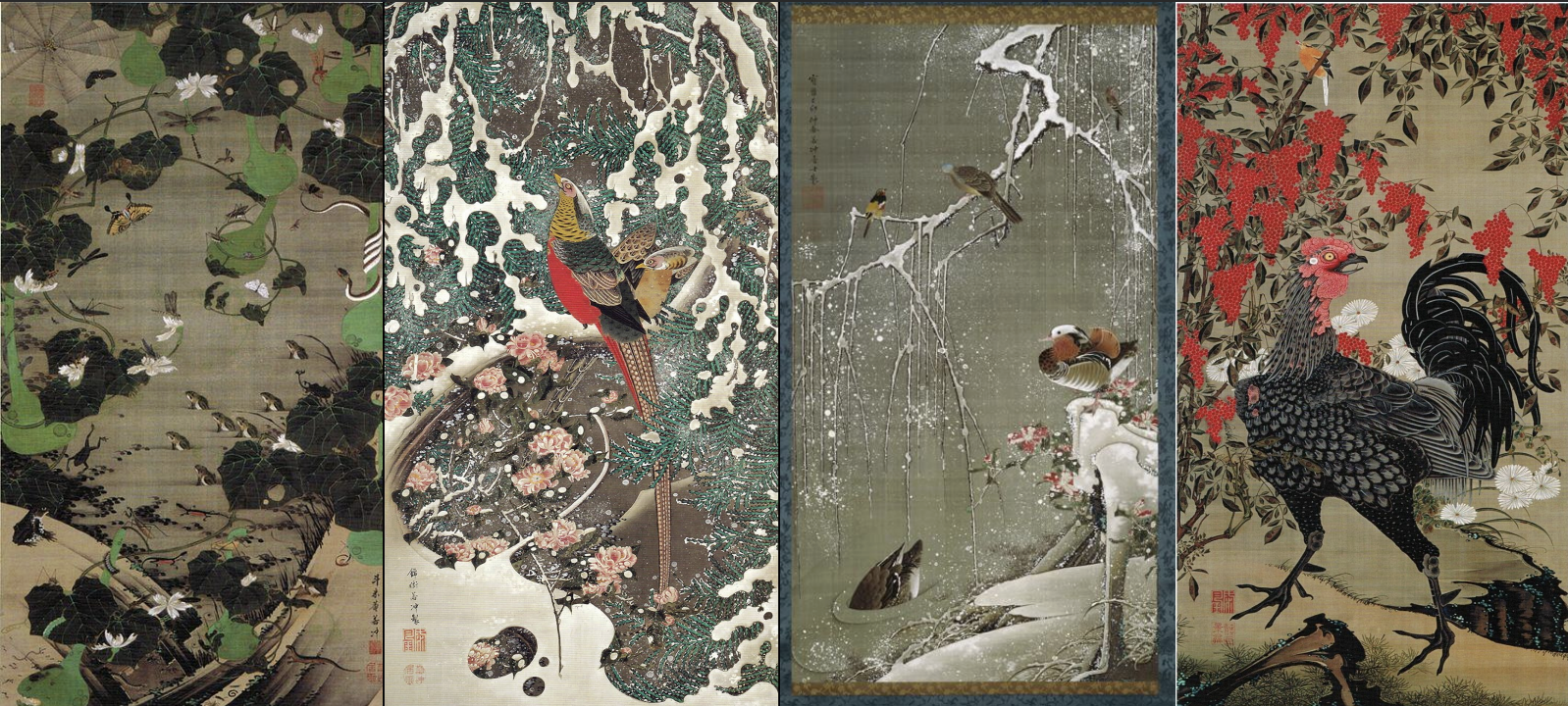
Colorful Realms of Living Beings
Ito Jakuchu
18th C.
Individualists - worked in their own mode. had their own styles and weren’t comfortably associated with the tradition schools of painting.
Jakuchu used to be in the vegetable business, but left to focus on zen and painting. Inspired by chinese paintings.
Large series of hanging scrolls (30). Hyperrealistic, decorative design. Great sense of detail in each panel, very different from paintings we’ve seen during this time period. Very crisp and flat which still fits in Japanese art.

Vegetable Nirvana
Jakuchu
18th C.
Reference to buddhism, display of vegetables.
Reference to compositional setup of Peri Nirvana.- death of historic buddha, 80 years old, people mourning him. He went to nirvana, free from buddha life cycle (rebirth). Iconographically improtant o f buddhist religion, those who would’ve seen this setup would recognize immediately. Daikon radish as buddha. Much looser style than previous work seen. Zen tradition, all life should be respected and appreciated.
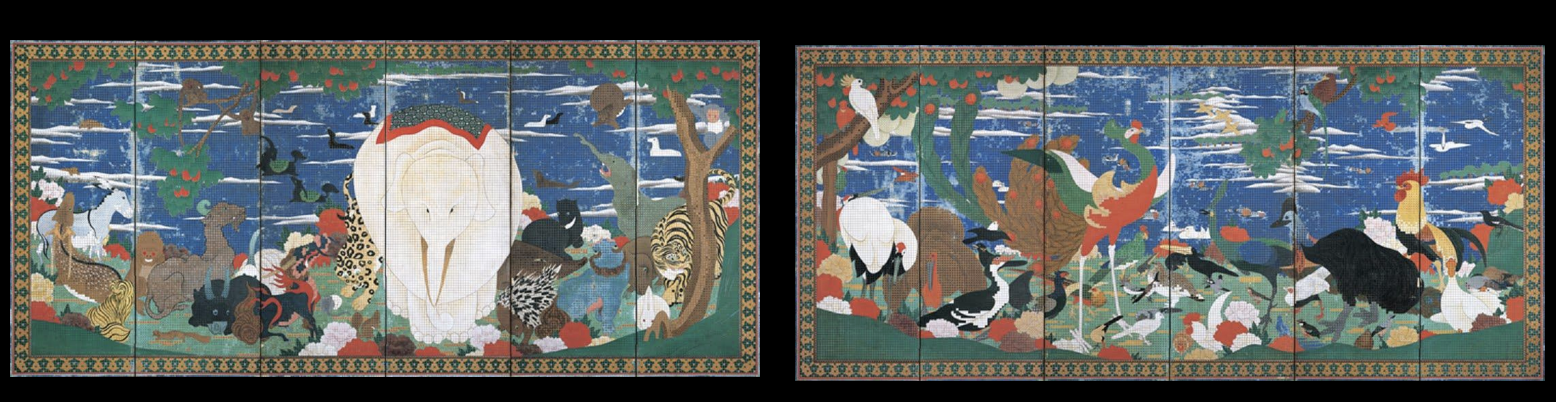
Birds, Animals, and Flowering Plants
Jakuchu
18th C.
Display of animal, very traditional type of Japanese perspective. Very gemometric and pixelated work, pixels are about 1 centimeter each. Very early understanding of how to integrate pixels into artwork. Resembles a mosaic.
ukiyo-e
a school of Japanese art depicting subjects from everyday life, dominant in the 17th–19th centuries.
represented lifestyles, culture, pleasure, showing courtesans, actors, daily life, etc…
tan-e
style of early japanese woodblock prints hand colored with an orange-red tone using a pigment called tan (cinnabar)
mie
a dramaticized pose done by an actor, specifically referencing kabuki actors in actor portraits - at a peak emotional moment
onnagata
a male actor known for playing mostly female roles - as women were prohibited from performing on stage
bijin-ga
images/works of beautiful women
nishiki-e
vibrant, multicolored and multi block woodcut prints
yoshiwara
red light period in Edo known for it’s courtesans and pleasure-focused culture
enso
buddhist circle symbol in 1-2 strokes, representing enlightenment, strength, embracing imperfection/perfection, and other buddhist ideologies
 Note
Note  Flashcards (129)