BIO 222 Lecture7.DigestiveSystemAnatomy.Part2 Review
 Call Kai
 Learn
Learn Practice Test
 Spaced Repetition
 Match
Match Flashcards
 Knowt Play
1/32

Earn XP
Description and Tags
BIO 222 Anatomy & Physiology 2
Name | Mastery | Learn | Test | Matching | Spaced | Call with Kai |
|---|
No analytics yet
Send a link to your students to track their progress
33 Terms
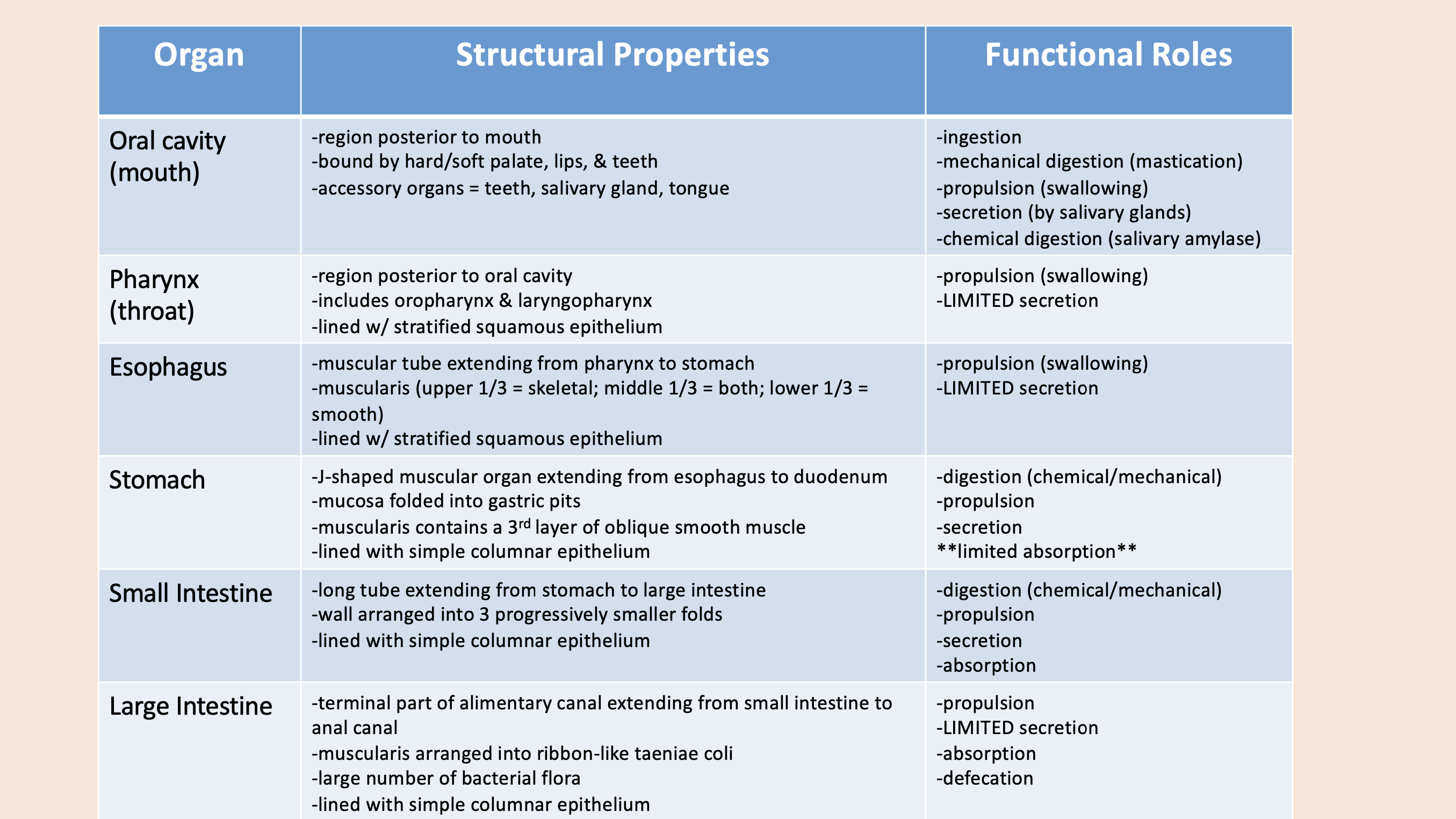
mouth.
ingestion.
mechanical digestion (mastication).
propulsion (swallowing).
secretion (by salivary glands).
chemical digestion (salivary amylase).
oral cavity
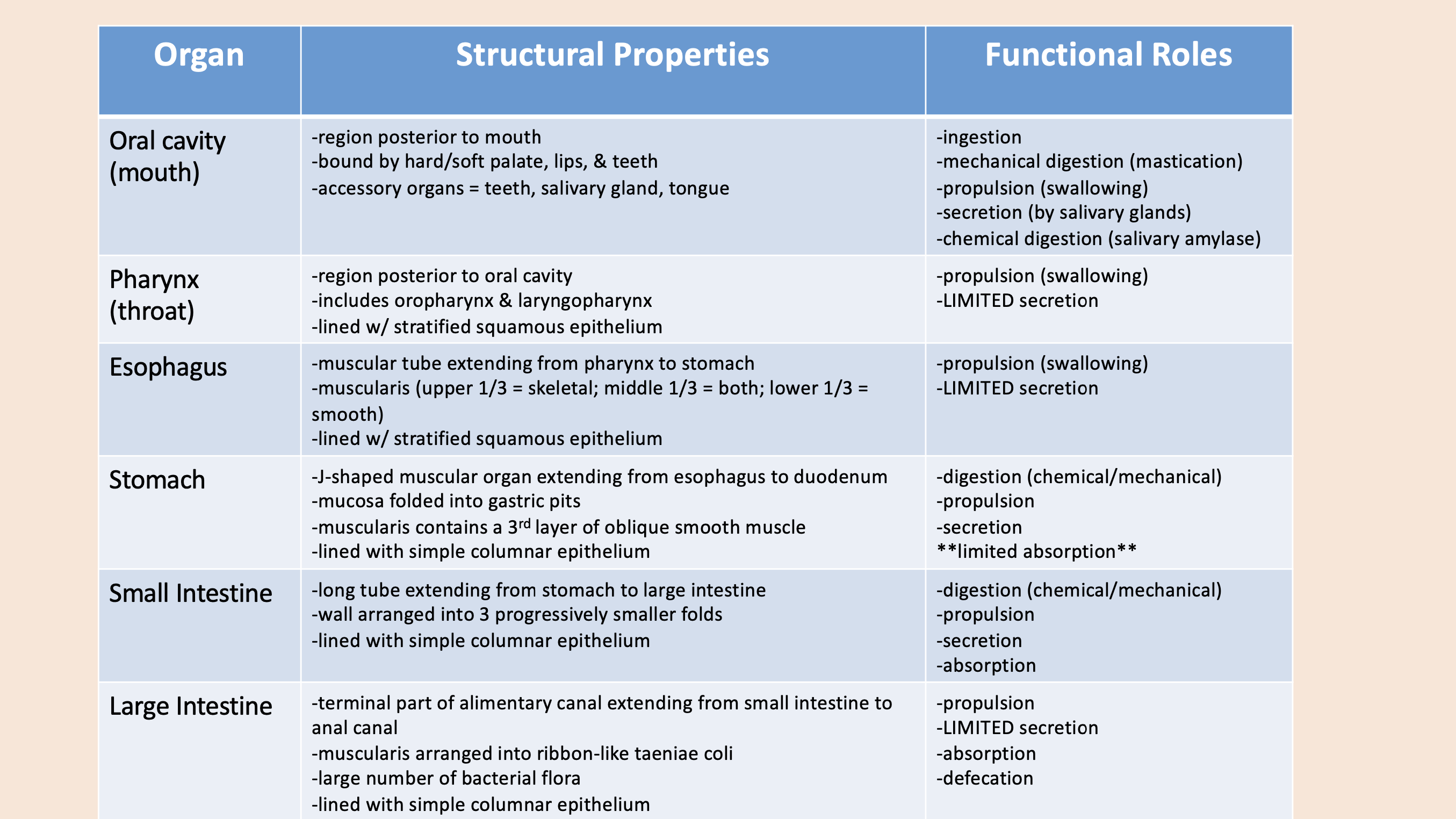
throat.
propulsion (swallowing).
LIMITED secretion.
pharynx
propulsion (swallowing).
LIMITED secretion.
esophagus
digestion (chemical/mechanical).
propulsion.
secretion.
limited absorption.
stomach
digestion (chemical/mechanical).
propulsion.
secretion.
absorption.
small Intestine
propulsion.
LIMITED secretion.
absorption.
defecation.
large Intestine
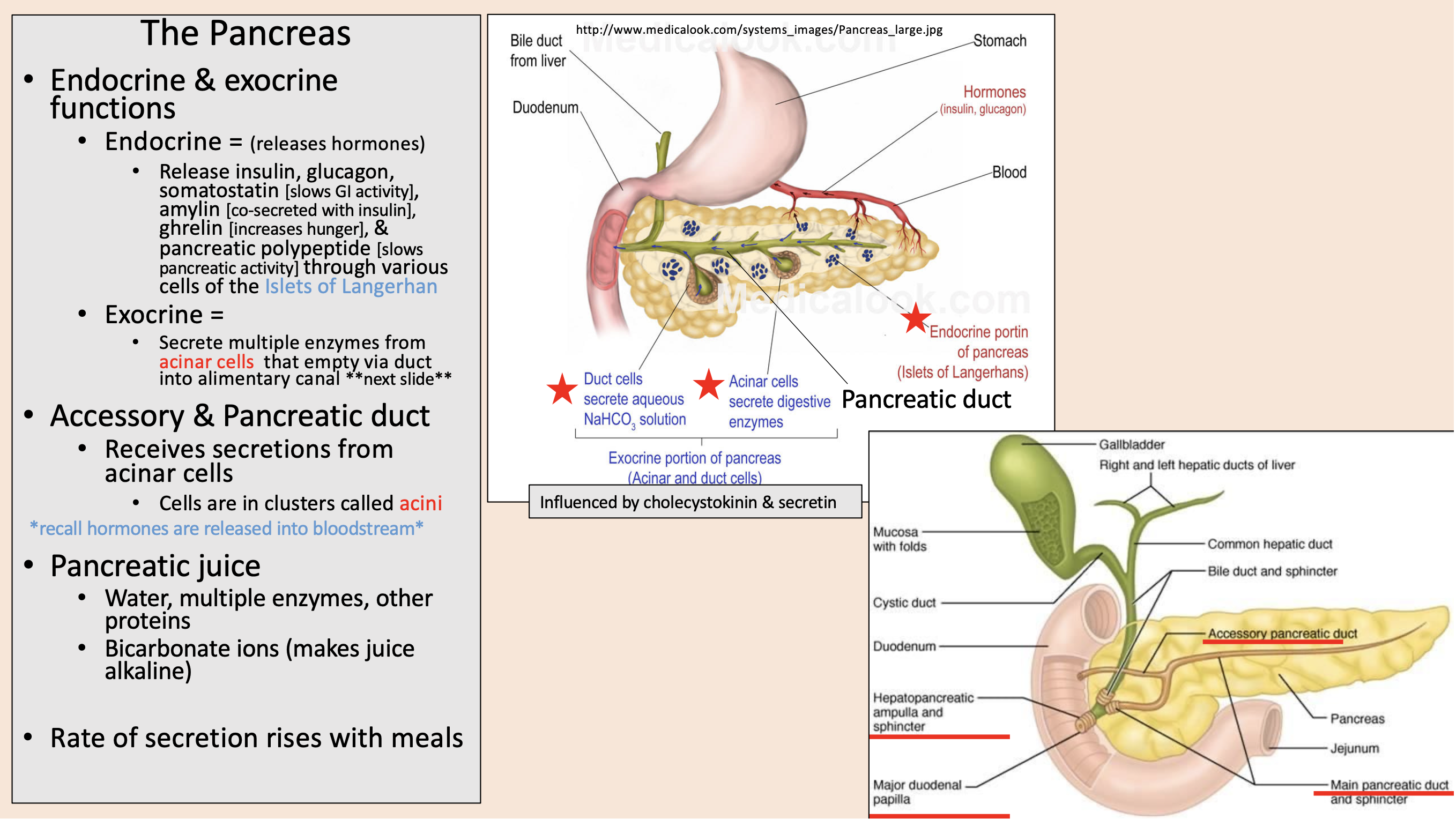
releases hormones
endocrine
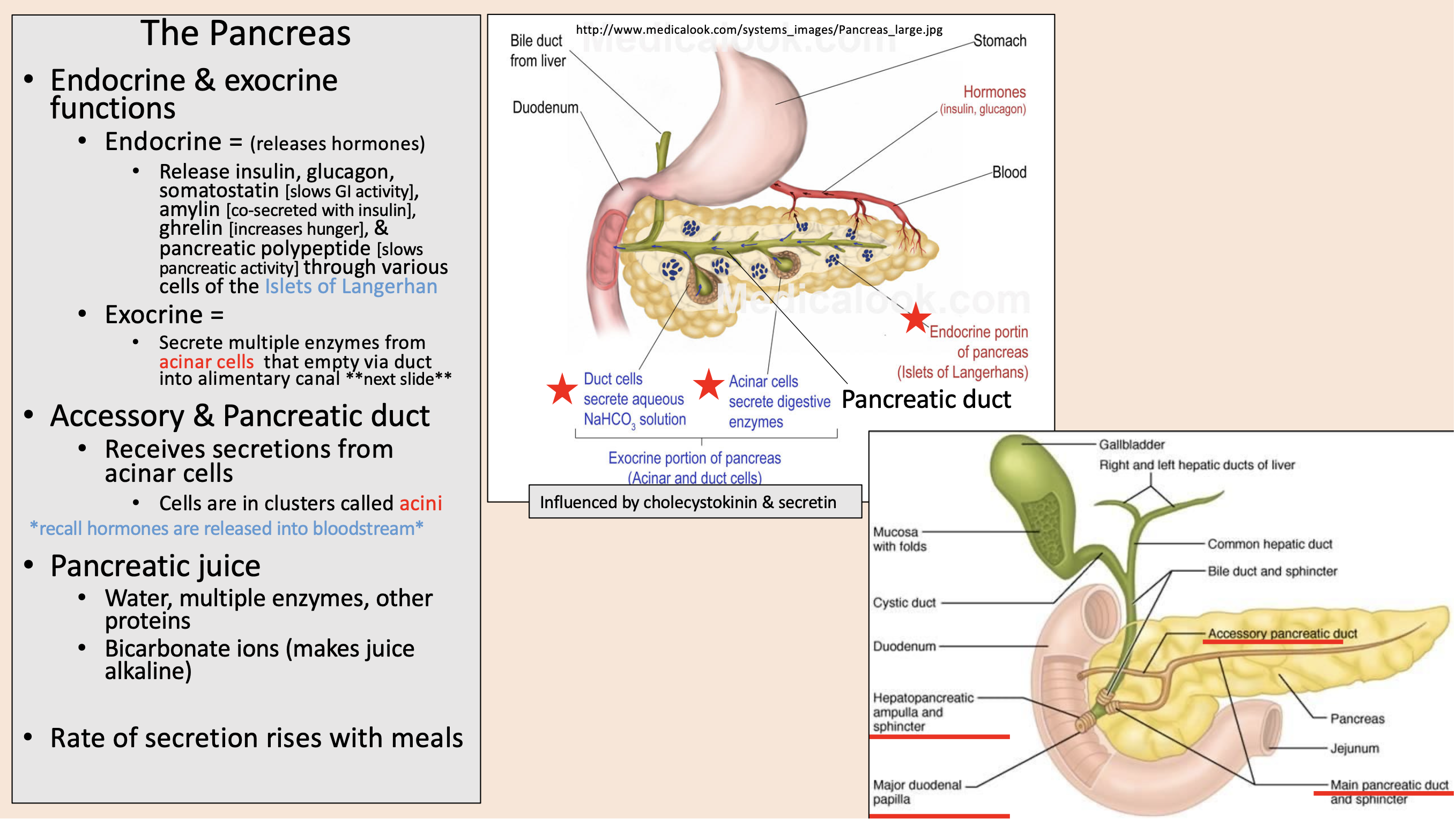
Secrete multiple enzymes from acinar cells that empty via duct into alimentary canal
exocrine
Receives secretions from acinar cells
accessory and pancreatic duct
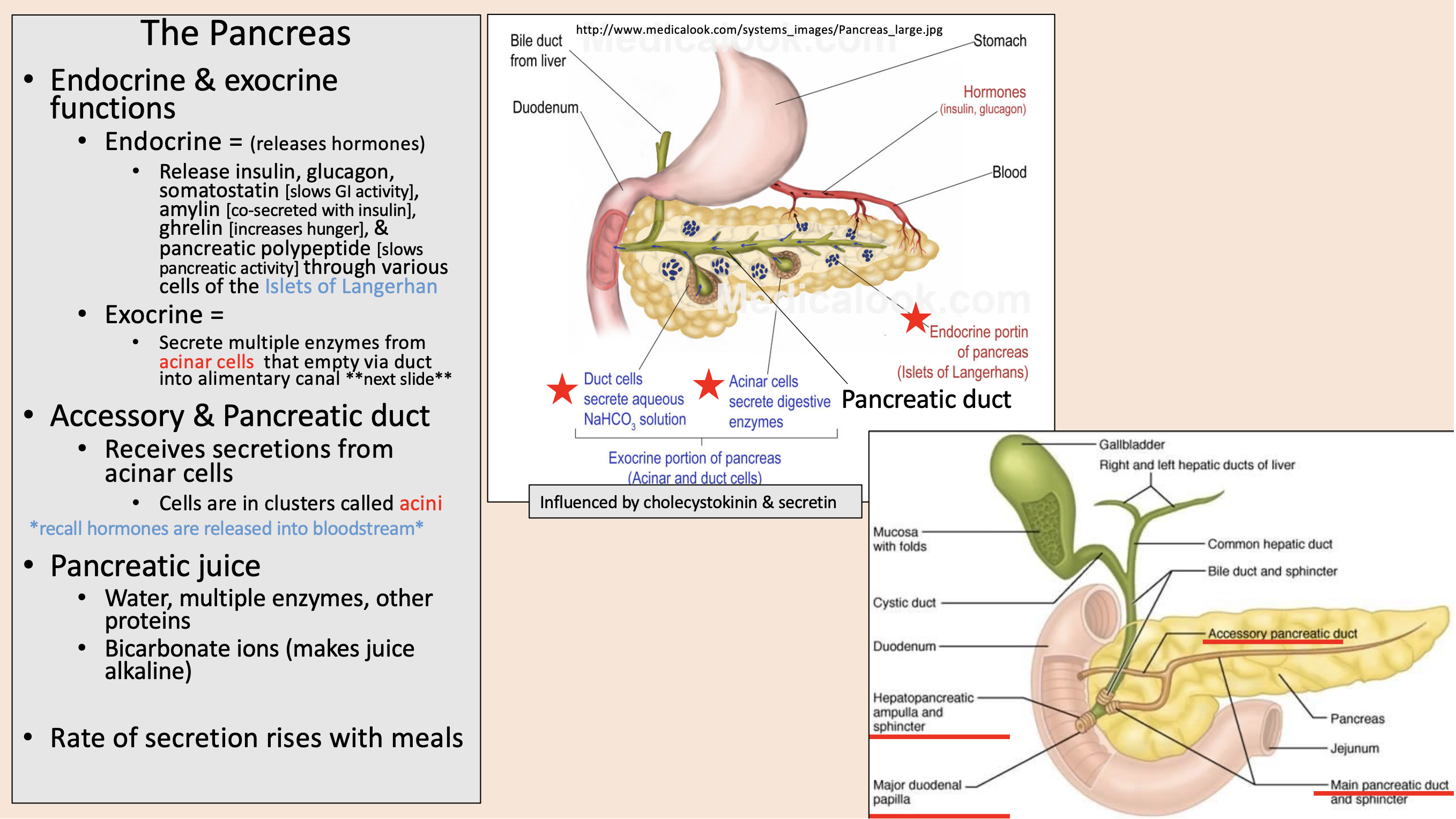
Water, multiple enzymes, other proteins.
Bicarbonate ions (makes juice alkaline).
pancreatic juice
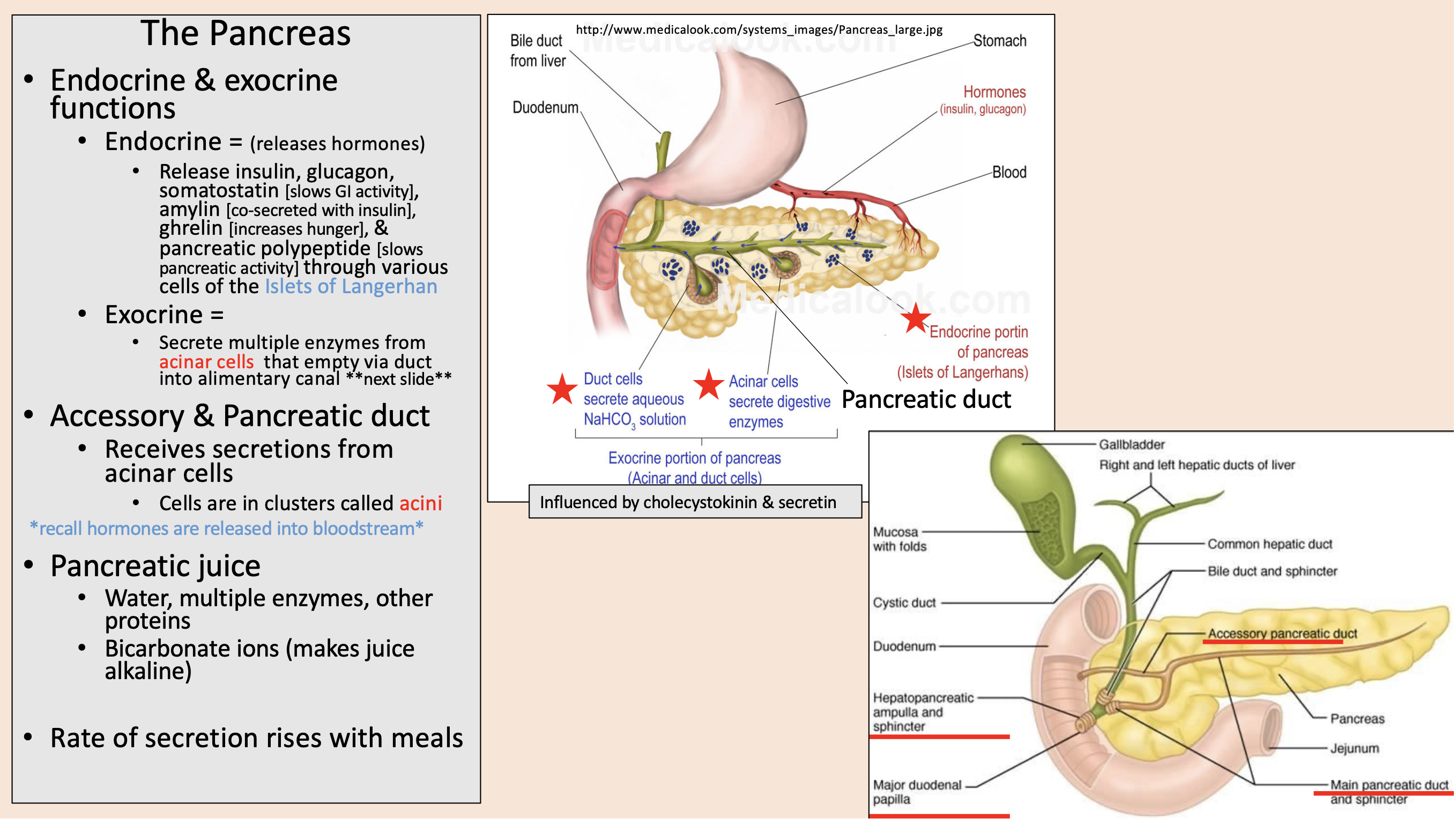
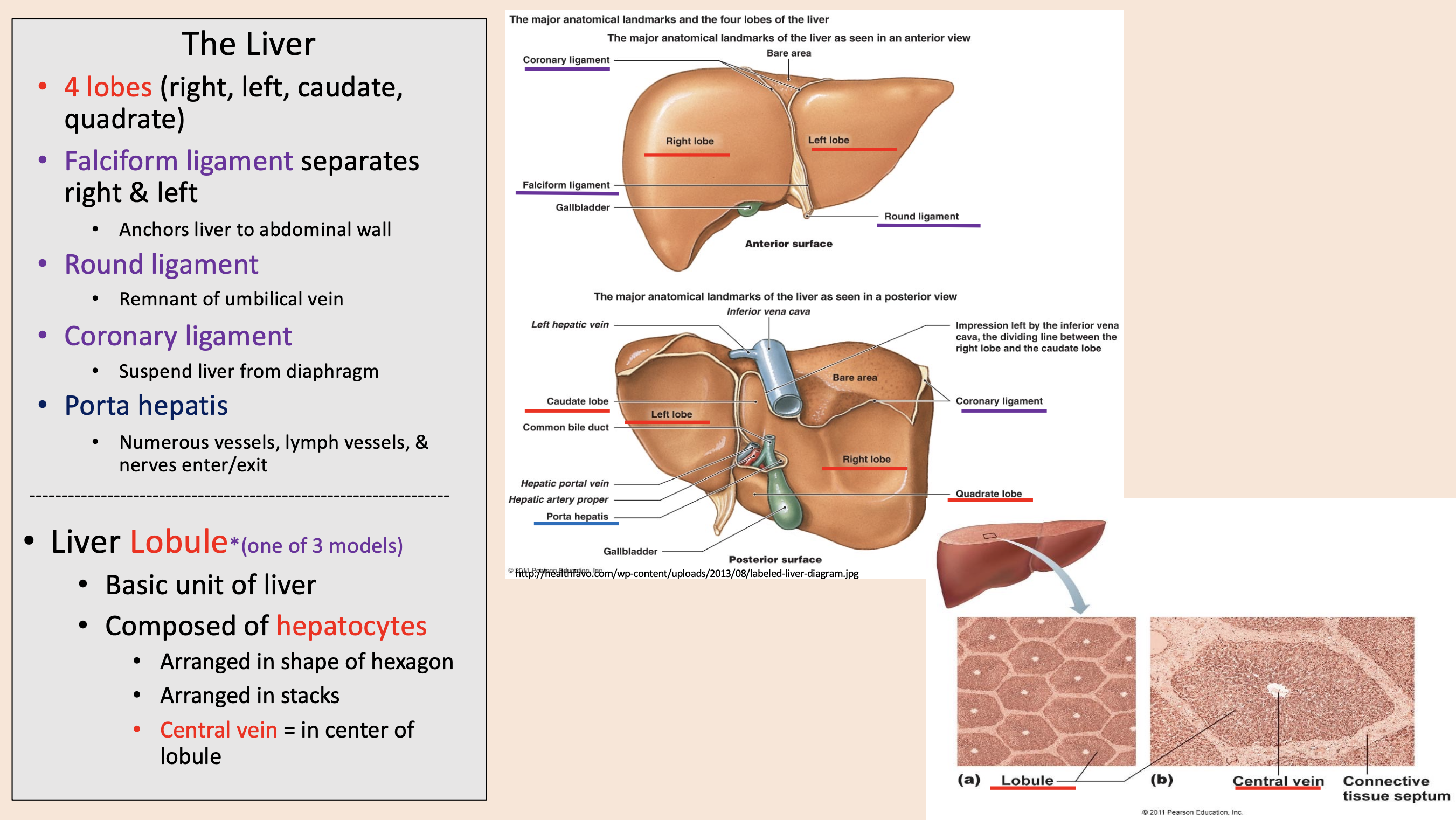
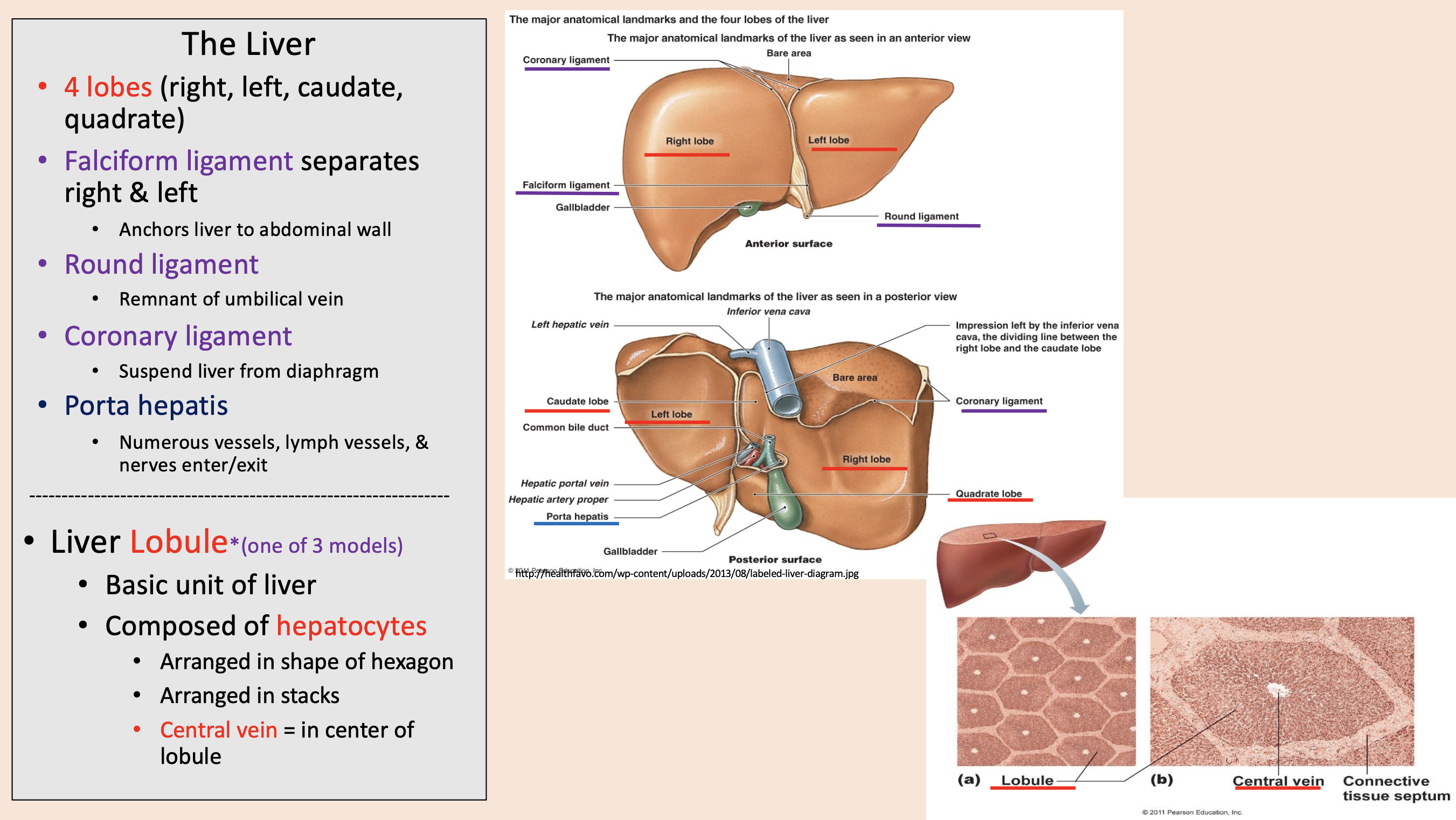
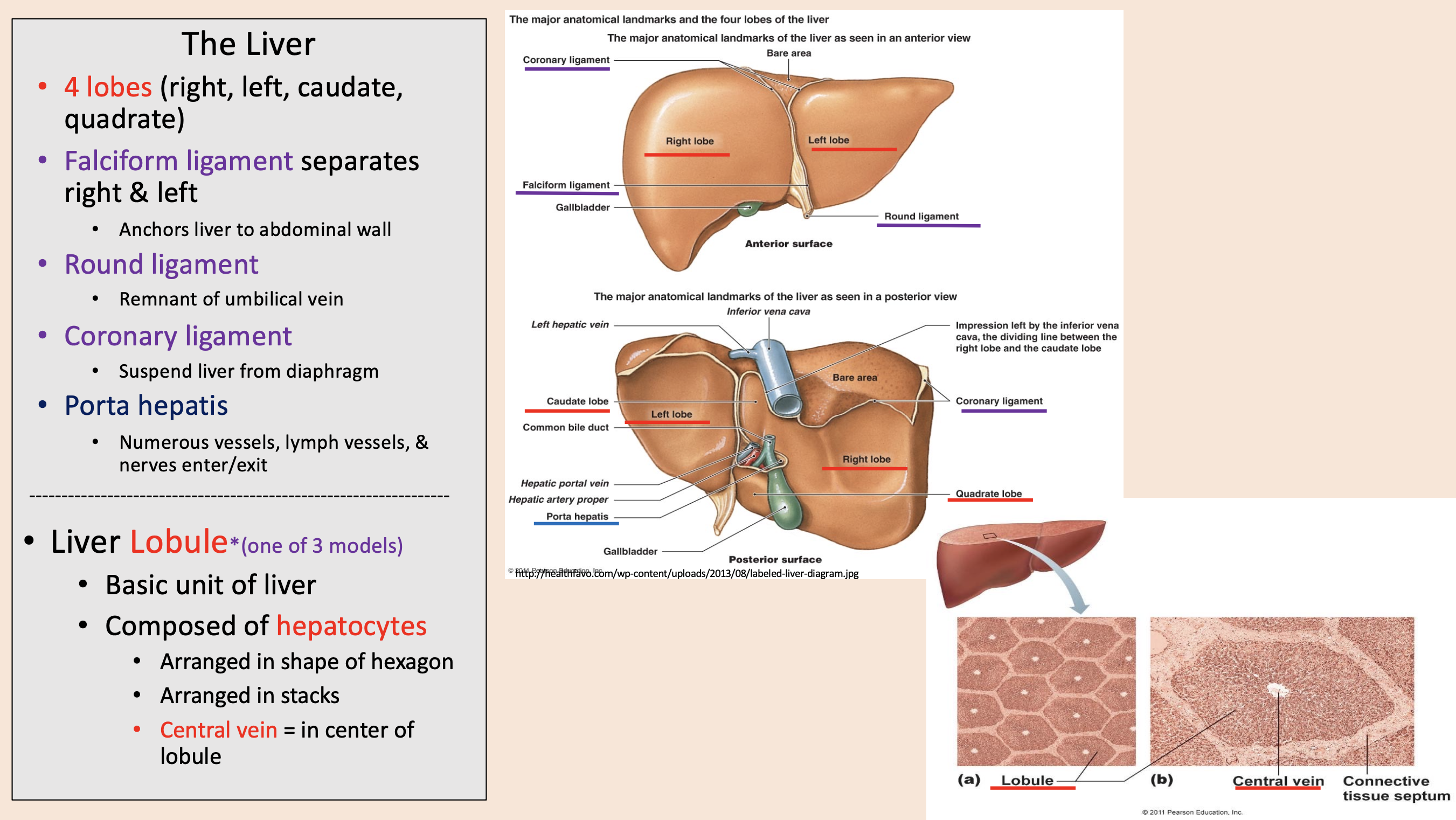
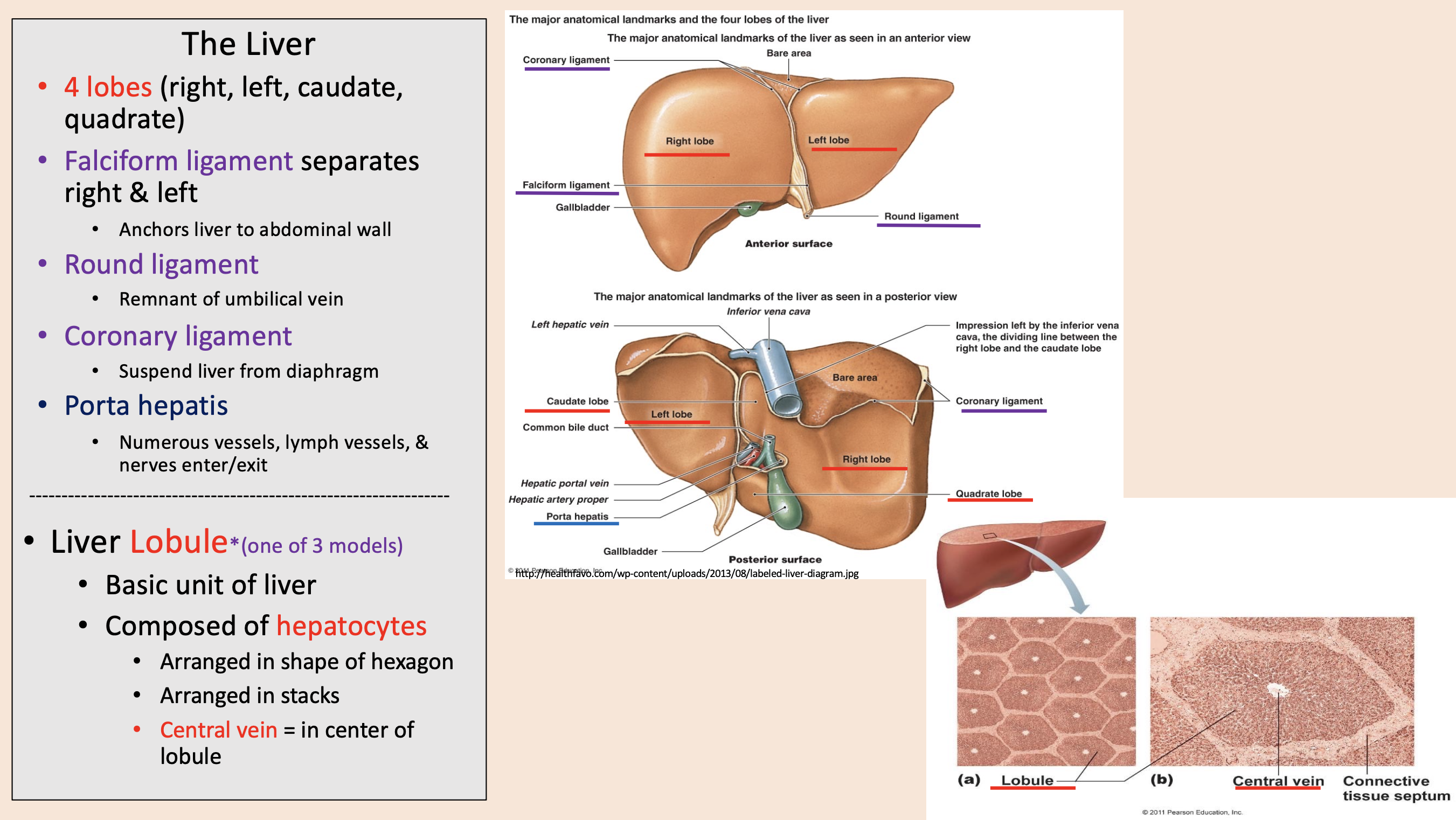
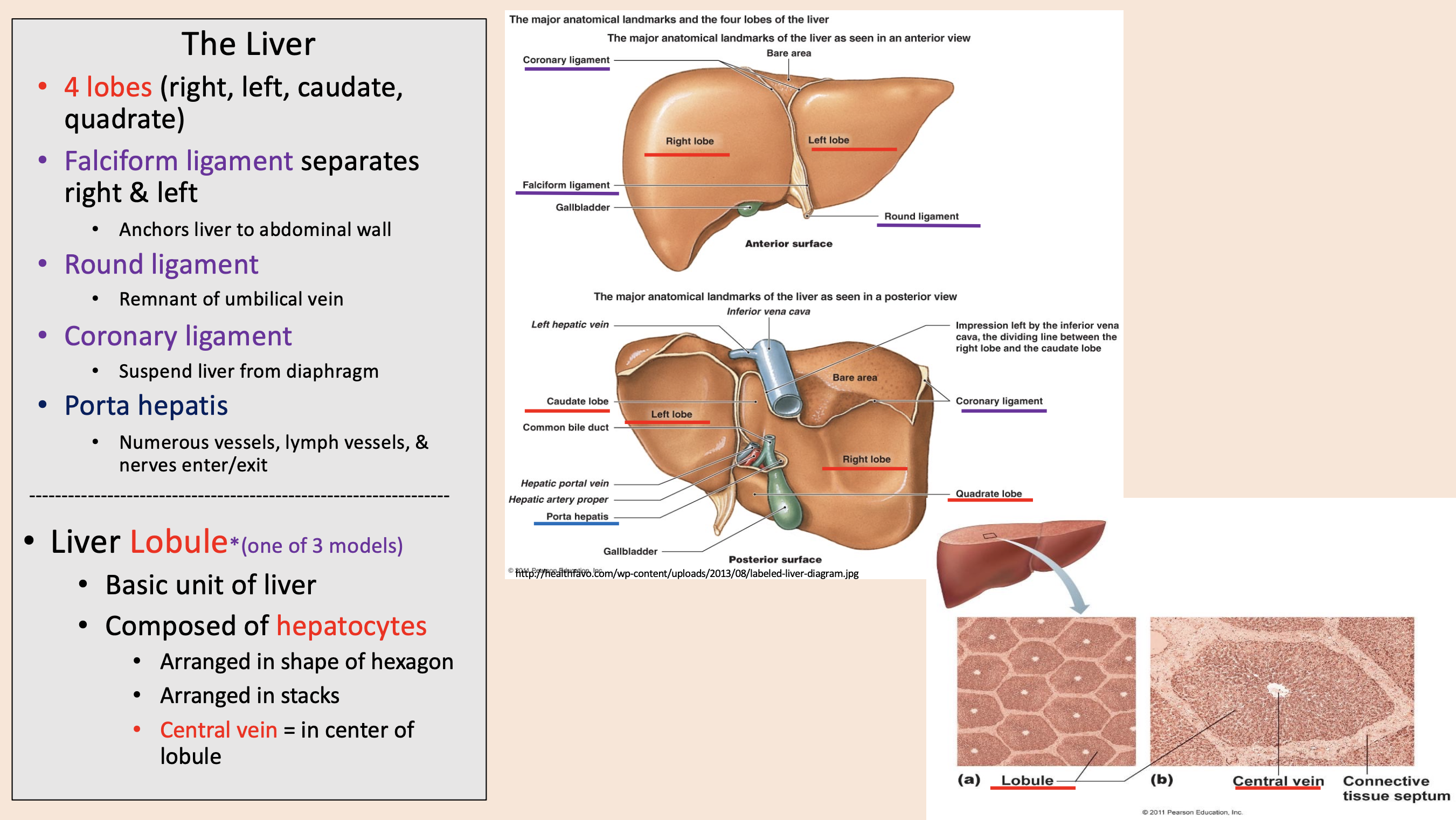
Liver 4 lobes
right
left
caudate
quadrate
separates right & left.
Anchors liver to abdominal wall.
falciform ligament
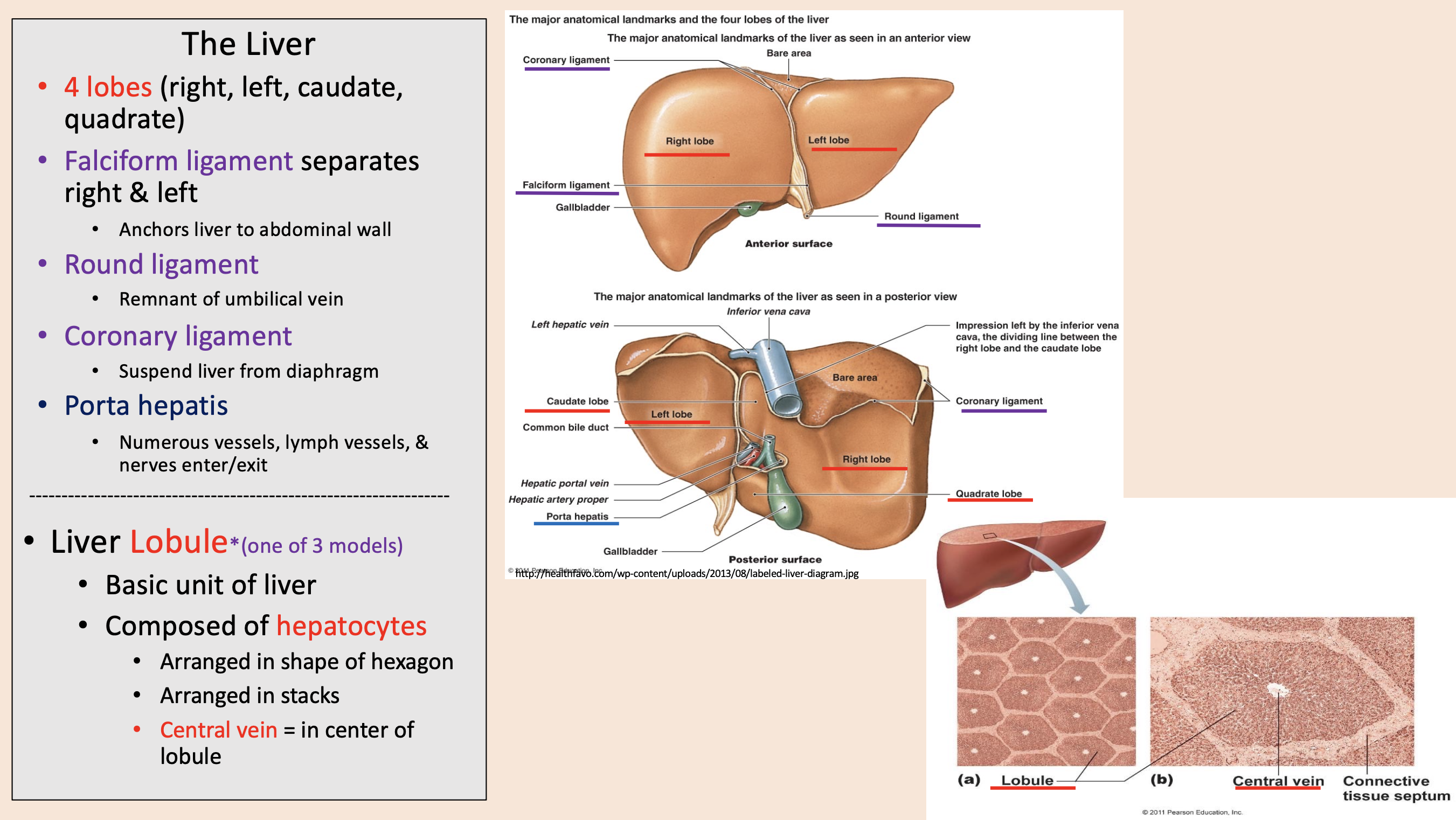
Remnant of umbilical vein
round ligament
Suspend liver from diaphragm
coronary ligament
Numerous vessels, lymph vessels, & nerves enter/exit
porta hepatis
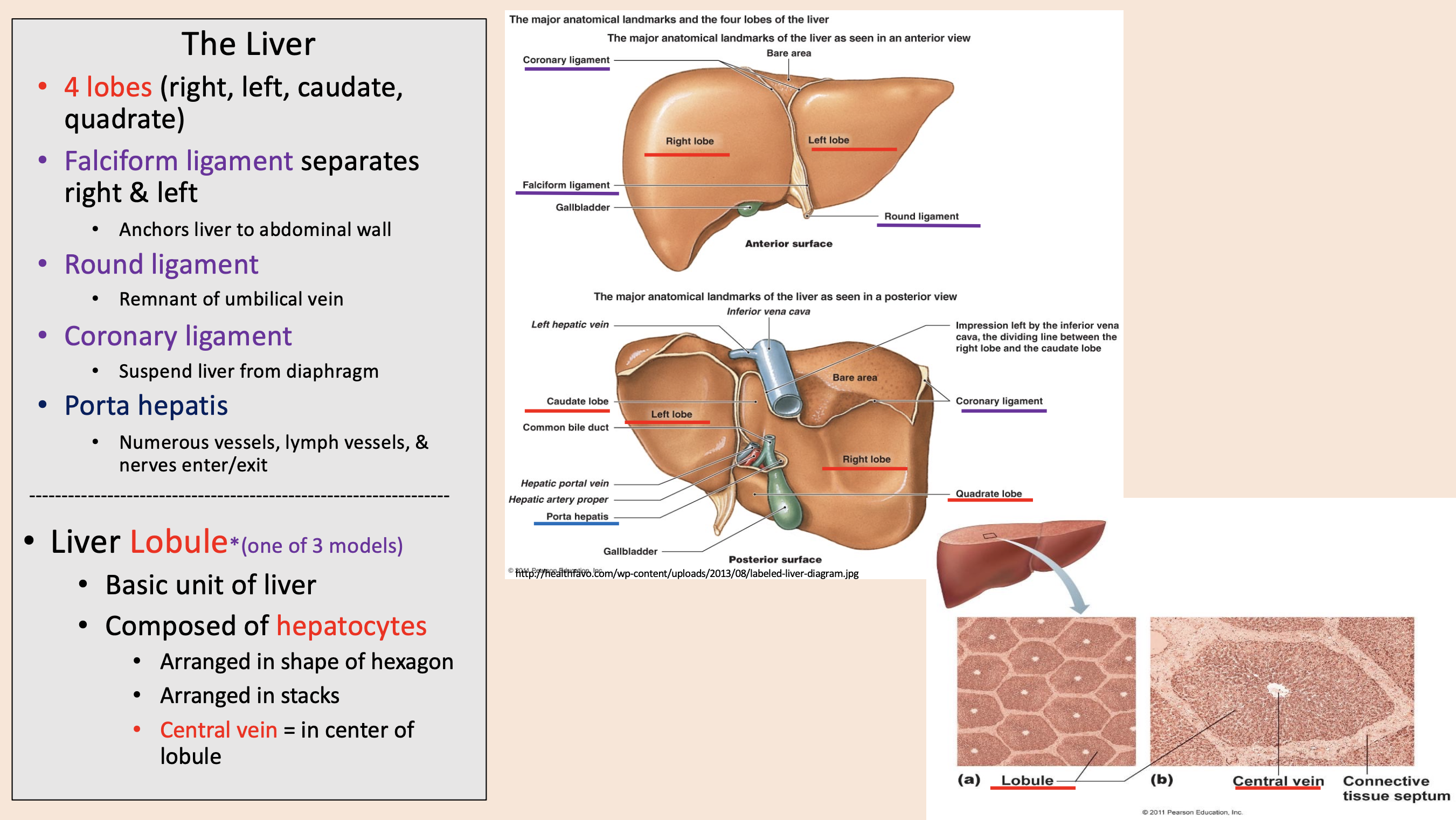
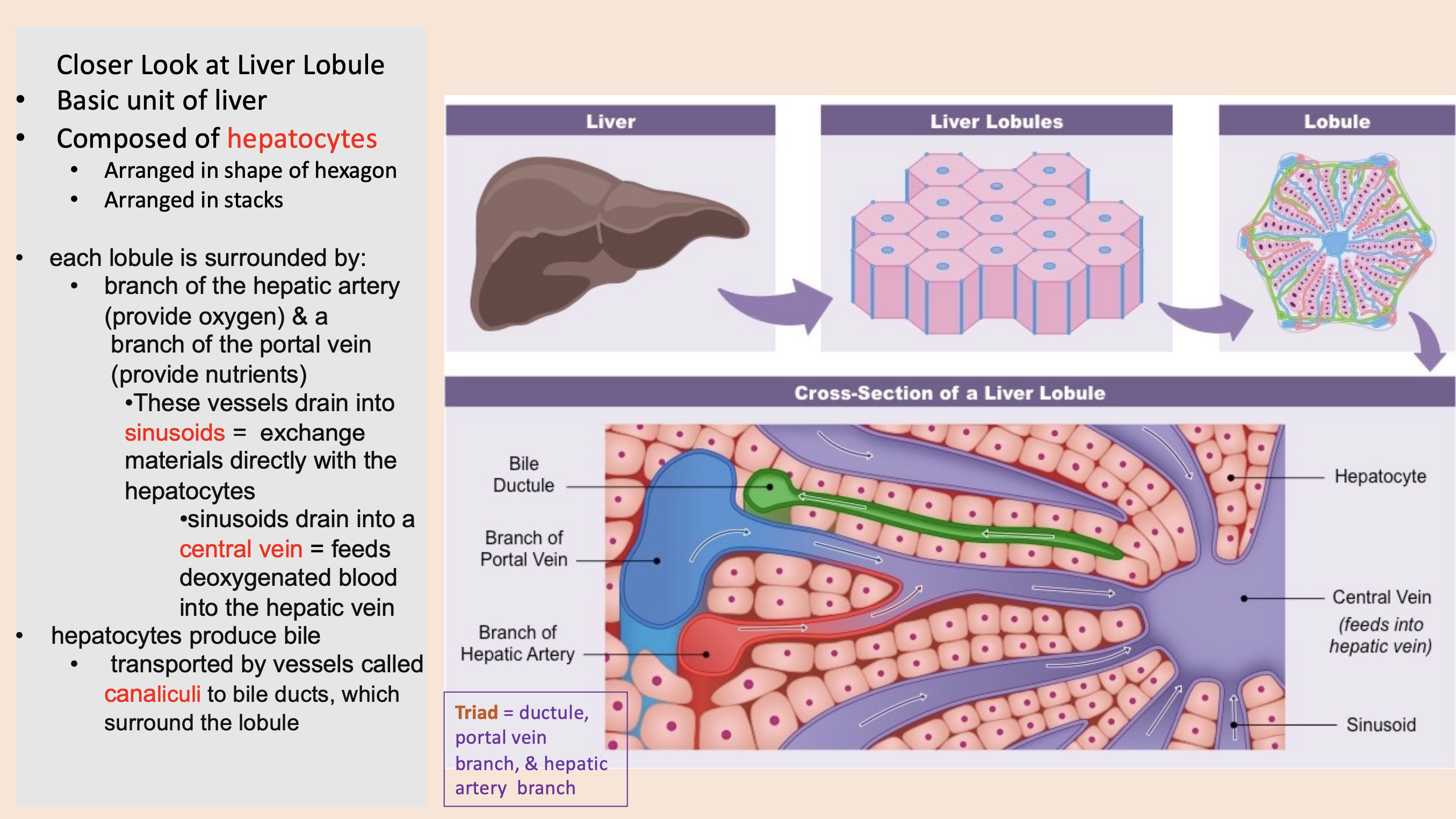
Basic unit of liver.
Composed of hepatocytes.
Arranged in shape of hexagon.
Arranged in stacks.
Central vein.
liver lobule
in center of lobule
central vein
exchange materials directly with the hepatocytes
sinusoids
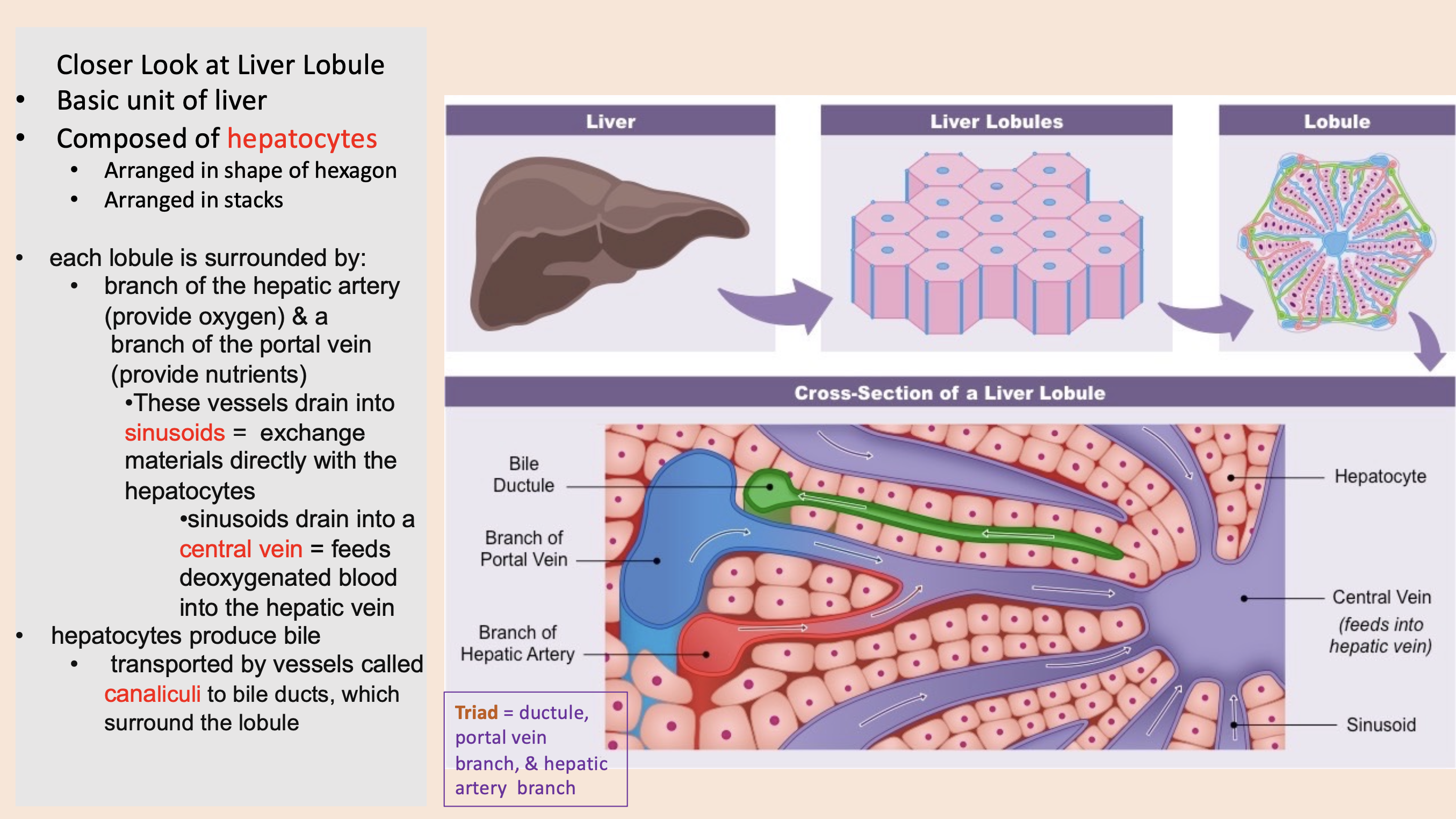
feeds deoxygenated blood into the hepatic vein
central vein
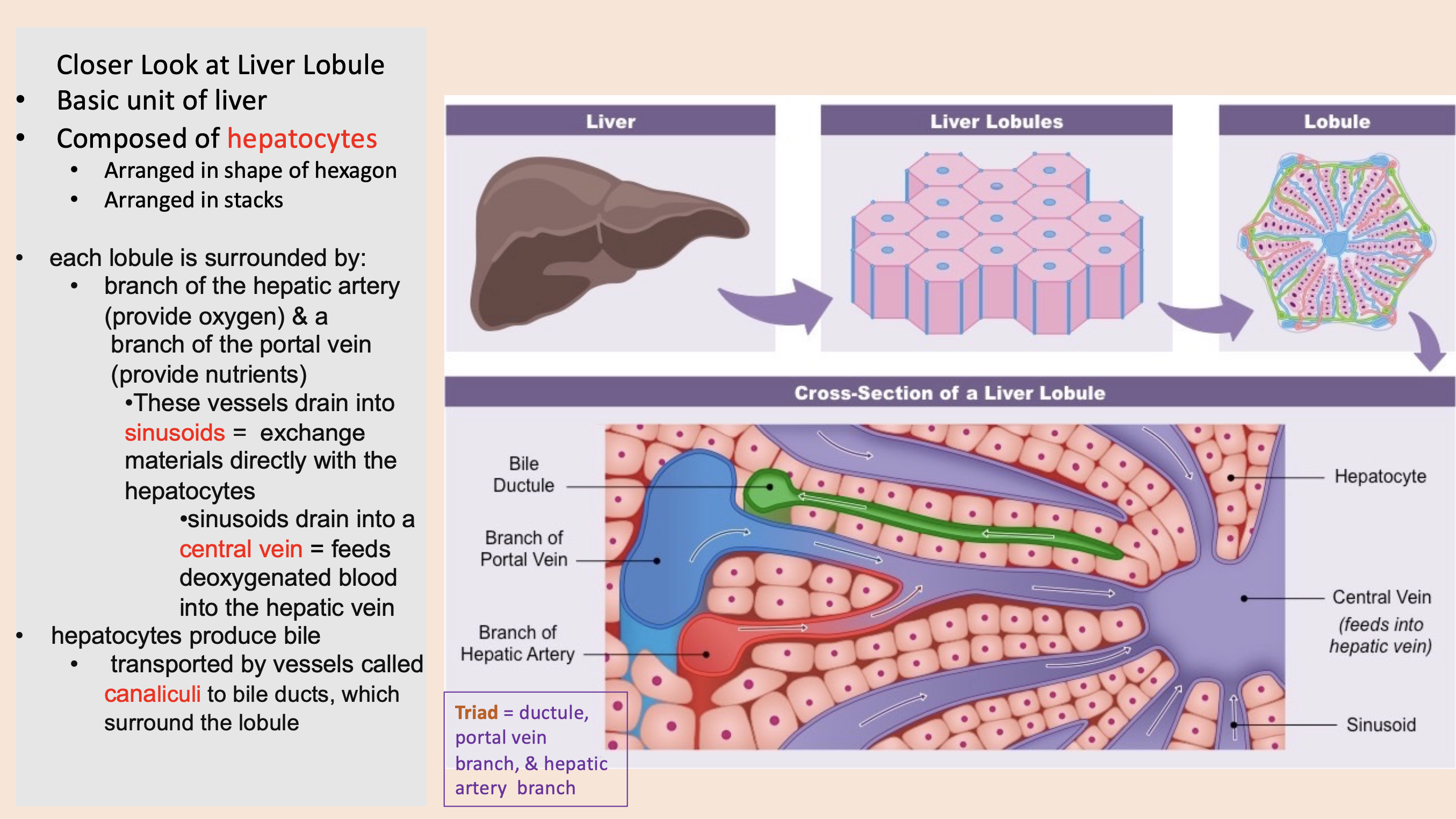
ductule, portal vein branch, & hepatic artery branch
triad
Yellowish coloration of eyes, skin, & mucous membranes.
Caused by build up of bilirubin (formed by breaking down the heme in aged RBCs).
Bilirubin goes to liver & should be excreted in the bile.
jaundice
too much bilirubin produced
prehepatic jaundice
congenital liver diseases, cirrhosis of liver, hepatitis
hepatic jaundice
blockage of bile drainage
extrahepatic jaundice
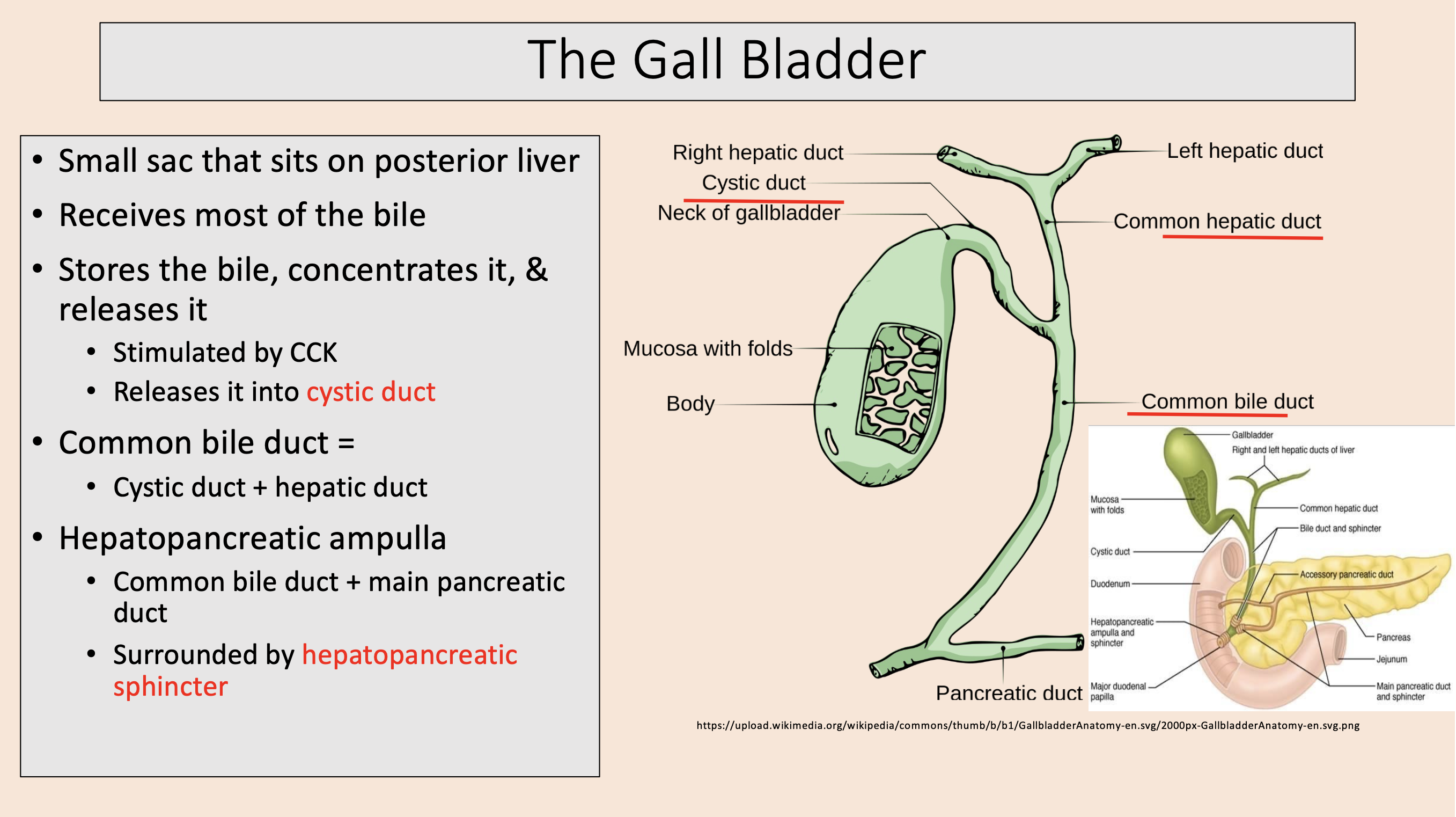
Small sac that sits on posterior liver.
Receives most of the bile.
Stores the bile, concentrates it, & releases it.
Common bile duct.
Hepatopancreatic ampulla.
gall bladder
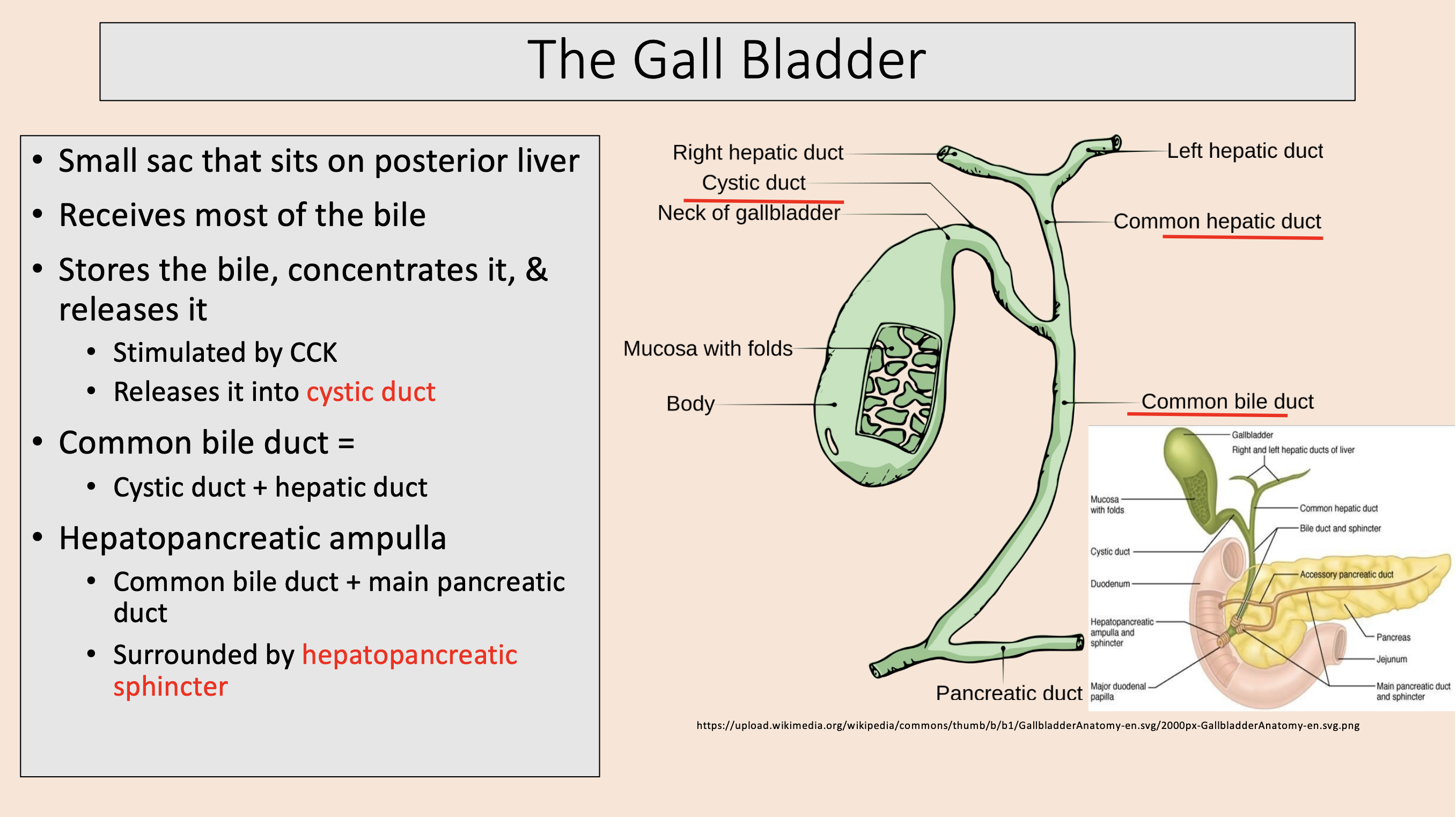
Cystic duct + hepatic duct
common bile duct
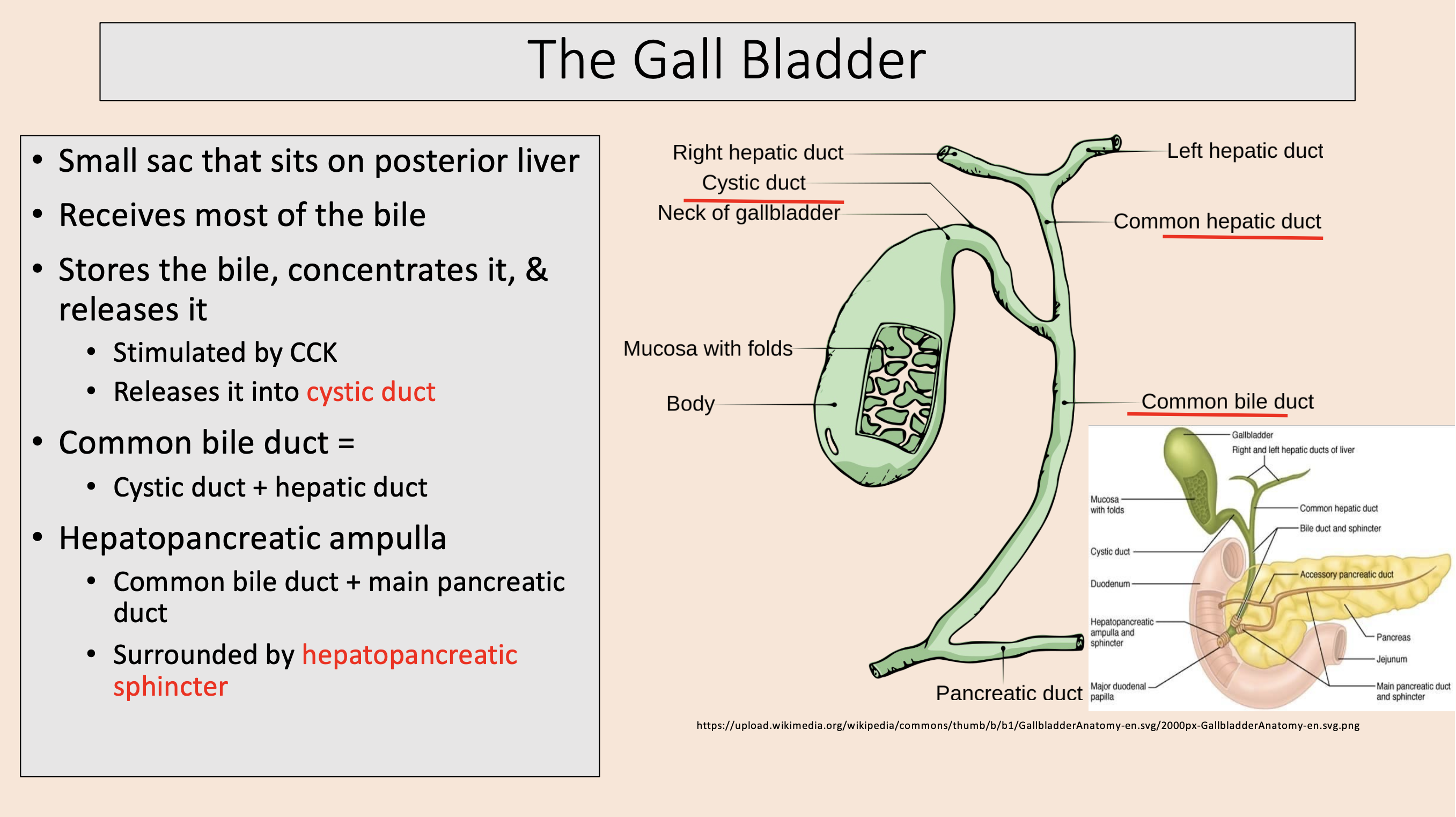
Common bile duct + main pancreatic duct.
Surrounded by hepatopancreatic sphincter.
hepatopancreatic ampulla
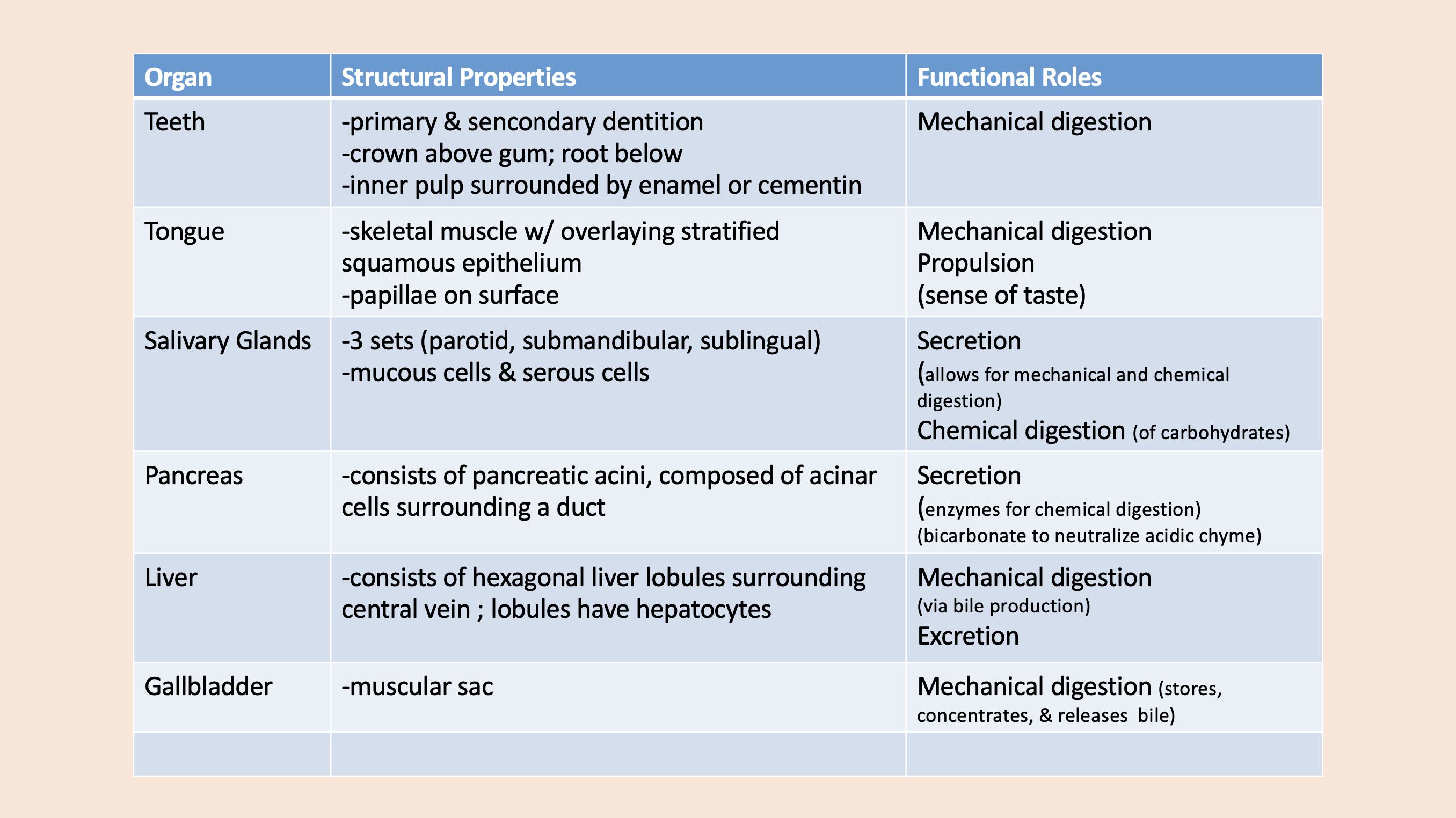
mechanical digestion
teeth
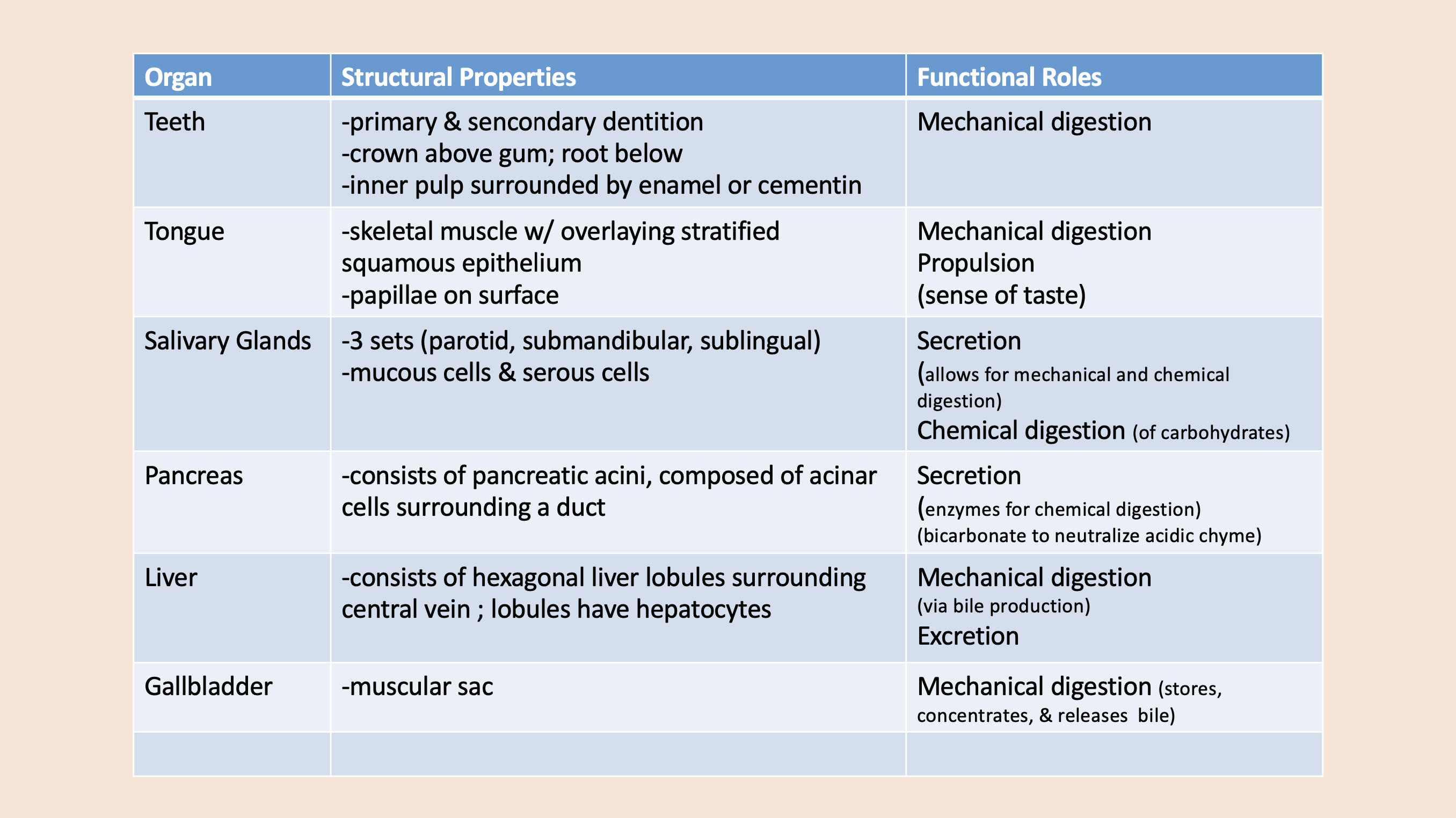
Mechanical digestion Propulsion (sense of taste)
tongue
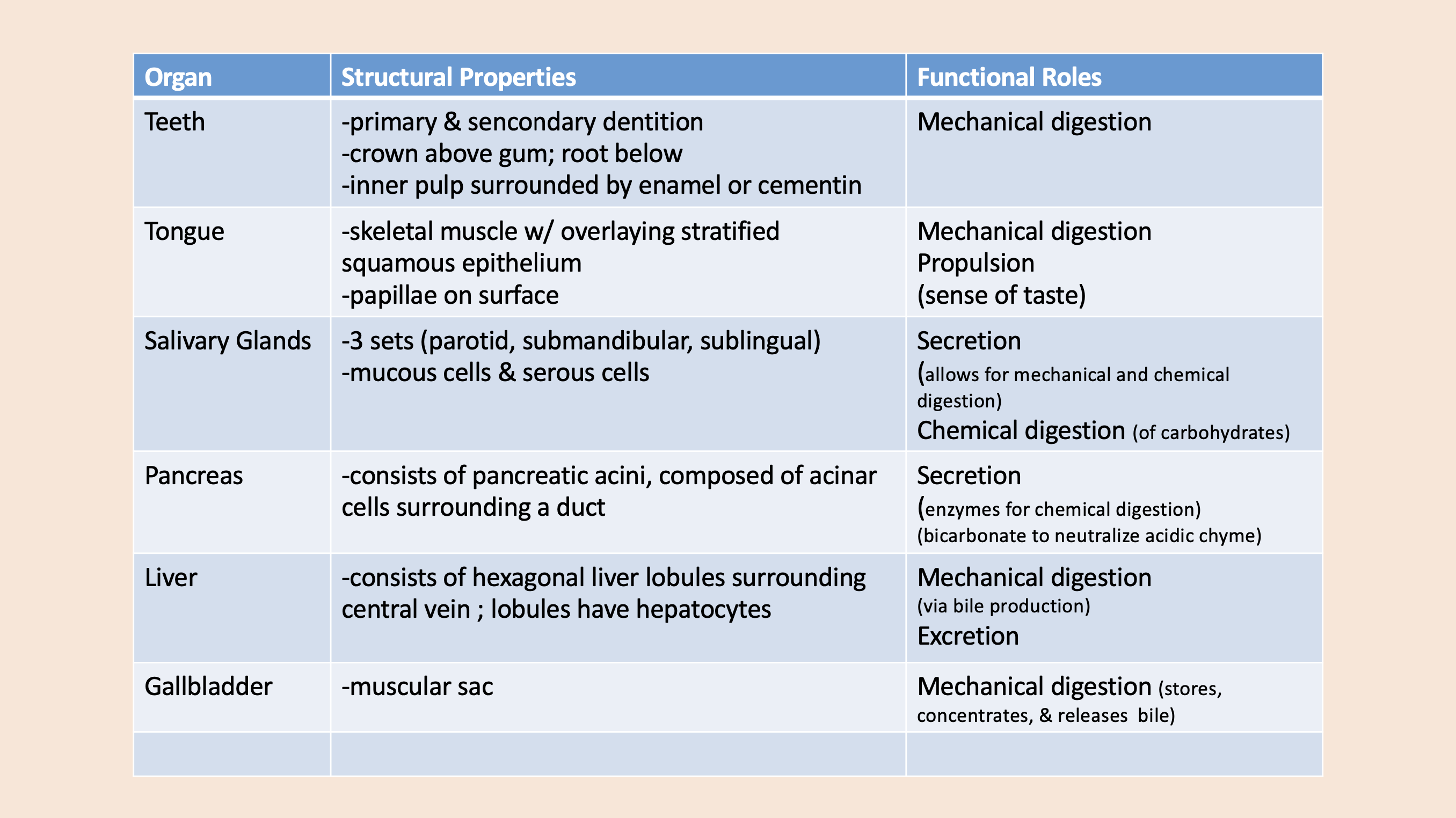
Secretion (allows for mechanical and chemical digestion).
Chemical digestion (of carbohydrates).
salivary glands
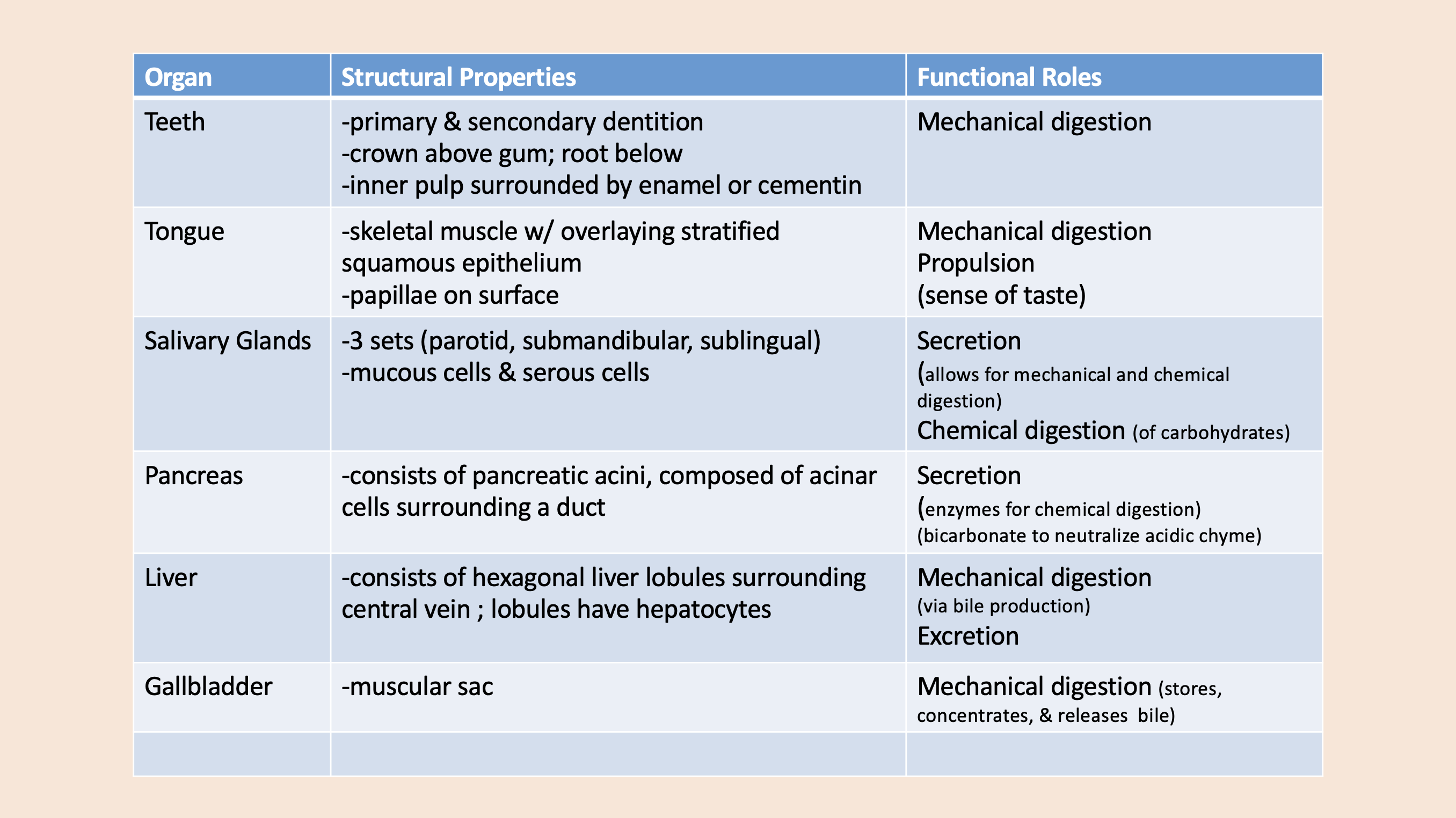
Secretion (enzymes for chemical digestion) (bicarbonate to neutralize acidic chyme)
pancreas
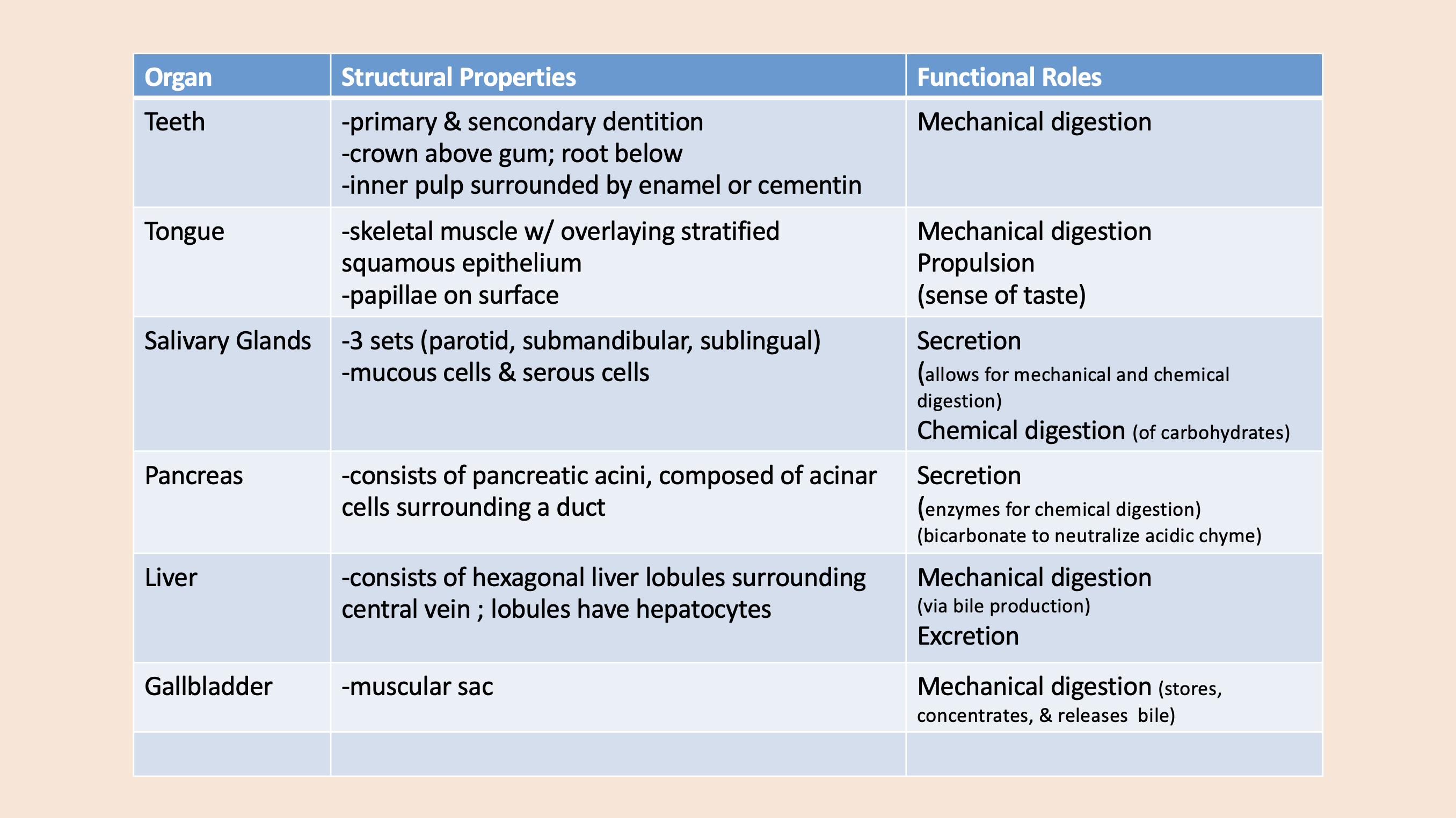
Mechanical digestion (via bile production).
Excretion.
liver
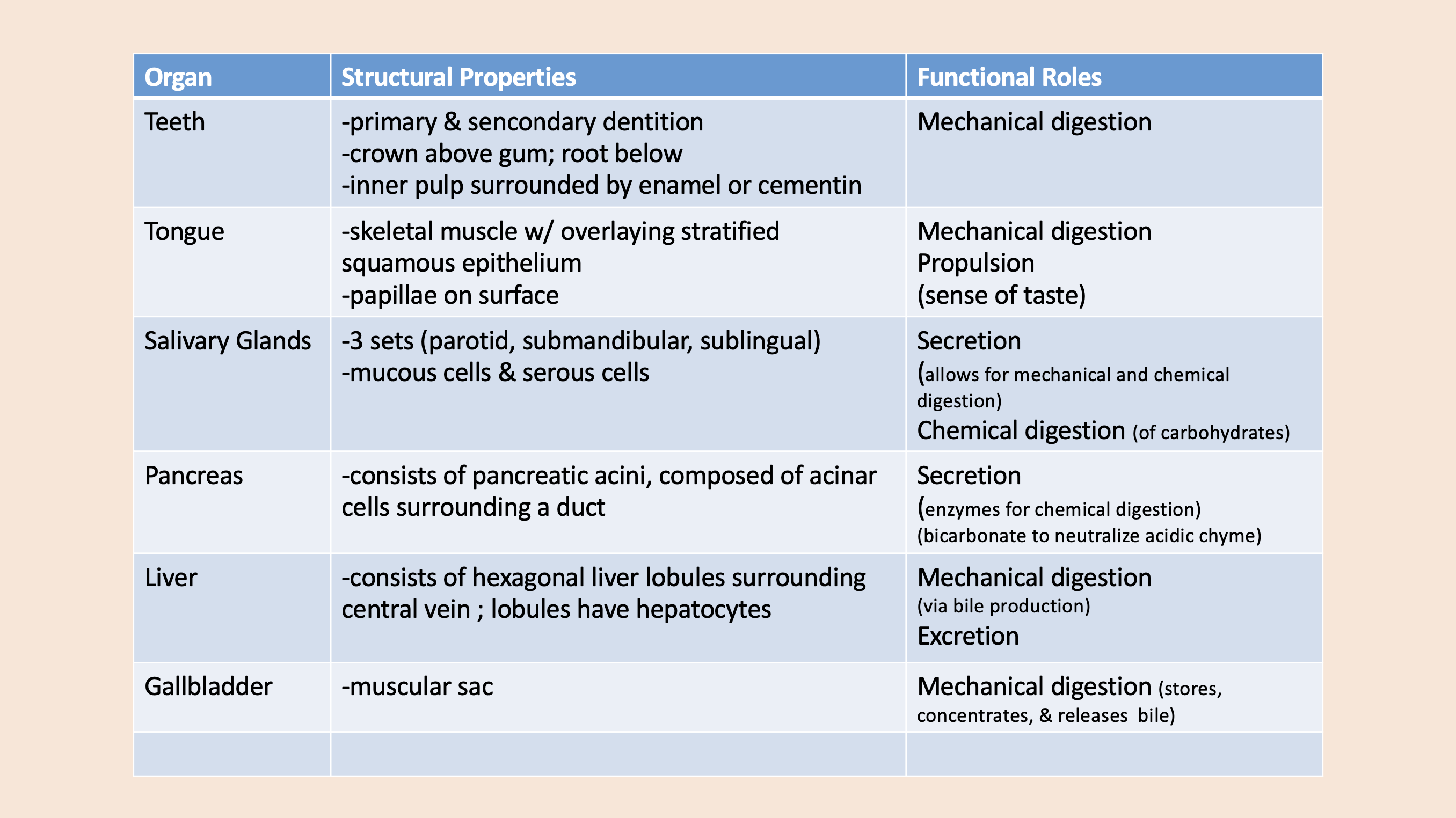
Mechanical digestion (stores, concentrates, & releases bile)
gallbladder