U.S. Presidents, Policies, and Key Events: Washington to Jackson
 Studied by 0 people
 Call Kai
 Learn
Learn Practice Test
 Spaced Repetition
 Match
Match Flashcards
 Knowt Play
1/64

There's no tags or description
Looks like no tags are added yet.
Name | Mastery | Learn | Test | Matching | Spaced | Call with Kai |
|---|
No analytics yet
Send a link to your students to track their progress
65 Terms
1st President
G Dubs
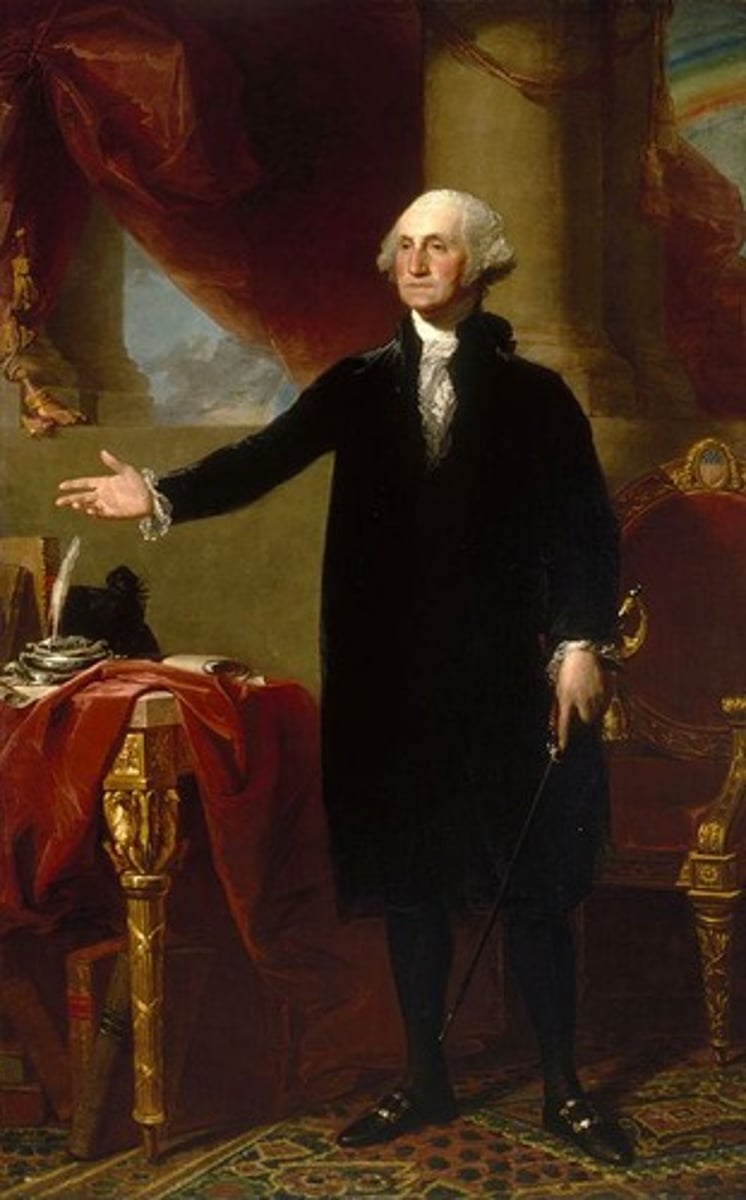
Washington Pre-Presidency
Born in Virginia, Military leader during French and Indian War and Revolutionary War, Commander-in-chief of Continental Army, Unanimously elected 1st President in 1789
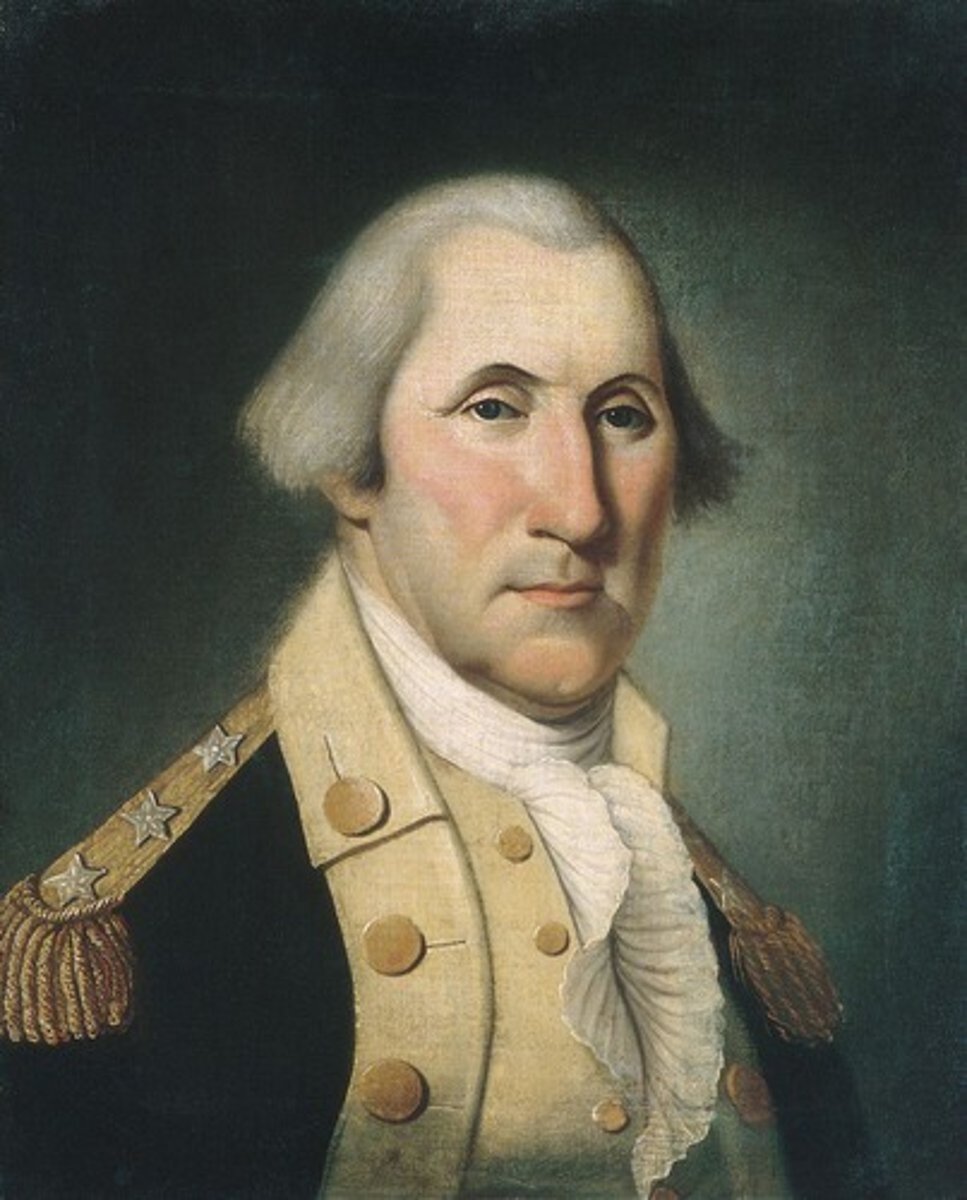
Washington's Domestic Policies
Created first Cabinet (Jefferson, Hamilton, etc), Supported the creation of the National Bank, Quickly squashed the Whiskey Rebellion proving strength of federal government, Focused on building national unity
Washington's Foreign Policy
Declared neutrality in foreign conflicts (especially Britain vs. France), Signed Jay's Treaty (1794) with Britain to avoid war, Signed Pinckney's Treaty (1795) with Spain, opening Mississippi River trade, Avoided permanent alliances
His Legacy
Called the "Father of His Country", Set the precedent of a peaceful transfer of power, Warned against: Political parties dividing nation, Entangling foreign alliances, Died December 14, 1799, remembered as a unifying leader
Adams Administration
Adams served as GW's VP
XYZ Affair
French demanded a bribe in order for US to talk to their foreign minister
Alien and Sedition Acts
Alien Act- non-citizens who were considered 'dangerous' could be kicked out by the President, made naturalization and citizenship harder; Sedition Act- could be imprisoned or deported if you criticized the government
Political Parties
Wait didn't G Dubs warn us against this....
Anti-federalists
Supported by rural farmers and local politicians, they argued too much power was given to the federal government and worried individual rights could be threatened.
Federalists
Supported the Constitution and believed a strong central government was needed for economic stability.
Bill of Rights
Addition to the Constitution that preserved individual rights.
10th Amendment
Preserves state powers.
Thomas Jefferson
Author of the Declaration of Independence, Governor of Virginia, and First Secretary of State.
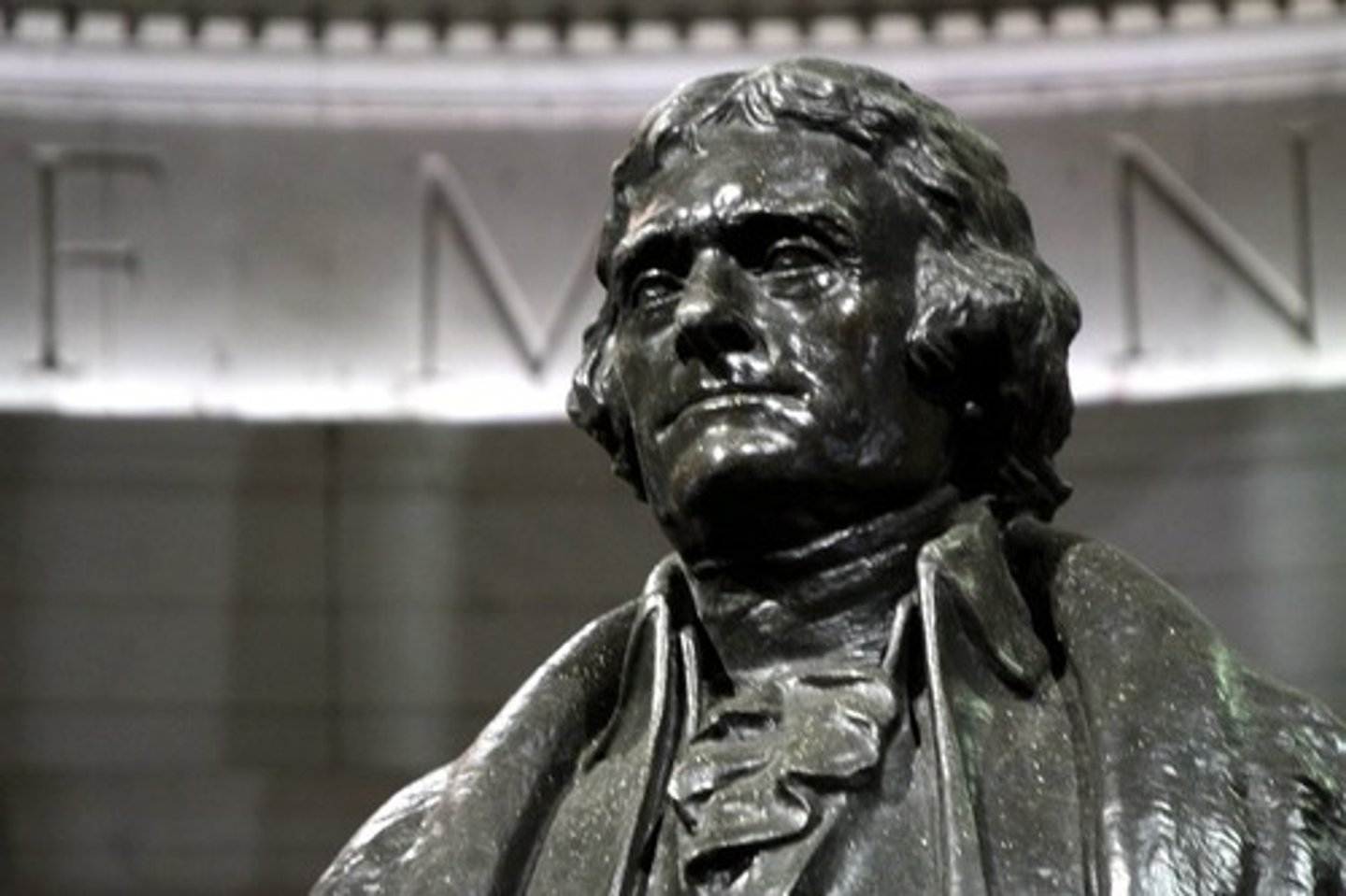
Louisiana Purchase
Acquisition of territory in 1803 that doubled the size of the United States.
Embargo Act of 1807
Banned American trade with foreign nations, devastating the American economy.
James Madison
Father of the Constitution, wrote the Federalist Papers, and drafted the Bill of Rights.

War of 1812
Conflict caused by British interference with American trade and ships.
Treaty of Ghent
Ended the War of 1812 without a clear winner but restored peace.
Missouri Compromise
Allowed Missouri to enter as a slave state and Maine as a free state, maintaining the balance between slave and free states.
Monroe Doctrine
1823 policy warning European powers not to interfere in the Americas.
John Quincy Adams
Son of John Adams, controversial election winner, and promoter of national projects like roads and canals.
Andrew Jackson
Known as 'Old Hickory,' he was the 'common man's president' who expanded voting rights.
Spoils System
Government jobs given to political supporters and friends rather than based on merit.
Indian Removal Act
Legislation that led to the Trail of Tears.
War Hawks
Members of Congress who wanted to fight in the War of 1812.
Battle of Fort McHenry
Key event in the War of 1812 that inspired the writing of the Star Spangled Banner.
Andrew Jackson's Legacy
Expanded democracy and voting rights while enforcing controversial policies like the Indian Removal Act.
Strengthened American democracy
Madison's legacy included advancements in religious freedom and separation of church and state.
Era of Good Feelings
Period of national unity following the War of 1812.
Alien Act
Non-citizens who were considered 'dangerous' could be kicked out by the President, made naturalization and citizenship harder.
Sedition Act
Could be imprisoned or deported if you criticized the government.
First Barbary War
Fought against pirates.
Lewis and Clark
Explorers who mapped the newly acquired Louisiana Territory.
Established US Military Academy
Created an institution for military training.
George Washington's Farewell Address
Warns against permanent alliances and forming political parties.
Lewis and Clark expeditions
Arranged by President Thomas Jefferson.
G Dubs
Unanimously elected president.
James Monroe
President during the era of good feelings.
Jay's Treaty
Signed to avoid war with Britain.
Marbury v Madison
Established the principle of judicial review.
John Q Adams
Won the corrupt bargain election of 1824.
Battle of New Orleans
Battle that made Andrew Jackson famous.
John Marshall
First Chief Justice of the Supreme Court.
J Mad
President during the War of 1812.
Warhawks
Congressmen who wanted the US to go to war.
Alexander Hamilton
Cabinet member in support of the creation of a national bank.
DC
City burned by the British in the War of 1812.
John Adams
Only one of the first four Presidents to serve a single term.
Neutrality
Describes the US policy to stay out of wars.
Gibbons v Ogden
Supreme Court case that ruled Congress had power over interstate commerce.
Tariffs
Taxes on goods imported to the United States.
Ware v Hylton
Supreme Court case that ruled treaties take precedence over state law.
Cabinet
Term referring to the President's chief advisors.
Nullification
Term referring to states' rights to void any act of Congress deemed unconstitutional.
1st Amendment
Protects freedom of speech.
Pinckney's Treaty
Allowed the US to trade in the Mississippi and Gulf of Mexico with Spain.
Sectionalism
Term referring to placing interests of one region over those of the nation as a whole.
American System
Promoted the creation of national projects like roads and canals.
McCulloch v Maryland
Supreme Court ruling that Maryland could not tax the national bank.
France
Country the US engaged in naval conflicts with after the XYZ Affair.
Sedition Acts
Made it illegal to criticize the government.
Antifederalists
Political group that argued too much power was given to the federal government.
Fletcher v Peck
Supreme Court case about contracts that said the Supreme Court can declare state laws unconstitutional.
Embargo Act
Banned American trade with foreign nations, devastating the American economy.
 Note
Note  Flashcards (20)