Chinese Art and Patronage under the Mongols: Dissent and Nostalgia
 Studied by 0 people
 Call Kai
 Learn
Learn Practice Test
 Spaced Repetition
 Match
Match Flashcards
 Knowt Play
1/20

There's no tags or description
Looks like no tags are added yet.
Name | Mastery | Learn | Test | Matching | Spaced | Call with Kai |
|---|
No analytics yet
Send a link to your students to track their progress
21 Terms
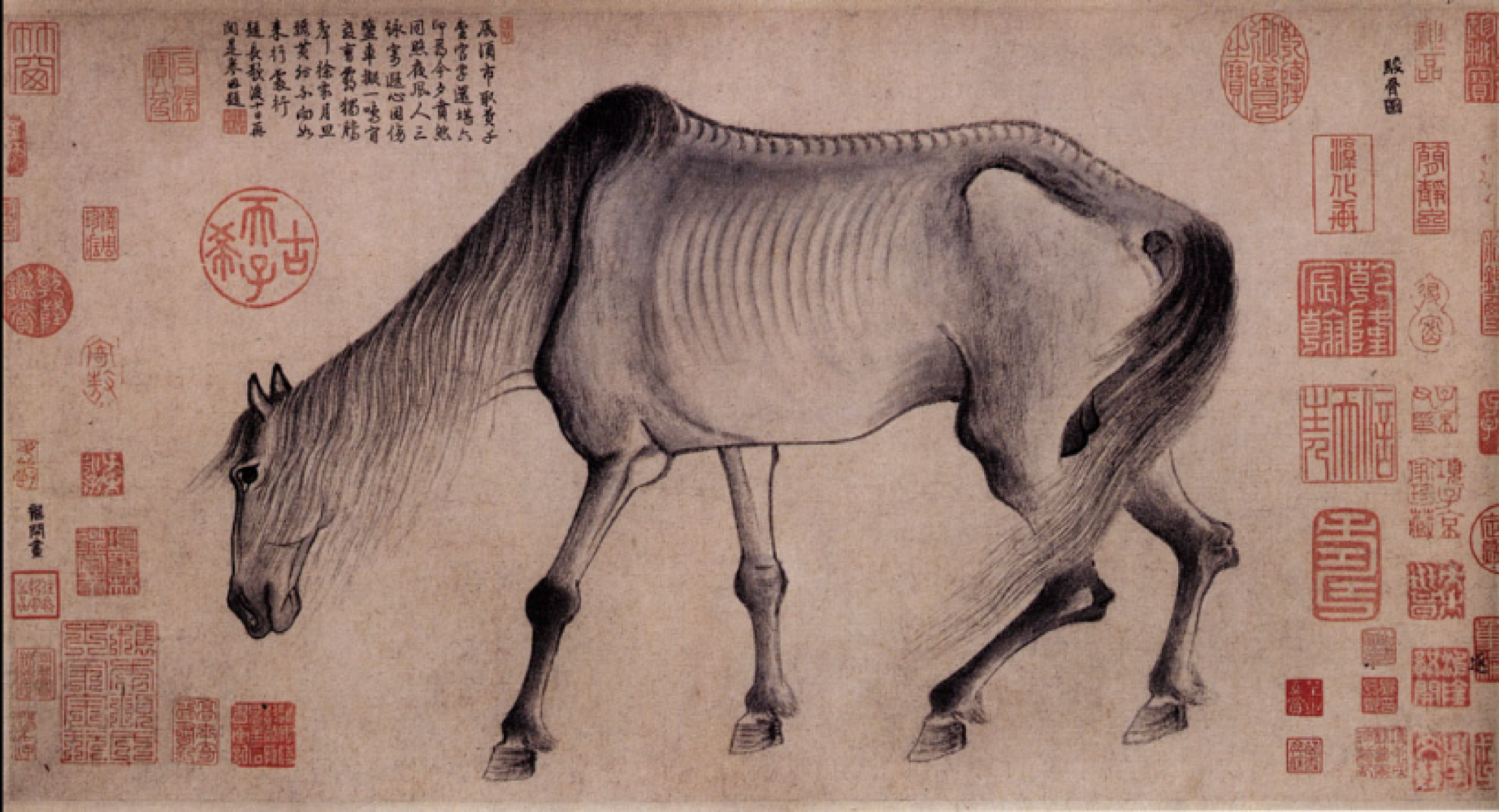
Gong Kai (ca. 1222-1307)
Emaciated Horse, ink on paper, handscroll, Yuan dynasty, 13th century
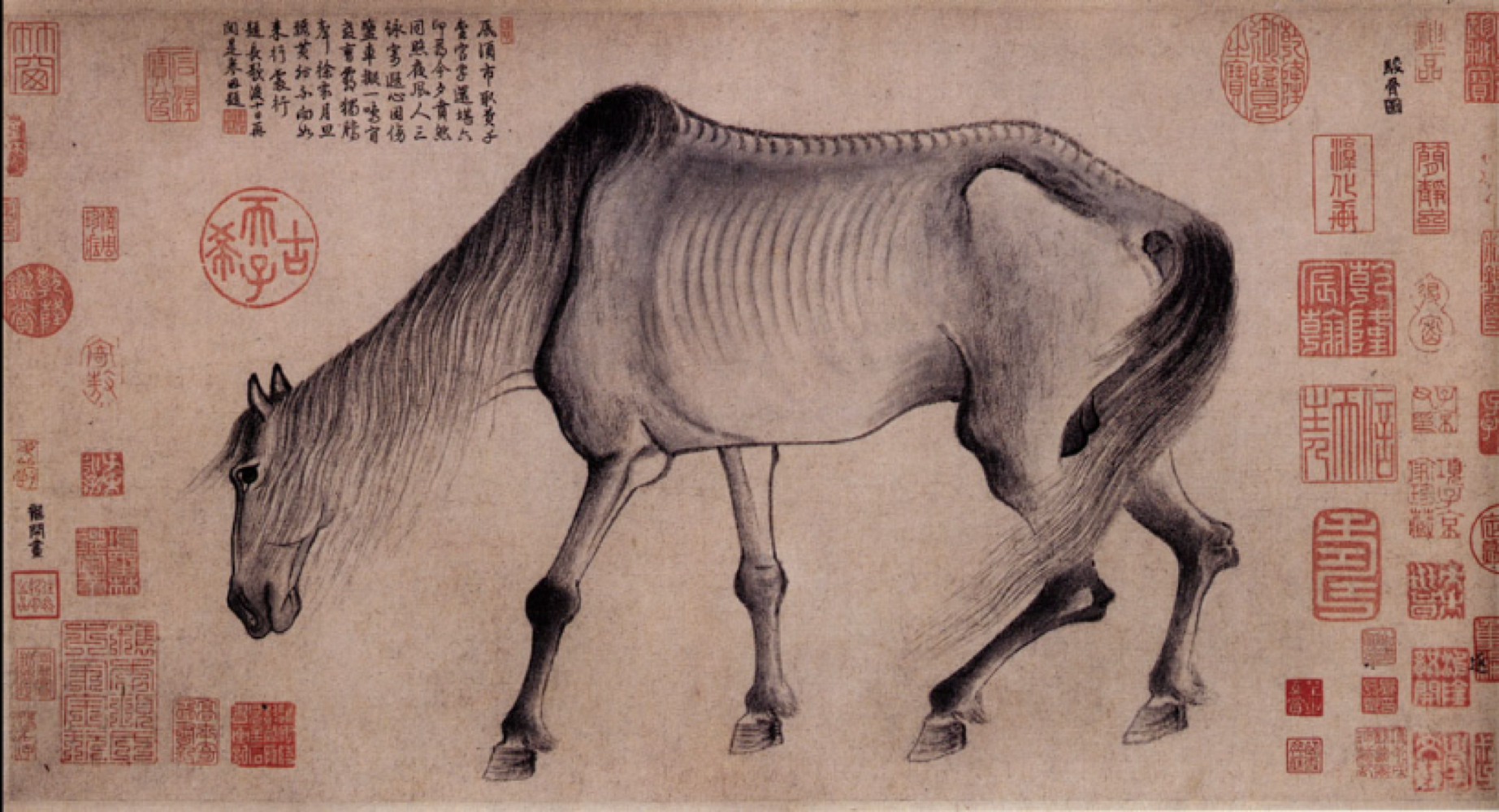
Explain the context of the Emaciated horse and its significance
former painter, born in South, disillusioned because he failed painter exam, never satisfied with achievements, stripped of his title. Formed a diasporas to have viewing parties= viewers were like minded people, those displaced and disseminated
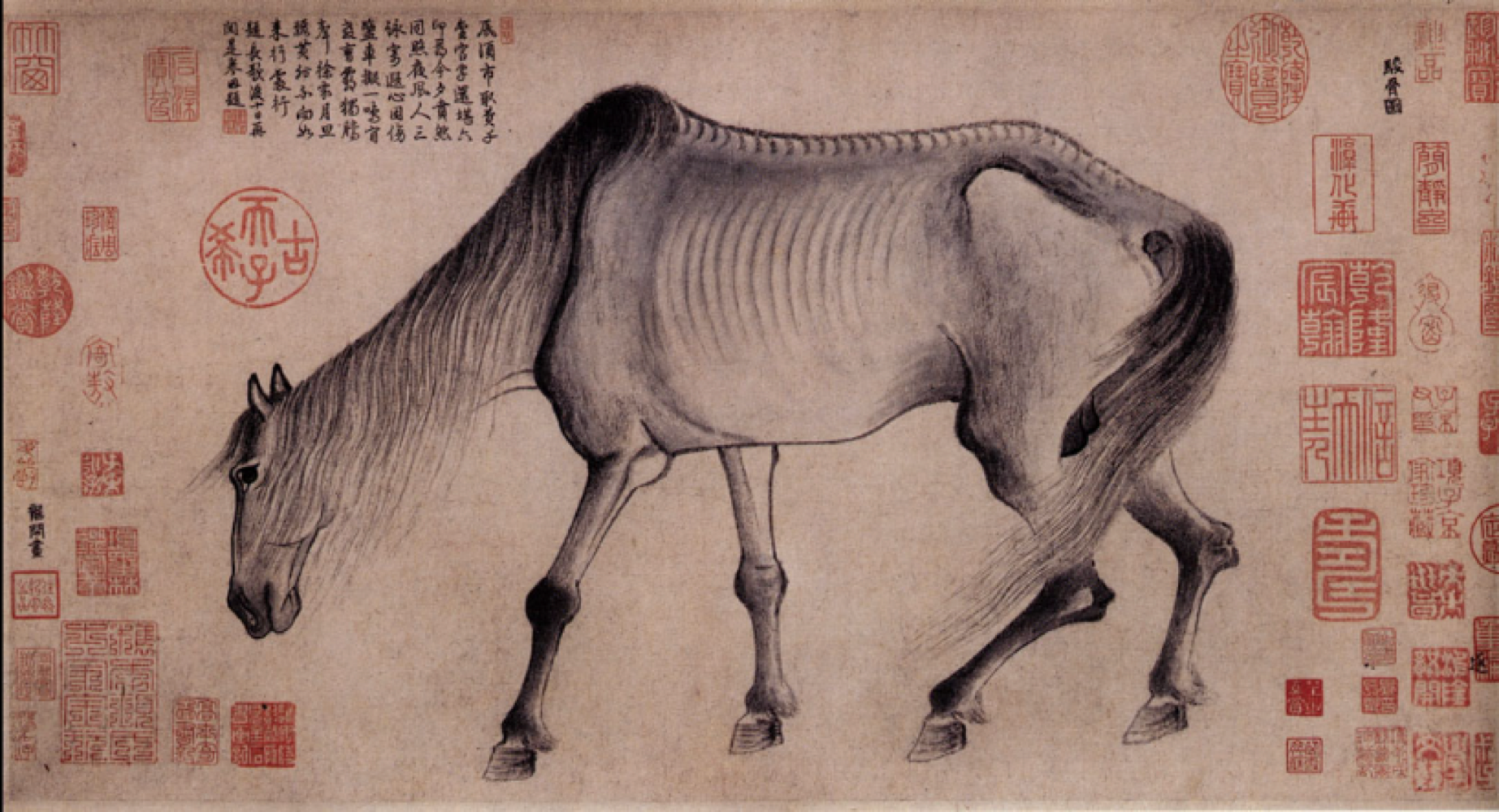
explain what is depicted in the Emaciated Horse and its significance
horse painting was a separate branch of the academy, never taken literally, it was a metaphor for the state of the government, eg. young horse=government taking care of the people and vv
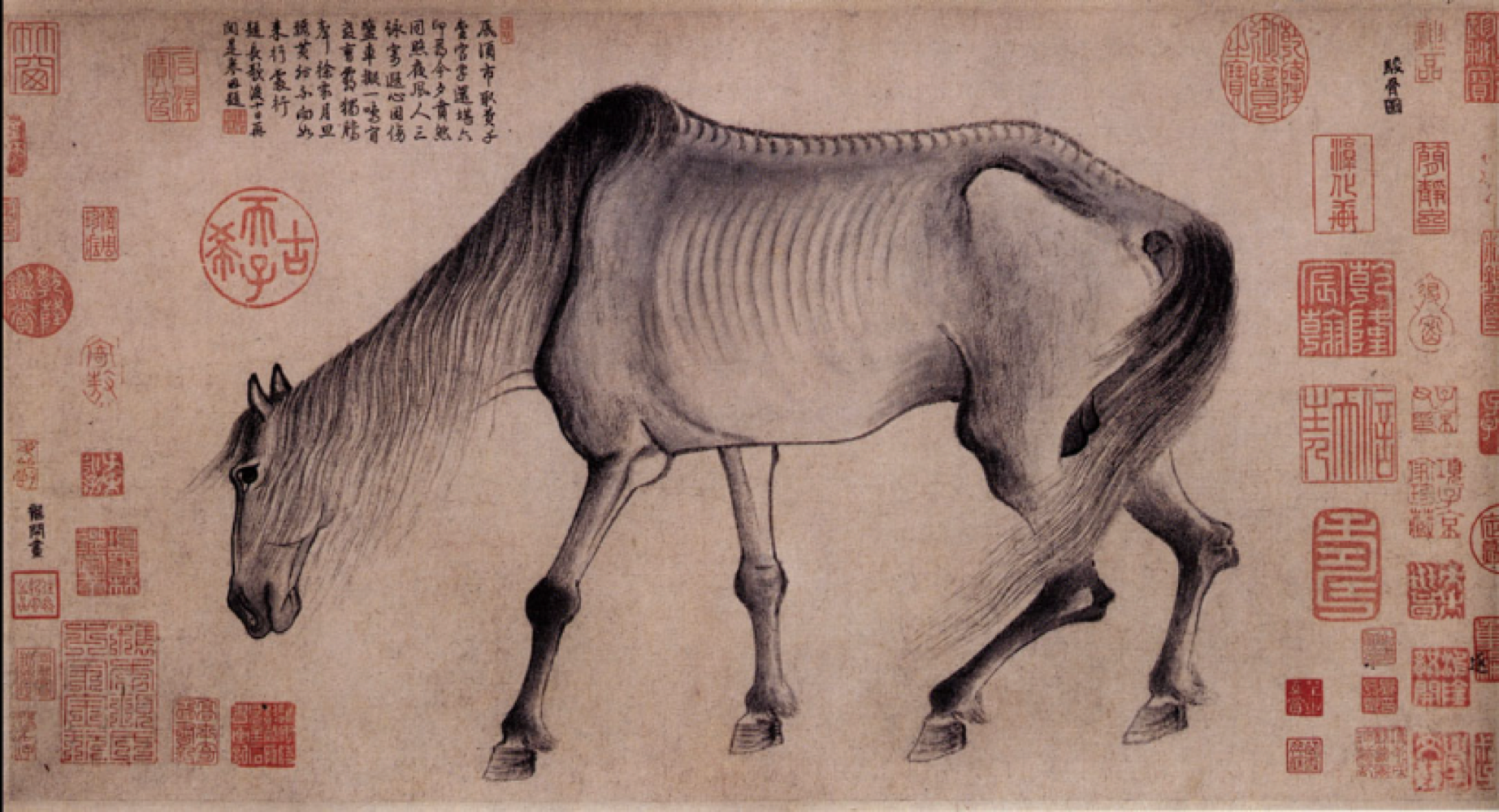
describe the painting techniques in the Emaciated Horse and its significance
brushstrokes and ink-wash: horse bent over=left over subject, innovation because the south became place away from academy, dry/no ink wash, attempt at shading, shadows, and contrast, saturated color, diluted through dry, quick strokes on the mane=no lush mane. Opposition of horse painting meant to be harnessed and well fed with calligraphic line is intentional
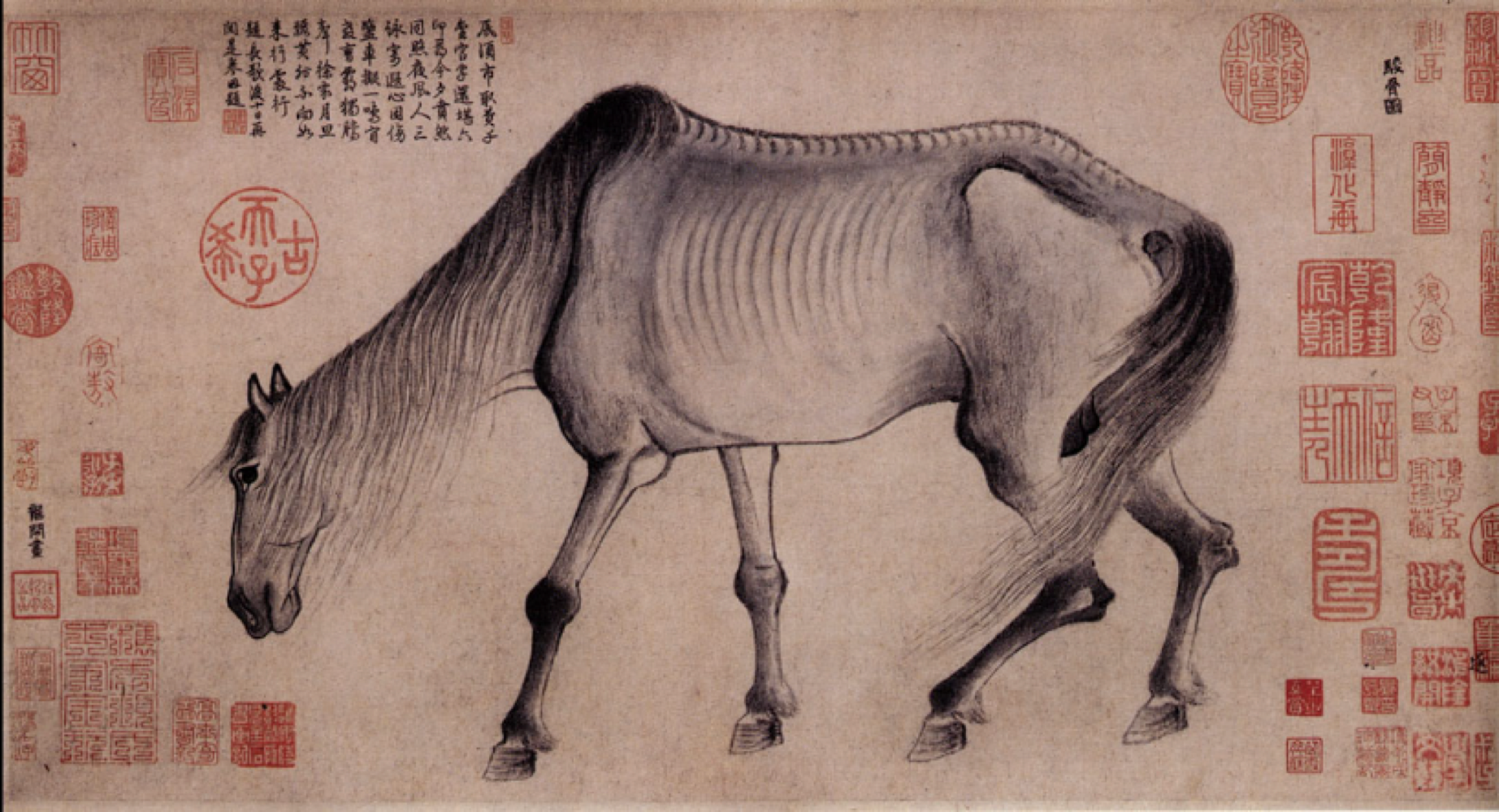
describe the appearance of the Emaciated horse and its significance
accentuated ribs=South not well fed. Shows the South’s method of survival. Commentary on the state of left over society and their emotional and physical sate under the Mongols and the caste system. 15 ribs= expensive horse and well bred. Big eye: keeps spirit of horse=one day the population will be able to rise up again/flicker of hope.

Gong Kai (ca. 1222-1307)
Zhong Kui Travelling, ink on paper, handscroll, late 13th century (National Museum of Asian Art, Smithsonian)

describe the context of the Zhong Kui Travelling and its significance
utilize the power of Chineses history to make commentary about the new regime. Zhong Kui was a talented Confucian scholar who passed his exams on the first try. When he went to the academy he was bullied for being ugly and committed suicide. He transcends and becomes the master of demons and goes back and tortures his bullies till they leave their jobs. Sees himself and others that will eventually rise up and reagin power and control

describe the image in the Zhong Kui Travelling and its significance
Zhong carried by chains by zoomorphic beings with human qualities, appears ugly, sister and wife also being carried, hyper-pigmented scar= accentuate ugly and the fact they they were bullied and that they rose up

describe the composition of the Zhong Kui Travelling and its significance
read right to left. Mongols know this story= vehicle for political dissent and commentary. Viewer not engage with the subject, subjects contained. Nothing in background (untreated/unadorned)= subject important and focus on political dissent
Qian Xuan (ca. 1235-1305)
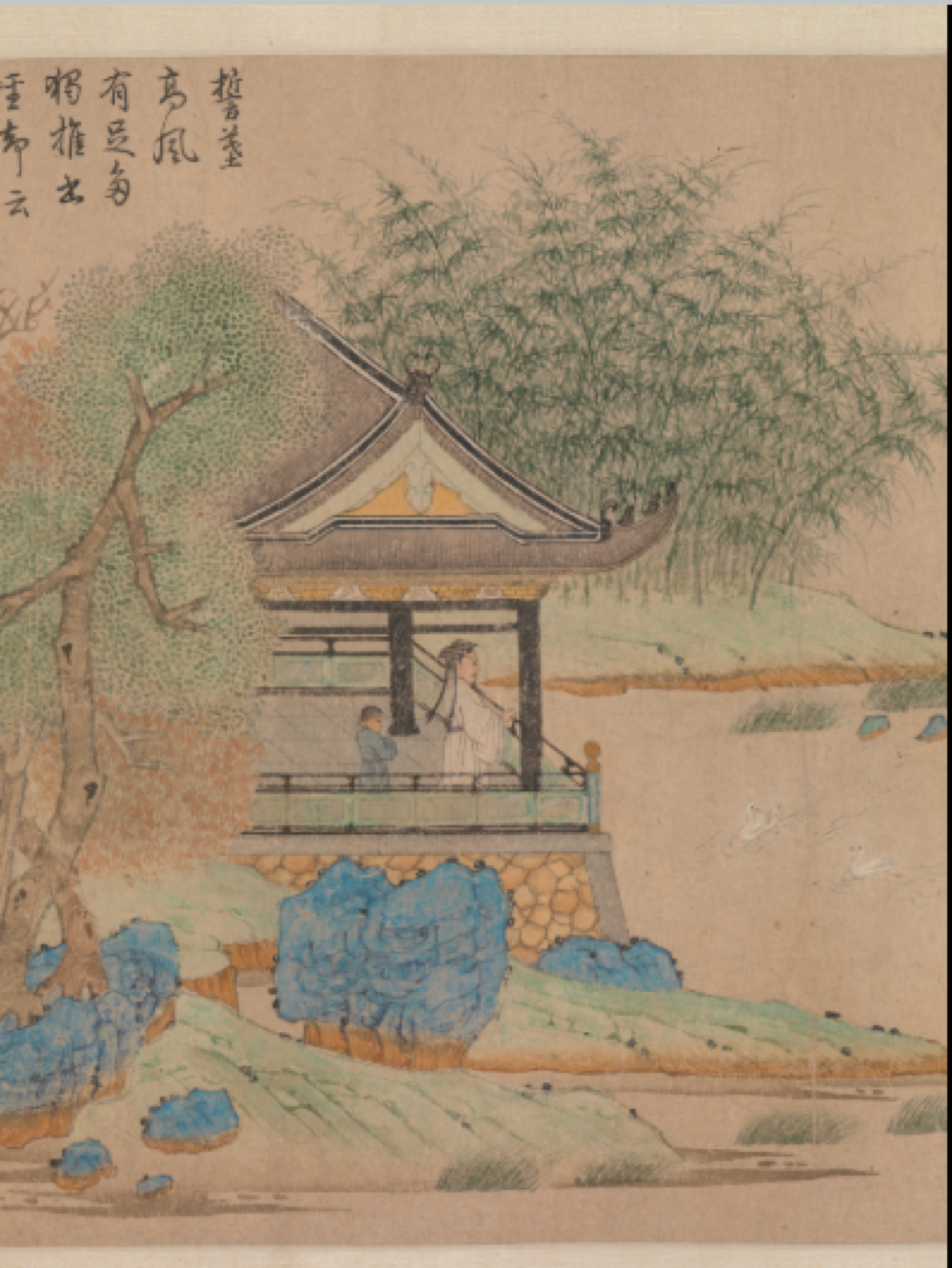
Calligrapher Wang Xizhi Watching Geese, ink, color and gold on paper, handscroll, ca. 1295
describe the context of the Watching Geese and its significance
younger and resigned into faith. More subdued criticism
Describe the images context of Watching Geese and what it depicts
Wang Xizhi watching geese: philosopher and historical figure. During time of fragmentation, reference to Chinese past=Confucian scholar will still exist despite change
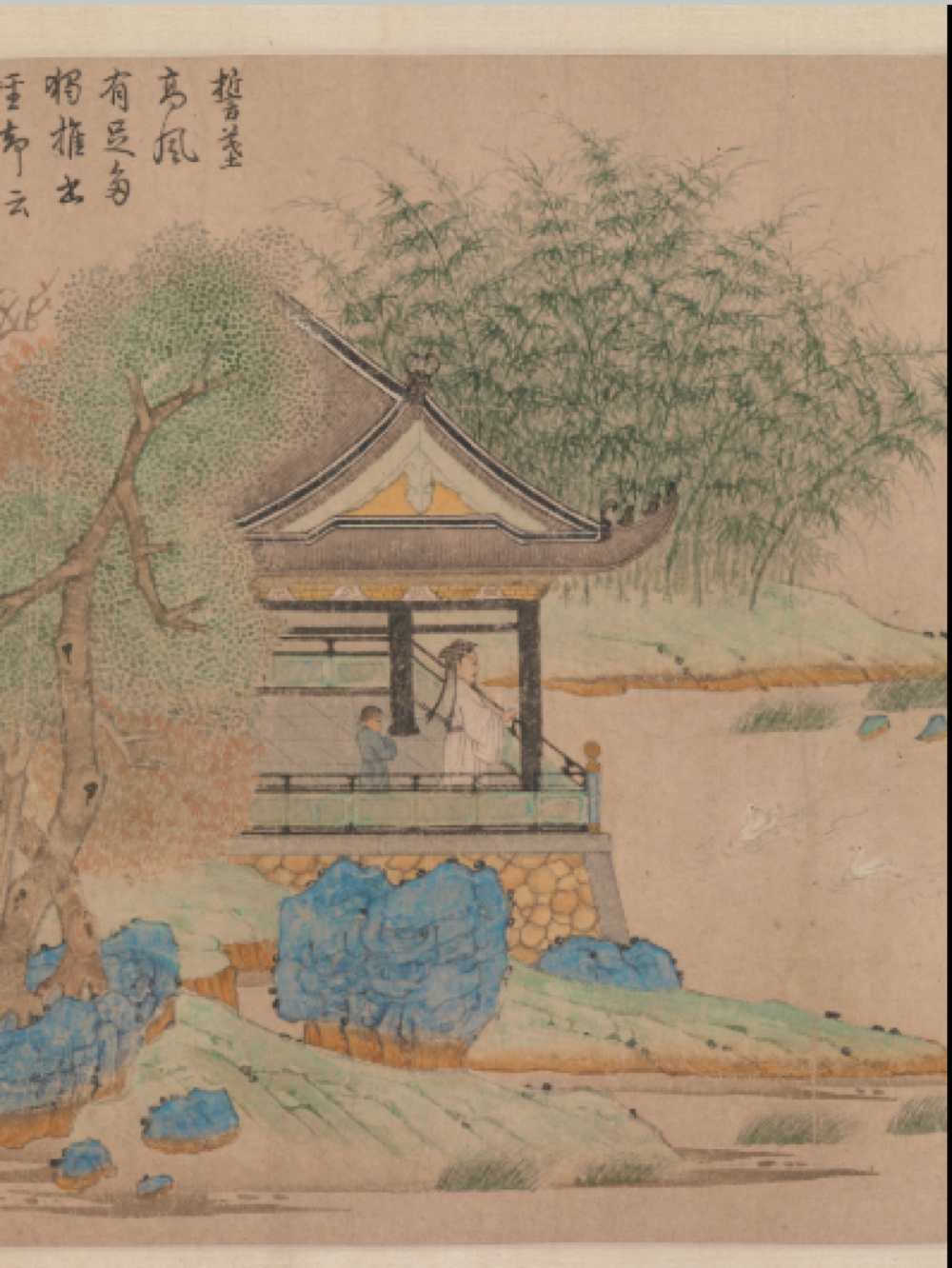
describe the composition of Watching Geese and its significance
one corner composition=reference to past Chinese tradition that will live on. Blue and Green pigment: separate genre, suggest reinvigoration and what was before Mongols, but no floating perspective. No overt criticism
Zhao Mengfu (ca. 1254-1322)
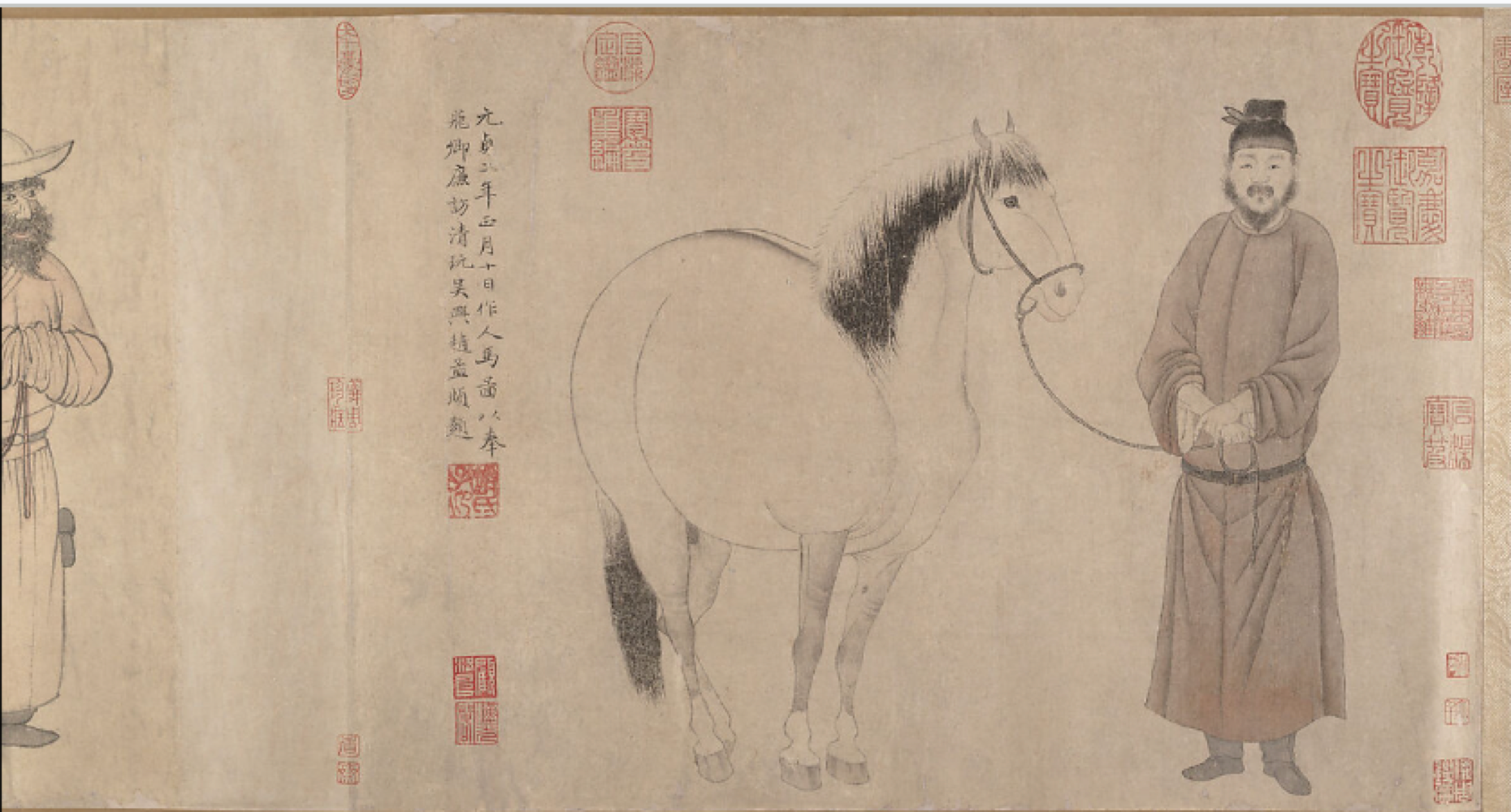
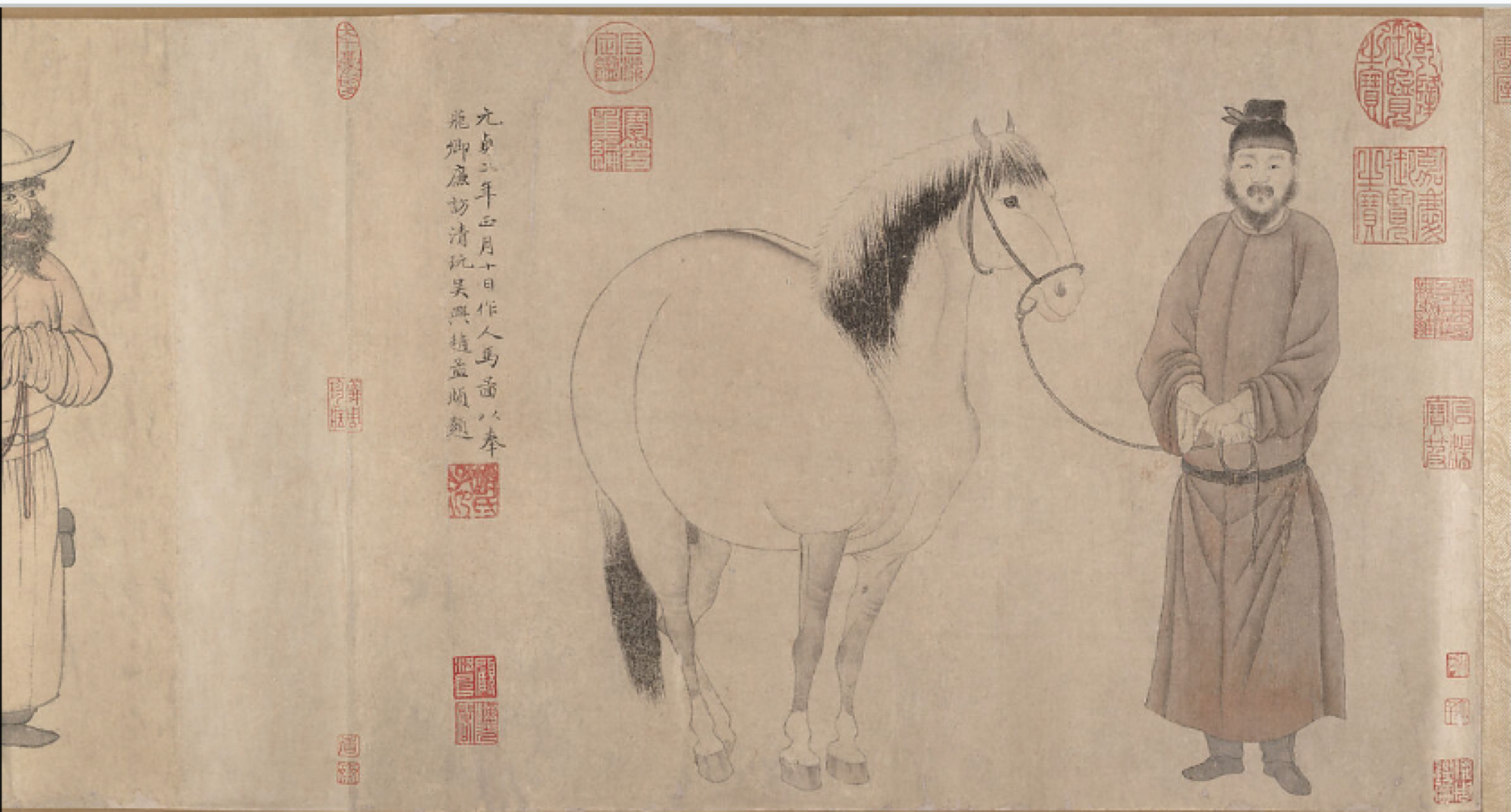
Grooms and Horses, ink and color on paper, handscroll, ca. 1296
Describe the context of Grooms and Horses and its significance
artist decided to work for Mongols, younger. Well payed and free housing. Wife also painter=abolish confucian norms and Mongols let his wife go with him. Rejected by those in the South=self imposed exile
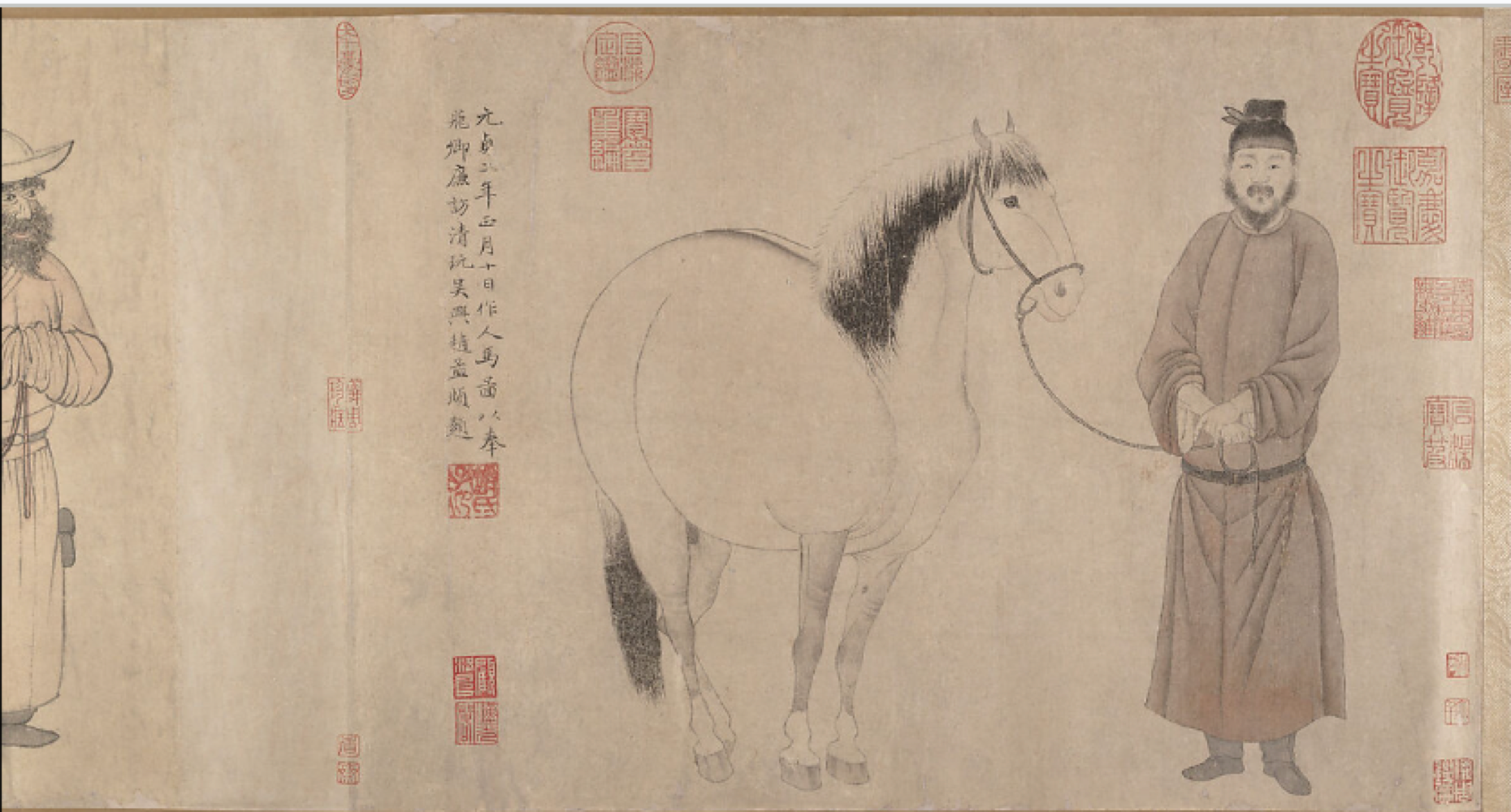
Describe the composition and image of Grooms and Horses and its significance
long scroll, equal size square units, geometry and rigidity now seen. Groom=respectable job, equate himself with this. Facial hair and sideburns-Mongols, facing figure. Horse well fed with contours and calligraphic line=utilize old ways and add to it to justify his choice.
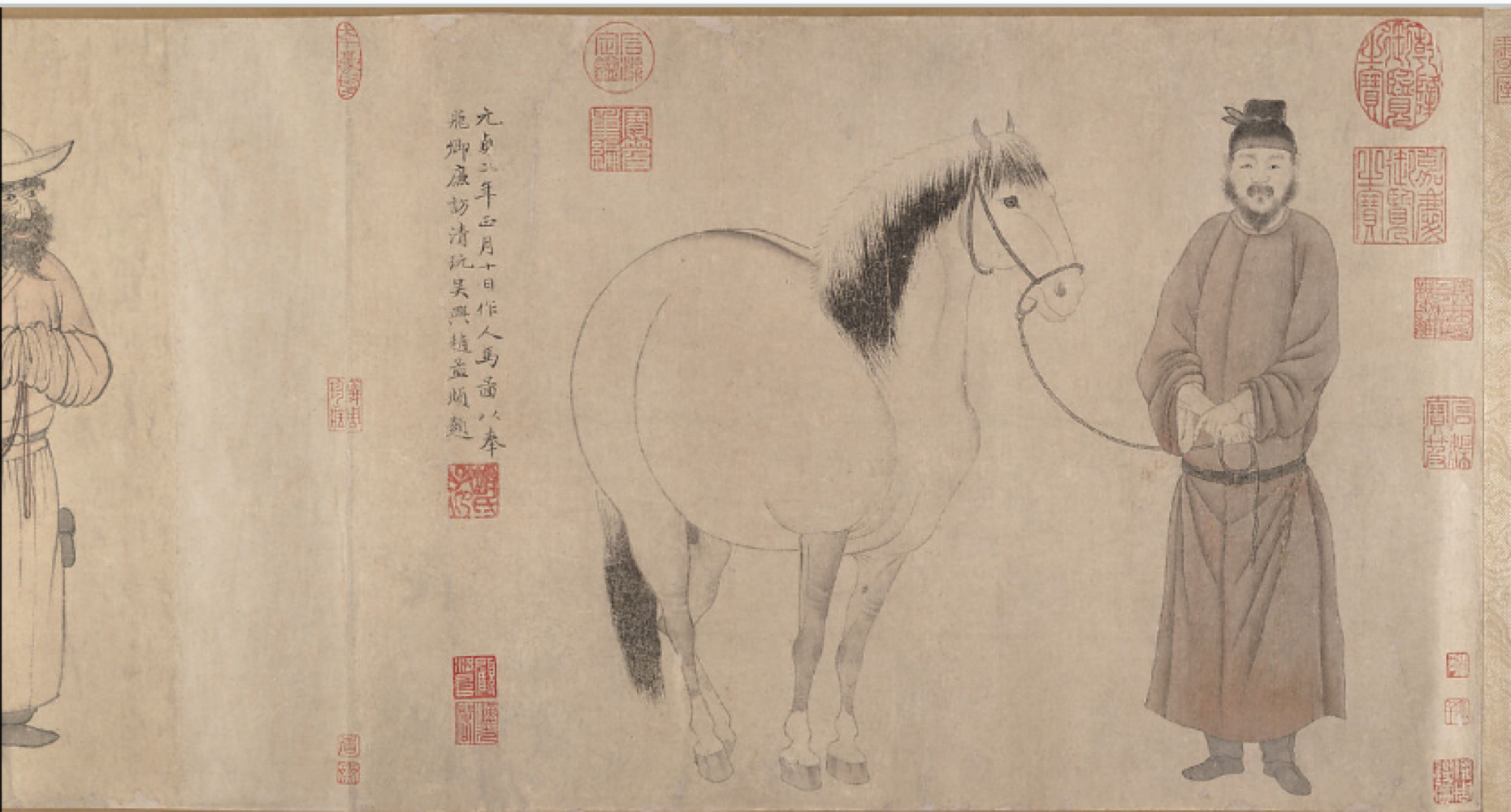
Describe the painting styles of Grooms and Horses and its significance
dry brush work: contours, not overly adorn, paying tribute to those that ostracized him
Ni Zan (ca. 1301-1374)
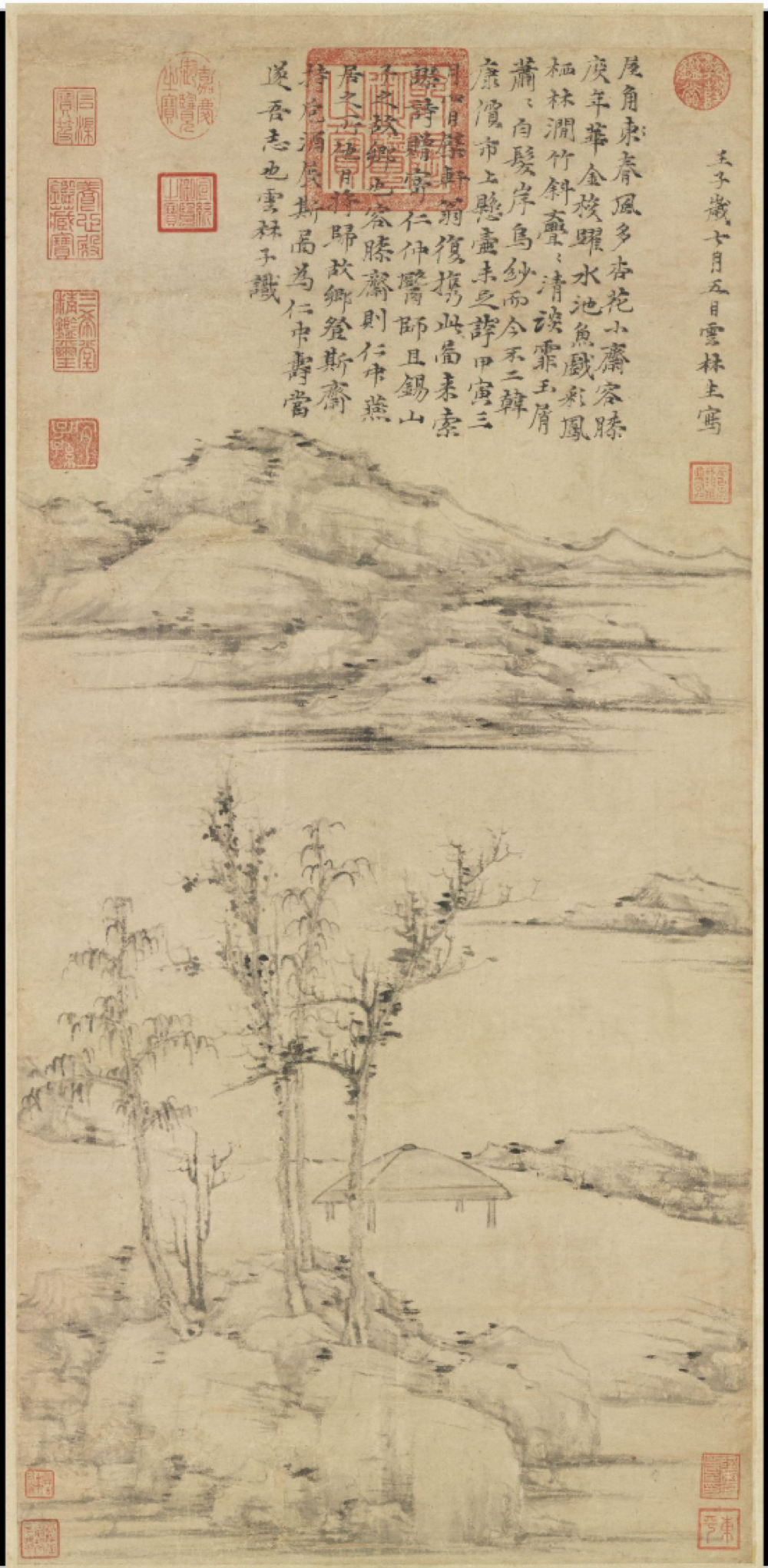
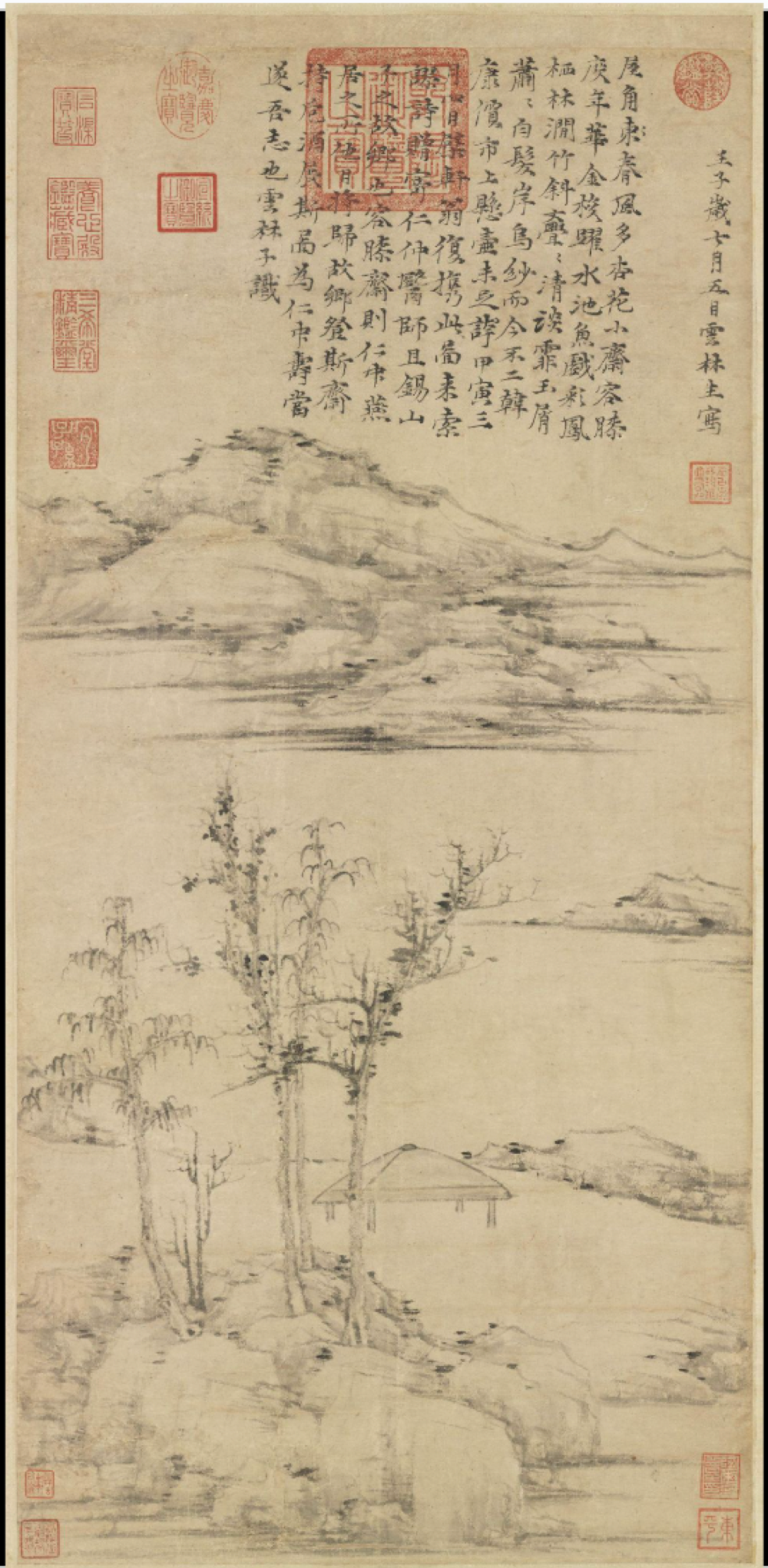
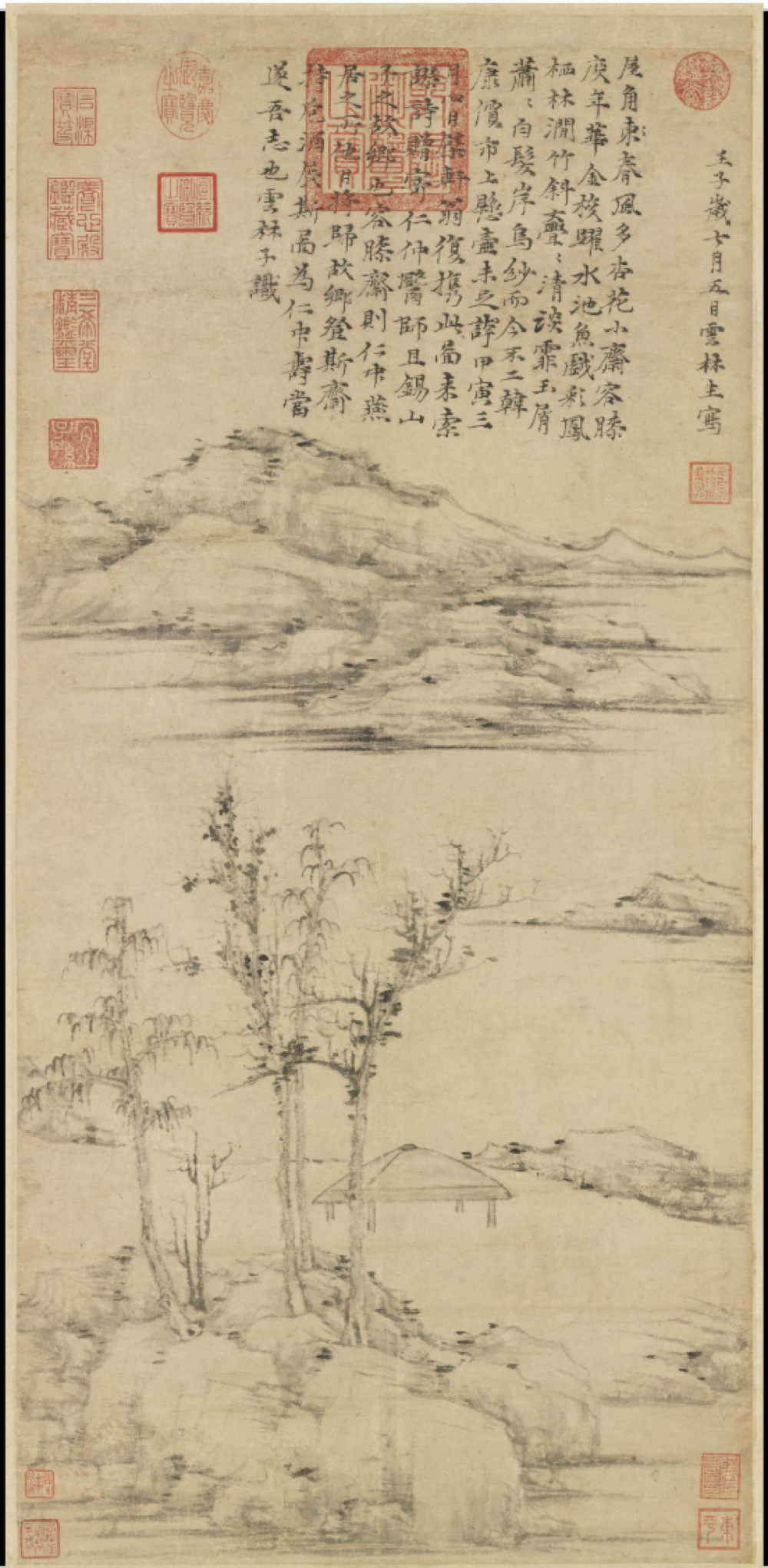
The Rongxi Studio, ink on paper, hanging scroll, ca. 1372
describe the context before the Rongxi Studiopainting
Mongols identity crisis: seen as fierce warriors and worldly politicians and trade partners, hard to balance, hard to create art and propaganda
Describe the context of the Rongxi Studio and its significance
departure from landscapes as seen before. Eccentric painter: germaphobe, wealthy family, last generation before Mongols fall. Mongols abandon the South, river flood=wealthy people displaced many times= Painting communicate how they were treated during the end of Mongol rule
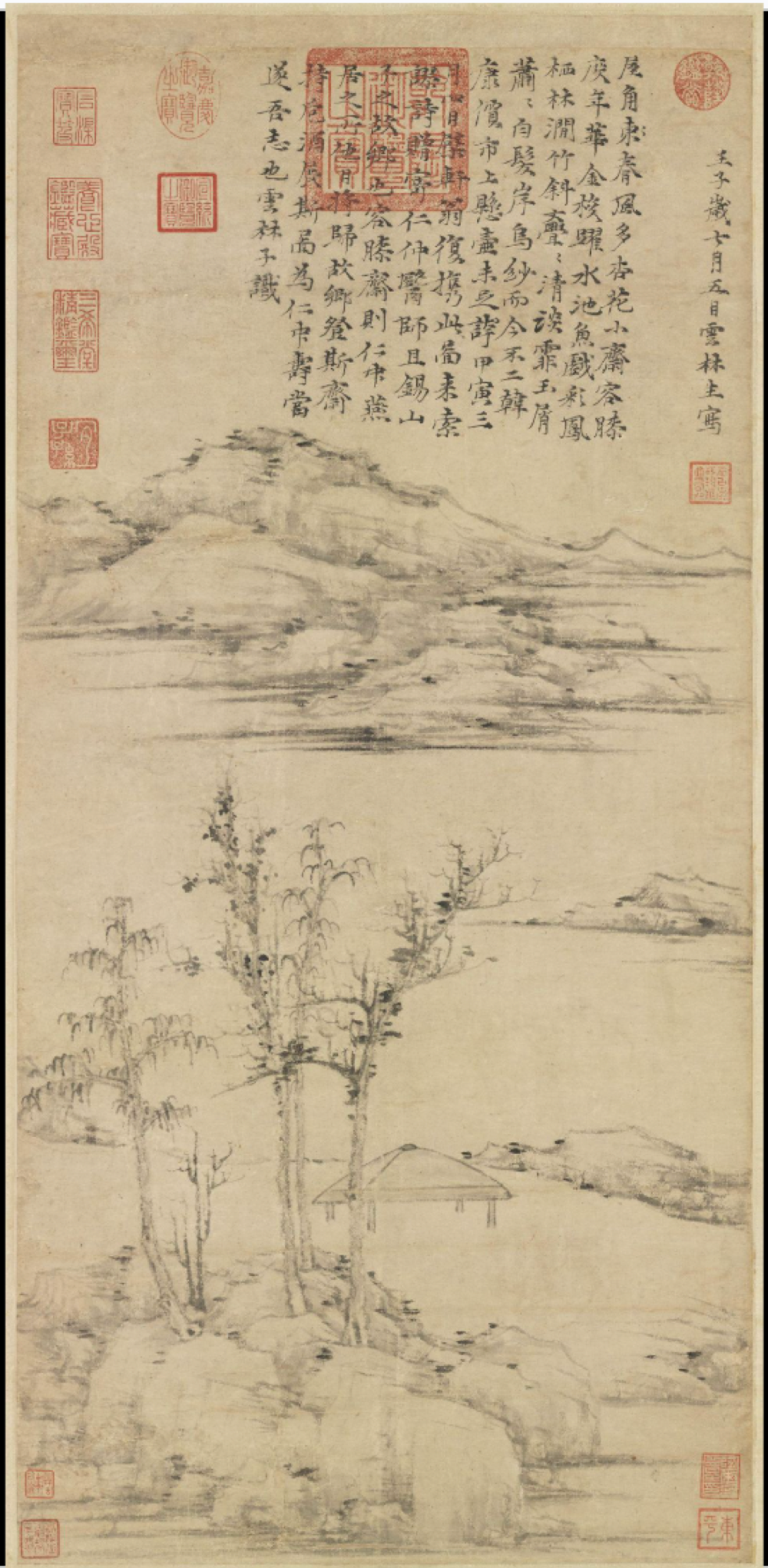
Describe the composition of the Rongxi Studio and its significance
Tri-partide composition. Well defined foreground, middle-ground emptiness-river, background haziness=image what lies beyond through cropping technique=prompted to use imagination, stems from floating perspective. Not as grand because stripped away from spirit, no figures/human presence gone=emphasize displacement and state of affairs in the South, mode of critiquing the government and denoting specific economic problems stylistically through empty space
 Note
Note  Flashcards (47)