Lesson 5- Lung capacity
 Call Kai
 Learn
Learn Practice Test
 Spaced Repetition
 Match
Match Flashcards
 Knowt Play
1/15

There's no tags or description
Looks like no tags are added yet.
Name | Mastery | Learn | Test | Matching | Spaced | Call with Kai |
|---|
No analytics yet
Send a link to your students to track their progress
16 Terms
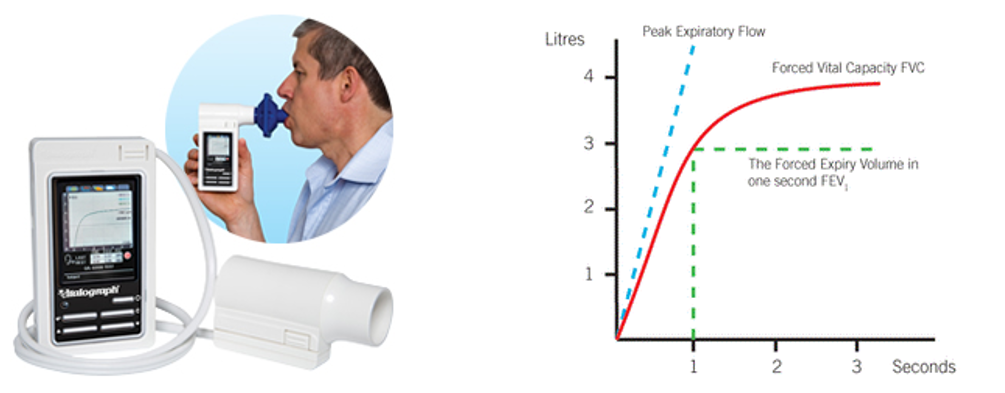
Peak flow meter
Measures peak expiratory flow (PEF), a person’s maximum speed of expiration
Vitalograph
Produces graph of the amount of air breathed out and how quickly. FEV1 = Forced expiratory volume in one second ( How much air is forced out in one second)
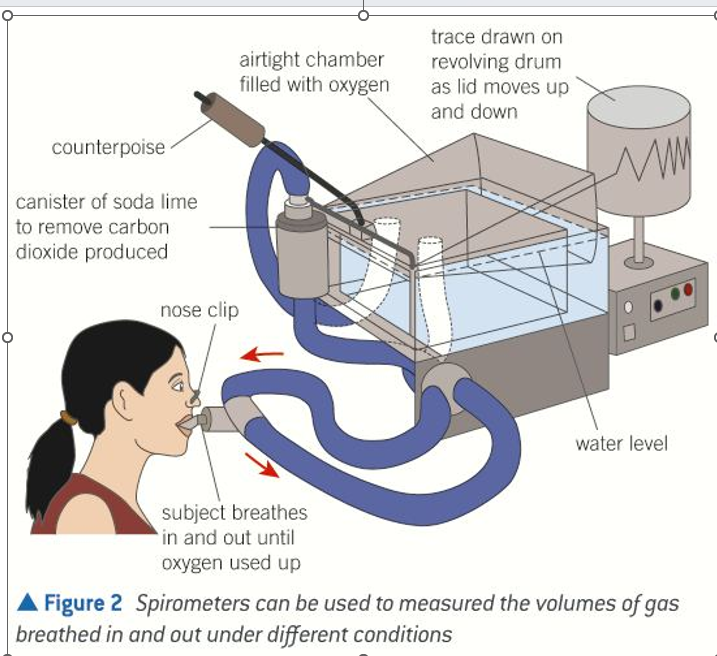
Spirometer
Can give readings of TV, VC, Breathing rate and oxygen uptake and produces a graph
Spirometer trace diagram
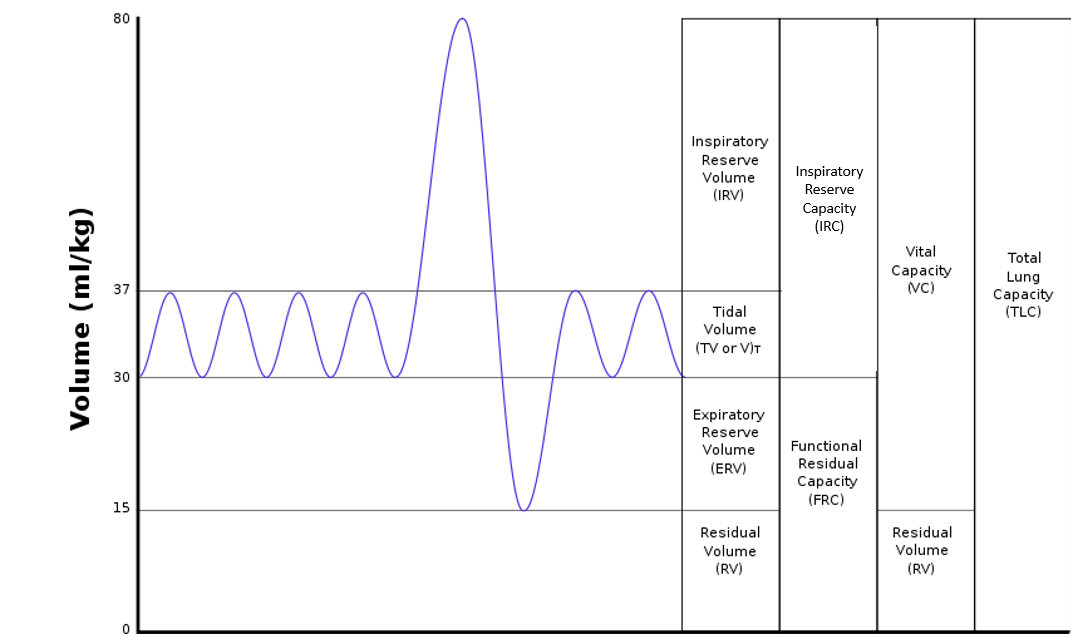
Tidal volume (TV)
The amount of air that can be inhaled and exhaled during one normal breathing cycle.
Ventilation rate x breathing rate
Inspiratory reserve volume (IRV)
The amount of air that can be forcibly inhaled beyond a tidal inhalation. 3dm3 for men and 2dm3 for women.
Expiratory reserve volume (ERV)
The amount of air that can be forcibly exhaled beyond a tidal inhalation. 1.2dm3 for men and 0.2dm3 for women.
Residual volume
The amount of air remaining in the lungs after an ERV. 1.2dm3 for both men and women. Prevents lungs from collapsing and maintains a constant supply of oxygen for gas exchange.
Inspiratory capacity
Maximum volume of air a person can inhale after a normal exhalation.
IRV + TV
Functional reserve capacity
Volume of air remaining in lungs after a passive exhalation.
ERV + RV
Vital capacity
The volume of air that can be exhaled when the deepest possible intake is followed by the strongest possible exhalation
TV + IRV + ERV
Total lung capacity
Total volume the lungs can hold
RV + VC
Breathing rate
Number of breaths per minute
Ventilation rate
Breathing rate x Tidal volume
Factors affecting lung capacity
-Age
-Sex
-Size
-Fitness
-Smoking or respiratory disease (reduces VC)
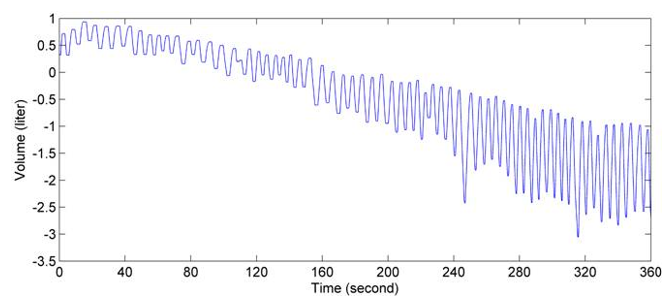
Actual spirometer trace
-Looks like this due to volume of gas (oxygen) in chamber decreasing over time
-Air breathed out mixture of oxygen and carbon dioxide
-Carbon dioxide absorbed by soda lime- only oxygen in chamber which is inhaled