Class III Prep and Restorations
 Studied by 0 people
 Call Kai
 Learn
Learn Practice Test
 Spaced Repetition
 Match
Match Flashcards
 Knowt Play
1/63

There's no tags or description
Looks like no tags are added yet.
Name | Mastery | Learn | Test | Matching | Spaced | Call with Kai |
|---|
No analytics yet
Send a link to your students to track their progress
64 Terms
Class III cavity prep and restoration is a procedure that involves what?
the proximal surface of anterior teeth without incisal edge
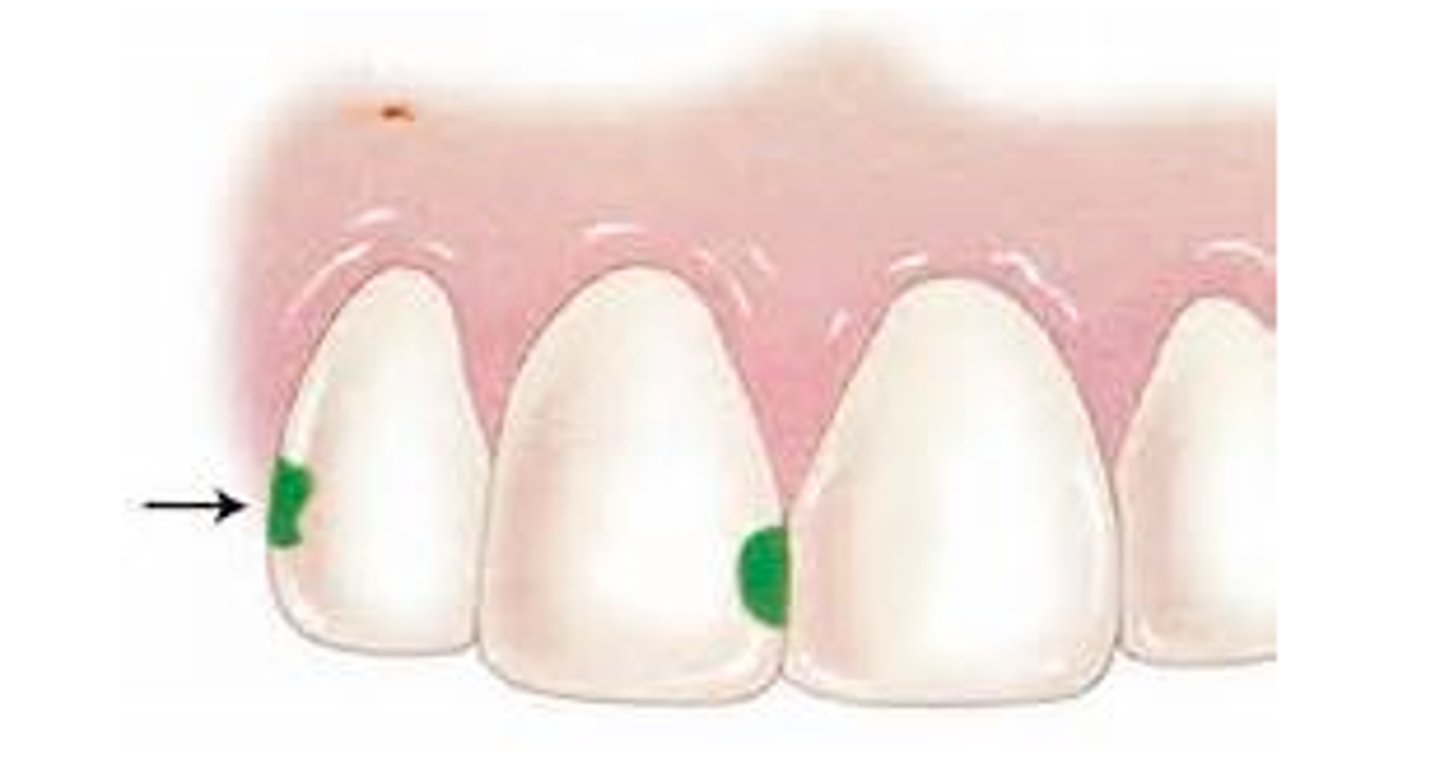
Where is most of the lesion for Class IIIs?
lesion is cervical to the contact area
What causes lesions to be within the cervical to the contact area?
due to inconsistent/no flossing
What restoration technique is not mainly used for Class IIIs?
amalgam due to aesthetics
Class III amalgam indications:
- distal surface of max and mand. canines
- gingival margin (in cementum)
- difficulty of moisture control
- prep does not involve the facial surface or undermines the incisal corner
Outline form for Class IIIs are determined mostly by what?
decay and access to the lesion
3 factors that define the boundaries of cavity prep:
1. direct penetration of microorganisms and acids
2. spread of decay along the DEJ
3. modification of non-diseaesd fissures and/or grooves at the periphery of the prep
What area of the tooth provides less resistance than either enamel or dentin?
DEJ
What contamination leads to lateral spread of lesion?
bacterial contamination
The cavitation of the enamel surface allows for what 3 things?
acceleration of the growth of the cariogenic biofilm, demineralization and expansion of the cavitation
The cavitation of the enamel surface is what type of environment?
highly acidic and anaerobic which shelters the cariogenic bacteria
Increasing demineralization of the enamel lesion results in?
surface weakening
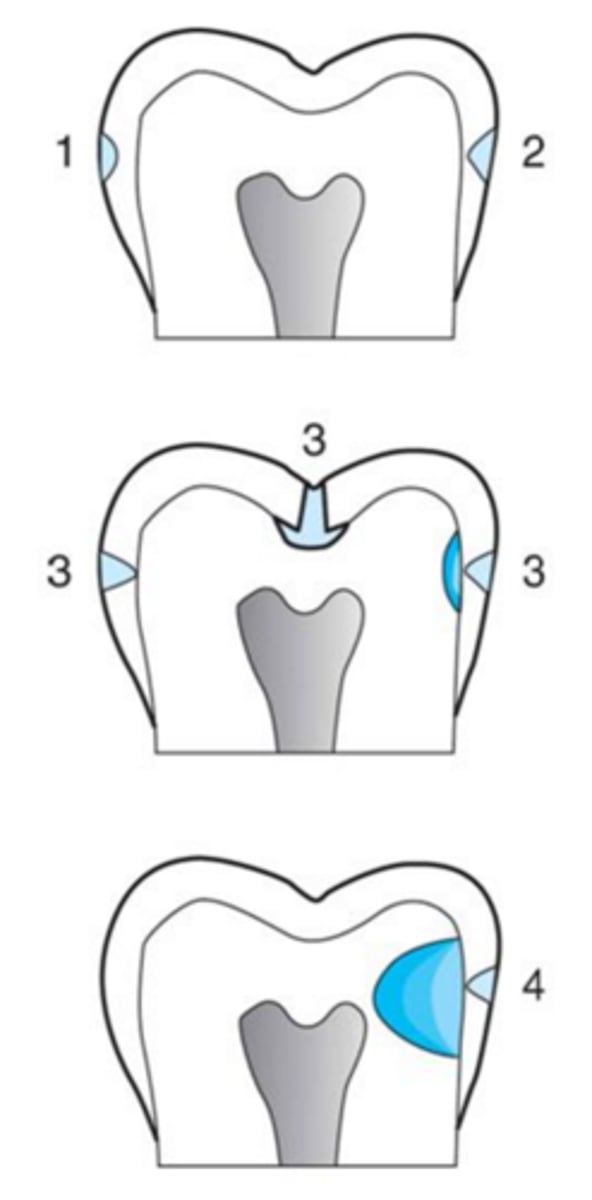
Bacterial activity within the dentinal lesion increases what?
susceptibility to demineralization at the DEJ
What part of the tooth will lesion advances more rapidly?
dentin because it is less resistance to acid demineralization owing to its less mineralized content
The lesion cavitation provides what type of habitat for the cariogenic biofilm?
more protective and retentive
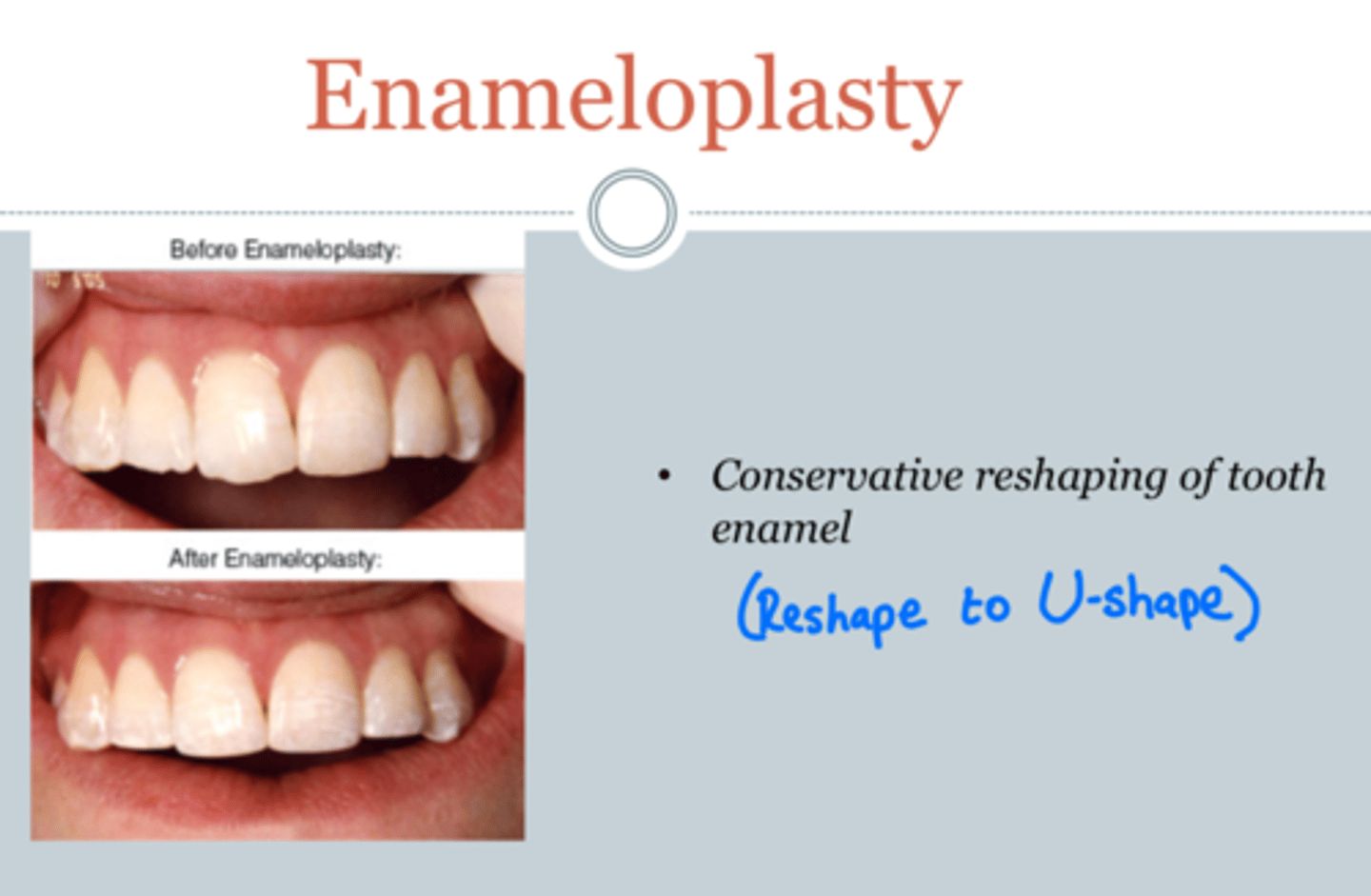
Enameloplasty
reshaping of a tooth/removin a small amount of the enamel by grinding
Outline form is determined by?
access, extend of caries, and placement of the composite restorative material (convenience form)
How is the bur oriented when working on a Class III?
positioned in that the long axis is perpendicular to the LINGUAL SURFACE of the tooth - in a way that it penetrates the carious lesion

Access from what surface is preferrable?
lingual surface
Major reasons why the Lingual surface is preferrable:
- facial surface is conserved for esthetics
- shade matching isn't critical
- discoloration/deterioration of restoration is not visible
What scenarios would access from the facial surface be necessary?
- caries lesion that are positioned facially and a facial approach would be conservative
- caries extend to facial surface
- irregularly aligned teeth
- previous restoration was placed
Entrance into the lesion is dependent on what?
size and location of the caries but done in the MOST CONSERVATIVE way possible
Incisal extension to remove carious tooth structure may eliminate what?
proximal contact
*conserve as much tooth structure and leave the incisal margin in contact with adjacent tooth
If the gingival box extends onto the root surface, then the depth of the gingivo-axial line angle should be no more than what?
0.75mm
External walls should be __ degrees to root surface?
90
Gingival floor should form a cavosurface margin of what?
90 degrees
Placing WHAT can help expose the gingival margin?
wedge
What walls should meet at the axial wall at right angles?
facial, incisal, and gingival
What is the initial depth into dentin?
0.2mm
Prep considerations for Small Class III:
- walls may diverge externally from axial wall
- beveled margin design
- ultraconservative internal prep
- no wall from entrance = lingual wall blends with gingival/incisal walls
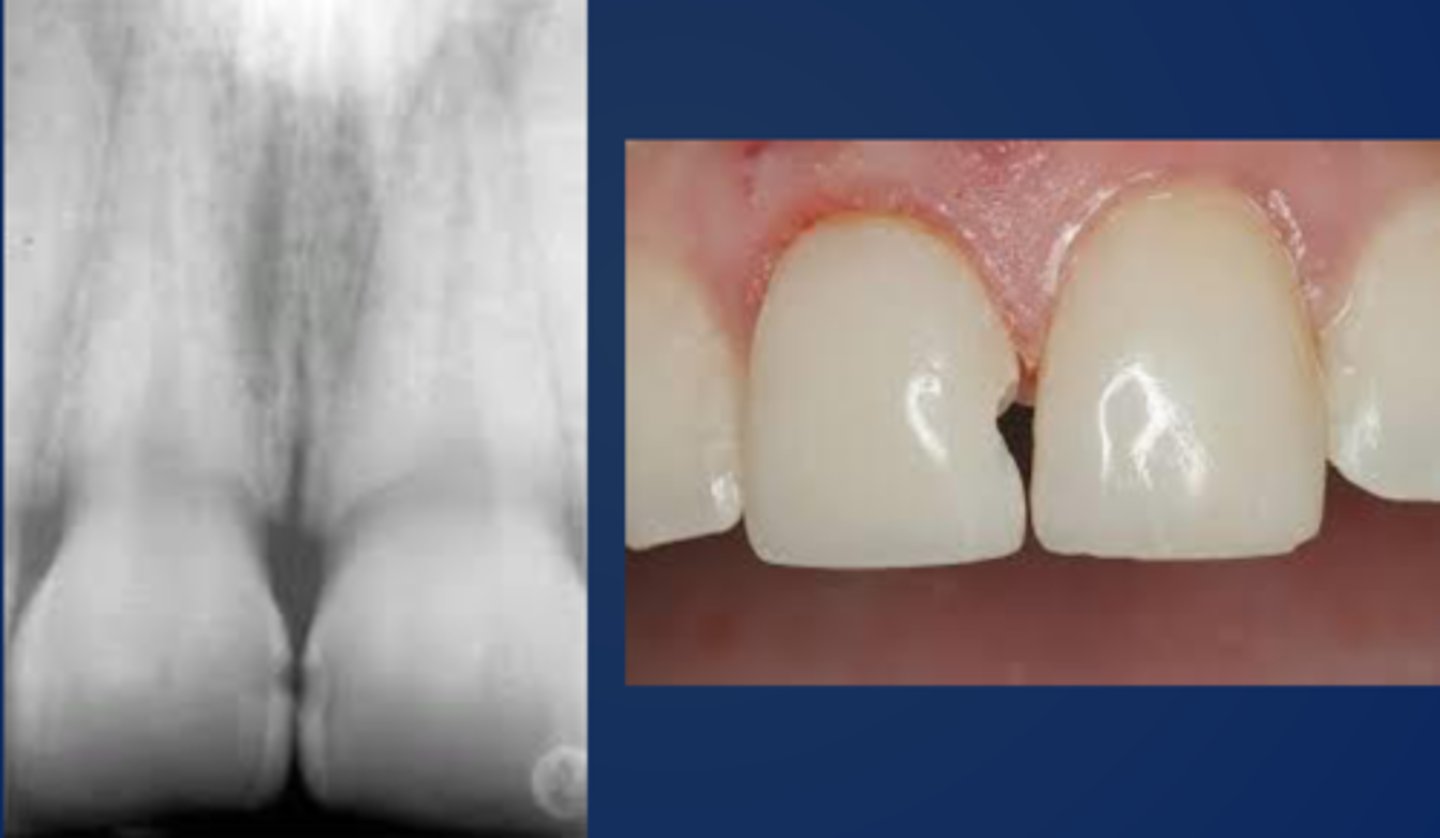
Prep considerations for Moderate Class III:
- widen walls so enamel has dentinal support
- axial wall doesn't need to be uniform
- no wall from entrance point
- enamel margins may need to be beveled for added retention
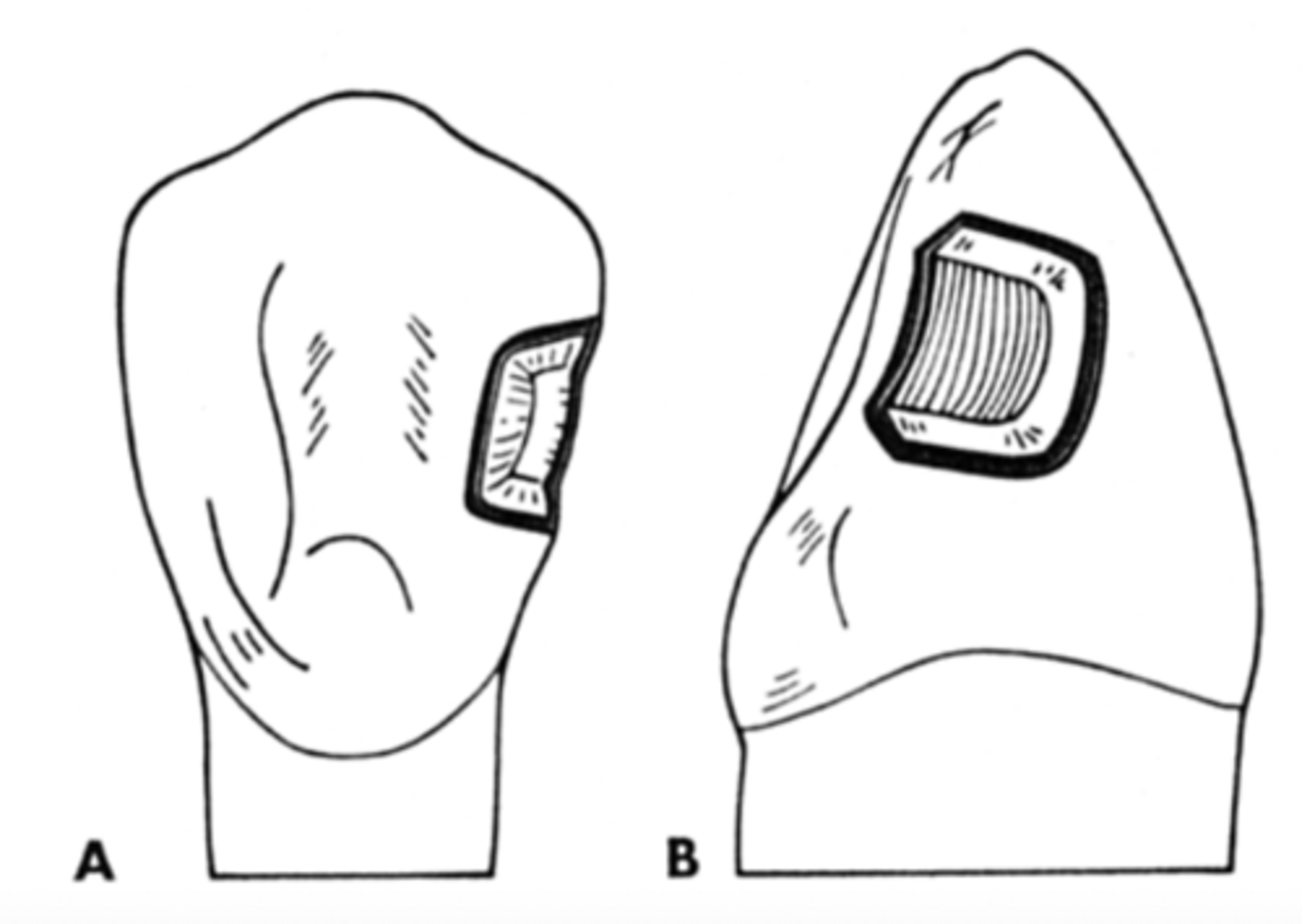
Prep considerations for Large Class III:
- beveling of accessible enamel margin for added retention
- no beveling of gingival box or lingual surface
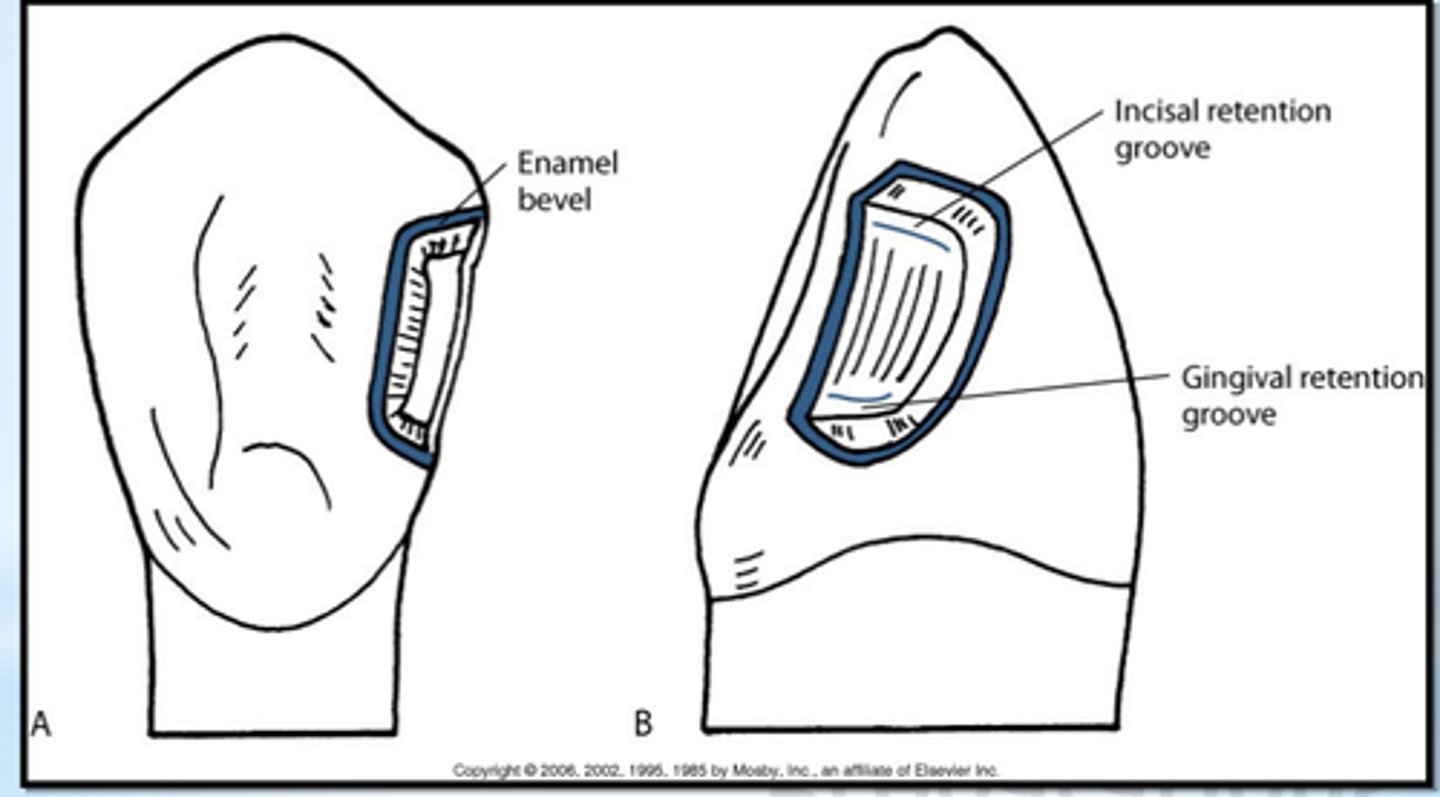
Beveling results in what?
strongest enamel margin by increasing surface area for bonding
When beveling, increasing surface area for bonding will increase what?
retention form of the prep
In esthetic areas, beveling creates what?
gradual transition from tooth to composite restoration
What can be used to achieve beveling?
flame-shaped or round diamond
Adhesive - Bond interface =
micromechanical retention
What degrees should the bur be angled to achieve facial enamel beveling?
45 degrees
For Large Class III preps involving the facial surfaces, what is the best technique?
randomizing your bevel angle width can help blend the composite with the tooth structure
What would Large Class III preps additionally need sometimes?
secondary retention
Secondary retention (class III) can be accomplished by placement of what?
retention grooves/coves or lingual dovetail
What bur should be used for the gingival groove and coves?
1/4 bur in the axial wall along the axiogingival line angle
What is the depth of the retention grooves and coves?
0.25mm
What type of preps are retention grooves and coves mainly needed for?
larger preps
When prepping the class III, the penetration of the bur should be at a limited axial depth of what?
0.2mm inside the DEJ or 0.75mm axial depth if gingival margin on root surface
When prepping the class III, the facial margin is extended how much?
0.2-0.3mm into the faical embrasure with curved outline from the incisal to the gingival margin
What do you need to restore a class III?
- clear matrix band and wedge
- phosphoric acid etchant
- bonding agent
- composite
What do you need to polish a class III?
- polishing bur, points, cups
- polishing discs
- polishing strips
Clear matrix and wedge
- may need to curve the matrix band with end of mirror handle
- wedge will help seal the gingival margin and keep matrix in place to minimize excess
How long should enamel be etched for?
15 seconds
How long should dentin be etched for?
10 seconds
After etching, rinse with water and air spray for a minimum of how long?
10 seconds
The etched surface will appear how?
frost
*if enamel does not look frost = then apply etchant for 15 more seconds
What should be placed after etchant?
bonding agent and light cure (20 seconds)
How should you place composite?
in increments and light polymerize for 40 seconds
Hold matrix band against tooth to do what?
bring excess toward lingual or facial surfaces sealing those margins and shaping the interproximal surface
What finishing and polishing burs would well to define the lingual fossa and cingulum?
rounded or oval finishing carbide and finishing diamond
Fewer flutes for finishing means what?
more aggressive cutting and used for finishing composites
Most Coarse finishing/polishing bur means what?
rougher surface
A no. 12 blade attached to scalpel handle works well to?
remove excess adhesive or composite at the gingival margin
If a large amount of composite is removed what can happen?
marginal defect can occur
Finishing strips
should be curved to follow contour of tooth, focusing on area that needs to be adjusted
Finishing strips are used to do what?
round marginal ridges or embrasures
For final polishing can be achieved with:
- rubber or silicone polishing instruments
- diamond-impregnated polishers
- polishing pastes
 Note
Note  Flashcards (145)