Physical Activity and Sedentary Behavior
 Studied by 0 people
 Call Kai
 Learn
Learn Practice Test
 Spaced Repetition
 Match
Match Flashcards
 Knowt Play
1/18

There's no tags or description
Looks like no tags are added yet.
Name | Mastery | Learn | Test | Matching | Spaced | Call with Kai |
|---|
No analytics yet
Send a link to your students to track their progress
19 Terms
the Tomato Effect
-Phenomenon whereby highly efficacious therapies are either ignored or rejected
3 Charactersitics
Is PA good for us?
Are people aware and accepting that PA is good for them?
Are people physically active?
*background: more people use to not like tomatoes bc were afraid they were poisonous
definition PA vs Exercise
-PA: any bodily movement that increases energy expenditure/metabolic demands above resting conditions and involves the contraction of skeletal muscles
-Exercise: planned, structured, and repetitive physical activity with the goal to improve fitness
*dif factors and attitudes for both
umbrella term of PA
-exercise
-occupational PA: associated w/ a job (ex: mailman)
-transportation PA: move body from one place to another (ex: walk to class)
-leisure PA: examples include gardening, cleaning, walking with a friend
*more emphasis recently on lifestyle PA
exploring the PA tomato effect: is PA good for us?
yes!
-have data/evidence that get benefits from PA; this data led to the guidelines of 150 min/week of moderate and 75 min/week of vigorous PA
exploring the PA tomato effect: Are People Aware and Accepting that PA is Good for Them?
yes!
-94% of Americans reported that PA provides health benefits
exploring the PA tomato effect: Are people physically active?
no, not the majority
-Of those that do: ~1/2 do aerobic, see small trend increase; strength ~25%; both small proportion
-children: >85% don’t do regular PA
-globally: see similar trends, but Europe has more lifestyle PA
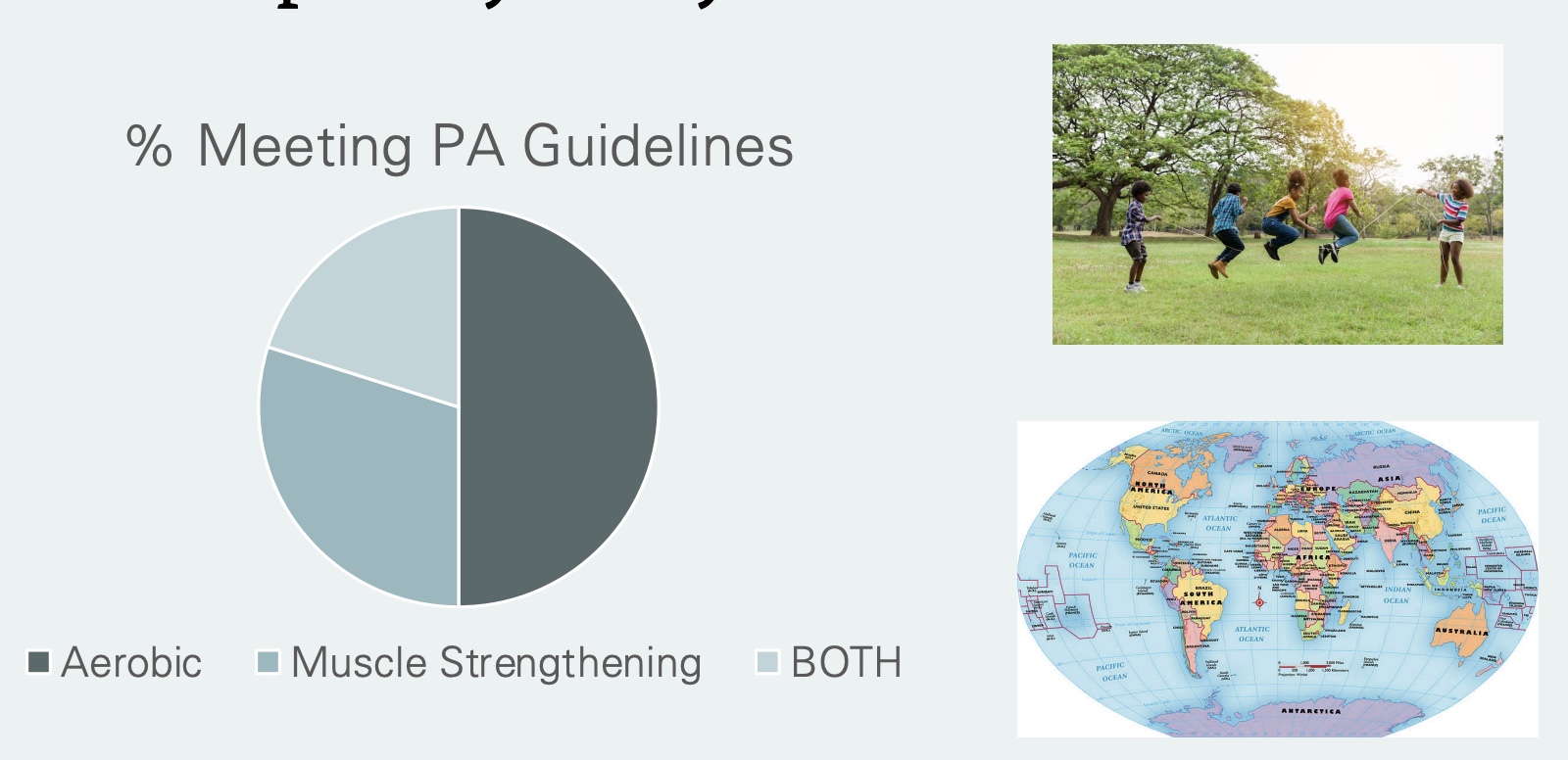
is PA a Tomato Effect?
YES!
-know PA is good for us, is aware of this, yet despite evidence not all do it
*research initially just on exercise and athlete based. Solution?: make it more realistic, lifestyle changes, better understand barriers
*other examples: screen time
PA Psychology definition
-Science devoted to gaining an understanding of human physical activity
*to examine and find research of PA, and form guidelines to help people become more active (how get people to be active); attitudes, moods, feelings, social and envionrmental factors, etc.
-outside EXPH
PA Psychology history/shifts
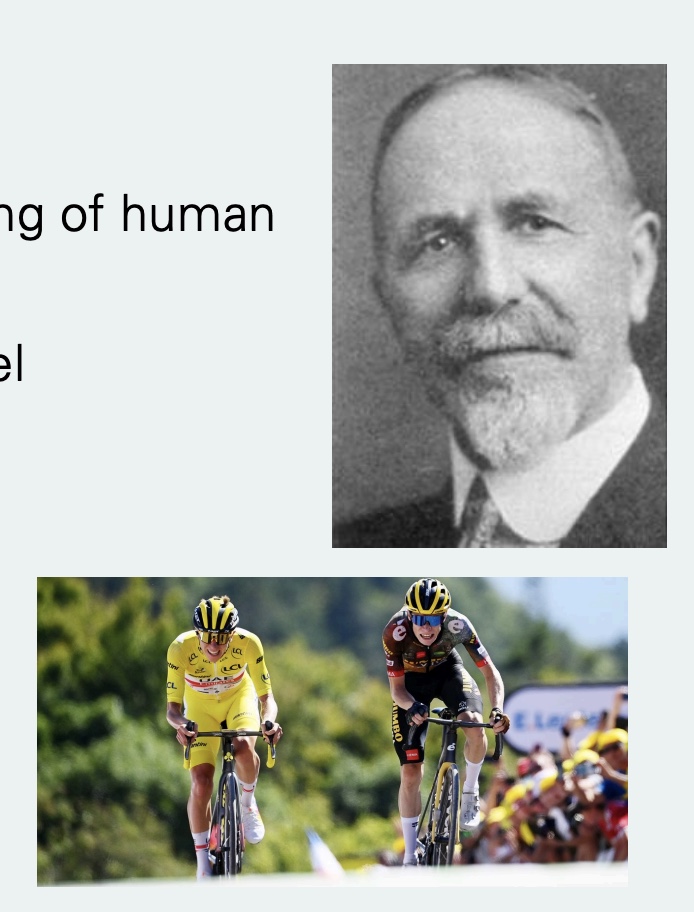
-Norman Triplet: early philosopher of PA psychology. noticed people faster if biked with another person (not conscious; similar experiments and results with kids and racing boats)
-Biomedical model → biopsychosocial model
^(early focus on phys and bio → current focus)
-started late 1800’s, but no growth until 1970’s. Slow development bc now better understand PA behavior, no just focus on athletes
-Social Facilitation: being with other people matters, will work harder if around others
what influences PA?
Dr. B
-demographics
age: less as age
sex: more if male
education: higher if more (likely bc know benefits, have more resources and $, more free-time)
-enjoyment, motivation
-envionrment and weather
-social support
Class
-motivation for fitness; knowing health benefits of PA, social, role models, enjoyment
Correlation vs Causation
Correlation
-two things associated with each other, often observe; strong or weak
-easier to do, so have most data from, but not the best
Causation
-one thing causes another to happen
-RCT most common
-gives stronger evidence
If you were asked to plan an intervention to reduce the gap of inequality in levels of PA between women and men, what intervention would you design and how would it help reduce the gap?
-women only exercise group or gyms
-coed options, more equal #’s or opportunities (title 9)
-encouraged at younger age
-more aware of benefits
-women rolemodels
*theory allows us to understand barriers, fears, etc.
Sedentary Behavior definition, history, and health related outcomes
-Any waking behavior characterized by an energy expenditure <1.5 metabolic equivalents (METs) while in a sitting or reclining position
*doesn’t include sleep; 1MET=3.5ml/kg/min
-Associated with multiple negative health outcomes: increase SB leads to increase in all-cause mortaltiy
-Less research in general bc relatively new; “sitting the new smoking?”; see increase % time SB > time sleeping
*London Bus Study: drivers who sat more than ticket takers had more HD and OW/obesity
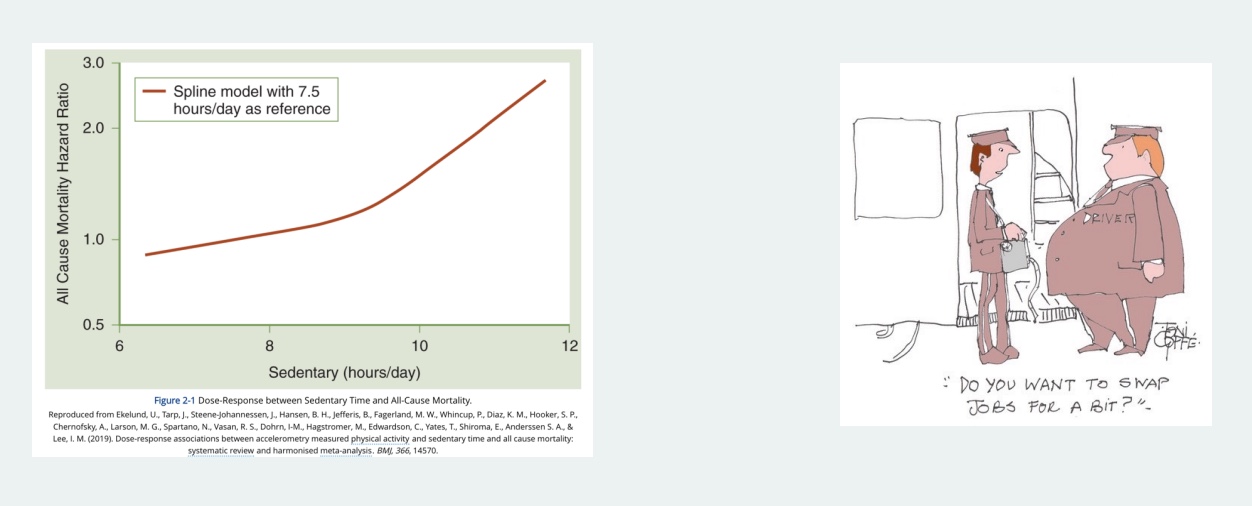
prevalence of sedentary behavior
-Systematic review of 125 studies examining sedentary behaviors of college students
• ~7 to 10 hours being sedentary
• Computer use was the most common (so not always bad)
• SB may be on the rise (transition as a society)
Measurement of SB
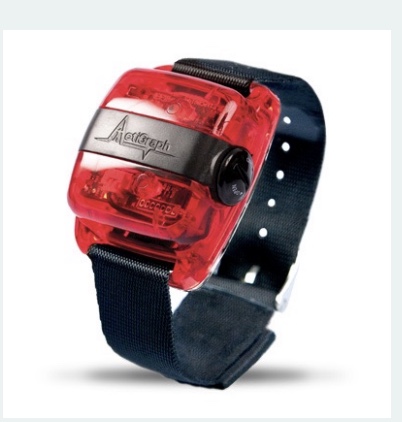
Accelerometer
-gold standard, and getting better
-measures steps AND intensity/speed (higher intensity= more beneficial)
-most accurate if worn on the hip
-doesn’t tell difference sleeping and sitting
-examples: Applewatch
*vs a pedometer: wear on hip and just counts steps
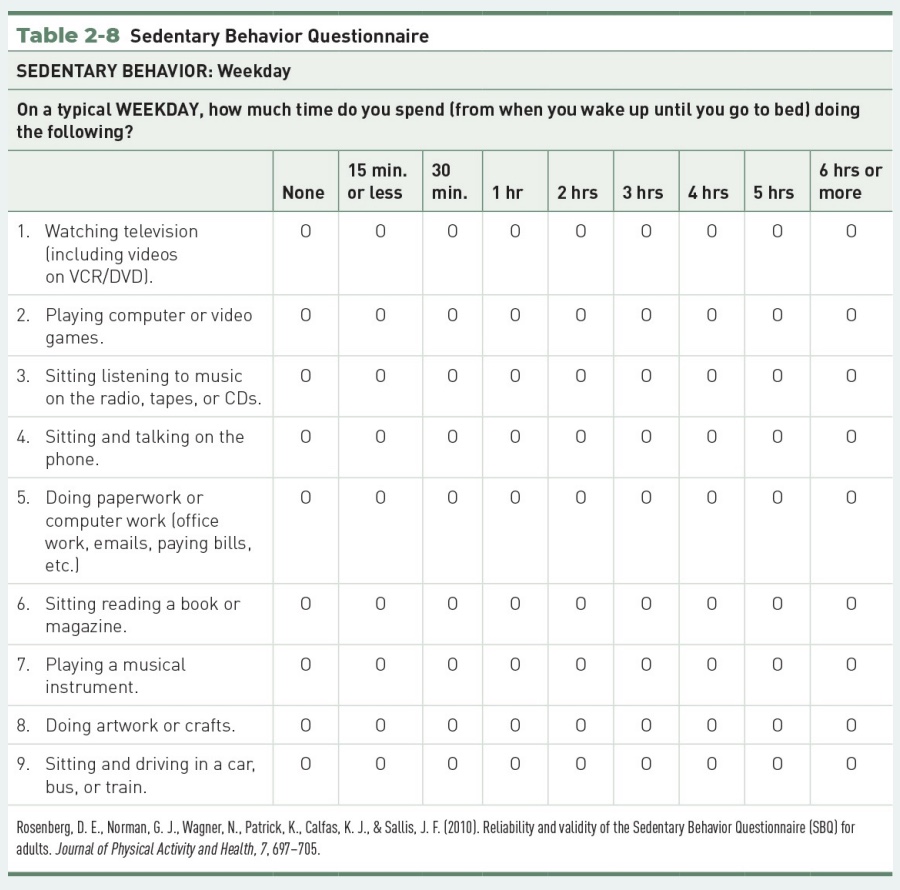
true or false: it is easy to measure SB
false!
-it is hard to measure SB, bc can be doing dif things
-+ objective measures of SB elicit higher levels of SB than subjective measures (aka people underestimate how much time they are sedentary)
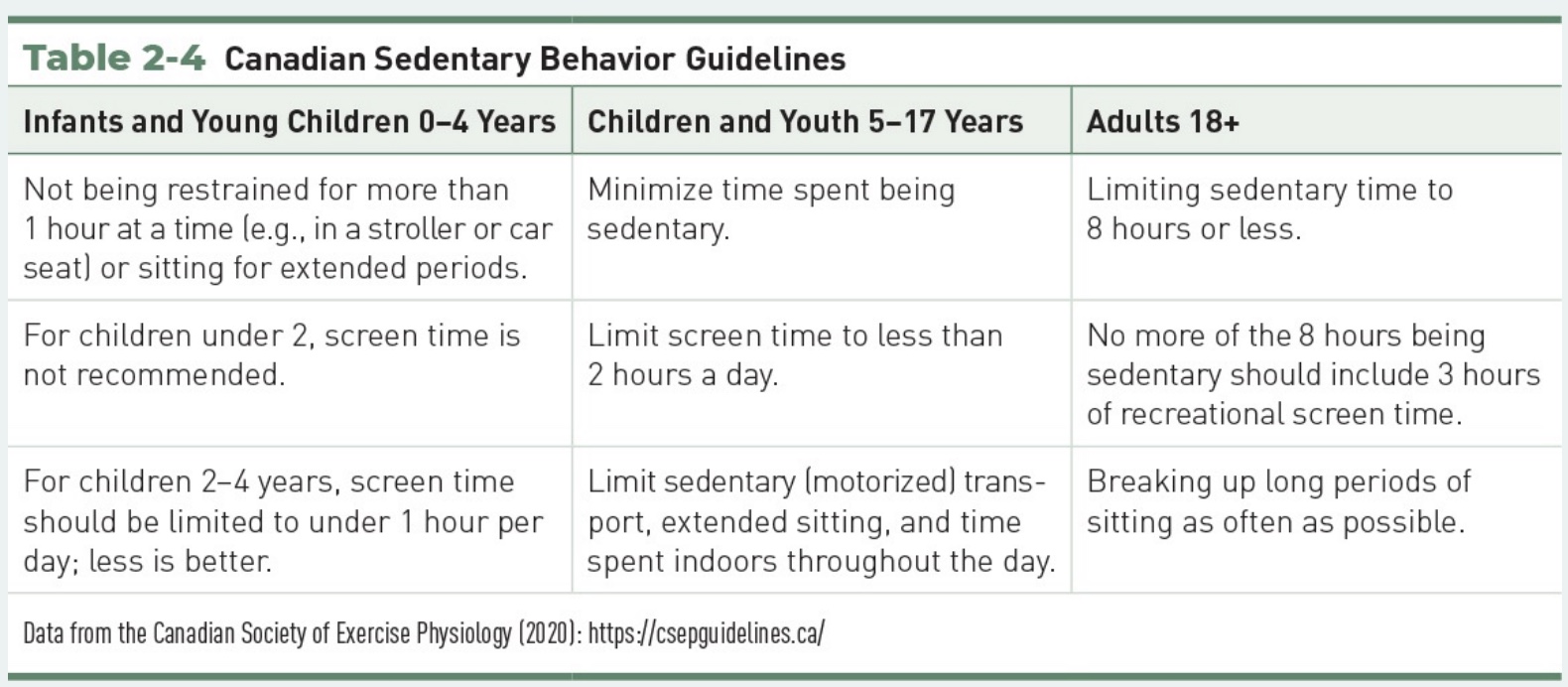
true or false: the U.S. has SB guidelines
false!
-The U.S. does NOT have SB guidelines
this is bad and good (good bc no strong evidence of what guidelines should be)
-but, Canada does have SB guidelines
*have more evidence that SB causes negative health benefits, so goal should be to meet guidelines and lower SB
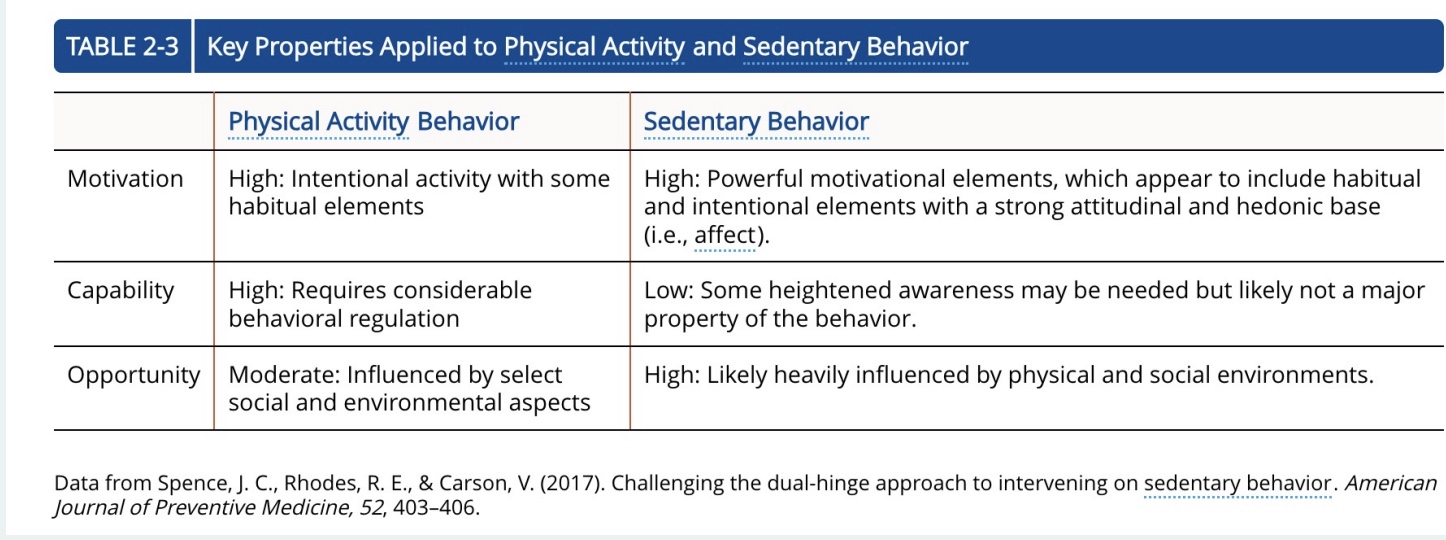
is PA the same as SB?
NO! PA does NOT equal SB
-PA=don’t meet 150/75 min guidelines
-SB= <1.5 METS
-+ differences in motivation, capability, opportunity, and more
How might the correlates for sedentary behavior and physical activity differ?
*2 dif behaviors w/ common correlates, and dif than exercise
-increase SB as age
-no dif sex and gender
-socioeconomic: increase PA if $, mix evidence for SB (blue collar limits SB more than white collar)
-family life: lower PA and SB if have kids
-occupation (manual labor vs office)
 Note
Note  Flashcards (290)