DIgestive System
 Call Kai
 Learn
Learn Practice Test
 Spaced Repetition
 Match
Match Flashcards
 Knowt Play
1/78

Earn XP
Description and Tags
Honors Anatomy
Name | Mastery | Learn | Test | Matching | Spaced | Call with Kai |
|---|
No analytics yet
Send a link to your students to track their progress
79 Terms
Basic functions:
EADISM
Elimination of wastes
Absorption of nutrients
Digestion (chemical/mechanical)
Ingestion
Secretion
Mixing/propulsion
GI tract organs:
mouth → Pharynx → Esophagus → Stomach → Small intestine (duodenum, jejunum, ileum -DJI) → large intestine (Cecum, Colon, Rectum - CCR)
Accessory Organs:
“Little Parts Give Support”
Salivary glands, Pancreas, Liver, Gall bladder
2 forms of digestion:
Chemical - enzymes secreted in GI tract break chemical bonds to make smaller molecules that can be absorbed into the blood
Mechanical - grinding/mixing of food (ex: bile breaks large fat molecules into smaller ones)
Organ of GI tract:
what takes place. . .
chemical digestion
mechanical digestion
mouth:
chem: amylase breaks down carbs
mech: teeth grind food
Esophagus:
chem: none
mech: none
stomach:
chem: pepsin breaks down proteins, gastric lipase BEGINS breakdown of fats
mech: churning/mixing due to muscular contractions
small intestine:
chem: pancreatic juice (several enzymes) breaks down proteins, carbs, fats, + nucleic acids, intestinal juice (several enzymes) completes chem. digestion
mech: BILE aids in breakdown of fats (emulsification)
large intestine:
none
none
3 steps to digestion:
buccal (mouth)
gastric (stomach)
intestinal (duodenum)
proteins and carbs: (polymer → monomer)
polypeptides → oligopeptides → dipeptides → amino acid
polysaccharides → oligosaccharides → disaccharides → monosaccharides
lipids: (polymer → monomer)
lipids → fatty acids/Glycerol
nucleic acids: (polymer → monomer)
nucleic acids → nucleosides/nucleotides
membrane that lines cavities open to environment:
mucosal membrane
Mouth (oral cavity): (structure)
hard palate - bones in roof of mouth
soft palate - muscles in roof of mouth
uvula - protects soft palate + prevents food from entering nasal cavity
tongue
The 5 tastes:
Salty
Sweet
Sour
Bitter
Umami
what anchors the tongue to the roof of the mouth?
lingual frenulum (fold in mucosal membrane)
papilla:
“bumps” - projections of lamina propria found on surface of tongue; some contain chemoreceptors
chemoreceptors:
taste buds (gustatory sense receptors)
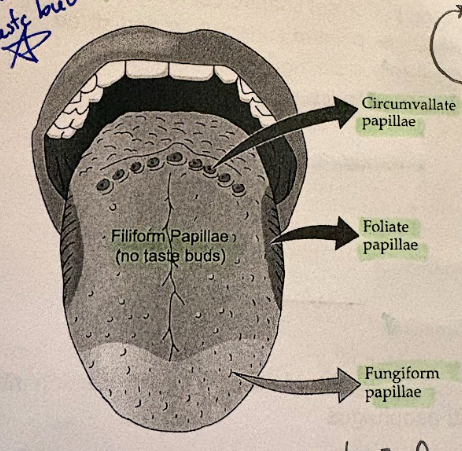
fungiform papillae: (location)
tip + lateral margins
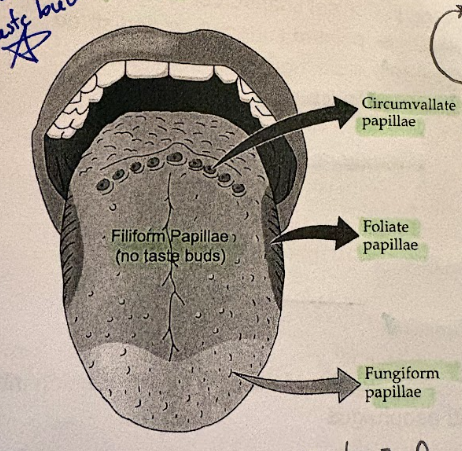
foliate papillae: (location)
side of base of tongue
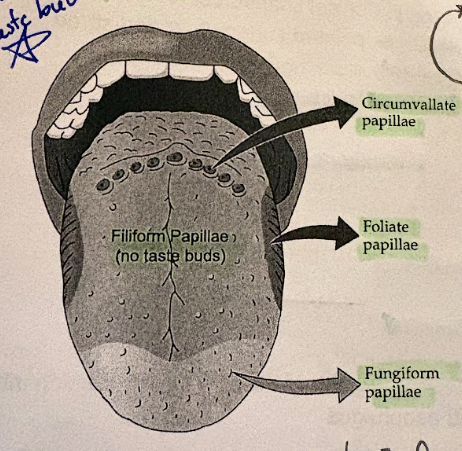
circumvallete papillae: (location)
largest (8-12 total)
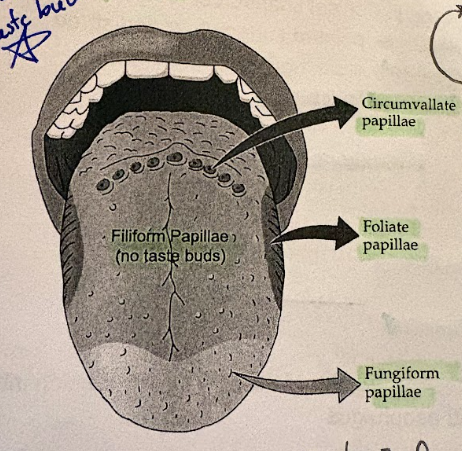
filiform papillae: (location)
most numerous, no “taste”, used for grip
periodontal ligament:
connective tissue; anchors tooth to socket
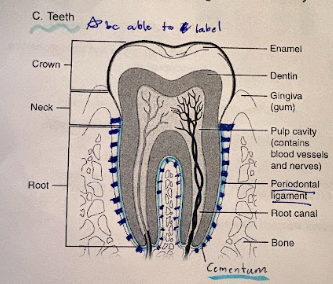
cementum:
bone-like; attaches root to periodontal ligament
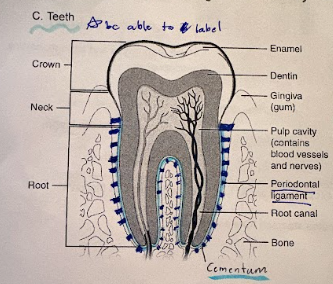
crown:
portion visible above gingivae
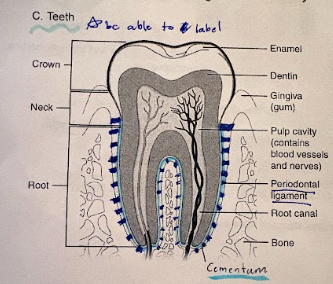
roots:
portion embedded w/in socket
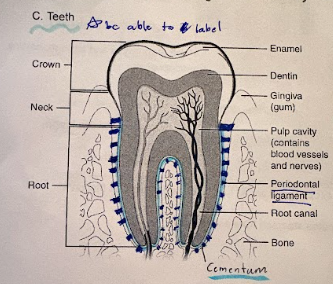
dentin:
calcifies connective tissue, similar to bone; gives teeth shape/rigidity
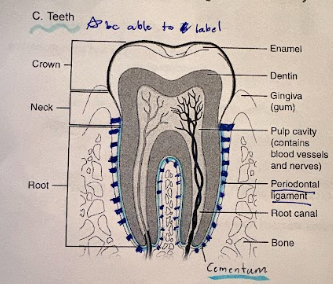
pulp cavity:
space enclosed by dentin; contains nerves + blood vessels
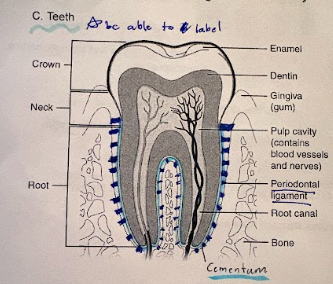
enamel:
covers dentin of crown; extremely hard, resistant to wear + acidity
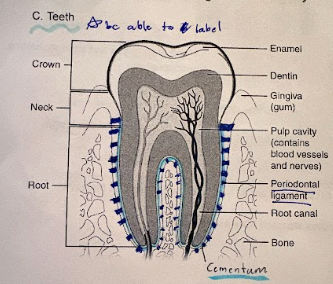
dentitions:
sets of teeth
ppl have 2:
deciduous teeth (baby teeth)
permanent teeth (adult teeth)
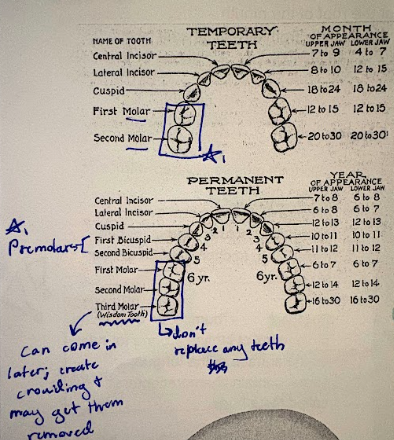
incisors:
chisel/shaped; cut food
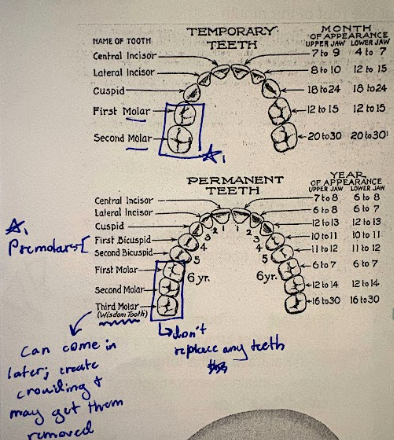
canines/cuspid:
pointed; tear + shred
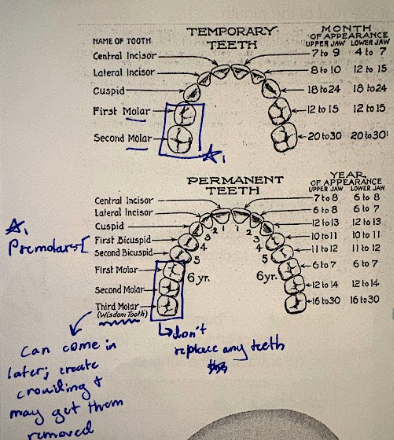
deciduous molars:
crushing/grinding (BECOME the bicuspids)
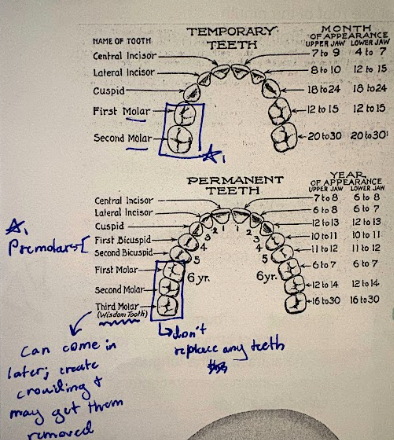
premolars (bicuspids)
replace deciduous molars
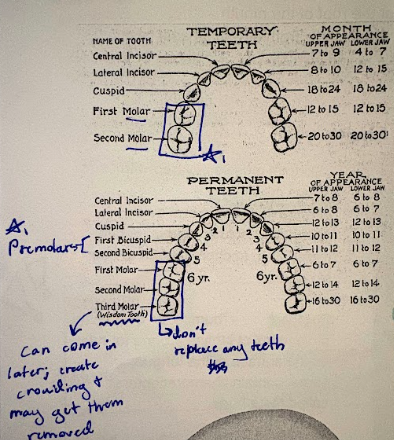
permanent molars
do NOT replace any teeth
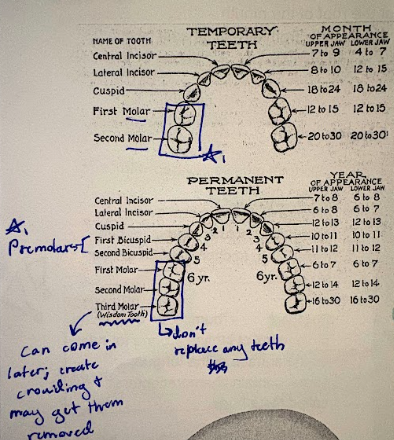
how many total teeth in adulthood:
32 total
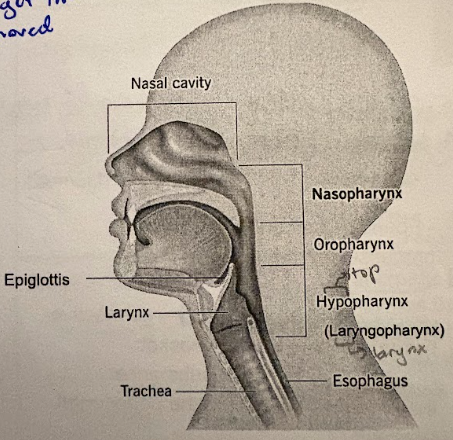
Pharynx:
back of the oral cavity; divides into trachea + esophagus
epiglottis:
cartilage; covers opening to trachea
three sections: NOL
Nasopharynx (superior)
Oropharynx
Laryngopharynx/Hypopharynx (inferior)
Esophageal hiatus:
opening in the diaphragm
peristalsis:
contractions/relaxations by smooth muscles lining walls
mucus secreted by esophageal glands lubricates bolus/reduces friction
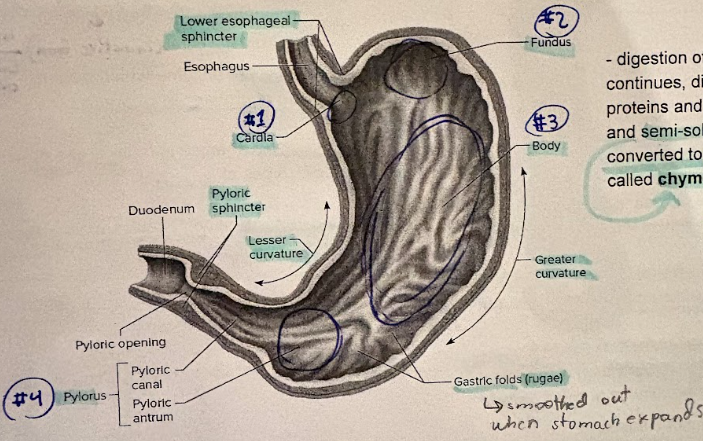
Lower Esophageal Sphincter:
separates stomach from esophagus
Stomach: (know circled/ numbered parts)
serves as mixing vat + holding reservoir
semi-solid bolus - to → soupy liquid chyme
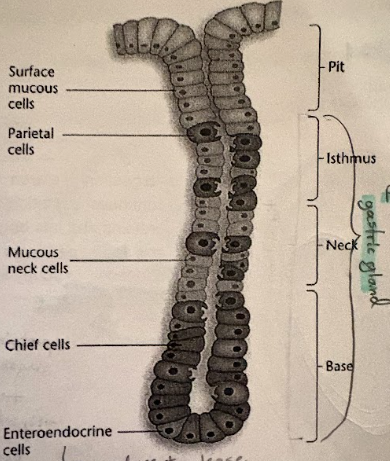
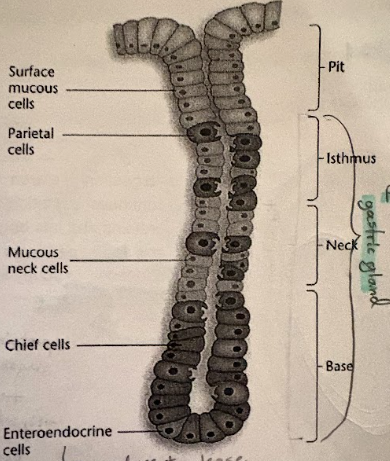
mucus epithelial cells:
secrete mucus
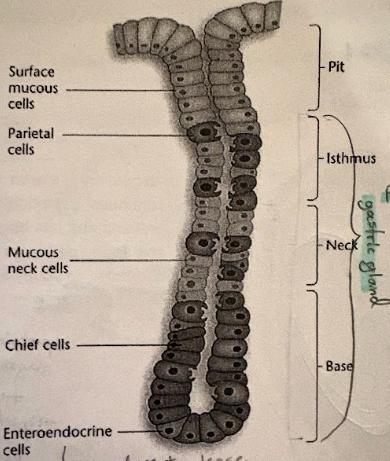
parietal cells:
secrete hydrochloric acid
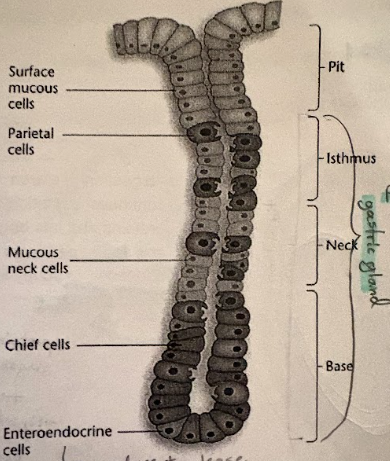
Chief cells:
secrete pepsinogen(inactive form)/pepsin(active form) + gastric lipase
pepsinogen/pepsin:
begins digestion of proteins in stomachand is activated by hydrochloric acid.
gastric lipase:
breaks down specific types of large fats
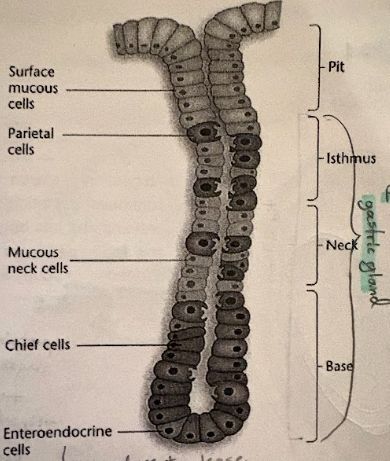
gastric juice:
combo of secretions from each of these cells
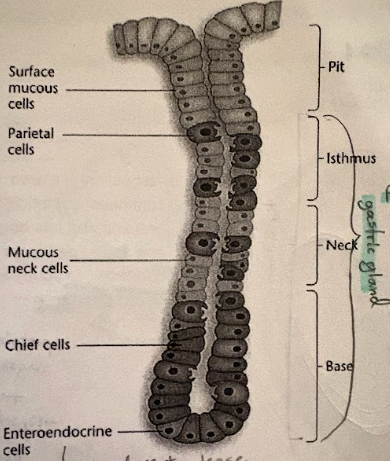
enteroendocrine cells:
produce + release hormones responsible for regulating digestion in stomach
Duodenum:
1st part of small intestine
receives secretions from pancreas + gallbladder
digestion completed here
Jejunum:
middle part
most absorption occurs here
Ileum:
final portion
regulates movement of chyme into colon
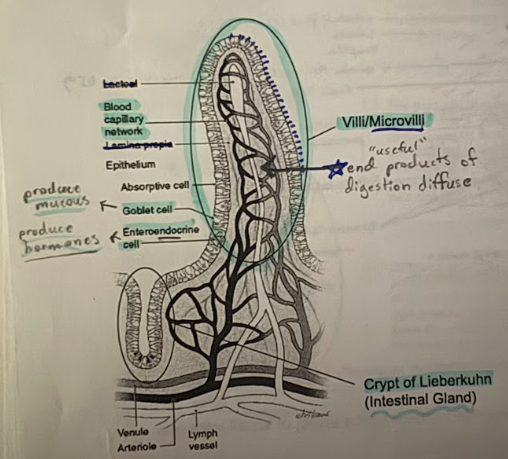
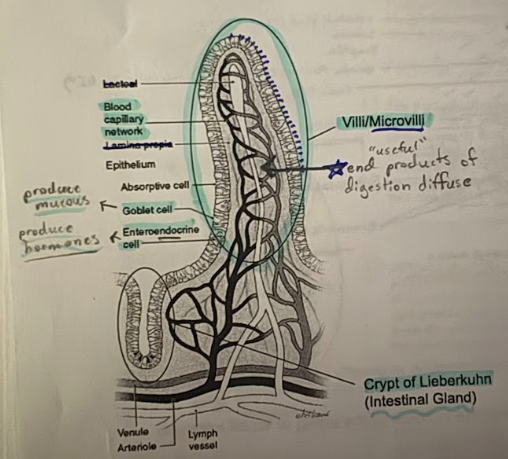
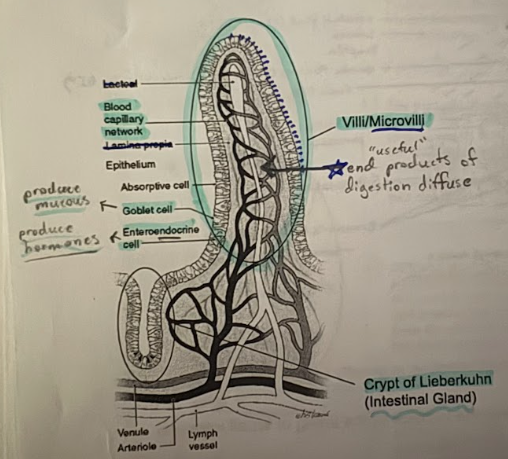
Intestinal glands:
(crypts of lieberkuhn)
deep crevices w/in the mucosa line w/ glandular epithelium
secrete intestinal juices (peptidase, nucleases, and nucleotidases)
paneth cells:
secrete bactericidal enzyme; helps regulate microbial pop. in gut
Brunner’s glands:
secrete alkaline mucus
helps neutralize gastric acid in chyme and provides an optimal pH for intestinal enzymes
Peyer’s Patches:
clusters of lymphatic nodules that provide a defensive barrier vs bacteria
enterocytes:
absorptive cells lining intestinal tract
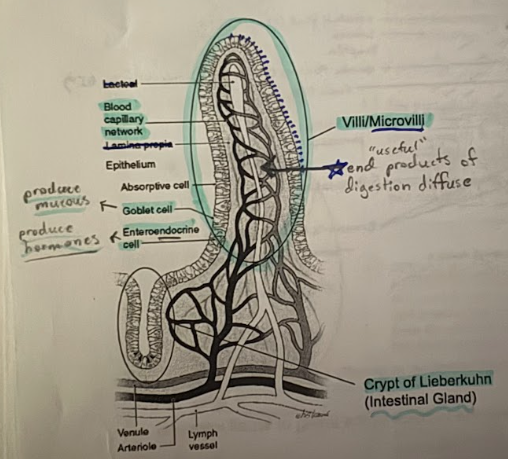
final products of digestion:
simple sugars
amino acids
fatty acids, glycerol
nitrogenous bases
vitamins + electrolytes
what structures increase absorption in the small intestine?
villi + microvilli
3 hormones that control digestive enzyme production/release:
gastrin
secretin
cholecystokinin
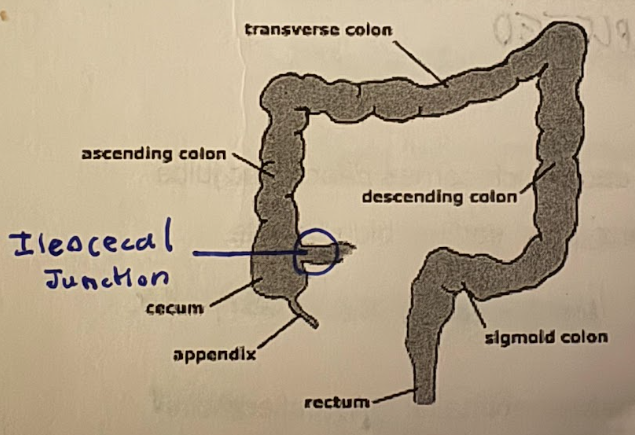
4 major regions of the large intestine:
CCRA
cecum - blind pouch found at junction of ileum + colon; appendix is attached to cecum
colon - ascending, transverse, descending and sigmoid portions
rectum - final portion of GI tract
anus - terminal end of rectum; contains sphincter
feces
waste material left over after water absorption
diarrhea
movement of materials through GI tract TOO quickly
not enough absorption = water inblalance/dehydration
constipation
OPP of diarrhea
caused by excessive water absorption
Pancreas connected to duodenum thru ____
pancreatic duct
pancreatic juice:
mix of water, salts, several enzymes and bicarbonate
pancreatic duct + common bile duct = ____
hepatopancreatic ampulla
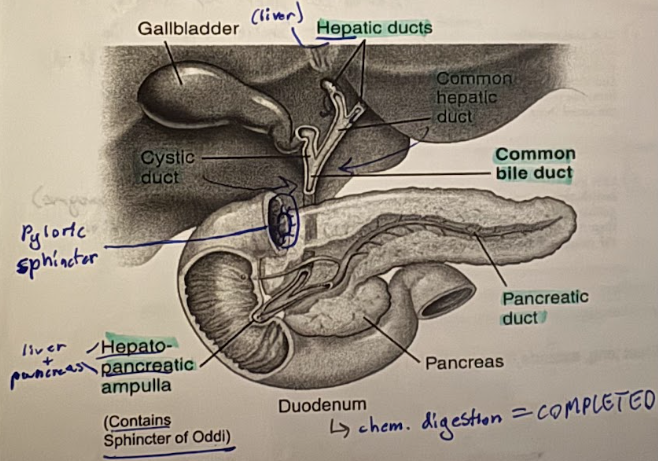
acini
secrete pancreatic juice into pancreatic ducts
pancreatic amylase breaks down:
carbs
trypsin, chymotrypsin, carboxypeptidase, elastase break down:
proteins
pancreatic lipase breaks down:
triglycerides (lipids)
ribonuclease, deoxyribonuclease break down:
nucleic acids
cells w/in liver that produce bile:
hepatocytes
bile
digestive enzyme that emulsifies fats
common hepatic duct (liver) + cystic duct (gallbladder) = ___
common bile duct (empties into duodenum)
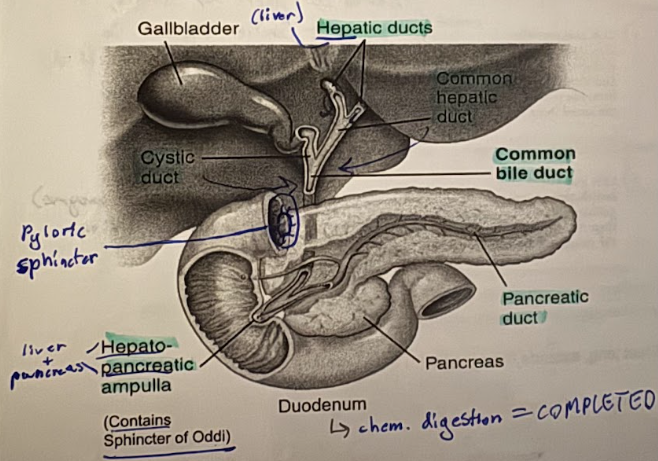
gallbladder:
temporarily stores bile from liver
stimulated by hormone cholecystokinin to release bile
saliva:
mostly water + some solutes (mucus, amylase, salts)
mucus: lubricates food
amylase: starts digestion of carbs

