L12 Metal Try in and Tx plan
 Call Kai
 Learn
Learn Practice Test
 Spaced Repetition
 Match
Match Flashcards
 Knowt Play
1/60

There's no tags or description
Looks like no tags are added yet.
Name | Mastery | Learn | Test | Matching | Spaced | Call with Kai |
|---|
No analytics yet
Send a link to your students to track their progress
61 Terms
Before adding denture teeth you need to do a metal try in and tx plan
you need to check the —- and —-
fitting occlusion
when you are doing metal framework seating in the patient, and it doesnt fit, what do you use to adjust it and what exactly do you adjust.
chloroform
adjust the guiding planes and the minor connectors
after you check to see the metal framework seating, what do you check next?
occlusion
when checking the occlusion, you have to check with —- and ensure that the —- are the same and maintained
mylar original contacts
the metal framework shower be higher or lower than the contact point or elese you will get ,….
lower , open
when is the only time you will have framework higher and therefore a little space
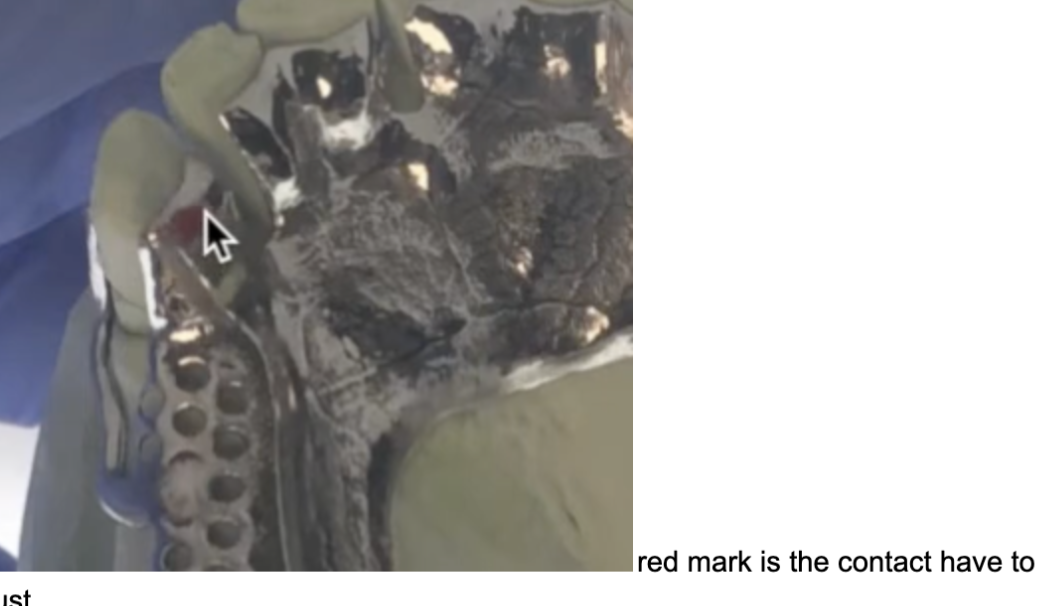
when you are changing the vertical occlusion
What do you do after you check the fit and the occlusion
you mount the casts
what do you put on the metalframework on the edentulous areas after you make the cast and put the metal framework on
record base
what are the objectives of putting the record base on the metal framework on the edentulous areas
better contact with the tissue
supports the partial wax rim for a bite reg
you need good base contact on tissue, but not —-
complete extension of the base
what is the purpose of putting the wax rim on the record base on the metal framework on the cast
take BR
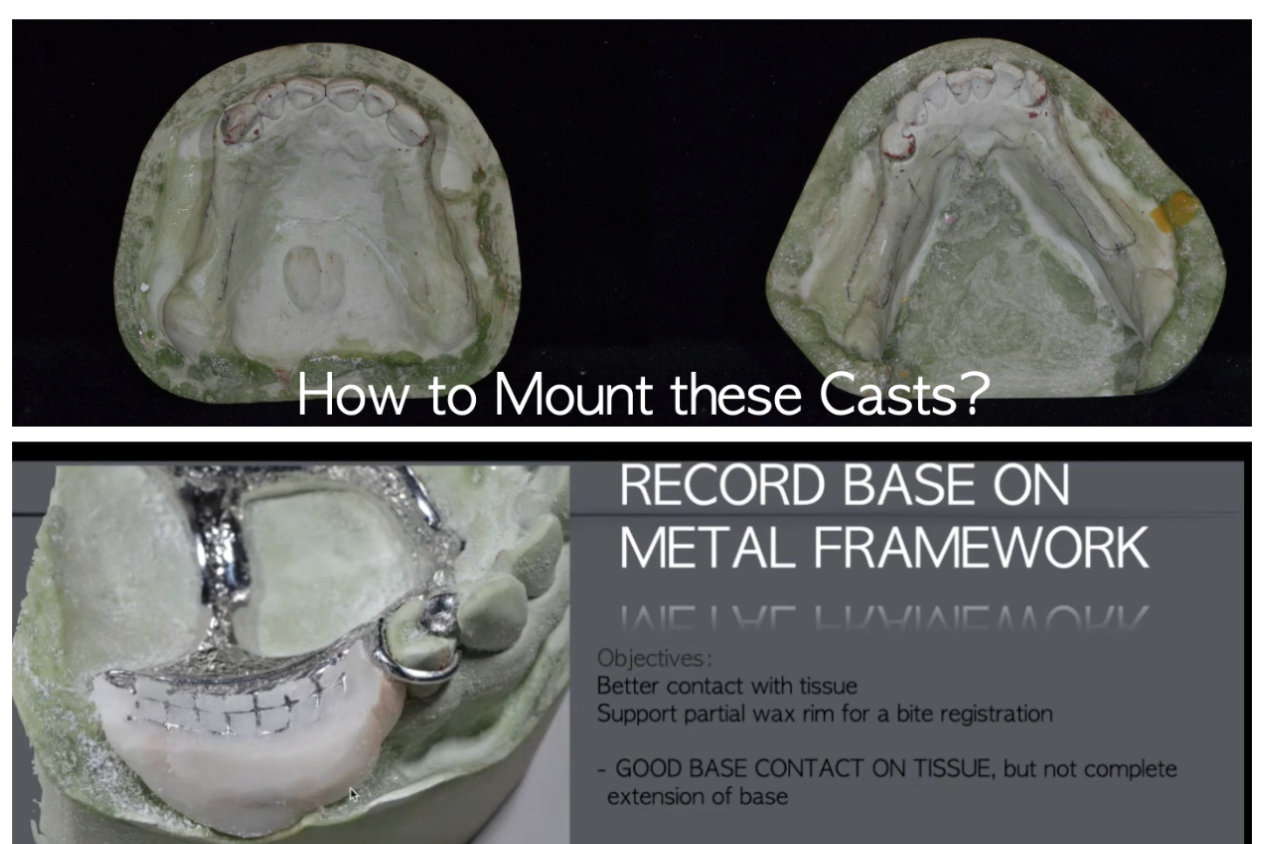
the purpose of the wax base and record base is to —— only ! so its ok record base is shorter than outline form the final prosthesis does not become short. when mounting, the final prosthesis will follow the location of the vestibule lcoation.
mount the cast ONLY
The —- will cover all the vestibule and the final pear shaped pad. but when mounting, it could be shorter and doesnt need to cover the fulloutline form
final denture outline .
what are the objectives of the partial teeth try in
correct arrangment of teeth
check the occlusion and remount if needed - bilateral and max co contact
protrusive record if necessary
obtain patients approval (esthetic and function)
good base contact on the tissue, but not compelte extension of base
when the teeth are being tried in, is the denture processed yet?
no
when doing partial teeth try in, do you need good base contact on the tissue? how about complete extension of base at this point?
yes, no
now afer metal framework check and adding the wax and teeth from lab, you check the fitting in the patient mouth again. now you insert the rpd
sharp edges on the resin bases seen often most adjacent —-
to the natural teeth
the sharp edges on the resin bases must be —-. MAKE CERTAIN THESE EDGES ARE NOT —-
rounded, undercut
a compelte denture can —— undercuts of the edges on the resin bases, but a RPD will not ——.
slide over the undercuts , rpd will not slide over the resin undercuts because it has a rigid metal framework with a fixed path of insertion.
undercuts are often see in the —- and in the —-
B tuberosity flanges , DL flange
Sharp edges on the RPD resin base should be rounded and must not create undercuts, especially near natural teeth. Unlike complete dentures, RPDs cannot slide over undercuts because of their rigid framework, so any undercuts that interfere with insertion must be removed or relieved. Retention in RPDs comes from clasps (not border seal), so flange extensions can be reduced if needed to avoid undercuts.
if there are undercuts that interefere with the insertion, the undercuts are —- or the —- are shortened
reduced, flanges
in situations where guiding planes are mostly resin, make certain no —- are present
undercuts
for rpd do we need border sealing
no
cd gets retention from border sealing but for rpd, the border sealing is not needed bcause most retention comes from the —-
direct retainers
what partial do we use if the occlusion interach is <3-4mm
metal base partial bc not enough room for resin
what are the adv of metal base partial
inherent —- of material
superior —- interchanges between ——
minimal —- needed
cleanliness
temperature (feels more real bc u can feel temperature of what ur eating)
interocclusal space
what are disadv of metqal base partial
— adjustment difficult
reline/rebase are ——
— impression technique not available
post insertion
infeasible
functional (you dont need fucntional impression because u cant do reline rebase sine mtal)
before making the metal , the base tissue side registration has to be accurately registered so u dont have to minimize inaccurate contact with base side because of inability of relining process
what is the adv and disadv of having premolar and molar in rpd
adv more stailbity
disadv more cost because require endo tx and surveyed crown
In tooth born partial such as class III and IV, rests can be placed —— as long as they direct occlusal force along hte long axis of the abutment tooth
any position
in tooth born partial, all the support are from the
abutments
in tooth borne partial, what three things shoudl be maximized
retention bracing reciprocation
in extension base partial, —- is critical to design
rest position
— shared between the edentulous denture bearing surfaces and the abutment through — and —-
support
residual ridge and occlusal rests
residual ridge and occlusal rest in class i and ii extension base partial help share —- between edentulous denture bearing surfaces and the abutments
support
the designs for extension base partial provide for — control
stress
the — determines the axis of rotation on extension base partial
rest positions
for distal extesnion base side clasps, they have to be carefully designed and u use —-
stress releasing clasps like rpa rpi combo
rotation clasp has — POIs
2
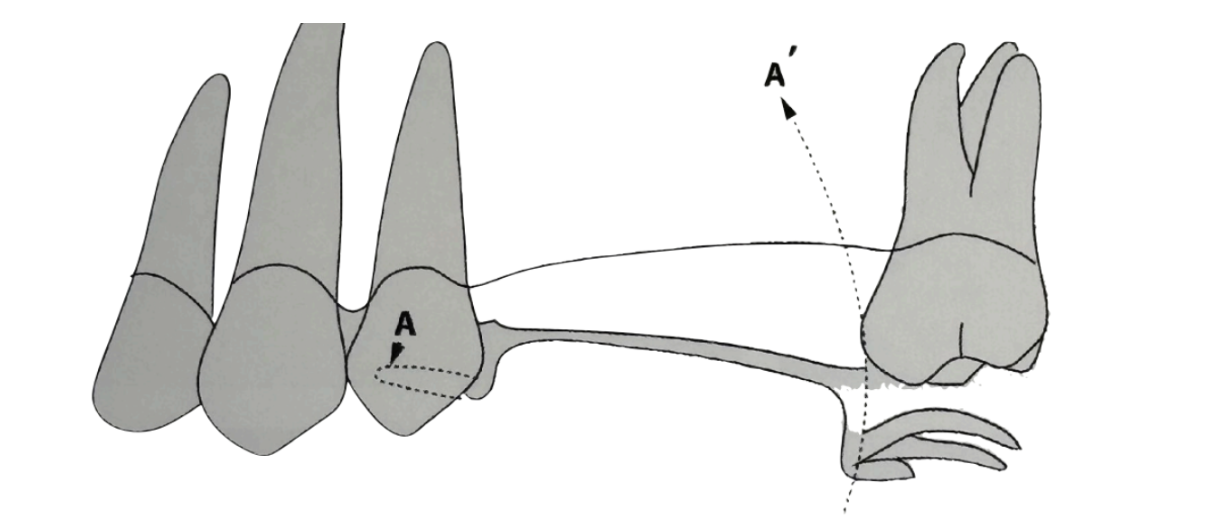
which one is the rigid retainer. what is the other one
A,
is the other terminal rest? normal clasp like akers, conventional clasp direct retainer?The rest that seats last
Located on the opposite side of the edentulous area
Usually associated with a conventional (Akers) clasp
when making anterior posteiror, change— tilt to make proximal surface even out and prep. rotation clasp you are not making flat proximal plane
AP
you need a very rigid connector in —- and —- only
proximal surface and rest seat only. no retentive arm in front? idk what my notes mean
Fundamentals and biomechanics
Definition of rotational path: unlike a standard rpd, it is seated by first engaging front framework into —- , followed by rotational movement to seat the back of the prosthesis
anterior undercut
dual path concept: the first path involving a —- gains access to gingival undercut that would be blocked if approached via a —- vertical path
gingival undercut , straight
elimination of clasps: by using —- te to engage an undercut, you can eliminate clasp arm in the esthetic zone
rigid plate
rigid retainers: retention is gained by the —- component of the framework itself. this differs from conventional rpds where retention relies on the —- to bypass a HOC
rigid
flexibility of a metal arm
success if 100% dependent on the —-, you are not just looking for a single path, you are identifying a —-
surveyor. you are not just looking for a single path, you are identifying a curved arc of insertion
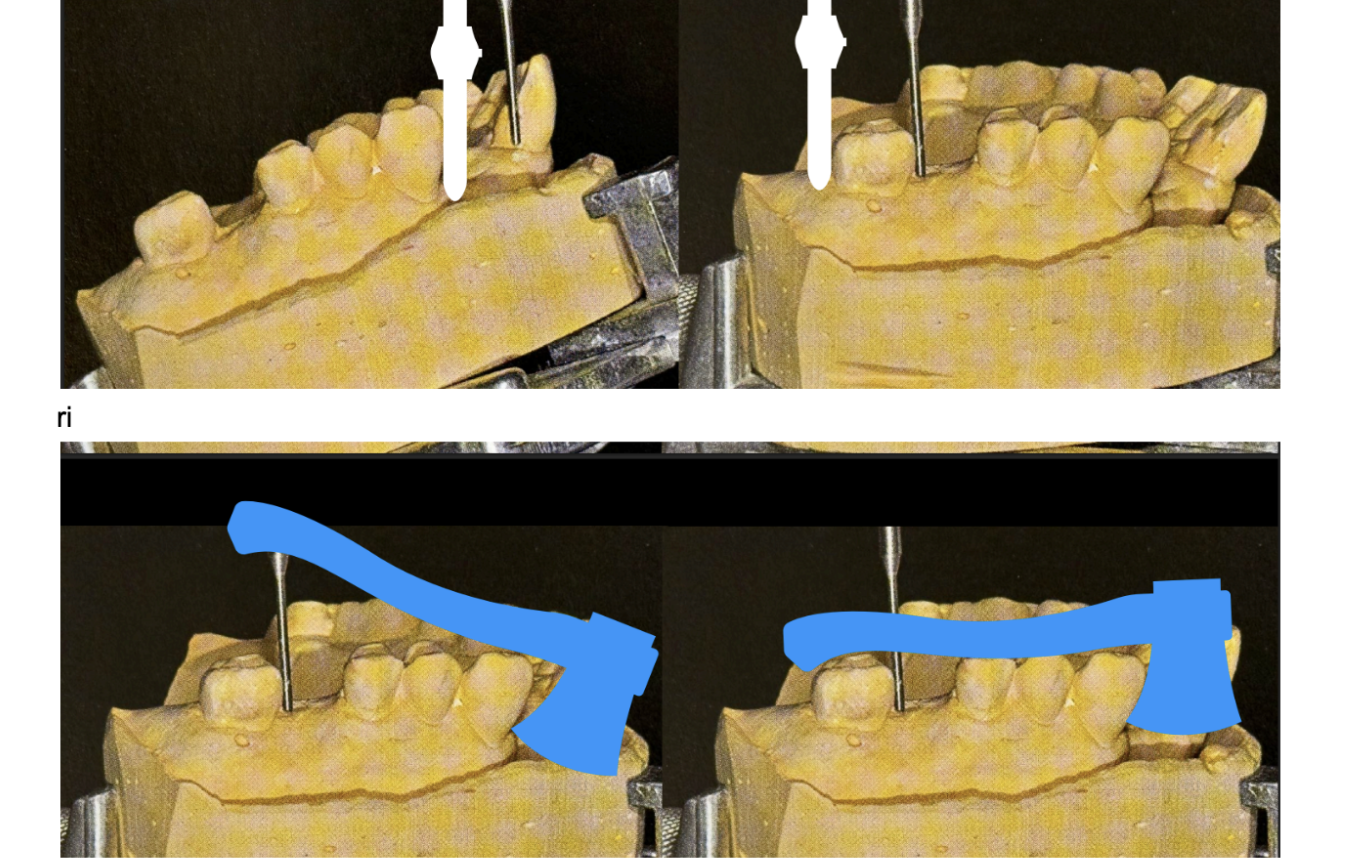
thge top shows poi from —- retainer and the bottom shows POI of ——
flexible conventional i think
rigid retainer
what is A, B?
rigid retainer of rotational framework
terminal rest
The rest that seats last
Located on the opposite side of the edentulous area
Usually associated with a conventional (Akers) clasp
special features of the rotational framework:
“initial” rest: the first part of the framework to seat. this rest acts as a —-
center of rotation (fulcrum)
which feature of rotational framework is the first part of the framework to seat and acts as a fulcrum center of rest
initial rest
— is the portion of the framework that enters the undercut first. because it is rigid, it provides exceptional stability
rigid retainer
— , seats last and is associated wiht a conventional clasp assembly on the opposite end of the edentulous space to lock the rotation in place
terminal rest
clinical indications and preparations
in a long span class —, a rotational path allows rigid mesial plates of the anteiror abutments to provide retention, keeping anterior segmenet metal free on labial surface
iv
rotational path allows —- on the anterior abutments to provide retention and metal free on labial surface on class iv
mesial plates
rotational paths are ONLY FOR —- , CLASS — AND __. ONLY
tooth borne cases, class iii and iv
rest seat morphology: anterior rest seats must be shorter or longer? to ensure framework doesnt skid out of position as the posterior segment rotates down
longer
What are advantages of the tooth borne rotational clasps
reduced plaque accumulation by eliminating— that wrap around the tooth, lowering caries risk
because —-dont flex, rpd has less,—-ompared to conventional
clasp arms
rigid retainers , horizontal play
the limitations of the rotational frameworkis that unlike a gold or cobal chrome glasp arm, a rigid retainer can not be ——. if the fit is inaccuate you have to —-
adjusted chairside
remake
what is another limitation of the rotational framework: patient must be taught the specific — method for insertion. forceing the rpd staright down will result in trauma to the abutment teeth or a bent framework
hook and swing

