current electricity
 Studied by 0 people
 Call Kai
 Learn
Learn Practice Test
 Spaced Repetition
 Match
Match Flashcards
 Knowt Play
1/34

There's no tags or description
Looks like no tags are added yet.
Name | Mastery | Learn | Test | Matching | Spaced |
|---|
No study sessions yet.
35 Terms
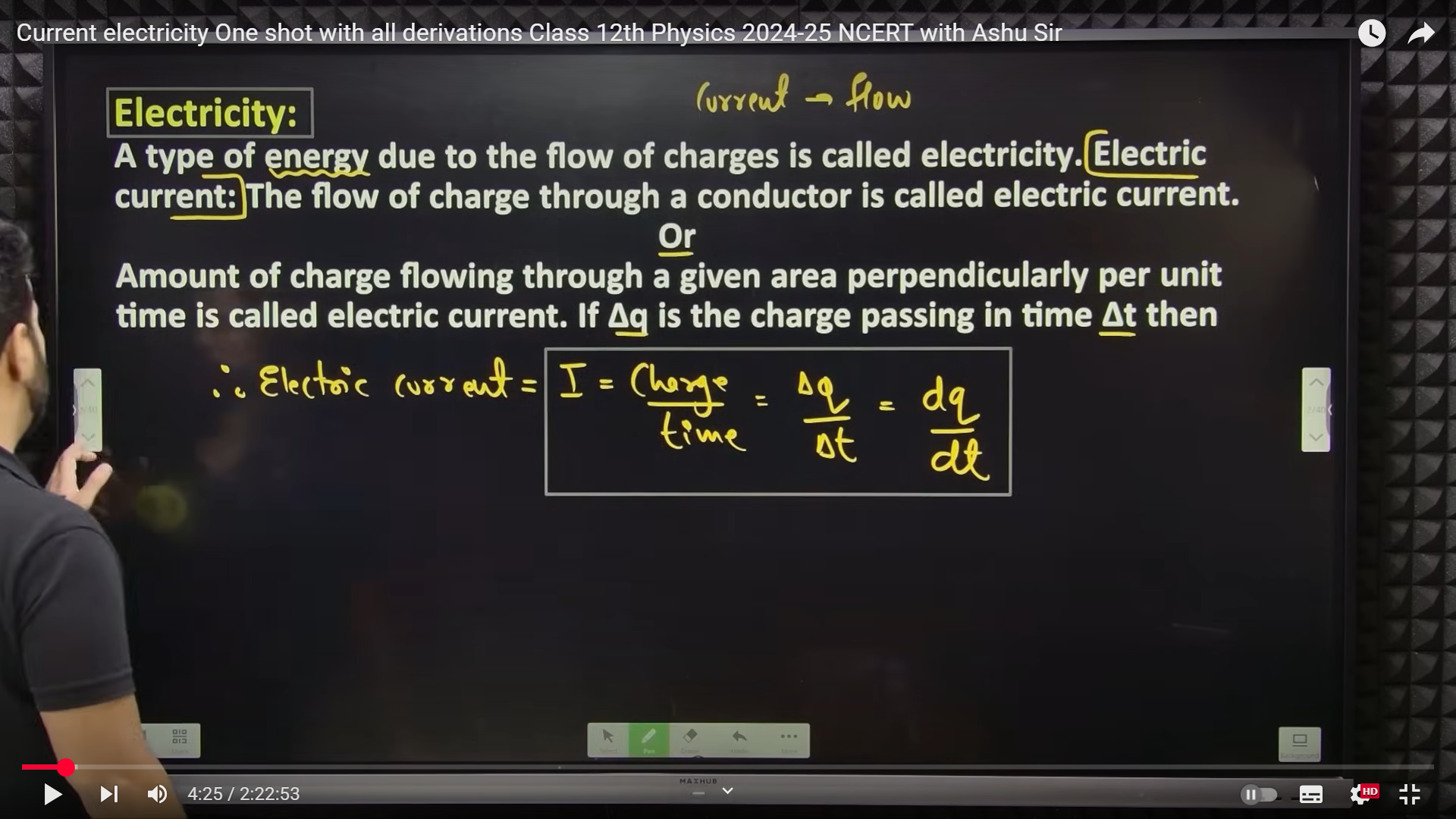
def electricity and electric current
The type of energy due to the flow of electric charges is called as electricity
the flow of charge through a conductor is called as electric current
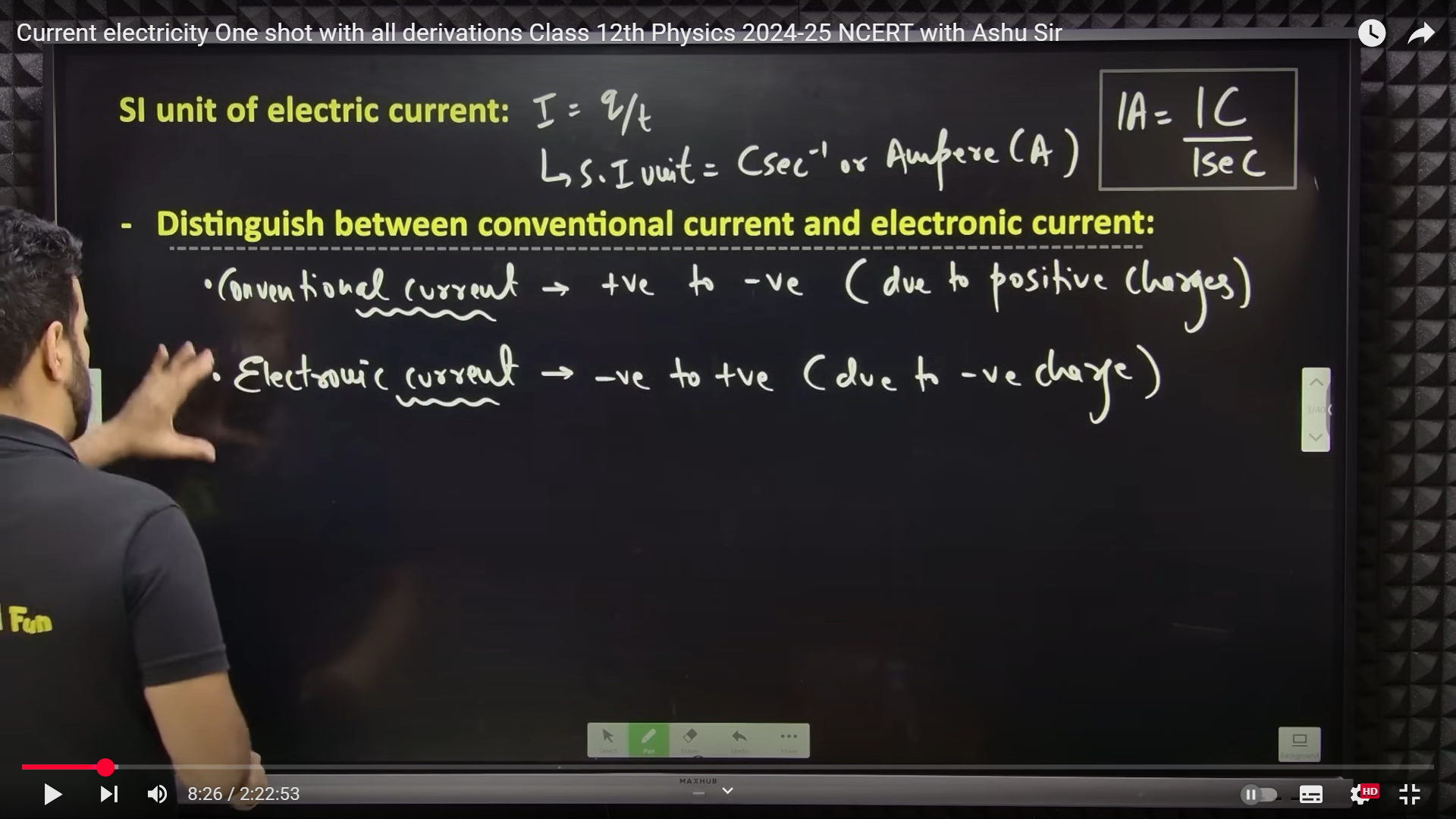
direction of current
def EMF
Electromotive force of a source can be defined as the work done by the source in moving a unit positive charge from lower potential to the higher potential
EMF is maximum potential unit of a circuit
E=W/Q
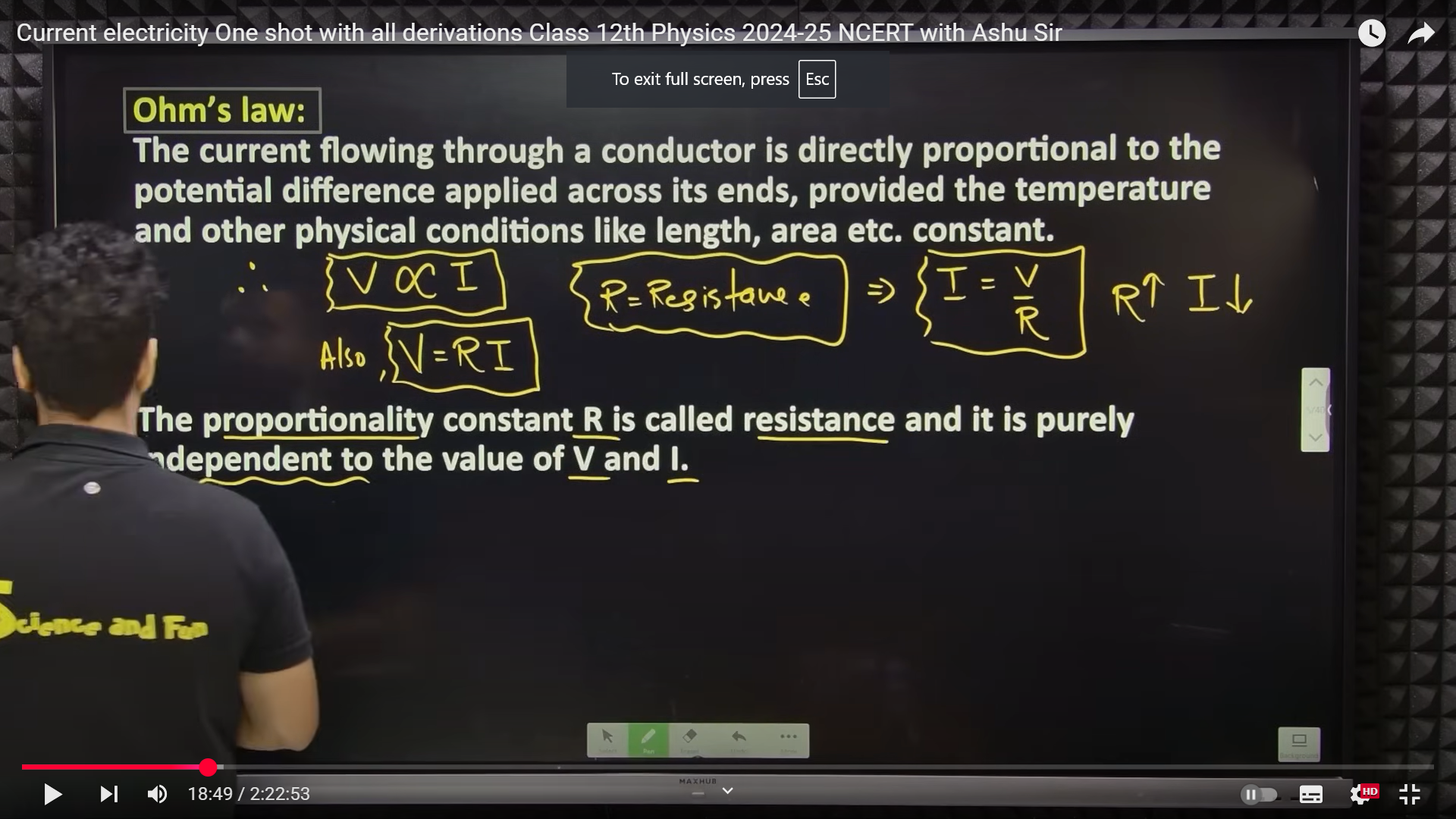
Def OHM’S Law
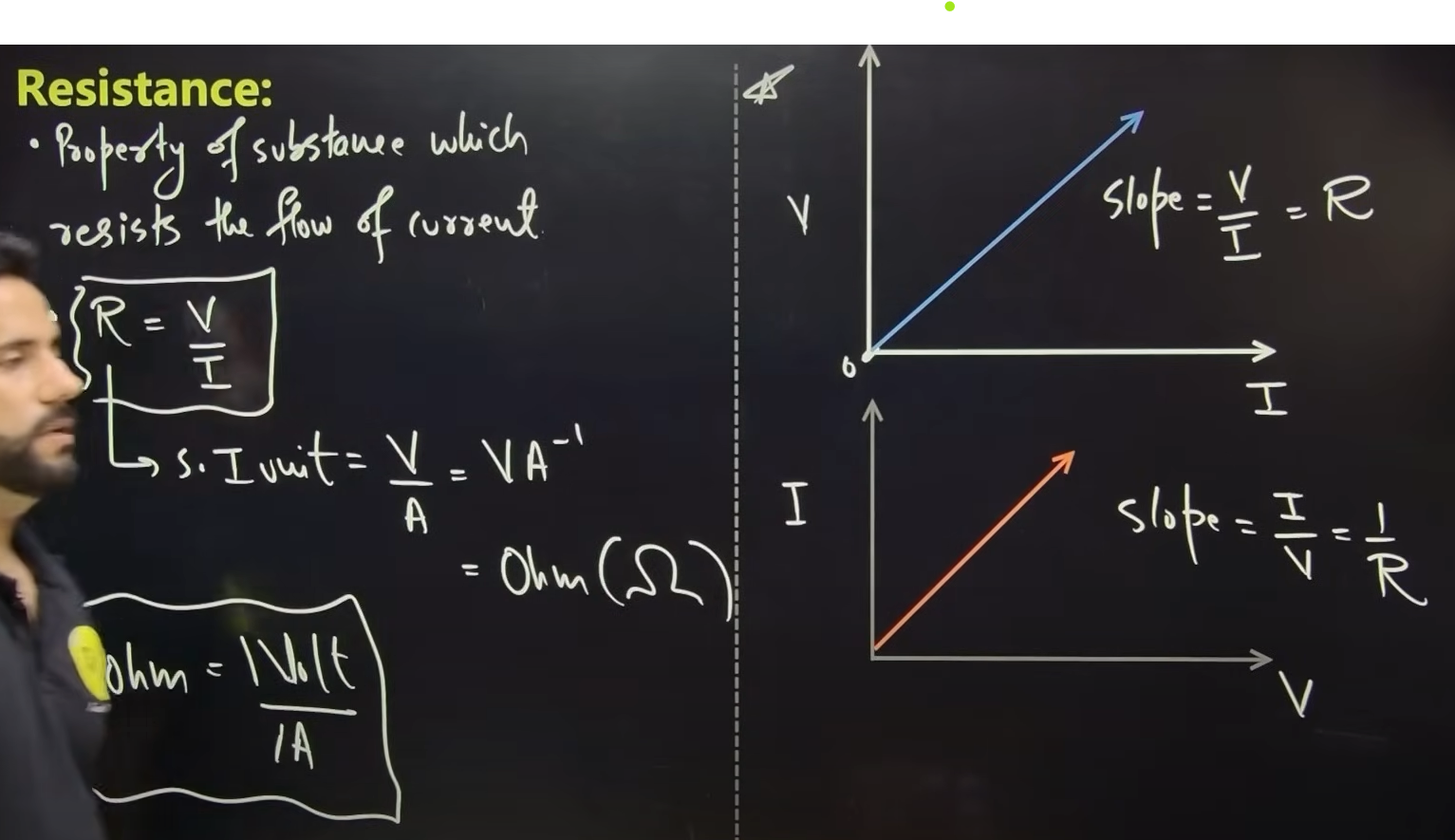
def resistance
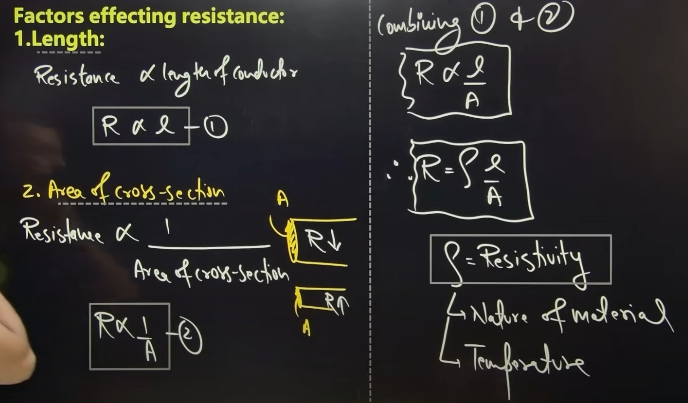
what are the factors affecting resistance
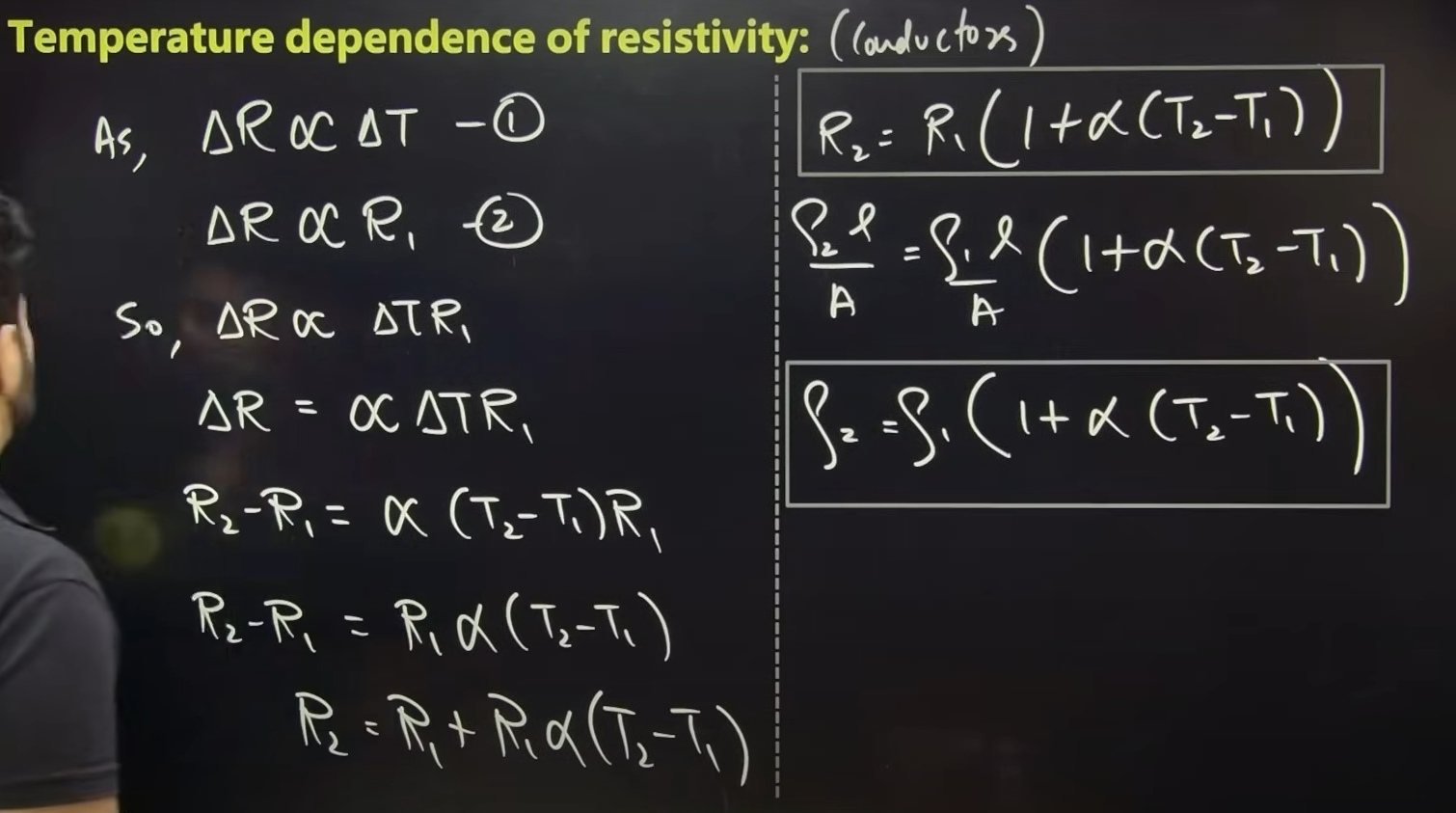
TEMPERATURE directly propotional
SI unit ohm for resistivity it is ohm metre
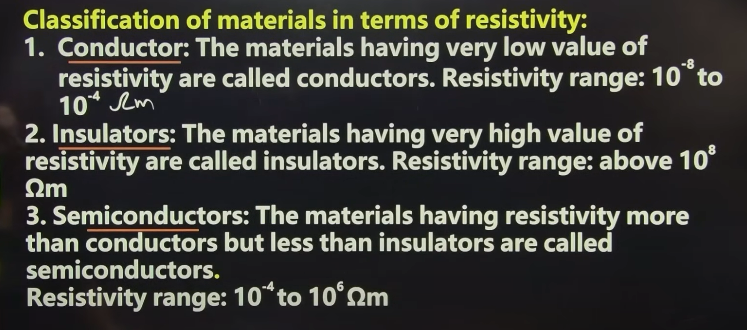
Classification of materials in terms of resistivity
temperature dependance of resistivity for conductors
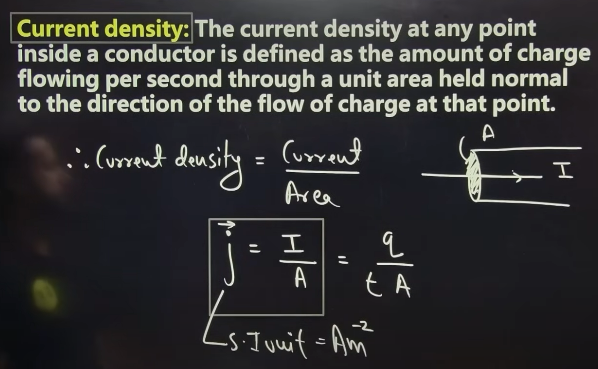
def current density and SI unit
current density is the amount of current flowing per unit cross sectional area
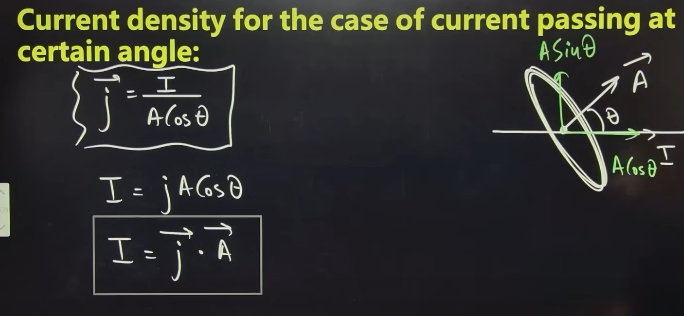
current density when area not in direction to current
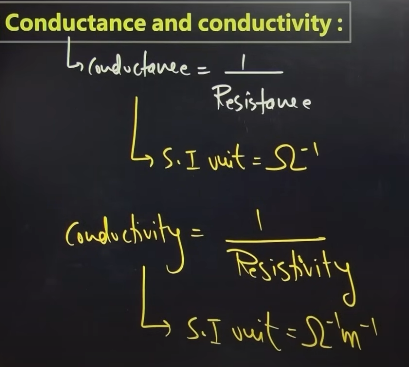
Conductance and conductivity
Conductance- inverse of resistance
conductivity- inverse of resistivity
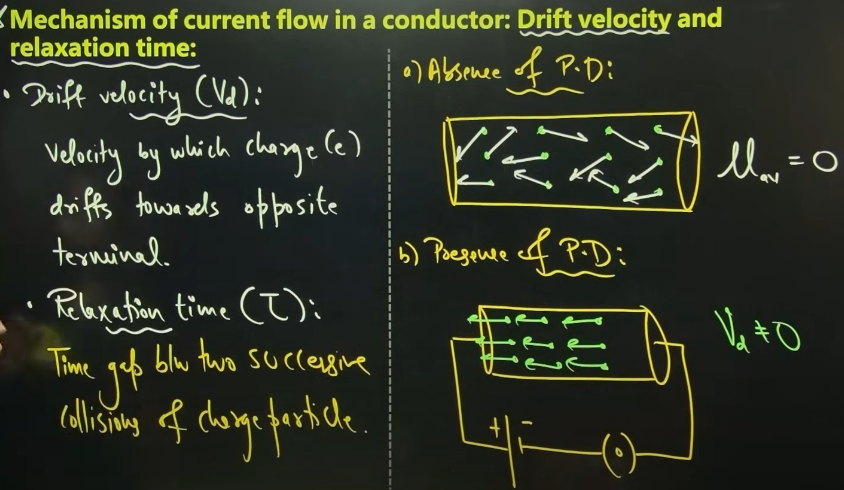
mechanism of current flow in a conductor: DRIFT VELOCITY AND RELAXATION TIME
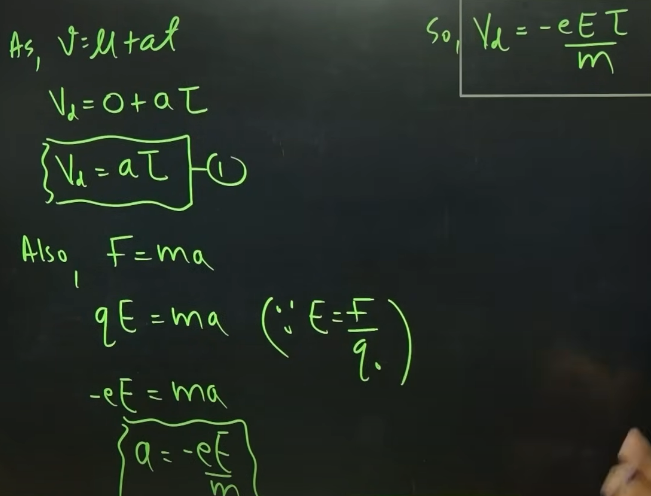
Drift velocity derivation
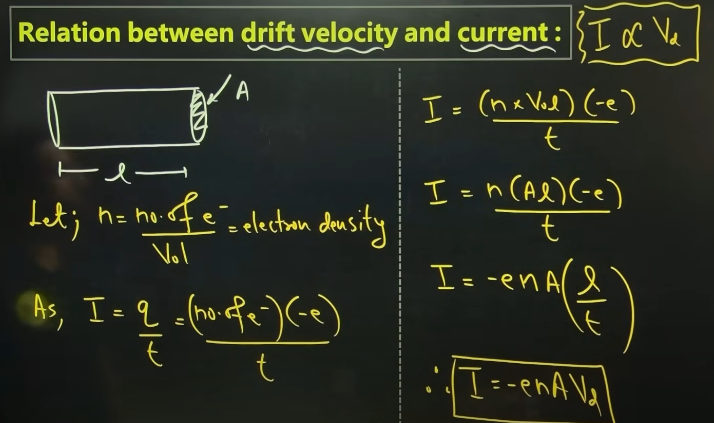
relation btw drift velocity and current
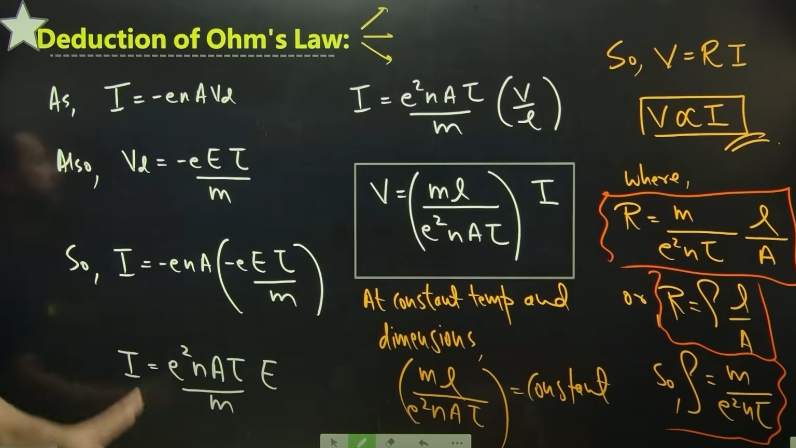
deduction of OHM’S law (V.IMP)
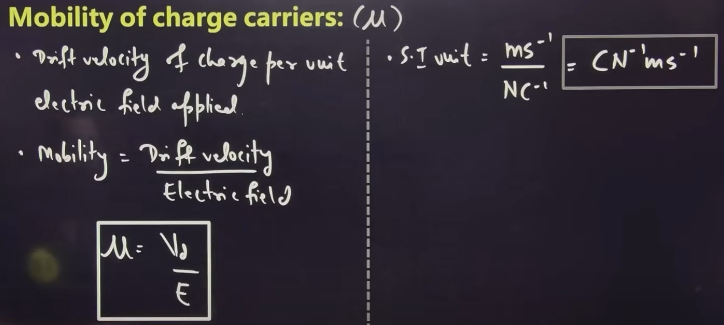
Mobility of charge carriers
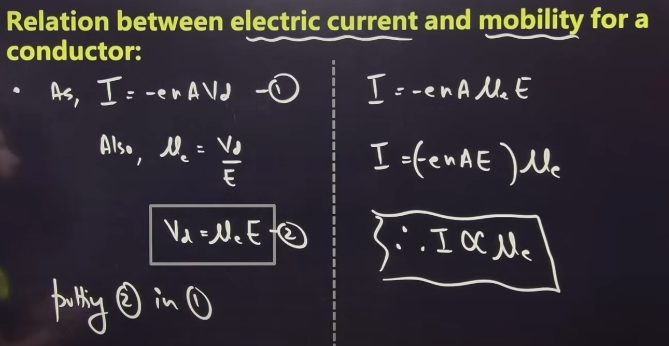
relation between electric current and mobility for a conductor
types of conductors OHM’s law holds true and not
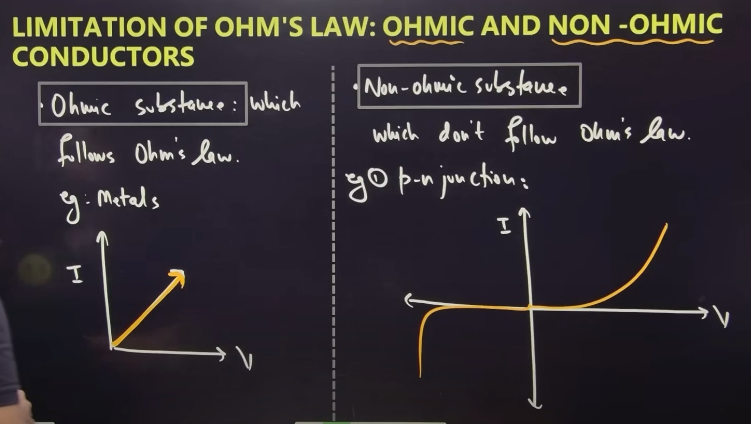
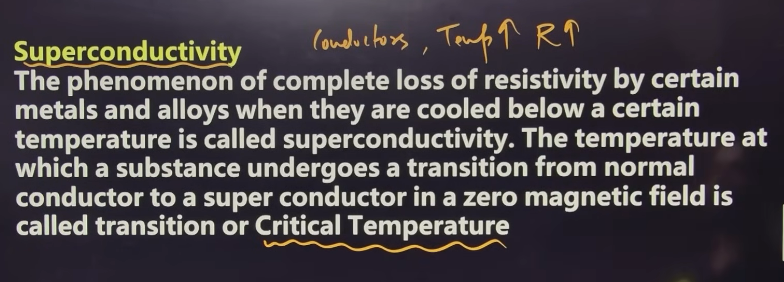
Superconductivity
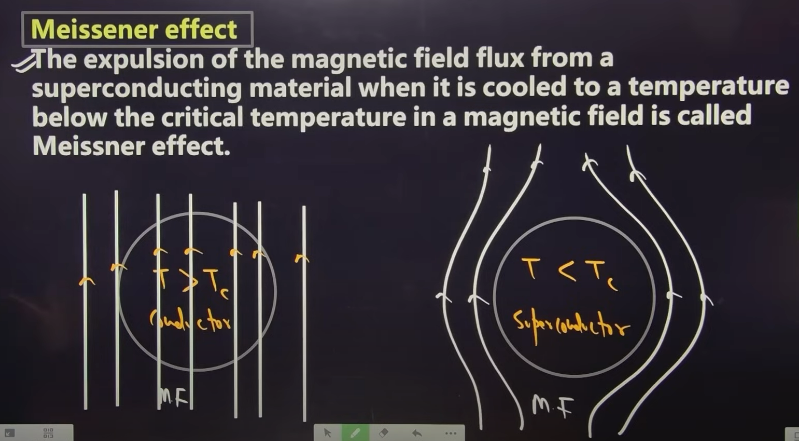
Meissener effect
TC-- Critical temp
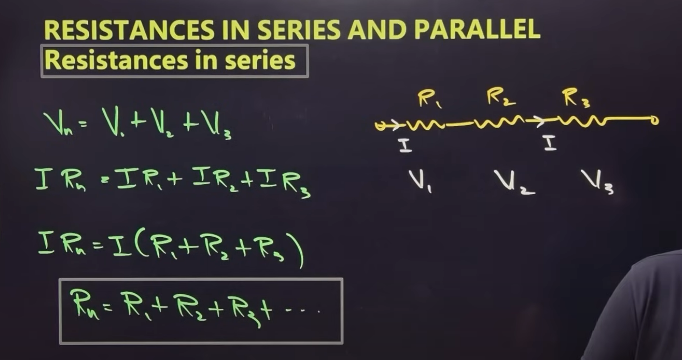
Resistance in series
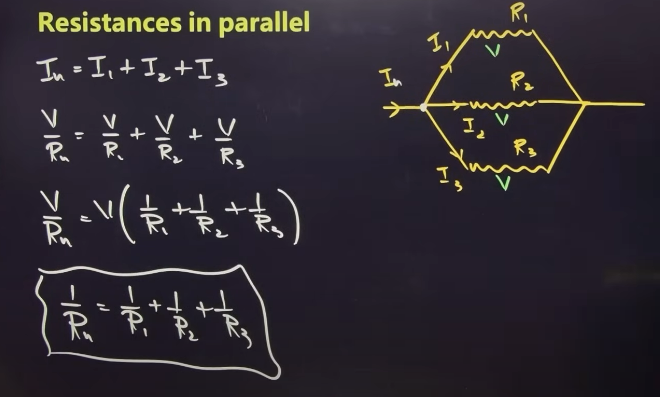
Resistance in parallel
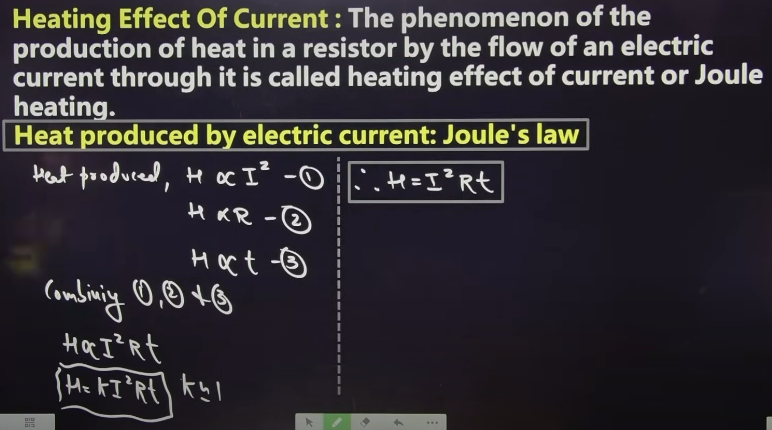
Heating effect of current
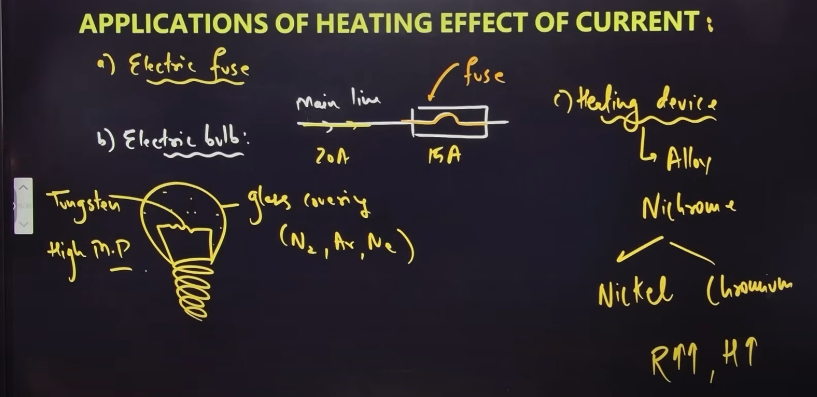
Applications of heating of current
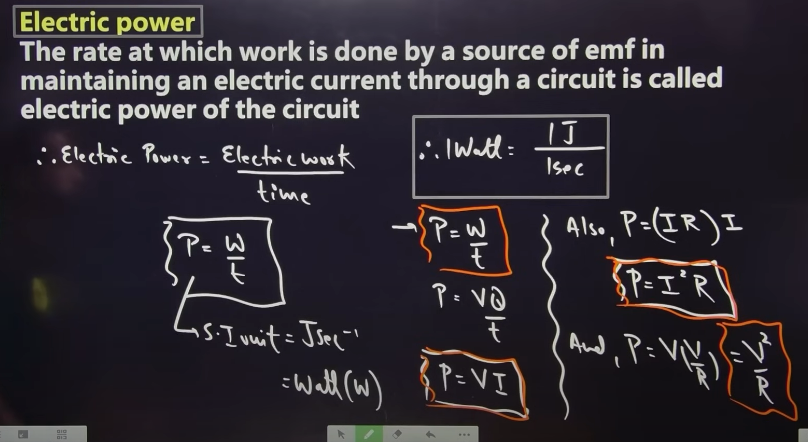
Electric power
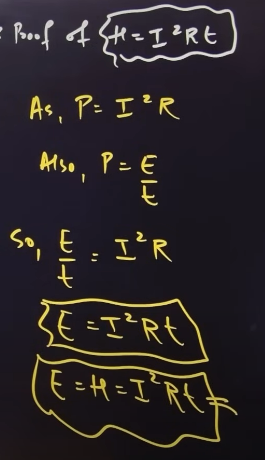
proof of heating effect of current
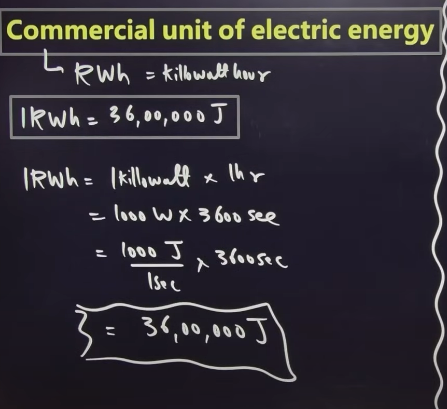
commercal unit of electric energy
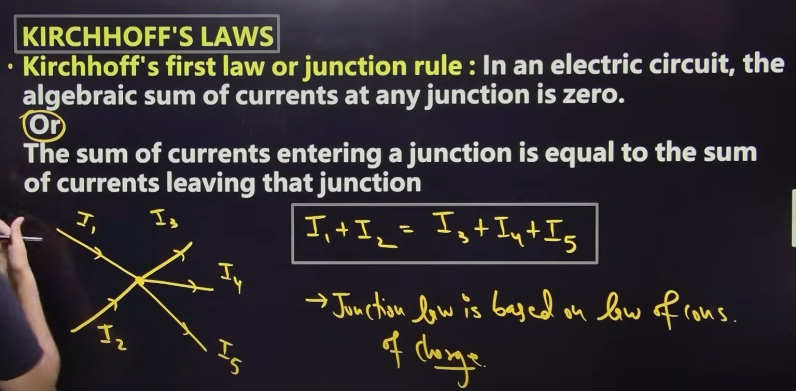
Kirchhoff’s 1st law
based on law of conservation of charge
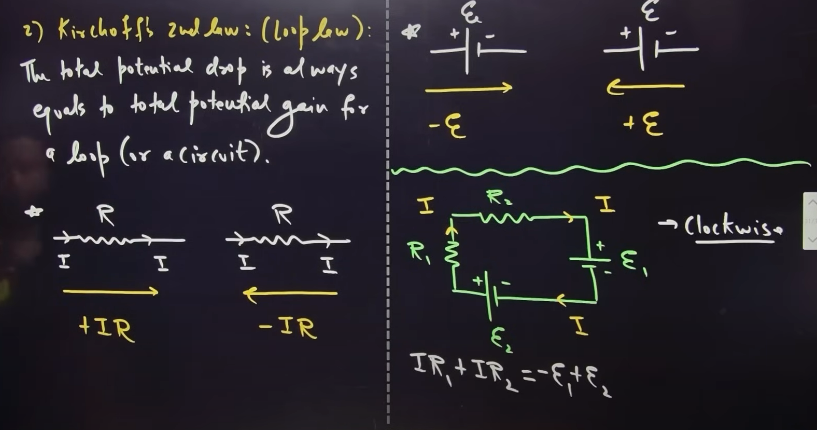
Kirchhoff’s 2nd law
based on law of conservation of energy
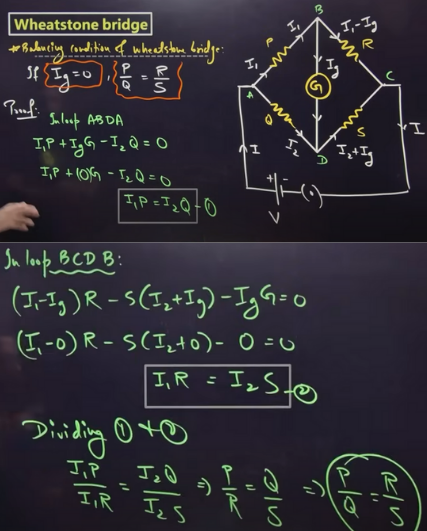
Wheatstone bridge (imp derivation)
inbetween the current does not flow because both the junctions have the same potential
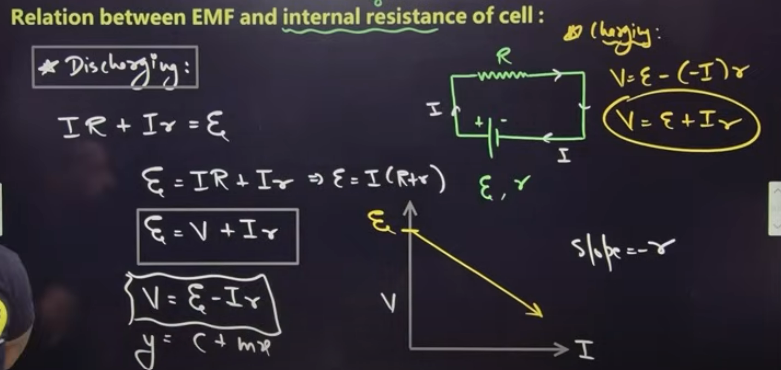
relation between EMF and internal resistance of a cell (imp)
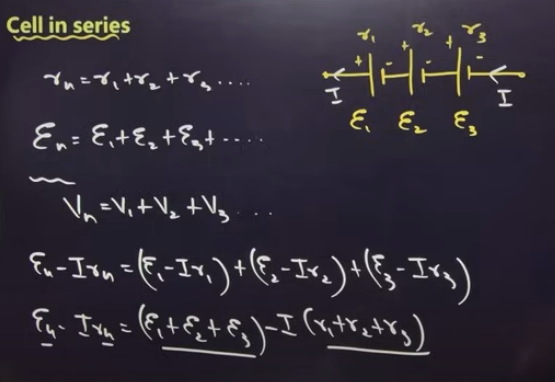
cell in series
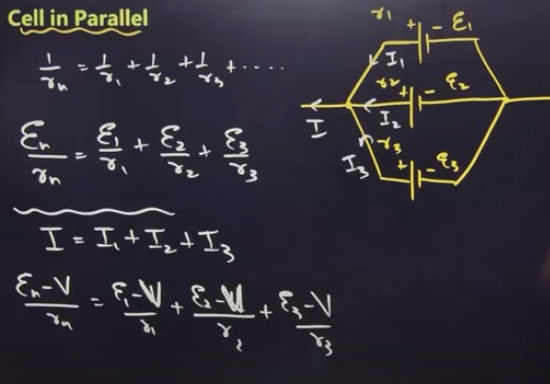
cell in parallel
define temperature coefficient of resistance of metal
it is the fractional change in resistance of a metal corresponding to a temperature change of 1degree
the ratio of current density and electric field is called
conductivity