B3: humoral and cellular adaptive immunity
 Call Kai
 Learn
Learn Practice Test
 Spaced Repetition
 Match
Match Flashcards
 Knowt Play
1/38

There's no tags or description
Looks like no tags are added yet.
Name | Mastery | Learn | Test | Matching | Spaced | Call with Kai |
|---|
No analytics yet
Send a link to your students to track their progress
39 Terms
what is an antibody?
proteins that circulate through the blood and recognize specific molecules, antigens
what is an antigen?
antibody generating
anything that can cause an antibody to be produced
proteins, carbs, DNA, fats, other chemicals
antigens bind tightly and specifically to their antibody
what are immunoglobulins (Ig)?
antibodies
what are the multiple classes of Ig determined by?
constant regions of antibodies
what are the 5 mechanism of antibody action?
agglutination
opsonization
neutralization
activation of complement
antibody-dependent cell-mediated cytoxicity
what is agglutination?
antibodies glue multiple cells together that have the same antigen on surface
how is agglutination beneficial?
by binding to more than one antigen, pathogen are chained together and clump → bigger targets
easier for neutrophils and macrophages to engulf them all and kill them
what is osponization?
phagocytes have an easier time grabbing pathogens that are coated with antibodies
neutrophils and macrophages can engulf anything with an antibody on it
what is neutralization?
if the antigen is biologically important, binding of the antibody may shut it down
how does neutralization work?
antibody binds to viruses and toxins → directly affects the pathogen
shuts down the virus’s and toxin’s ability to enter the cell
what is activation of complement?
antibodies attract the complement system, which can lyse bacterial cells and signal for inflammation
what is antibody-dependent cell-mediated cytotoxicity?
antibodies attract granulocytes to attach and try to kill whatever they’re stuck to (self cells, large pathogens)
granulocytes dump their toxic contents on the outer surface of the parasite
what are B cells? how are they related to antibodies?
produce antibodies and are made in our bone marrow
where are B cells found?
circulate in our blood and lymph
how many antibodies does a B cell produce?
each B cell produce one and only one type of antibody
how are so many antibodies produced?
cells that produce antibodies use recombination to make variants
how do cells use recombination to make antibodies?
regions that code for the variable region of anitbodies are built with short regions of DNA that are very similar
as a B cell matures → splices out bits from the different regions
what are the first stages to produce an antibody?
naive B cells carrying specific antibodies are produced
variants are made without knowing that they’re useful
huge population of different B cells in the blood/tissues
what is the second stage to produce an antibody?
naive B cell comes across an antigen that matches its antibody, and undergoes clonal selection
B cell is activated, selected for growth → become a long-term part of the immune system
what is the third stage to produce an antibody?
some B cells become plasma cells to produce large amounts of soluble antibody in the blood
some become memory cells to “remember” a pathogen later
what is clonal selection?
population of the B cell that came across an antigen that matched its antibody expands
produce memory cells and plasma cells
what are memory B cells?
keep the antibody on their surface
act as sensors
take up long-term residence in your lymphatic tissues, blood, and various organs → for long-term responses
what are plasma B cells?
secrete antibodies into blood and lymph
these are the antibodies we find in your blood
what would a graph of antibody production look like after an initial exposure to antigen? a second or later exposure?
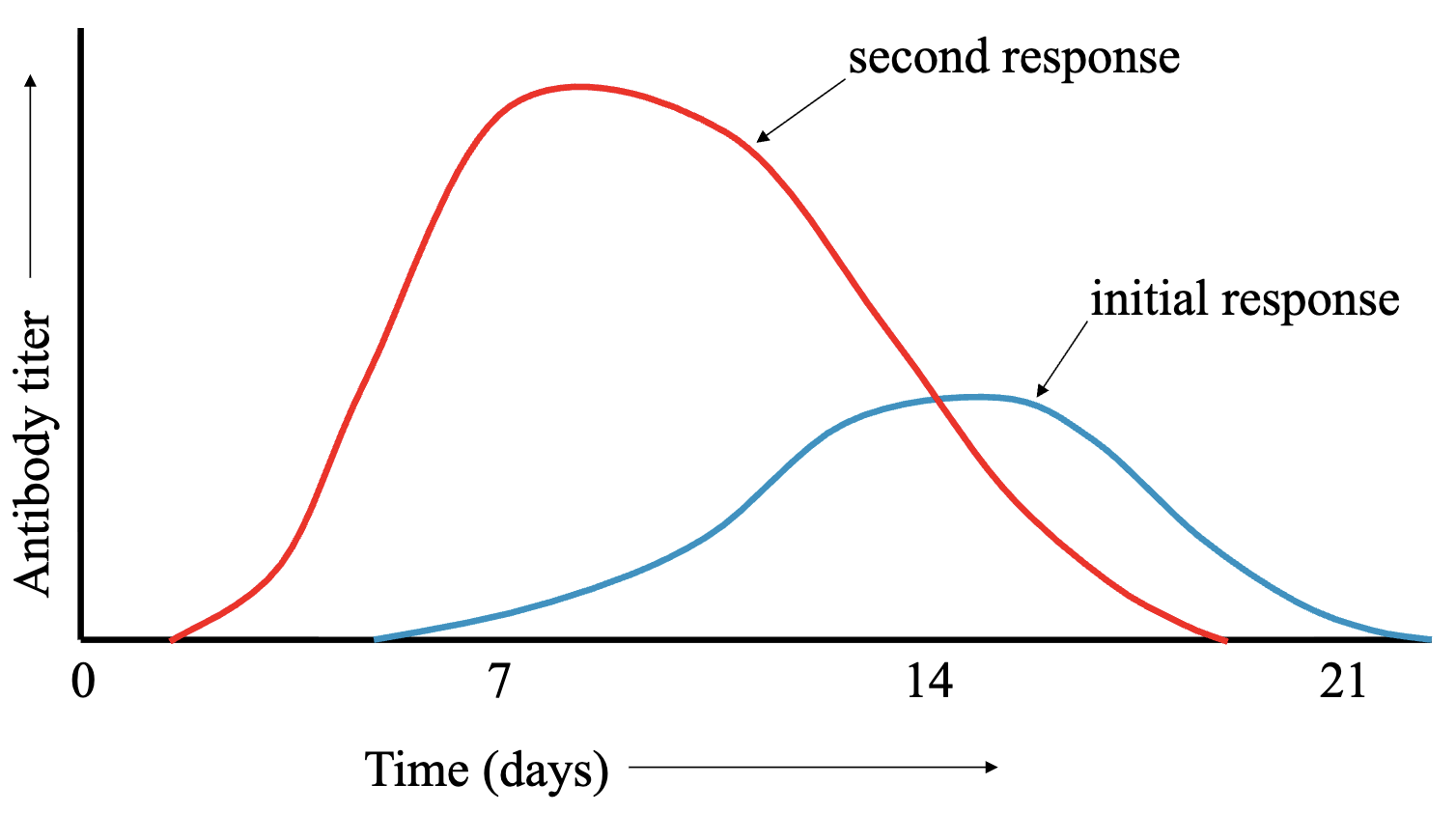
why are the responses different?
later responses are stronger and faster than early ones because of the memory cells
initial response:
don’t have a strong antibody response
eventually recover because naive B cells got clonally selected and started producing more antibodies
second response:
you have memory cells now → large B cell population
immediately starts producing large amounts of antibodies
what are T cells?
produced in the marrow and mature in the thymus
circulate in our blood and lymph
what do T cells carry? what are they similar to?
each T cell carries one type of T cell receptor (TCR)
TCRs are very similar to antibodies → same structural components
how are TCRs and antibodies different?
TCRs are never made in a secreted form → always associated with a T cell
how are T cells like B cells?
like B cells, T cells that “see” a matching antigen are amplified and will respond faster/stronger to later infections
how are T cells and B cells different?
antibodies can’t deal with intracellular pathogens, but T cells can (memory T cells)
what are helper T cells?
immune system coordinators
respond to TCR binding by sending out chemicals signals
help activate B cells, cytotoxic T cells, macrophages, etc.
serve as a crucial central regulator of the immune response
what are helper T cells a primary target of?
HIV
what are memory T cells?
long-lived cells produced after TCR exposure to antigen
create more rapid responses to future exposures
what do cytotoxic T cells do?
scans our own cells for improper proteins
how are cytotoxic T cells similar to NK cells?
CT cells probe our own cells
how are CT cells different NK cells?
CT cells are looking for a specific match to their TCR (specific response)
only go after a cell with a binding partner to their T cell receptor
inject its granules → stops viral infection
what sorts of infections are cytotoxic T cells particularly good at combating?
provides good defenses against viruses, intracellular bacteria
how do various cell types attack larger pathogens?
many immune cell types recognize bound antibodies
release toxic granules/lysosomes to attack pathogens
is the attack of larger pathogens from humoral or cellular systems, or both?
both

