Surface Anatomy Of The Forebrain - The Limbic Lobe
 Call Kai
 Learn
Learn Practice Test
 Spaced Repetition
 Match
Match Flashcards
 Knowt Play
1/16

There's no tags or description
Looks like no tags are added yet.
Name | Mastery | Learn | Test | Matching | Spaced | Call with Kai |
|---|
No analytics yet
Send a link to your students to track their progress
17 Terms
What are the two structures that mostly compose the limbic lobe?
The limbic lobe is made mostly of two structures:
cingulate gyrus (above) and parahippocampal gyrus (below)Together, they form a continuous arc of cortex on the medial surface of the brain
Name all four structures that collectively constitute the full limbic lobe
Cingulate gyrus
Parahippocampal gyrus
Paraterminal gyrus
Subcallosal area
Together, these form the cortical part of the limbic system
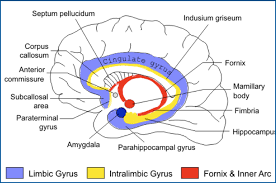
What structure does the limbic lobe effectively encircle, and what are its components?
The cingulate gyrus (above) and parahippocampal gyrus (below) together form a curved ring on the medial surface of the brain
This ring encircles the diencephalon, which contains the thalamus and hypothalamus
Describe the anatomical position of the cingulate gyrus in relation to the corpus callosum.
The cingulate gyrus sits directly above the corpus callosum on the medial surface of the brain
It runs in a curving, belt‑like arc that follows the shape of the corpus callosum
What is the corpus callosum, and why is knowing its relationship to the cingulate gyrus anatomically important?
The corpus callosum is the major white‑matter bridge (collection of myelinated axons) connecting the two cerebral hemispheres
The cingulate gyrus sits immediately above it, making the corpus callosum a reliable landmark for finding the cingulate on midline MRI
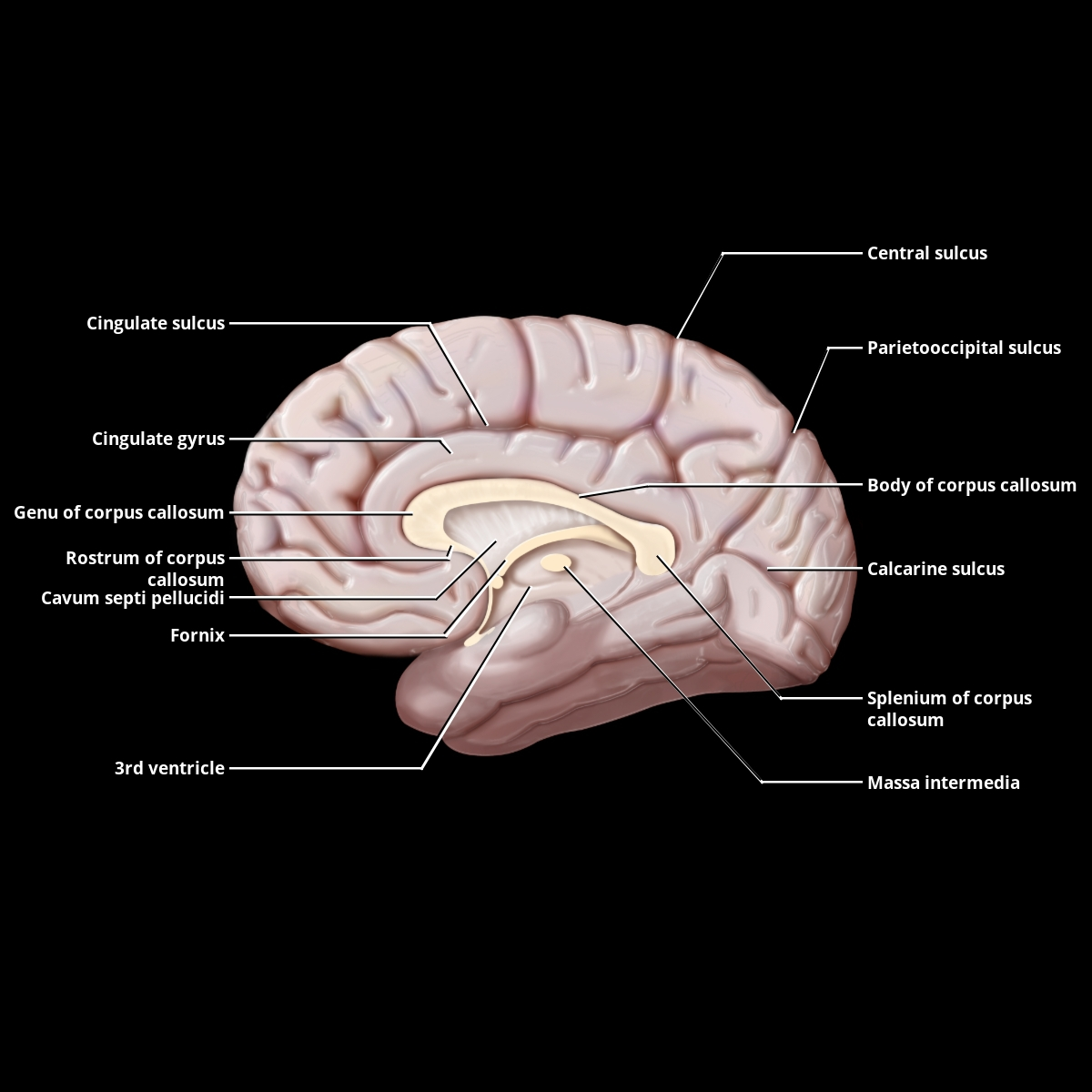
Describe the course of the cingulate gyrus from its anterior origin to its posterior continuation.
The cingulate gyrus starts in front, just above the corpus callosum
It runs backward along the top of the corpus callosum
At the back, it curves around the splenium (the posterior end of the corpus callosum)
It then continues through the isthmus and becomes the parahippocampal gyrus on the lower medial surface
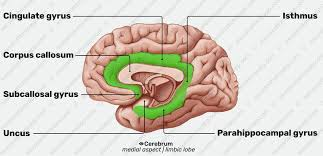
What is the uncus and how is it formed from the parahippocampal gyrus?
The uncus is a hook‑shaped bump on the medial temporal lobe
It is formed where the parahippocampal gyrus folds (hooks) around on itself at its anteromedial end
What is the clinical significance of the uncus, particularly in the context of raised intracranial pressure?
The uncus can get pushed downward when intracranial pressure rises
This causes uncal herniation, which compresses CN III → fixed, dilated pupil on the same side
It can also press on the midbrain, leading to fast neurological decline
A patient presents with a sudden fixed dilated pupil ipsilateral to a known expanding intracranial haematoma. Which anatomical structure is most likely causing this by herniating?
A fixed, dilated pupil on the same side of an expanding haematoma is classic for uncal herniation
The uncus (the most medial temporal structure) is the first part to herniate through the tentorial notch
As it shifts downward, it compresses the ipsilateral CN III, producing the blown pupil
What is the isthmus in the context of the limbic lobe, and what two structures does it connect?
The isthmus is the narrow bridge of cortex in the limbic lobe
It connects the cingulate gyrus (after it wraps around the splenium) to the parahippocampal gyrus
It forms the link between the two major limbs of the limbic lobe
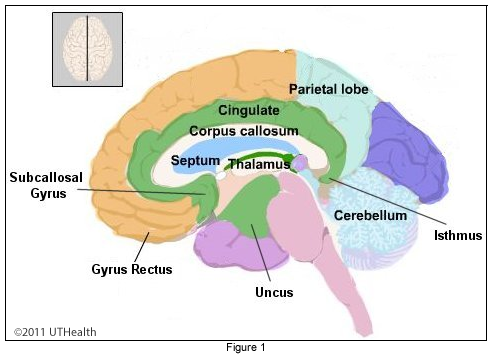
What is the splenium of the corpus callosum, and what is its relevance to the cingulate gyrus?
The splenium is the rounded posterior end of the corpus callosum
The cingulate gyrus runs back above the callosum, then wraps around the splenium
This “wrap‑around” marks the turning point where it continues through the isthmus into the parahippocampal gyrus
Trace the complete anatomical course of the limbic lobe from the anterior cingulate gyrus to the uncus in sequence.
Starts at the anterior cingulate gyrus (above the corpus callosum)
Runs backward along the top of the corpus callosum
Wraps around the splenium (posterior end of the callosum)
Passes through the isthmus
Continues as the parahippocampal gyrus on the medial temporal lobe
The parahippocampal gyrus then hooks on itself to form the uncus
What are the three main functional domains attributed to the limbic system (and by extension the limbic lobe)?
The three main functions of the limbic system (and limbic lobe) are:
Emotion
Drive / motivation
Memory
These capture the limbic system’s core job: linking feelings, motivation, and experiences into behaviour
Why is the anatomical relationship between the limbic lobe and the diencephalon clinically and functionally significant?
The limbic lobe wraps around the diencephalon (thalamus + hypothalamus)
This close contact reflects strong two‑way connections:
Thalamus → sends sensory + emotional signals to limbic cortex
Hypothalamus → turns limbic emotions into autonomic + hormonal responses
What are the clinical consequences of damage to the cingulate gyrus?
Akinetic mutism → patient is awake but shows almost no movement or speech
Loss of drive and motivation → especially severe with bilateral lesions
Problems with attention and emotional processing
Reduced pain perception
The cingulate is key for motivation, emotion, and initiating behaviour, so damage knocks out these functions
A patient presents with bilateral medial temporal lobe epilepsy originating from the parahippocampal gyrus. What characteristic olfactory symptom might they report at seizure onset, and why?
Seizures from the parahippocampal gyrus/uncus often cause an olfactory aura — a sudden strange or unpleasant smell (classically “burning rubber”)
This happens because the uncus contains primary olfactory cortex
These are called uncinate seizures
Summarise the complete anatomical organisation of the limbic lobe, including all named structures, key transition points, and the structure it encircles.
The limbic lobe is a cortical ring made of four parts:
1. Cingulate gyrus (above the corpus callosum)
2. Parahippocampal gyrus (medial temporal lobe)
3. Paraterminal gyrus
4. Subcallosal areaCourse:
The cingulate gyrus runs back above the corpus callosum → wraps around the splenium → passes through the isthmus → becomes the parahippocampal gyrus → which hooks on itself to form the uncusEncircles:
Together, the cingulate + parahippocampal gyri encircle the diencephalon (thalamus + hypothalamus)Function:
This cortical ring forms the limbic lobe — the cortical part of the limbic system, responsible for emotion, drive, and memory

