bio exam 3
 Call Kai
 Learn
Learn Practice Test
 Spaced Repetition
 Match
Match Flashcards
 Knowt Play
1/81

There's no tags or description
Looks like no tags are added yet.
Name | Mastery | Learn | Test | Matching | Spaced | Call with Kai |
|---|
No analytics yet
Send a link to your students to track their progress
82 Terms
gametogenesis
the production of sperm and eggs
meisosis
how gametogenesis happens
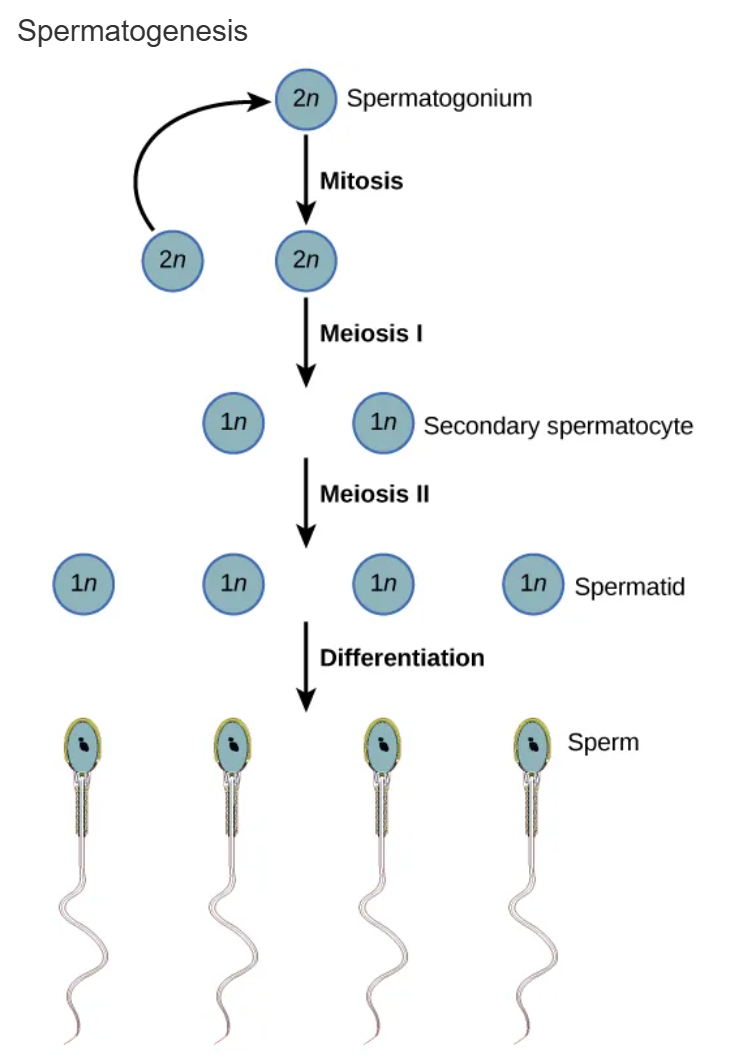
spermatogenesis
production of sperm
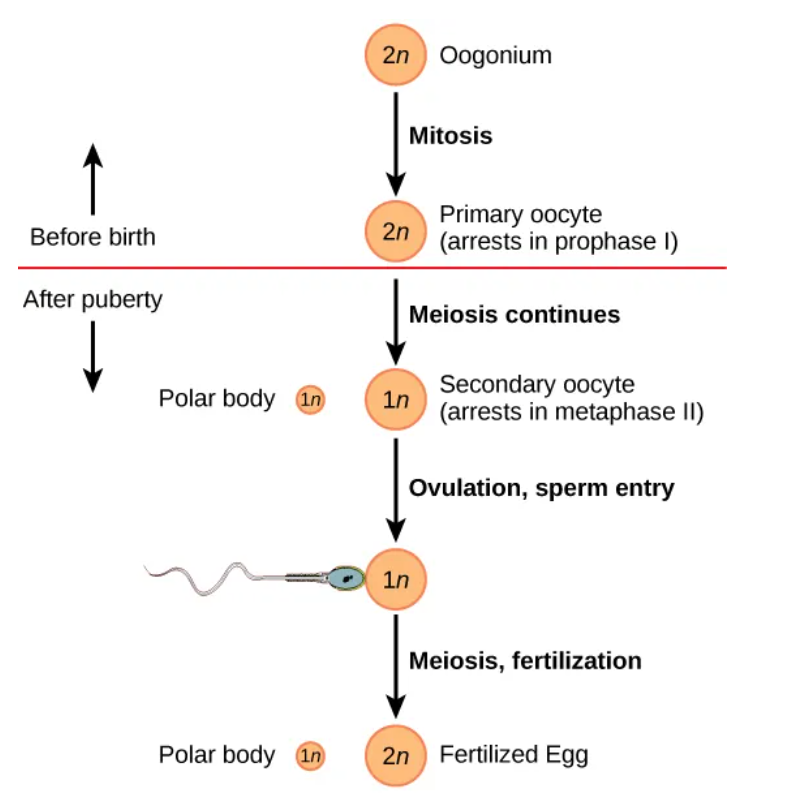
oogenesis
production of eggs. occurs in outermost layers of ovaries
spermatocyte
cell that results in 4 sperm cells after spermatogenesis
spermatogonium/spermatogonia
stem cell under capsule of seminiferous tubule
the og cell that goes through mitosis and results in sperm cells
gonadotropic hormones
from anterior pituitary. what activates spermatogonium and sperm cell production during adolescence.
oogonium (plural: oogonia)
germ cell. starting cell that then goes through the whole process that results in an egg cell.
stem cells
made during fetal development. divide via mitosis. Forms oocytes in the ovary prior to the birth of mother
primary oocyte
result of oogonium going through mitosis. goes through meiosis but stuck in prophase 1 until puberty
secondary oocyte
result of primary oocyte completing meiosis after puberty. paused in metaphase 2 until fertilization
polar body
mini cell with 1 chromosome + a little cytoplasm. basically meant to keep all the extra stuff and die. results after meiosis 1 and 2 of oogenesis
anterior pituitary hormones
@ adolescence, causes development of follicles in ovary and unpauses meiosis of primary oocyte
ovulation
secondary oocyte travels from ovary through uterus to oviduct.
one follicle ruptures, one egg is released
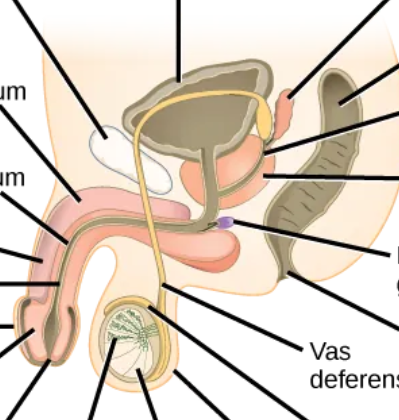
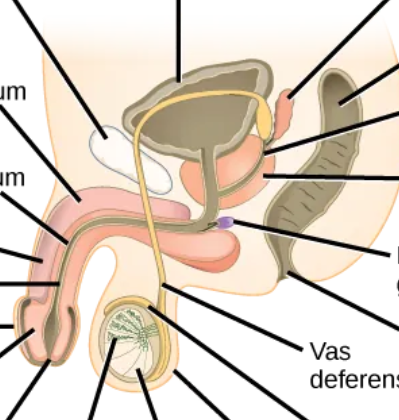
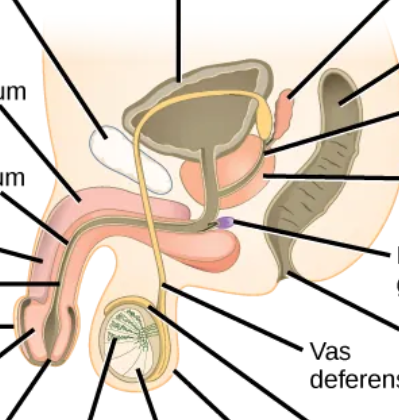
where is pubic bone
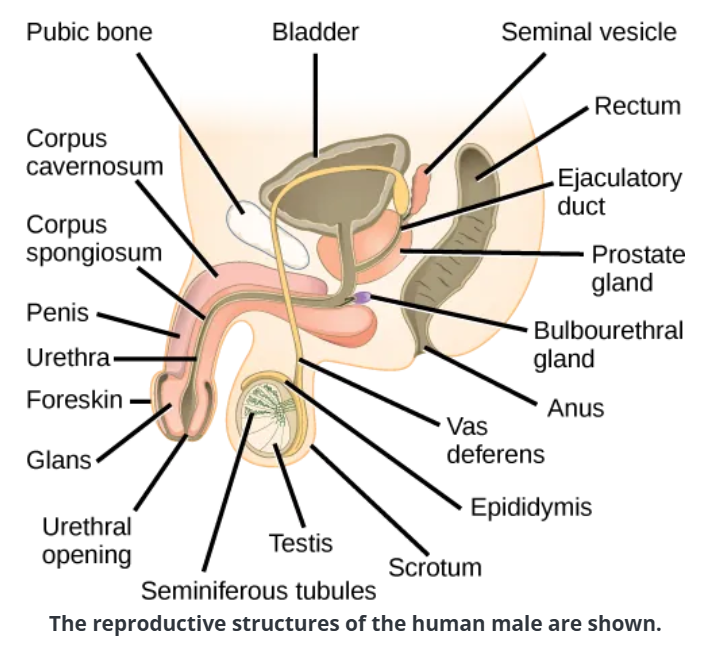
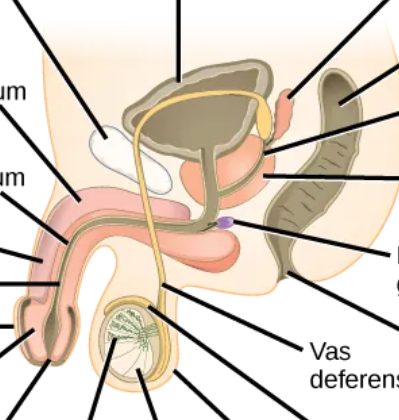
where is bladder
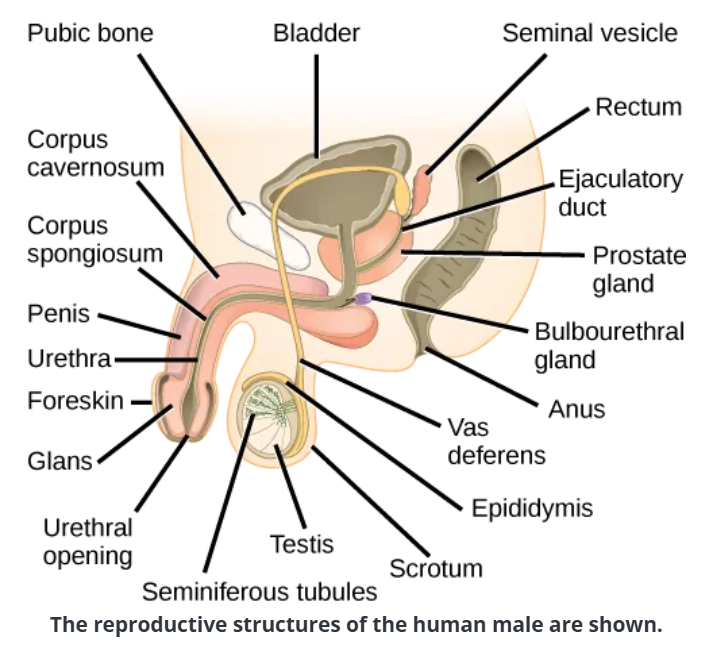
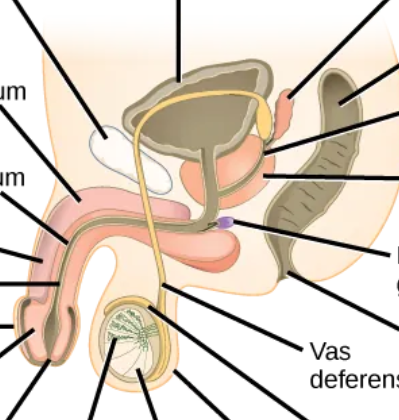
where is seminal vesicle and what is it
accessory gland. produces 60% of semen solution
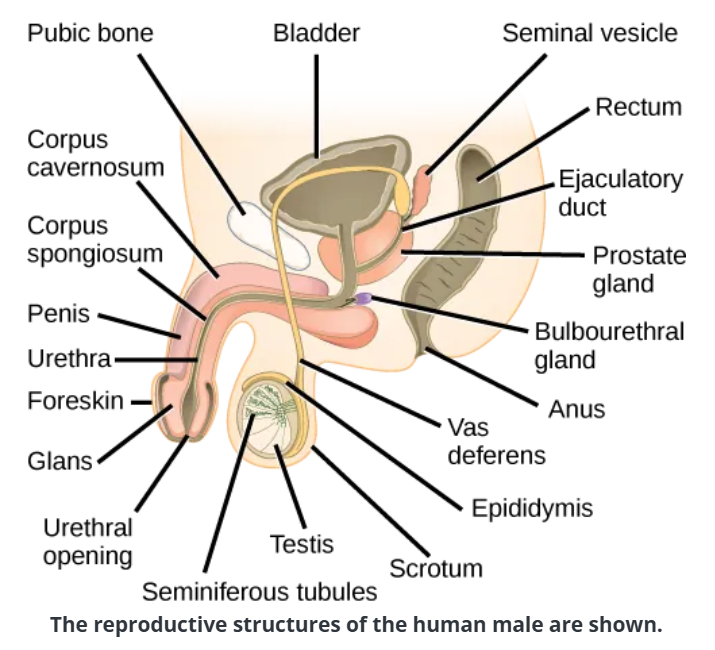
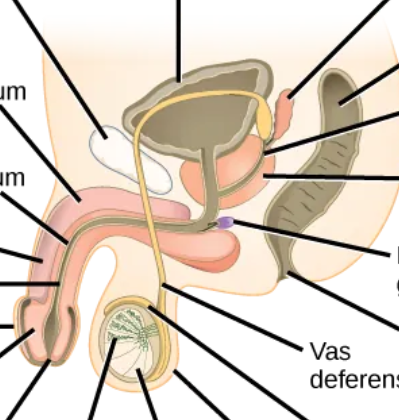
where is rectum
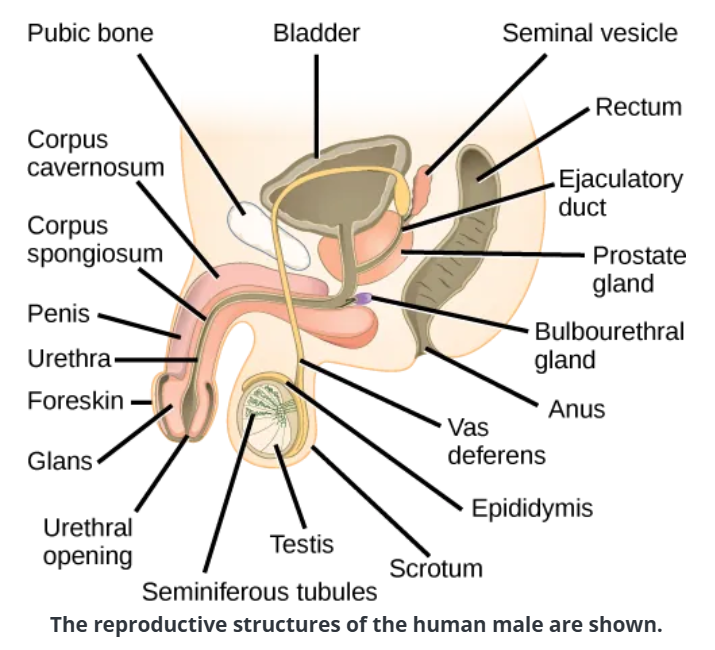
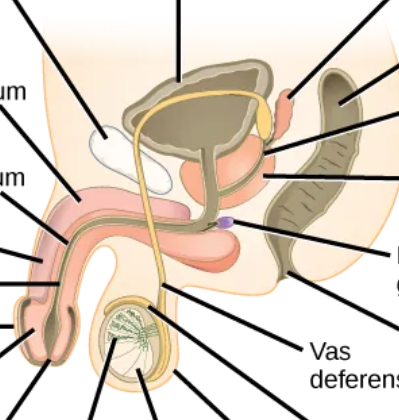
where is ejaculatory duct and what is it
formed by vas/ductus deferens and seminal vesicles.
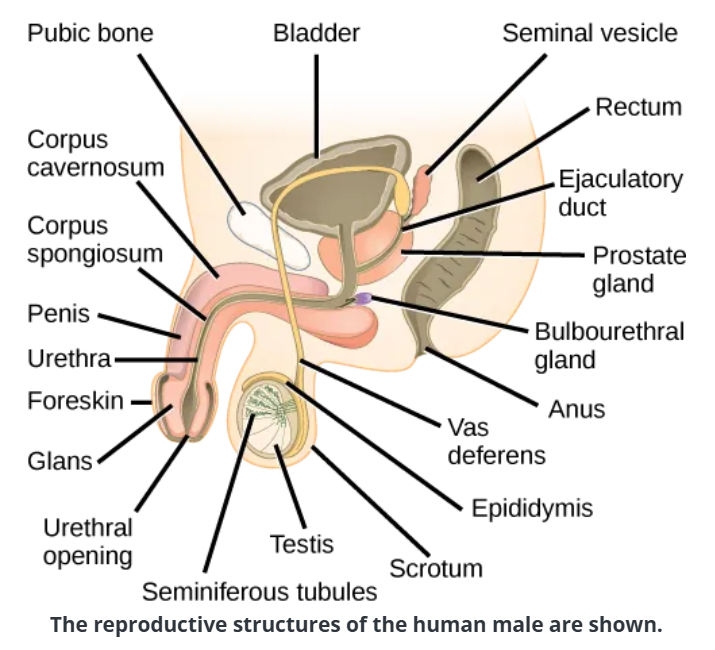
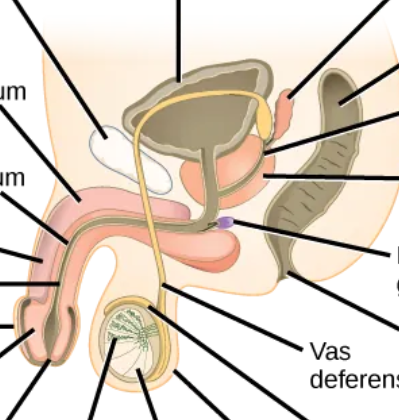
where is prostate gland
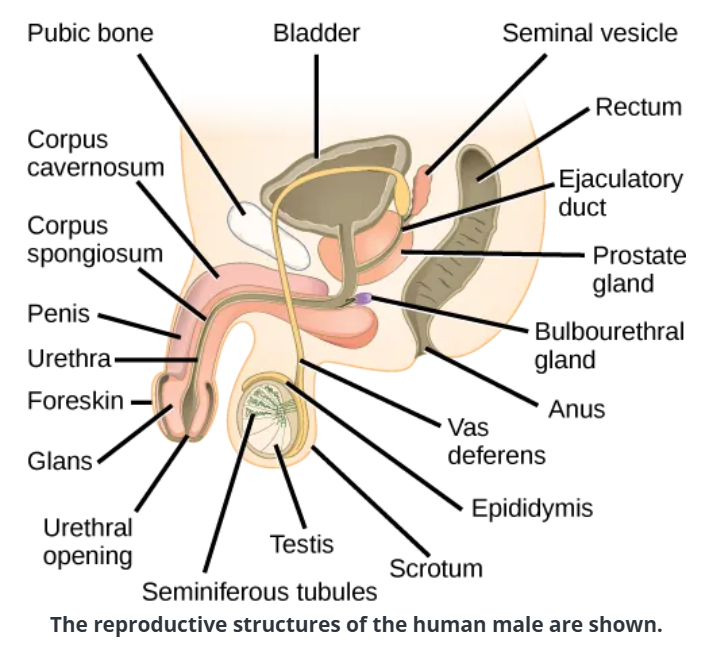
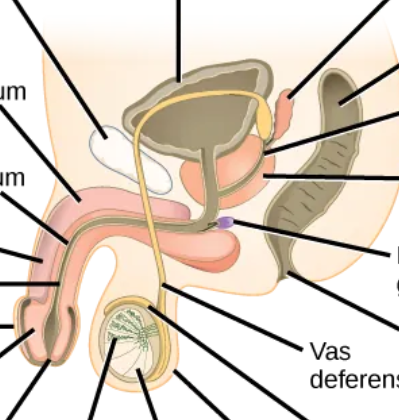
where is bulbourethral gland
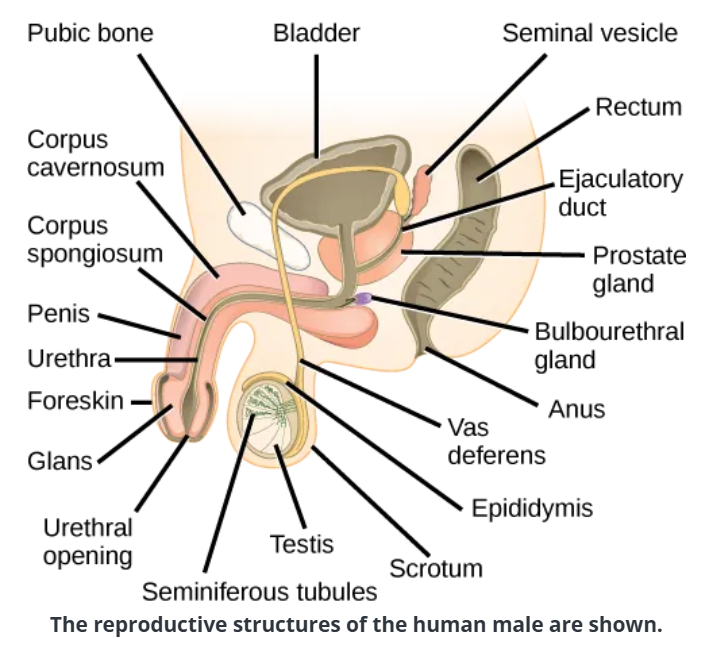
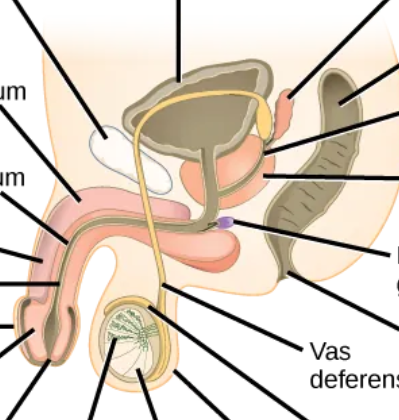
where is anus
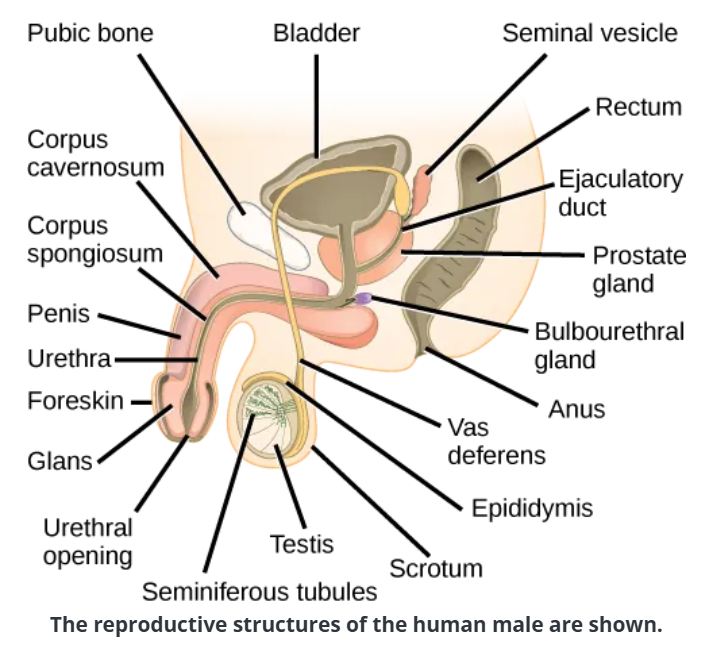
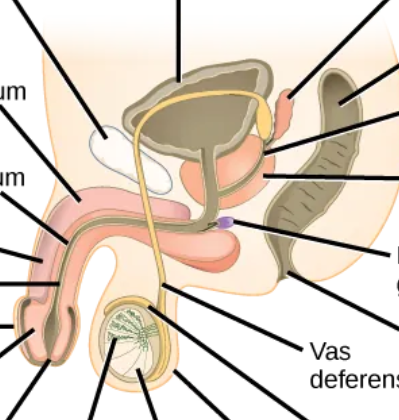
where is vas deferens/ductus deferens and what is it
carries sperm to ejaculatory duct
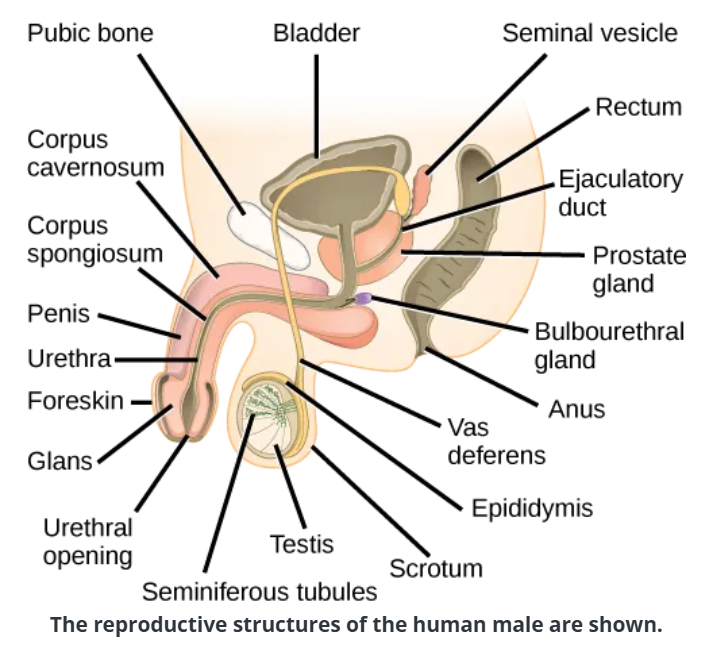
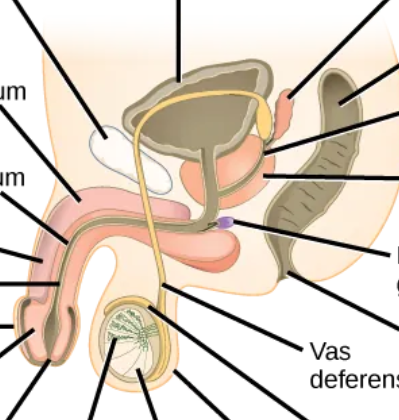
where is epididymis and what is it
side of sperm maturation. where sperm go to mature once they have grown tails.
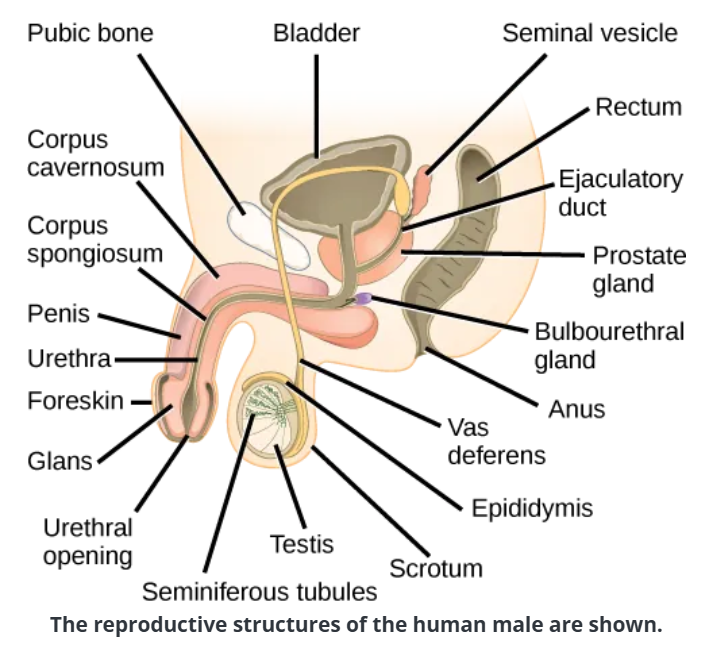
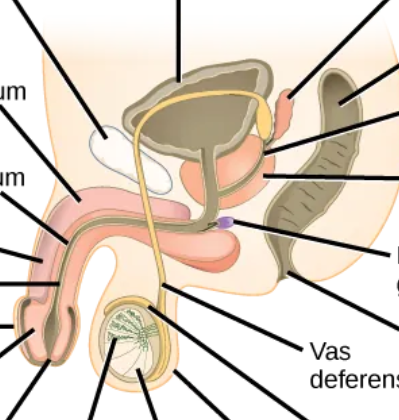
where is scrotum and what is it
houses testicles + passage for blood vessels, nerves, muscles
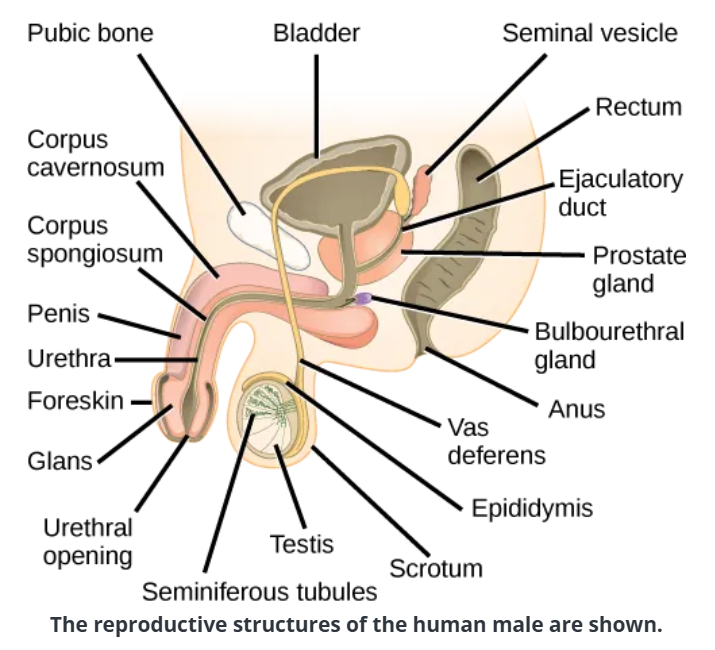
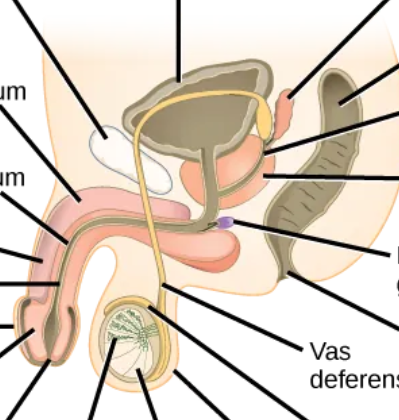
where is testis(plural testicles) and what is it
2 wedge-shaped lobules. produce sperm + some reproductive hormones.
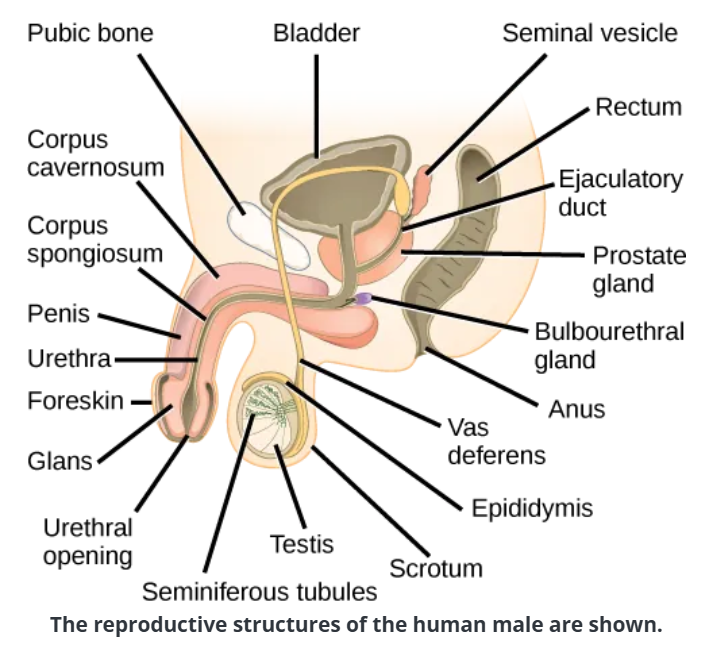
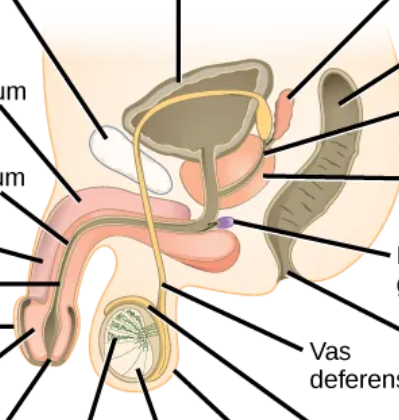
where is seminiferous tubules and what is it
coiled in testes. where sperm is produced and matures up until growing a tail
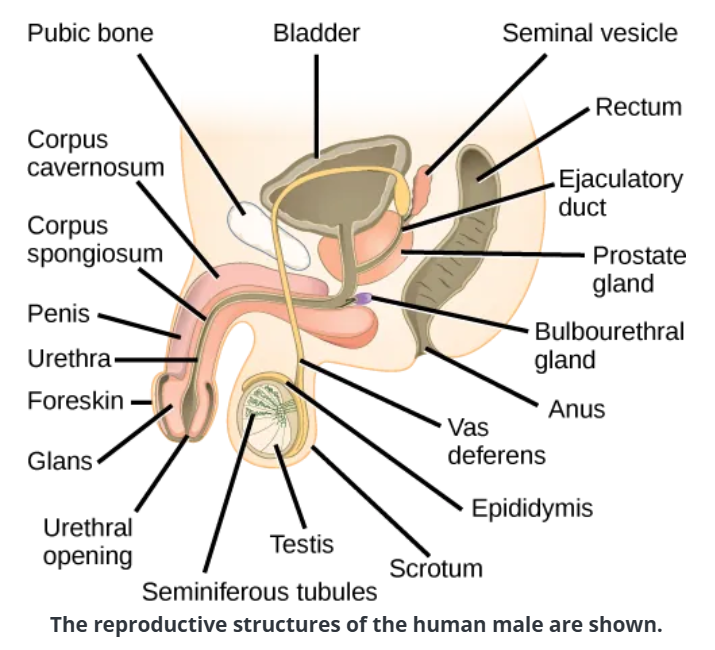
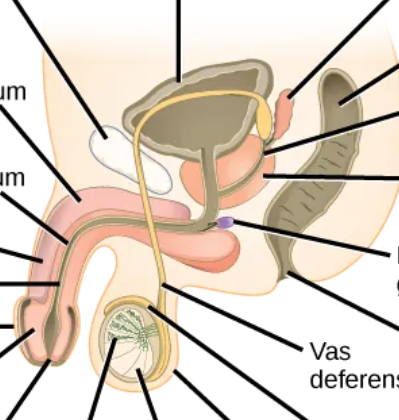
where is urethral opening
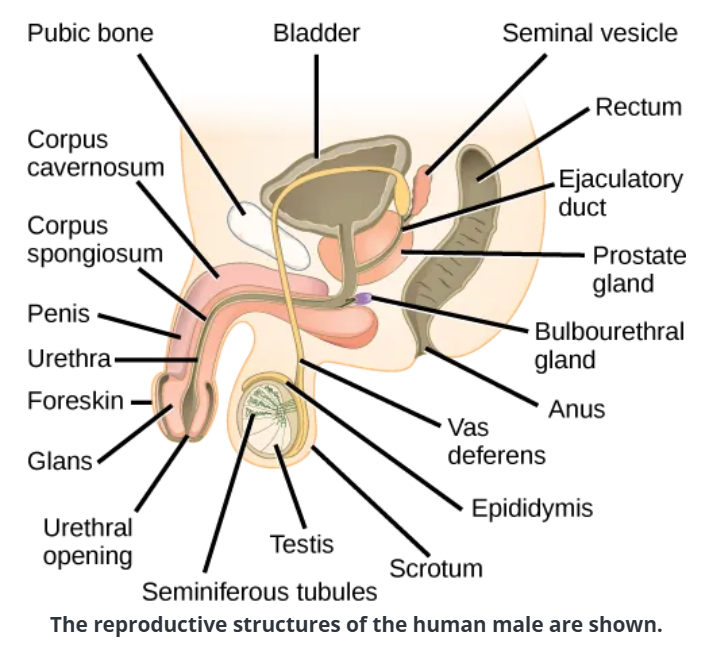
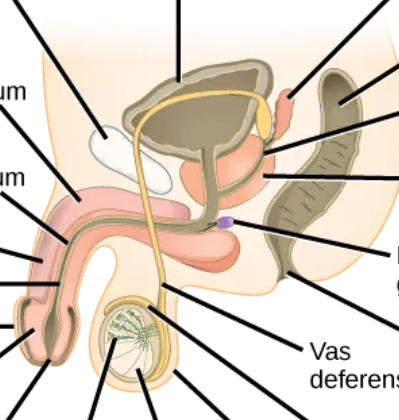
where is glans
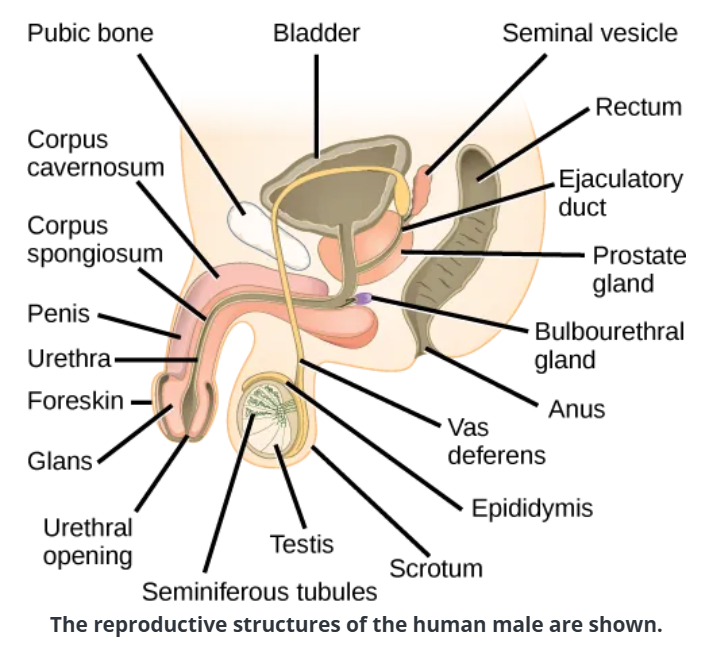
where is foreskin
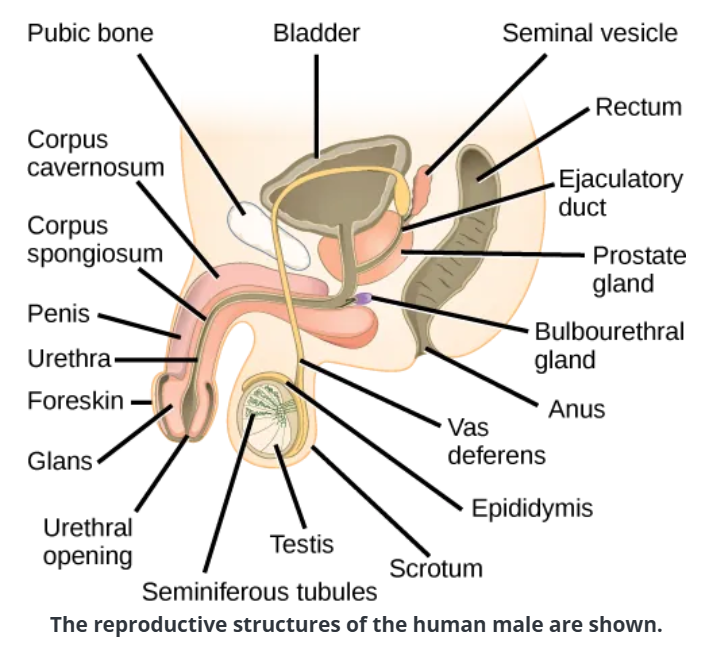
where is urethra
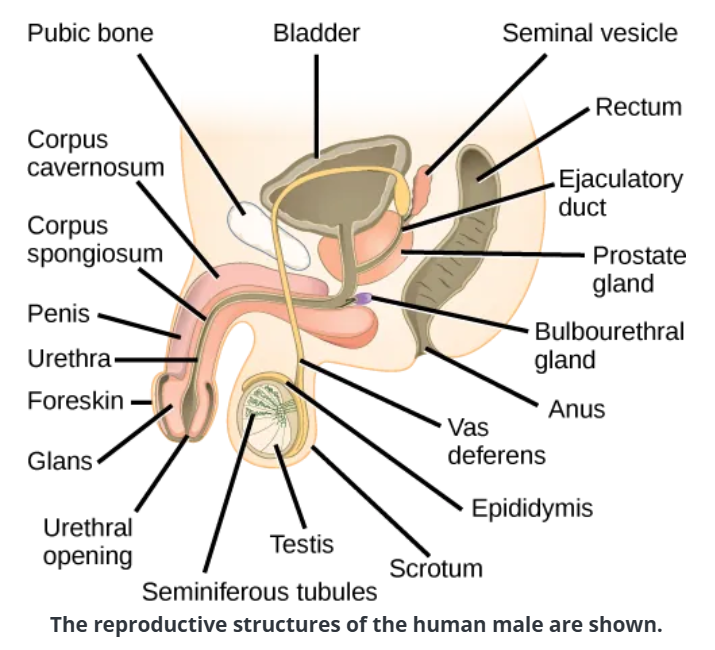
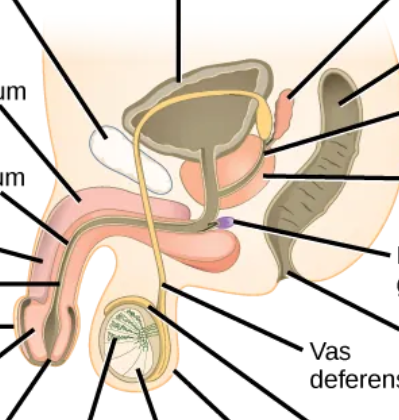
where is penis
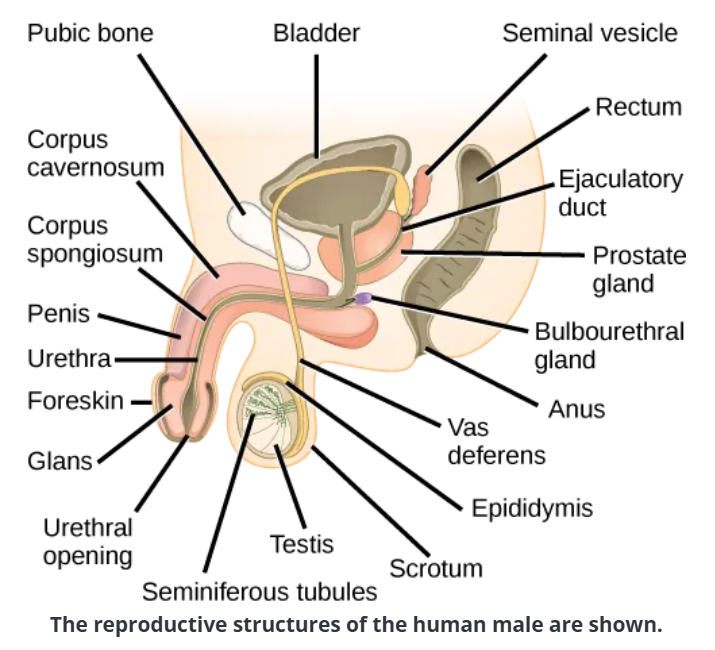
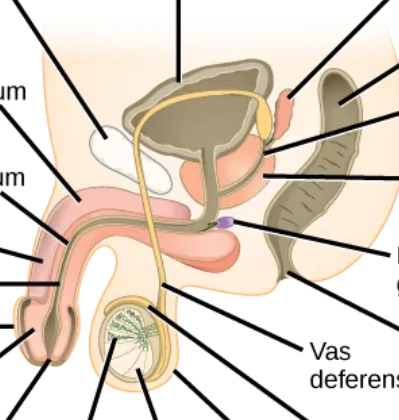
where is corpus spongiosum
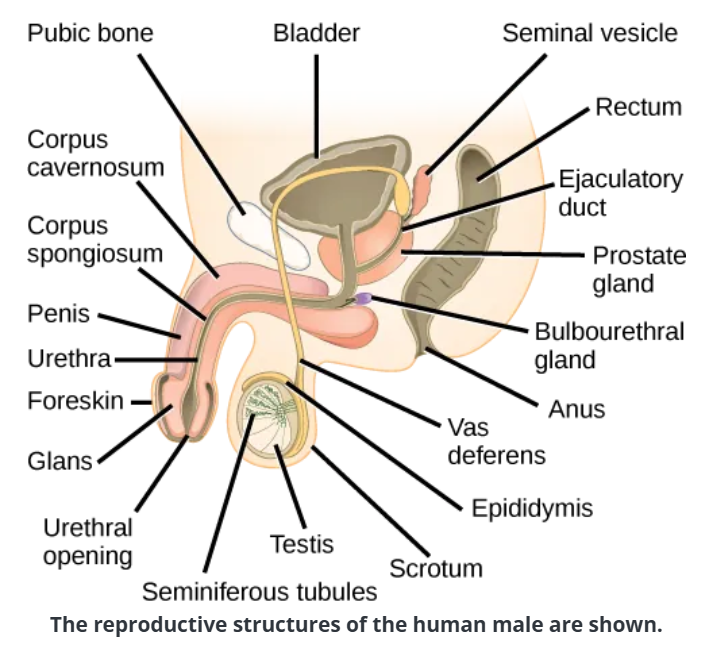
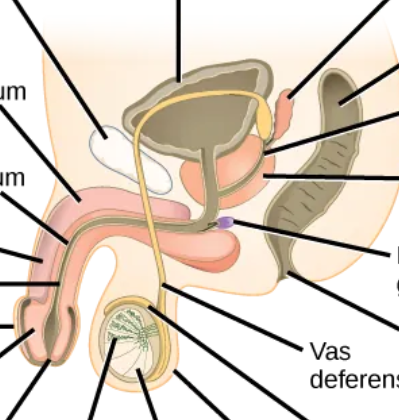
where is corpus cavernosum
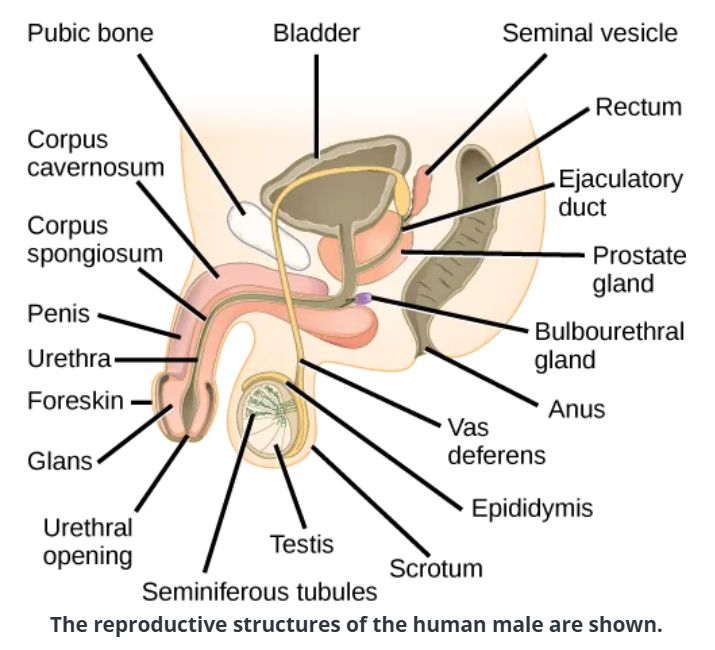
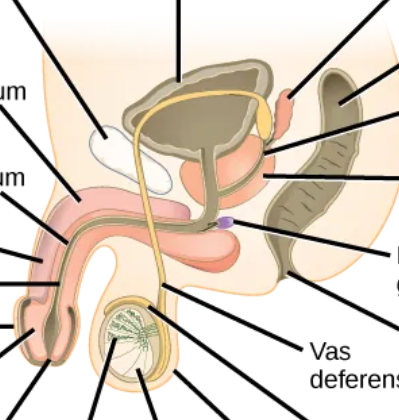
where is pubic bones
septa
connective tissue dividing testicles
vasectomy
removes section of vas/ductus defernes
semen
sperm + spermatic duct secretions + fluids from accessory glands (seminal vesicles, prostate gland, bulbourethral gland)
lysosomal enzymes
found in acrosome of sperm. digests egg’s protective covering so its easier for sperm to enter
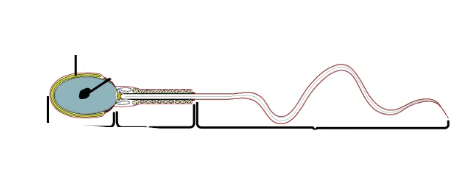
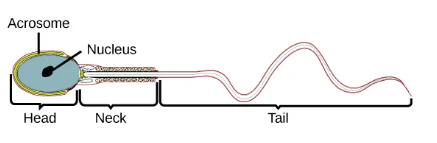
where is acrosome
.
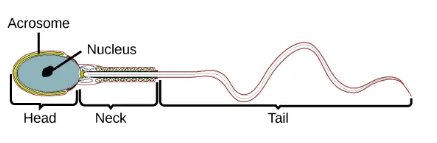
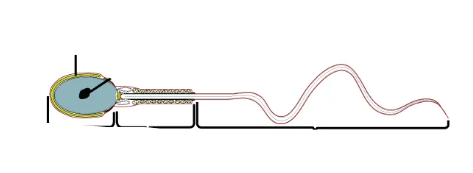
where is nucleus
.
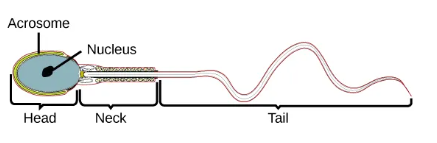
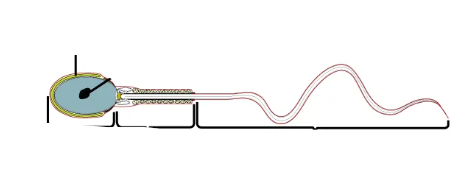
where is head
.
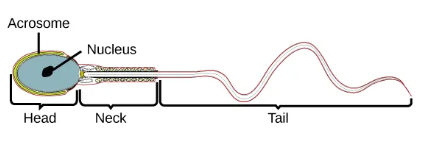
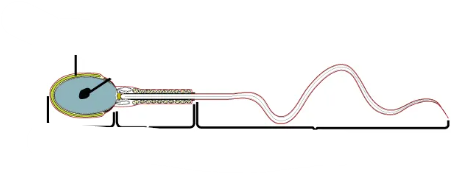
where is neck
.
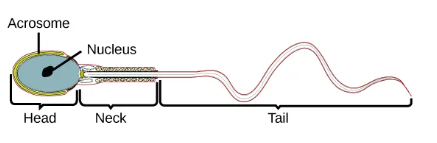
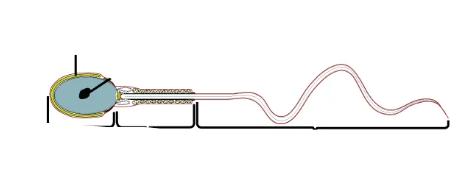
where is tail
.
seminal vesicle solution
what 60% of semen is made of. thick, yellow, alkaline. contains mucus, fructose, coagulating enzyme, ascorbic acid, and prostaglandins
fructose in seminal vesicle solution
sperm mitochondrial nutrient
prostaglandins in seminal vesicle solution
local-acting hormones
ovaries location
abdominal cavity
medulla
contains nerves + blood vessels to supply cortex with nutrients + remove waste
cortex (in context of ovaries)
outer layers of cells
functional parts of ovaries
made of follicular cells that surround eggs during fetal development
menopause
ending of female reproductive functions
ovum
haploid
brief, transitional stage between diploid oocyte and diploid zygote (when sperm joins)
leutenizing hormone
triggers primary oocyte to resume meiosis.
happens right before ovulation
cytoplasm in female gamete
feeds zygote
sperm bindin proteins
responsible for sperm binding to egg
g actin polymerization
slow block to polyspermy
cortical reaction in egg
cortical reaction
cortical granules fuse with plasma membrane, releasing digestive enzyme that degrades bindin receptor proteins
capacitation
priming
must happen for fertilization to work
female reproductive tract prepare sperm for fertilization
by improving sperm’s motility
deplete cholesterol molecules in membrane to thin it, causing release of lysosomal (digestive) enzymes that r needed for sperm to penetrate oocyte’s exterior
chemotaxis
sperms journey to egg
corona radiata
what sperm first makes contact with once it reaches oocyte
folliculogenesis
growth/development process of ovarian follicles.
ovarian follicles
supporting cells surrounding oocyte
atresia
oocyte death
primordial follicles
stage 1 of follicle growth
resting state
small
most common stage
exists in all ages until menopause
granulosa cells
single, flat layer of support cells surrounding oocyte
flat, squamous shape
primary follicles
stage 2 of follicle growth
once puberty hits, a few cells a day respond to a recruiting signal and enter this phase
immature growing cells
granulosa cells become active and transition into a rounded cuboidal shape + grow + increase/multiply
secondary follicles
3rd stage of follicle growth
granulosa cells increase in diameter and form a new outer layer of connective tissue, blood vessels, and theca cells
theca cells/ thecae folliculi
work with granulosa to produce estrogen
zona pellucida
thin acellular membrane secreted by the primary oocyte inside the follicle.
critical in fertilization
follicular fluid
thick fluid formed between granulosa cells that collects into atrum
atrum
large pool
tertiary follicles/ antral follicles
4th stage of follicle growth
growth stimulated by FSH
corpus luteum
what remaining cells develop into after oocyte bursts out of follicle
testes
pair of male reproductive organs
produces sperm and some reproductive hormones
ovaries
female reproductive organ where ova/eggs are produced
fertilization
sperm + oocyte fuse and combine nuclei
corona radiata
protective outer layer around secondary oocyte
granulosa
releases chemicals triggering sperm to swim towards egg
zona pellucida
protective layer around oocyte
layer under corona radiata
surrpunds cell’s plasma membrane
transparent, thick, glycoprotein membrane
acrosomal reaction
sperm’s acrosome releases digestive enzymes that clear a path through the zona pellucida
acrosome
cap of the sperm, releases digestive enzymes that clear path through zona pellucida
spontaneous acrosomal reaction
some sperm go through this
acrosomal reaction not triggered by contact with zona pellucida
releases enzymes that digest corona radiata

