obesity epidemiology perspective
 Call Kai
 Learn
Learn Practice Test
 Spaced Repetition
 Match
Match Flashcards
 Knowt Play
1/19

Earn XP
Description and Tags
public health
Name | Mastery | Learn | Test | Matching | Spaced | Call with Kai |
|---|
No analytics yet
Send a link to your students to track their progress
20 Terms
why do humans tend to gain weight easily, but struggle to lose it ?
consider:
biology (evolution, metabolism)
environment (food access, marketing)
social factors (work schedules, stress)
technology and lifestyle
energy intake
Typically measure food intake in grams and energy intake in kilocalories
Kilocalorie is amount of energy needed to raise 1L or water 1 degree Celsius
U.S. government states that the average man needs 2,700 kcal / day and the average woman needs 2,200 kcal / day.
Needs vary considerably by body size (esp. lean body mass), physical activity level, and age (metabolism)
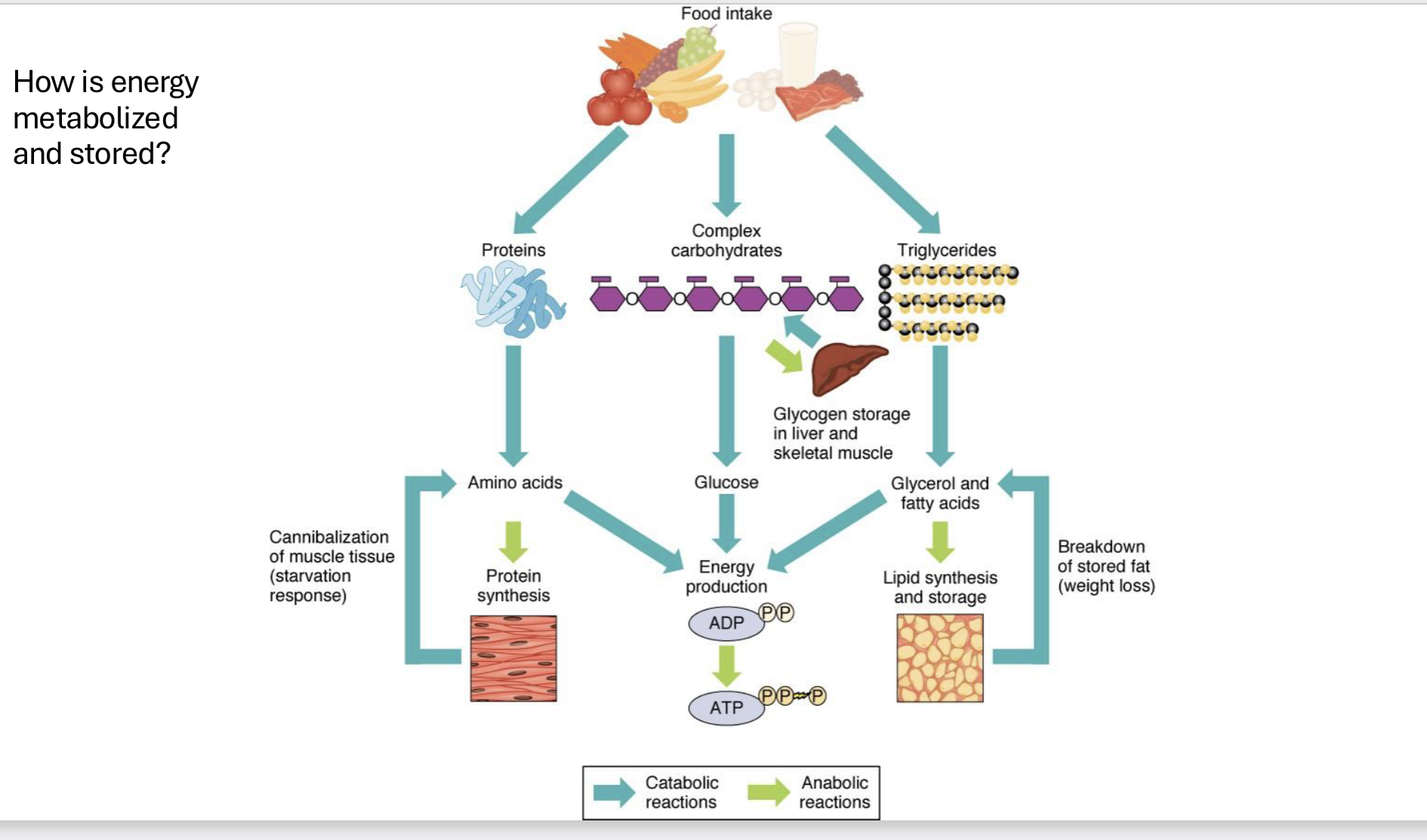
food intake
proteins, complex carbohydrates, triglycerides
amino acids, glucose, glycerol and fatty acids
protein synthesis, energy production, lipid synthesis and storage
energy yielding pathways
big picture: all three micronutrients can be broken down into ATP
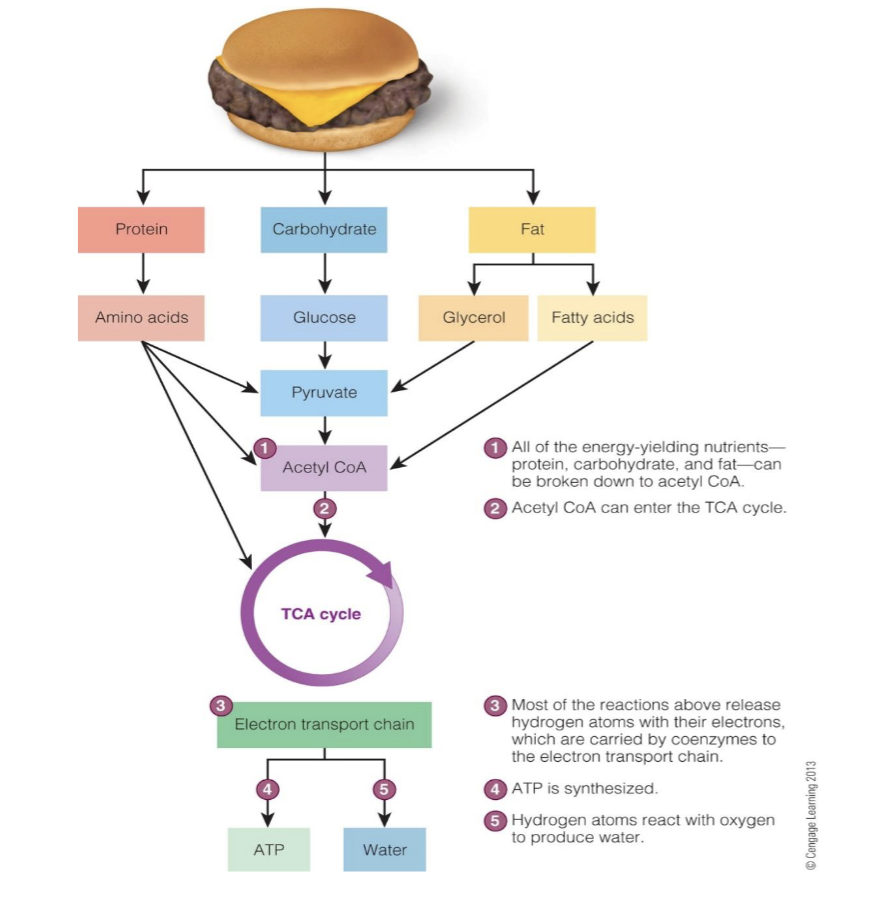
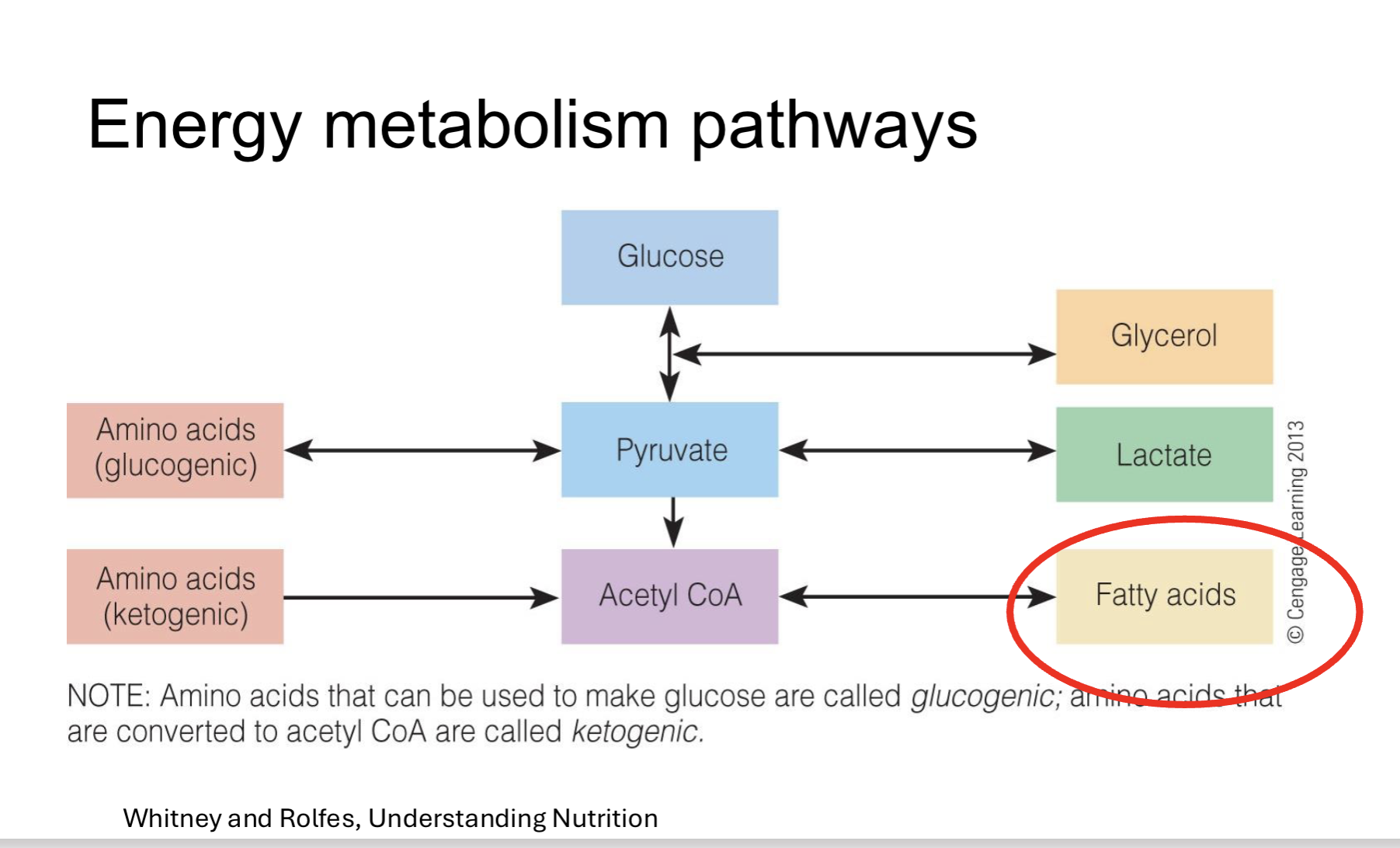
Simple theory of energy metabolism (Incorrect and incomplete)
Increase food intake over energy expenditure yields weight gain
Decrease food intake below energy expenditure yields weight loss
This theory fails to recognize endocrine regulation of body lipid
stores and behavioral processes (appetite control) that vary with
food intake, glucose homeostasis, and lipid metabolism.
Animals store fat in part because energy intake is discontinuous, while energy expenditure is always happening. Most vertebrate animals cannot feed continuously because they
have been selected by evolution to do lots of other vital things for survival and reproduction
Systems evolved, therefore, to enable animals to harvest food from the environment at a much faster rate than it is used, to give time for these other essential activities.
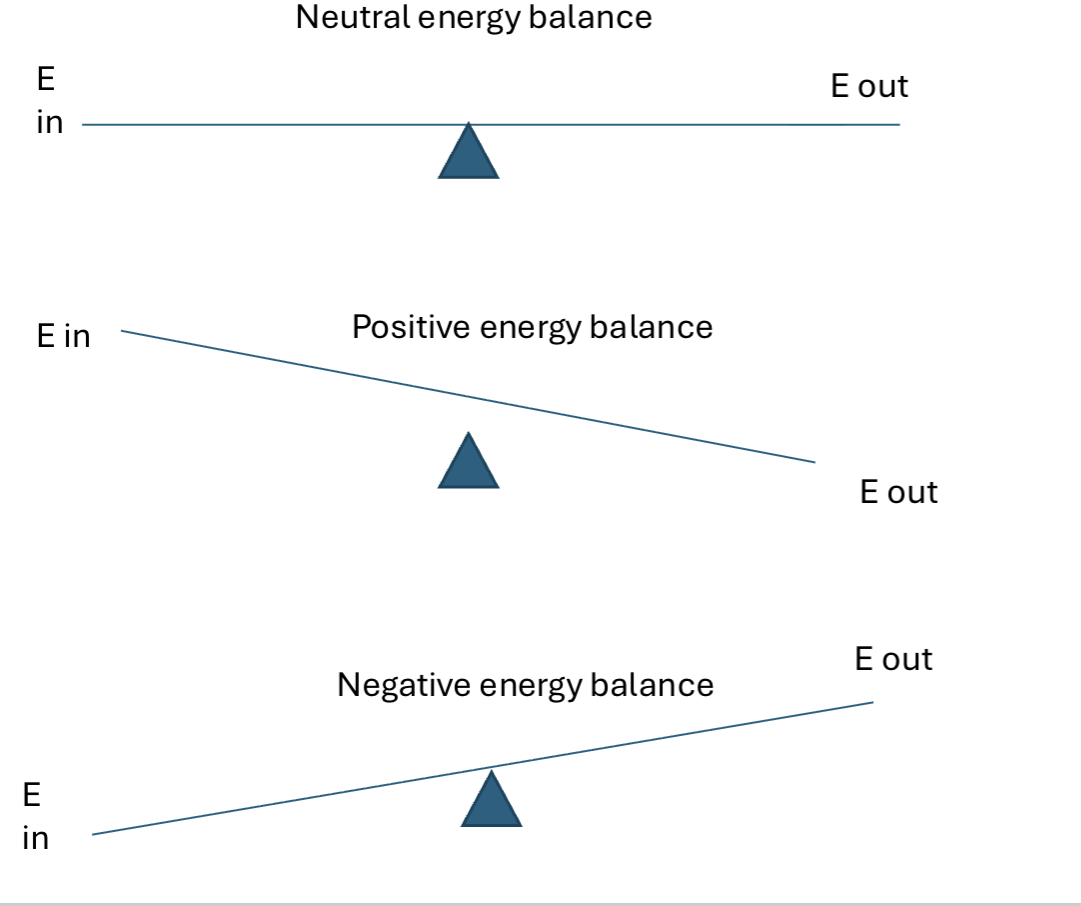
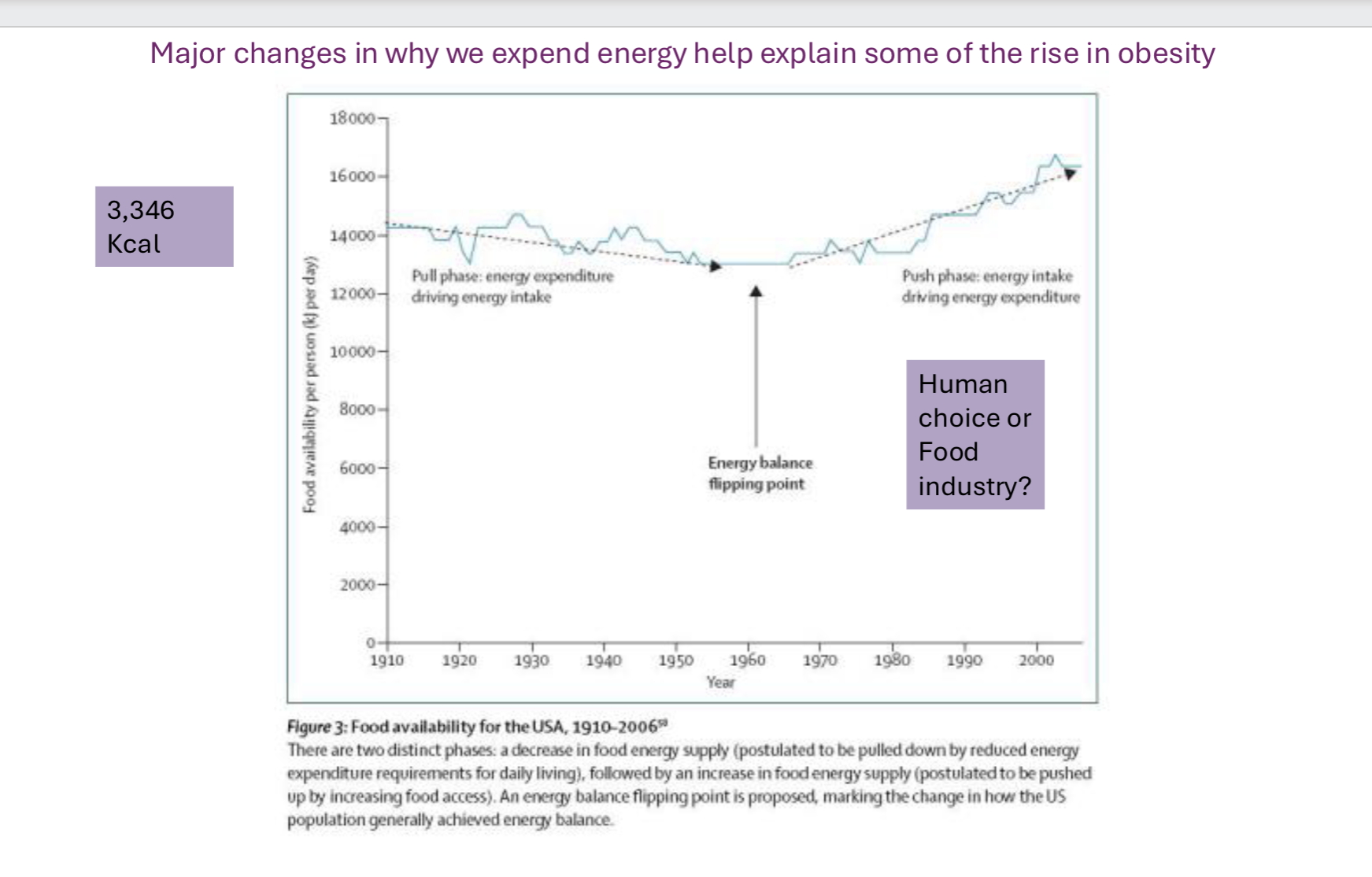
set point theory: energy balance . how the body attempts to regulate its weight
neutral energy balance
positive energy balance
negative energy balance
neutral energy balance
no change in energy stores to maintain balance
positive energy balance
Increase in body weight. Growth, muscle mass, fat mass. But…In oxidation of
energy stores to maintain balance (use body stores as fuel)
negative energy balance
Body burns more calories than It consumes. Weight loss, fat mass, muscle mass, illness, dieting, etc. But…decrease in oxidation of energy stores to maintain balance (preserve body stores)
set point theorey
body resists weight loss and weight gain
upregulates energy expenditure if overheat
downregulates energy expenditure if undereat
might have to look at the graphs in the slides in detail
processes of globalization that are critical to the nutrition transition
liberalization of foreign direct investment
FDI in developing countries increased 6 fold from 1990-2000, faster than the GDP or trade
now the largest source of external financing for developing countries
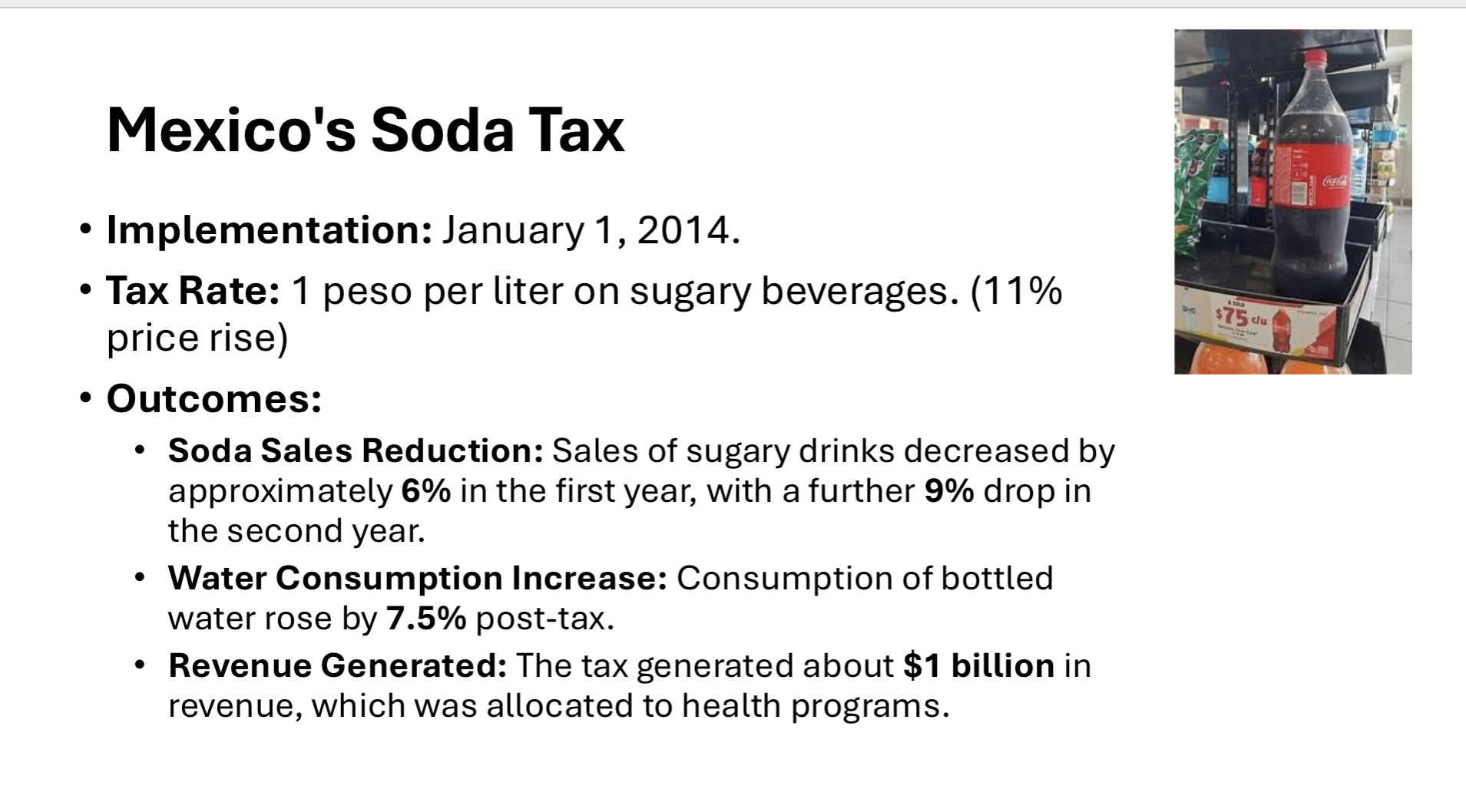
case study: Mexico
NAFTA (1994) liberalized foreign investment
between 1995 and 2003, sales of processed foods (ex: soft drinks, snacks, baked goods) expanded by 5-10% per year
refer to in class notes as well !

