MLT 118 Module 4
 Studied by 1 person
 Call Kai
 Learn
Learn Practice Test
 Spaced Repetition
 Match
Match Flashcards
 Knowt Play
1/39

There's no tags or description
Looks like no tags are added yet.
Name | Mastery | Learn | Test | Matching | Spaced | Call with Kai |
|---|
No analytics yet
Send a link to your students to track their progress
40 Terms
The CDC recommends vigorous rubbing together of all lathered surface for at least:
5 minutes.
15 seconds.
15 minutes.
60 seconds.
15 seconds
An inexpensive, simple, included method everywhere for safety of all patients and lab workers?
Handwashing
What does NFPA stand for?
National Fire Protection Association
Any and all objects that can penetrate the skin are called and considered?
contaminated sharps
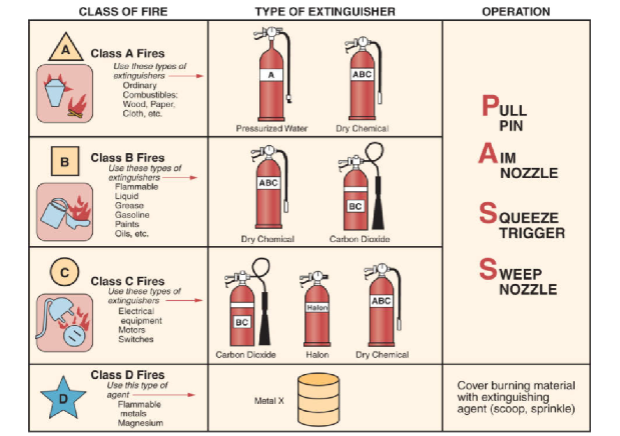
What does R.A.C.E. stand for?
Rescue, Alarm, Contain, Extinguish
What does P.A.S.S. stand for?
Pull. Aim. Squeeze. Sweep.
Which fire class involves wood and fire reactivity?
Class A
Spilled ethanol was ignited by a static discharge. What kind of fire is this? A B OR C
Class B — a flammable liquid fire
Killing or removing of harmful vegetation microorganisms on objects
Disinfection
What is the best method to storage chemicals in chemistry lab?
categorical organization
List the three primary blood borne pathogens?
HIV, HCV and HBV
In order, what is the order of BBP?
1.,HBV
2. HCV
3. HIV
What are some engineering controls within the lab to prevent exposure?
Biological safety cabinet
Sharps container
Bio Disposal Bin
Which of the following is the most efficient means of minimizing aerosol production during centrifugation?
Use stoppered centrifuge tubes
Use a refrigerated centrifuge
Use conical centrifuge tubes
Balance test tubes in centrifuge
Use stoppered centrifuge tubes
How is a fire ignited by faulty wiring in a chemistry analyzer classified?
Class A
Class D
Class B
Class C
Class C - eletrical
Proper safety practices including not applying cosmetics in the work area, not using electronic devices in areas where infectious exposure is likely, and not wearing your laboratory coat outside of the laboratory are the responsibility of:
department of human resources.
employee.
employer.
payroll department
employee
Ensuring that lab staff has all sufficient PPE, proper work stations and supplies needed to complete their tasks within the lab is the responsibility of the…
employer
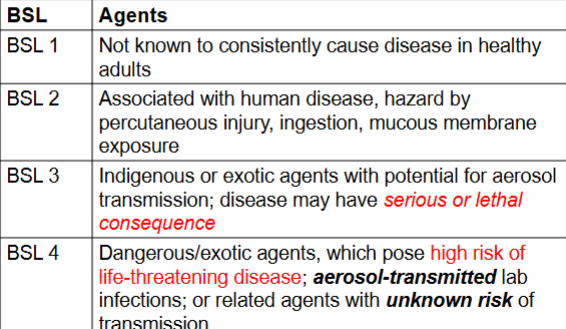
A biosafety level 2 (BSL2) agent is described as:
a. indigenous or exotic agents with potential for aerosol transmission.
b. associated with human disease hazard by percutaneous injury, ingestion, mucous membrane exposure
c. dangerous/exotic agents that pose high risk of life-threatening disease.
d. not known to cause diseases in healthy adults consistently.
associated with human disease
A worker can take all of the following actions to help prevent exposure to potentially infectious materials EXCEPT:
Practice good hand-washing techniques
Using cell phone while working in lab.
Wear appropriate PPE.
Do not eat or drink in the laboratory.
Using cell phone while working in lab.
How is personal protective equipment doffed?
Disinfect area, remove gloves, wash hands, remove lab coat
Remove gloves, disinfect area, wash hands, remove lab coat
Disinfect area, remove gloves, remove lab coat, wash hands
Remove gloves, wash hands, remove lab coat, disinfect area
Disinfect area, remove gloves, remove lab coat, wash hands
Which of the following is the most effective way of preventing hospital-acquired infections?
Changing gloves between patient rooms
Treating all specimens as biohazardous
Wearing impermeable laboratory coats
Washing hands between each patient
Washing hands between each patient
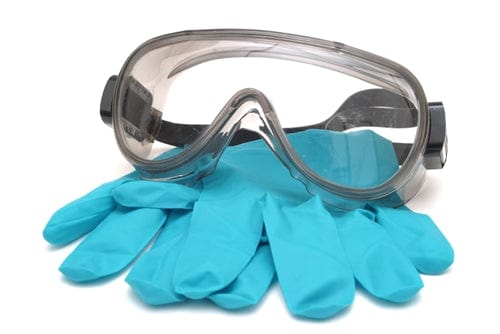
Identify and name two of the below PPE_______________& __________________
Gloves and Goggles
A class A fire involves:
Combustible metals such as magnesium.
Flammable liquids, for example, methanol.
Electrical equipment.
Ordinary combustible material including paper and wood.
Ordinary combustible material including paper and wood.
What is the "A" in the acronym for fire-related emergencies RACE?
Activate alarm
Analyze
Accident
Answer the phone
Alarm
The goal of a laboratory safety program is to:
Become successful in accreditation agency requirements
Decrease the amount of biological waste generated by the laboratory
Minimize the risk of injury or illness to employees
Reduce the number of needlesticks involving laboratory personnel in 1 year
Minimize the risk of injury or illness to employees
All of the following are electrical safety recommendations EXCEPT:
Use of extension cords should be encouraged
Electrical wires and cords should have no frayed edges
Train employees in how to handle shock injuries
Use properly grounded electrical circuits and devices
Use of extension cords should be encouraged
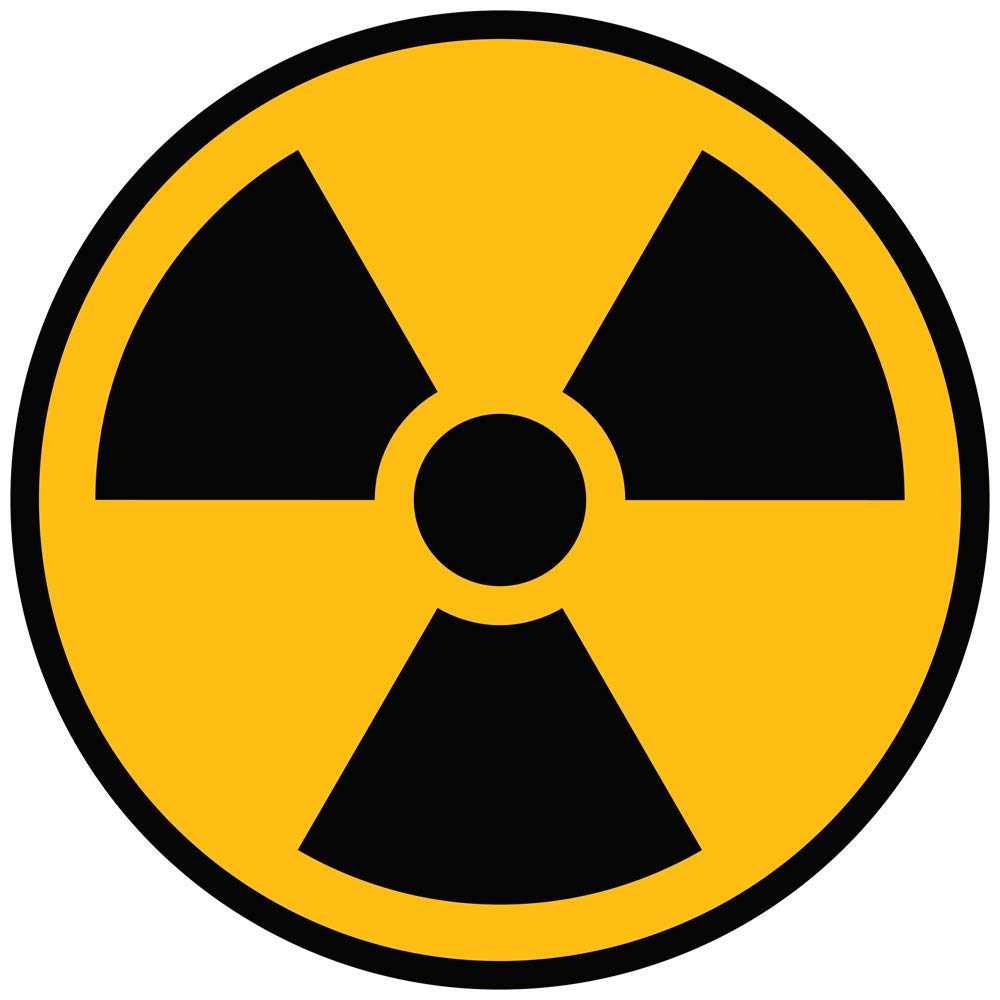
What type of safety precautions should be taken when the following warning sign is posted?
Radiation
The label identification system designated NFPA 704-M represents which of the following warnings?
Laboratory safety hoods
Chemical hazards
Biohazard materials
Mechanical devices
Chemical hazards
What’s applied to blood and body fluids containing visible blood for all patients to be considered as infectious…
Universal Precautions
Apply the principles of work practice controls and exposure controls to all patients and clinical specimens to prevent exposure of workers to potentially infectious agents and to protect patients
Standard Precautions
Not known to consistently cause disease in healthy adults
BSL 1
Associated with human disease, hazard by percutaneous injury, ingestion, mucous membrane exposure
BSL 2
Indigenous or exotic agents with potential for aerosol transmission; disease may have serious or lethal consequence
BSL 3
Dangerous/exotic agents, which pose high risk of life-threatening disease; aerosol-transmitted lab infections; or related agents with unknown risk of transmission
BSL 4

What does the red diamond indicate according to FDHA?
Fire hazard

What does the blue diamond indicate according to FDHA?
health hazard

What does the white diamond indicate according to FDHA?
specific hazard

What does the yellow diamond indicate according to FDHA?
Instability hazard
A patient specimen was spilled; where can the proper steps of cleaning this situation up is located?
Exposure control plan
Where is information located for proper chemical disposal?
SDS manual (safety data sheet)
 Note
Note  Flashcards (25)