Types of Endurance Training
 Call Kai
 Learn
Learn Practice Test
 Spaced Repetition
 Match
Match Flashcards
 Knowt Play
1/24

There's no tags or description
Looks like no tags are added yet.
Name | Mastery | Learn | Test | Matching | Spaced | Call with Kai |
|---|
No analytics yet
Send a link to your students to track their progress
25 Terms
2 main types of endurance training
Continuous aerobic training
Interval training
2 types of continuous aeorbic training
Low intensity
High intensity
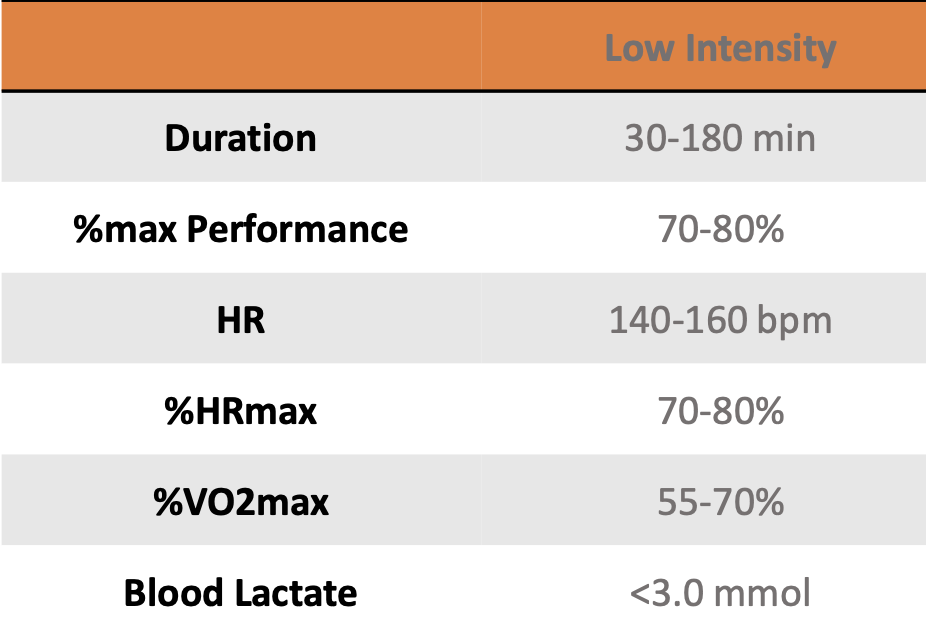
Low intensity: duration, % max performance, HR, %HR max, %VO2 max, blood lactate + note
No accumulation of lactic acid basically
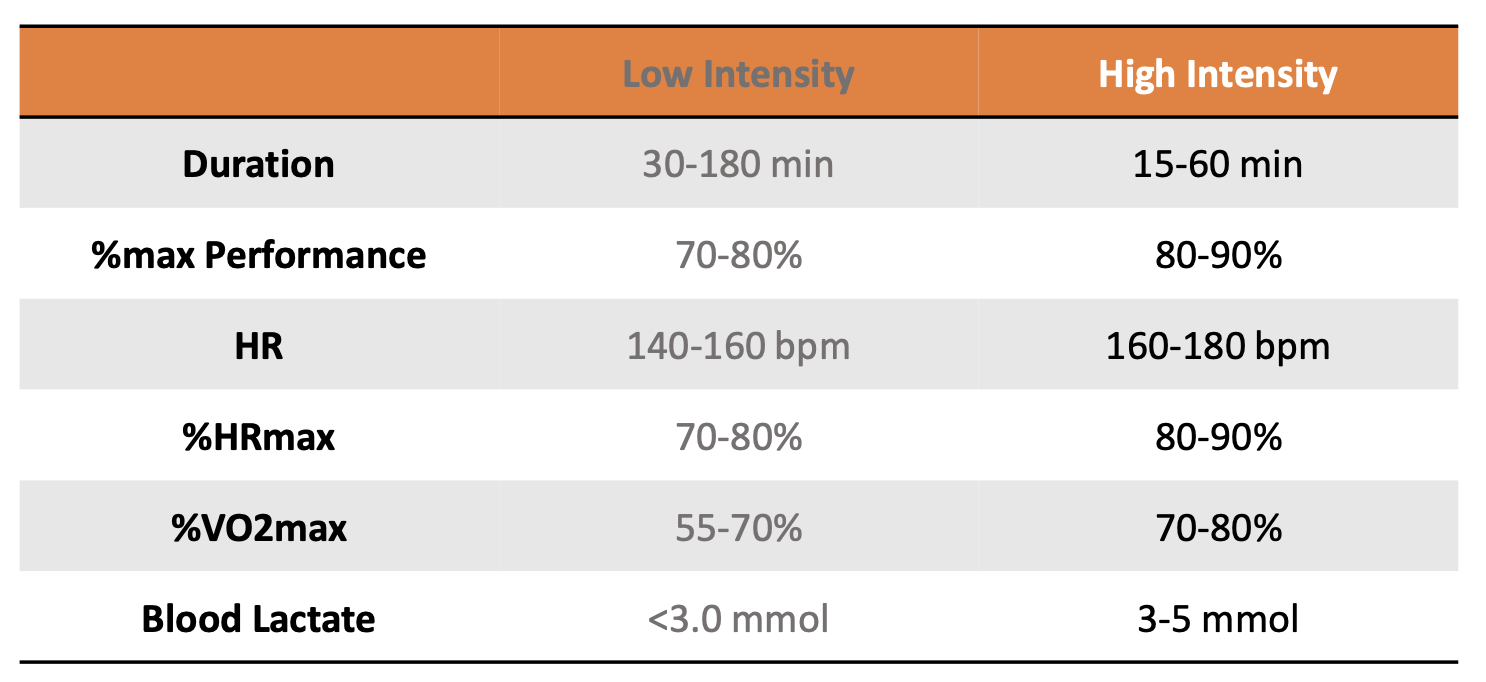
High intensity: duration, % max performance, HR, %HR max, %VO2 max, blood lactate + note, description
Still not too much accumulation of lactic (clearance only just keeping up)
Activity level closer to anaerobic threshold
Interval training def
Alternate periods of activity + rest/recovery
3 types of interval training
Standard interval
Fartlek
HIIT
Purpose of interval training
Enables athletes to train at higher intensity for longer total duration (than if they were to do it continuously)
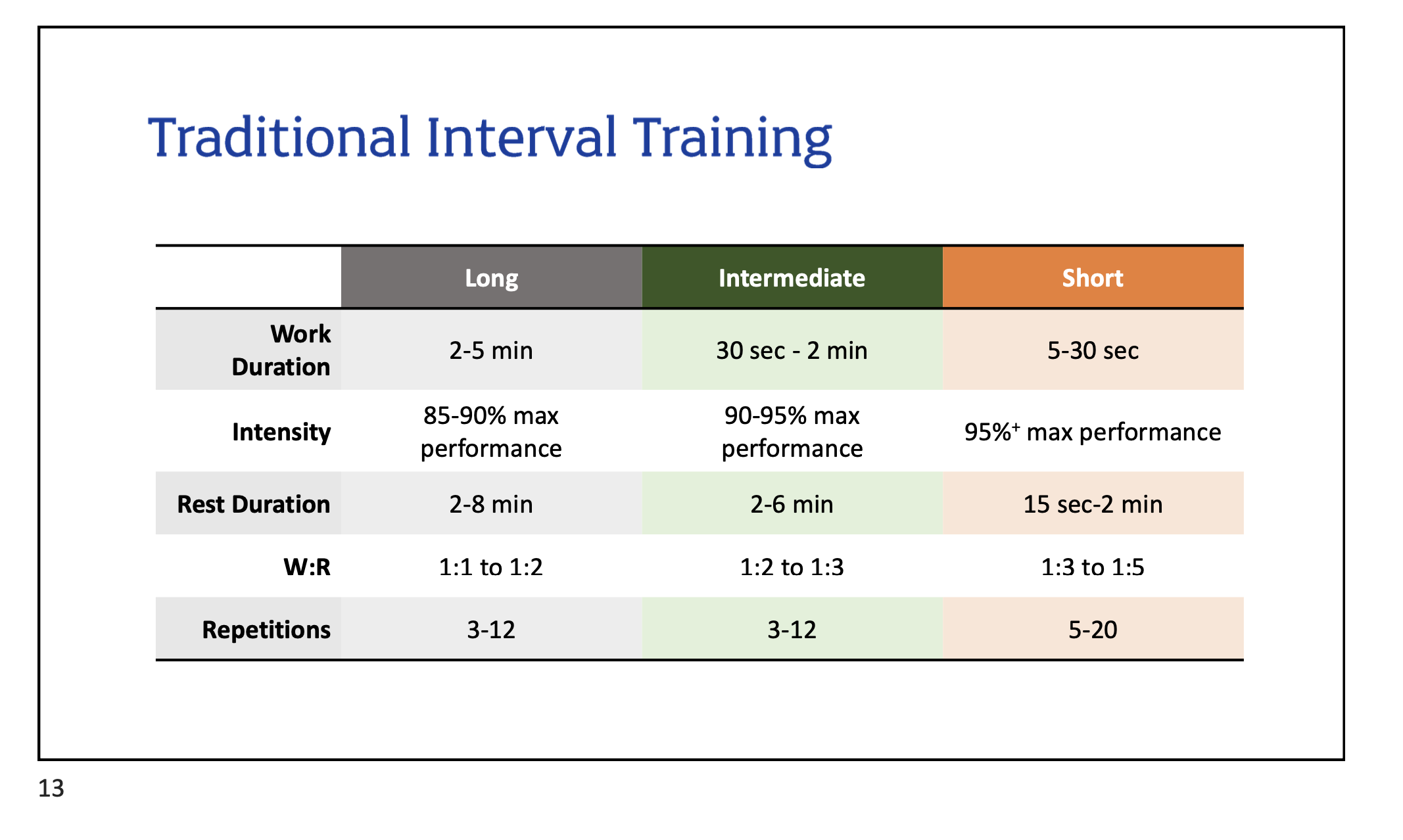
Long intervals: work duration, intensity, rest duration, W:R, repetitions
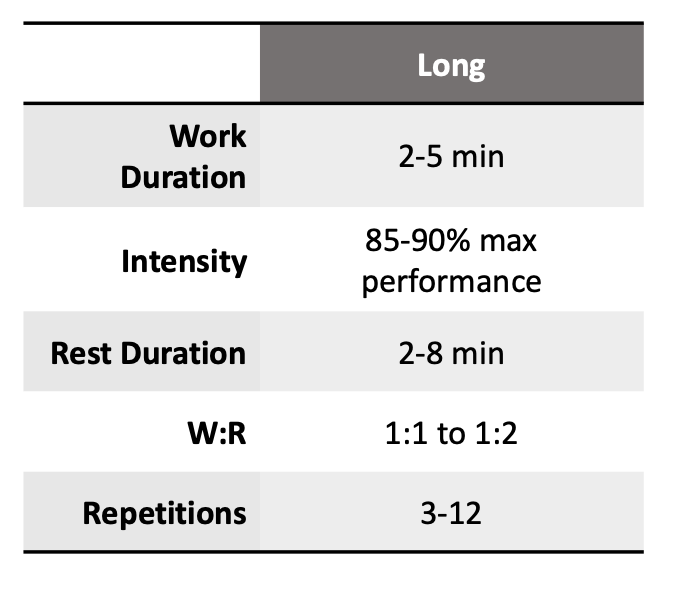
Long intervals benefit
Challenge aerobic system to cope with rapid lactic acid production; highly effective for improving lactate threshold
Intermediate intervals: work duration, intensity, rest duration, W:R, repetitions
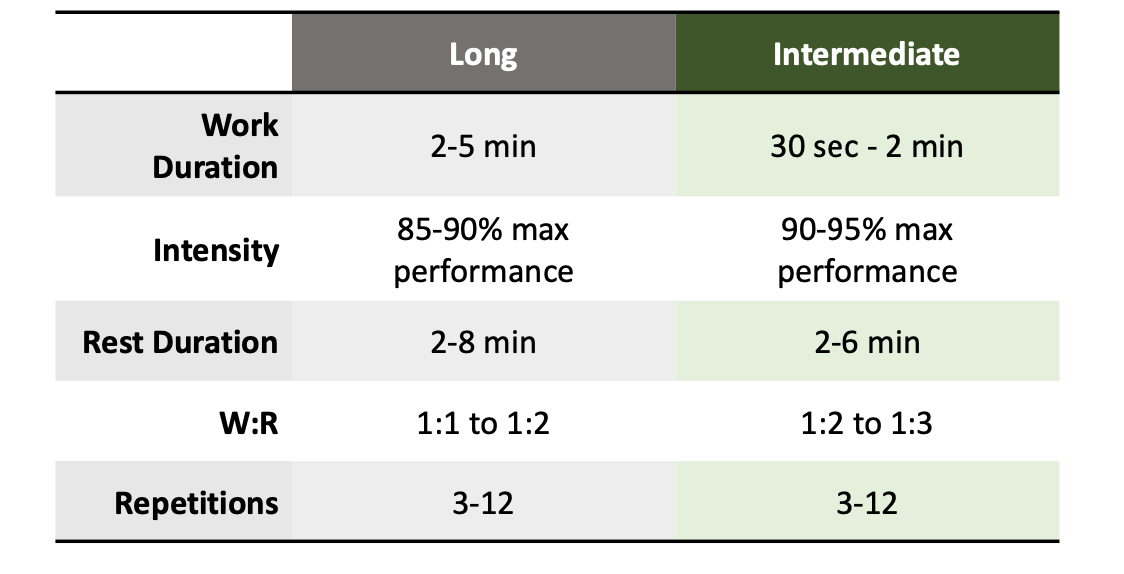
Intermediate intervals description (2)
Often referred to as "lactate tolerance" sessions
Result in significant lactic acid accumulation and a likely degradation of performance over course of session
Short intervals: work duration, intensity, rest duration, W:R, repetitions
Short intervals benefit (1)
Challenge anaerobic system (provide a secondary challenge to the aerobic system if the total session duration is sufficient)
Fartlek training def
Intermittent training of short, fast (high intensity) work throughout a continuous (aerobic) work effort
2 types of fartlek training
Unstructured
Structured
Where does the work ‘fartlek’ originate from? (1)
Swedish word for “speed play”
Unstructured training description (1)
Athlete decides the duration and intensity of bursts spontaneously, often using landmarks (e.g., running hard until the next tree).
Structured fartlek training description
Essentially interval training performed in a continuous fashion with predefined durations and frequencies for high and low intensity
Benefit of fartlek training (1)
Serves as an ideal transition for those moving from low-intensity continuous training to more demanding interval work
What is HIIT similar to?
Short interval training
What does the resesarch suggest about the efficiency of HIIT?
That the short bouts (e.g. just 4 minutes) of near maximal effort (>90% max HR) can be just as effective as longer periods of continuous aerobic exercise when it comes to improving VO2 max + time to exhaustion in untrained individuals
Example of HIIT (1)
Tabata
Clinical safety concern of HIIT (1)
Critics suggest near maximal work may be dangerous
Benefit of HIIT (1)
Transient nature makes it safe and beneficial for patients with cardiovascular disease, type 2 diabetes, obesity, and metabolic syndromes, if it is well-managed
Notes on implementation (3)
Selection + proportion of different types of training methods depends on goals + stage of development level/fitness of individual
Continuous training is foundational
Interval training is more taxing → care should be taken to monitor frequency + volume to prevent overtraining

