Late Midieval Multimedia and Devotion (1300-1520)
 Studied by 0 people
 Call Kai
 Learn
Learn Practice Test
 Spaced Repetition
 Match
Match Flashcards
 Knowt Play
1/22

There's no tags or description
Looks like no tags are added yet.
Name | Mastery | Learn | Test | Matching | Spaced | Call with Kai |
|---|
No analytics yet
Send a link to your students to track their progress
23 Terms
What was a major focus on the Late medieval art?
Was deepening emotional and spiritual connection to religious themes. Moving public art into more of a private setting→ into homes not just chruches
What was one of the most important change that marked the transition away from medieval visual culture in Northern Europe?
Known from the innovation of the printing press or the self-portrait
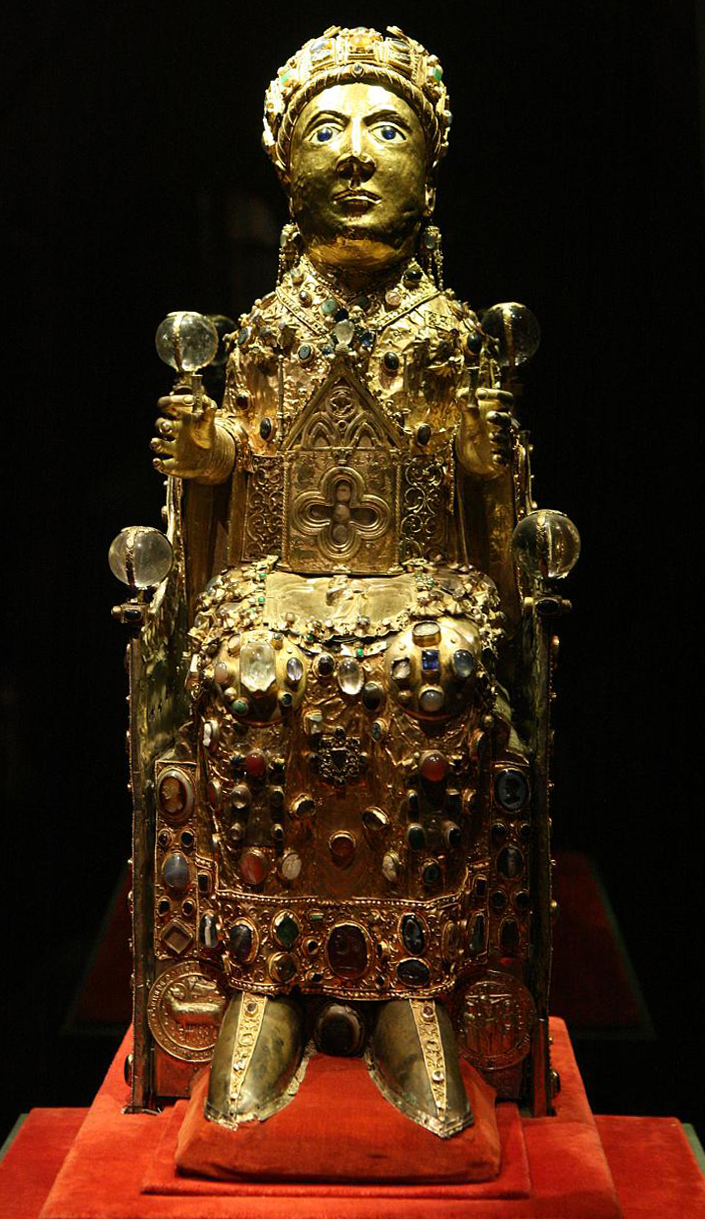
What is this artwork called?
Statue of Sainte-foy (saint faith) late 10th century to early 11th century
What was the major debate about 3-dimensional images?
Sculpture was thought to most closely verge on Idolatry, which was the worship of an idol or image of god
Sculpture could be easily confused as a holy figure rather than a representation of a holy figure.
What was a result of the major debate of this period regarding sculpture?
Church authority sought to regulate sculpture in public spaces such as interior of churches
What was the cult of relics?
A embodiment of church- approved pre Reformation piety which were the material remains or an object associated with a Christian martyr
What did the cult of relics contain?
Sculptures that were created, honor and protect and contain relics such as Ste. Foy (saint Faith) and the Virgin of Jeanne D’ Evreux
What is multimedia mean in terms of the Late medieval Artwork?
More than one material and which they combined painting and sculpture. For example they would include wood and oil paint and also paired with gold jewels
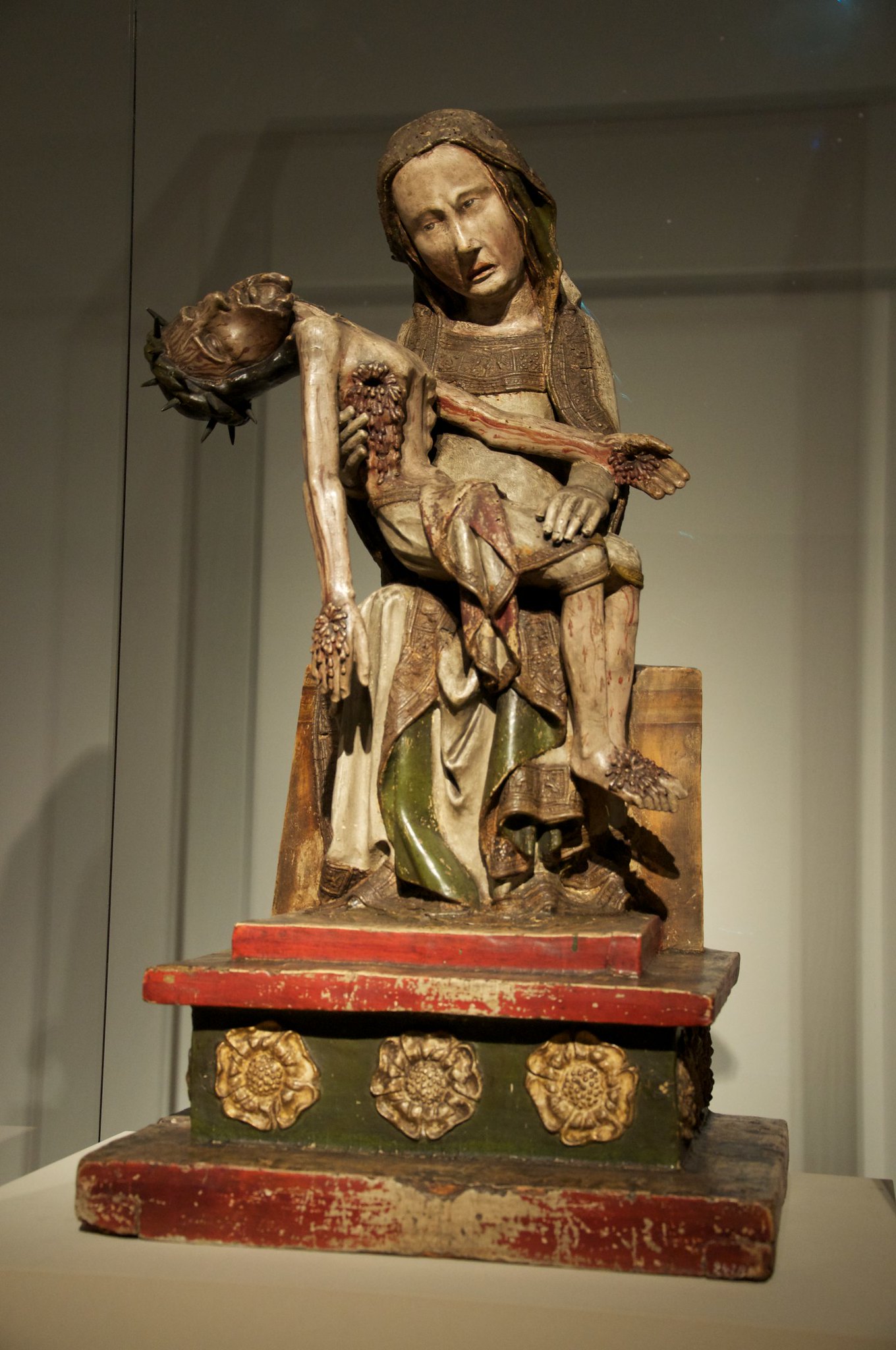
What is this sculpture called and its history?
Röttgen Pietá (1300-25), Depicts the gruesome aspects of Christs death to elicit an emotional connection
How was Mary depicted in Röttgen Pietá?
Reimagined Mary in contrast to how she’s been depicted. Shows the motherly care and emotion towards Christ
What are winged altarpieces?
Most common form of 3-dimensional, installed on every alter in Northern Europe. Served to enhance the Mass ritual (holy days).
Predominately places sculpture at its center, flanked by a set of hinged doors that open and close
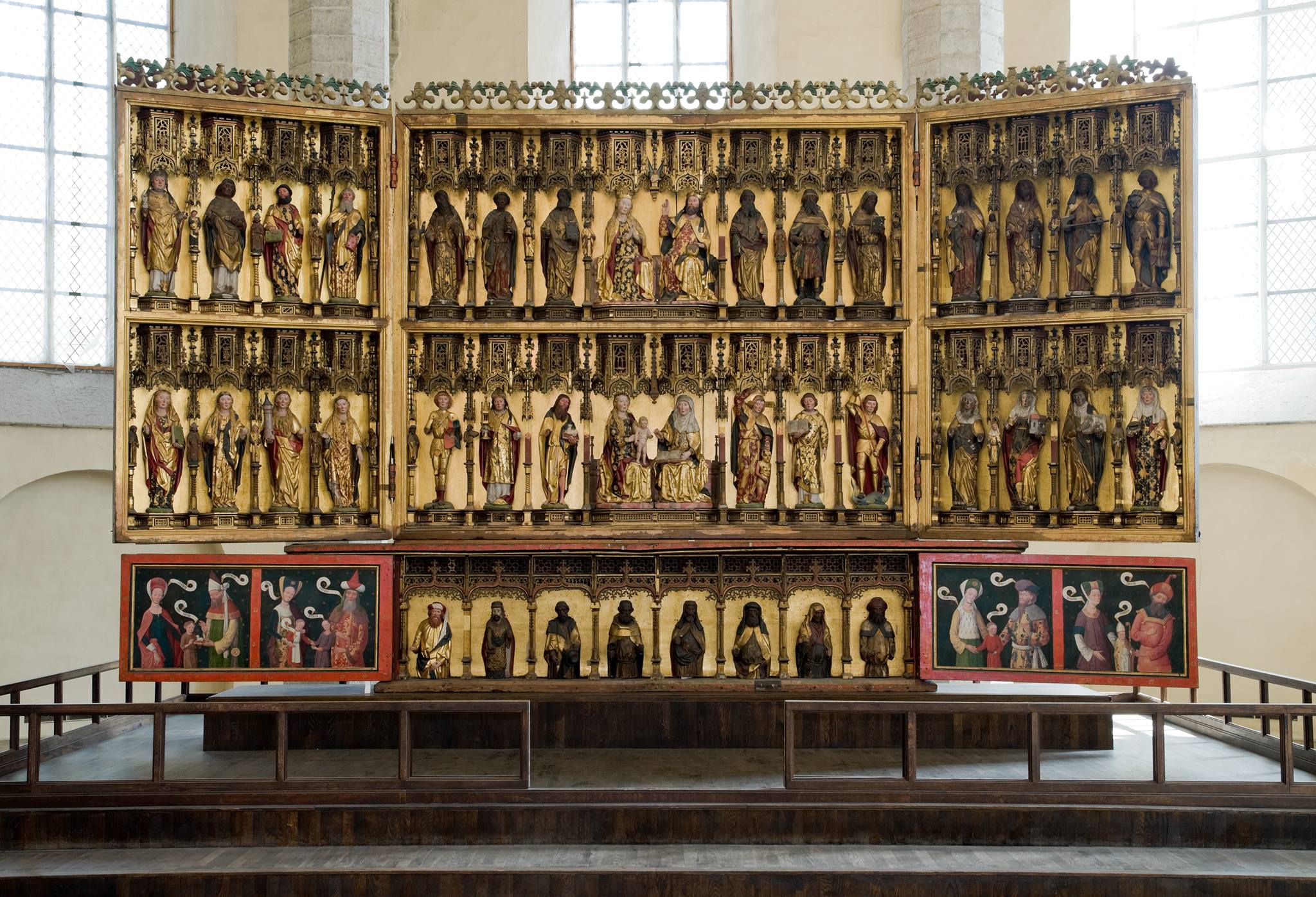
What were the wings from winged altarpieces also used for?
Christian clergy to regulate the viewing of the sculpture, such that the central sculpture was exposed only on the most Holy days of the Christian calendar.
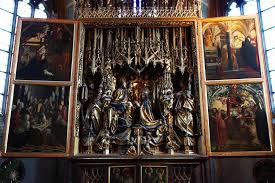
What is this piece called, and its characteristics?
St. Wolfgang altarpiece, created by Micheal Pacher. Depicted scenes from Christs life, offering different views depending on the calendar
What were the Netherlandish Triptych?
15th century Purely painted Altarpieces, missing the sculpture in the center
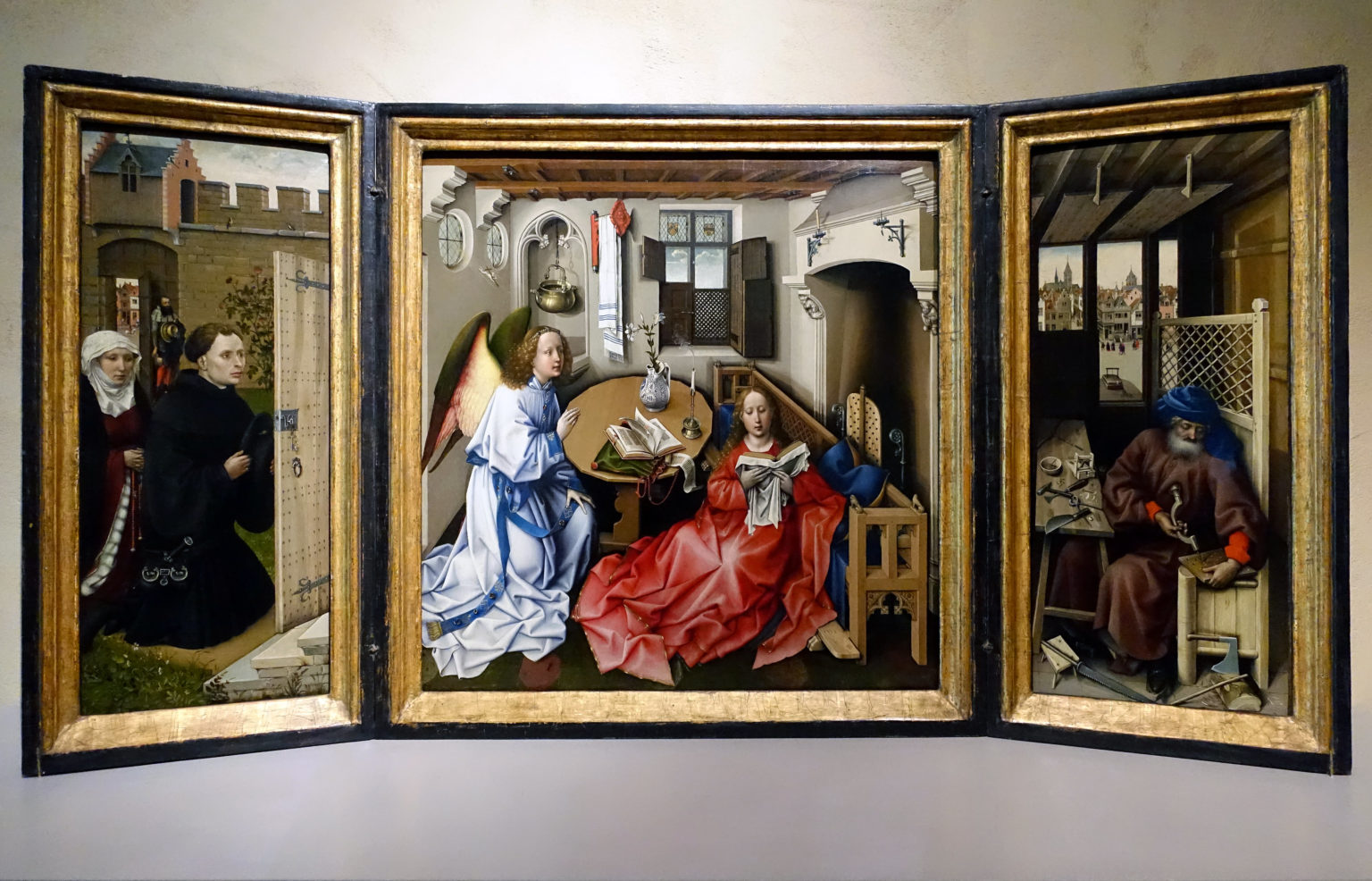
What is this piece called?
Workshop of Robert Campin, Annunciation Triptych (Merode Alterpiece)
What does each panel mean in Robert Campin, annuncation triptych?
2 foot tall, meant to be carried as a personal religious object.
Left panel: Patrons that donated for this painting holding a key to unlocked the painting
Central: Cleanliness with Marys Virginity, The angel Gabriel is telling the news of Christ. Includes religious symbolism (cross and the devotional book/ for the wealthy)
Right panel: Workshop of Robert Campin known as the “maker”
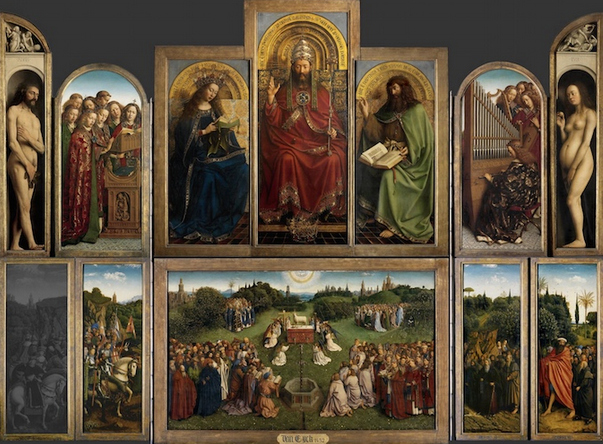
What is this piece called and its artist?
Jan Van Eyck, Ghent Altarpiece (1432) oil on wood
What is the background of the Ghent Altarpiece?
A massive Polyptych, that closely mimic the structure of Altarpieces with a carved center
Stood as an example of how artists could grapple the differences between painting and sculpture
This piece had two views
Used a technique called glazing
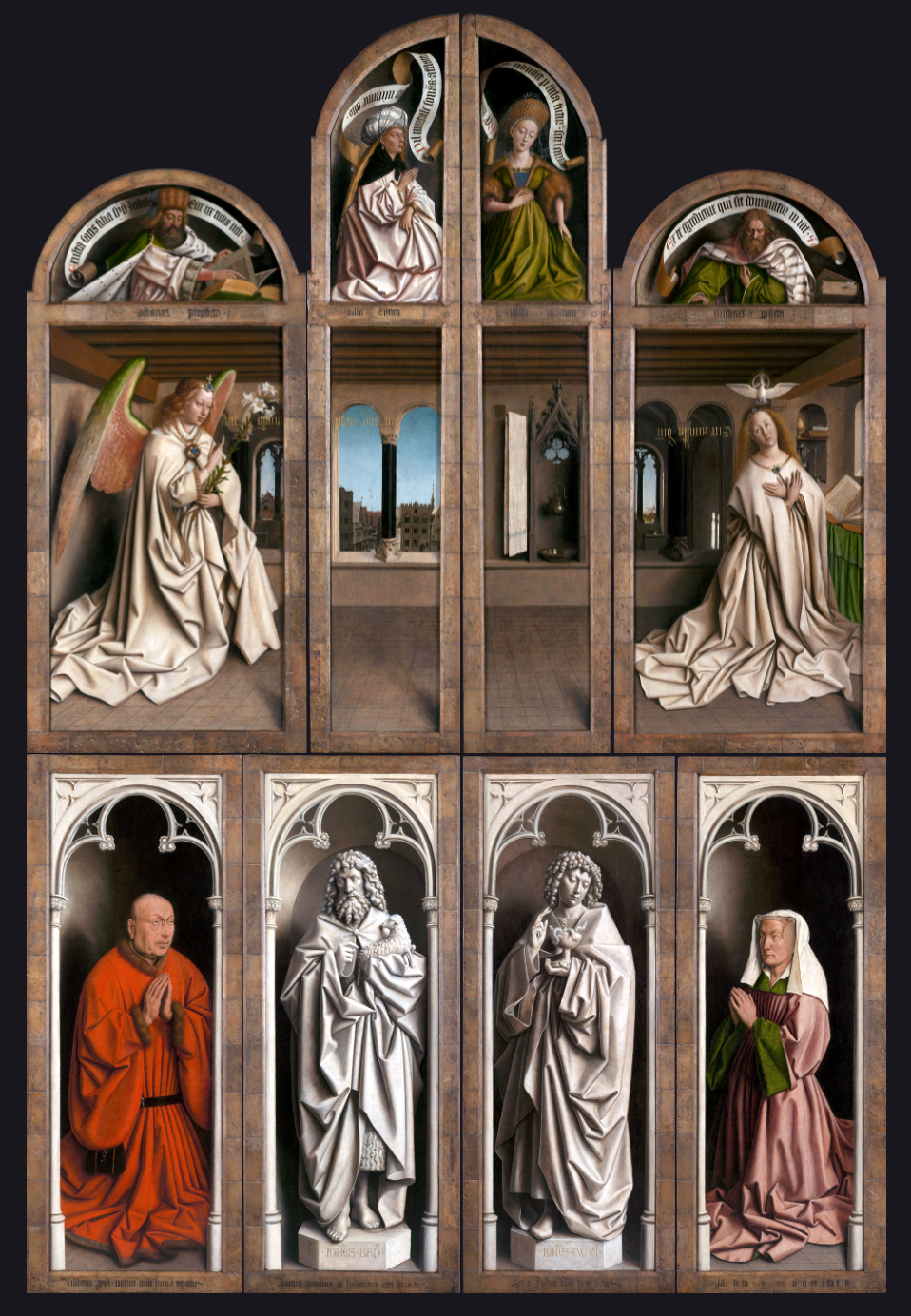
What artwork in late medieval art relate to medicine during this time?
Isenheim Alter piece, in the Chapel of the Hospital of Saint Anthony
For the community infected with ergotism→ art to guide salvation and to give hope of healing and a cure
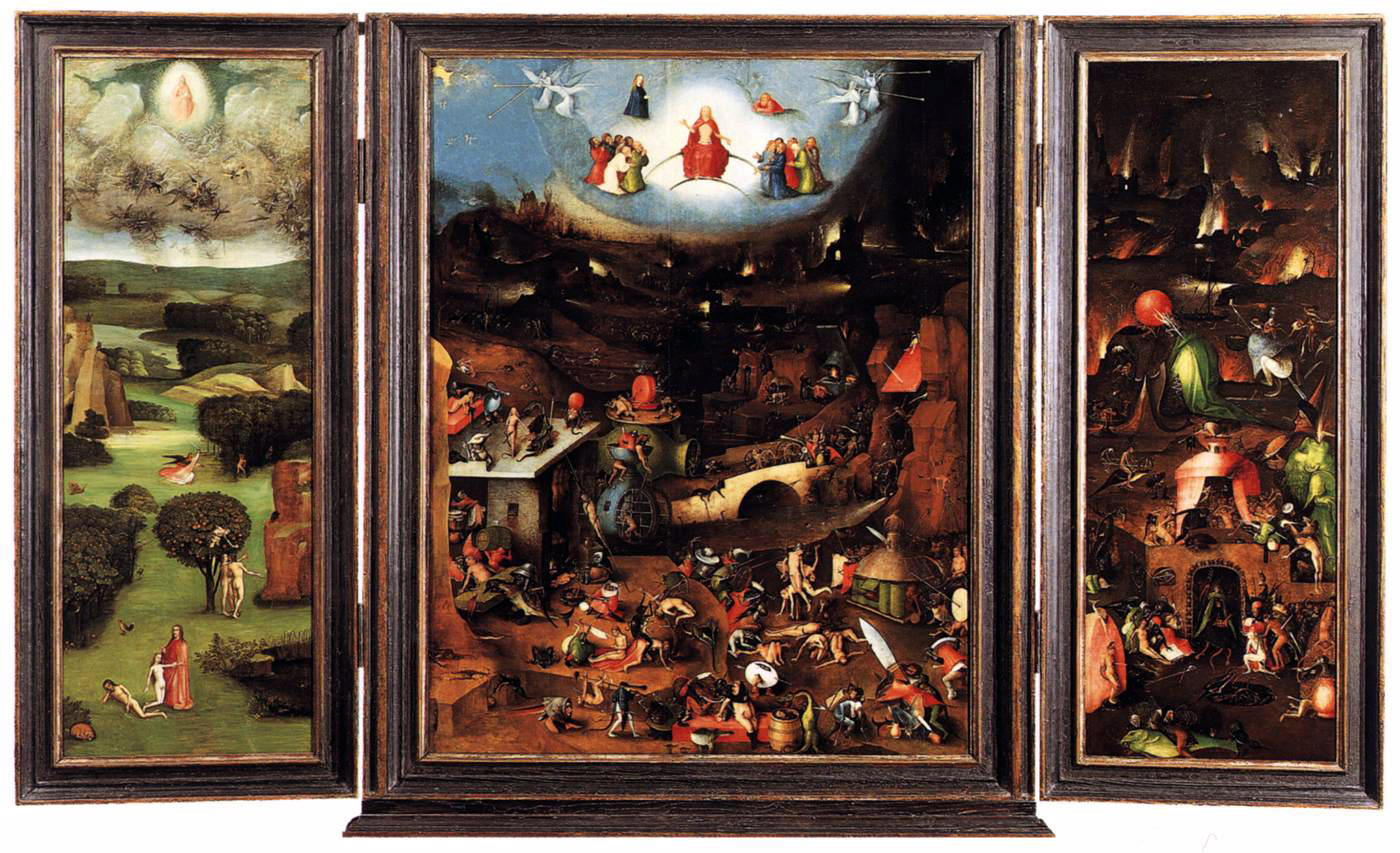
What is this piece called and its artist?
Herioonymus Bosch, The last Judegment
What is the Background/representtaion of the Last Judgement Triptych?
Bosch believed in the concept of that humanity was sinful and needs holy figurines for salvation. This represents a world overrun with demon and only rare good people would succeed.
He paints a gruesome world that focuses on the sins of humans
What is the aftermath of late medieval art?
More paintings than sculptures survived due to the dismantling of multimedia altarpieces for the art market.
This was due to the fact that the veneration of physical objects bordered on idolatry, which made these sculptures a target
What is Iconoclasm?
The intentional Destruction of images
 Note
Note  Flashcards (62)